

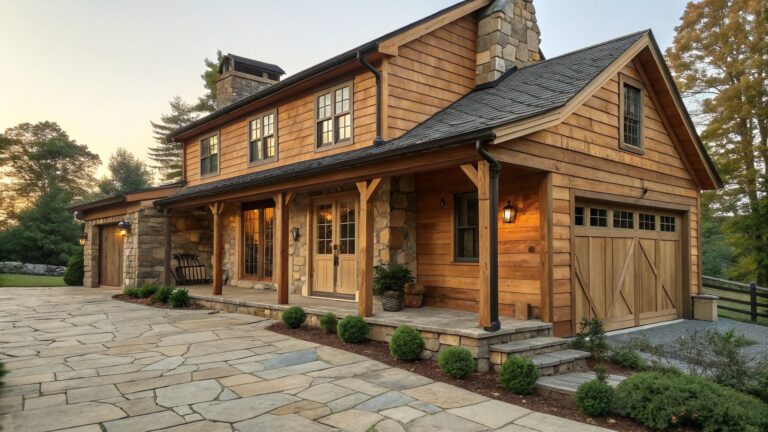
When I drive past older farmhouses the first thing that stands out is how stone and wood meet at the foundation and climb the walls together.
The right mix of those materials gives a house weight without making it feel heavy from the street.
I have found that the combinations which age well tend to let the wood soften the hard edges of the stone rather than trying to match them perfectly.
Over time I have started paying closer attention to how the rooflines and entry points tie the two materials into one clear shape instead of leaving them as separate patches.
Some just work better than others.
Stone And Wood On The Facade
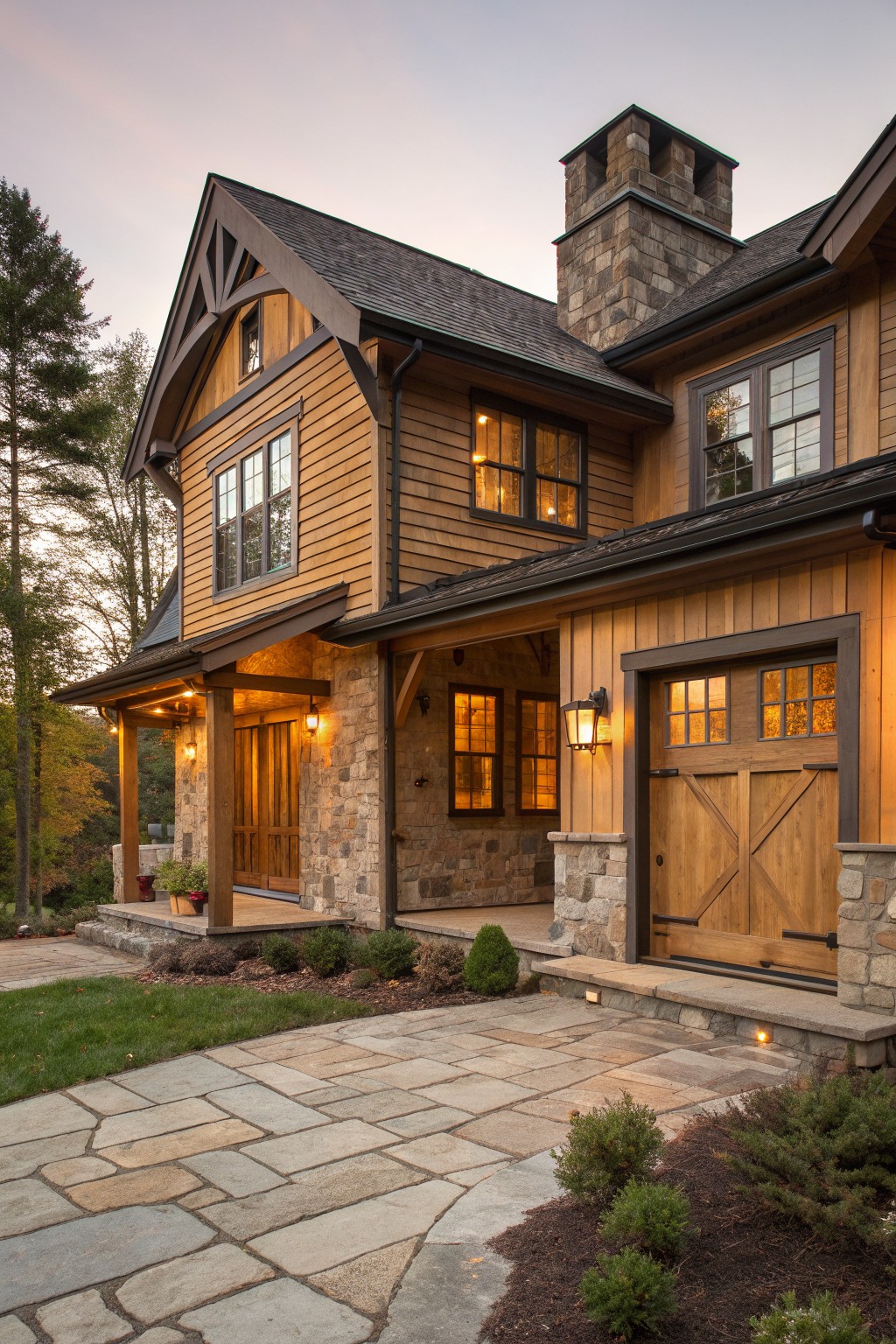
Stone and wood work well together because the stone gives weight at the bottom while the wood keeps the upper parts from feeling too heavy. This mix shows up clearly around the entry where the stone rises up to meet the wood siding above it.
It suits homes with straightforward shapes and works best when the stone stays mostly low and the wood covers the larger wall areas. Keep the trim simple so the two materials stay the main focus.
Stone Foundation With Wood Siding
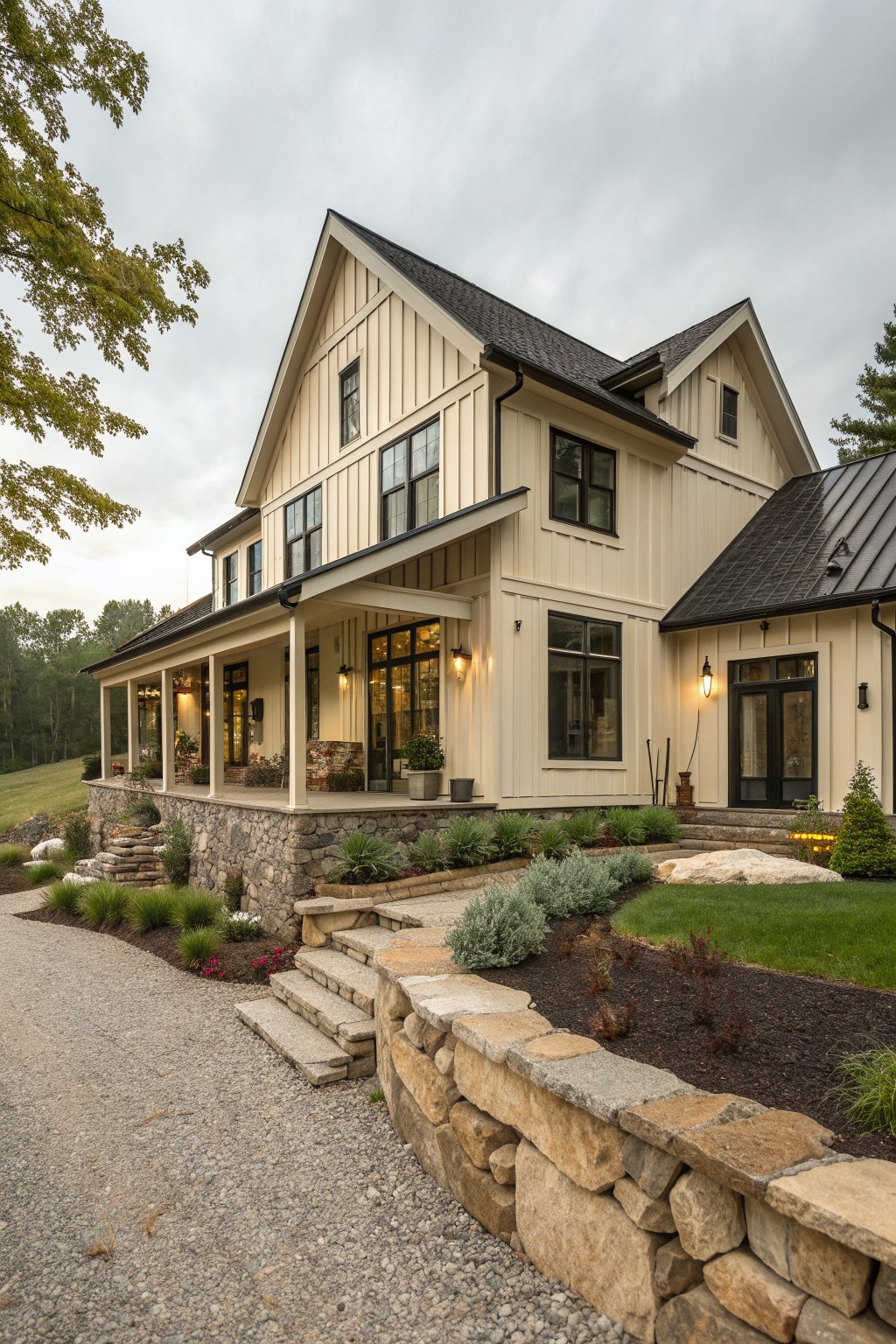
Many older farmhouses used stone at the base because it handled moisture and uneven ground well. The same idea still works today. A low stone wall gives the house weight at ground level while the wood siding above keeps the look lighter and more traditional.
This approach suits homes on slight slopes or those that need a bit more visual separation from the yard. Keep the stone height modest so it does not overwhelm the siding, and match the wood tone to the stone so the two materials feel like they belong together.
Mixing Stone And Wood On The Exterior
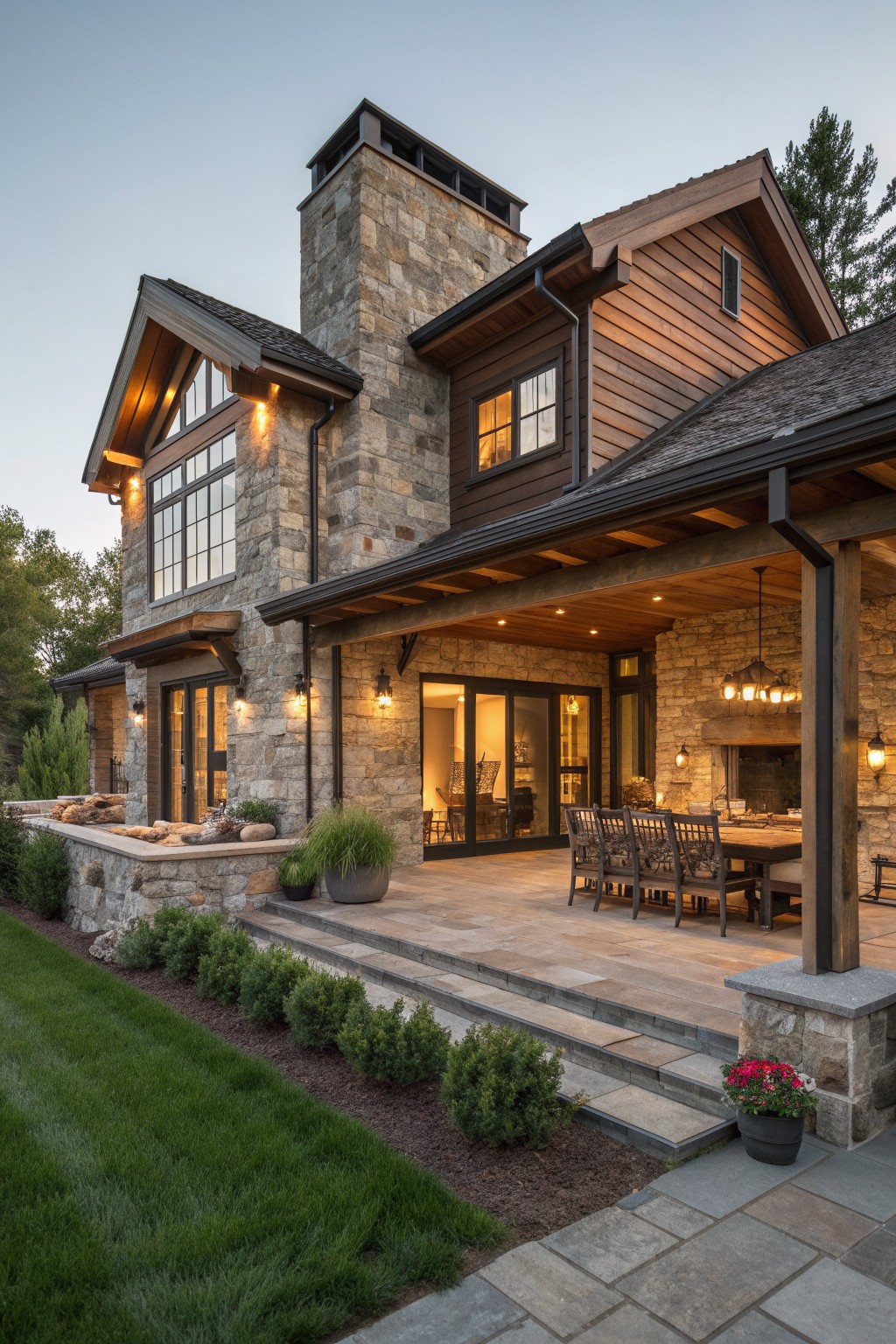
Stone and wood work well together because each material brings something the other lacks. Stone gives weight and permanence while wood adds warmth and a softer texture. On this house the stone chimney and lower walls anchor the structure, and the wood siding above keeps the whole thing from feeling too heavy.
This approach suits most two-story farmhouses that need a bit more character on the front. Keep the stone on the base, around the chimney, or along one main wall, then switch to wood for the upper sections. The change in material helps break up the mass without extra trim or details.
Stone and Wood Make a Strong Exterior Pair
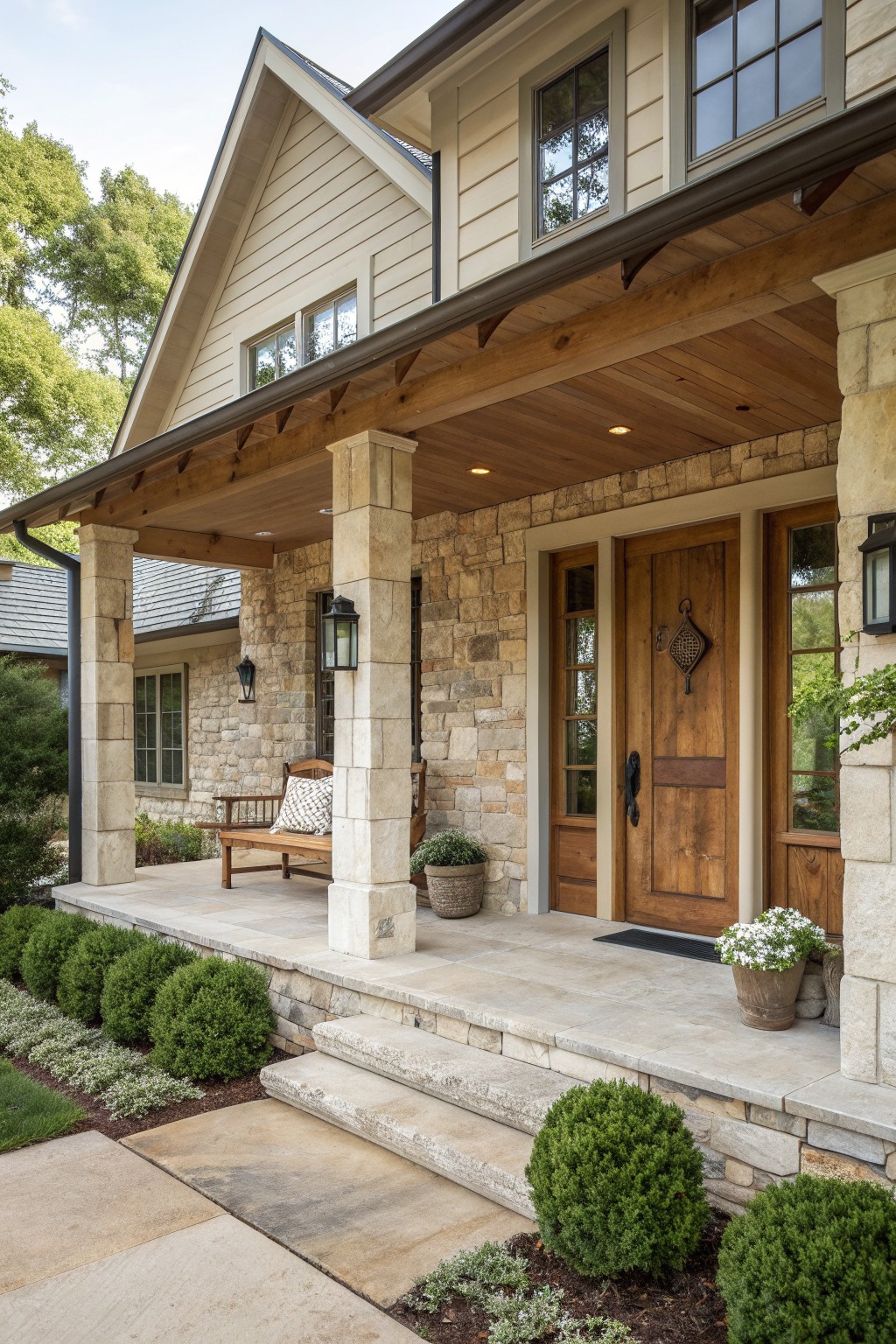
Mixing stone and wood on the outside gives a house a solid base without feeling too heavy. The stone grounds the lower part of the structure while the wood siding and beams add warmth and keep the look from turning too cold or formal.
This approach works best on farmhouse styles where you want the home to feel sturdy but still approachable. Keep the stone mostly on columns, foundations, or accents and let the wood carry the main siding and porch details so the two materials balance each other.
Mixing Stone And Wood On The Exterior
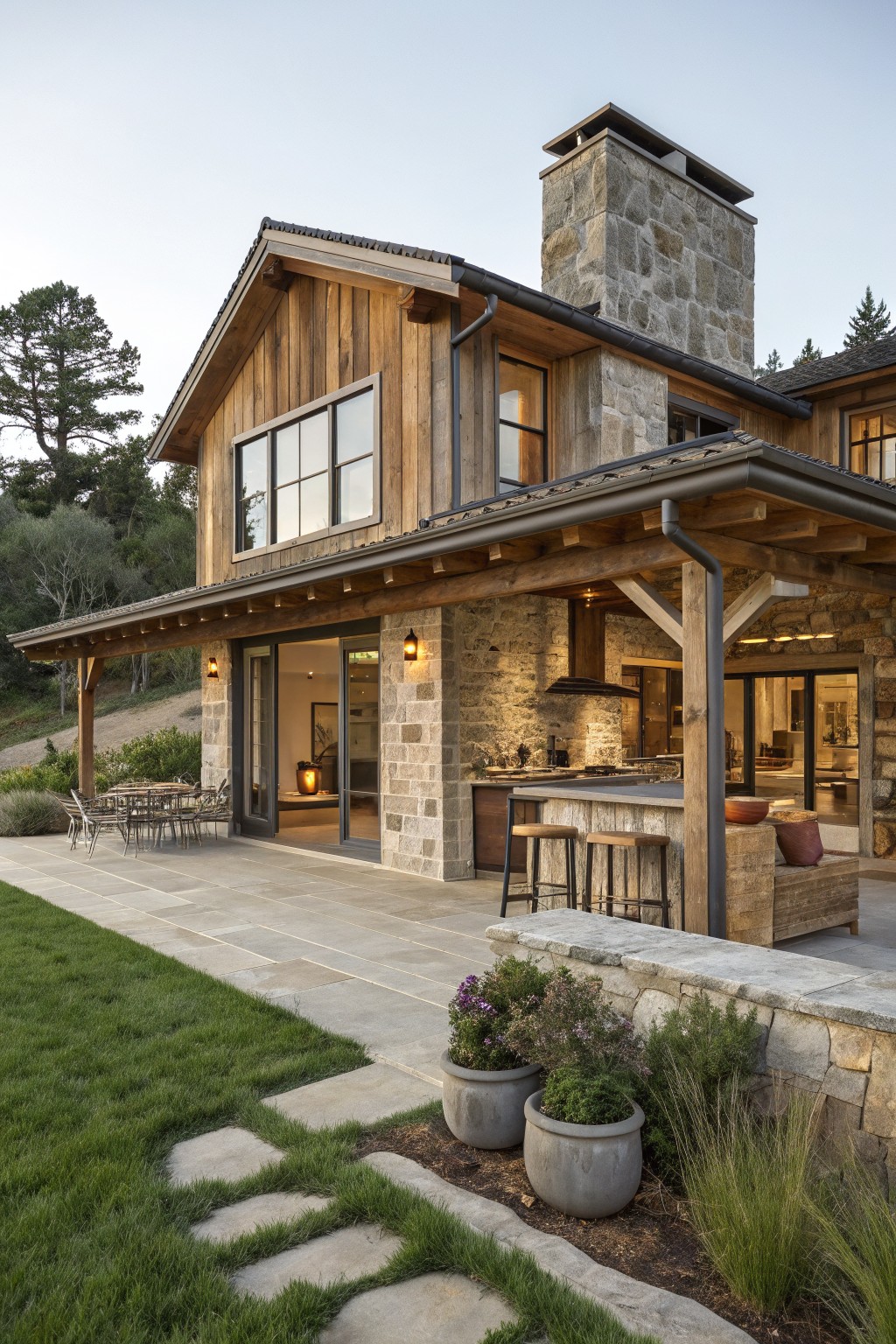
Stone and wood together give a farmhouse exterior real weight without feeling heavy. The stone chimney and base anchor the lighter wood siding, and the contrast keeps the whole house from looking flat or too uniform. It works especially well on homes that sit against a hillside or near trees, where the natural tones help it settle into the setting.
Try keeping the stone in larger blocks like a chimney or foundation wall rather than spreading it everywhere. That leaves the wood to handle most of the siding and gives you a cleaner look. It suits both new builds and remodels as long as the two materials stay in clear proportion to each other.
Using a Pergola for Outdoor Dining
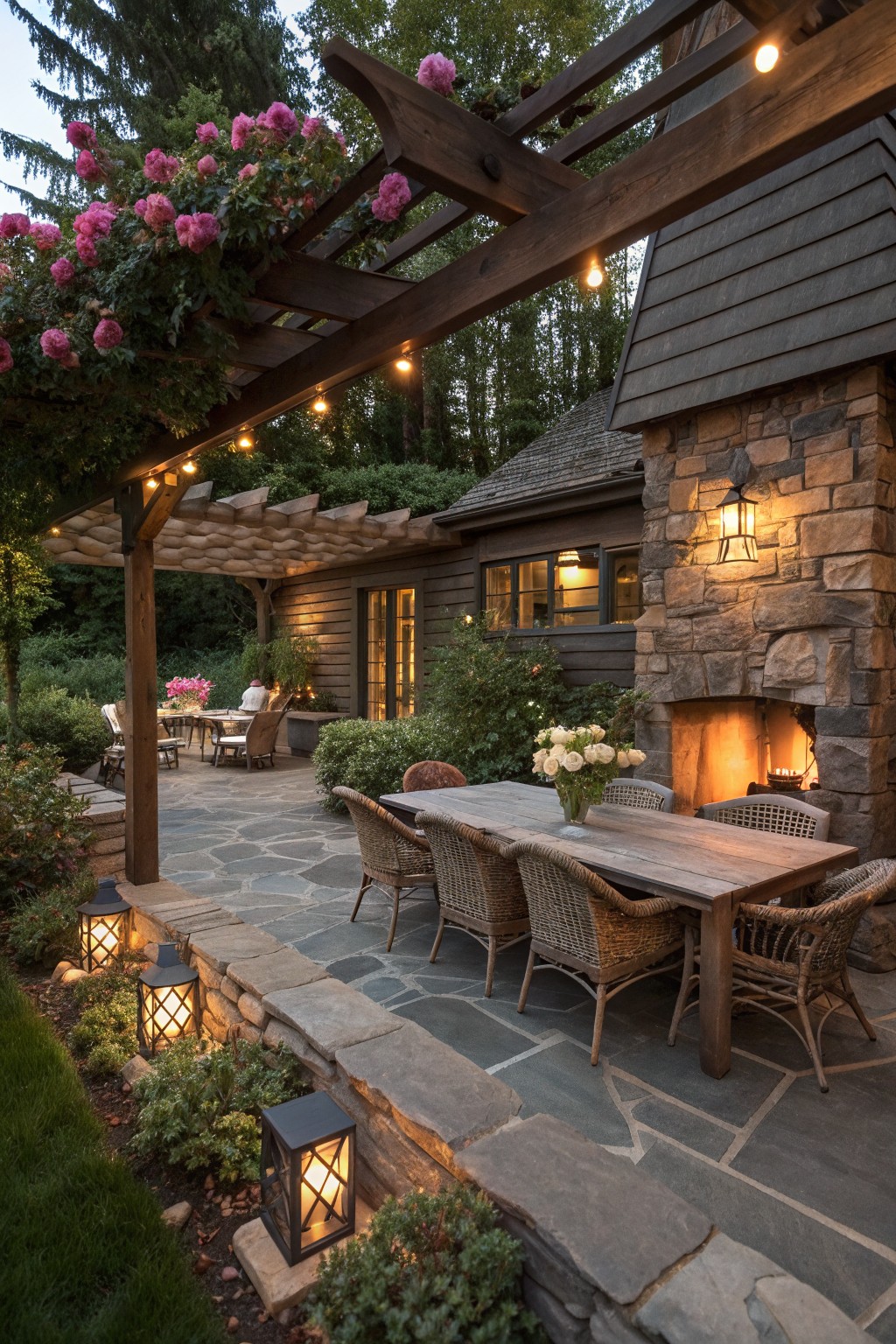
A wooden pergola gives an outdoor dining area a simple sense of structure while still keeping it open to the air. String lights along the beams make the space usable after dark without needing a full roof overhead.
This setup works best on homes that already mix wood siding with stone details. Keep the table and seating basic so the focus stays on the materials and the nearby fireplace, and make sure the pergola lines up with the house roofline for a cleaner look.
Stone And Timber At The Entry
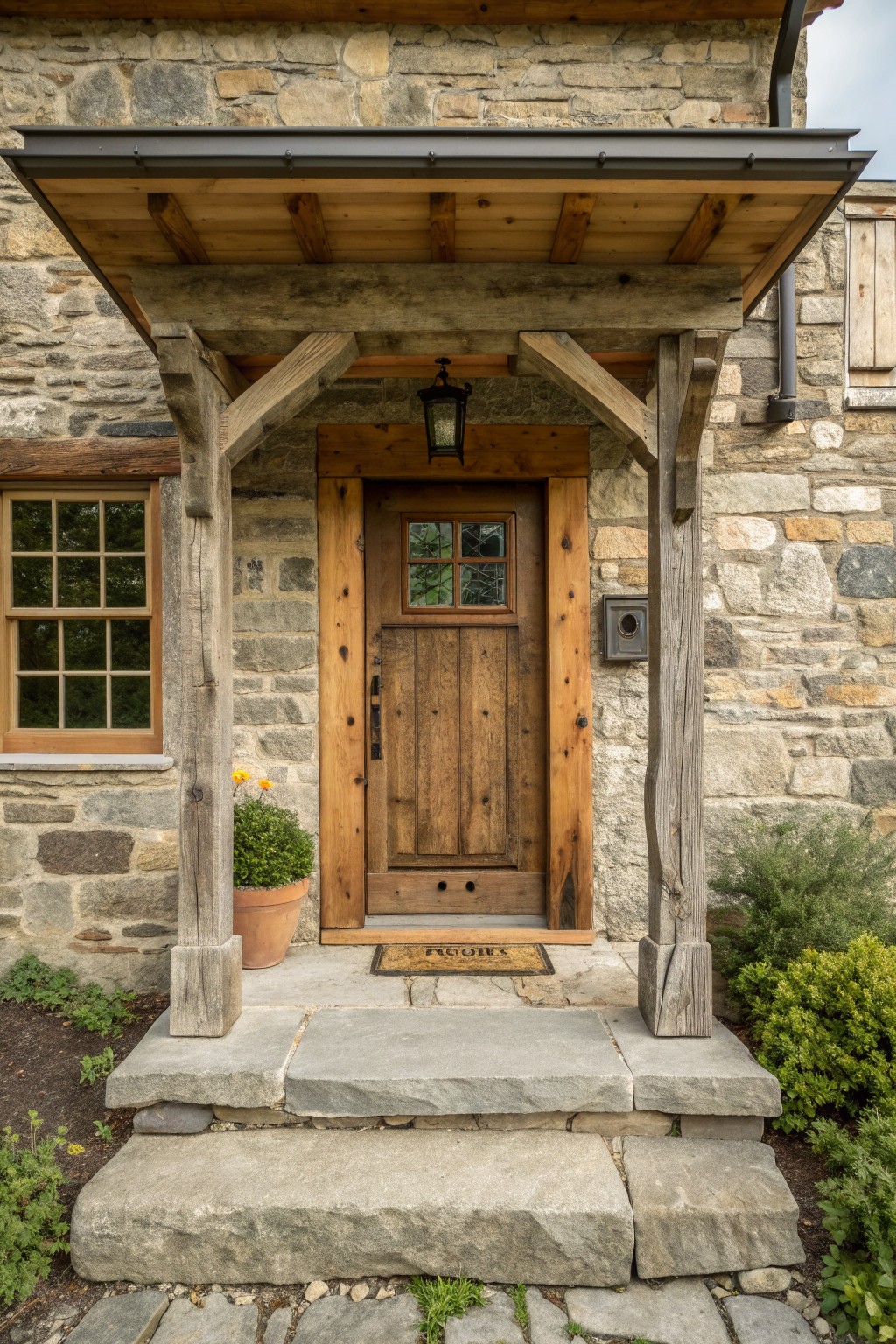
One simple way to get that real farmhouse look is to let heavy timber posts and beams carry the porch roof right against the stone wall. The wood adds warmth and structure while the stone gives the whole front a solid, lasting base that feels right at home in the countryside.
This works best on homes where the entry gets some shade and the wood can weather naturally over time. Keep the timbers thick and the stone varied in size so the contrast stays interesting without needing extra trim or paint.
Mixing Stone And Wood On The Exterior
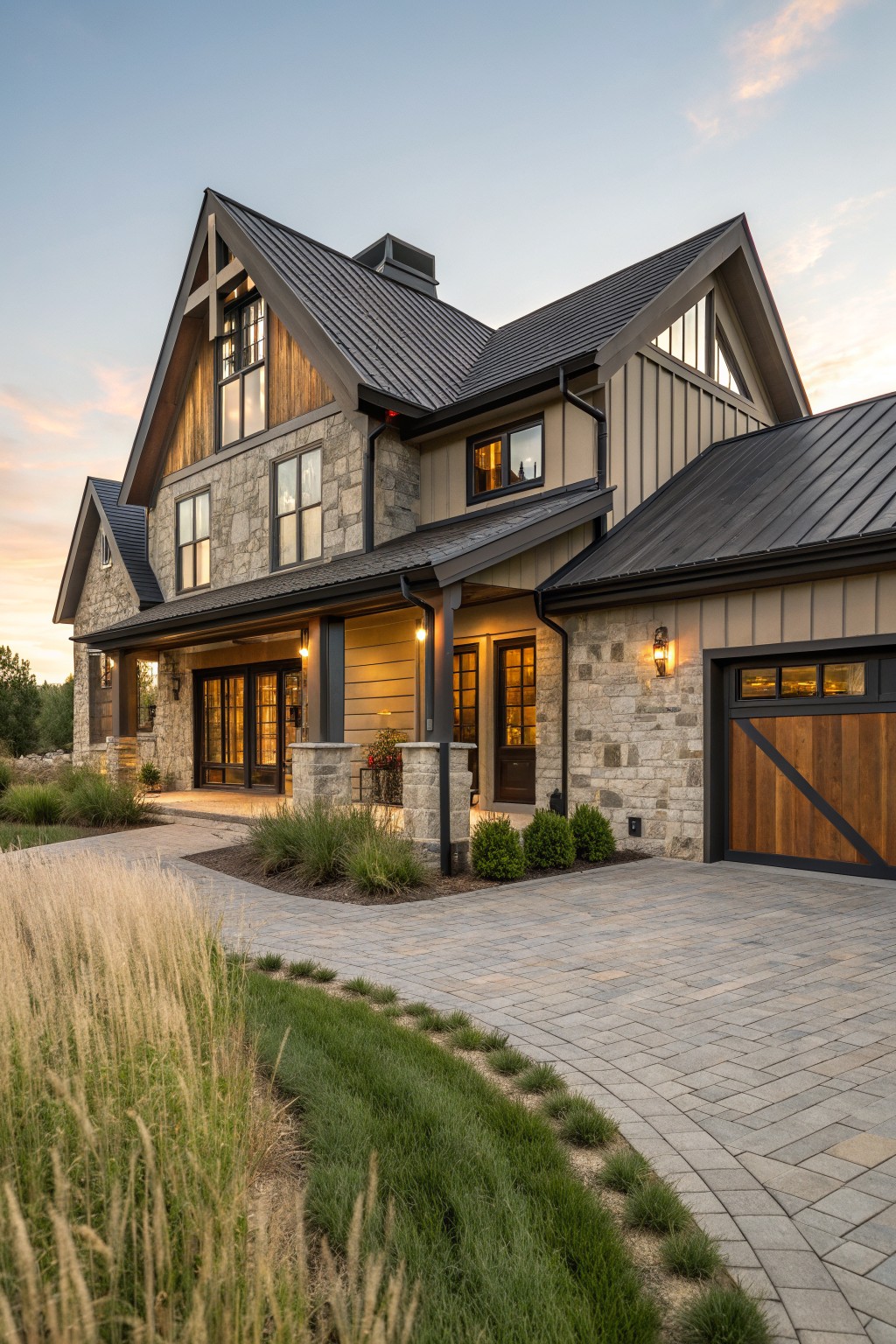
Stone and wood work well together on a farmhouse because each material brings something different. The stone adds weight and texture at the base while the wood keeps the upper parts lighter and warmer. This mix prevents the house from feeling too heavy or too plain.
It suits larger homes with multiple rooflines and gables. Keep the stone mostly on the lower half and around key areas like the entry, then let the wood take over on the main walls. Too much of either material can throw off the balance, so start with clear sections rather than scattering them.
Stone And Wood On Covered Patios
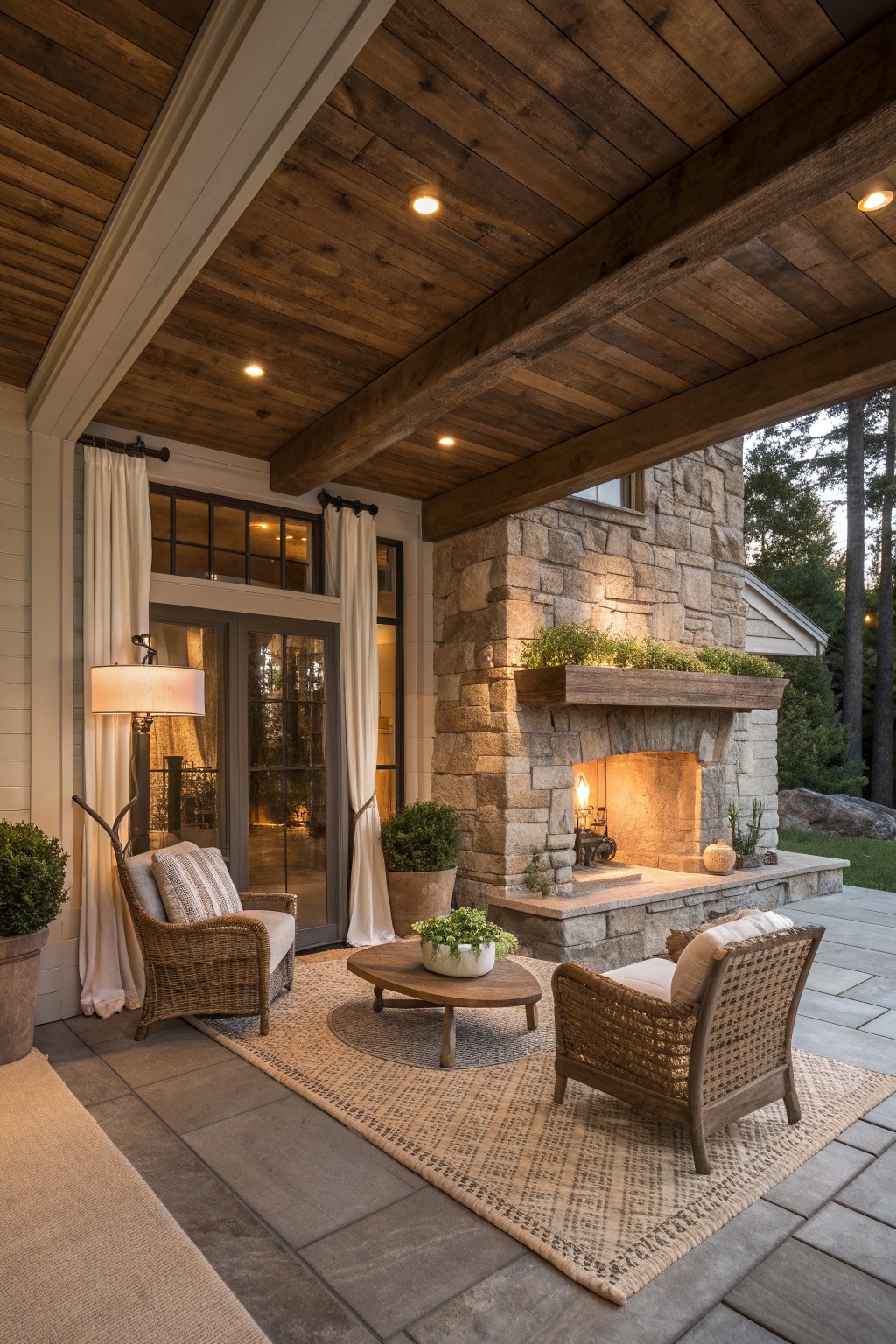
A covered patio gains a lot of character when a big stone fireplace sits against a backdrop of heavy wood beams and ceiling planks. The mix feels natural for a rustic farmhouse because the stone adds weight and texture while the wood keeps everything warm and grounded. This setup turns an open area into a space that works well into the evening.
It suits homes that already use both materials on the main structure. Keep the furniture simple so the fireplace stays the focus, and make sure the ceiling height gives enough clearance for the chimney. Watch the scale though, because a fireplace this size can overwhelm a smaller yard.
Stone and Wood on the Exterior
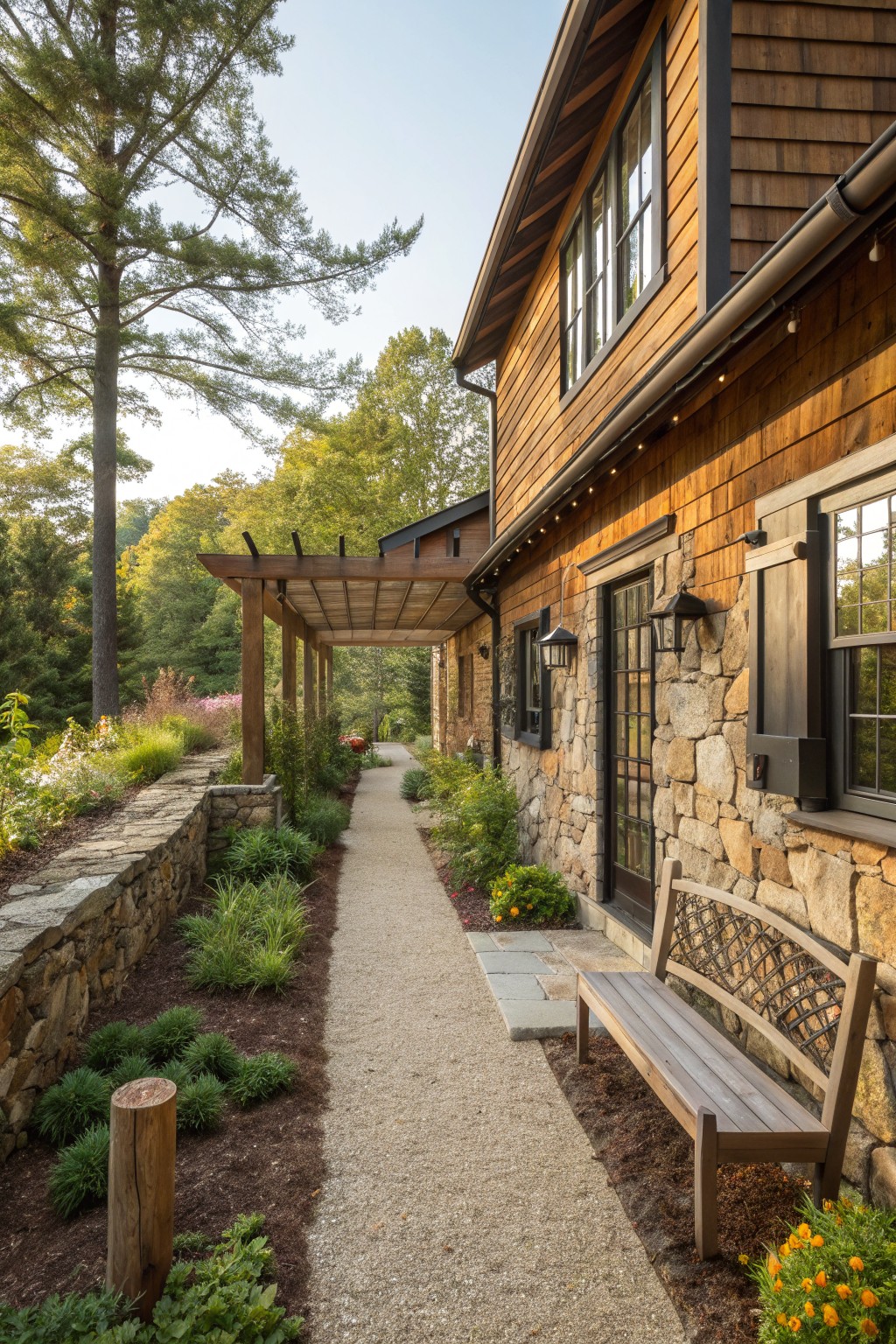
Many rustic farmhouses look better when stone and wood are used side by side instead of picking just one material. The stone gives a solid base that feels permanent while the wood softens the look and adds warmth. This mix keeps the house from feeling too heavy or too light.
It works well on homes that sit on a bit of land with room for planting around the base. Use the stone low on the walls and let the wood run above it so the two materials have clear roles. A simple gravel path helps tie the house into the garden without adding extra fuss.
Matching Stone on the Fire Pit and House
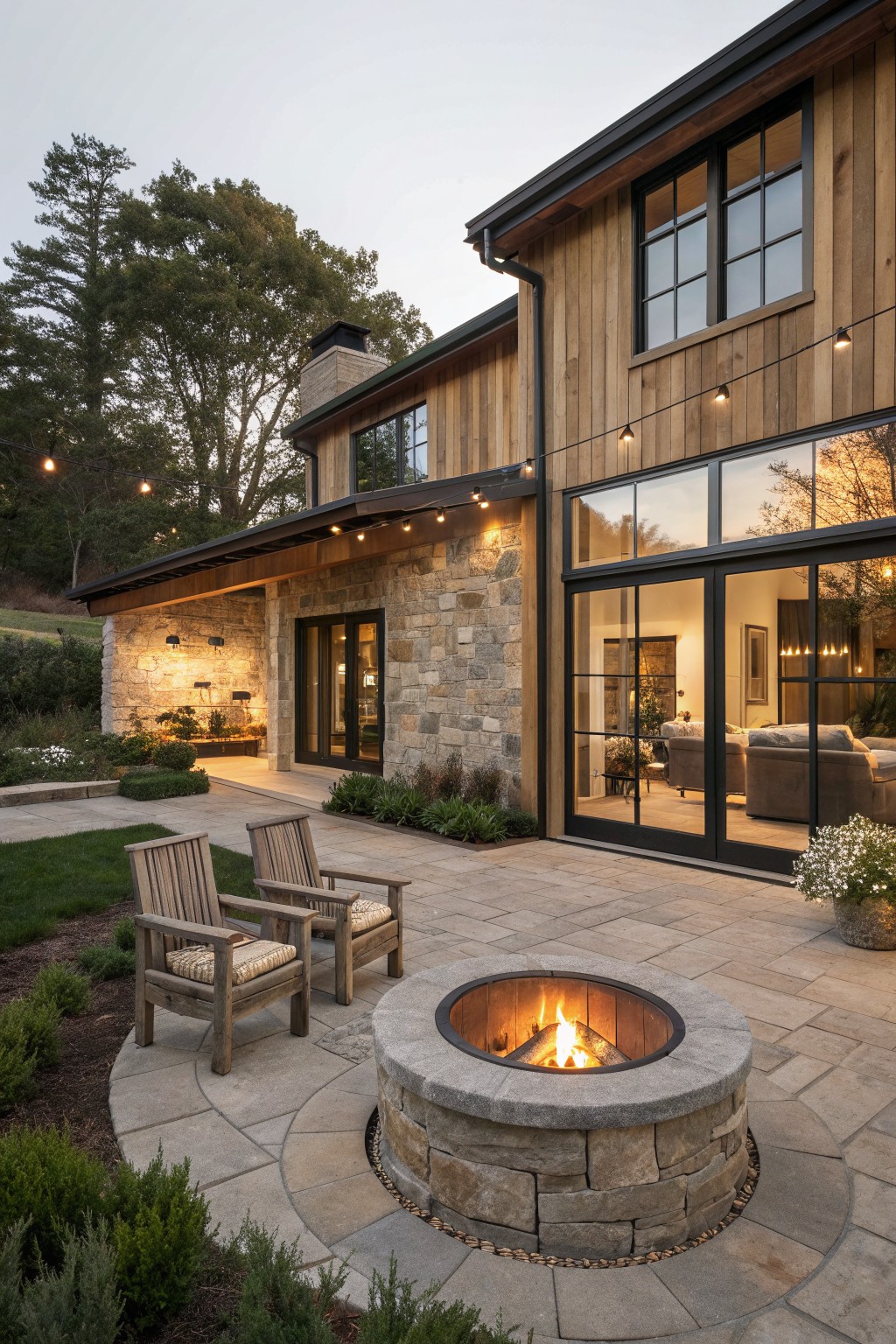
Using the same stone for both the house and the fire pit gives the whole setup a pulled-together look without much extra effort. The material repeat makes the patio feel like part of the house rather than something added later. It works especially well on homes that already mix stone and wood, since the shared texture keeps everything grounded.
This approach suits a simple backyard or side patio where you want one main spot for sitting outside. Keep the fire pit low and round so it does not compete with the house, and let the stone do the matching work. Avoid adding too many other materials that could break the connection.
Stone And Wood Siding On Farmhouse Exteriors
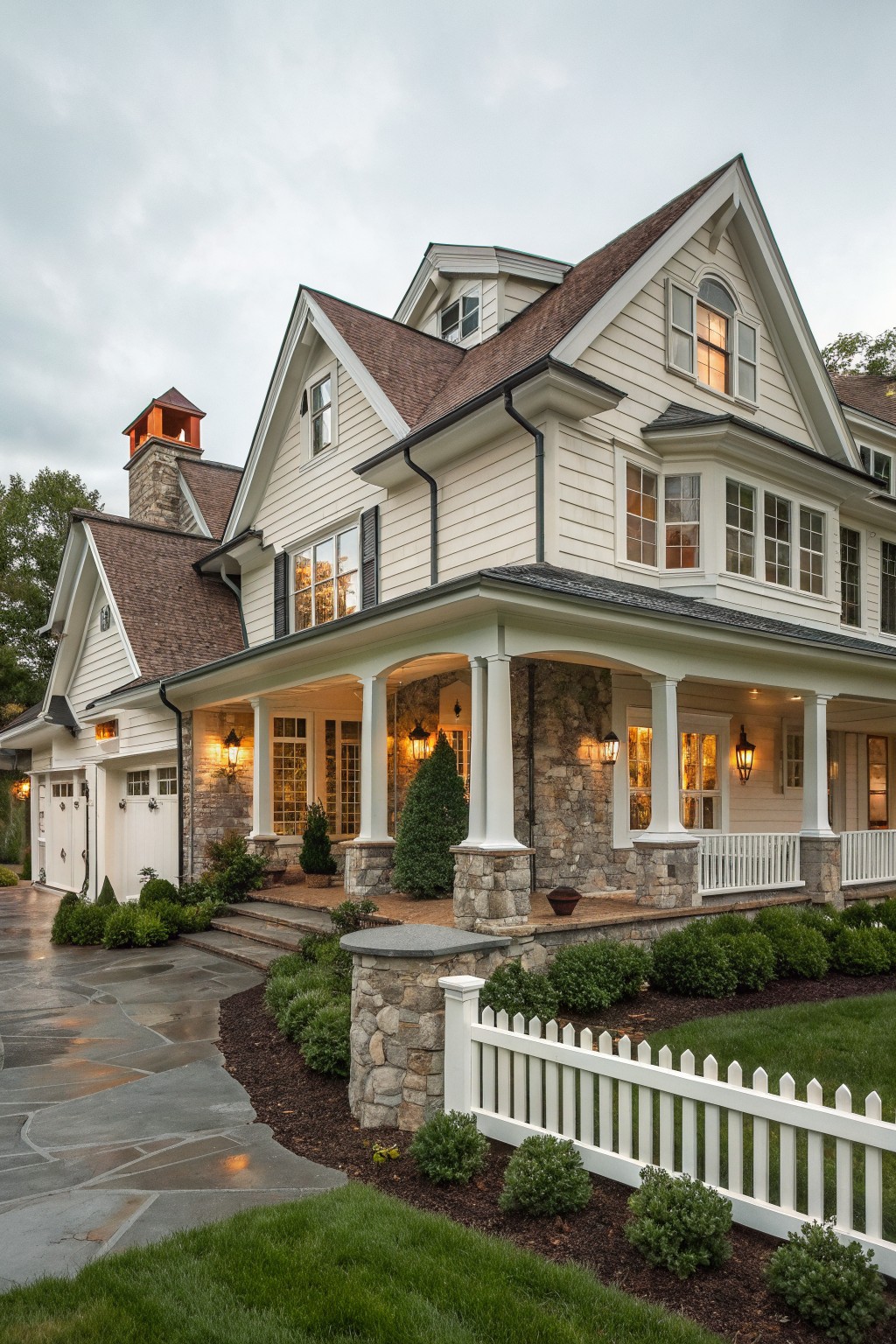
Stone paired with painted wood siding gives a farmhouse exterior real weight without feeling heavy. The stone anchors the base and porch supports while the white siding keeps the whole house feeling light and clean. This mix shows up well on homes that already have a strong roofline or a wide front porch.
It works best when the stone stays in just a few key spots rather than covering large walls. Use it on column bases, foundation areas, or around the entry to add texture and keep the siding as the main surface. The contrast looks especially good on two-story homes with simple trim and dark roofing.
Add a Pergola Over Your Outdoor Dining Table
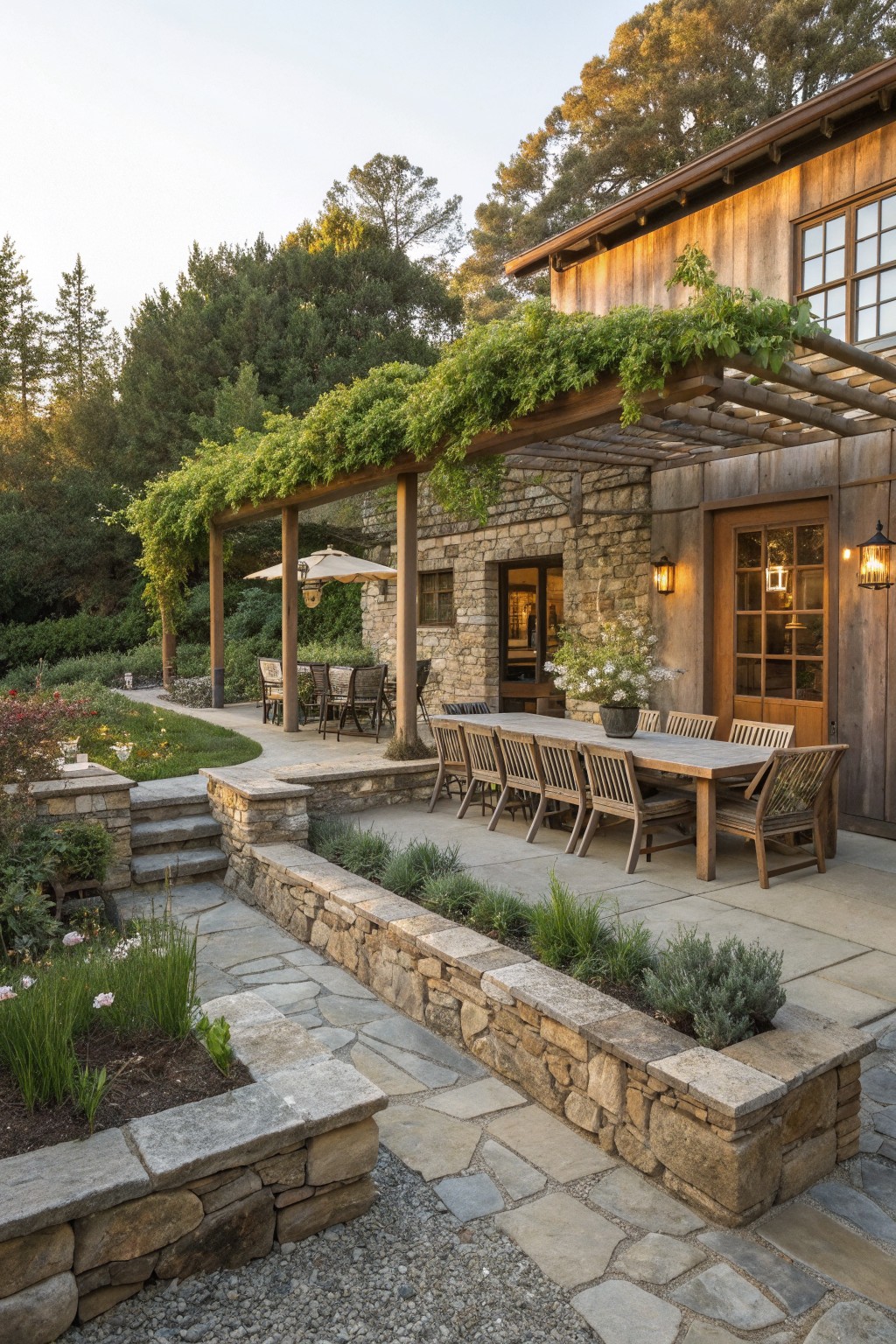
A pergola makes an outdoor dining area feel more settled and usable. It gives shade without closing off the space, and the wood frame works well with stone walls and paths around it. Many people like how vines soften the structure over time while still letting some light through.
This setup suits homes that already use stone and wood on the exterior. Keep the table and chairs simple so the materials stay the main focus. Make sure the posts have enough room for seating on all sides and check that the vines will not block views from inside the house.
Wooden Gates That Define the Entry
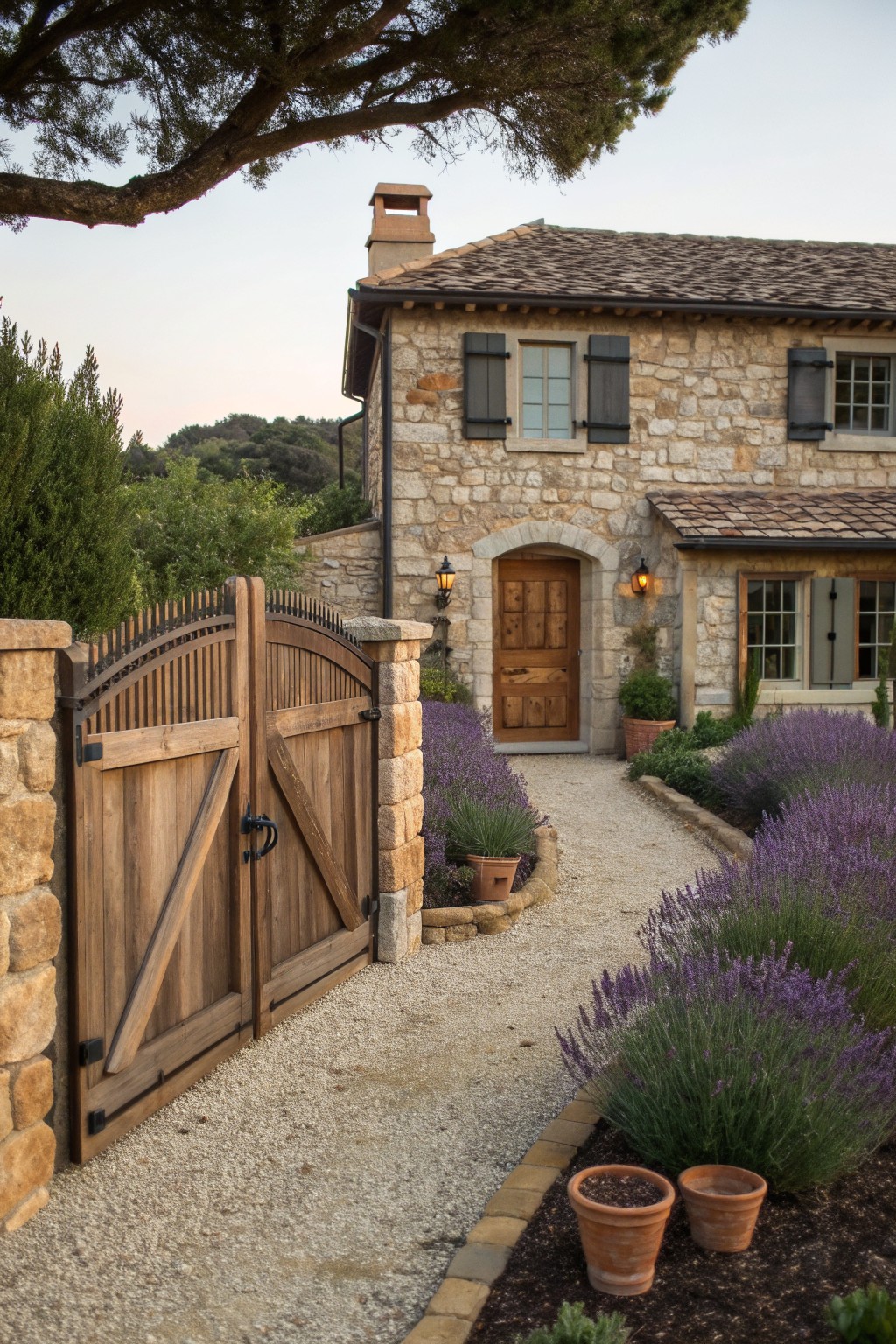
A wooden gate placed in front of a stone house gives the whole front a clear starting point. It turns what might feel like an open approach into something more structured and welcoming, especially when the gate uses the same wood tones as the door and shutters.
This works best on homes with a short path or driveway leading up to the door. Keep the gate height modest so it frames the house rather than hiding it, and match the hardware style to the rest of the exterior for a pulled-together look.
Stone and Wood Outdoor Kitchen Bars
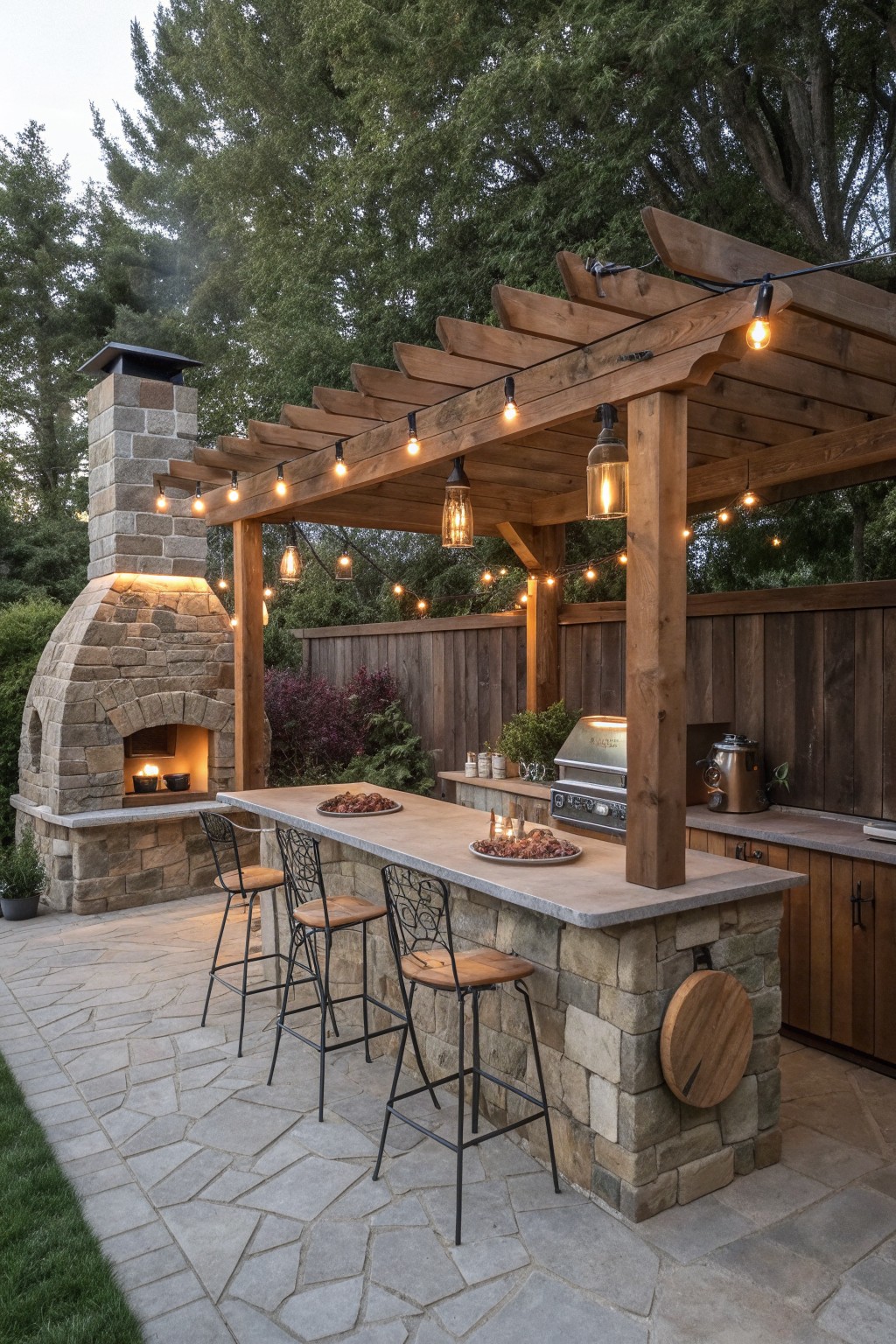
Mixing a stone base with a wooden pergola overhead gives an outdoor kitchen real staying power. The stone handles weather and wear while the wood adds that warm farmhouse structure overhead. It turns a simple patio into a space that feels built to last through seasons of use.
This setup works best on homes where the main exterior already uses both materials. Keep the bar height practical for seating and make sure the pergola provides enough shade without blocking too much light. It suits larger yards that already have some stone accents near the house.
Stone And Wood On The Porch Base
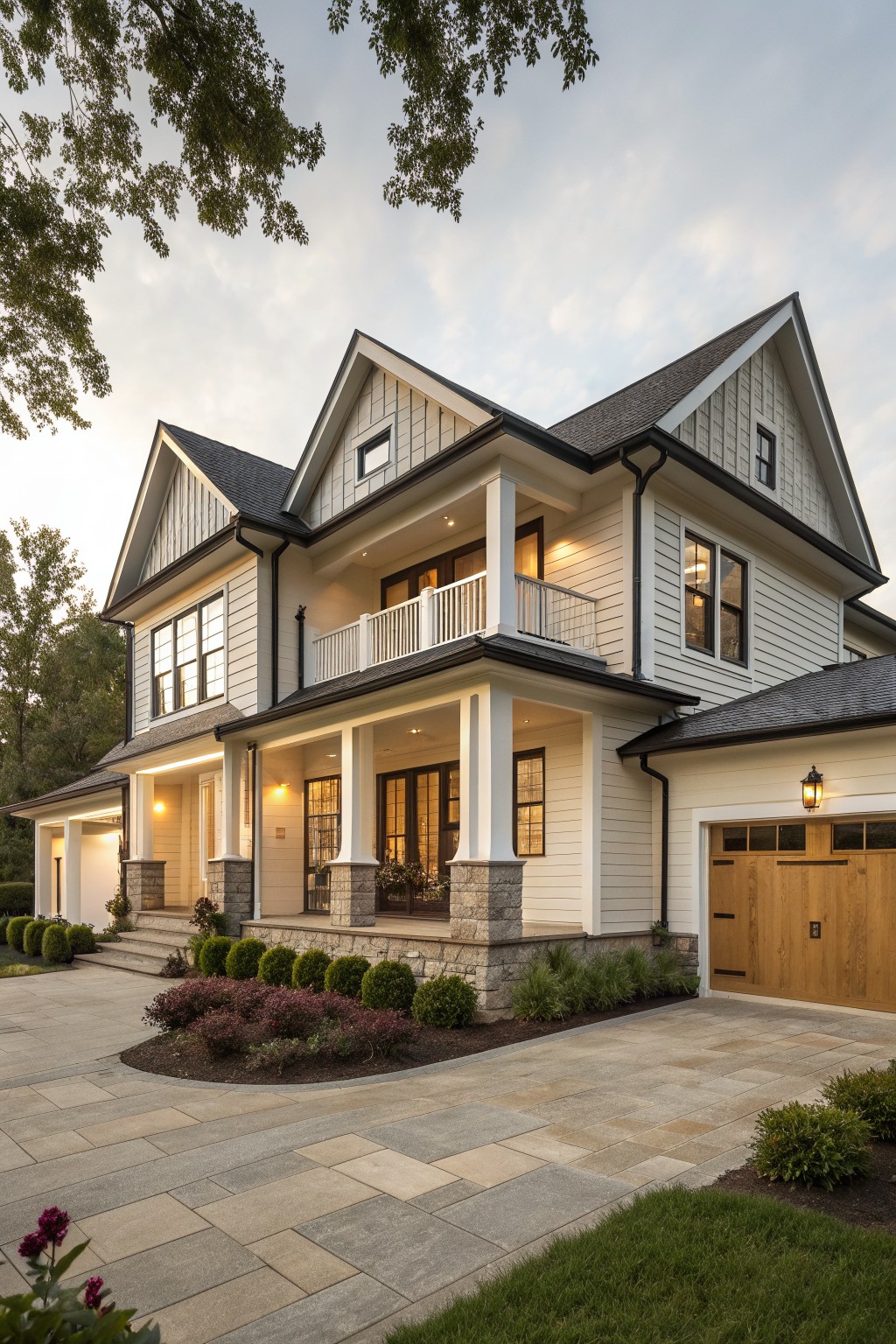
Many farmhouses look better when stone covers just the lower parts of the porch and columns while wood siding covers the walls above it. The change in materials keeps the house from feeling too tall or flat.
This approach suits homes with a wide front porch or a raised foundation. Limit the stone to the supports and base layer so the siding can stay the main surface and the whole exterior stays simple to maintain.
Mixing Stone And Wood
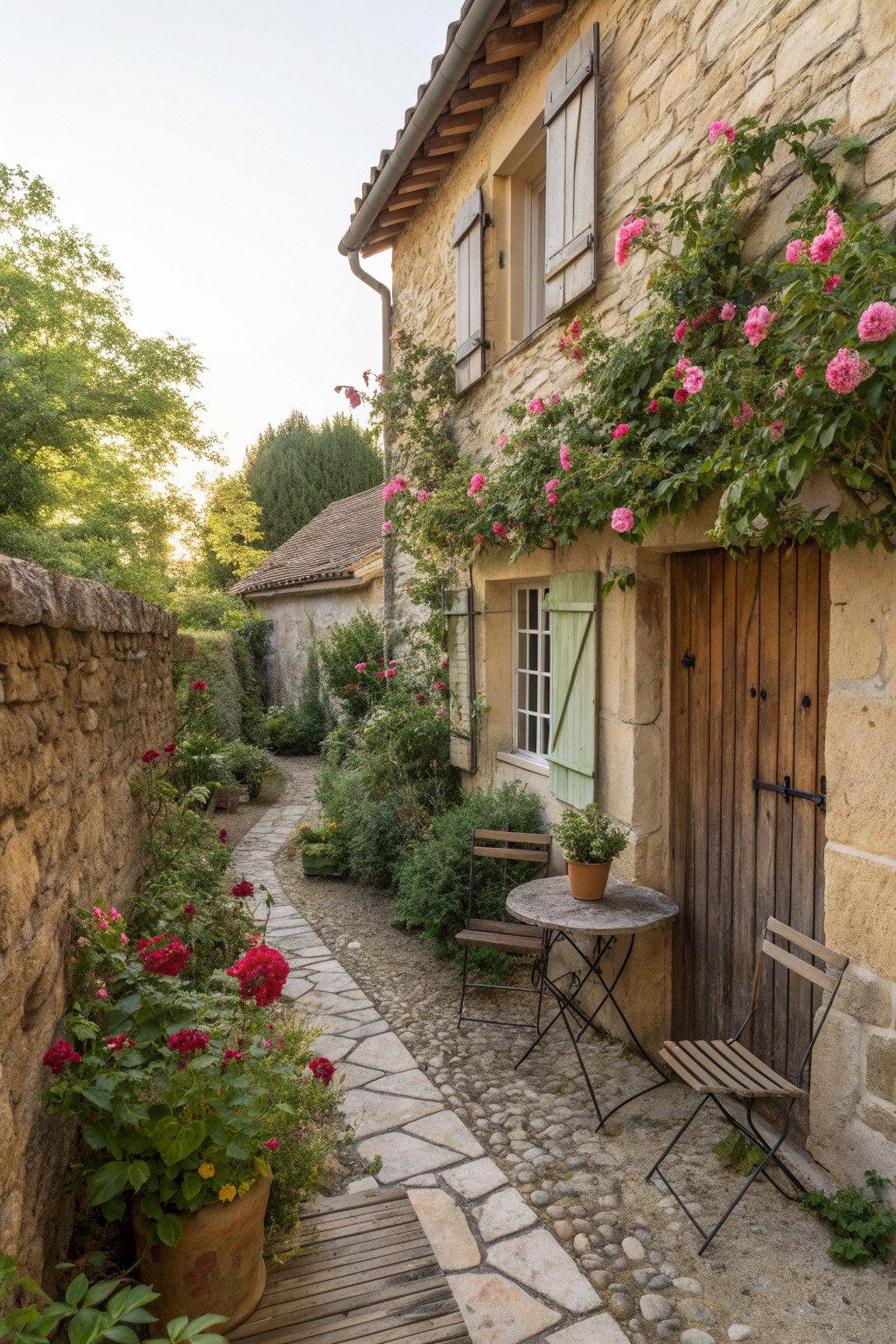
Stone walls give a house real weight and age, while wood doors and shutters keep the whole thing from feeling too heavy or cold. The two materials balance each other out and look especially right on simple, low farmhouses.
This approach works best when the stone stays rough and the wood is left in its natural tone. Use it on the main facade first, then add just a few climbing plants if you want a bit of softness without covering the materials.
Stone and Wood Work Well Together
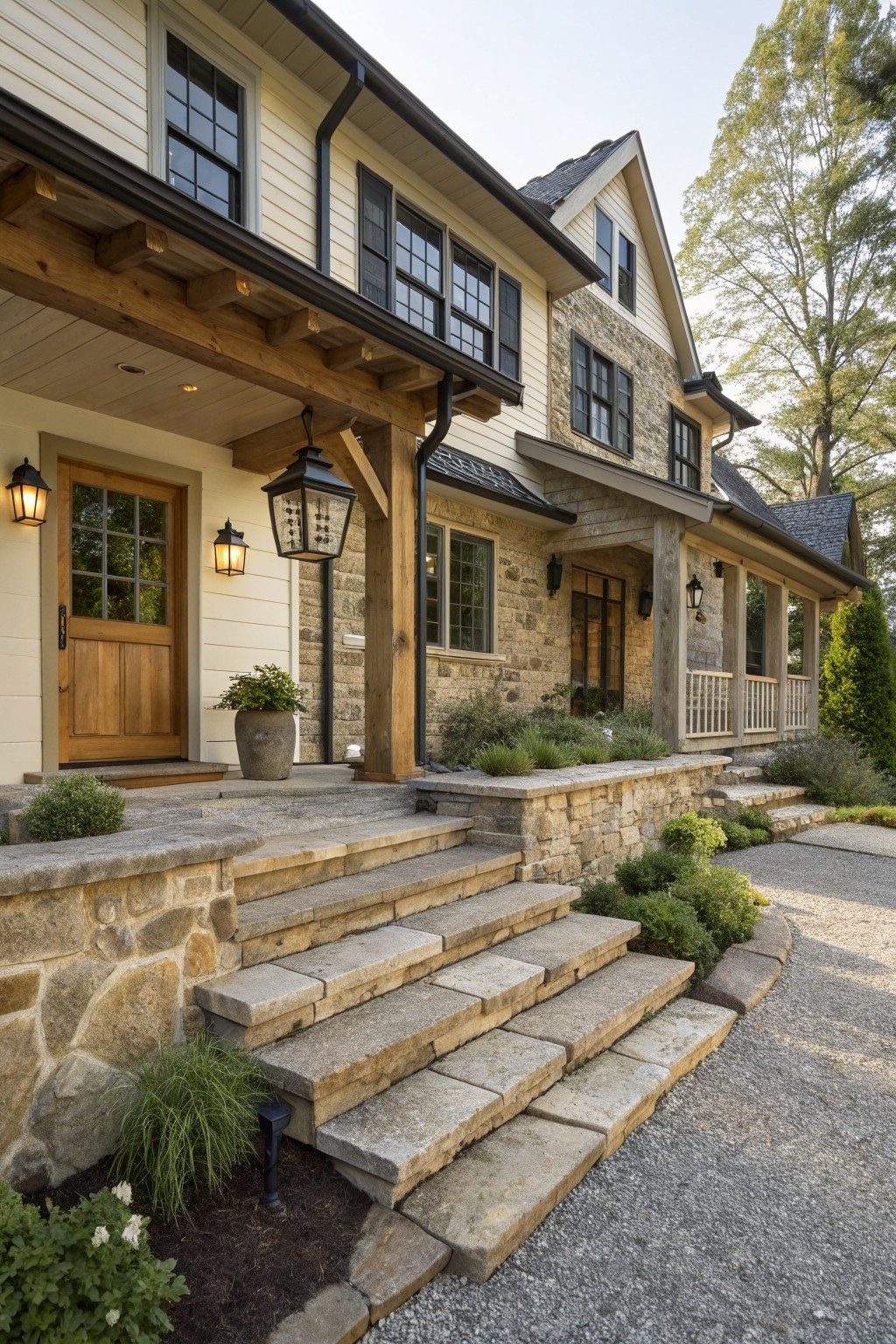
Many people like the way stone and wood look side by side on a house. The stone sits low and gives the whole place a solid base while the wood above keeps the look lighter and more natural. This mix helps a farmhouse feel settled into the ground instead of floating on top of it.
Try it on homes that already have some height changes or a simple roofline. Put the stone on the lower walls and around the entry then let the wood take over higher up. It works best when the two materials stay in clear blocks rather than getting chopped up into too many small pieces.
Stone And Wood On The House Exterior
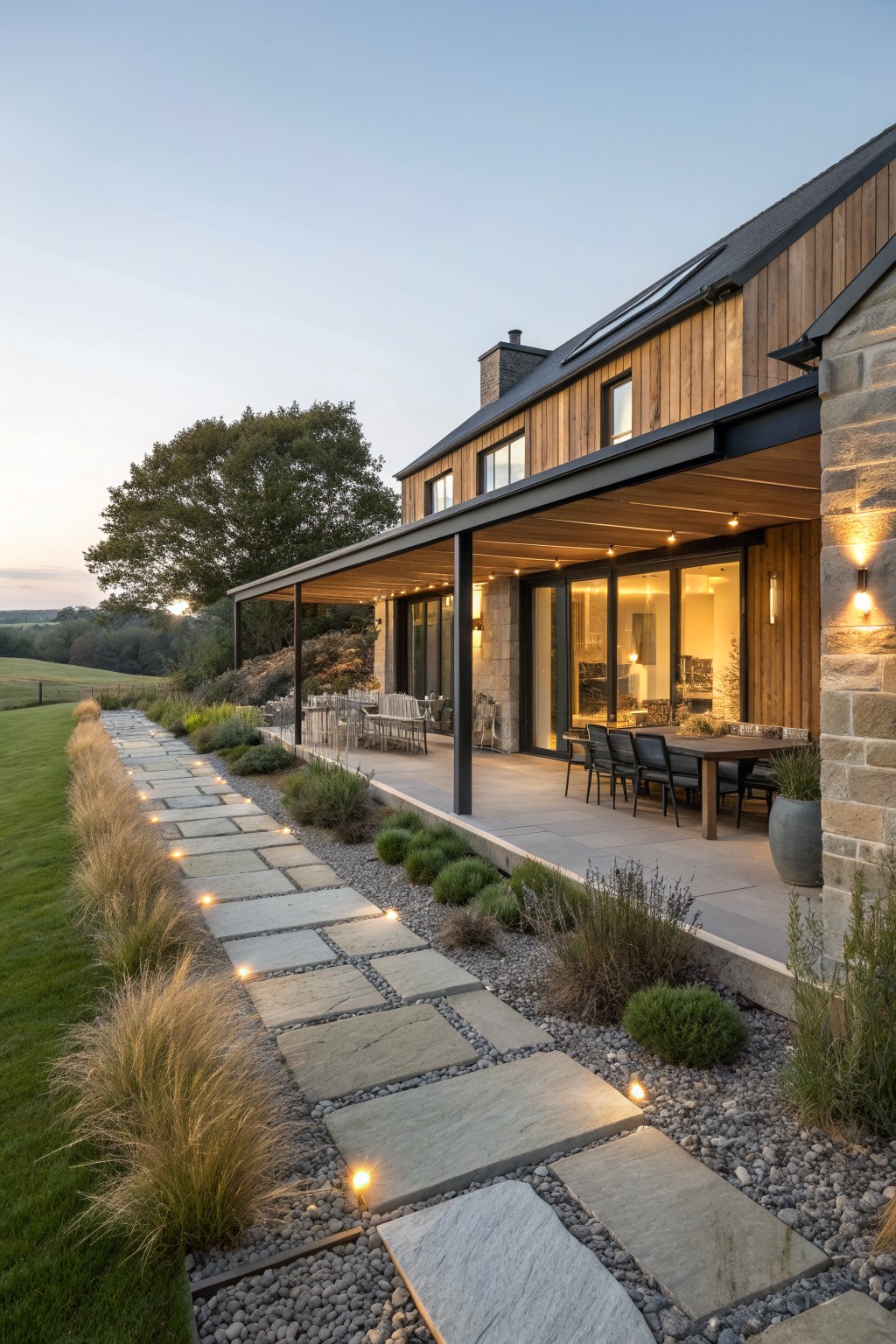
Stone and wood work together well on the outside of a house because each material softens the other. Stone gives a solid base that feels lasting, while wood brings in warmth and a more lived-in look that fits the rustic farmhouse style.
This mix works best on homes with simple rooflines and larger wall areas where the materials can sit side by side without competing. Keep the stone on the foundation or chimney and let the wood cover most of the siding so the house stays light rather than heavy.
Frequently Asked Questions
Q: What woods work best next to rough stone walls? A: Cedar and oak hold up well and bring out the stone’s natural colors. Try holding a few boards against your stone in morning light before you commit. This keeps the whole front from feeling too heavy.
Q: How do I stop the wood from fading fast on the sunny side? A: Apply a clear sealer every couple of years and pick boards with some grain that hides wear. The stone on the lower half also helps block ground splash that speeds up damage.
Q: Can I try this look on a regular suburban house? A: Use stone only around the foundation and porch posts while keeping wood on the upper walls. That mix still gives the rustic feel without needing a full redesign.
