

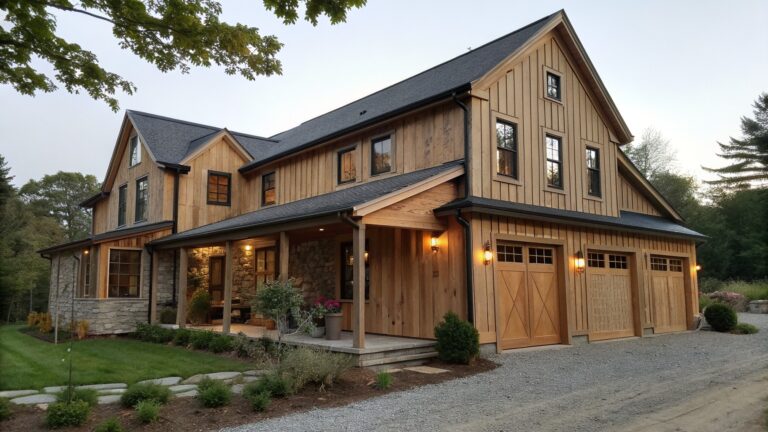
When I look at old farmhouses the wood on the outside often tells the story of how the place has settled into its spot over time.
Natural finishes seem to handle the shifts in weather better than I first expected when I tried them on my own place.
Not every option works the same way.
I keep coming back to how the entry and the roofline pull the whole front together when the wood tones match the surroundings.
A couple of these approaches are the kind I would sketch out on paper before picking up any tools.
Pair Wood Siding With A Stone Base
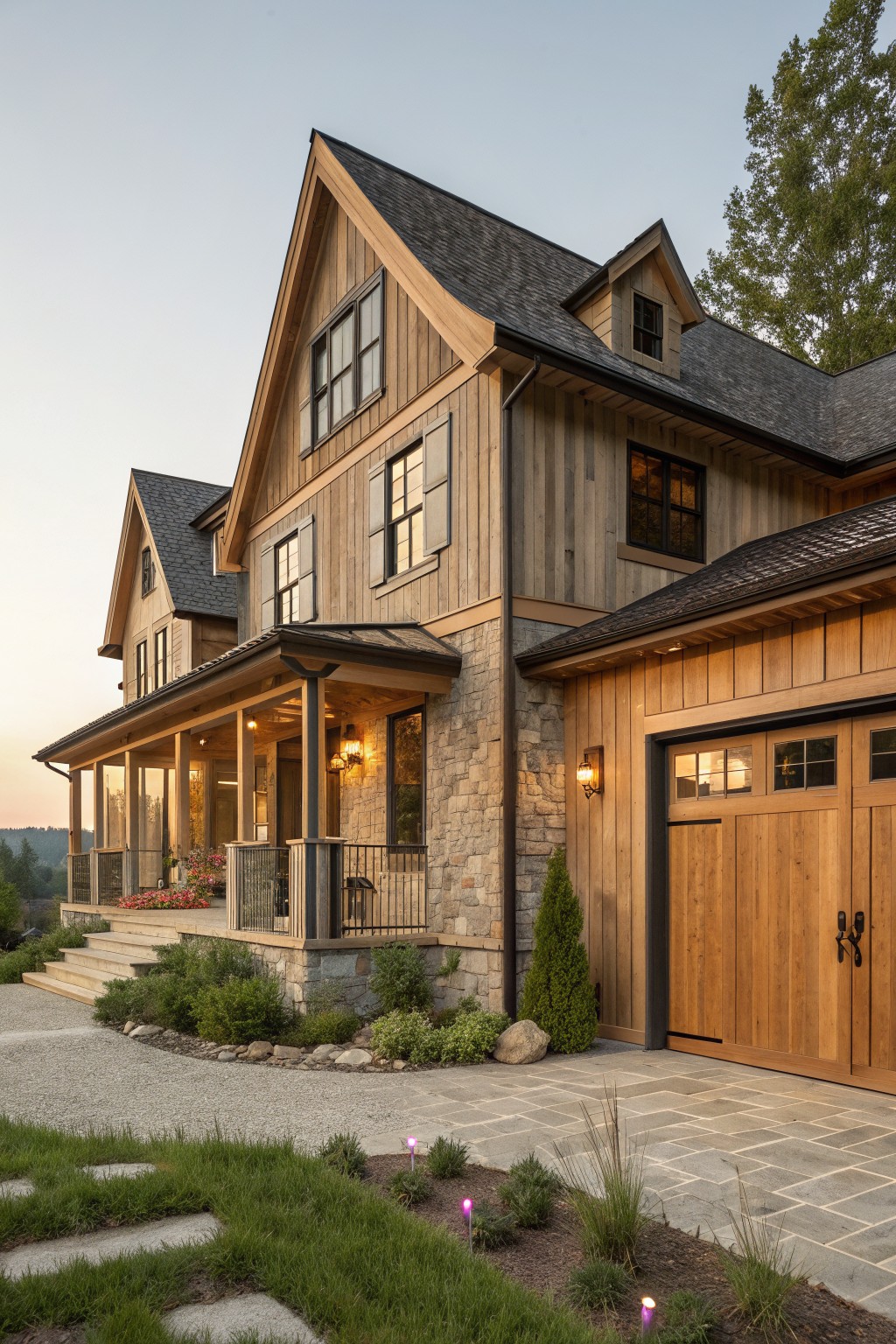
Natural wood siding already brings warmth to a farmhouse, but adding a stone base gives the whole exterior more weight and balance. The stone keeps the lower part of the house from feeling too light while the wood above stays simple and rustic.
This approach works best on homes that sit on a slight slope or need a bit of visual grounding. Keep the stone colors muted so they support the wood rather than fight it, and let the siding run in straightforward vertical boards for the cleanest look.
Natural Wood Siding For A Simple Rustic Look
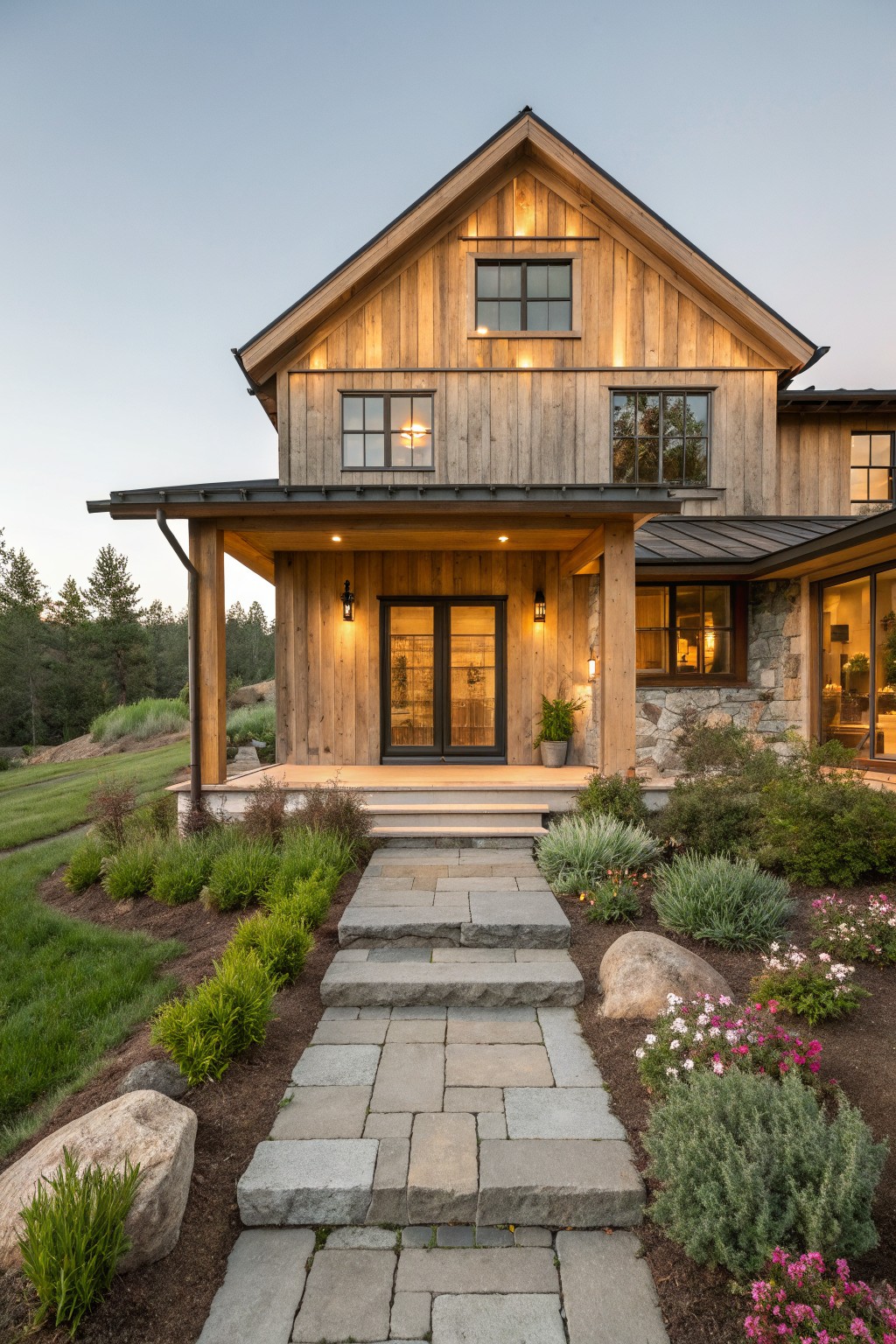
Natural wood siding works well on farmhouse exteriors because it brings warmth without extra trim or decoration. The vertical boards on the upper level and gable keep the house feeling grounded even with a tall roofline.
This approach suits homes in wooded settings where you want the materials to match the landscape. It pairs best with a few stone accents and simple lighting so the wood remains the main feature.
Mixing Wood Siding with Stone
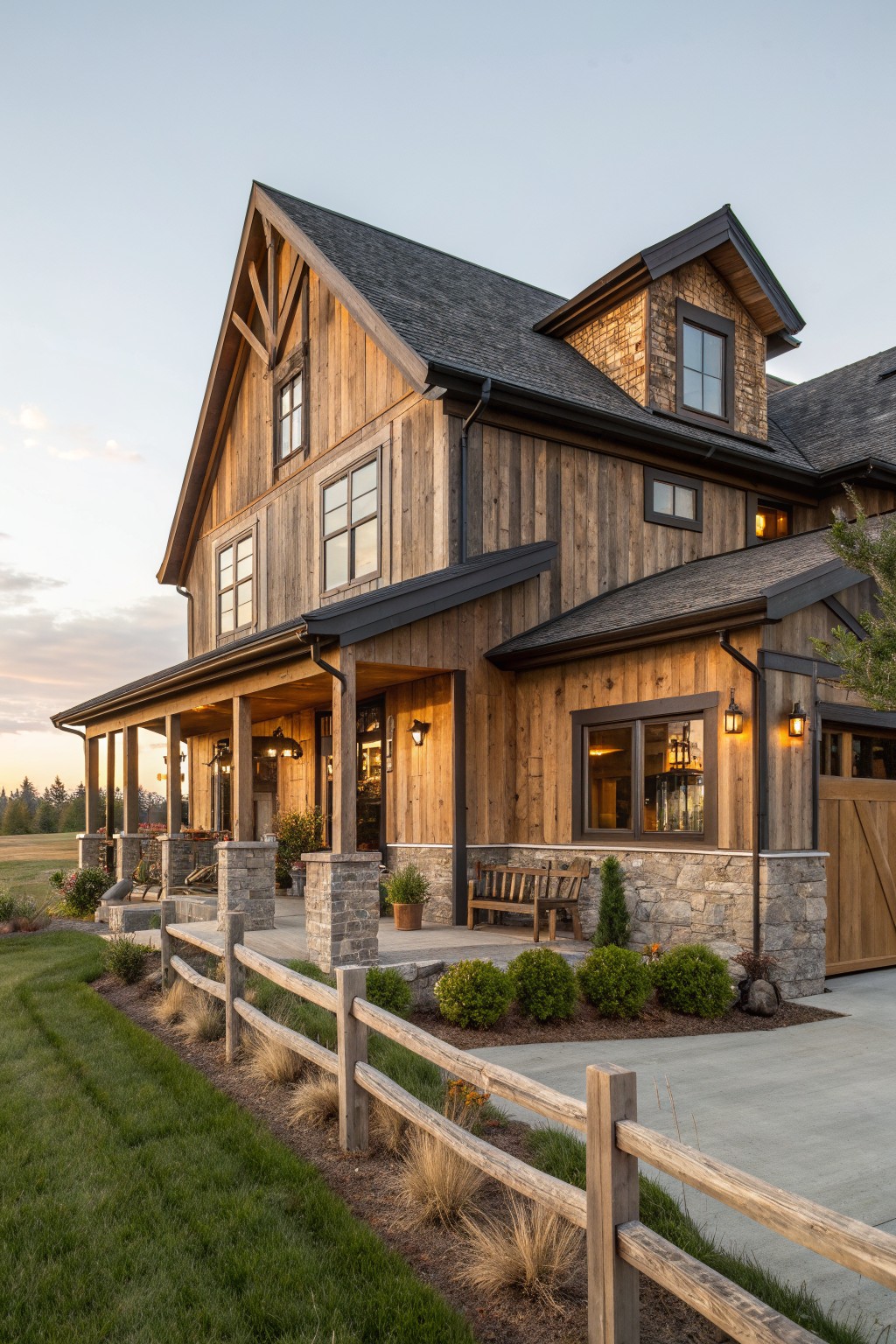
Natural wood siding paired with stone gives a farmhouse exterior that settled, lived-in look without much extra effort. The wood warms up the whole facade while the stone keeps the base feeling solid and practical. This mix works especially well on homes that already have a simple gable shape.
Try keeping the stone low, around the foundation and porch columns, and let the wood carry the rest of the walls. It suits rural or semi-rural lots best, where the materials can echo the surrounding fields and trees. Just watch the proportions so the stone does not overwhelm the wood.
Natural Wood Siding For Farmhouse Exteriors
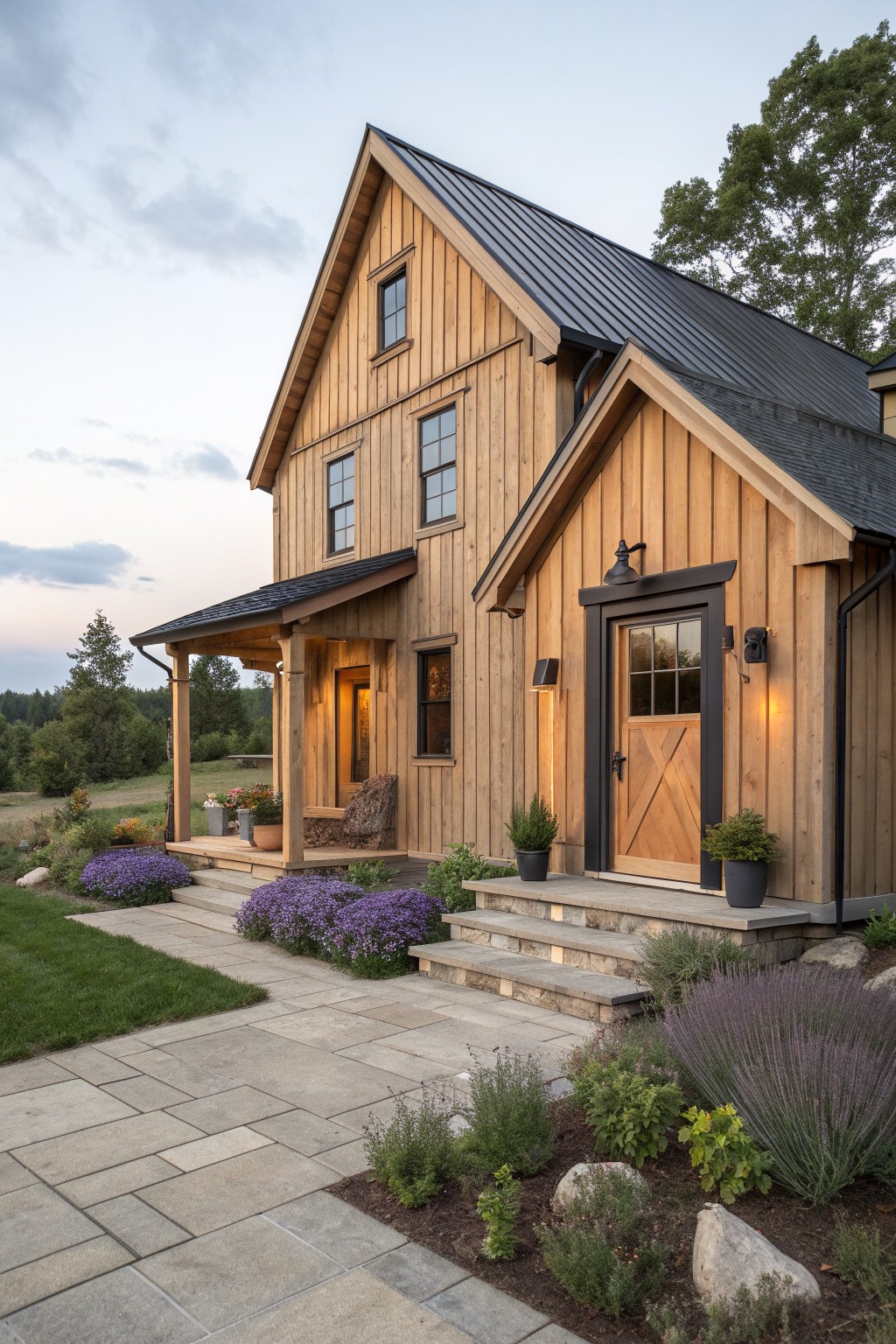
Natural wood siding stands out on farmhouse exteriors because it brings real warmth and texture that paint alone cannot match. The vertical boards show off the grain and slight color shifts that make the house feel settled and welcoming from the road.
This approach works best on homes with simple gable lines and open yards. Keep the roof and window frames dark so the wood stays the main focus and does not compete with too many other materials.
Natural Wood Siding For Rustic Farmhouse Looks
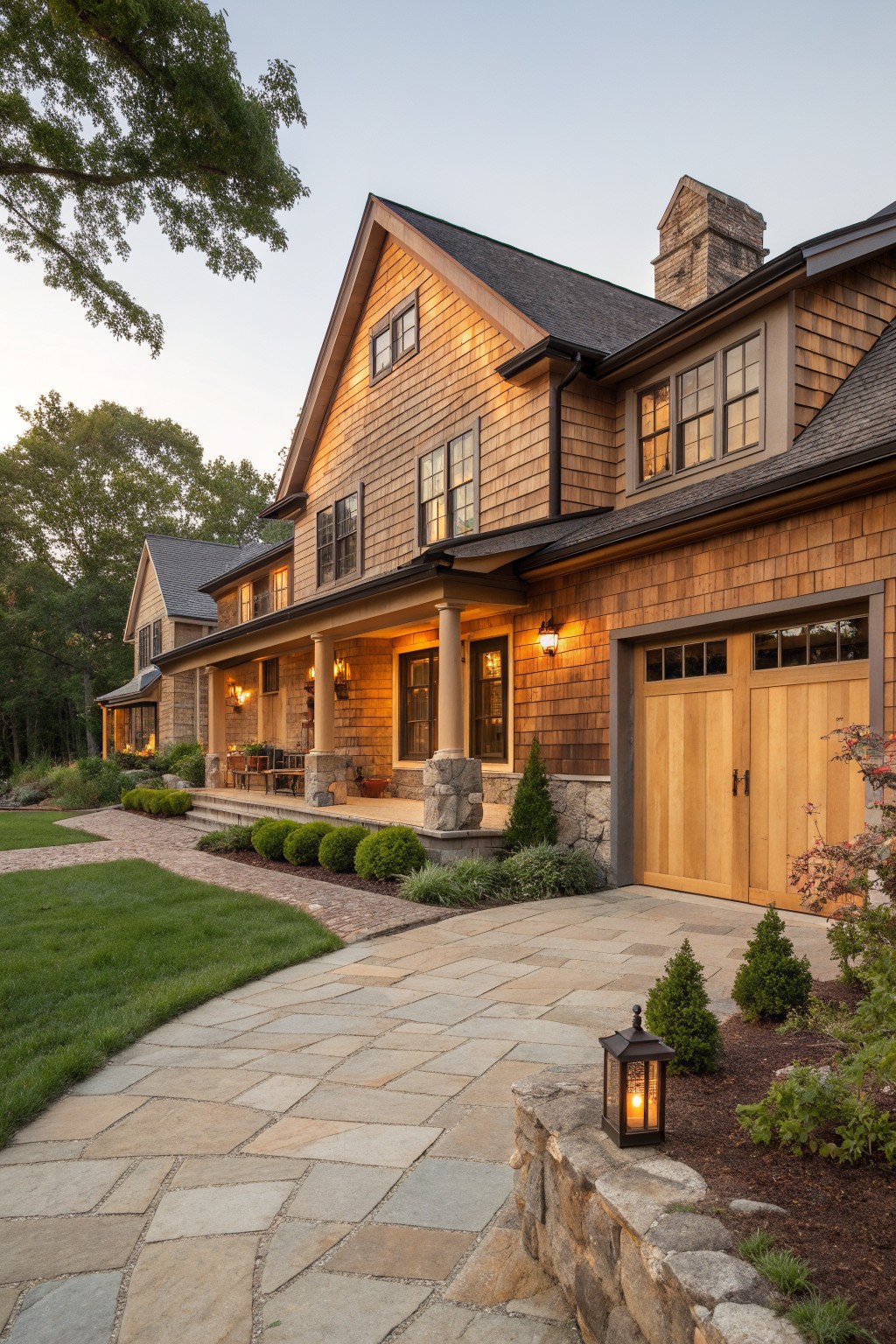
Natural wood siding brings a simple warmth to farmhouse exteriors that paint alone rarely matches. The mix of horizontal boards and cedar shingles lets the house feel layered without looking busy, and the material ages in a way that fits the style.
This works best on homes with some land around them where the wood can connect to nearby trees and fields. Use it on the main body and gables, then bring in stone only at the foundation and porch columns so the wood stays the main feature.
Mix Vertical Siding With Natural Wood Accents
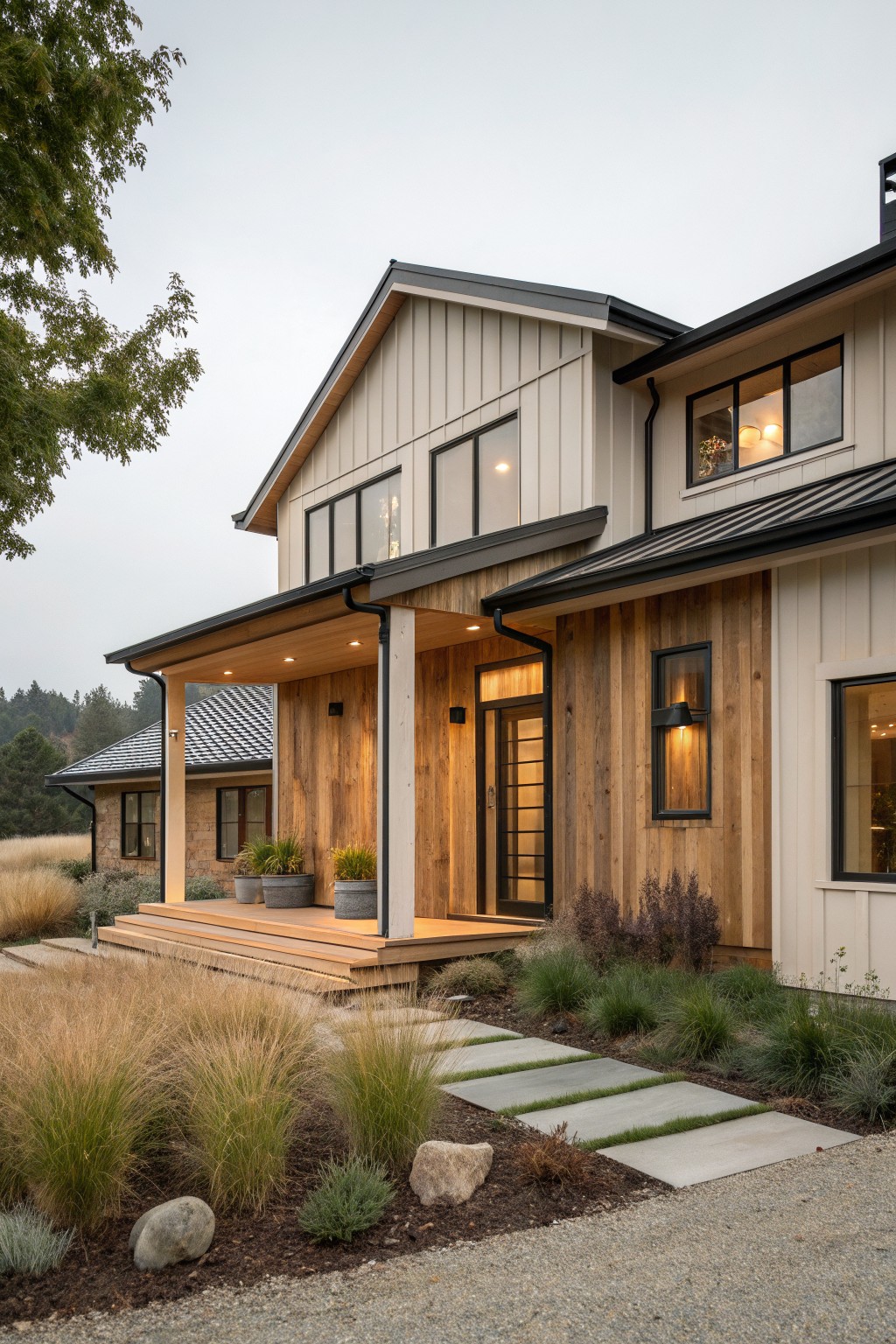
Many farmhouses feel more welcoming when the main walls stay light and simple while wood shows up in key spots. The vertical siding keeps the look clean and bright, and the wood sections bring in that warm, textured quality people want in a rustic exterior.
This approach works well on homes with basic rooflines and not too many angles. Keep the wood on the lower walls, porch ceiling, or around the entry so it adds interest without making the whole house feel heavy.
Natural Wood Siding For Farmhouse Warmth
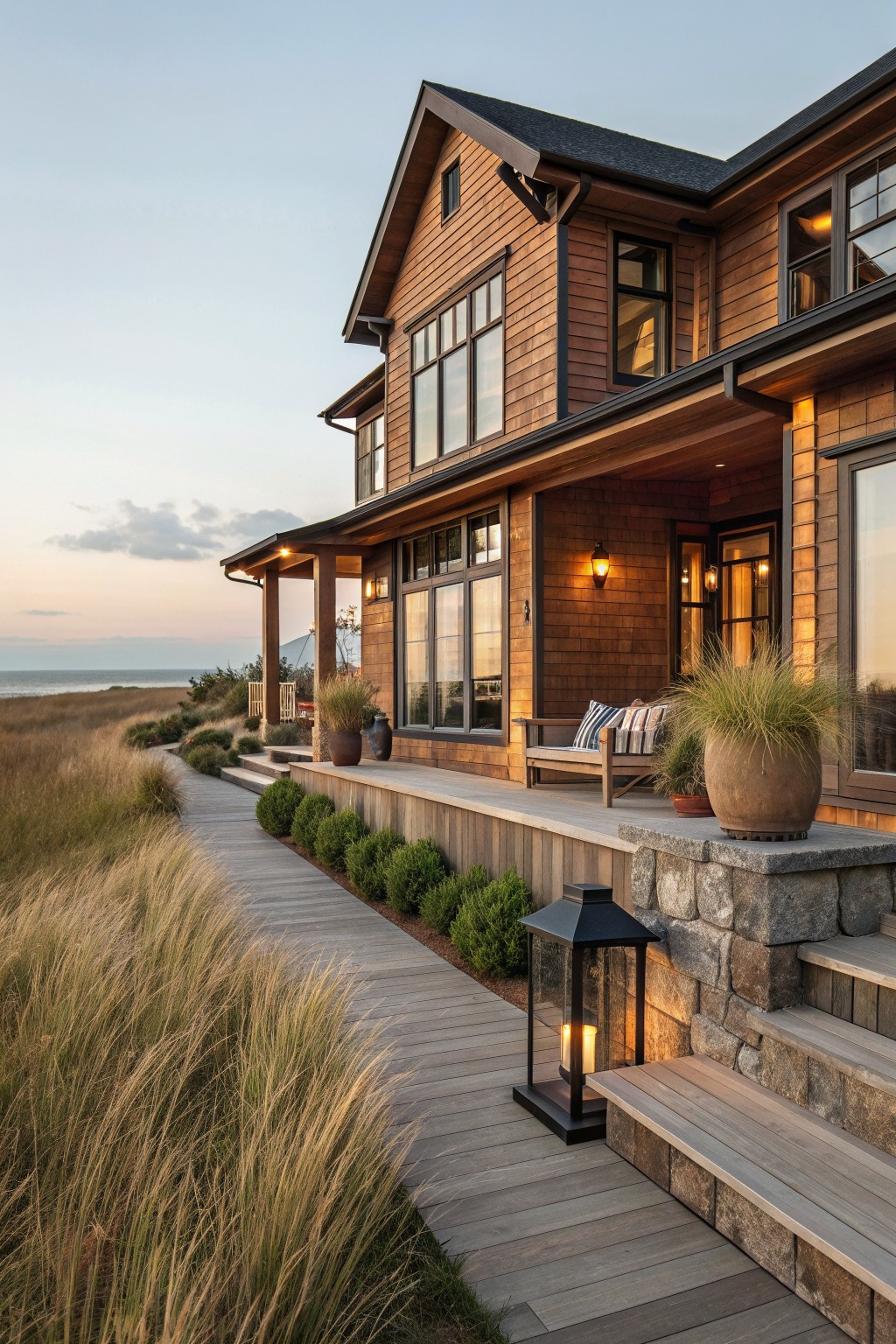
Natural wood siding gives a farmhouse exterior that settled, welcoming feel without much extra effort. The horizontal boards catch light in a soft way and keep the whole house from looking too stark or new.
This approach suits homes in open or coastal settings where you want the structure to blend with the landscape. Use a weathered or stained finish and let the wood run consistently across the main walls so the eye stays on the simple lines rather than on fussy details.
Natural Wood Shingles for Farmhouse Exteriors
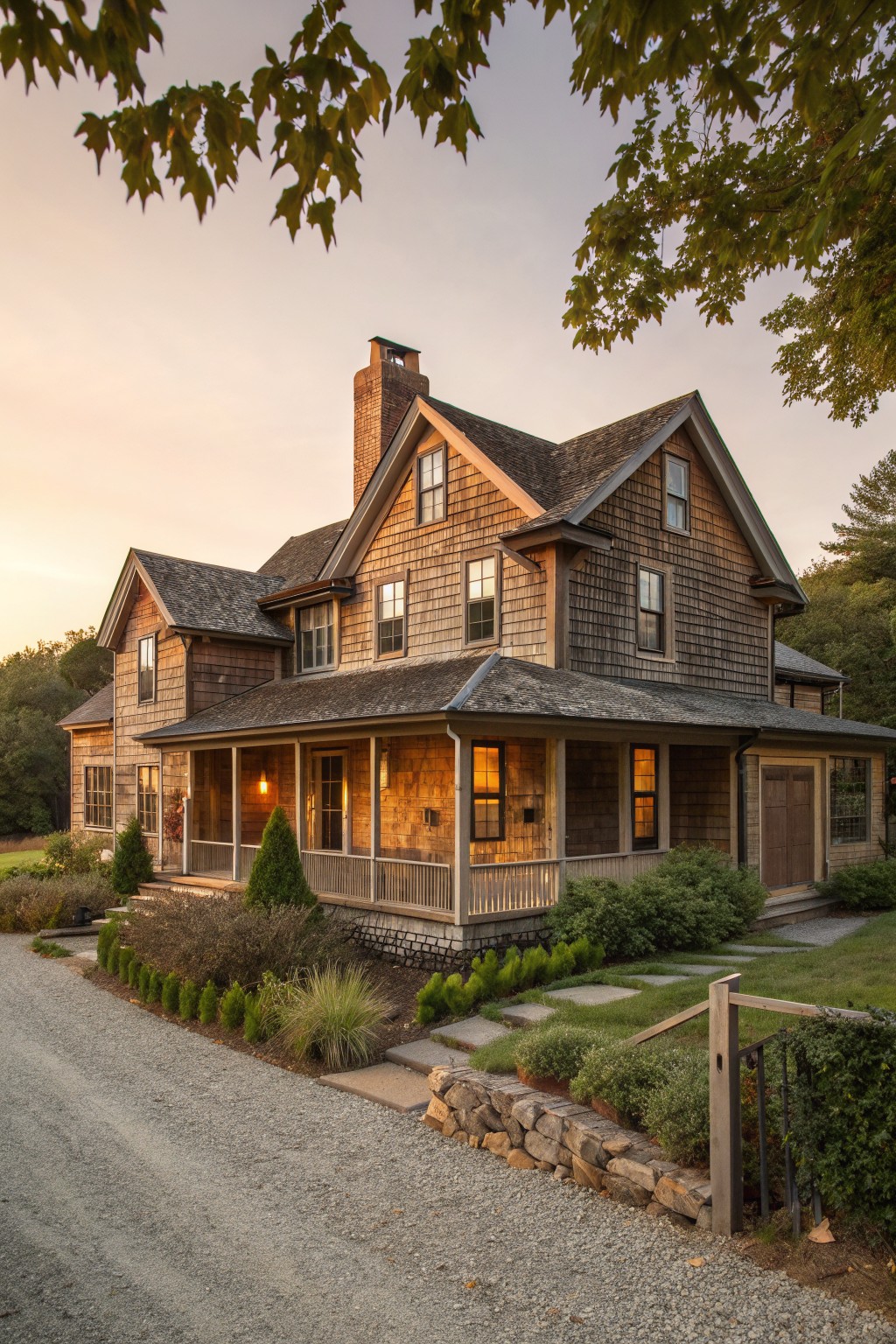
Natural wood shingles give a farmhouse exterior a simple, cohesive look that feels right at home in rural settings. The material ages on its own and softens the overall appearance without extra effort.
This choice works best on houses with straightforward rooflines and a few gables. It pairs well with a basic porch and a low stone base, and it suits properties where the siding can weather naturally over the years.
Horizontal Wood Siding For A Simple Farmhouse Look
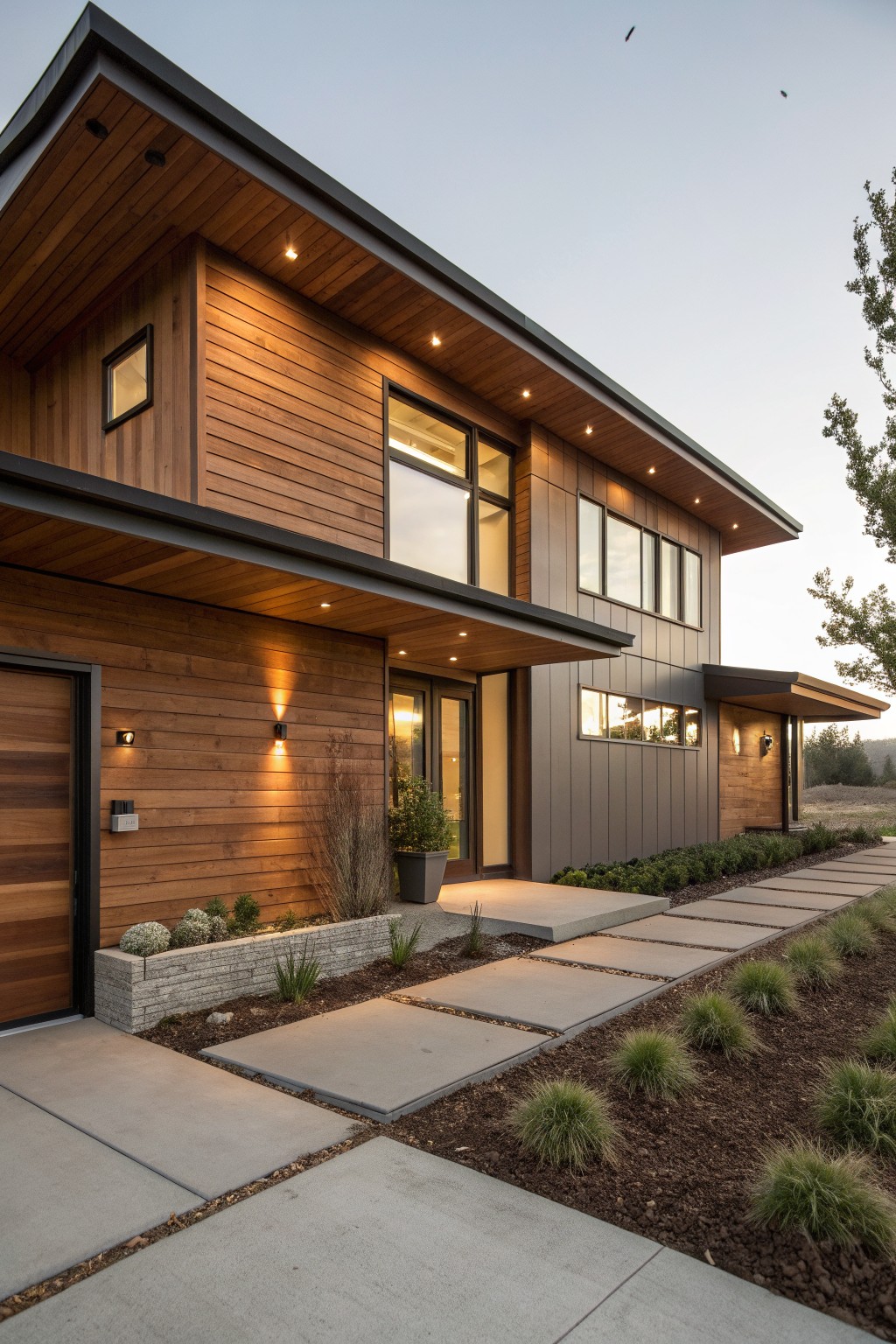
Horizontal wood siding gives a house that grounded, lived-in feel without much fuss. It keeps the lines clean while letting the natural grain do most of the work, which is why it shows up so often on farmhouse exteriors that still feel warm instead of stark.
This style works best on homes with strong roof overhangs and simple window placements. Pair the wood with darker trim or metal details to keep it from looking too flat, and use it on the main body of the house first if you want to test the look before committing to the whole exterior.
Natural Wood Front Doors
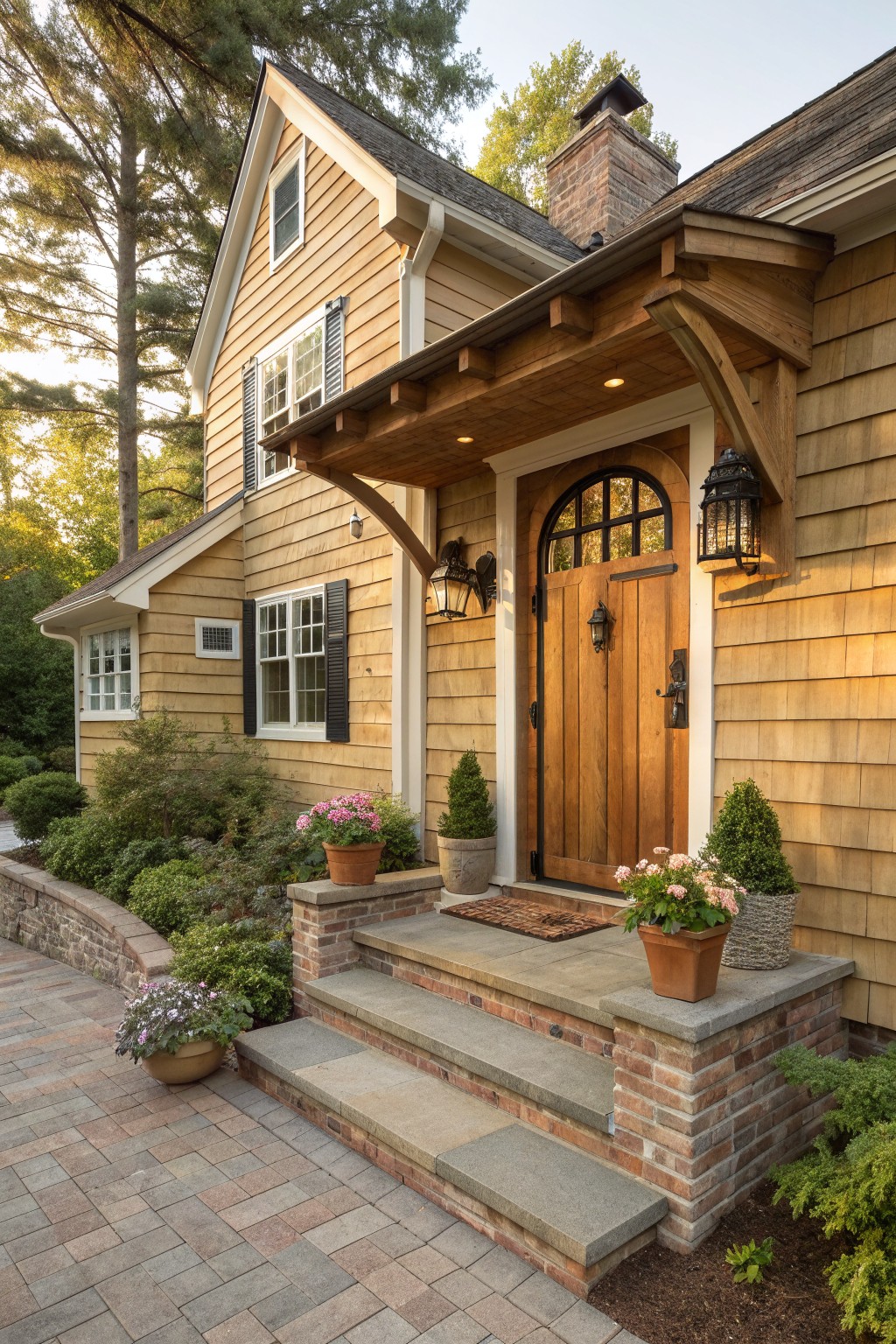
A natural wood door gives a farmhouse exterior an immediate sense of warmth that painted doors often lack. The grain shows through and the material ages in a way that feels settled rather than new.
This choice works well on homes with wood siding and simple trim. Keep the hardware dark and minimal so the wood itself stays the main feature.
Vertical Wood Siding for Farmhouse Exteriors
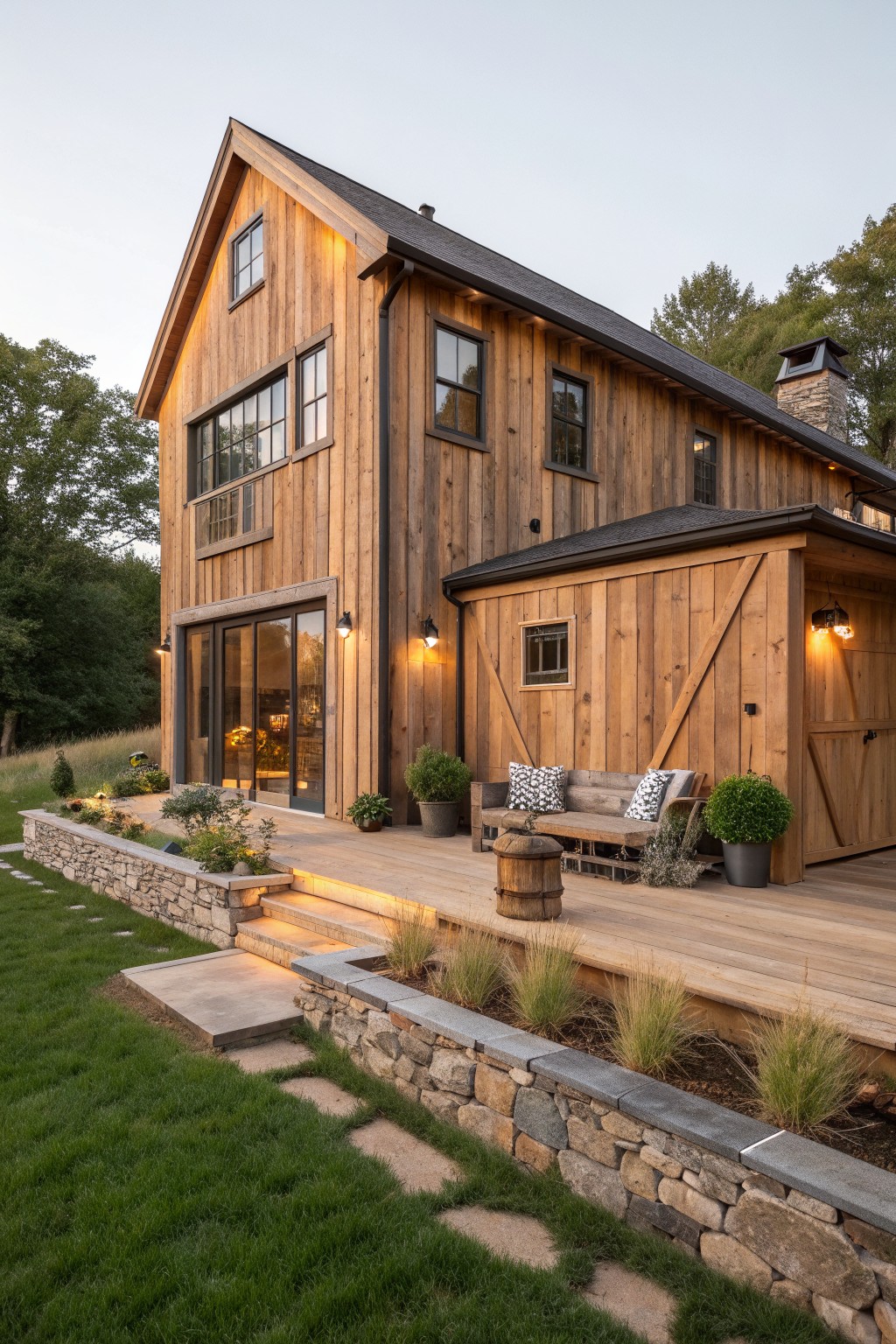
Natural wood siding stands out on farmhouse exteriors because it gives the whole house a simple, solid look that feels right at home in the country. The vertical planks run the full height of the walls and keep the lines clean while still showing the grain and color of the wood.
This approach works best on houses with gabled roofs and pairs easily with a matching wood deck or a low stone base. It suits most climates as long as the wood gets a good finish to hold up over time.
Mix Wood Siding With Stone Accents
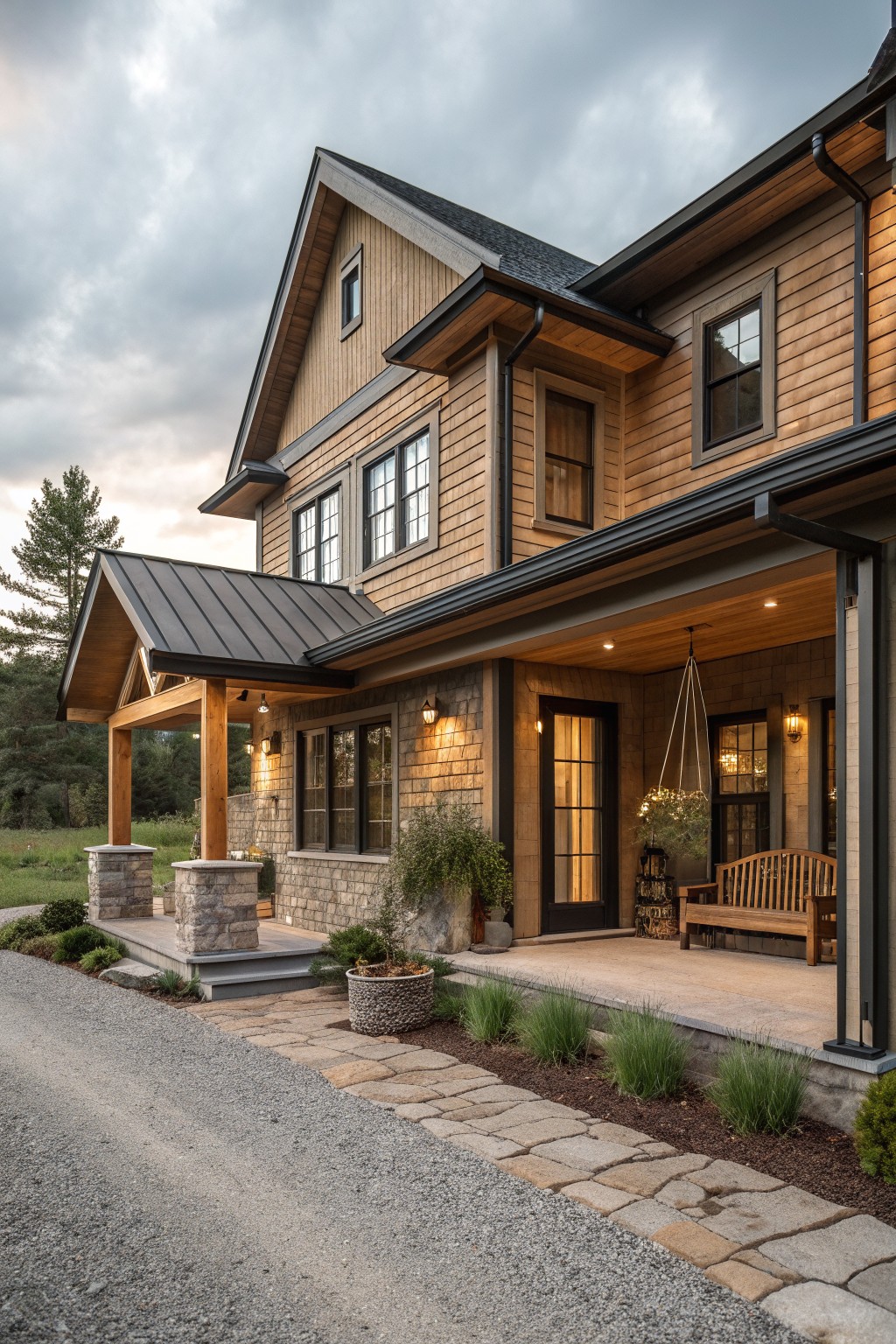
Natural wood siding works well on farmhouse exteriors because it brings warmth and texture that painted surfaces often lack. Pairing it with stone around the base or on select walls keeps the look balanced and helps the house feel more rooted to the site.
This approach suits two-story homes with simple rooflines and covered porches. Keep the wood in its natural tone and limit the stone to lower sections or columns so the siding stays the main feature.
Mixing Wood Siding With Stone Accents
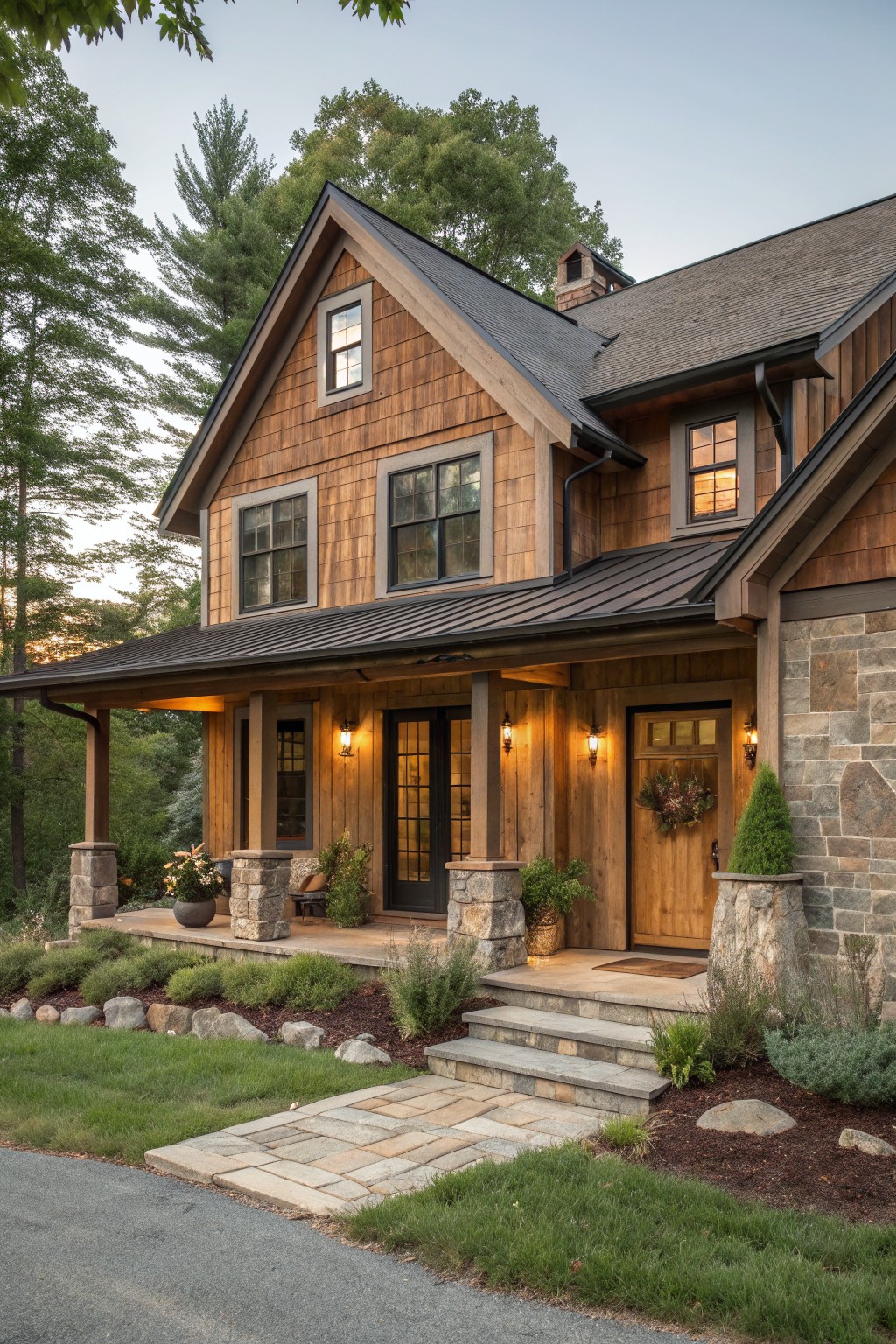
Natural wood siding gives a farmhouse that lived-in warmth right away. It works especially well when you let the wood cover most of the walls and then bring in stone only at the base or on key supports like porch columns. The contrast keeps the look from feeling flat while still staying simple.
This approach suits homes that already have a straightforward roofline and a decent front porch. Keep the stone fairly local so it does not take over, and make sure the wood has enough protection from weather so it ages evenly instead of streaking.
Natural Wood Siding for a Simple Farmhouse Look
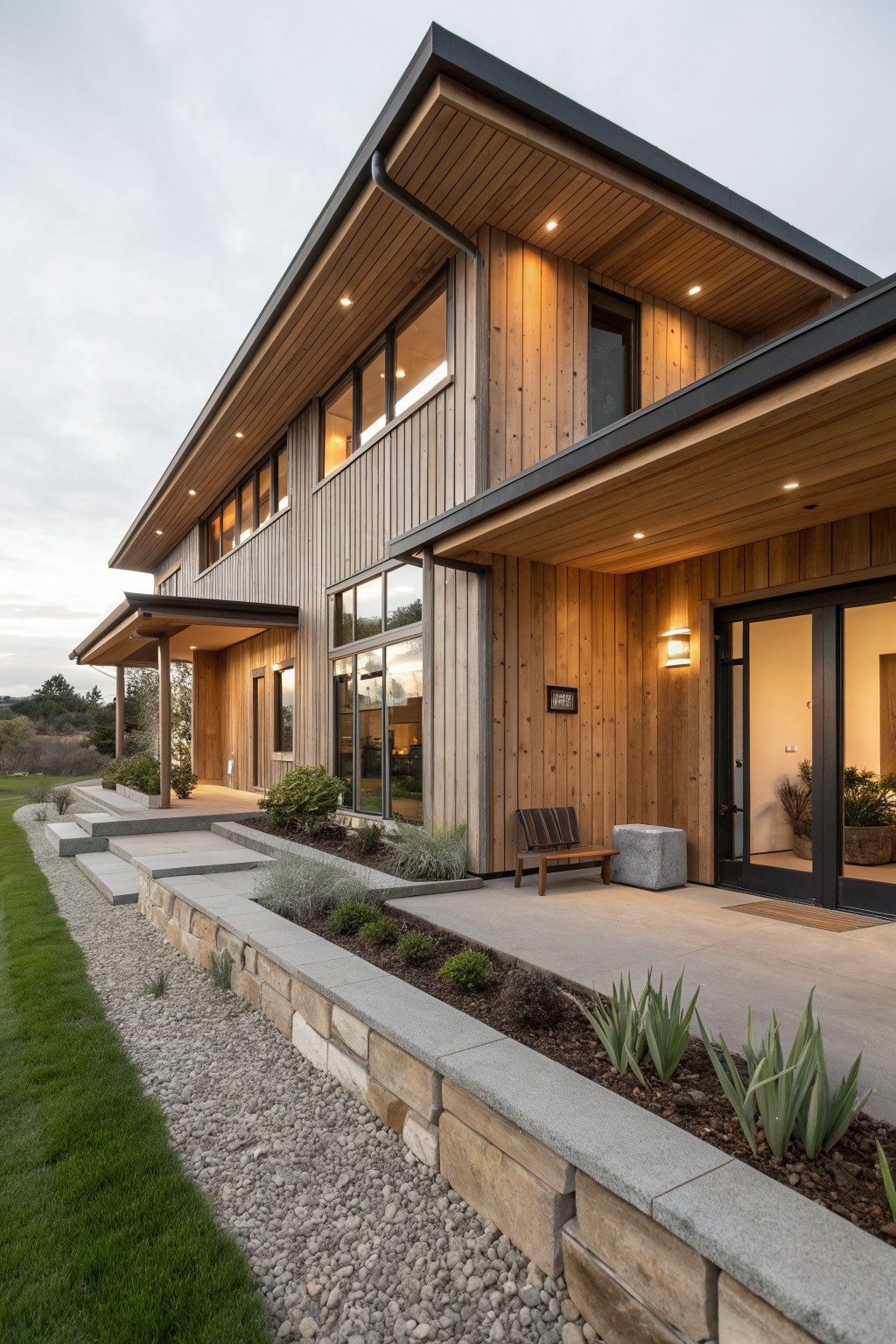
Natural wood siding gives a farmhouse exterior real warmth without needing a lot of extra detail. It works because the material itself adds texture and color that feels lived in, especially when the boards are allowed to show their natural grain.
This approach suits homes with straightforward rooflines and larger windows. Keep the trim dark so the wood stays the main focus, and limit the number of siding directions to avoid a busy look.
Natural Wood Siding for Farmhouse Exteriors
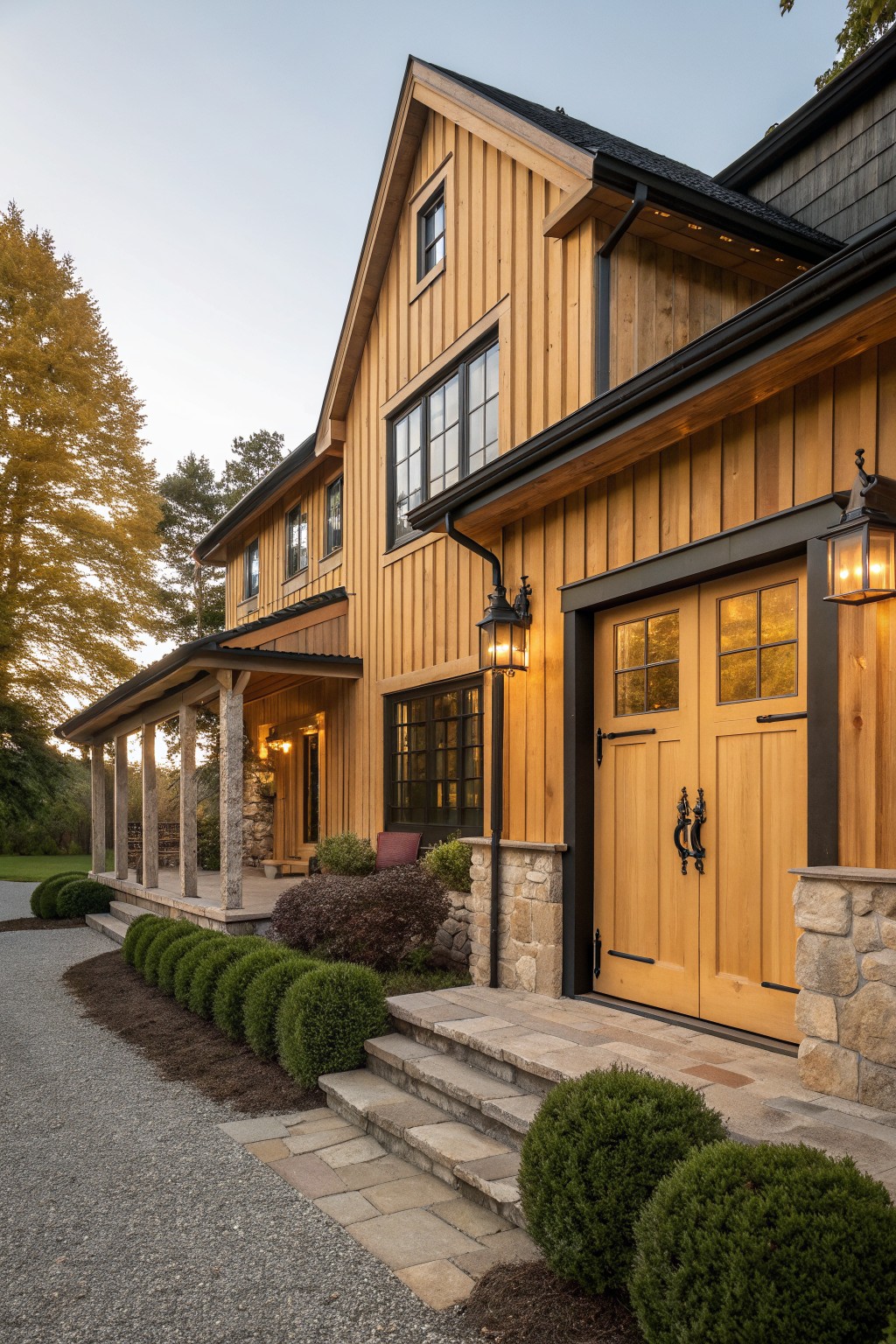
Natural wood siding gives a farmhouse exterior a straightforward warmth that feels settled and real. Vertical boards keep the look clean while letting the grain and tone do most of the work.
This approach works best on homes that already have a simple roofline and some stone at the base. Pair it with dark trim and hardware so the wood reads as the main material instead of competing with too many other finishes.
Natural Wood Siding For A Warm Rustic Look
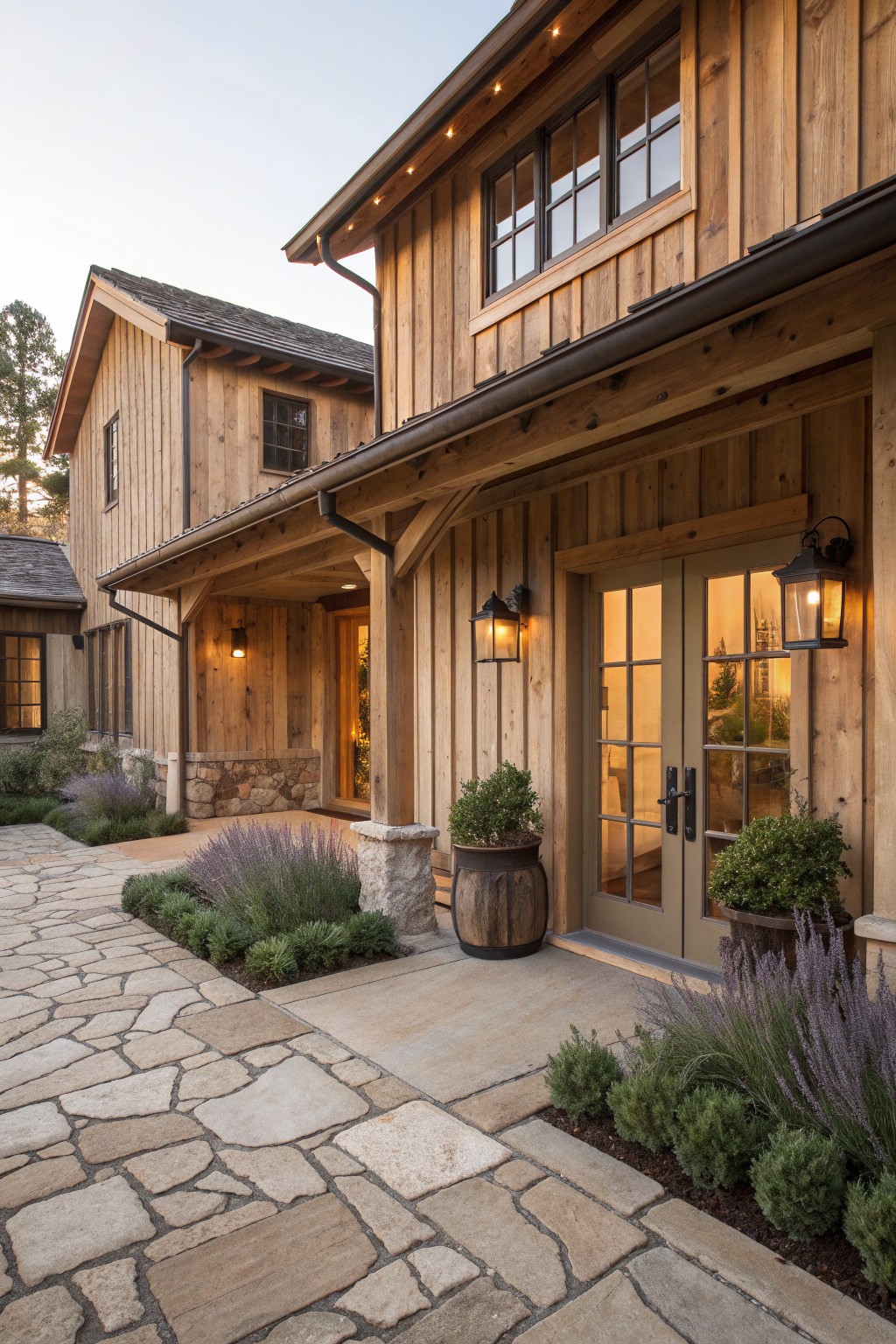
Natural wood siding gives a farmhouse exterior that settled, lived-in feel without much extra effort. The vertical planks catch the light in a way that makes the whole house feel softer and more welcoming, especially when the wood is left in its natural tone.
This approach works best on homes that already have simple rooflines and a few stone details at the base. It suits properties in wooded or rural settings where you want the house to blend in rather than stand out. Just keep the trim minimal and let the wood do most of the work.
Natural Wood Siding For Rustic Warmth
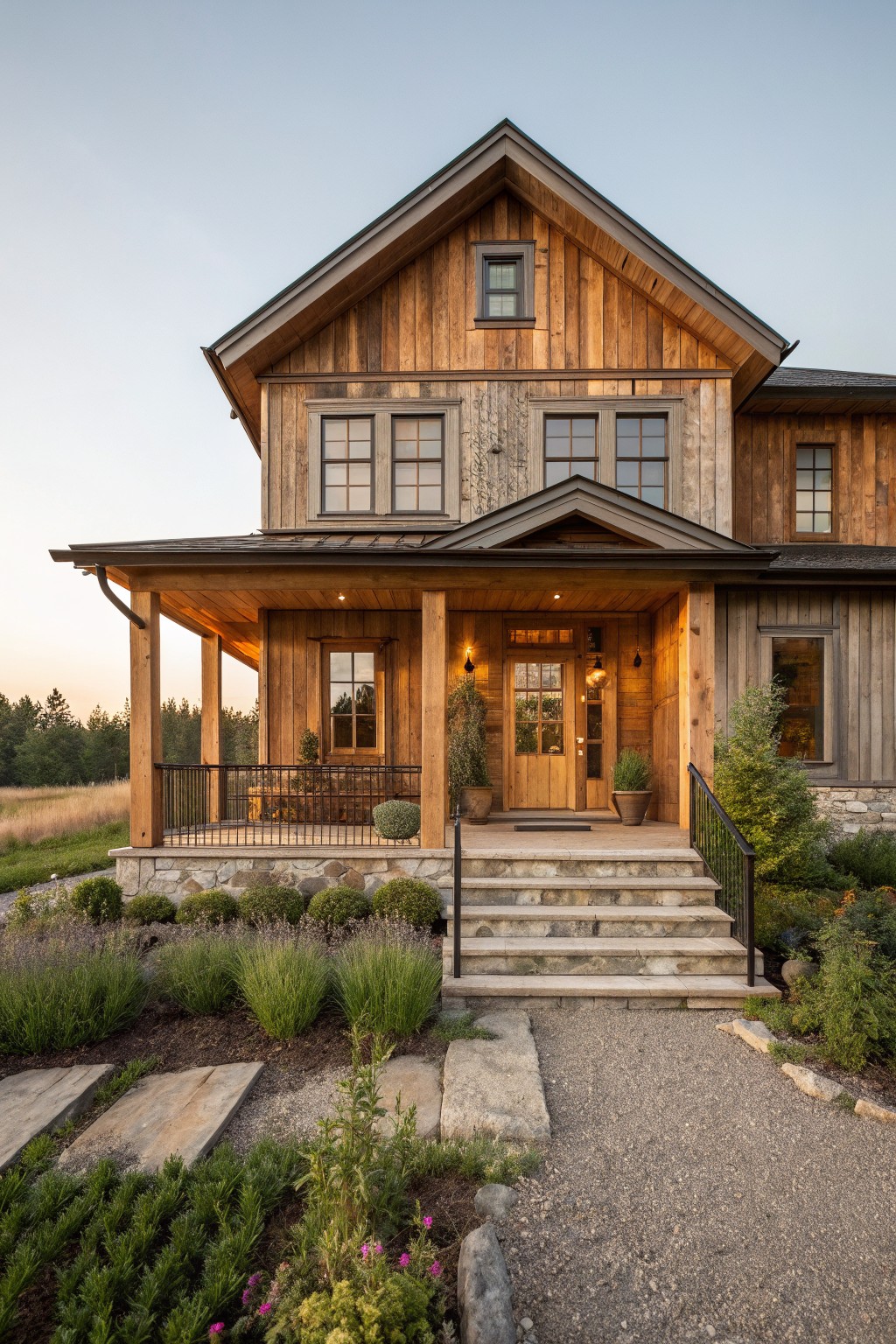
Mixing boards with different tones of natural wood gives a farmhouse exterior that settled, welcoming look. The variations in color and texture keep the surface from feeling flat while still reading as simple and straightforward.
This works best on homes that already have a gabled roofline and a front porch. Keep the trim minimal and let the siding carry the character so the whole facade stays balanced.
Wood Siding With Stone Foundations
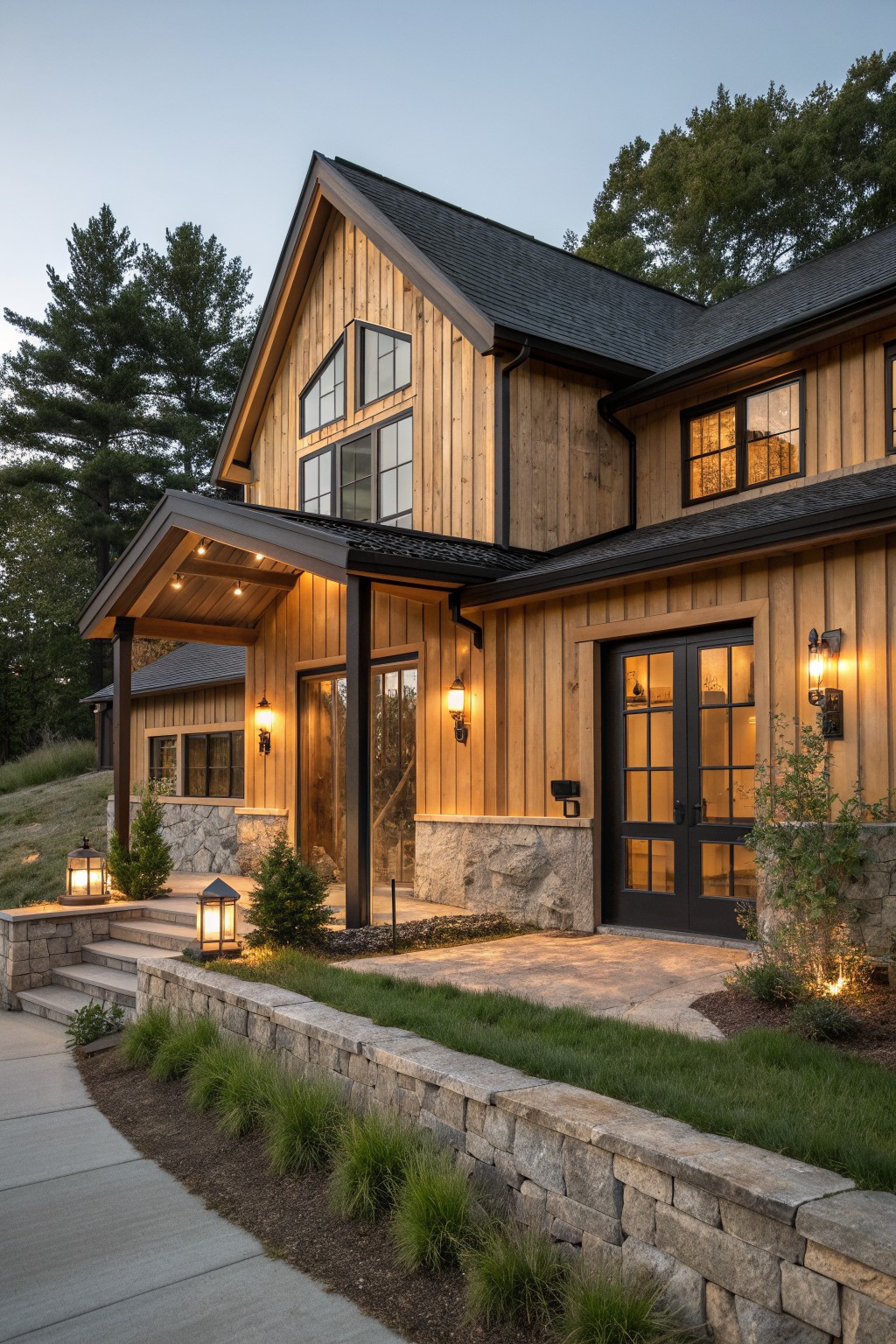
Natural wood siding paired with a stone base gives a farmhouse exterior a solid, lived-in look without much extra effort. The wood keeps things light and warm while the stone anchors the lower part of the house and adds some texture where it meets the ground.
This combination works best on homes with a simple roofline and plenty of windows. Use it when you want the house to feel connected to the landscape rather than sitting on top of it. Stick to unfinished or lightly stained wood so the stone does not get lost.
Natural Wood Beams Over The Entry
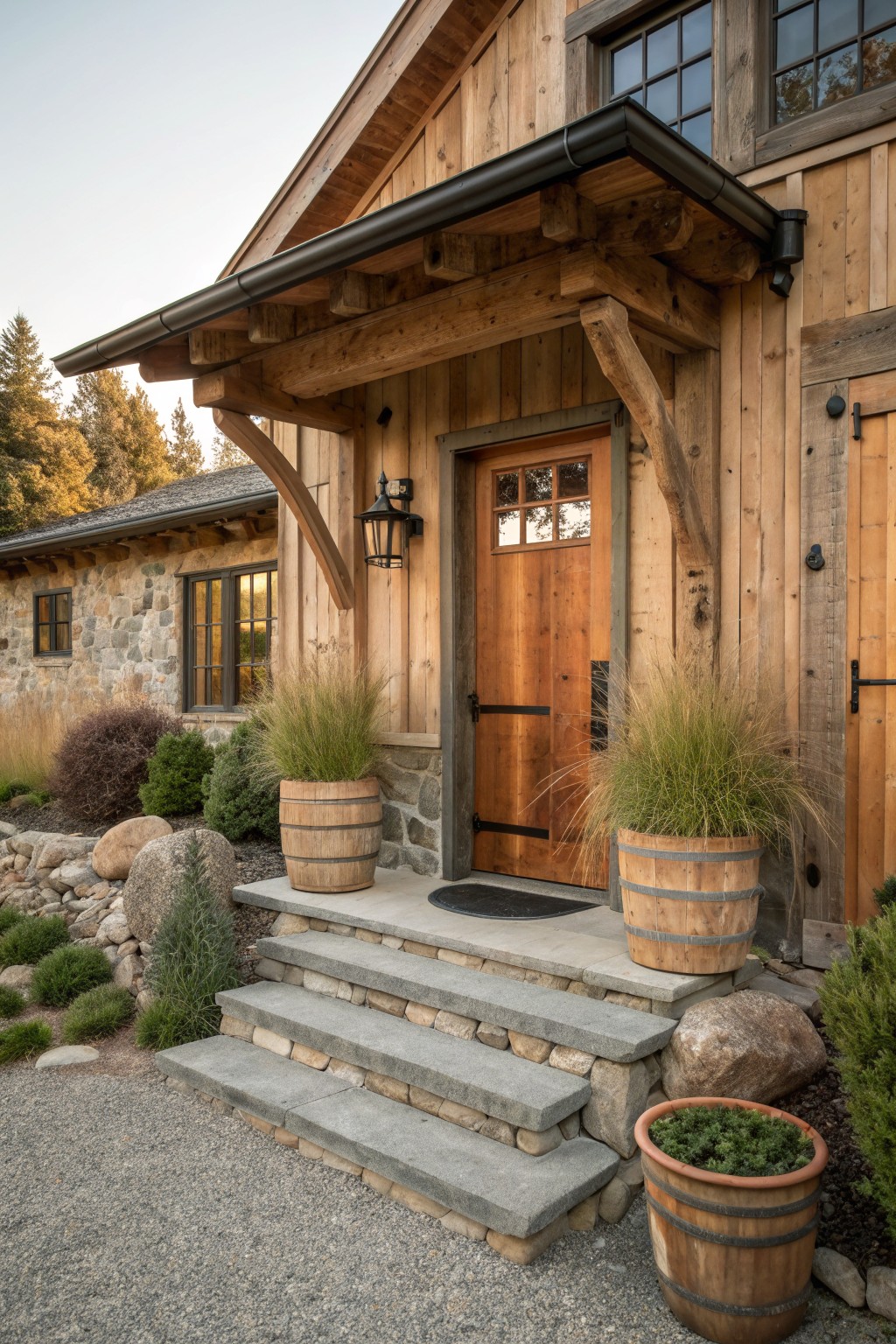
Natural wood beams give an entry a solid, grounded feel without any extra trim or decoration. They support a simple overhang and tie the door right into the rest of the wood siding so the whole front looks like one piece.
This works well on homes that already lean rustic. Keep the wood tones similar and let the beams do the work. Stone at the base adds just enough contrast without breaking the look.
Wood Siding With Stone For Farmhouse Exteriors
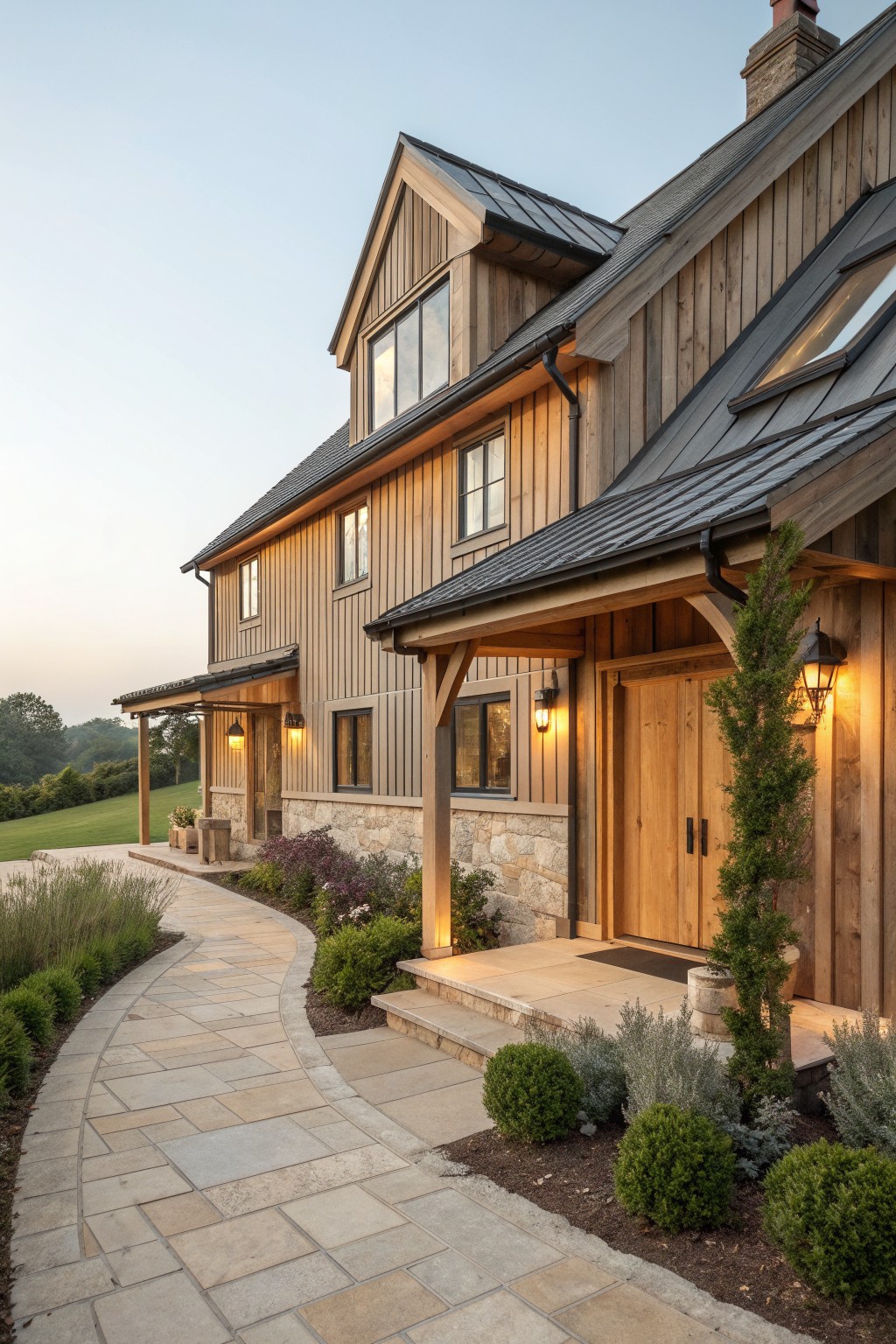
Natural wood siding paired with a stone base gives a farmhouse a grounded look that feels both simple and solid. The vertical boards add height and texture while the stone keeps the lower part of the house from feeling too light or plain. Many people like this mix because it ages well and needs little extra decoration to feel complete.
This approach works best on homes with a straightforward roofline and a clear front entry. Use the stone only on the lower third or so and let the wood run the rest of the way up. It suits rural settings or homes with open land around them, but it can feel heavy if the stone covers too much of the facade.
Frequently Asked Questions
Q: How often should I seal the wood to stop it from weathering too fast?
A: Apply a good sealant every two years if your climate is sunny and dry. This keeps the grain looking fresh without much effort. Check the surface each spring and touch up any spots that look dry.
Q: Will different woods clash if I use more than one type on the front?
A: Pick grains that are similar in tone so they blend naturally. You can test a few boards side by side before committing. Most people find cedar and pine work well together when both are left unstained.
Q: What if heavy rain hits my wood siding every year?
A: Choose naturally rot resistant species like cedar. Elevate the bottom boards off the ground to avoid splash back.
Q: Do I need to match the wood to my existing shutters and doors?
A: Go for contrast instead. A warm wood tone next to painted trim often adds the rustic feel without looking too matched.
