

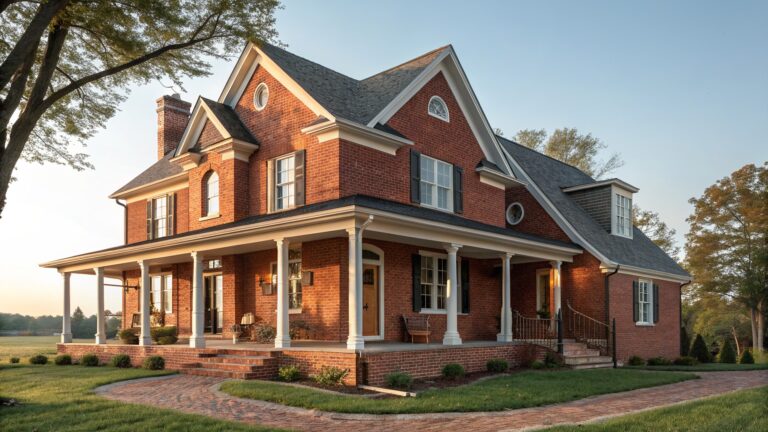
I’ve spent years noticing how brick exteriors on farmhouses tend to settle into their surroundings in a way that painted siding rarely matches.
The material choice affects everything from how the roofline sits against the sky to the way an entry feels when you approach it on foot.
I have walked past homes where the brick texture made the whole facade feel solid and lived in rather than flat.
Some patterns work better than others depending on the light in that particular spot.
Brick holds up in ways that make me want to test a few samples on my own place before deciding.
Brick With Black Shutters
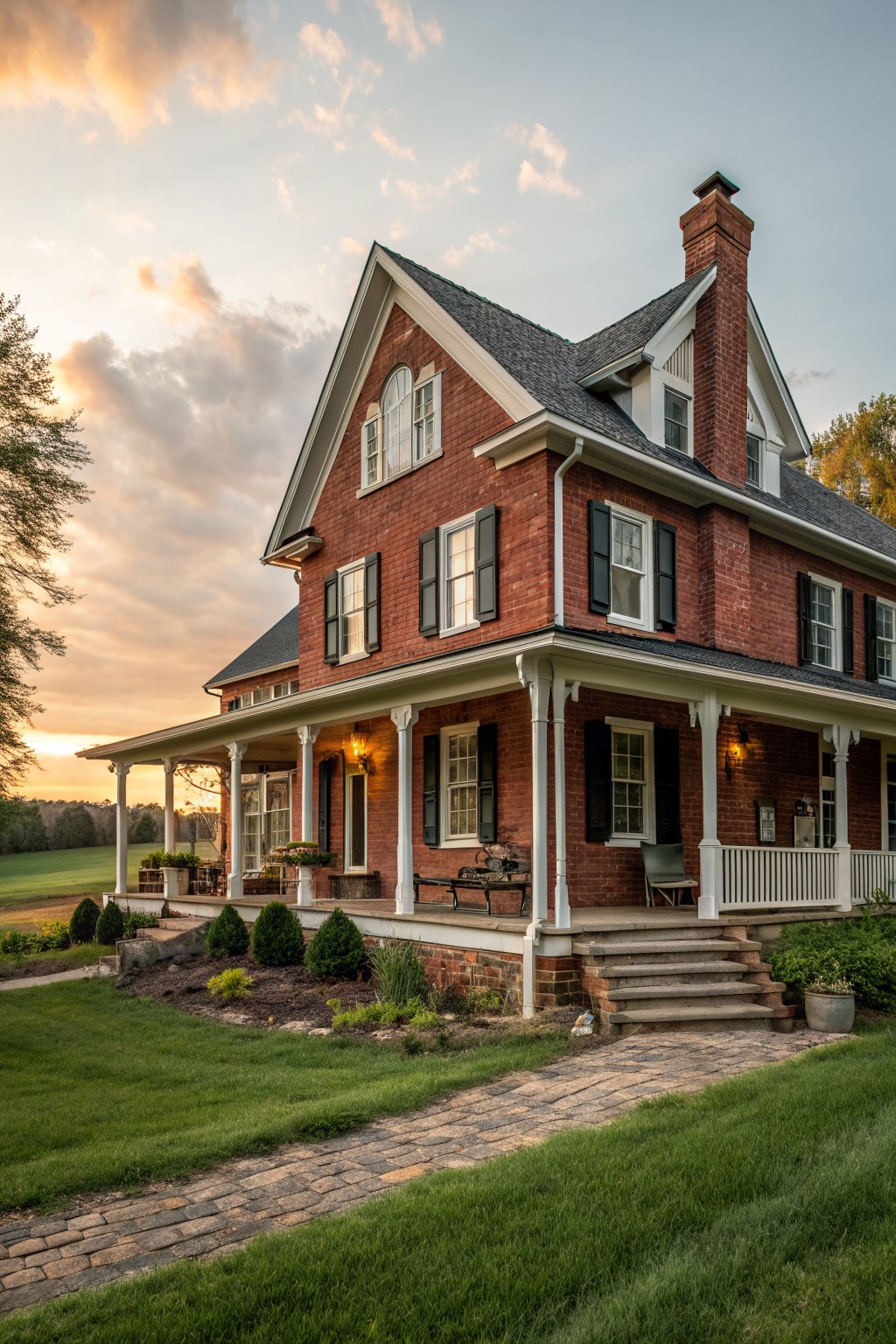
Red brick already gives a house plenty of texture on its own. Adding black shutters keeps that texture from feeling flat and gives the whole front a sharper, more finished look without adding much extra detail.
This works best on traditional farmhouses where the goal is to stay classic rather than trendy. Keep the trim light so the shutters stand out, and make sure the brick has some natural variation so the surface stays interesting up close.
Wide Front Porches That Suit Classic Farmhouses
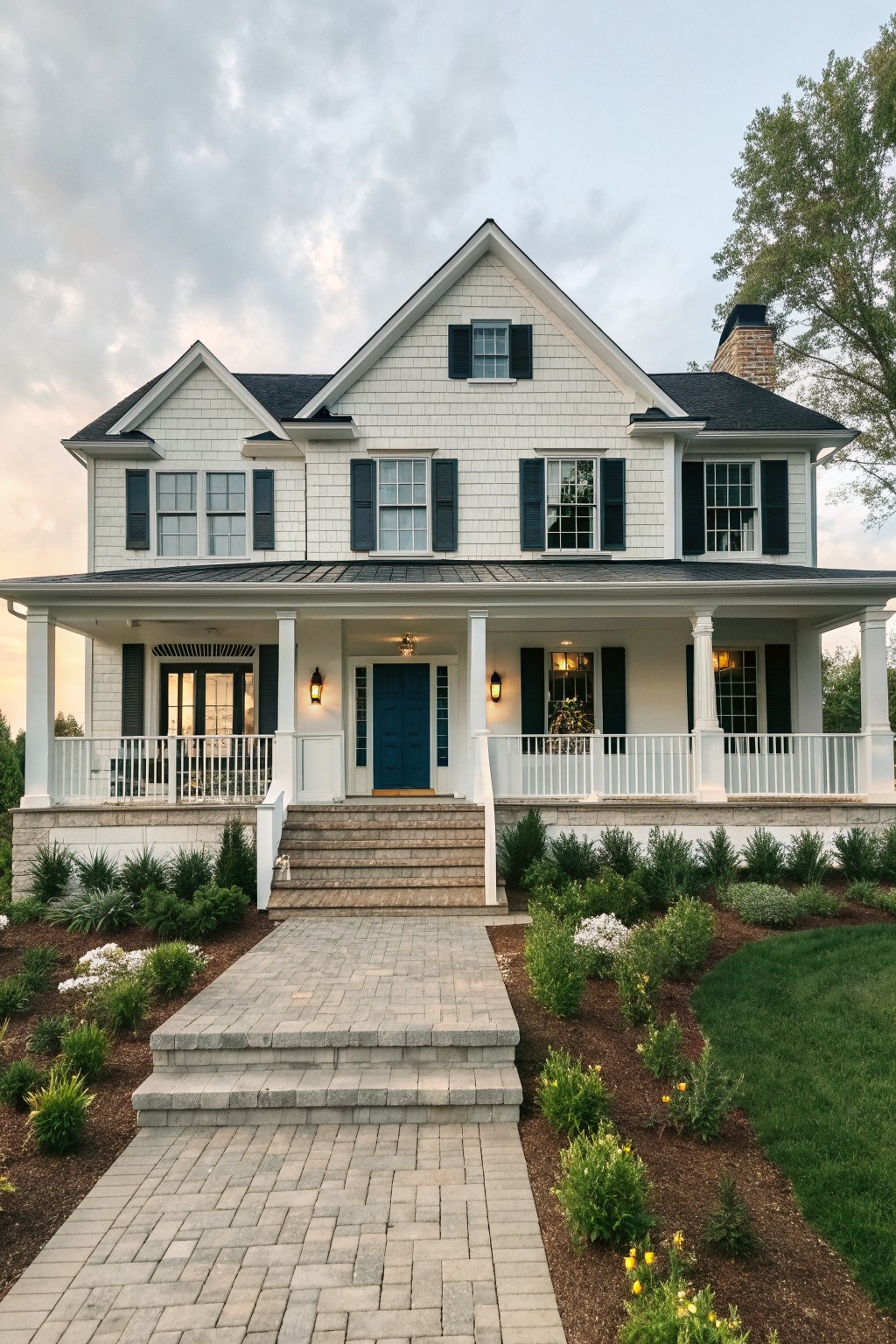
A wide front porch gives a farmhouse that settled, traditional look without much extra effort. The simple columns and open railing keep the whole front feeling balanced while still offering shade and a place to sit.
This works best on two-story homes with a centered entry. It helps tie the facade together and adds usable space that feels natural to the style.
Mixing Stone with Wood Details
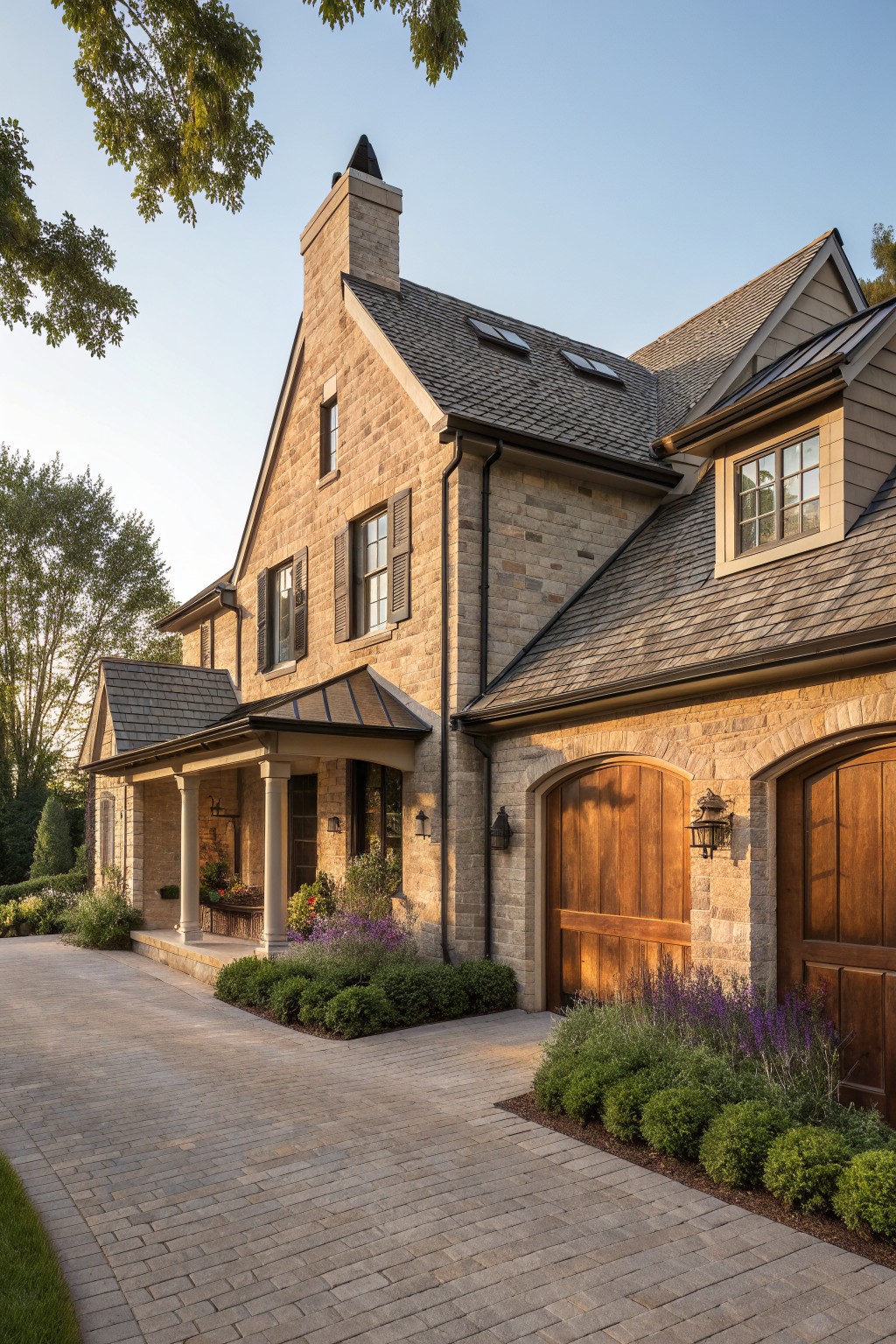
Stone walls gain a lot from wood accents on doors and trim. The two materials play off each other and keep the whole exterior from feeling flat or overly heavy.
This works best on larger homes where the garage or entry takes up a good portion of the front. Use it when you want the house to feel traditional without going all one material.
Brick Arches Over the Entry
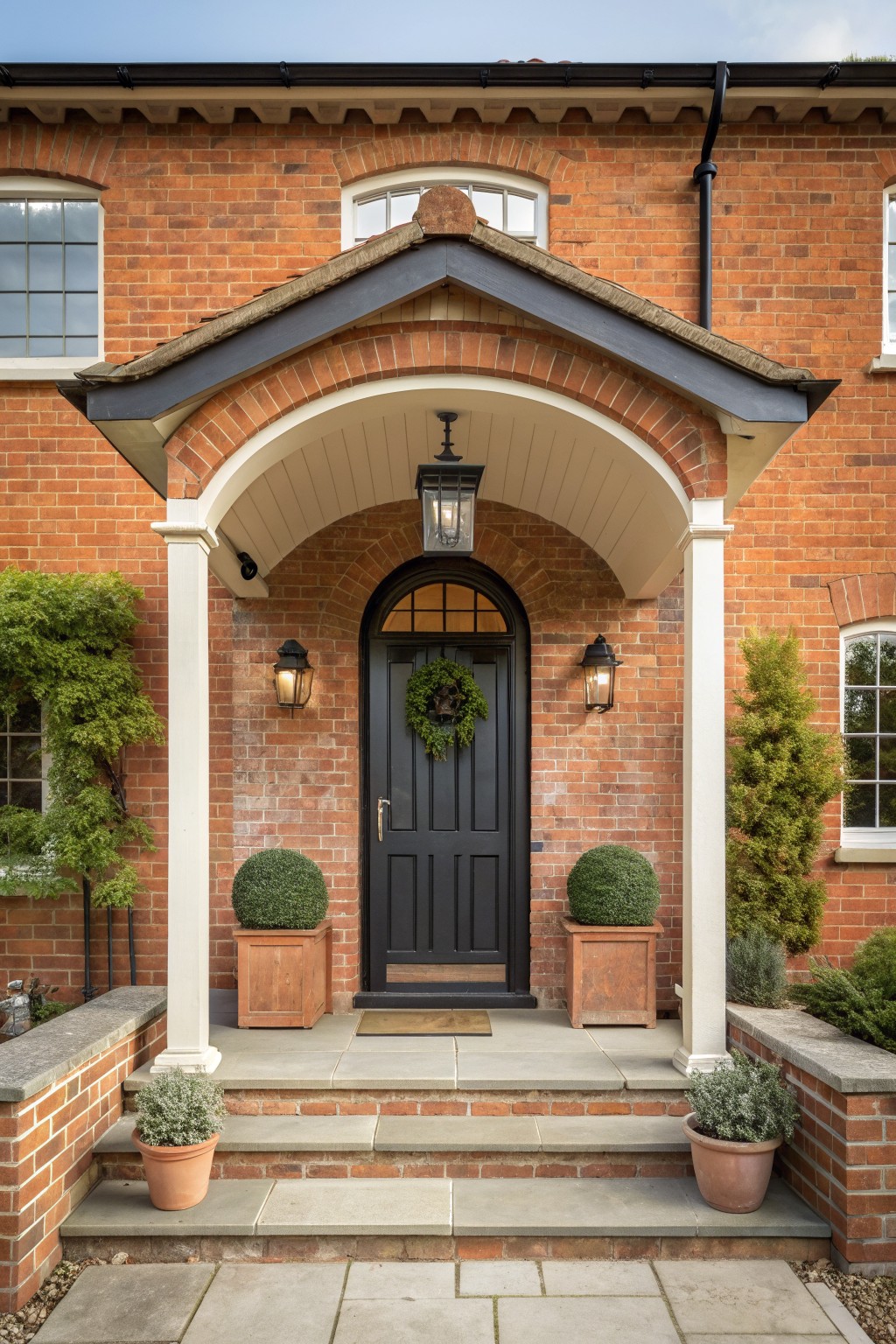
An arched brick entry gives a farmhouse that settled, traditional feel without adding a lot of extra pieces. The curve breaks up the flat brick wall and draws attention straight to the door in a quiet way.
This detail suits homes where brick is already the main material. Keep the arch clean, choose a dark door, and let the brick do most of the work. Two simple planters on either side are usually enough.
Brick With White Trim On Farmhouses
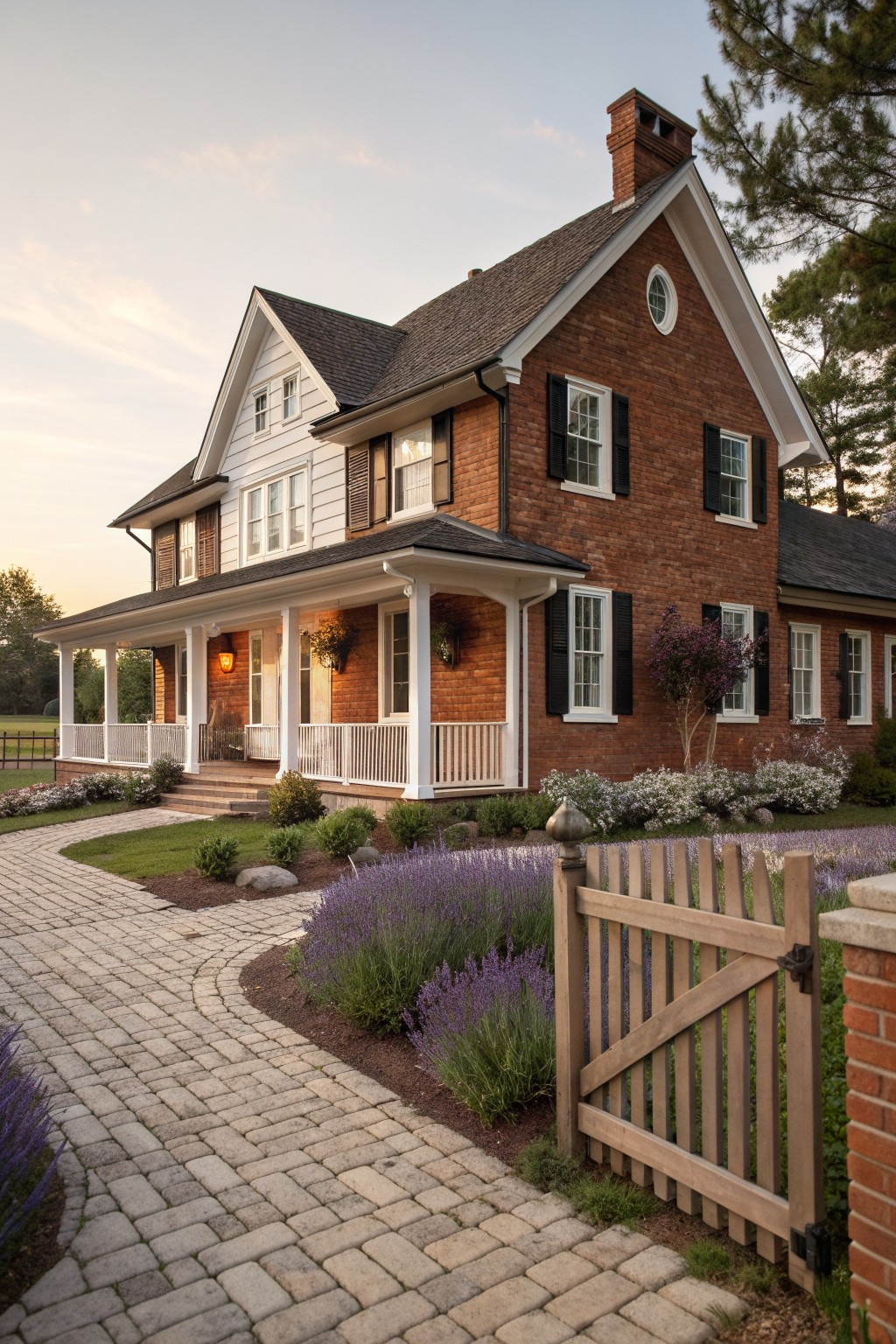
Brick works well on farmhouse exteriors because it gives the walls a solid, textured surface that feels grounded and lasting. The red tones add warmth without extra decoration, and the material holds up over time in most climates.
Try using brick on the main body of the house and white siding or trim on the gables and porch posts. This mix keeps the look balanced and suits homes that already have a simple roofline and porch structure.
Brick with Matching Wood Siding
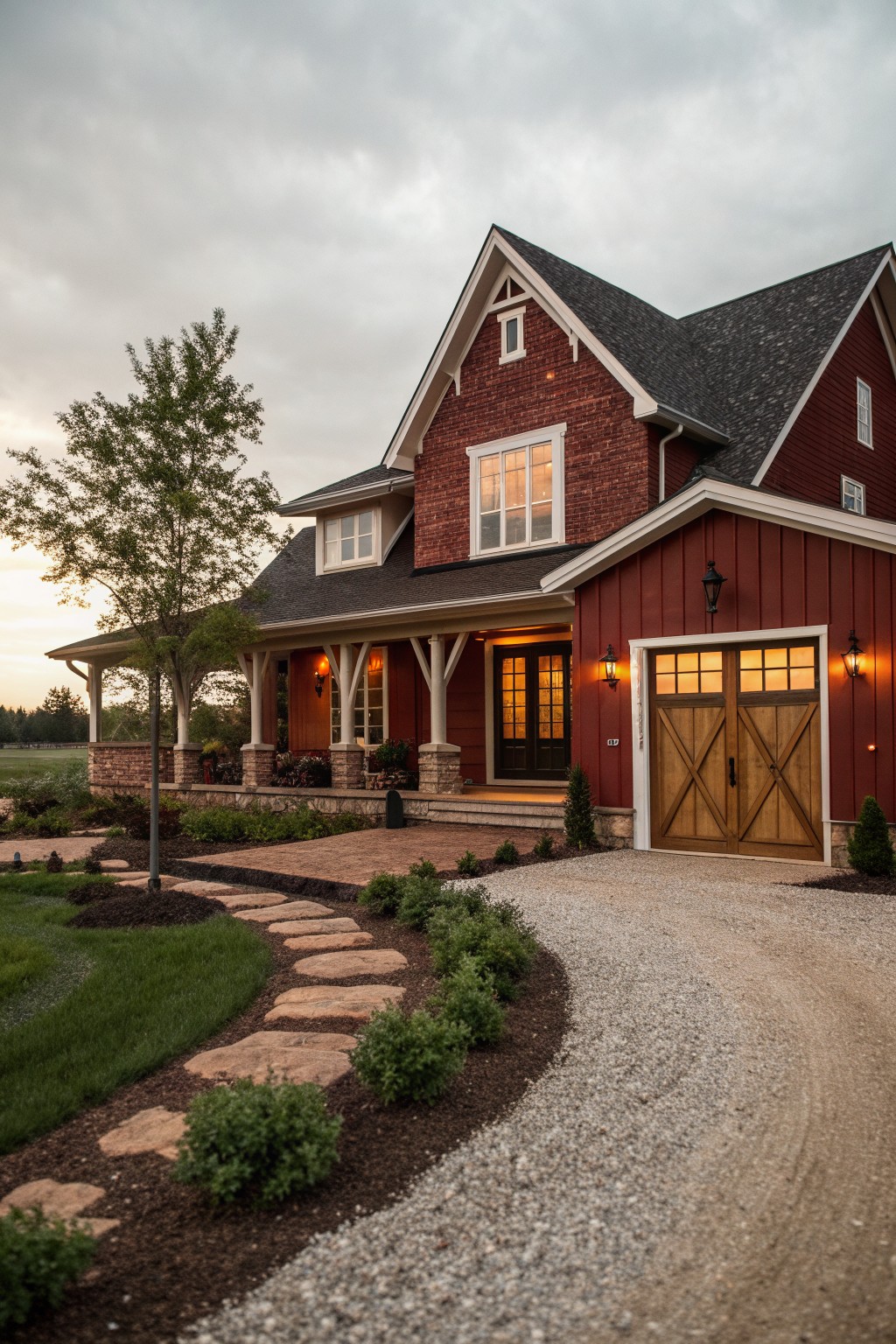
Red brick works well on farmhouses when it covers the main body of the house. The texture adds depth that flat siding often lacks, and it holds up over time without much extra care. Many people like how it gives the whole place a settled look right away.
This approach suits homes that already have a simple roof shape and clean lines. Keep the brick on the larger sections and use wood siding on smaller additions like the garage. Match the tones so the change feels natural instead of patched on.
Covered Porches for Outdoor Dining
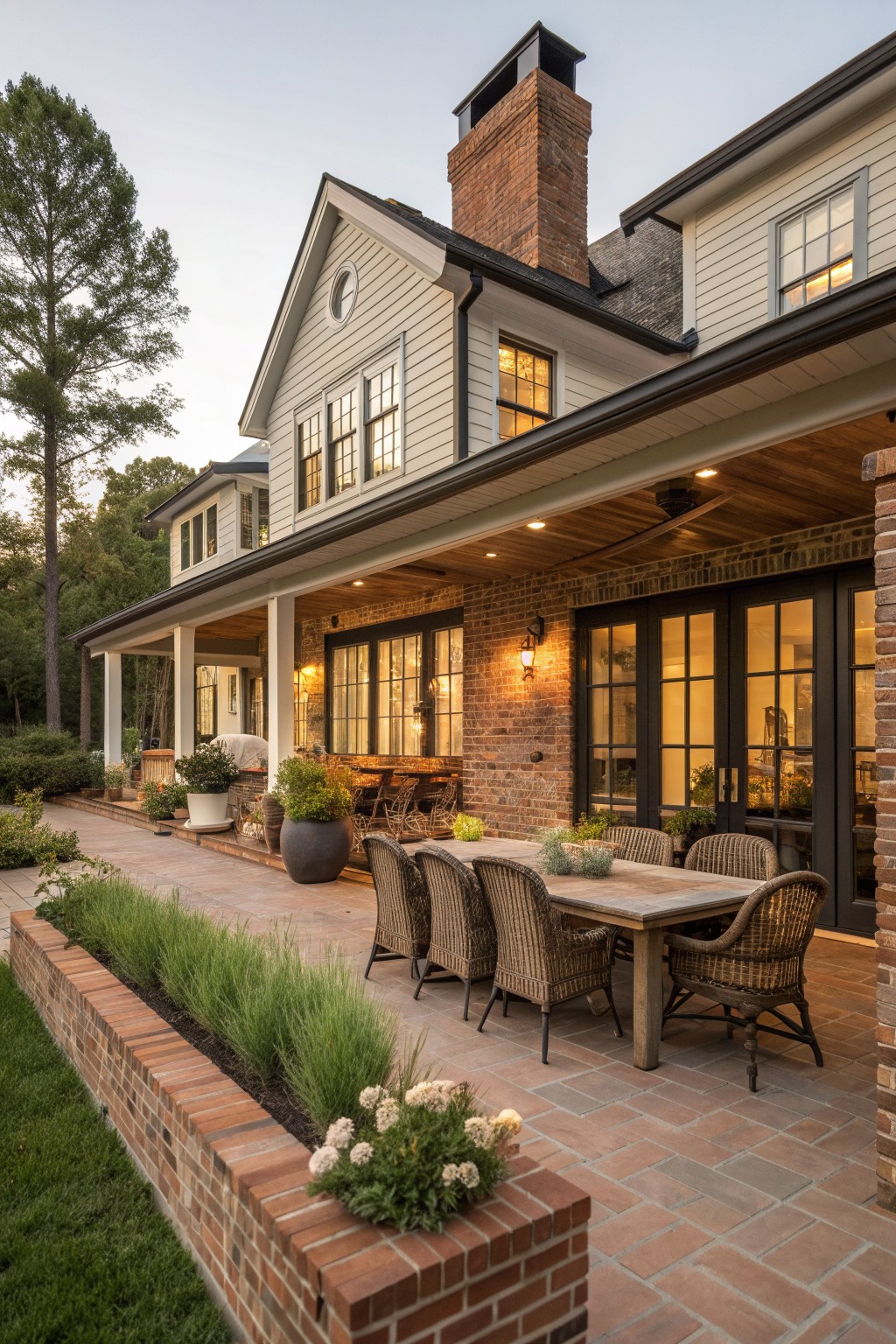
A covered porch gives a brick farmhouse a practical spot for meals outside without fighting sun or rain. The roof and open sides keep the space connected to the yard while the brick walls help it feel like part of the house itself.
Set a long table and sturdy chairs on the patio floor so the area works for everyday use. This layout fits homes with side or back yards that get some afternoon shade and pairs best with simple furniture that can stay out all season.
Pairing Brick With Wood Doors
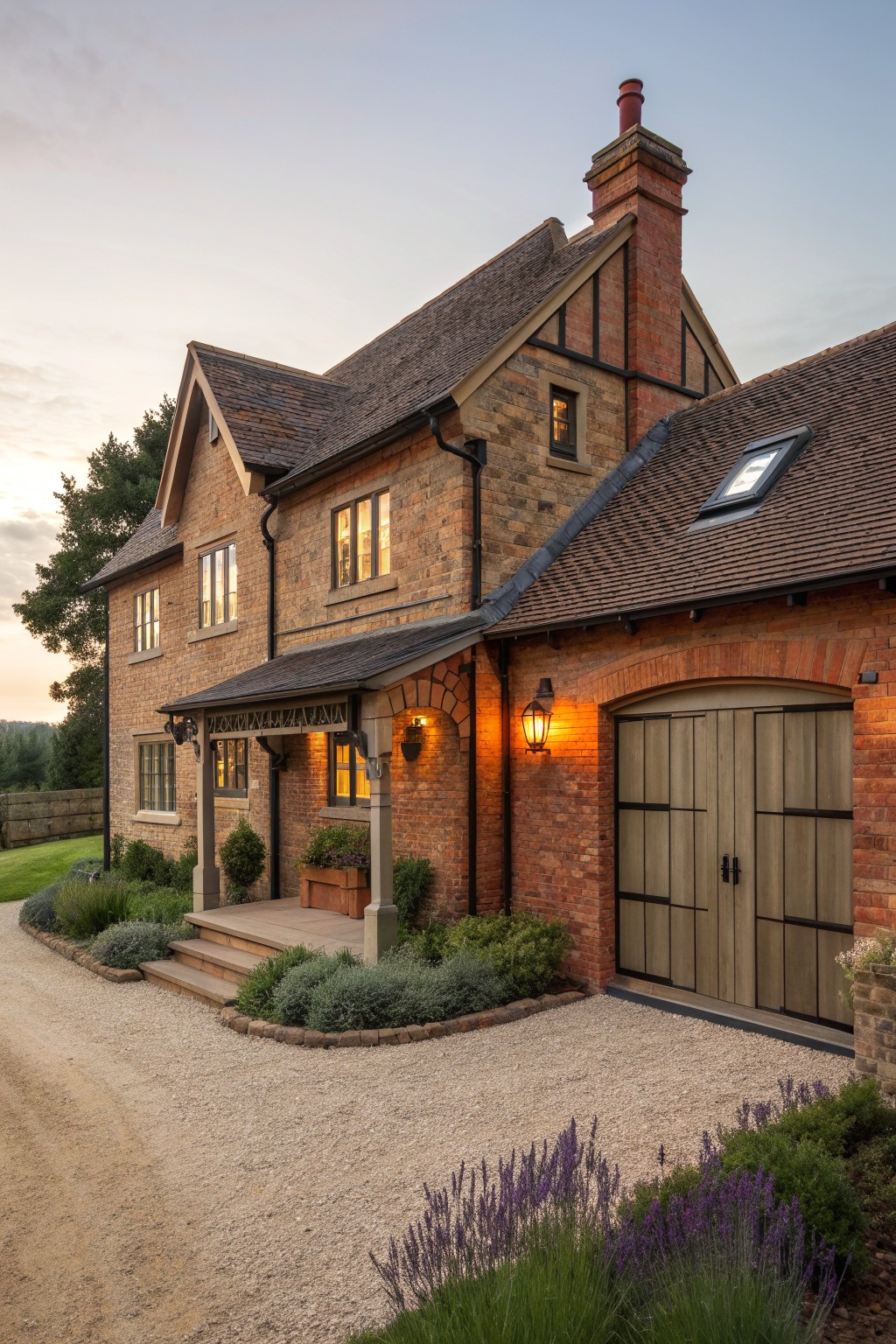
Brick exteriors often feel more interesting when paired with wood doors. The natural grain of the wood breaks up the solid look of the brick and adds a warmer touch that still reads traditional.
This works especially well on farmhouses that have a prominent garage or side entry. Keep the wood tones simple and let the brick do most of the work so the whole front stays balanced.
Brick Farmhouses With Centered Porches
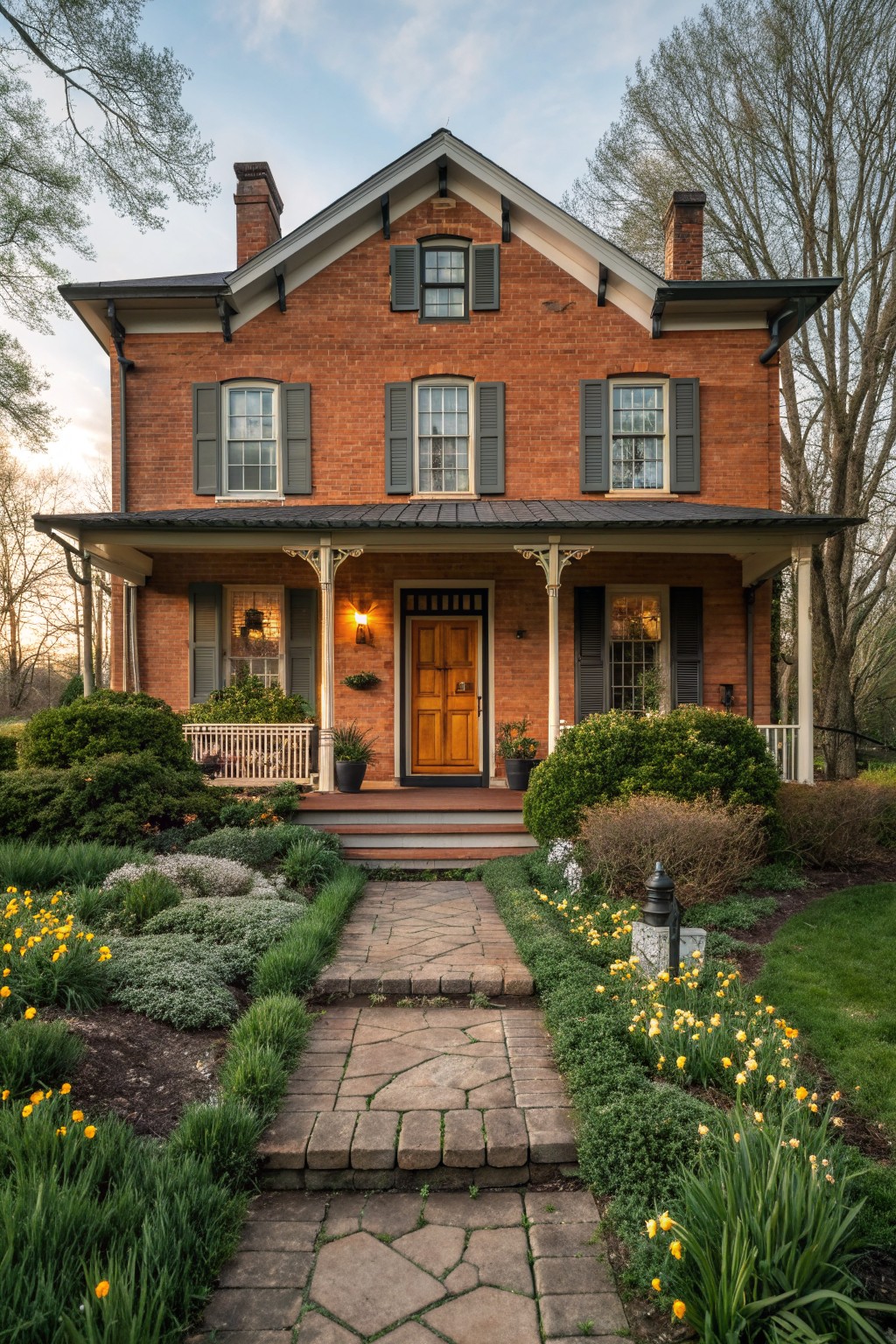
Red brick gives a farmhouse a solid, lasting look that holds up over time. Pairing it with a centered porch and simple columns keeps the front straightforward and easy to approach without extra decoration.
This works best on two-story homes where the door sits right in the middle. A straight stone path leading up to the steps helps the whole entry feel balanced and practical for everyday use.
Brick Adds Texture to Farmhouse Exteriors
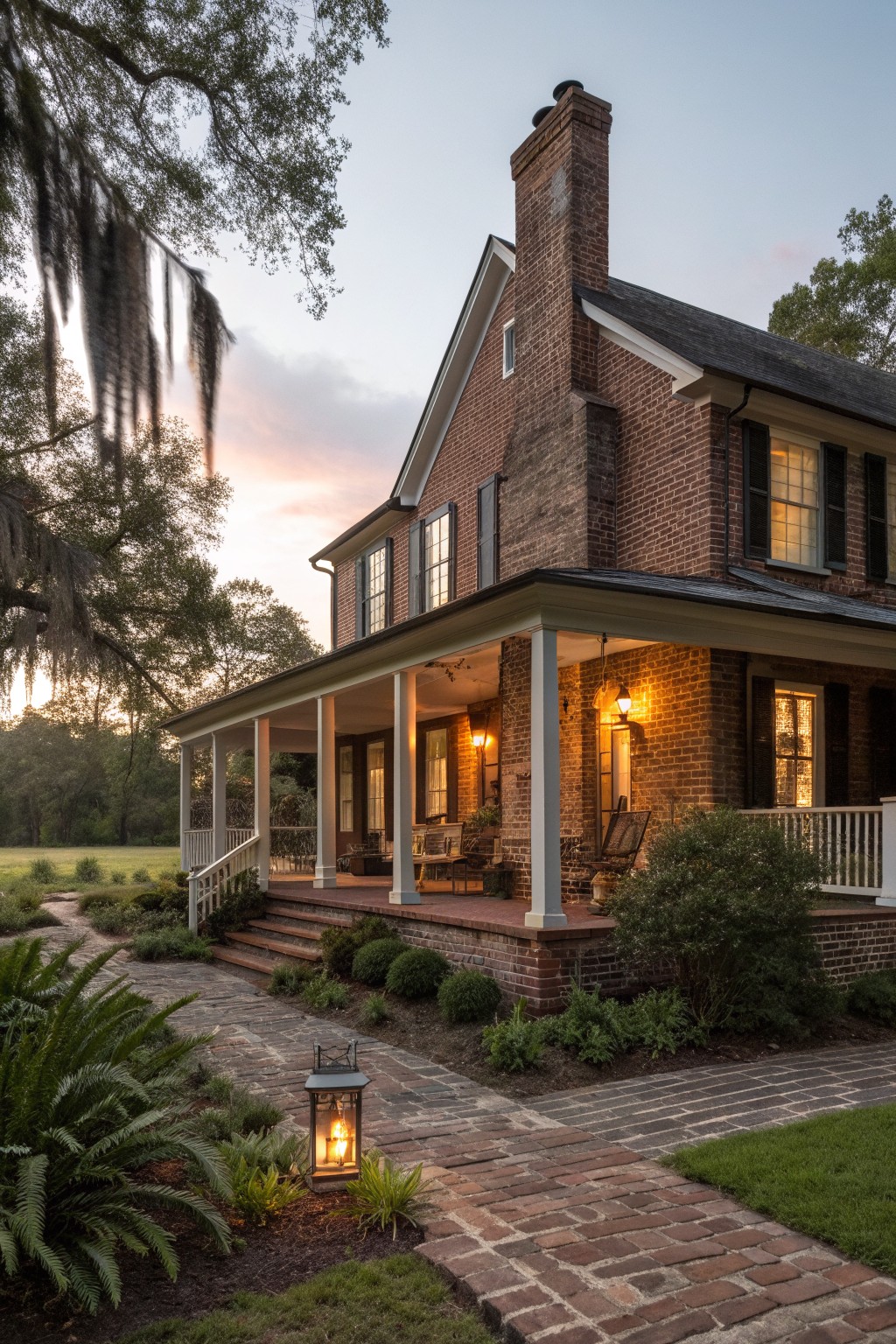
Brick brings built-in texture to a farmhouse without needing extra layers or trim. The material shows its age and variation right away, which helps the house feel settled and real instead of flat.
This approach works best on traditional homes where the goal is low maintenance and long-term character. Keep the brick dominant and add only simple white accents so the texture stays the main feature.
Add Color With the Front Door
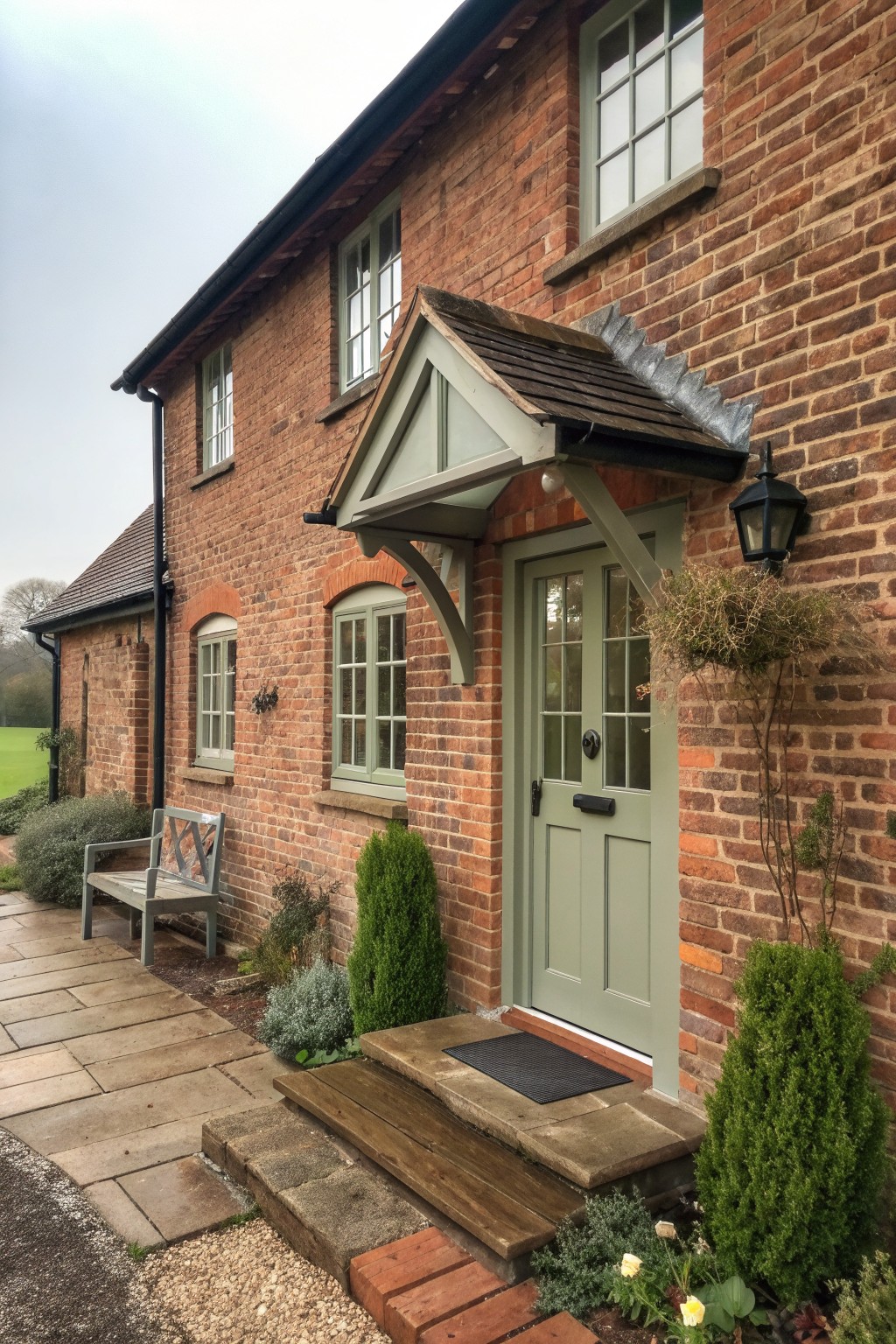
A painted front door stands out nicely against brick and gives the whole house a friendlier feel. The soft green shade here works because it is calm rather than bold, so it adds interest without fighting the texture of the brick.
This approach suits older farmhouses that already have strong materials and simple lines. Keep the canopy small and the hardware plain so the color stays the main point. It is an easy change that still feels in keeping with the original style.
Front Porch Additions on Brick Farmhouses
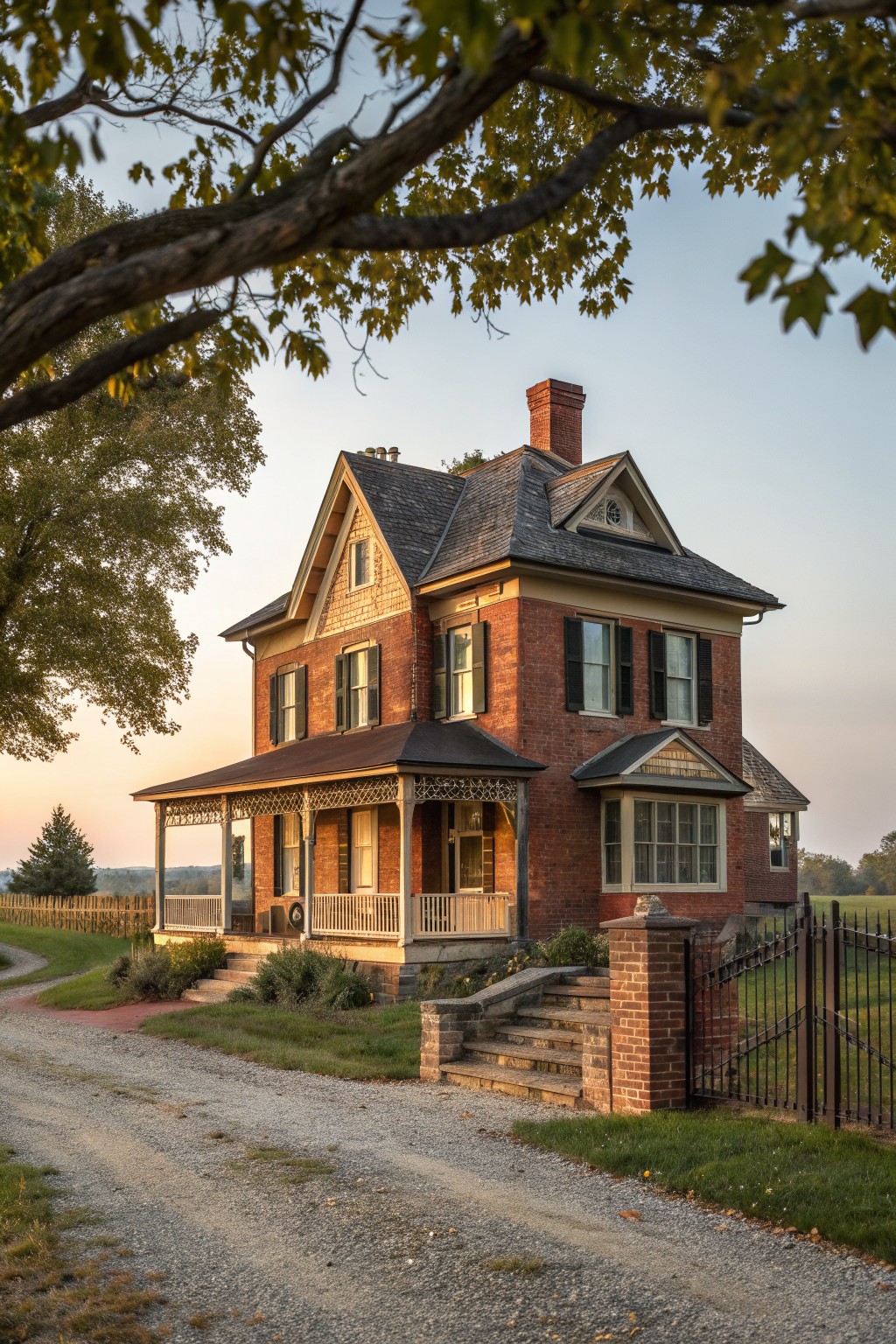
A wide front porch gives a brick farmhouse more presence without competing with the brick itself. The covered space creates an easy transition from the yard to the door and makes the whole exterior feel more settled.
This works best on traditional homes where you already have a solid brick base. Keep the railings and posts simple so they add texture instead of fighting the main material.
Brick With White Trim For Classic Texture
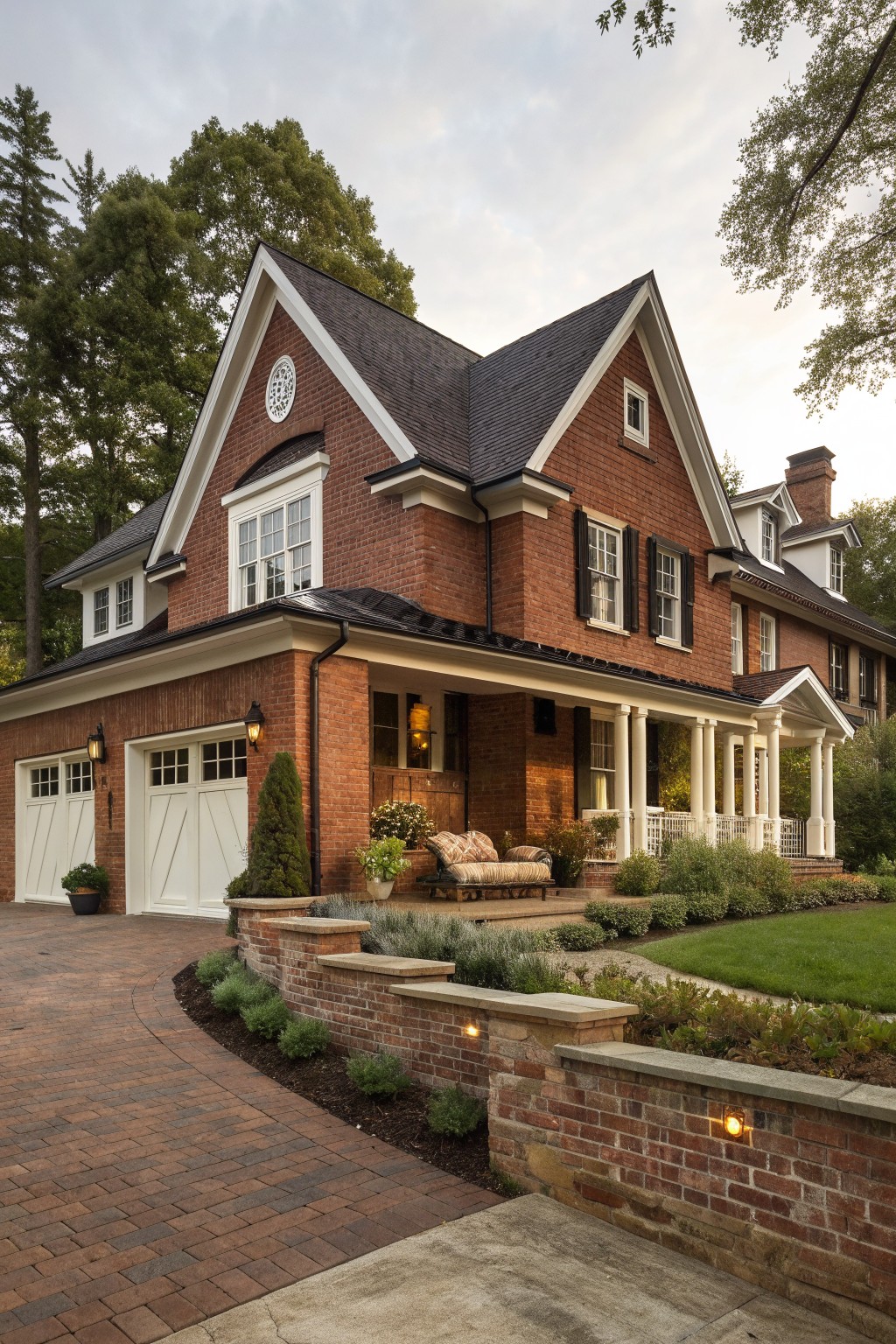
Red brick has a way of giving a house real presence without needing much else. The natural variation in the bricks adds texture right from the start, and pairing them with crisp white trim keeps the whole look clean and balanced.
This combination works especially well on homes with gables and a simple porch. Stick to black shutters and white columns to hold the contrast, and the result feels settled rather than dressed up. It suits both country roads and older neighborhoods where you want the house to read traditional from the street.
Stone Accents On Brick Porches
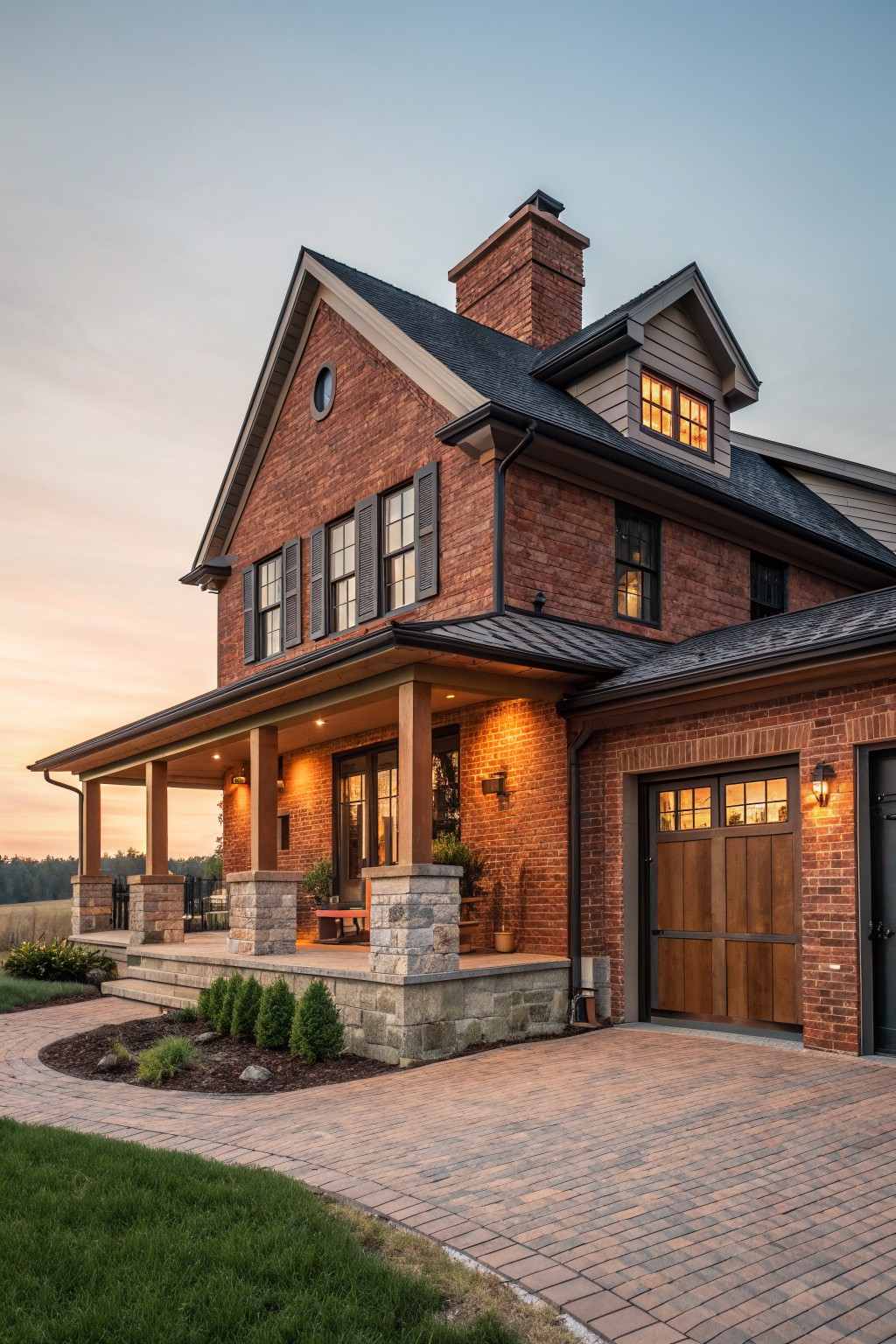
Stone bases and columns on a brick porch give the whole front a solid, grounded look that plain brick alone can miss. The mix adds texture without needing extra trim or color changes, and it keeps the house feeling like a classic farmhouse instead of something newer.
This works best on homes with a simple gable roof and a wide front porch. Keep the stone limited to the lower supports and foundation line so the brick stays the main material. It suits older styles and new builds that want the same settled appearance.
Brick Paths That Match the House
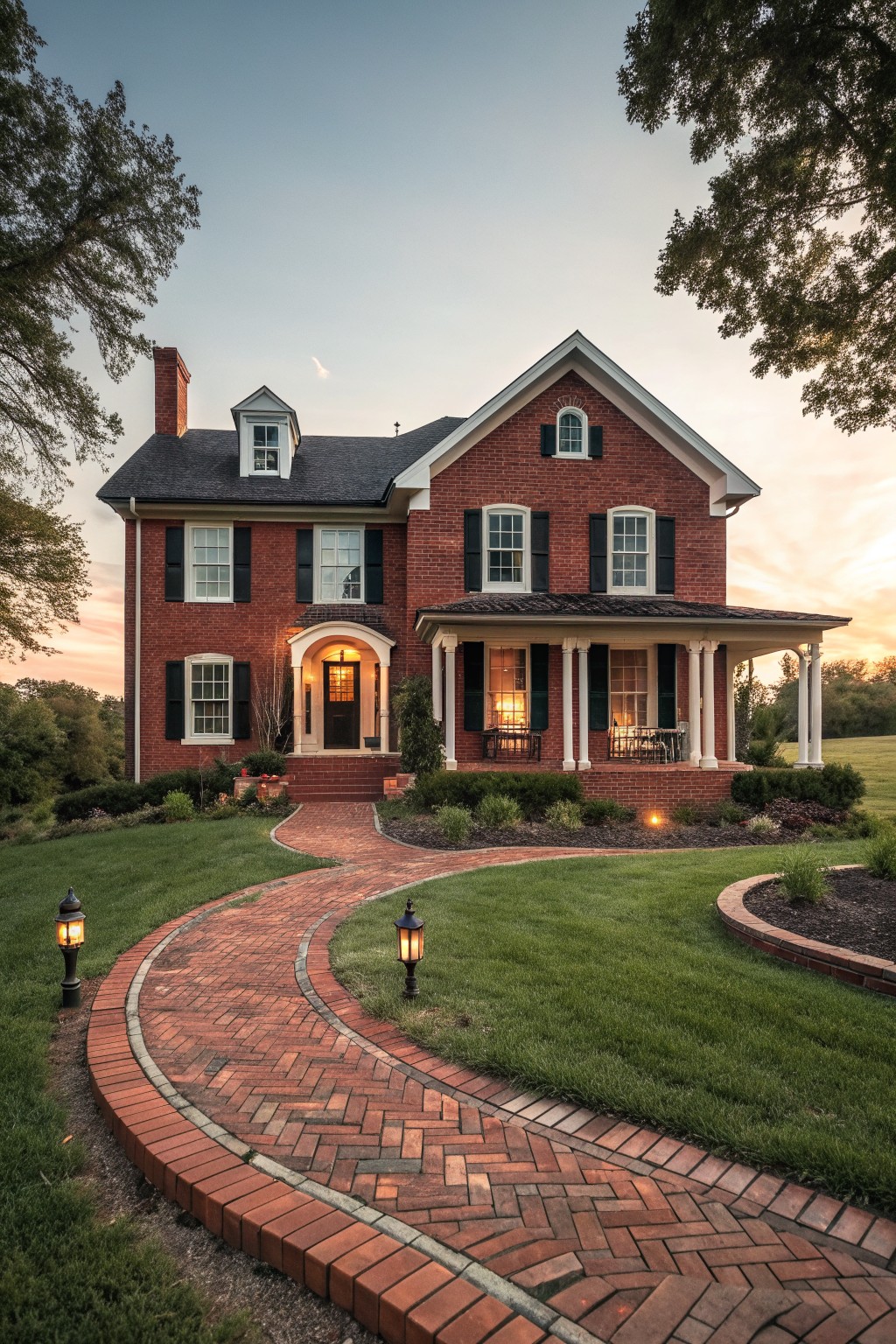
A brick path made from the same material as the house gives the whole front a more finished look. It avoids the feeling of separate pieces added on later and helps the entrance feel like part of the same structure.
This works best on homes that already show a lot of brick. Keep the path fairly narrow and let it curve gently rather than run straight, so it feels natural instead of stiff.
Brick Arches Along the House
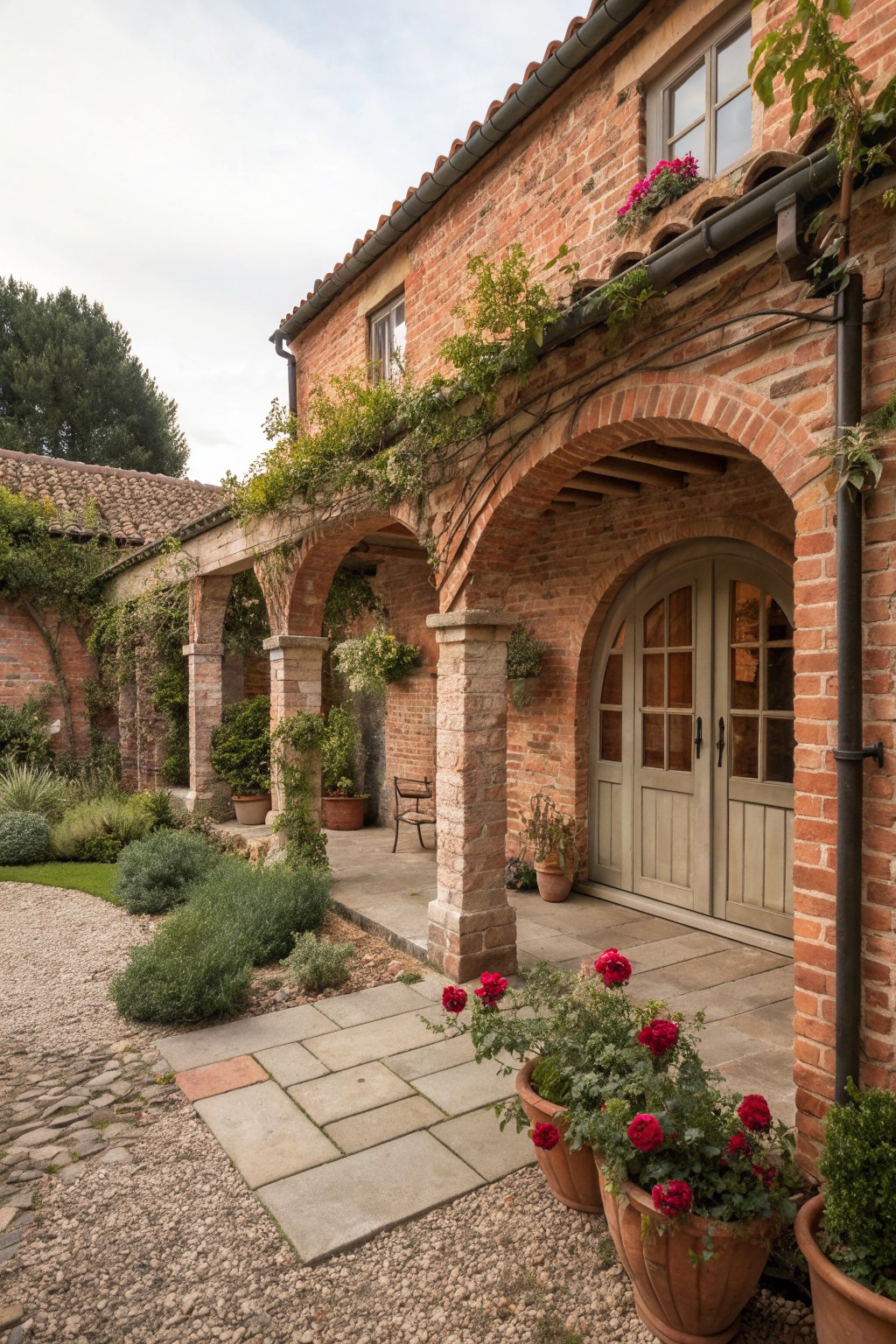
A row of brick arches gives a farmhouse exterior real staying power. They break up a long wall, create shade, and let the building feel more settled into the ground without any extra trim or fancy details.
This setup works best on homes that already have some length to work with. Keep the arches simple, let a few vines climb the brick, and add a few pots at the base so the planting feels natural rather than planned.
Brick Looks Better With Stone Details
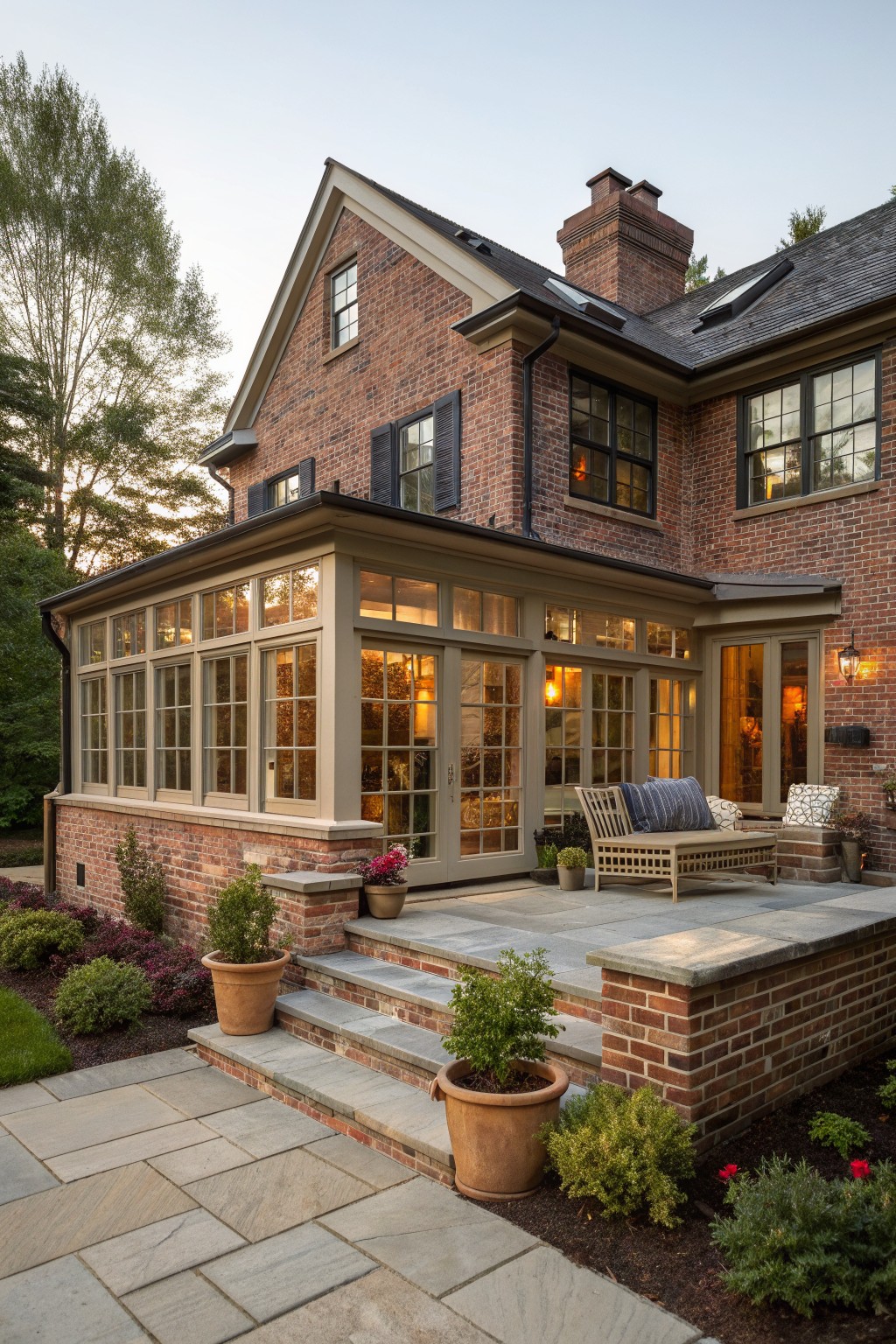
Brick farmhouses often feel more finished when stone shows up around the base or on the patio. The two materials play off each other and give the exterior some extra weight and texture that plain brick alone can miss.
This approach works well on traditional homes where the entrance or side areas get heavy use. Stone steps and paving last longer than wood in wet weather and help the brick feel more rooted to the ground.
Brick Porch Columns Add Lasting Texture
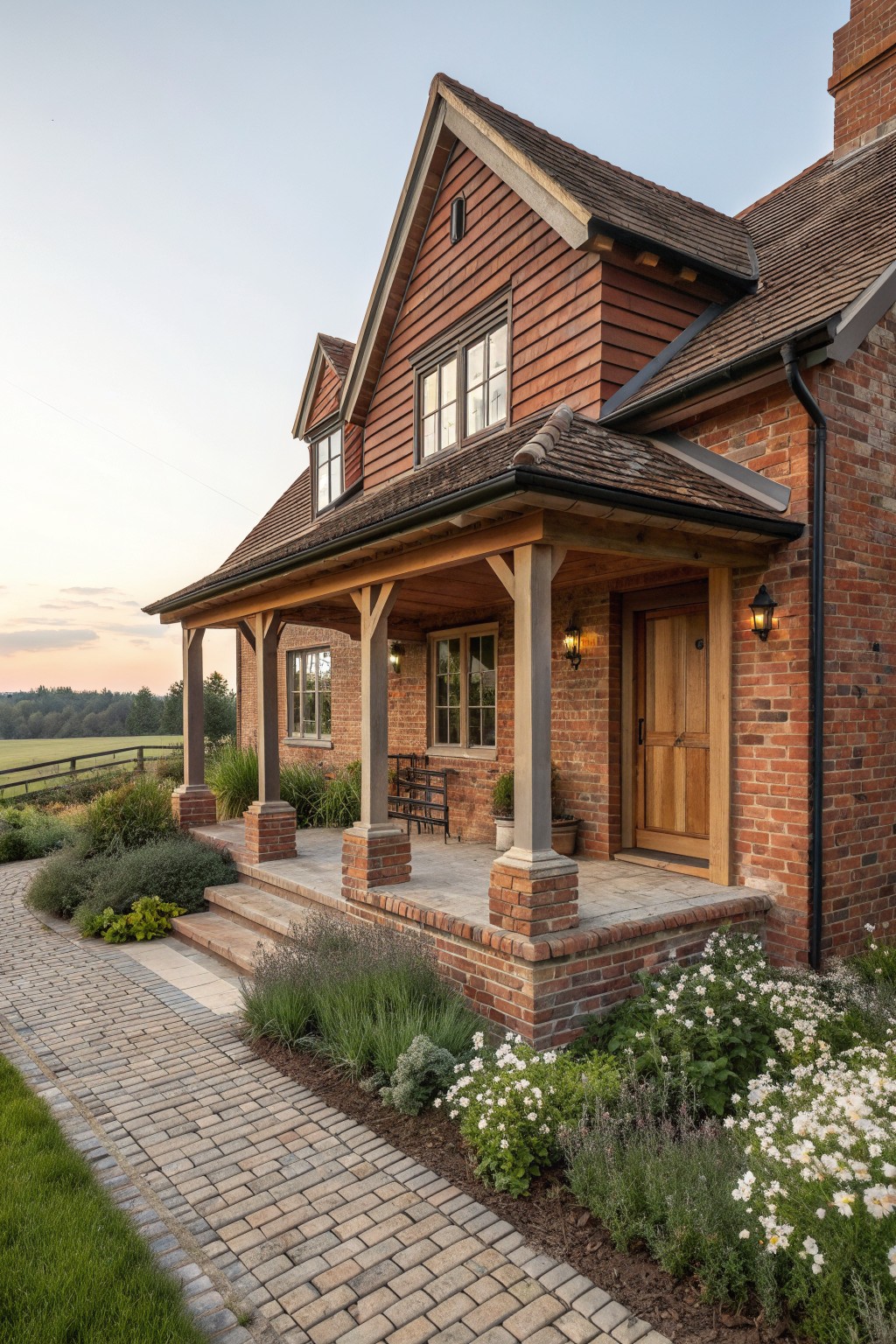
Brick columns under a porch give the whole front a solid, grounded look that plain wood posts rarely match. They pick up the brick on the house walls and make the entry feel more permanent without adding extra decoration. This works especially well on farmhouses where you already have brick as the main material.
Try it on homes that sit low to the ground or have a wide front. Keep the columns fairly wide so they feel in scale with the roof overhang, and use the same brick throughout if you can. It keeps the texture consistent and avoids a patched-together appearance.
Brick Arches Over Entry Doors
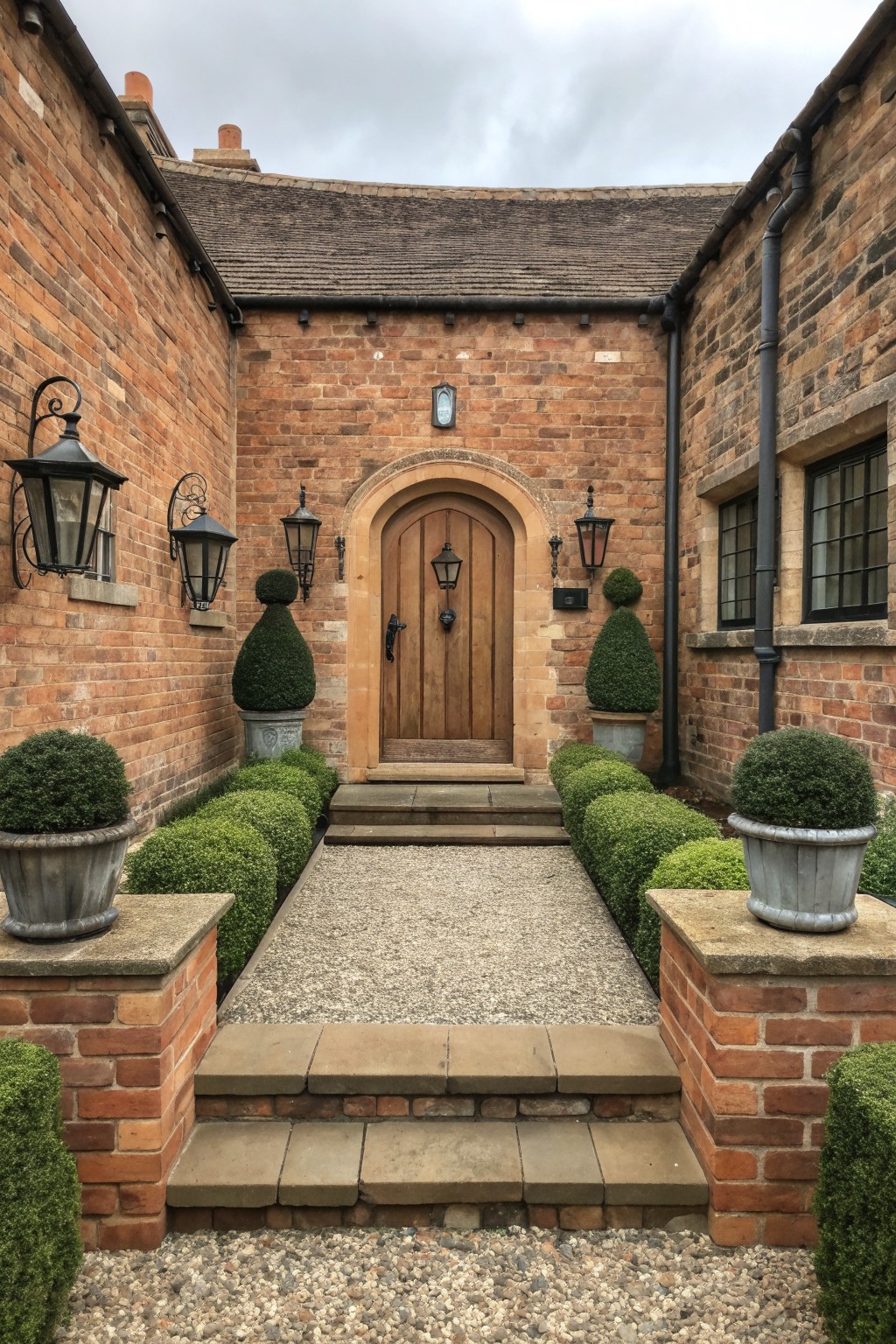
An arched brick surround gives a farmhouse entry a bit more presence without adding extra trim or ornament. The curve breaks up the flat wall and draws attention straight to the door in a quiet way.
This detail works best on simple brick homes where the rooflines stay straightforward. Use a wood door in a natural tone and add a pair of lanterns at the sides so the whole entrance feels balanced rather than busy.
Pergolas Extend Living Space Outdoors
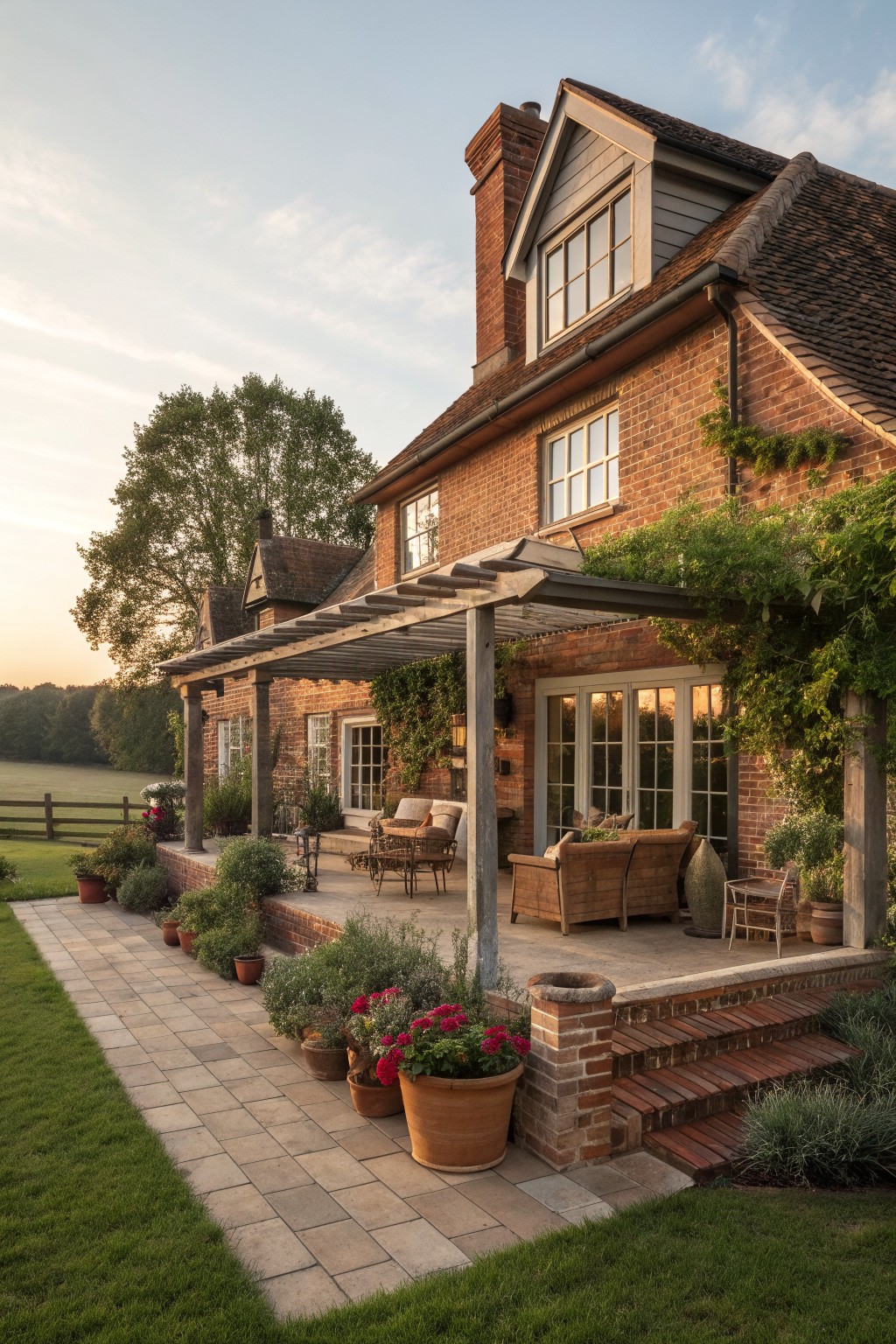
A pergola attached to the house gives you a shaded spot right outside. It turns an open patio into a place where you can sit comfortably without the sun beating down all day.
This setup works well on brick farmhouses because the wood frame adds contrast to the masonry. Place seating underneath and let vines grow over the top if you want more shade as the seasons change.
Mixing Brick And Wood For Traditional Texture
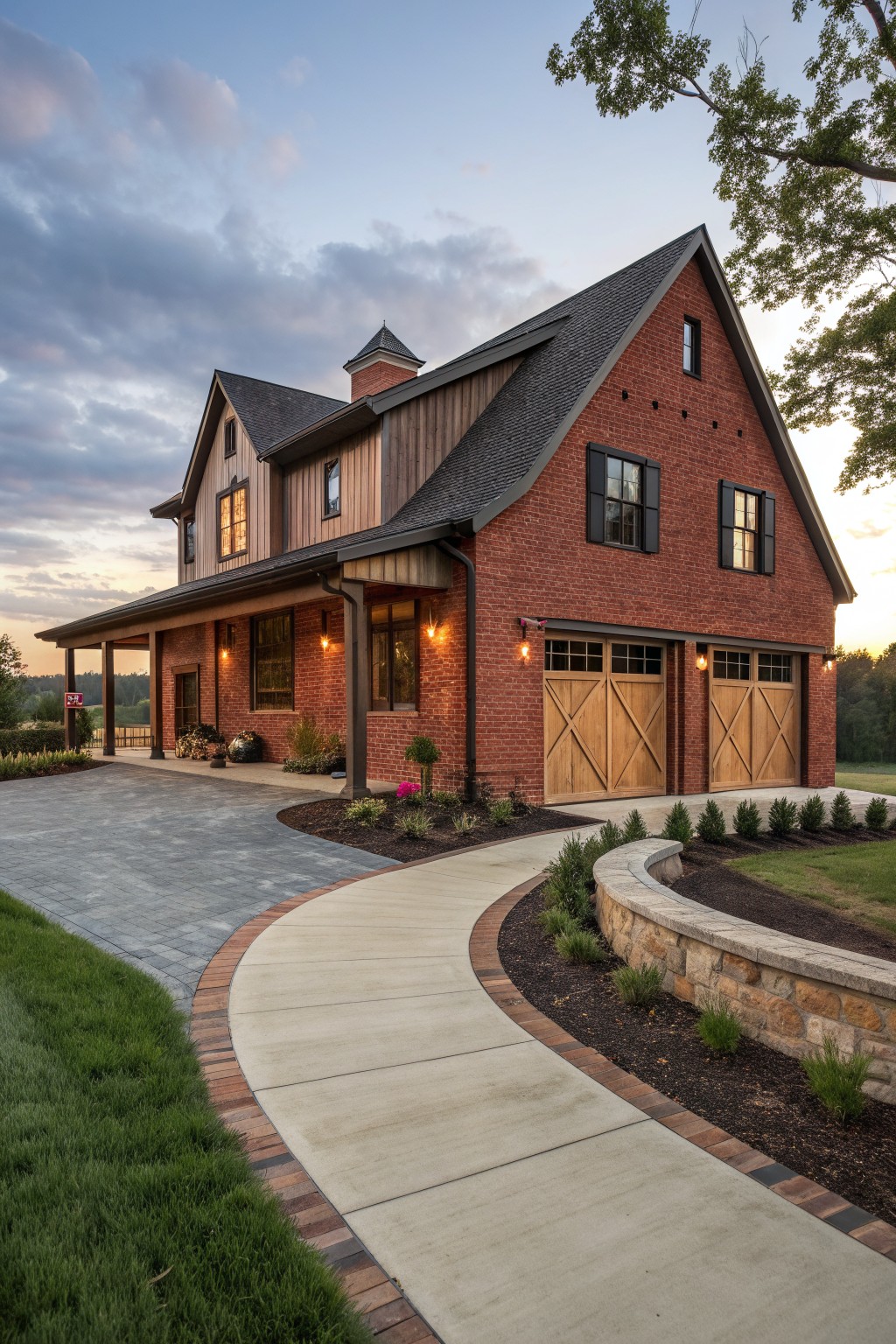
Many brick farmhouses gain a lot from adding wood in a few key spots. The wood softens the hard surface of the brick and gives the whole exterior more depth and character without extra ornament.
This approach works best on homes with straightforward rooflines and simple window placements. Use the wood on gables, trim, or garage doors so the materials stay in balance and the house still reads as classic rather than busy.
Frequently Asked Questions
Q: How can I make sure the brick texture shows up well against my trim colors?
A: Choose trim in soft whites or deep greens. These let the brick stand out without fighting it. Test samples on a small wall section before committing.
Q: What about adding shutters or window boxes to a brick farmhouse?
A: Wood shutters pair nicely with the rough brick surface. They add another layer of texture that feels traditional. Keep the boxes simple so they don’t compete.
Q: Is it hard to match new brick additions to an older home?
A: Hunt for reclaimed bricks if possible. They blend right in with older homes.
