

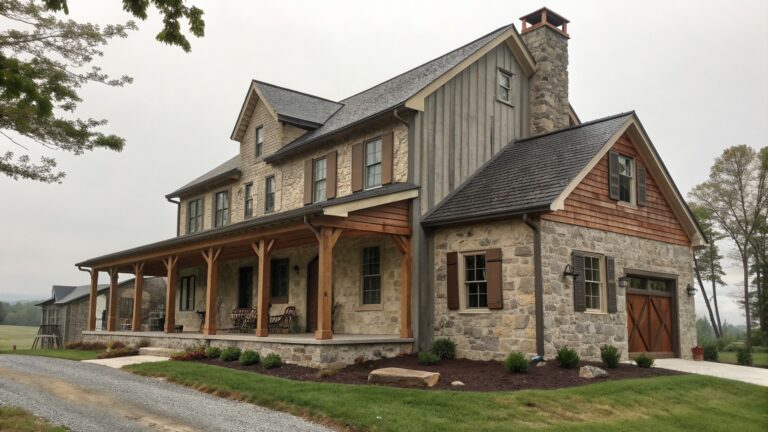
When I drive past stone farmhouses I find myself slowing down to see how the different sizes of stone work together along the facade.
The roofline has to balance the weight of the stone below it or the whole thing starts to feel top heavy in person.
Materials matter most up close.
Entries built with the same stone as the walls tend to feel more permanent than ones added later with different textures.
Over time I’ve learned that the best versions let the stone weather into the surrounding trees and fields instead of fighting them.
Stone on the House Exterior
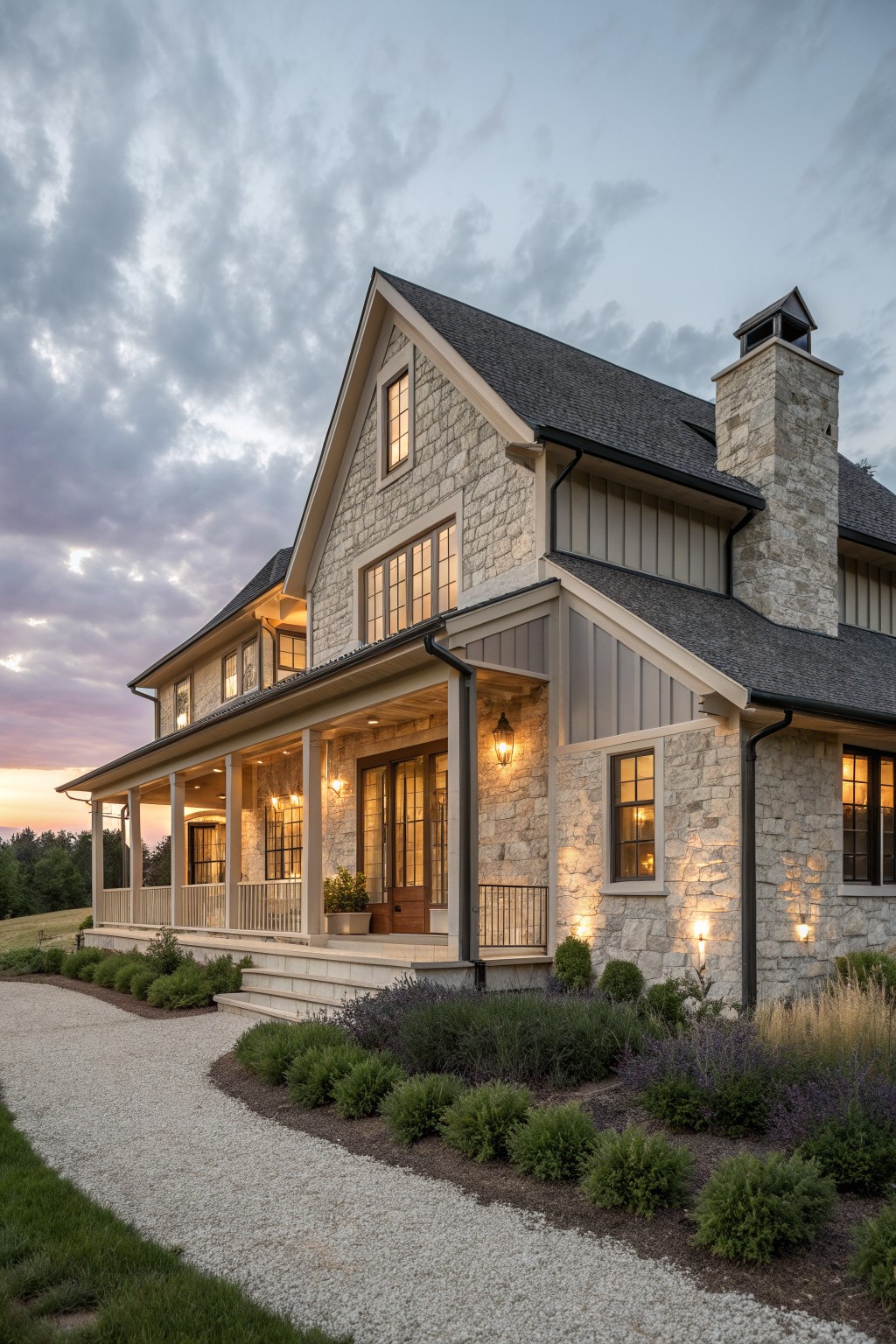
Stone works well on a farmhouse exterior because it gives the whole place a solid base that feels permanent. It handles weather without much fuss and adds texture that siding alone cannot match. The house in the photo shows this clearly on the main walls and chimney.
This approach suits homes with simple rooflines and a mix of window sizes. Keep the stone on the larger wall areas and let other materials handle the upper gables or accents. It pairs best with a covered porch so the entry does not feel too heavy.
Arched Stone Entries
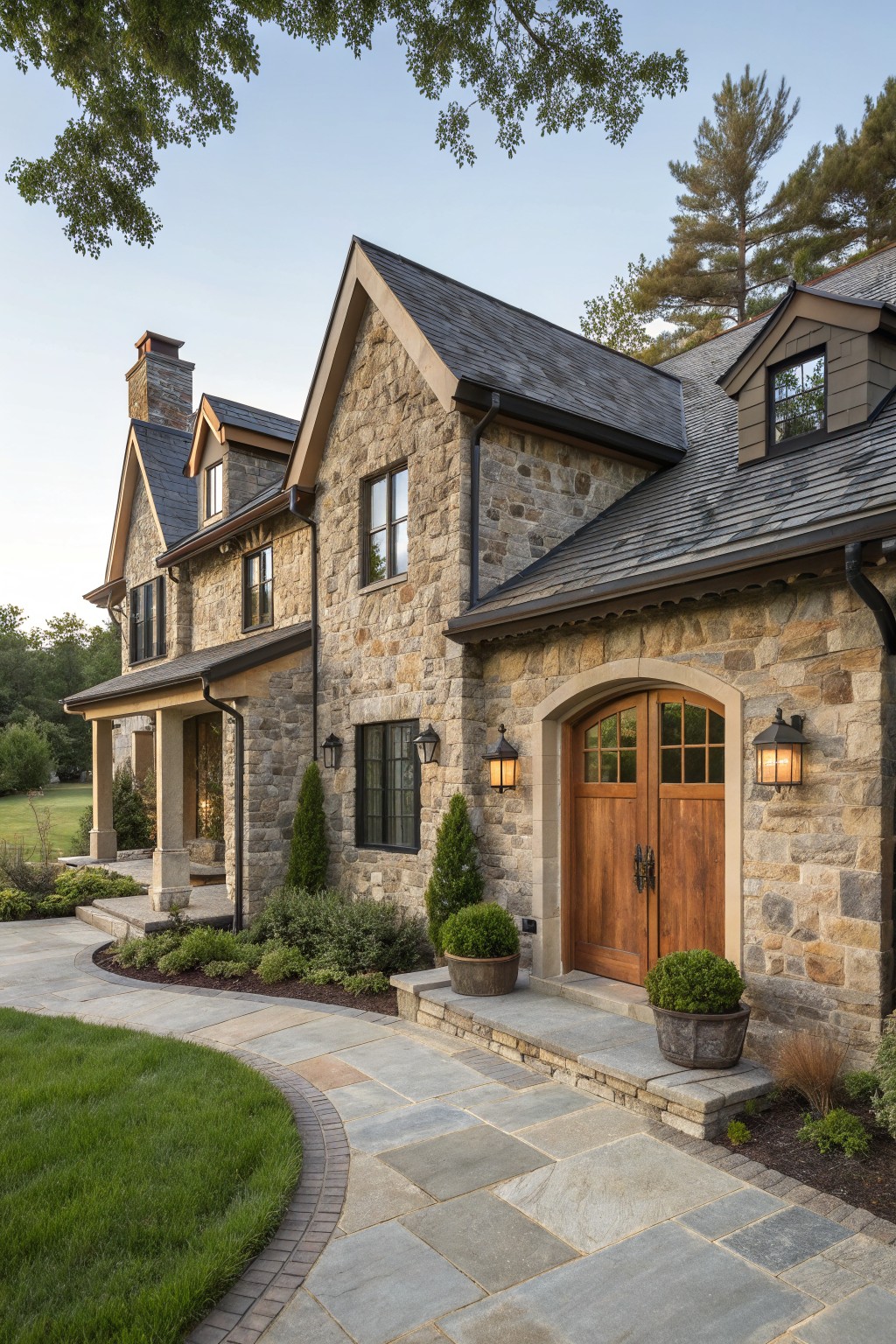
An arched surround made from the same stone as the walls gives the front door a clear focal point. It adds structure without making the house feel formal or overdone.
This works well on larger stone homes where the entry needs to stand out against the rest of the facade. Keep the arch simple and let the stone texture do the work.
Arched Stone Entries For Farmhouses
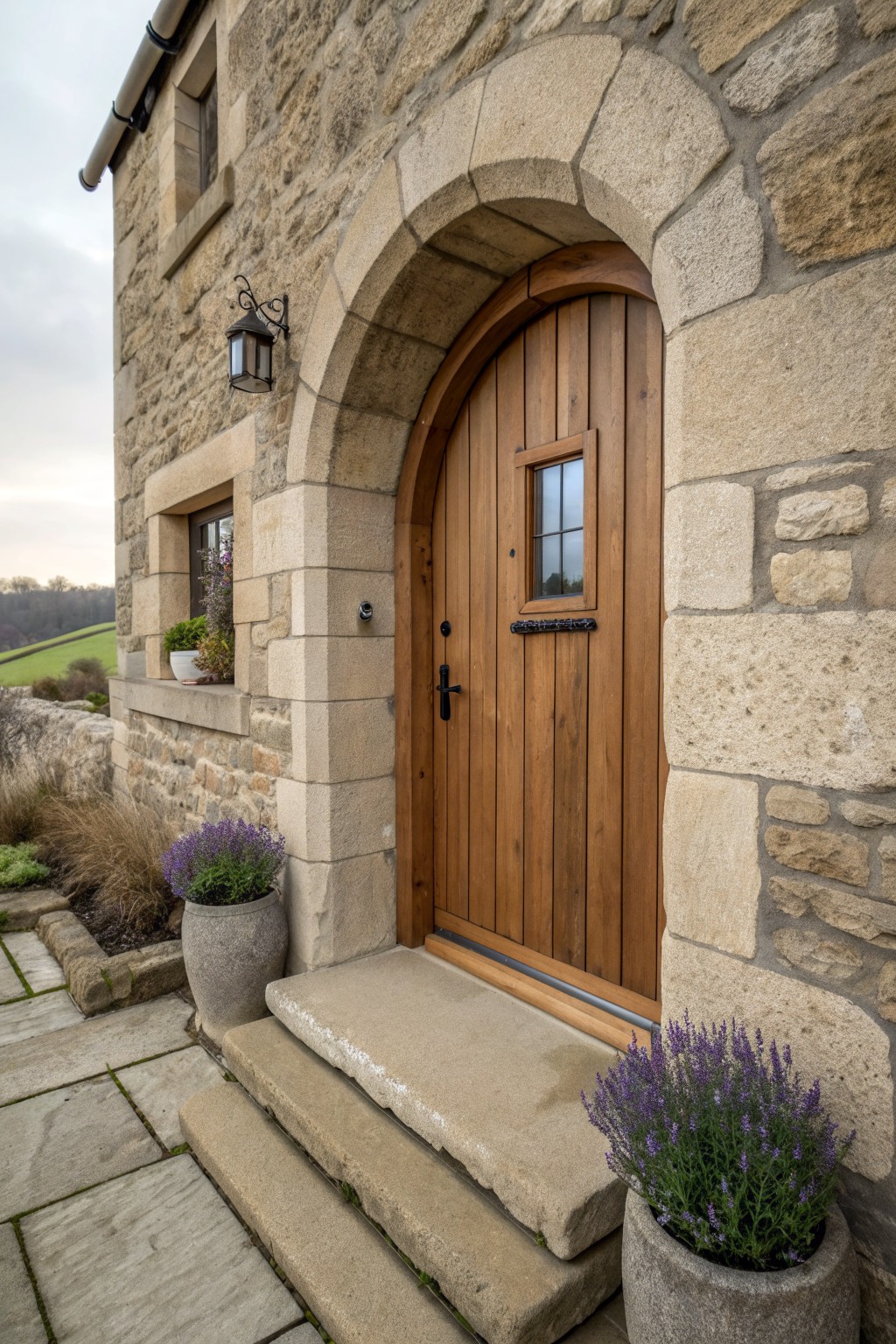
An arched stone entry gives a farmhouse a grounded, classic look that feels natural with the rest of the stone walls. It frames the door without extra trim or decoration and helps the entrance stand out from the heavier masonry around it.
This works best on homes with thick stone construction where you want the door to feel intentional rather than tucked in. Keep the door simple in wood and add just a step or two of the same stone to tie everything together.
Wood Garage Doors On Stone Exteriors
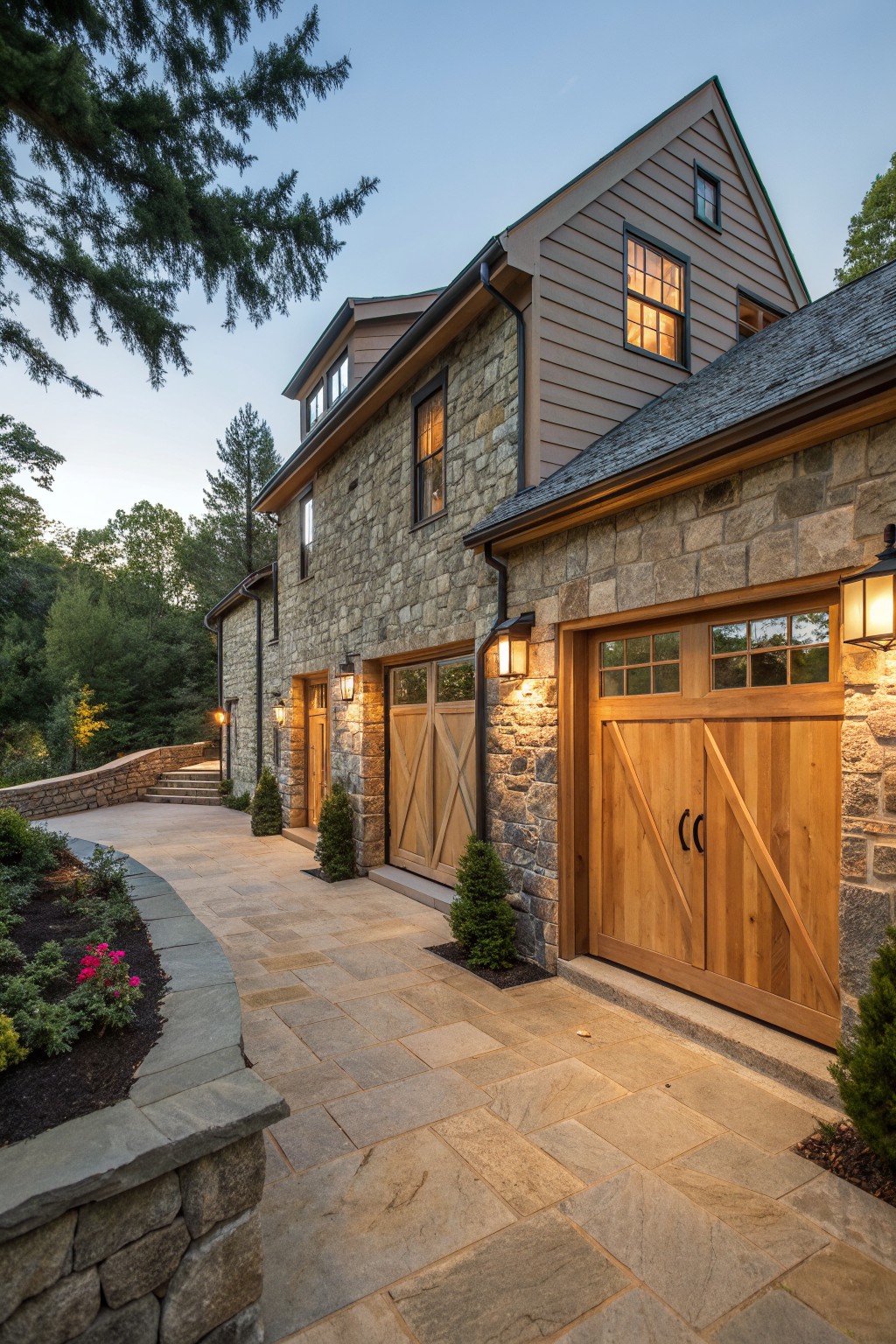
Stone exteriors can feel heavy on their own, so adding wooden garage doors gives them a lighter touch. The wood brings warmth and grain that breaks up the solid surface without losing the sturdy look people like in farmhouse designs.
This works best on homes that already mix materials, especially when the wood is kept simple and natural. It suits properties where you want rustic character without going too dark or ornate with every detail.
Using Stone For The Exterior Walls
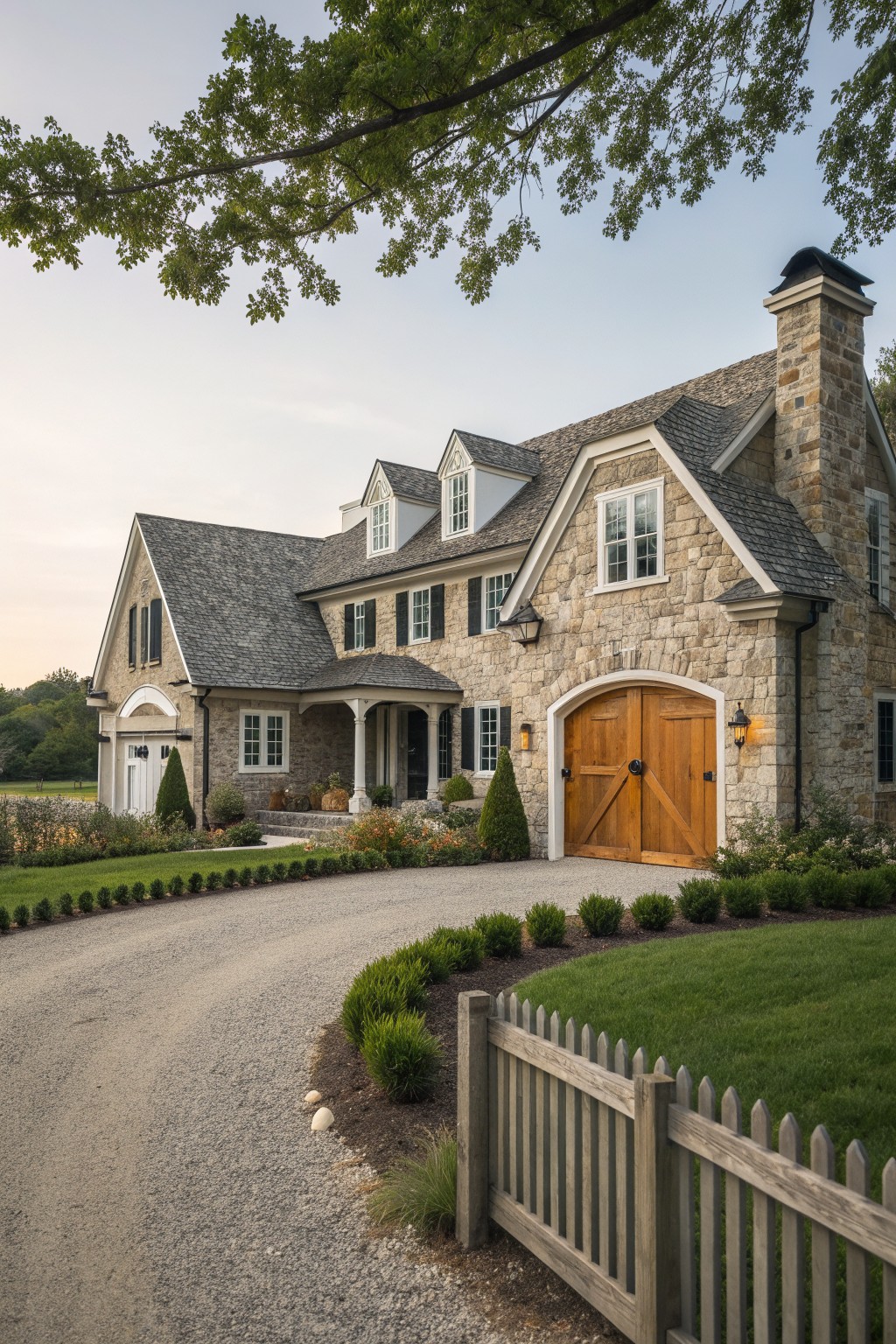
Stone gives a farmhouse that solid, settled look that paint or siding rarely match. It holds up well over time and pairs naturally with simple rooflines and wood accents like garage doors.
This works best on homes with enough wall space to show off the texture without looking heavy. Try keeping windows and trim modest so the stone stays the focus, and test samples on site since color shifts a lot with the light.
Covered Porches For Outdoor Dining
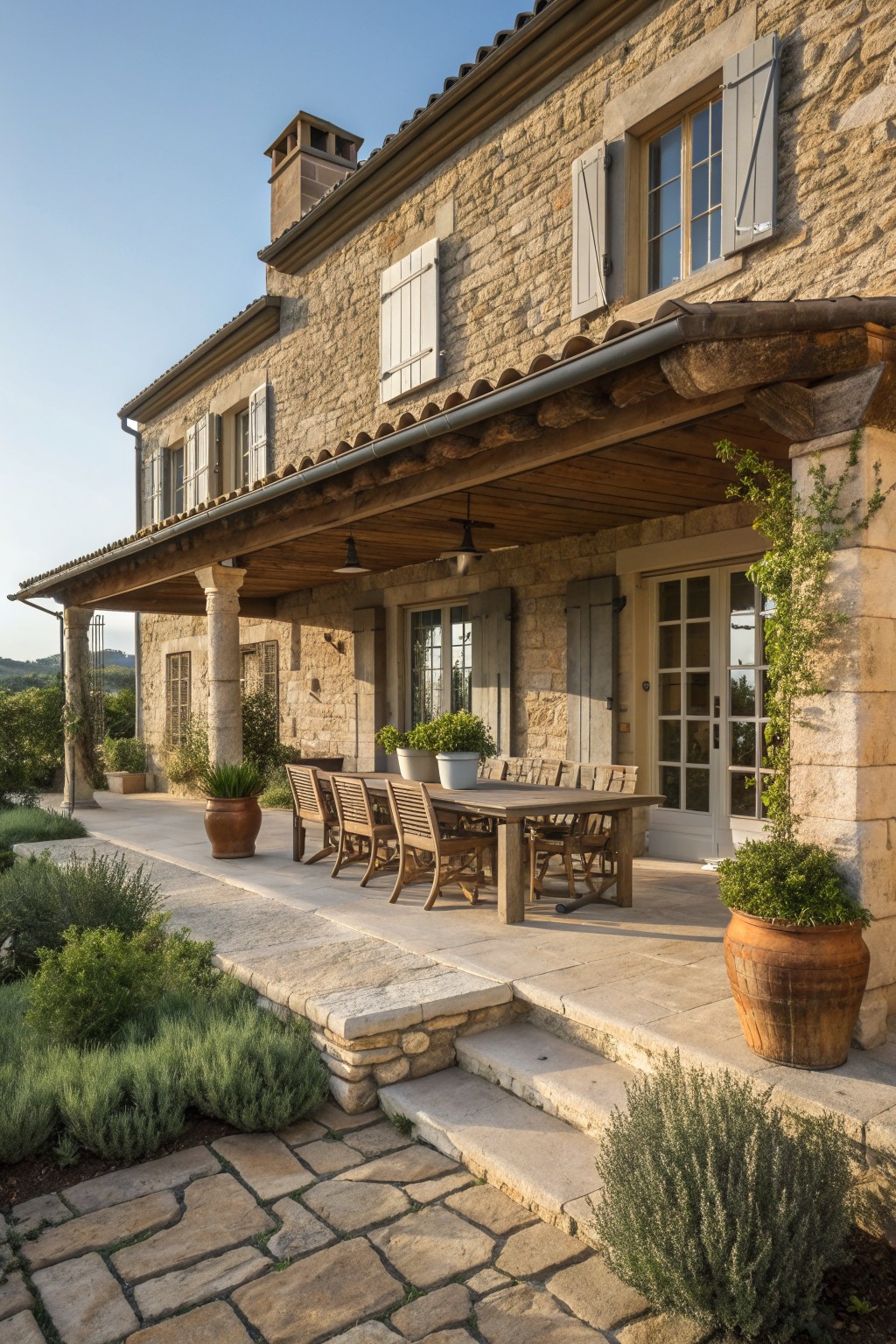
A covered porch attached to a stone house makes it easy to eat outside without worrying about sun or light rain. The wood ceiling and beams keep the space feeling connected to the rest of the house while giving you a clear spot for a big table and chairs.
This works well on farmhouses that already have some open ground near the back or side doors. Keep the table simple and make sure the roof extends far enough to cover the seating area so the space stays comfortable through most of the day.
Dark Shutters On Stone Walls
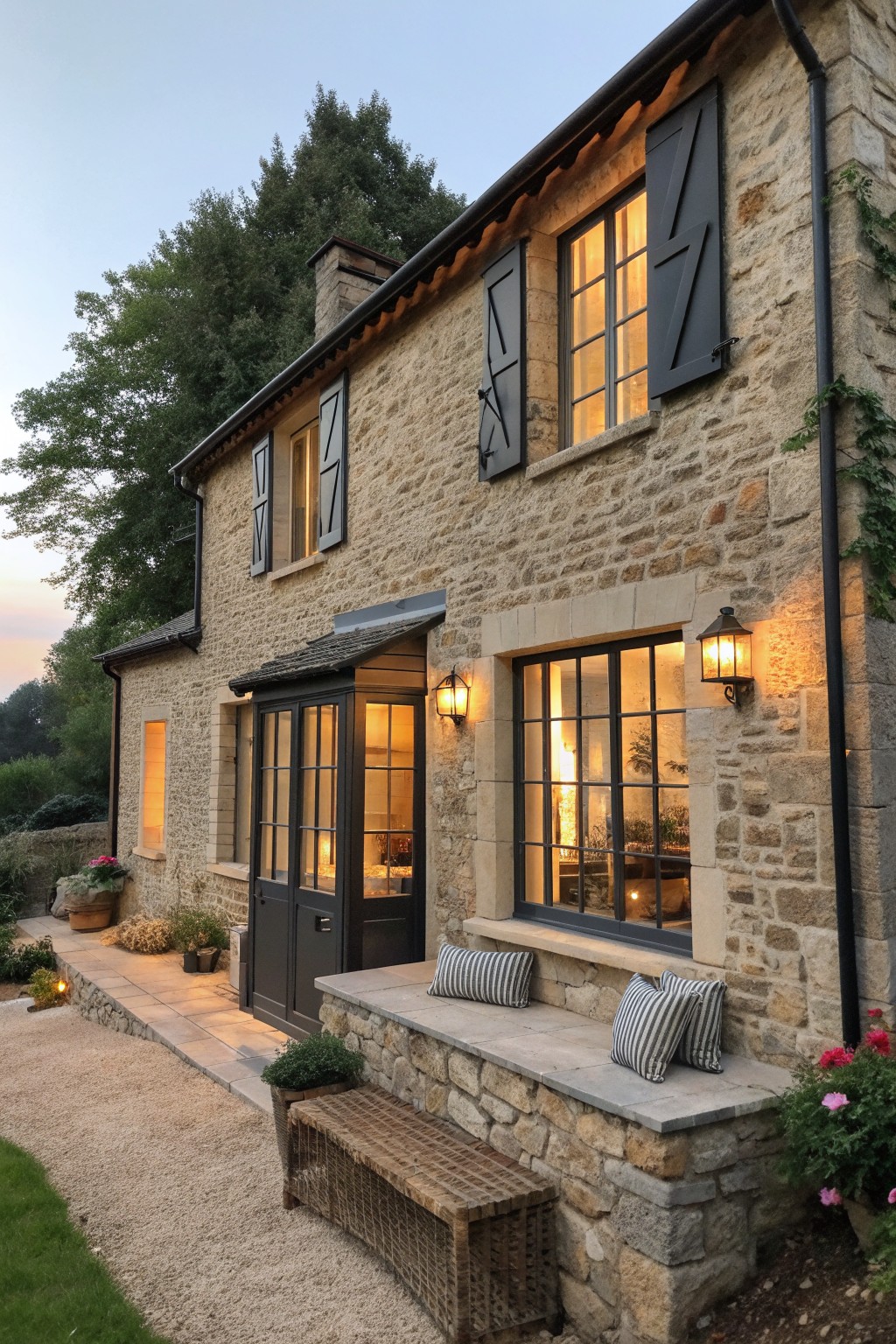
Stone already brings plenty of texture and weight to a house. Adding dark shutters and matching window frames gives that texture some shape and helps the whole front feel more finished without adding extra trim or decoration.
This works especially well on older stone farmhouses or new builds that want the same look. Keep the shutters simple in style and match them to the window frames so the contrast stays clean. It suits homes with a fairly straightforward roofline and avoids the need for too many other accent colors.
Stone Exteriors With Wood Accents
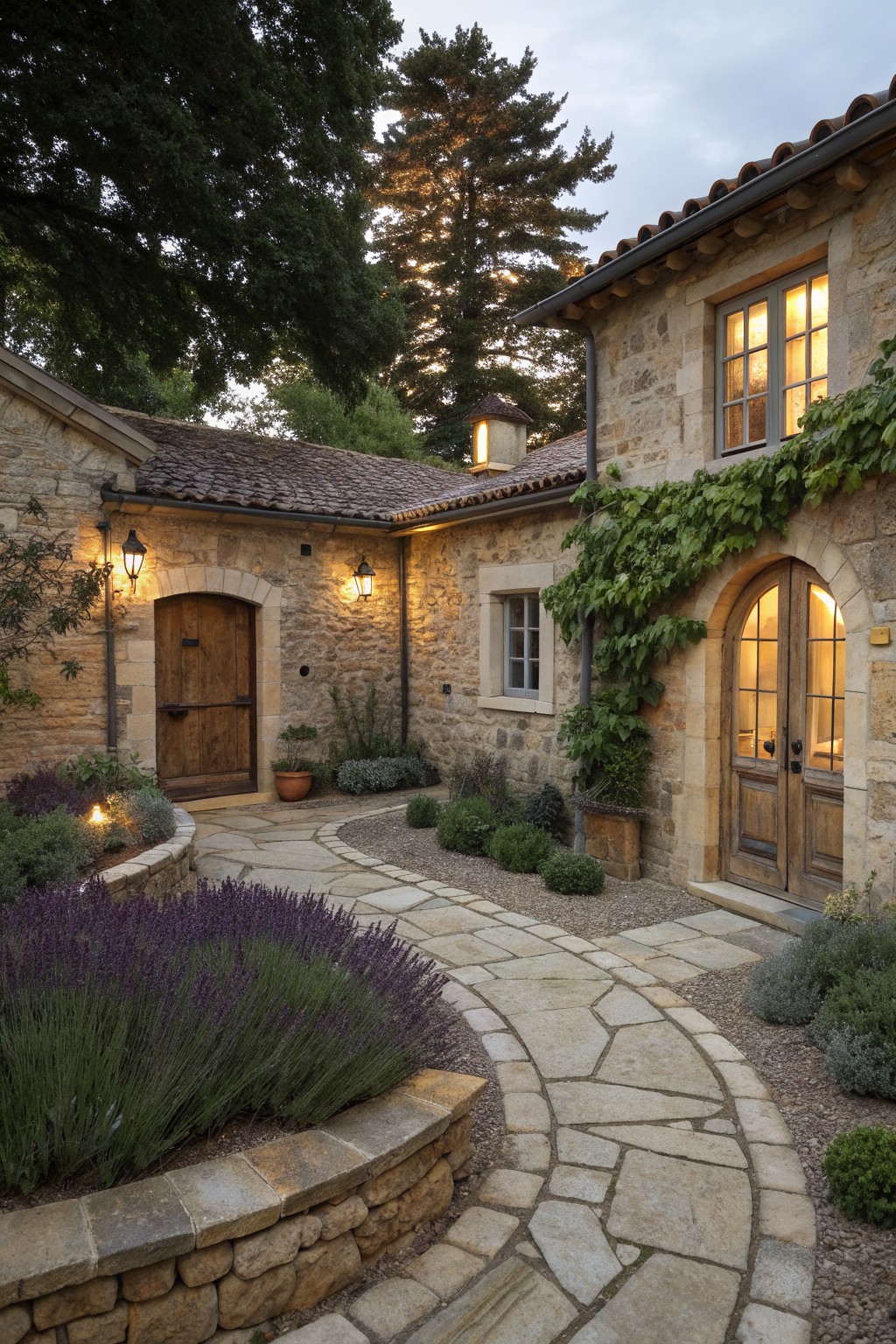
Stone gives a farmhouse that solid, lasting look that holds up over time. The wood doors and trim add just enough warmth so the whole place does not feel too cold or heavy. This mix works especially well when the stone has some variation in color and texture.
It suits homes in rural or semi-rural settings where you want the house to feel rooted in the landscape. Keep the wood tones on the warmer side and let the doors sit in simple arched openings. Avoid too many competing materials or bright paint colors that fight with the stone.
Stone Walls With Dark Trim
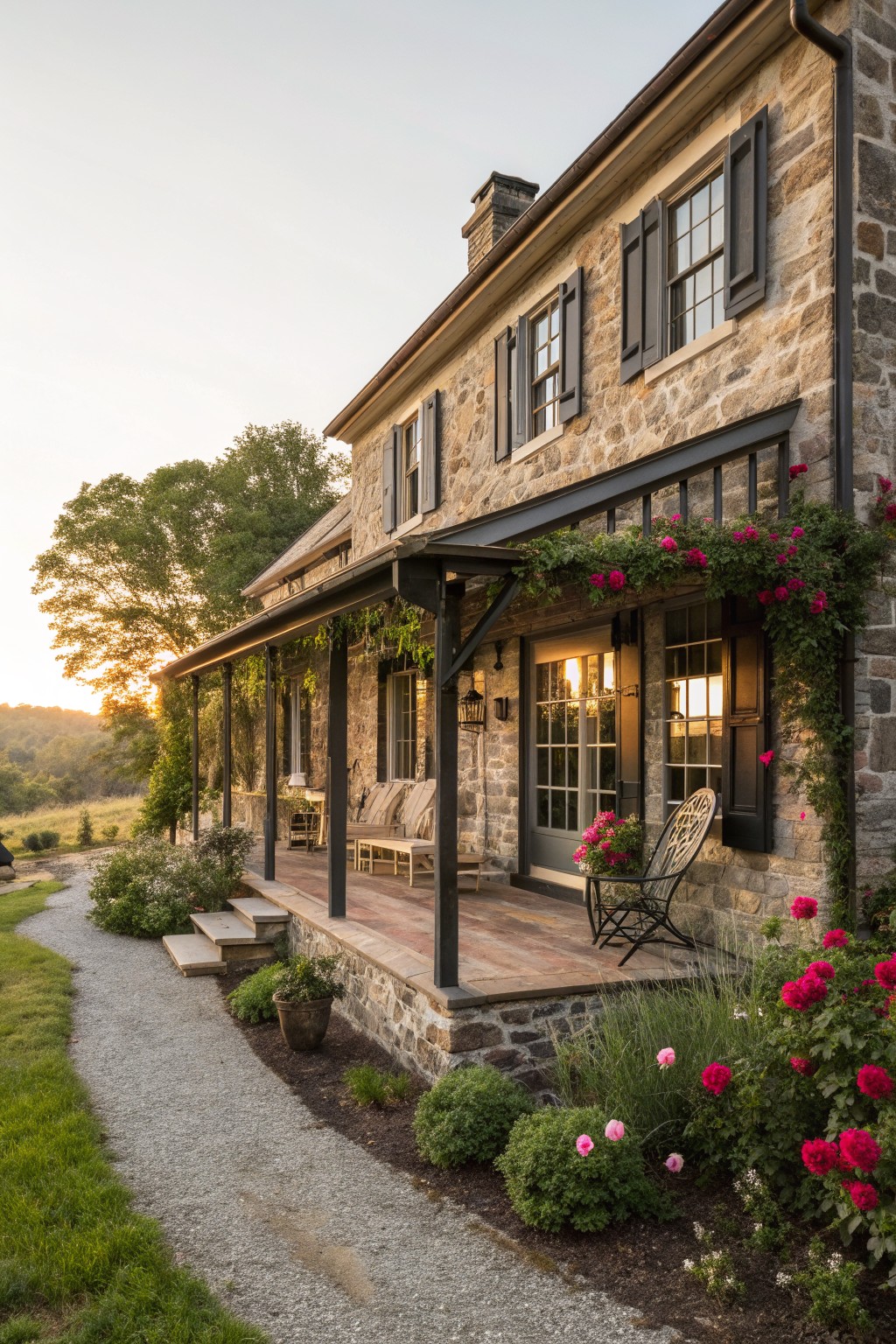
Stone exteriors gain a lot of character when paired with dark painted trim and shutters. The contrast keeps the look from feeling too heavy while still showing off the texture of the stone itself.
This works especially well on farmhouses that want a refined but simple appearance. Match the trim color on the windows, doors, and porch posts so the whole house reads as one cohesive design rather than a collection of separate parts.
A Covered Entry Porch for Stone Homes
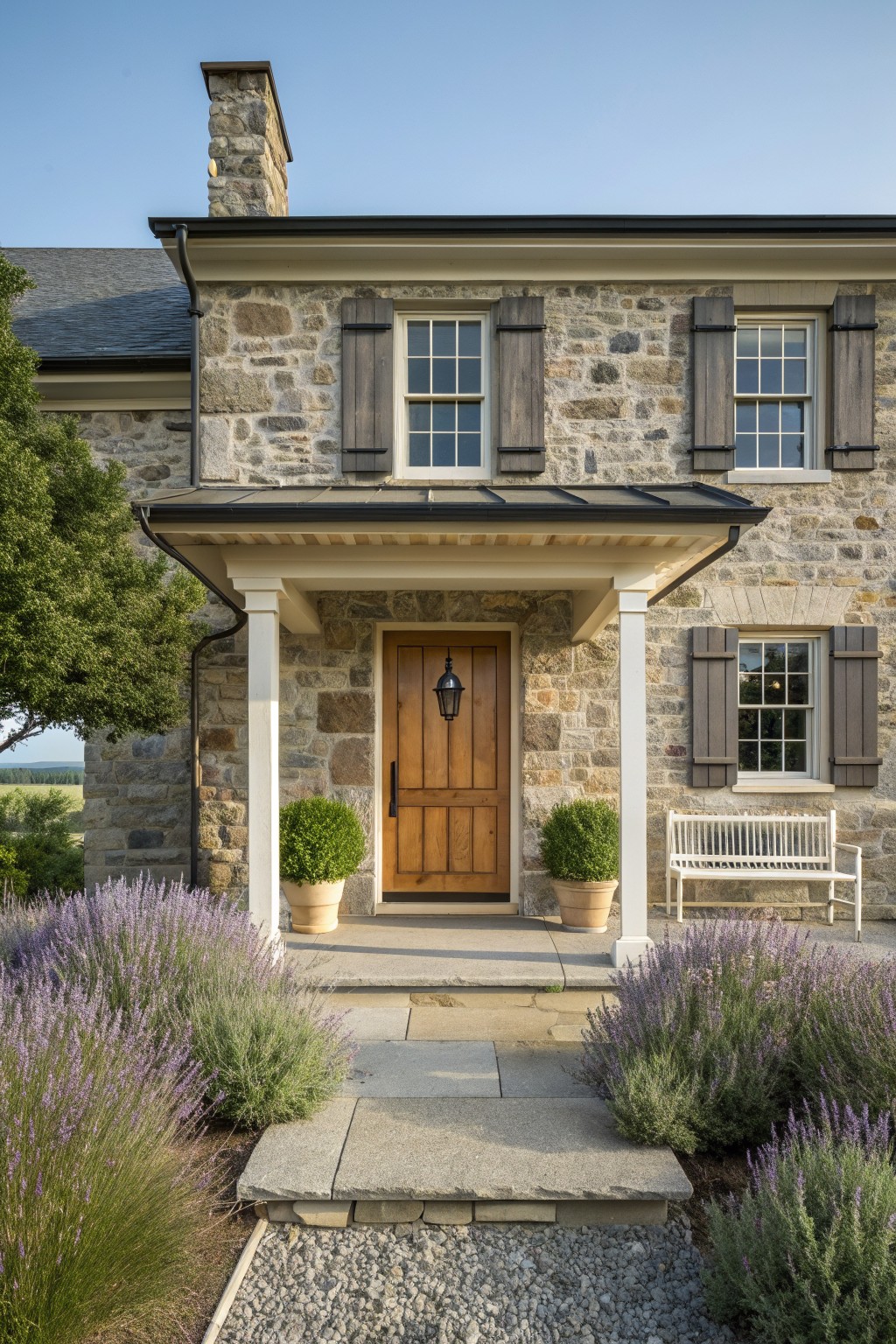
A small covered porch over the front door helps balance the weight of a stone facade. The white columns add a light touch and give the entry a clear focal point without extra trim or decoration.
This works best on traditional farmhouses where the stone already does most of the visual work. Keep the roofline low and centered so the porch feels like a natural part of the house rather than an add-on.
Frame the Entry with Matching Planters
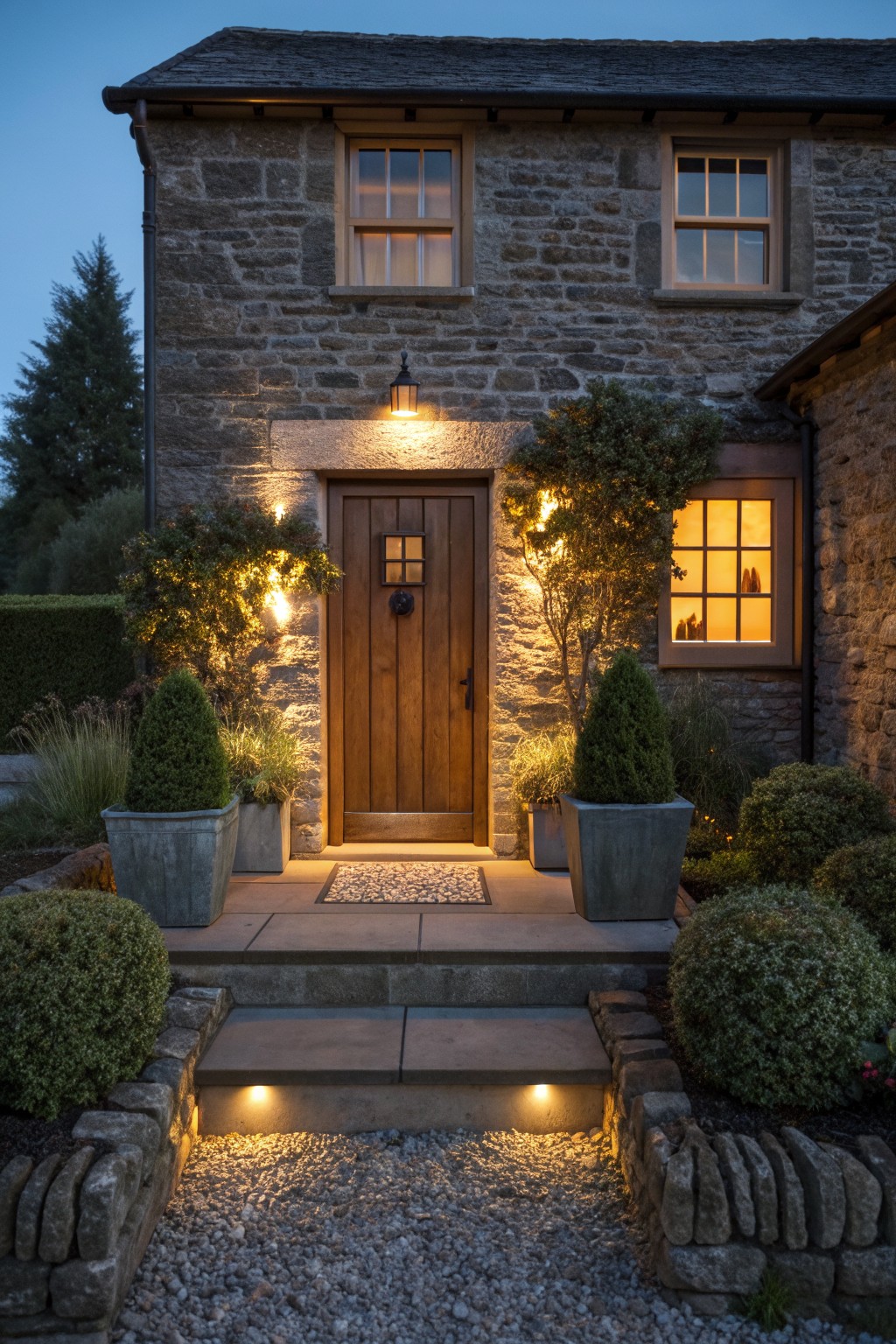
Stone farmhouses often look a bit stark at the door without something to soften the edges. Placing two or three large concrete pots with compact evergreens on either side of the entrance adds balance and helps the doorway feel more welcoming without covering up the stonework.
This works best on homes where the facade stays fairly simple. Match the pot size and material so the arrangement feels deliberate, and stick with plants that hold their shape through the seasons. Avoid crowding the steps or letting the pots block the path.
Stone Paths Leading Straight To The Front Door
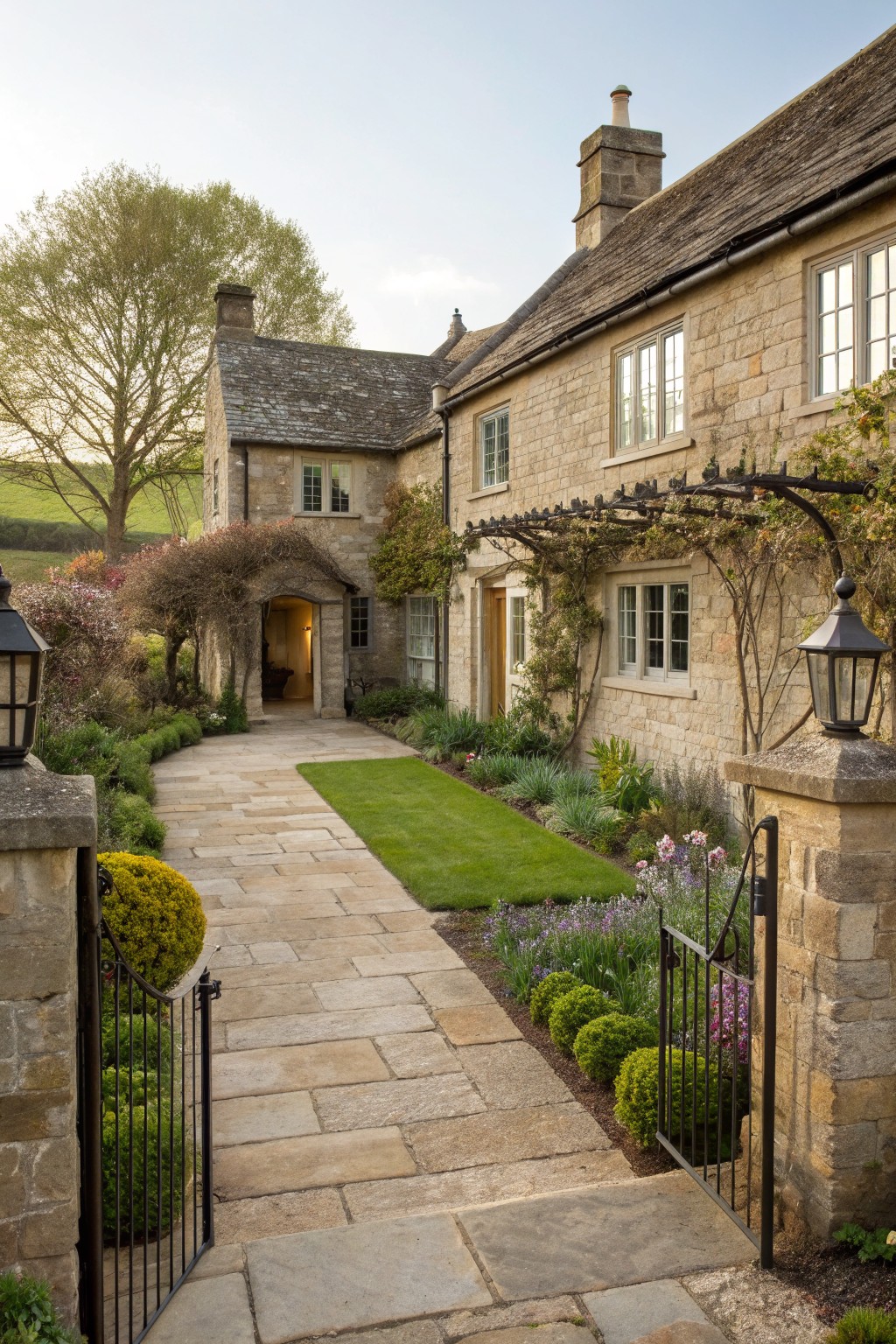
A long stone walkway gives a farmhouse a clear sense of arrival. It turns the approach into something deliberate instead of just a patch of lawn or gravel, and it works especially well with the solid, simple lines of a stone house.
This layout suits homes that sit back from the road or sit behind a gate. Keep the path wide enough for two people to walk side by side, and let low plantings run along the edges so the stone stays the main feature without feeling overly formal.
Using Bay Windows On Stone Exteriors
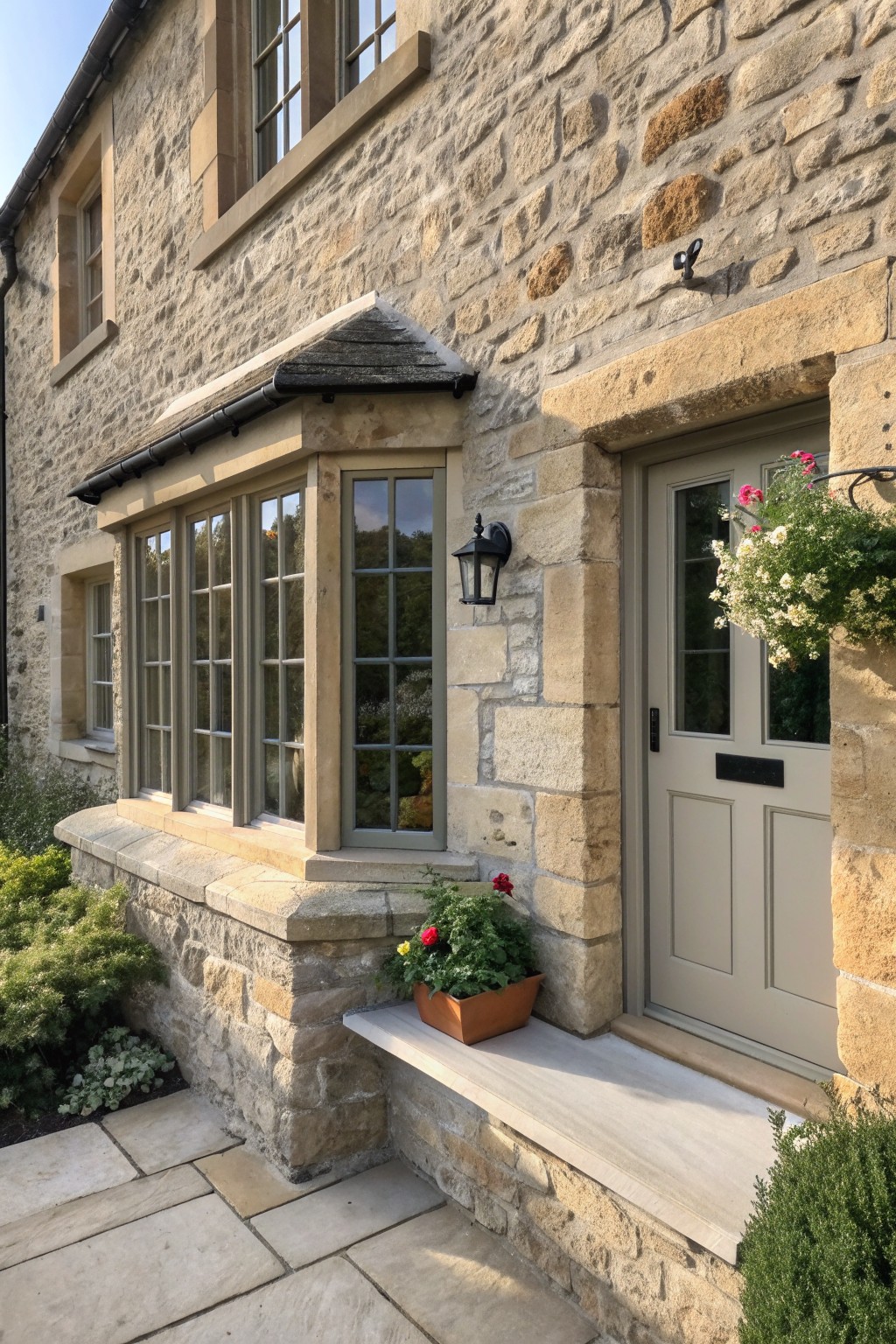
A bay window adds real depth to a stone farmhouse without fighting the rustic character of the walls. The projection breaks up the flat surface, brings in more light, and gives the front a bit more presence while the stone still does the main work.
This works best on homes where the stone has some texture and variation in tone. Keep the trim and roof detail on the bay simple so it feels like a natural extension rather than an added feature.
Timber Porches Pair Well with Stone Exteriors
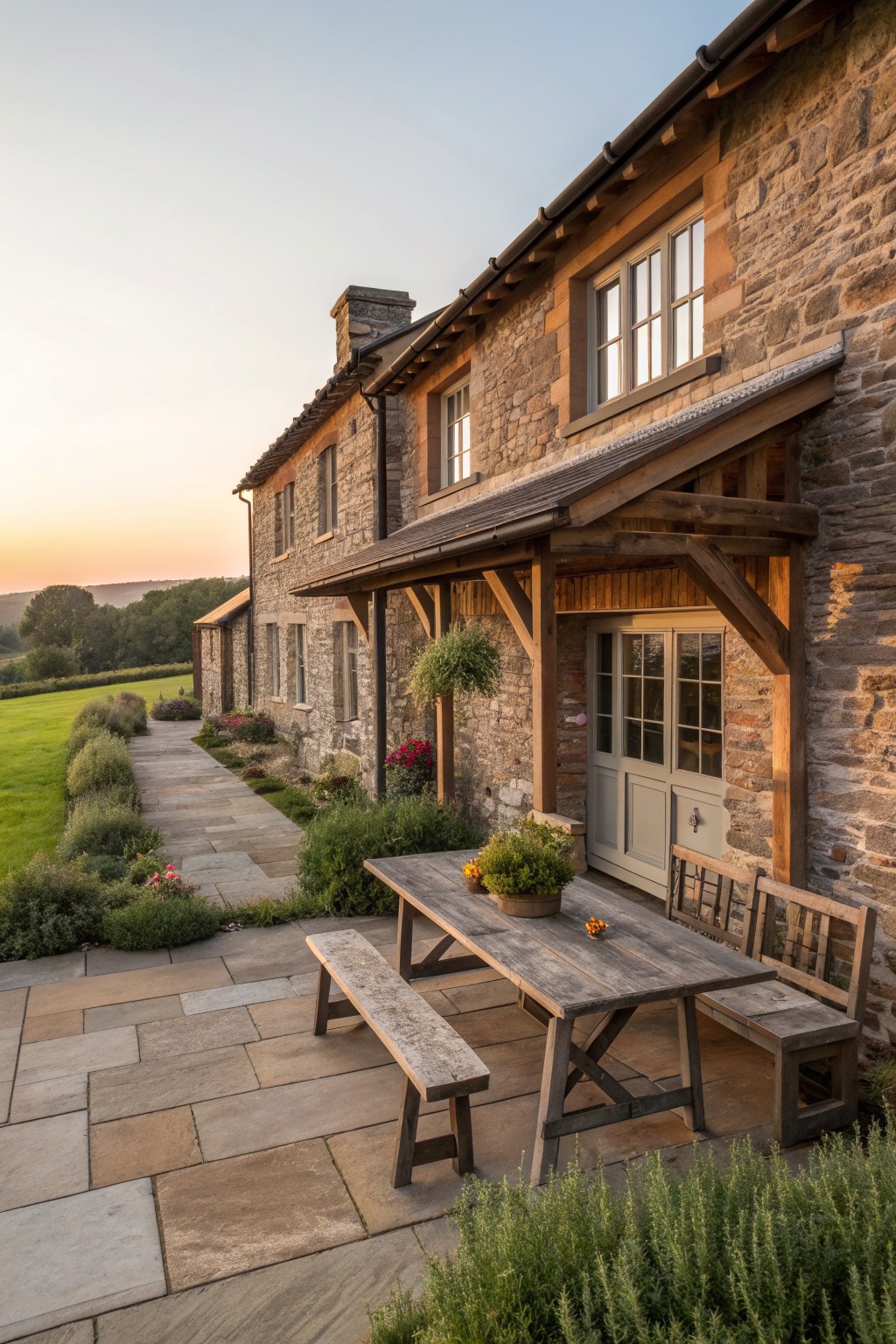
A simple timber-framed overhang next to stone walls gives the exterior both shade and structure. The wood softens the heavy look of the stone while keeping the whole thing grounded and practical. It turns what could feel like a plain wall into a usable spot without adding any extra rooms.
This approach works best on homes that already have some roof overhang or porch framing. Keep the furniture plain and the planting low so the materials stay the focus. Avoid crowding the area with too many extras, or the clean connection between wood and stone gets lost.
White Columns on Stone Exteriors
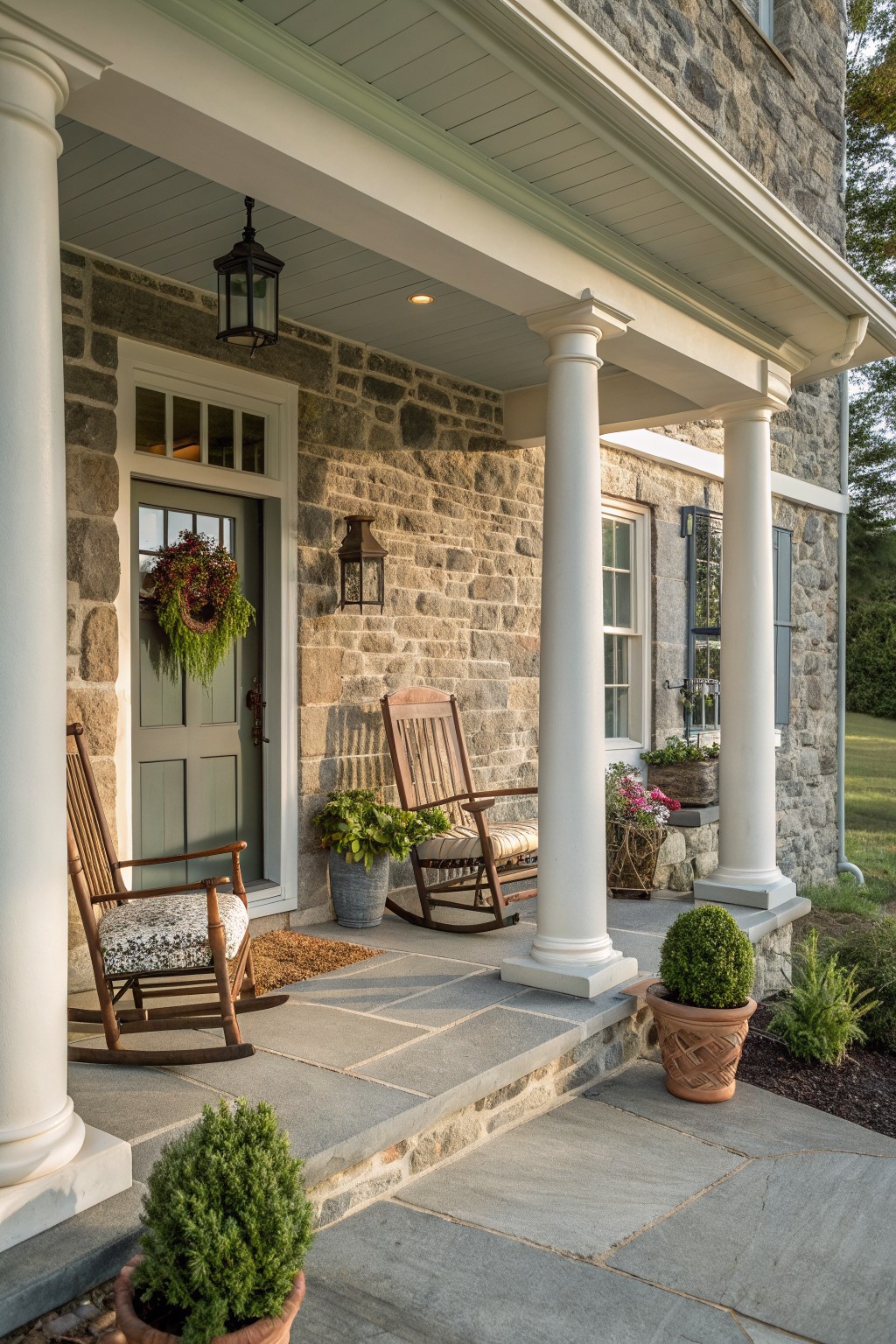
White columns give a stone farmhouse a cleaner, more pulled-together look. The bright paint stands out against the rough stone and helps the porch feel like a real part of the house instead of just an add-on.
This works best on traditional stone homes that need a bit of contrast. Keep the columns simple in shape and match them with white trim around the windows and doors so the whole front stays balanced.
Arched Entries With Wood Doors
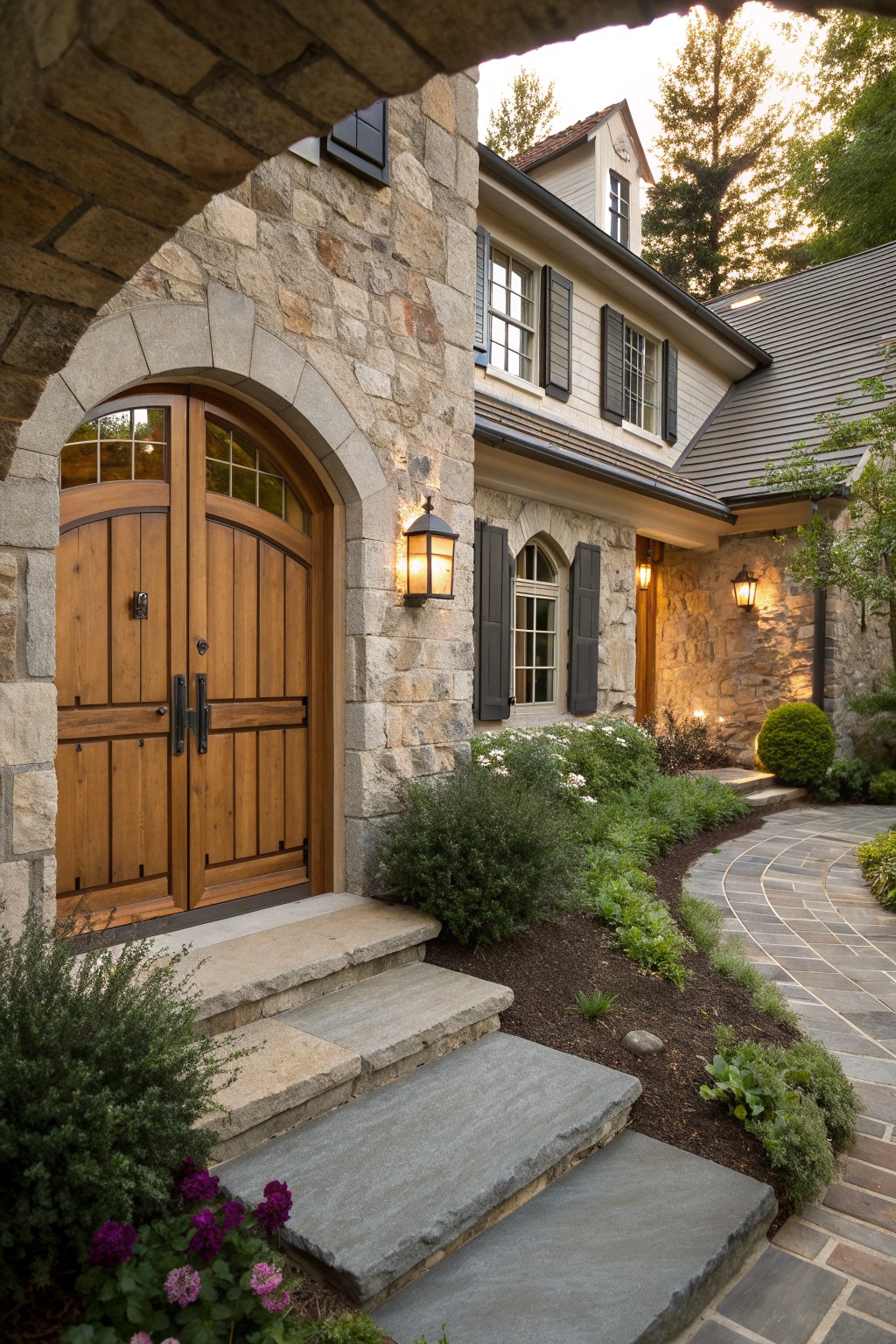
An arched doorway made of wood stands out against stone walls in a way that feels both sturdy and inviting. The curve softens the heavy look of the stone while the wood brings in warmth that plain stone alone can lack.
This approach works well on farmhouses where the front entry needs to feel like the main feature. Match the wood tone to other trim on the house and keep the arch clean so the stone stays the focus instead of competing with extra details.
Stone Pillars That Match The House
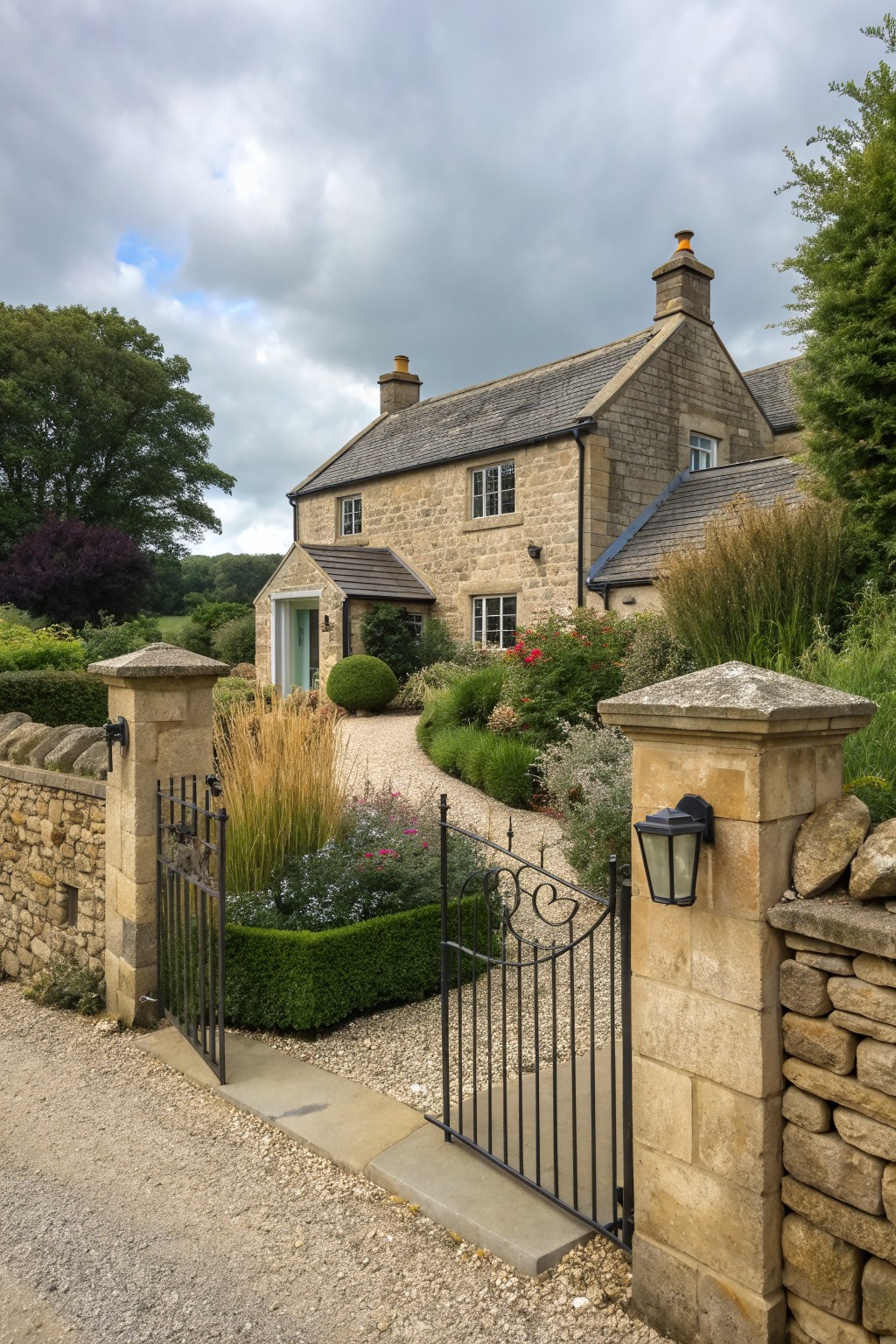
Stone pillars at the entry work well because they pull the same material from the house walls down to the boundary. This keeps the whole approach feeling connected instead of like separate pieces added later. The rough stone texture also gives weight to the gates without making the entrance feel closed off.
This approach suits older farmhouses or new builds that want a settled look. Keep the pillars simple in shape and let the stone do the work. Avoid adding too many extra details on the gates or pillars, since that can start to feel busy against the already textured stone.
Build an Outdoor Bar Against the House Exterior
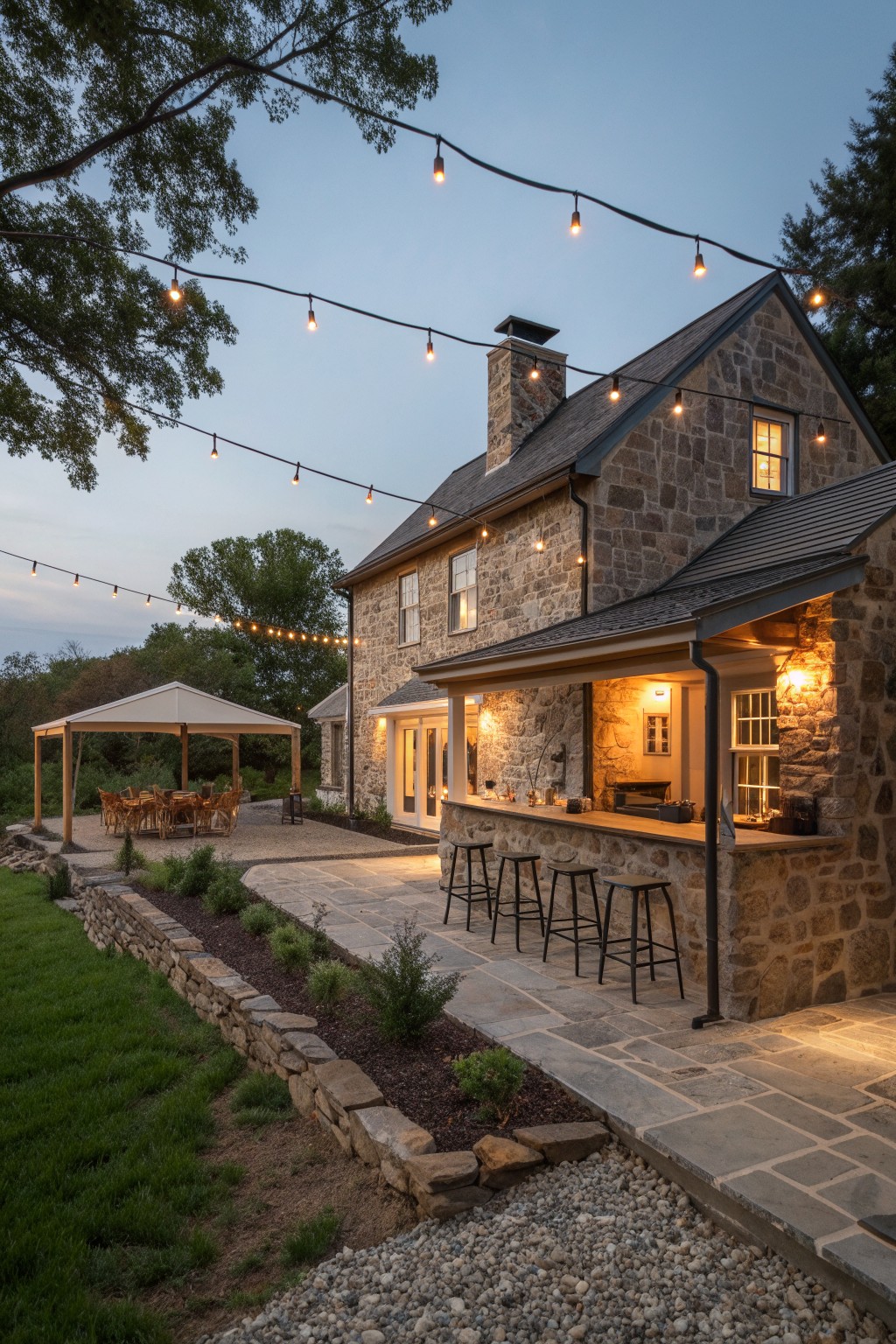
Attaching a bar counter directly to the outside wall turns the side of the house into a useful entertaining spot. The stone surface already provides a solid back, so the bar feels like a natural extension rather than something added later. It keeps everything close to the kitchen and makes it easy to serve drinks without going inside.
This works best on homes that already have some covered overhang or a flat section of wall near the main living areas. Keep the counter height comfortable for standing and choose stools that can stay out year-round. Avoid placing it too close to doors if you want to keep foot traffic clear.
Frequently Asked Questions
Q: Should I go with real stone or manufactured stone for my project? A: Real stone brings that authentic texture and ages gracefully over time. Manufactured stone installs faster and costs less upfront. Pick based on your budget and how much you want the natural variation.
Q: How can I keep the stone from looking too cold in winter? A: Layer in warm wood beams or shutters to balance the look. Plant climbing vines along the base for some softness. The stone itself stays neutral but these additions make the whole exterior feel inviting year round.
Q: What roof style pairs well with stone walls? A: A simple metal roof or dark shingles complement the stone without competing. Steer clear of anything too ornate. Focus on clean lines that let the stone stand out.
Q: Do I need special permits for changing my exterior to stone? A: Check with your local building department first. Most areas require approval for material changes on the outside.
