

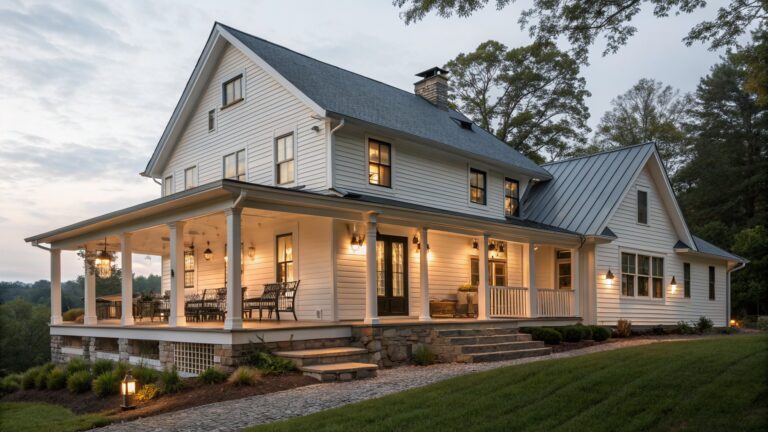
When I drive past older farmhouses I find myself slowing down to take in how the siding and trim work together on the front elevation.
Classic details like gabled roofs and deep porches often create that settled look that newer builds sometimes miss.
I have learned that choosing the right window placement can change how the whole facade reads from the road.
Scale is everything.
A few of these rural touches would be worth testing if I ever tackle an exterior project.
A Classic Porch With Stone Foundation
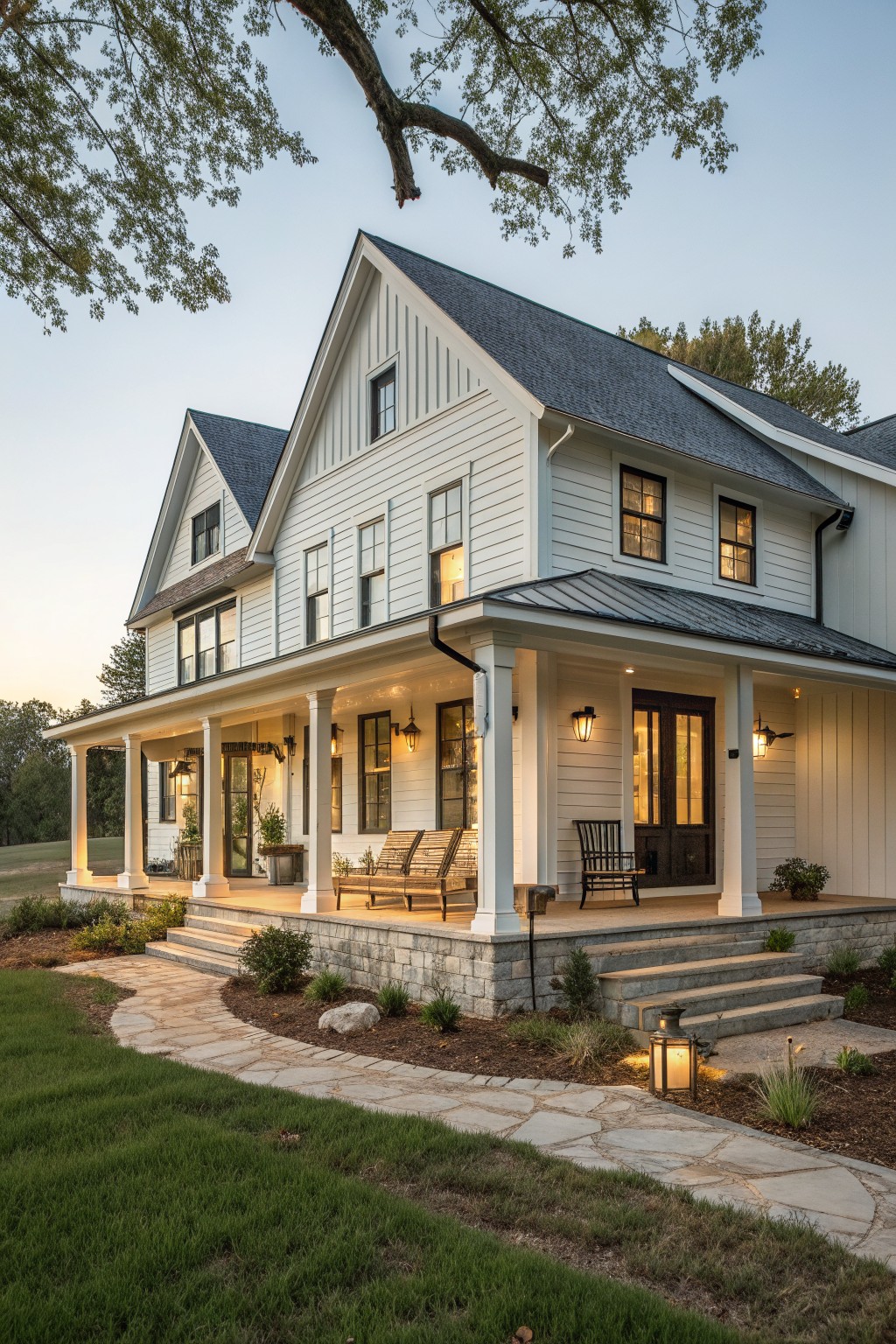
A wide front porch gains a lot of character when it sits on a low stone base. The stone adds weight and texture that white siding alone cannot provide, and it helps the whole house feel more settled into the landscape.
This approach works especially well on farmhouses that sit a little above grade. Keep the columns plain and painted to match the trim, and let the stone run just high enough to cover the foundation and the first step or two. It reads traditional without needing extra trim or decoration.
Vertical Siding For Classic Farmhouse Character
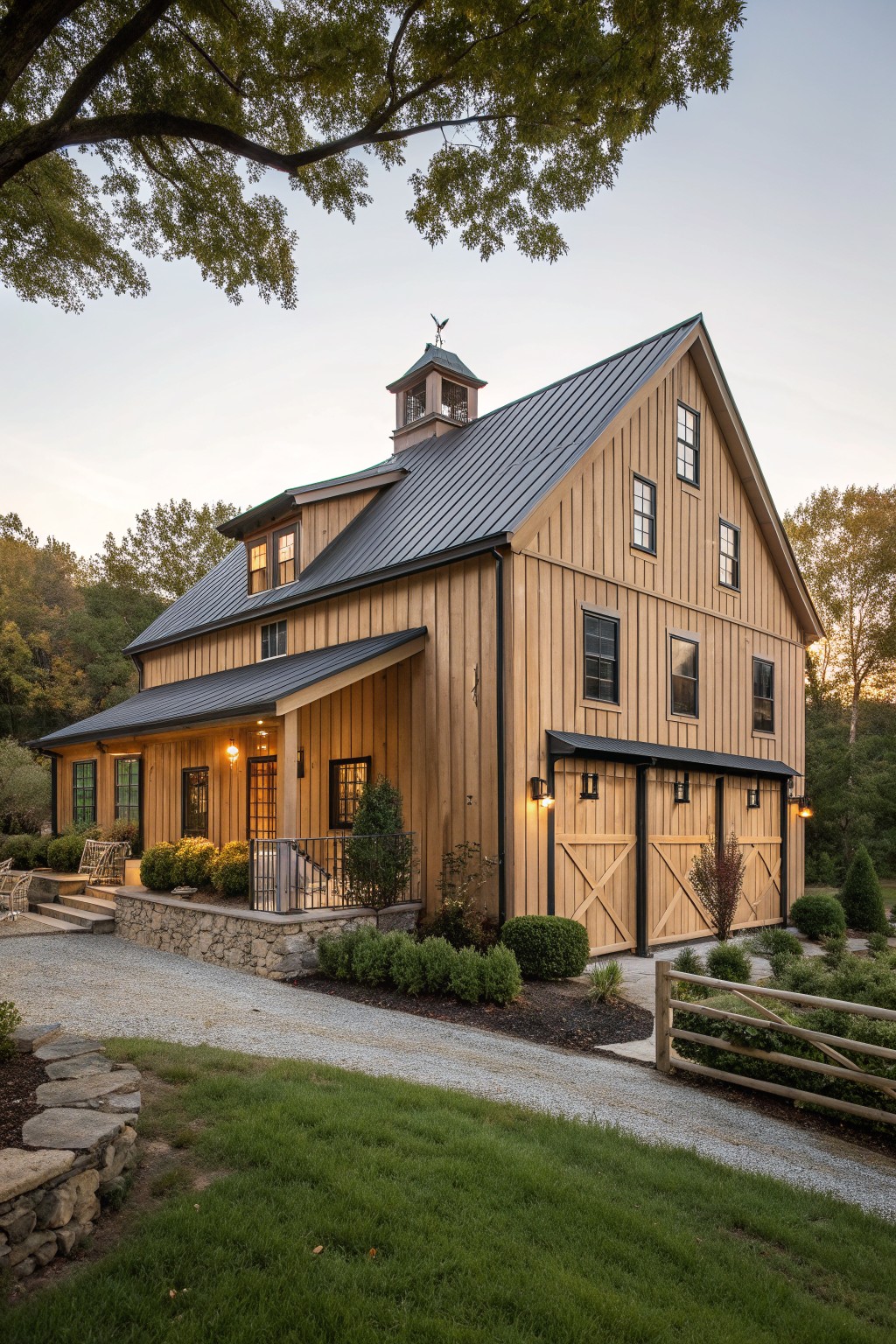
Vertical wood siding gives a farmhouse that straightforward barn look without much fuss. It keeps the exterior simple and ties the whole place to its rural roots, especially when the boards run the full height of the walls.
This choice works best on homes with a steep roof and a few larger openings. Use it where you want the house to feel grounded and practical rather than overly dressed up. Dark hardware and a metal roof help it read even more like an old outbuilding that was turned into living space.
A Covered Porch That Suits a Farmhouse
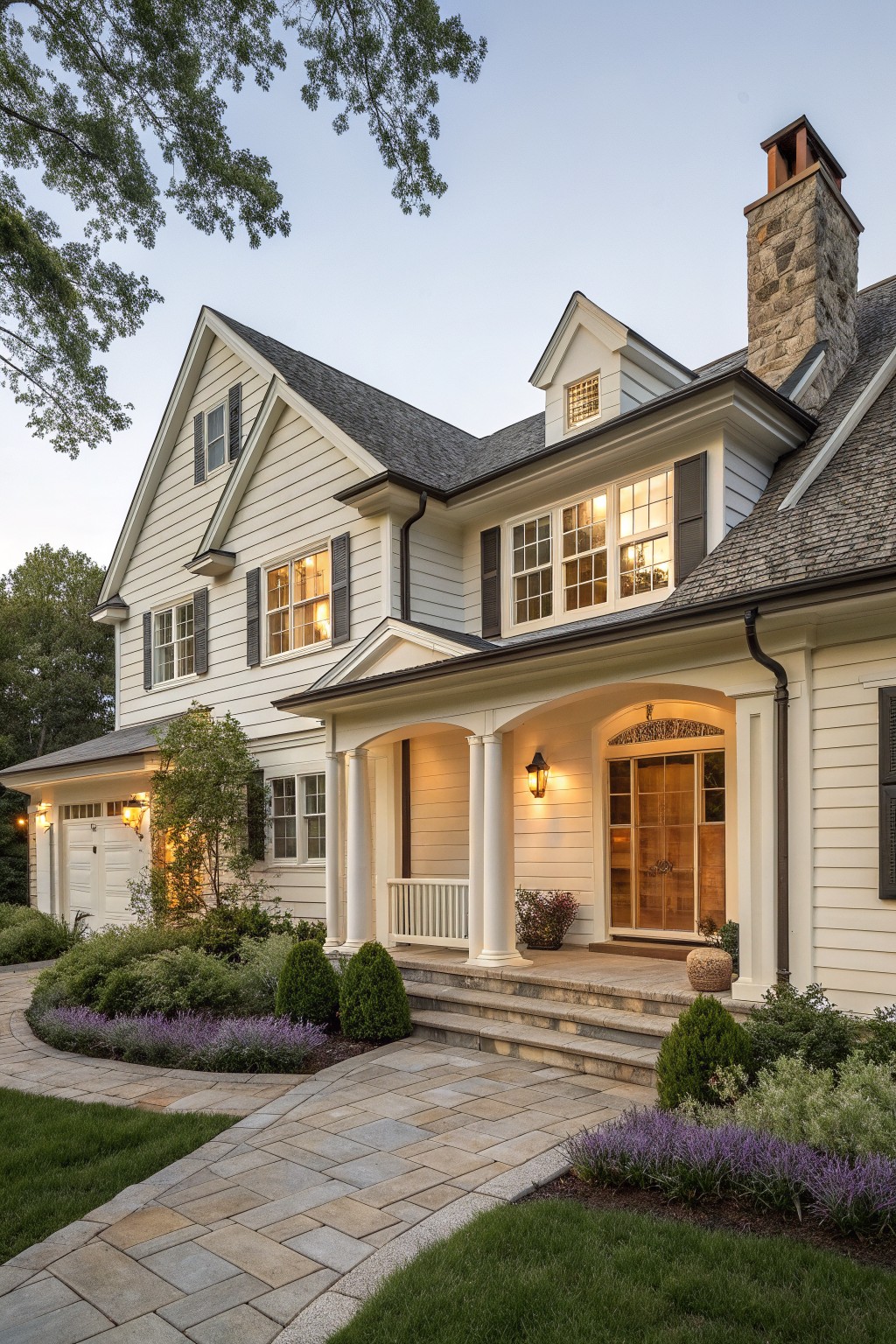
A covered porch with simple white columns gives the front of a house a settled, useful look. It turns the entry into a real space instead of just a doorway, and it helps the whole facade feel balanced without needing extra trim or decoration.
This works best on homes with straightforward siding and gabled roofs. Keep the columns in proportion to the house size, and avoid adding too much detail around the opening so the porch stays easy to use and easy to maintain.
Adding A Fireplace To The Porch
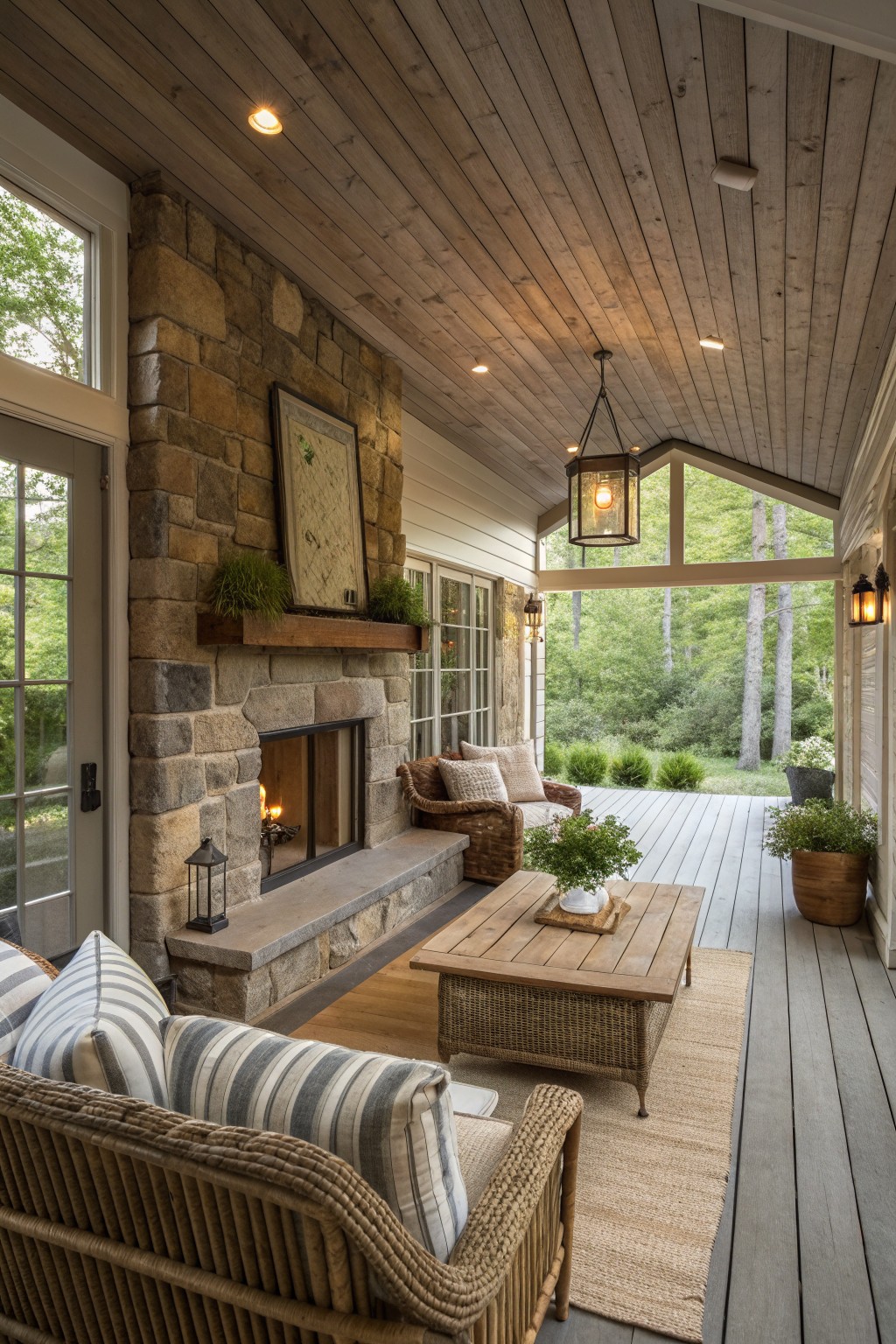
A fireplace on the porch gives you a simple way to use the space on cooler evenings without needing to go inside. The stone adds a solid, lasting look that fits right into farmhouse style and makes the whole area feel more like an extra room.
This works best on a covered porch where the heat stays in and the structure can handle the chimney. Match the stone to other parts of the house if you can, and keep the seating low and comfortable so the fire stays the main focus.
Wooden Carriage Doors For A Farmhouse Garage
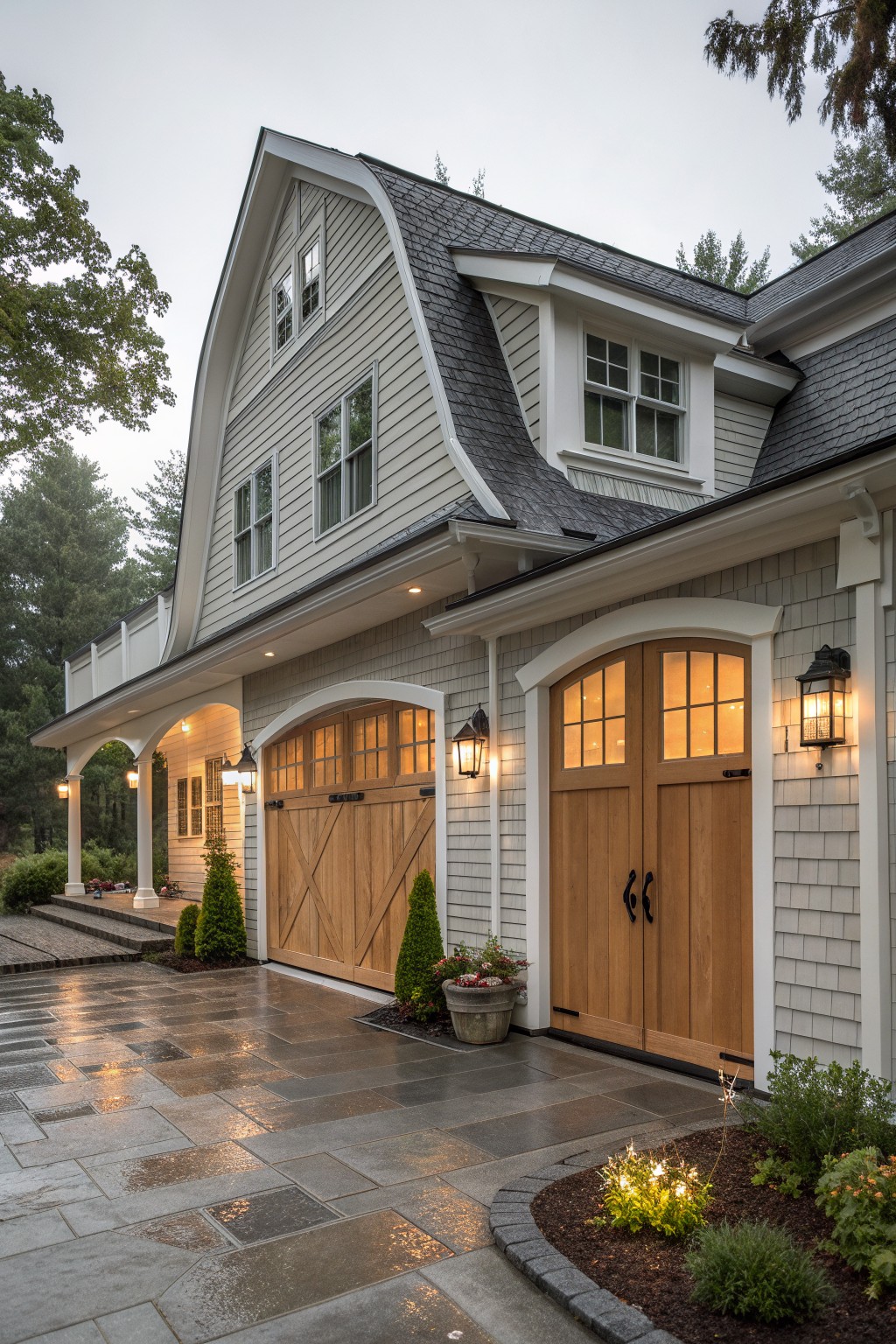
Wooden carriage style doors give the garage the same rural character as the rest of the house. The warm wood and simple black hardware keep the doors from looking like a modern addition and instead make them feel like part of the original build.
This choice works especially well on homes with light siding and a dark roof. It suits properties where the goal is to keep every part of the exterior consistent with classic country details rather than letting the garage stand out as separate.
Stone Paths for Farmhouse Entries
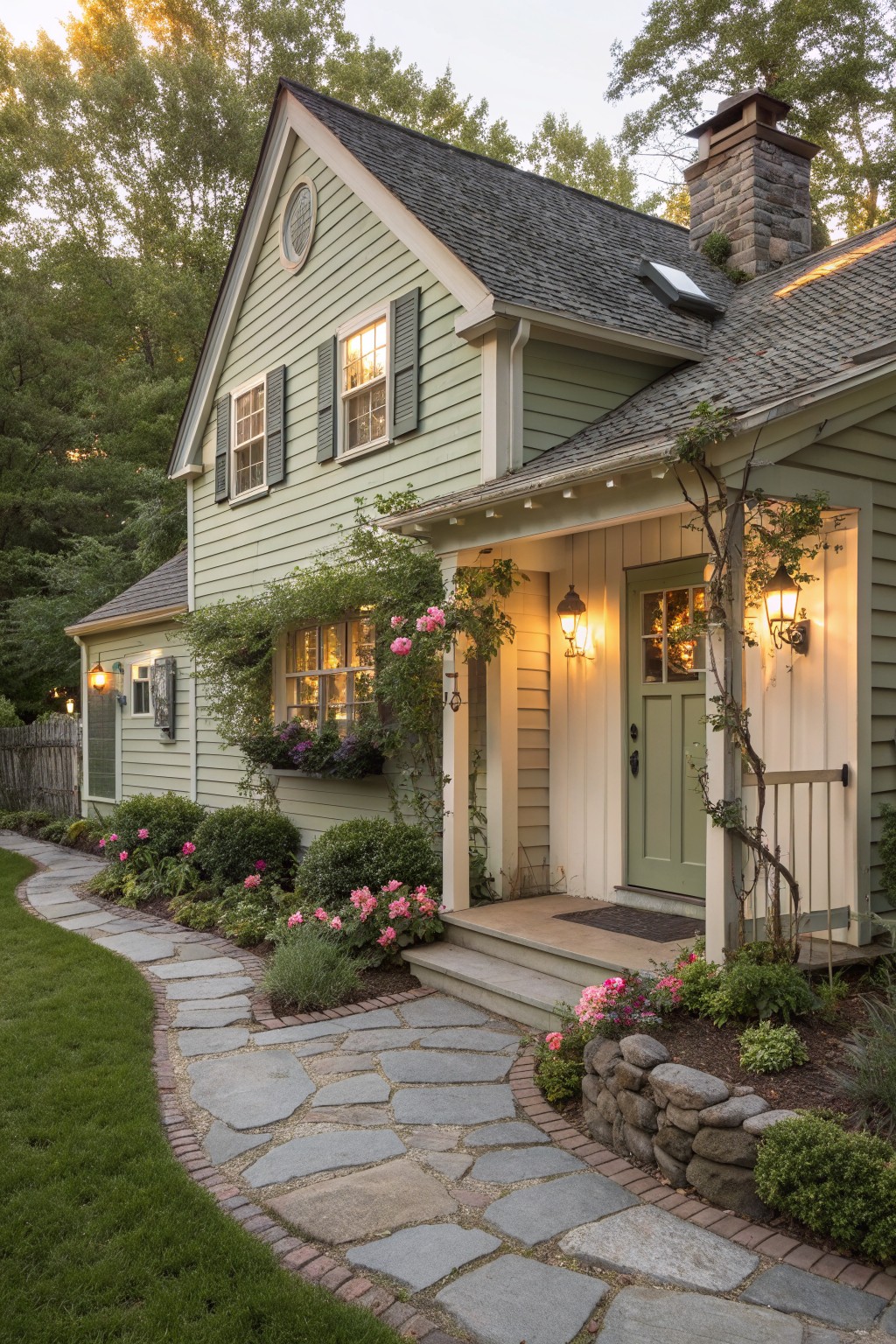
A simple stone path does a lot to make a farmhouse feel more inviting. It breaks up the lawn and gives the eye a clear route to the door without looking too formal.
This idea works well on homes that already have some width to the front yard. Keep the stones irregular in shape and let low plants soften the edges so the whole thing stays relaxed.
Simple Garden Sheds With Metal Roofs
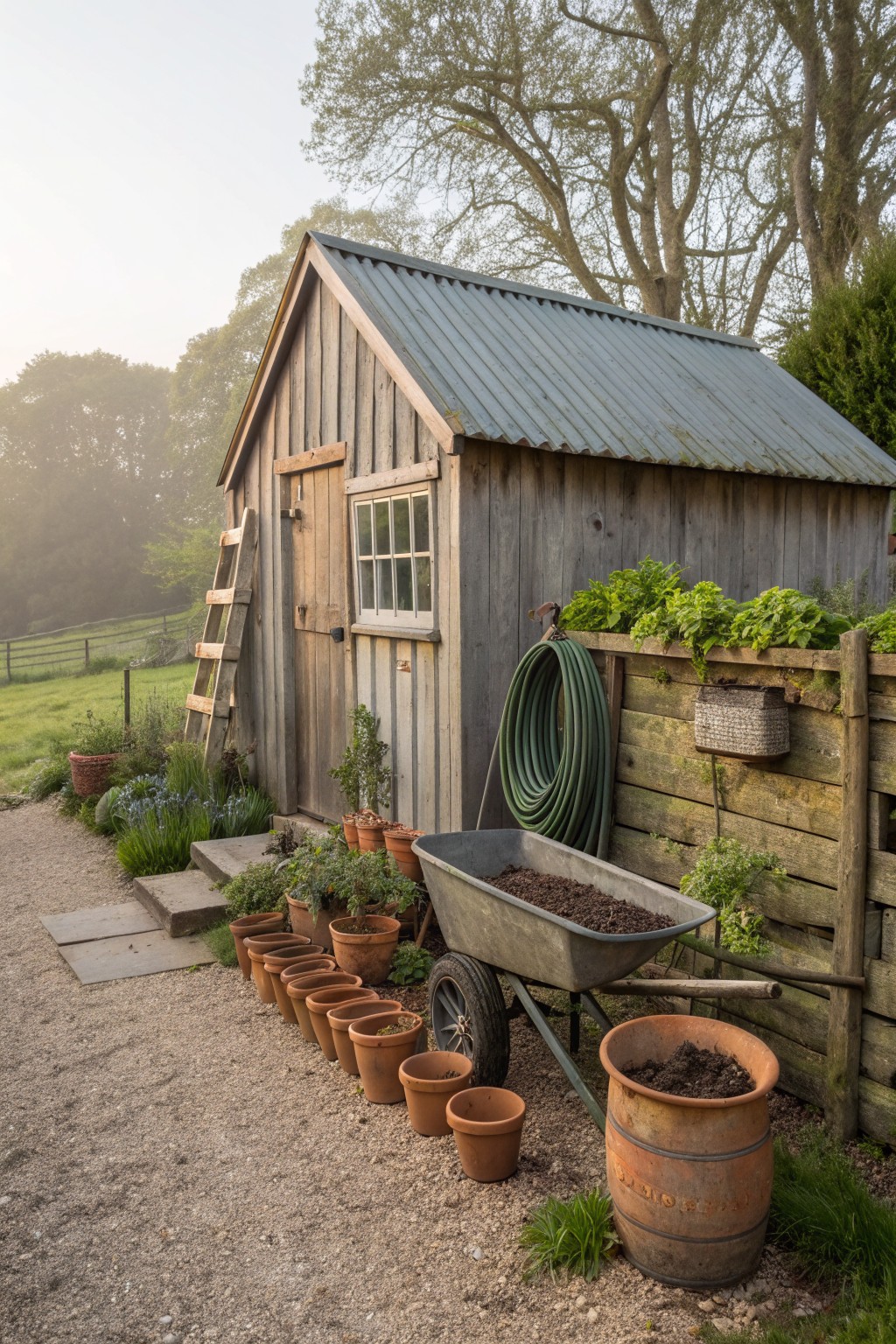
A basic garden shed made from weathered wood and topped with corrugated metal gives any farmhouse exterior a solid, useful anchor. It keeps tools and pots in one spot instead of scattered around, and the plain materials feel right at home with the rest of a rural setting.
This kind of shed works best on properties that already have a bit of land and need a place to handle daily garden work. Stick to straightforward shapes and let the wood age naturally so the whole thing blends in without extra effort.
Adding A Pergola Over The Outdoor Table
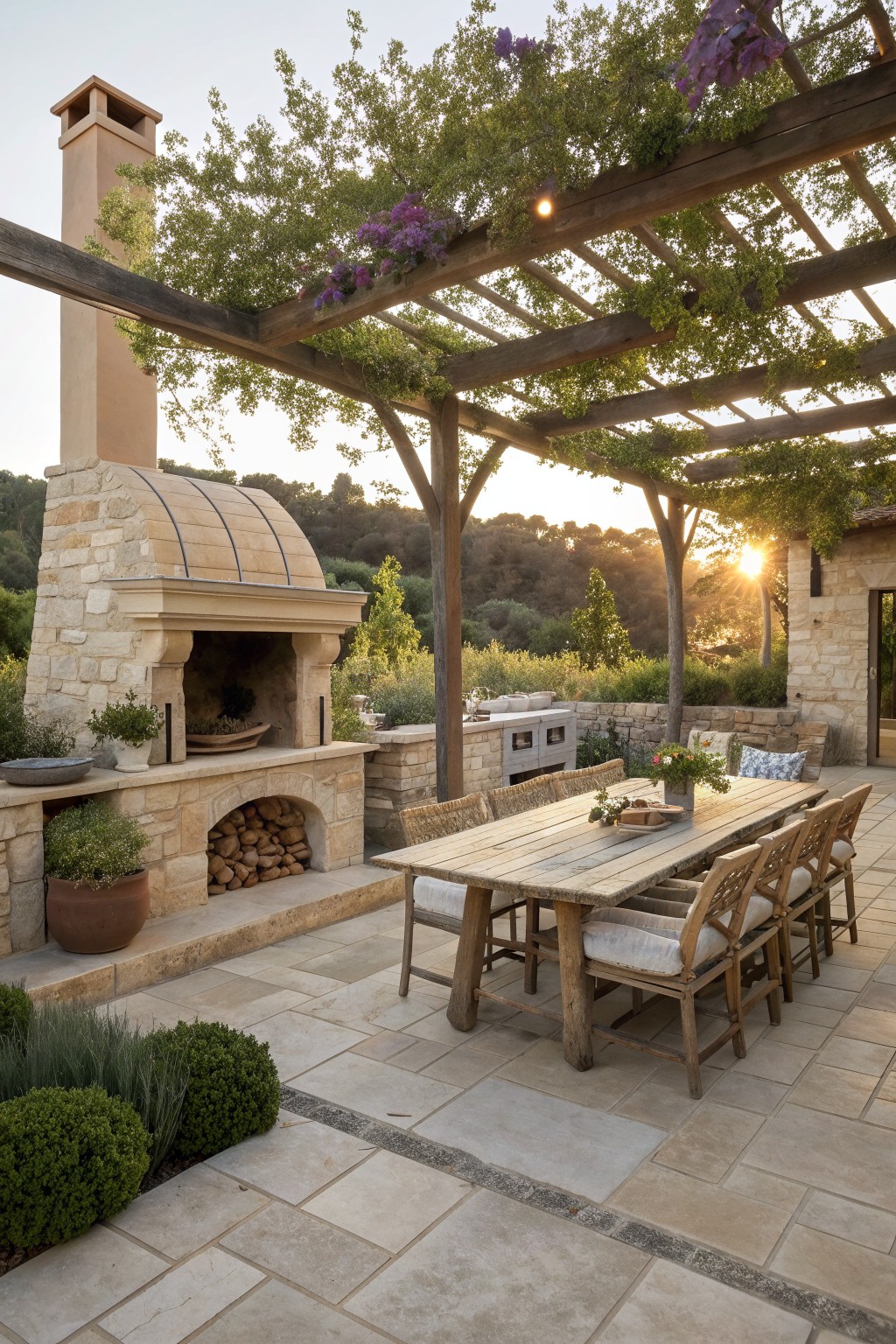
A pergola makes an outdoor dining area feel more settled and usable without closing it in. The wood structure provides shade during the day and support for vines that fill in over the seasons, turning an open patio into a spot people actually want to sit for meals.
This approach suits farmhouses that already have a stone or paved terrace near the house. Keep the frame simple and let climbing plants do most of the work, and place the table close to a hearth or grill so cooking and eating stay in one zone.
White Paint Keeps Farmhouses Looking Classic
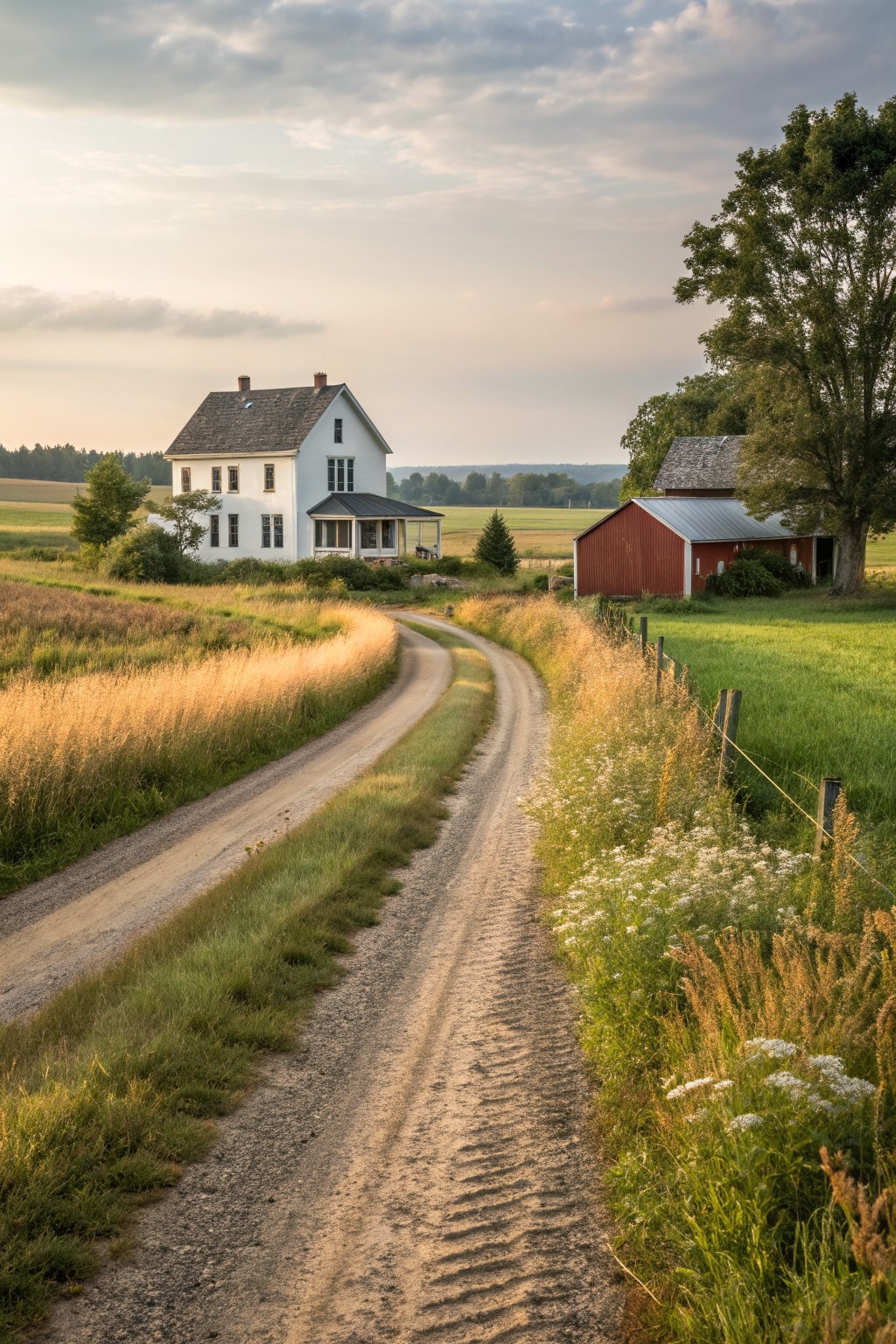
A bright white exterior helps the house read as simple and clean against open land. It works especially well when the roof is dark and the trim stays minimal, so the shape of the building stays the main focus.
This choice suits homes that already have a straightforward gable roof and a modest porch. It also pairs nicely with a red outbuilding if you want that traditional contrast without extra decoration.
Wraparound Porches On Farmhouses
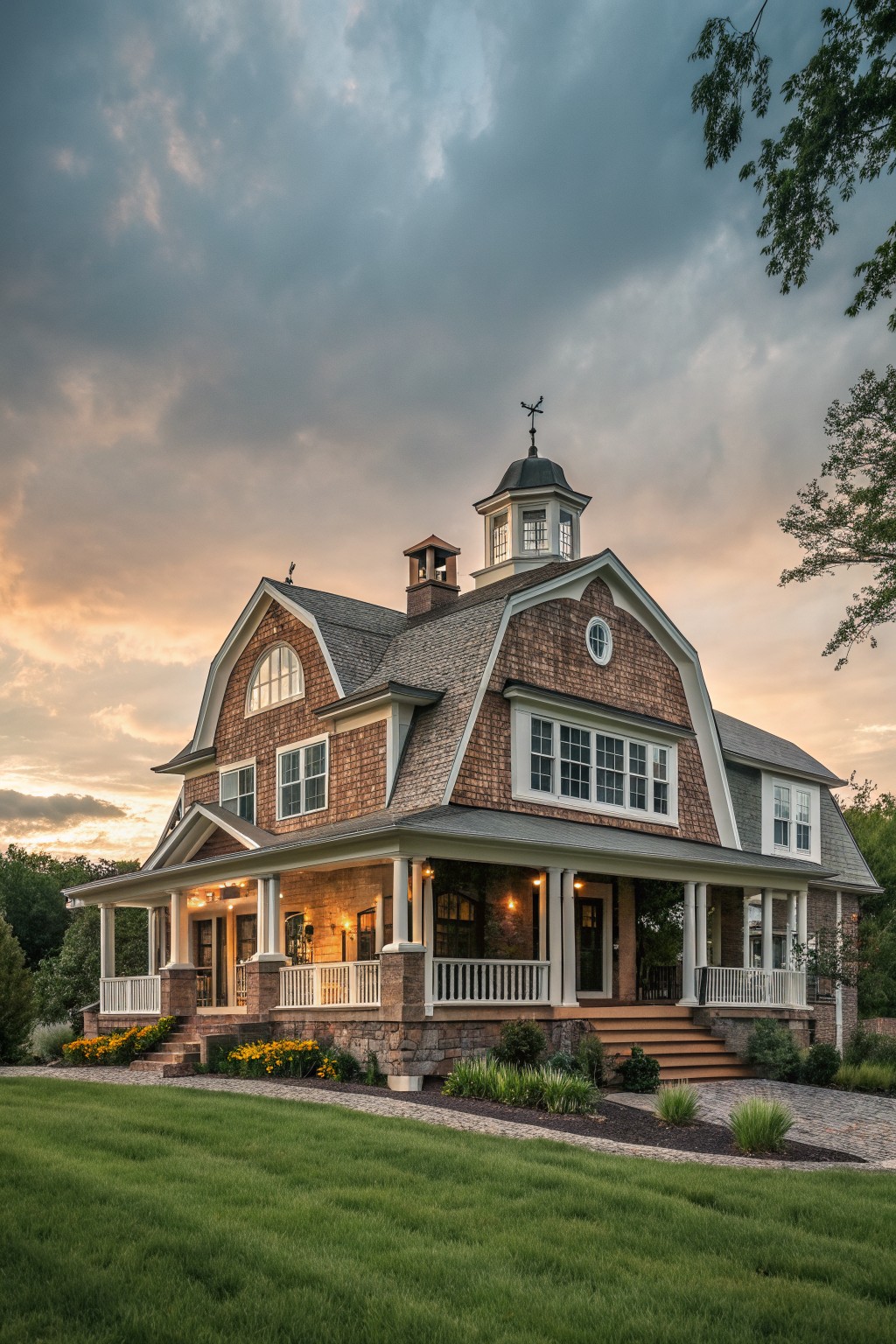
A wraparound porch helps a tall farmhouse feel more grounded and usable. It stretches the living space outward and gives the front a settled look that works with the roofline above it. The simple columns and railing keep the whole thing from feeling too heavy.
This approach works best on homes that have room on at least two sides. It suits rural lots where people actually sit outside, and it pairs well with stone bases or mixed siding. Keep the depth consistent so the porch does not look like an afterthought.
Gravel Courtyards For Farmhouse Entries
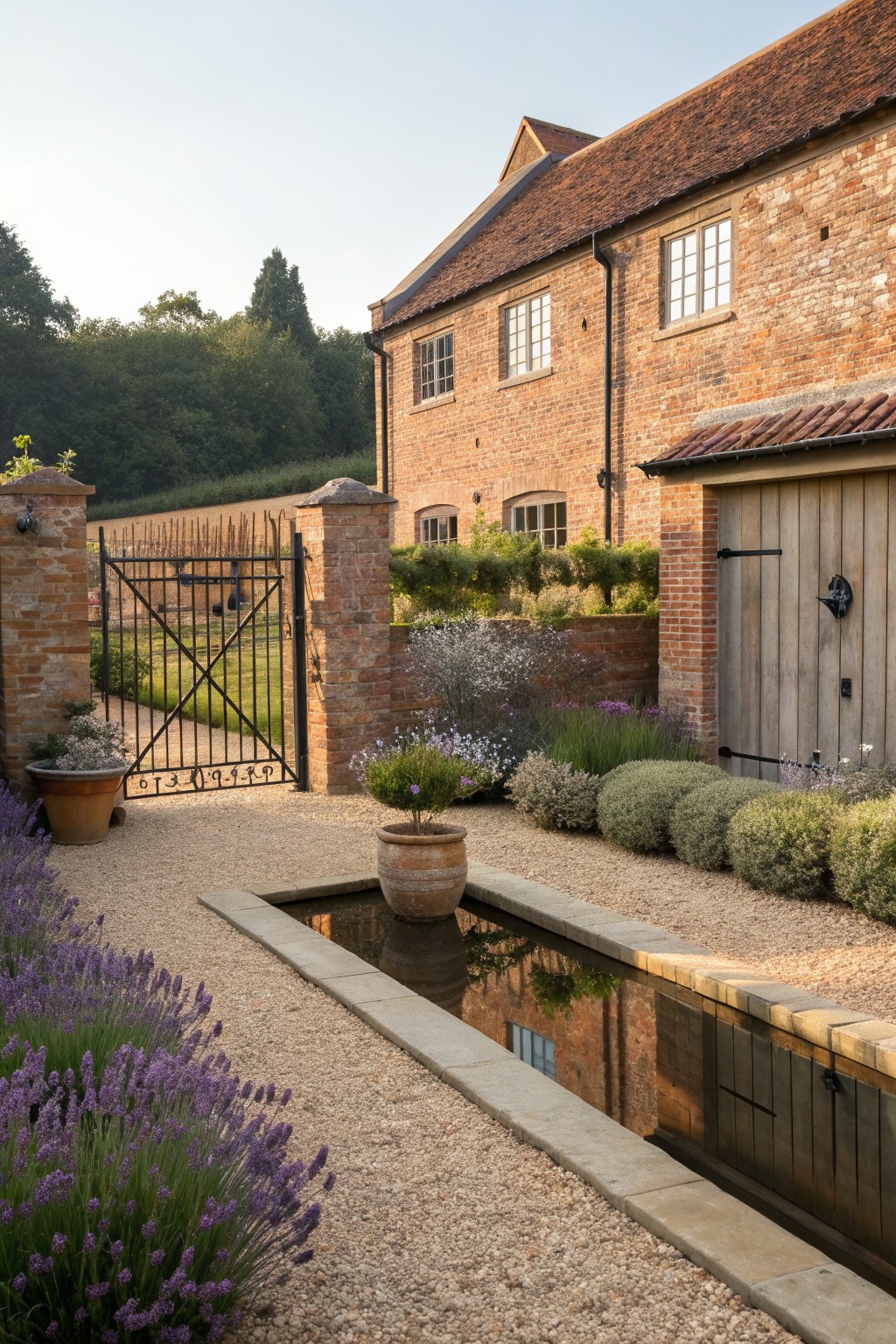
A gravel forecourt gives the house a relaxed approach that fits right in with older brick walls and simple gates. It keeps the entry from feeling too finished or formal while still marking a clear path to the door. The loose surface also handles rain well and needs less upkeep than paved areas.
This setup works best on homes with some land around them where you want the garden to flow right up to the building. Keep the gravel contained with low brick or stone edges so it stays neat over time. Skip it if your soil stays wet for long periods since drainage matters.
Adding Curved Seating Around A Fire Pit
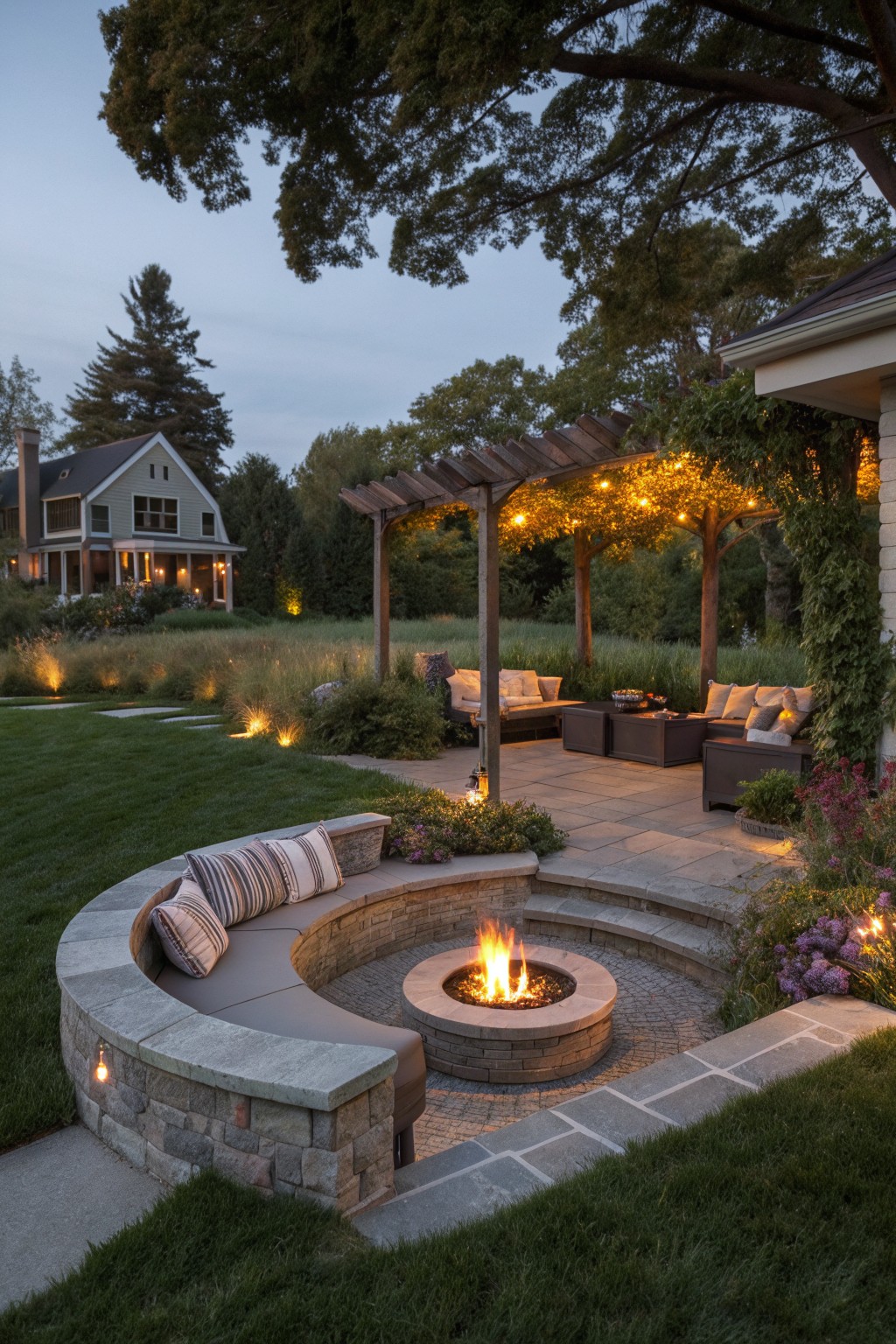
A curved bench built right into the patio makes it simple to gather around the fire without moving chairs or worrying about layout. The shape keeps everyone close to the flames and gives the space a settled feel that works even on cooler nights.
This setup suits homes with a decent sized yard or existing patio where you want one main spot for evening use. Keep the curve wide enough for easy movement and choose materials that match the rest of your hardscaping so it blends in over time.
String Lights Along the Porch
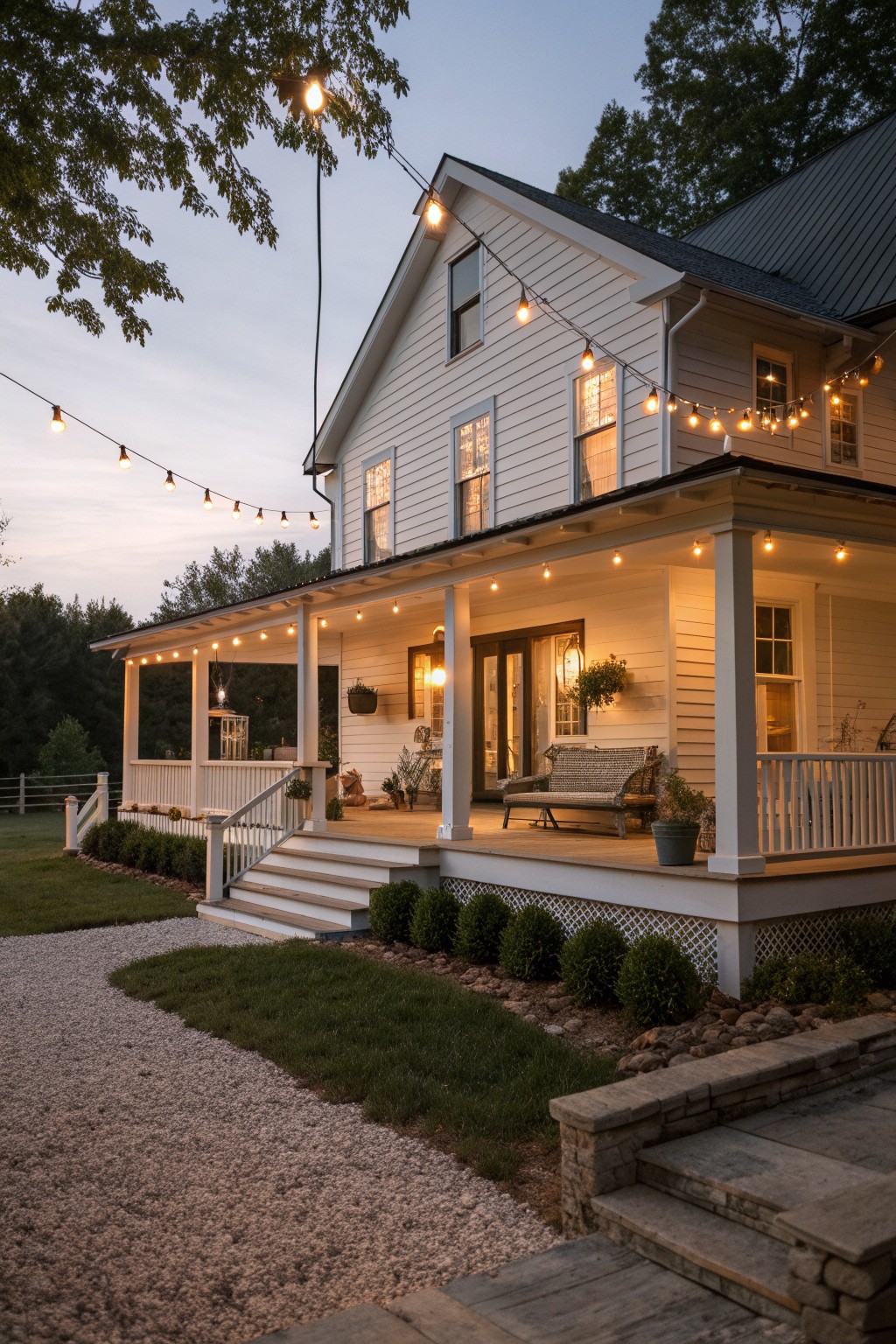
String lights make a simple farmhouse porch feel more inviting once the sun starts to set. They add a gentle layer of light that highlights the roofline and railings without overpowering the classic white siding and dark roof.
Run the lights along the eaves and under the porch ceiling so the glow stays even. This approach works on most older homes that already have a decent overhang and gives the front a lived-in look without extra fixtures.
Stone Bases on Farmhouse Exteriors
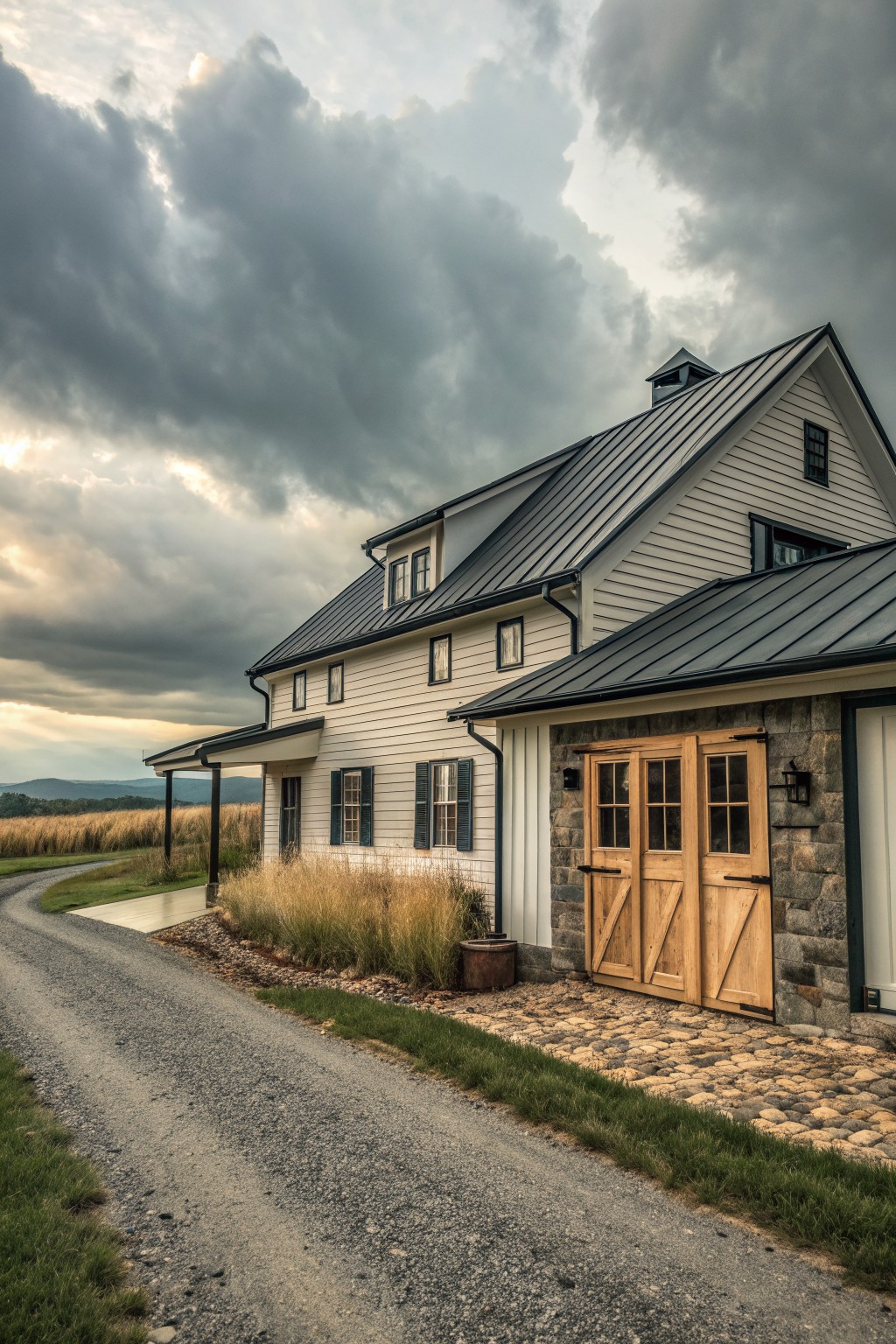
Stone on the lower part of an exterior adds weight and texture that white siding alone can lack. It helps the house feel settled into its setting instead of sitting lightly on top of the ground.
This approach suits homes with simple rooflines and a few wood accents. Keep the stone limited to one section or the base level so it supports the design without taking over.
Give Boots Their Own Spot By The Door
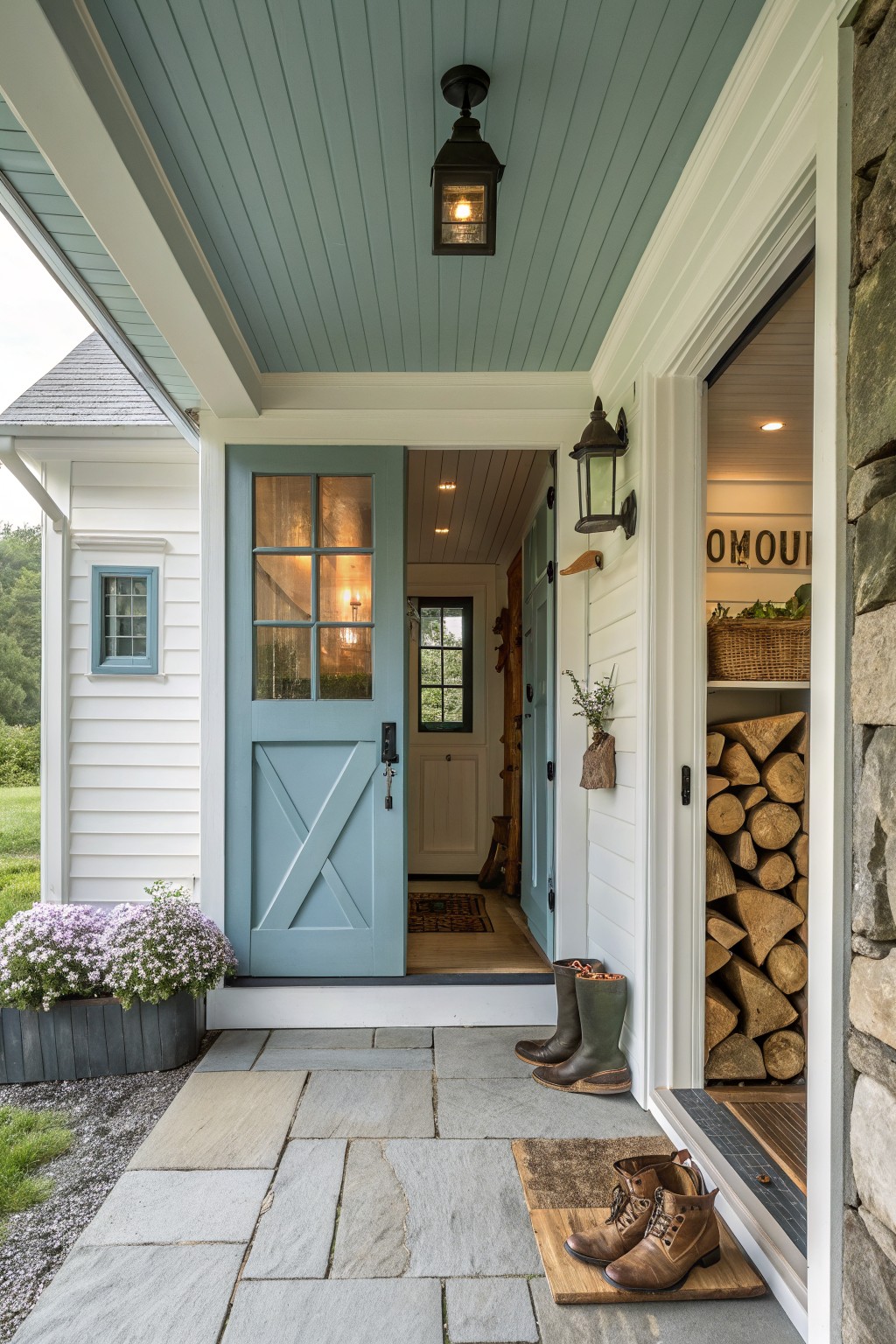
A boot tray right outside the front door keeps mud and water from tracking inside. It works especially well on a stone path where people naturally pause before stepping in. The tray stays simple and does not need to match anything else.
This setup suits homes with gravel drives or garden paths. Use a flat piece of wood or a low mat that can handle wet soles. Keep it near the door so it feels like part of the entry rather than an afterthought.
Use a Pergola to Define Outdoor Living
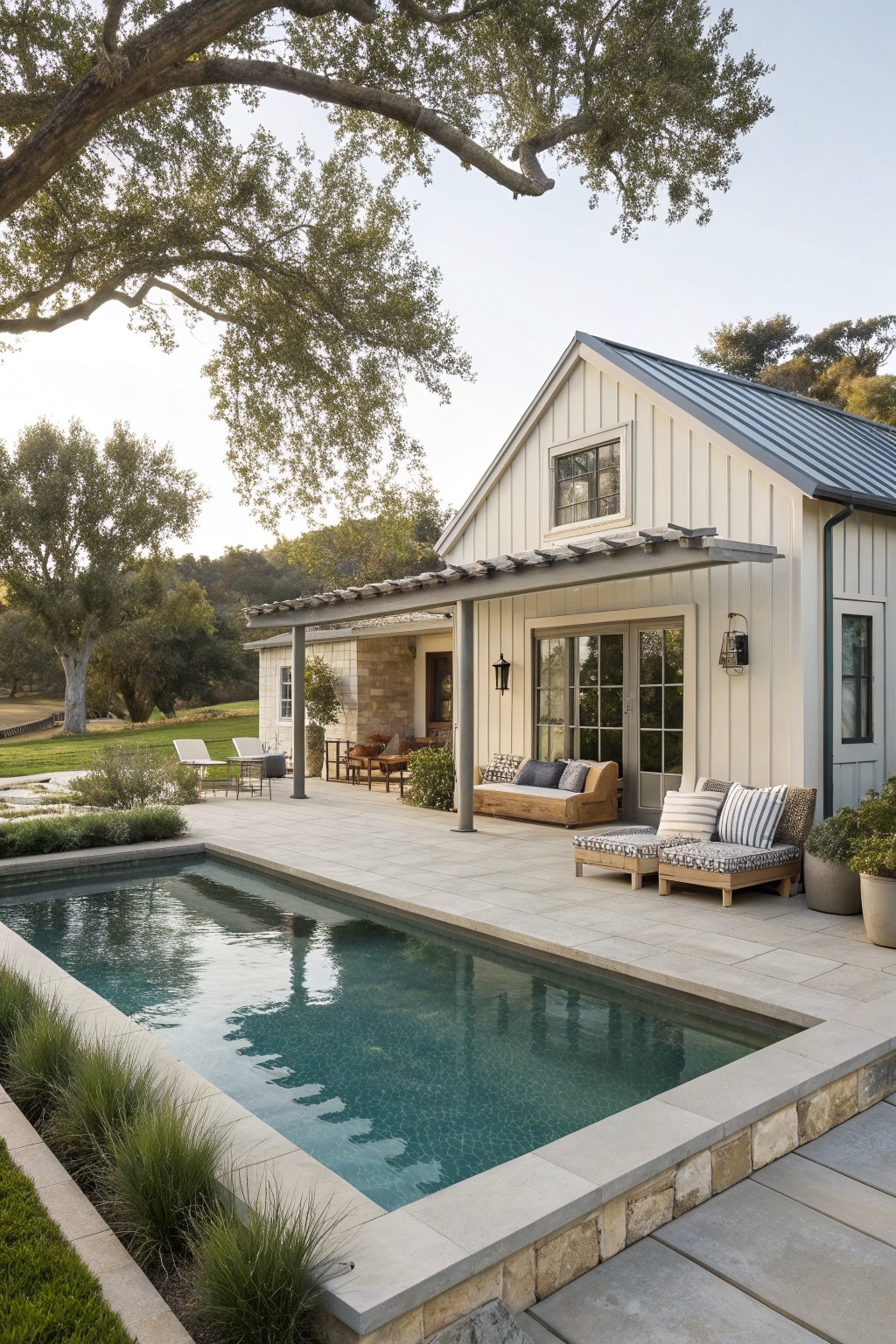
A pergola over part of the patio turns an open stretch of stone into a real room you can use. It gives shade without walls, marks where seating belongs, and keeps the pool area from feeling too exposed. On a farmhouse this size, the simple wood structure also echoes the rooflines and makes the whole backyard feel pulled together.
This approach works best on homes where the patio sits right off the main living spaces and gets plenty of sun. Keep the posts plain and let the roof stay open so air moves through. Just watch that the scale stays modest. Too wide and it starts to feel like a separate building instead of an easy extension of the house.
Stone and Siding Mixes for Farmhouse Exteriors
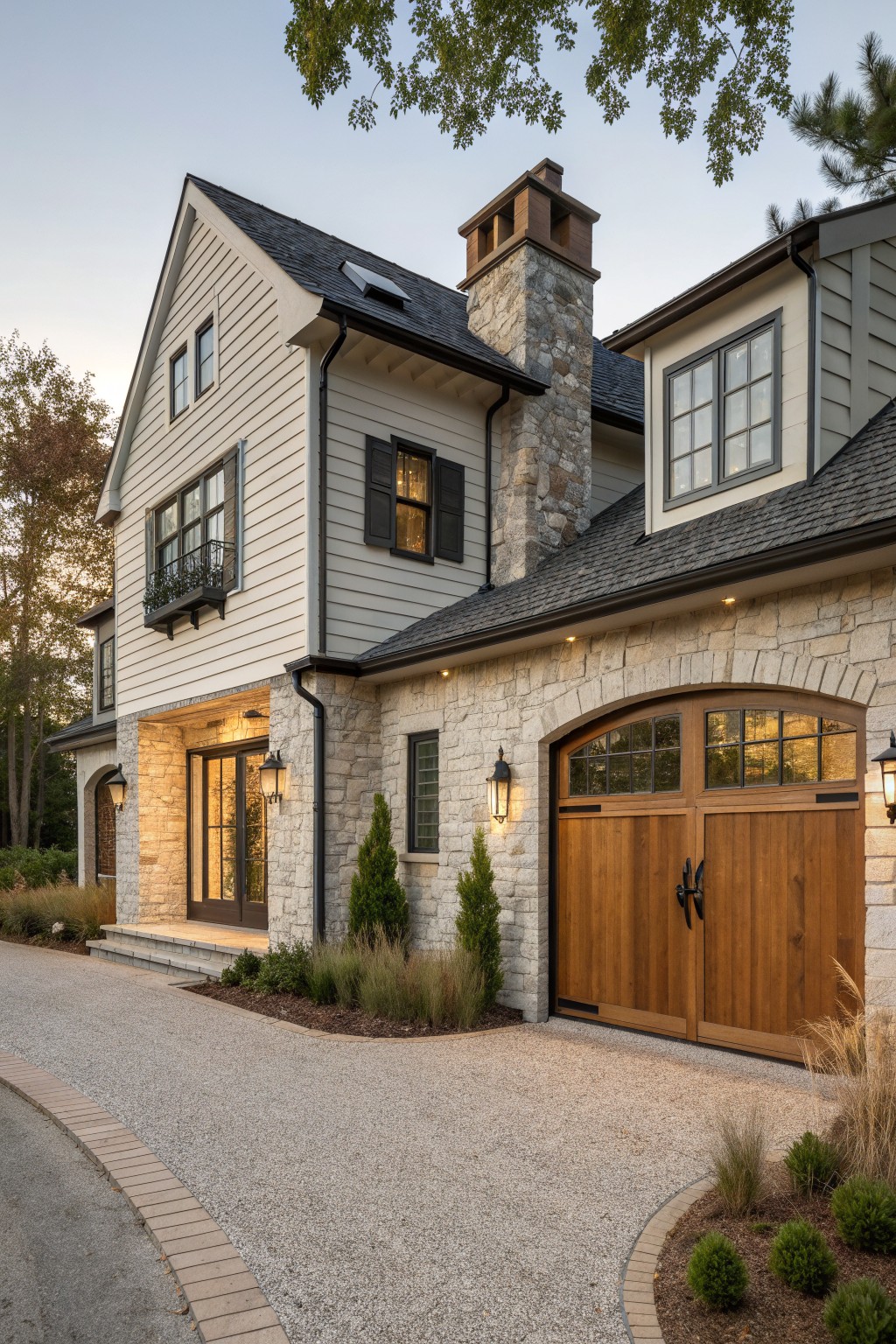
Many farmhouses gain a stronger rural feel when stone is added to the siding. The stone gives the lower part of the house more weight while the lighter siding keeps the upper levels bright and simple. This mix shows up clearly on the chimney and base here, where the stone breaks up the long stretches of siding without taking over.
This approach works best on homes that already have a straightforward roofline and balanced windows. Limit the stone to the foundation, chimney, or entry areas so the siding remains the main surface. It suits traditional country settings and helps the house sit more naturally in its surroundings.
Frequently Asked Questions
Q: What siding works best if I want that classic farmhouse feel on a tight budget? A: Go with fiber cement boards painted white or soft gray. They mimic old wood siding but hold up better to rain and sun. Paint the trim in a deeper shade to add depth without extra cost.
Q: How can I add a porch if my house sits close to the road? A: Build a shallow covered entry with simple square posts. Keep the roofline low so it feels like it belongs. This small change draws the eye and creates a welcoming spot to sit.
Q: Do I need to replace all my windows to match the rural style? A: Swap just the front ones for divided light styles first. Dark frames against light walls give that old farmhouse contrast right away. The rest can wait until you have time or money.
Q: What maintenance keeps these exteriors looking sharp year after year? A: Wash the siding twice a season and check for peeling paint on the trim. Fix small spots early before they spread. That habit saves bigger repairs later.
