

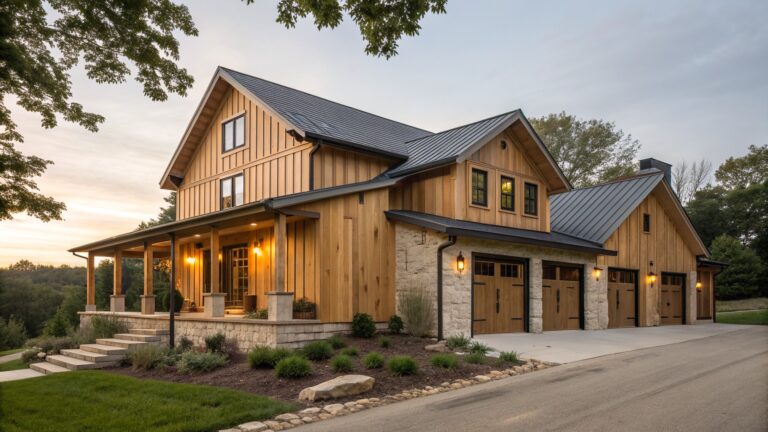
I have always noticed that the exteriors of western farmhouses tend to feel most inviting when the wood elements are allowed to show their natural grain against softer earth tones on the siding and trim.
Choosing those finishes carefully can change how the whole front of the house reads from the road especially once the roofline and entry details come into play.
In my own experience some material ideas that look promising in photos end up needing adjustments once you see them against the actual sky and terrain.
It often helps to start with the main wood accents around windows and doors before committing to larger areas.
A few combinations simply work better than expected.
Mix Wood Siding With Stone For A Grounded Look
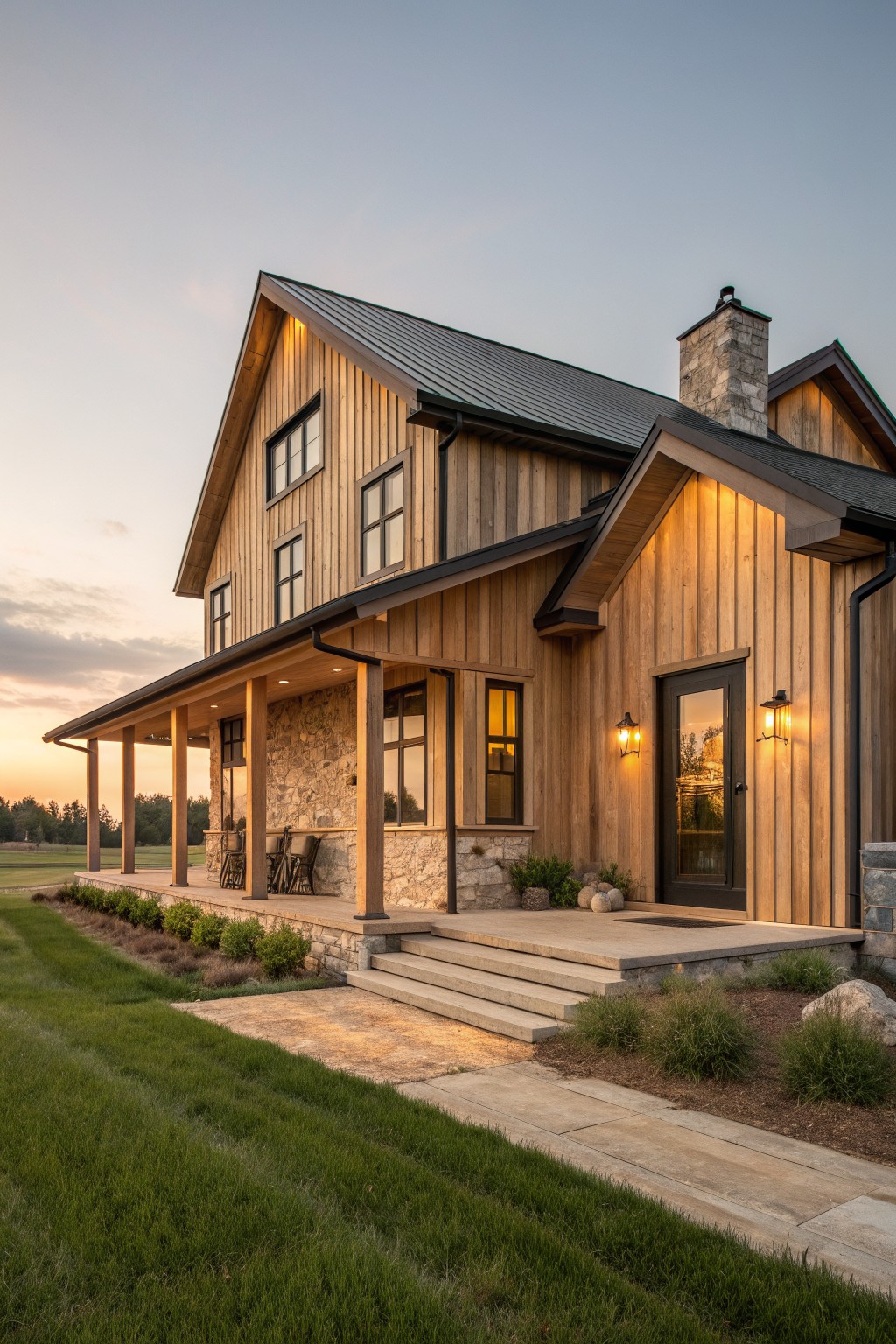
Wood siding and stone work well together on farmhouse exteriors because the wood keeps things light and warm while the stone adds weight at the base. This mix prevents the house from feeling too flat or light and gives it a settled appearance against open land.
Use the stone mainly along the foundation and lower walls, then let the wood run across the upper sections. It suits homes with wide porches and simple rooflines, especially when the trim stays dark so the natural tones stand out.
Mix Stone With Vertical Siding
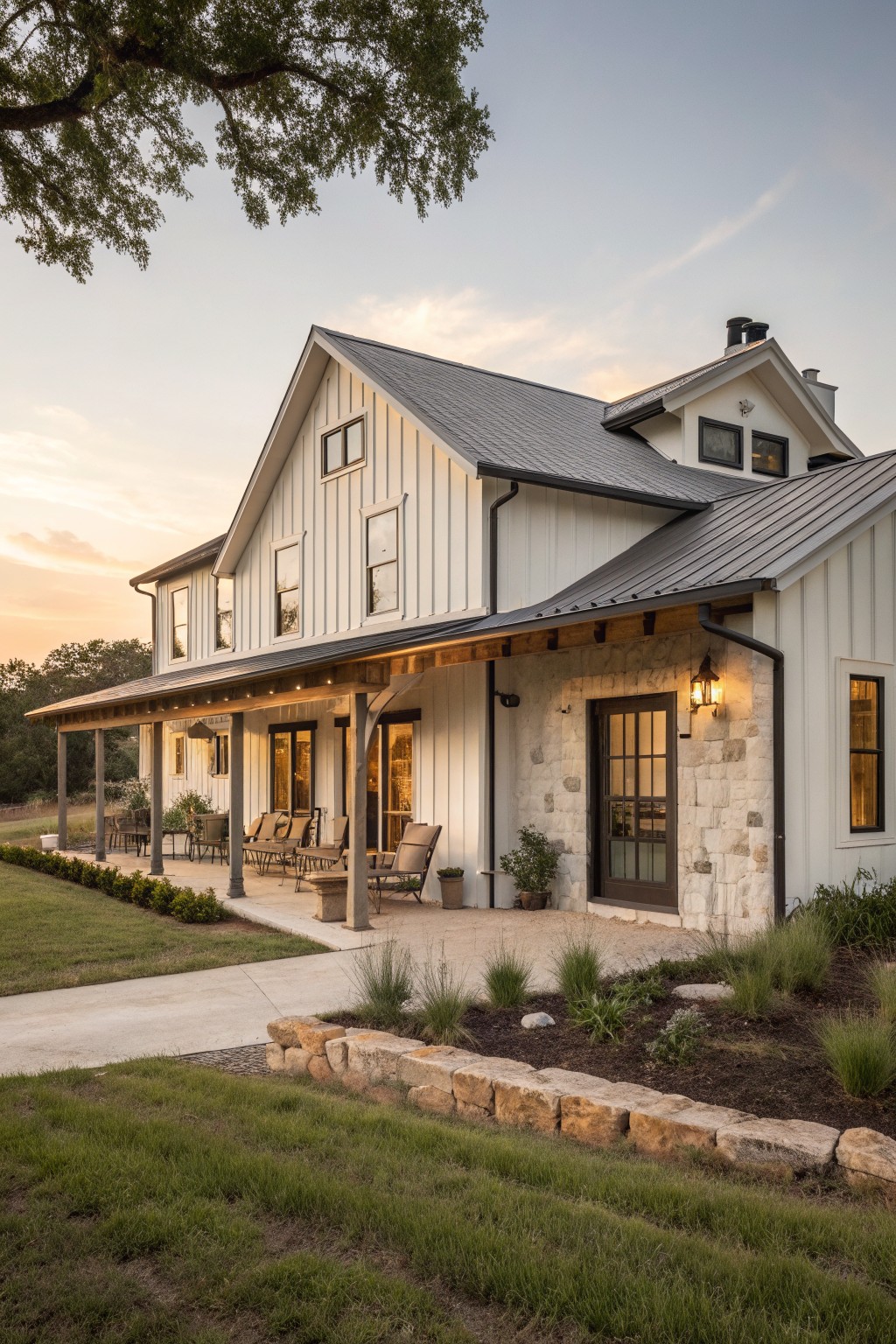
Stone adds weight and texture that white vertical siding alone can lack. On this house the lower wall uses it to ground the lighter upper sections and keep the whole look from feeling too tall or thin. The contrast also makes the porch area feel more solid without needing extra trim or color changes.
This approach works well on farmhouses that sit on open lots where the base needs to connect with the ground. Keep the stone natural and not too polished, and let it run only partway up so the siding stays the main surface. It suits homes with simple rooflines and helps the exterior feel warmer year round.
Wood Ceilings Over the Entry Porch
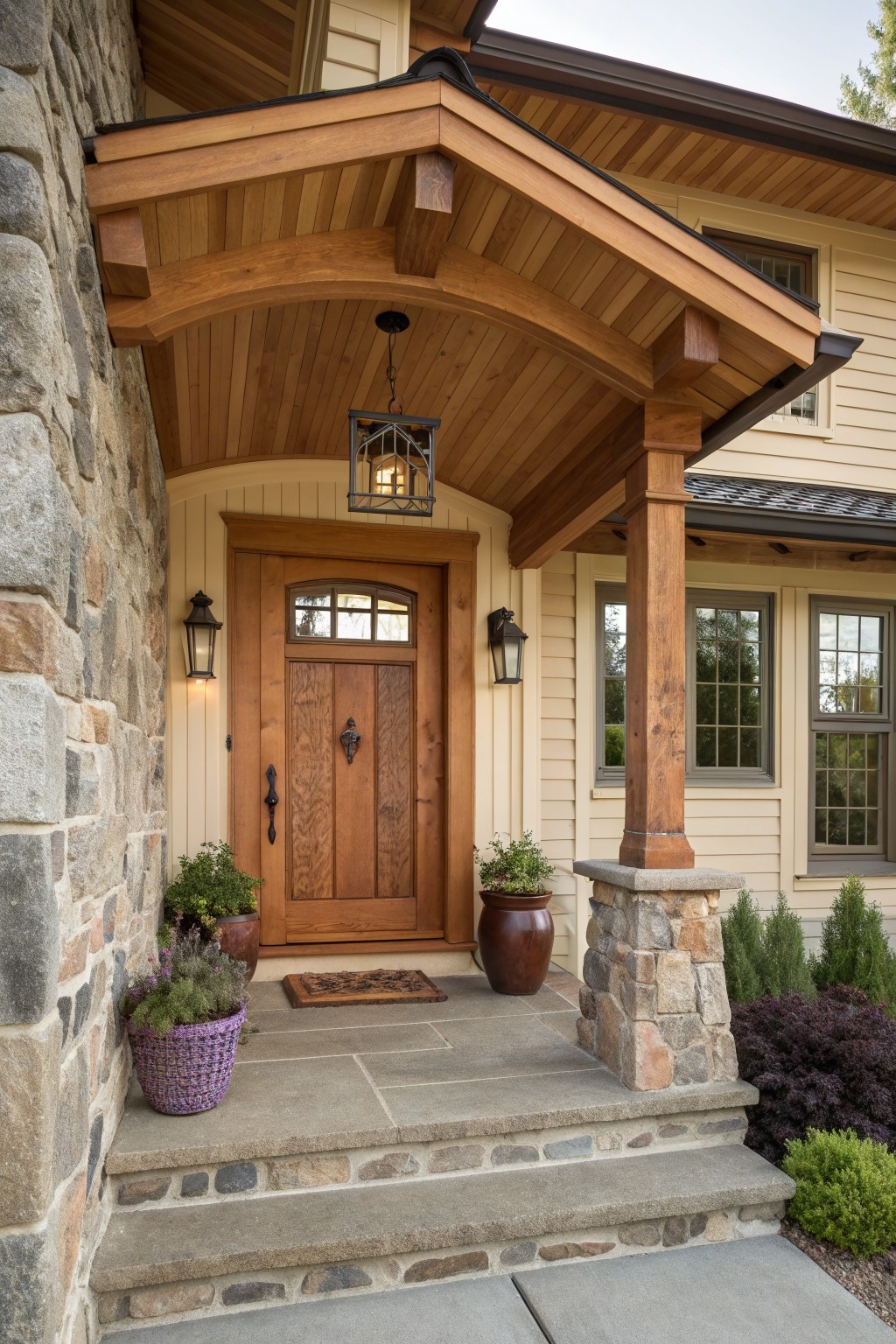
A wood ceiling on the front porch brings a lot of warmth to the whole front of the house. It softens the look of stone and siding while making the entry feel more finished and inviting. Many people like this detail because it adds texture without needing much extra color or decoration.
This approach works best on homes that already use natural materials like wood siding or stone foundations. Keep the beams simple and let the wood tone do the work. Just make sure the ceiling has enough overhang to protect the door and steps from weather.
Combine Wood Shingles And Painted Siding
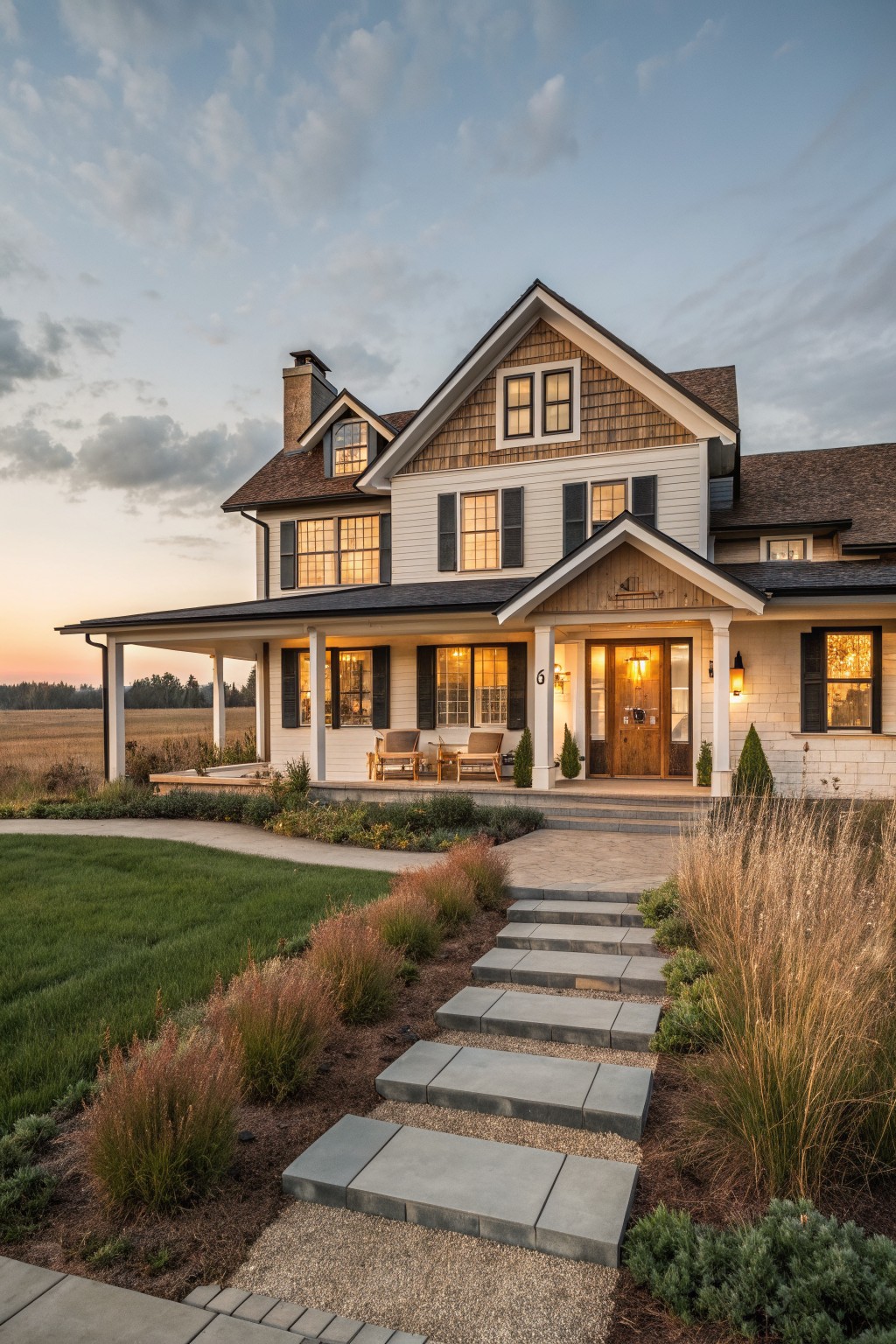
Wood shingles on the gables give a house that extra layer of texture without going overboard. They warm up the look next to plain painted siding and help the roofline feel more settled into the landscape. This mix shows up often on farmhouses because it keeps things simple while adding just enough variation.
Try it on the front facing gables first, especially if the rest of the house is a light color. The shingles hold up well in most climates and age nicely alongside wood trim and stone or brick details. Just keep the rest of the siding clean so the shingles stand out rather than compete.
Extend Living Space With a Covered Porch
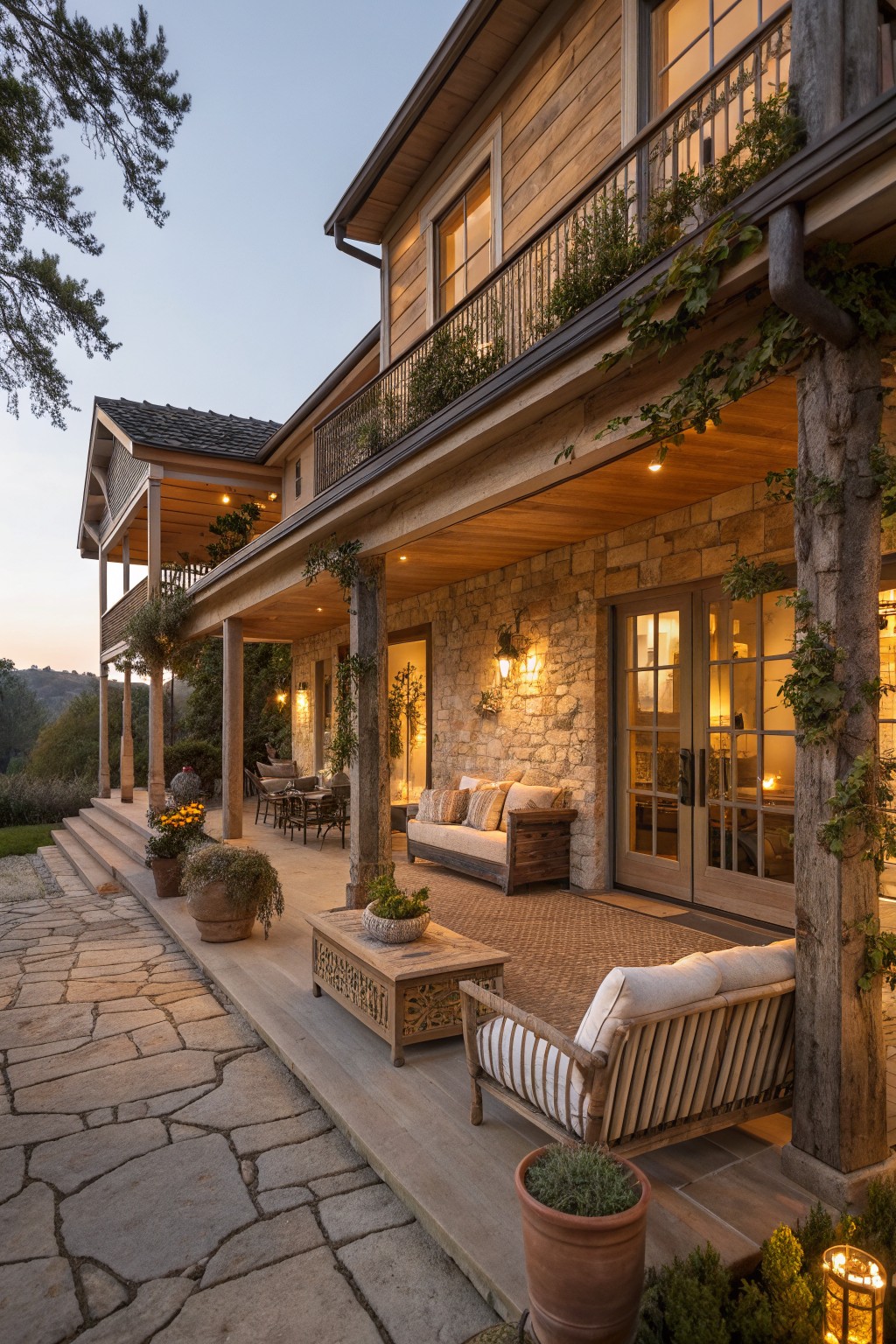
A deep covered porch works well on western farmhouses because it turns the side of the house into usable space without adding another room. The wood ceiling and beams keep the area tied to the rest of the exterior while the open sides let in light and views.
Set up a few seating spots along the length so the space can handle different uses at the same time. This layout suits homes with stone or wood siding and works best when the porch floor sits at the same level as the main living areas inside.
Mix Wood Siding With Stone Bases
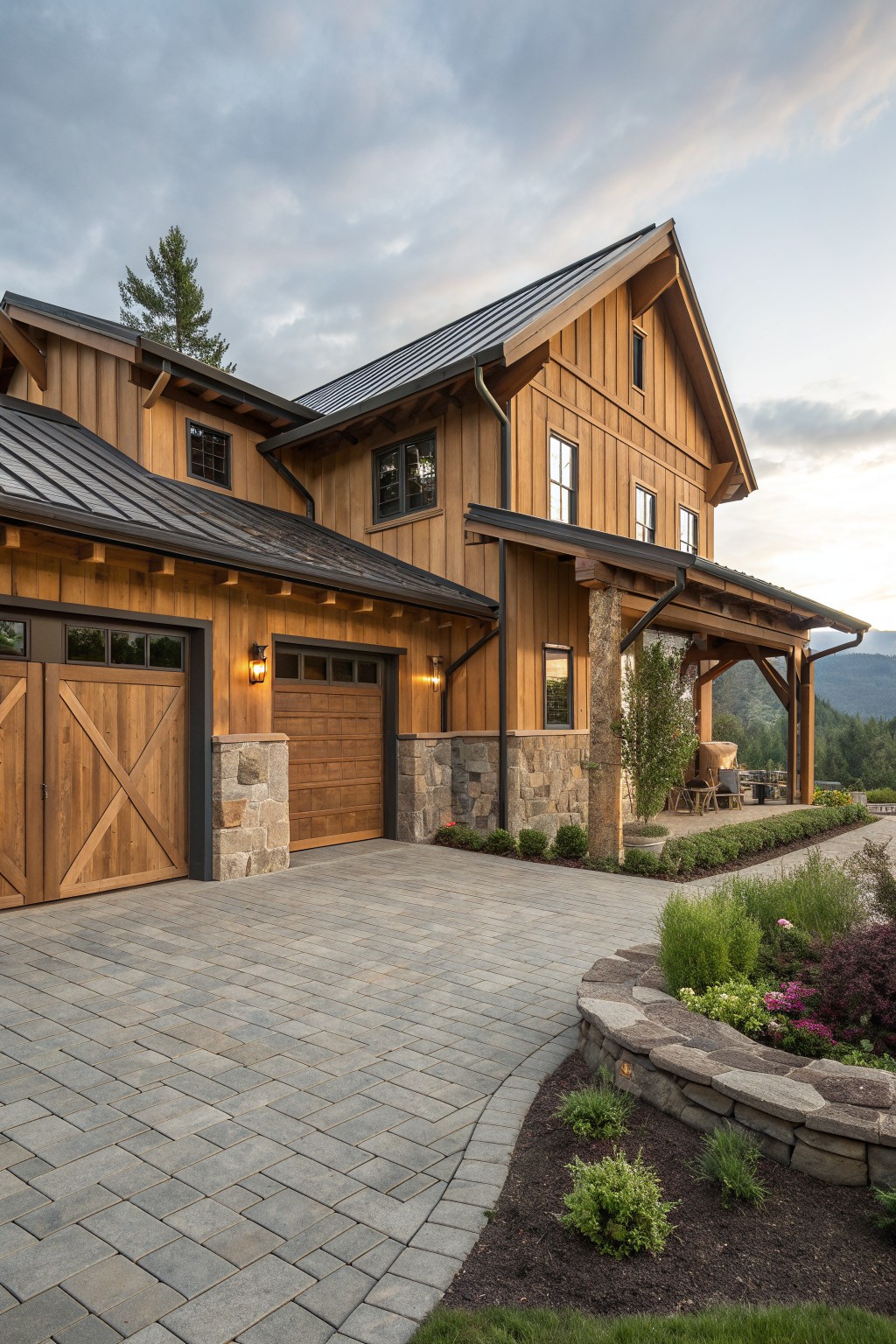
Wood siding paired with stone bases gives a farmhouse exterior real weight and warmth. The stone grounds the lighter wood and keeps the whole look from feeling too tall or thin.
This approach works best on homes with a clear lower section like garages or porch supports. Use irregular stone only where it meets the ground, then let the wood carry the rest of the facade in simple vertical boards.
Build an Outdoor Kitchen with Wood and Stone
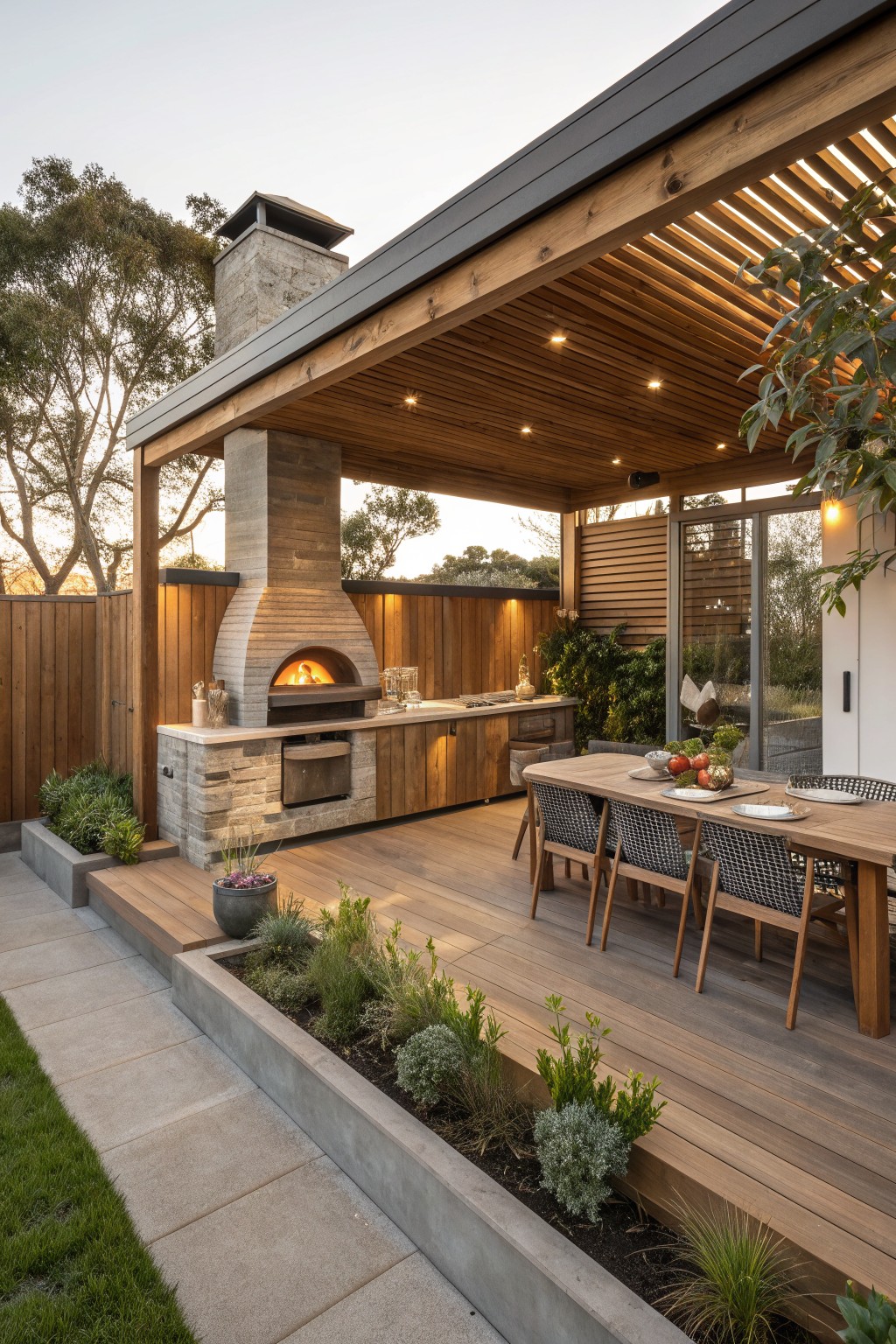
An outdoor kitchen built with wood siding and a stone base gives the whole deck a settled, lived-in feel. The materials match the surrounding fence and house, so the cooking area does not look like an afterthought. People like this approach because it turns the patio into a real extension of the home rather than just a place to grill.
This works best on a covered deck where you can run the wood tones up into the ceiling and keep the oven in the same earthy palette. Stick with simple cabinet fronts and leave enough open deck space around the table so the area stays easy to use year-round.
Stone Bases With Wood Siding
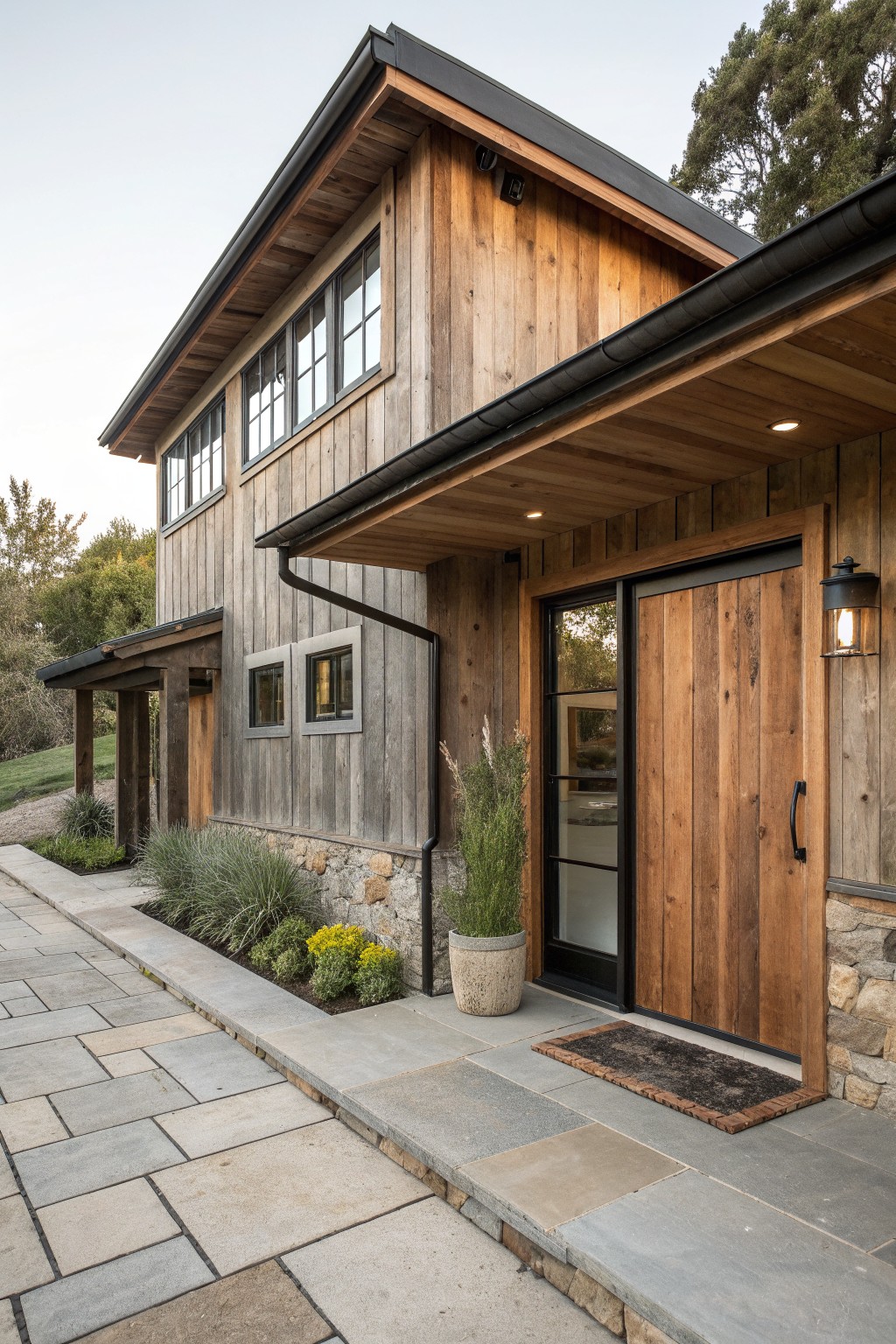
Many Western farmhouses gain a lot from running a stone base along the bottom of the house and then switching to wood siding above it. The stone gives the lower part some weight and keeps the wood from sitting too close to the ground.
This approach suits homes on slightly uneven lots and works best when the wood tones stay fairly natural. Match the door and any trim to the siding so the whole front stays simple and tied together.
Built In Stone Benches On The Porch
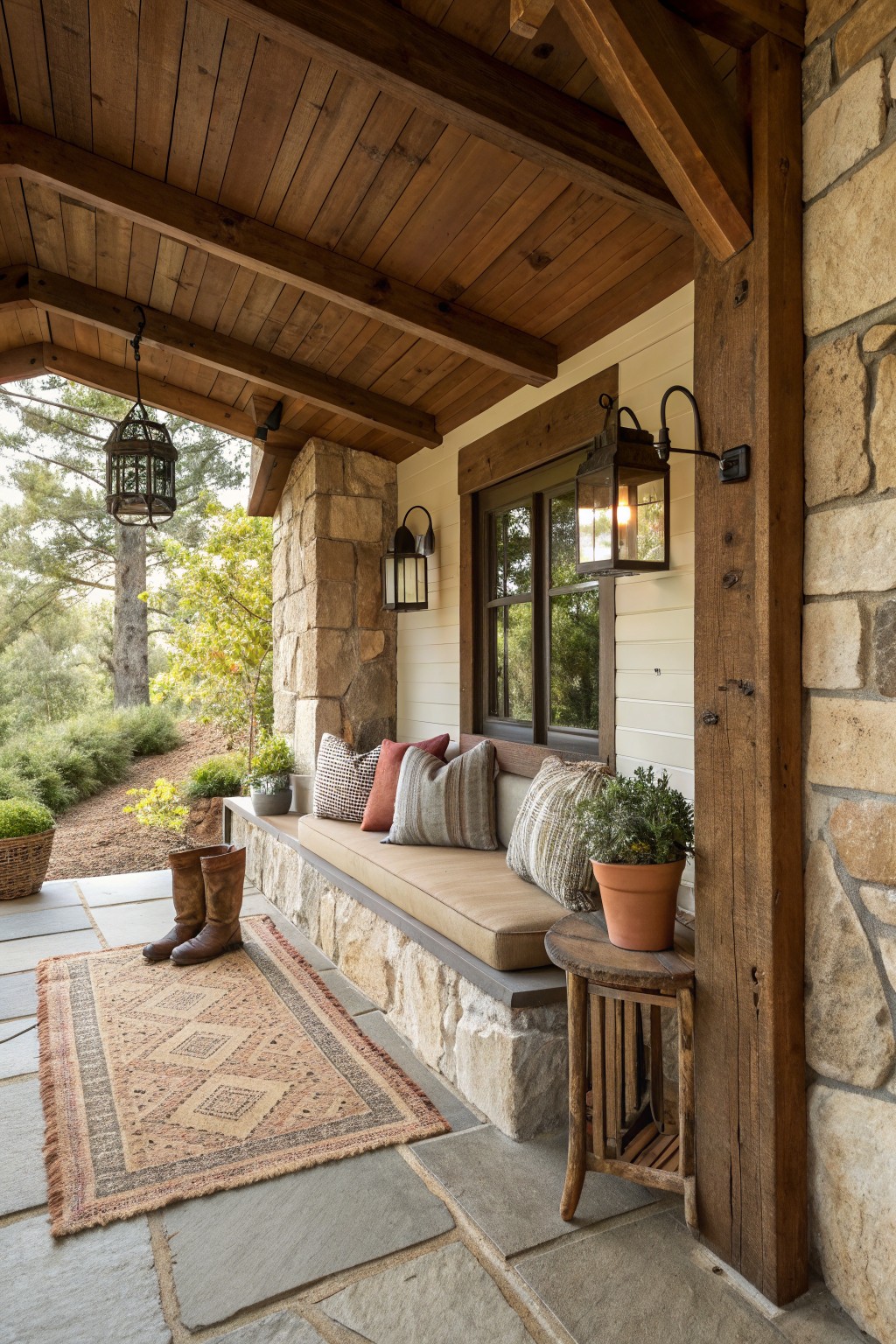
A built-in bench made from the same stone as the house walls turns the side of a porch into usable seating without crowding the space. It blends right into the structure so the whole area feels more solid and finished instead of like furniture was just added later.
This works best on covered porches in western farmhouse homes where the goal is simple, lasting seating that can handle weather. Keep the cushions basic and leave room for boots or a plant or two so the bench stays practical for daily use.
Wood Ceilings Over Stone Entries
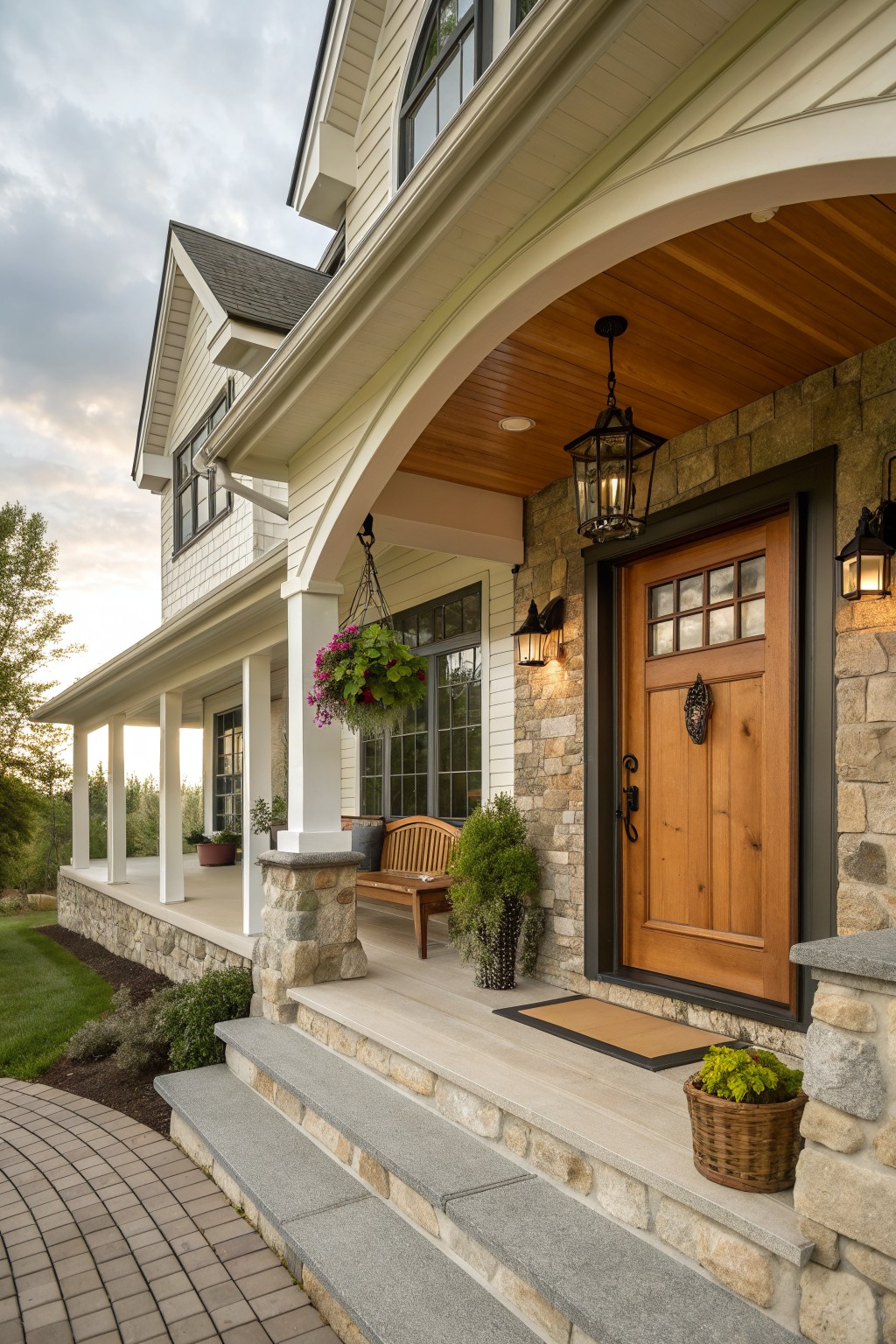
A wood ceiling under the porch roof adds a lot of warmth when the rest of the entry uses stone. It keeps the stone from feeling too heavy and gives the whole front a softer, more finished look that still fits a simple farmhouse style.
This works best on homes that already lean on natural materials like wood siding or stone veneer. Match the ceiling tone to the front door or trim so the materials feel connected rather than scattered. Keep the rest of the porch fairly plain so the wood ceiling stays the main feature.
Add a Fire Pit for Extra Outdoor Seating
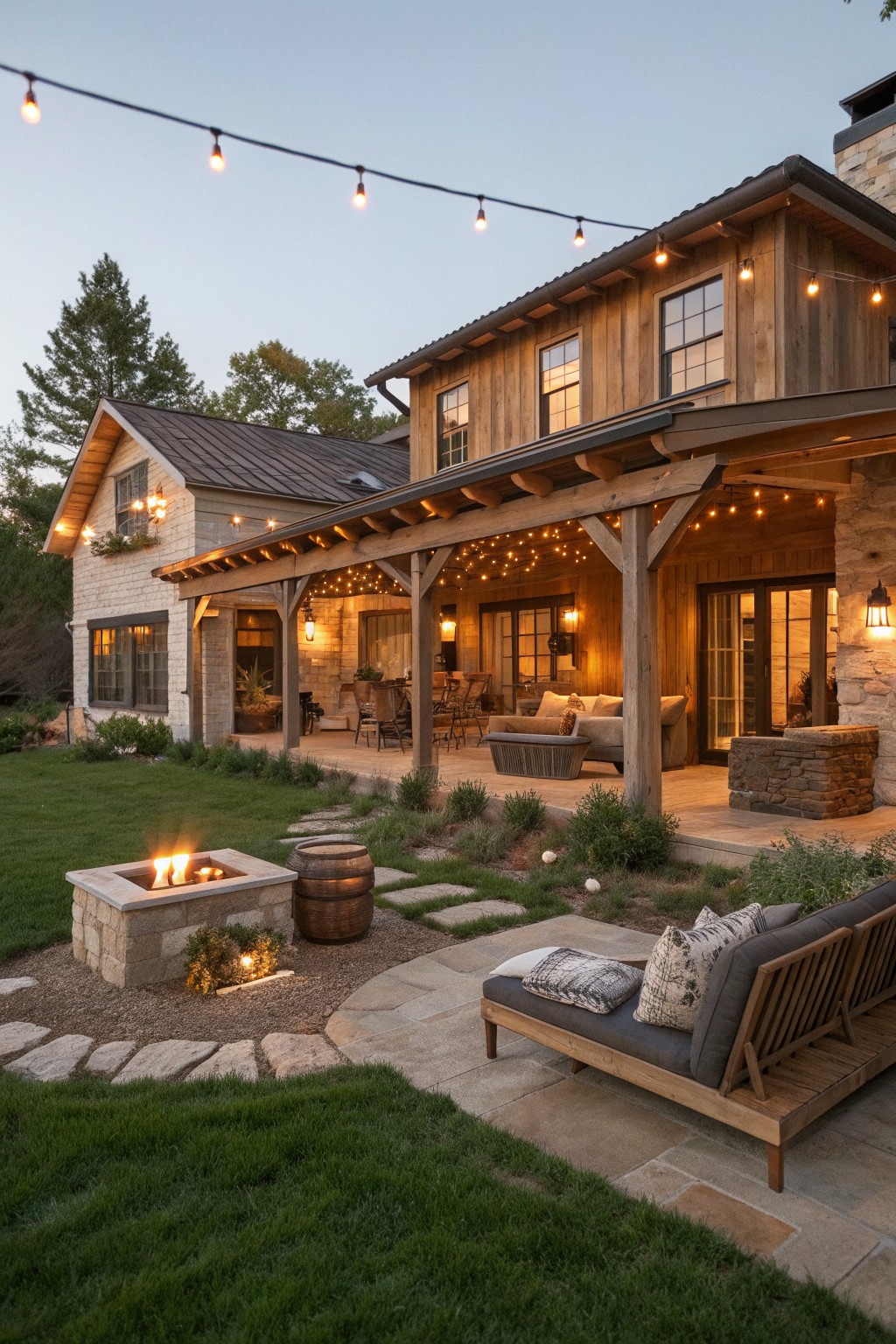
A fire pit placed just off the main patio gives the yard a second place to gather without crowding the covered area. The gravel base and short stone path keep it feeling separate but still easy to reach from the house.
This setup suits homes with a bit of yard space where one big seating area is not enough. Keep the fire pit simple in stone or concrete so it blends with the wood and earth tones already on the house.
Mix Wood Siding With Stone Bases
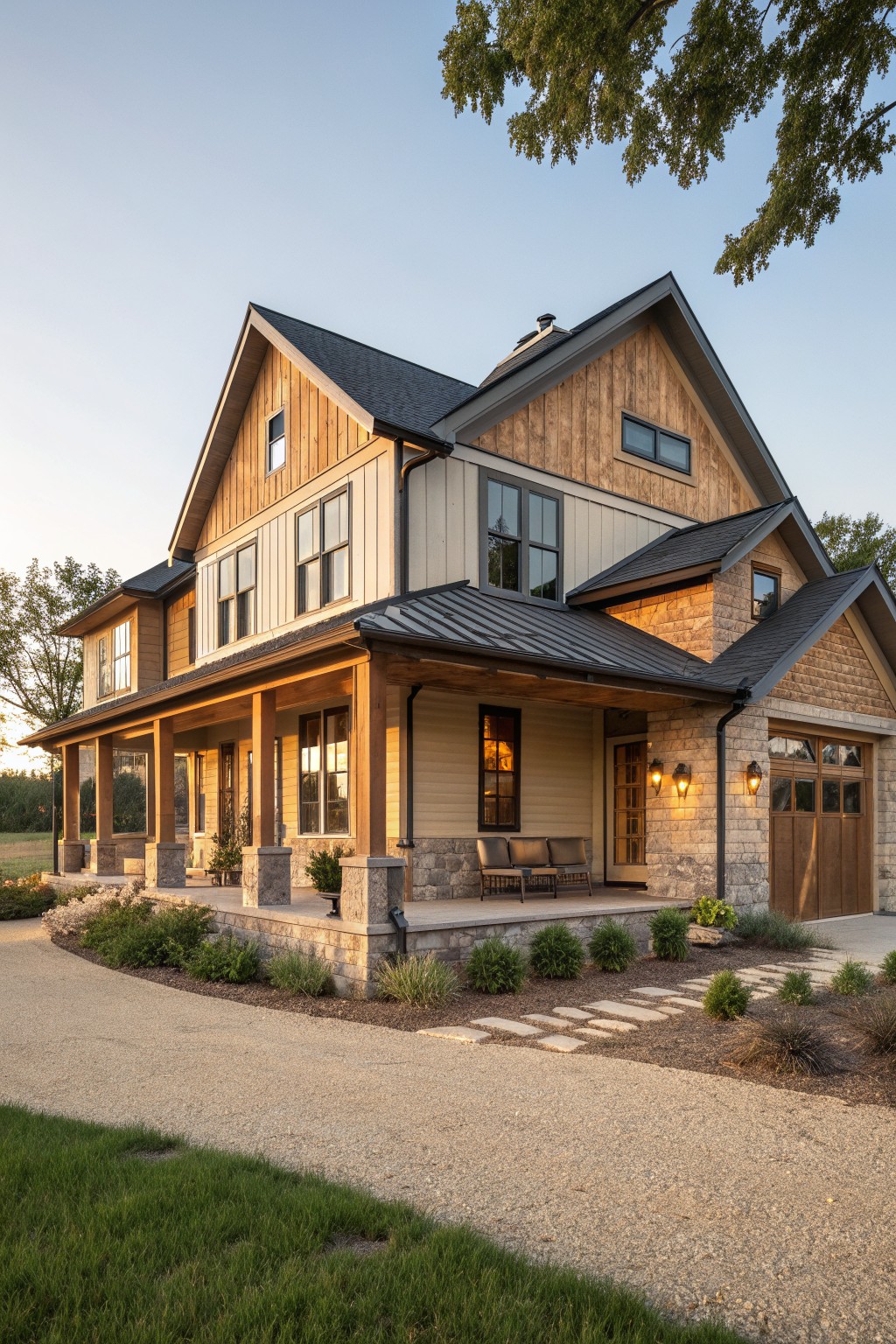
One approach that gives a Western farmhouse its settled look is to place stone along the lower walls and let wood siding take over above it. The stone anchors the house while the wood keeps the upper sections lighter and warmer.
This works best on homes with straightforward roof shapes and a front porch that sits at the same level as the stone. Keep the stone in a muted gray or tan so it does not compete with the wood tones above.
Extend Your Patio With a Simple Timber Pergola
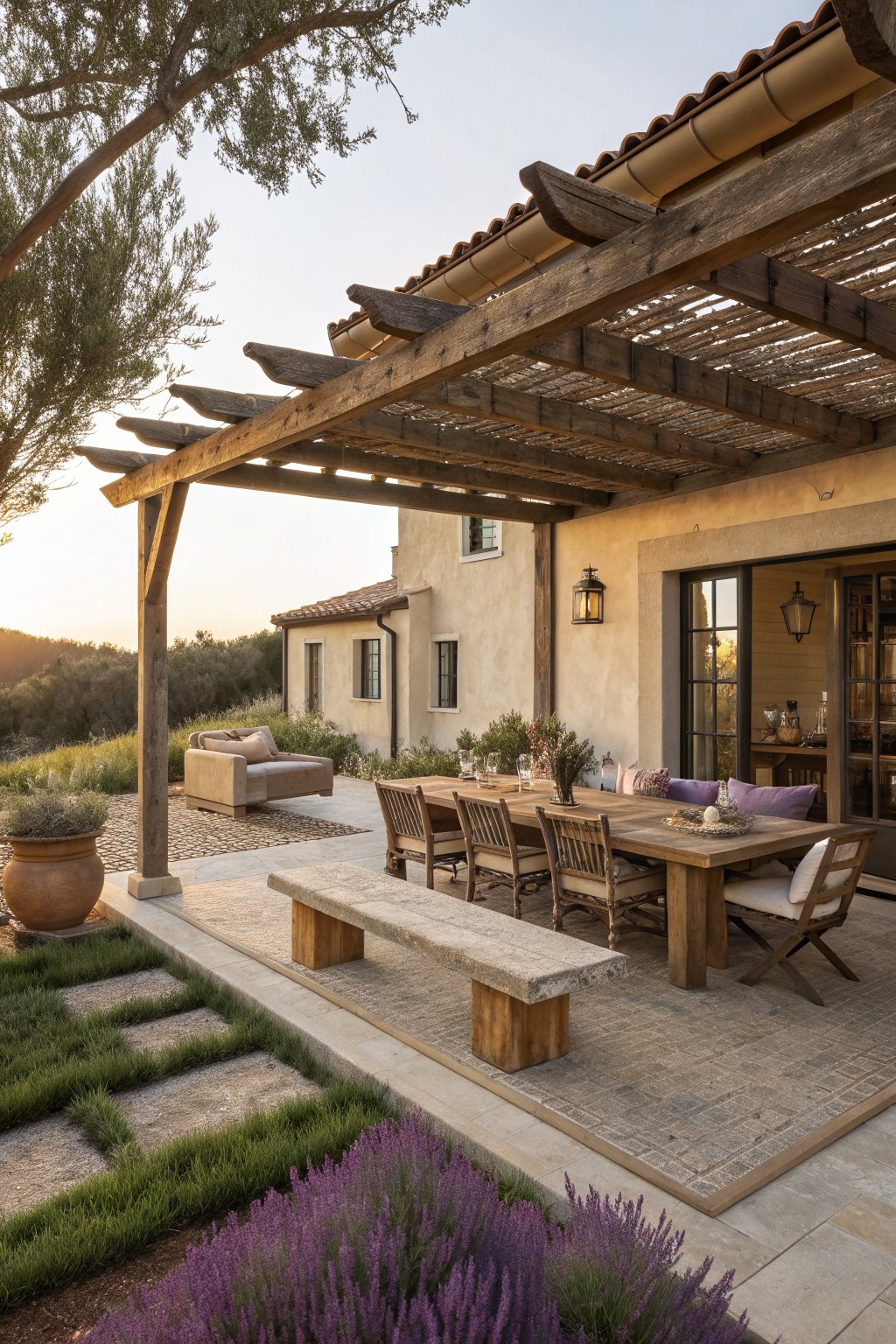
A solid timber pergola gives an outdoor dining area real presence without making it feel boxed in. The heavy beams create shade and define the space, which helps the patio feel like part of the house rather than just an open slab. It works especially well on homes that already use wood and stucco, since the materials match right away.
This kind of structure suits dry climates where you want to eat outside through much of the year. Keep the table centered under the main beams and use simple wood furniture so the pergola stays the main feature. Avoid adding too many hanging plants or lights if you want the wood to remain the focus.
Simple Wood Chairs Work Well On Stone Porches
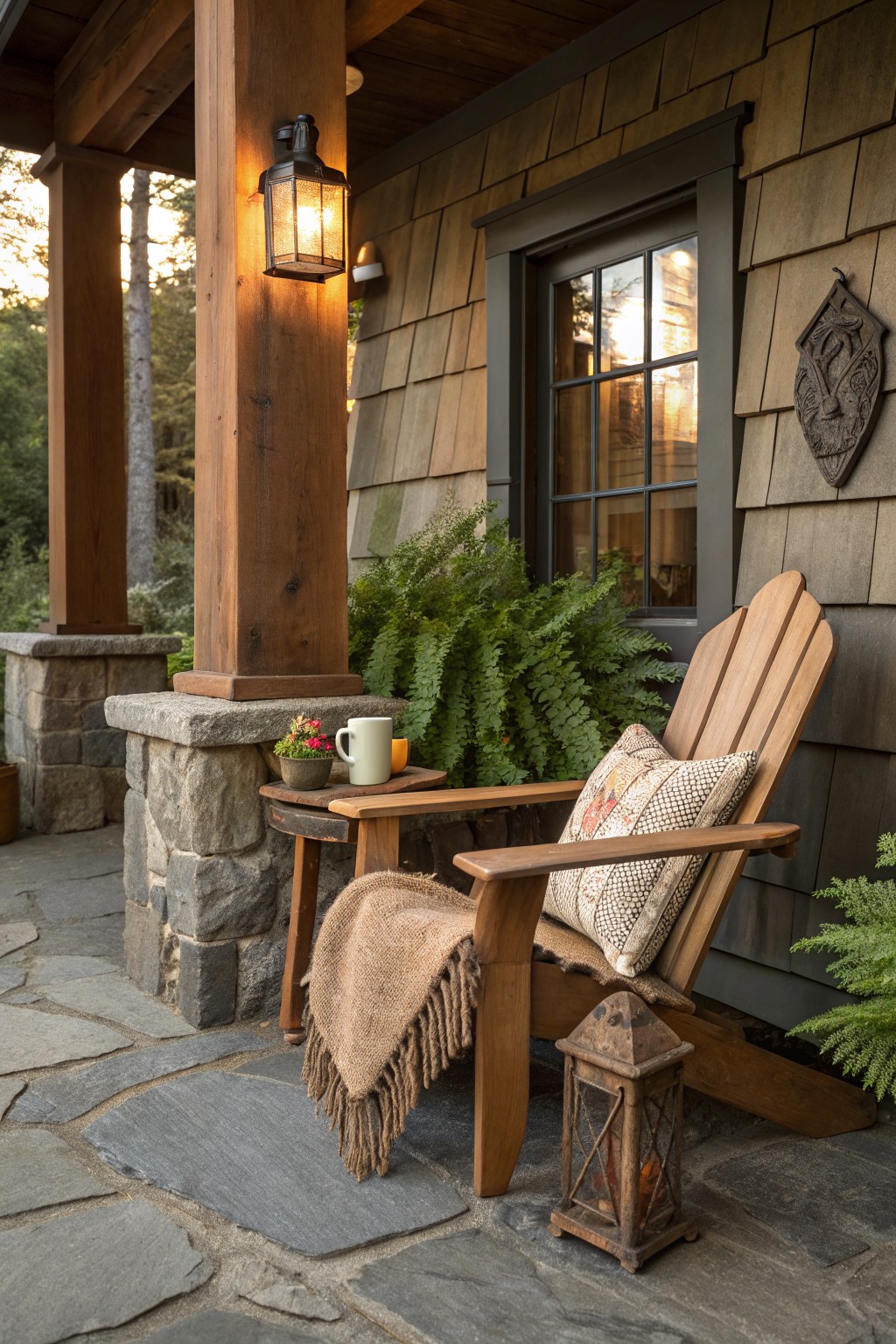
A single wooden chair can turn an empty spot on the porch into a place worth using. The chair in this setup sits right on the stone floor and feels at home next to the wood post and siding without needing much else around it.
This works best on homes that already use wood and stone on the outside. Keep the chair plain, add one blanket or pillow for comfort, and leave the rest open so the space stays practical instead of crowded.
Raised Beds Along a Narrow Side Path
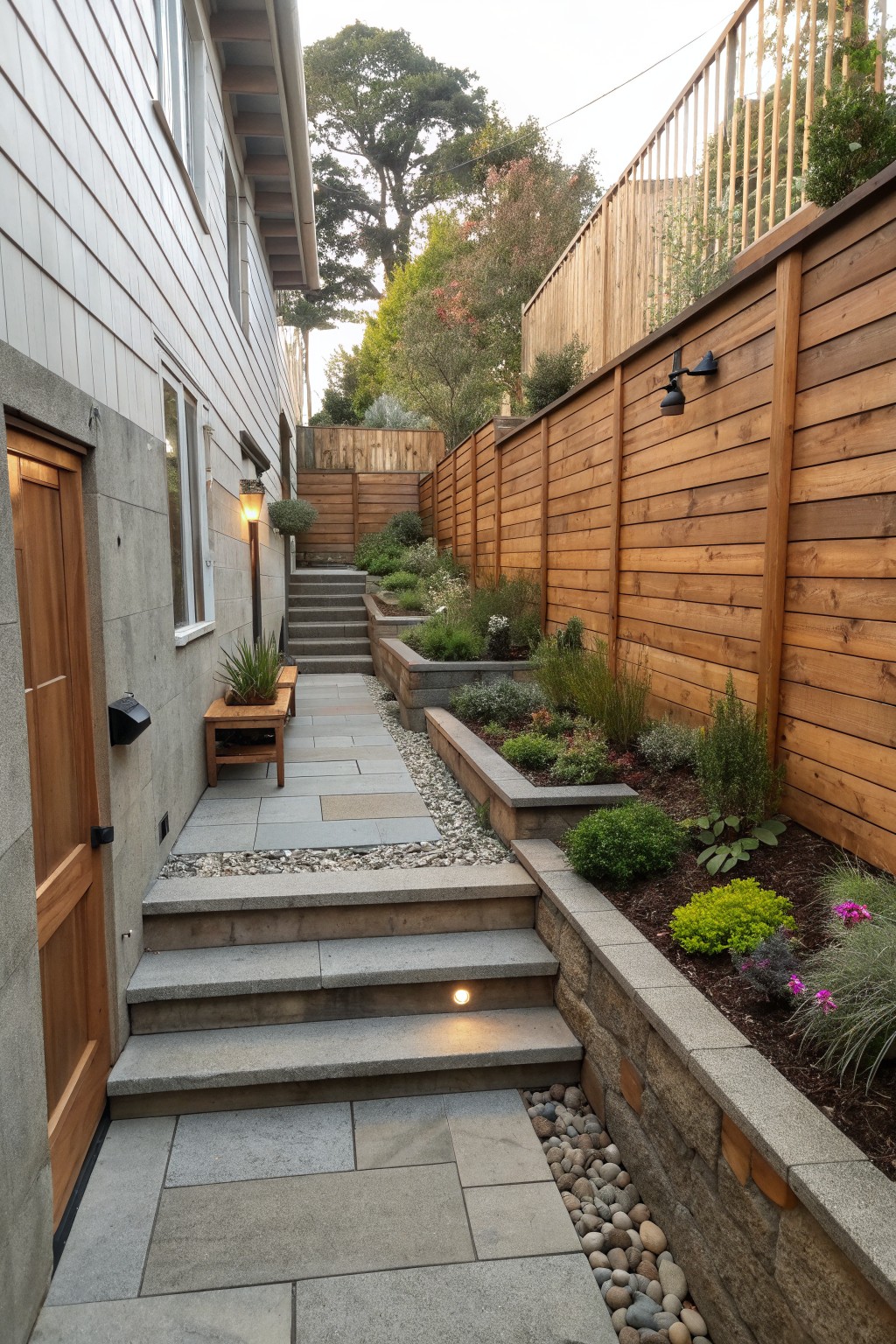
A narrow side yard often ends up as wasted space or a weedy strip, but raised stone beds change that quickly. They give the planting room to breathe, keep the path clear, and add structure without needing a wide lot. The beds here sit right against the fence and follow the slope, turning a simple walkway into something that feels finished.
This approach works best on homes with a long side elevation and a fence close by. Keep the beds low enough to maintain light to the lower windows, and use gravel or pavers for the path so water drains well. It suits Western farmhouse styles where wood siding meets natural stone and the planting stays simple and layered.
Mixing Wood and Stone at the Entry
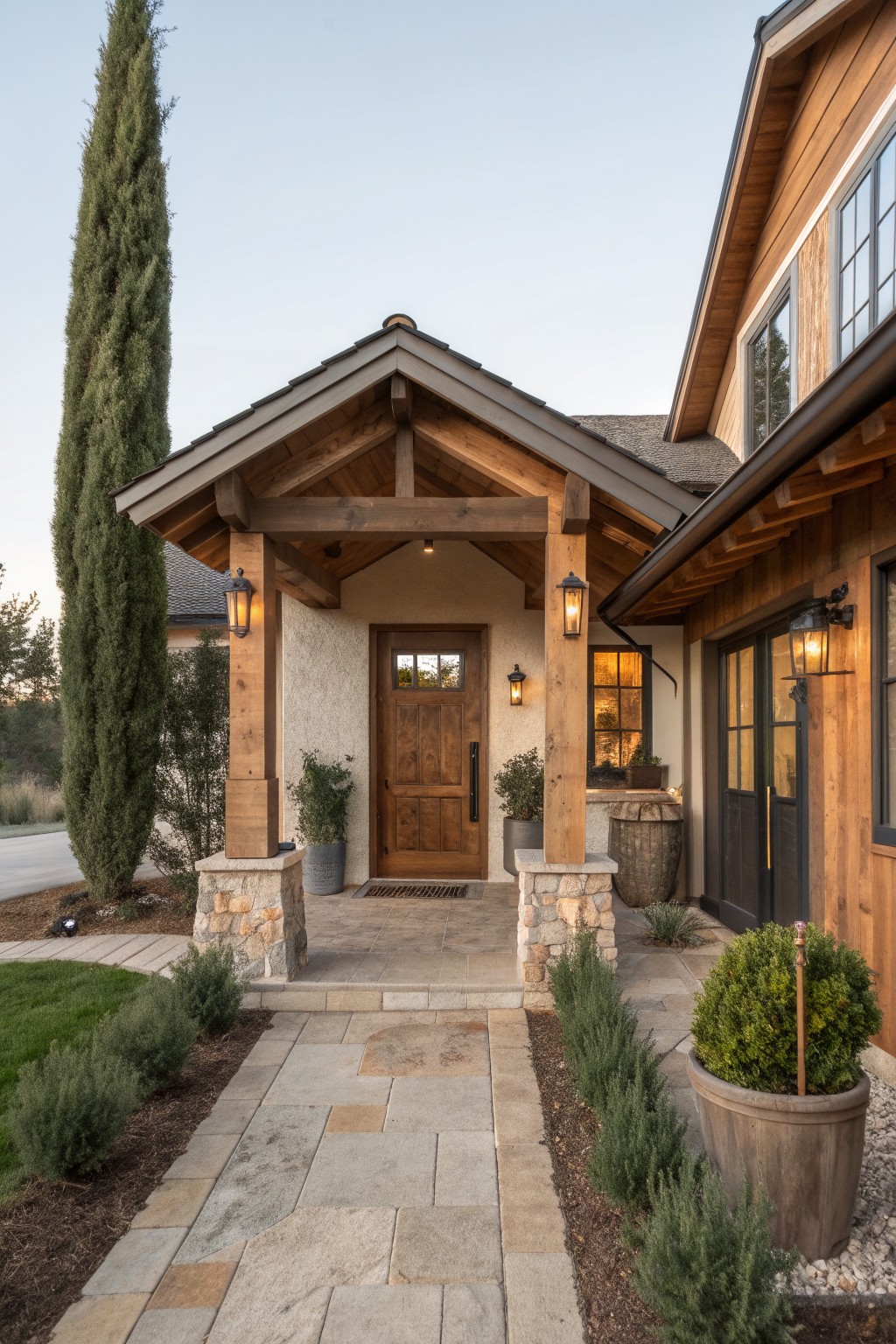
A covered porch built with thick wood beams and stone bases gives a western farmhouse that settled, welcoming look right at the front door. The wood brings warmth and texture while the stone keeps everything feeling solid and tied to the ground. This mix works because it echoes the natural materials already common in the landscape.
It suits homes with stucco walls or wood siding where the entry needs more weight. Use a simple gable shape overhead and keep the wood tone close to the siding so nothing fights for attention. Stone pillars that stop short of the roof also help the porch feel lighter instead of heavy.
Blend Wood Siding With Stone Bases
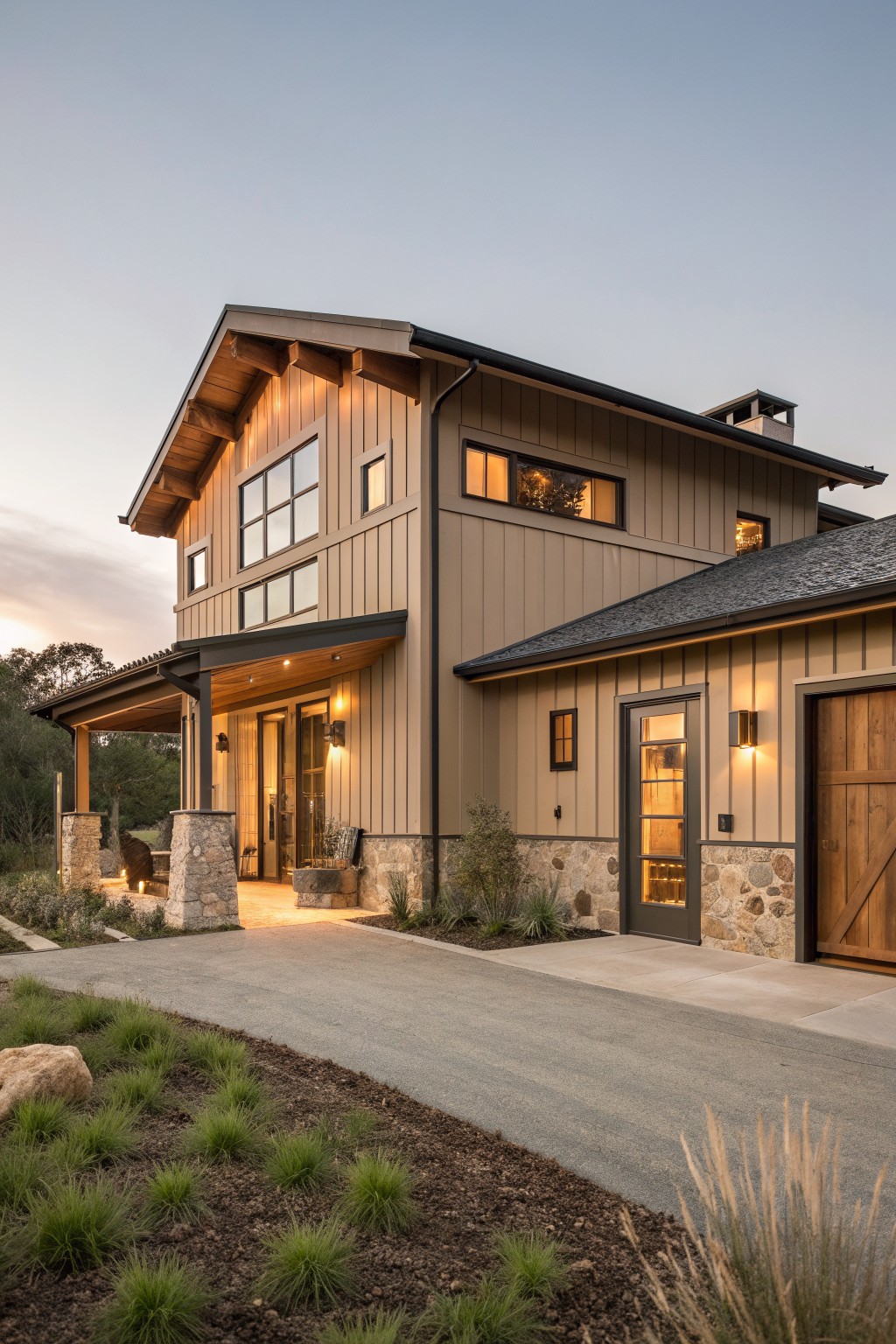
Vertical wood siding paired with stone along the lower walls gives the exterior a steady, grounded look that feels warm without turning heavy. The contrast adds texture and keeps the house from reading as one flat surface, which works especially well on larger farmhouses.
This combination suits homes that want a bit of Western character while staying simple. Use it on the main facade first, focusing on the entry and any lower sections, and keep the stone height consistent so it anchors the wood above it rather than competing with it.
Pergolas That Shade Outdoor Dining Areas
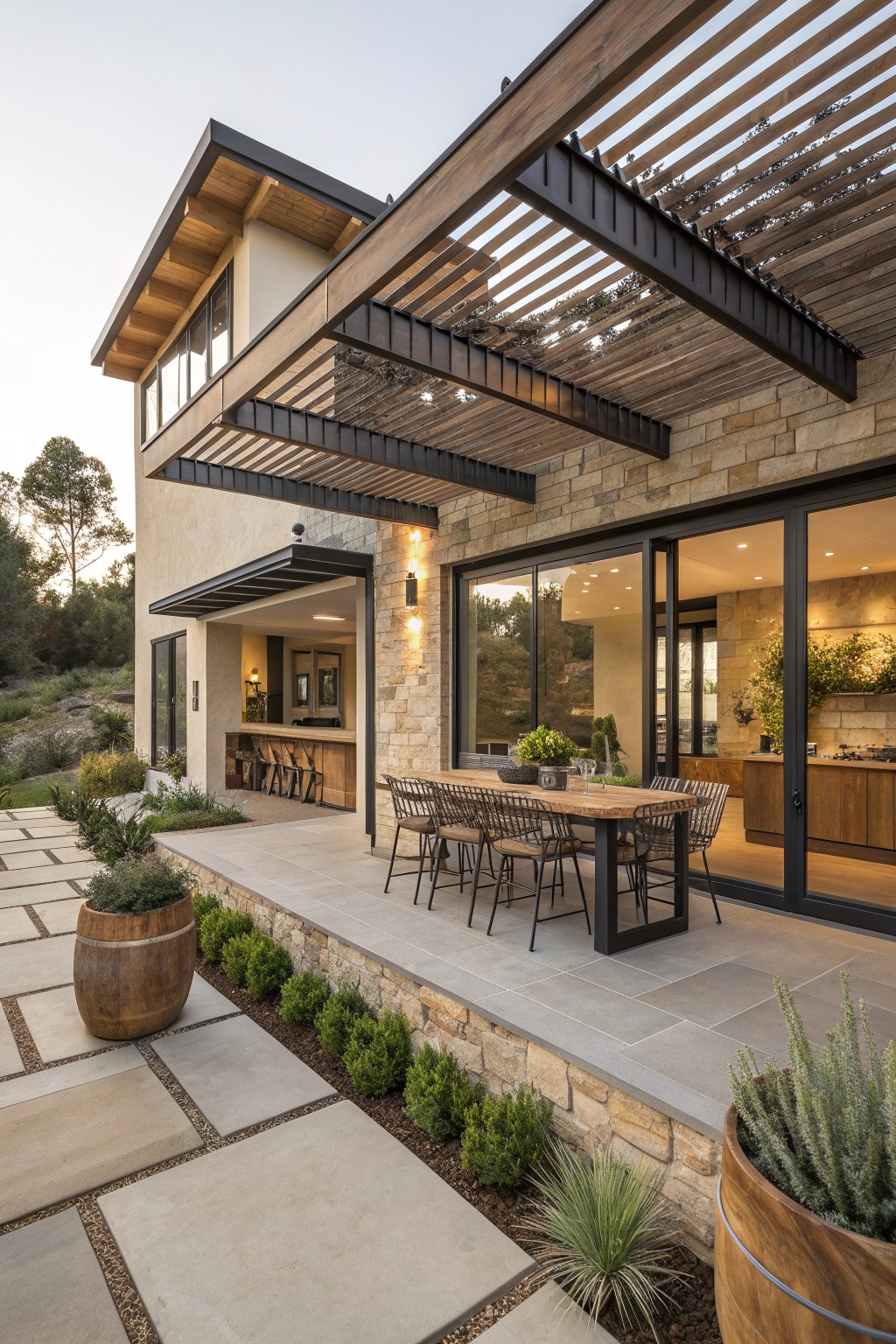
A pergola adds real function to an outdoor dining spot by giving steady shade without closing the space in. The mix of wood slats and a dark metal frame feels right at home with stone walls and earthy siding, and it keeps the table usable even on bright days.
This setup works best on homes that already have a wide patio or deck right off the main living area. Keep the table and chairs simple so the structure stays the main feature, and make sure the pergola lines up with the roof overhang so the whole thing reads as one extension of the house.
Mix Stone With Metal Siding
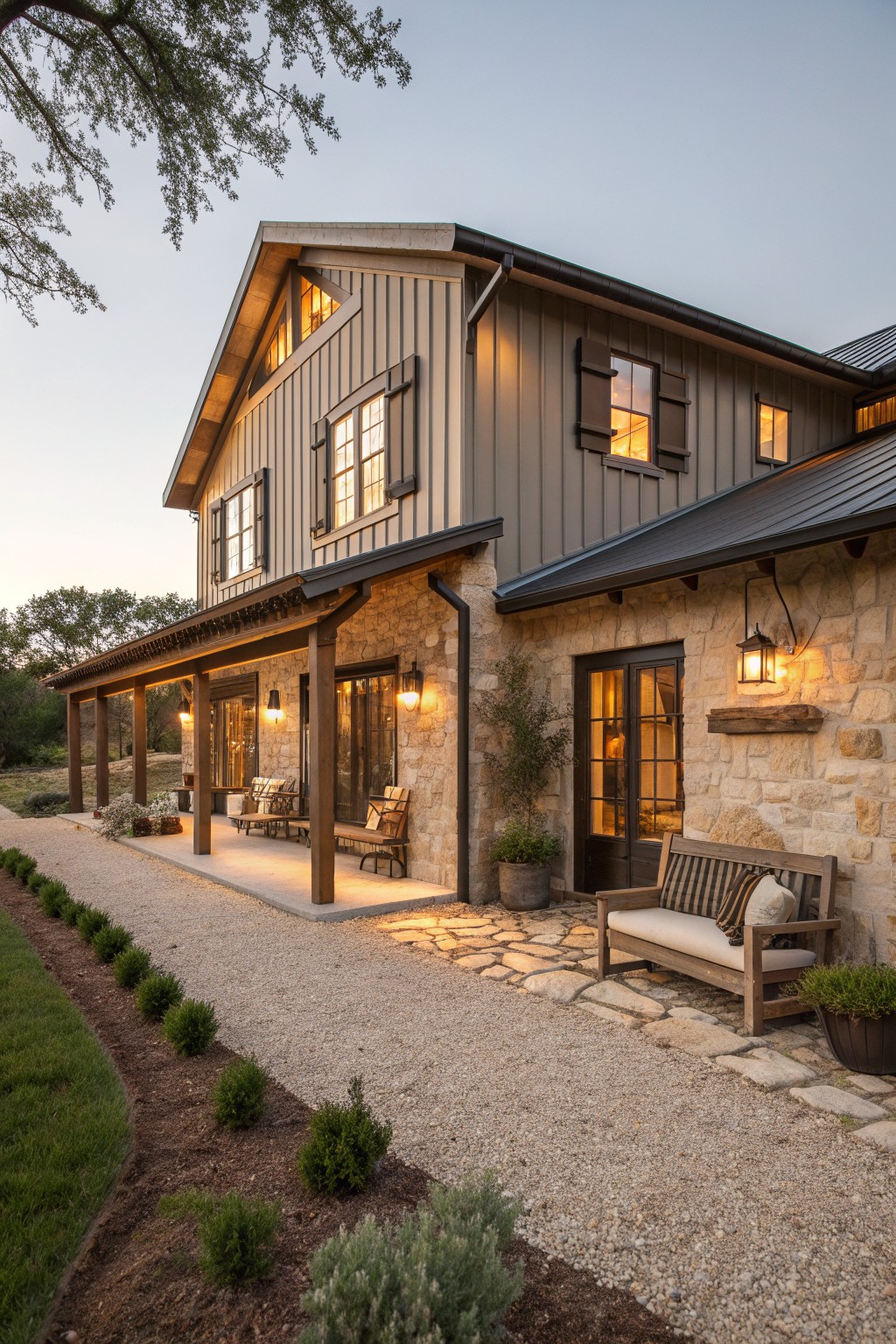
Stone at the base paired with vertical metal siding above gives a farmhouse a settled look that still feels current. The lower stone section grounds the house while the siding keeps the upper walls lighter and simpler to maintain.
This combination works best on homes with a clear porch or roofline where the two materials can meet without extra trim. Use a muted gray or tan stone and let the siding stay in a soft neutral so the whole exterior reads as one calm surface rather than a collection of parts.
Choose a Wooden Door to Anchor the Entry
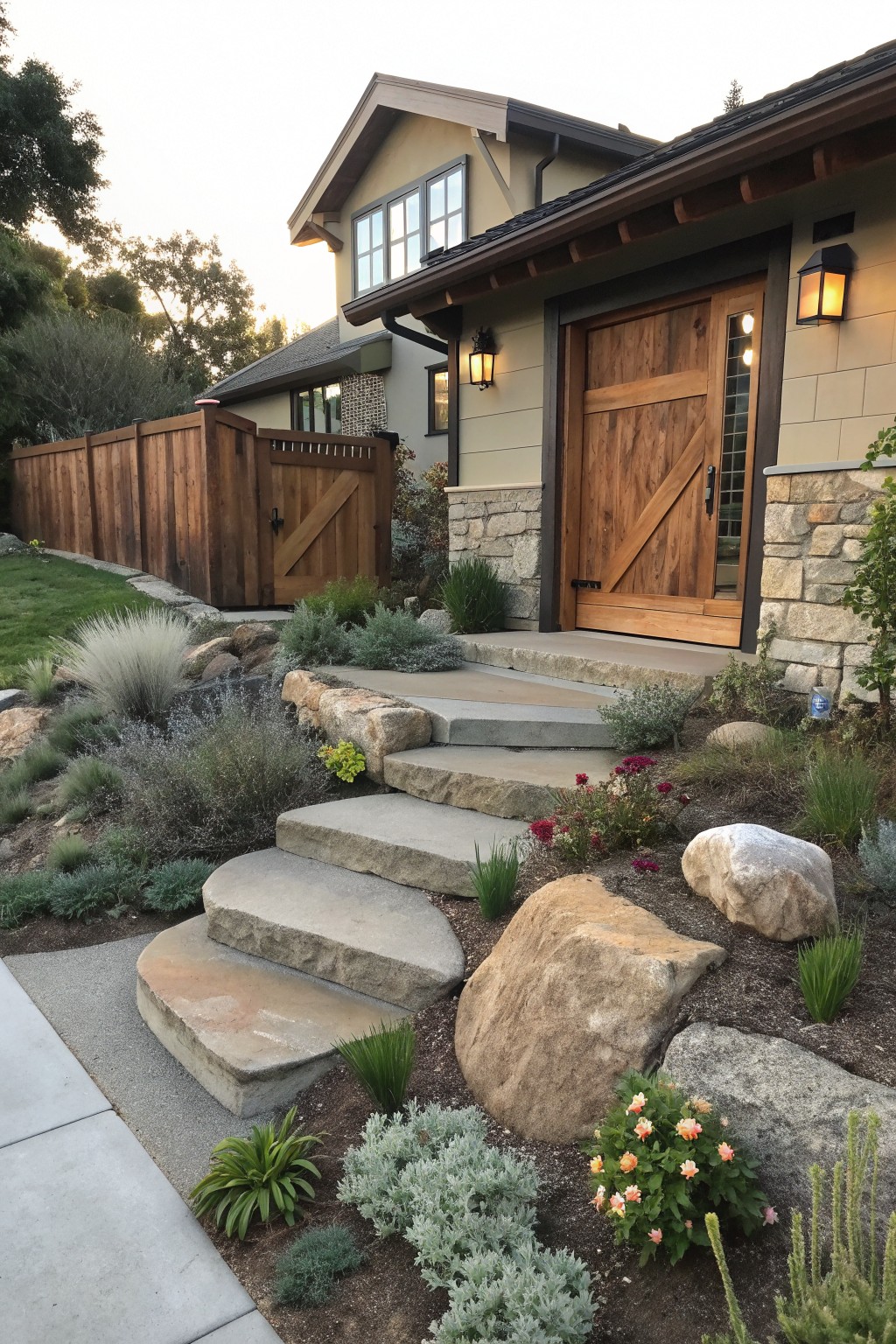
A large wooden door with simple bracing gives the whole front a grounded, welcoming feel. It works because the natural grain and warm tone stand out against the lighter siding and stone without any extra decoration.
This approach suits homes that already use wood or stone on the exterior. Keep the hardware plain, match the finish to any nearby fencing or trim, and let the door become the main focal point instead of adding layers of detail around it.
Add a Wooden Pergola Over the Patio
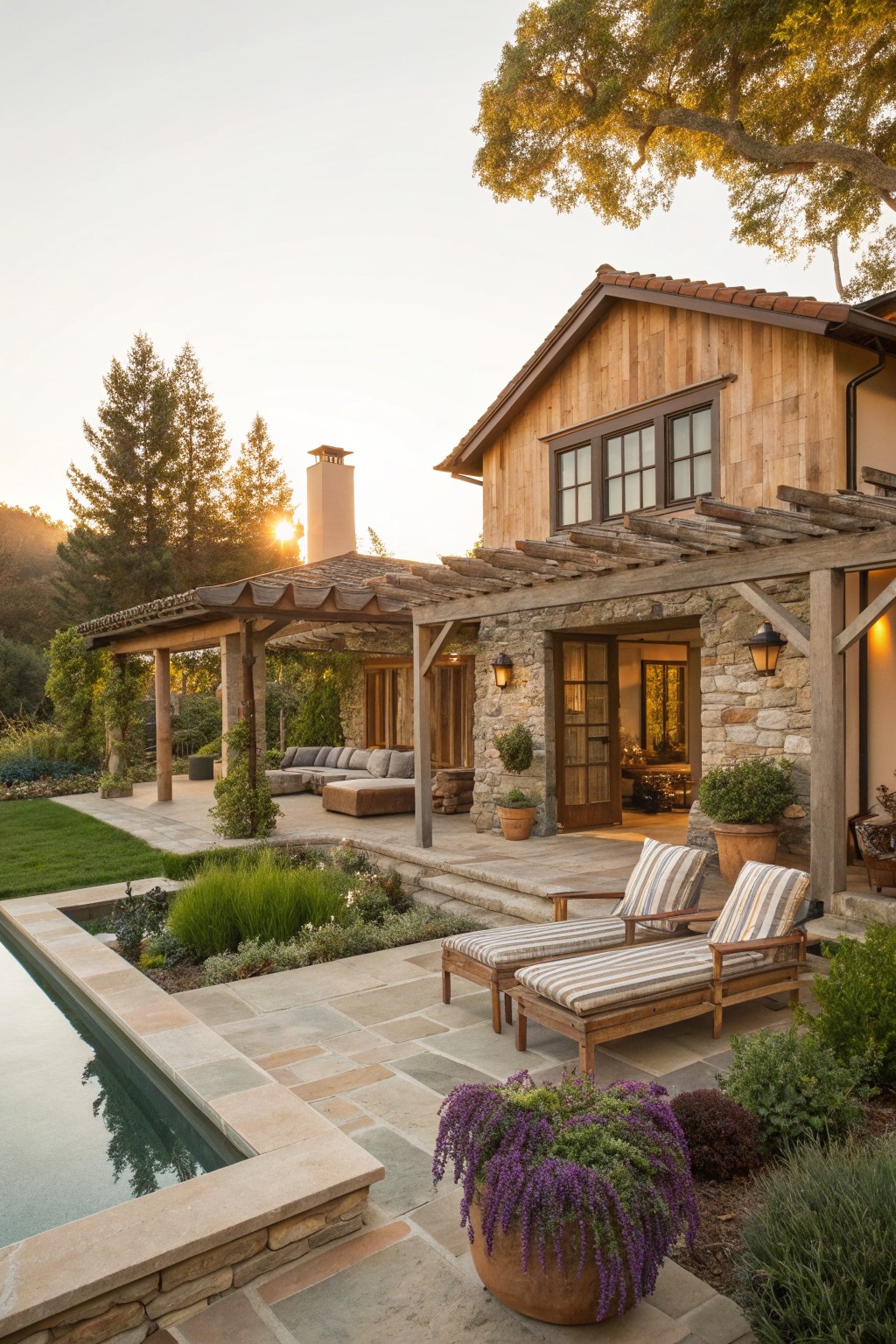
A wooden pergola gives the patio a clear boundary and some shade without making the space feel closed off. It works especially well when the house already uses wood and stone, since the structure can echo those same materials and keep everything connected.
Place simple lounge seating underneath and keep the rest of the area open. This setup suits homes with a similar warm western look and works best when the pergola is sized to cover just the main seating zone rather than the whole patio.
Frequently Asked Questions
Q: What wood should I start with if I want that warm western look without it graying out fast?
A: Go for cedar or redwood since both stand up to weather and keep some natural color longer. Apply a light oil-based stain right after installation to lock in the earthy tone you saw in the ideas. Reapply every couple of years and the boards will stay inviting.
Q: How do I add earthy finishes if my siding is already a light color?
A: Paint the trim and accents in soft taupes or warm grays that echo the wood tones from the examples. Add beams or shutters in a darker stain to create contrast without overpowering the existing walls. Keep the changes small so the whole front still feels like one farmhouse.
Q: Can I mix in metal roofing or hardware and still keep things warm?
A: Yes, choose a matte brown or bronze finish on the metal so it blends with the wood instead of standing out cold. Place it on the porch roof or a small accent section first. The earthy metal will pick up the same sunlight glow as the finishes around it.
