

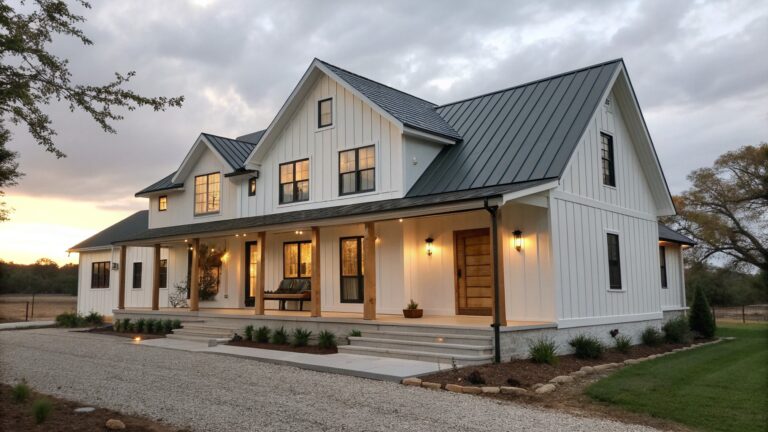
The exteriors that stand out to me are the ones where siding choices, roof pitch, and window placement all line up to keep a clear country presence even after modern updates.
I have stood in front of a few real farmhouses and seen how the entry sequence and material mix can either pull the whole facade together or leave it feeling scattered.
Details add up fast.
Some homes look balanced on paper but lose their warmth once you factor in how light hits the paint or how the porch sits against the ground, so I tend to focus on those practical touches first.
A few of the material pairings here are ones I would test on a small section of wall before committing to anything larger.
Pair White Siding With Natural Wood Posts
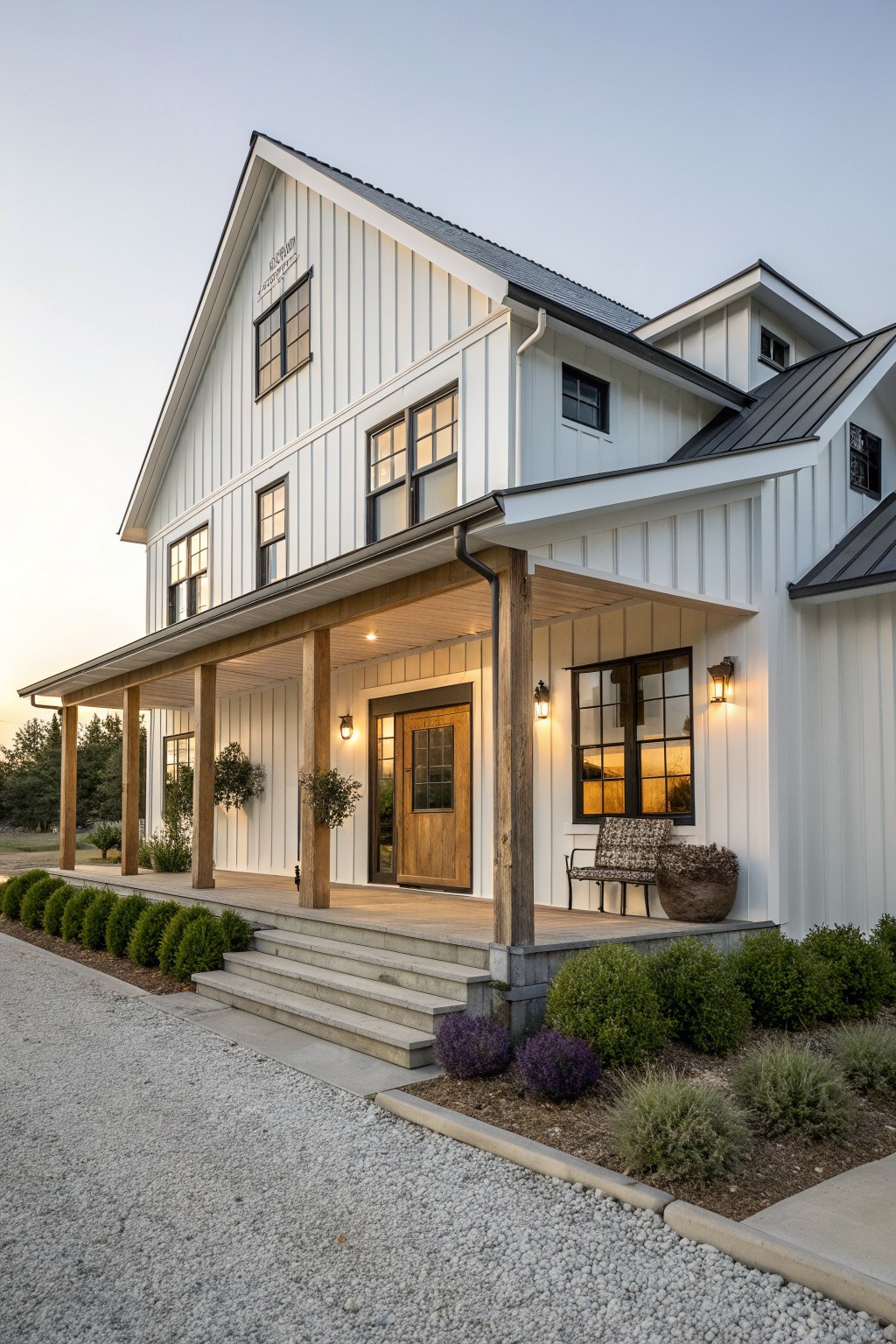
White siding gives a farmhouse a clean, updated look, but it can feel a little flat on its own. Adding wood posts and trim on the porch brings back some of the warmth and texture people expect from this style.
This approach works best on homes with a straightforward gable roof and a simple front entry. Keep the wood natural or lightly stained so it stands out against the white without competing with it. Too many extra details can take away from the balance.
Mixing Wood And Stone On The Exterior
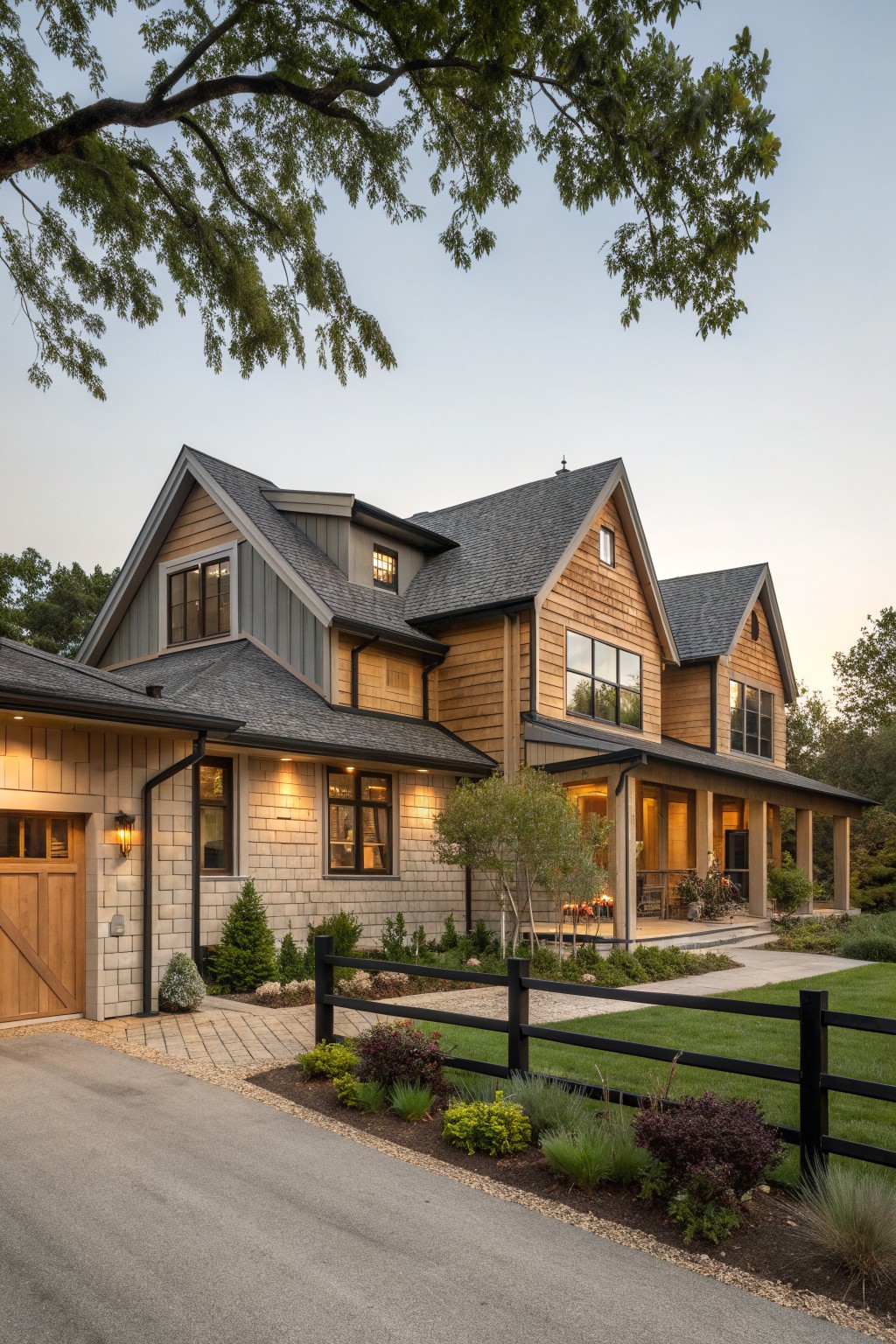
Many modern farmhouses end up looking too clean when they stick to one material across the whole front. Adding stone on the lower sections gives the wood siding a solid base and helps the house feel more connected to the ground.
This approach works best on homes with several rooflines where you want to keep some country weight. Use the stone sparingly around the garage or main entry so the wood still gets most of the attention. It suits larger lots where the house needs to feel settled rather than brand new.
Mixing Brick With Dark Siding
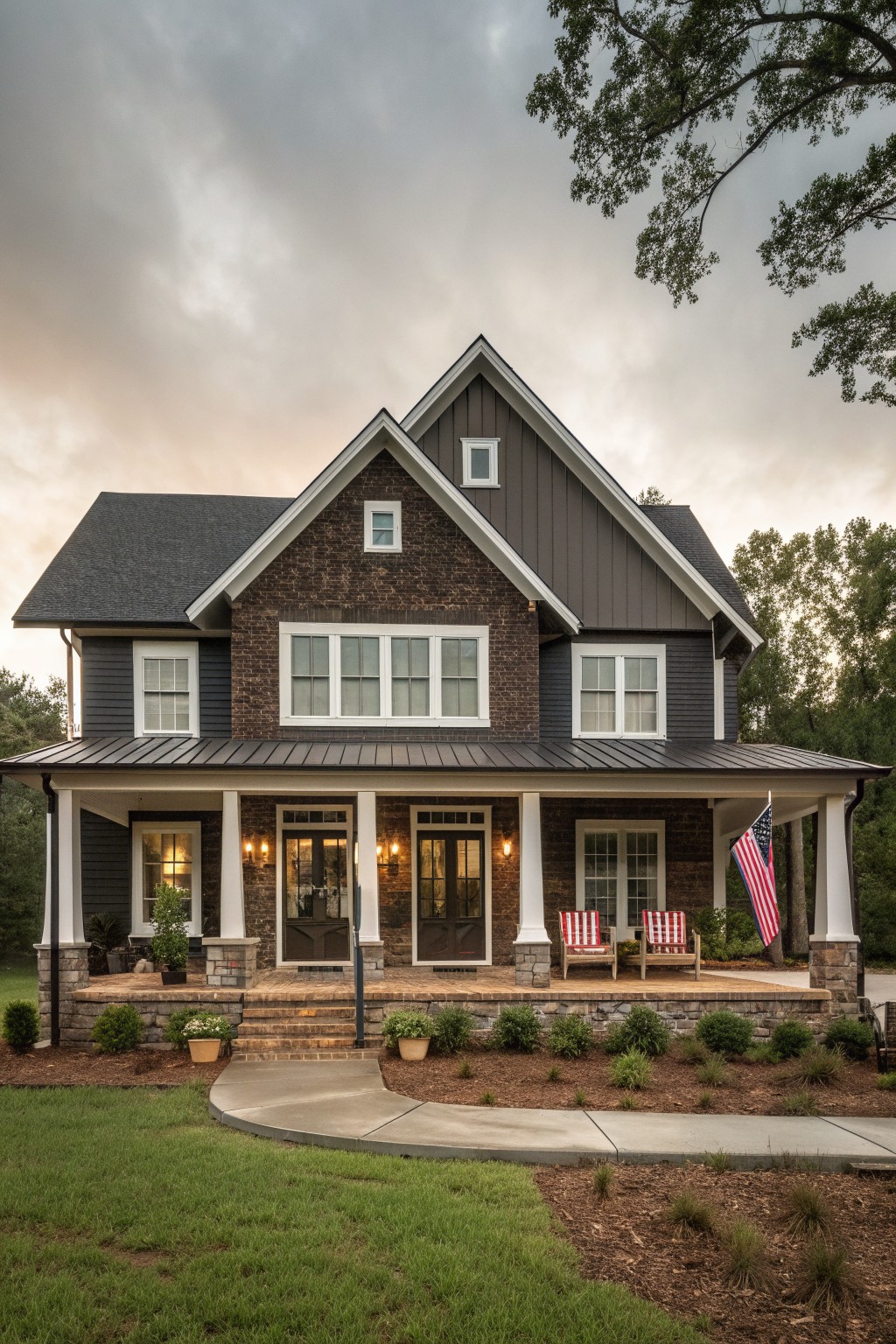
Many people like pairing brick on the lower section of a house with dark siding higher up. It gives the base some weight and keeps the upper part from feeling too heavy while still looking like a real farmhouse instead of something too new.
This approach suits homes that already have a porch and gables because the two materials help break up the facade without losing the traditional shape. It works best on two-story houses where you want a bit more contrast but still need the whole exterior to feel connected and familiar.
Mix Stone And Siding For Balance
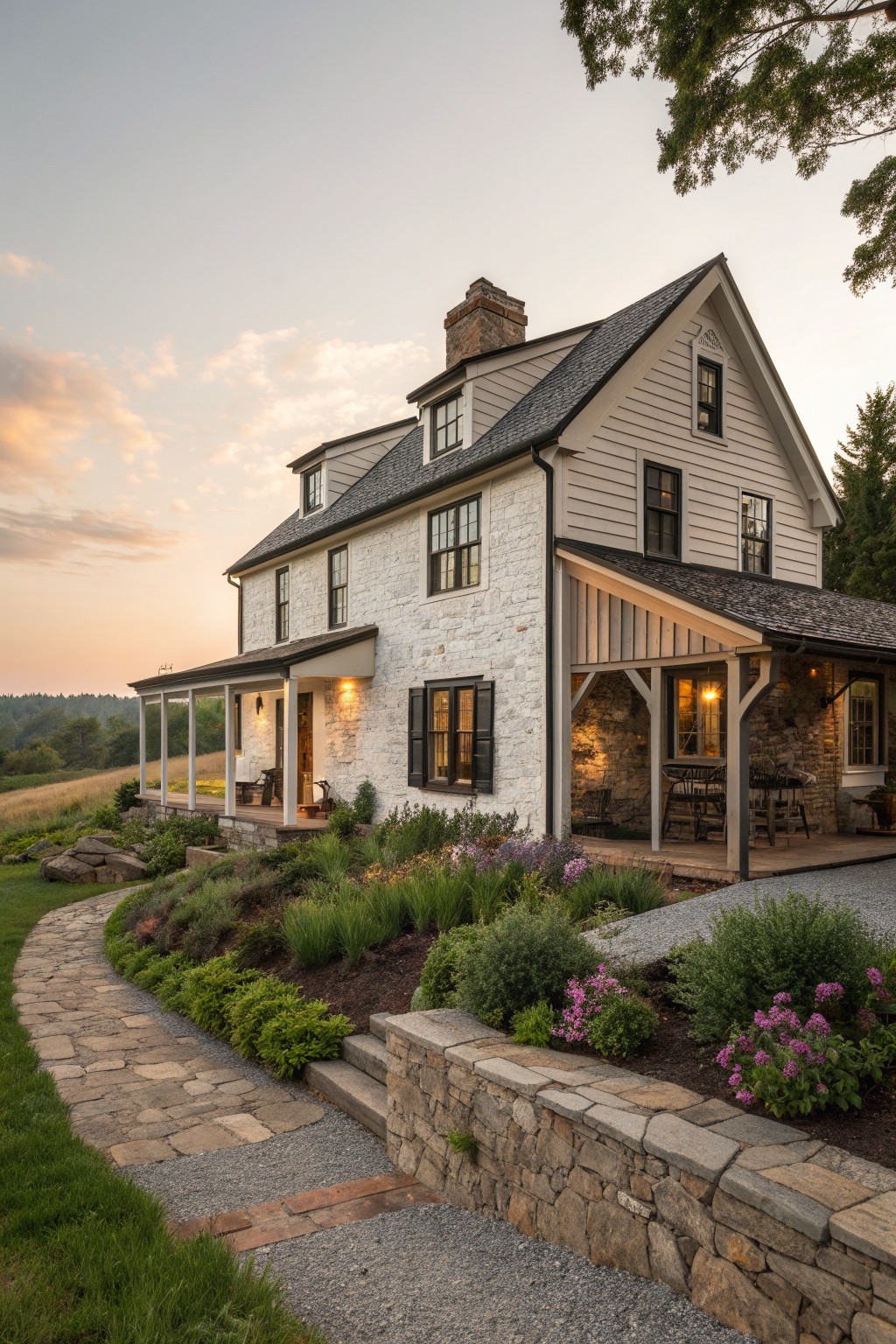
Many farmhouses gain a lot from mixing stone with painted siding. The stone adds weight and texture at the base while the lighter siding keeps the upper levels from feeling heavy. This mix helps the house look settled without losing its clean lines.
It works best on homes with a simple gable shape and a clear roofline. Keep the stone sections limited to the lower walls and porch columns so the siding can stay the main surface. Too much stone can make the house feel darker than intended.
Using Black Trim to Define Light Siding
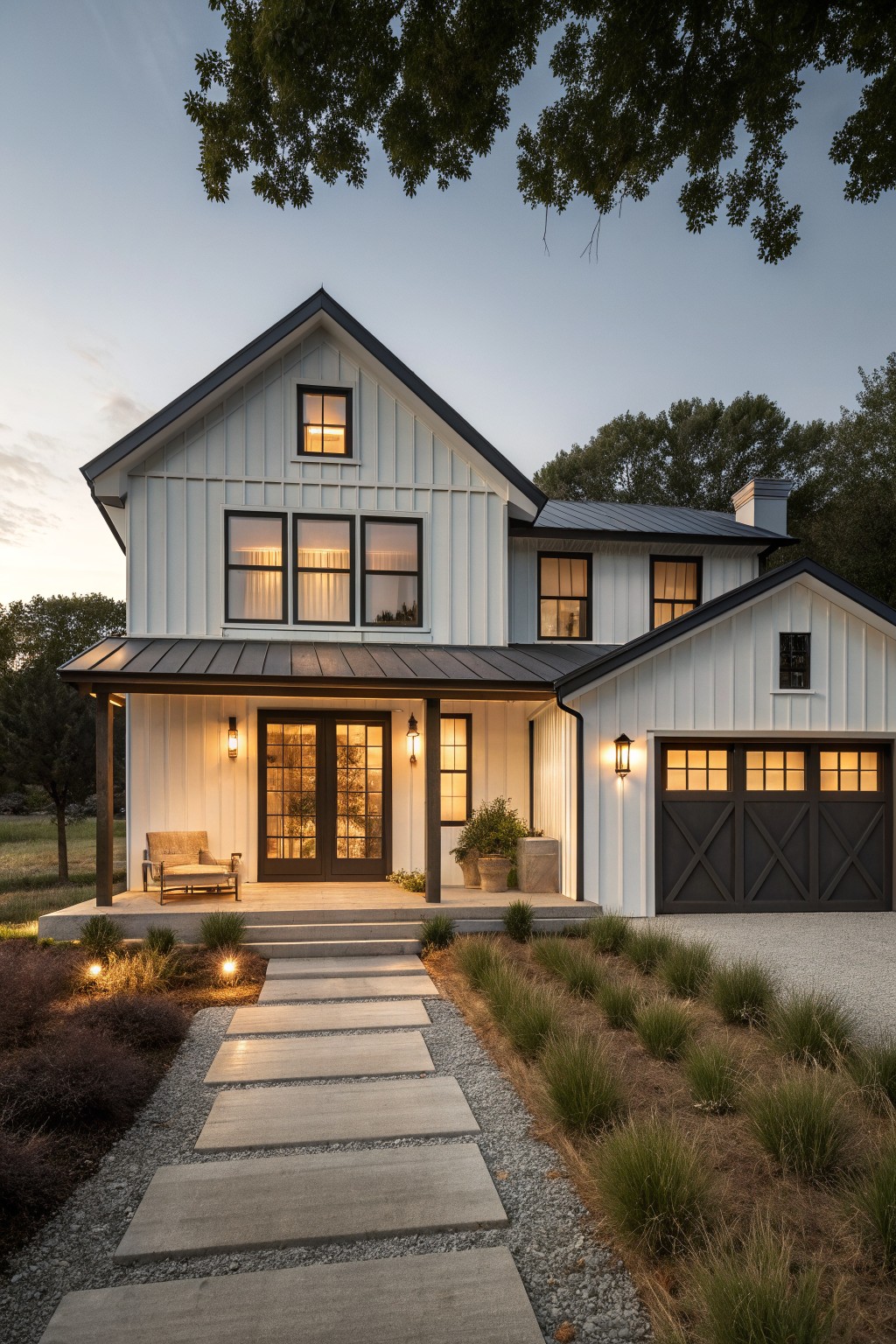
Black window frames and roofing give this light siding a sharper, more modern edge while still reading as a farmhouse. The contrast pulls the whole front together and keeps the shape from feeling too soft or plain.
This move works well on homes with simple gables and several windows, since the dark lines help organize the facade. It suits two-story builds best when the siding stays light and the trim stays consistent.
Stone Bases That Keep Farmhouse Exteriors Grounded
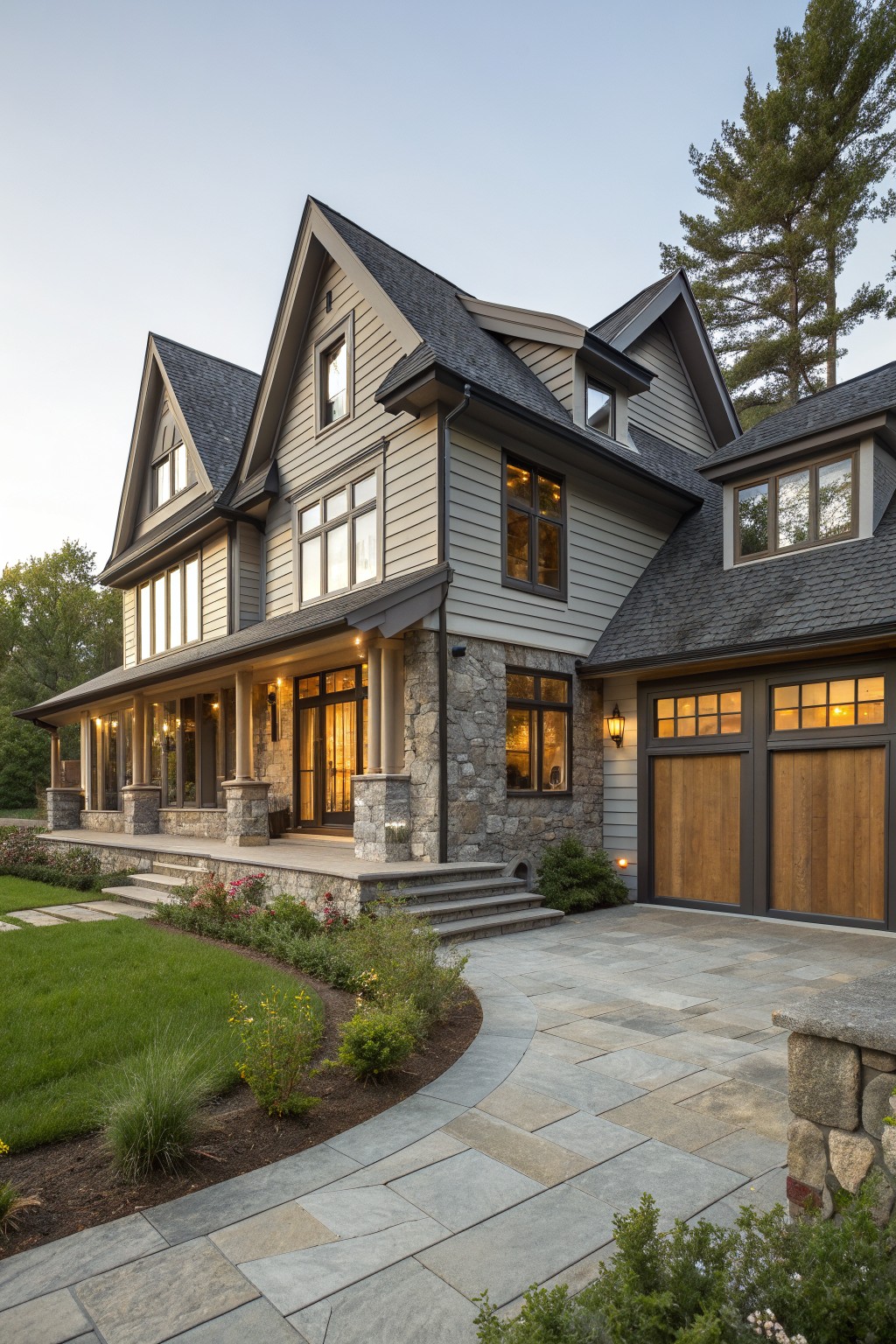
A stone base gives the house a solid, rooted look that pairs well with lighter siding above it. In this example the stone runs along the foundation and wraps the porch columns, which stops the whole front from feeling too light or flat while still letting the upper siding stay simple and bright.
This approach works best on homes that sit on slightly raised lots or that need a bit more visual weight at ground level. It suits both new builds and updates to older farmhouses, as long as the stone stays in the lower third and the siding color stays soft rather than stark.
Add a Covered Porch for More Outdoor Living Space
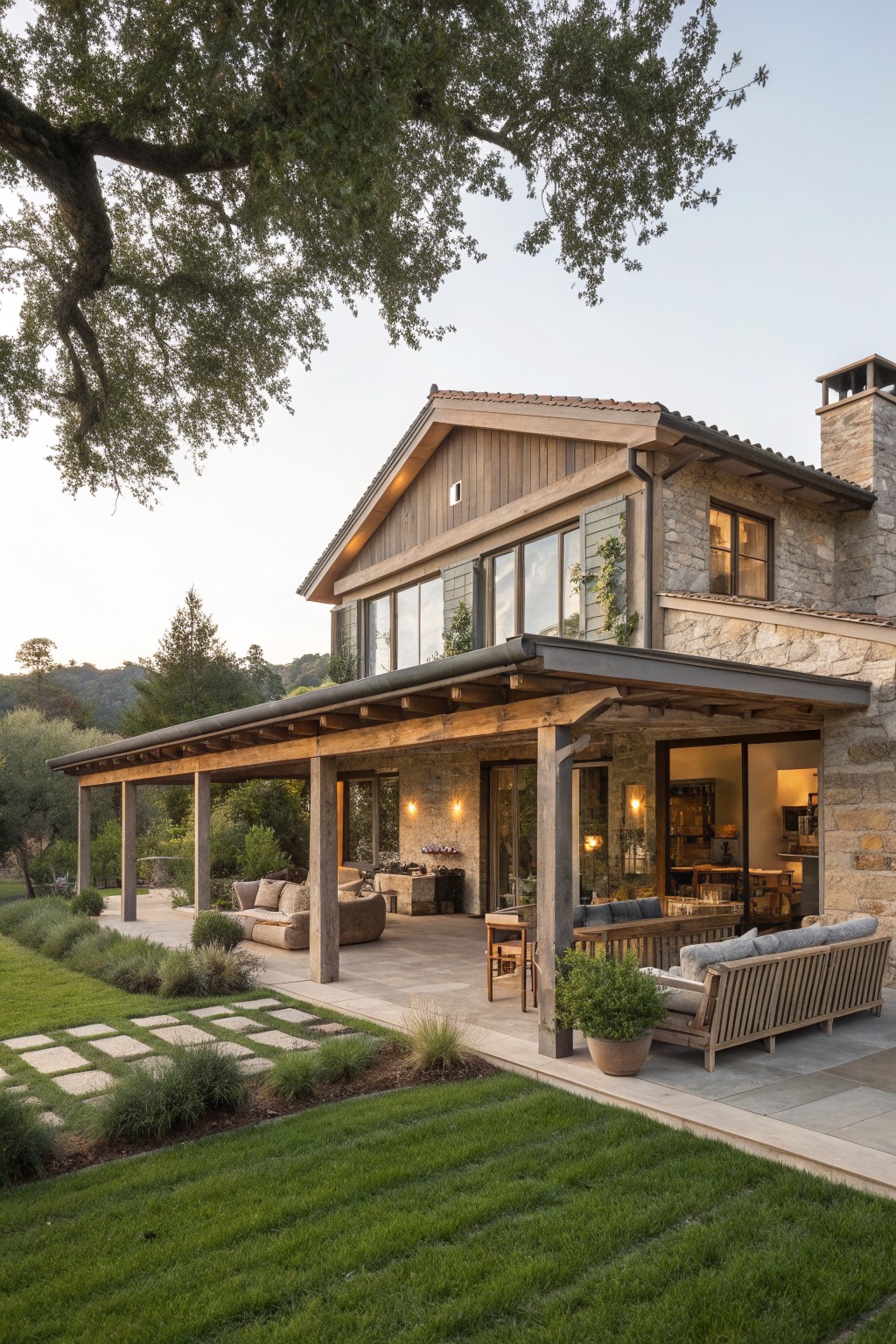
A covered porch gives you a place to sit outside without needing to plan around sun or rain. The simple wood posts and beams here create a steady roof line that connects the house to the yard and makes the whole area feel more usable year round.
This setup works best on homes with open ground in front or back. Keep the furniture arrangement loose so the space can shift between meals and quiet time. Stick with wood and stone finishes that already match the house so the porch feels like it belongs rather than something added later.
Combining Dark and Light Siding on Farmhouse Exteriors
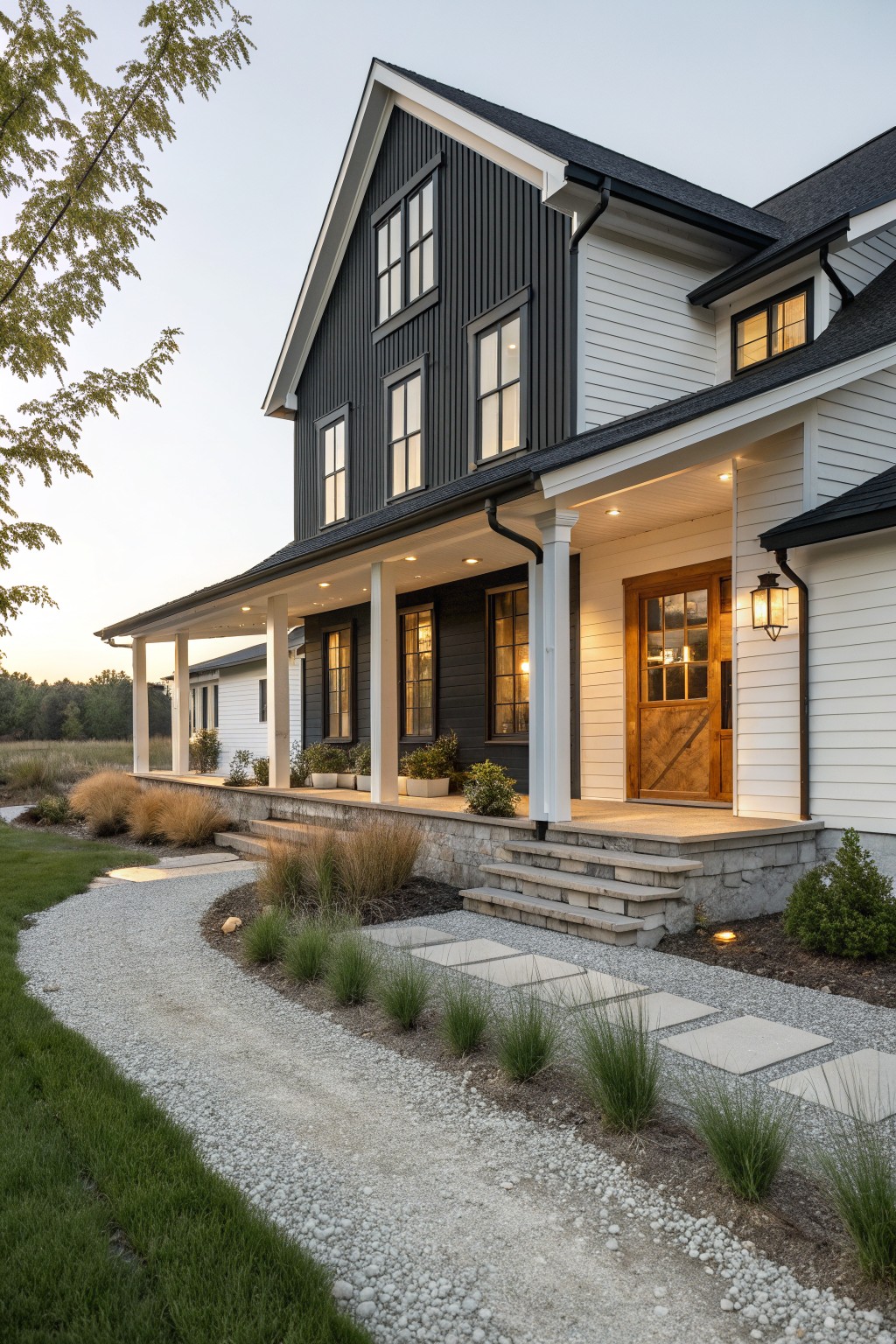
Many people like the look of dark vertical siding on the upper part of a house with white horizontal siding below. It gives the home a clear shape without losing the simple country feel that makes farmhouses appealing.
This works best on two story homes where you want some modern edge while keeping the overall style familiar. Just make sure the trim stays light so the change between the two colors stays clean instead of busy.
Rocking Chairs Balance The Porch
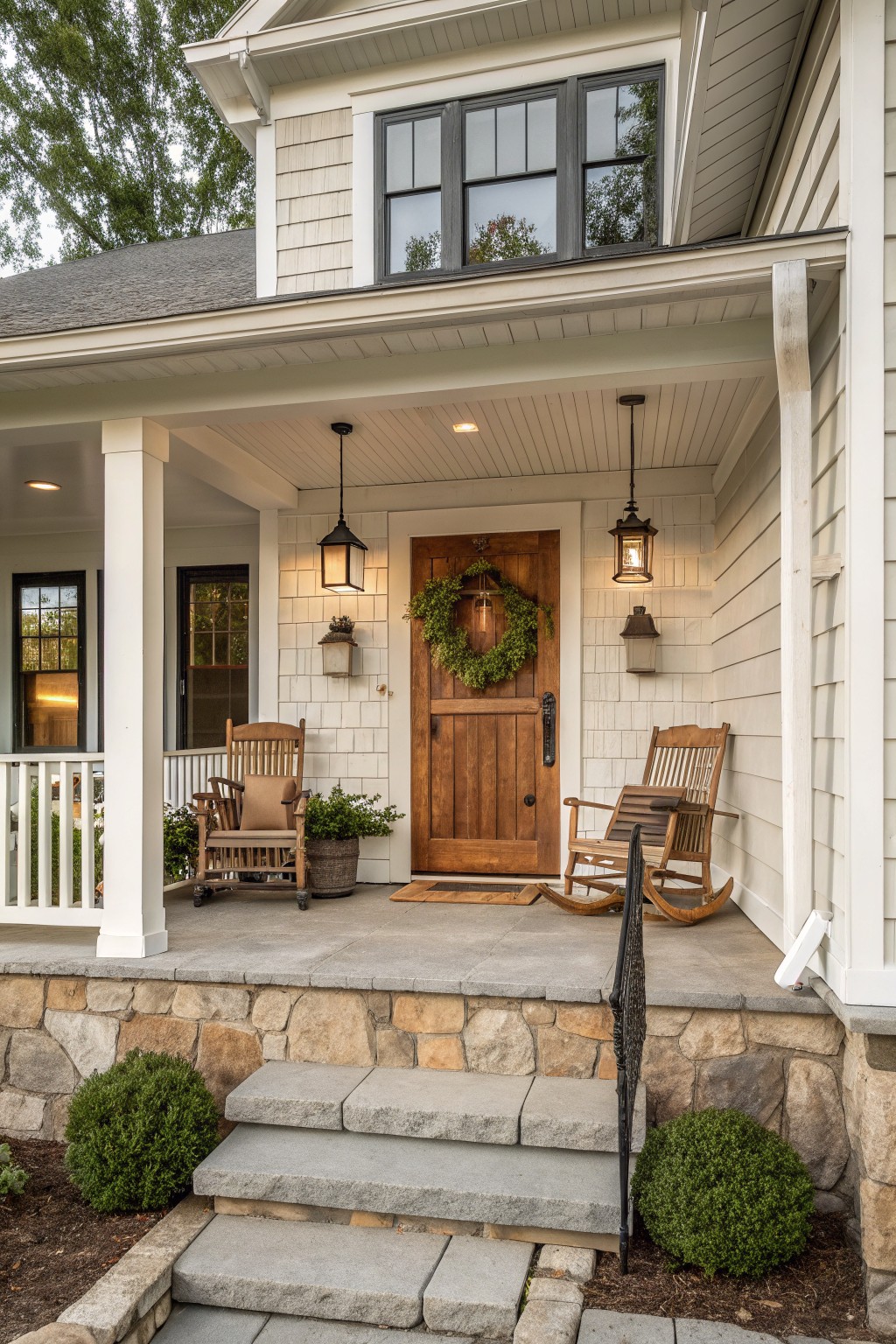
A pair of matching wooden rocking chairs placed on either side of the front door gives the porch a settled, lived-in look without crowding the space. The simple arrangement keeps the focus on the entry while adding that easy country rhythm most people expect on a farmhouse.
This setup works best on homes with a straightforward covered porch and a centered door. Keep the chairs plain and let the wood tone tie in with the door or trim. Avoid adding too many extra pieces that would break the clean line between the two chairs.
Match Stone From The House Into The Garden
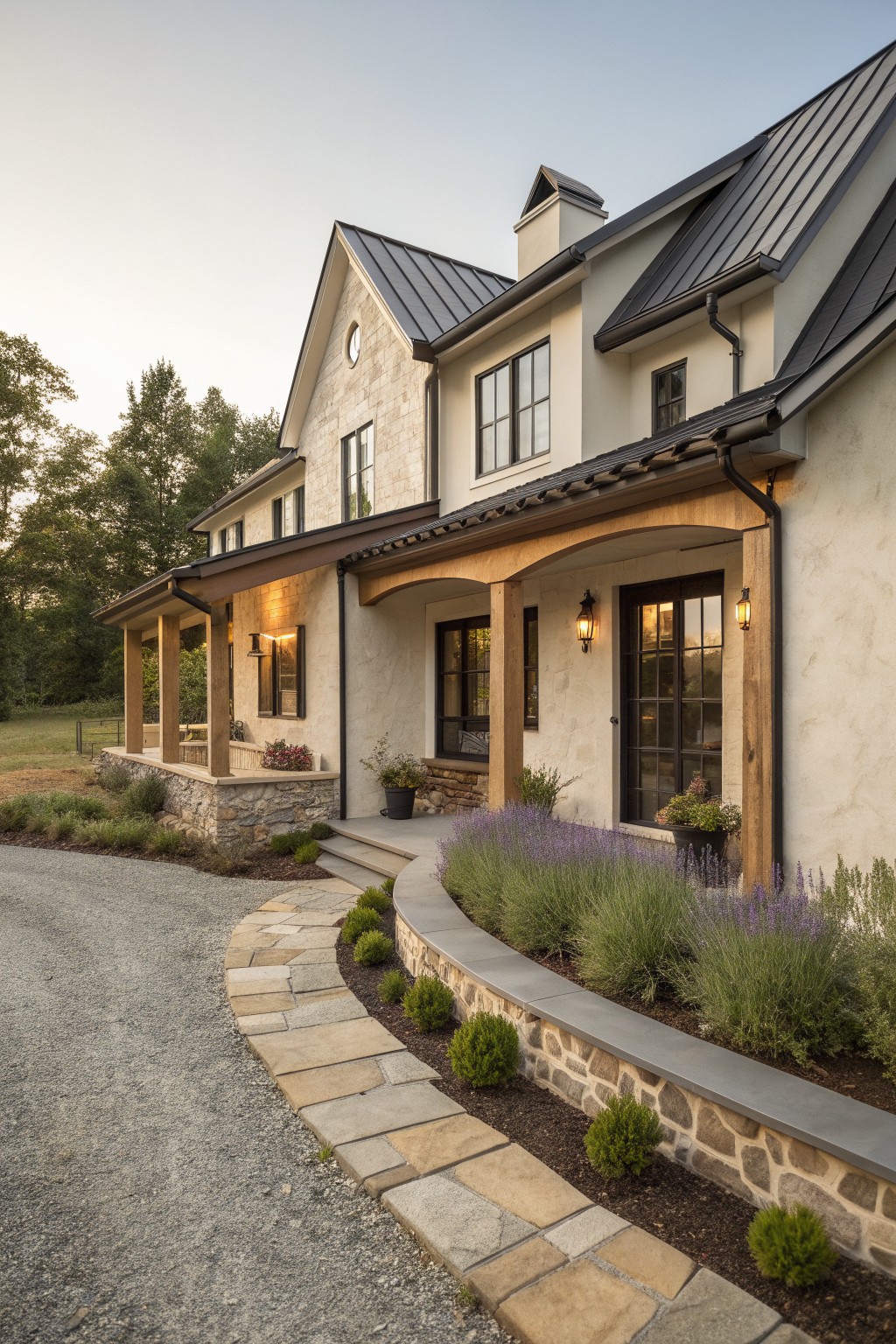
Stone shows up on the foundation of this house and then continues right into the low curved wall that edges the front beds. That simple repeat pulls the whole front together and keeps the look grounded instead of scattered.
Try the same move on any home that already has stone at the base. Use matching or very close stone for the garden walls and path borders, and keep the height low so the planting can still show. It works especially well on farmhouses where you want the house and yard to feel like one place instead of two separate projects.
Adding Stone To Anchor The Facade
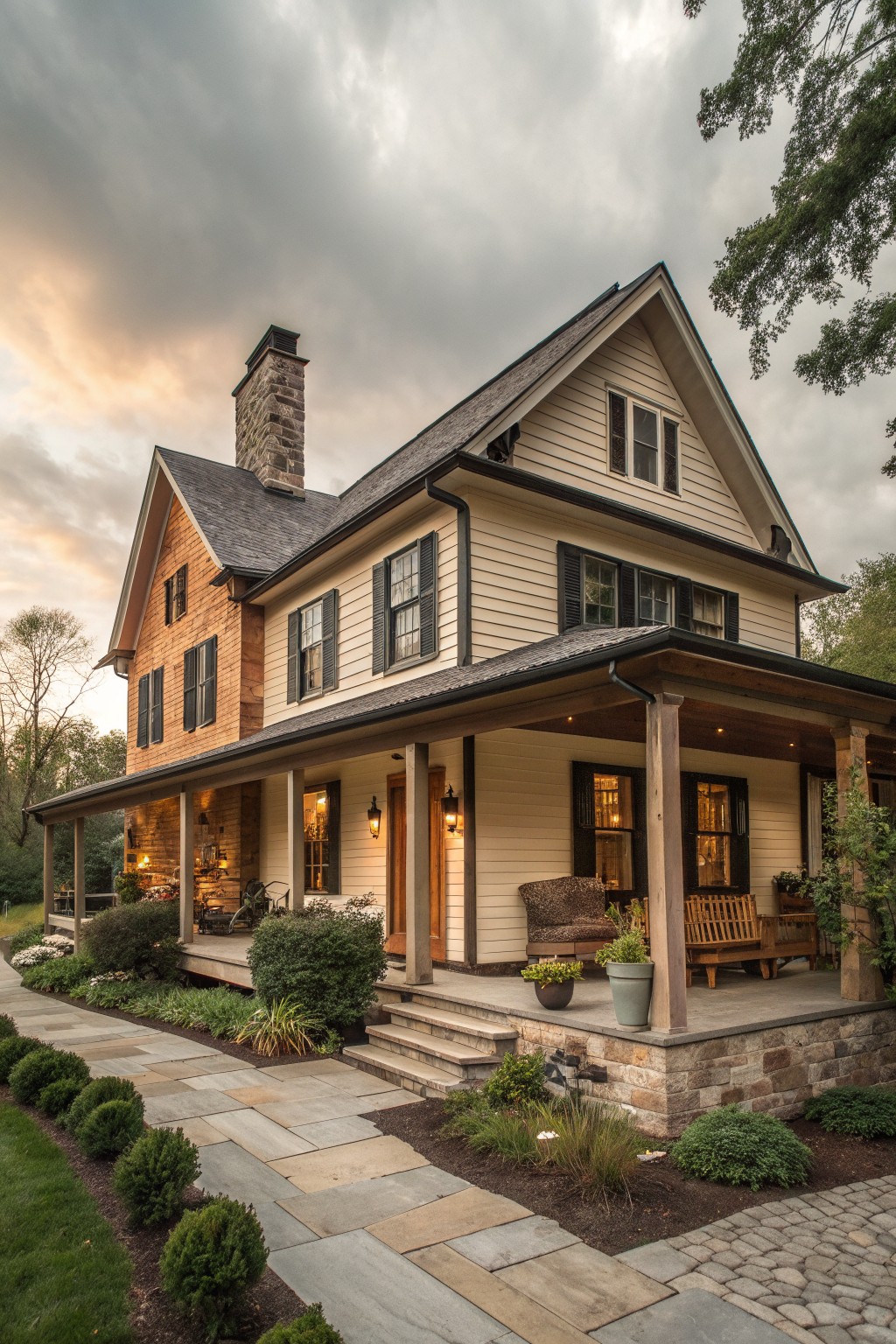
Stone at the base and chimney gives a farmhouse exterior real weight. It keeps the lighter siding from feeling too airy and helps the whole house sit more solidly on the site.
Use it mainly along the foundation and one or two tall features rather than spreading it everywhere. This approach works best on homes with simple gable roofs and wood siding, since the contrast keeps the look balanced and still country.
Vertical Siding For A Cleaner Farmhouse Look
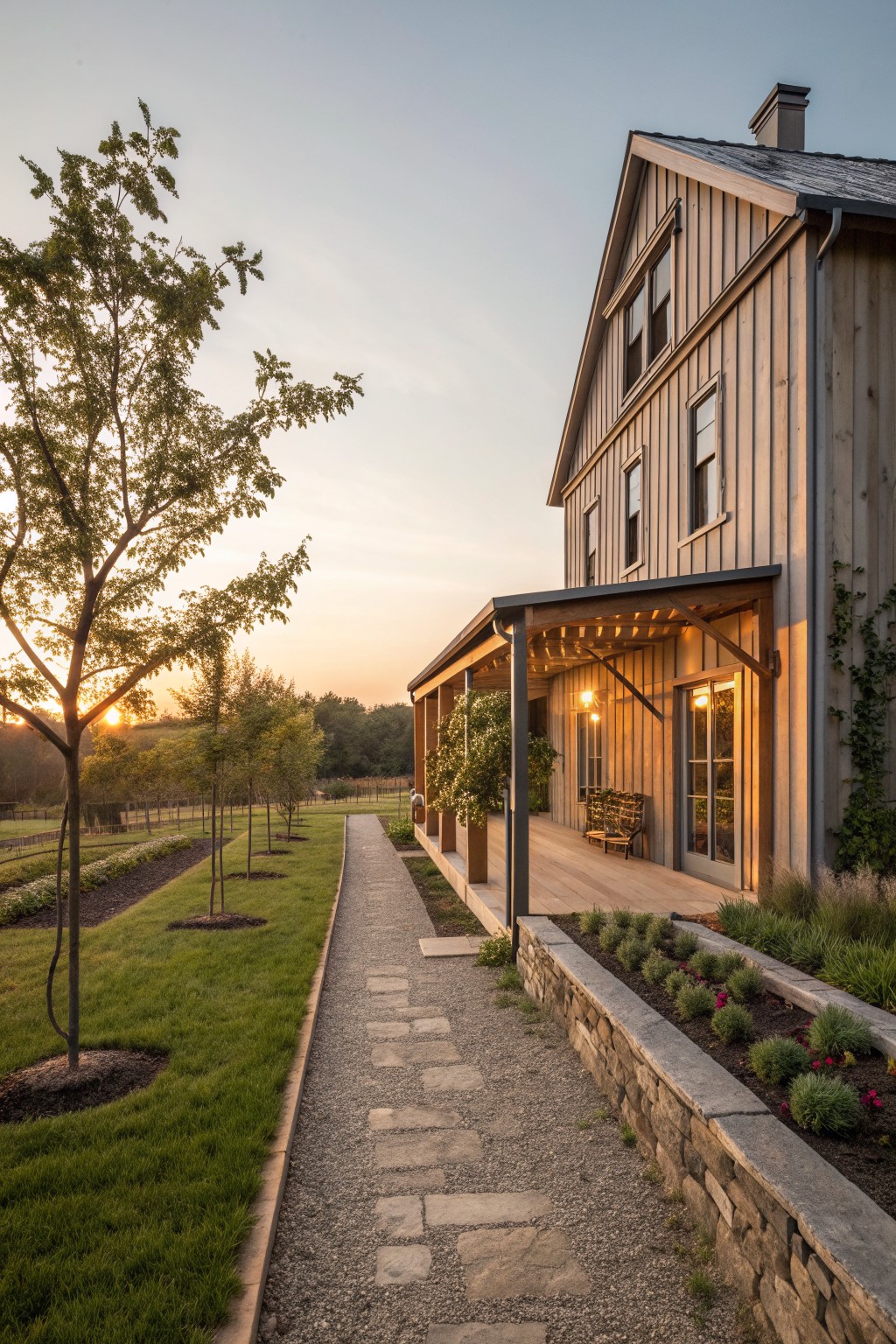
Vertical siding gives this house a taller profile and a more modern edge while still reading as a farmhouse. The simple lines keep the whole exterior from feeling busy, especially when paired with a basic gable roof and a straightforward porch.
This approach works best on homes that already have a clean roof shape and not too many extra details. It suits rural or semi-rural settings where you want the house to feel updated but not out of place with the surrounding land.
Add a Pergola for Easy Outdoor Living
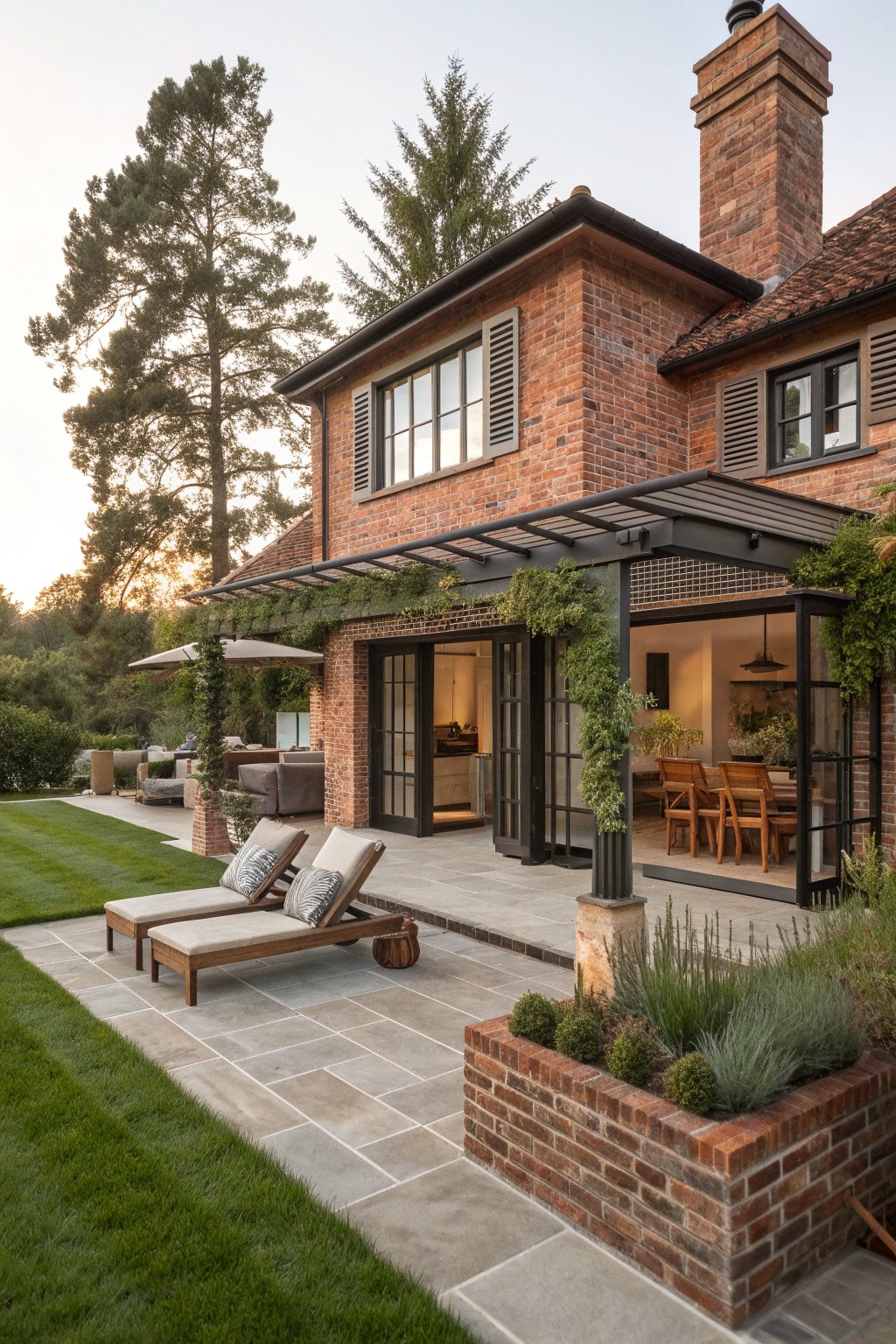
A pergola attached to the back of the house gives you a clear outdoor zone without turning the whole yard into a project. It creates shade and a sense of enclosure so the space feels like another room rather than just open decking.
This setup works best on homes where the exterior already has strong lines, like brick or timber. Keep the furniture low and simple, and let a few climbing plants grow up the posts so the structure settles in over the seasons.
Black Shutters On White Siding
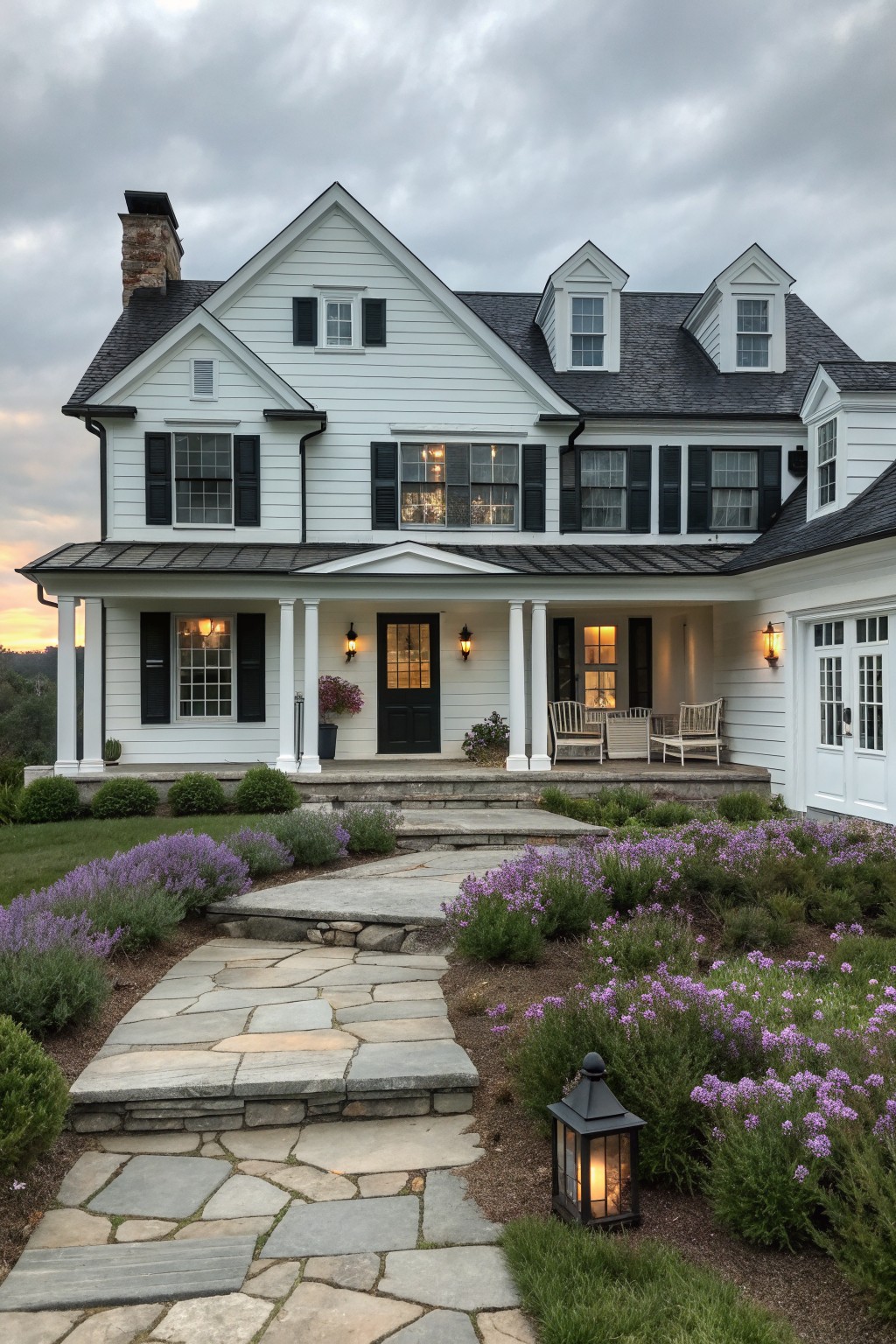
Black shutters give a white farmhouse exterior more structure without adding extra trim or details. They frame the windows clearly and create a sharp contrast that feels both traditional and straightforward.
This approach works best on homes that already have a simple roofline and balanced window placement. Keep the rest of the palette limited so the black accents stay the main point of interest rather than competing with other colors.
Dark Siding For A Stronger Farmhouse Look
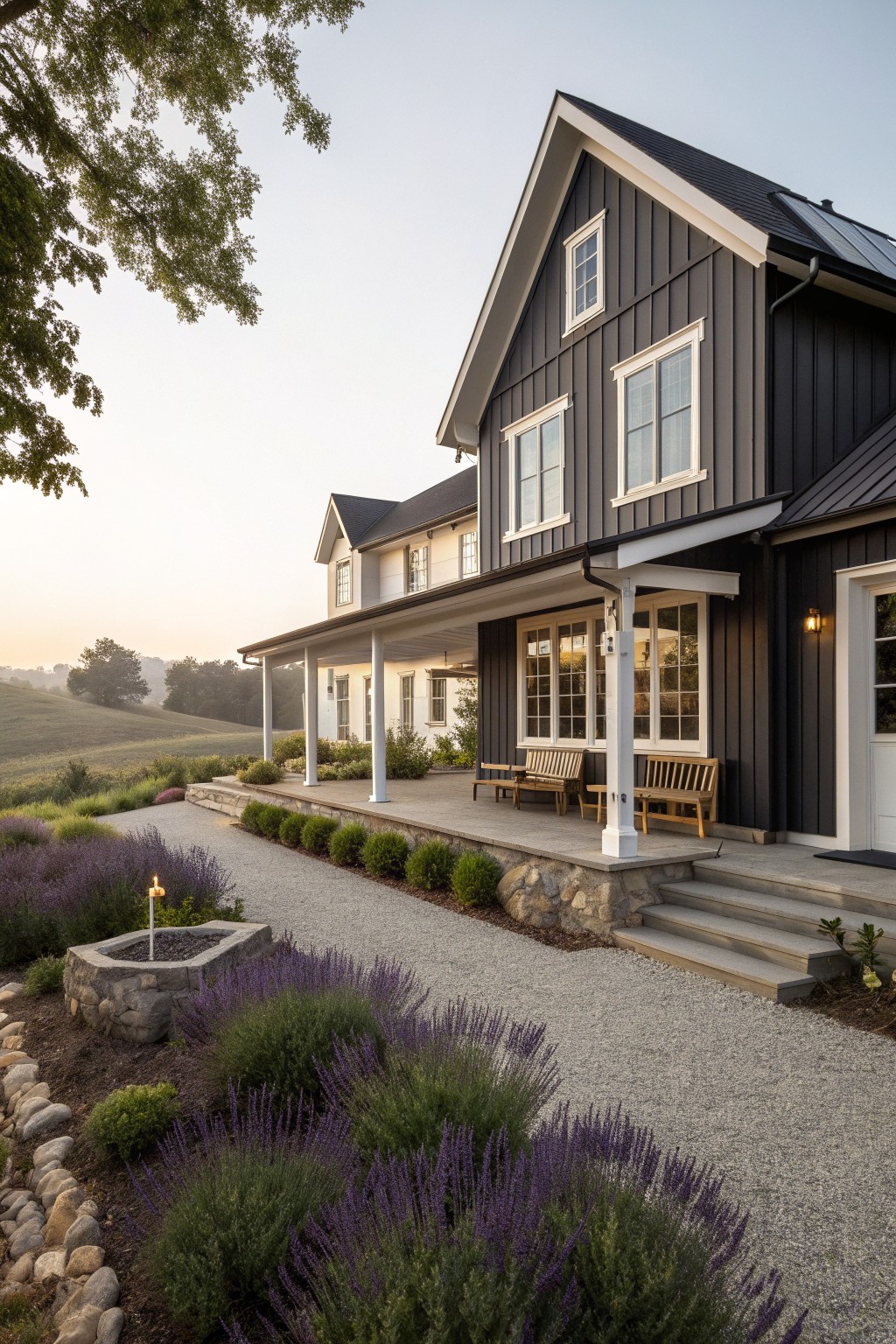
Many older farmhouses get a fresh update when the siding is painted a deep charcoal or near black. The dark color makes the house feel more solid and current while the white trim keeps the traditional lines clear and bright.
This approach works well on homes with simple gable roofs and a front porch. Just make sure the landscaping stays low and soft so the dark walls do not feel too heavy against the yard.
Choose A Colorful Front Door
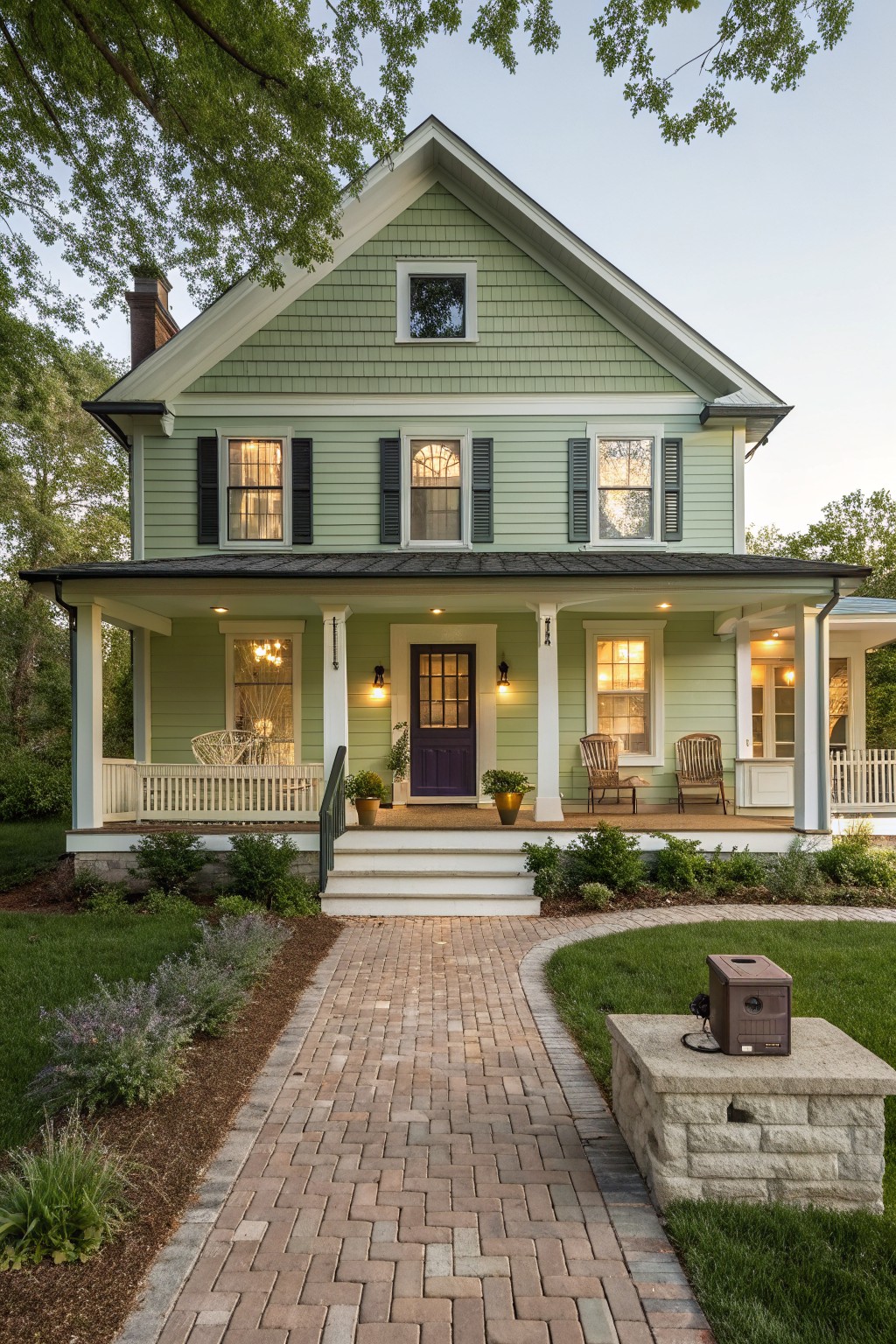
A deep purple door on a soft green house gives the whole front a clear focal point without needing extra trim or details. It keeps the look simple while still feeling welcoming and a little different from the usual white or black doors seen on many farmhouses.
This works best on homes with clean siding and a front porch that already has good structure. Just make sure the color you pick has enough contrast so it reads from the street, and test it on a sample board first since lighting changes how it looks through the day.
Add A Long Table To Your Patio
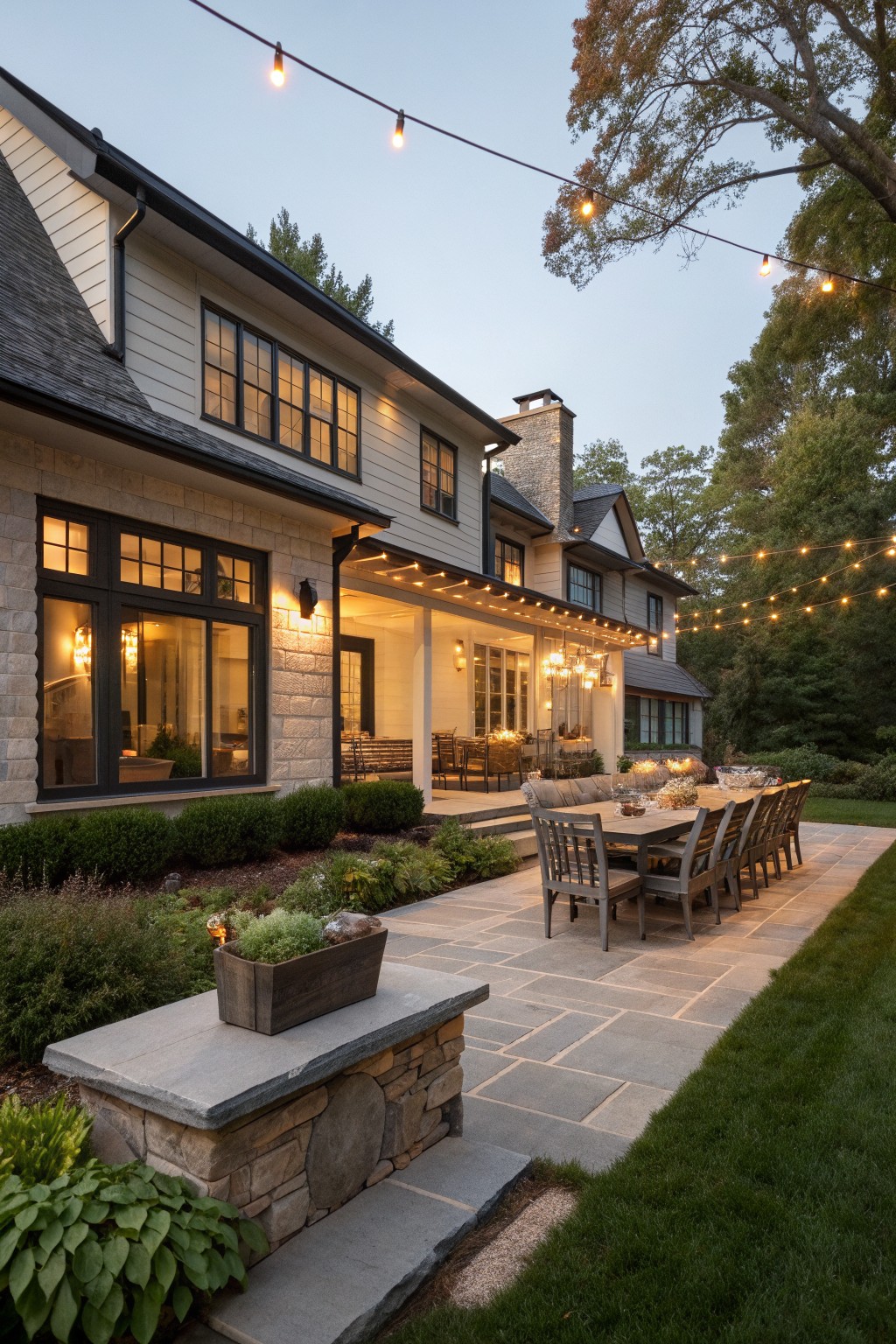
A long table on the patio gives you a simple way to turn the space into an actual dining area. It works especially well when the table sits right off the house so meals feel connected to the indoors without needing extra structures.
This setup suits farmhouses or homes with a decent stretch of flat patio surface. Keep the table and chairs in similar tones so the arrangement stays casual and easy to use year after year.
Black Trim Updates a White Farmhouse Exterior
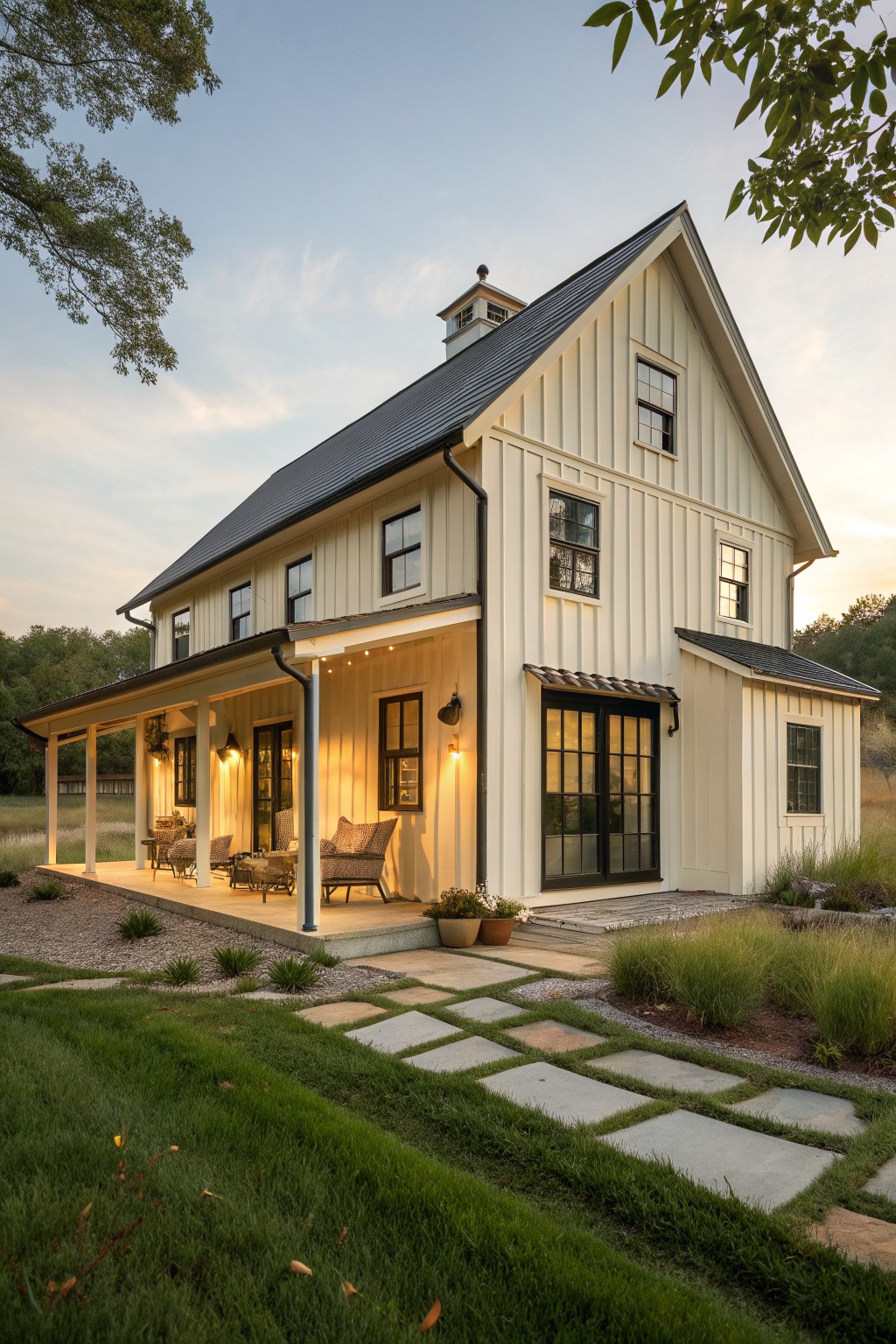
Many people like the look of a white farmhouse but want it to feel a little sharper. Black window frames, doors, and roofing do that job without changing the overall shape or adding fancy details. The contrast keeps the house from looking too soft or plain while still reading as classic country.
This works best on homes with simple siding and a clear roofline. It suits two-story farmhouses especially well because the dark lines help break up the height. Just keep the trim consistent on every opening so the effect stays clean instead of busy.
Dark Roofing And Trim On Light Siding
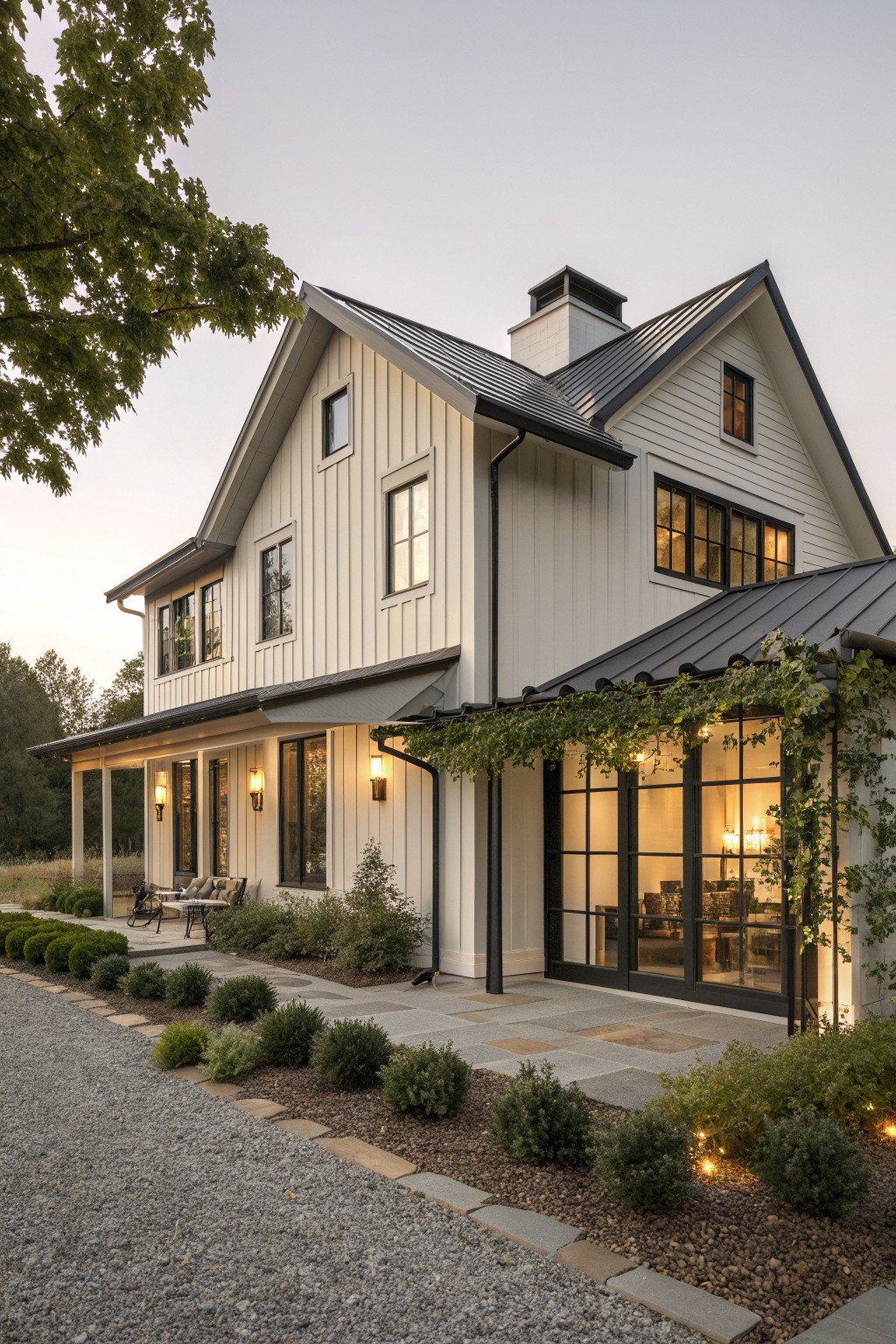
Many modern farmhouses rely on a dark metal roof and black window frames to give a light exterior more definition. The contrast keeps the house from looking too soft or plain while still feeling tied to traditional country forms.
This approach works best on homes with straightforward rooflines and larger window openings. It adds structure without extra trim or ornament, and it suits places where you want the architecture to read clean but still warm. Just keep the siding a true off-white or light gray so the darker elements stay sharp.
Pergolas That Extend The Living Space Outdoors
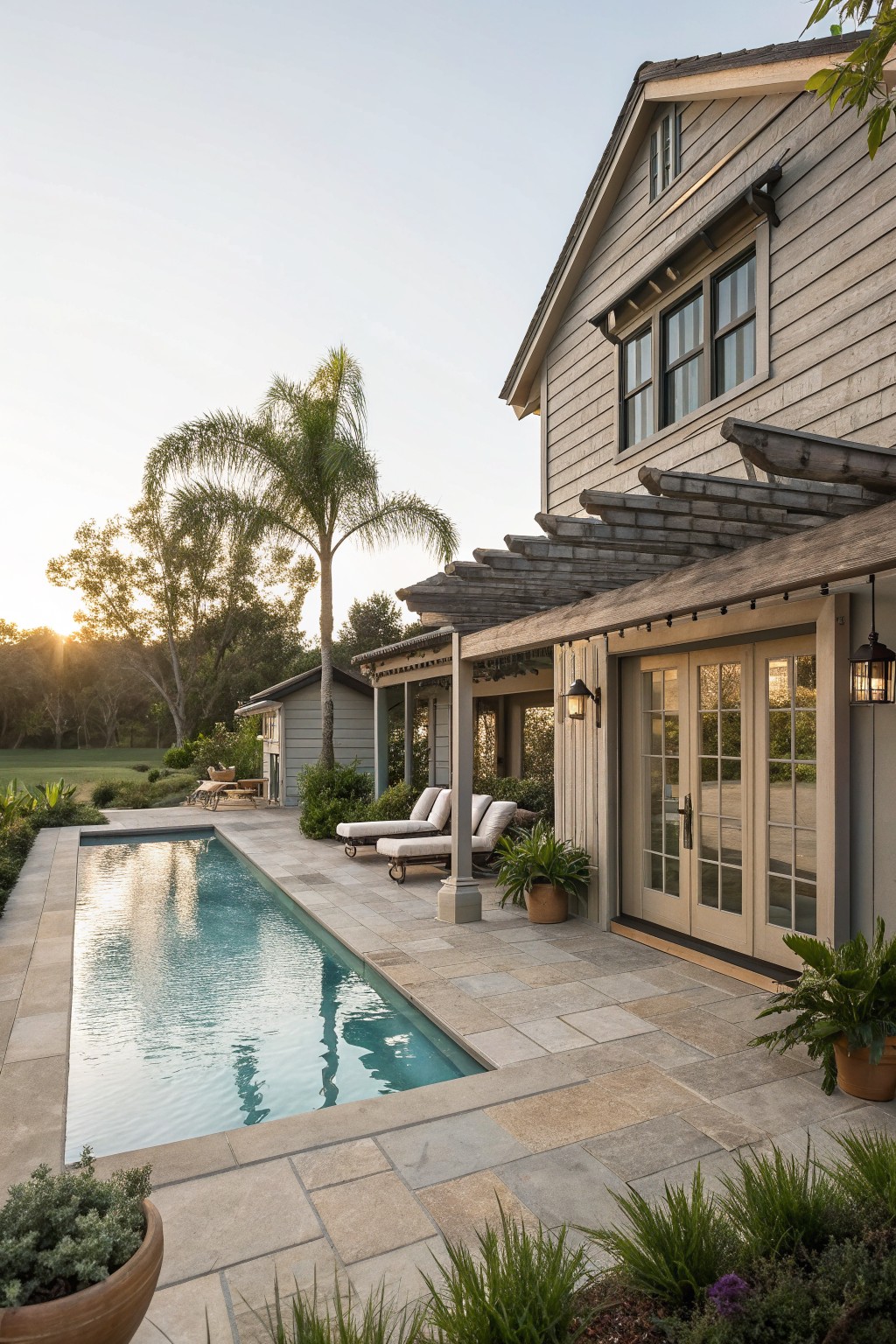
A pergola gives the patio a clear boundary while still letting in plenty of light and air. It turns an open pool deck into a spot that feels more like an extra room, especially when the wood matches the house siding and trim.
This setup suits homes that already have a simple gable roof and wide doors leading outside. Keep the wood tone similar to the rest of the exterior and let the structure run just far enough to cover a seating area without blocking the view of the water.
A Stone Base for the Front Porch
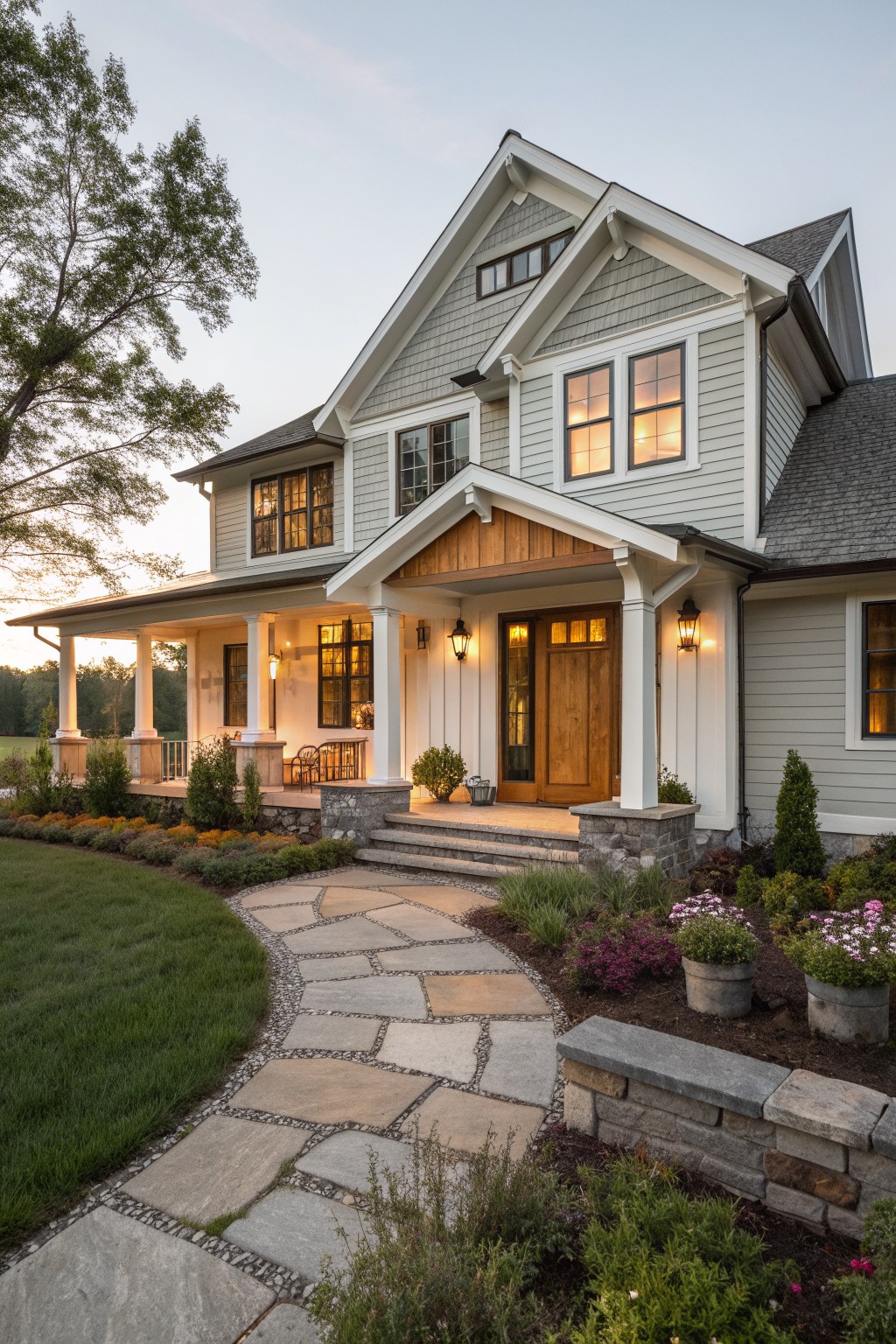
Many farmhouses gain a lot from giving the entry some real weight at the bottom. A low stone foundation under the porch plus matching steps creates a solid base that holds the whole front together.
This works especially well on homes with light siding and a simple gable over the door. It keeps the entry feeling grounded and helps the porch look like it belongs rather than sitting on top of the foundation.
Mixing Siding Materials on the Facade
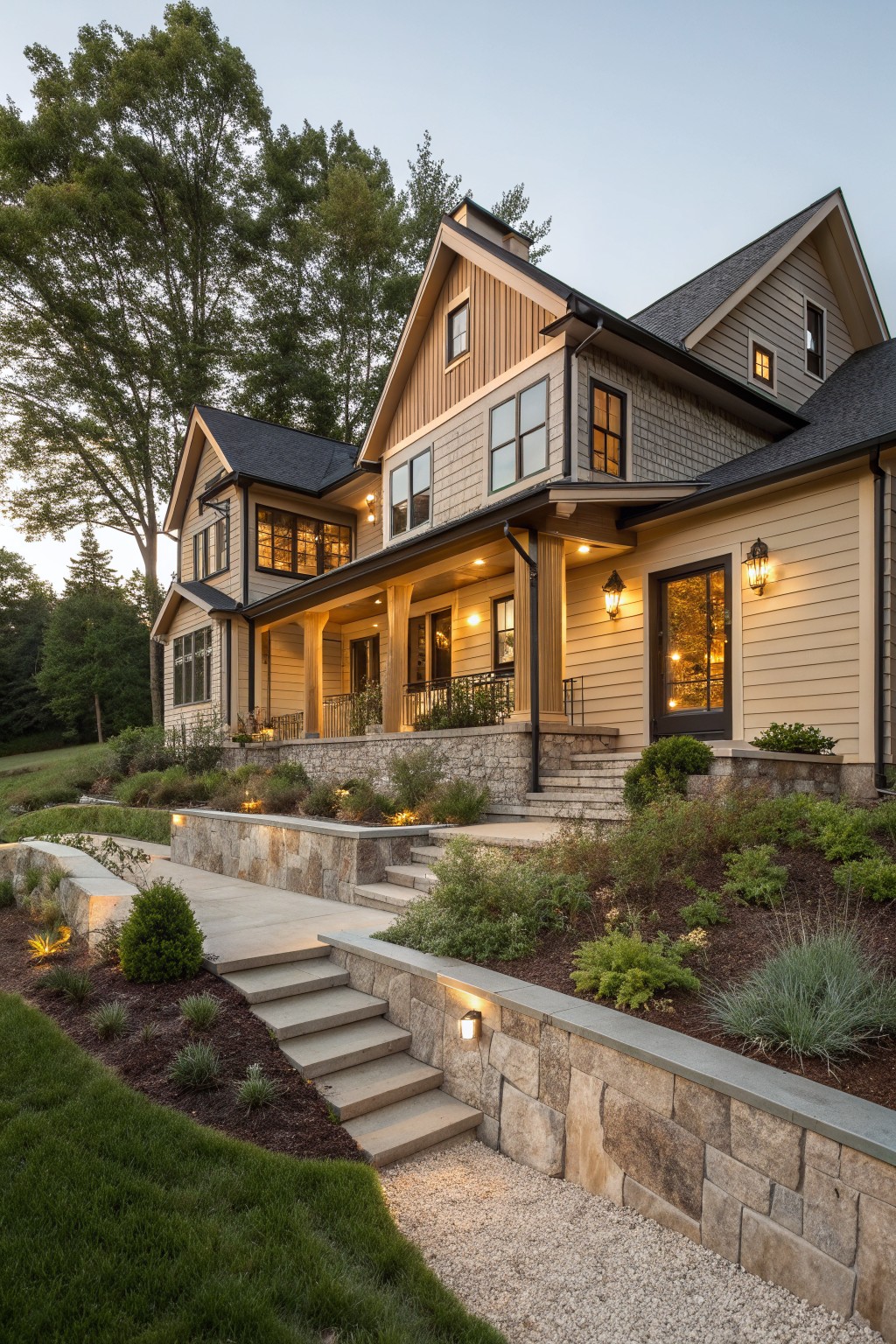
Many modern farmhouses gain character by using more than one type of siding instead of keeping everything the same. Horizontal boards on the main level, shingles on the upper sections, and vertical accents on the gables give the house texture while still looking clean and simple. The stone base ties it all together and keeps the lower part grounded.
This approach works best on larger homes where a single material might feel flat. Stick to two or three tones that sit well next to each other, and let the changes happen at natural breaks like rooflines or porch edges. Too many shifts can start to look busy, so keep the overall palette quiet.
Frequently Asked Questions
Q: What siding should I choose to get that rustic modern farmhouse look on a budget?
A: Go with board and batten in a soft white or gray. It gives the texture you see in the photos without costing as much as real wood. Paint it yourself if you can to save even more.
Q: Do these exteriors work if my house has a regular asphalt roof already?
A: You can keep the asphalt if it is dark enough. Many of the homes blend it with wood accents and shutters to pull the country feel through. Just focus on the other details like the porch and trim.
Q: How do I make sure the garage door does not stick out in a modern farmhouse exterior?
A: Pick a simple carriage style door in a color that matches your trim. Add some wood beams above it to tie everything together.
