

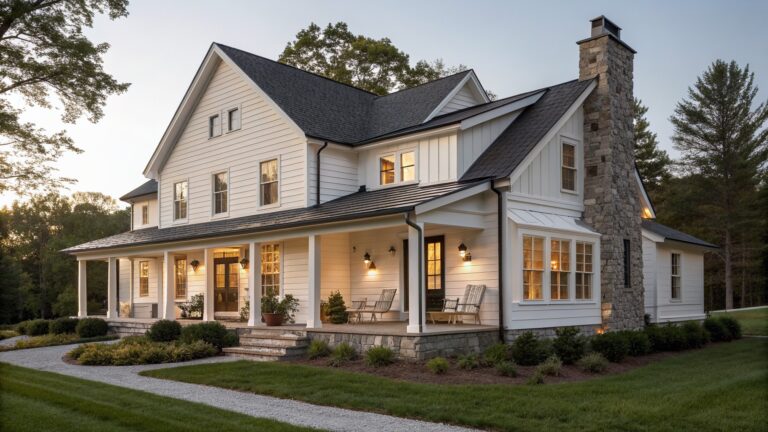
When I drive past older farmhouses, the ones that still look right after decades usually rely on straightforward materials like wood siding and metal roofs that age gracefully together.
The entryway sets the tone for how welcoming the whole front feels, especially when it includes a covered porch that actually gets used.
Porch depth matters.
I remember adding a small gable over our own door and noticing how it changed the light and shadow on the facade in a way photos never captured.
Materials need to match the local climate if you want the look to last without fighting against it every season.
Use Stone To Ground White Siding
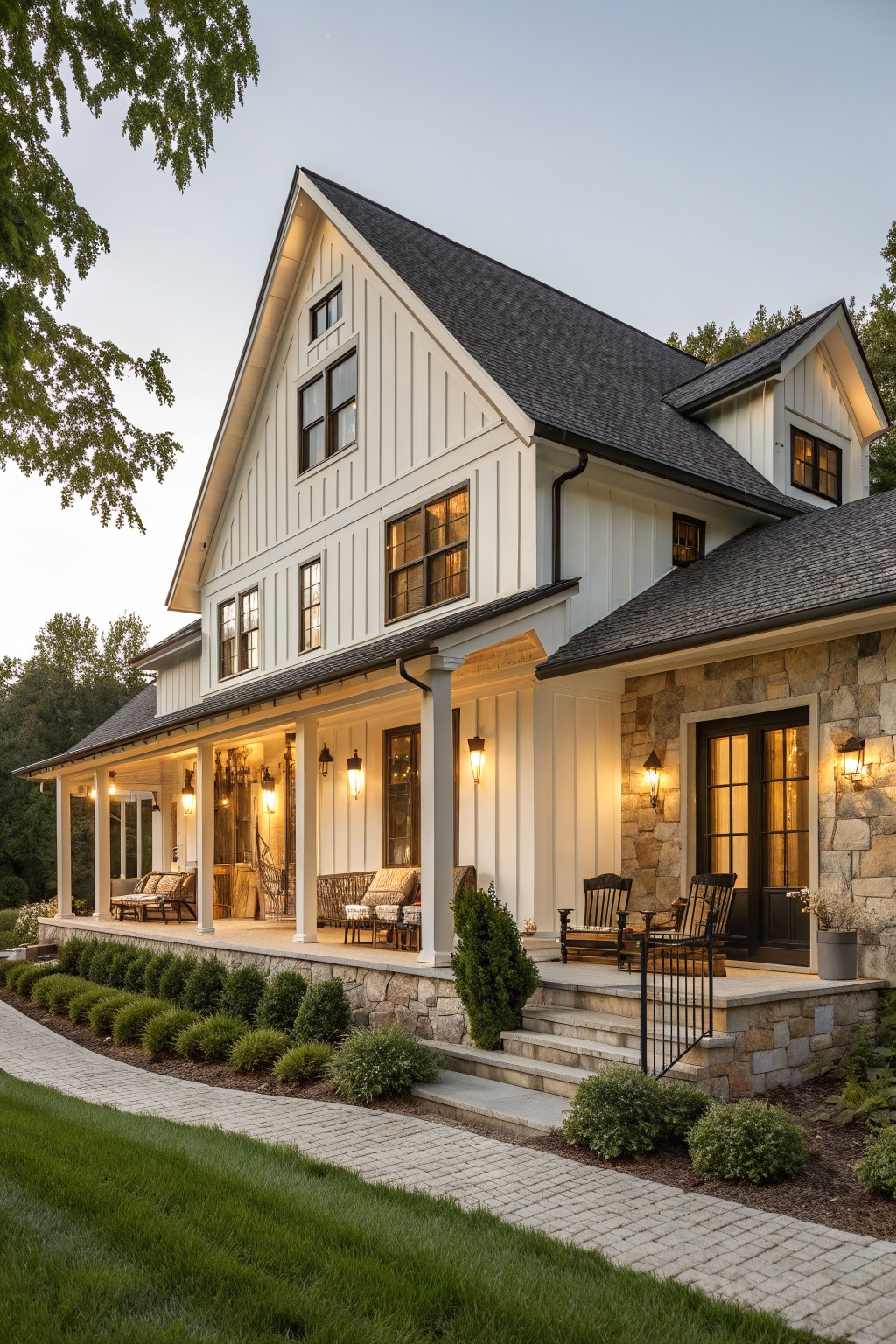
White siding can look a little light on its own, especially on larger homes. Adding stone along the base and around key areas like the porch gives the whole exterior more weight and a settled feel.
This mix works best on traditional country homes where the stone stays low and the siding takes over above. It keeps the look clean while adding texture that holds up over time.
Wood Ceilings on the Porch
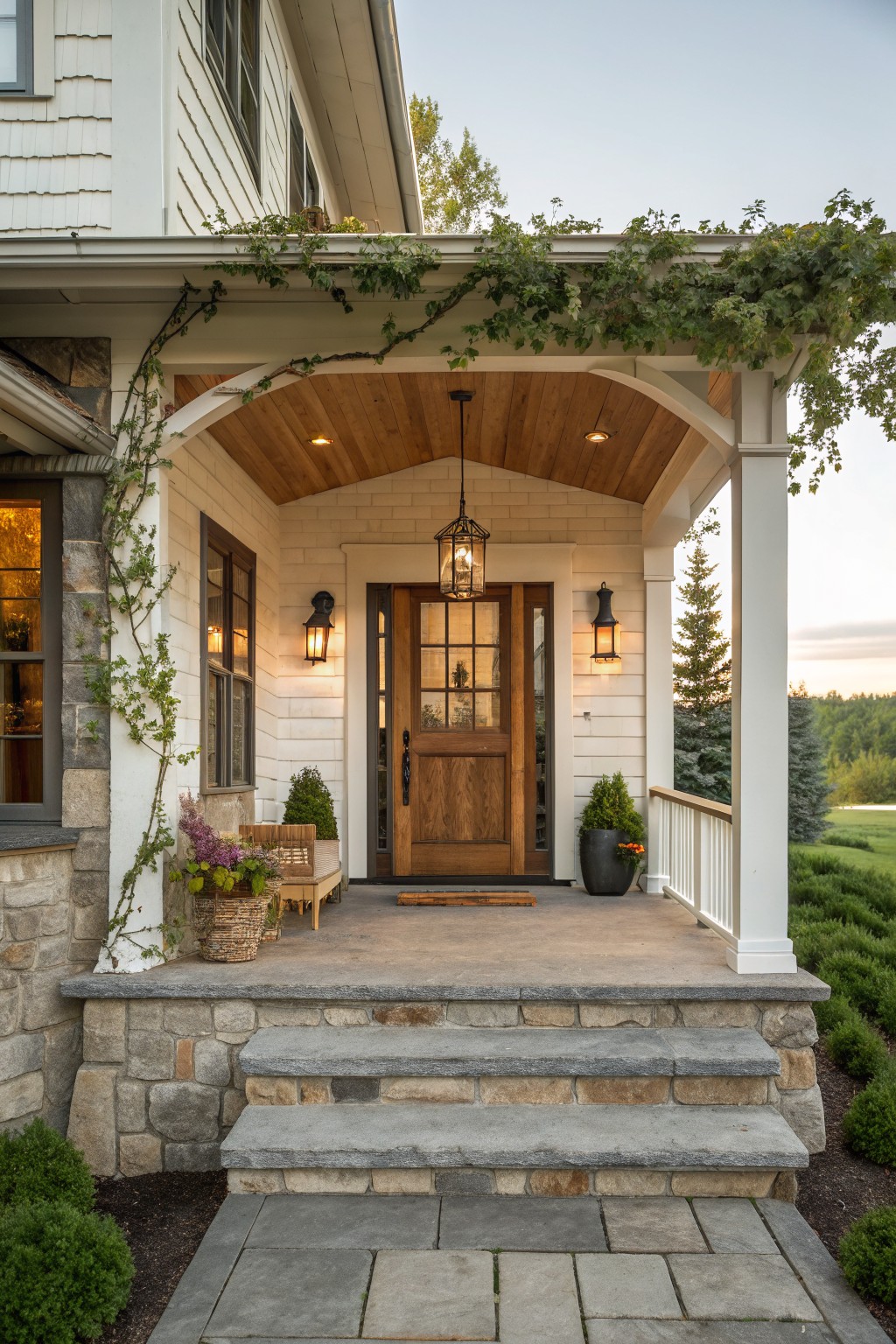
A wood ceiling on the porch adds a simple layer of warmth right at the entry. It stands out against the white siding and stone base without needing much else to feel finished.
This detail works best on traditional homes where you want the porch to feel like part of the house rather than an add-on. Keep the wood tone natural and pair it with basic lighting so the space stays easy to use year round.
Add a Front Porch to Your Farmhouse
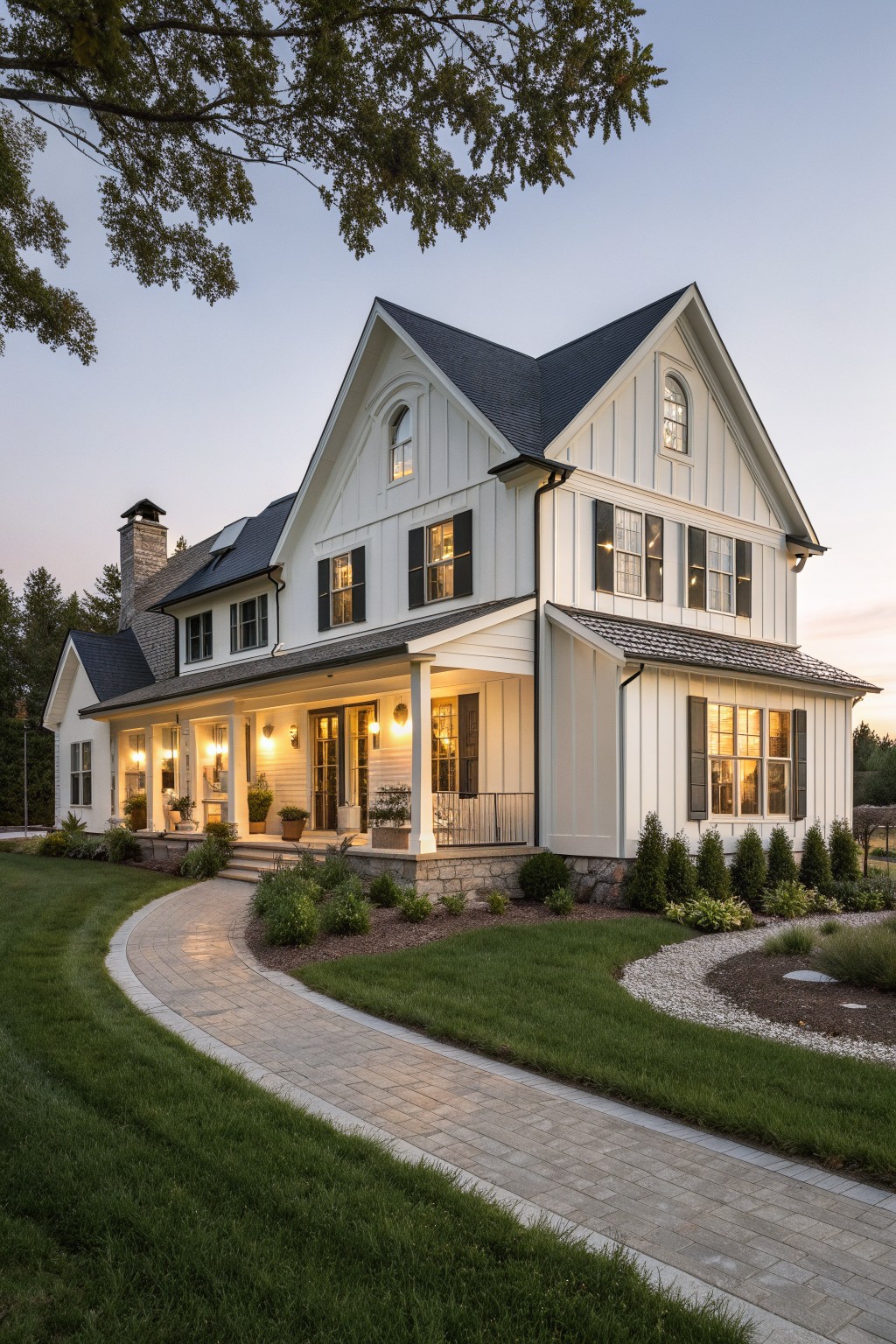
A front porch gives a farmhouse its main point of welcome and helps the whole front feel settled. The simple columns and covered space break up the height of the house without adding extra decoration.
This idea works best on homes with a straightforward roofline and a fairly flat front. Keep the porch depth around eight feet so there is room for seating, and match the column color to the trim so the look stays clean rather than busy.
Mixing Stone With Wood Siding
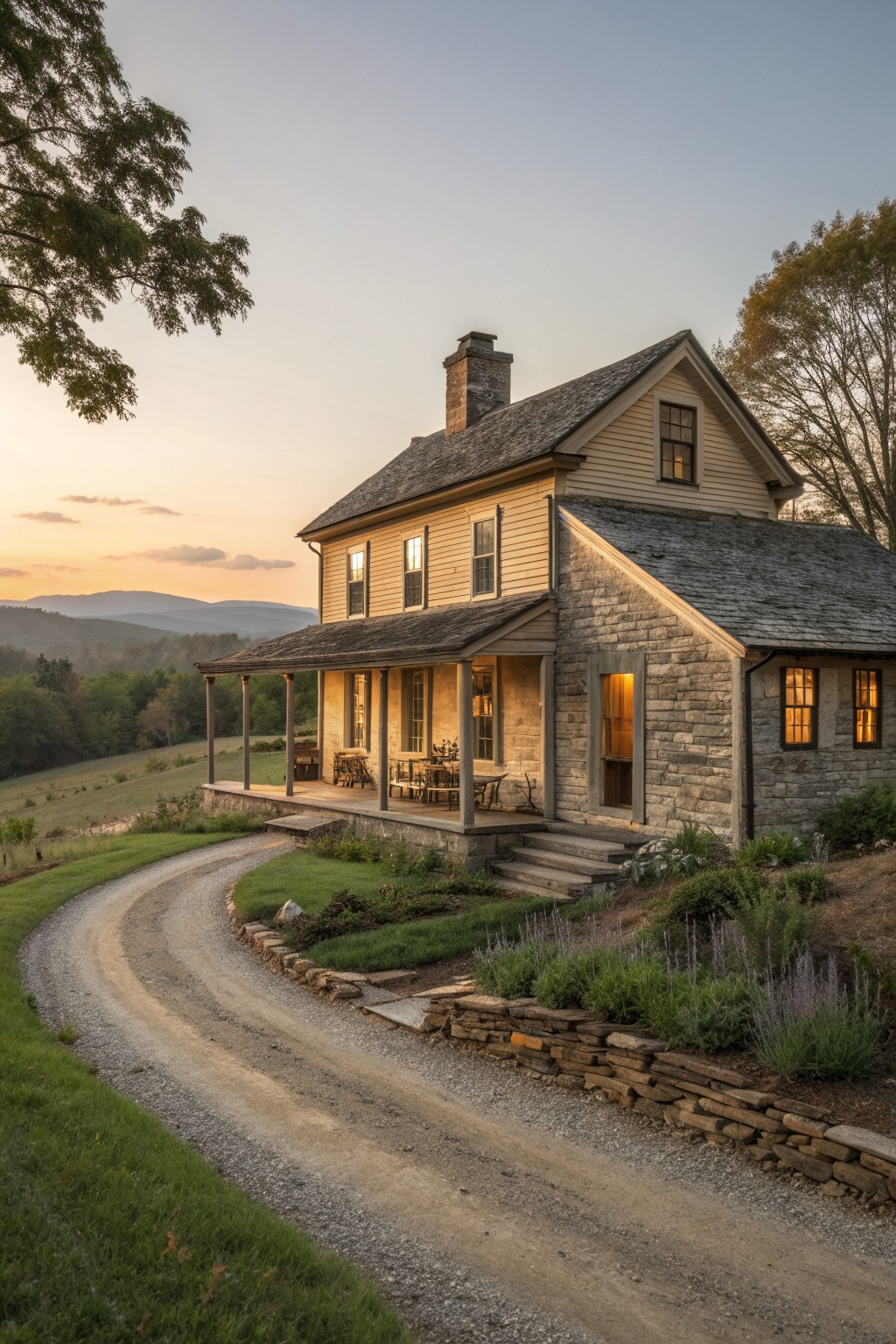
Many traditional farmhouses use stone on the lower walls and wood siding above it. This mix gives the house a grounded look while keeping the upper part lighter and simpler to maintain. The stone handles the base where moisture and wear are more likely.
It works best on homes that sit on a slight slope or near open land. Match the stone color to local rock if possible and keep the siding in a soft tone so the two materials do not compete. Avoid using too much stone or the house can start to feel heavy.
Create an Outdoor Dining Spot With a Covered Porch
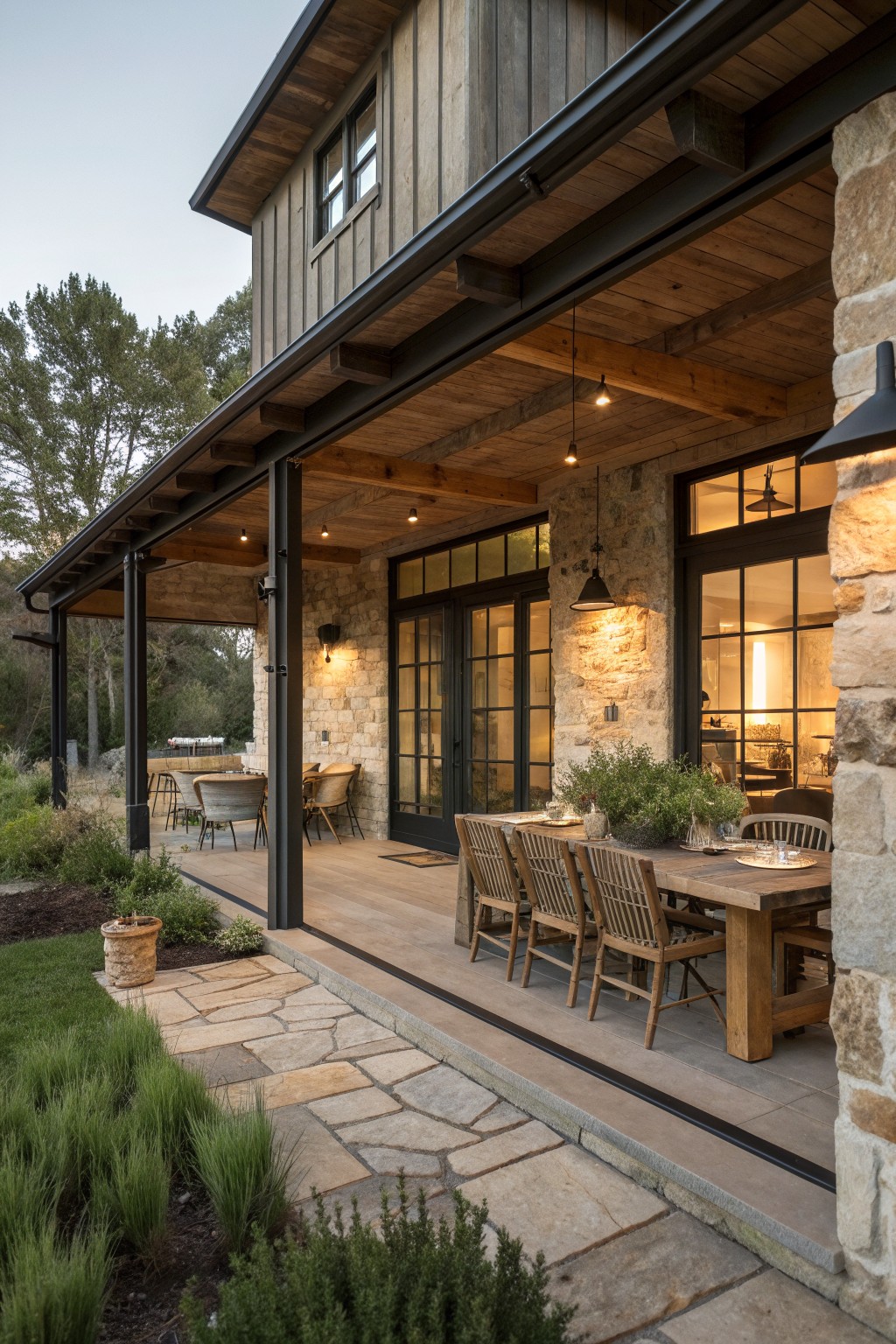
A covered porch with a full dining table gives a farmhouse an easy way to eat outside without fighting the weather. The roof and open sides keep the space comfortable while still feeling connected to the yard.
This works best on homes that already use wood and stone on the exterior. Match the table and chairs to those materials so the porch looks like it belongs rather than an add on.
Barn Doors On Farmhouse Exteriors
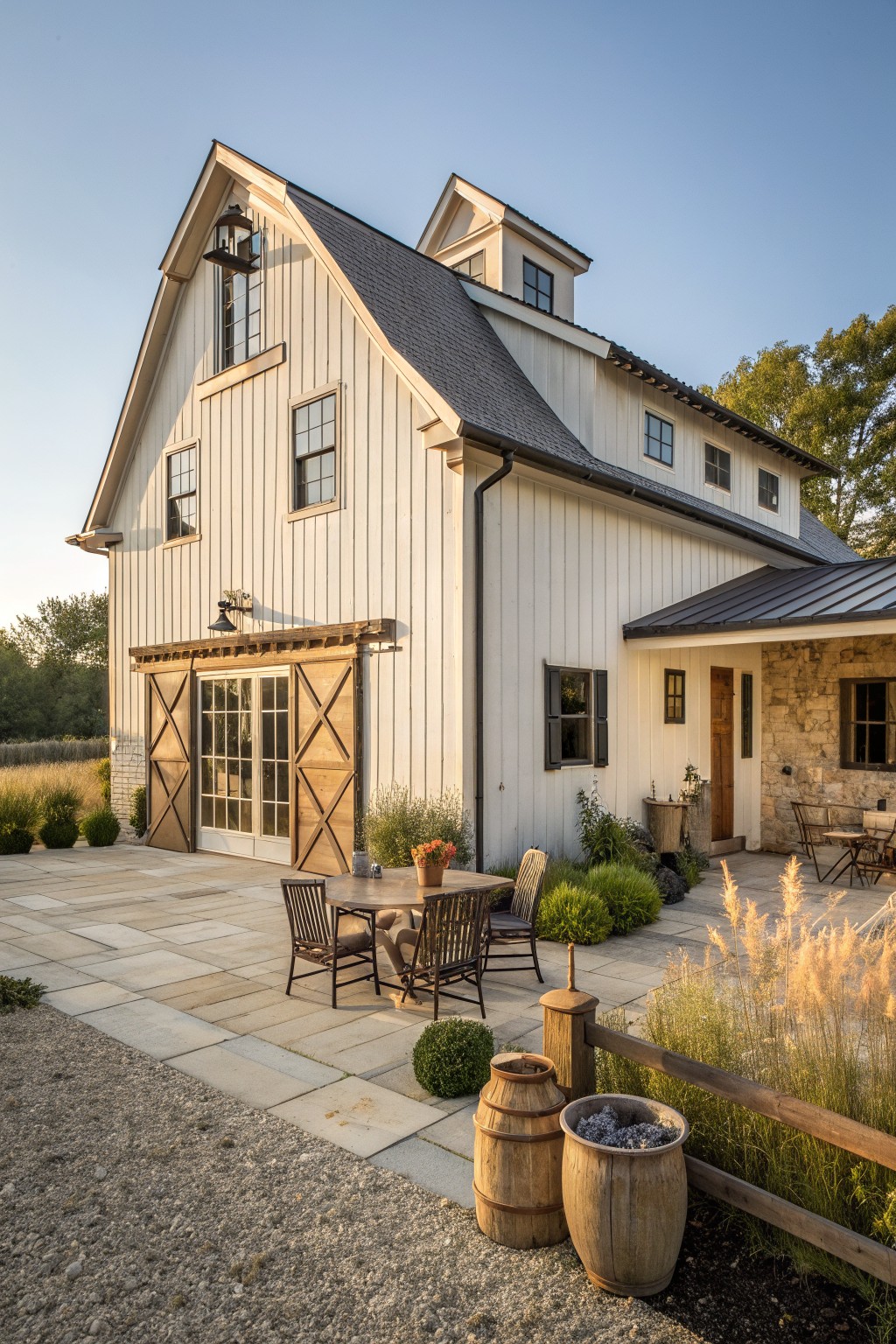
Barn doors bring a straightforward rustic quality to a house exterior. They stand out against simple white siding and give the front a working farm feel that still looks clean and put together.
They suit traditional country homes that already lean toward larger scale or gabled shapes. Keep the doors in natural wood tones and make sure they sit on a flat wall section so they do not fight with windows or rooflines.
A Wood Door on White Siding
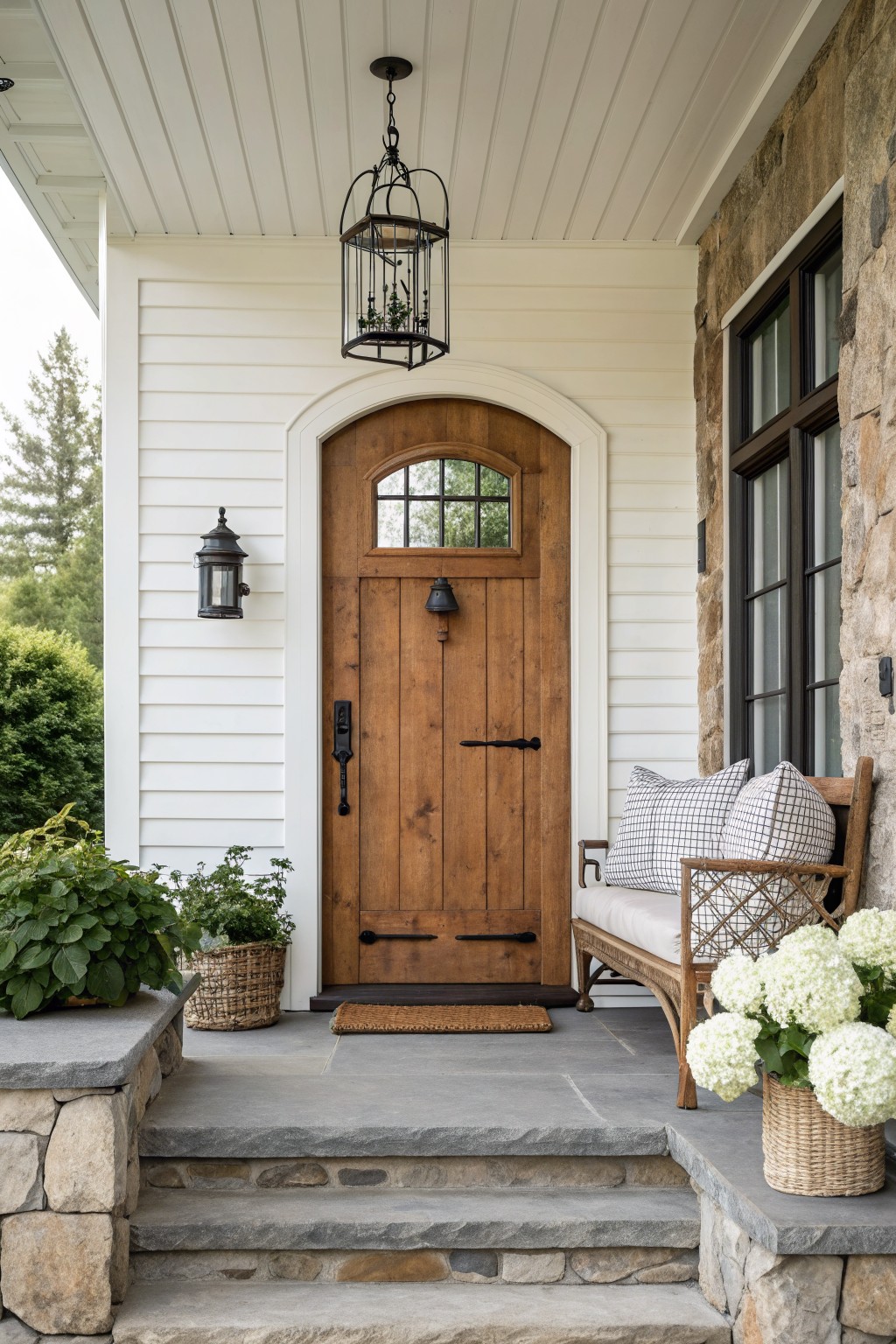
A solid wood door stands out nicely against plain white siding and gives the whole front a warmer, more grounded look. The natural grain and simple shape add character without needing much else around it.
This approach works well on traditional country homes where the siding stays light and clean. Keep hardware dark and minimal so the wood stays the focus.
Barn Style Garage Doors
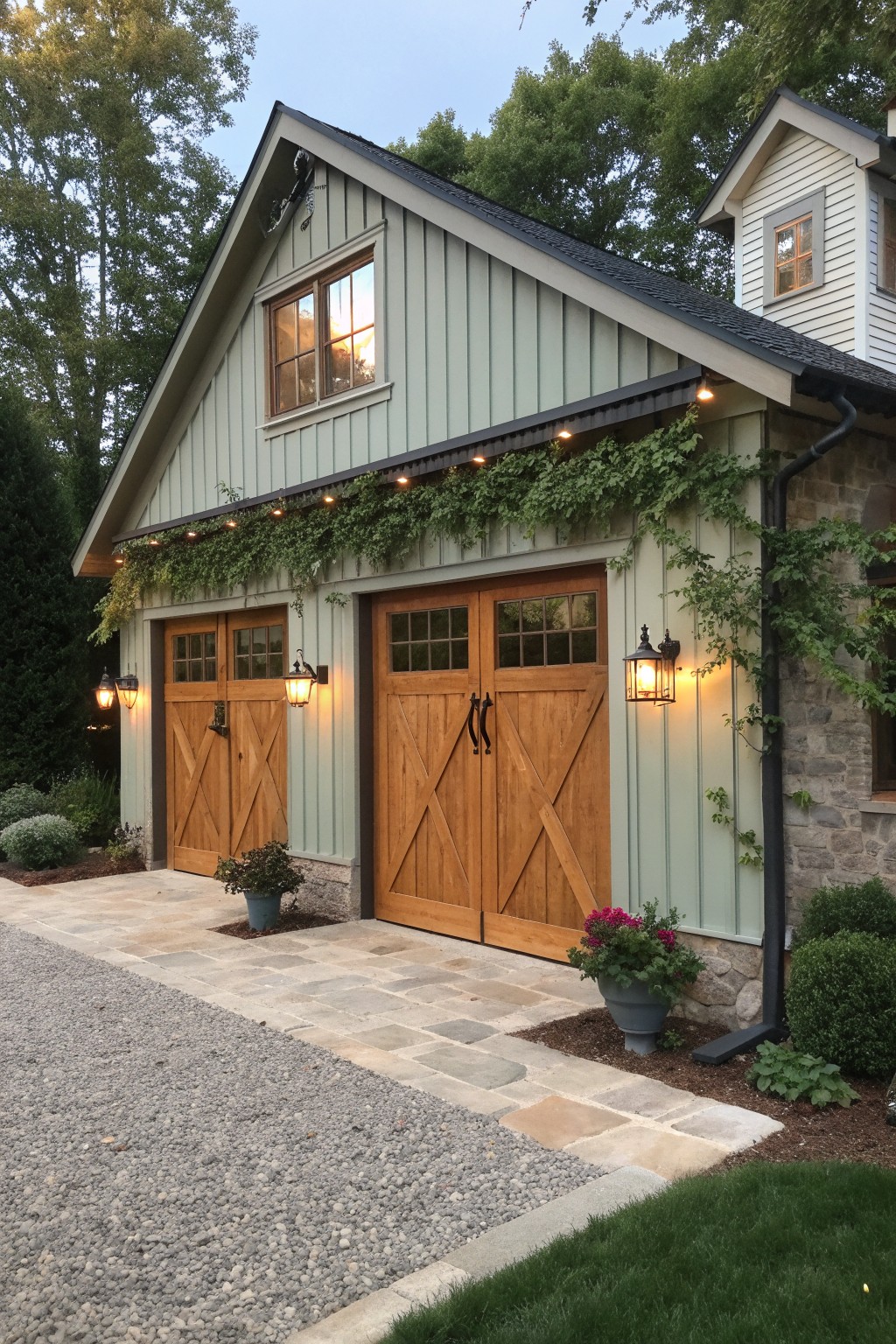
Wood barn style doors give a garage a more integrated look on a farmhouse exterior. They add texture and warmth that painted metal doors usually lack, and they help the whole front feel consistent instead of split between living space and storage.
This approach works best on homes with wood siding or stone accents where you want the garage to feel like part of the original structure. Keep the hardware simple and dark so it reads as functional rather than decorative, and make sure the doors are scaled to the rest of the facade.
Black Shutters Against Light Siding
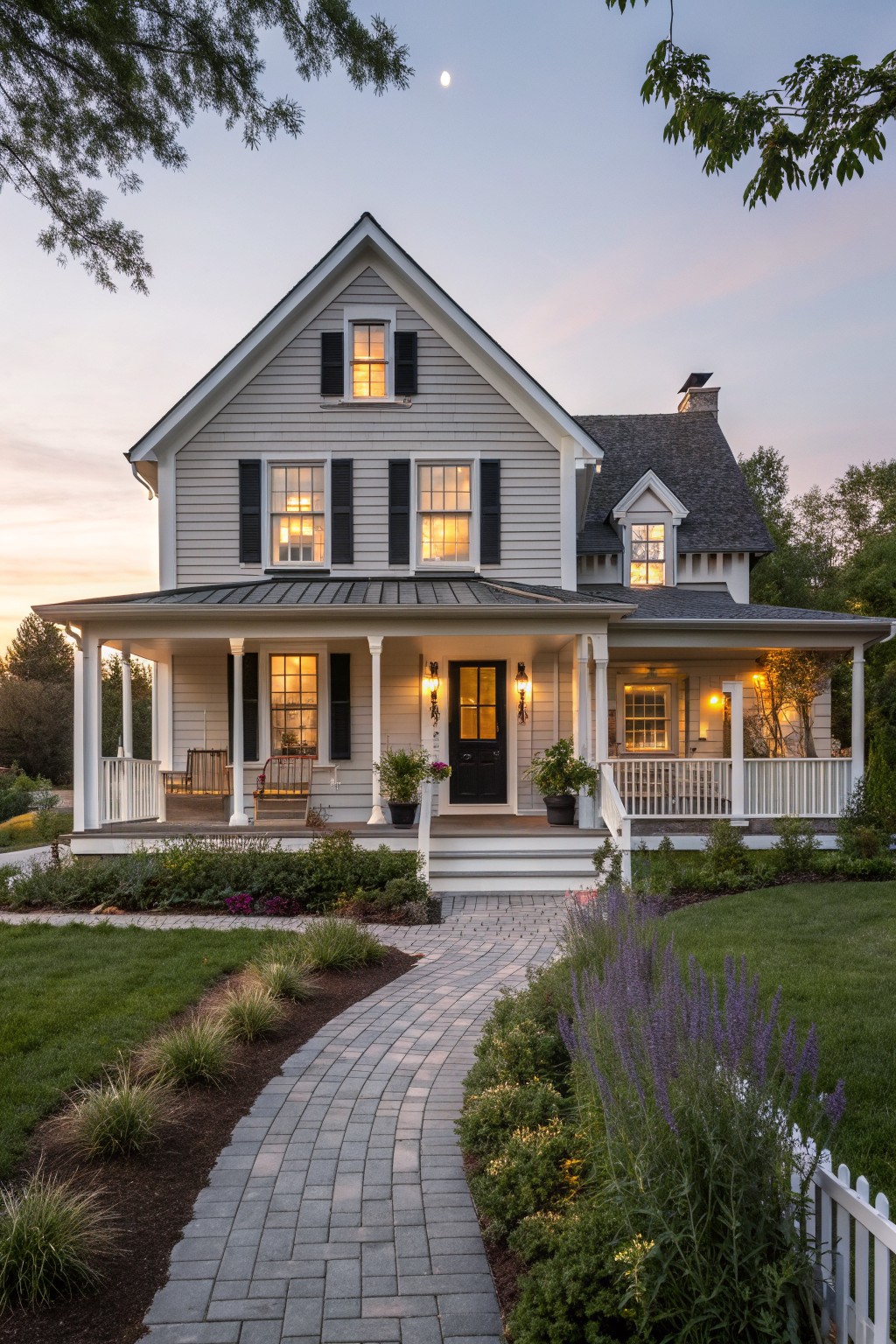
Black shutters give a farmhouse a sharper, more traditional look when they sit against light siding. The contrast pulls the windows forward and keeps the whole front from feeling too plain. It works especially well on simple gable fronts where you want a bit of order without adding extra trim.
This approach suits older homes or new builds that aim for that country style. Stick with matte black and make sure the shutters sit right at the window edges so they look like they belong there. Avoid going too wide or too narrow, or the balance shifts.
Many farmhouses gain a lot from placing a fireplace directly on the porch. It turns the space into something usable through cooler months instead of sitting empty once the sun goes down.
This setup works best on homes with some stone already on the exterior so the new fireplace feels like part of the original build. Keep the seating close but leave clear paths across the porch so the area stays easy to walk through.
Timber Entry Porches For Added Character
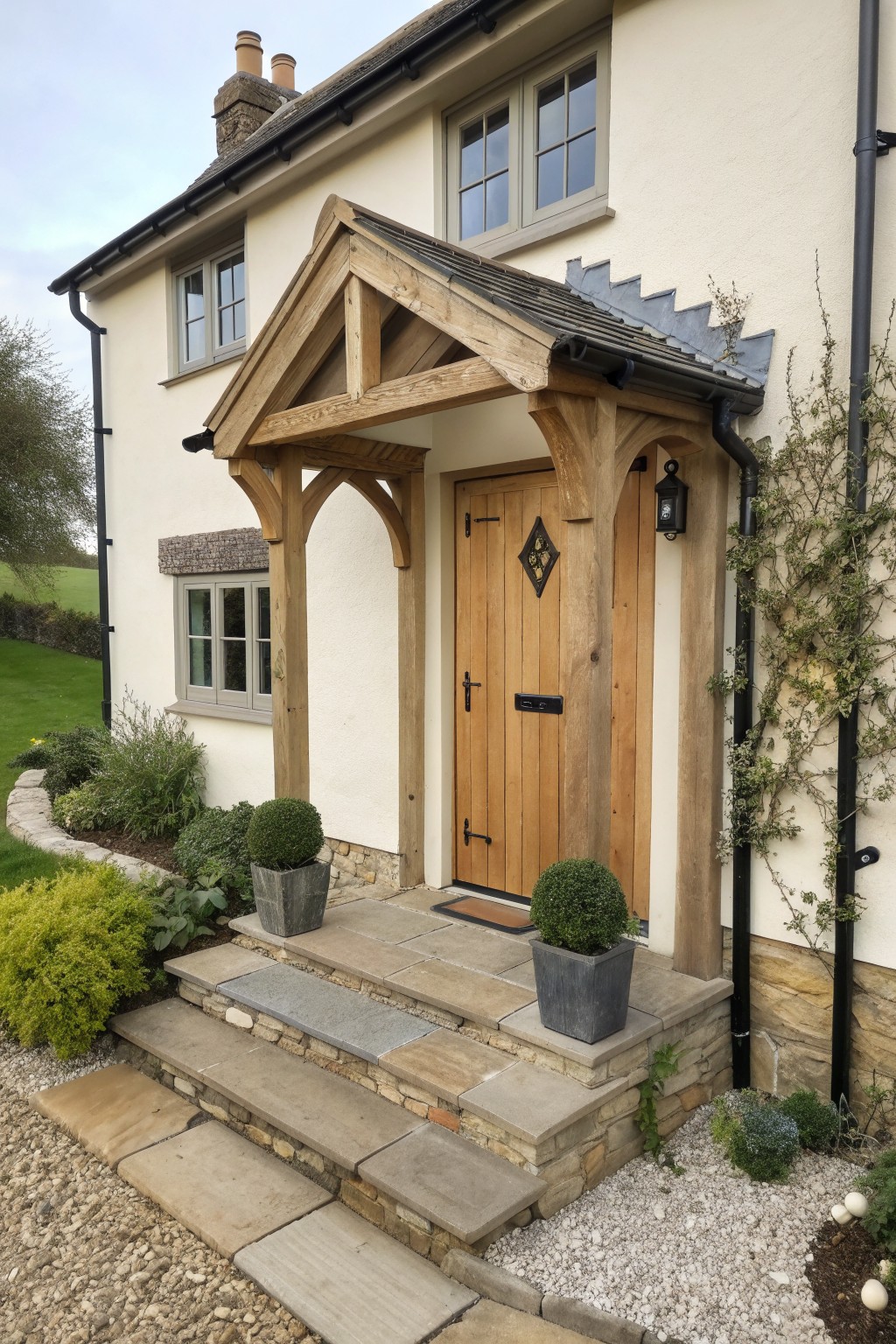
A simple timber structure over the front door gives a farmhouse that solid, grounded feel without much fuss. The wood brings warmth and texture against plain walls, and the gabled shape helps the entry stand out in a natural way. It works especially well on homes with clean lines where you want a bit more presence at the front.
This kind of porch suits traditional country homes that already have some stone or render on the facade. Keep the wood fairly natural or lightly weathered so it blends over time, and make sure the scale stays modest rather than overpowering the door itself.
Add a Fire Pit to Your Patio Area
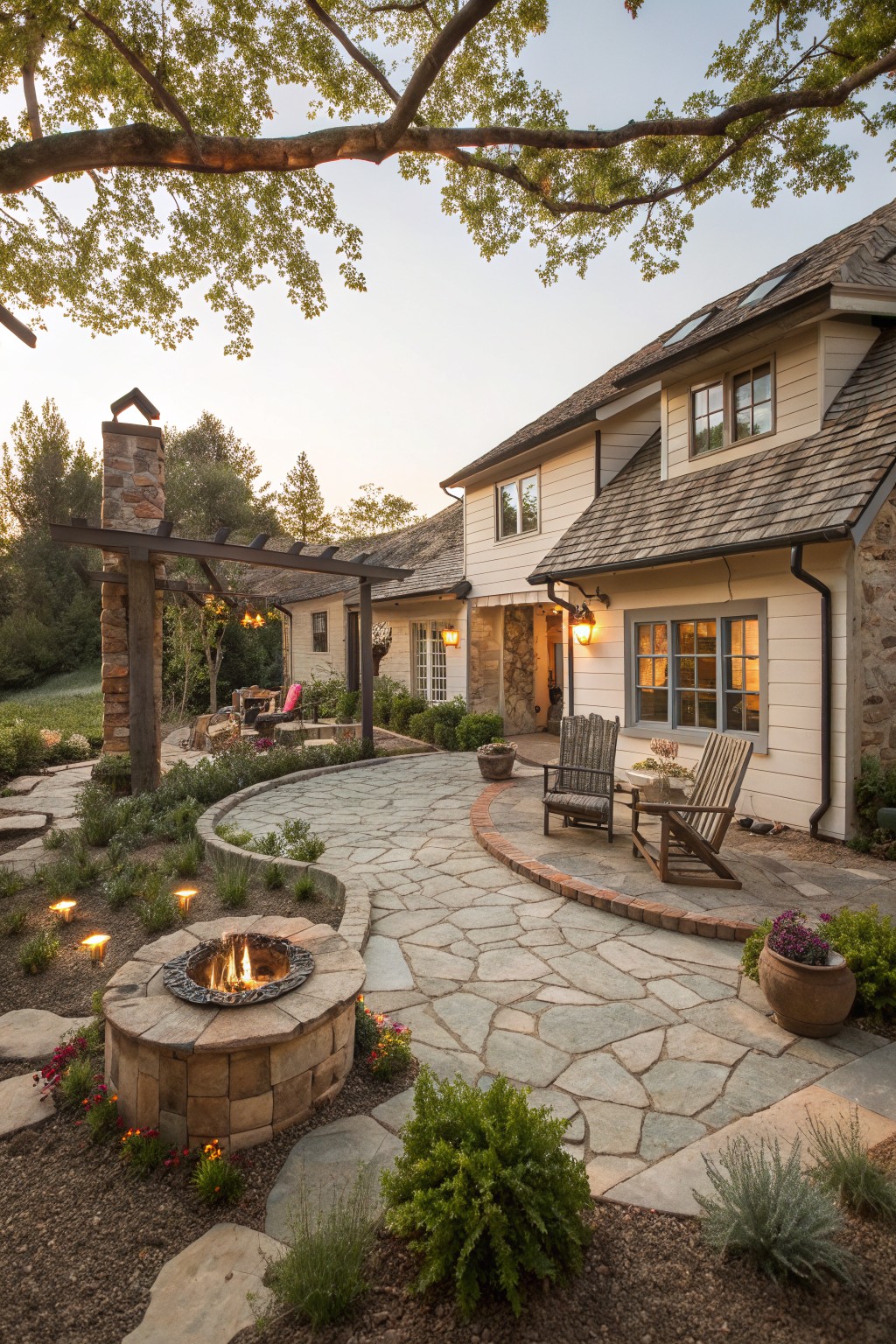
A fire pit gives the outdoor space a clear purpose even after the sun goes down. It turns a large stone patio into a place people actually want to sit and stay, especially on cooler nights.
Keep the pit on a gravel or dirt base just off the main paving so smoke stays away from the seating. This setup suits traditional homes with room to spread out and works best when the pit stays simple and built from the same stone used elsewhere on the property.
Wooden Doors for Stone Farmhouse Entries
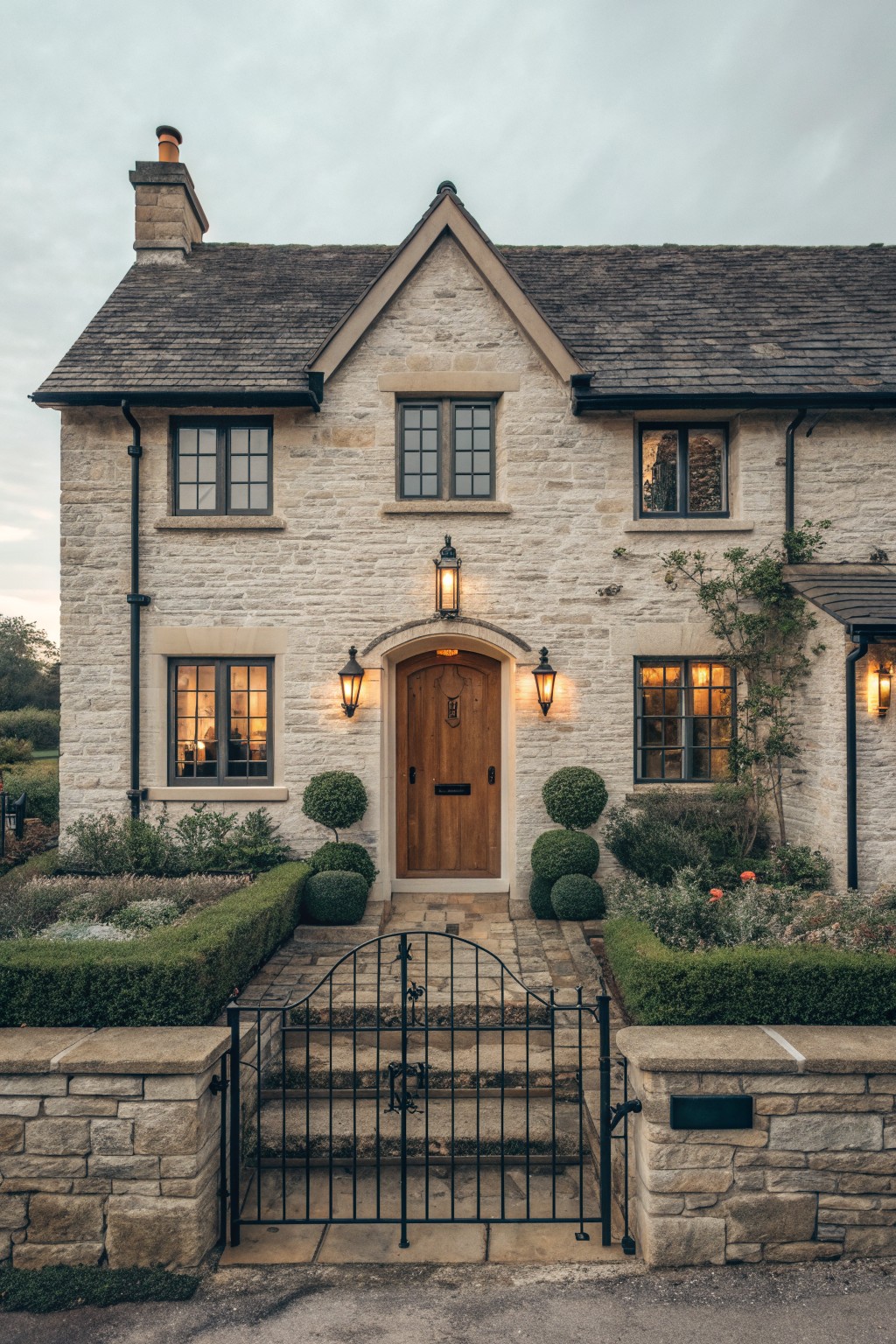
A wooden front door adds a warm touch against a stone exterior. It keeps the look grounded and gives the entry a clear focal point that feels solid rather than stark.
This approach suits traditional country homes where the goal is simple contrast. Pair the door with basic hardware and a pair of lanterns to keep the whole front balanced.
Build a Full-Length Porch Across the Front
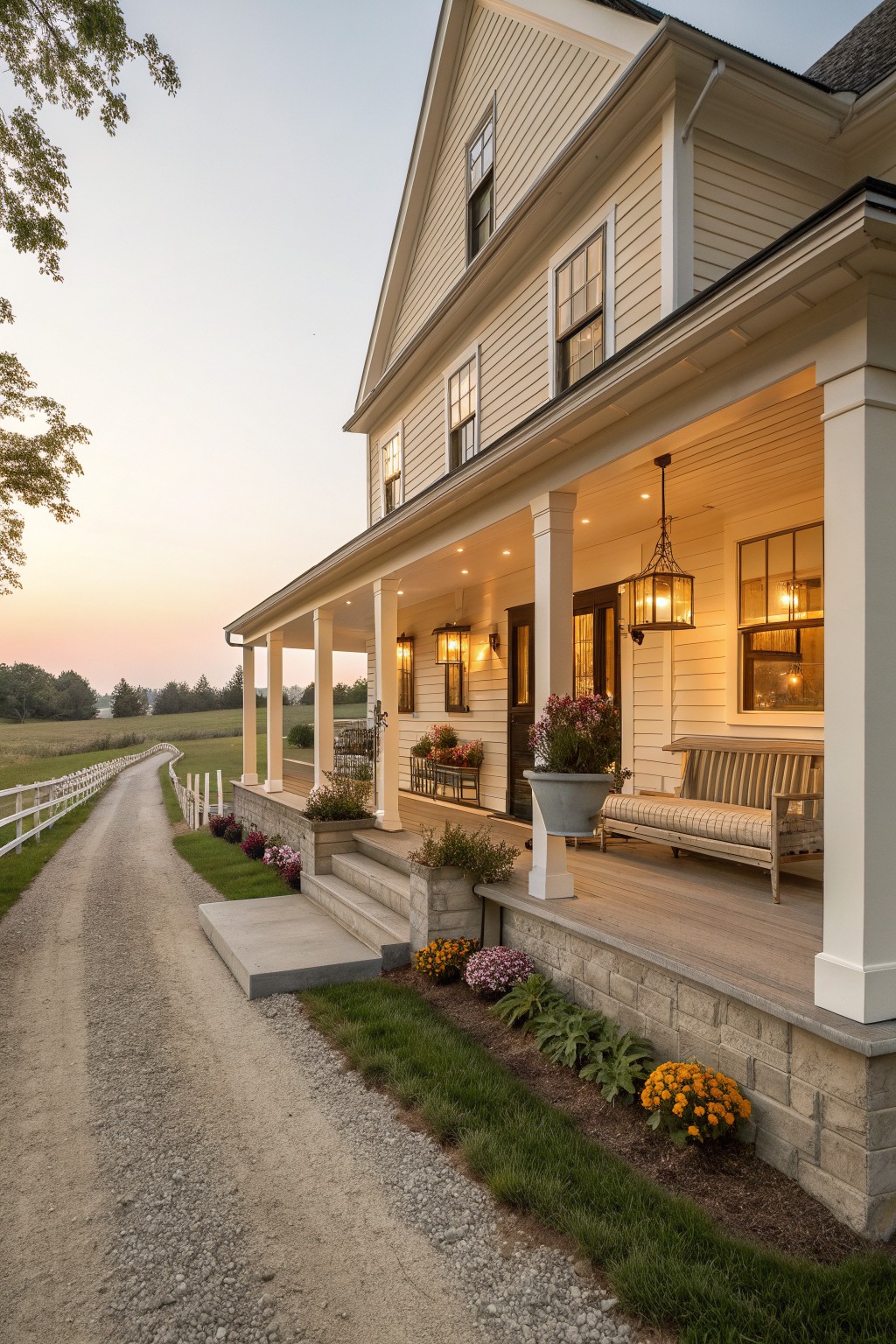
A long porch changes how a farmhouse sits on the land. It pulls the windows and doors together under one line and gives the whole front a settled look instead of a flat wall with openings.
This setup works well on traditional country homes that already have some height to the foundation. Keep the columns plain, add a stone base where the ground meets the house, and let the porch boards run straight without extra trim. The result feels useful year-round and keeps the exterior simple.
Timber Framed Covered Entries
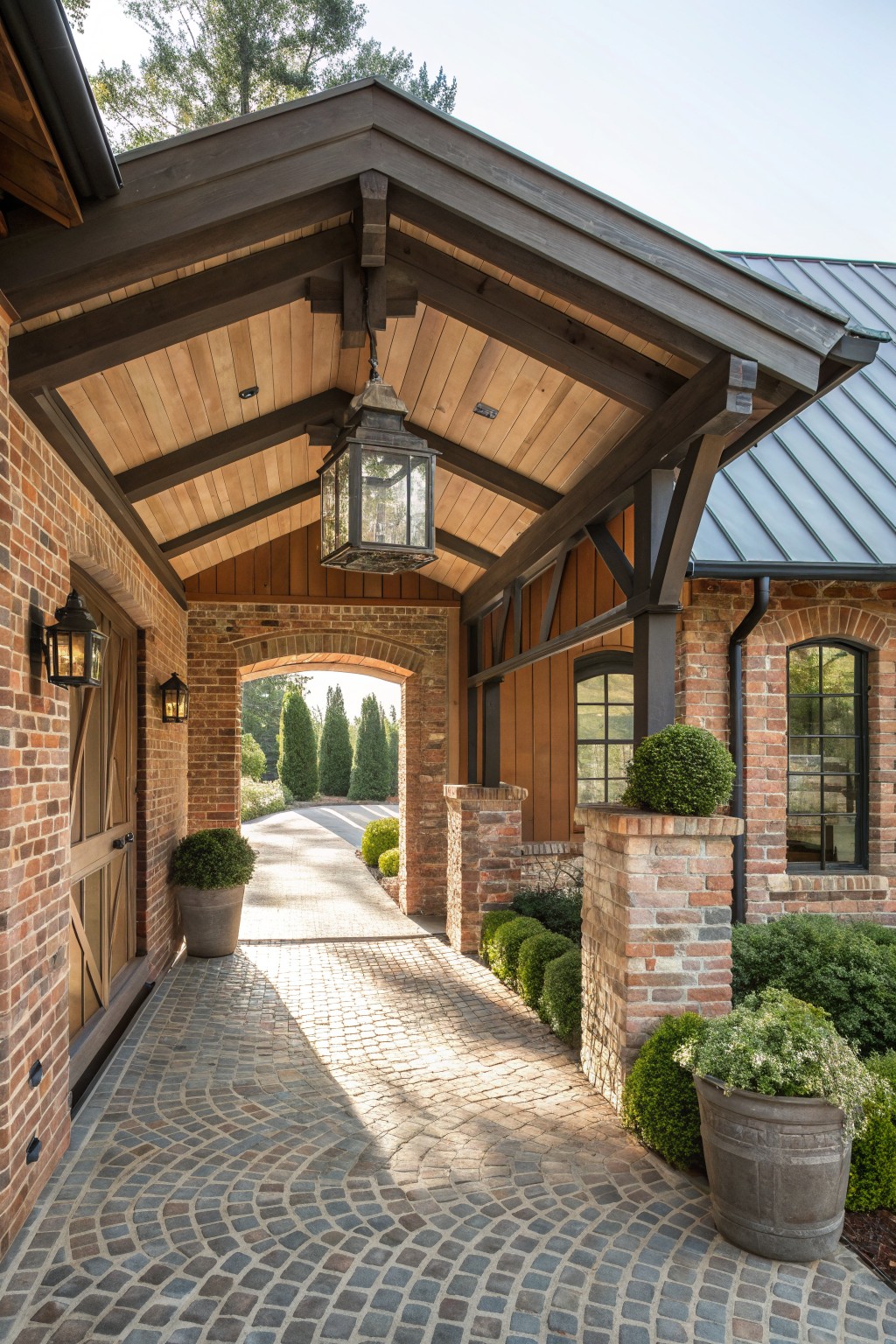
A covered entry built with heavy timber beams gives a farmhouse that solid, settled look without needing a full wraparound porch. The wood brings warmth and structure against brick walls, and it creates a clear sense of arrival that feels practical for country homes.
This approach works best on homes that already use brick or stone, since the contrast keeps the wood from feeling too heavy. Use simple, straight beams rather than overly ornate details, and make sure the roof pitch matches the main house so everything stays balanced.
Curved Stone Paths for Farmhouse Entries
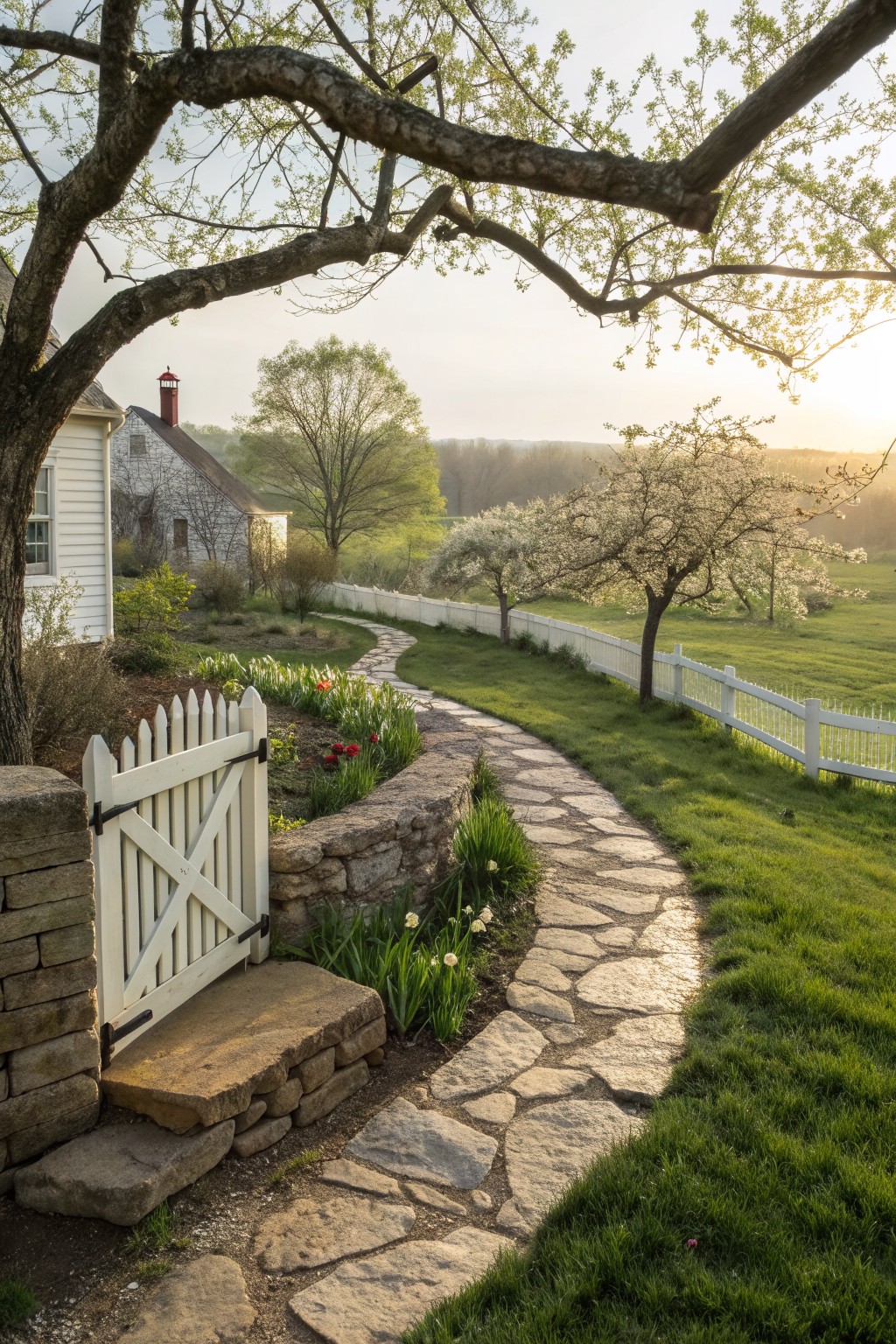
A winding stone path gives the front approach a relaxed, lived-in feel that fits right in with traditional country homes. It softens the line between the house and the surrounding land instead of cutting a straight line that can feel too formal.
Use irregular flagstone or similar natural material and let the path curve gently around garden beds. This works especially well on properties with a bit of slope or open lawn, since the bends keep the walk interesting without needing extra ornament.
Mixing Stone And Wood On The Exterior
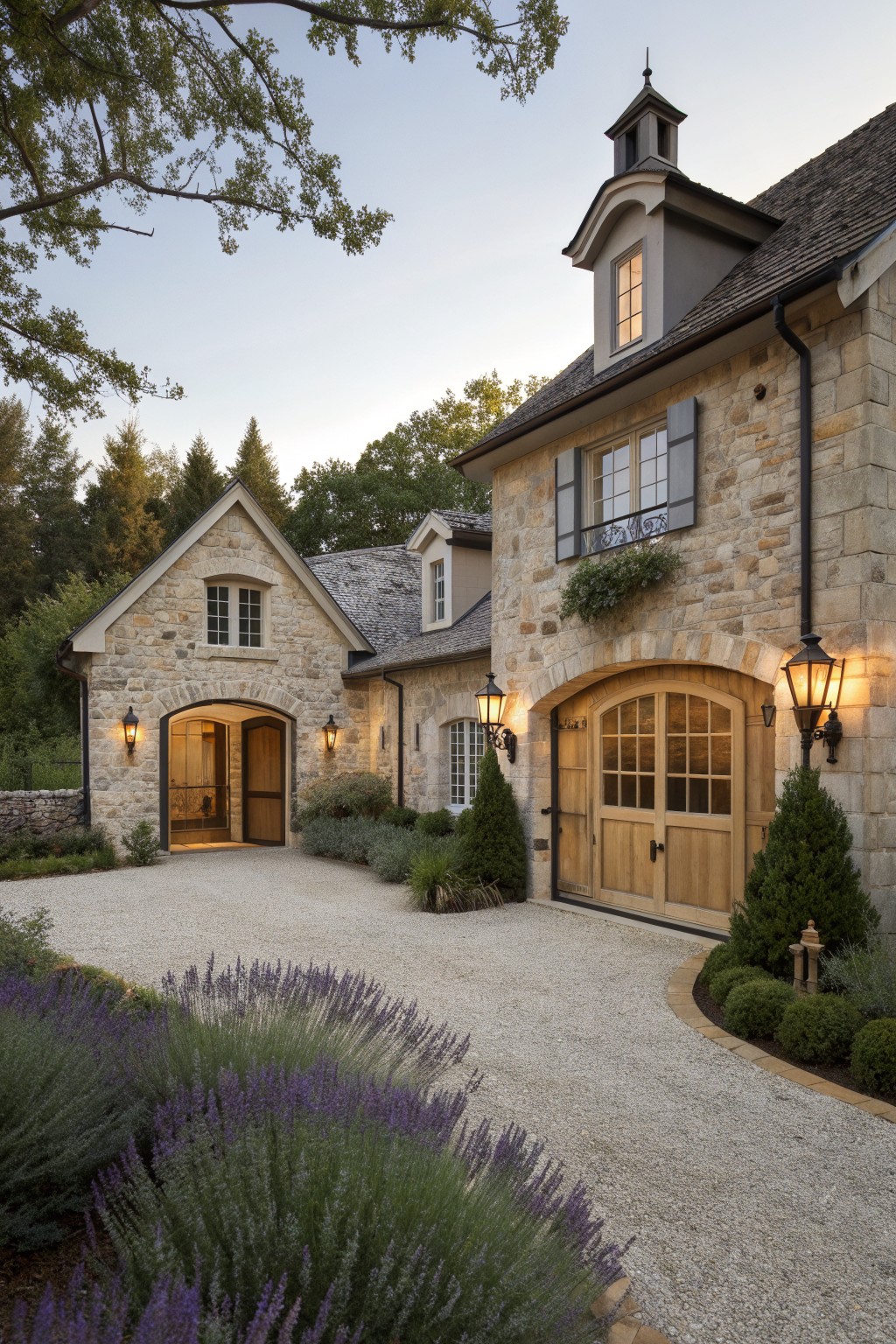
Stone paired with wood gives a farmhouse exterior real staying power. The heavier stone base feels grounded while the wood doors and trim keep things from looking too heavy or cold.
This approach works best on homes with simple rooflines and a few well-placed arches or openings. Keep the wood in a warm natural tone and let the stone show some color variation so the whole front stays interesting without extra decoration.
Frequently Asked Questions
Q: Can these ideas work if my house sits in a newer neighborhood? A: Focus on adding board and batten siding or wood shutters to shift the look. A simple metal accent over the entry helps too. Keep any new landscaping loose instead of formal.
Q: How do I pick windows that match the rustic style? A: Go with double hung styles that have divided panes. Paint the frames a dark color to stand out against lighter walls. This one swap brings in plenty of character.
Q: What about adding a fence around the yard? A: A white picket fence frames the house from the street. Match its height to your home so it feels balanced.
