

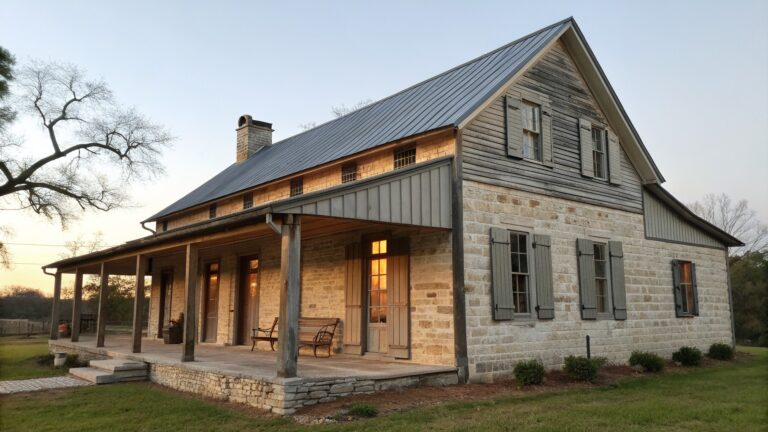
I’ve always paid attention to how certain farmhouses hold onto their original siding and trim even after decades of weather.
When the materials match the roof pitch and window proportions, the whole front feels settled rather than added on later.
Details matter here.
I remember walking past one place where the simple choice of aged hardware on the door changed how the entry read from the road.
A couple of these ideas seem worth testing on an older house if the goal is to keep the character without forcing anything new.
Mix Stone And Wood Siding
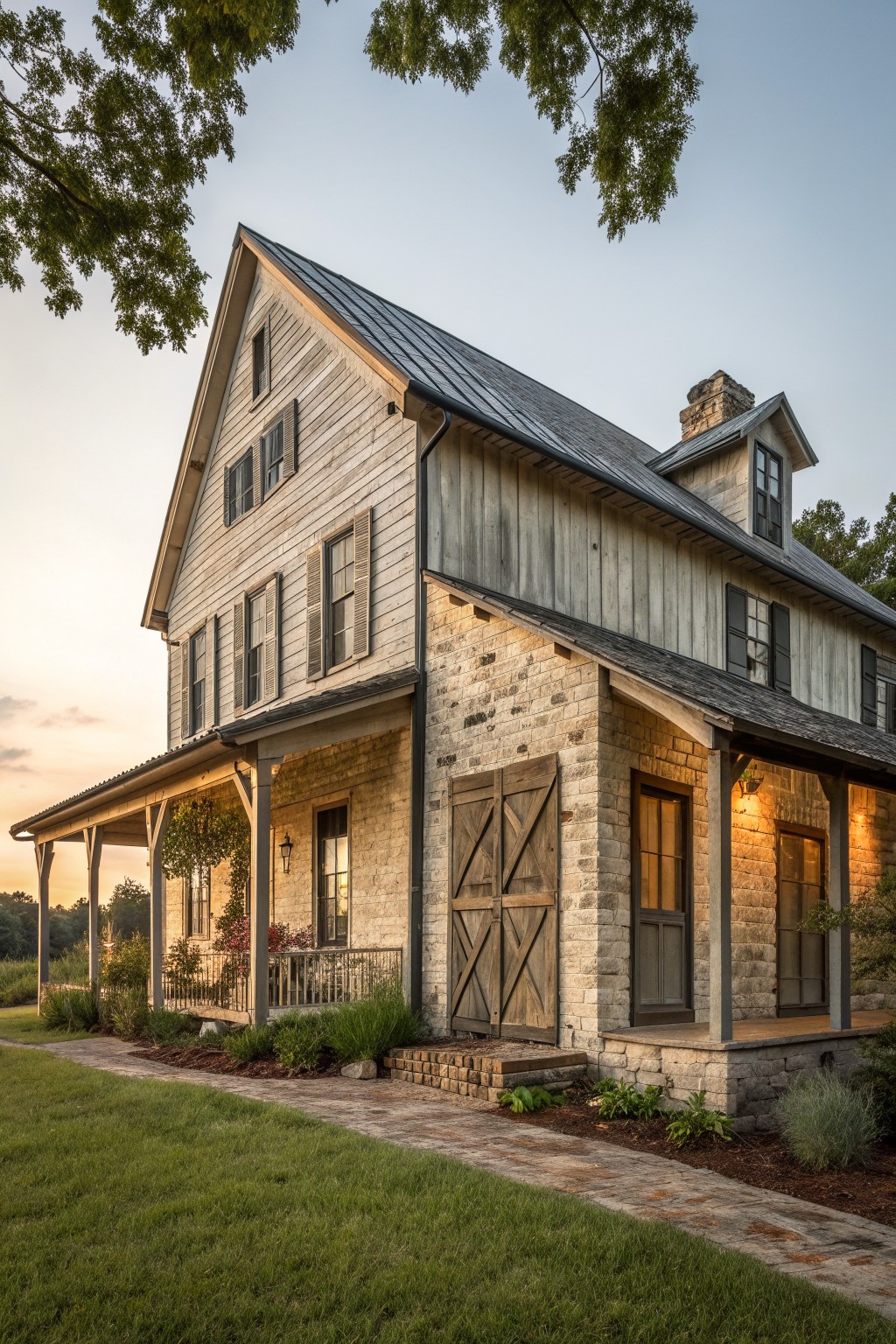
Stone on the lower walls paired with wood siding above gives a farmhouse that grounded, settled look. The contrast keeps the house from feeling too light or too heavy, and it works especially well when the stone comes from the same region as the home. This approach shows up often on older buildings that were added to over time.
It suits homes with a simple roofline and a front porch that runs across part of the facade. Keep the wood painted or whitewashed rather than stained dark, and let the stone stay natural so the two materials balance each other without competing.
A Gabled Porch Over the Front Door
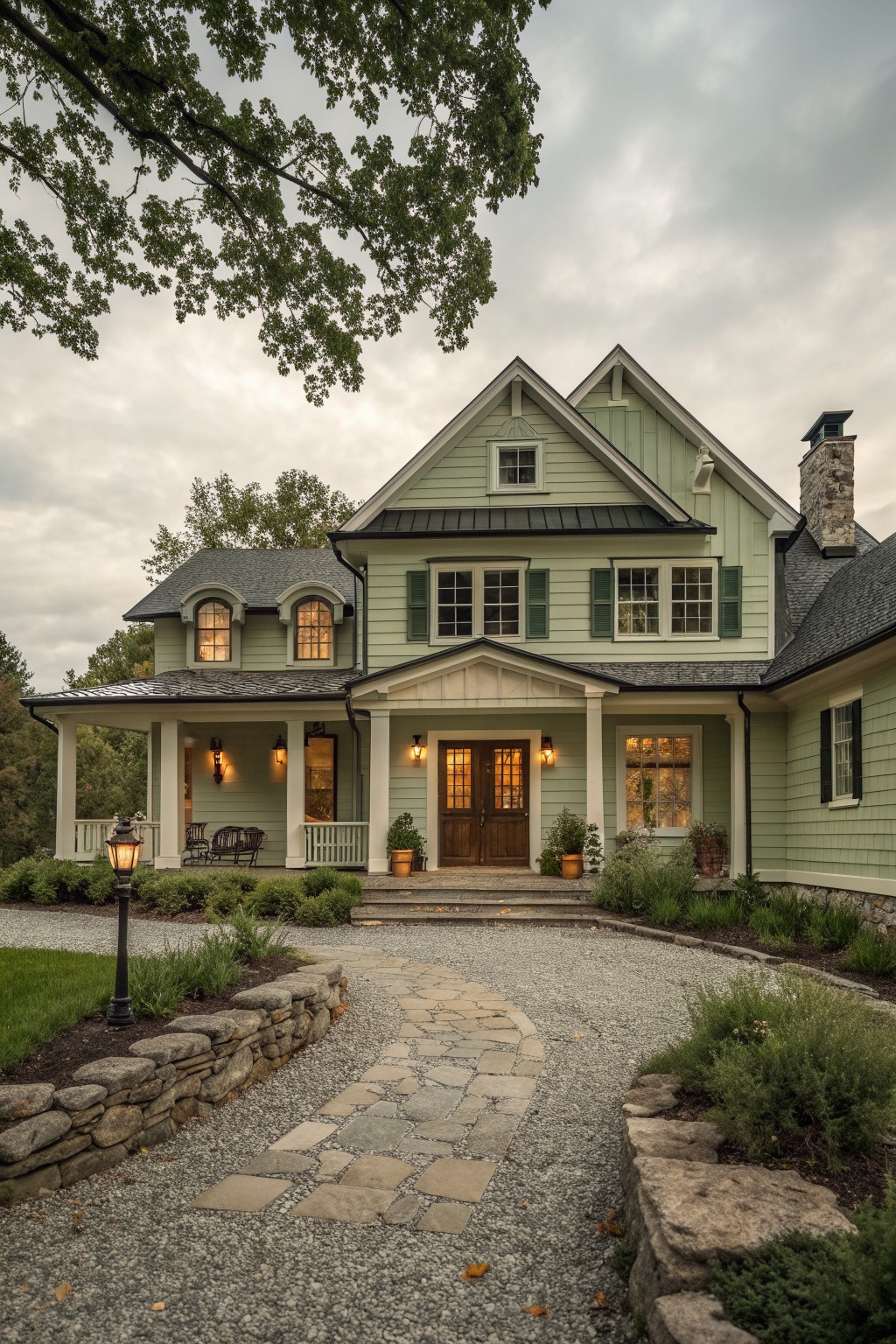
A covered porch centered on the main doors gives a farmhouse that settled, old-world look without much extra effort. It breaks up the wall, adds a bit of shelter, and makes the entry feel like the natural focus of the house. The simple gable above the porch keeps the roofline interesting while staying true to classic proportions.
This approach works best on homes with a fairly balanced window layout and a front that faces the road or driveway. Use it when you want the entry to stand out but still feel part of the whole structure. Keep the posts plain, the roof pitch moderate, and the doors substantial so the porch reads as a natural extension rather than an add-on.
Brick Arches Over Doorways
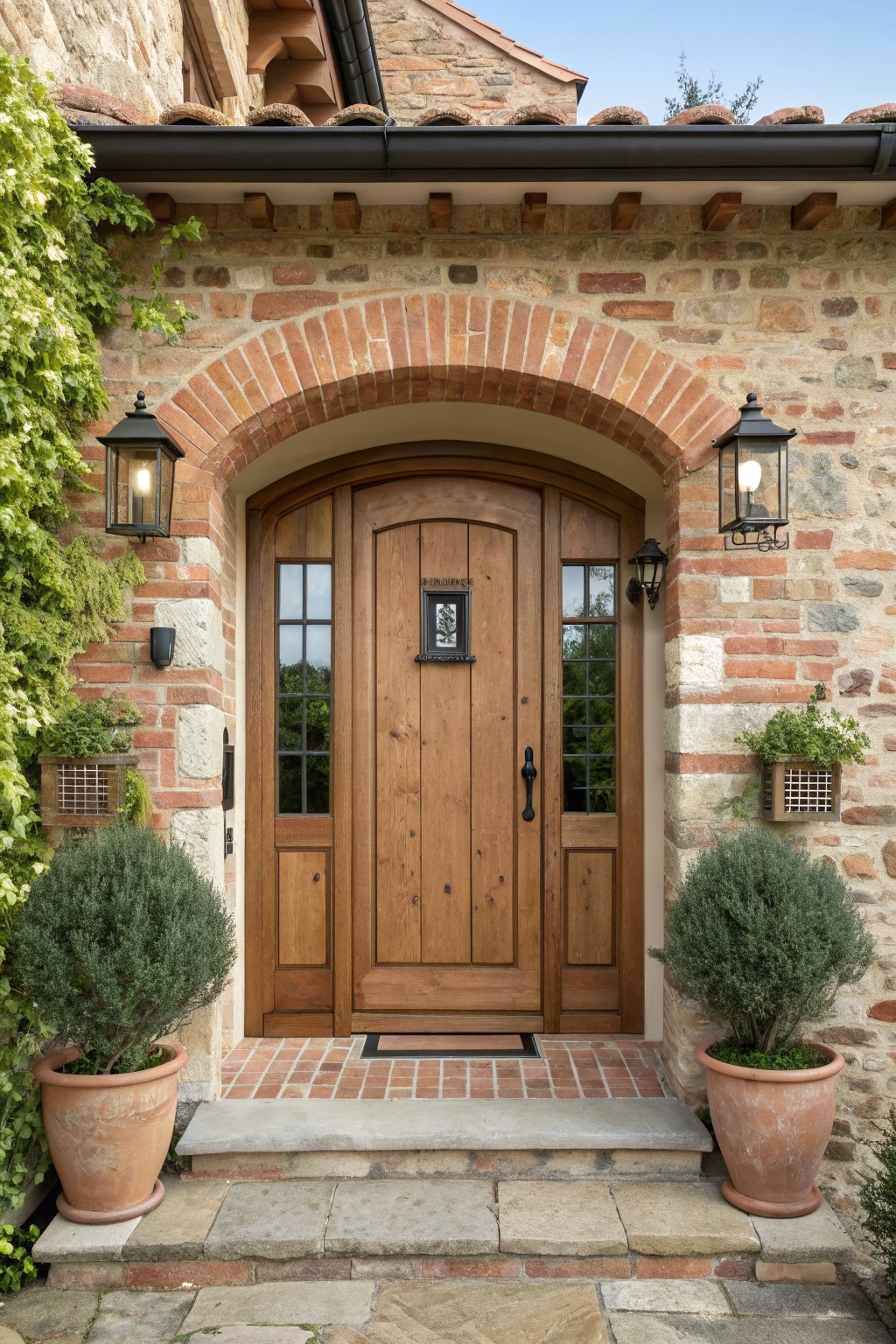
A brick arch over the front door gives the entry a sturdy, settled look that suits rustic farmhouses. It frames the opening cleanly and adds texture through the contrast of brick against stone without extra trim or ornament. The curve softens the overall mass while still feeling practical and built to last.
This detail works best on homes with solid wall depth and simple door styles. Keep the arch proportions modest so it highlights the door rather than competing with it. It pairs naturally with wood doors and minimal hardware, and it holds up well in both restorations and new builds aiming for old character.
Stone Fireplaces on Covered Porches
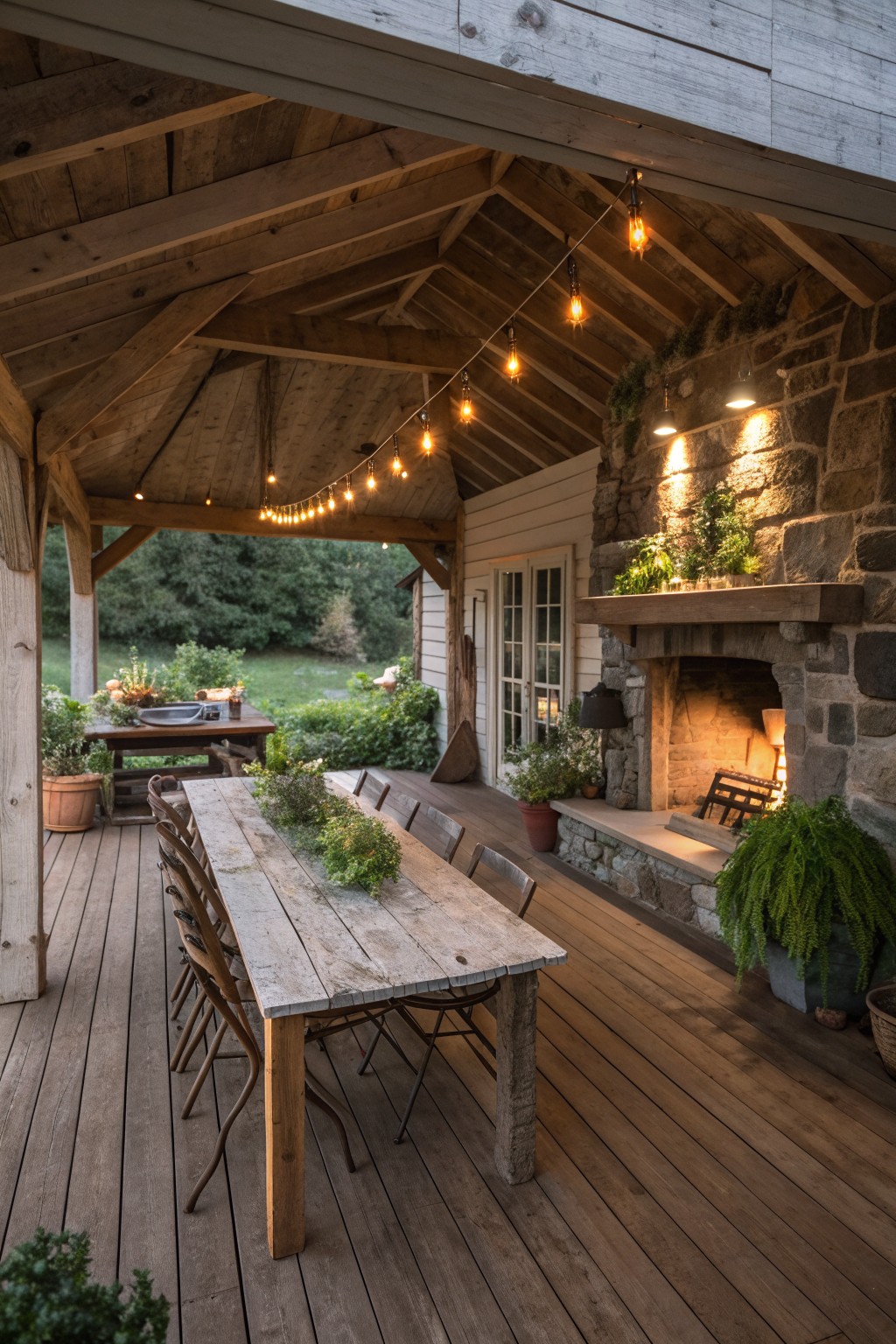
A stone fireplace set into the side of a porch gives the whole space a steady, lived-in feel. It turns an outdoor area into something that can be used through more of the year without needing much extra heat.
This setup works best on older homes or new builds trying to keep a simple farmhouse look. Use the same stone and wood tones already on the house so the fireplace reads as part of the original structure instead of something added later.
Add An Outdoor Dining Area Next To The House
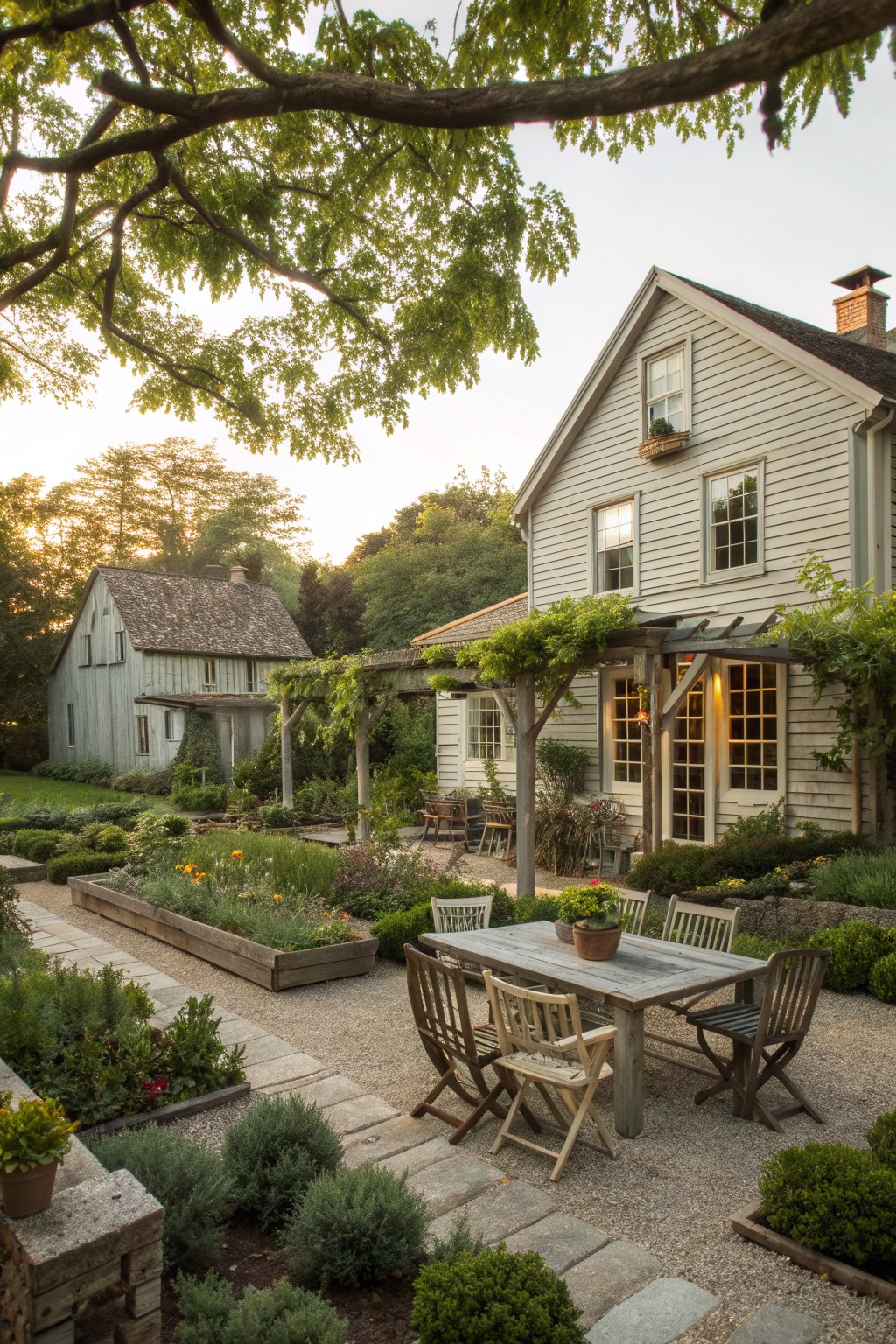
A wooden table with simple chairs set on gravel works well right outside the back door. It gives the garden a clear purpose and turns the space into a place where meals can happen without much extra effort.
This layout suits older farmhouses that already have some planting around the edges. Keep the furniture plain and let vines cover a basic support overhead so the area feels tied to the rest of the yard.
Dark Front Doors on Light Siding
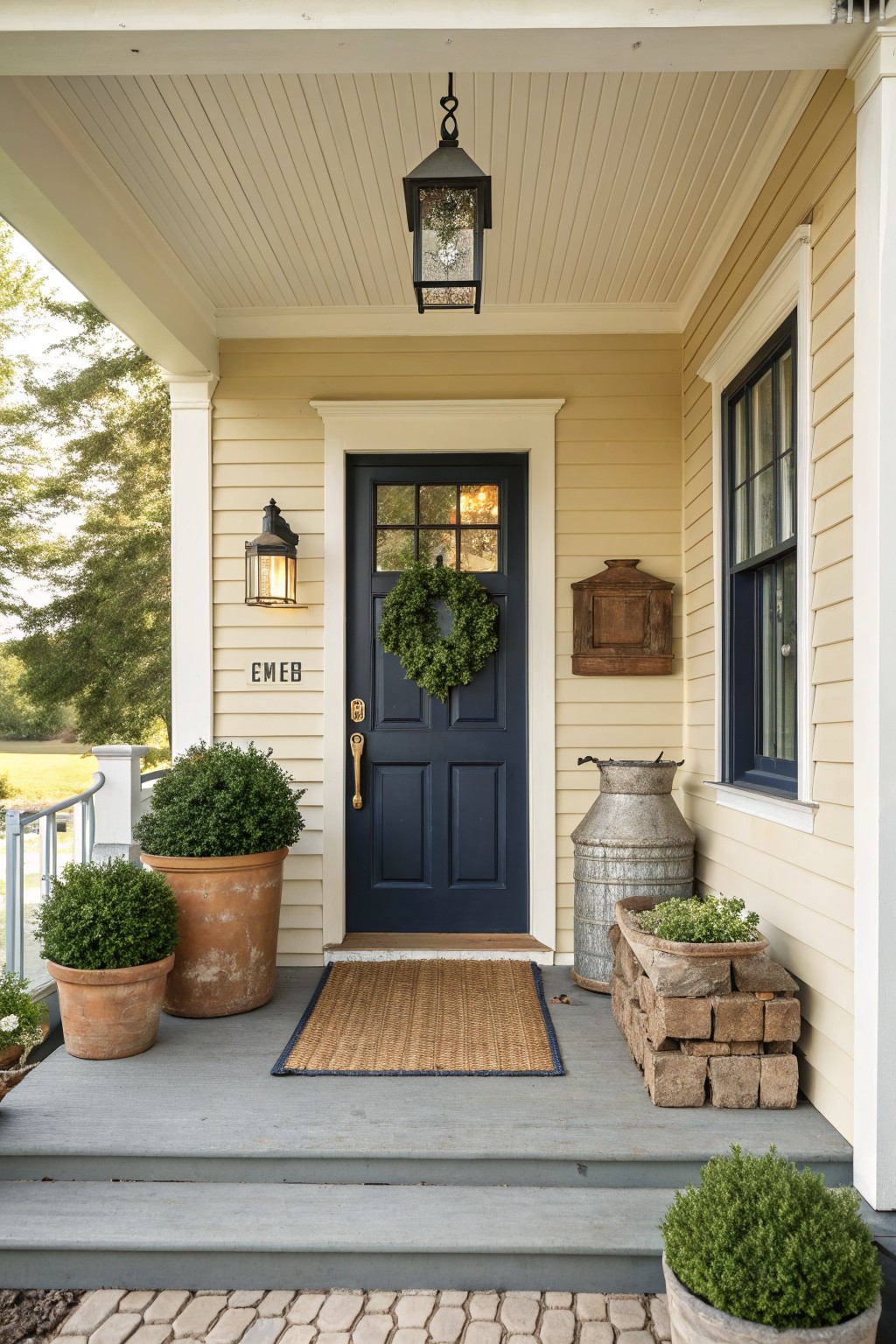
A dark door gives the front of a light-colored house more weight and makes the entry feel intentional. The contrast draws attention right where you want it without adding extra trim or busy details.
This approach suits older farmhouses with simple siding and works best when the rest of the entry stays fairly plain. Stick to one or two natural accents and classic hardware so the door remains the main point.
Let Climbing Vines Soften Brick Walls
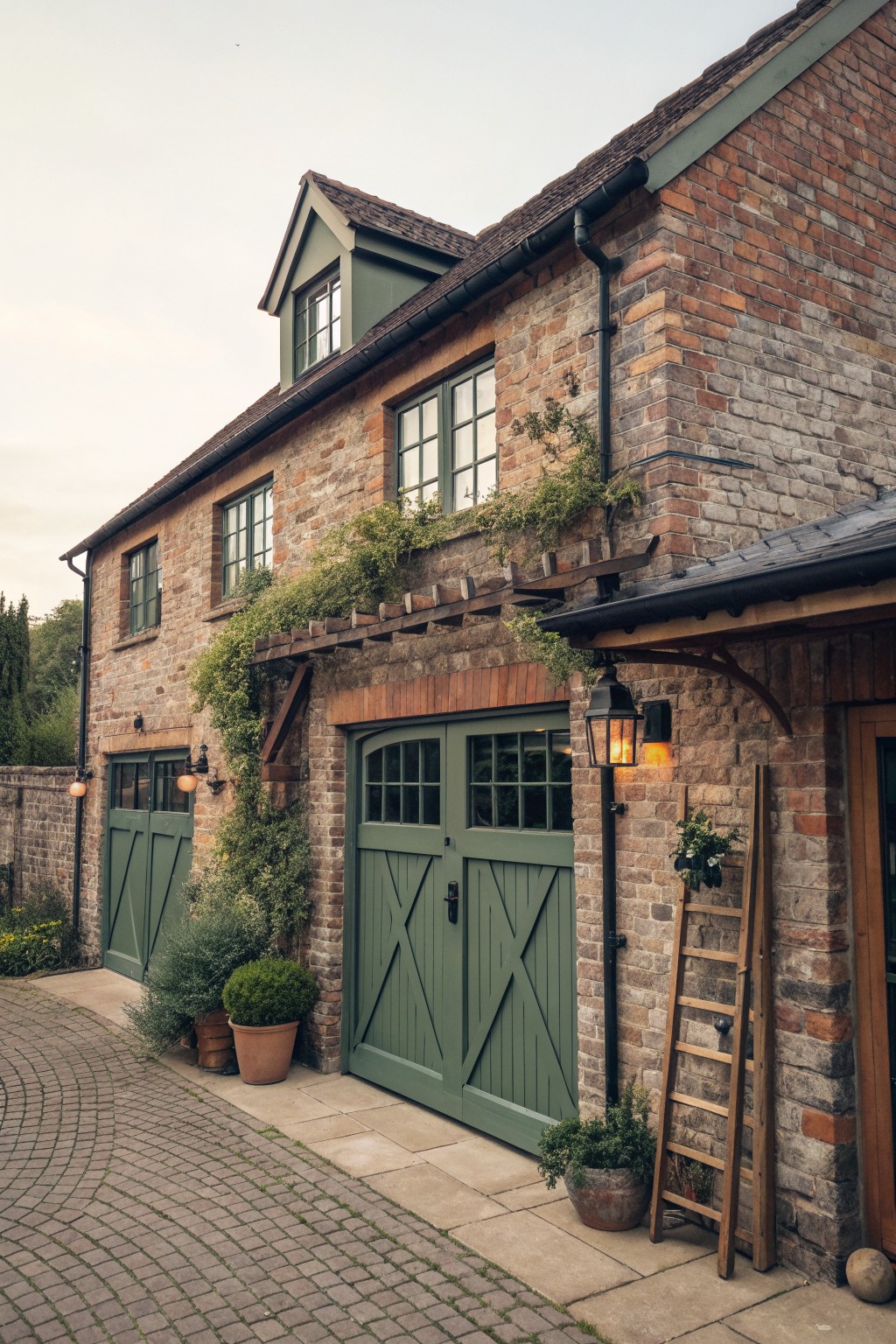
Many old brick farmhouses already have good bones, but they can feel a bit flat without something living against them. Adding climbing vines or trailing plants along the walls breaks up the hard surface and gives the house a settled, long-established look that fits right in with vintage rustic style.
This works especially well on homes with simple painted doors and windows in a single color, like the green ones here. Keep the vines trained along beams or ledges so they do not cover too much of the brick or block light from windows. It suits older homes best and needs only occasional trimming to stay neat.
Raised Beds And Gravel Paths
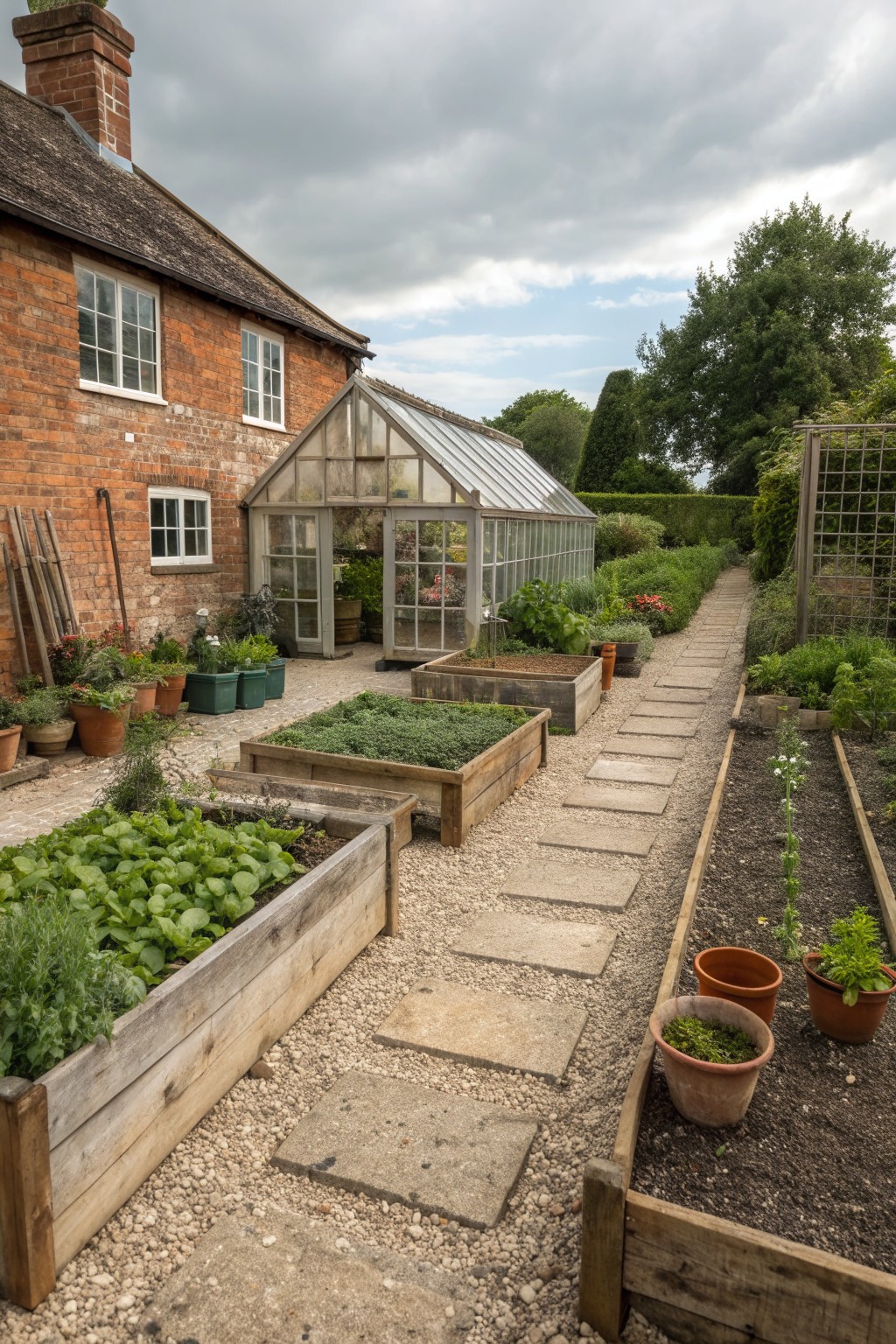
Raised beds paired with gravel paths give a garden clear structure without making it feel too formal. The wood frames keep soil contained and at a comfortable height, while the loose gravel makes walking easy and adds that soft crunch underfoot. This setup works especially well next to older homes where you want the garden to feel useful rather than decorative.
The approach suits smaller yards or side gardens where you need to fit vegetables, herbs, and a few flowers without crowding the house. Keep the beds simple and let the gravel run in gentle curves or straight lines depending on the space. Just make sure the wood is untreated or naturally weathered so it blends with the rest of the property over time.
Stone Exteriors Keep Their Character
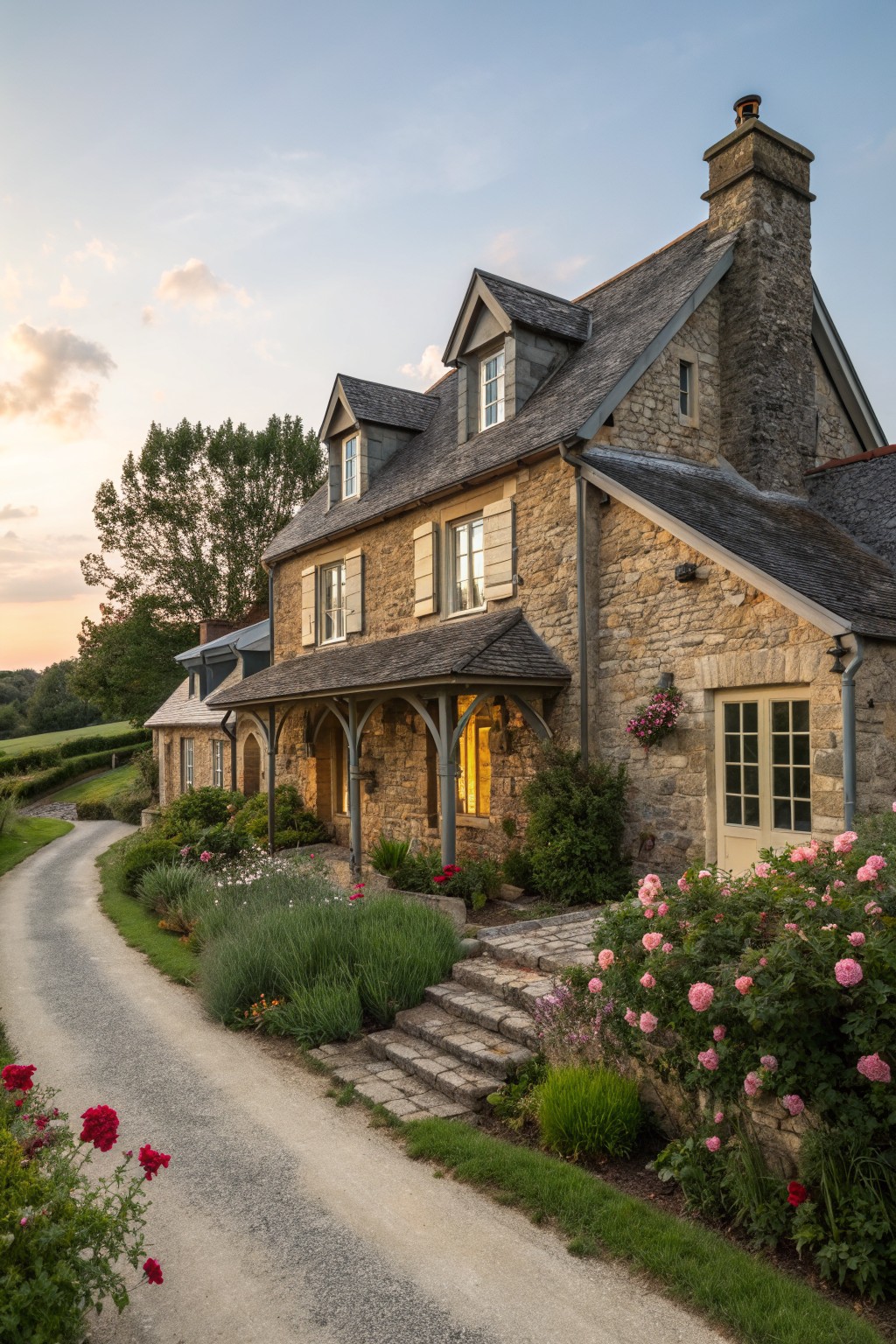
Natural stone works well on farmhouse exteriors because it ages without losing its shape or color. The walls here show how the material can handle years of weather while still looking solid and simple.
It suits homes with steep roofs and a few small windows rather than large modern openings. Use it where the ground slopes so the stone can follow the land instead of fighting it.
Hang a Vintage Lantern at the Entry
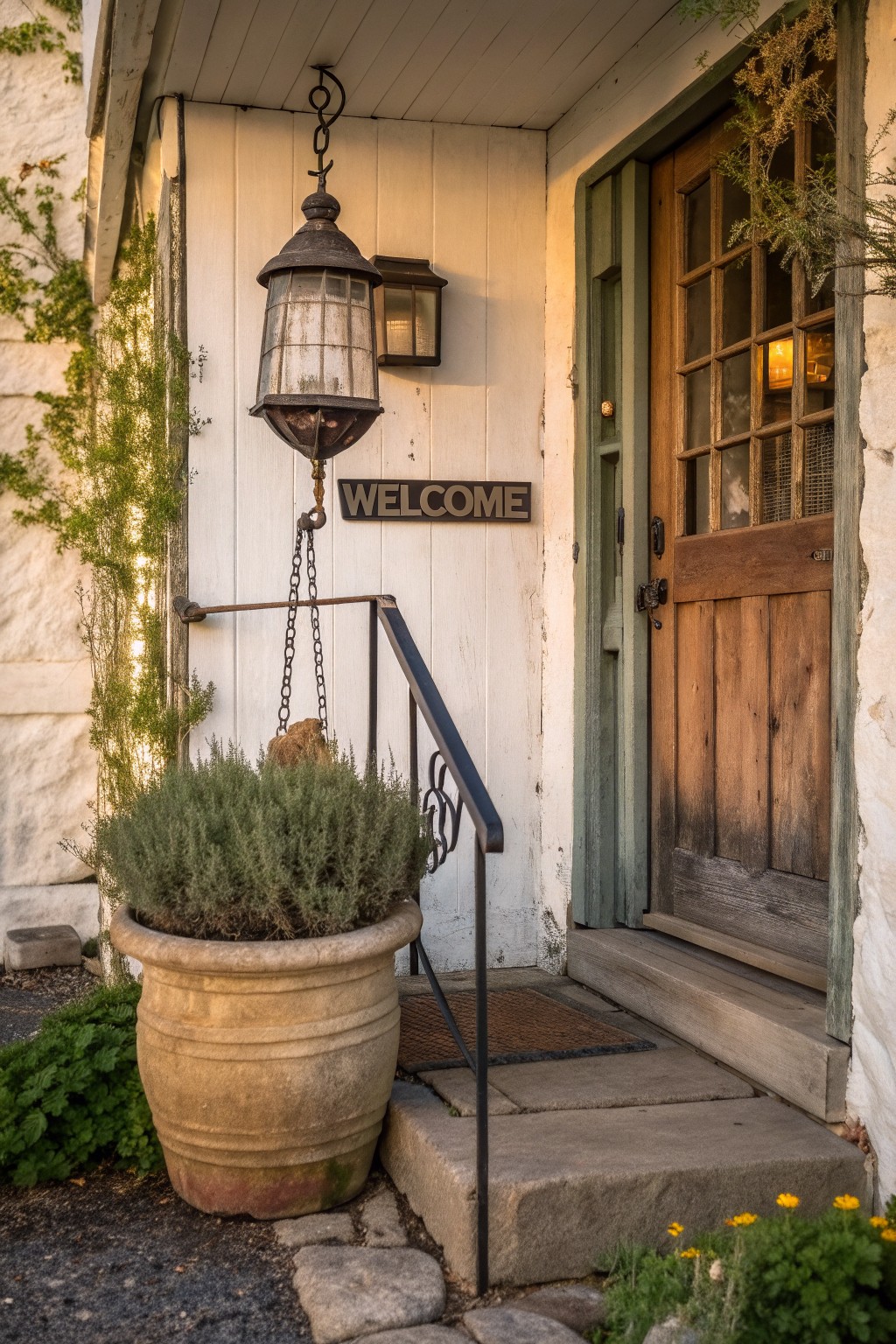
A hanging lantern gives the front door a simple, settled look that fits right in with older homes. It adds light where it is needed most and keeps the entry from feeling bare.
This works well on houses with plain siding or light stone walls. Choose a lantern with some age to it and hang it so the chain has a little movement. Avoid anything too polished or oversized for the space.
Add A Wooden Pergola For Shaded Outdoor Dining
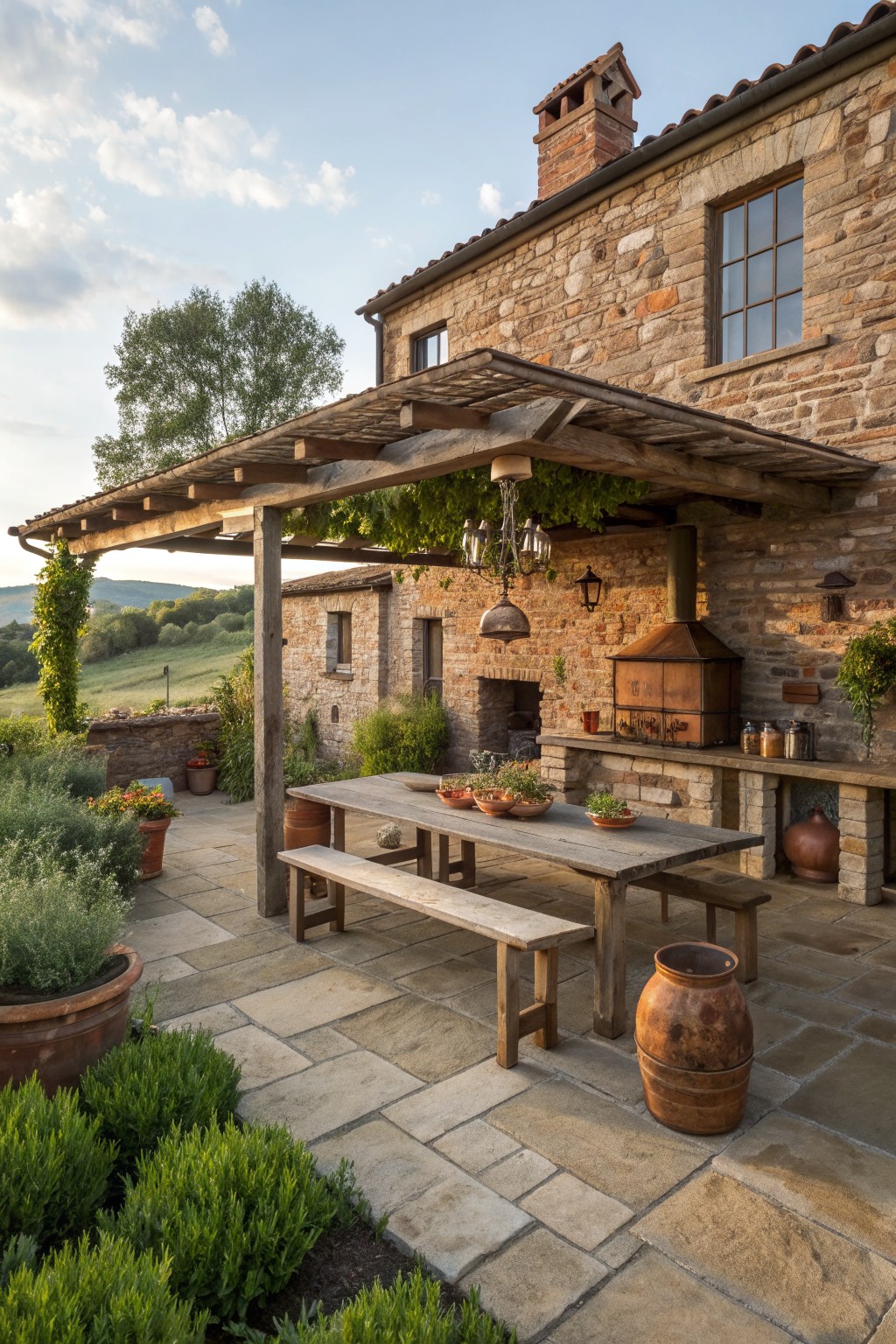
A wooden pergola gives an outdoor dining area real structure and shade while keeping the whole space open to the air. It pairs especially well with old stone walls because the weathered beams echo the rough texture of the house without trying to match it exactly.
Set the posts close to the building so the pergola reads as an extension rather than a separate addition. This works best on farmhouses that already have some age and texture, and it keeps the focus on simple, usable space instead of fancy details.
Anchor a Courtyard with a Stone Fountain
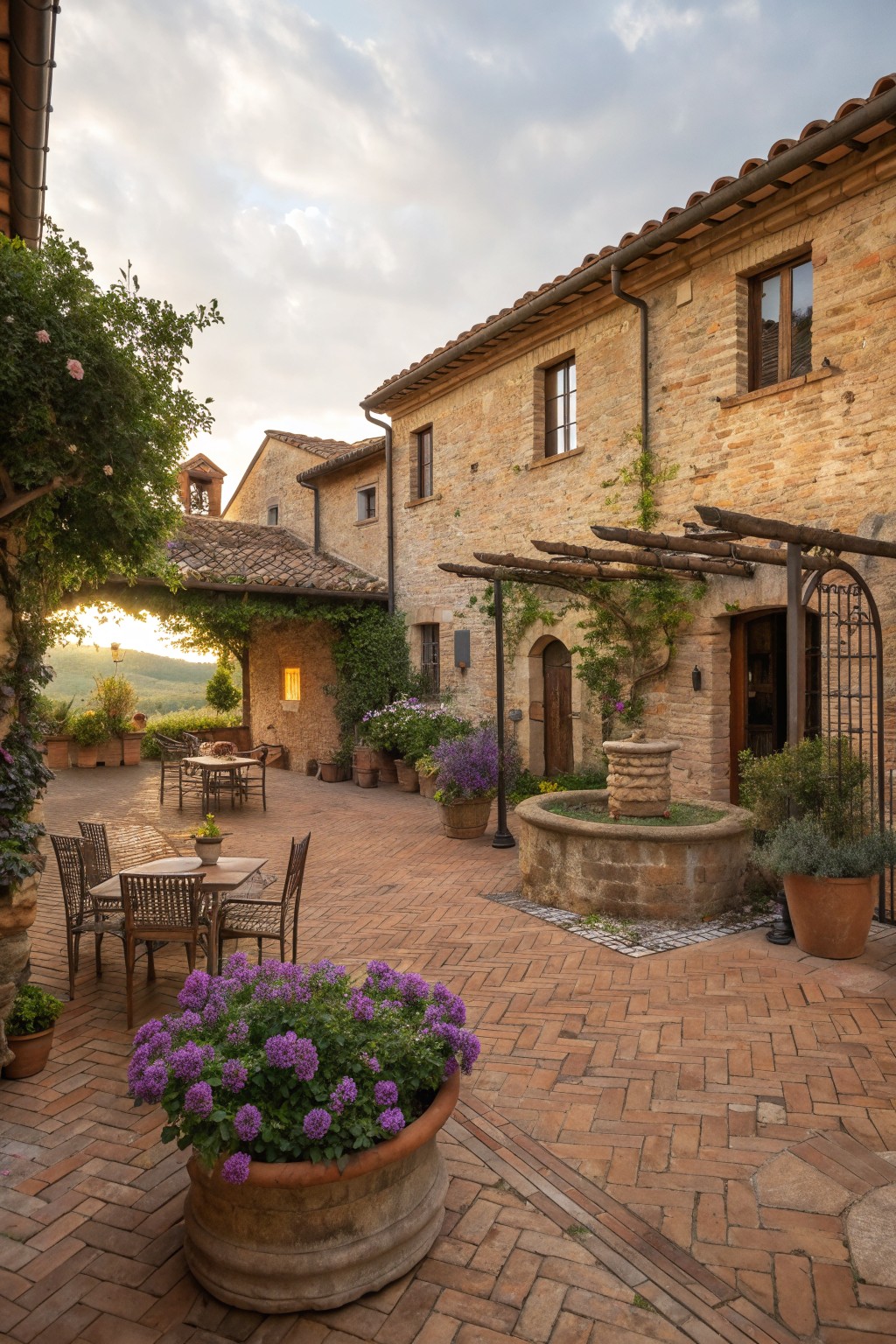
A stone fountain works well as the main point in a courtyard because it gives the space a clear center without taking over. The water adds a quiet sound that makes the area feel settled, and the weathered look pairs naturally with brick paths and old walls.
Place the fountain where seating can gather around it on a couple of sides. Keep the rest of the layout open so people can move through easily, and add a few large pots nearby to soften the edges without crowding the view.
Sliding Barn Doors on the Exterior
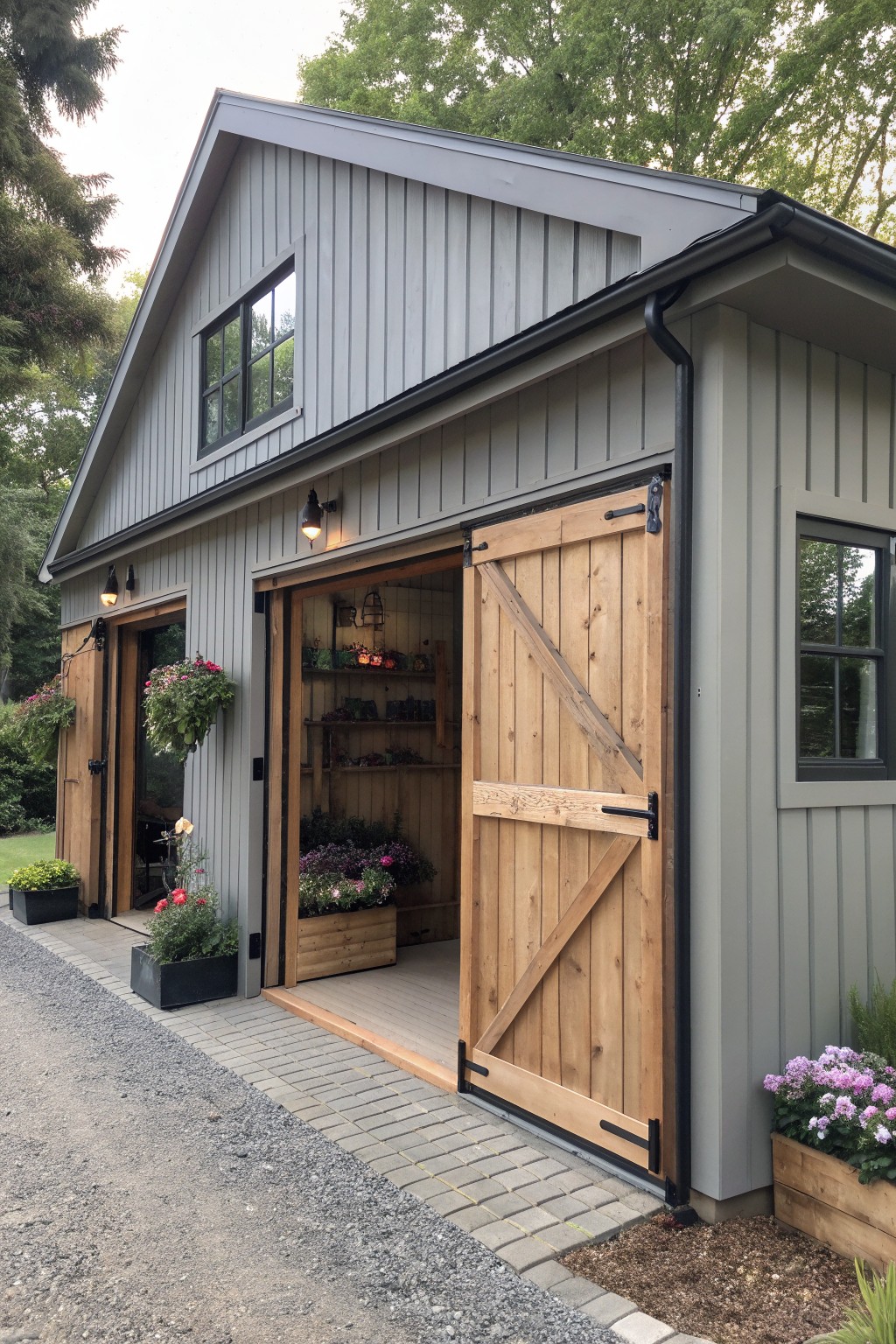
Many farmhouses used sliding barn doors because they open wide without taking up extra space. This keeps the front clear for paths or planters while giving the building that solid, old-fashioned look.
The style works best on homes with wood siding and simple trim. Choose black hardware and let the wood show its grain so it feels like part of the original structure rather than an added feature.
Add An Outdoor Kitchen Under A Pergola
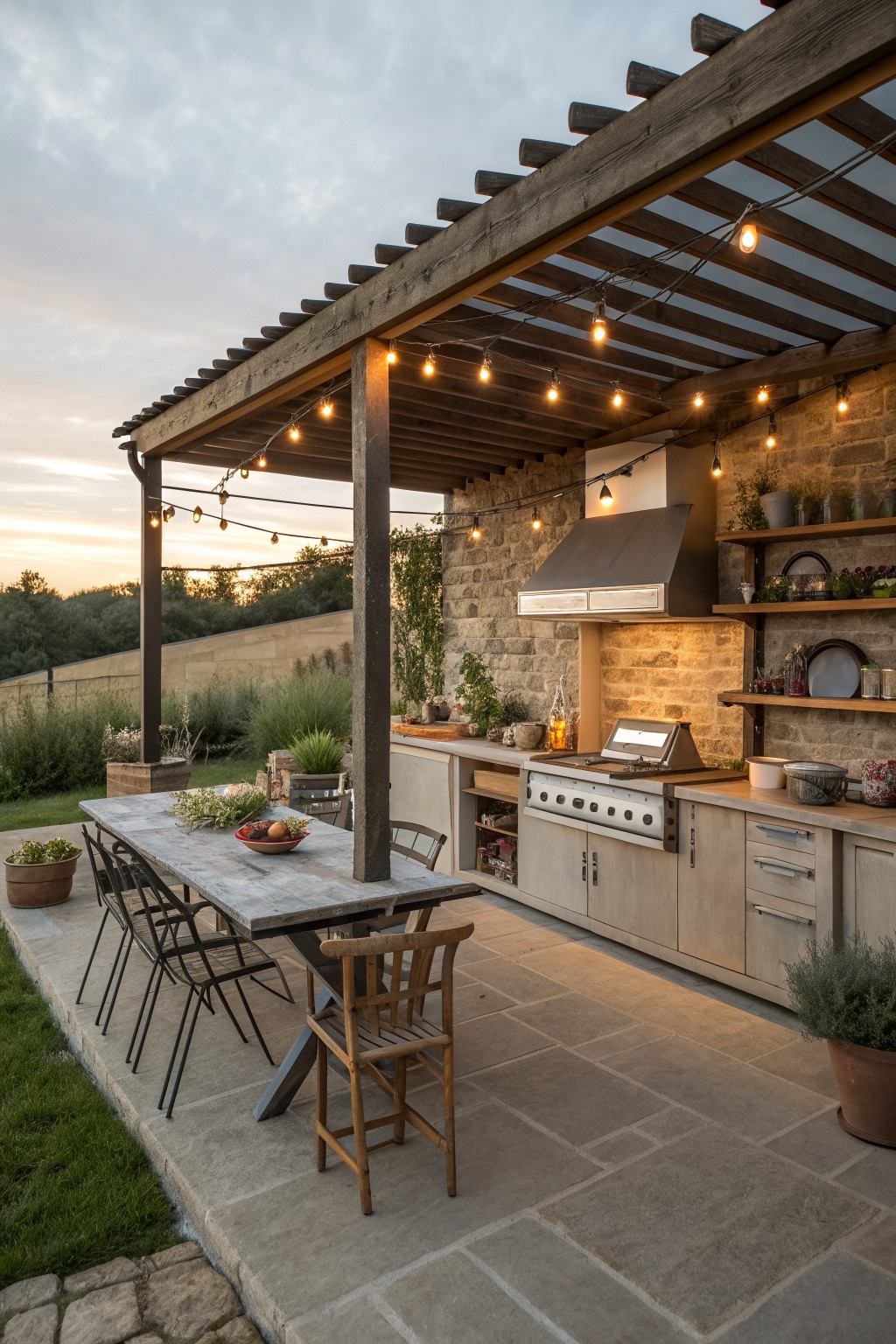
Many older homes gain a lot from a simple covered cooking area right off the main living space. A pergola gives shade and a bit of structure while still letting the outdoors feel open. The wood beams and stone wall help it blend with the rest of a farmhouse without looking added on later.
This setup works best on a paved patio where you already spend time eating outside. Keep the counters and storage basic so the space stays easy to use year after year. Avoid crowding it with too many extras that would fight the simple rustic look.
Blend Stone With Rendered Walls
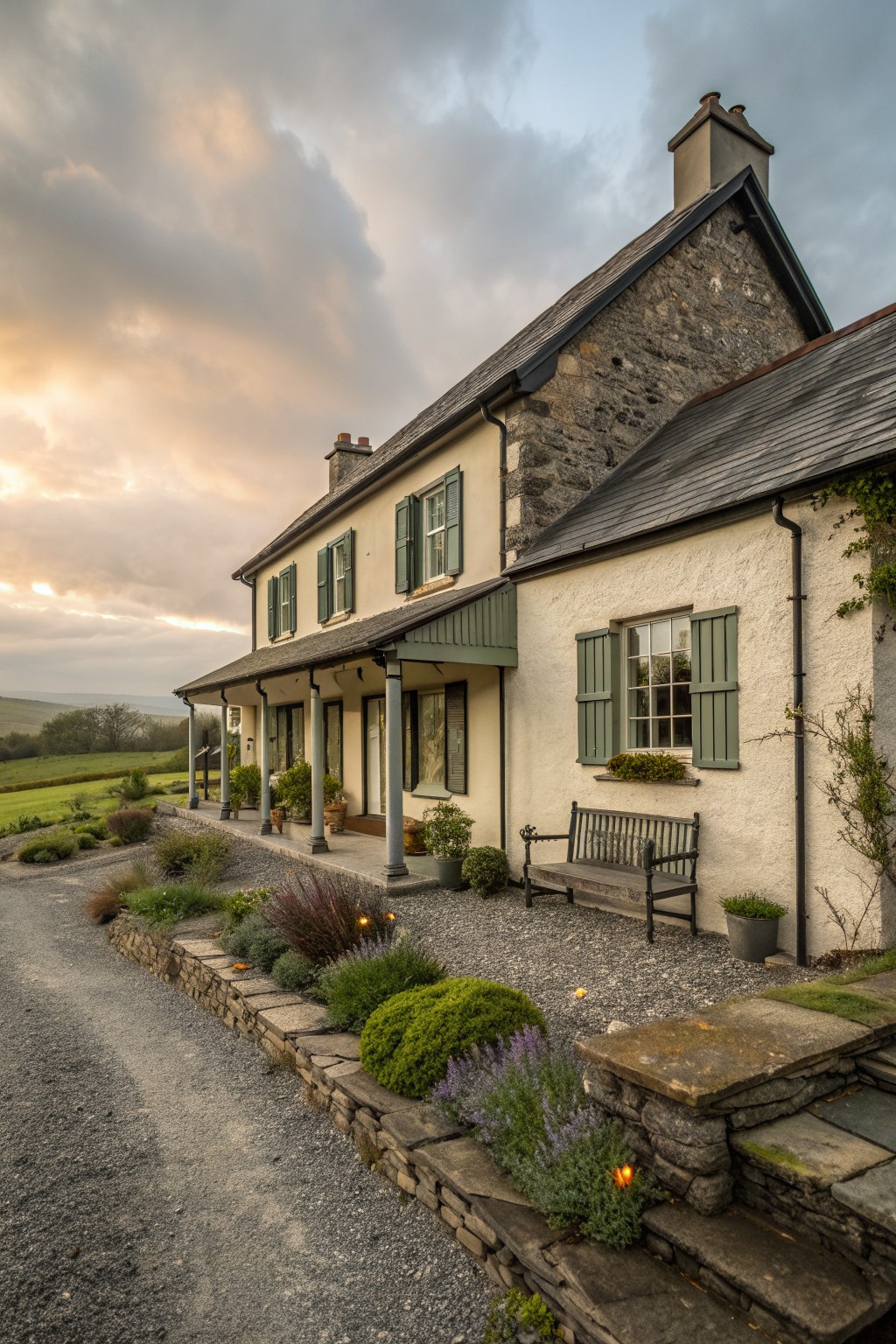
Many older farmhouses ended up with this mix because builders used stone where it was strongest and render where it was easier to work with. The result feels honest rather than planned, and it stops a large exterior from looking flat.
Keep the stone on the gable ends or one main wall and render the rest in a soft off-white. Add simple shutters and a modest porch roof so the two finishes sit comfortably together without fighting for attention.
Rustic Gates With Overhead Arbors
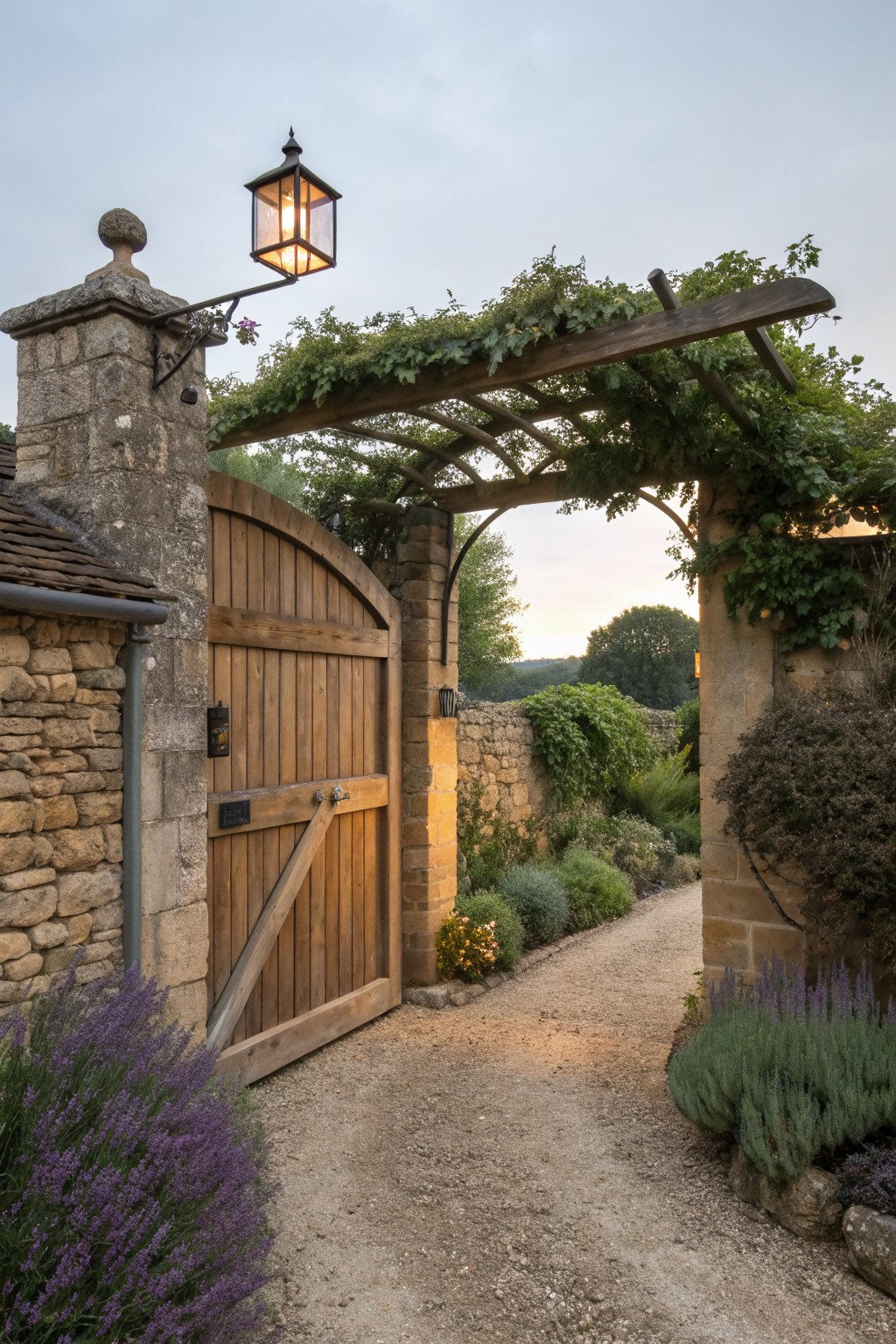
A wooden gate set beneath a simple vine-covered arbor adds instant old-world charm to a farmhouse entrance. The mix of weathered wood, rough stone pillars, and climbing greenery creates a layered look that feels settled rather than new. This approach keeps the entry welcoming while preserving the sense of age that many modern builds lack.
It works best on properties with existing stone walls or gravel paths, where the arbor can tie the gate into the surrounding garden. Keep the structure low and the vines natural so the whole entry ages gracefully over time. Avoid overly ornate hardware that can make the look feel forced.
Wooden Shutters Keep the Character Intact
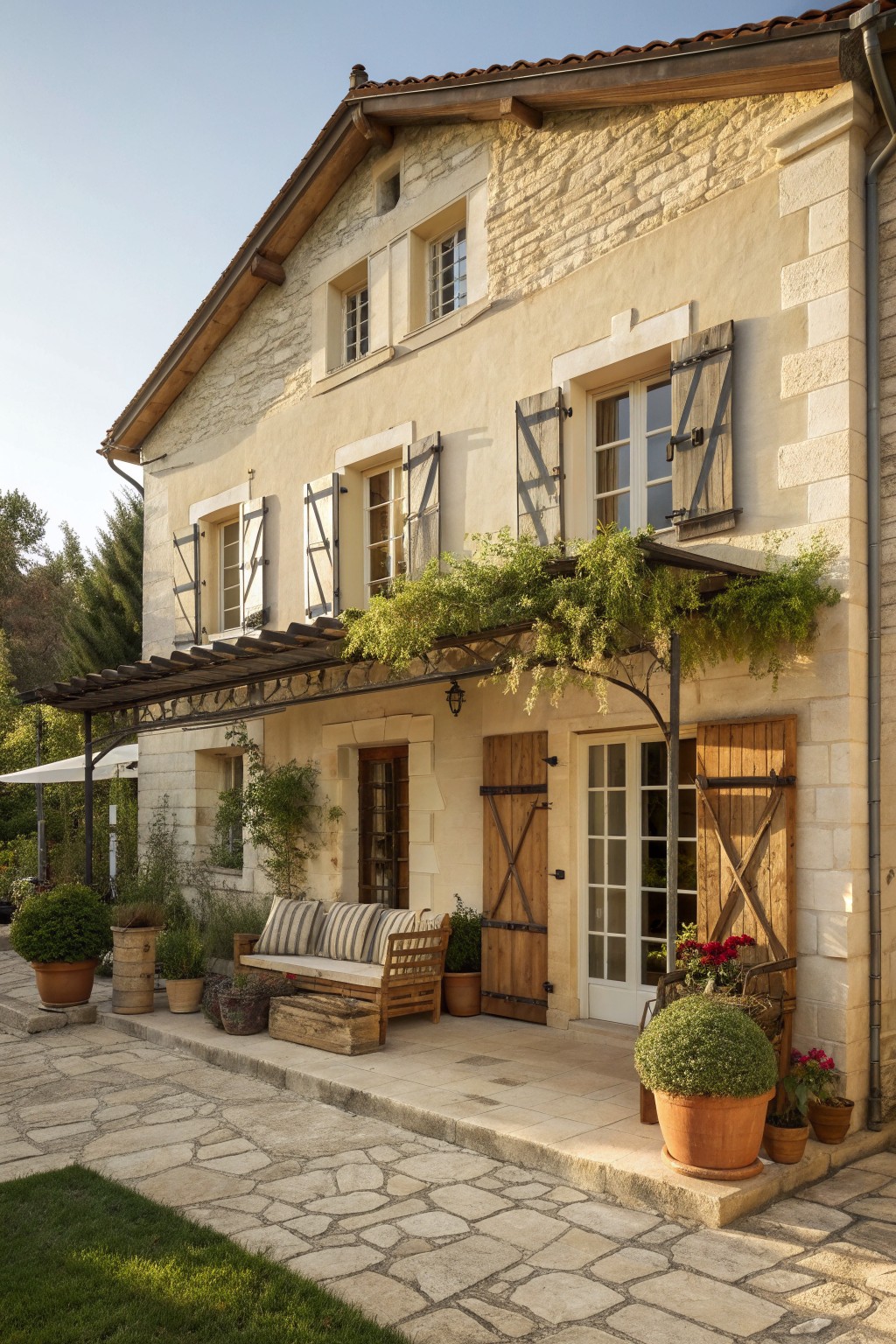
Wooden shutters stand out on this stone house because they feel like they belong there. They add texture and a sense of age without any extra effort. The dark wood against the light stone creates contrast that feels natural rather than planned.
They work best on homes with similar materials where you want to keep things simple. Choose shutters that actually open and close if you can, and let the wood weather on its own. Avoid painting them bright colors or adding too many other details that might compete.
Extend The Farmhouse Style With A Pergola Patio
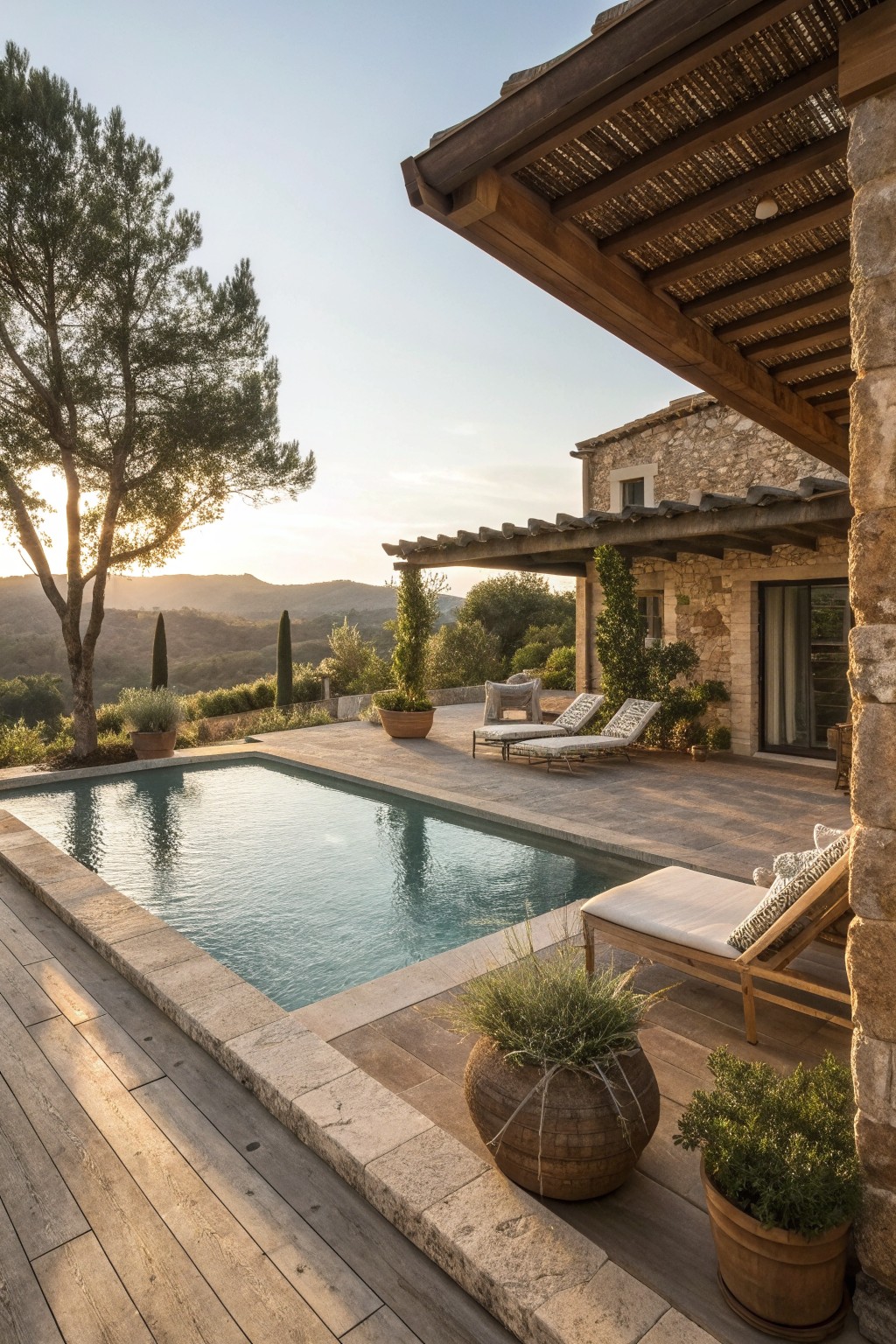
A simple pergola attached to the house helps carry the same stone and wood character right into the outdoor space. It creates a clear spot for seating without breaking the old world feel that the rest of the property already has.
This works best on homes that already use natural materials on the exterior. Keep the wood tones close to the roof beams and let the stone walls run straight into the patio area. Avoid adding too many modern fixtures that would stand out against the older look.
Use Exposed Timber on the Entry Porch
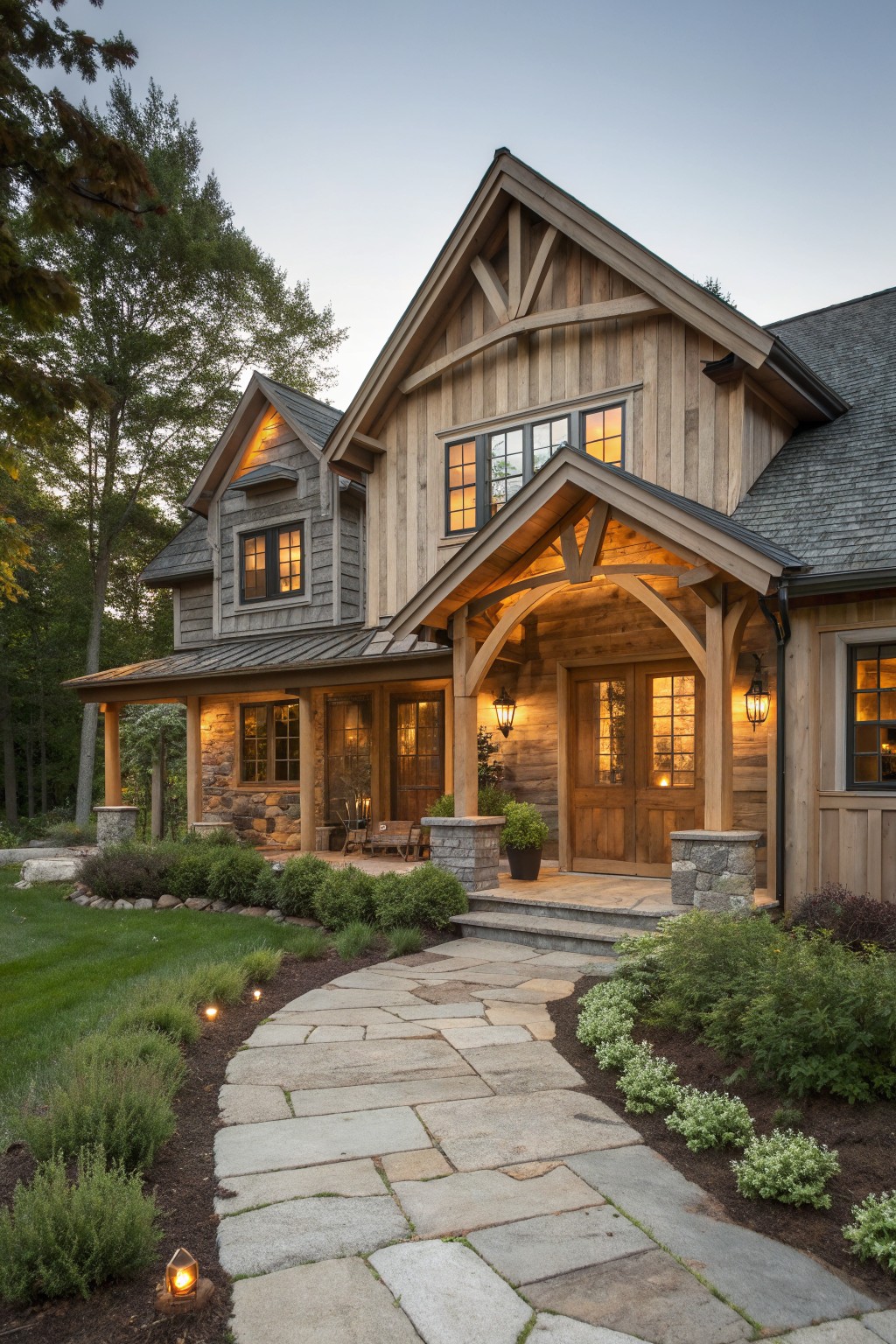
A covered entry with visible wood beams and posts gives the front of the house real structure and age. It turns what could be a plain door into something that feels built by hand and tied to older farm buildings. The wood tones also help the siding and stone base read as one whole instead of separate pieces.
This works best on homes that already use natural siding and want a stronger connection to the ground. Keep the beams simple and let the joinery show. Avoid painting them or adding too many extra brackets, since the point is to keep the look honest and straightforward.
Frequently Asked Questions
Q: My siding is in good shape but looks too new. How can I give it that aged look without replacing everything?
A: Rub in a mix of vinegar and steel wool solution to speed up the graying. Do one wall at a time so the color stays even. Let it weather naturally after that.
Q: What if the roofline on my house does not match the classic farmhouse shape?
A: Add a simple gable overhang with reclaimed wood. It softens the modern lines and pulls the whole exterior together without major changes.
Q: Can I add a stone foundation if my house sits on concrete?
A: But you can fake it with thin veneer stone. Lay it over the concrete base in sections. Start at the corners and work your way around for a natural stacked look.
