

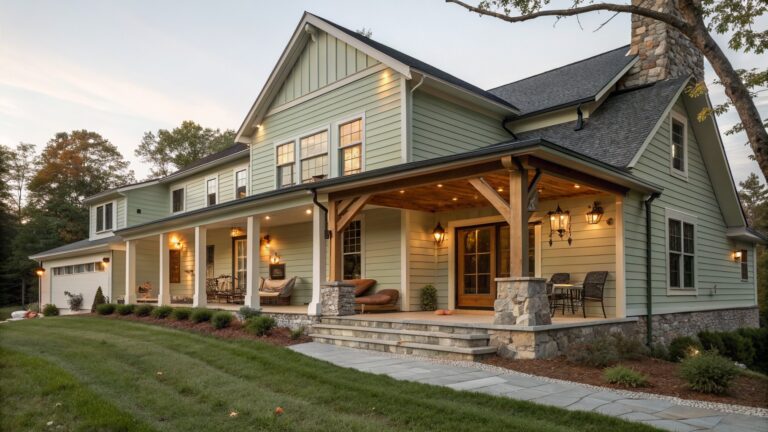
When I drive past older country homes the first thing that usually catches my eye is how the facade has settled into a dated look with siding and trim that no longer match the rooflines or entry.
A few well chosen materials can pull those mismatched parts together and give the whole front a more settled presence from the street.
Some fixes work better than others.
I have noticed that changes to the entry or the way wood and stone meet often make a bigger difference in how the house reads than people expect.
A couple of the ideas here seem worth testing on a small section first to see how they age with weather and daily views.
Mix Painted Siding With Stone For Added Texture
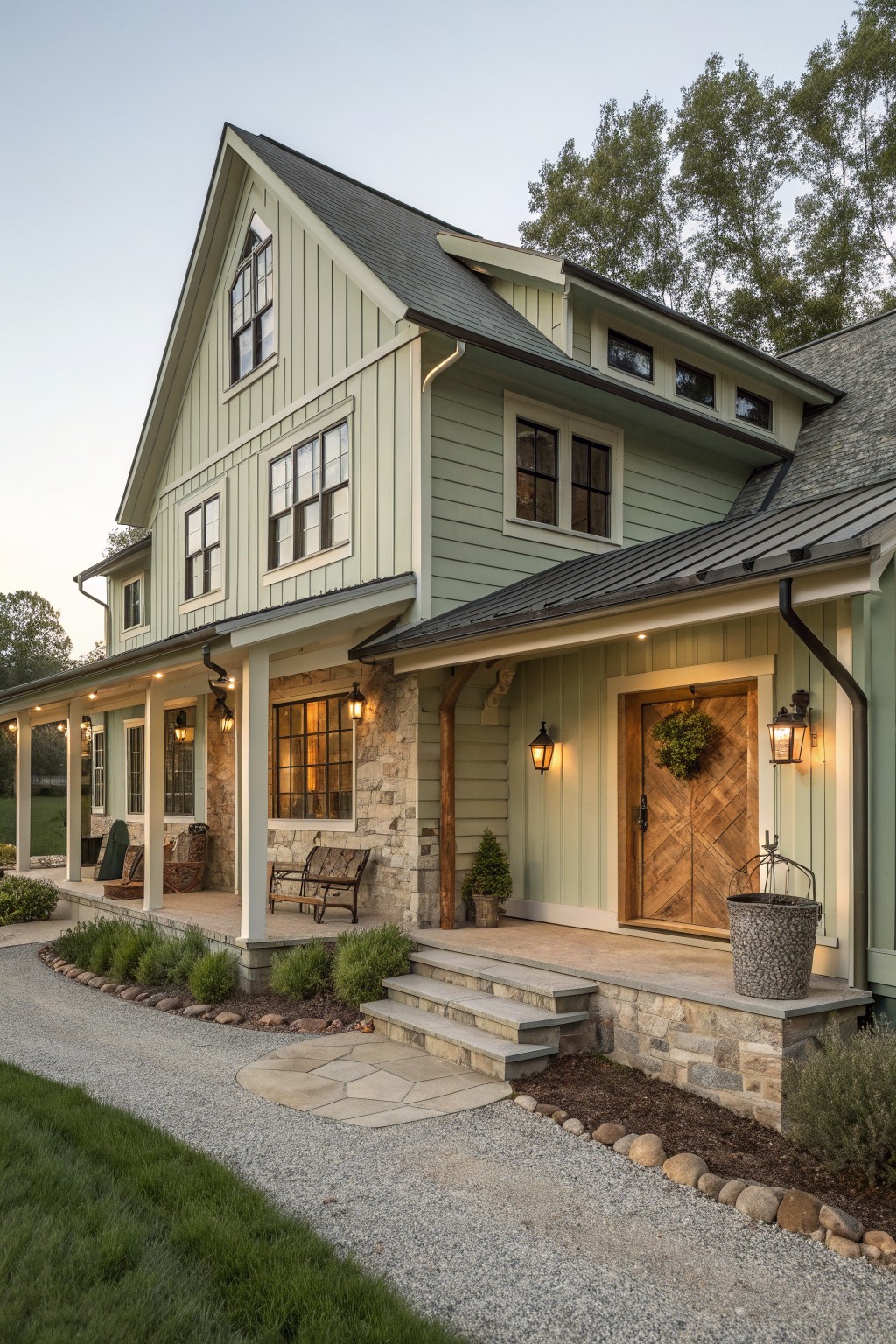
Many dated farmhouses look flat once the original siding starts to age. Adding stone around the base and key openings gives the facade more weight and breaks up long stretches of siding without changing the overall shape of the house.
This works best on homes that already have a porch or covered entry. Keep the siding in a soft color so the stone reads as a natural accent rather than a heavy contrast. Limit the stone to the lower third of the house and around windows to avoid an overdone look.
Mix Brick And Stone On The Lower Level
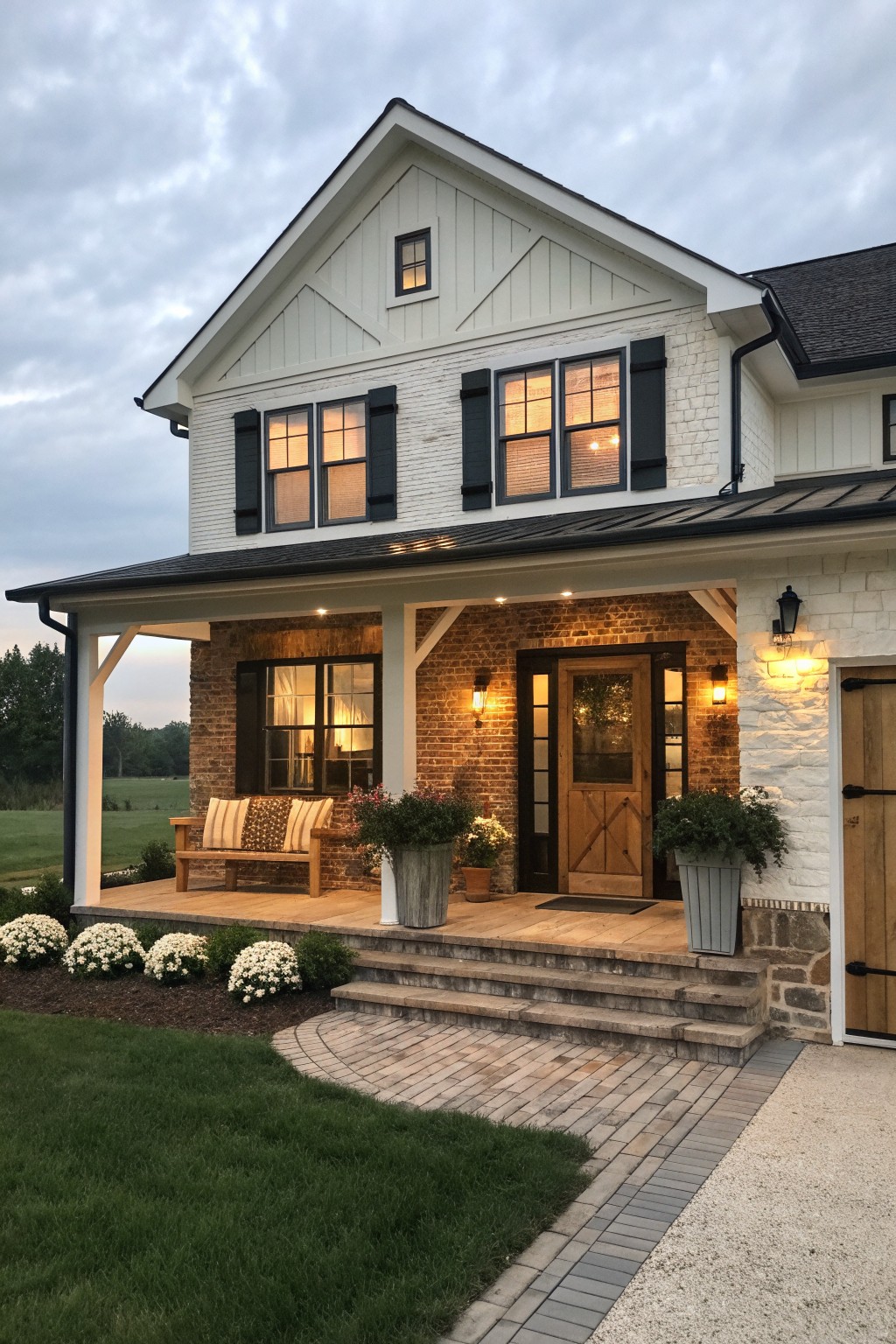
Mixing brick and stone across the base of a house gives it more weight and character without feeling heavy. The white siding above stays bright and simple, so the whole front reads as updated rather than dated. Black shutters help pull the look together and keep the contrast sharp.
This works best on older country homes that already have some brick or need a sturdier foundation look. Keep the upper siding clean, use the same dark trim on windows and doors, and let the two lower materials meet naturally at the corners.
Blend Stone With Wood Siding
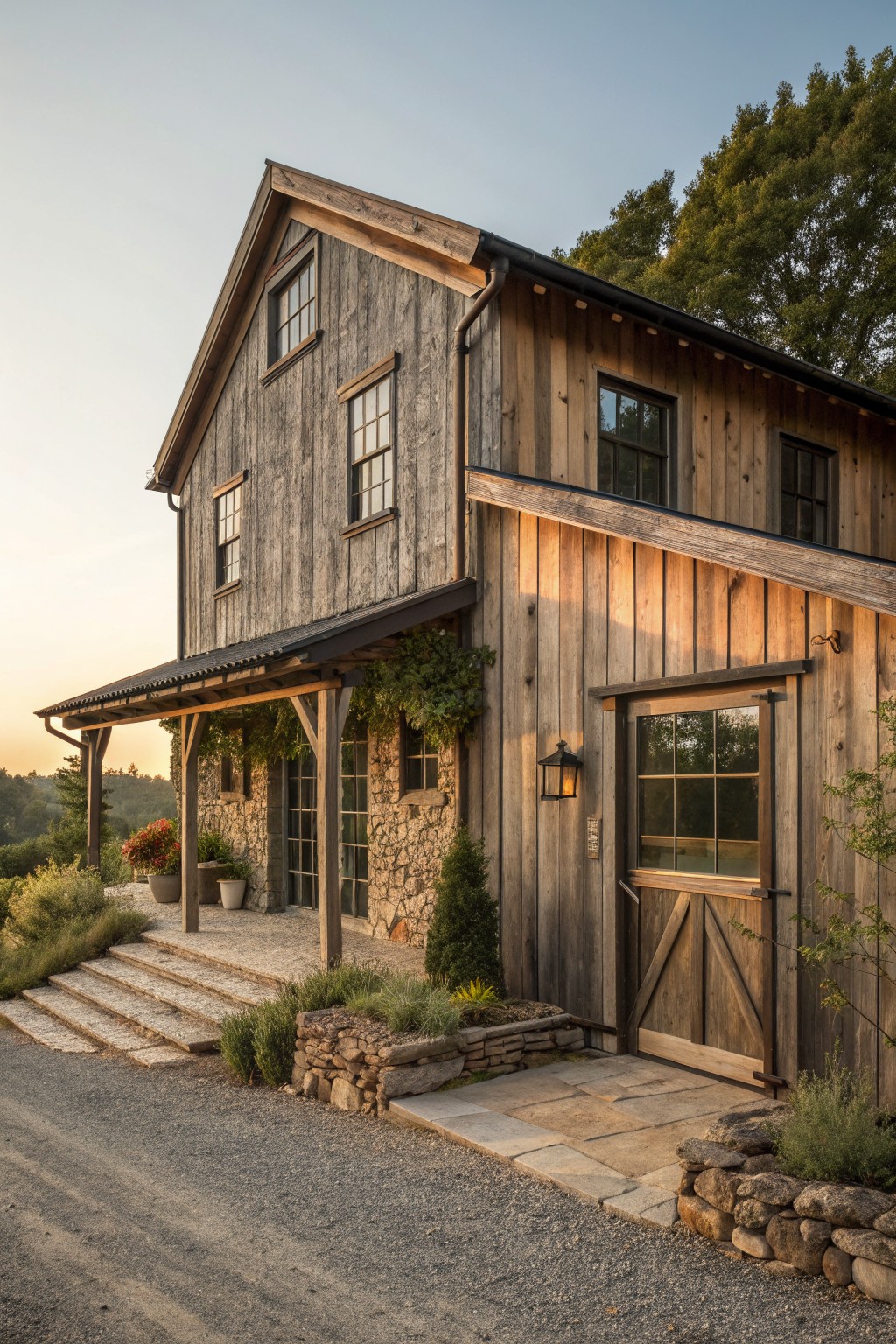
Many dated farmhouses look flat when the whole exterior is one material. Adding stone along the base and around key spots breaks up the wood and gives the house more weight without losing its rustic feel.
This approach works best on homes with a simple gable shape or barn style. Keep the stone low and use the same wood tone above it so the change feels natural rather than forced.
Stone at the Entry Adds Texture
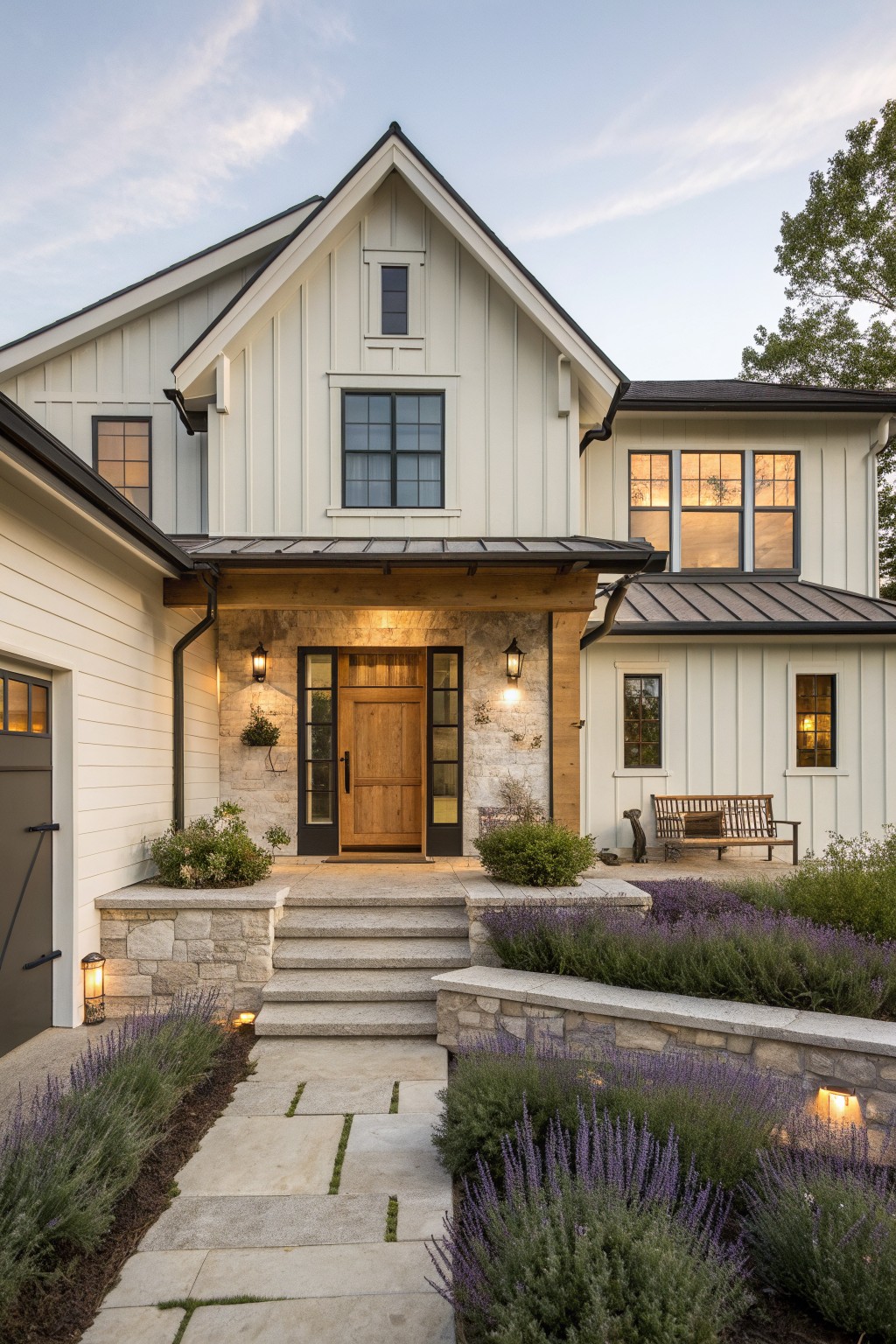
Many dated country houses start with plain siding and need something to break up the flat look. Adding stone around the front door gives the facade weight and a bit of age without changing the whole exterior. The contrast with white siding keeps it simple while making the entry feel more solid and welcoming.
This works best on homes that already have a gable or porch overhead. Keep the stone to the lower section so it does not overwhelm the siding above. Match the stone color to any existing foundation so the change feels natural rather than added on.
Dark Siding With White Trim
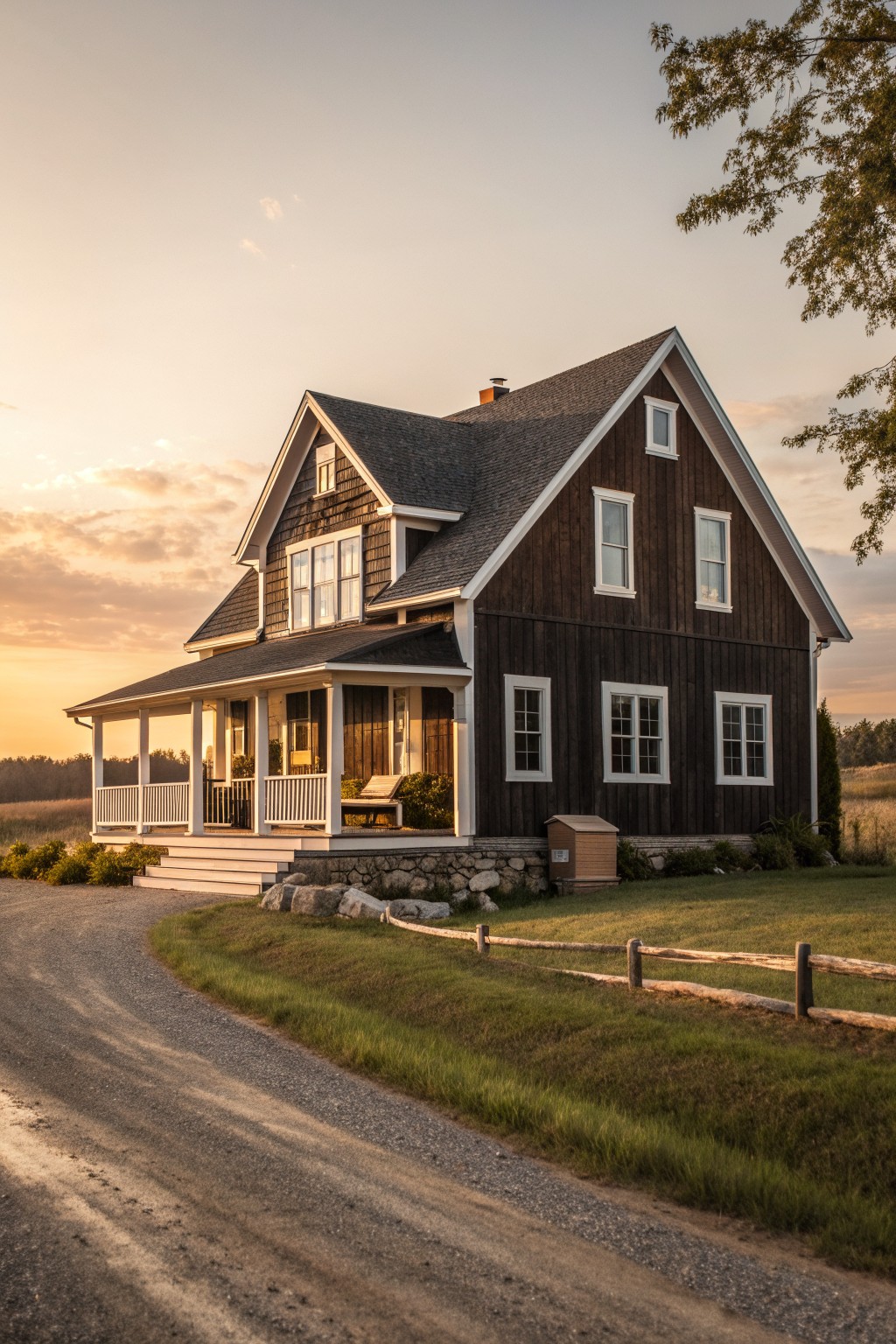
Many older farmhouses look dated when the siding stays light and faded. Switching to a deep brown or charcoal tone gives the whole place more weight and makes the shape stand out against open land.
This approach suits homes that already have a strong roofline and multiple gables. Keep the trim bright white so the windows and corners stay clear, and choose a flat finish on the siding to avoid a shiny look that fights the rustic style.
Black Doors on White Brick
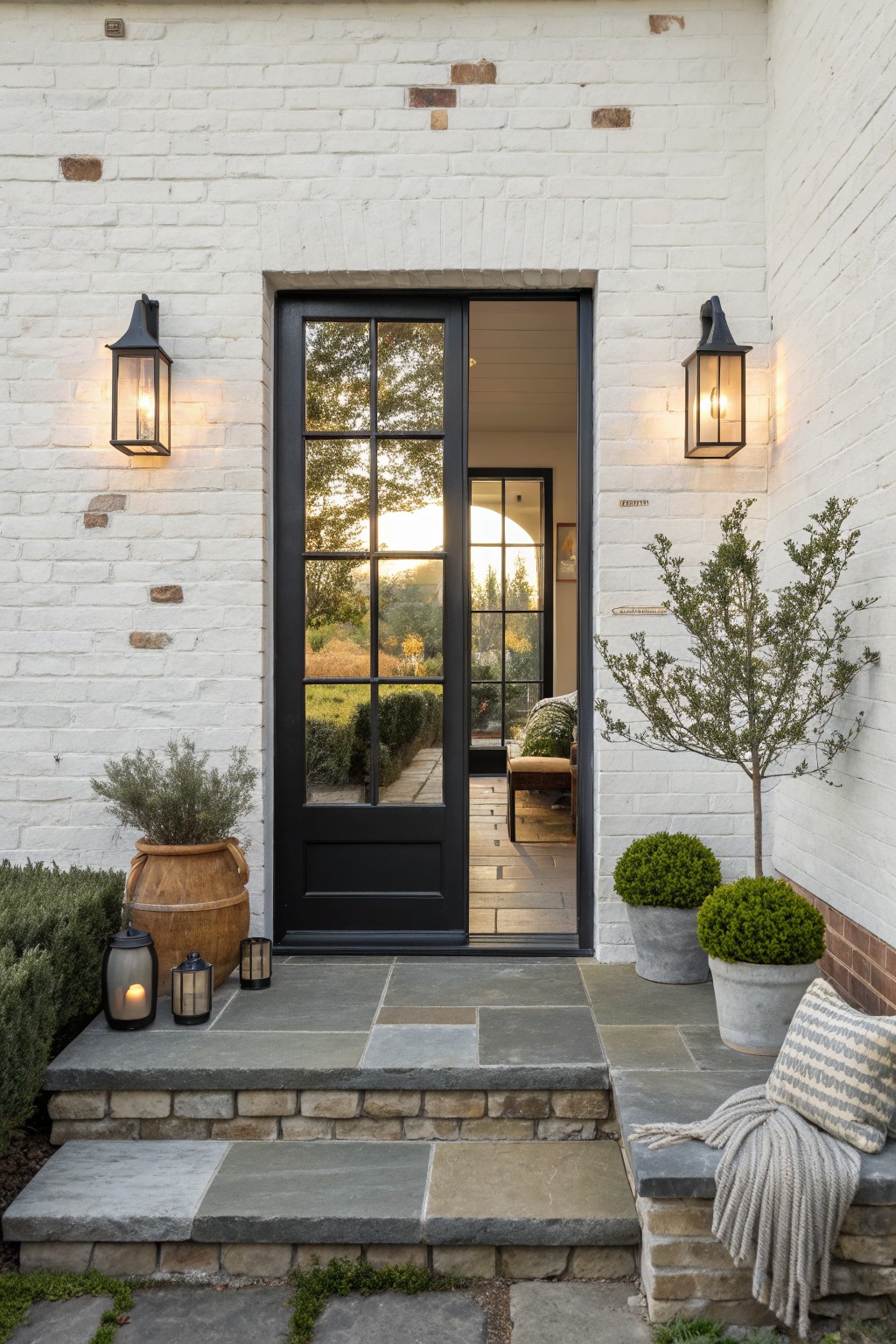
A black door stands out against white brick in a simple way that updates an older farmhouse without losing its character. The dark frame and glass panes give the entry more weight while the brick stays bright and clean.
This approach works best on homes that already have a solid brick facade. Keep the surrounding details minimal so the door does the main job of pulling the look together.
Extend the Porch With a Long Deck Run
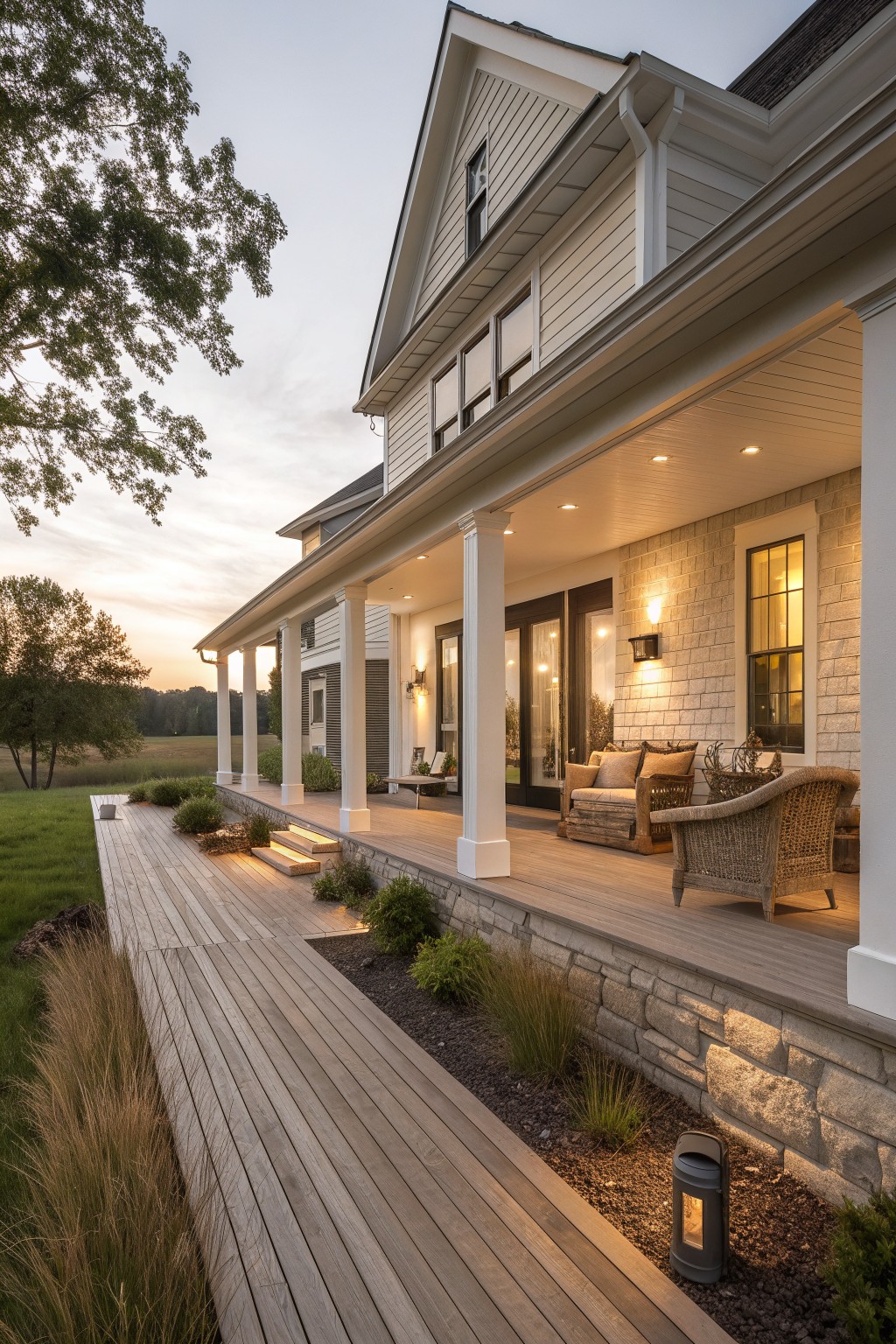
A long deck that runs alongside the house gives a porch a lot more breathing room without needing a bigger structure. It turns the covered area into part of a bigger outdoor zone where you can walk, sit, or just move around more freely. The wood ties the whole thing together and keeps the look simple and practical.
This works best on farmhouses that already have a decent porch depth, since the deck can follow the same line and pick up the same materials. Keep the edge planting low so the deck stays open and does not feel boxed in. Watch the height of the deck against the house so it still reads as one connected space rather than two separate levels.
Combine Painted Brick With Stone Accents
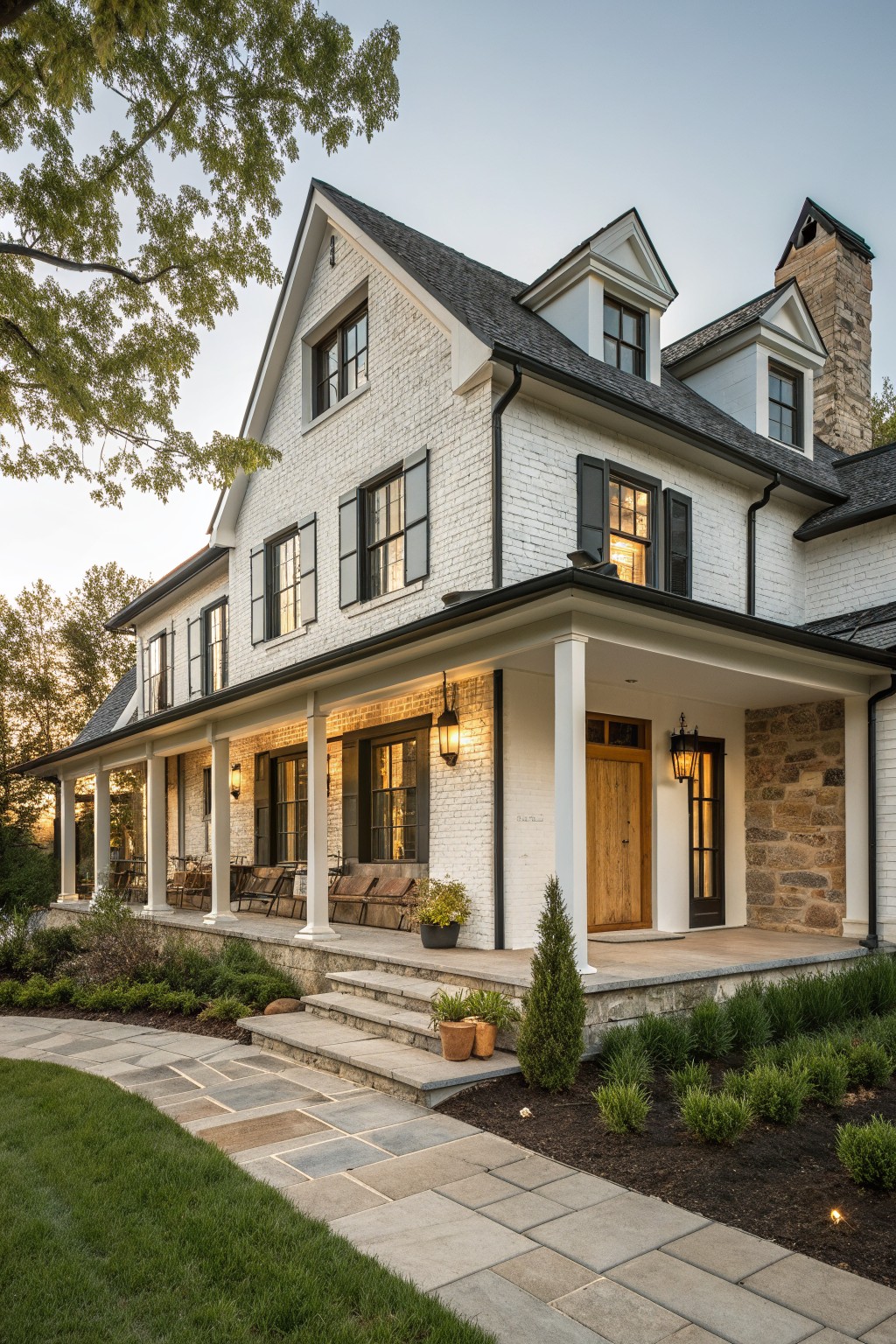
Many dated farmhouses have plain brick that can feel heavy or flat over time. Painting the brick white lightens the whole look while stone details on the chimney and porch base add texture and keep the rustic feel intact.
This mix works best on homes with straightforward rooflines and a front porch already in place. Use the stone sparingly so it highlights rather than competes with the white brick.
Stone Paths With Lavender Edging
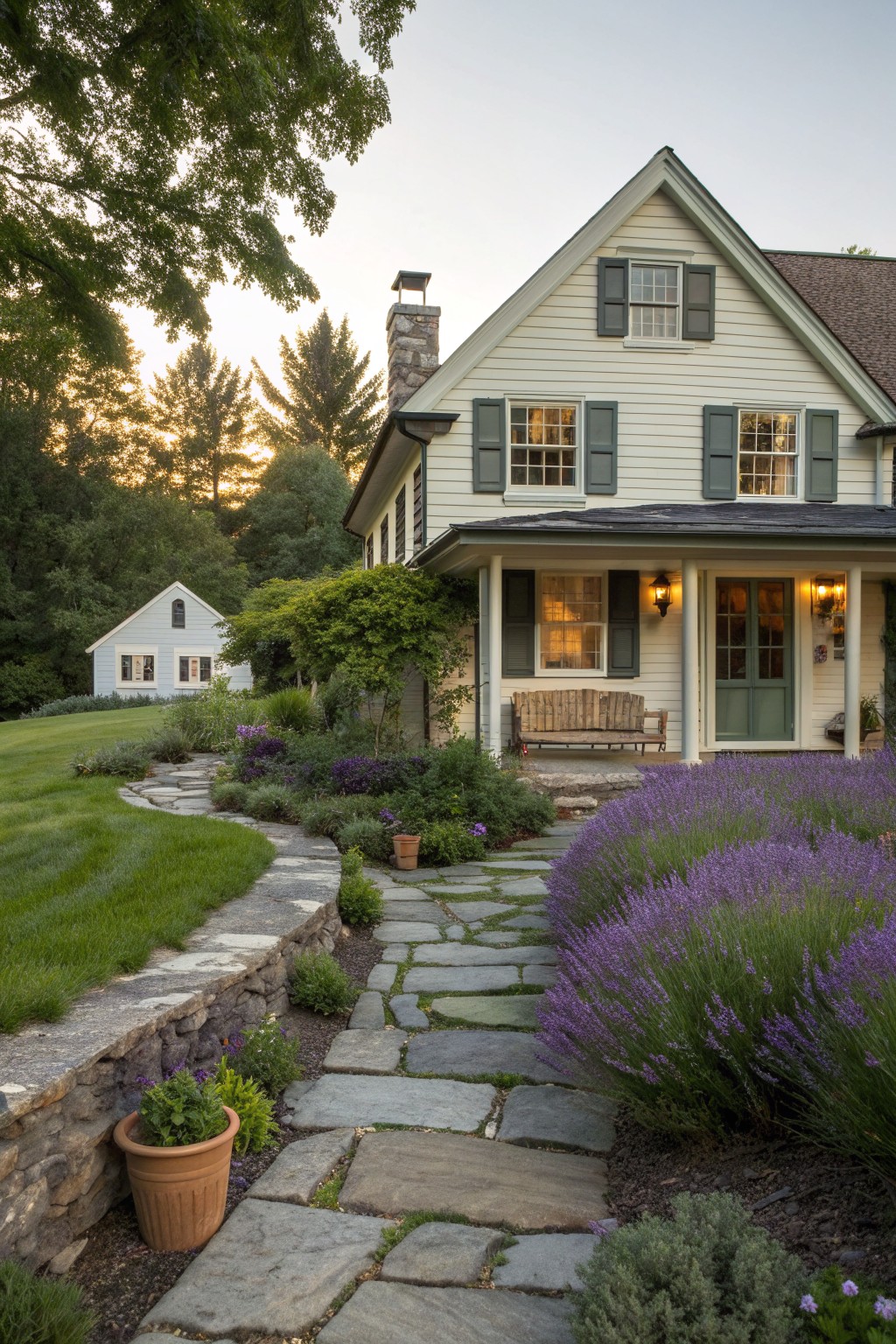
A stone path lined with lavender gives a dated farmhouse a softer, more welcoming approach without any big structural changes. The irregular layout of the stones lets the garden feel connected to the house instead of separated by a stiff walkway.
This idea suits older country homes that already have some garden space around the entry. Keep the path slightly curved and plant the lavender in loose groups so it spills over the edges a bit. The result feels casual and lived-in rather than designed.
Wooden Garage Doors For A Farmhouse Update
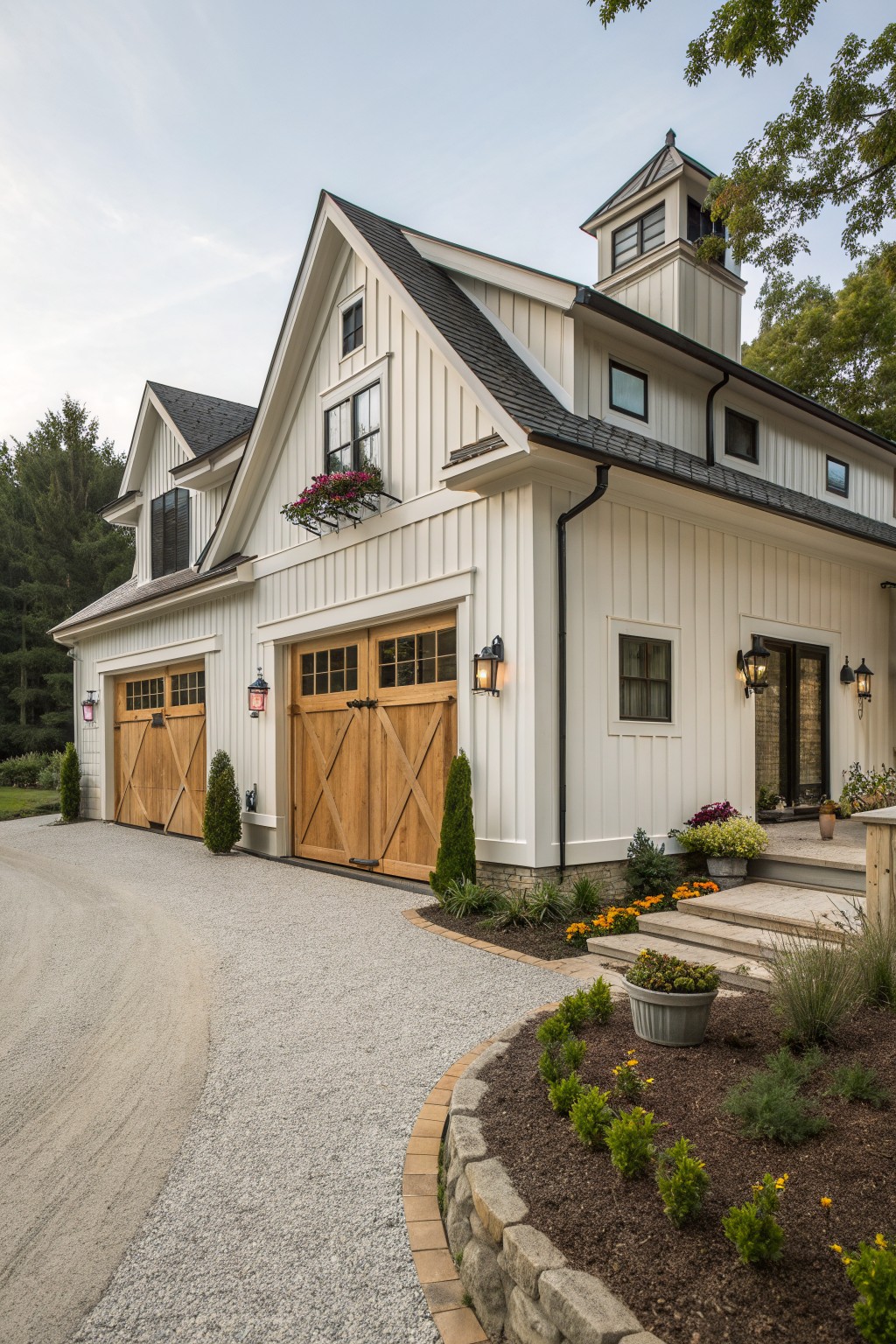
Swapping plain garage doors for wooden ones with simple bracing is one of the quickest ways to give an older country house more character. The natural wood stands out nicely against white siding and keeps the whole front looking grounded rather than plain.
This approach works best on homes that already have clean lines and a light exterior color. Keep the surrounding trim simple and let the doors carry the rustic feel so the update does not feel forced.
Mix Wood And Stone On The Facade
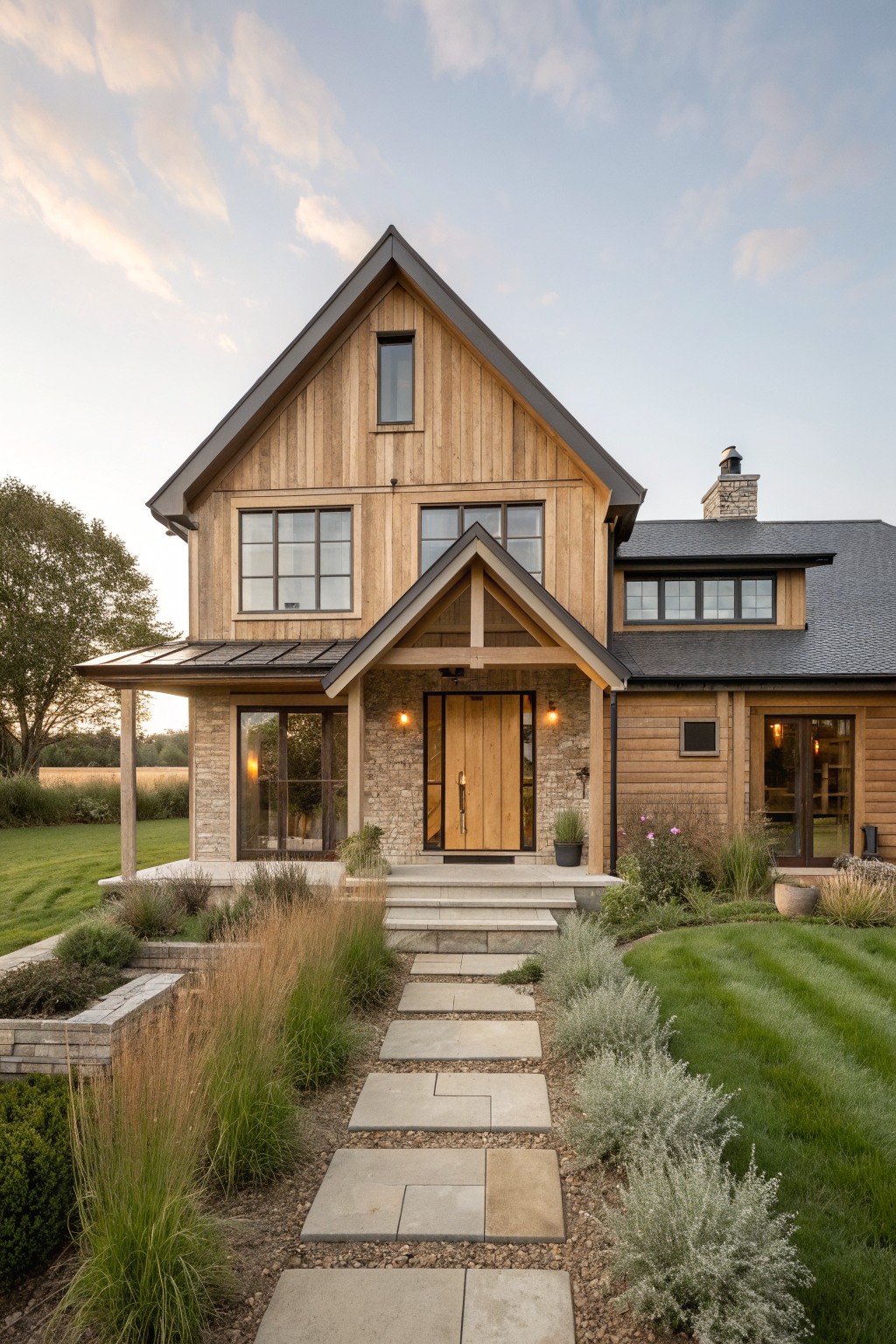
Mixing wood siding with stone around the entry gives a dated country house a cleaner, more updated look. The contrast keeps the exterior from feeling flat while still reading as rustic and simple.
This works best on homes where the original siding is in decent shape but needs more weight at ground level. Use the stone to frame the door and lower windows, then carry the wood siding up the gables and sides so the materials balance each other without competing.
Black Doors Refresh Rustic Entries
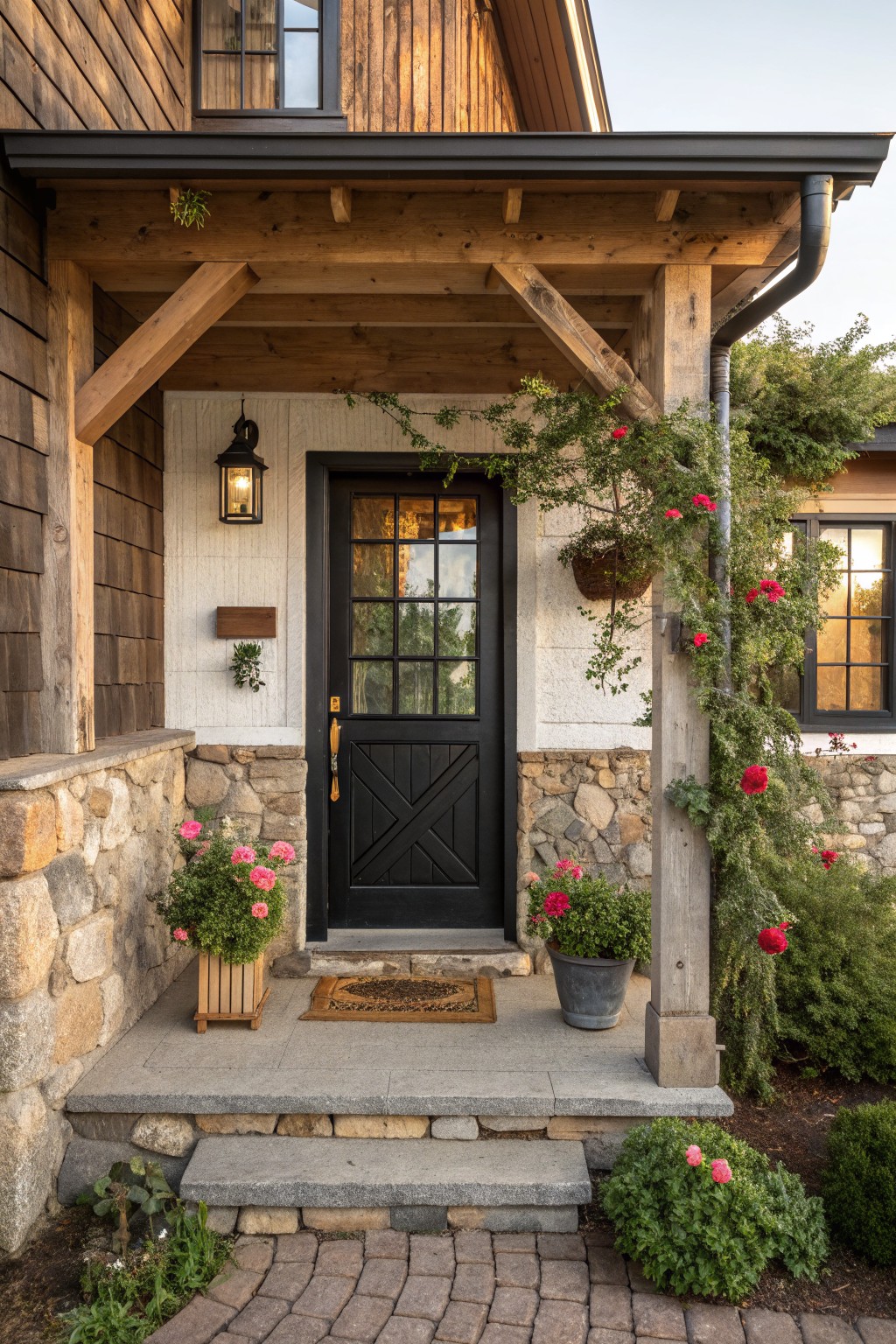
A black front door stands out nicely against wood siding and stone. It gives the whole facade a cleaner, more finished look without needing a full overhaul. The dark color anchors the entry and works especially well when the surrounding materials stay light and natural.
This approach suits older country homes that already have wood and stone details. Keep the trim simple, add a few potted plants near the steps, and let climbing vines soften one side. Avoid pairing it with too many competing colors or heavy ornamentation.
Paint the Exterior White With Black Shutters
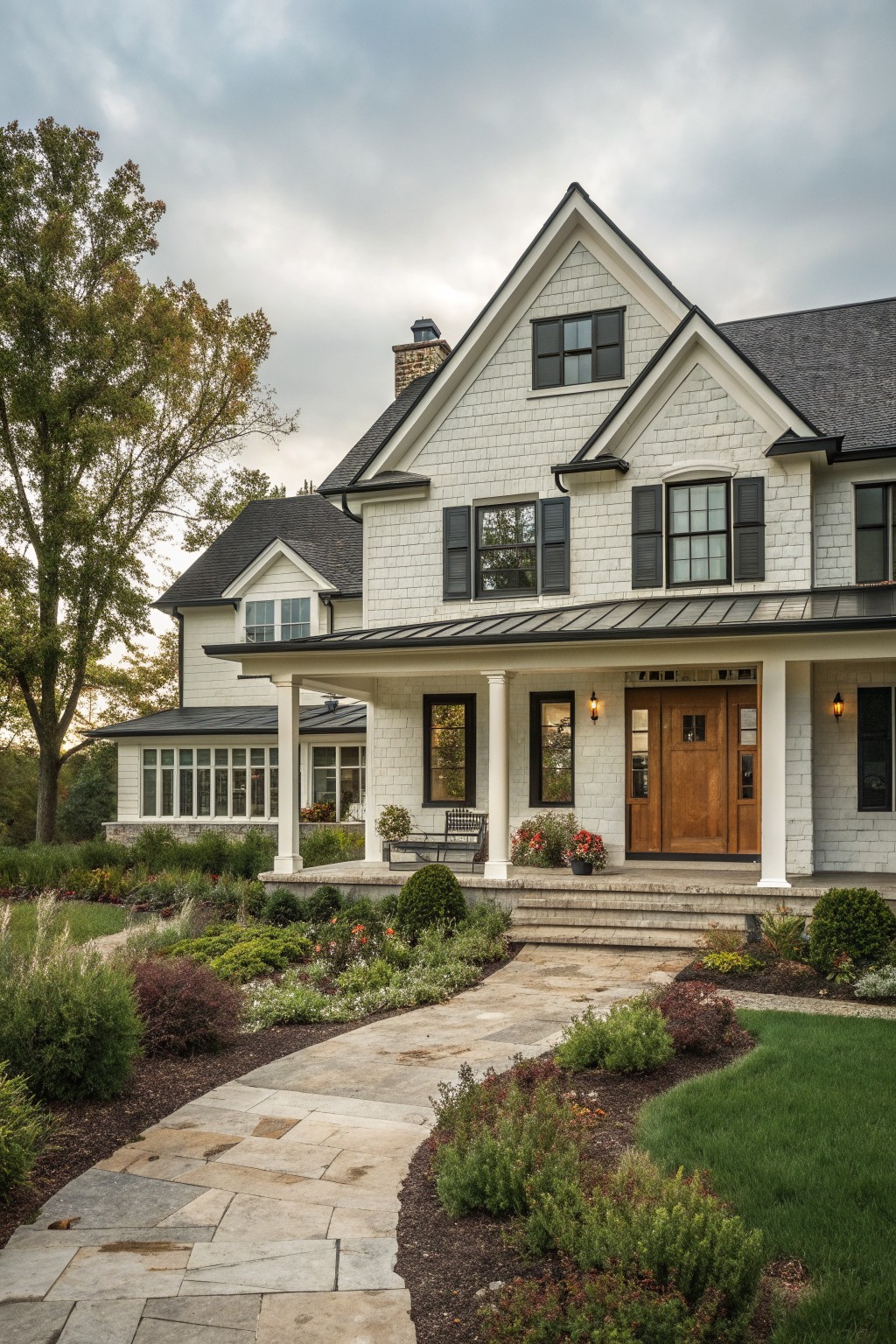
A coat of white paint on the siding does a lot to update an older country house. It brightens the whole look without making the place feel too new or out of place.
Black shutters add just enough contrast to keep the windows from blending in. This works best on homes that already have a porch and simple rooflines, since the white helps those details stand out more clearly.
Mix Stone With Wood Siding
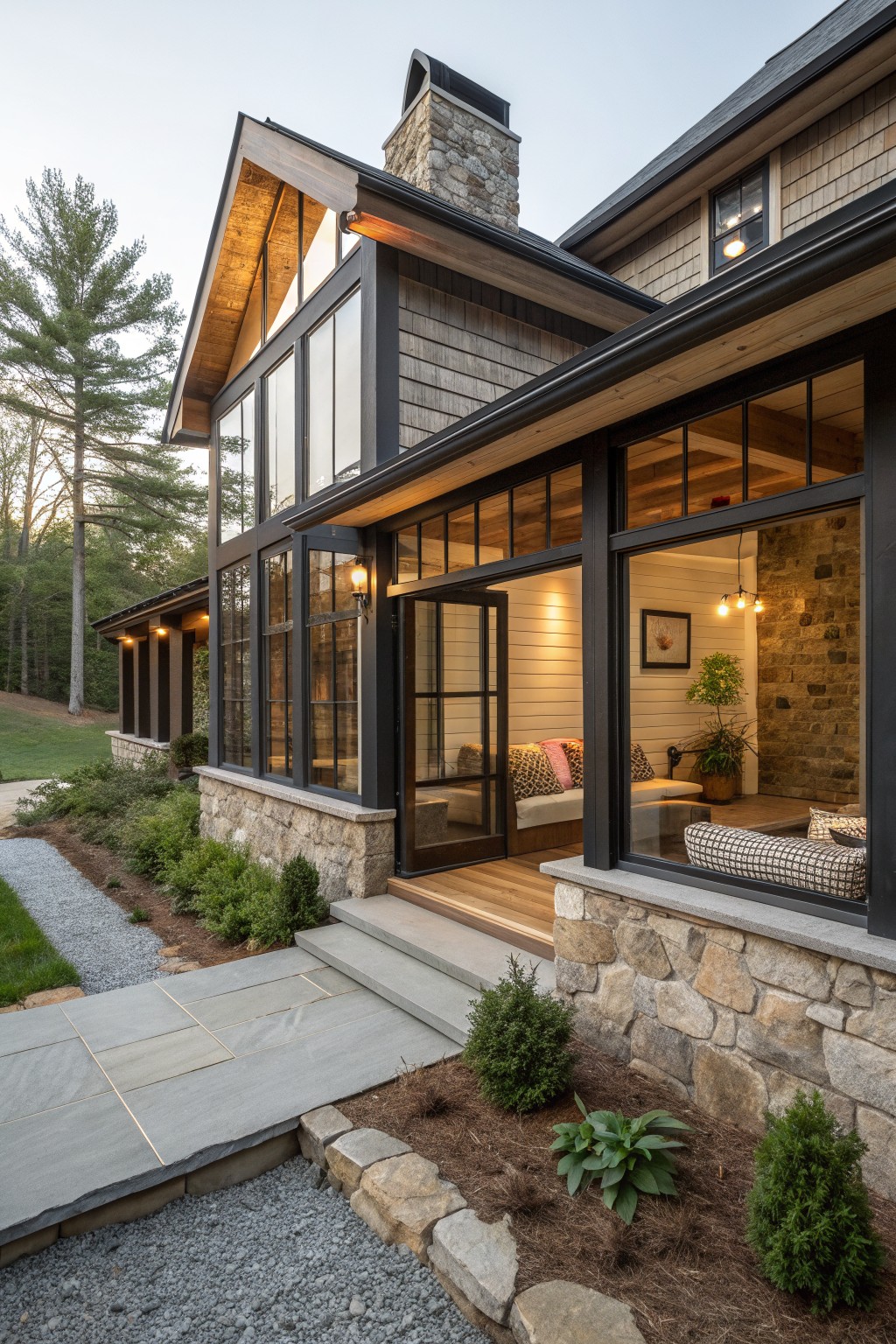
Many older country homes end up looking flat because the walls are all one material from top to bottom. A stone base under wood siding gives the lower part more weight and breaks up the surface so the house feels more settled.
This works best on homes that already have a simple shape. Keep the windows large and dark framed so the two materials can show off without extra trim getting in the way.
Matching Entry Doors
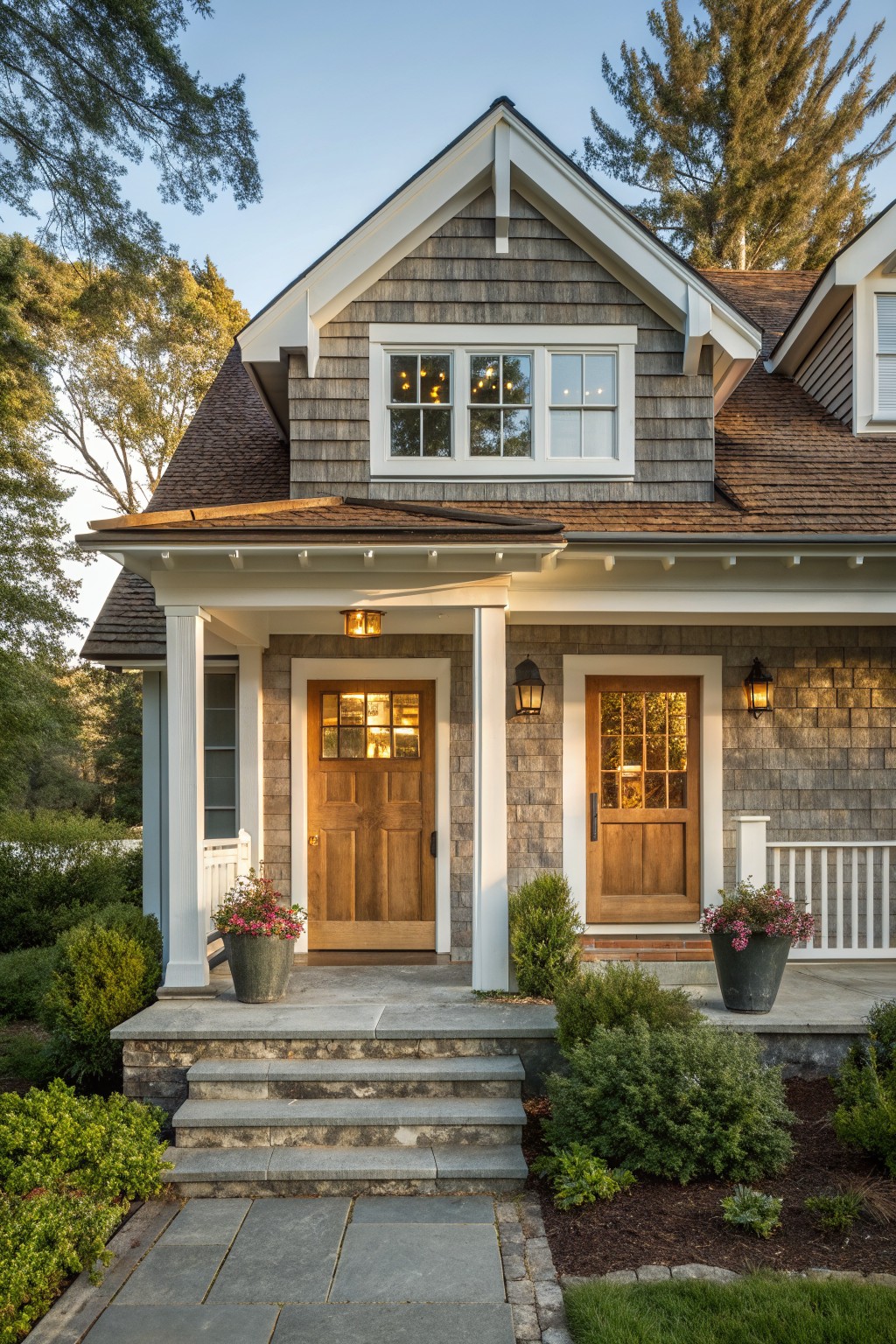
One simple way to give a dated country house more weight is to use two matching wood doors instead of one. They create a balanced look that feels solid and farmhouse appropriate, especially when the doors sit under a modest porch.
This approach works best on homes with a wider entry wall where one door would look too small. Keep the doors the same size and style, and let simple trim and a single overhead light do the rest.
Center the Entry Under a Gabled Porch
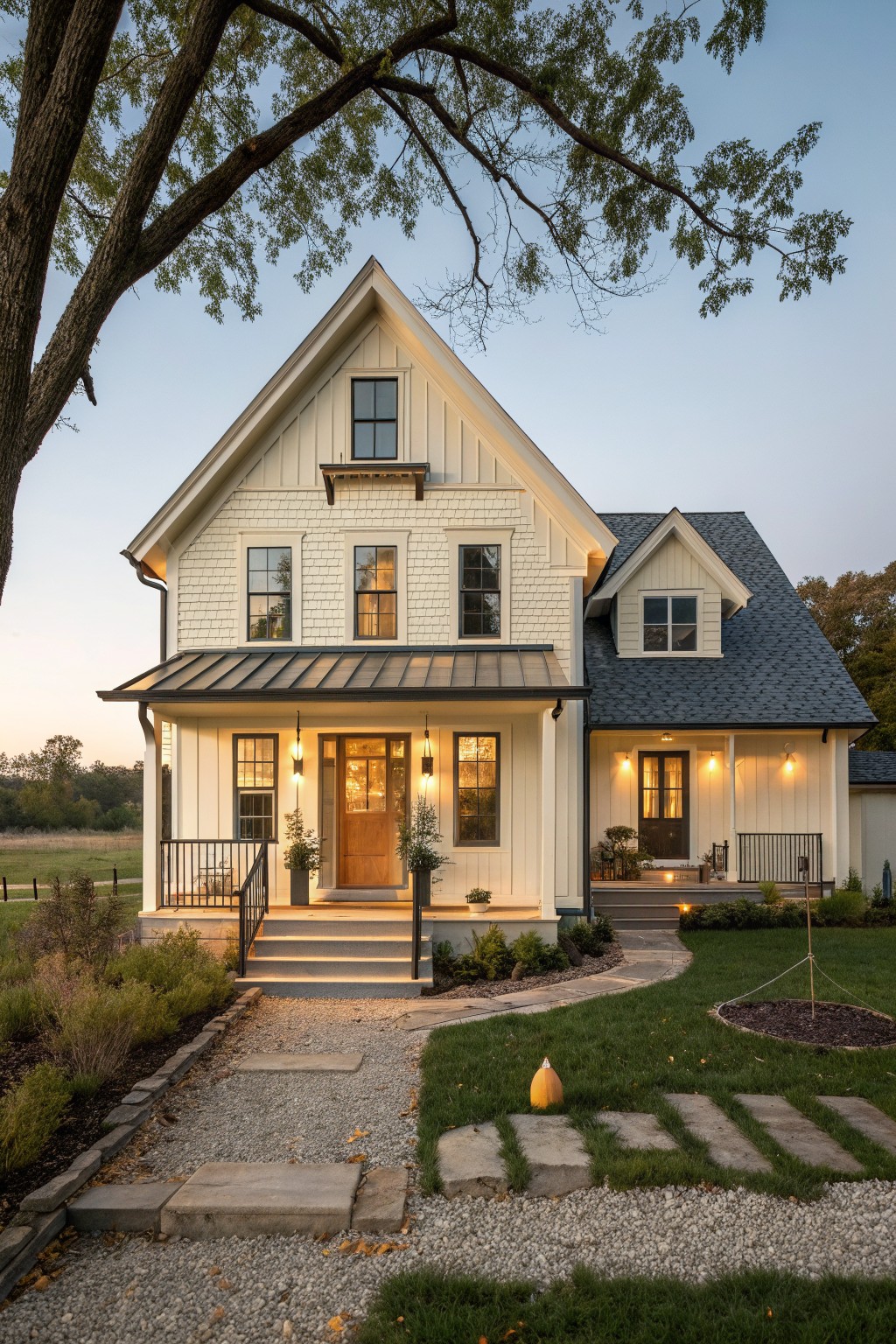
A centered door placed right under the peak of the main gable gives the whole front a clean, balanced look. This approach works especially well on older country homes that feel a bit flat or off-center after years of changes. It pulls the eye straight to the entry without adding extra trim or decoration.
You can use this on a simple rectangular house by keeping the siding plain and letting the roof shape handle the interest. It suits homes that still have a basic gable form and pairs best with a modest porch and a few steps. Just avoid crowding the sides with too many windows or details.
Dark Wood Accents on Light Stucco
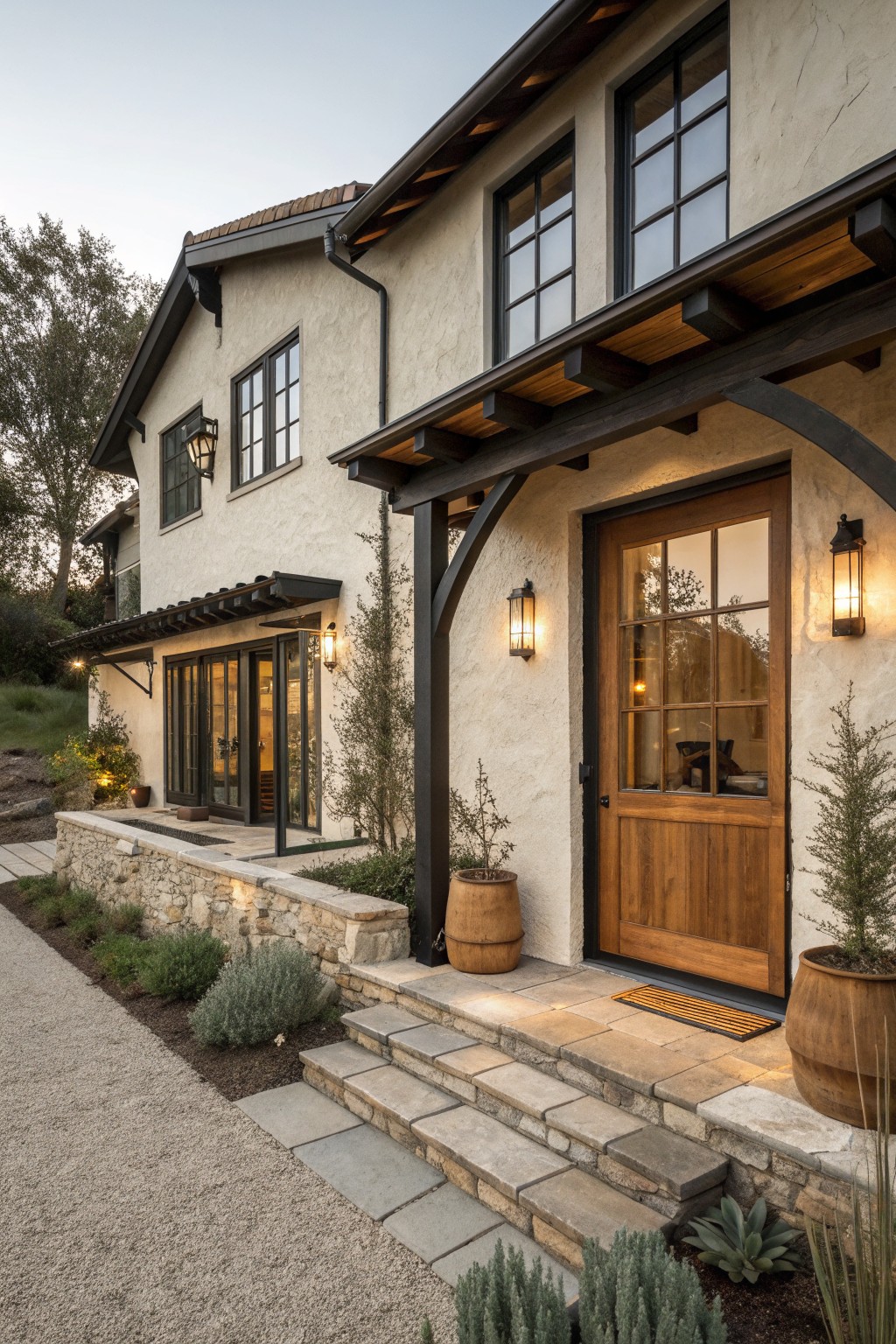
Adding dark wood beams and trim to a light stucco facade gives an older country home more structure and warmth. The contrast keeps the look simple but adds enough character to move it away from a plain or dated exterior.
This approach works best on homes with straightforward rooflines and clean wall surfaces. Use the wood for key spots like overhangs and window frames rather than covering everything, and keep the stucco color light so the details read clearly.
Frequently Asked Questions
Q: What if my country facade already has vinyl siding that clashes with the rustic ideas? A: Swap out a few panels for board and batten in the front sections first. That breaks up the flat look and lets you test the style without redoing the whole house. Paint the remaining vinyl a soft gray to tie it in.
Q: Can I handle the wooden beam additions over the porch on my own? A: Grab some pre-cut cedar pieces and mount them with basic brackets after checking your roof overhang. Work in small sections so you can adjust as you go. It saves hiring costs and gives you that solid farmhouse detail right away.
Q: Do I need to replace my old windows or just update what is there? A: Add simple wood trim around the frames and swap the hardware for black iron pulls. This refreshes the dated look fast while keeping the glass intact. Focus on the front ones first for the biggest impact.
Q: How do I pick materials that won’t fade after a year outside? A: Choose cedar or redwood for any new accents since they weather naturally. Apply a clear exterior sealer every couple of years and you are set. Skip cheap pine unless you plan to repaint often.
