

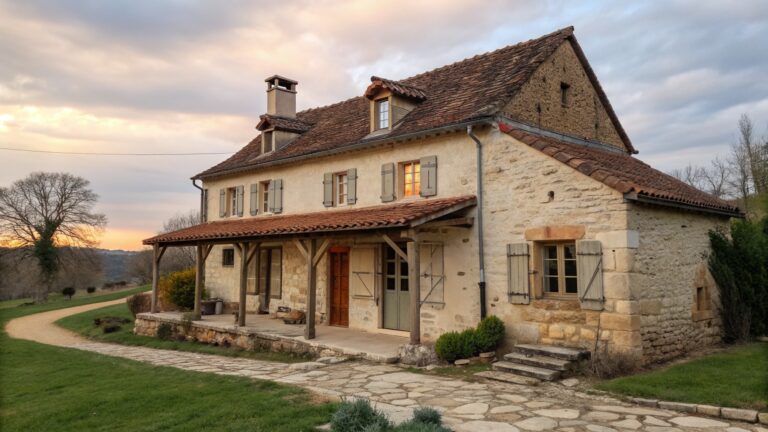
When I look at rural properties the exterior often sets the tone for everything else that follows inside or out.
European farmhouses tend to use a mix of natural materials and clean rooflines that help the whole structure blend into the land rather than sit on top of it.
Some details only click once you see them in person.
I have started paying more attention to how these choices hold up in different lights and seasons before trying them myself.
Adapting a few of those facade ideas has made some of the homes I know feel more connected to their surroundings without losing their practical side.
Stone And Wood For A Classic Farmhouse Look
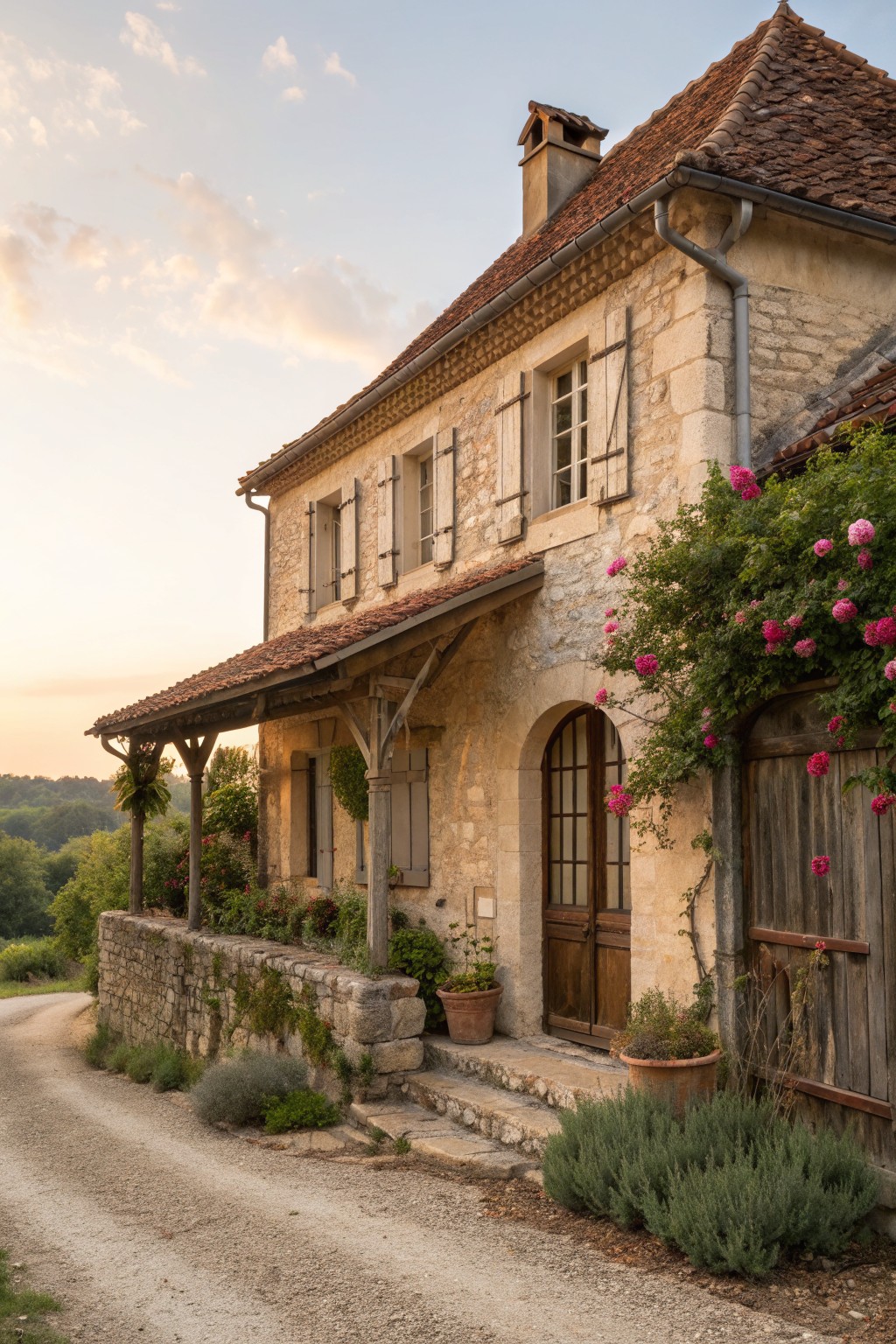
Stone walls paired with wood shutters and doors give a house that solid, grounded feel without looking heavy. The mix keeps the exterior simple yet full of character, and it tends to age gracefully in rural settings.
This approach works best on homes with straightforward shapes where you want the materials to do most of the work. Keep the wood tones warm and the stone natural so the whole thing feels connected to the land rather than added on.
Mix Stone with Brick Details
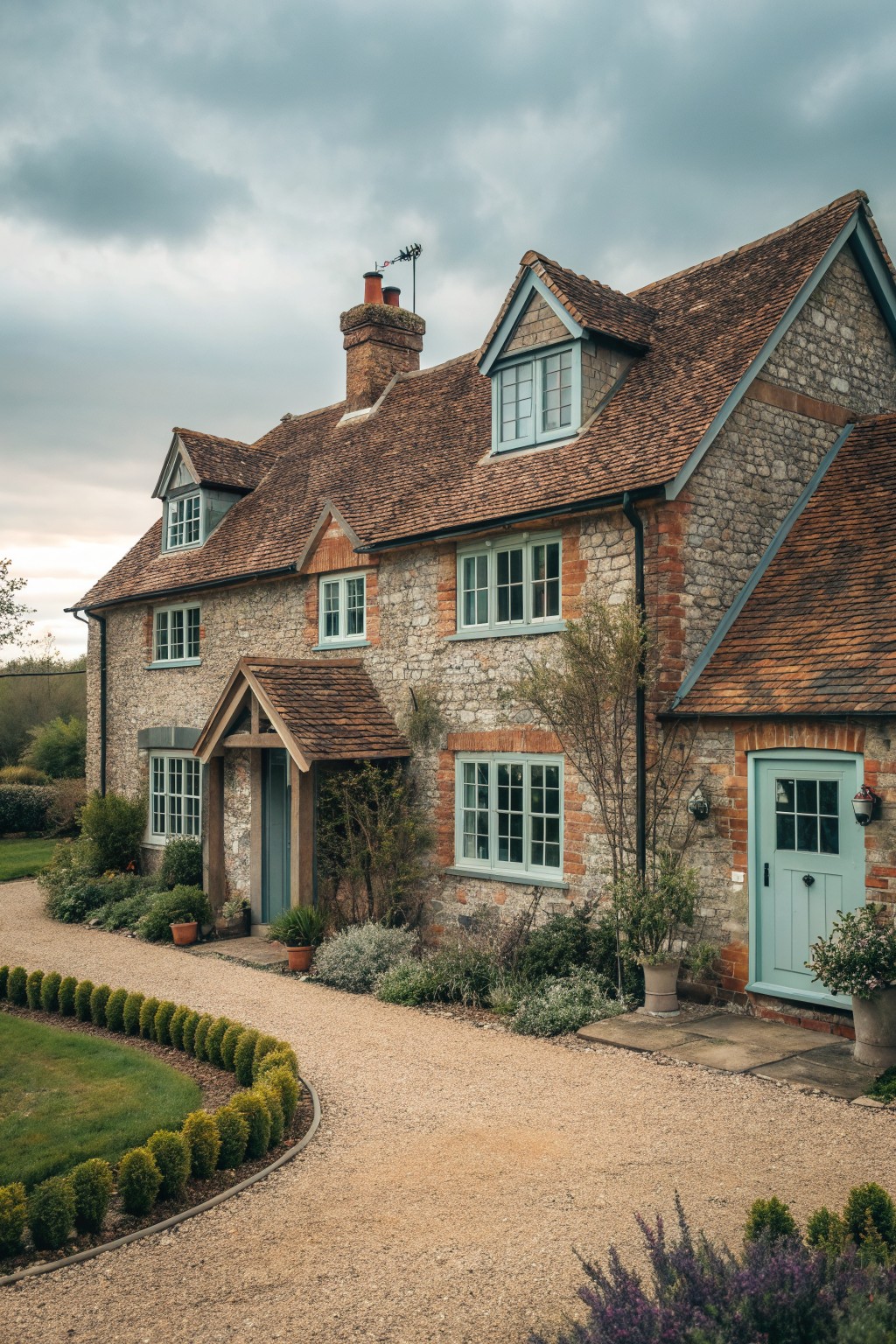
Stone paired with brick gives a farmhouse exterior real staying power. The walls hold up well over time while the brick frames around windows and doors add just enough contrast to keep things interesting. This approach feels natural on rural homes because it echoes older building methods without needing a lot of extra trim or ornament.
It suits properties where the house should look settled into the land rather than brand new. Keep the stone dominant and use brick mainly around openings and corners so the texture stays balanced. Avoid covering too much of the facade with either material or the look can turn heavy.
Red Brick With Dark Trim
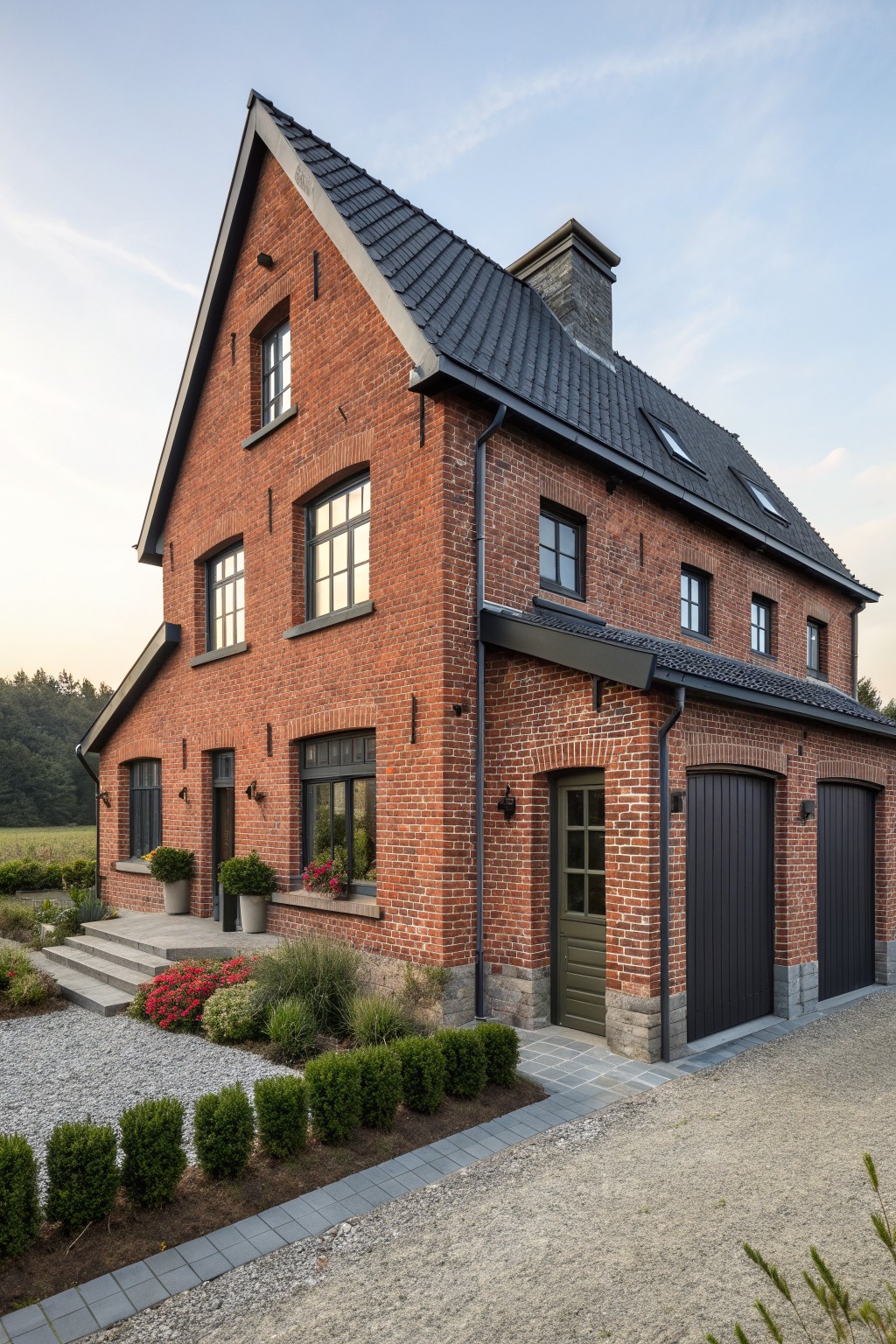
Red brick can feel a bit plain on its own, but adding dark trim and roofing changes that quickly. The contrast makes the windows stand out and gives the whole front a sharper, more finished look. It is a simple way to get that European farmhouse feel without adding lots of extra detail.
This works best on homes with a clear roofline and a few different window sizes. Keep the brick color warm and let the trim stay matte and dark so the two tones balance each other. It suits rural settings where you want the house to look solid but not overly formal.
Terracotta Pots Along The Entry Steps
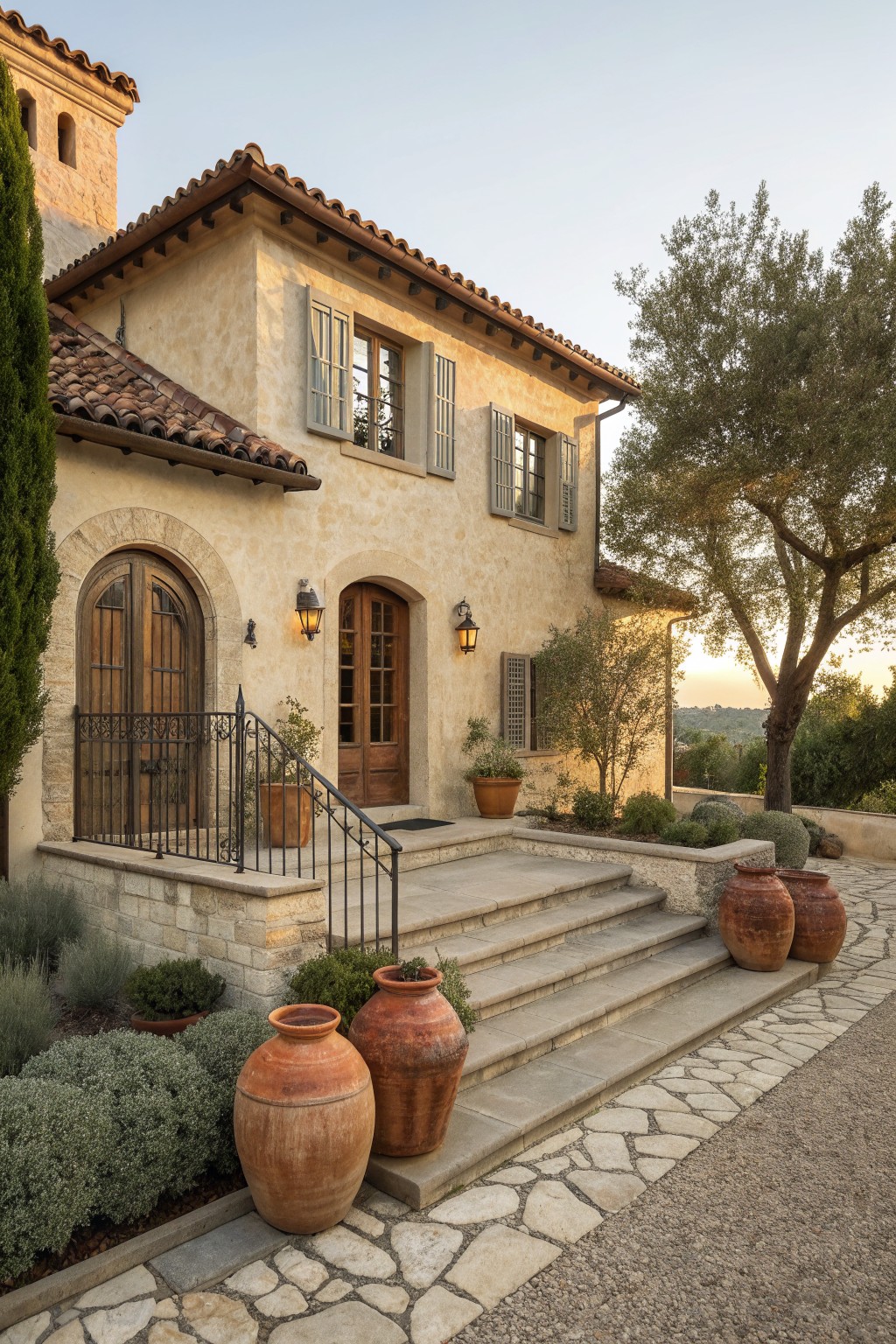
Large clay pots stand out here because they add texture and a bit of warmth without competing with the stucco and stone. They sit right on the steps and along the path, which keeps the eye moving toward the doors while breaking up the hard surfaces.
This works best on homes that already have some weight to the materials, like stone bases or thick walls. Place them in groups of two or three at different heights, and stick to one or two sizes so the look stays simple rather than cluttered.
Dark Shutters On White Siding
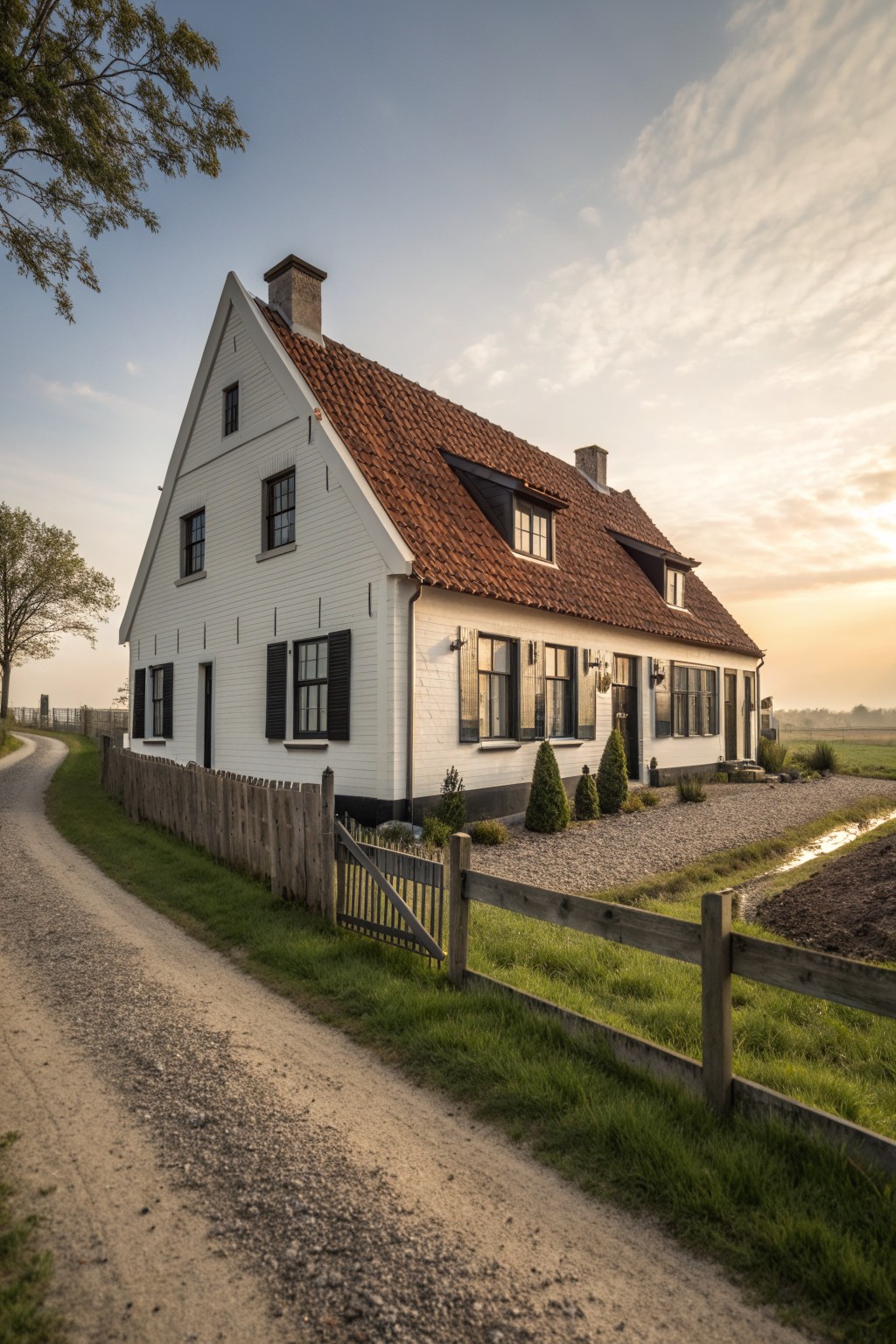
Many farmhouses use dark shutters to give a white exterior more definition. The contrast keeps the look clean while making the windows stand out without extra trim or ornament.
This works best on simple gabled homes where the siding stays plain. It suits European-inspired styles that want some character but still read as straightforward and rural.
Attach a Simple Canopy for Outdoor Meals
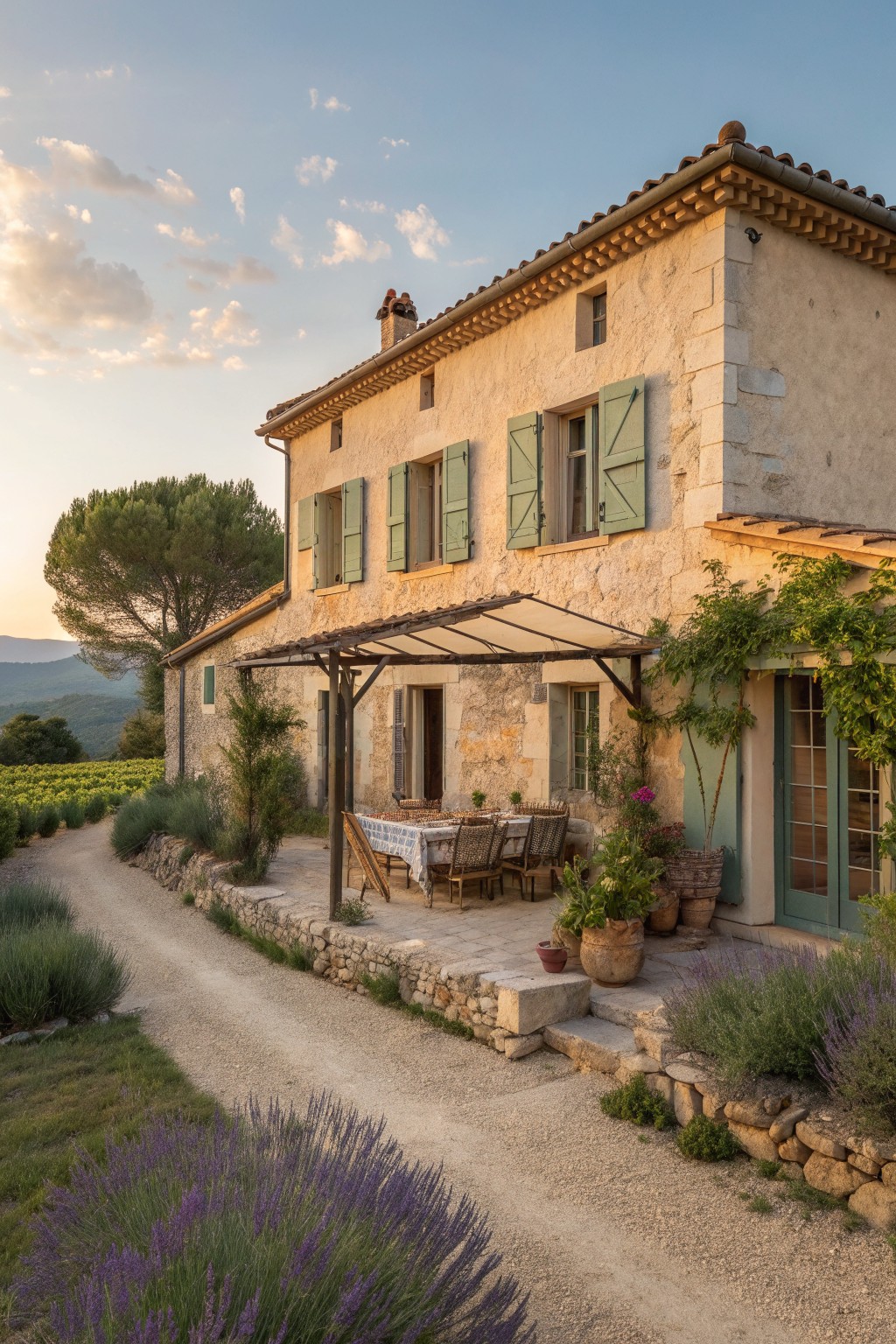
A basic canopy tacked onto the side of a stone house gives you a shaded place to eat without building a whole new room. It works because it stays light and low, so the old walls still show through and the space feels tied to the house instead of added on later.
This setup suits older farmhouses or cottages where you want a little protection from sun or light rain. Keep the frame simple, use a neutral fabric, and place the table right against the wall so everything stays easy to reach from the kitchen door.
Blend Stone With Half-Timbering On The Facade
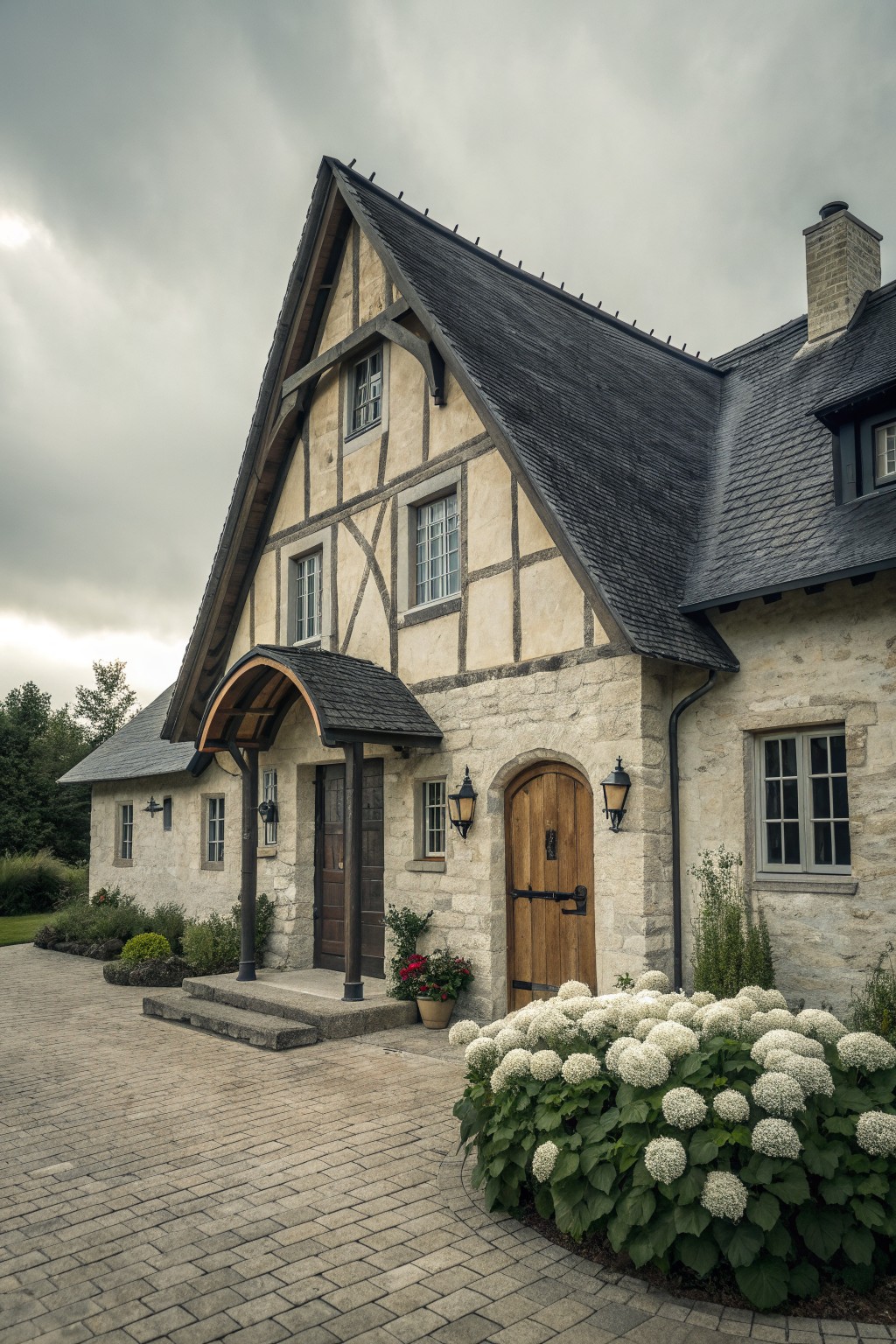
Mixing a stone base with half-timbering above gives a house real weight and history without feeling heavy. The stone anchors everything at ground level while the lighter timber pattern keeps the upper story from looking too solid. It works especially well on homes with steep roofs and simple window placements.
This combination suits rural properties that already lean traditional. Keep the stone rough and the timber dark so the contrast stays clear. Too much ornament on either part can blur the effect.
Stone And Painted Wood On The Exterior
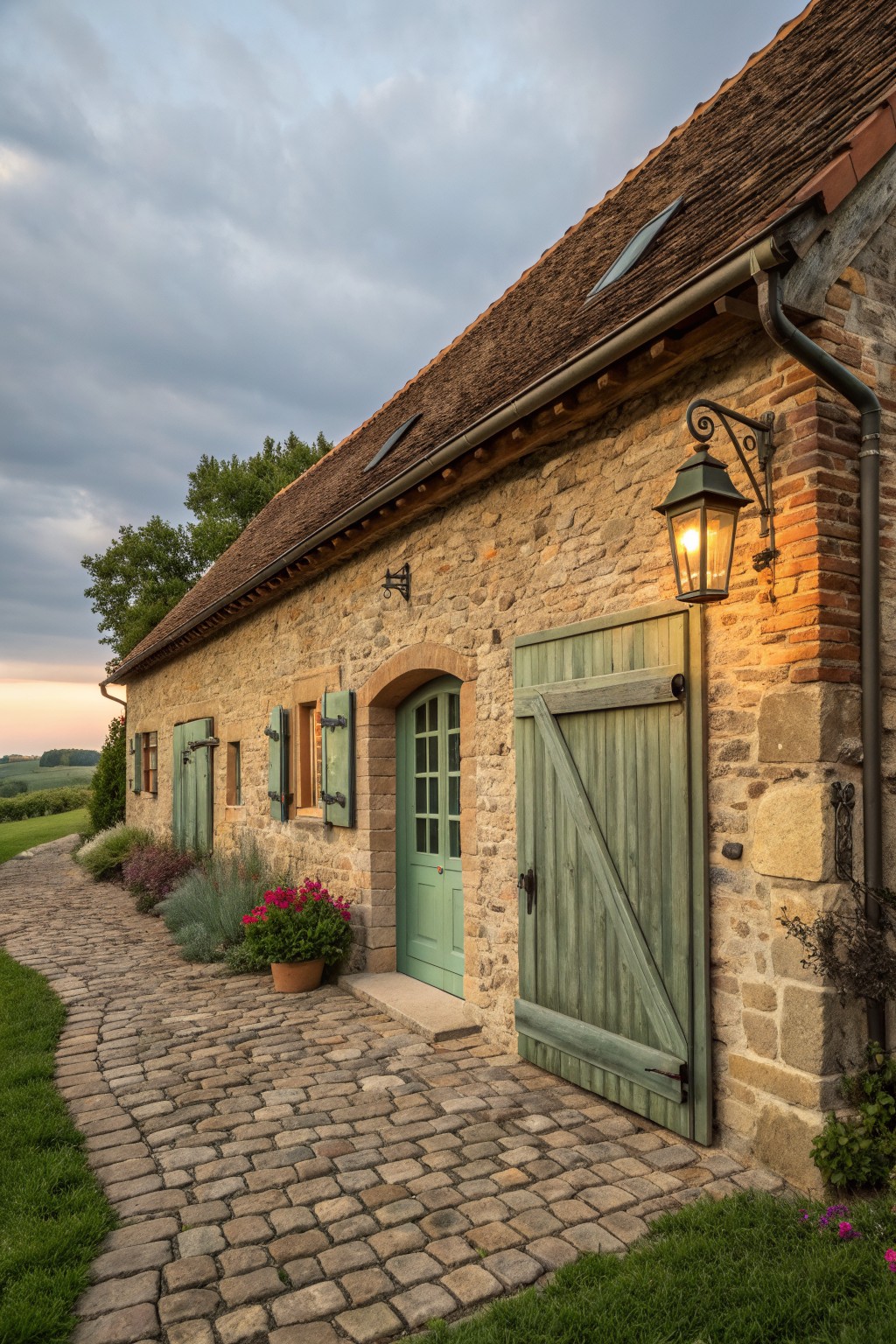
Mixing natural stone with painted wood doors and shutters gives a farmhouse exterior real staying power. The rough texture of the stone keeps things grounded while the soft green wood adds just enough color to stop the whole thing from feeling too heavy or cold.
This works best on rural homes that already have some age or texture to the walls. Stick with muted greens that look a little worn, and let the wood show some grain instead of a perfect finish. It suits older stone houses especially well and needs very little extra decoration to feel complete.
Classical Pediments on Stone Farmhouses
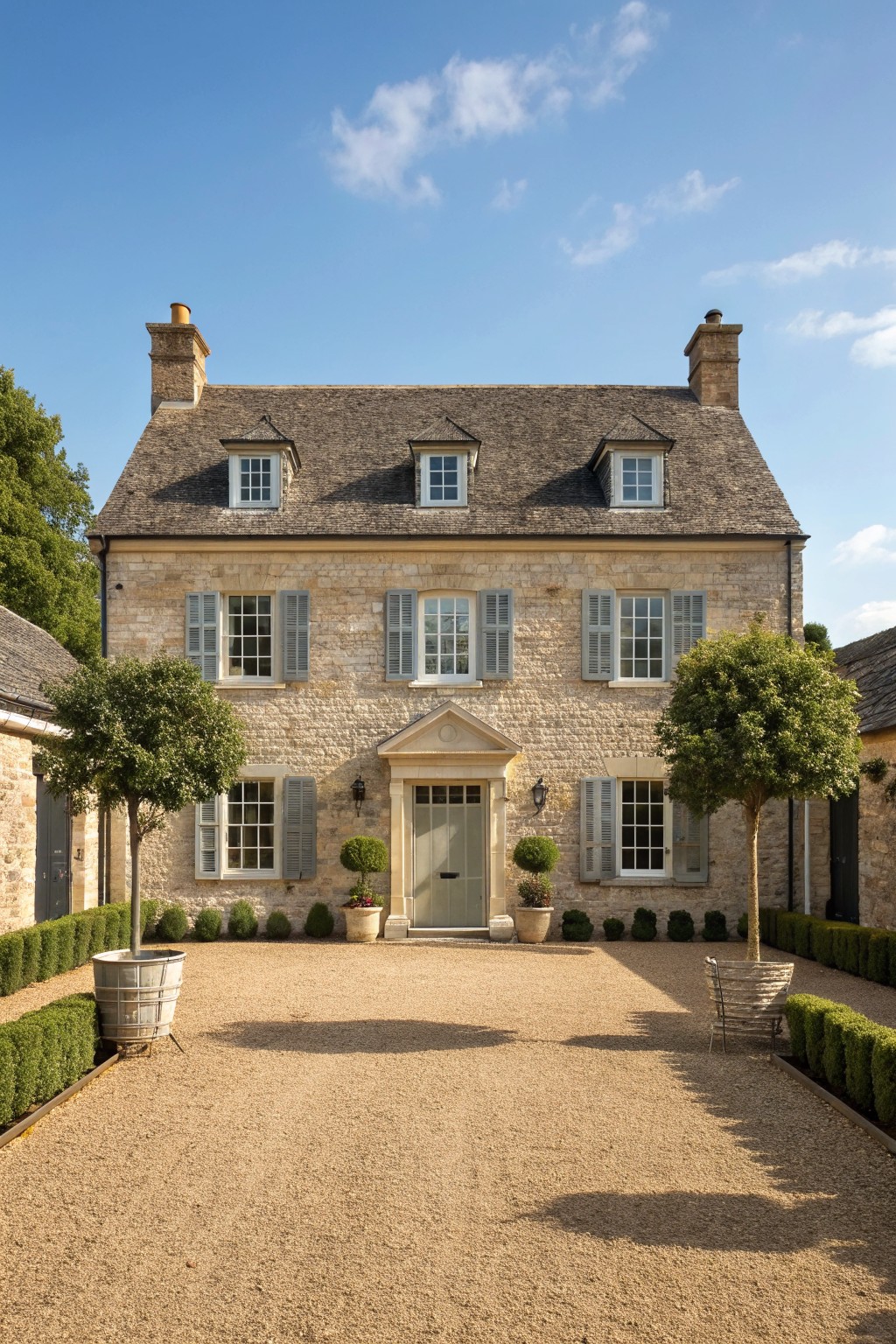
A simple pediment over the front door can change how a stone house feels without adding much extra detail. It gives the entry a bit of structure and formality that works well against the rough texture of the walls. Many older European farmhouses used this move to make a basic building look more finished while still keeping its rural character.
This approach suits homes with a centered doorway and enough wall space above it. It works best when the rest of the facade stays fairly plain so the pediment does not compete with other features. Avoid forcing it onto houses with irregular window placement or very modern additions.
Arched Doorways for Farmhouse Entries
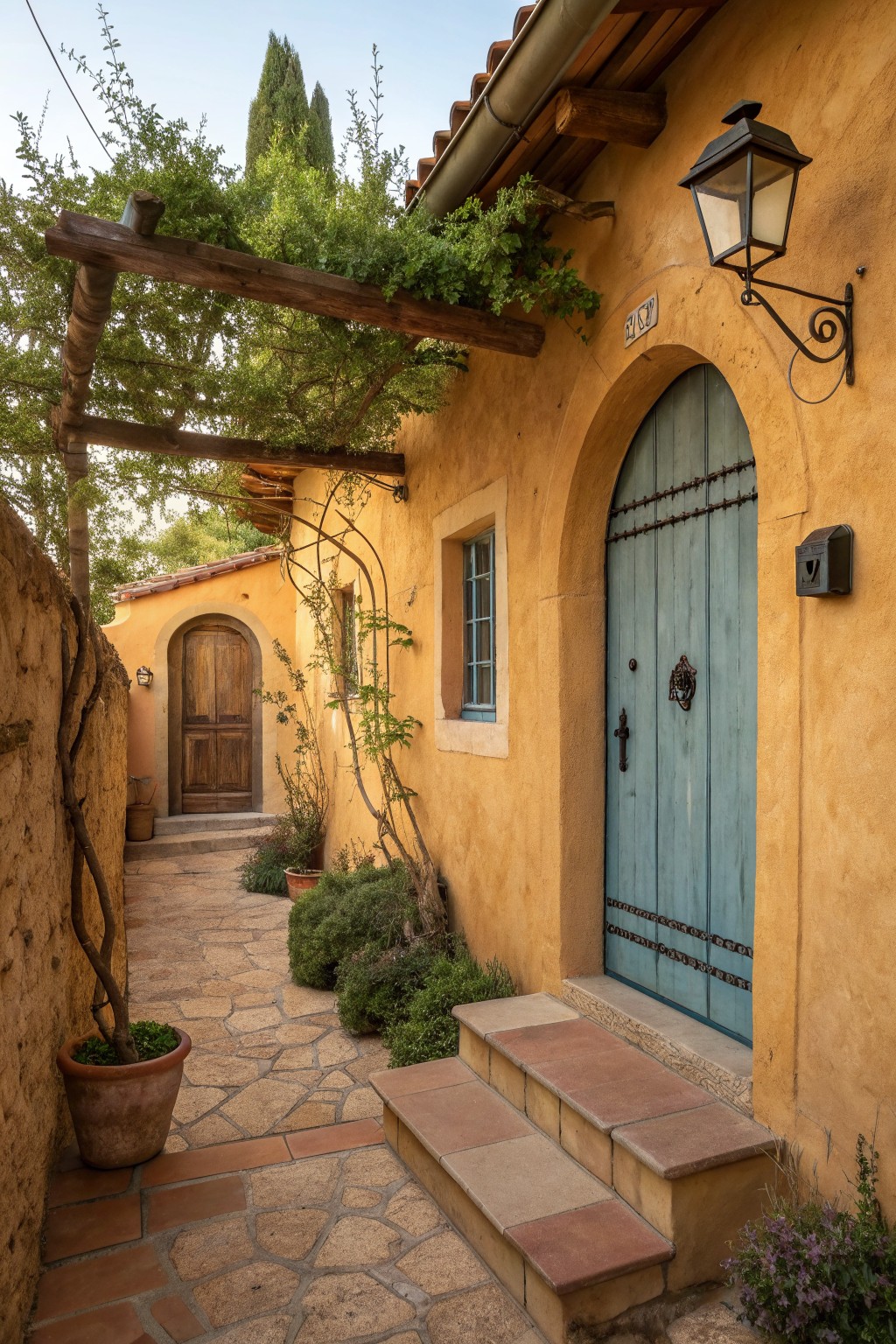
An arched doorway gives a farmhouse exterior a simple European touch without extra trim or detail. The rounded opening breaks up flat stucco walls and draws attention straight to the door, which works especially well when the door itself is painted a clear color.
This approach suits rural homes that already have basic stucco or plaster walls and need one strong focal point at the entrance. Keep surrounding windows and hardware modest so the arch remains the main feature rather than competing with other elements.
Climbing Vines on Stone Facades
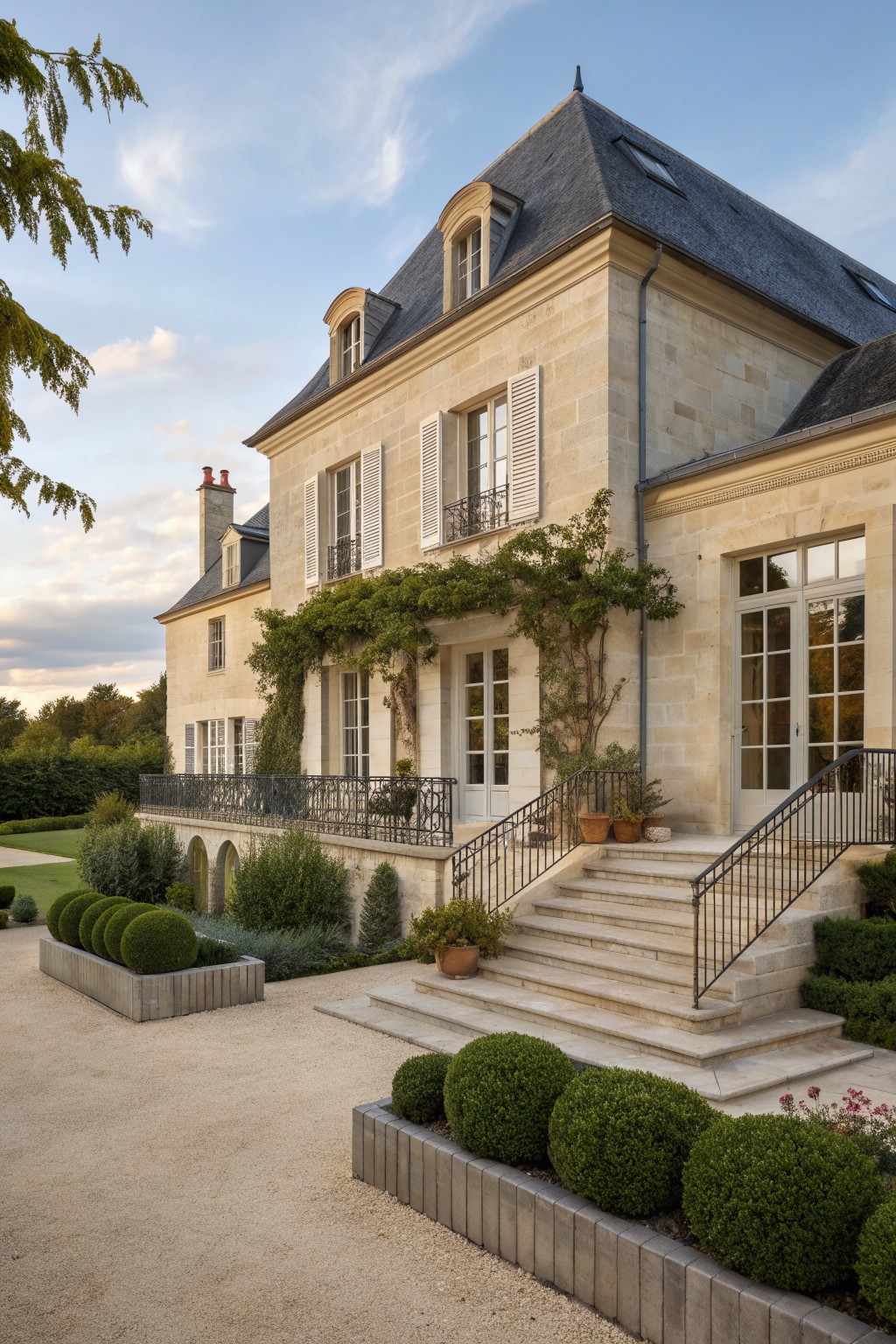
Many older European farmhouses get part of their charm from the way vines grow right up the walls. The green growth breaks up the flat stone surface and gives the house a settled look that feels natural rather than planned.
This approach works best on homes with simple stone or stucco walls in a rural setting. Choose a vine that clings without harming the mortar, and keep it trimmed around windows and doors so the house stays bright inside.
Pots Of Flowers Along The Entry Steps
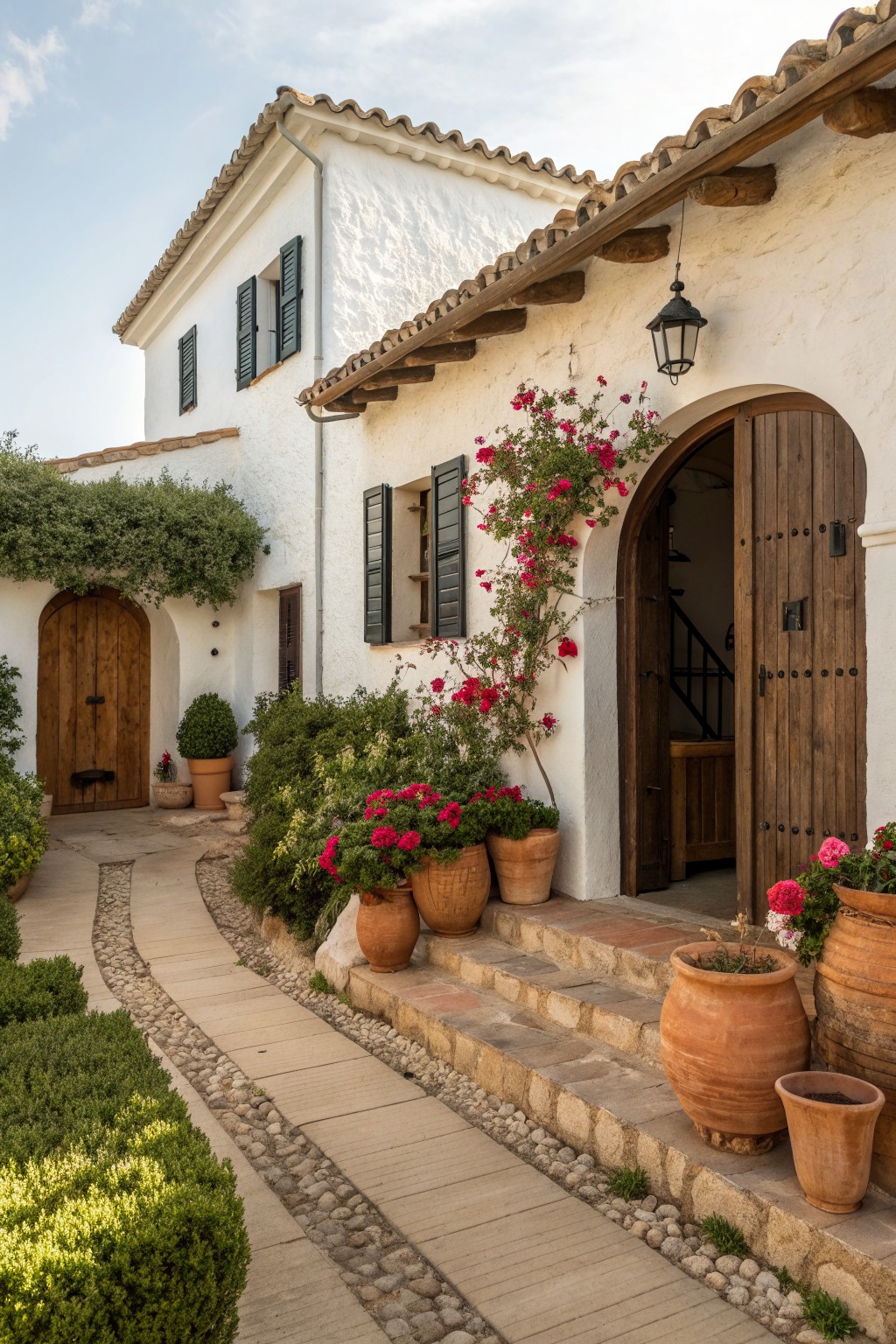
One easy way to give a white stucco farmhouse more life is to set large terracotta pots along the steps leading to the door. The bright flowers against the plain walls create a welcoming path without any major changes to the structure itself.
This approach suits homes with clean exteriors and simple rooflines. Mix a few sizes of pots and pick flowers that hold color through the warmer months so the entry stays appealing with little extra work.
Mixing Stone And Wood On The Facade
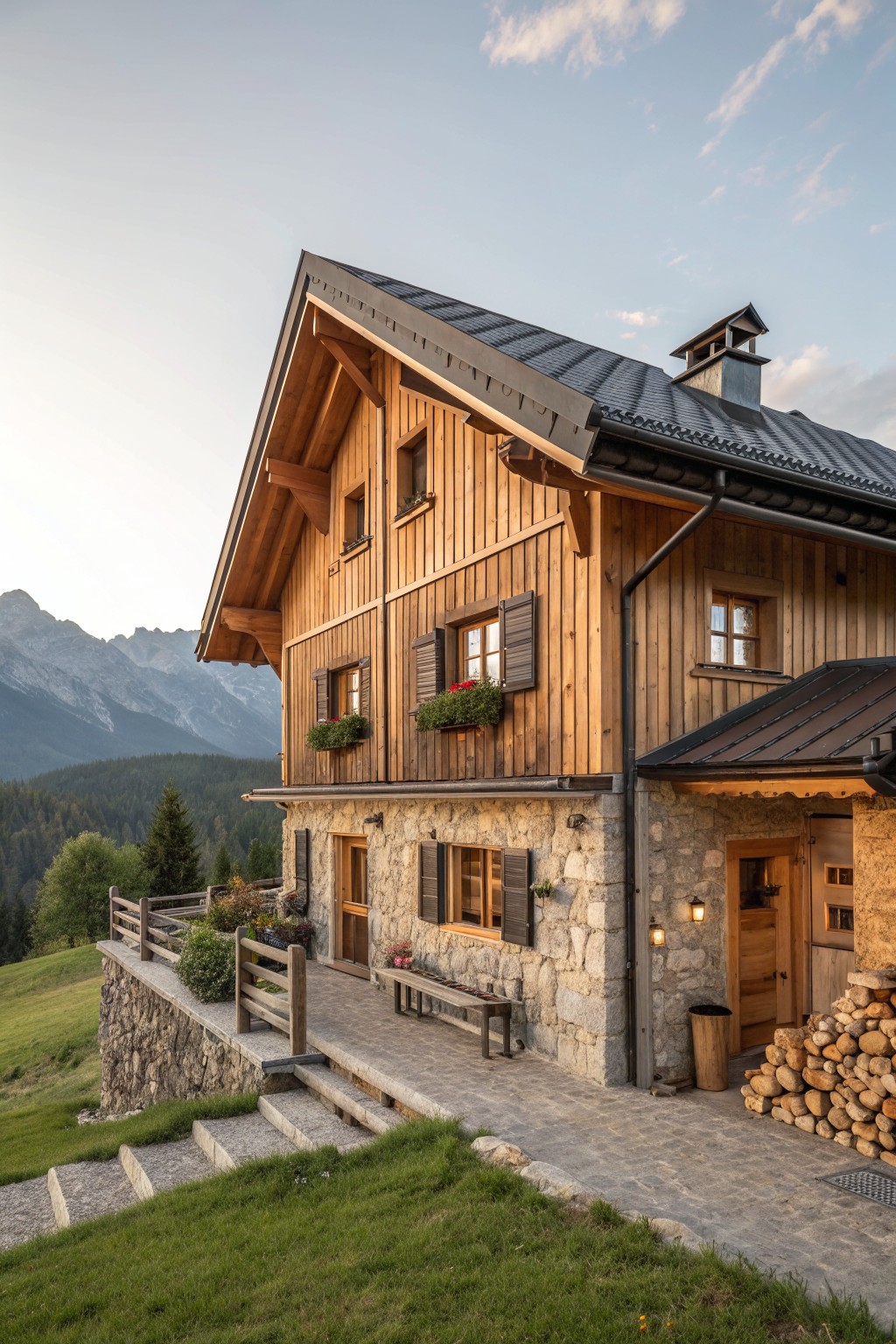
Many older farmhouses in Europe use stone along the base and wood siding above it. The stone anchors the house to the ground while the wood keeps the upper walls lighter and more traditional.
This approach works best on homes with a gentle slope or in areas with cold winters. Match the stone to local rock if possible and let the wood age naturally so the two materials settle together over time.
Green Shutters on White Exteriors
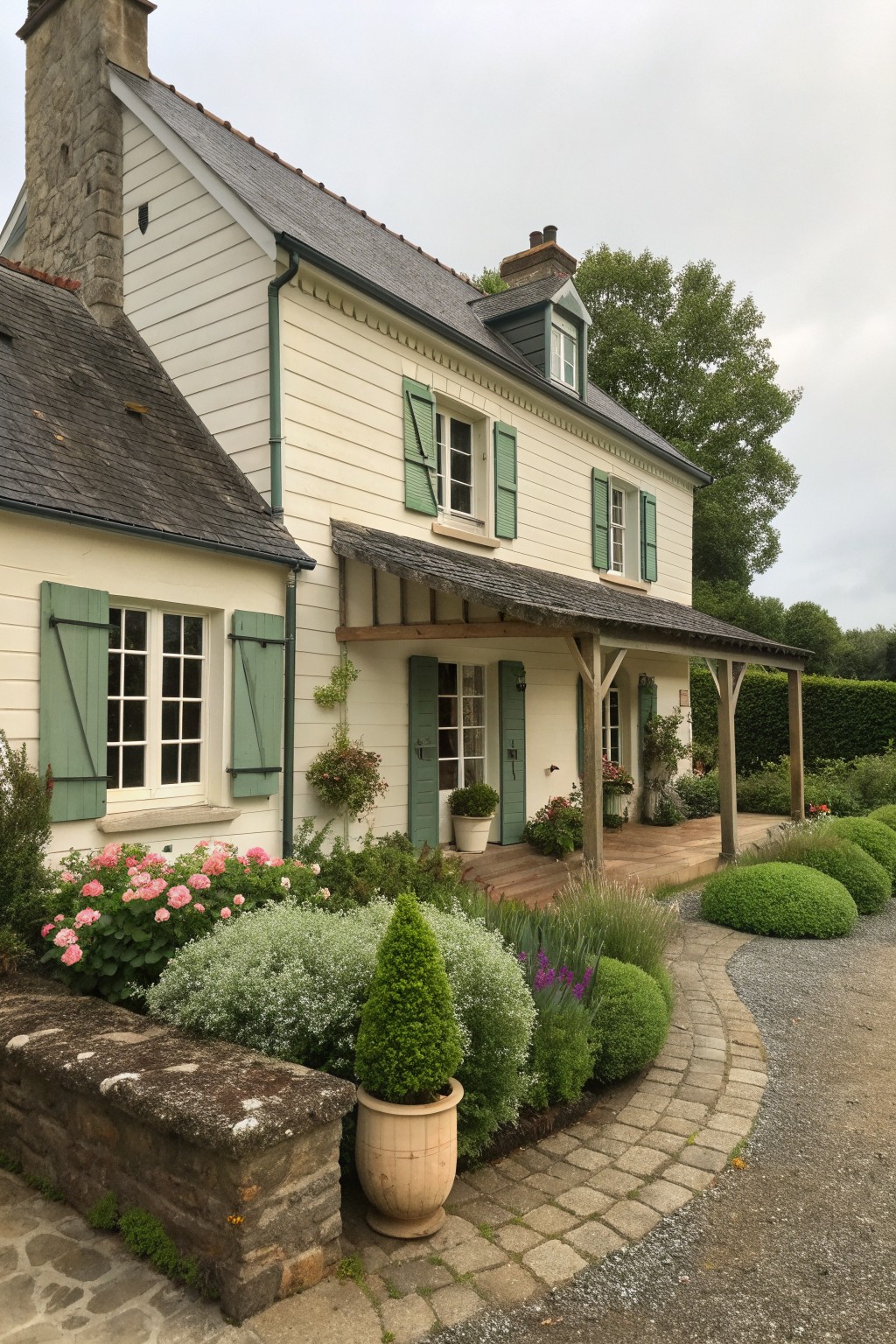
Green shutters stand out as a simple way to give a white farmhouse more character. They add just enough color to keep the front from looking plain while still feeling calm and classic in a rural setting.
This approach works best on homes with straightforward siding and a few stone details. Pick a soft green that ties in with any trim or plants nearby so the whole look stays balanced rather than busy.
Climbing Vines on Stone Exteriors
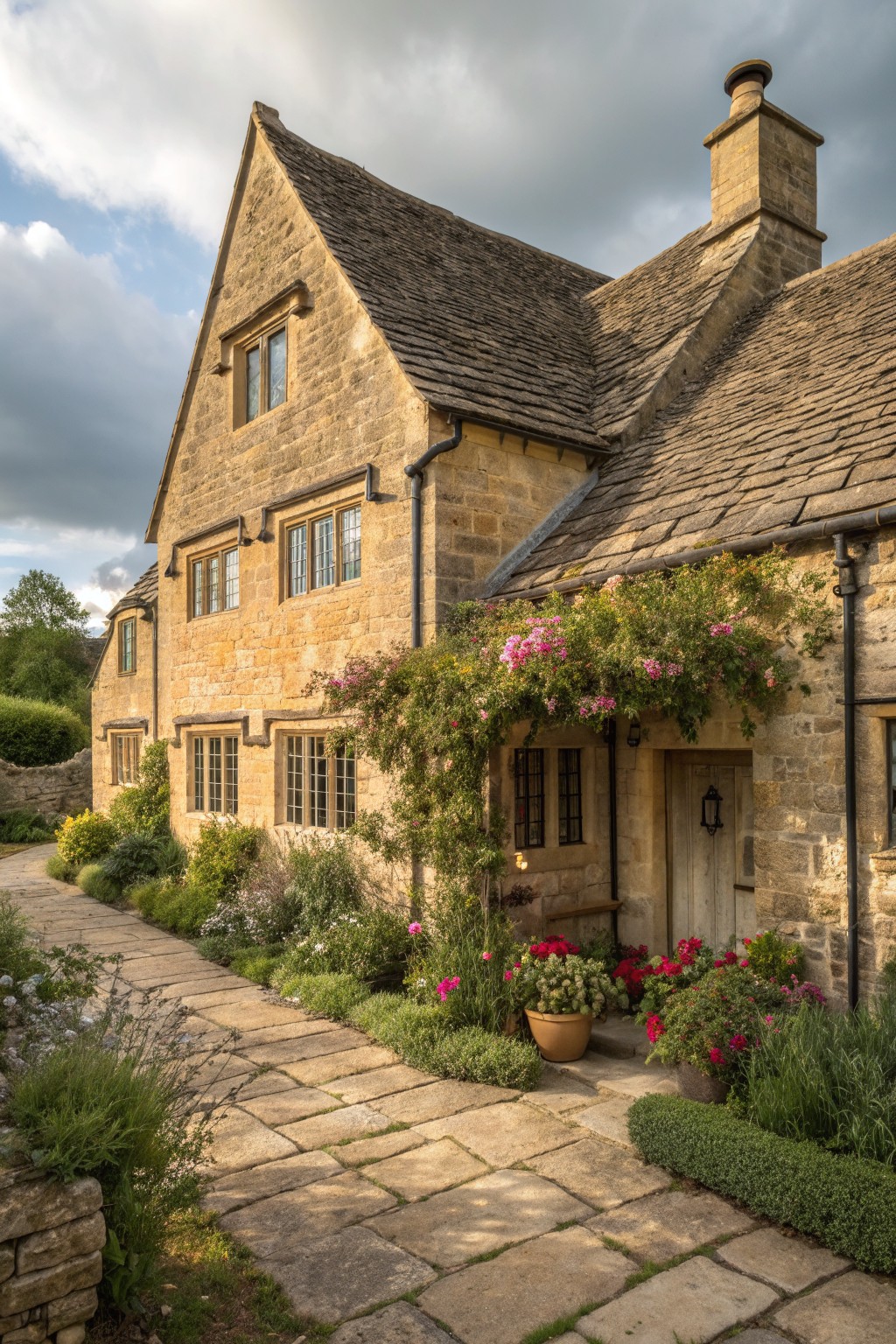
Stone houses can feel a little heavy without something to break up the surface. Climbing vines add softness and color that makes the walls look less solid and more connected to the garden around them.
This works best on older stone builds where the texture already has some age and variation. Keep the vines trimmed around windows and doors so they frame the openings instead of hiding them, and choose varieties that stay manageable on the masonry.
Columns That Extend Outdoor Space Along The House
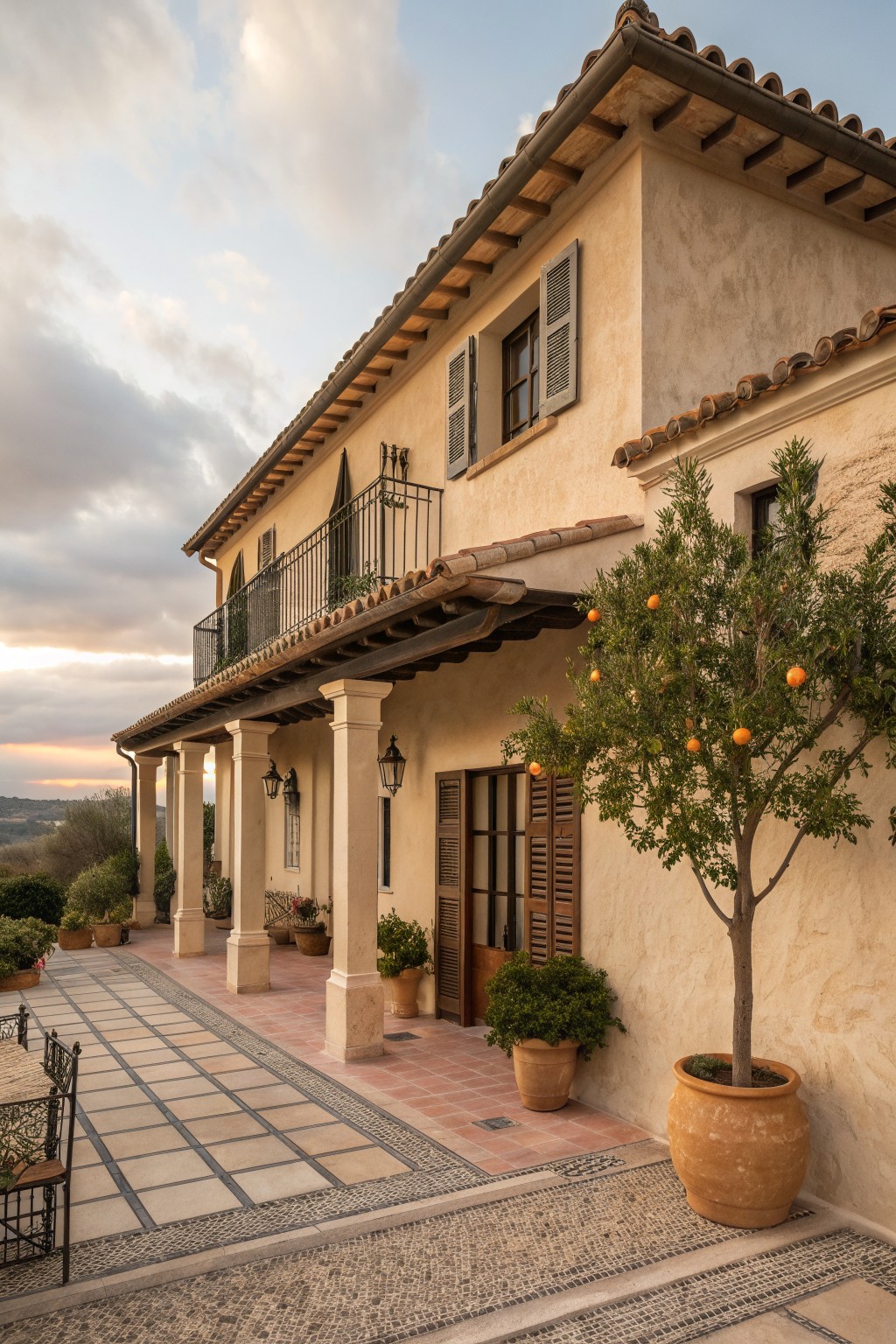
A row of simple stone columns under a tiled overhang can turn the side of a house into a shaded walkway that feels like part of the home itself. This setup works especially well on European-inspired farmhouses because it adds length and rhythm without needing a lot of extra decoration. The columns here hold up both the balcony above and the roofline, so the space underneath stays usable even on hot days.
This approach suits rural homes that already have stucco walls and clay tiles. It gives you a place to set pots or seating right against the house while keeping the overall look clean. Just make sure the columns match the scale of the building so the whole thing does not feel too heavy or too thin.
Adding Climbing Vines To Stone Walls
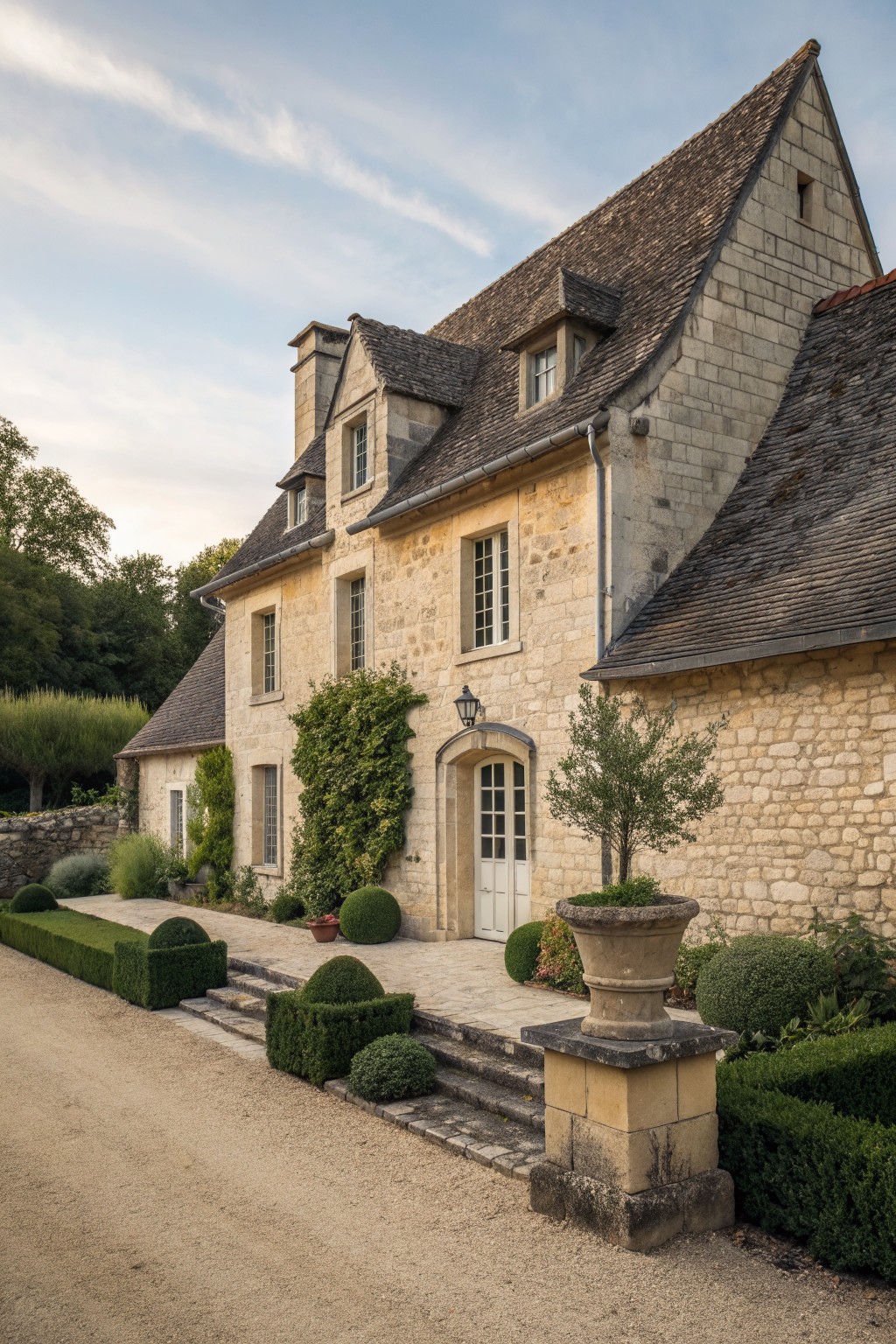
Stone exteriors can feel a little heavy without something to break them up. Climbing vines add just enough green to soften the surface and help the house blend into its surroundings.
This approach suits older farmhouse styles where the stone already has texture and age. Keep the vines on a few sections rather than covering everything, and use low shrubs at the base so the planting stays neat without much upkeep.
Dark Metal Roofs On Light Farmhouse Exteriors
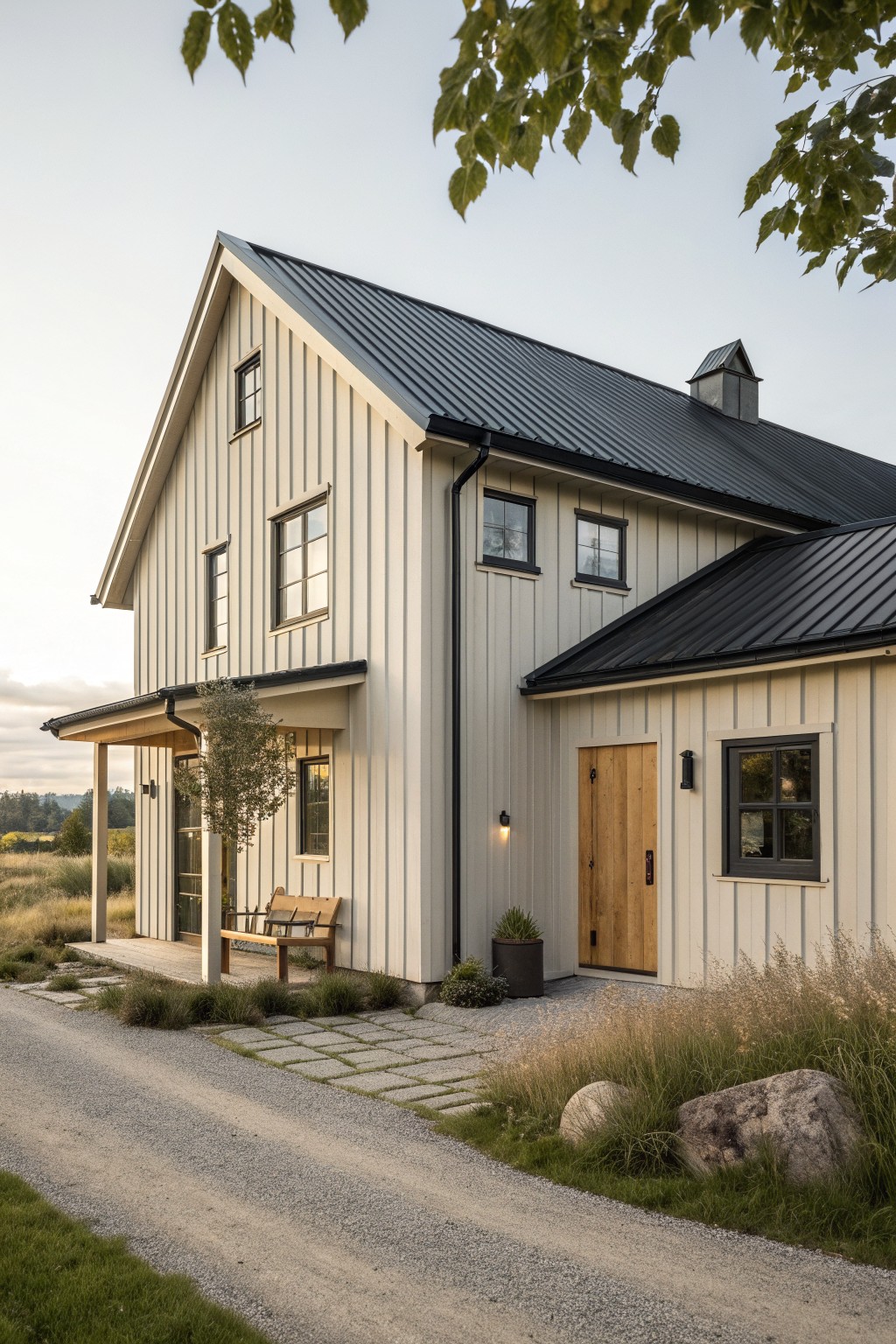
A dark metal roof stands out against light vertical siding and gives the whole exterior a crisp, settled look. The contrast keeps the house from feeling too plain while still reading as simple and rural. Many older European farmhouses used similar material pairings because the darker roof helps the building feel grounded.
This approach works best on homes with straightforward gable lines and minimal trim. It suits properties that want a clean look without heavy ornament. Keep the siding a soft off-white or warm gray so the roof does most of the work.
Arched Entries Add Presence To Stone Houses
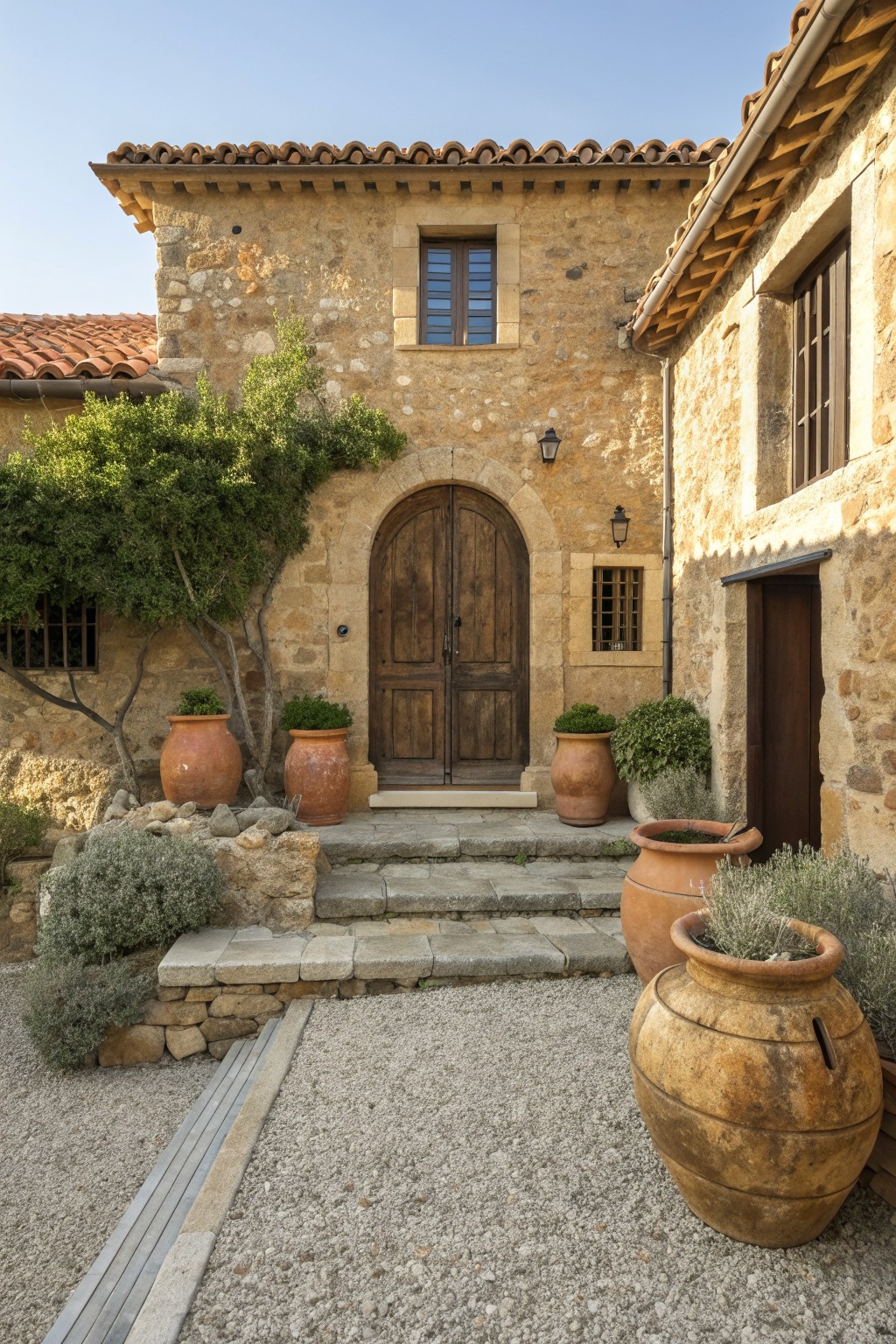
An arched doorway works well on stone houses because it breaks up the flat wall surface and gives the entrance a clear focal point. The curve softens the heavy masonry while still looking sturdy and practical.
This approach suits rural homes that want a simple European farmhouse look without extra trim or decoration. Keep the door in natural wood and limit nearby plantings so the shape stays easy to see from the approach.
Dark Accents On Light Farmhouse Walls
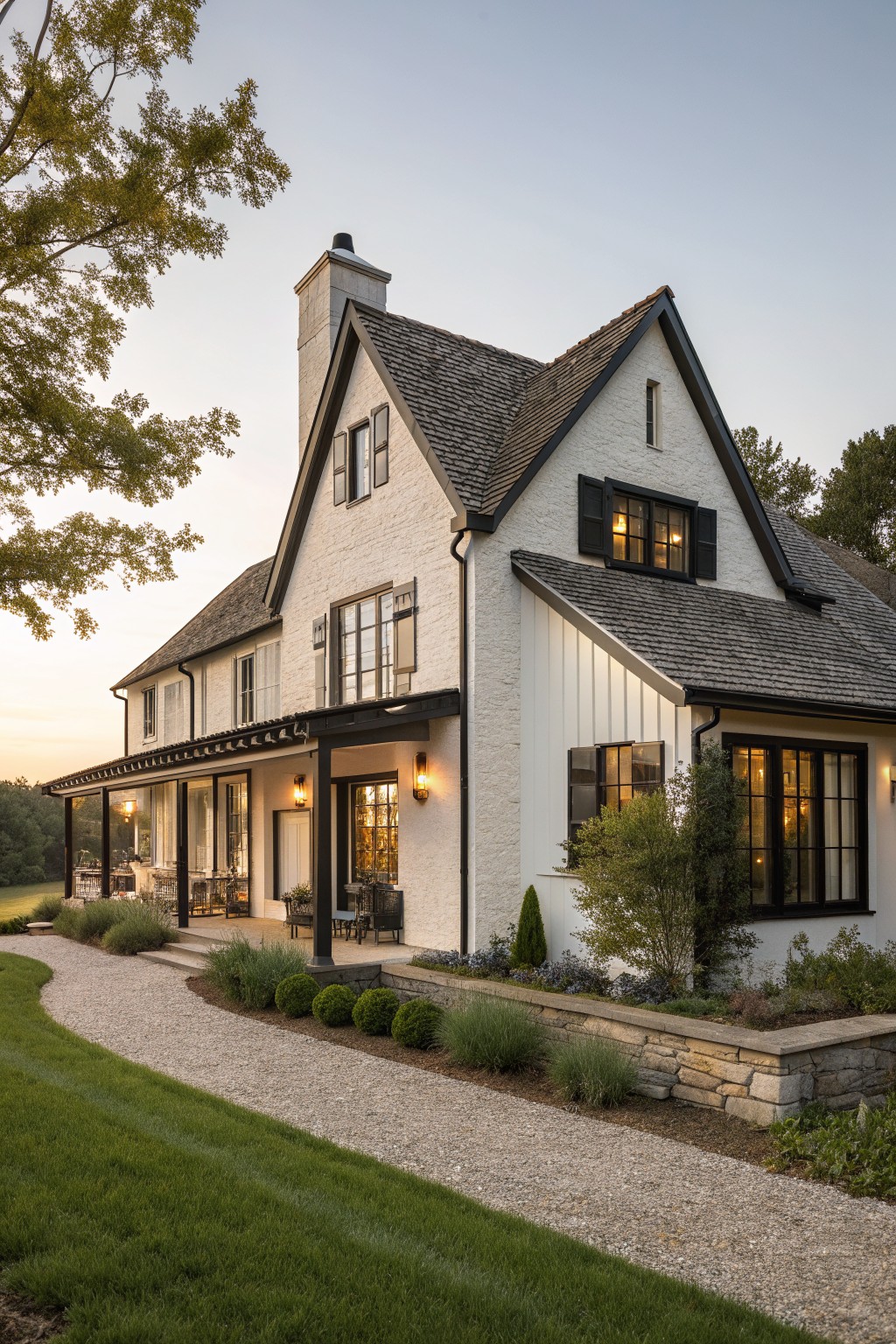
Dark trim and roofing give a white exterior more structure without adding clutter. The black window frames and shutters stand out cleanly against the light stucco, while the dark roof helps tie the different roof angles together.
This approach suits homes with simple wall planes and several gables. Keep the trim color consistent across windows, shutters, and porch posts so the contrast feels intentional rather than scattered.
Brick With Stone Accents
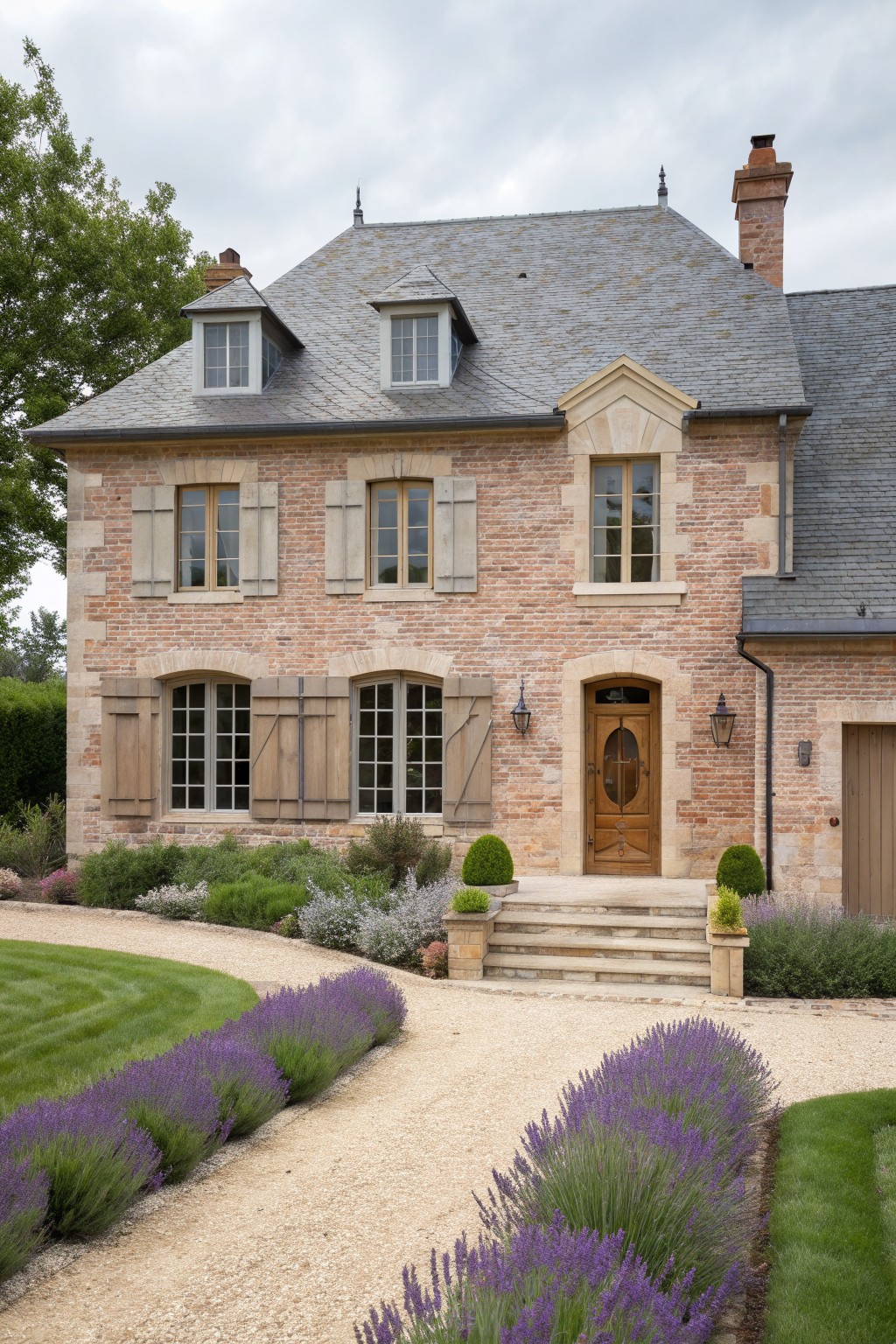
Brick exteriors often need a little extra texture to feel warm and settled instead of plain. Adding limestone around the windows and doorways breaks up the surface and gives the house that older European look without extra ornament.
This approach works best on two-story homes where the stone can frame the main openings evenly. Keep the stone fairly light in color and let the brick carry most of the wall so the contrast stays subtle rather than busy.
Frequently Asked Questions
Q: How do I pick shutters that feel authentic to these European farmhouses? A: Go for solid wood in a muted tone like olive or soft gray. Hang them so they sit flush against the wall and look ready to swing shut. This one change often makes the windows feel more grounded in the style.
Q: What works for adding texture if my current siding is plain vinyl? A: Layer in a stone or brick skirt along the foundation. Keep the upper walls simple and let the lower detail carry the European weight. It keeps the update focused and avoids a full overhaul.
Q: My front door faces the road with no porch. How can I still capture that welcoming rural entry? A: Build a shallow overhang with exposed beams and add a bench beside the door. These elements create a pause before you step inside without needing extra square footage.
