

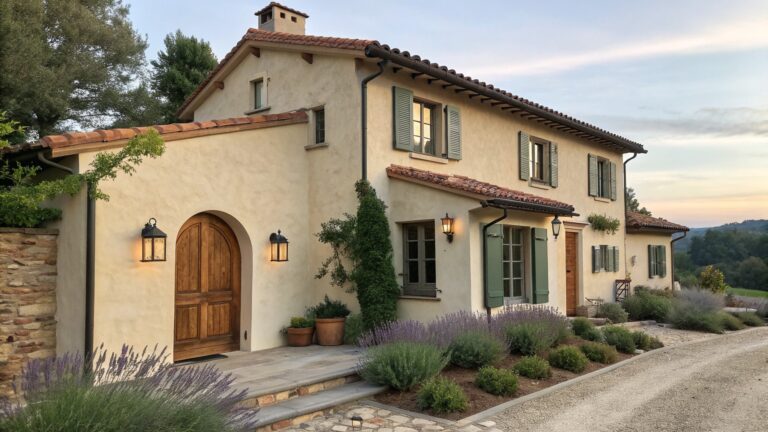
I’ve noticed that the way a house meets the eye from the road often comes down to how the walls catch light and how the materials sit against the landscape.
Warm stucco paired with softer natural tones tends to soften the whole outline without making the structure feel too heavy or stark.
Small choices around the entry can shift the whole feel.
Some facades look promising on plans but only come together once you see how the roofline meets the walls in person.
I would test a few of those entry approaches first if I were updating my own place because they change how welcoming the front feels right away.
Stone Arches At The Entry
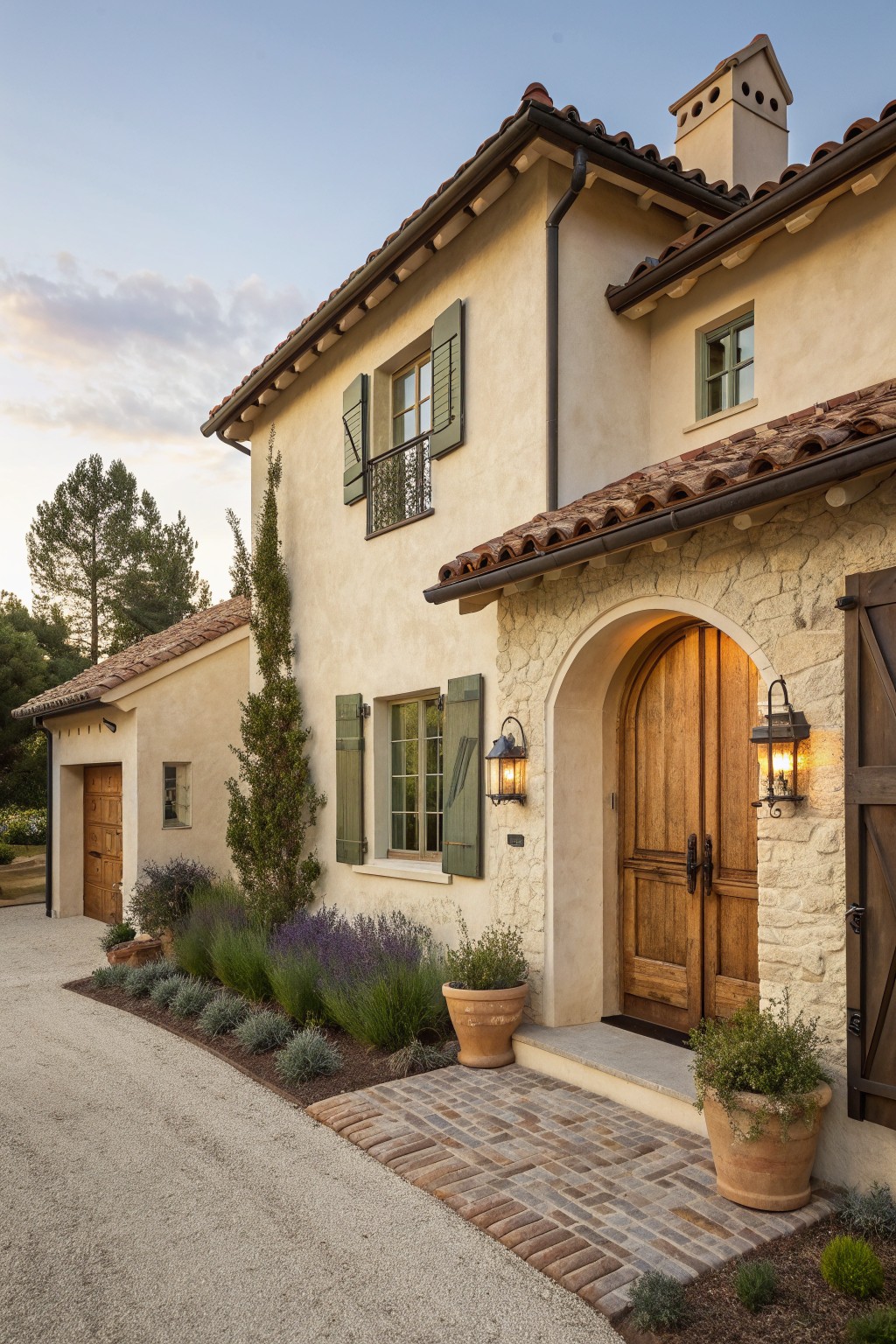
An arched stone entry adds instant character to a stucco home. It breaks up the flat wall surface and gives the front a softer, more established look that still feels simple. The contrast between the rough stone and smooth stucco keeps the whole facade from feeling too plain.
This works best on homes with warm neutral stucco and natural wood doors. Keep the arch modest in size and let the stone run just around the opening so it does not overpower the rest of the house. It suits one and two story farmhouses that already use terracotta or wood tones on the roof and trim.
Warm Stucco on Farmhouse Walls
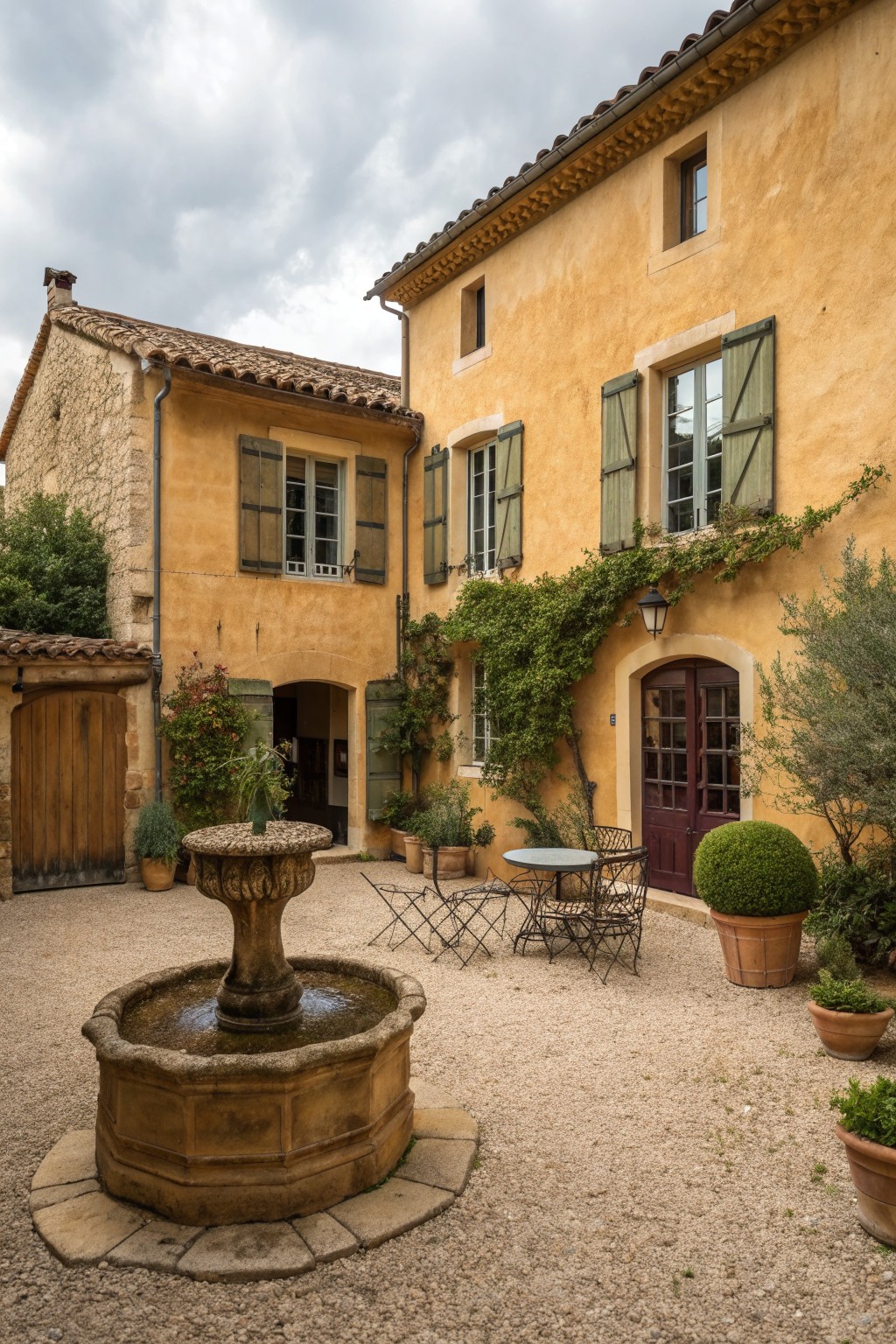
Warm stucco gives an exterior a soft, settled look that works especially well on older style homes. The slightly uneven finish catches light in a gentle way and helps the whole house feel less stark against the sky.
It suits gravel courtyards and simple plantings best, since those materials keep the same natural tone. Too many bright accents can fight the softness, so stick to wood, stone, and muted shutters when you use this finish.
Stucco and Timber on Farmhouse Exteriors
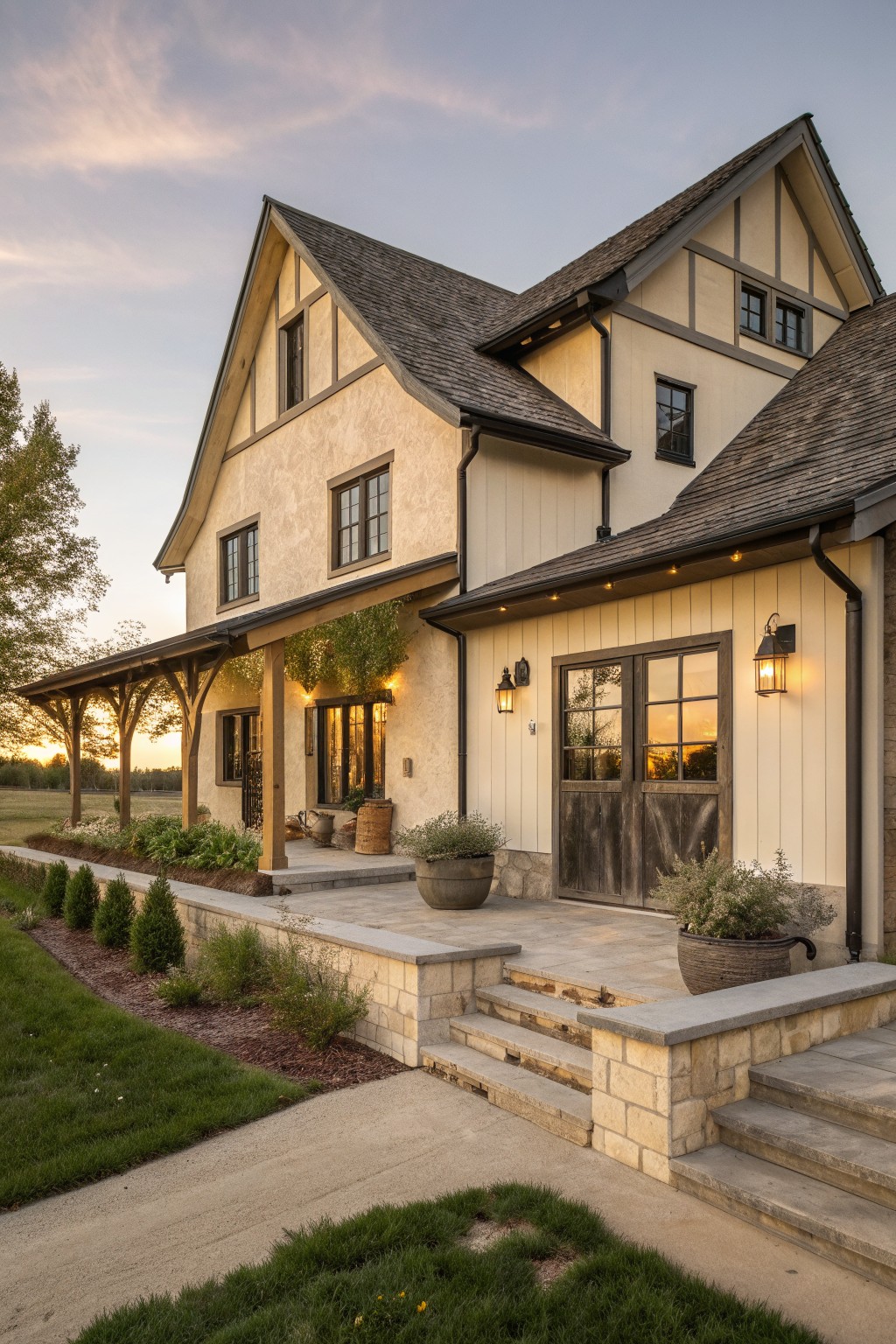
Warm stucco pairs naturally with timber framing on this kind of house. The light plaster softens the dark wood lines and keeps the whole facade from feeling too heavy or formal.
This works best on homes with simple gable roofs and a few stone details at the base. Keep the stucco in a creamy tone and let the wood stay its natural color so the mix stays easy and welcoming.
Arched Stone Entries on Stucco Walls
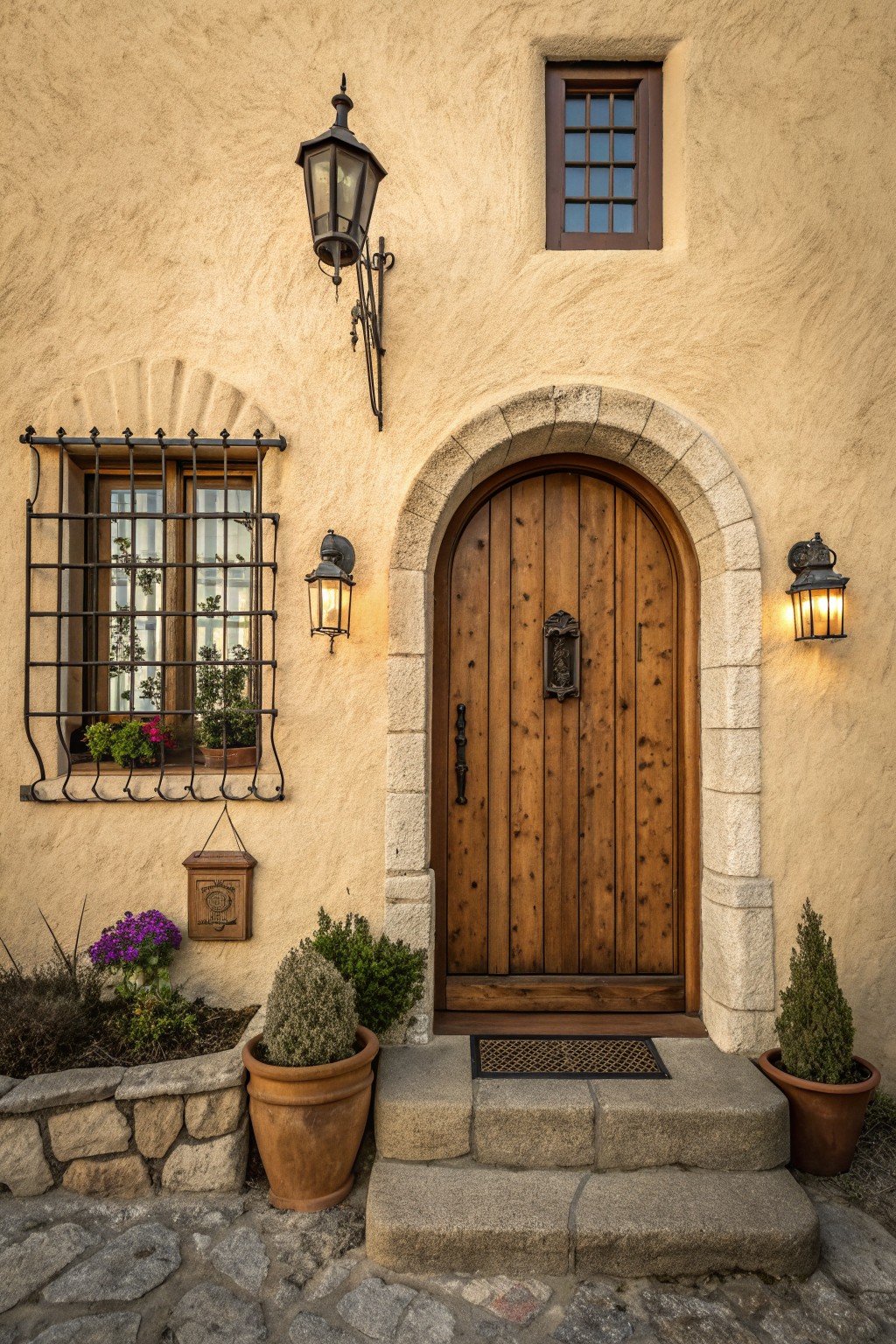
An arched stone surround around a front door adds a soft frame that works especially well with warm stucco. It breaks up the flat surface and gives the entry a bit more presence without making it feel formal or heavy.
This detail suits older-style homes or new builds aiming for a simple European farmhouse look. Keep the wood door natural, add basic wall lanterns, and let the stone contrast do most of the work.
Fireplaces That Turn Patios into Outdoor Living Rooms
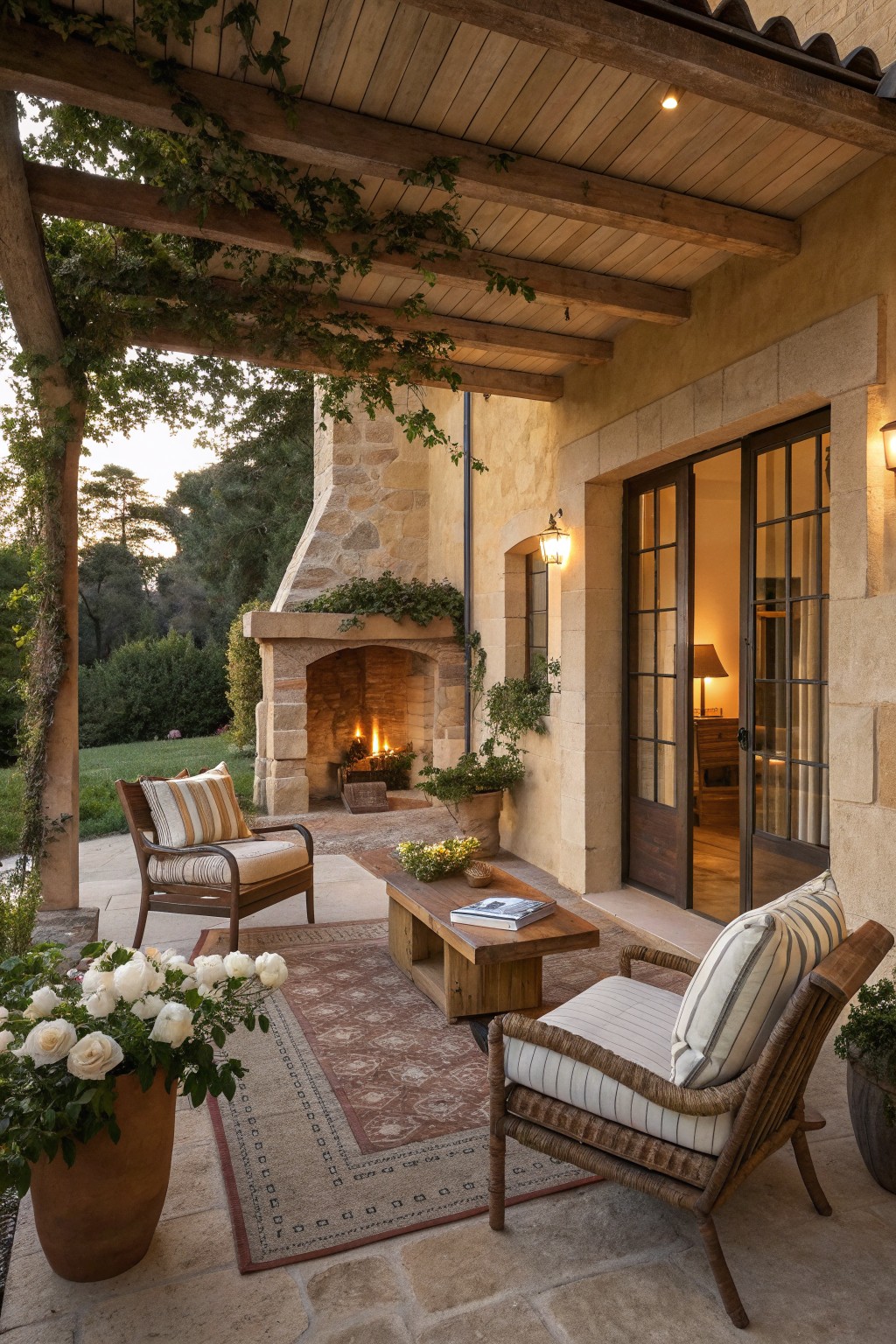
A fireplace changes how an outdoor space feels and how often it gets used. Instead of treating the patio as a summer-only spot, the stone firebox becomes the center of the layout so the area works in cooler months too. Warm stucco walls and simple wood beams keep everything in the same soft, natural palette that matches the house.
This setup works best on homes with a bit of roof overhang or a pergola already in place. Place seating close enough to the fire for conversation but leave room to walk around the chairs. Stick with durable cushions and a washable rug so the space stays comfortable without constant upkeep.
Warm Stucco With Stone Accents
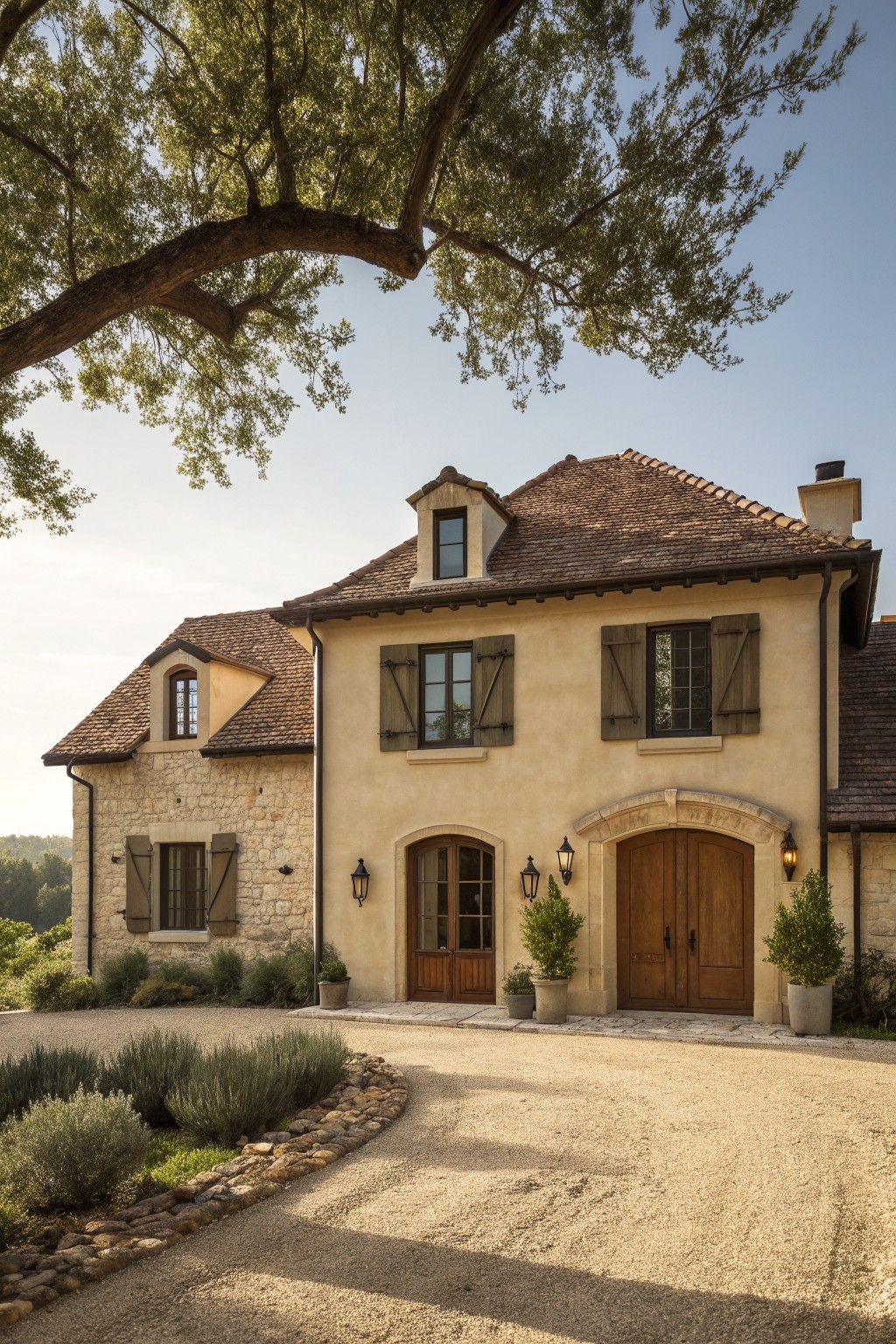
Warm stucco next to stone gives this house a gentle, settled look that feels right for a European farmhouse. The light tone on the main walls keeps things bright while the stone sections add just enough weight and texture. It avoids that flat painted look many stucco homes end up with.
This mix works best on homes that already have some stone or want to add it without going full masonry. Keep the stucco in a soft off-white or warm beige and let the stone stay natural. Too much contrast between the two can start to feel busy.
Bench Seating Along One Side
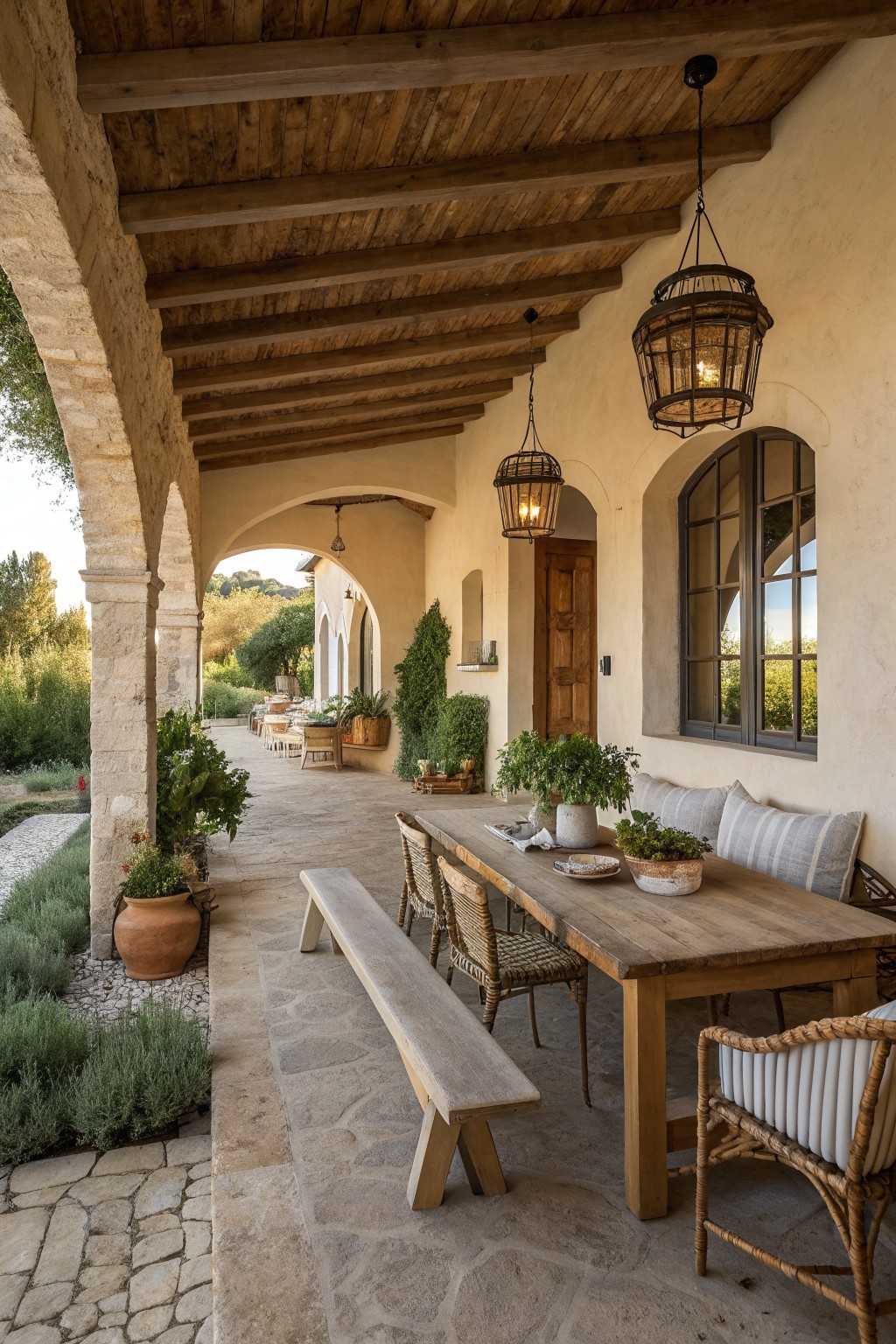
A bench on one side of a long outdoor table opens up the space and lets people slide in easily without extra chairs taking up room. It keeps things simple and casual, which fits the relaxed feel of a farmhouse porch.
This works especially well under a covered area with steady shade and protection from weather. It suits stucco homes with wood beams, and you can add a cushion on the bench if you want more comfort for longer meals.
Warm Stucco for a Softer Exterior
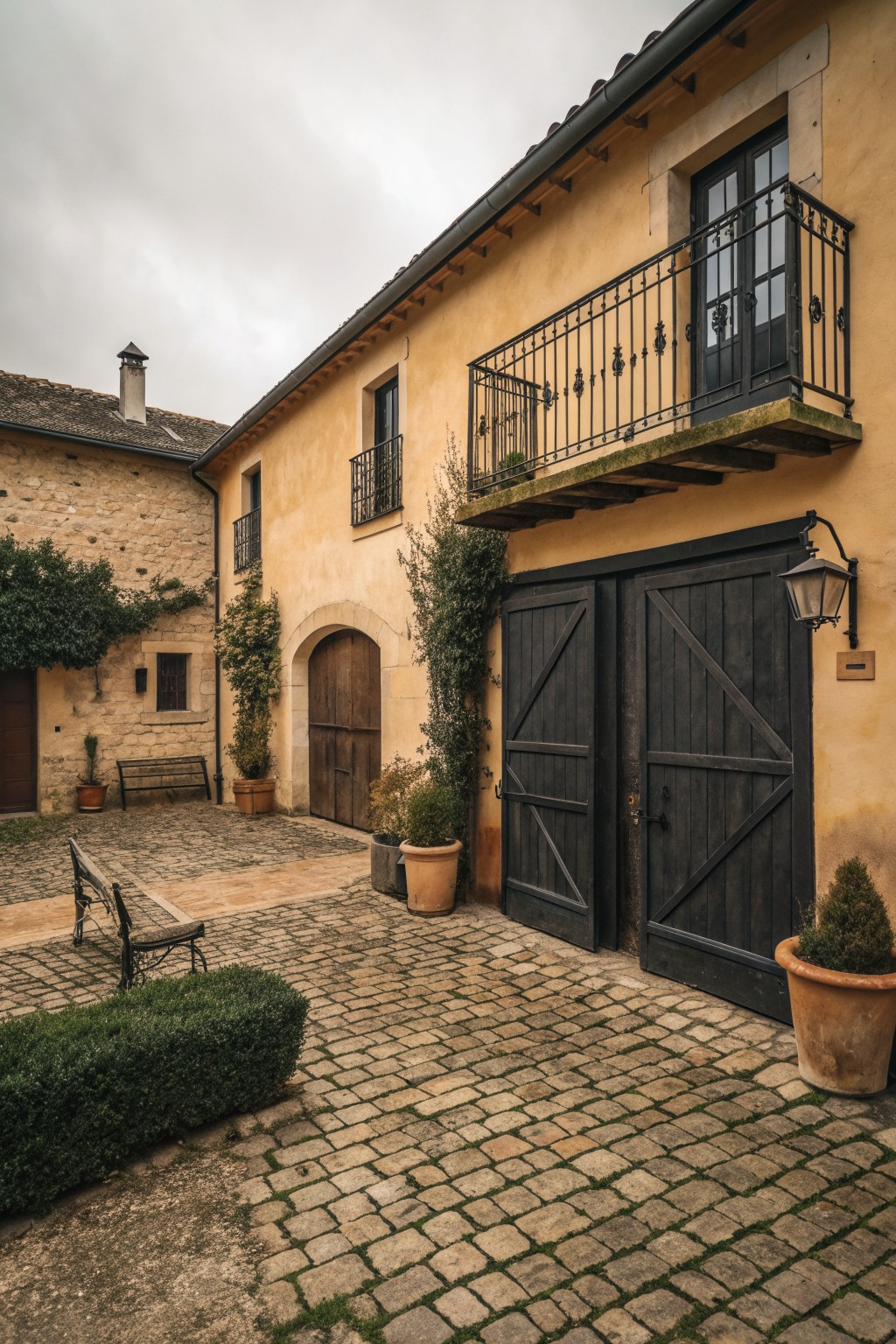
Warm stucco gives a farmhouse exterior an easy, lived-in feel without much effort. The soft yellow tone in this example helps the walls catch light gently and keeps the whole front from looking too heavy or stark next to the darker wood doors and trim.
It works well on homes that already have some stone or wood details because the color bridges those materials without competing. Try it on a full facade or just the main walls, and keep the trim and doors in a deeper natural shade so the stucco stays the focus.
Stucco With A Stone Base
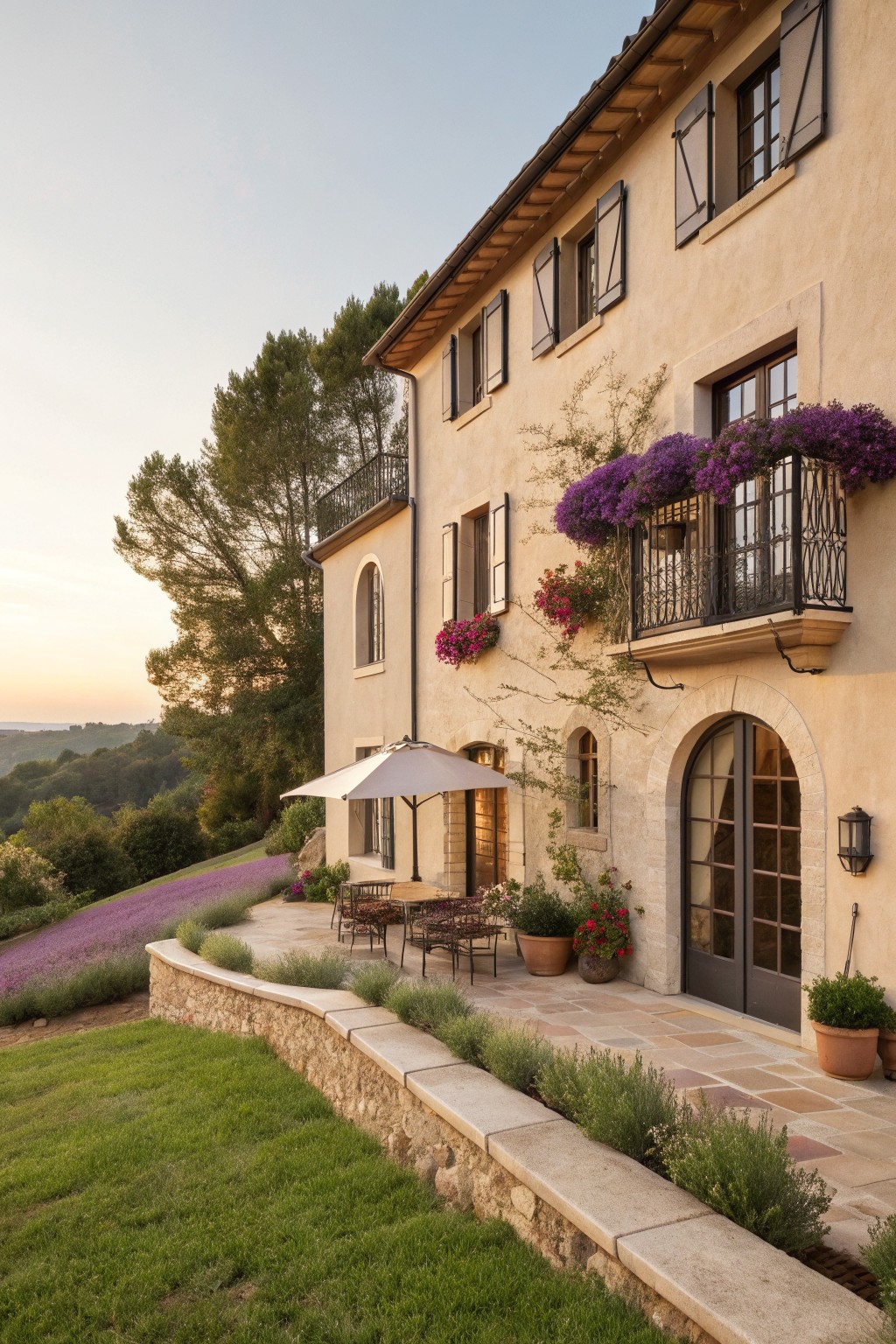
Warm stucco looks softer when it sits on a low stone wall or foundation. The contrast keeps the house from feeling too smooth or flat, and the stone adds a bit of weight at the bottom where it meets the ground. It works especially well on sloped lots like this one, where the stone also helps hold the hill in place.
Try matching the stone tone to the stucco so the change feels natural rather than forced. This approach suits older farmhouses or new builds that want a settled look without extra trim or ornament. Just keep the stone simple and let the stucco do most of the work.
Adding a Bench Against the Stucco Wall
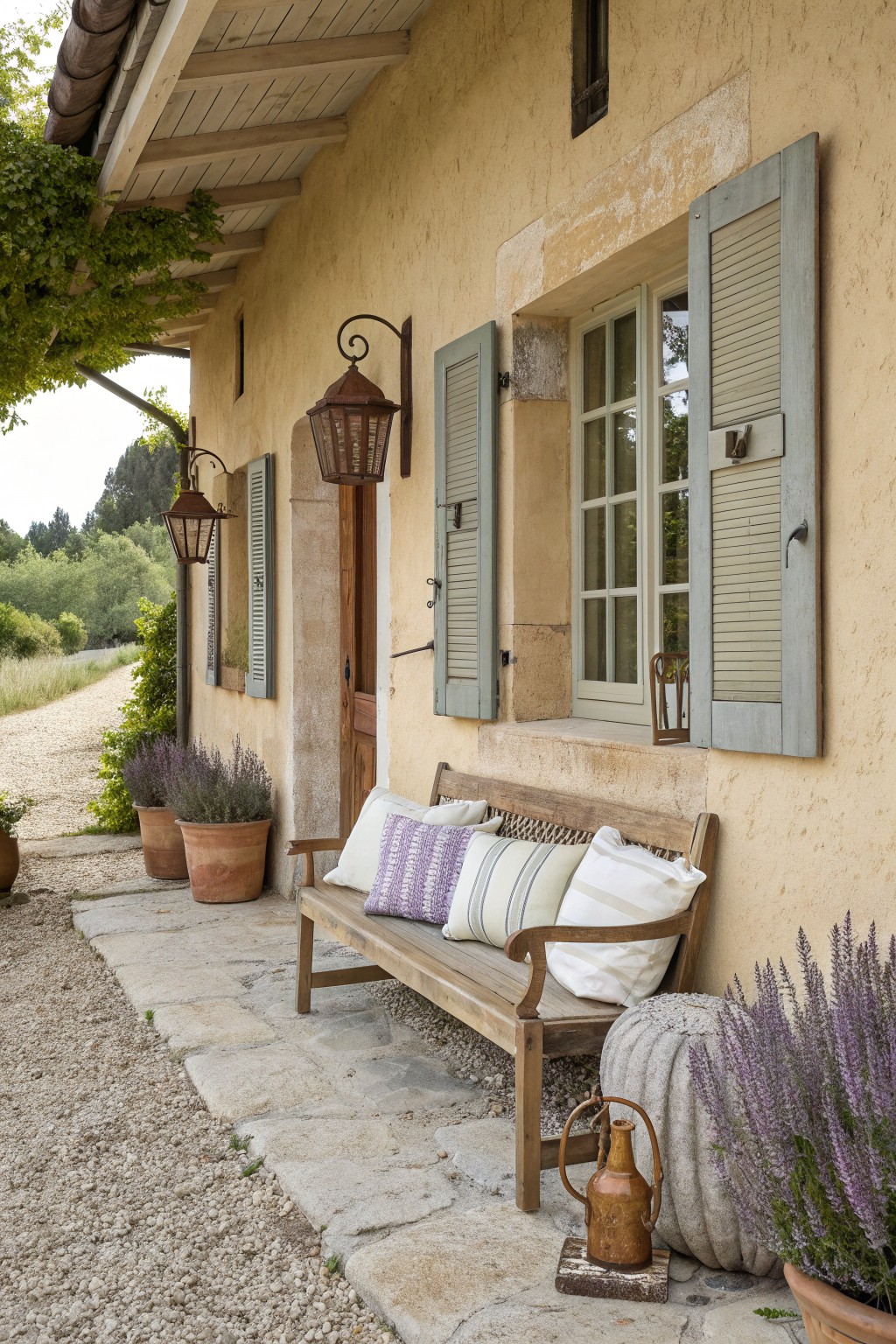
A wooden bench placed right against the house wall gives the exterior an easy, lived-in feel. It turns a plain stretch of stucco into a spot people actually want to use, and the natural wood tones keep everything soft and grounded without extra decoration.
This works best on simple farmhouse or cottage exteriors where you want to add warmth without changing the architecture. Choose a bench in weathered wood and keep the cushions in light, neutral fabrics so the whole setup stays relaxed and blends with the wall color.
Warm Stucco in Natural Tones
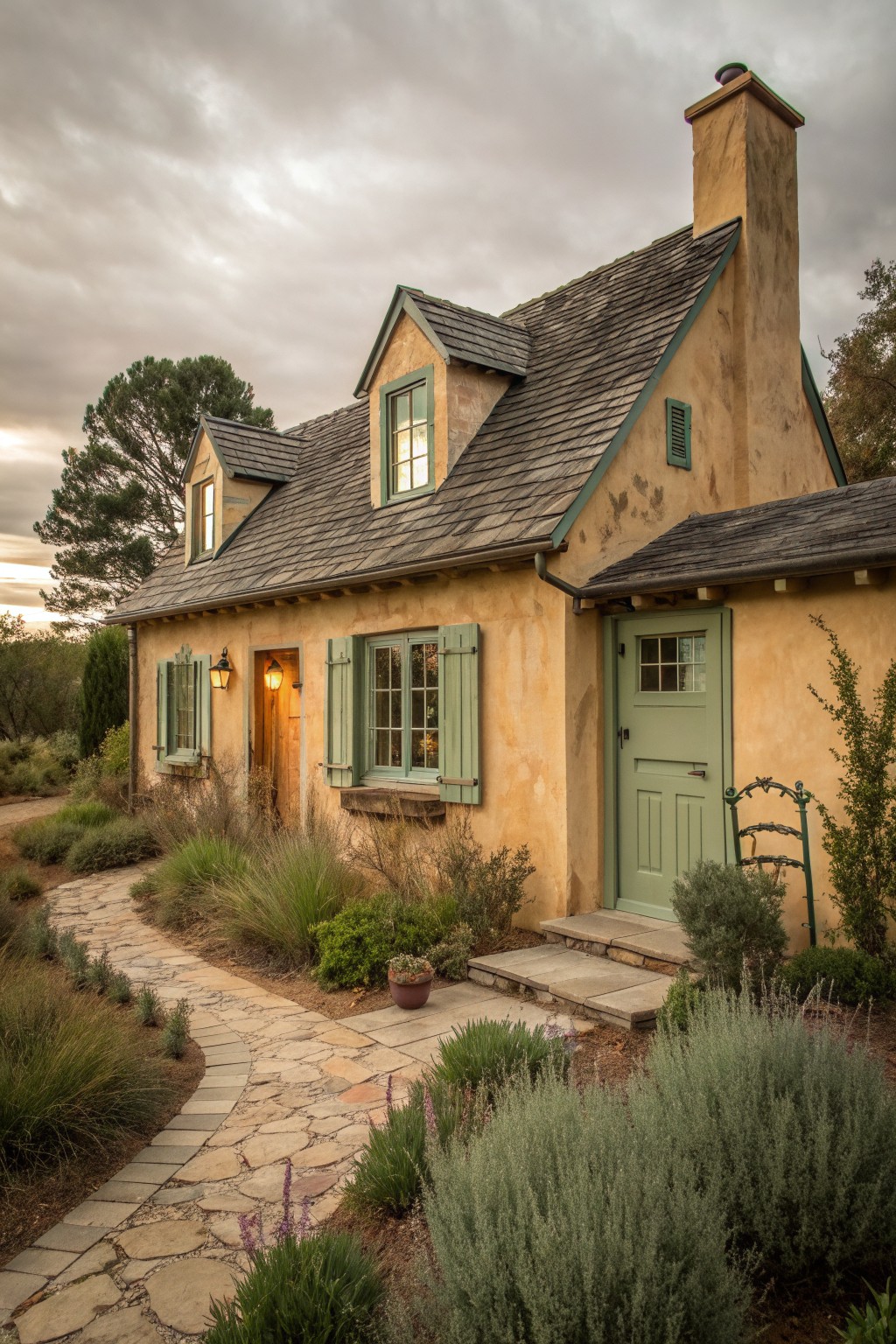
Warm stucco gives a farmhouse exterior a softer look without much effort. The color stays gentle through the day and pairs easily with simple trim and roofing. It works especially well when the house has a few green accents on doors and shutters to keep the whole thing from feeling too plain.
This finish suits homes that already have a low roofline and some stone or gravel around the base. Keep the texture fairly even so it reads as calm rather than busy, and limit the number of other materials nearby.
Stone Arches Over Entry Doors
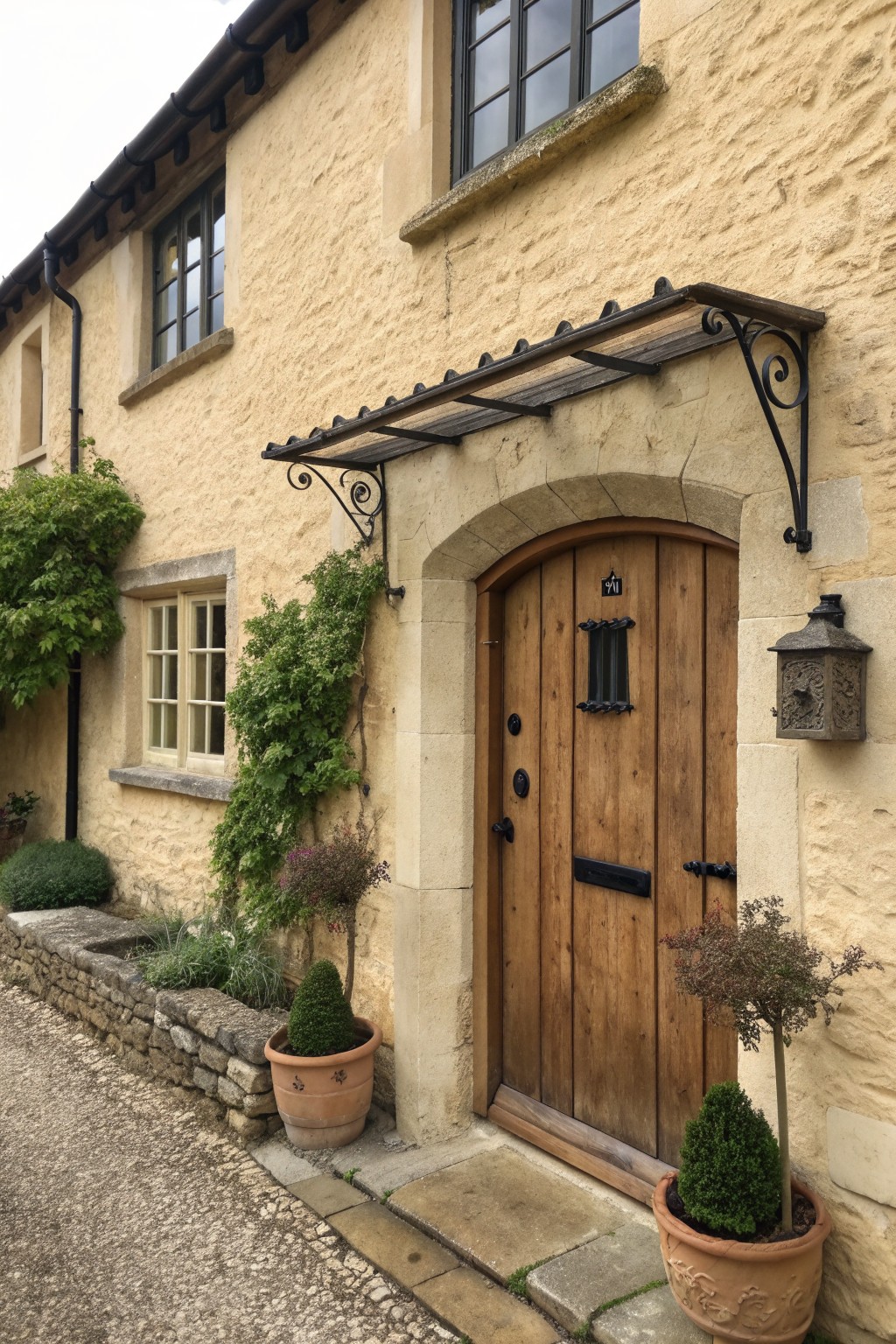
Stone arches give a stucco exterior a bit more structure around the door. They help the entry stand out while keeping the overall look soft and natural.
This works especially well on homes that want a European farmhouse feel without adding too many details. Match the stone color to your stucco and keep any overhang simple so the arch stays the main focal point.
Long Tables Under Pergolas
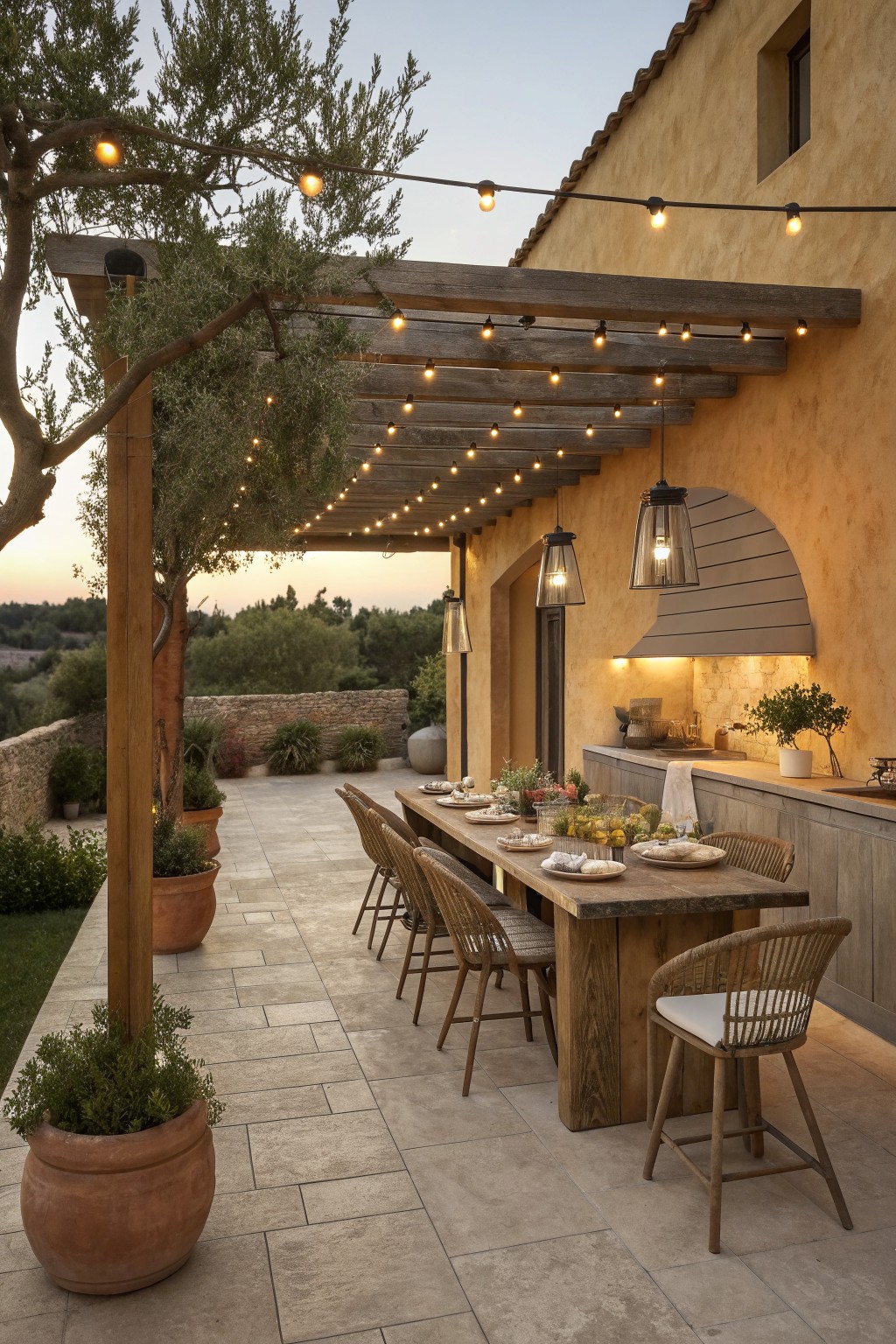
A long table under a pergola gives the patio a clear spot for meals without taking over the whole space. The string lights add just enough glow for evenings while the wood tones keep everything simple and tied to the stucco walls.
This setup works best on a side or back patio that sits right next to the house. Keep the seating mix light so people can pull up chairs easily, and run the lights along the beams rather than letting them hang too low.
Warm Stucco On The Exterior Walls
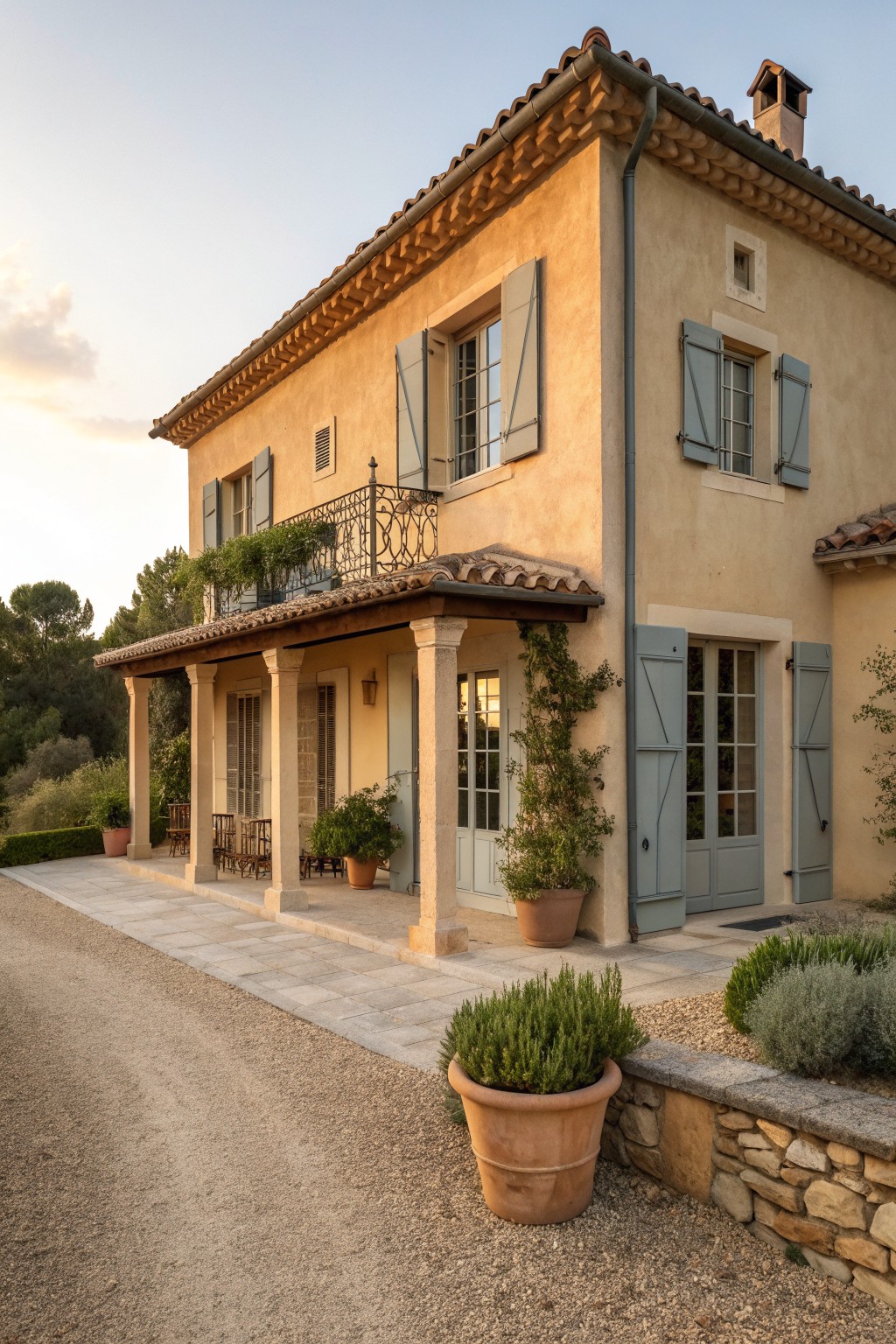
Warm stucco works well on farmhouse exteriors because it gives the walls a soft, sun-warmed look without feeling stark. The color sits nicely with a terracotta roof and simple painted shutters, so the whole front stays calm and easy to live with.
This choice suits homes that already have some stone or wood trim and need a finish that ages gracefully. Keep the tone on the cream or light tan side rather than anything too bright, and test it on a small patch first since the light changes how it reads through the day.
Arched Wood Doors on Stucco
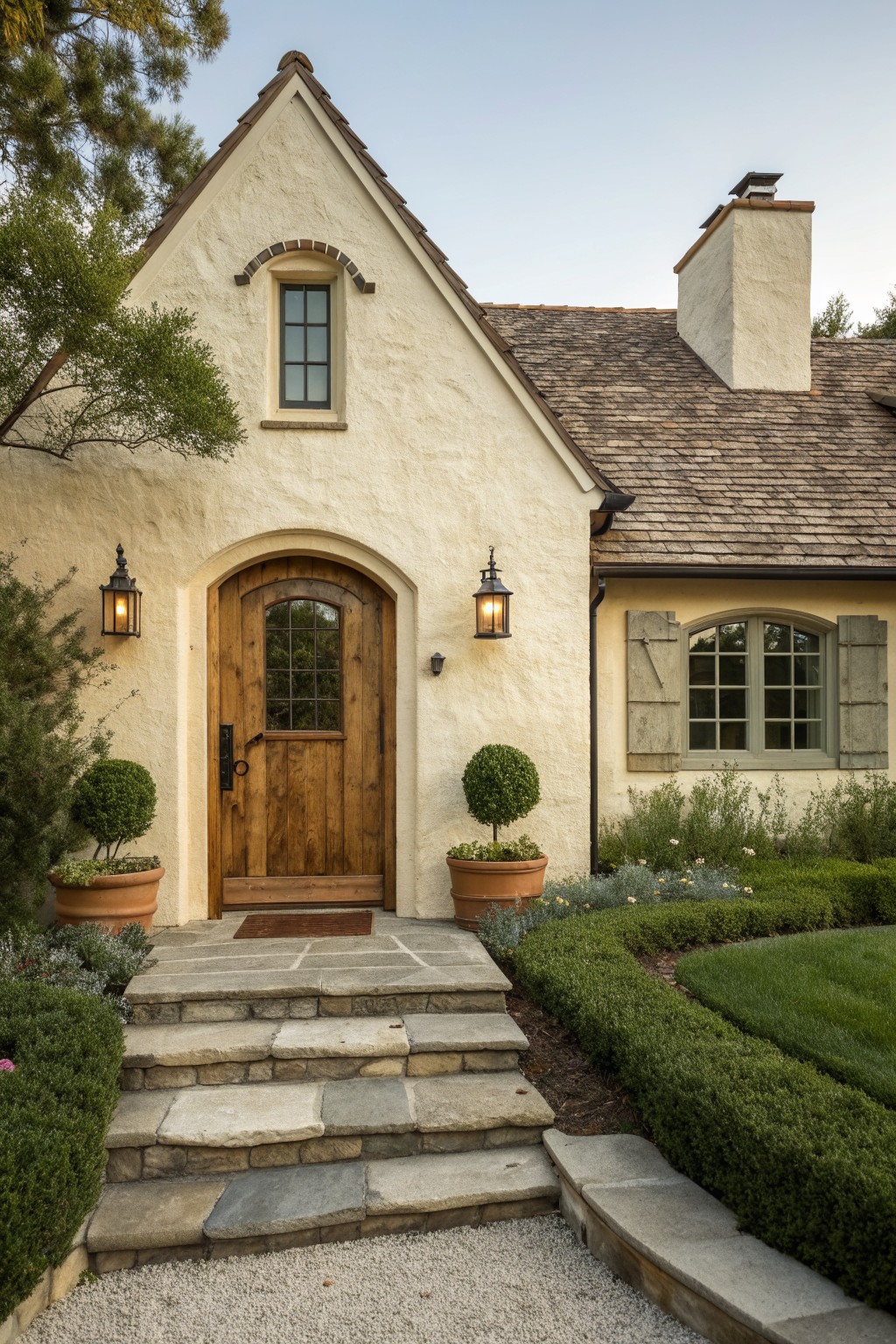
An arched entry with a wood door gives a stucco house a softer shape without extra trim or decoration. The curve breaks up the flat wall and the wood adds warmth that fits the natural tones in this style.
This works best on homes with simple rooflines and a limited color palette. Keep the door a medium wood tone and let the arch stand on its own rather than adding heavy surrounds.
Warm Stucco With Stone Details
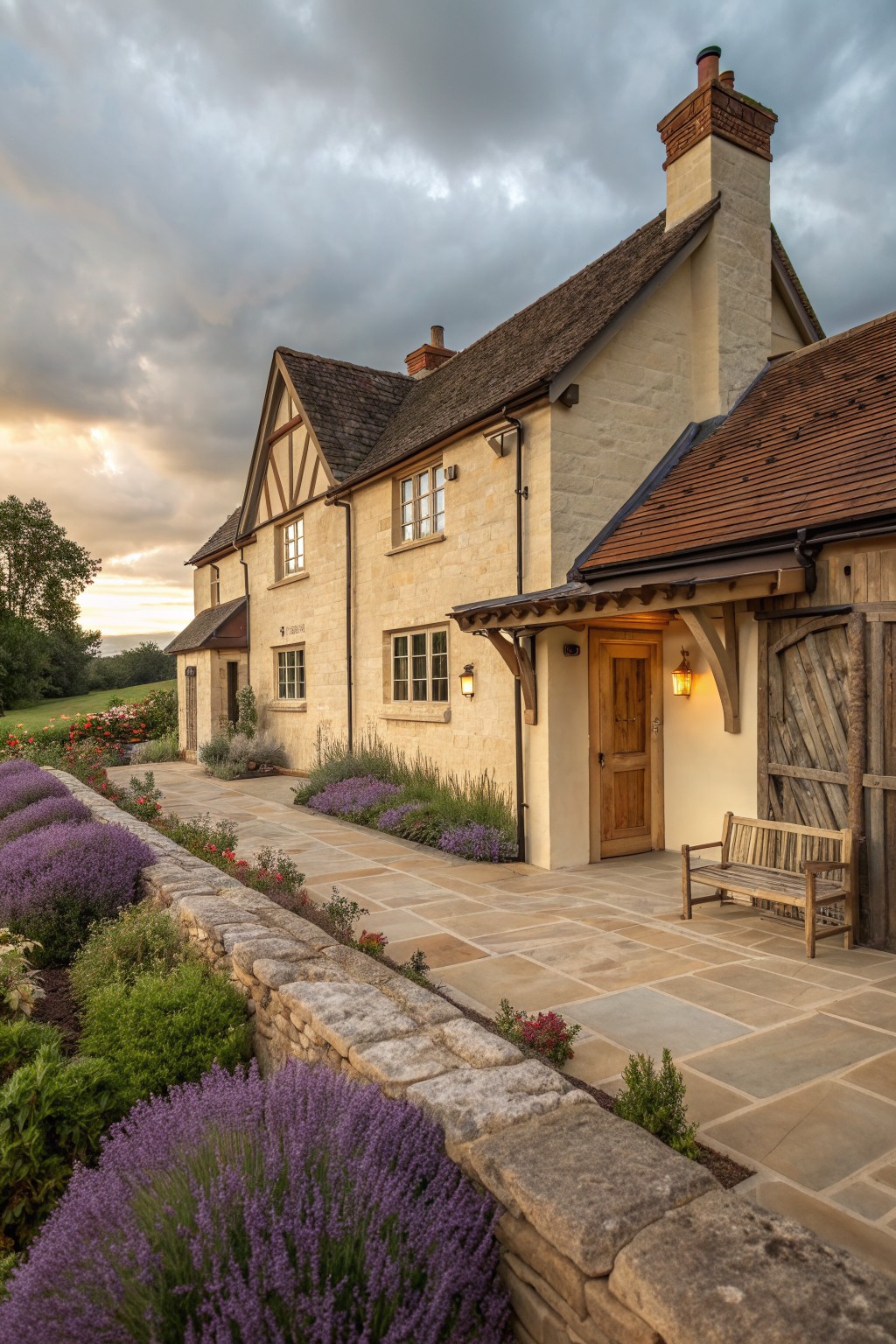
Many farmhouses keep their exteriors simple by using warm stucco on the main walls and bringing in stone only for chimneys, bases, and low garden walls. The mix adds texture without making the house feel heavy or overly formal.
This approach suits homes with pitched roofs and wood doors, since the stone grounds the lighter stucco and helps the whole place blend into the landscape. It works best on properties that already have some age or that sit on rolling land where the tones can shift with the light.
Arched Entries in Warm Stucco
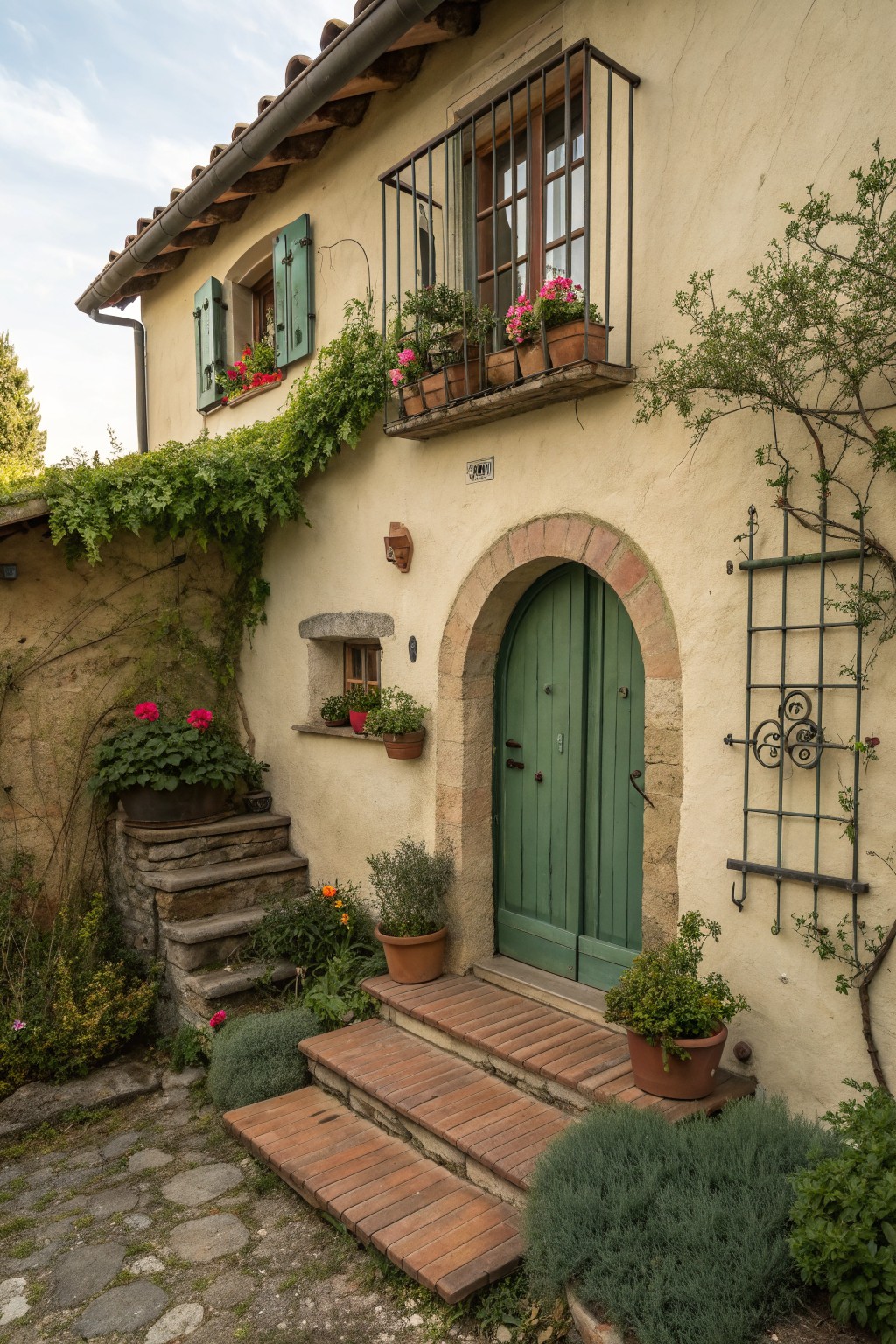
An arched doorway softens the whole front of a stucco house. It adds a gentle curve that feels settled and a little old, especially when the arch is built from simple stone or brick against the plain wall.
This works best on smaller or one-story homes where you want the entry to feel welcoming without extra trim. Paint the door a muted green or gray and keep the surrounding plants low so the arch stays the main feature.
Adding a Pergola for Everyday Shade
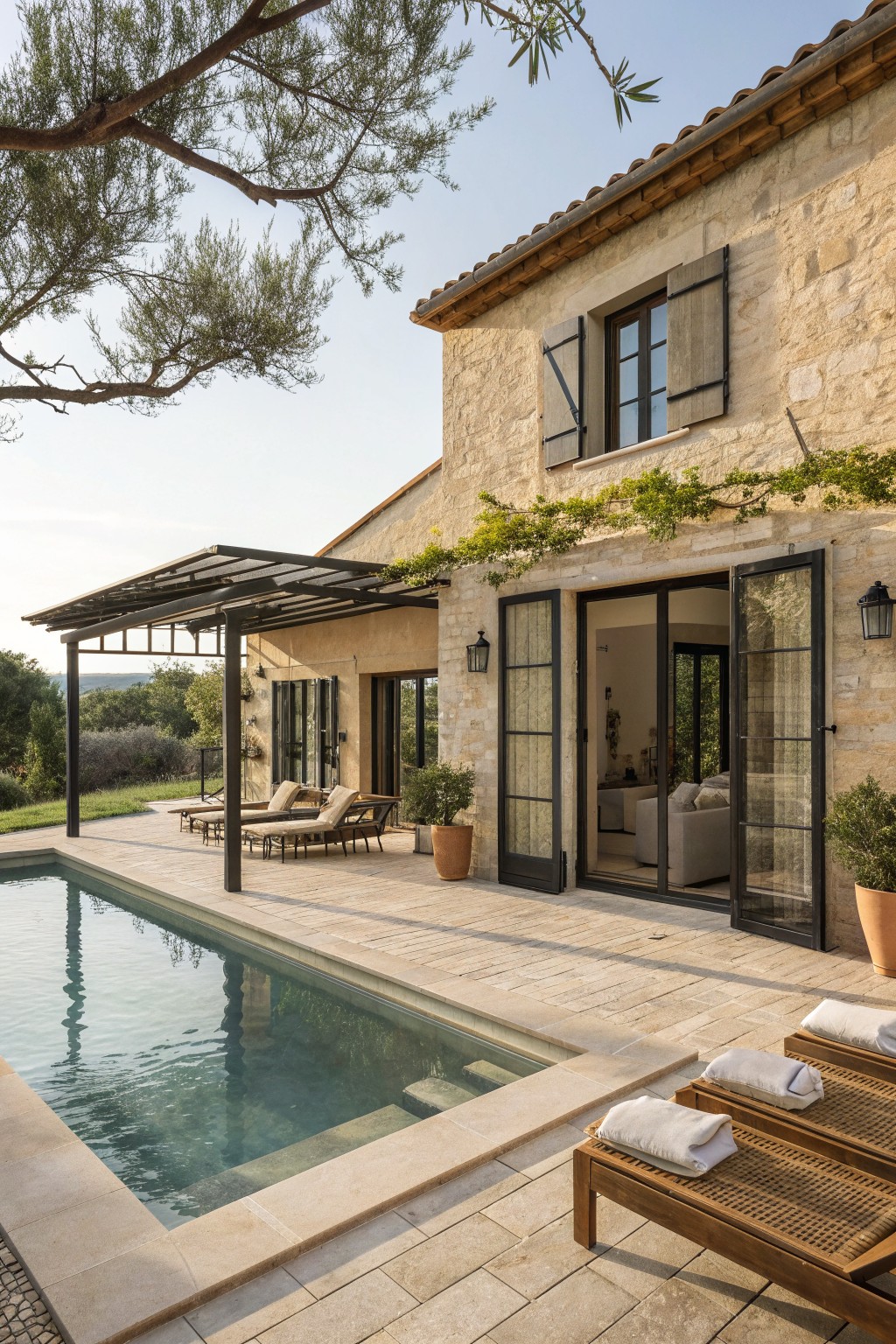
A pergola over part of the patio gives real relief from the sun without making the space feel closed in. It turns an open poolside area into something usable through the middle of the day instead of only early morning or evening.
This approach works best on homes with warm stucco and stone where the structure can sit low and simple. Keep the frame dark and straightforward so it blends with the natural tones rather than competing with them.
An Arched Gateway Adds Charm to the Entry
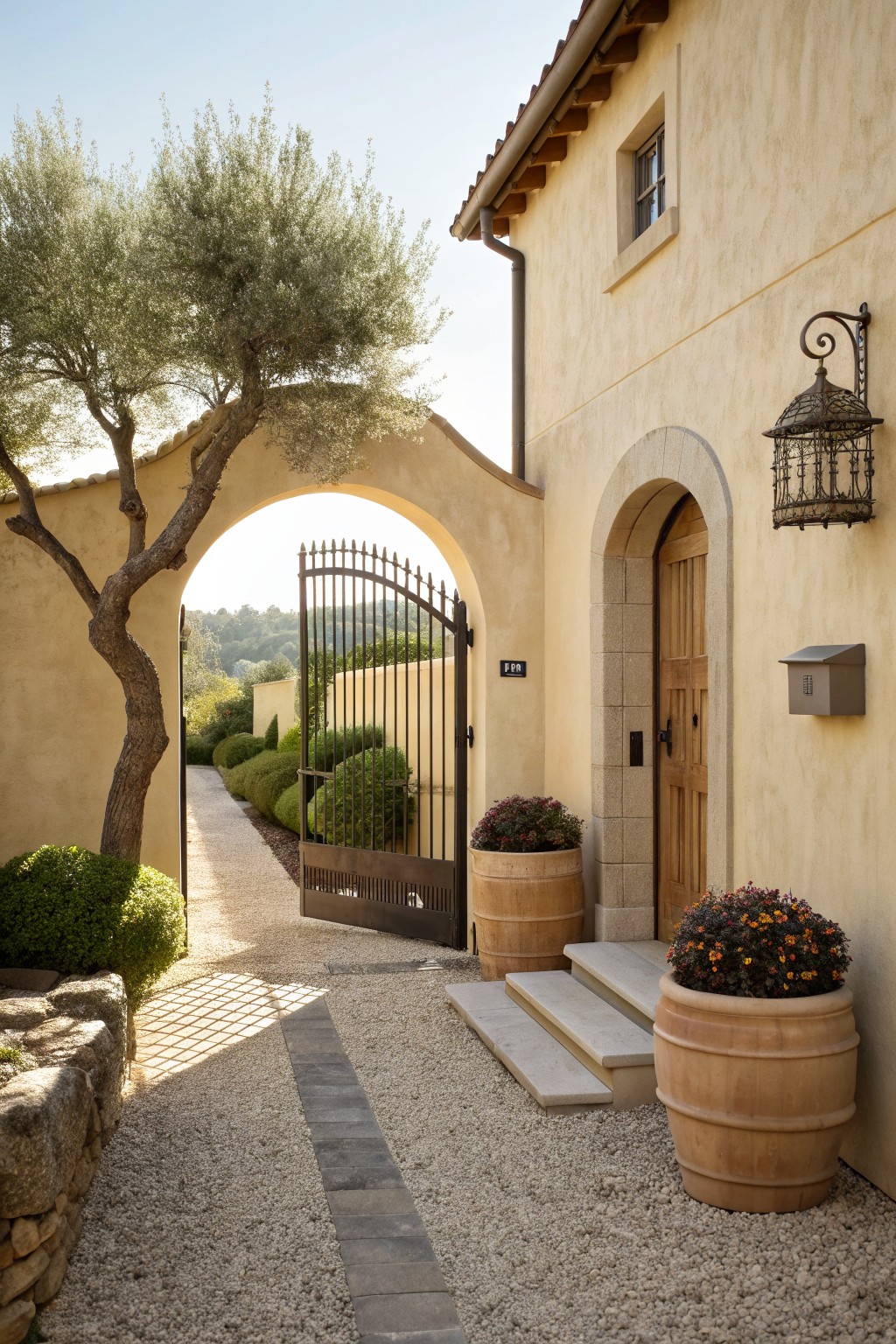
An arched gateway gives the front of a stucco house a softer, more gradual feel. The curve breaks the flat wall line and creates a simple layer between the street and the door, which makes the whole entrance feel more welcoming without extra decoration.
This approach works well on farmhouses that already use warm stucco and natural materials. Keep the gate simple in dark metal, add a wood door just beyond it, and let the gravel path lead the eye through. It suits homes that want a bit of European character without looking overly styled.
Covered Porch With Wood Supports
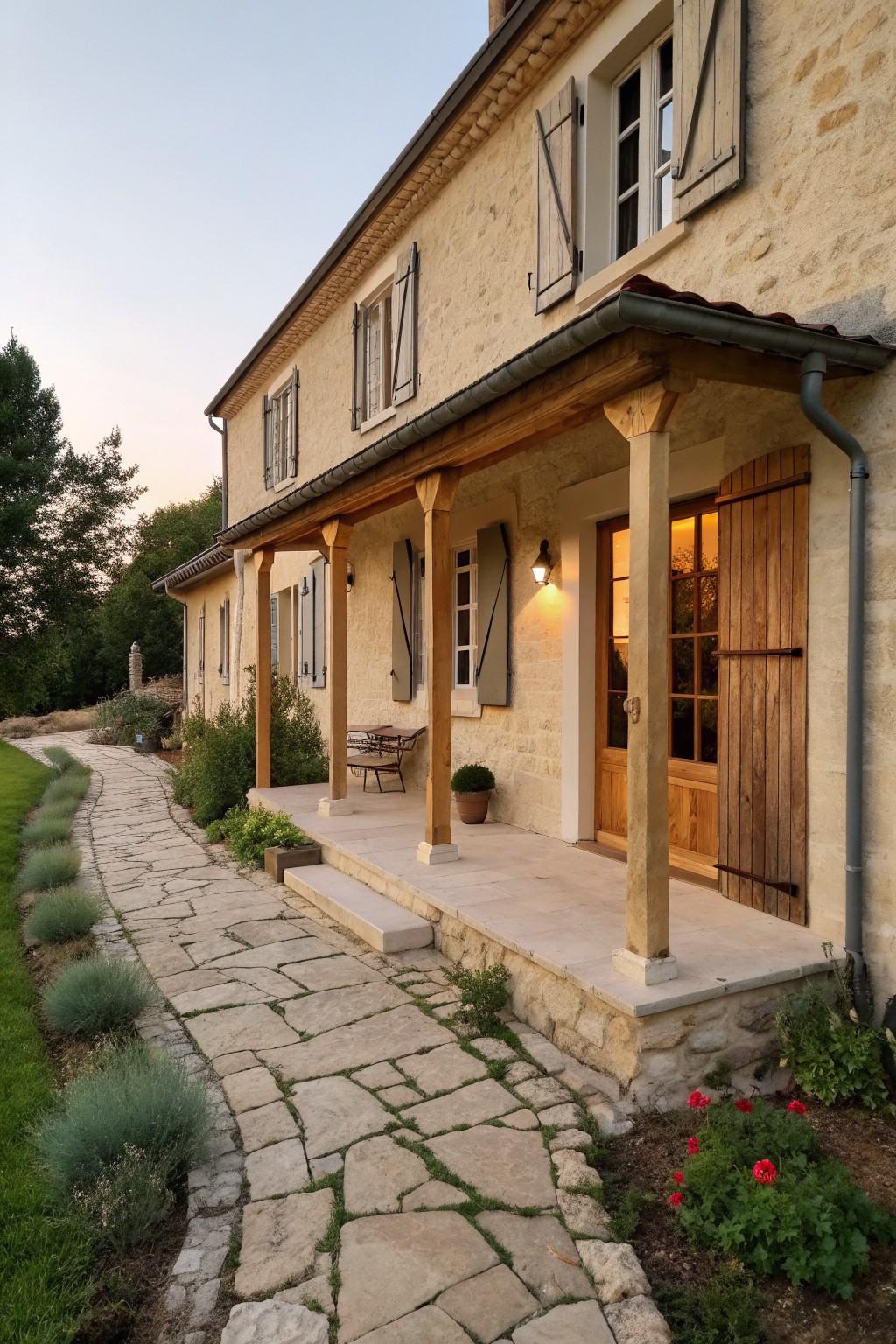
A covered porch like this one adds real presence to a stucco farmhouse without needing extra decoration. The wooden beams and posts sit on simple stone bases, which helps the addition feel like part of the original structure rather than something tacked on later. It gives shade and shelter while keeping the whole front looking balanced and grounded.
This approach works best on homes with a similar material mix of warm stucco and stone. Keep the wood tones natural and the posts substantial but not too heavy. Avoid making the porch too deep or wide, or it can start to feel like a separate room instead of an extension of the house.
Frequently Asked Questions
Q: Which warm stucco color holds up best over the years?
A: Choose a muted terracotta or sandy beige. These tones age gracefully without looking chalky. Repaint every ten years or so to keep that fresh farmhouse glow.
Q: Can I use metal roofs with this style?
A: Yes, go for a soft gray or brown metal. It pairs nicely with the stucco walls. Just avoid anything too shiny that catches the eye.
Q: How do I make sure the whole exterior feels natural?
A: Layer in wood beams and simple stone bases. They ground the design without overpowering it. Walk around your yard at different times of day to check the balance.
