

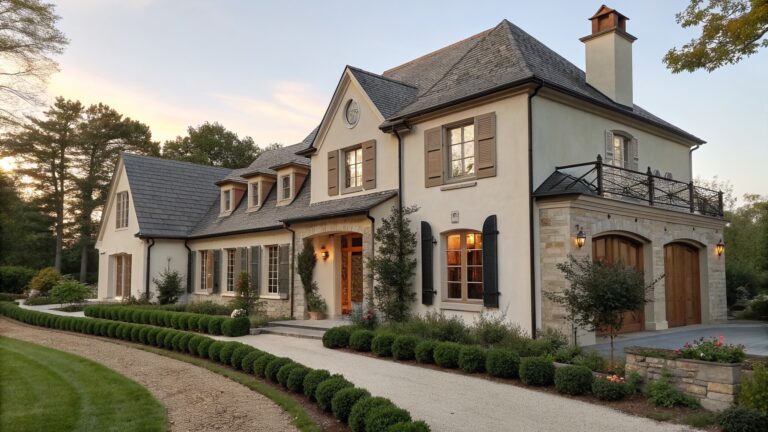
I have always been drawn to how French country homes balance rustic stone with cleaner modern lines on the outside.
It is the roof pitch and the choice of shutters that often set the tone before you even reach the door.
Some details only work once you see them in person.
The way materials will weather over the years matters more than how they appear in photos.
A few of those facade tweaks are the kind I would try on my own place if the chance came up.
Blending Stone And Stucco
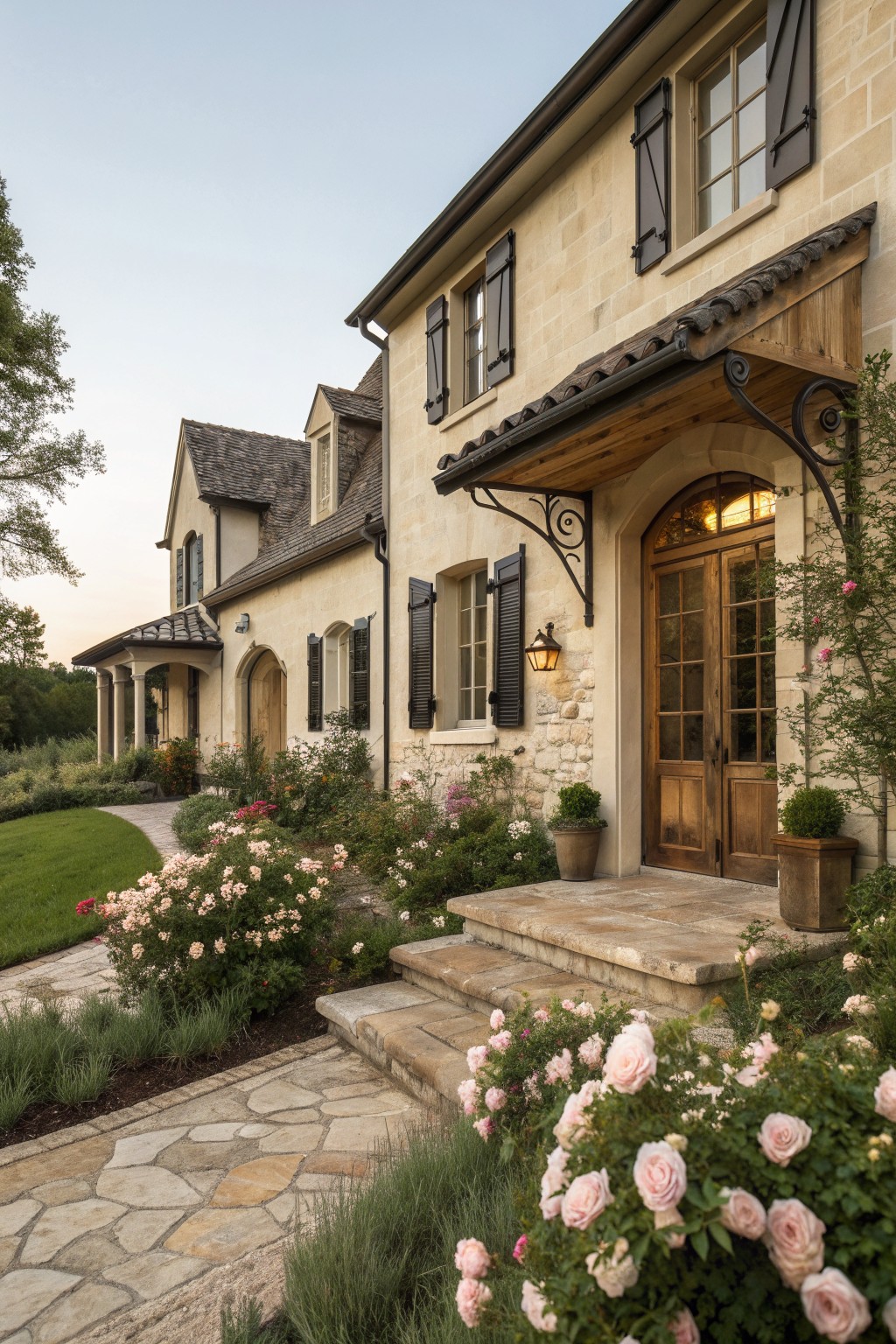
Stone and stucco pair well on French country homes because the stone brings weight and texture to key spots like the base and entry. This keeps the lighter stucco from feeling too plain while still letting the house read as simple and clean.
It works best on updated farmhouses that need a little more presence at the front without adding heavy trim or extra details. Limit the stone to the lower walls and door surround so the rest of the facade stays light and balanced.
Stone Bases For Light Siding Exteriors
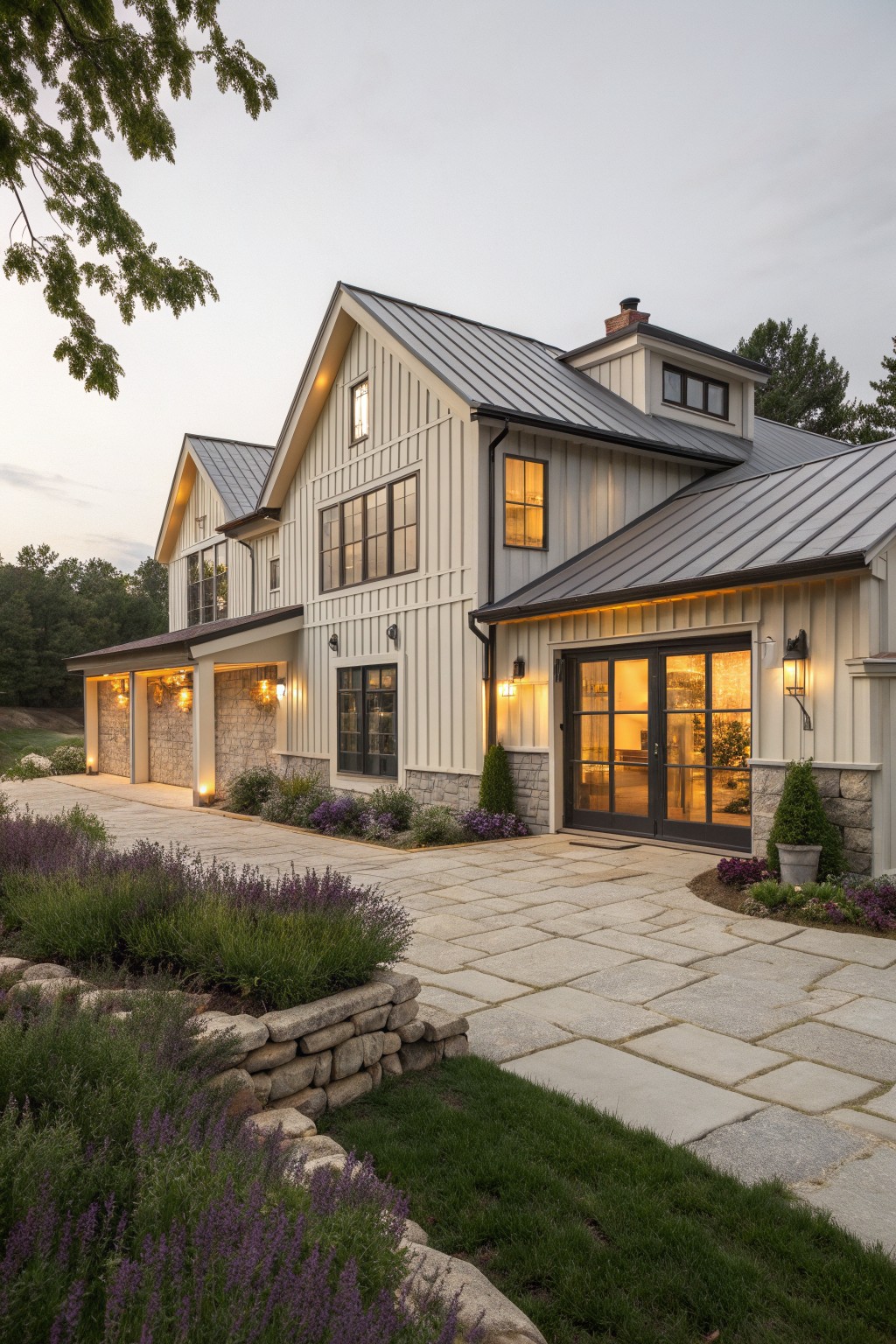
Many modern farmhouse exteriors use stone along the lower walls and around openings to give the house a steadier look. The stone adds weight and texture that keeps the light siding from feeling too plain or tall.
This works best on homes with straightforward rooflines and vertical siding. It suits properties where you want a touch of traditional weight without adding extra colors or busy details.
Stone And Wood Give The Exterior Its Character
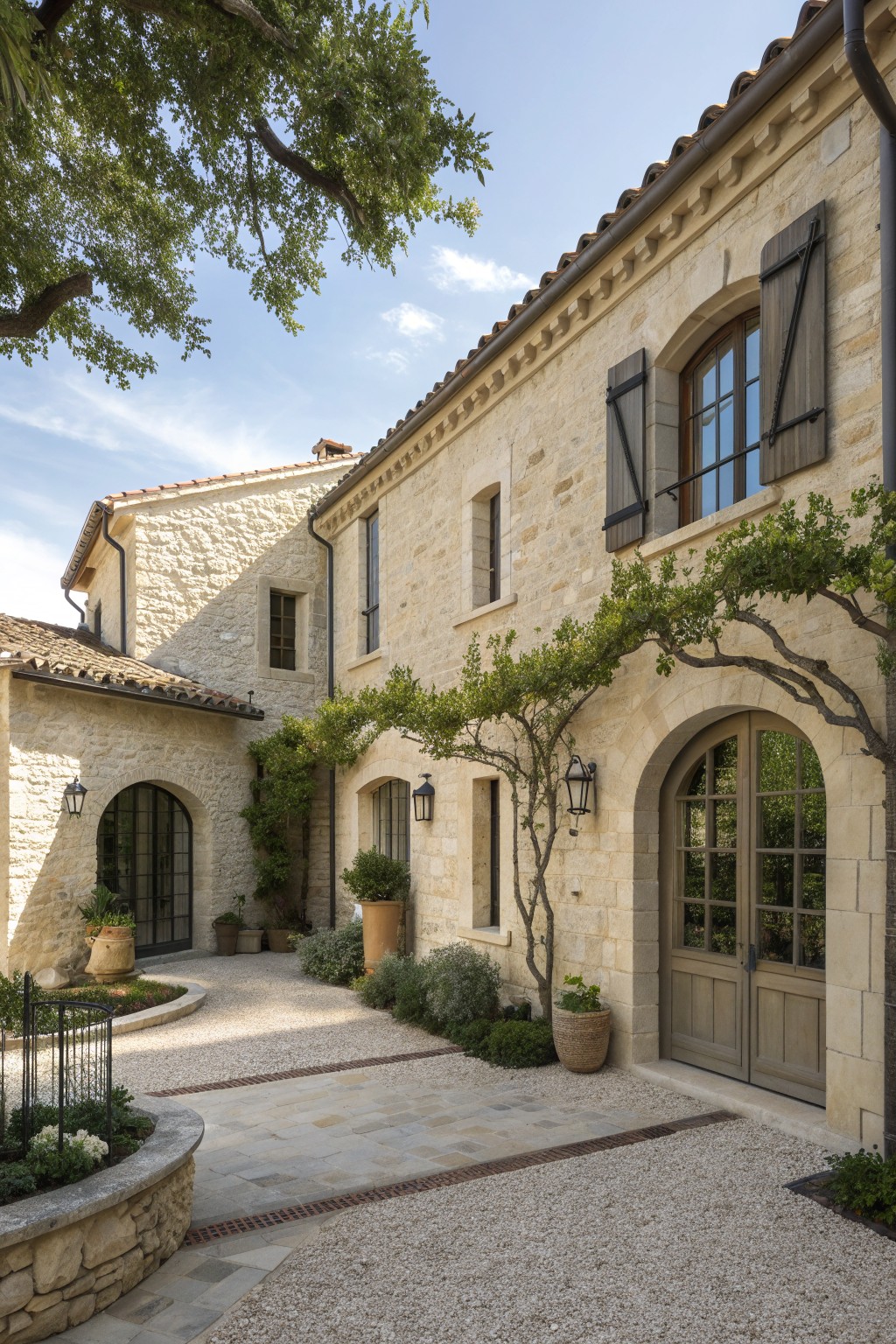
Stone paired with wood shutters and doors creates a balanced look that feels both solid and welcoming. The natural texture of the stone keeps the house grounded, while the wood adds just enough warmth and detail to avoid a heavy or cold appearance.
This mix works best on homes that want a French country or updated farmhouse feel. Use it on the main facade or entry areas, and stick with simple wood tones that will weather naturally alongside the stone.
Arched Stone Entries
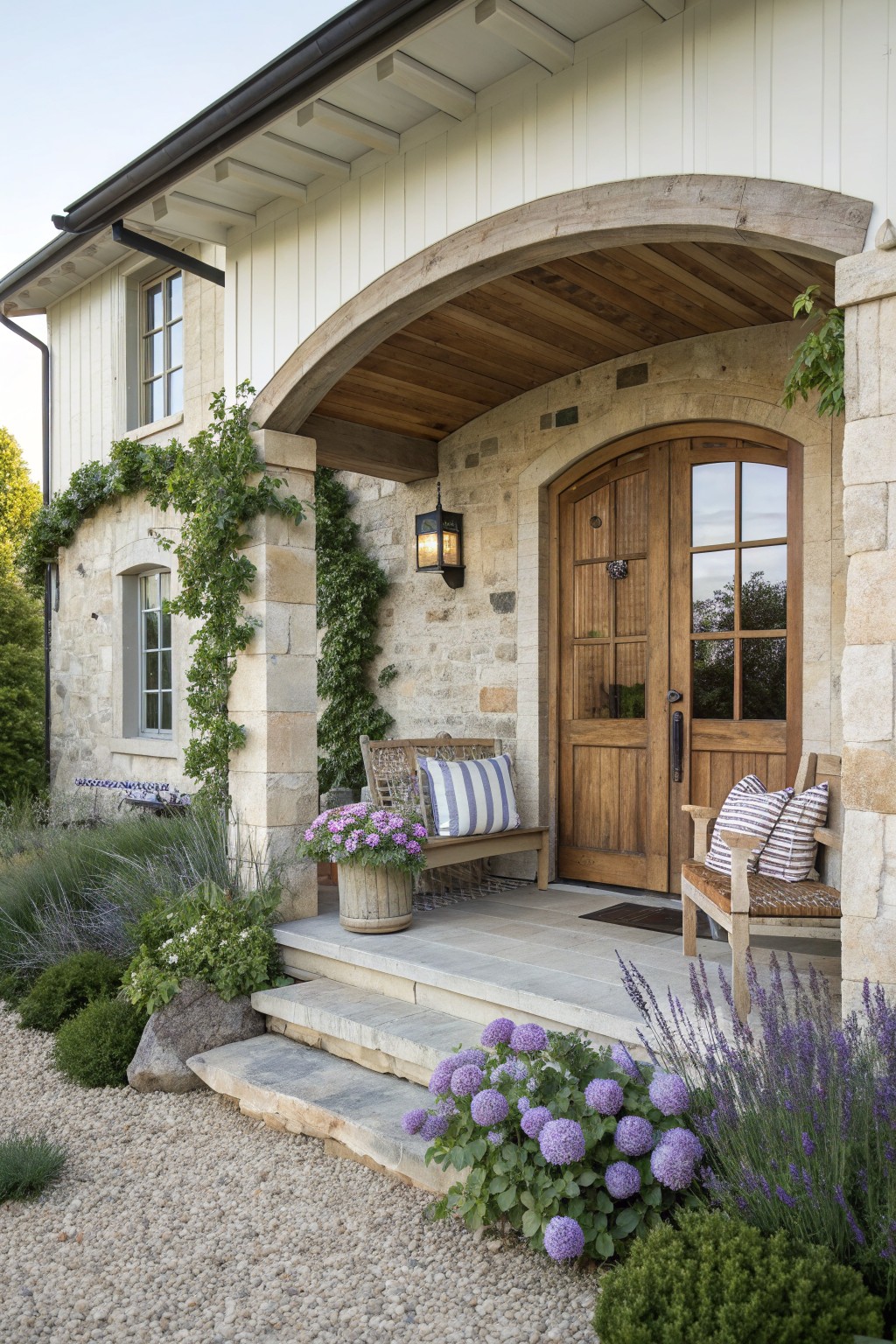
A stone arch over the front doors gives the entrance a solid, grounded feel without making the house look heavy. It pairs the rough texture of the stone with the wood doors in a way that feels natural and settled.
This approach works well on updated farmhouses that already use stone somewhere on the exterior. Keep the arch fairly simple and let the doors carry most of the detail so the entry stays welcoming rather than formal.
Wood Shutters On Stone Facades
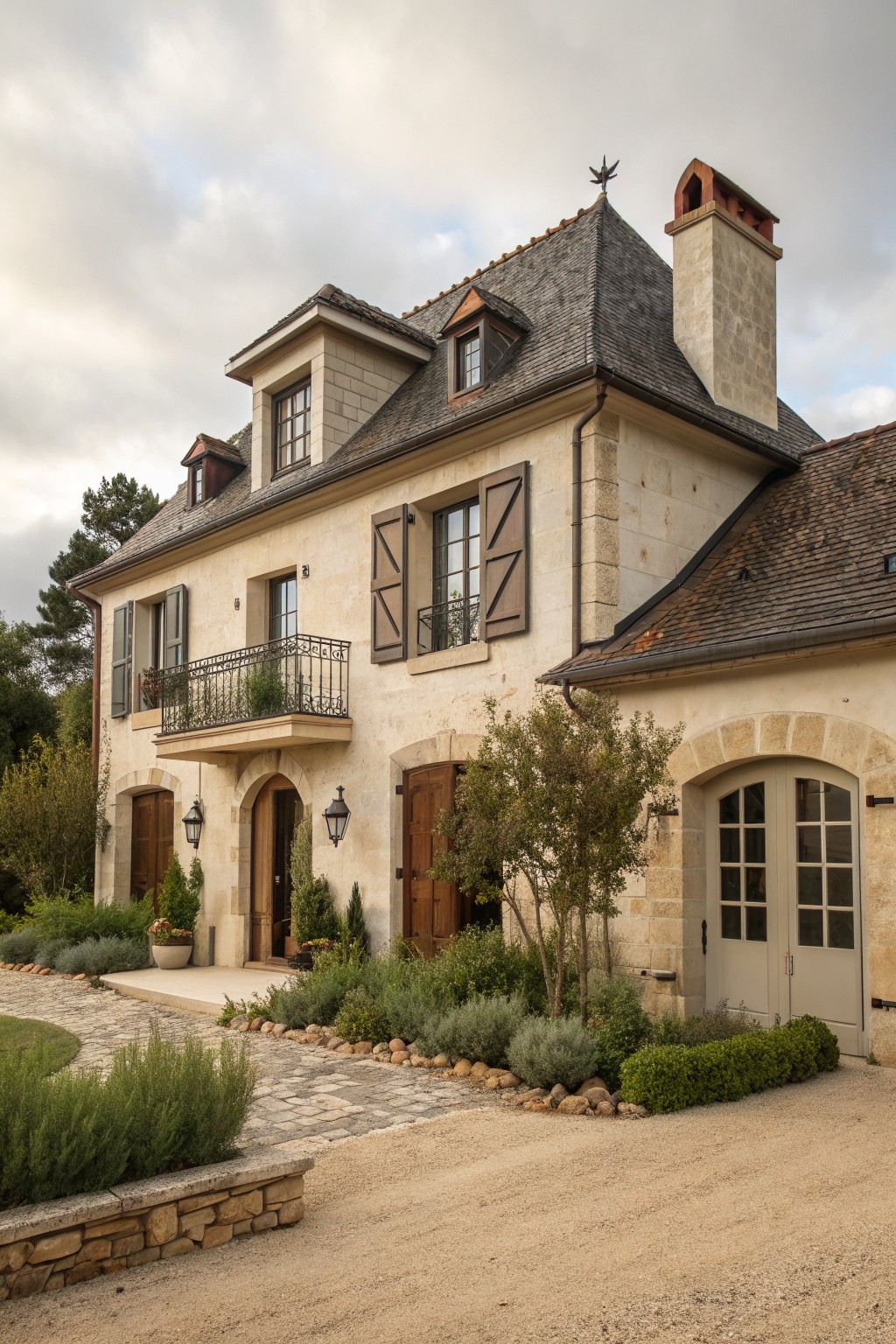
Wood shutters stand out here because they bring a simple layer of texture and contrast against the light stone. The dark wood frames the windows without competing with the overall shape of the house, and it keeps the look grounded rather than overly polished.
This approach works best on homes that already have a clean stone or stucco base. Keep the shutters in a natural wood tone or a deep painted finish, and use them on most windows so the pattern feels consistent. Avoid scattering them only on a few openings, since the balance comes from repeating the detail across the facade.
Dark Garage Doors On White Exteriors
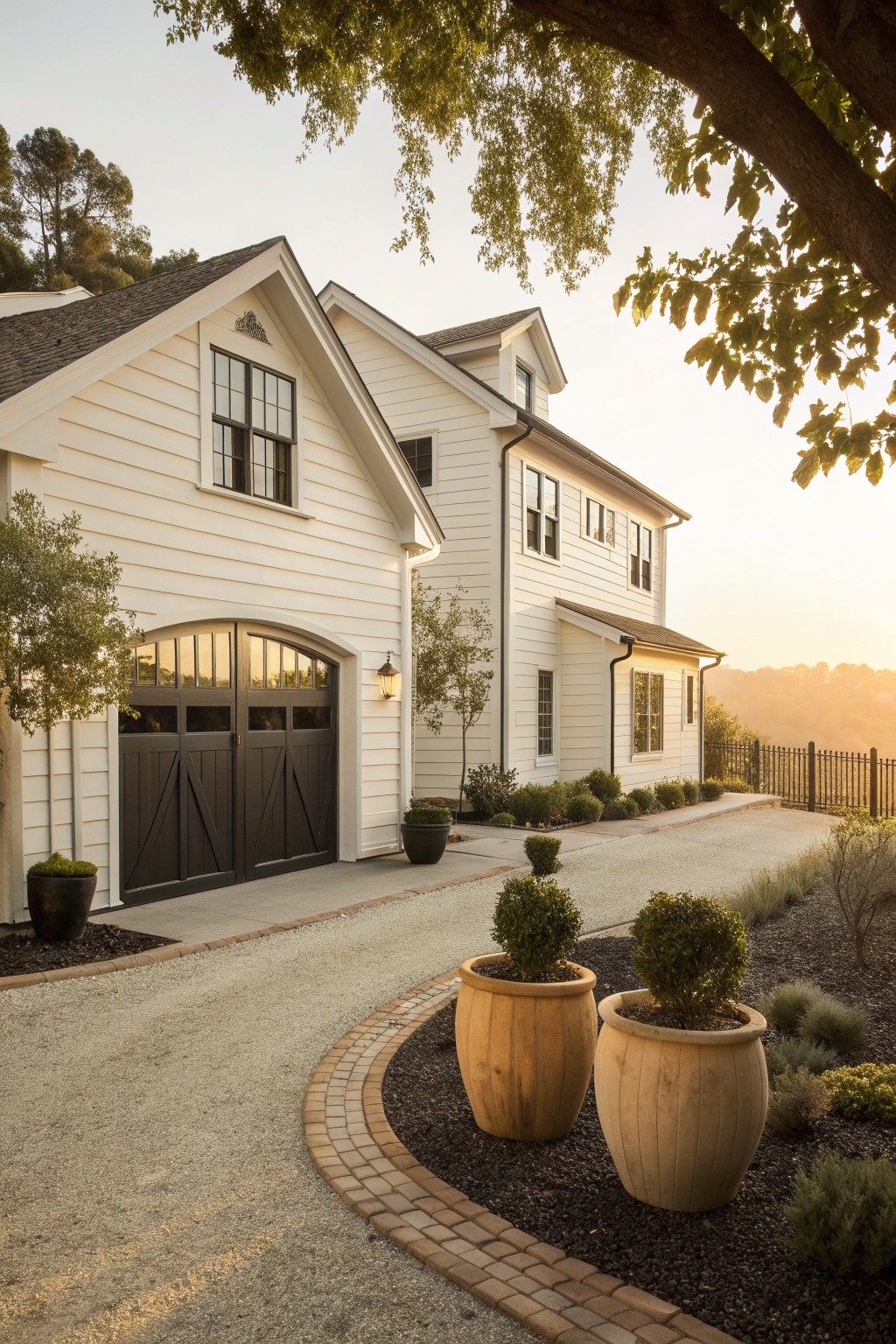
Many updated farmhouses feel more balanced when the garage doors are painted dark instead of matching the light siding. The contrast gives the front a cleaner edge and keeps the whole facade from looking too soft or washed out.
This approach works best on homes with simple rooflines and a few strong gables. It suits places where you want curb appeal without extra trim or ornament, and it pairs easily with basic landscaping like large pots near the drive.
Adding an Outdoor Dining Table Next to the House
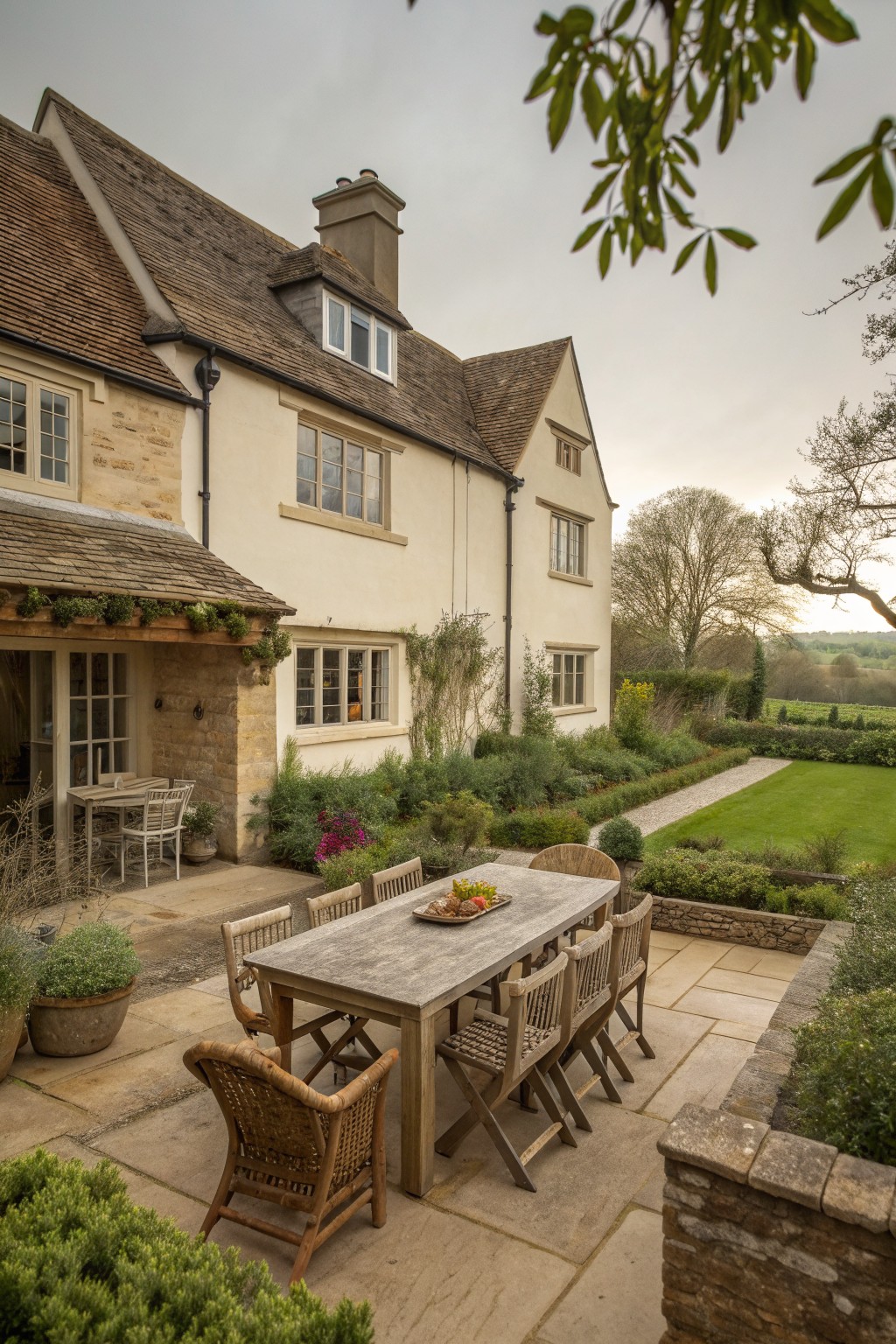
One practical move in homes like this is placing a big dining table right on the patio beside the back of the house. It turns the outdoor space into an everyday eating area without requiring extra rooms or big construction. The stone surface under the table keeps things level and easy to clean.
This works best on homes with a decent stretch of paving near a door. Use a sturdy table that can handle weather and add enough chairs for the usual crowd. Keep the path to the house open so people can move in and out without trouble.
Add a Metal Arbor Over the Front Door
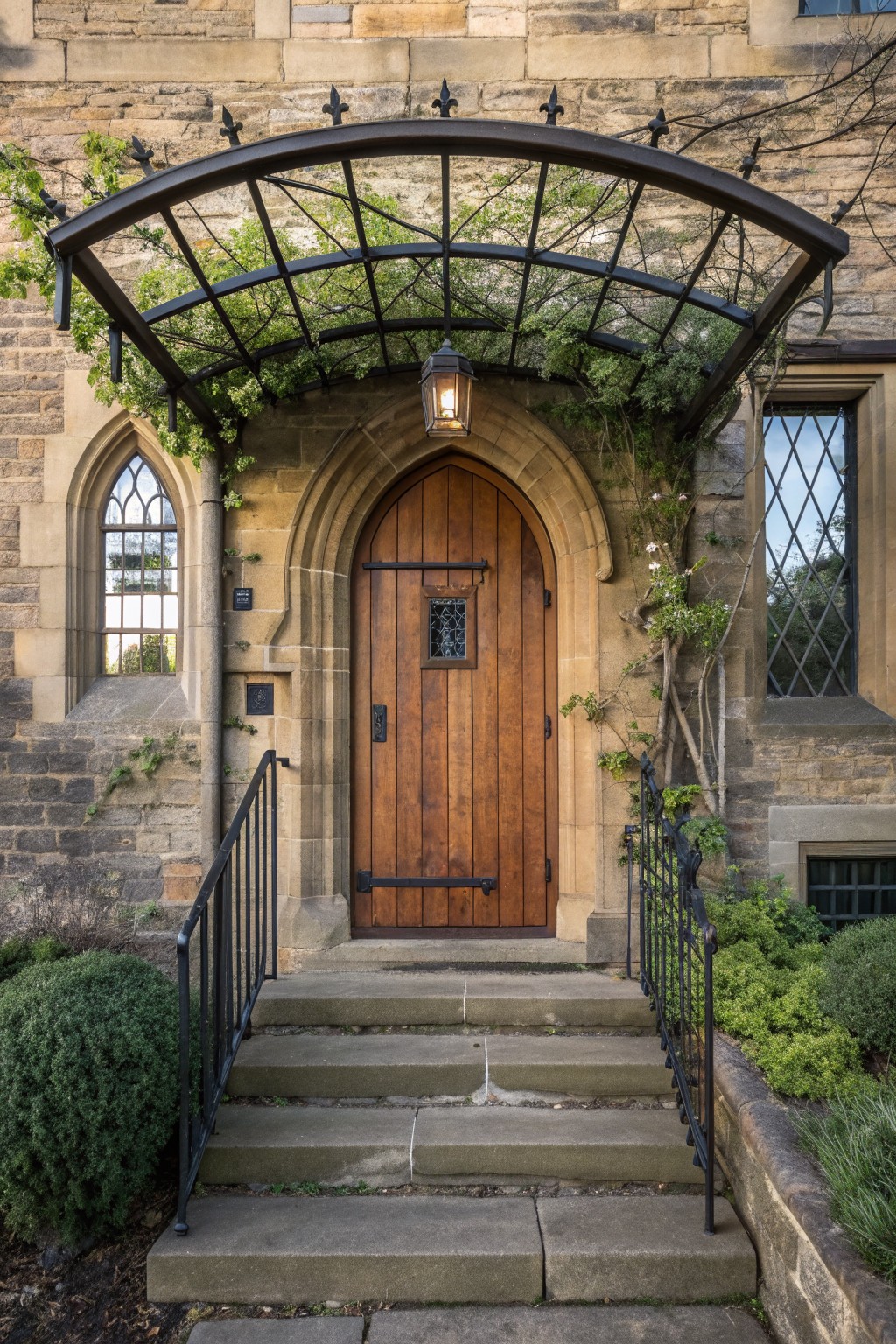
A metal arbor gives the entry a clear shape while letting plants soften the look over time. The curved frame sits right above the door and creates a natural transition between the stone wall and the garden.
This approach works well on updated farmhouses that already have a strong door or window detail. Keep the metal simple and dark so it frames the wood without fighting it, and let the vines fill in gradually rather than forcing a full cover right away.
Add a Long Reflecting Pool to the Courtyard
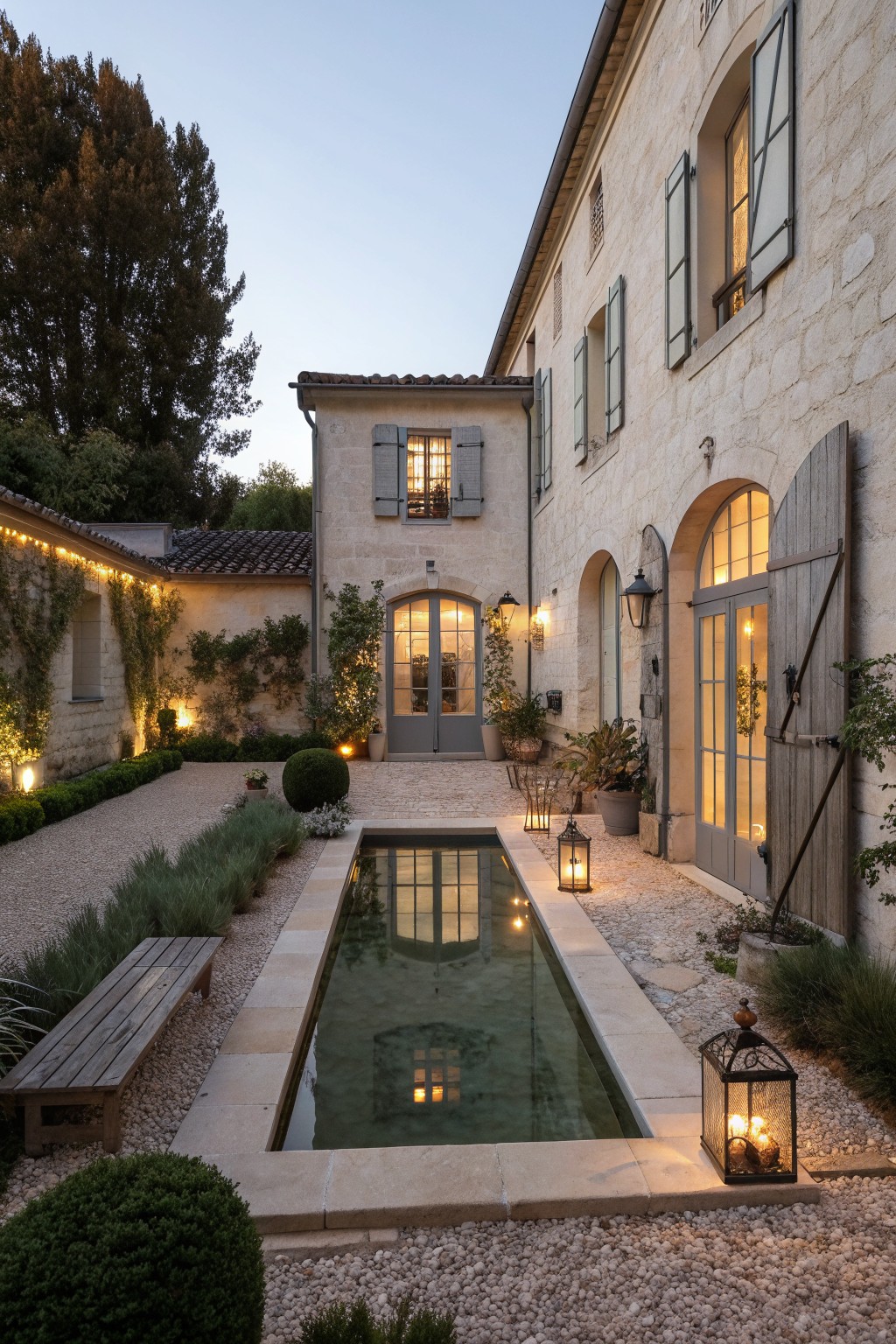
A narrow pool set into gravel gives the courtyard a quiet center without taking up much space. It reflects the house windows and doors, which helps the whole area feel connected to the building rather than just an open patch of ground. Many older farmhouses already have this kind of enclosed space, so the pool fits without looking added on.
Keep the edges simple with stone or concrete coping and let the gravel run right up to it. This works best on homes with at least one long wall facing the water so the reflection stays strong. Avoid filling the area with too many plants right at the edge or the calm effect gets lost.
Stone Accents on a Stucco Facade
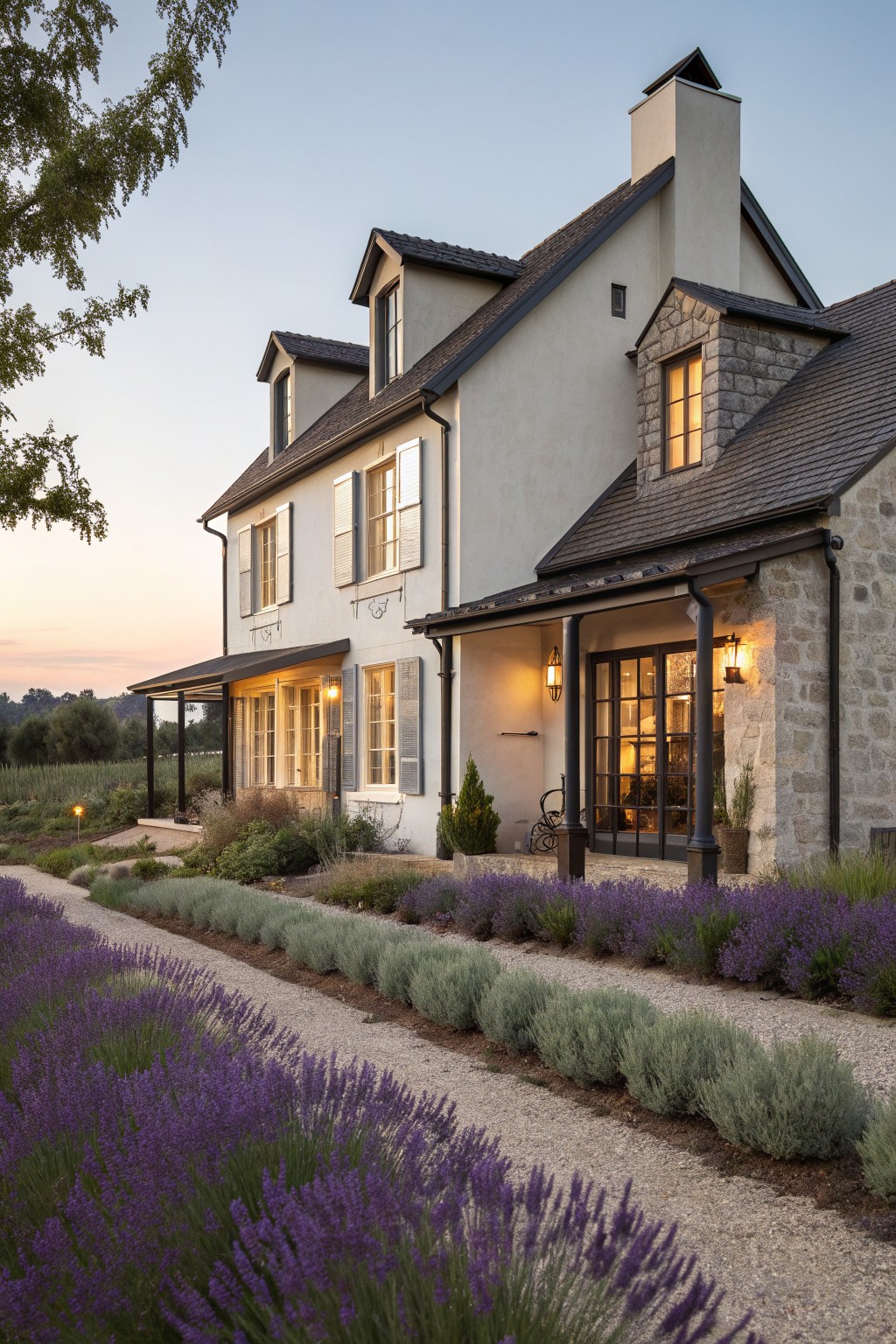
Many modern French country homes keep the main walls in light stucco but bring in stone on key sections. This mix adds just enough weight and texture without making the house feel heavy or too traditional.
It works best on gable ends or around the entry where the stone can stand out against the smoother surface. On a farmhouse this approach gives the exterior some character while still letting the lighter stucco keep the overall look soft and updated.
Striped Awnings for Shaded Patios
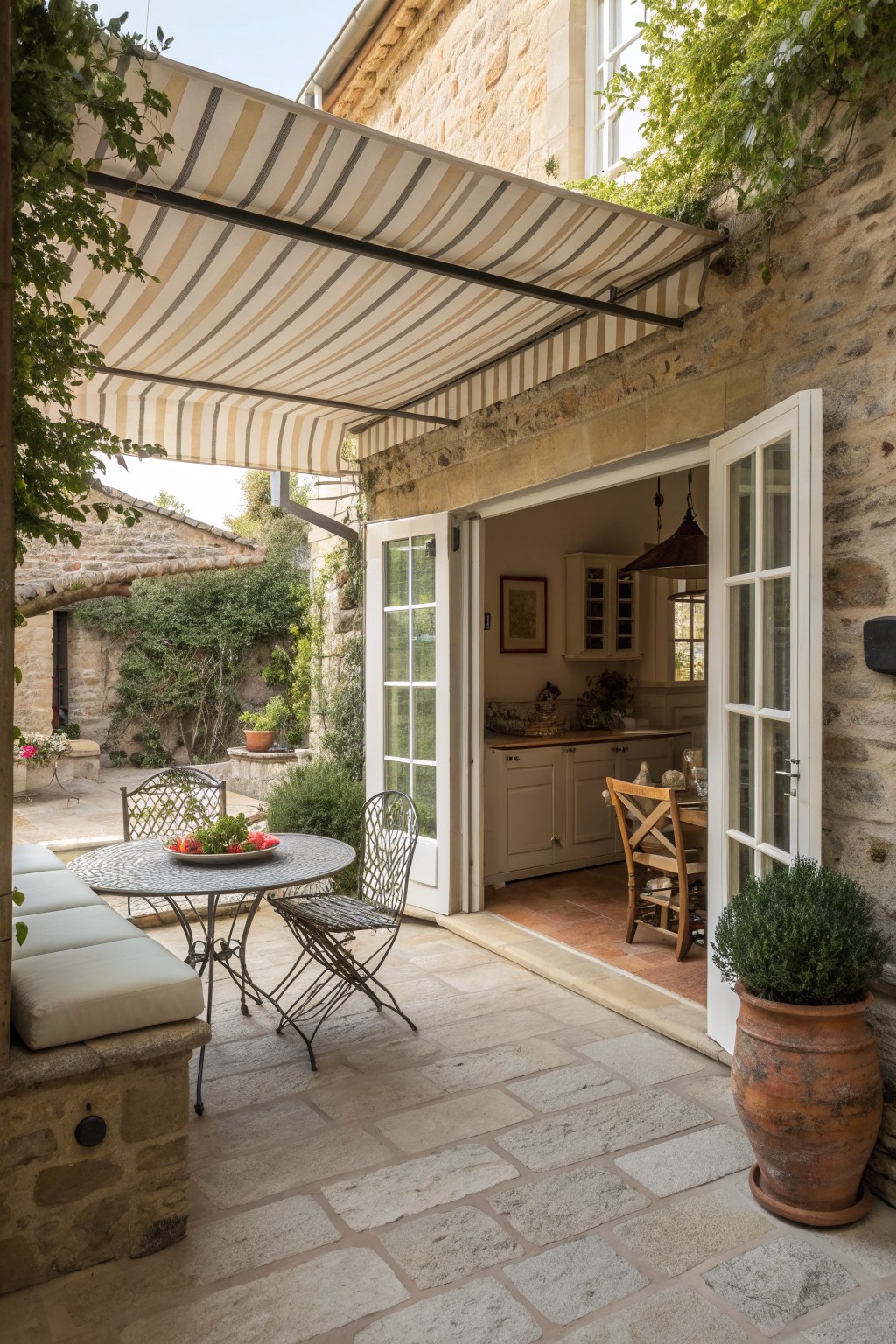
A striped awning gives a patio real function without much fuss. It blocks sun during the day while still letting the space feel open and connected to the house, which works especially well on stone homes where the light can get harsh.
This setup suits updated farmhouses that already have a small paved area right off the kitchen. Keep the table and chairs simple so the awning stays the main feature, and make sure the fabric color fits the rest of the exterior rather than competing with it.
Pergolas for Shaded Outdoor Dining
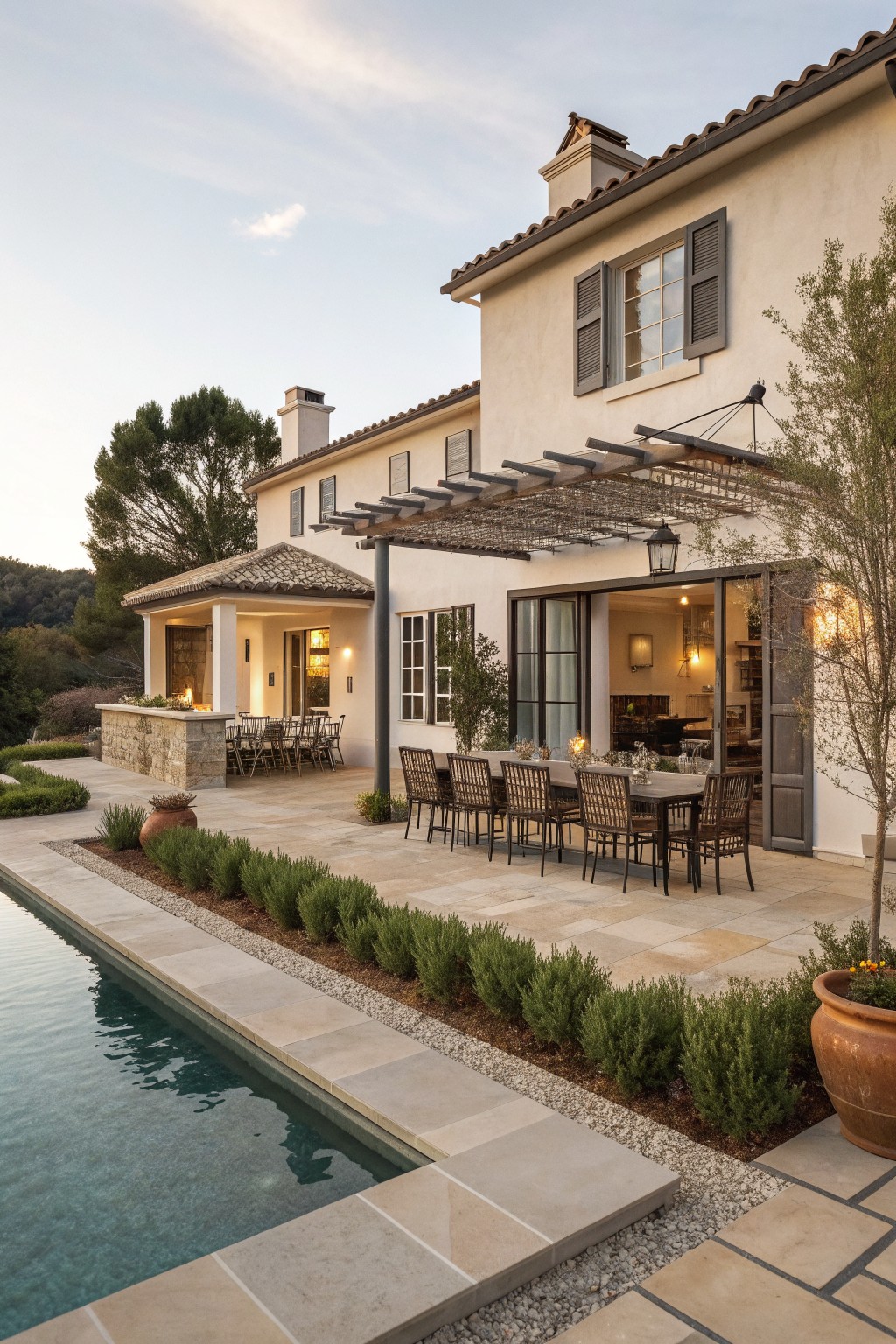
A pergola over the dining table gives shade and a bit of structure without making the patio feel closed in. It turns the space into a spot where meals can happen comfortably even when the sun is strong, and it ties the table area to the house rather than leaving it floating on its own.
This setup works best on homes where the patio sits close to both the kitchen doors and a pool. Keep the table simple and the seating lightweight so the area stays easy to use every day. Watch that the pergola height stays in scale with the house so it does not overpower the elevation.
Use an Arched Entry to Anchor the Facade
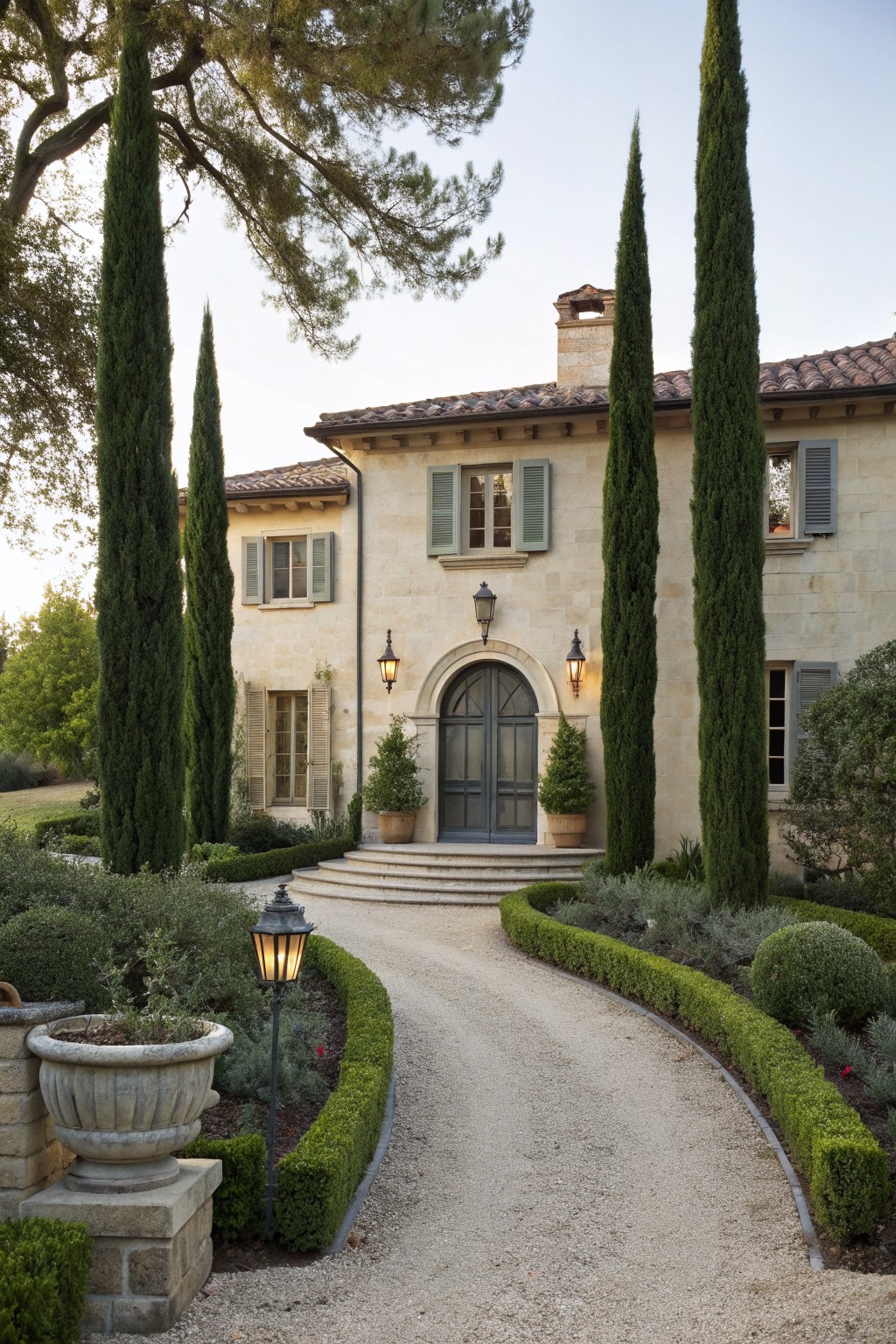
An arched doorway gives a house a clear center without needing extra trim or ornament. It works especially well on stone or stucco exteriors because the curve softens the heavier material and draws the eye straight to the front door. The lanterns on either side add just enough light at night while keeping the look simple.
This approach suits updated farmhouse homes that want a bit of French country character without going ornate. Keep the door itself fairly plain and let the shape do the work. Pair it with a gravel approach or low shrubs so the entry stays the main point of interest rather than competing with busy planting.
Built-In Bench Seating for Outdoor Meals
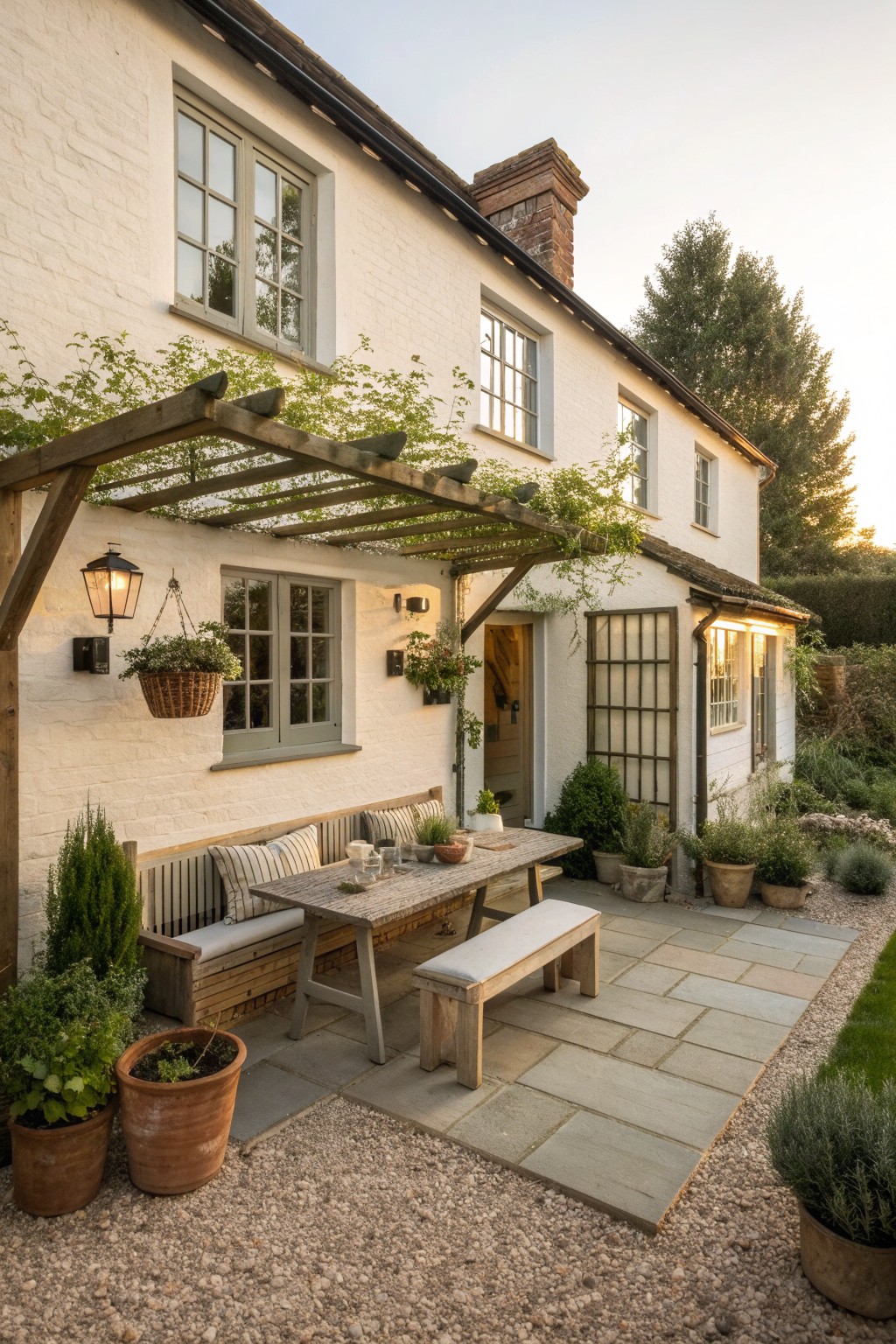
A built-in bench along the house wall turns a simple patio into a more usable dining spot. It gives people a fixed place to sit without crowding the area with extra chairs, and it makes the whole setup feel like it belongs to the house rather than sitting out in the open.
This approach suits farmhouse exteriors that already have a solid wall to work with. Keep the table narrow enough for easy access and choose plain wood finishes so the bench blends in with the rest of the outdoor space.
Adding a Glass Conservatory
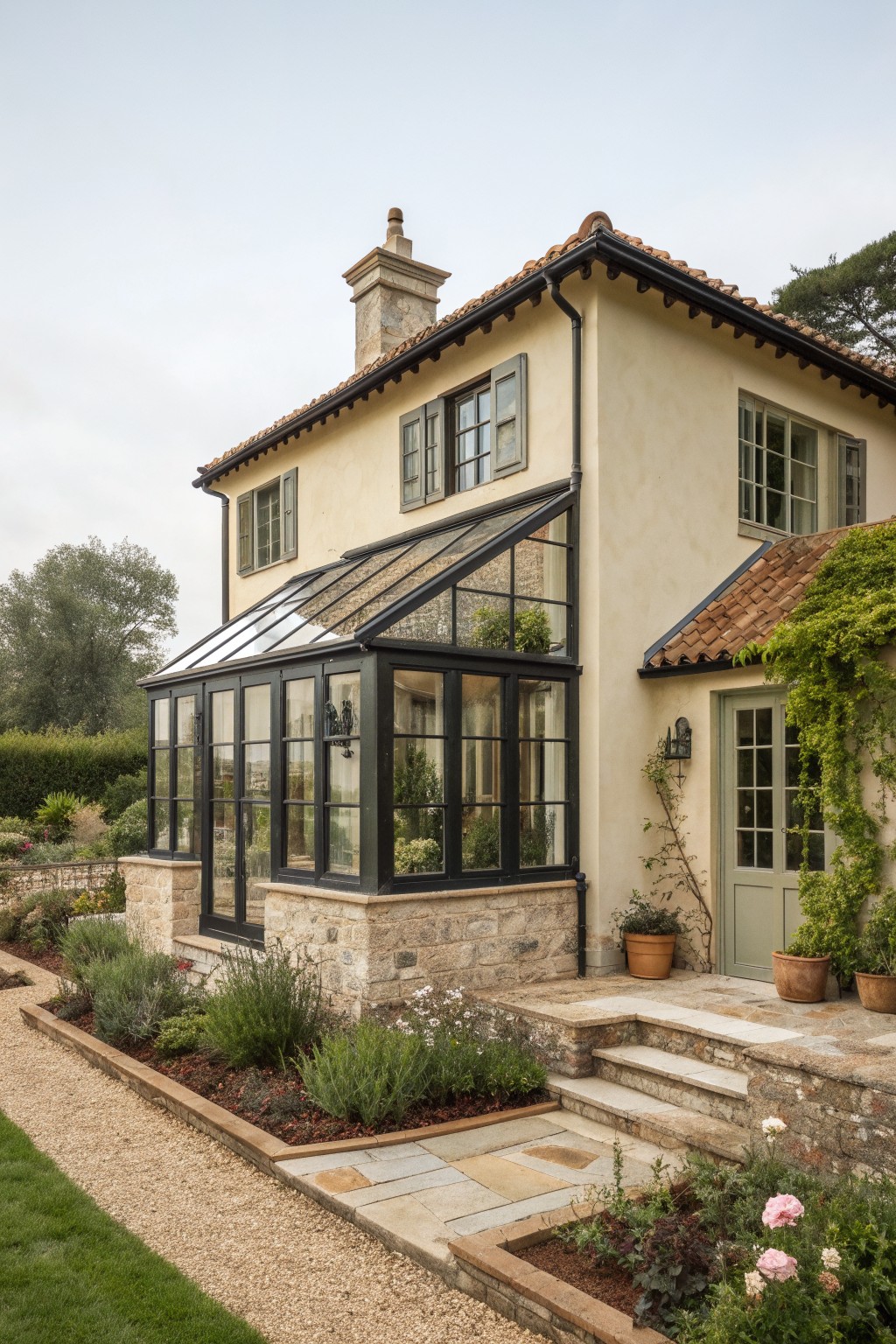
A glass conservatory gives an older farmhouse extra light and a direct link to the garden without changing the main roof or walls. The dark frames keep the addition from feeling too new against the stucco and tile.
This works best on homes that already have planting close to the house. Set the conservatory on a stone base so it sits low and blends with the original structure. Keep the rest of the exterior simple so the glass reads as a quiet update rather than a big contrast.
Arched Entries for Farmhouse Exteriors
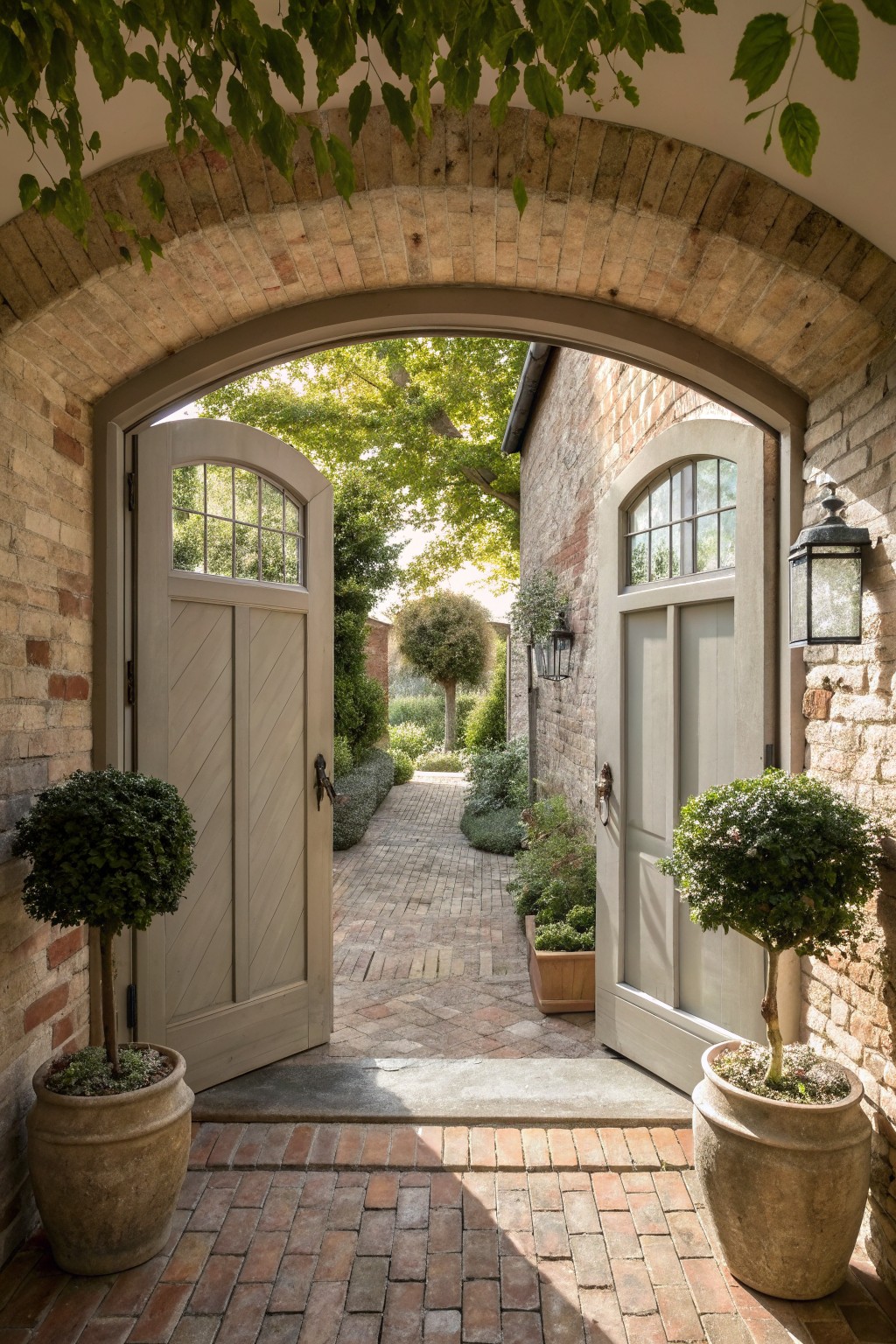
An arched brick entry with a pair of doors gives the front a softer shape than a square opening. It creates a clear transition from the street to the garden without feeling too formal or heavy.
This works best on brick or stone homes where the curve can echo the material. Keep the doors simple and light so the arch stays the main feature. Pair it with low pots at the sides if you want a bit of greenery without crowding the walkway.
Stepped Stone Patios for Zoned Outdoor Living
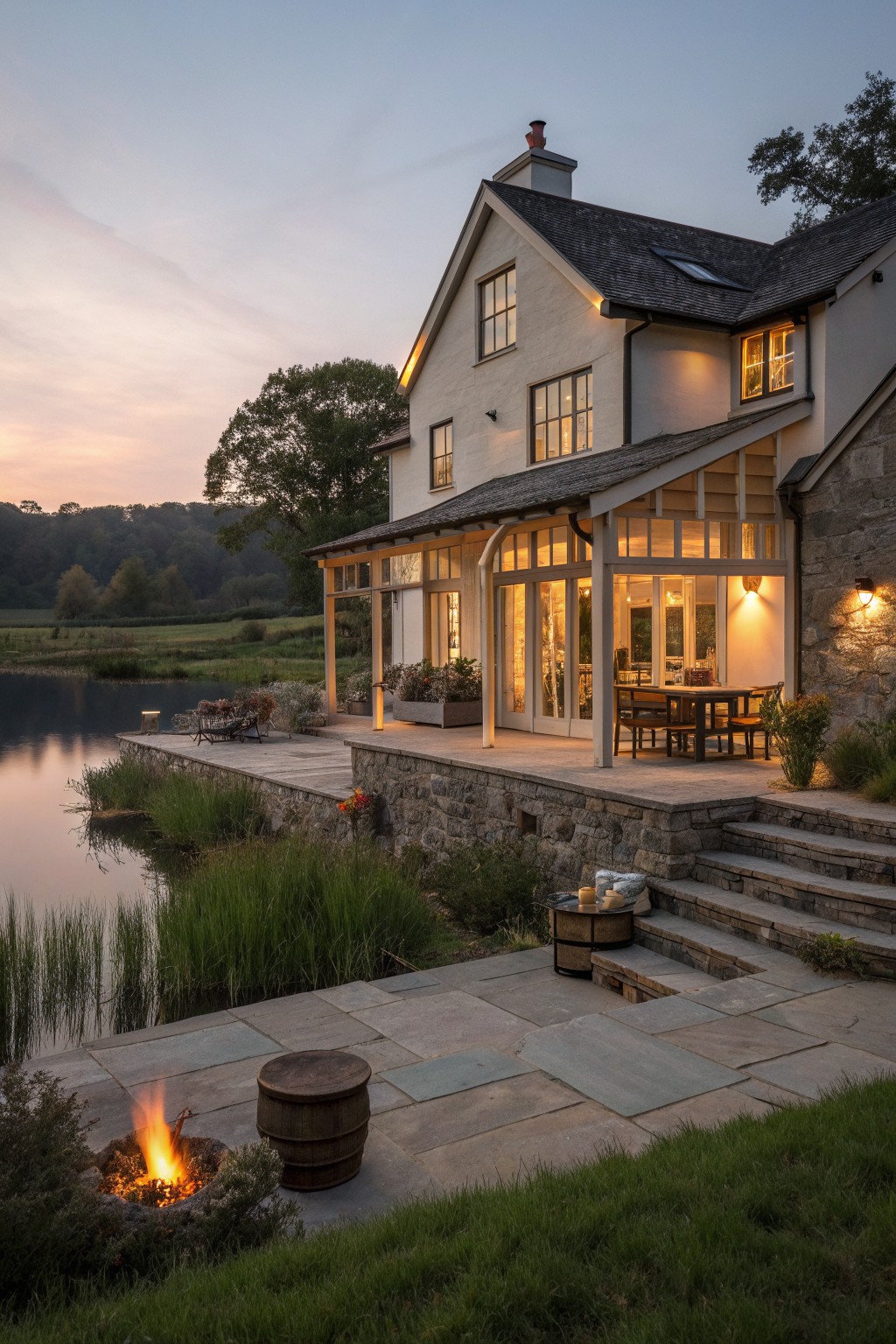
Stone steps and changes in level make an outdoor space feel more useful without adding walls or structures. Here the lower terrace holds the fire pit while the raised section works for dining, so people can move between quiet sitting and a meal without crowding one area. The stone ties both levels together and matches the house base, which keeps the whole setup looking like part of the building rather than an add-on.
This works best on homes with some slope or where you want to separate activities like cooking, lounging, and gathering. Keep the steps wide and the materials consistent so the levels read as one patio instead of separate patches. Avoid narrow steps or too many materials or the zones start to feel chopped up.
Timber Porch Details For Stone Exteriors
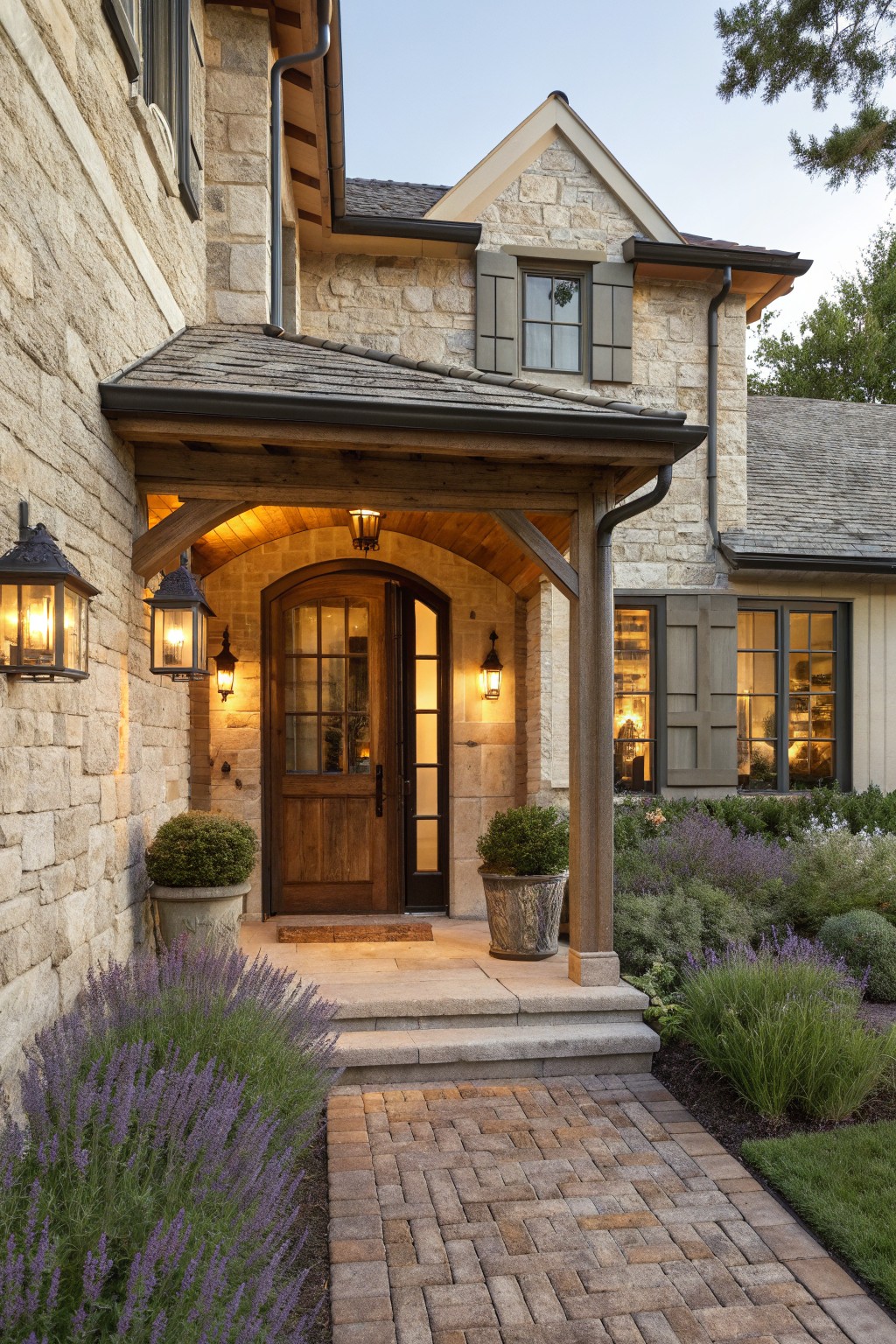
A covered entry with heavy timber beams gives a stone house some extra depth and a clear sense of welcome. The wood softens the harder material and creates a sheltered spot right at the door without changing the overall roofline.
This works best on homes that already have a simple stone or masonry base. Keep the beams thick but the structure light so the entry feels added on rather than built in. Avoid overdoing the trim or adding too many extra details around the door.
Frequently Asked Questions
Q: Can I combine different materials like wood and stone on one facade?
A: Yes, but keep the mix simple with one material as the main and the other as an accent. This approach shows up often in the modern examples and prevents a patchy look.
Q: Which paint colors help the exterior feel both modern and French inspired?
A: Soft grays or warm whites work great as a base. They let details like trim or roofing stand out without clashing.
Q: Should the front door match the windows or stand out?
A: Let it stand out with a deeper tone. That single change brings in personality fast.
