

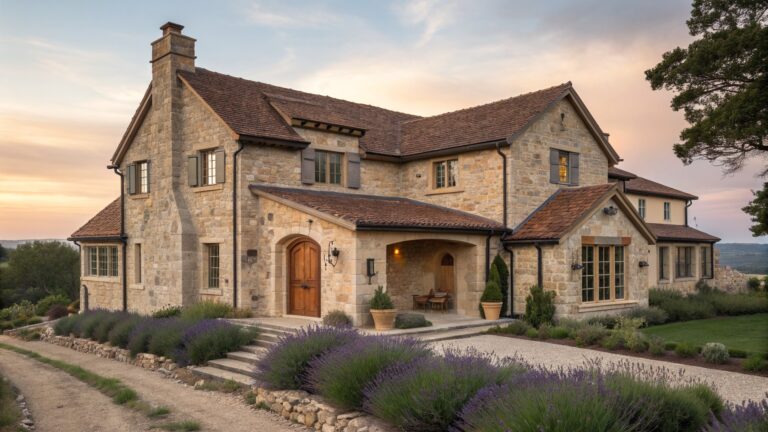
I have always noticed that the best old world farmhouses stand out because their materials already carry some history instead of looking freshly installed.
Aged stone combined with warmer finishes tends to soften the overall facade and helps the house settle into its surroundings right from the curb.
Some details only make sense once you stand in front of the real thing.
I usually save photos of entryways and roof edges that feel balanced because those are the parts I test first when thinking about changes to my own place.
Paying attention to how the stone will darken or lighten over time keeps the whole exterior from feeling like a snapshot that stops working after a few seasons.
Pairing Stone With Wood Details On The Exterior
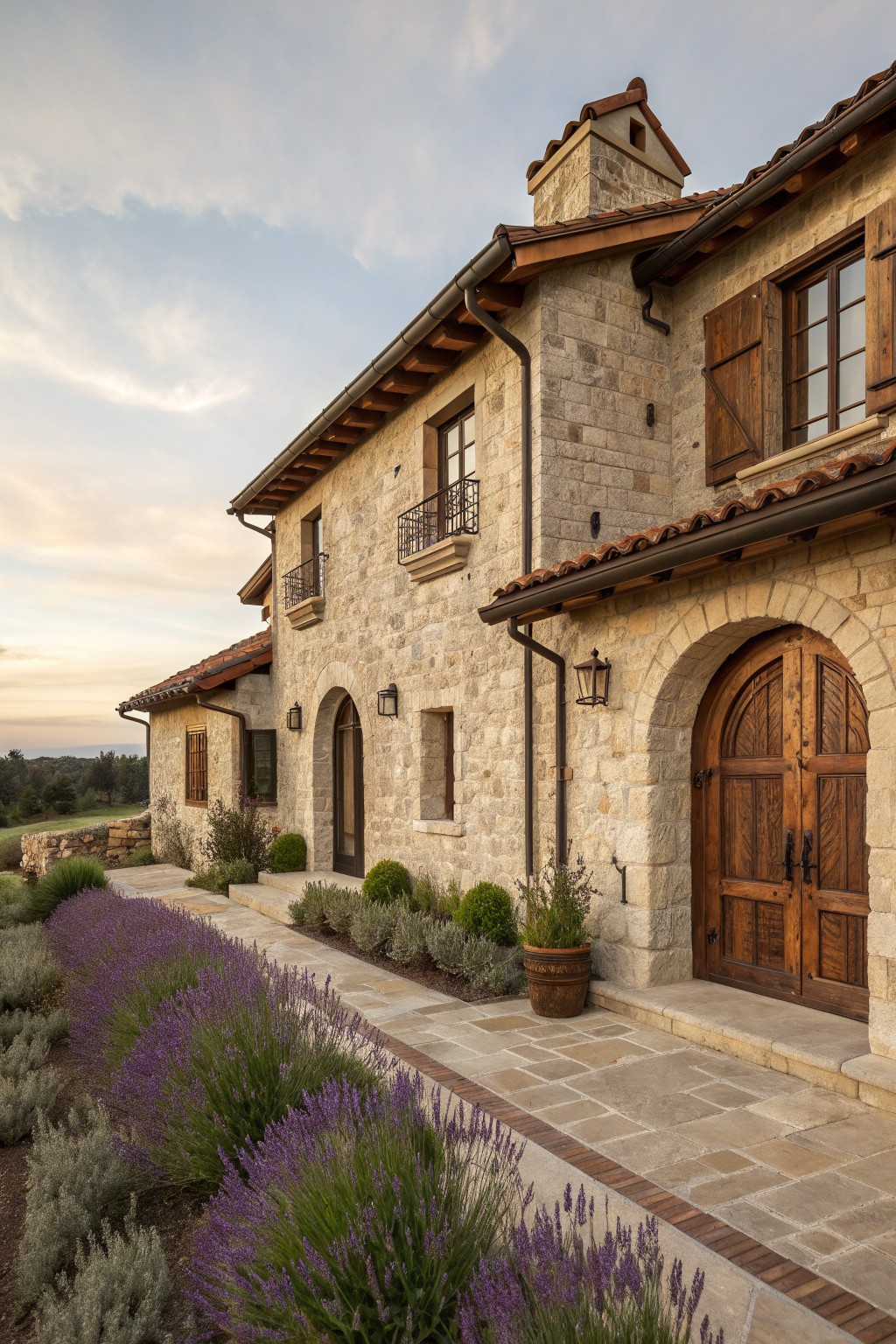
The combination of aged stone walls and warm wood accents gives a farmhouse exterior that settled look without trying too hard. The stone provides weight and texture while the wood softens the overall feel and adds natural warmth that reads as practical rather than decorative.
This mix works best on homes with simple rooflines where you can let the materials carry the character. Start with the main entry and windows, then carry the same wood tone to shutters or trim so the house feels pulled together without extra ornament.
Arched Stone Entries
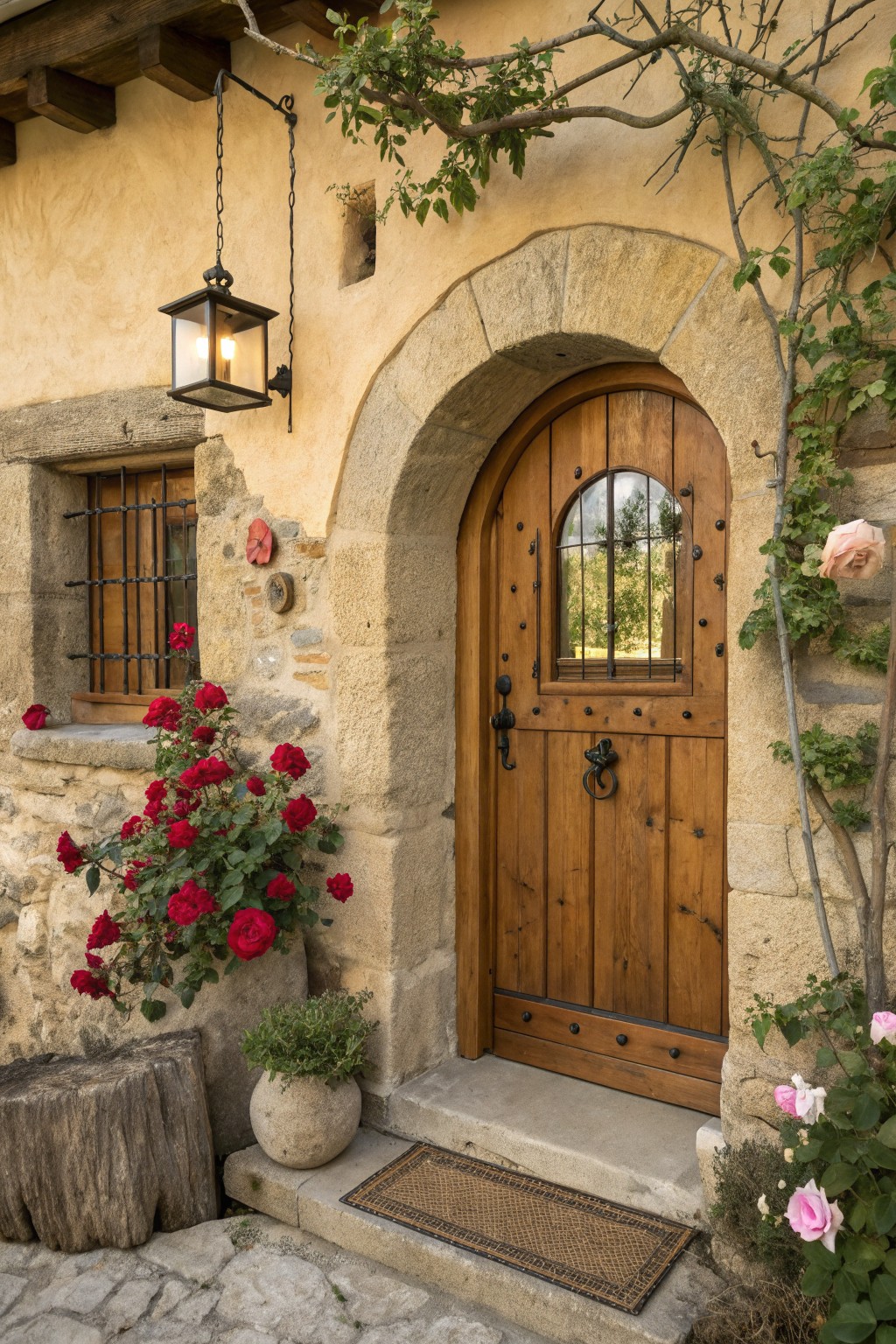
An arched stone surround around the front door gives a farmhouse exterior instant character and a sense of age. The rough texture of the stone contrasts nicely with the smoother stucco walls and keeps the entry from feeling flat or plain.
This works best on homes with simple wall finishes where you want the door to stand out without adding ornate trim. Use local or reclaimed stone if possible and keep the arch slightly irregular so it feels like part of an older structure rather than a new addition.
Stone Fountains in Paved Courtyards
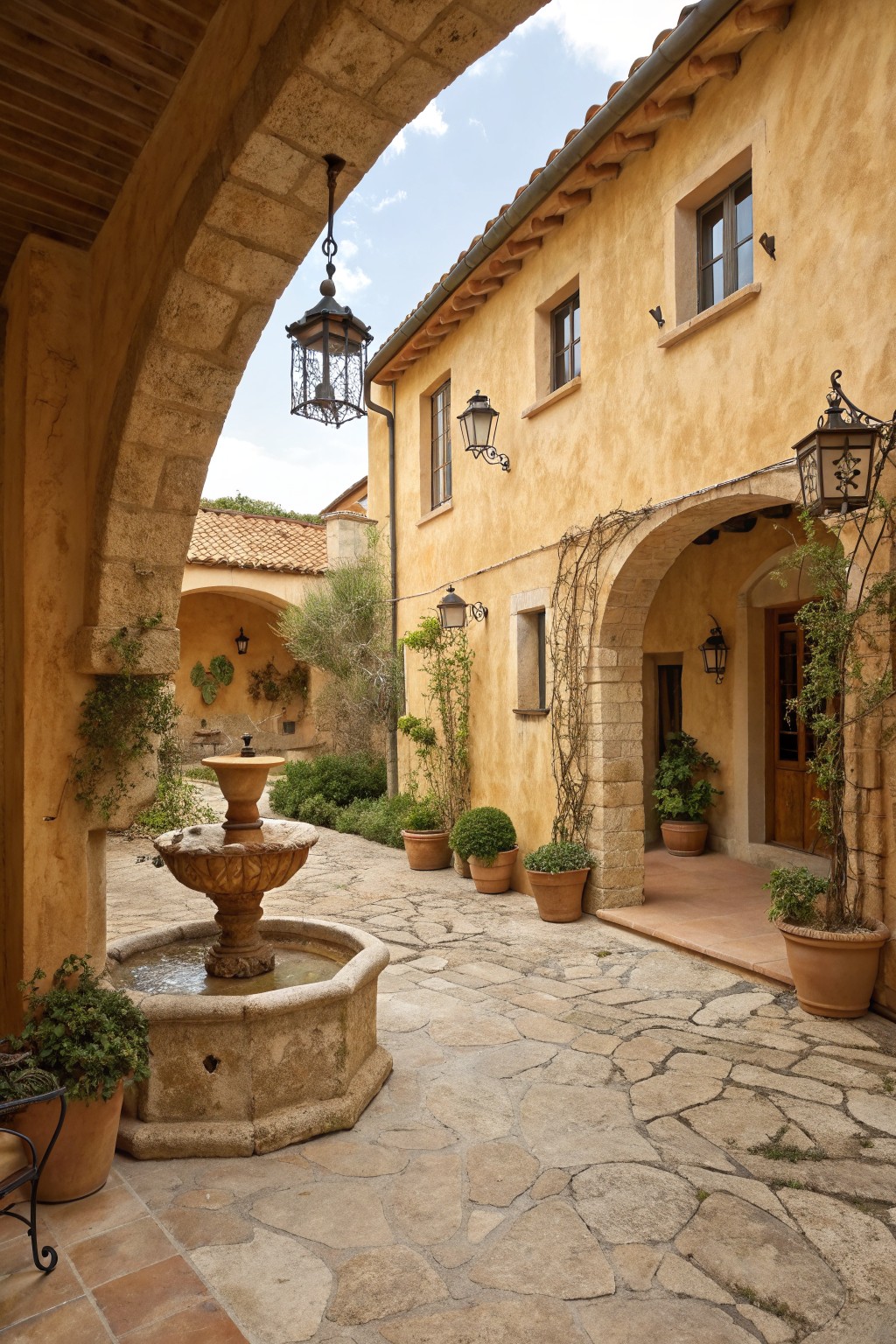
A central stone fountain works well in a courtyard like this because it gives the space a clear focal point without needing much else. The aged texture of the stone pairs naturally with the warm stucco walls and irregular paving, which keeps the whole area feeling settled and cohesive rather than overly planned.
This setup suits older homes or new builds aiming for that same character. Keep the surrounding plants in simple pots so the fountain and stone stay the main features. Avoid crowding the edges or adding too many small decorations that would break up the quiet look.
Aged Stone Walls With Terracotta Roofing
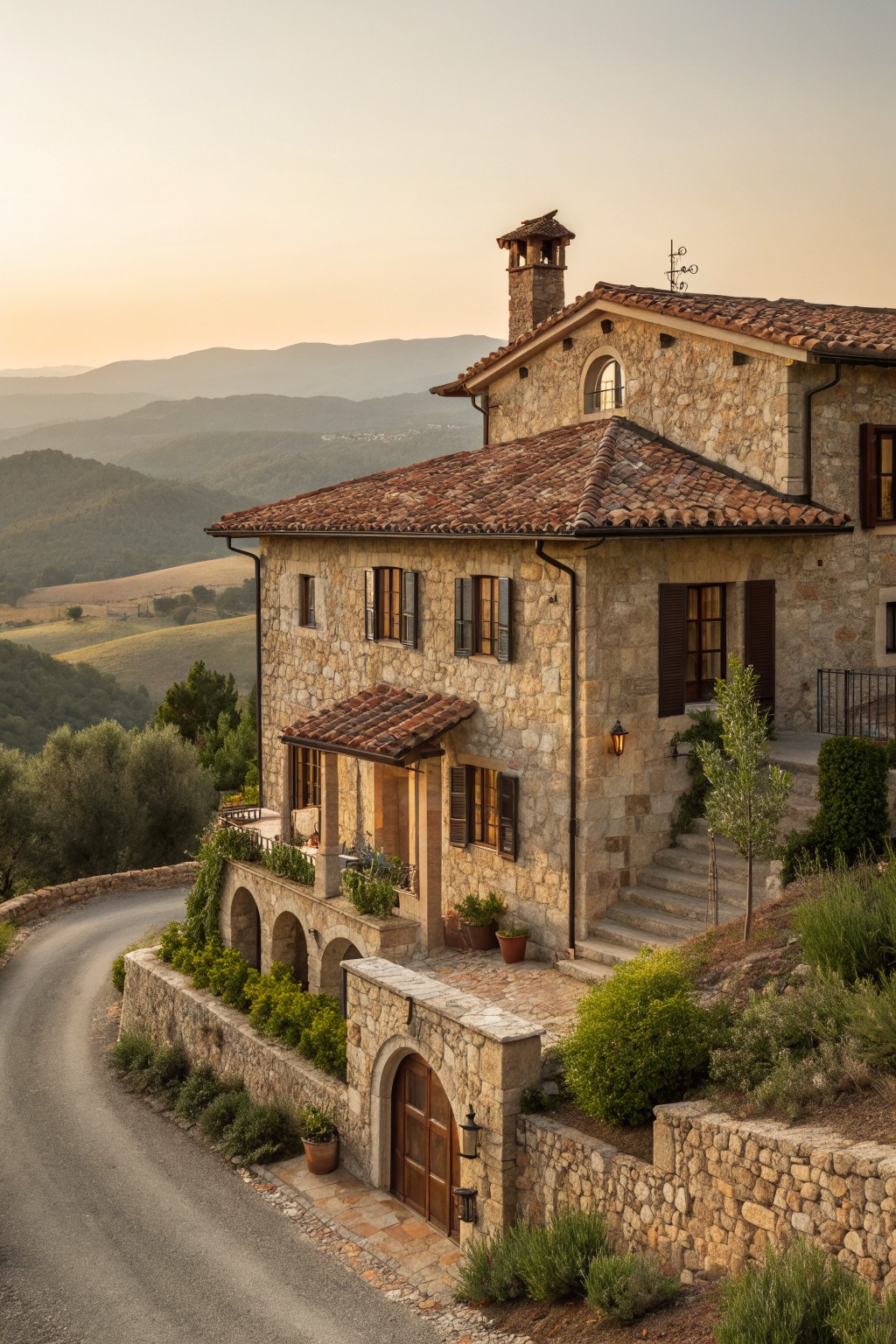
Stone walls give a farmhouse exterior real staying power. They hold up over time and bring that aged look right away without needing much else to feel finished. The reddish roof tiles add the right amount of warmth and keep the whole thing from looking too heavy.
This works best on homes with simple shapes and a few good windows. Keep shutters and trim in a dark wood tone so the stone remains the main feature. Avoid mixing in too many other materials or the clean effect gets lost.
Stone and Wood on Farmhouse Exteriors
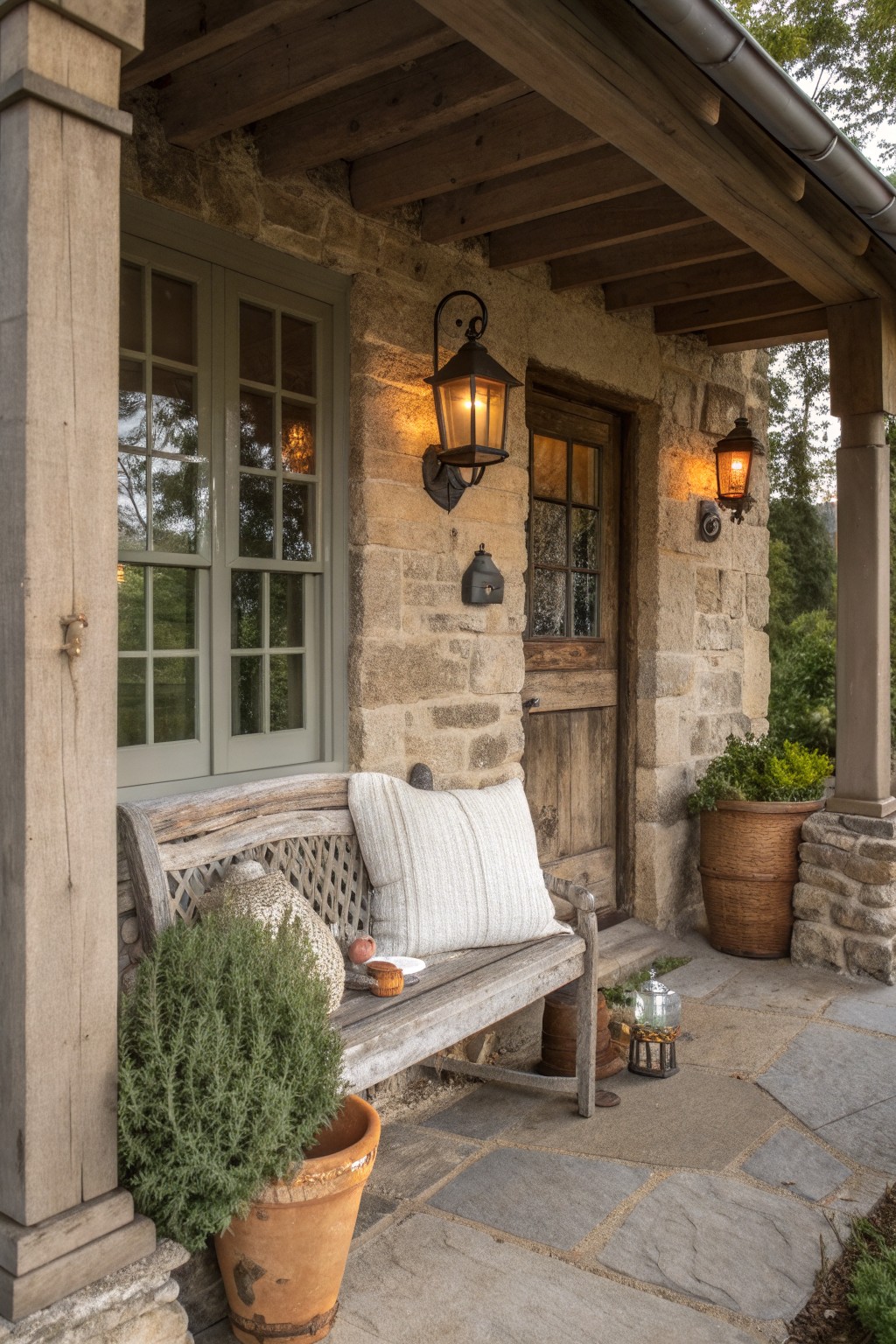
Aged stone looks better when it sits next to wood that has some age to it too. The contrast between the rough walls and the softer wood tones keeps the whole front from feeling too heavy or cold.
This works well on smaller homes or those with simple entries. Use the wood on doors, trim, or a bench near the door and let both materials weather naturally instead of trying to match them perfectly.
Adding a Long Dining Table to Your Patio
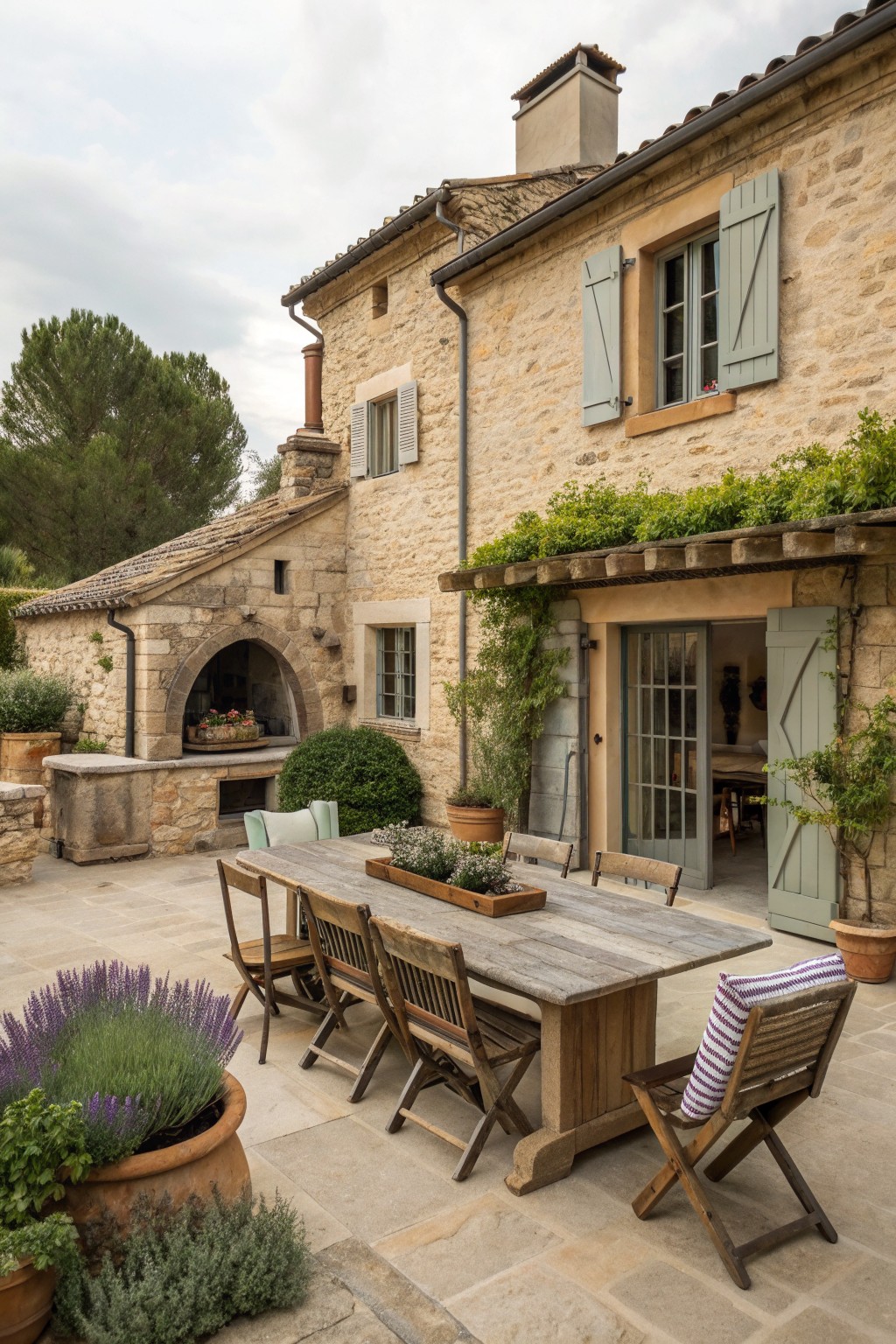
A long wooden table gives an outdoor space a clear purpose without needing much else. It turns a simple paved area into a spot where people actually sit and spend time, especially when the table is sturdy enough to stay out year round.
This works best on larger patios next to a stone house where you can pull up mismatched chairs and add a few big pots nearby. Keep the table simple and let the surrounding stone and plants do the rest.
Mixing Stone With Warm Wood Finishes
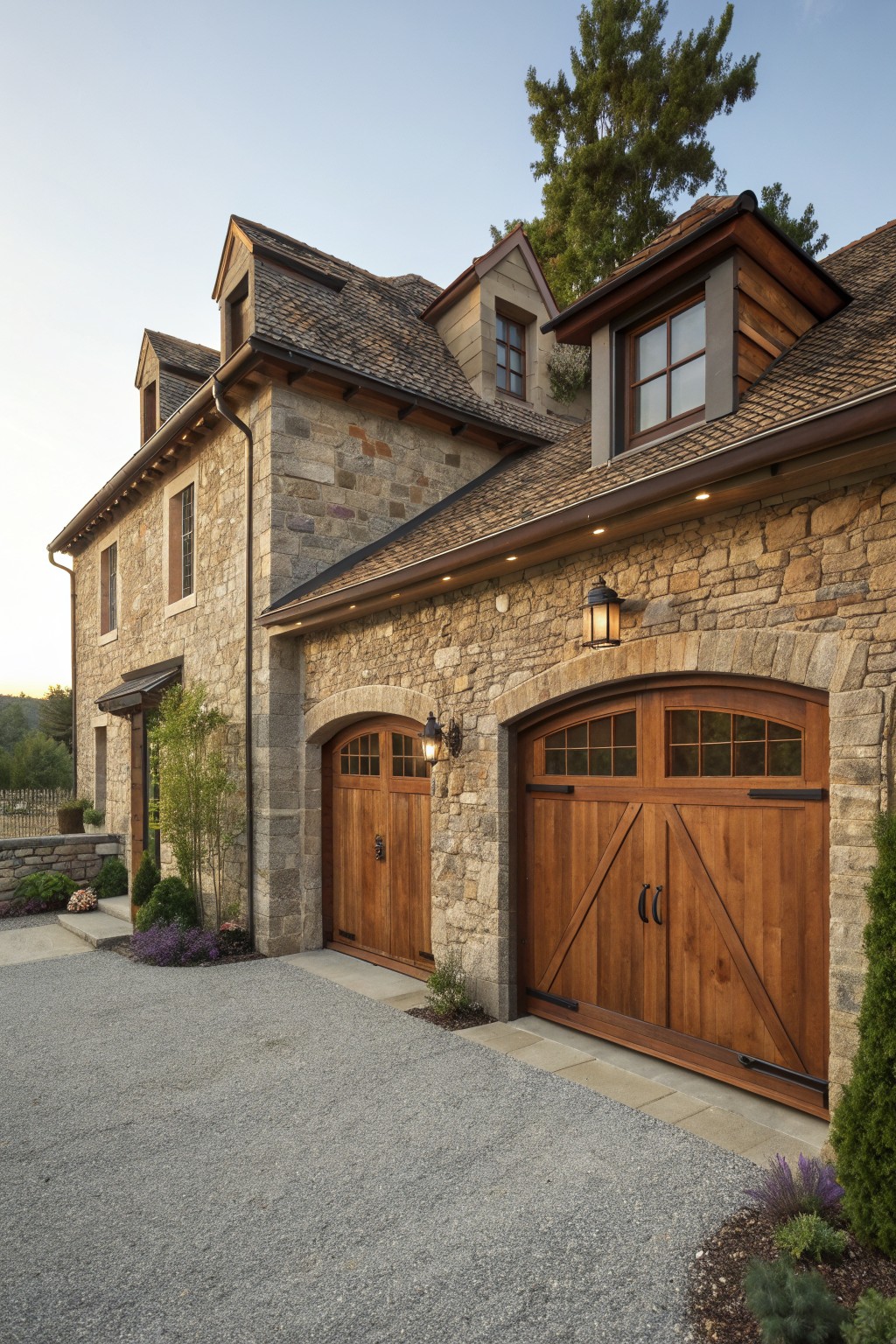
Many old world farmhouses rely on this simple material mix to feel grounded without looking heavy. The stone gives weight and texture while the wood softens the overall look and adds warmth.
It works especially well on homes with wide garage doors or broad facades where you need something to break up all the stone. Match the wood tone to any existing trim so the whole exterior feels connected rather than pieced together.
Stone Fireplaces for Outdoor Dining
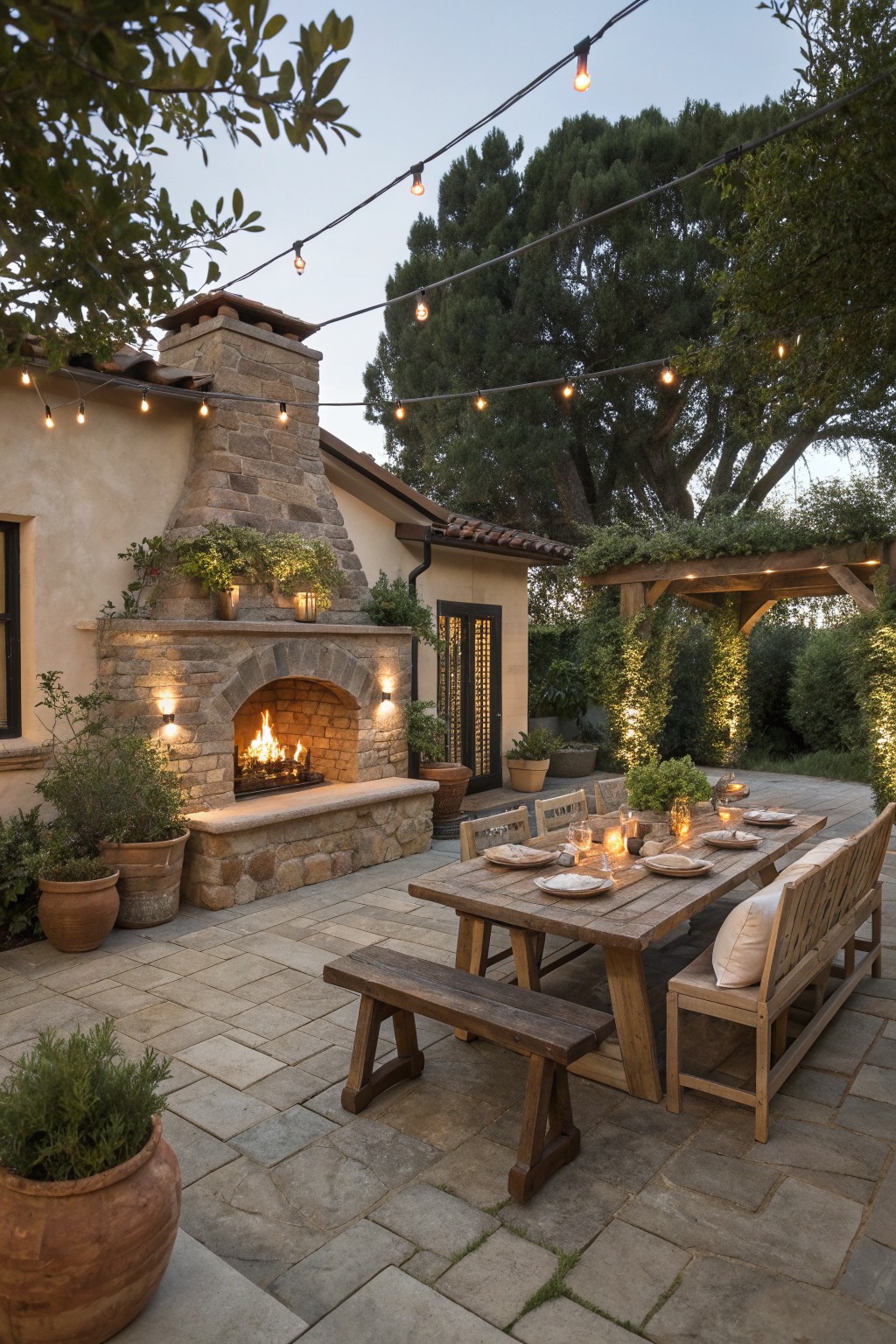
A stone fireplace on the patio gives an outdoor dining area a clear center point. It turns the space into something you can use after the sun goes down and adds a sense of warmth without needing extra walls or enclosures. The aged stone also fits the old world farmhouse look the rest of the house already has.
Place the table close enough that the fire can be seen from every seat but leave enough room for people to walk around the benches. This setup works best on homes with similar stone and warm wood finishes. Keep the surrounding plants in simple pots so the fireplace stays the main feature.
Arched Stone Entries
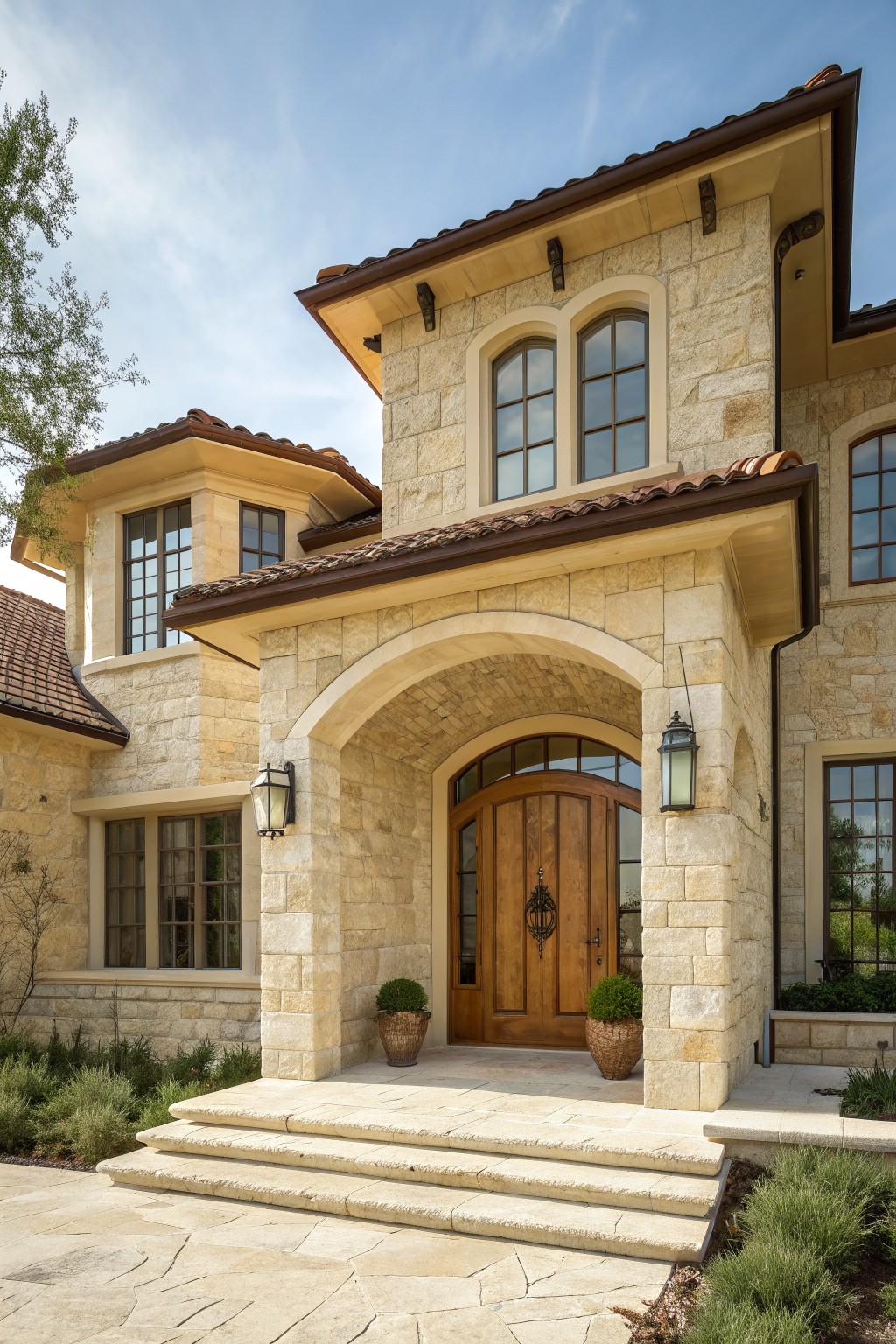
An arched stone entry gives a house real presence without trying too hard. The curve softens the heavy stone walls and draws the eye straight to the door, which is exactly what you want on a farmhouse exterior.
This works best on homes already using natural stone and warm wood tones. Keep the arch clean and let the door itself carry the color and detail so the whole thing feels balanced rather than overdone.
Stone Fountain In The Courtyard
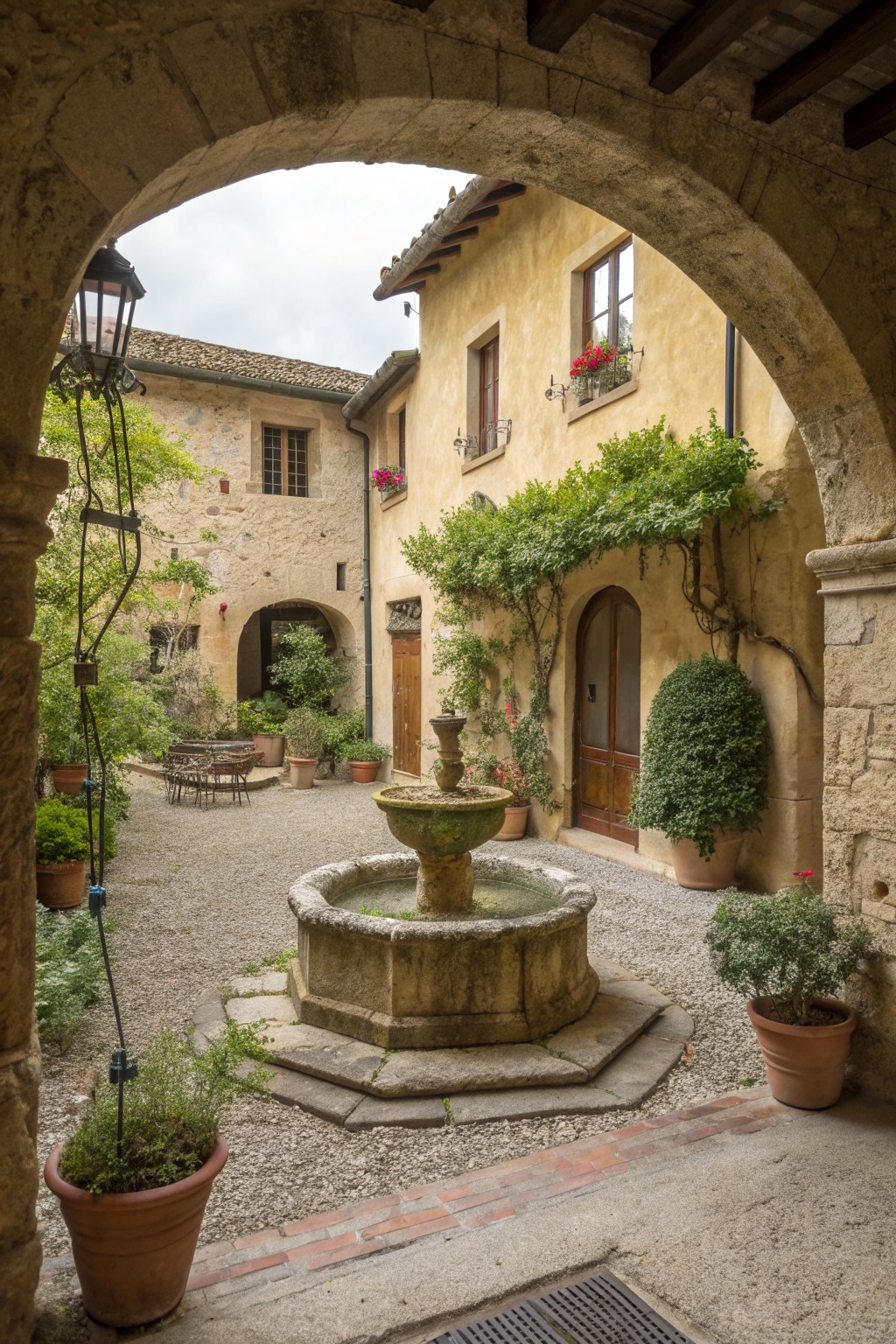
A stone fountain placed right in the middle of a gravel courtyard gives the whole space a simple center point. It keeps the area from feeling empty while still leaving plenty of open ground for walking or adding a few chairs when needed.
This works best on older homes where the stone already matches the house walls. Stick with a few potted plants around the edges and skip heavy planting beds so the gravel stays clean and the fountain remains the main feature.
Cobblestone Paths for Stone Farmhouses
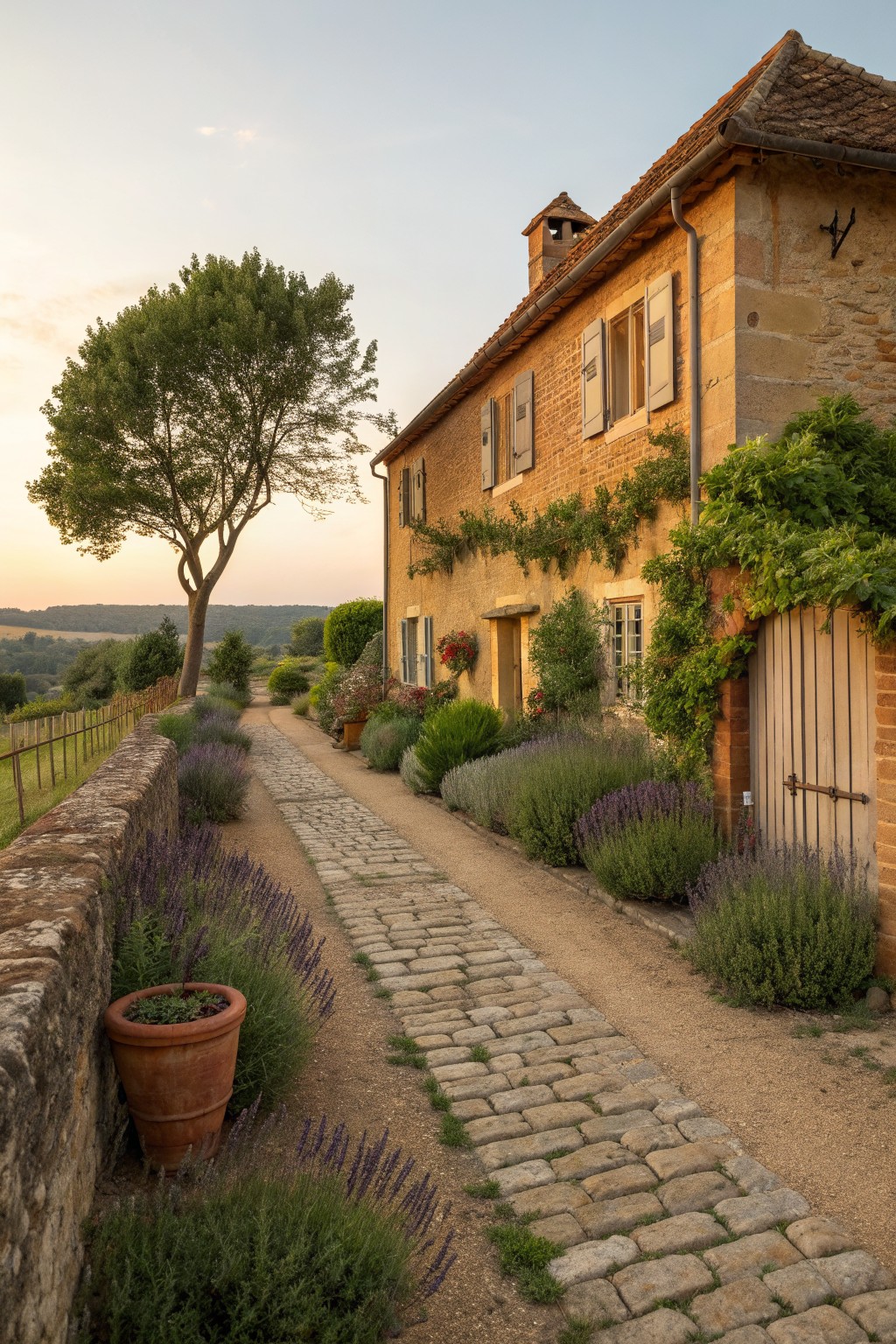
A simple stone path can do a lot for an old farmhouse. It gives the eye a clear route to the door while echoing the same aged stone already on the house. The low lavender and herbs along the edges keep the path from feeling too formal and help the whole approach feel settled into the land.
Use this where the ground slopes gently and you want something practical underfoot. Keep the stones irregular and let the planting spill over a little so the path looks like it has been there a while. It suits homes with thick stone walls and simple details, and it works best when you avoid making the path too wide or perfectly straight.
Creating Shade With a Wooden Pergola
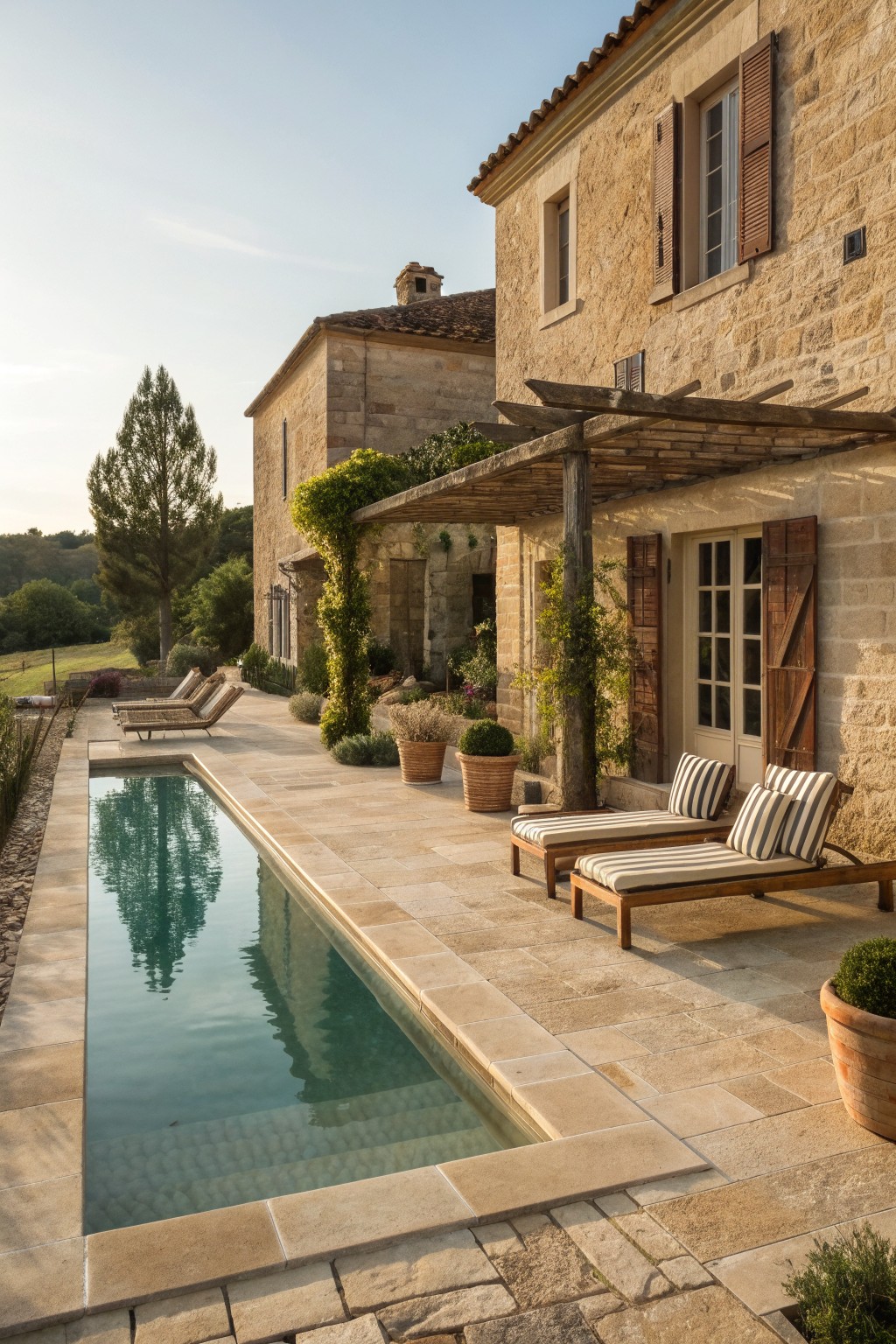
A wooden pergola adds useful shade over lounge chairs without making the whole patio feel closed in. It also brings a warm tone that pairs naturally with aged stone walls and paving, which helps the outdoor area feel connected to the house rather than added on later.
This works best on farmhouses where the patio runs along the main living spaces. Use a simple timber structure with thick posts and keep the finish light so it ages evenly with the stone. Avoid heavy staining or overly ornate details that can look out of place.
Using Aged Stone for the Main Walls
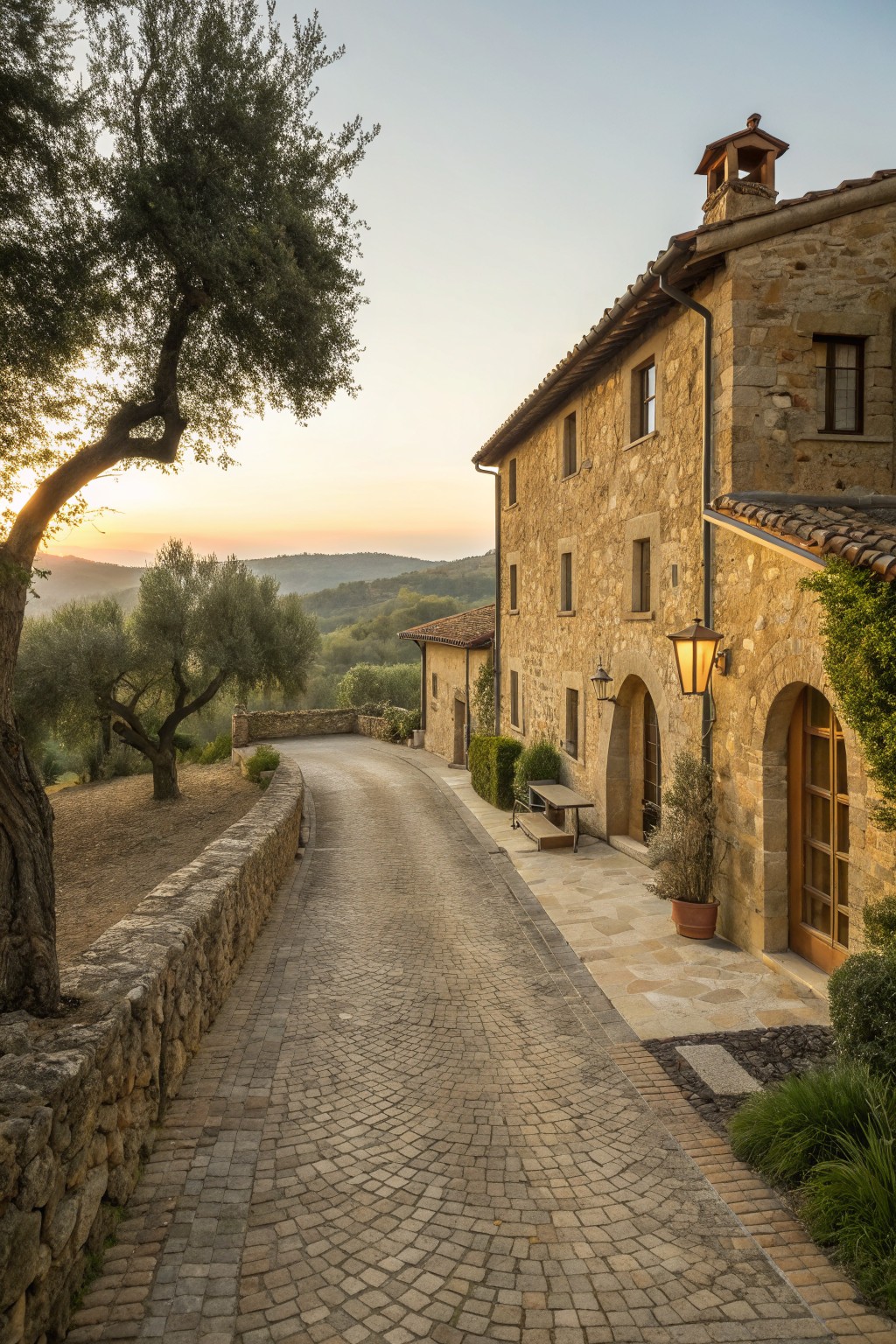
Aged stone gives an exterior a settled look that newer materials often miss. It adds weight and texture without extra decoration, and it holds up well in changing weather.
This works best on homes with simple shapes where the stone can cover most of the facade. Pair it with wood doors and basic lighting so the stone stays the focus rather than getting lost in too many details.
Match Stone From the House to the Patio
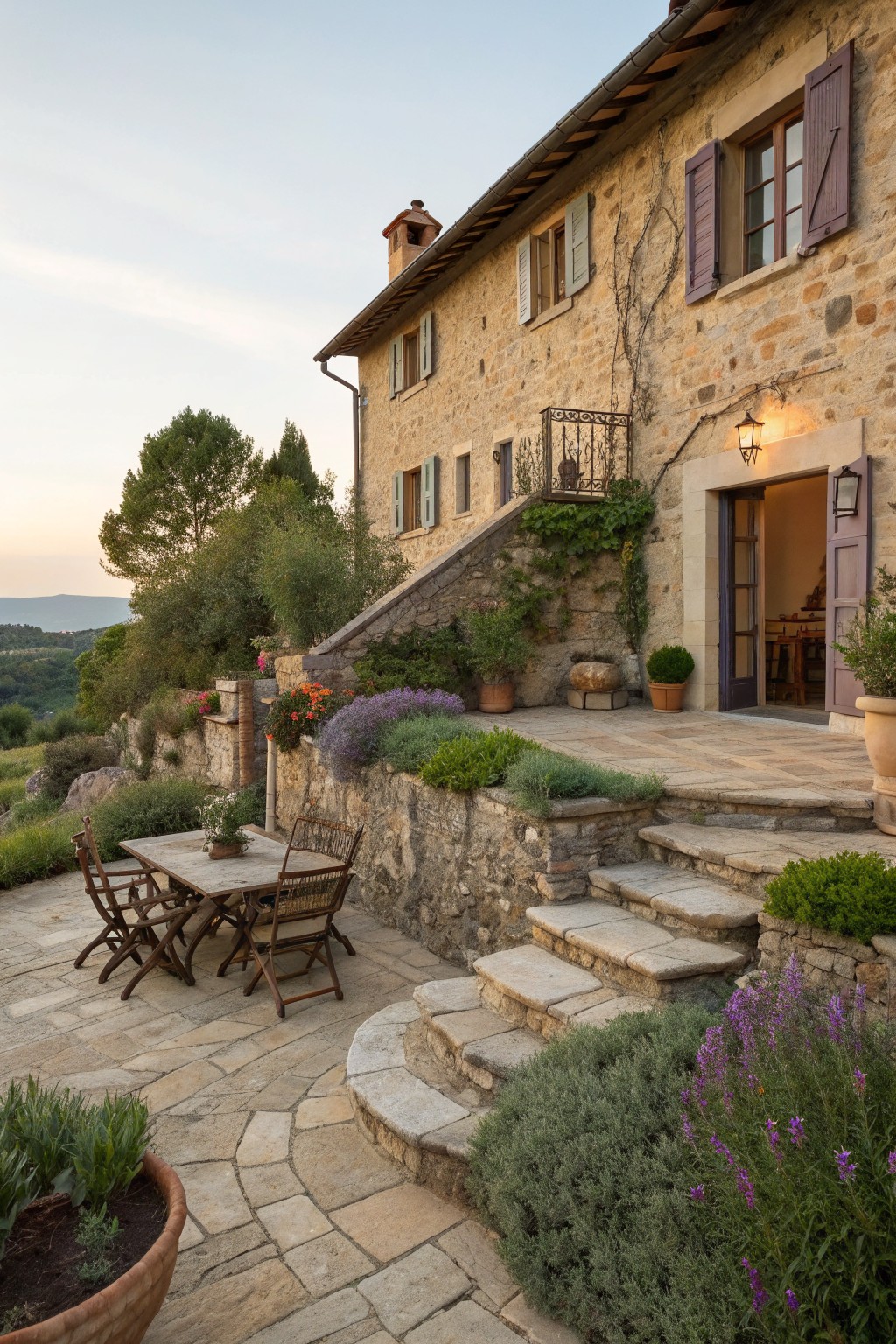
Using the same aged stone for the patio and steps as the house walls pulls the whole space together. It makes the outdoor area feel like a true extension of the building rather than something added later. The rough texture and warm tones carry through without any hard breaks, which keeps the look grounded and simple.
This approach works best on farmhouses or homes where you want the outdoor seating zone to feel permanent. Keep the stone sizes varied but consistent in color so the transition stays natural. Avoid making the patio too wide or it can start to feel like a separate courtyard instead of part of the house.
Pairing Stone With Wood On The Exterior
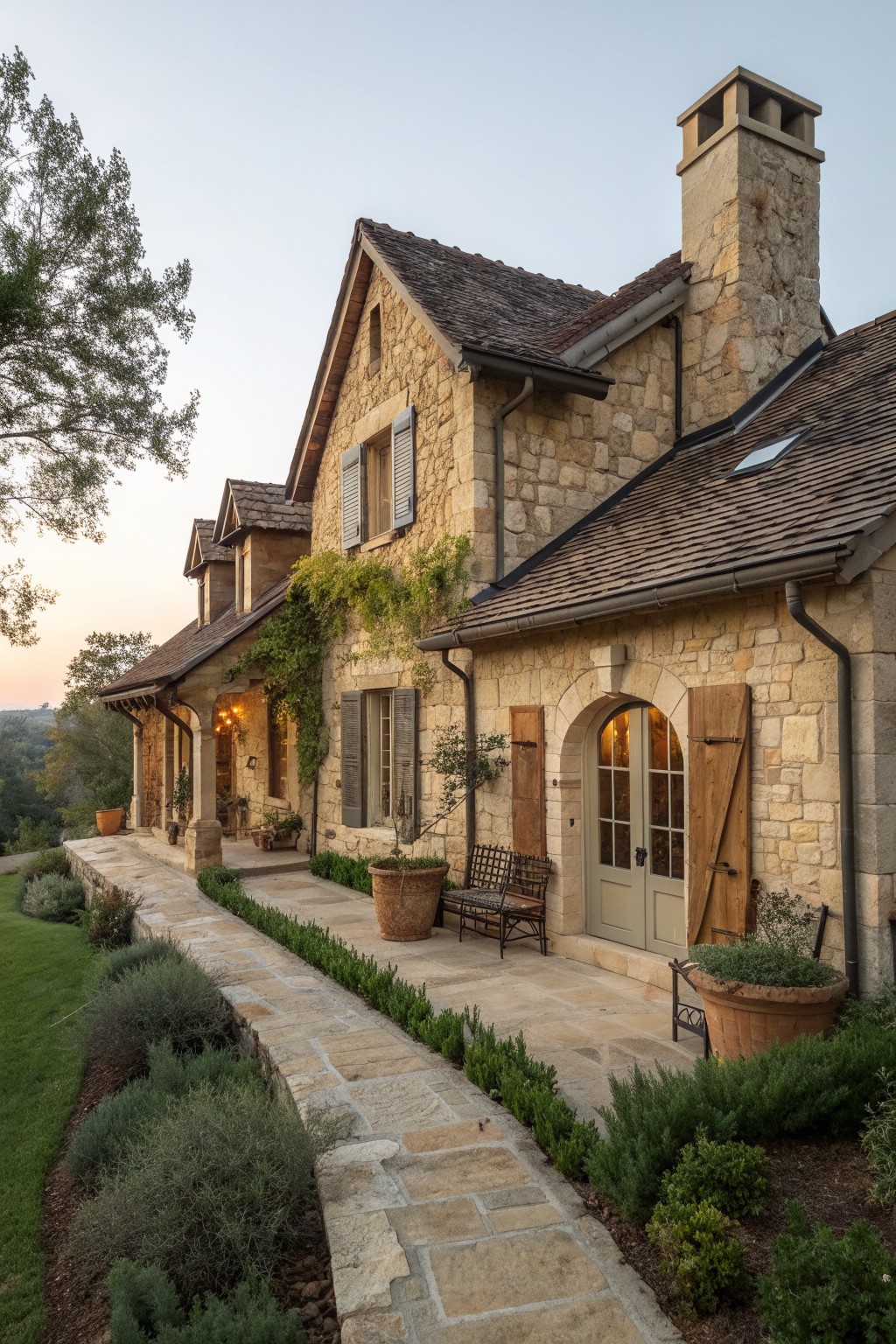
Stone walls give a house a solid, lasting base, but they can look a bit stark without something warmer next to them. Wood shutters and doors cut that chill and bring in a natural tone that feels right at home on an old farmhouse.
This mix works best when the wood stays simple and the stone stays the main surface. Use it on homes that already have a traditional roofline and keep the wood tones in the same warm range so nothing fights for attention.
Aged Stone Arches for Farmhouse Entries
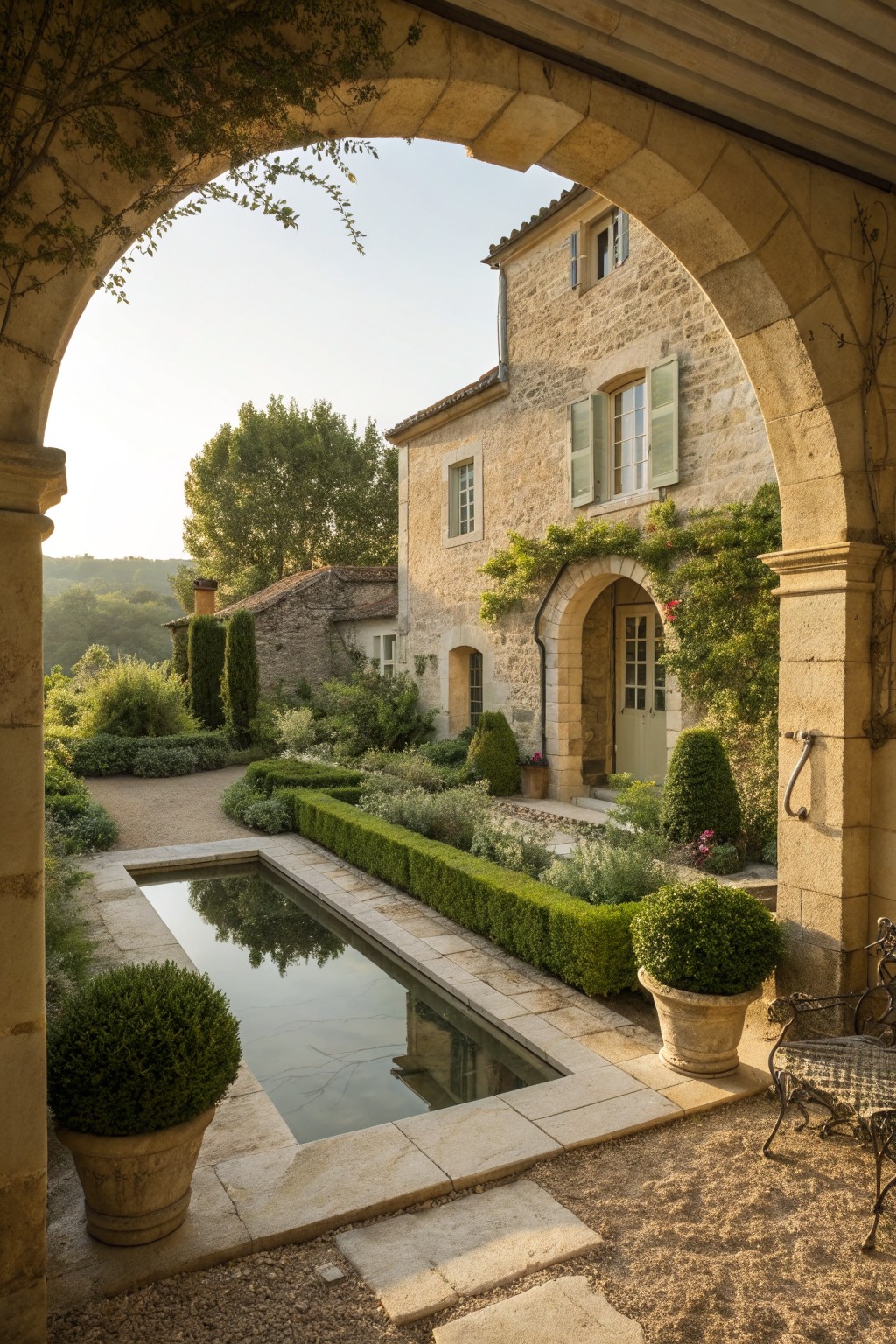
An arch made from the same aged stone as the house walls gives the entry a settled, permanent feel. It creates a clear transition from the garden to the door without adding extra trim or decoration. The look works because the material already carries the age and texture the rest of the house needs.
This approach suits older stone farmhouses or new builds meant to feel established. Keep the arch simple in shape and match the stone as closely as possible so it reads as part of the original structure rather than an add-on. Avoid painting or sealing the stone if you want the same soft weathering over time.
Let Vines Soften Stone
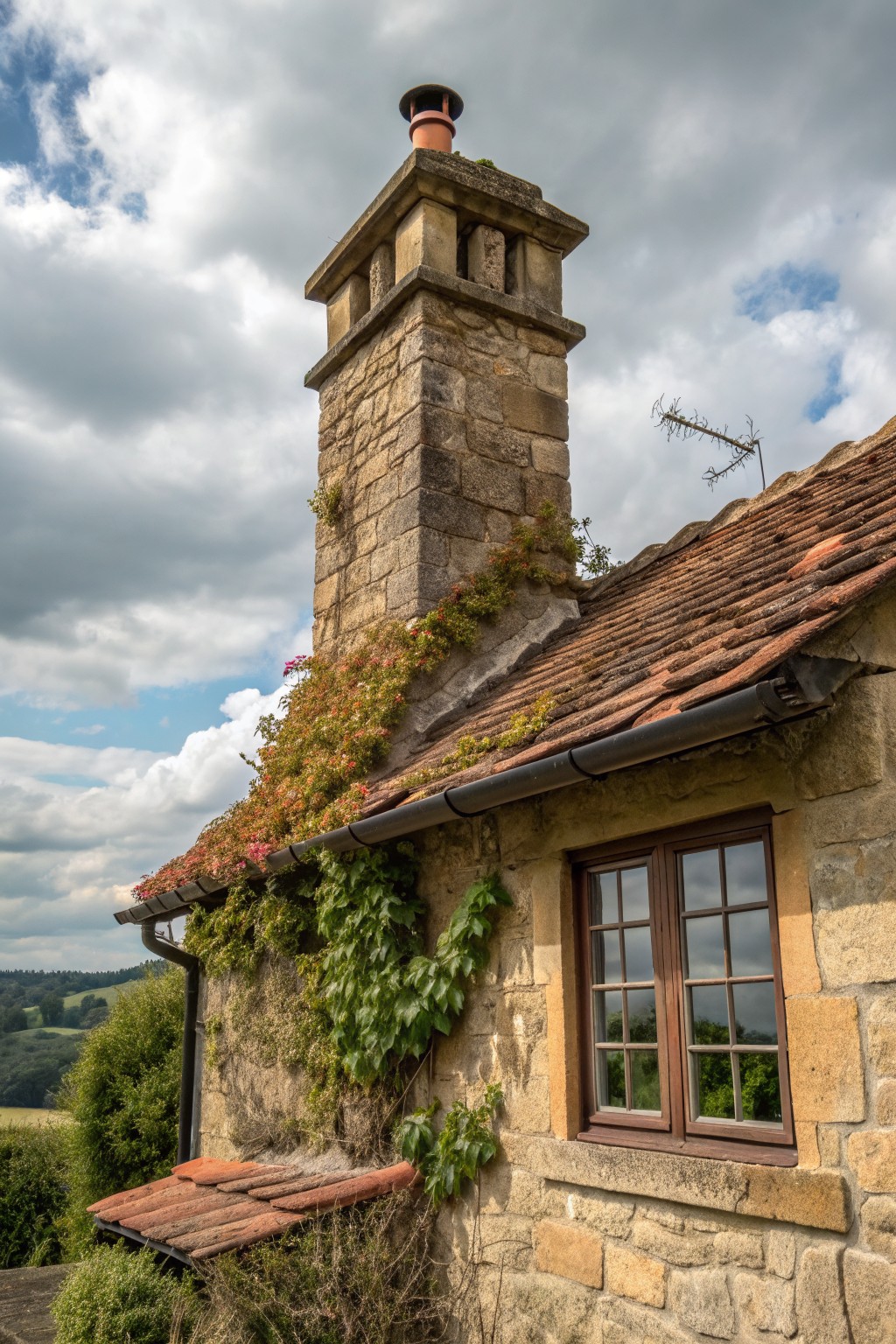
Vines growing over stone walls and chimneys give an old farmhouse a settled, lived-in feel. The greenery softens the heavy material and adds changing color without extra structures or paint.
This approach works well on homes with solid stone exteriors that get decent light. Keep the vines trimmed around windows and gutters so they do not cause moisture problems or block drainage.
Outdoor Dining Under Stone Arches
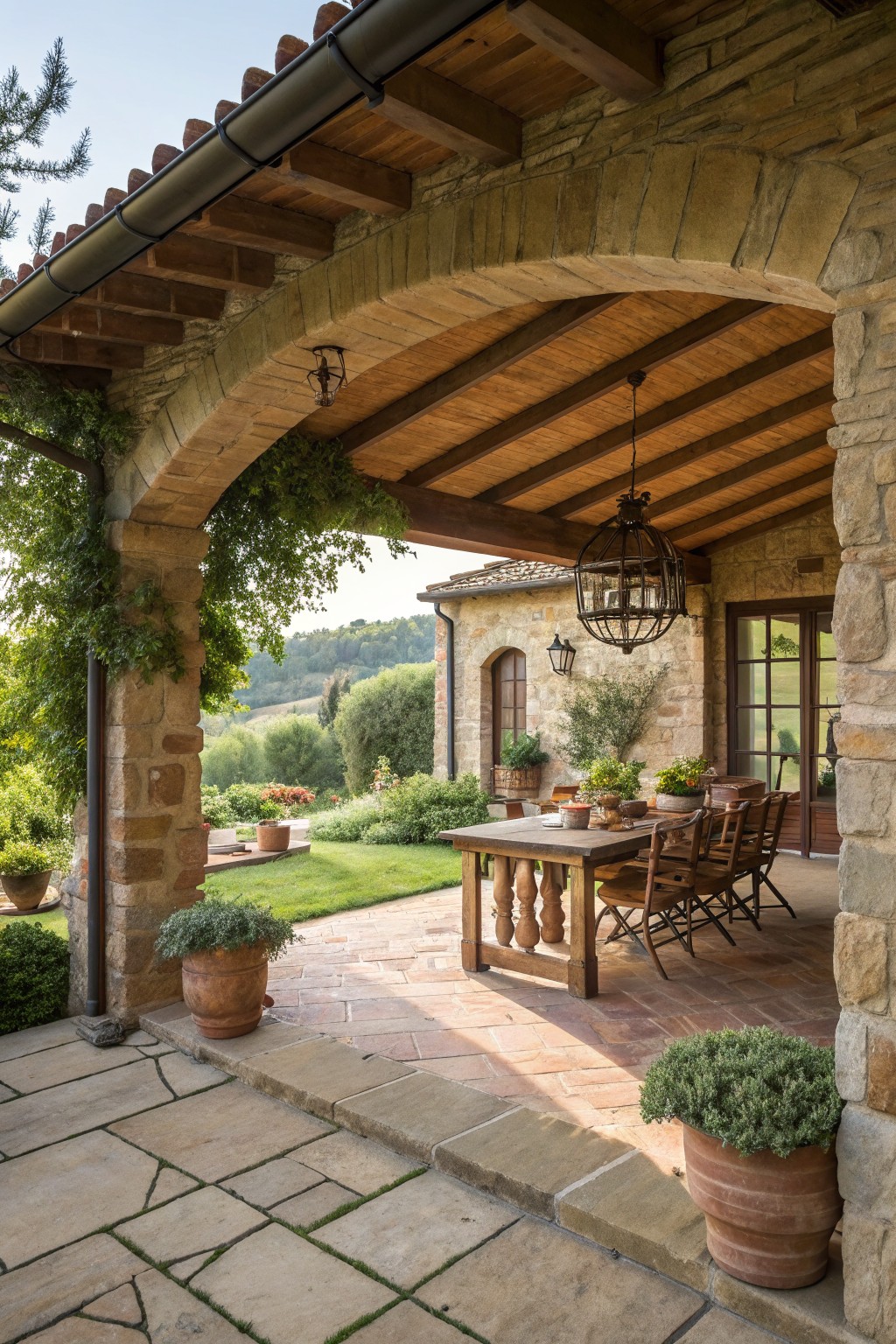
One simple way to make an outdoor space feel more like part of the house is to place a dining table under a stone arch. The arch gives shade and structure without making the area feel closed in, and it works especially well when the stone matches the rest of the home.
This approach suits farmhouses with thick walls and warm wood details. Keep the table and chairs simple so the focus stays on the architecture, and position the setup where it gets natural shade during the warmest part of the day.
Stone Walls With Potted Plants
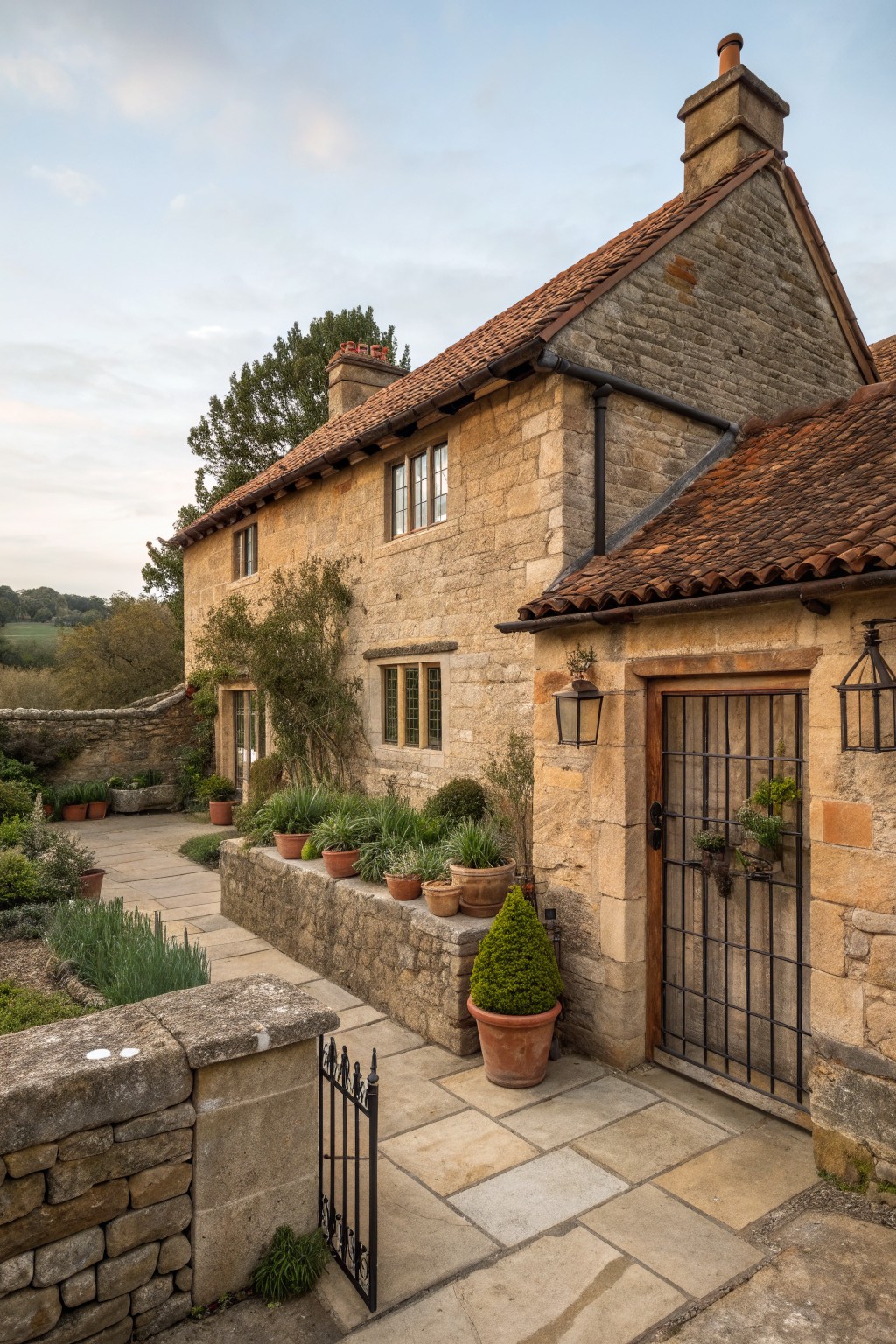
Many stone farmhouses gain a softer look when simple terracotta pots are set along the base of the walls. The contrast between the rough stone and the warm clay feels natural and keeps the exterior from looking too heavy.
This approach works best on homes with low ledges or small paved areas near the entry. Group the pots in loose clusters and let the plants vary in height so the arrangement feels collected over time rather than planned all at once.
Mixing Aged Stone With Warm Finishes
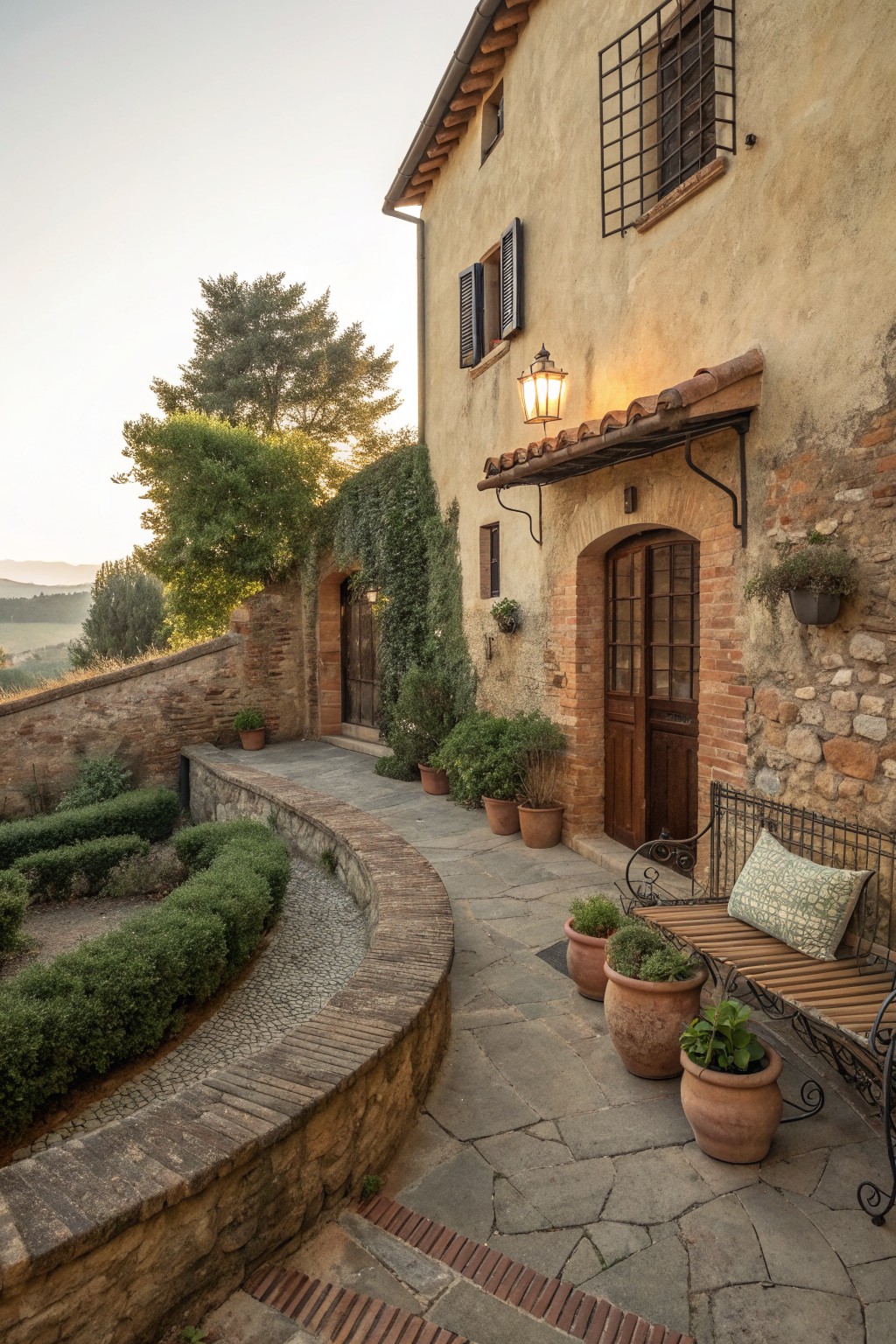
Aged stone gives a farmhouse exterior real staying power because it feels settled and solid from the start. When you pair it with warmer materials like brick and wood, the whole facade softens without losing its character. The contrast keeps things from looking too heavy or too new.
This approach works best on homes that already have some age or texture to work with. Use it on the main wall planes and save the warmer tones for doors, arches, and small accents so the stone stays the focus. Keep the finishes simple and let the materials do the rest.
Frequently Asked Questions
Q: How do I pick warm finishes that hold up next to aged stone over time? A: Start with oil based products on any wood trim or accents. They resist sun fade better than lighter options and bring out the stone’s natural tones. Check the surface each spring and touch up only where it looks dull.
Q: What if my house has a mix of brick and siding already? A: Add the stone in patches around the entry and windows to tie the materials together. Keep the warm finishes limited to one or two elements like shutters or a door frame. This avoids overwhelming the original surfaces.
Q: Do the finishes need to match the stone exactly? A: They do not have to match exactly. Just keep them in the same warm family so they sit nicely together.
