

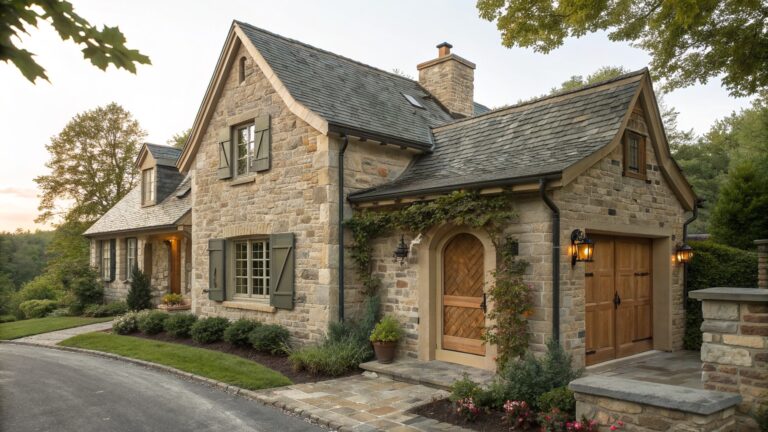
I’ve spent time studying how cottage facades come together when they lean on rustic farmhouse details like exposed beams and simple stonework.
Those elements shape the way a home presents itself from the road more than people often realize at first.
Details like that rarely show up in photos the same way.
I keep thinking about which of these approaches might actually suit the proportions of my own house if I tried adapting them.
It is worth noting the ones that balance charm with practical maintenance before committing to any changes.
Stone Walls With Wood Accents
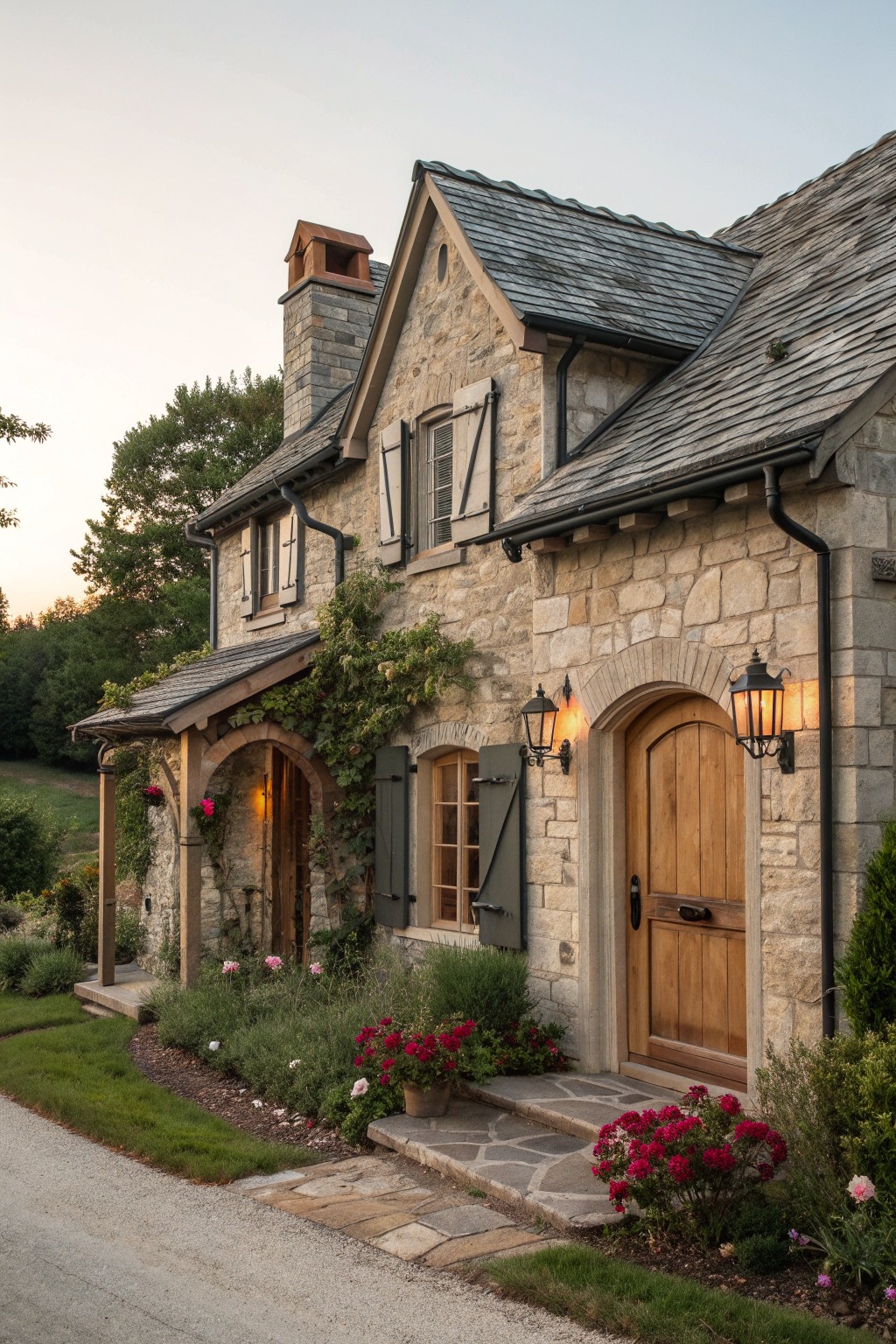
Many cottages feel more grounded when the main walls are built from stone and the doors and trim stay simple wood. The mix keeps the surface interesting while the wood softens the overall weight of the stone.
This combination suits smaller or one-story homes best. Keep the wood in a warm natural tone and let it show around the main entry and windows so the eye moves easily across the facade.
A Gabled Porch Over the Front Door
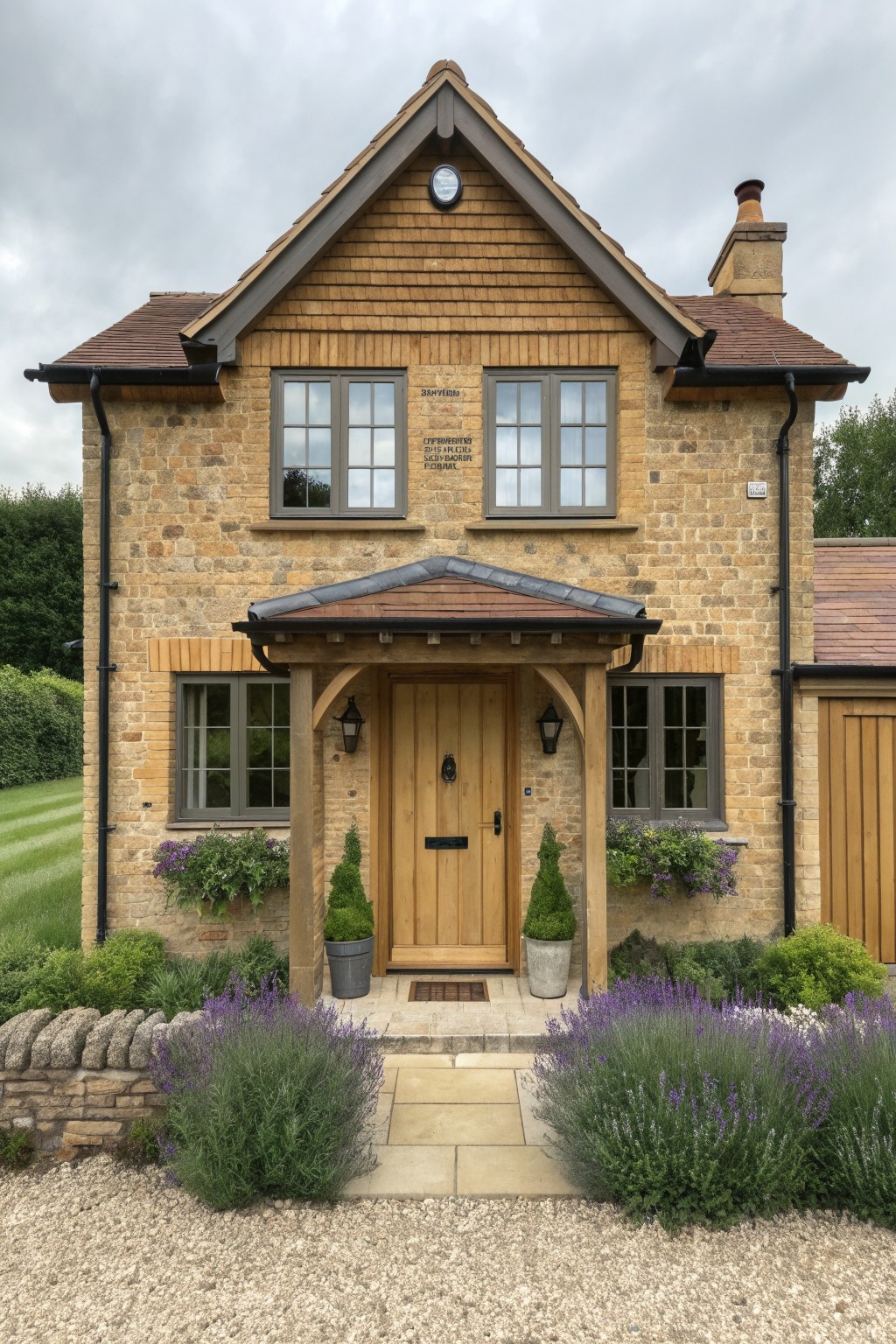
A small gabled porch like this one gives the entry a clear focal point on a stone cottage. The roof pitch matches the main house, and the simple wood posts keep the whole thing from feeling heavy while still offering a bit of cover at the door.
This works best on homes with solid stone or brick walls where the entry needs a little extra weight. Keep the structure modest in scale and use matching roof materials so it blends in rather than standing out as an add-on.
Painting The Front Door A Soft Color
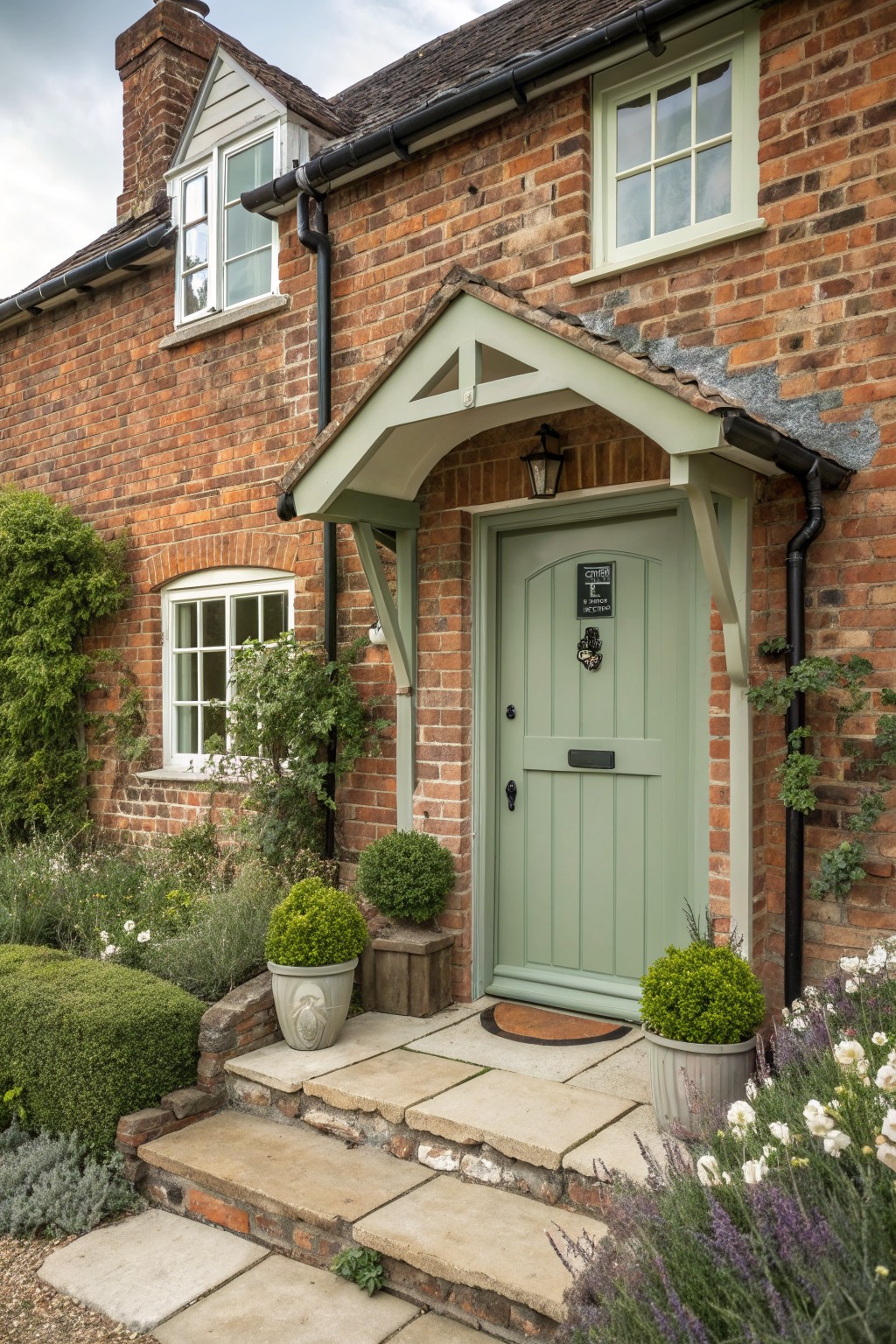
A painted front door stands out nicely against brick and gives the whole entry a friendlier feel. The gentle green shade here pulls the eye straight to the door while the matching trim on the small canopy keeps the look clean and simple.
This approach suits older brick cottages that already have strong texture. Match the door color to the trim around the porch and windows so the accents feel intentional rather than scattered.
Letting Wood Warm Up Stucco Walls
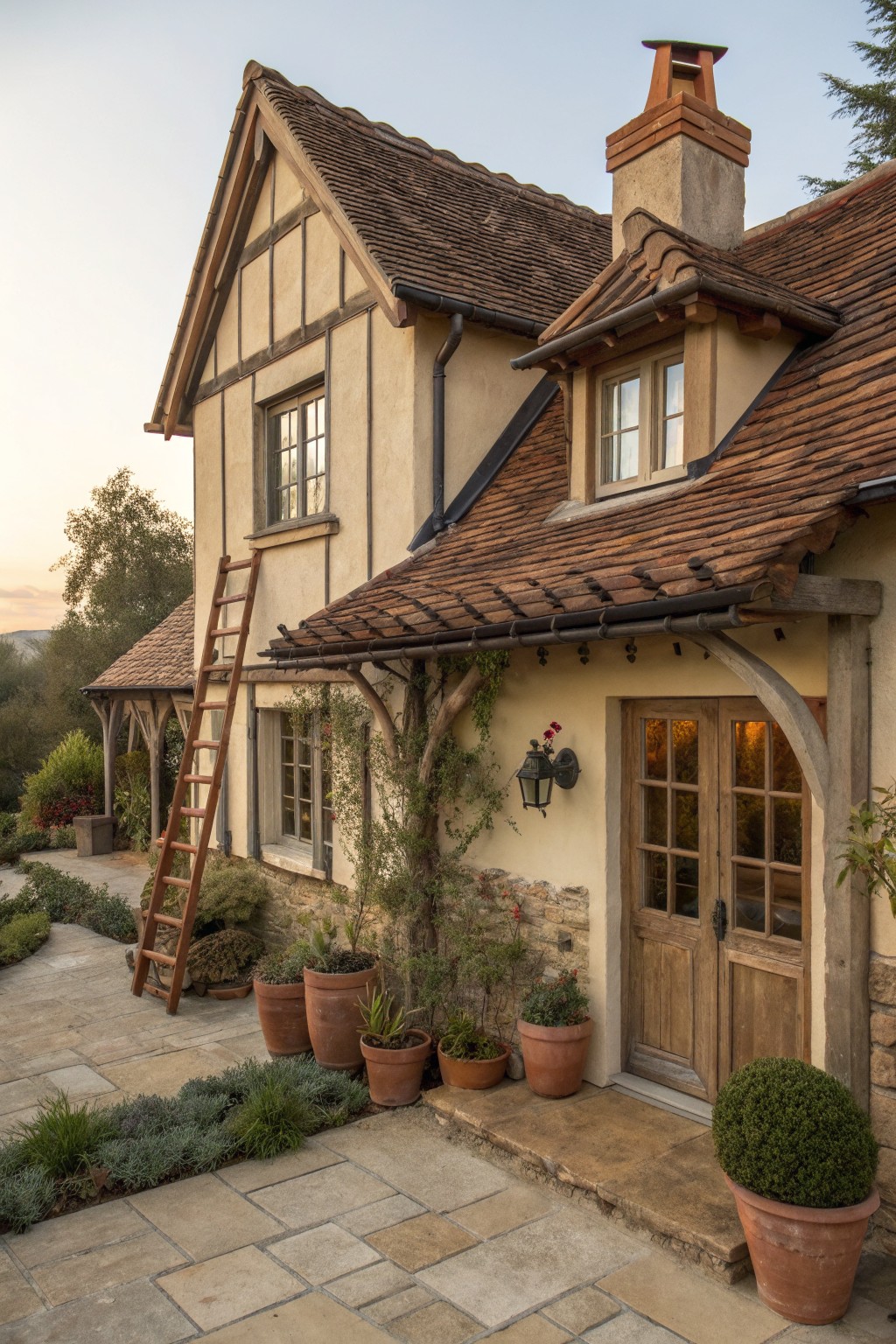
Wood details can soften a stucco exterior and give it more life. On this cottage the doors and window frames stand out against the pale walls, creating a simple contrast that feels natural rather than planned. The wood also ties in with the roof trim and helps the whole front look settled.
This mix works best on smaller homes that already have some age or texture. Keep the wood finish straightforward so it weathers evenly, and use it mainly around entries and windows where people notice it most. Avoid painting it too dark or too bright if you want the same quiet look over time.
Arched Entries Bring Cottage Warmth
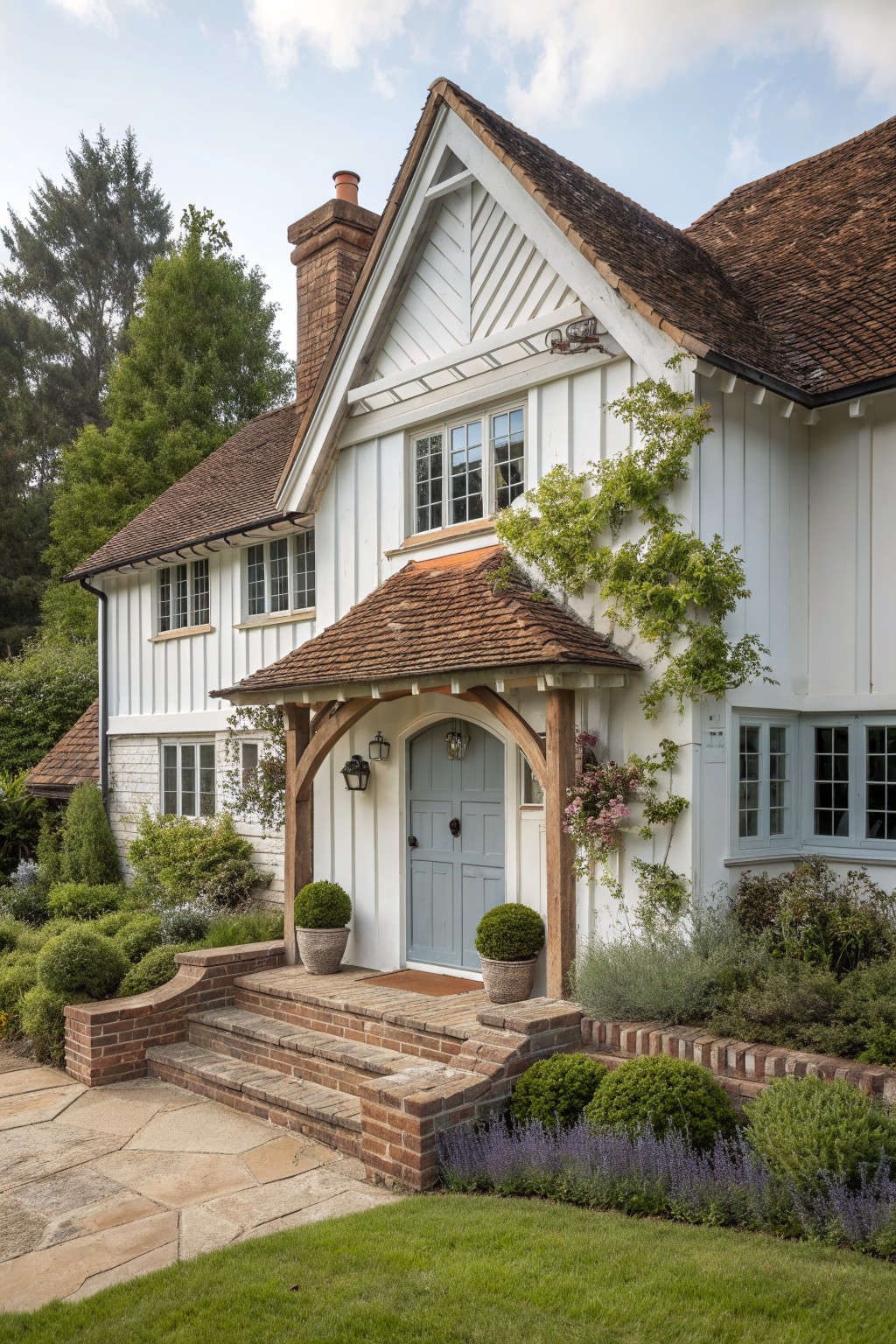
Many cottages use a simple arched frame over the front door to create a natural focal point. The wood beams and small tiled roof add texture while keeping the overall look soft and approachable.
This detail works best on homes with clean white siding or stucco. Pair it with a soft colored door and low brick steps to help the entry feel welcoming without needing extra ornament.
Painted Doors On Stone Exteriors
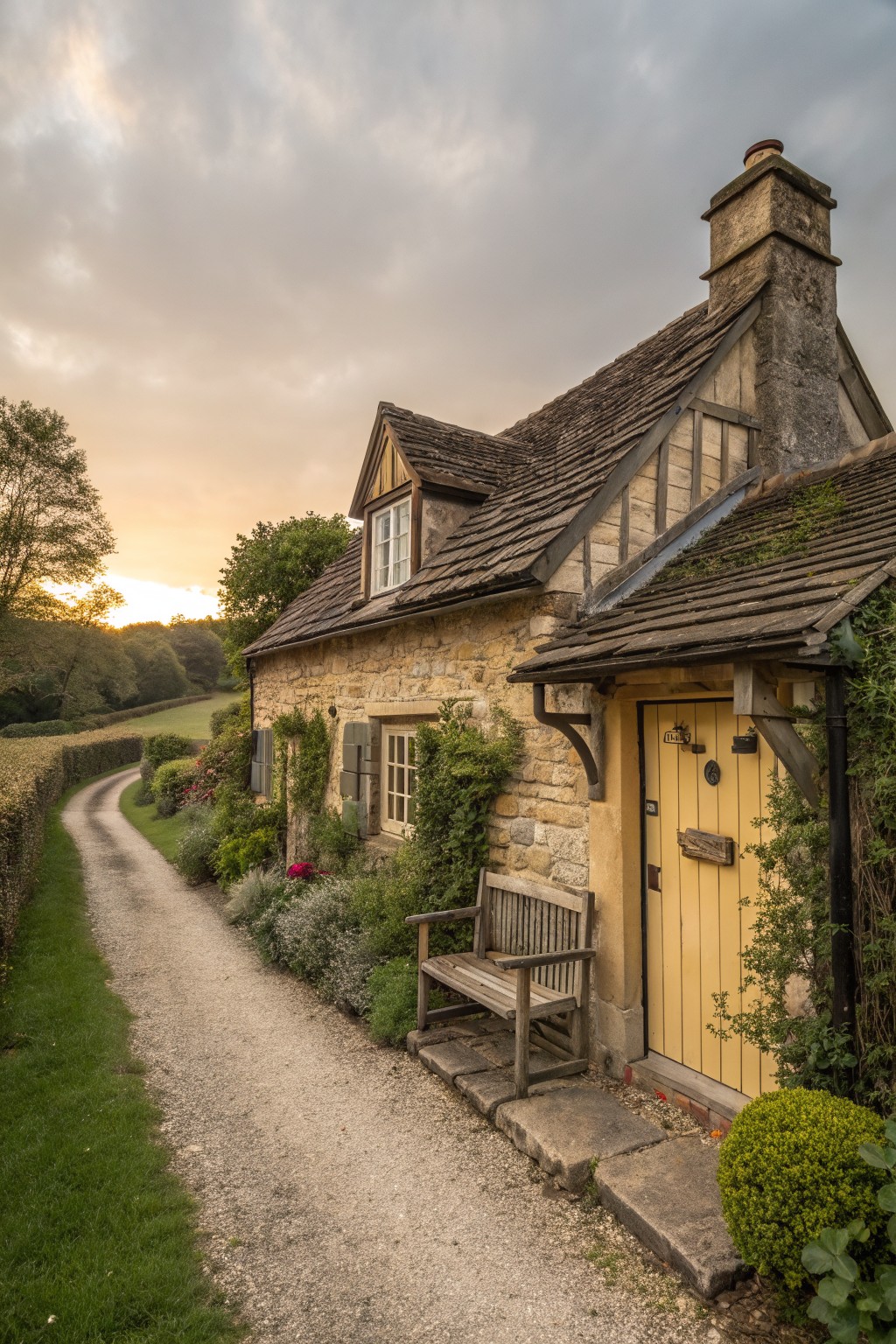
A painted front door gives a stone cottage an easy way to add personality without changing the main materials. The color stands out against the rough walls and older roof, and it makes the entry feel more welcoming right away.
This works best on homes that already have strong texture in the walls or roof. Keep the hardware simple and match the door color to a few small accents in the garden so the look stays balanced rather than busy.
Frame the Front Door With Climbing Vines
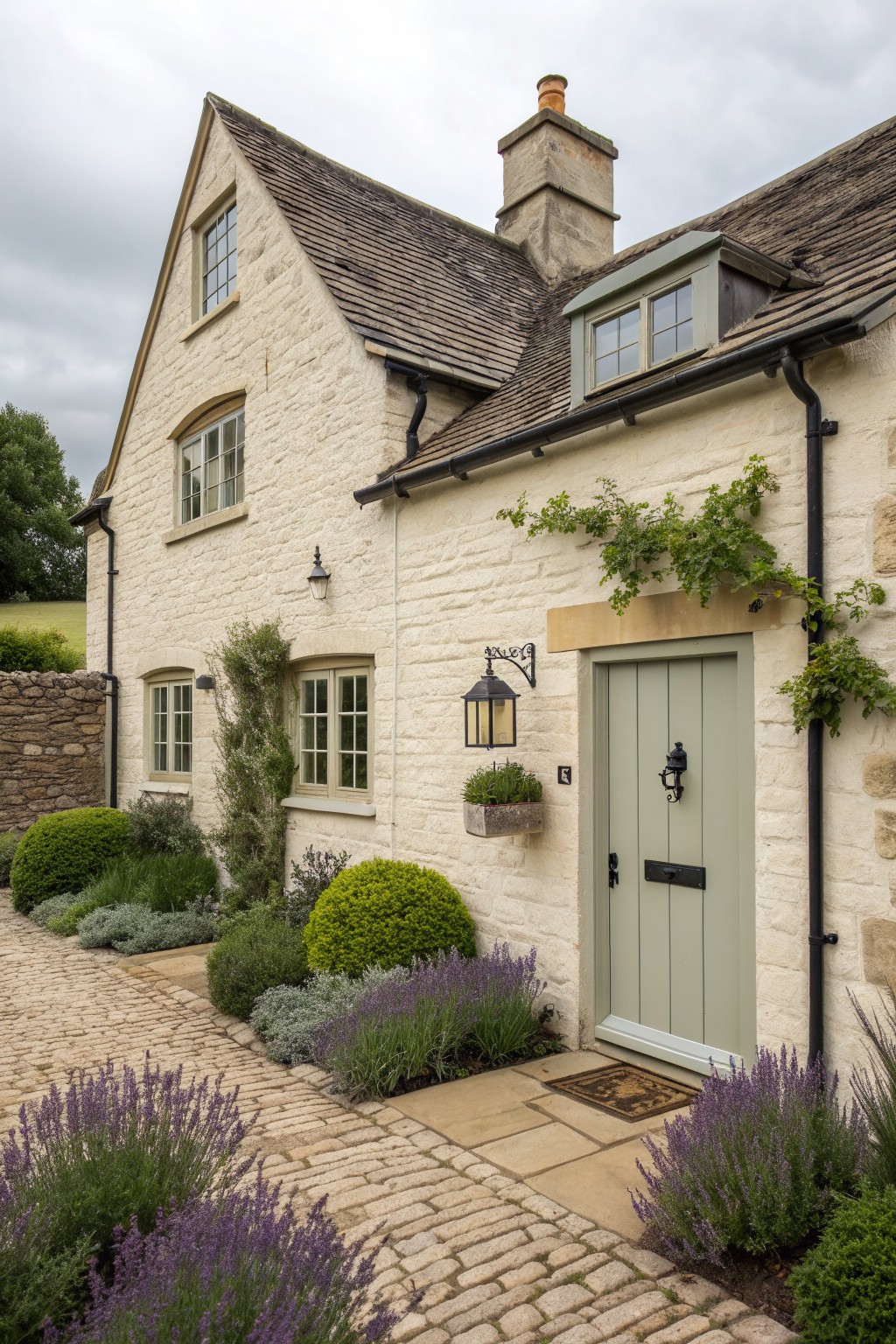
Many cottages use climbing plants right above the door to bring a softer look to heavy stone. The vines add a bit of movement and life without covering the whole wall or needing much care.
This works well on older homes where the stone already does most of the work. Keep the vines trimmed so they frame the door rather than hide it, and choose varieties that will not damage the masonry over the years.
Mix Stone And Timber On Cottage Exteriors
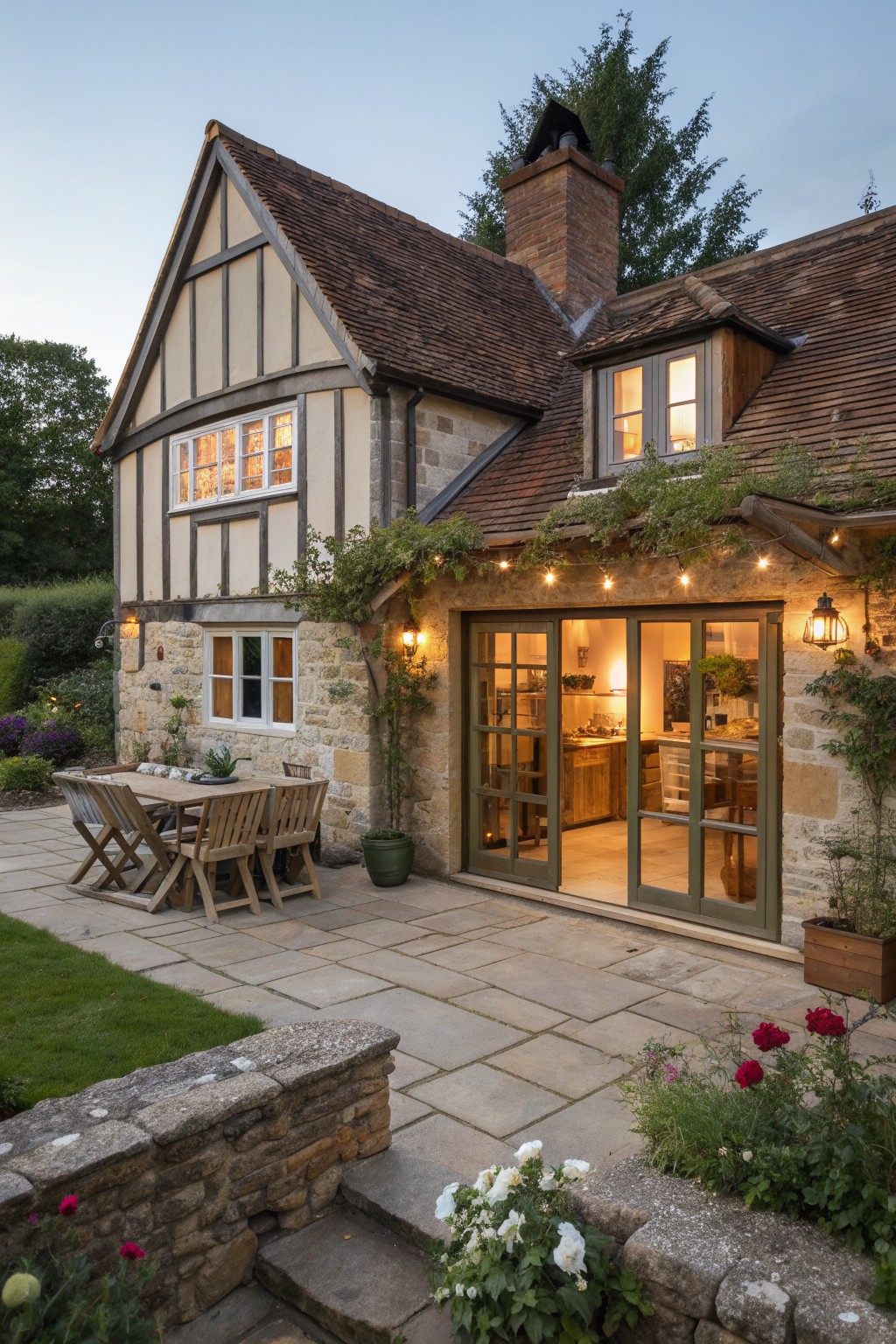
Stone on the lower walls paired with timber framing above gives a cottage that settled, farmhouse feel without extra trim or decoration. The contrast keeps the house from looking flat while the natural textures handle most of the charm.
This approach works best on smaller homes or one-story additions where you want to break up height. Keep the colors simple and let vines or nearby planting soften the edges over time.
Exterior Shelves For Potted Plants
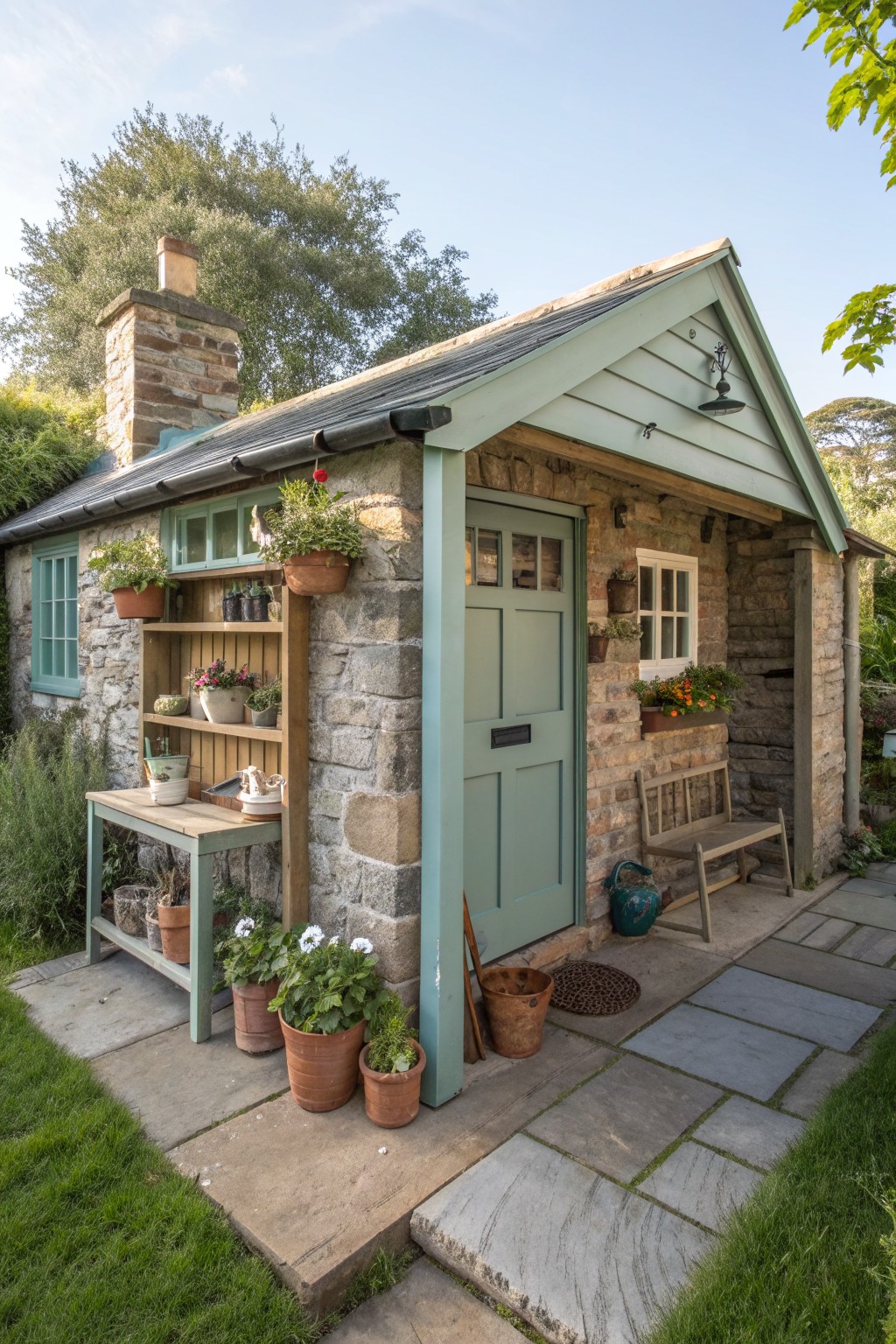
One simple way to add character to a stone cottage is to attach a few wooden shelves directly to the wall. This keeps plants off the ground and creates layers of greenery right where people walk up to the door.
The shelves work best on thicker walls where they can sit flat without looking stuck on. Use the same wood tone or paint as your trim so the whole thing feels like part of the house instead of an afterthought.
Stone Details That Add Farmhouse Charm
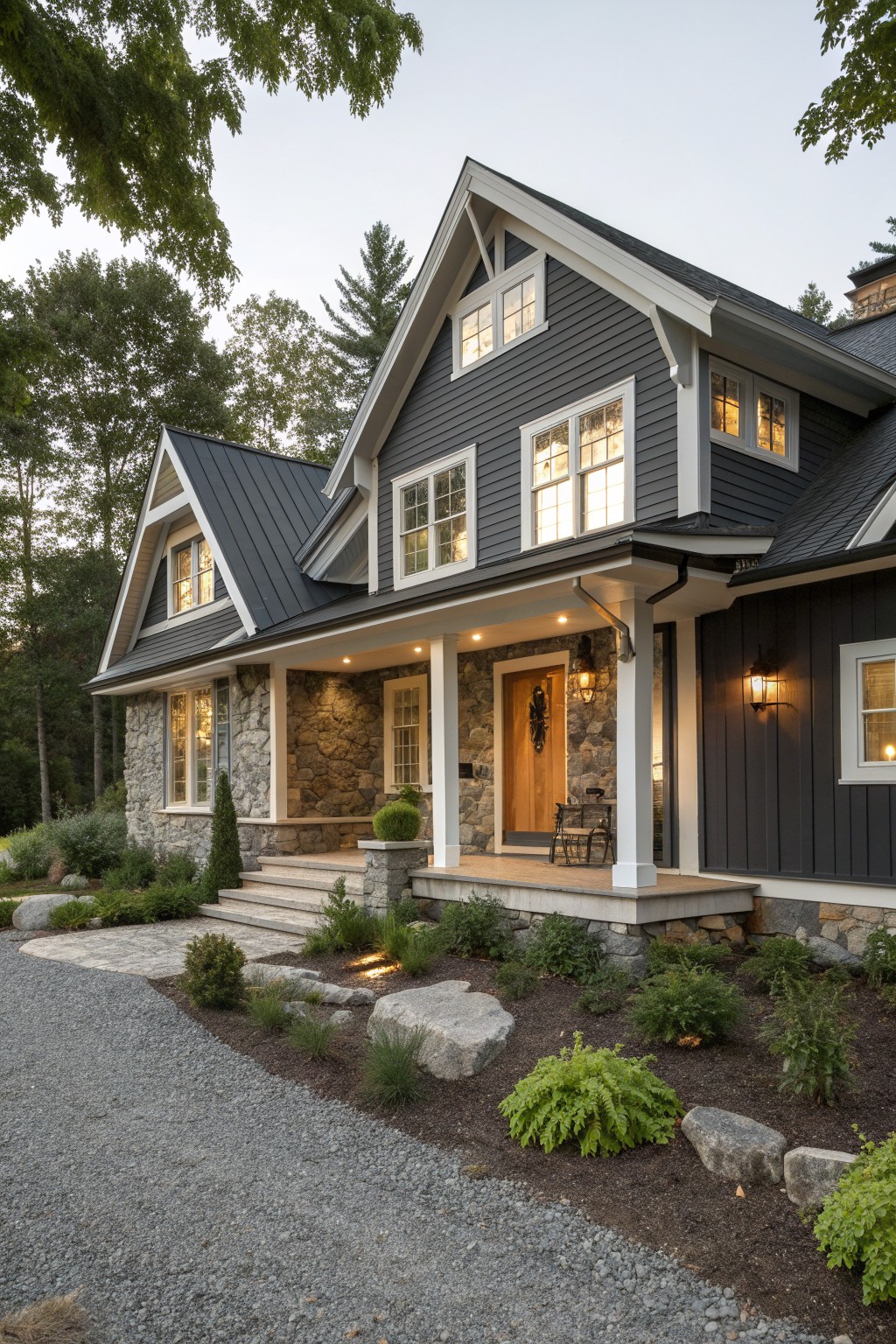
Mixing stone with dark siding gives a cottage exterior that grounded, lived-in look without much extra effort. The stone breaks up the flat surface of the siding and ties the house to the ground in a way that feels natural rather than added on. It works especially well on gabled homes where the rooflines already create strong shapes.
This approach suits homes that need a bit more weight at the base or around the entry. Keep the stone in smaller sections like the porch supports or the area framing the door rather than covering large walls. Too much stone can start to feel heavy, so let the siding carry most of the surface.
Stone And Wood Set The Right Tone Outside
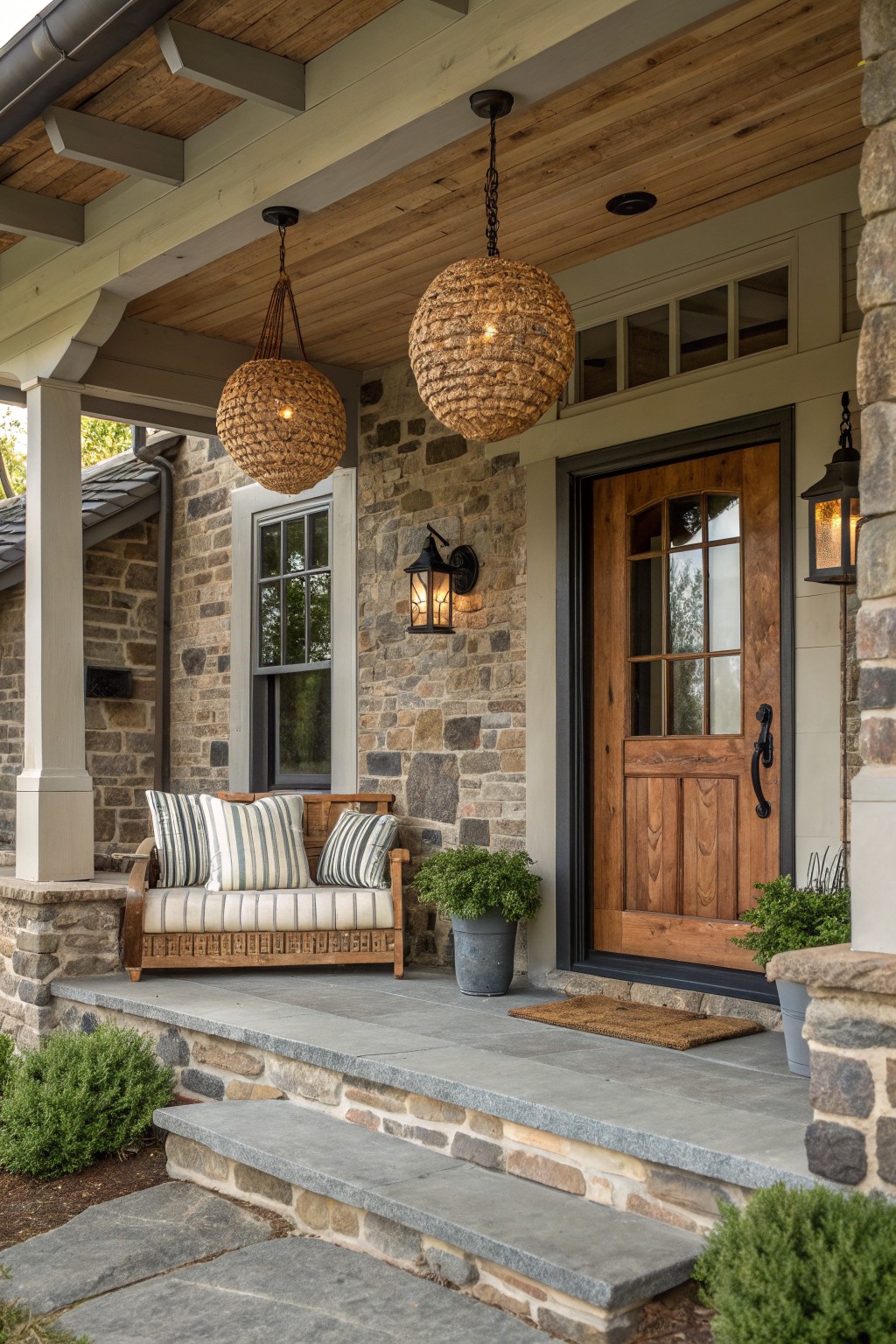
Stone and wood together on the outside of a house give it a solid, settled look that feels right for a cottage or farmhouse. The contrast keeps things from feeling too heavy while the natural textures do most of the work.
This approach works well on homes that already have a porch or covered entry. Add wood to doors, ceilings, or trim when the main walls are stone, or bring in stone accents if the house is mostly wood. Keep the rest of the materials simple so the two textures can stand out.
Climbing Roses on Cottage Walls
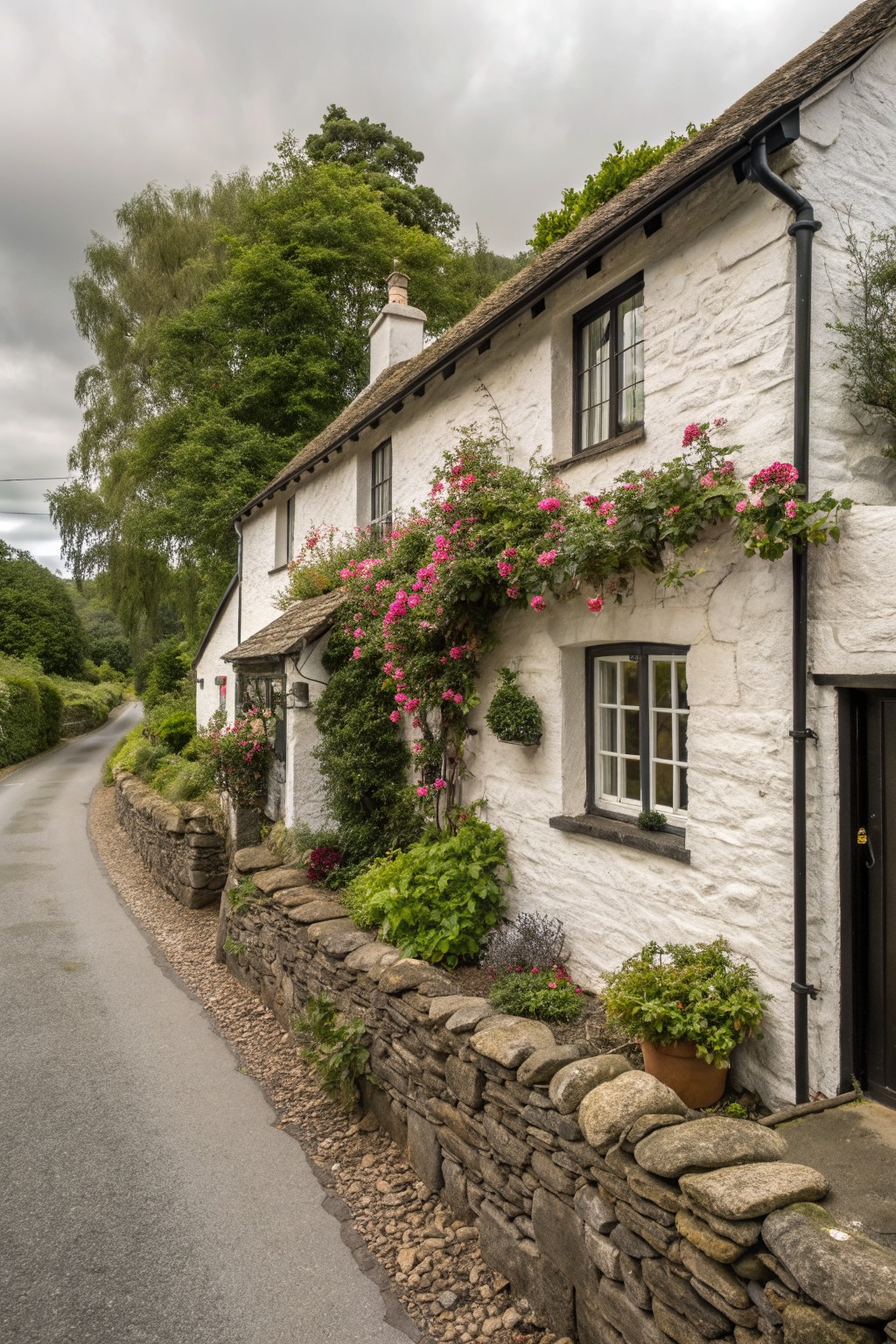
Climbing roses bring a simple way to add color and softness to a plain white cottage. They trail along the roofline and window edges without needing much structure, and the pink blooms stand out nicely against the stone. This approach keeps the house looking rustic instead of stark.
It works best on older or simple facades where the walls can handle the growth. Make sure the plants have good support and room to spread, and choose varieties that stay manageable so they do not cover windows or doors over time.
Thatched Roofs For Cottage Exteriors
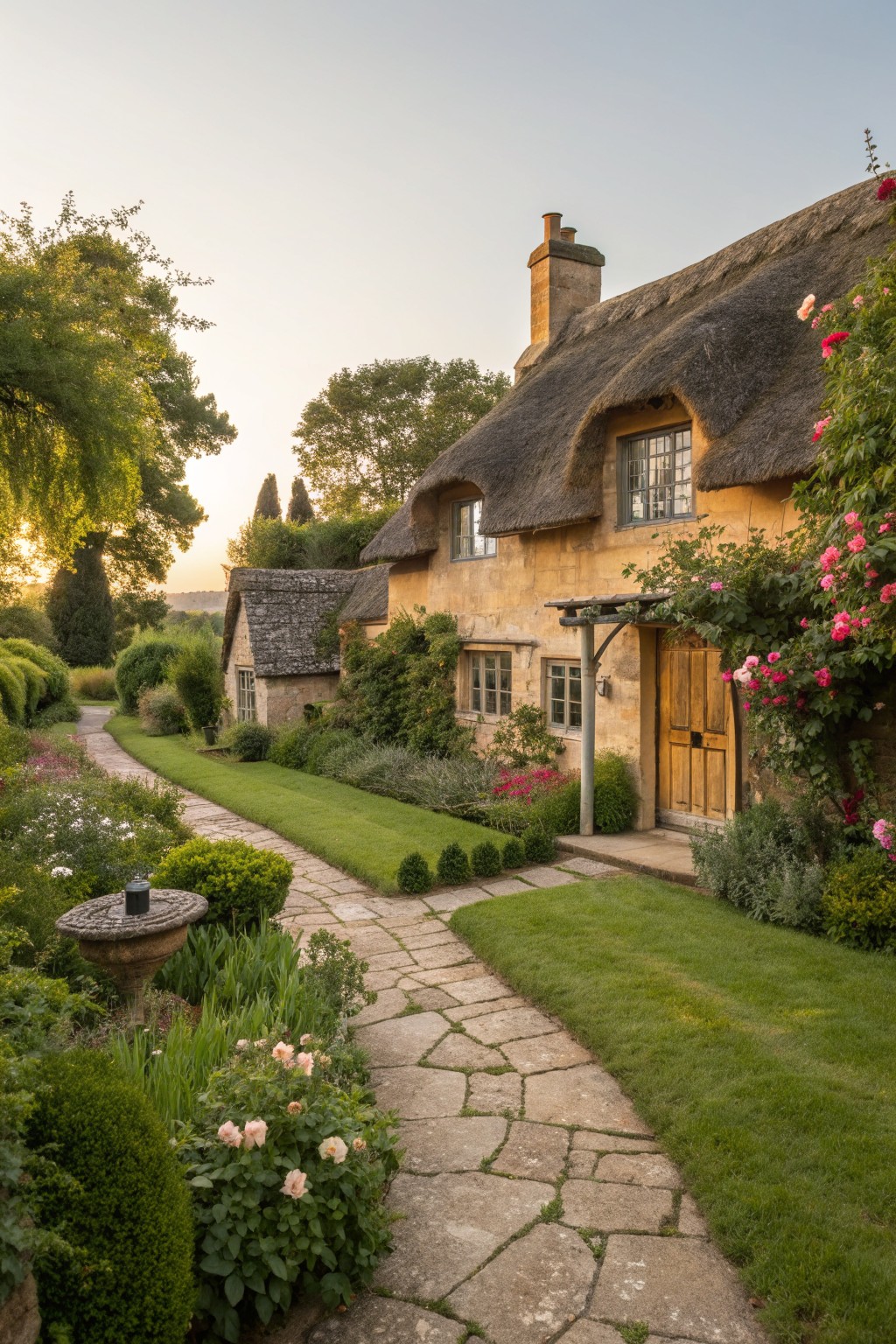
A thatched roof gives a cottage that settled, old-world look that pairs well with stone or stucco walls. It softens the whole structure and makes the house feel part of the garden rather than just sitting on top of it. In the photo the deep overhang and uneven texture help the building blend into the surrounding greenery.
This approach works best on smaller homes where the roof can be a main feature instead of competing with lots of other details. It suits rural settings or places where you want the house to look older than it is. Keep the walls simple and let the planting do the rest.
Brick Base With Painted Siding
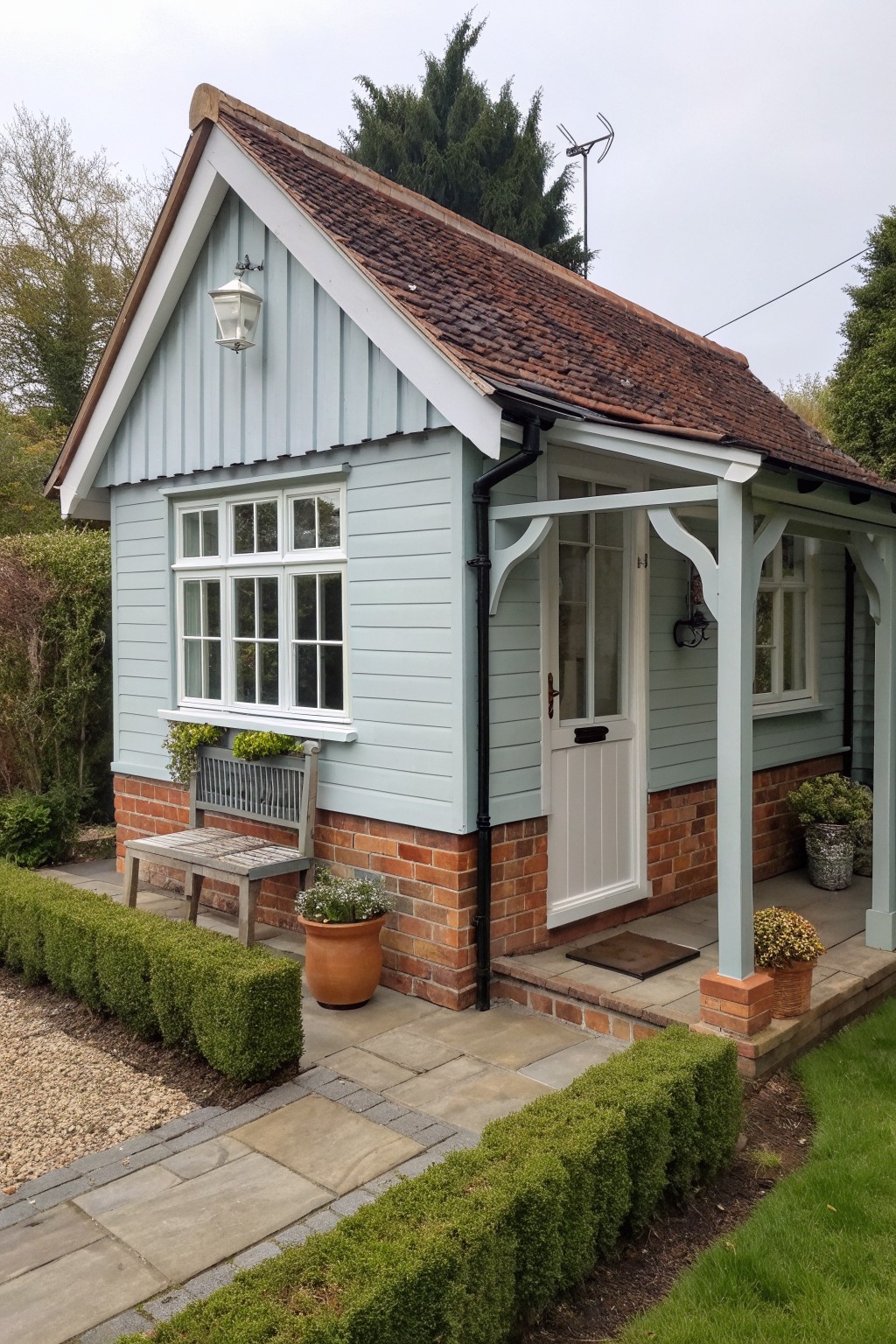
A brick base under painted siding gives a cottage that solid, grounded look without needing a lot of extra detail. It creates a clear break between the ground and the walls, which helps the house feel settled and a bit more substantial. The low brick section also protects the wood from moisture and adds texture that pairs well with a simple roof.
This approach works best on smaller homes where you want contrast but still keep things calm. Stick with a light siding color so the brick does not feel heavy, and keep the brick height modest so it does not overpower the rest of the facade.
A Soft Green Door on a White Cottage
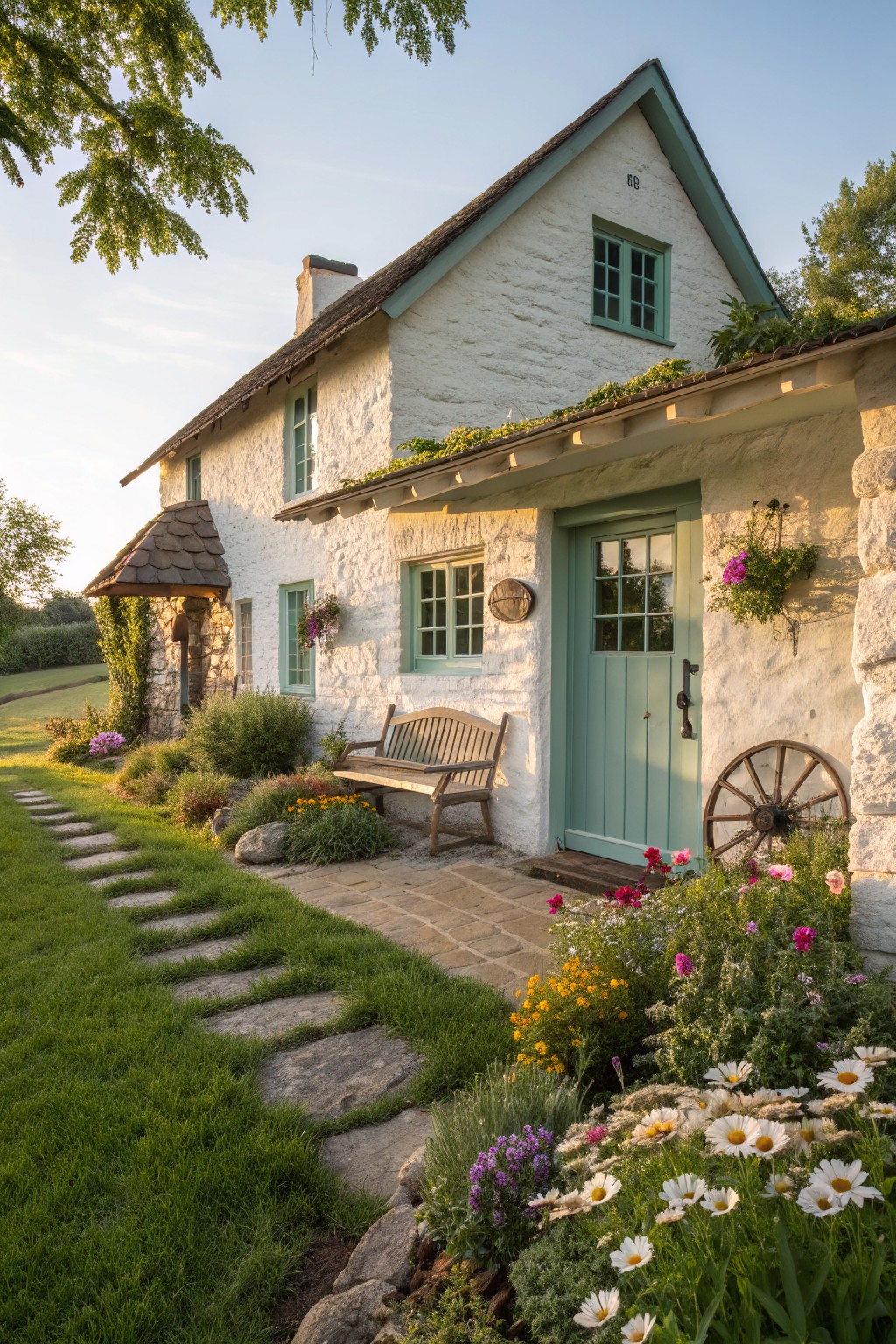
A painted front door in a soft green shade stands out nicely against white stucco and stone. It gives the entrance a clear focal point while keeping the overall look simple and tied to the surrounding garden.
This approach works well on smaller cottages or homes with mixed materials. Keep the trim and door in the same muted tone, then let plantings and a stone path do the rest of the work.
Mixing Stone with Timber Framing
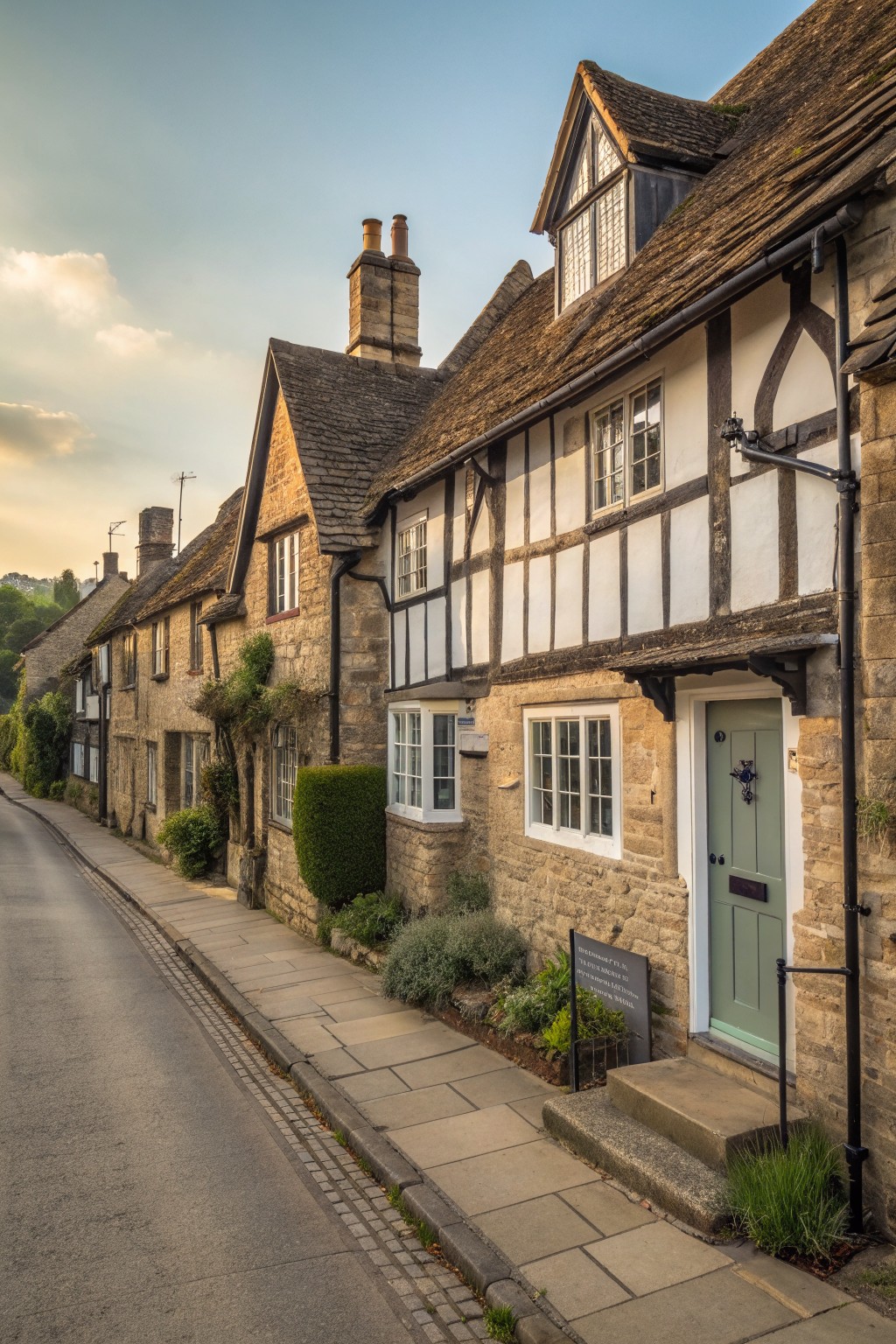
Stone walls already feel solid and lasting on a cottage, but adding timber framing over parts of them breaks up the surface and gives the eye something to follow. The dark beams against lighter plaster or stone create that classic contrast without any extra trim or color changes.
This approach suits older homes or new builds that want a European cottage look. Keep the timber sections to the upper story or gable ends so the stone stays the main material and the whole front does not feel busy.
Extend the Kitchen with Matching Stone and Wood
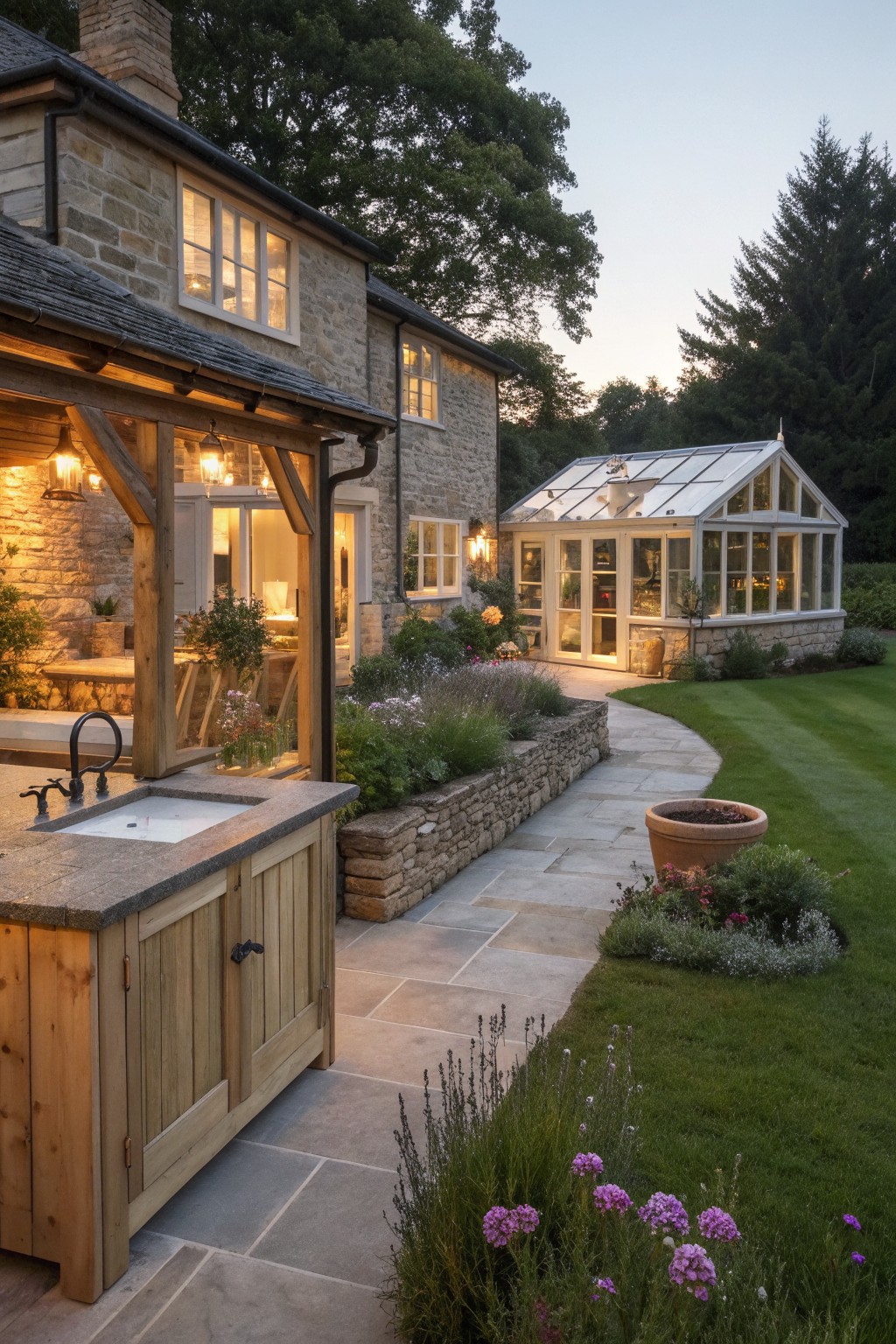
One simple way to make an outdoor workspace feel like part of the house is to use the same stone walls and wood tones already on the exterior. The rough stone and natural wood cabinet here show how the materials carry straight through, so the sink area does not look added on later.
This approach works best on cottages where the main structure already has visible texture. Keep the cabinet style simple and the counter material close in tone to the house stone so the whole side reads as one piece instead of separate zones.
Painting The Front Door A Fresh Color
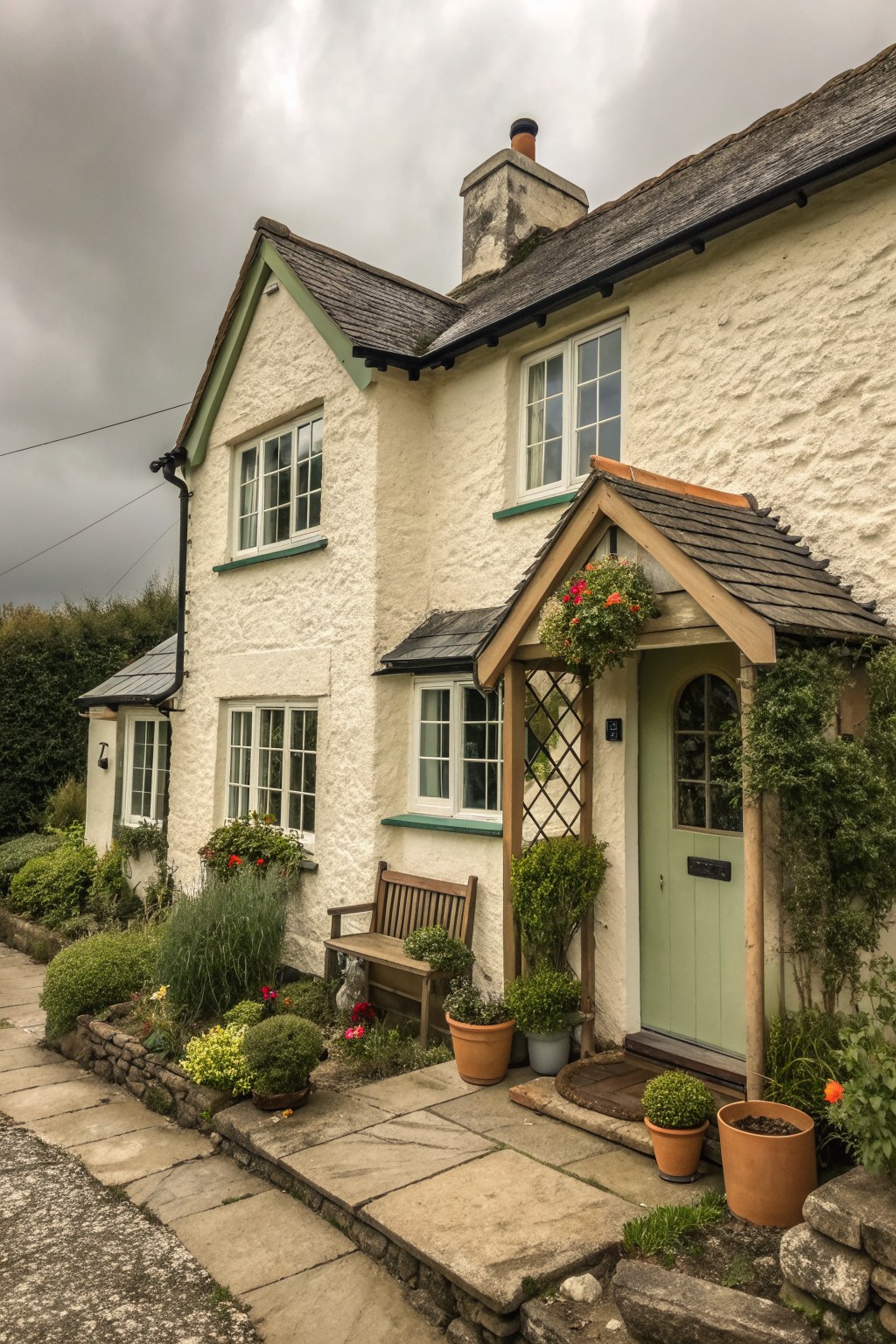
A soft green door stands out nicely against white cottage walls. It gives the whole front a friendly feel and draws attention to the entry without needing extra trim or big changes.
This works best on simple European style homes where the walls stay plain. Pick a muted shade that matches nearby plants or trim, and add a small overhang above the door for a bit of shelter.
Painted Wood Accents On Stone Walls
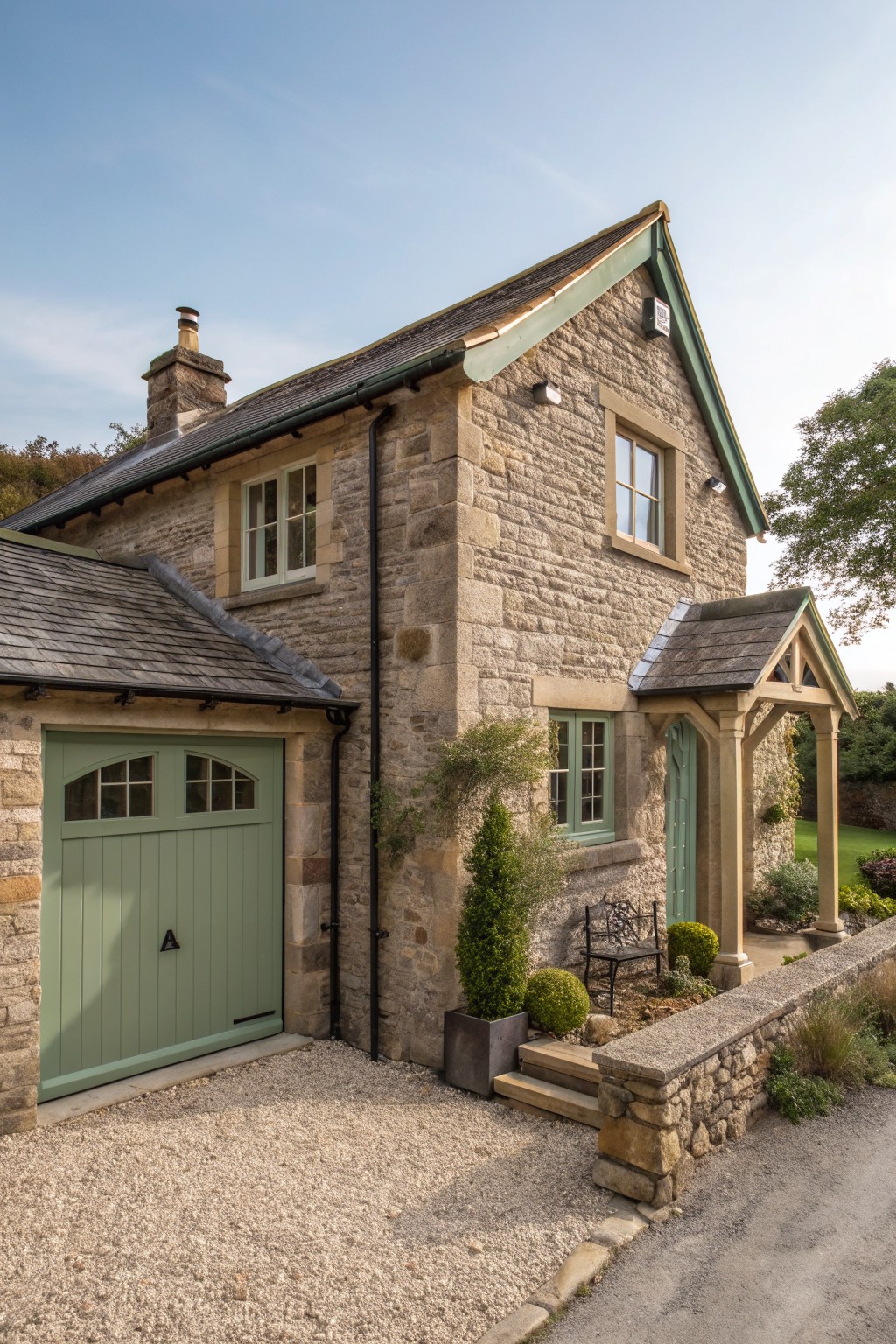
Stone exteriors can look a bit heavy on their own, but a few painted wood details change that quickly. The soft green on the doors, garage, and trim here gives the stone a lighter, friendlier feel without fighting the natural texture. It keeps the whole front simple while still adding just enough color to stand out.
This approach works especially well on smaller cottages or farmhouses where you want the stone to stay the main material. Stick with muted tones rather than bright shades, and limit the paint to doors, window frames, and trim so it does not feel busy. It suits older homes or new builds trying to feel established.
Mixing Stone and Wood on the Exterior
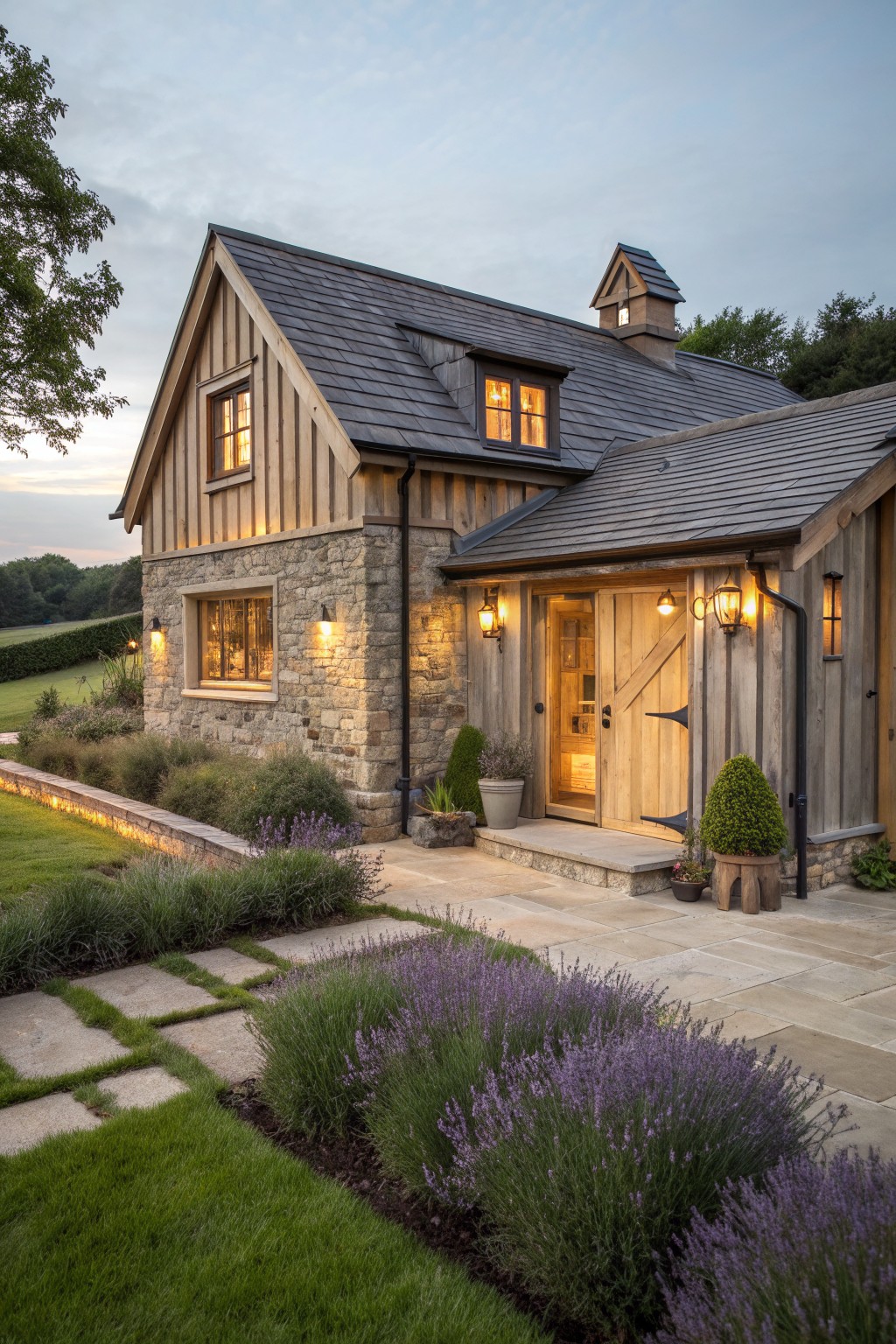
Stone at the base of a cottage gives it weight and a settled look that wood alone can miss. The lower walls here stay solid and practical while the timber above adds that lighter farmhouse rhythm without feeling too heavy.
This approach suits homes on slightly sloping sites or in areas with wet winters because the stone handles splash and the wood keeps the upper mass from looking bulky. Keep the stone to the first story or so and let the wood carry the gables and dormers for the best balance.
Timber Framing Adds Rustic Entry Detail
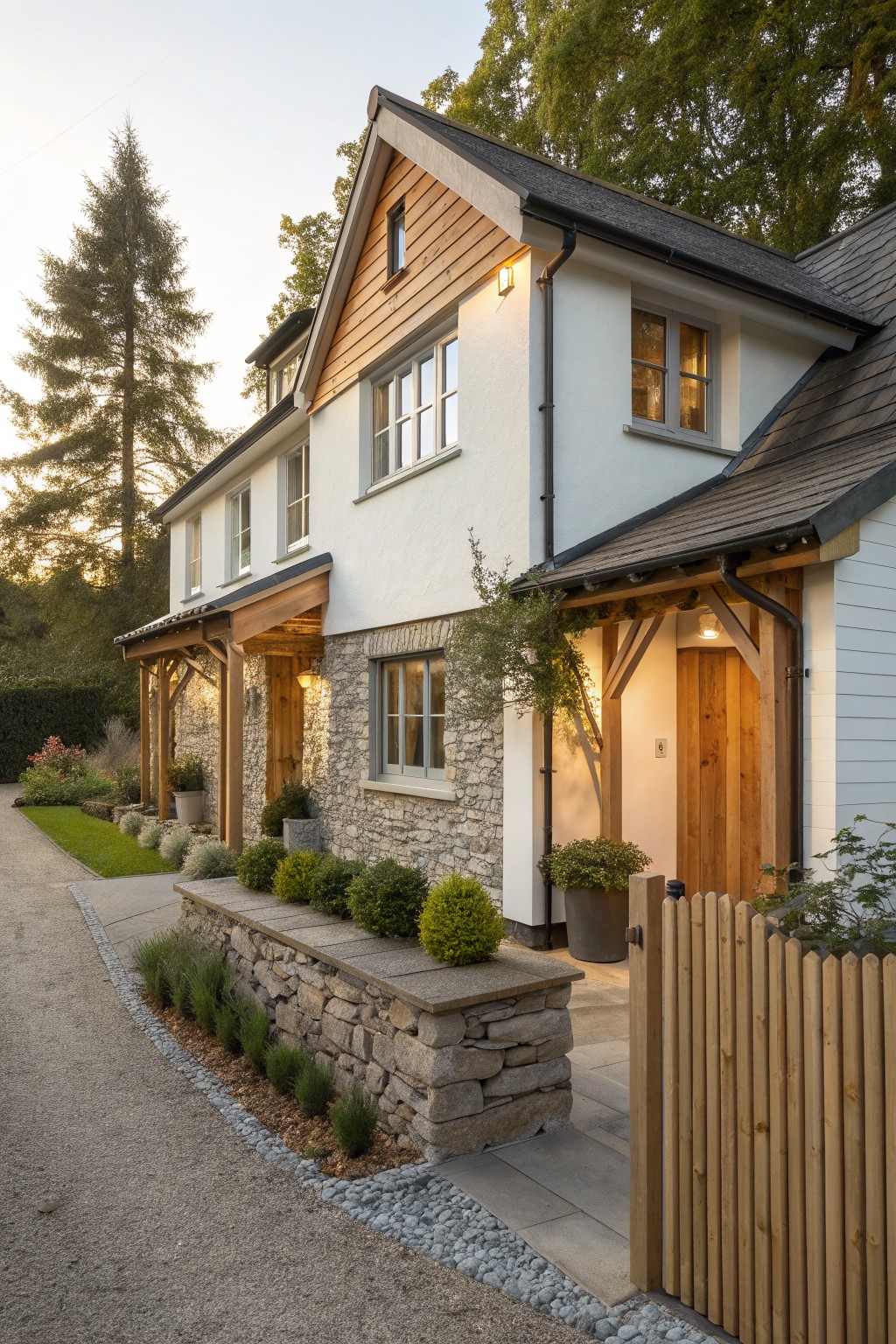
Many cottages gain a lot from a simple timber frame around the front door. The posts and beams create a small covered area that feels practical and gives the facade more depth without needing extra rooms or big changes.
This approach works well on homes that already have some roof overhang. Keep the wood tones natural so they age evenly with the rest of the exterior, and match the scale to the door rather than making it too grand.
Stone Facades With Simple Wood Entries
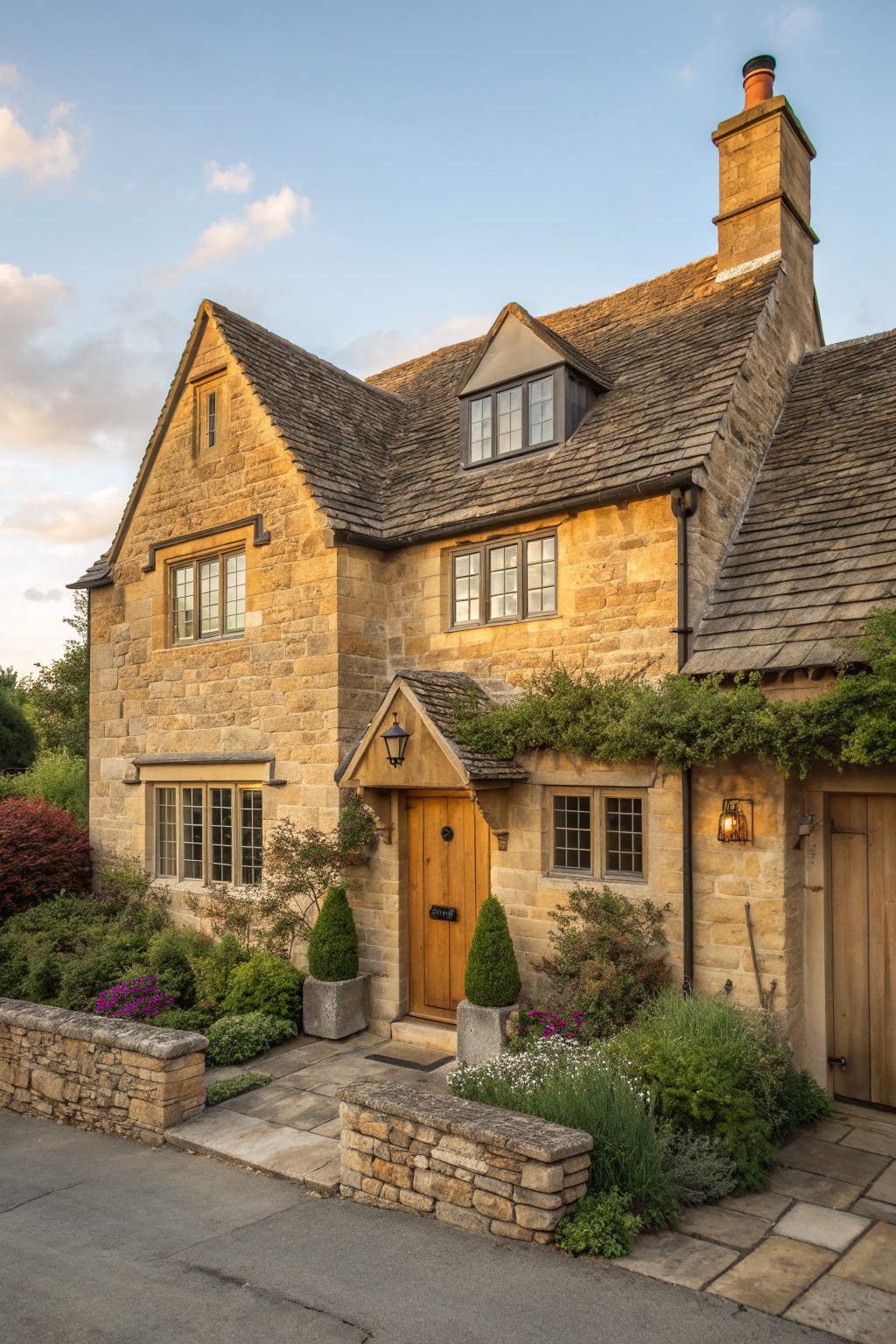
Many cottages gain their charm from letting the stone do the main work on the outside. A plain wood door set into those walls keeps the look grounded and easy to live with, rather than trying to add extra trim or decoration that can feel busy.
This works best on smaller homes where you want the materials to feel honest and lasting. Stick to one or two wood accents and let the stone set the tone so the front stays welcoming without looking overdone.
Frequently Asked Questions
Q: How do I choose siding that fits both the cottage charm and the farmhouse roots?
A: Go for weathered wood or reclaimed planks that show some grain and wear. Paint them in soft whites or muted grays so the texture stays visible. That mix keeps the look grounded without feeling too polished.
Q: What plants hold up around these exteriors without extra fuss?
A: Stick with climbing roses or lavender along the base. They soften the stone and wood while needing little water once settled. Trim them back once a year and they keep filling in nicely.
Q: Can I add a small porch without losing the rustic feel?
A: Yes, build it from the same wood tones as your main walls. Keep the posts simple and square rather than turned. A few potted herbs on the steps pull everything together.
Q: Do these cottages need special roof care in wet climates?
A: Check the thatch or tile every couple of seasons for moss buildup. Clean it off gently with a soft brush so water keeps draining. That small step prevents bigger leaks down the road.
