

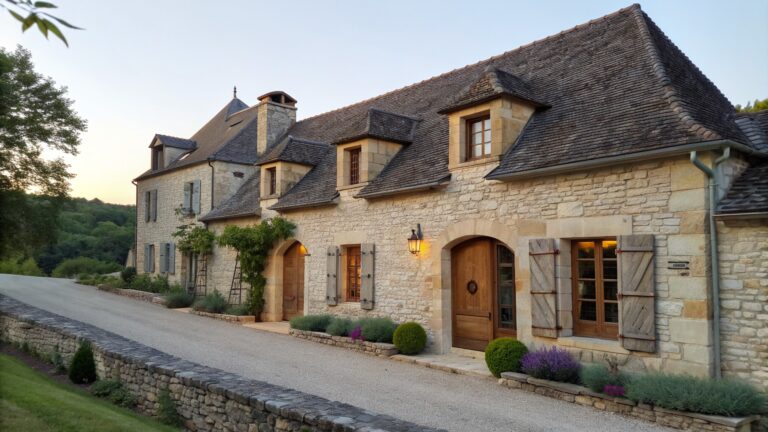
I’ve always noticed that French country farmhouses gain their quiet appeal from materials that show wear like rough stone walls and simple timber framing that settle into the landscape over years.
When I study a front view I usually check how the windows sit in relation to the roof pitch and whether the entry door feels like it belongs rather than just placed there for effect.
Some facades only make sense once you stand in front of them.
I would probably try a soft gray wash on my own shutters first to see how it shifts the whole look against the siding before going further with any changes.
These kinds of choices tend to make a house read as lived in rather than styled for a single moment.
Arched Stone Entries
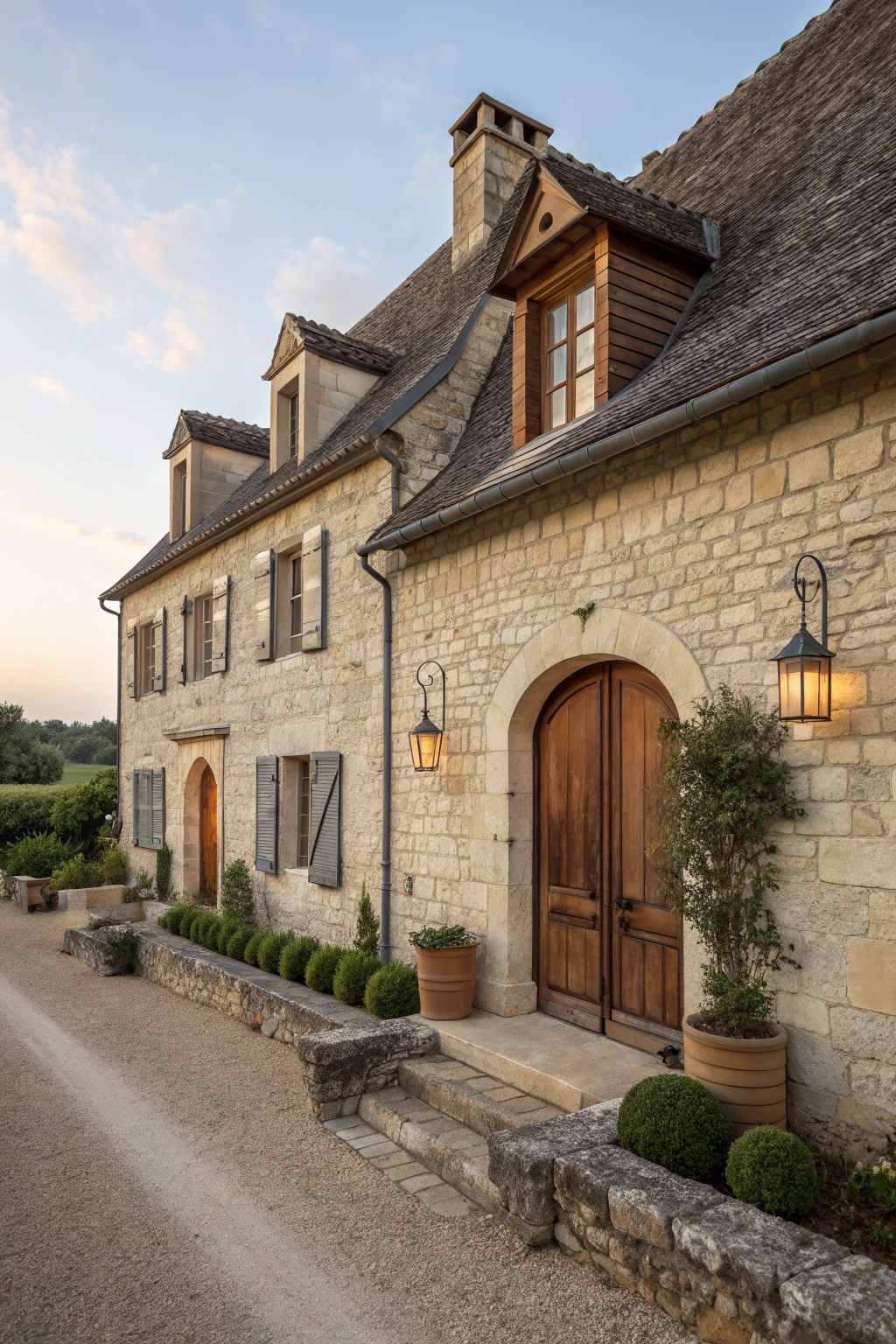
An arched stone surround around the front door gives a farmhouse exterior a quiet sense of age and weight. It keeps the entrance from looking flat against the wall and adds that classic French country shape without any extra trim or ornament.
This detail works best on stone or stucco homes that already have some thickness to the walls. Use it on the main door rather than every opening, and keep the wood doors simple so the arch stays the focus.
Let Climbing Vines Cover a Pergola
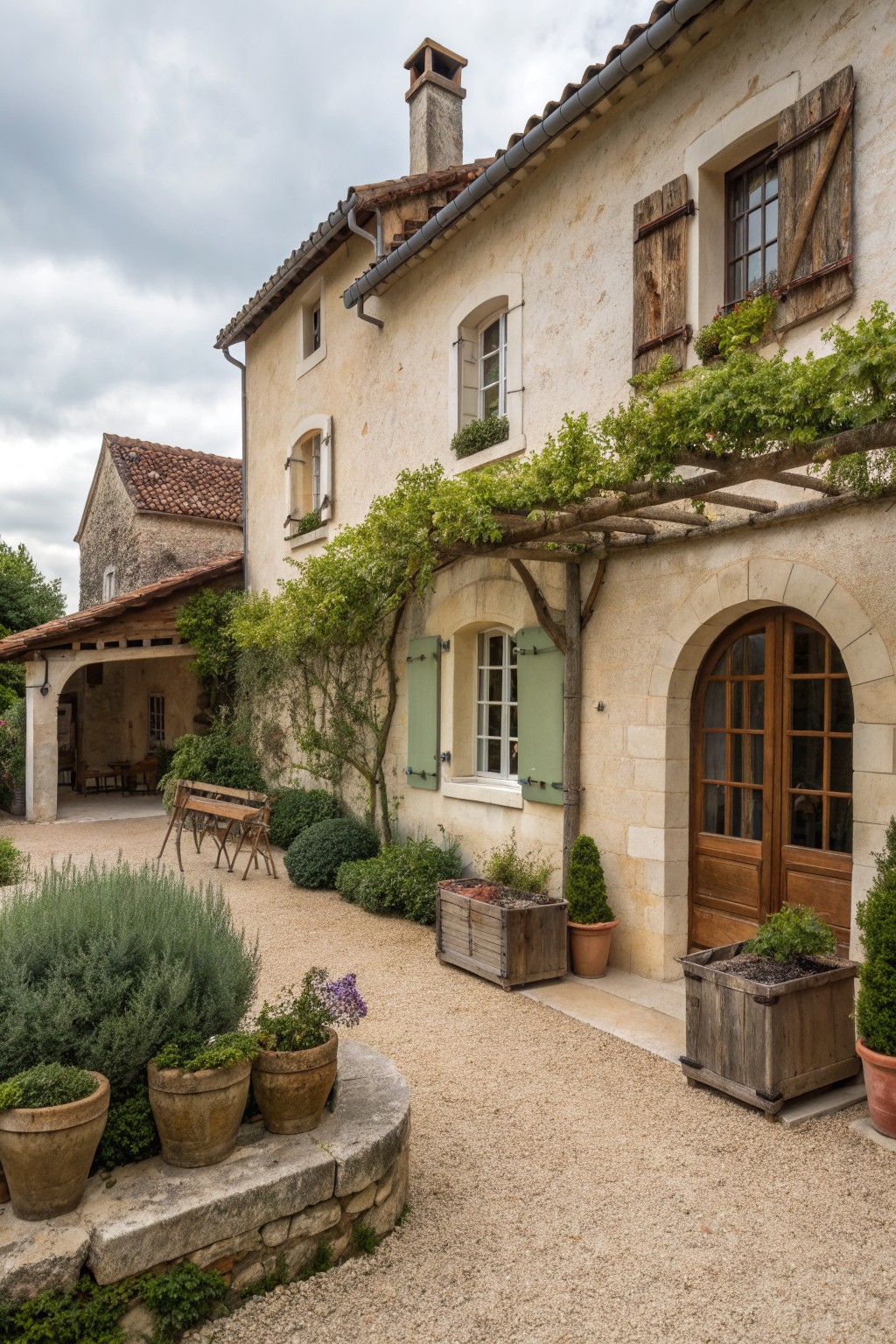
One simple way to give a farmhouse exterior more romance is to run a pergola along part of the facade and let vines grow over it. The greenery breaks up the stone and stucco, adds movement, and makes the house feel settled into its surroundings instead of just sitting on top of them.
This approach suits homes with fairly plain walls or long stretches of roofline. It works best in mild climates where the vines can thrive without constant pruning, and it pairs well with gravel paths and potted plants that keep the look casual.
Stone Facades With Climbing Vines
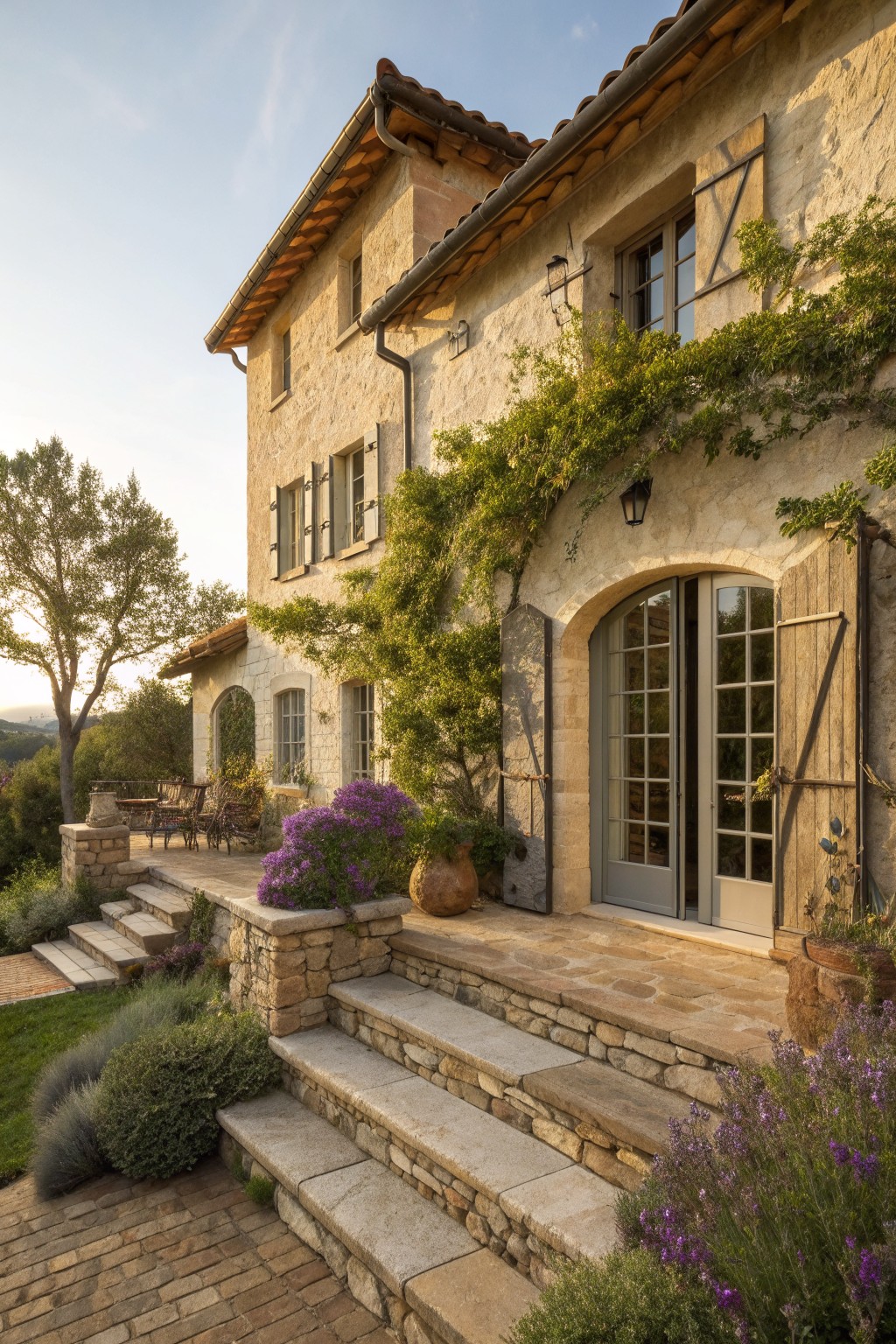
Stone walls already give a house that solid, old-world base. When you let vines climb across them, the whole exterior feels softer and more lived in without any extra effort. The plants add movement and color that changes with the seasons, and they help the house blend into the landscape instead of sitting on top of it.
This works best on homes with simple shapes and textured stone like the one in the photo. Keep the vines away from windows and doors so they frame rather than cover, and choose varieties that suit your climate. Too much growth can trap moisture against the wall, so give them room to breathe.
Arched Stone Doorways
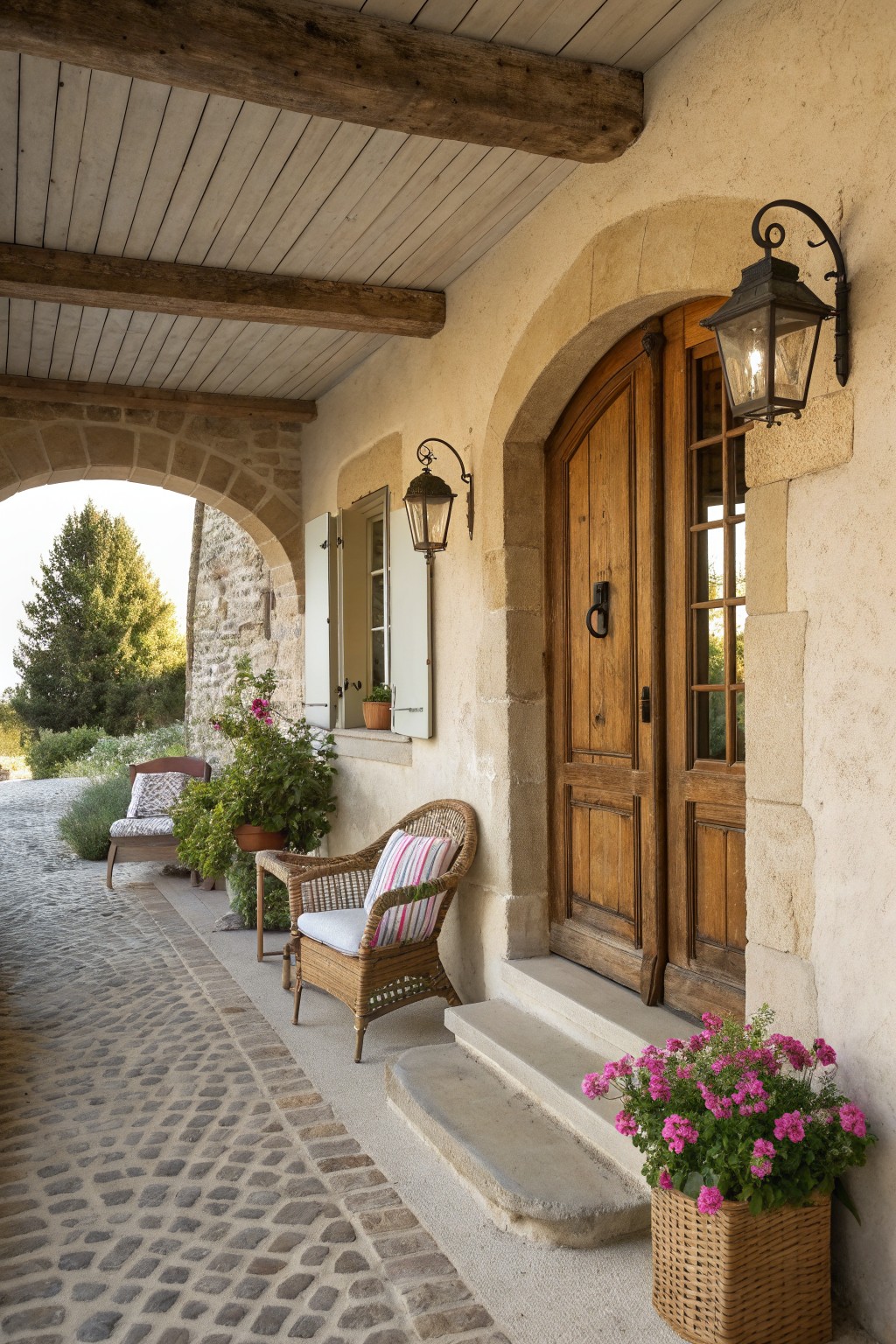
An arched stone entry gives a farmhouse that settled look without needing much else. The curve softens the doorway while the rough stone adds weight and age that fits right in with older homes.
This works best on stone or stucco walls where the arch can sit naturally. Pair it with a plain wood door and simple wall lanterns so the shape stays the main feature instead of competing with extra trim or hardware.
Gravel Courtyards Next to Stone Walls
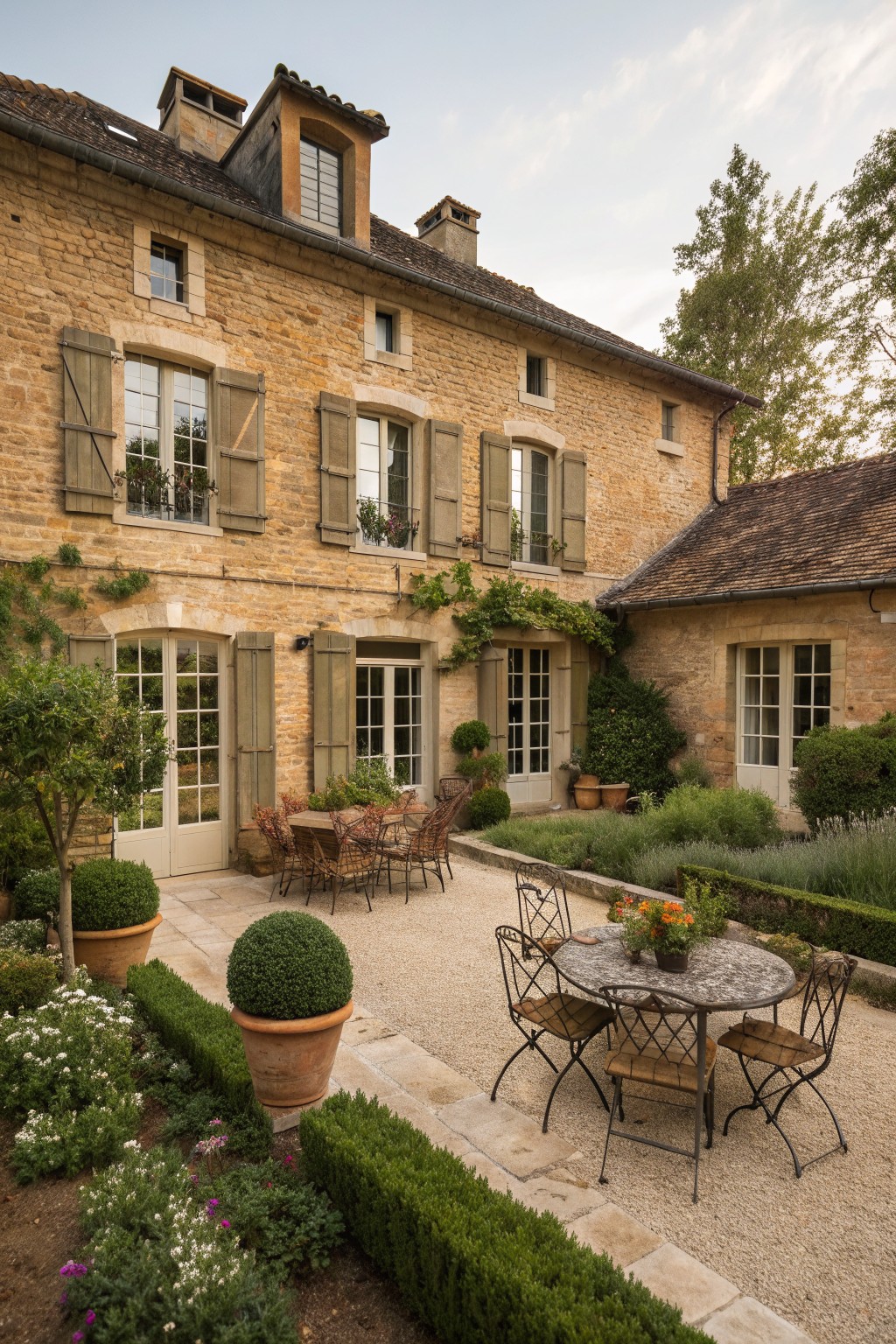
A gravel courtyard works well next to a stone farmhouse because it creates a simple transition from the house to the garden. The loose surface feels relaxed and does not fight the old masonry or the plants that grow around it.
This layout suits homes with a side or back area that gets decent sun. Keep the furniture light so it can be moved around, and let the gravel run right up to the doors so the space feels connected rather than separate.
Stone Exteriors for a Simple Farmhouse Look
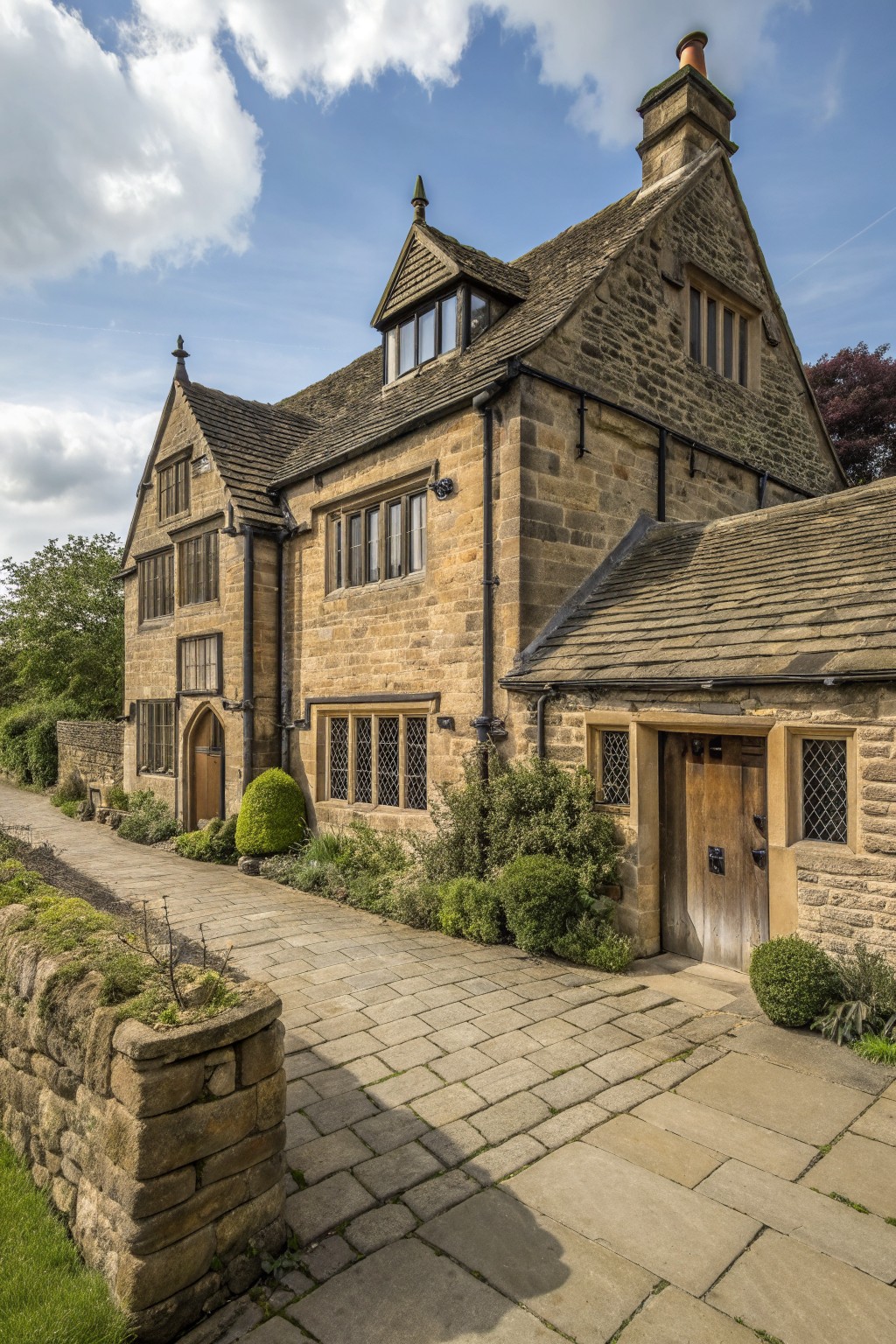
Stone walls give a farmhouse that settled, lasting quality without much extra effort. The material handles weather well and develops a softer tone as it ages, which fits the relaxed feel most people want in this style.
It works best on homes with several roof angles and wood doors or trim to keep the look balanced. Avoid using it on every surface if the house is small, since too much stone can start to feel heavy.
Pergolas Give Outdoor Dining Real Structure
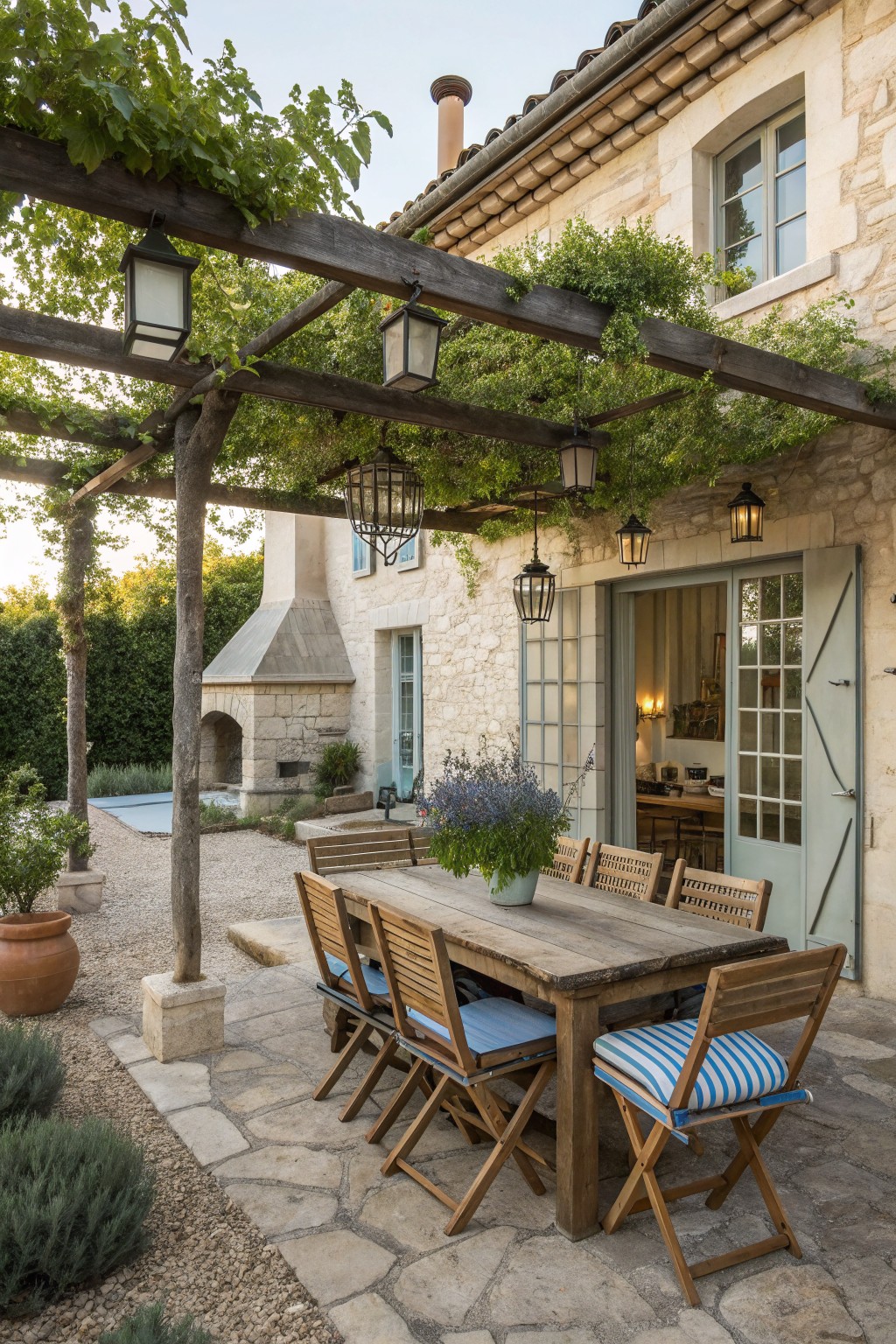
A pergola overhead turns a simple patio table into a more defined spot for meals. The wooden beams create shade and a sense of enclosure while still letting in air and light. Hanging lanterns add a soft glow once the sun goes down.
This setup works best on homes with stone or stucco walls where the wood can contrast naturally. Anchor the posts firmly and let vines grow across the top for extra cover. It suits older farmhouses that already lean on rustic materials rather than sleek modern ones.
Soft Green Shutters on Stone Walls
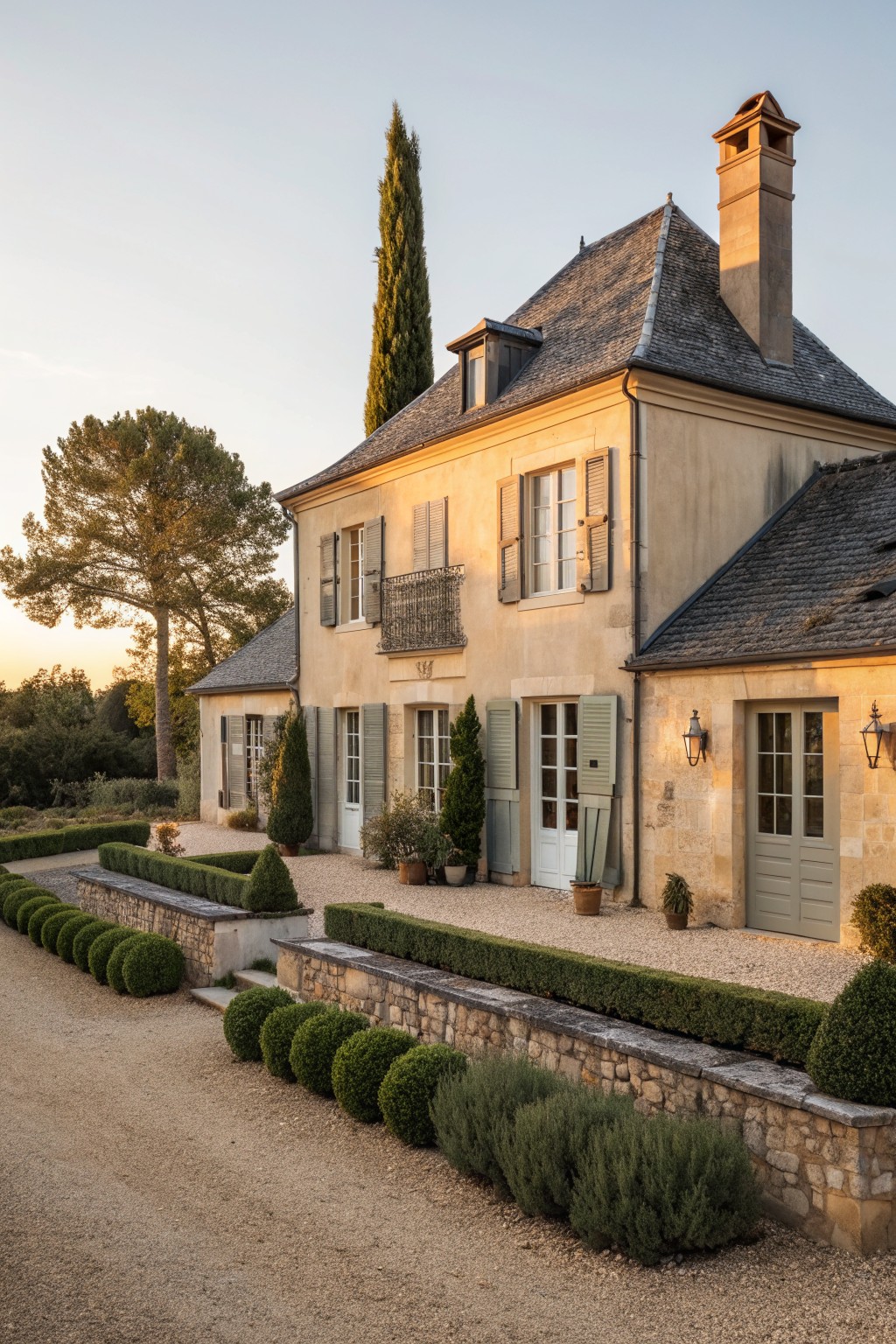
Many older farmhouses rely on painted shutters to soften the look of stone and add a touch of color that feels lived in. The muted green here works because it sits quietly against the warm walls without fighting them.
This detail suits homes that already have a simple shape and multiple windows. Keep the shade consistent across the facade and choose a finish that weathers gently rather than one that looks brand new.
Stone Arches Over the Entry
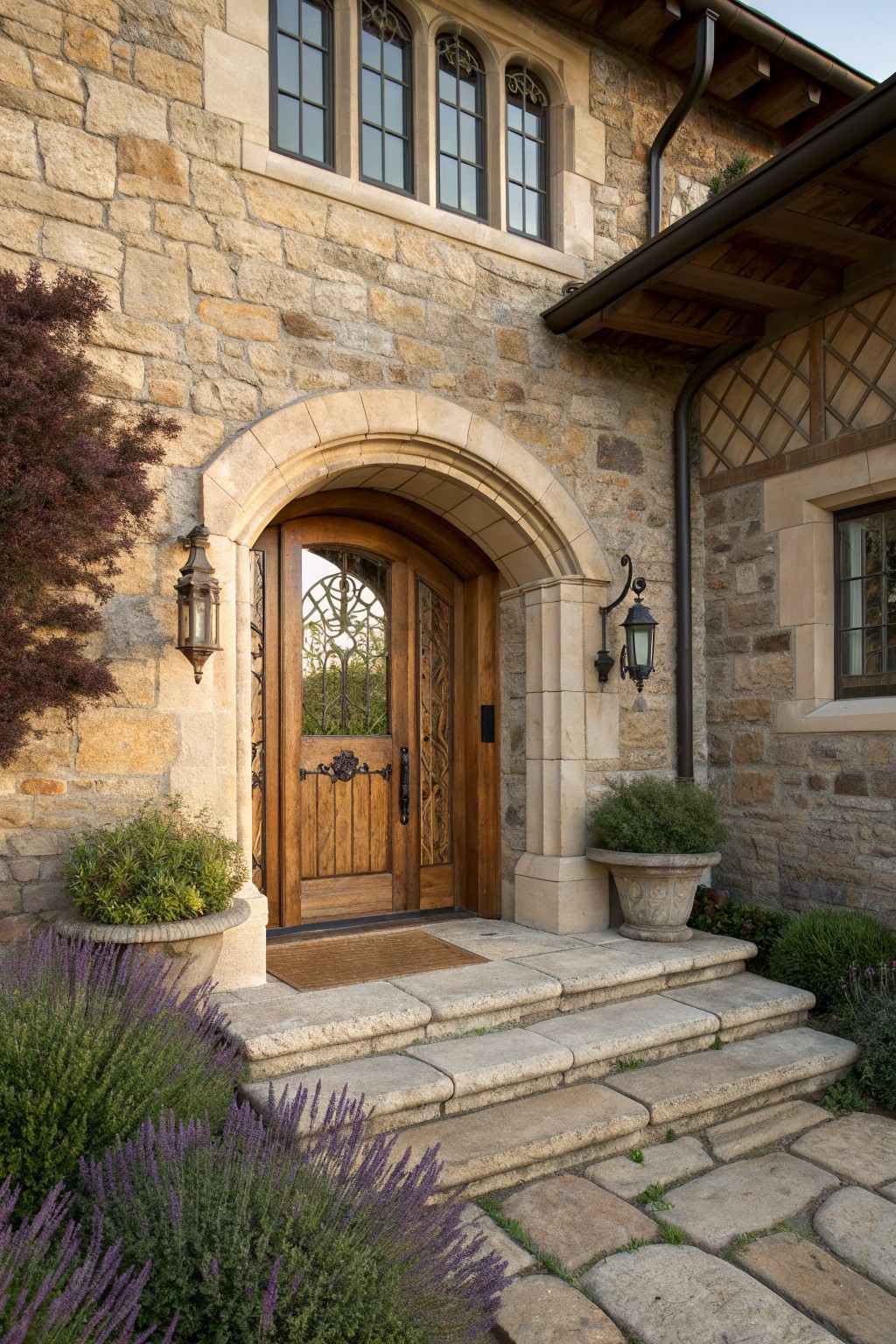
A stone arch over the front door adds instant age and character to a house. It frames the entrance in a way that feels solid and welcoming without needing extra trim or ornament.
This approach suits stone or stucco homes that already lean toward French country or farmhouse styles. Keep the arch simple in shape and let the material carry the weight so the entry feels natural rather than added on.
Add a Simple Canopy Over the Front Door
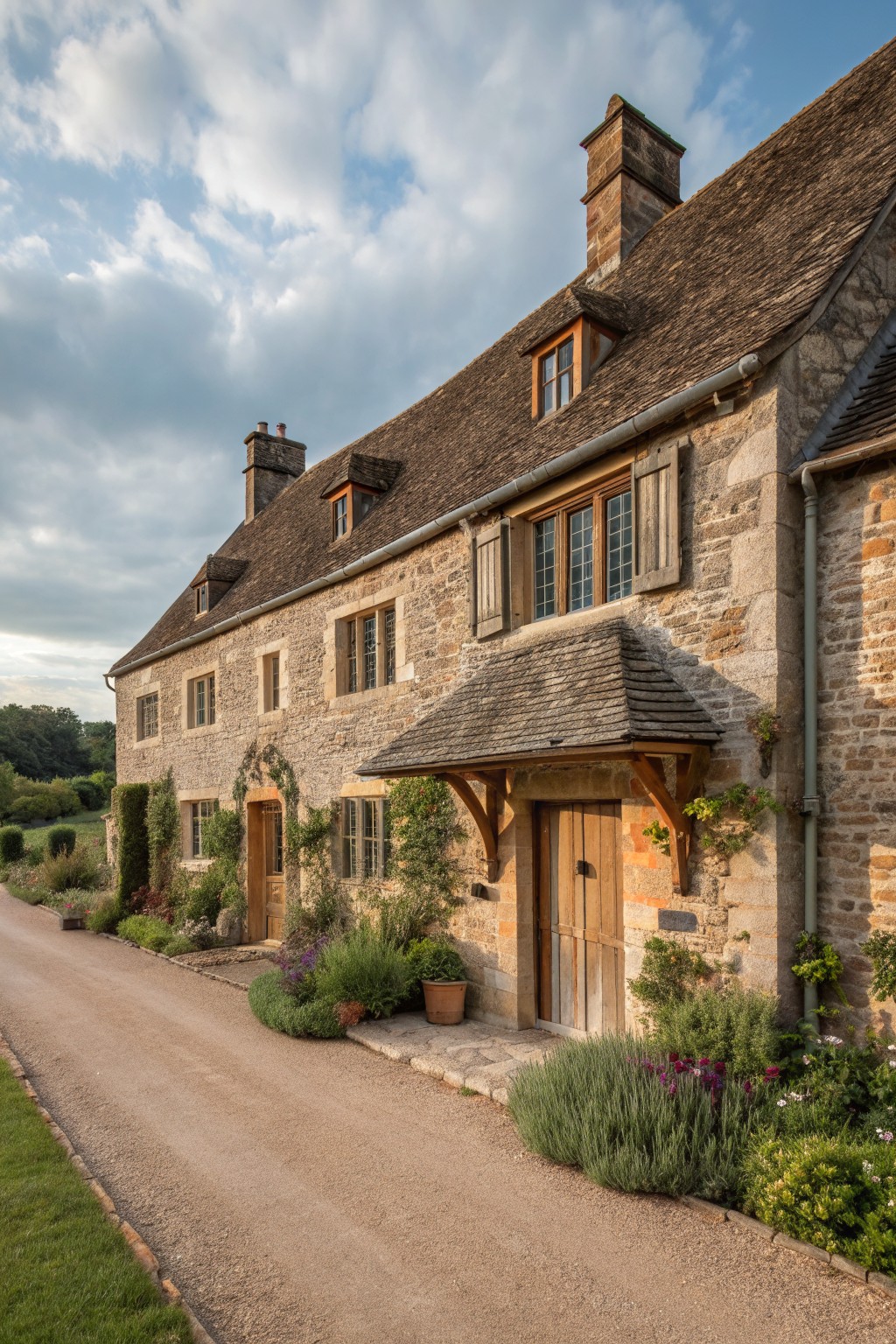
A small canopy over the door gives the entry some cover from rain while keeping the whole front simple. It sits right on the stone wall and uses the same wood tones as the door, so the detail feels like part of the house rather than something added later.
This works well on long stone farmhouses where you want the door to stand out without building a full porch. Match the wood to the door and keep the roof pitch in line with the main roof so the canopy does not fight the rest of the facade.
Mixing Stone and Plaster on the Facade
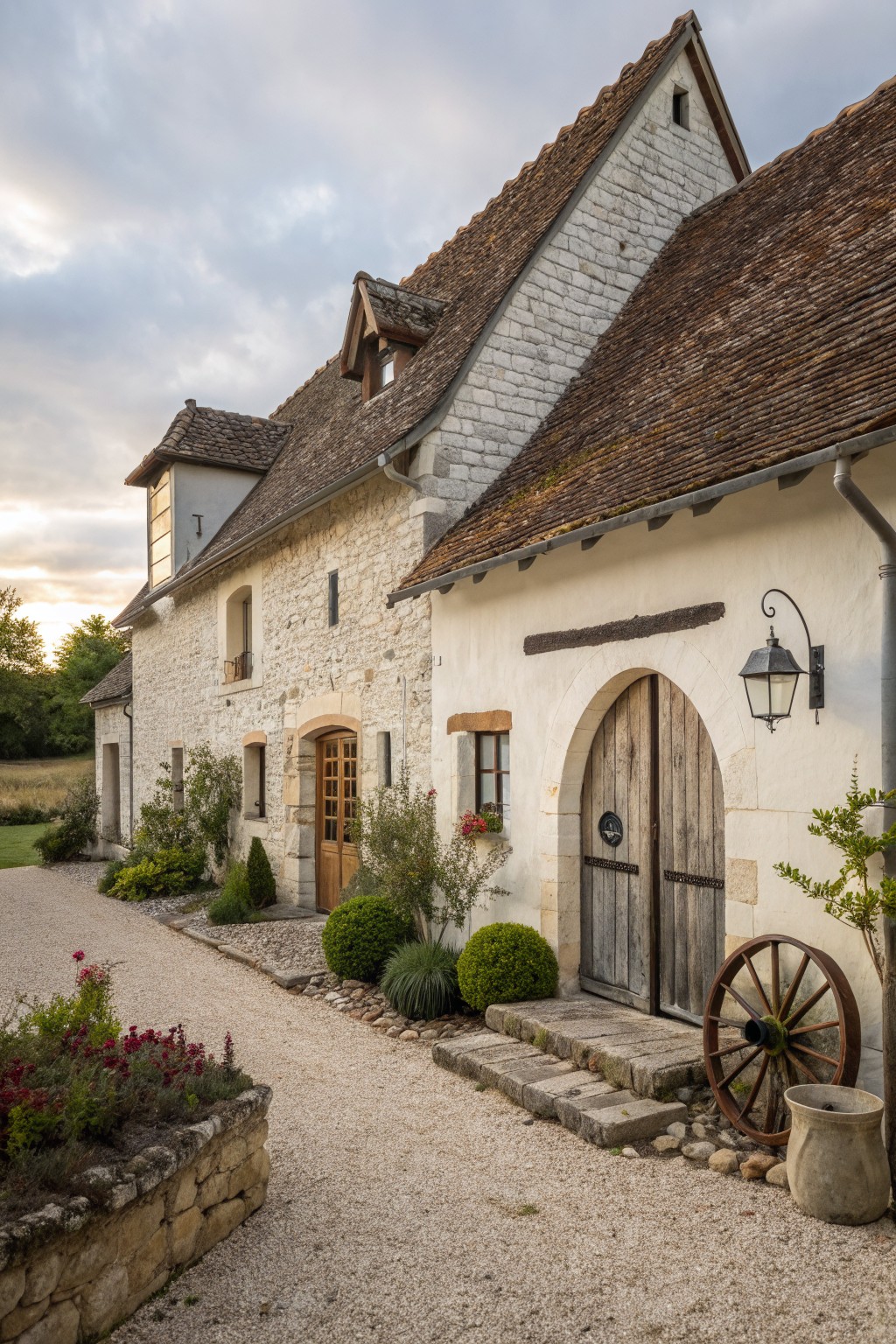
Many older French farmhouses rely on this simple contrast between rough stone and smooth plaster to keep the exterior interesting. The stone adds weight and texture while the plaster sections reflect light and soften the overall look.
This works best on homes with a few strong architectural lines like gables or arched openings. Start with one main wall or the area around the front door rather than trying to cover everything at once.
Add an Outdoor Fireplace to the Patio
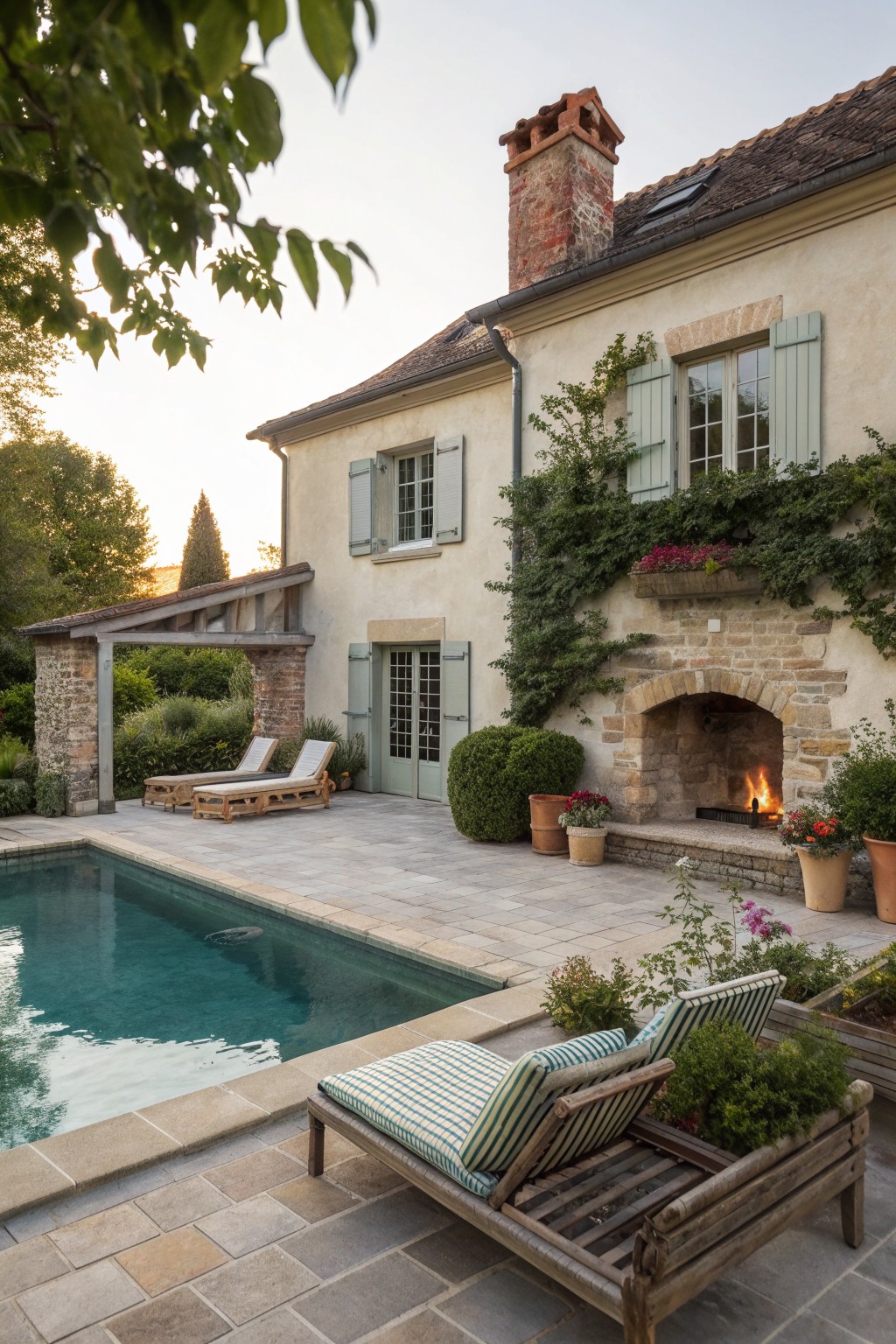
An outdoor fireplace makes a patio feel usable well into the evening. It creates a focal point that draws people together and adds warmth without turning the space into a formal room.
This approach works best on stone or brick homes where the fireplace can tie into existing materials. Keep the seating simple with a few lounge chairs so the area stays casual and easy to maintain.
An Arched Entry for Farmhouse Character
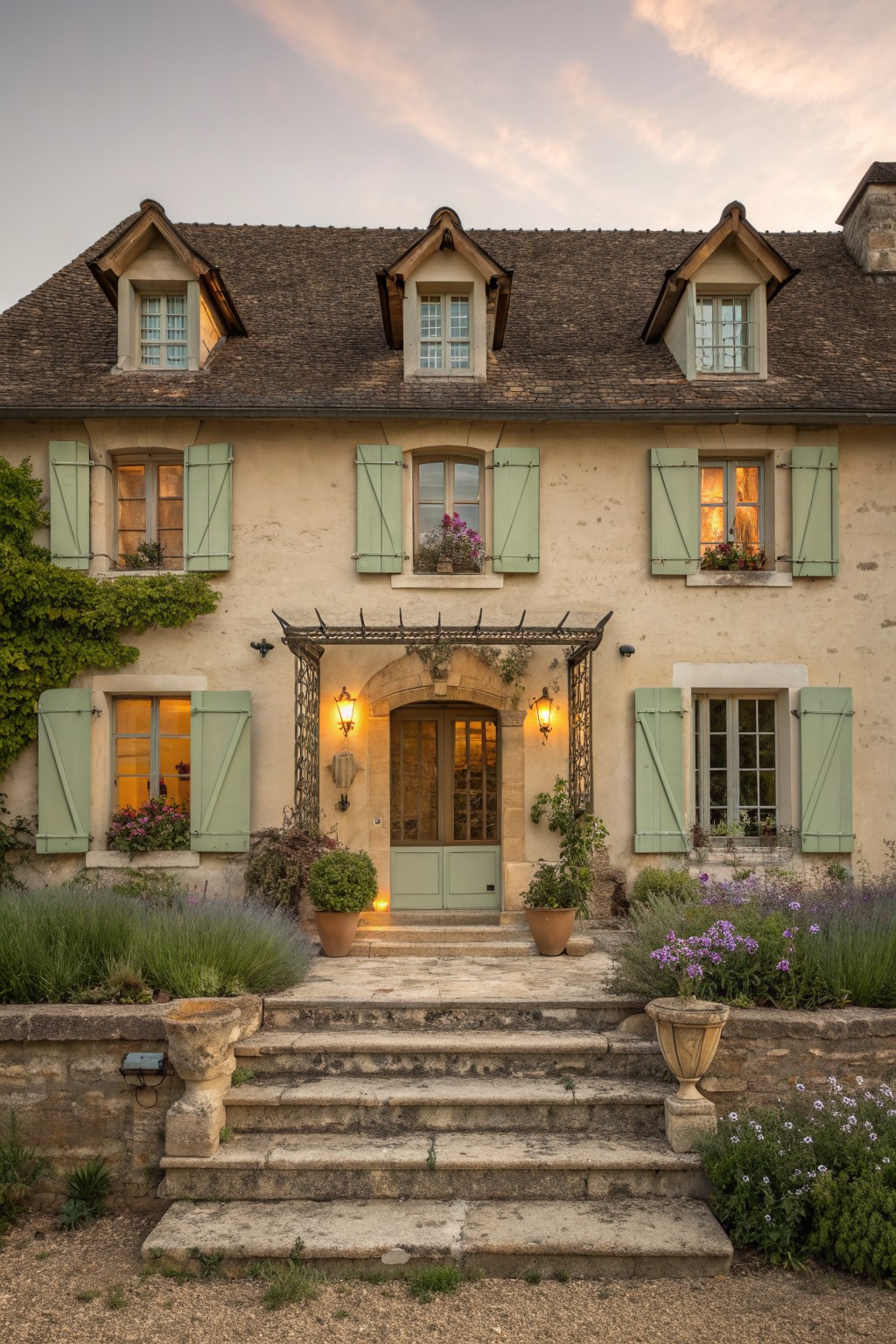
An arched doorway gives a farmhouse exterior a settled, historic look that feels natural and welcoming. The curve softens the lines of the facade and creates a clear focal point without extra decoration.
This approach suits stone or stucco homes best. Keep the door in simple wood, add lanterns on either side, and let the arch carry the rest of the entry.
String Lights Over Outdoor Dining Areas
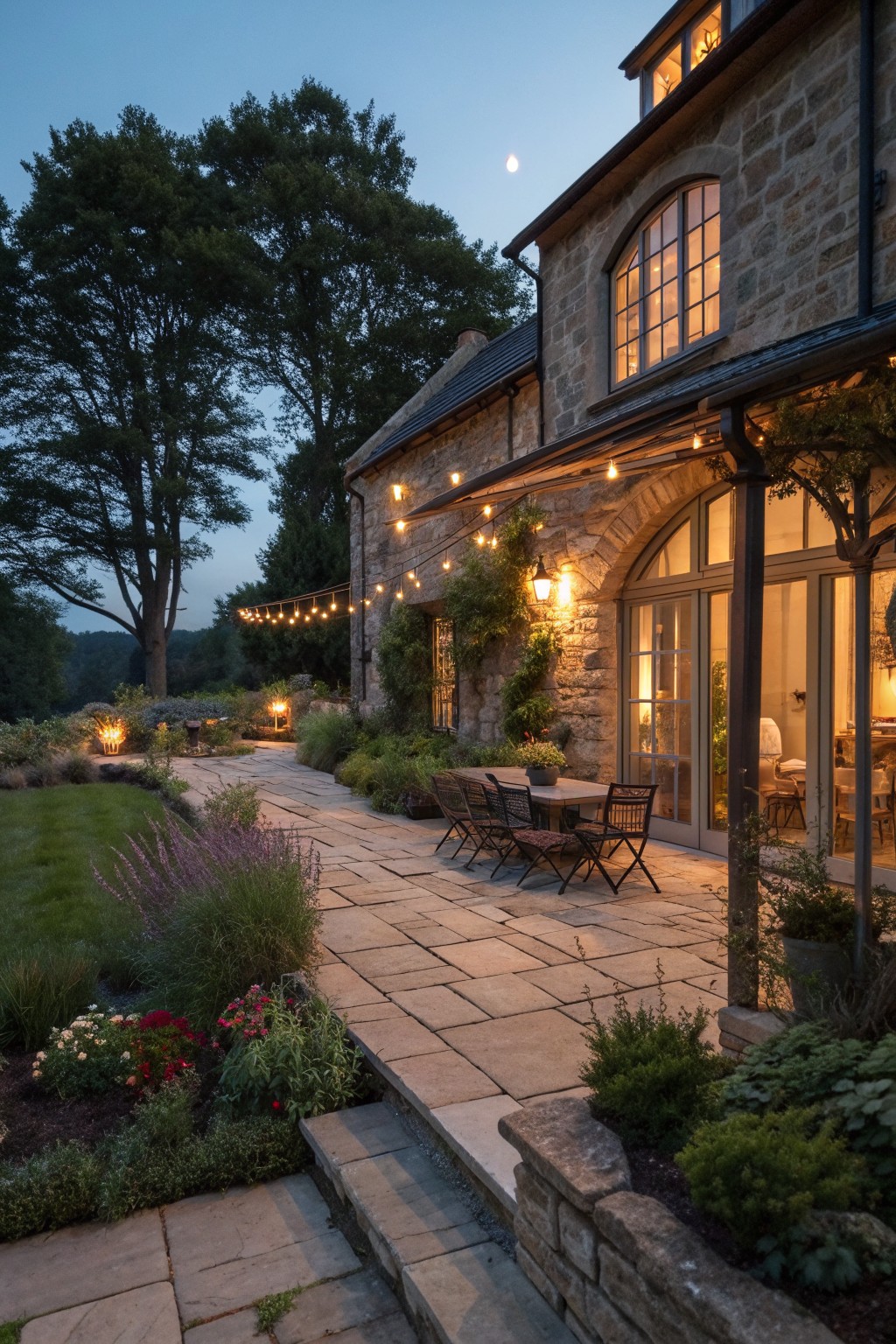
String lights work well over a patio because they add just enough light to keep the space usable after dark without overpowering the setting. They turn a basic seating area into something that feels more intentional and comfortable for meals or quiet evenings outside.
This approach suits stone farmhouses or similar older styles where you want the outdoor space to feel connected to the house. Run the lights along the edge of an awning or roofline above the table, and keep the rest of the lighting low so the glow stays soft and even.
Climbing Roses On Stone Walls
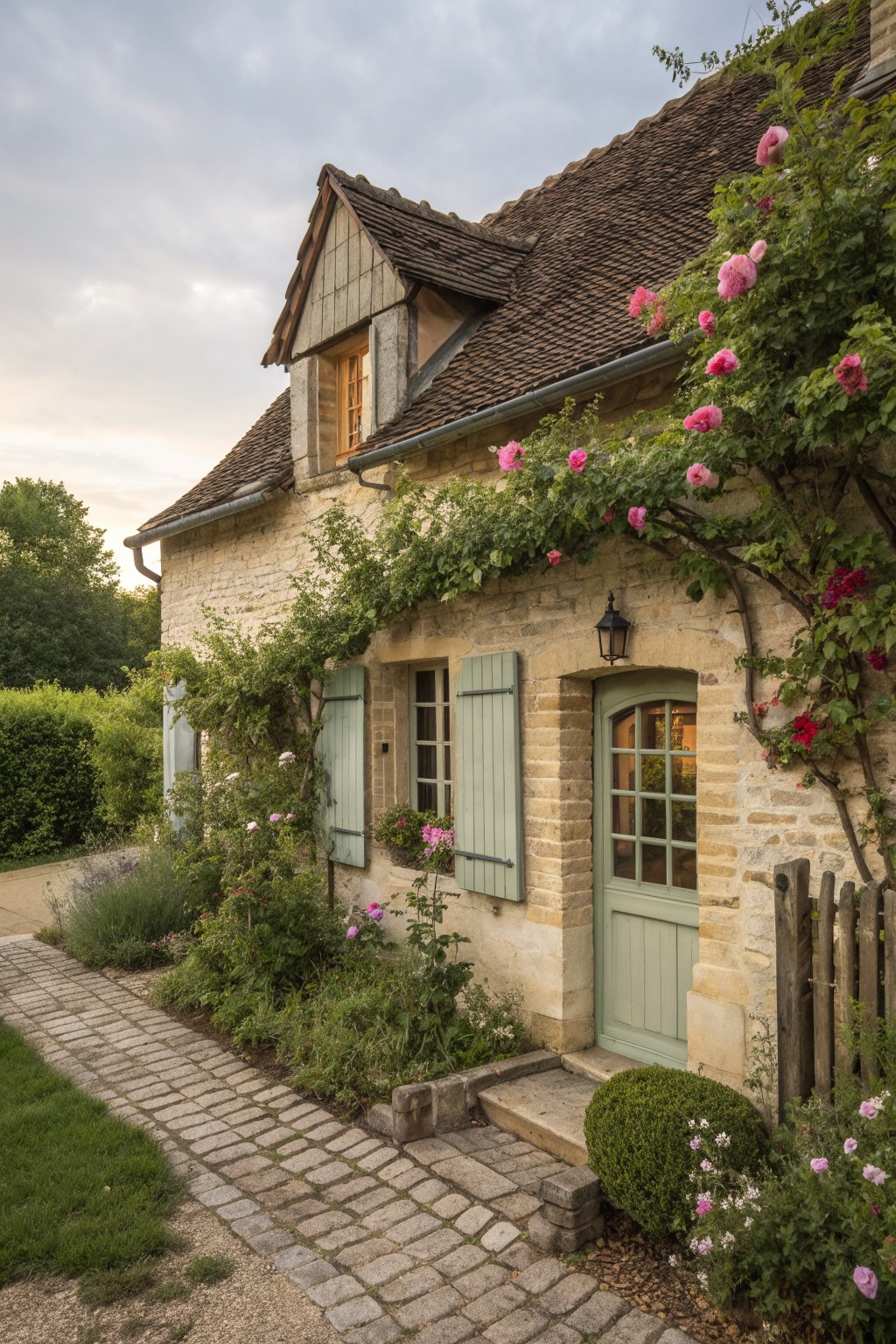
One simple way to give a stone farmhouse more romantic character is to let climbing roses grow up the walls and even spill over the roofline. The flowers add color and softness against the hard surface without needing a lot of extra decoration.
This works best on older homes or new builds trying to feel established. Plant the roses at the base, train them along wires or gutters, and choose varieties that stay manageable so they do not block windows or pull on the stone.
Frequently Asked Questions
Q: How do I pick shutters that match the old French style in the photos? A: Go for wooden ones in soft gray or blue that look a bit faded. Mount them so they sit flat against the wall like they have been there forever. This small change pulls the whole exterior together fast.
Q: What plants fit best along the base of the house? A: Lavender and rosemary stay low and smell great when you brush past them. They handle dry spells without much fuss and echo the countryside feel. Keep them a little untamed so the edges look natural.
Q: Can I add vines without them taking over everything? A: Start with one type like ivy on a single wall. Trim it back once a year so it frames the windows instead of hiding them. The growth adds softness without turning into a full-time job.
