

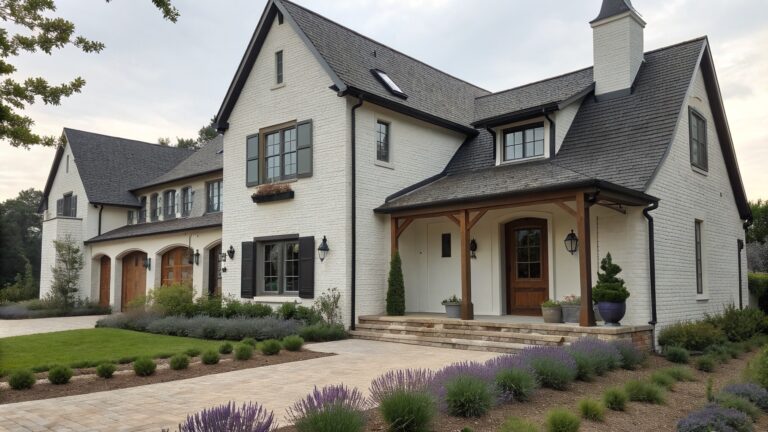
European farmhouses tend to look more settled when dark trim outlines the main windows and doors against lighter walls.
I have noticed over time that this contrast holds its shape better once the siding starts to weather and the light shifts across the front during different seasons.
The trim color also needs to work with the roof pitch and any stone or brick accents so the whole front does not feel chopped into separate parts.
Paying attention to how the color meets the foundation and any porch posts can change whether the house reads as sturdy or simply busy from the street.
Small tests on site usually reveal more than photos do.
Dark Trim Framing Light European Farmhouse Walls
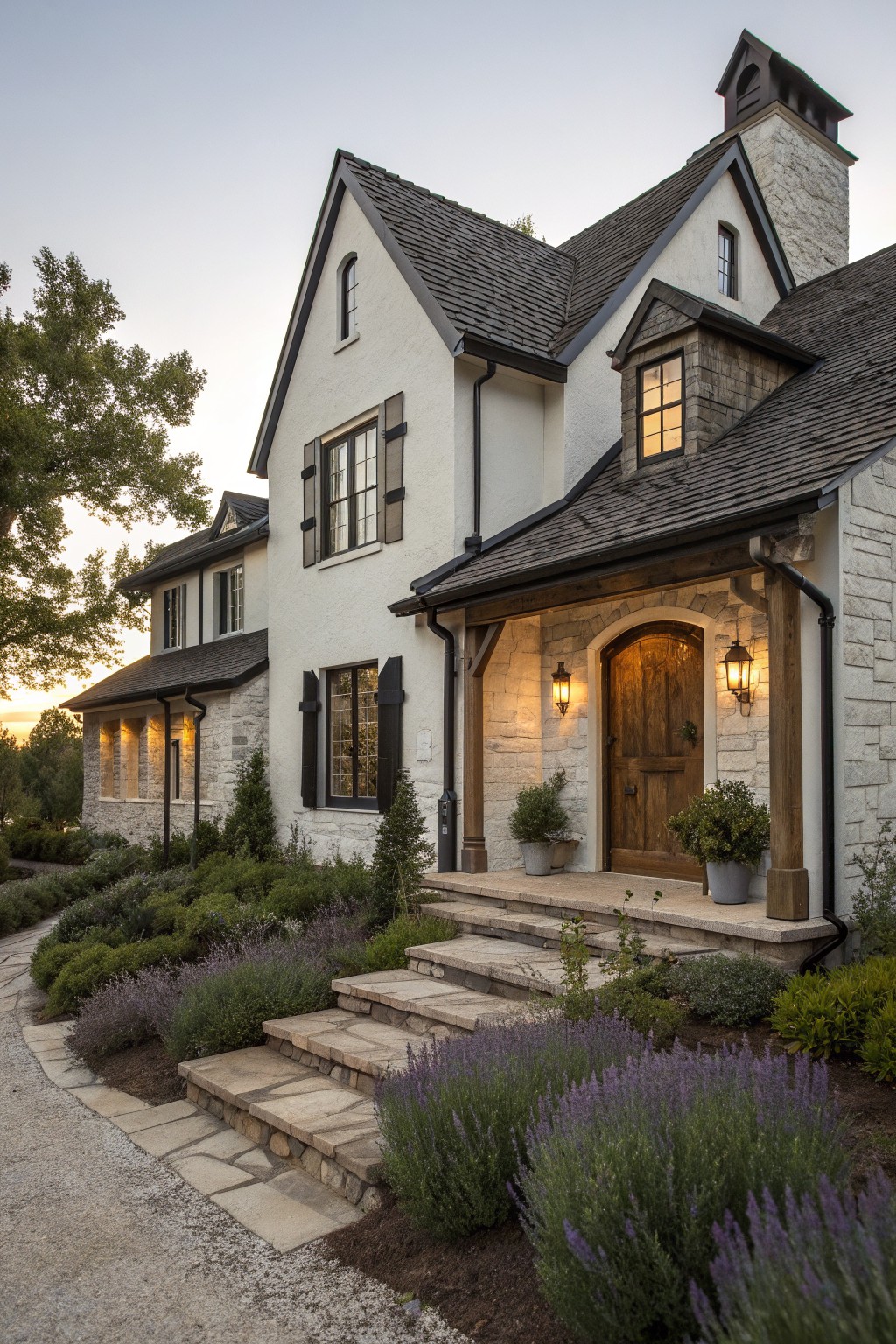
Dark trim works well on European farmhouse homes because it gives the shape of the house a clear outline. The black window frames and roof edges stand out against the light walls and help the overall form read cleanly instead of blending together.
This approach suits homes with simple stucco or mixed stone surfaces. Keep the trim color consistent on windows, shutters, and eaves so the contrast stays balanced and the house feels more structured from the street.
Dark Trim Framing Windows on Stone Farmhouses
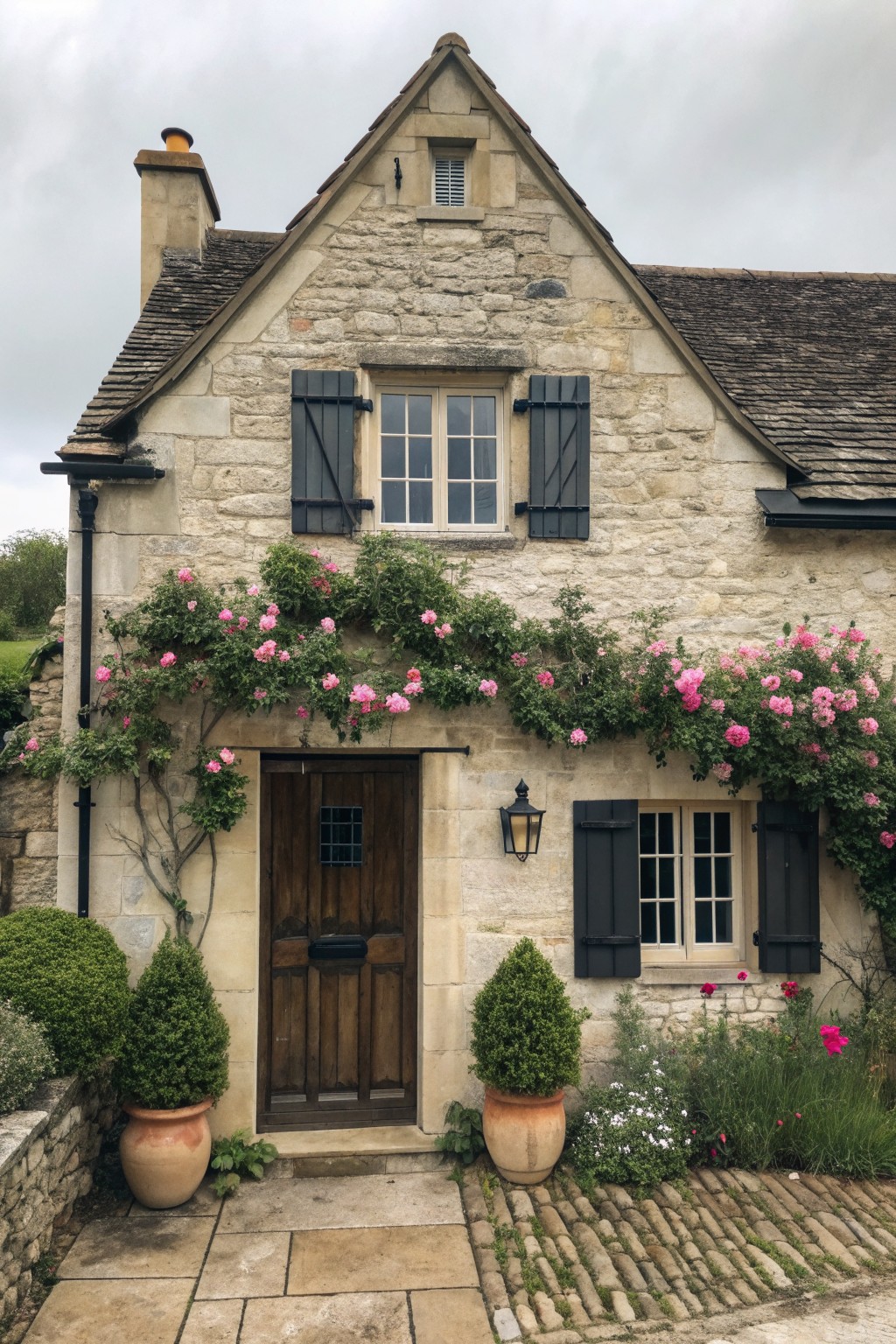
Many stone farmhouses look cleaner when dark trim is used around the windows and doors. The contrast pulls the openings forward and gives the whole front a more finished shape.
This works best on light or neutral stone where the trim can create clear lines without competing with other details. It suits older homes that already have simple facades and helps them feel more structured.
Dark Trim Accentuating Gables and Mixed Materials
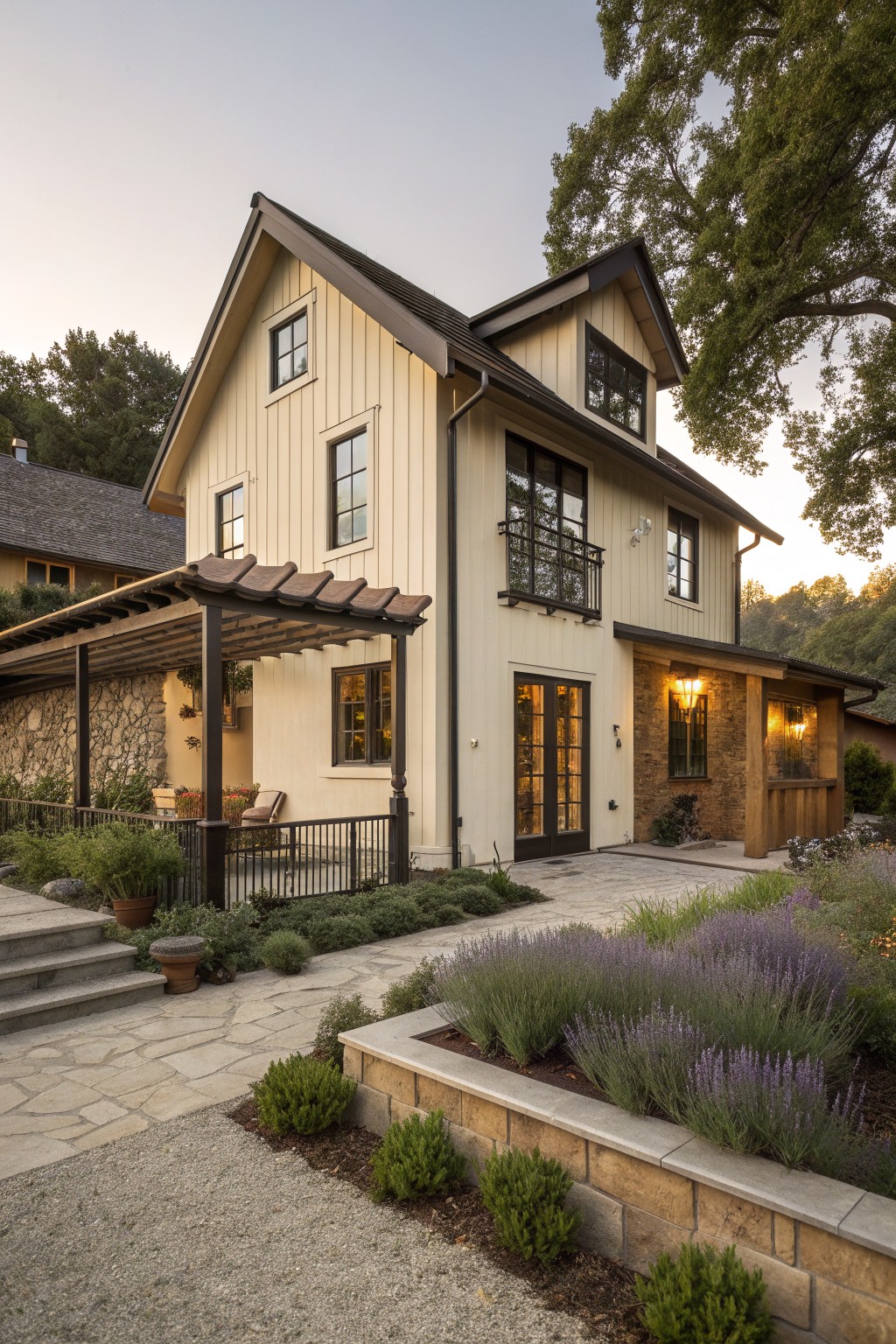
Light siding often needs something to keep the lines from fading into the background. Dark trim around the windows, doors, and roof edges pulls the whole shape into focus and gives the house a cleaner, more structured look.
This approach works especially well on farmhouses with multiple gables and mixed materials. Match the trim color on every opening and downspouts so the contrast feels deliberate instead of random.
Dark Trim Defines the Facade
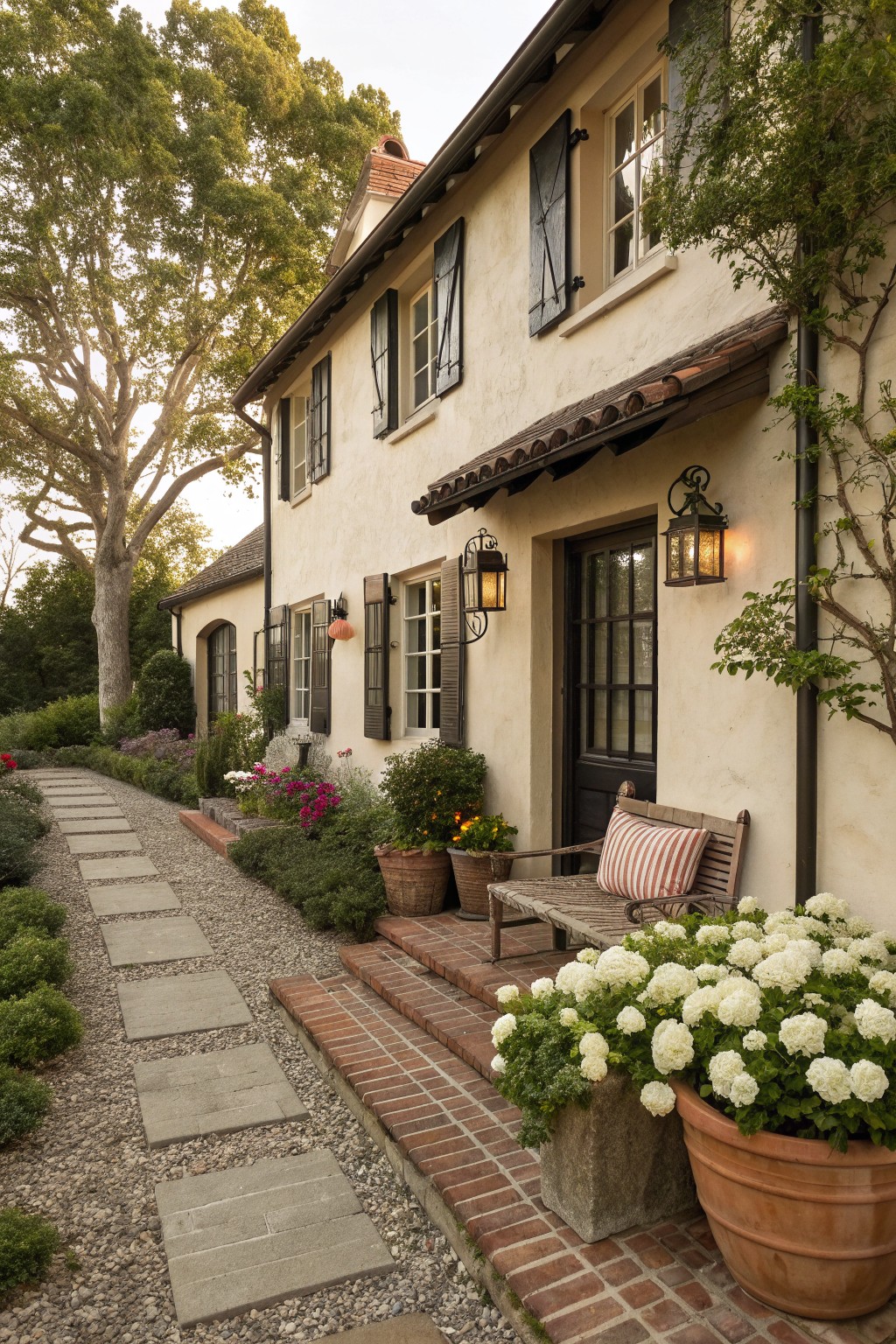
Many European farmhouses rely on dark trim to give light walls a clearer shape. The contrast makes windows and doors stand out without adding extra details or ornament.
This works best on simple stucco exteriors where you want the openings to feel deliberate. Keep the trim color deep and consistent, and limit other accents so the lines stay crisp.
Dark Trim Creating Strong Lines on Mixed-Material Farmhouses
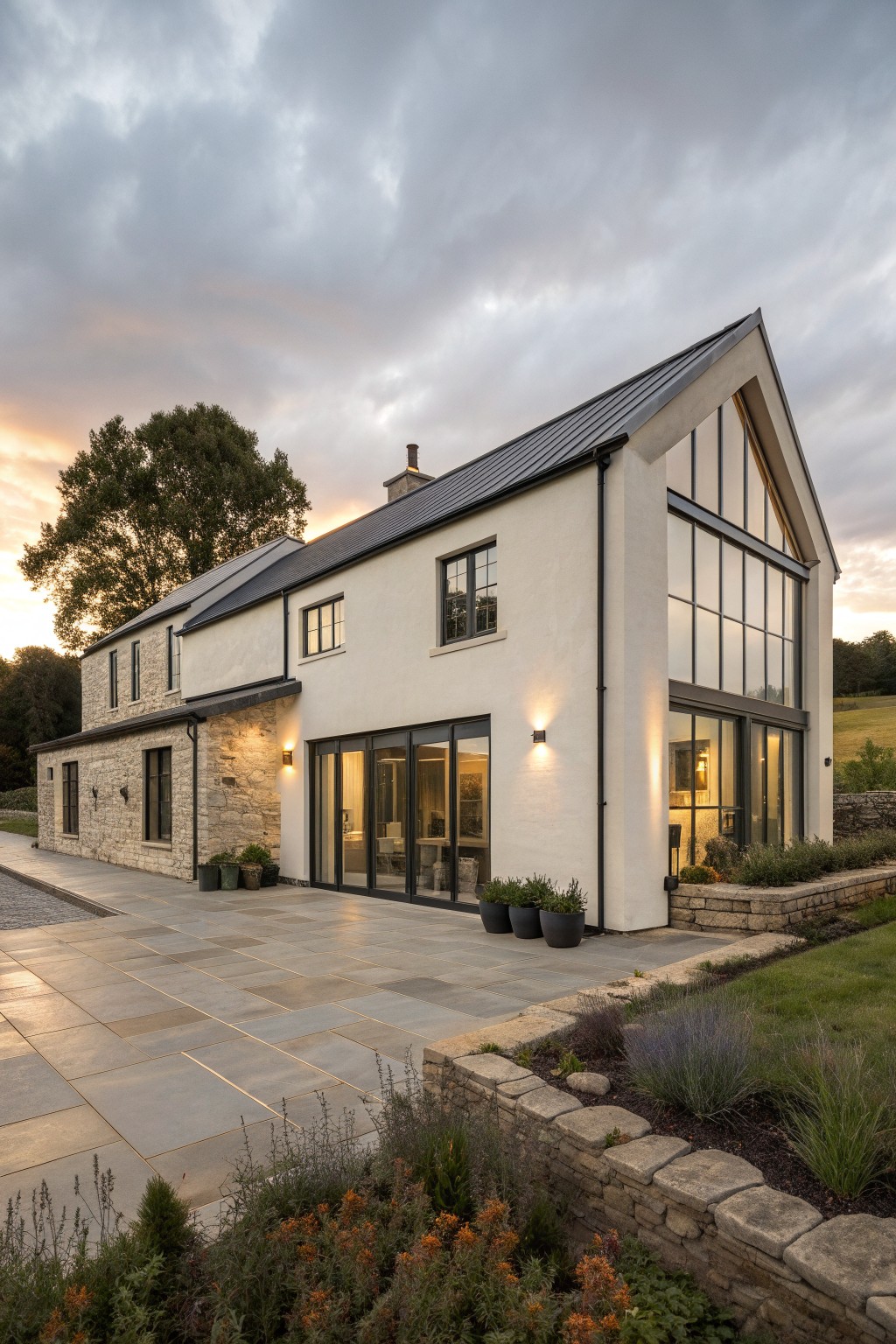
Dark trim works well on farmhouses because it gives the eye clear lines to follow. The black frames around the windows and along the roof edge make the pale walls and stone sections stand out without any extra ornament.
This works best on homes that already have a simple shape and a mix of materials. Keep the trim the same color on every opening and let the contrast do the work rather than adding more details.
Dark Trim Coordinating Stucco and Stone Details
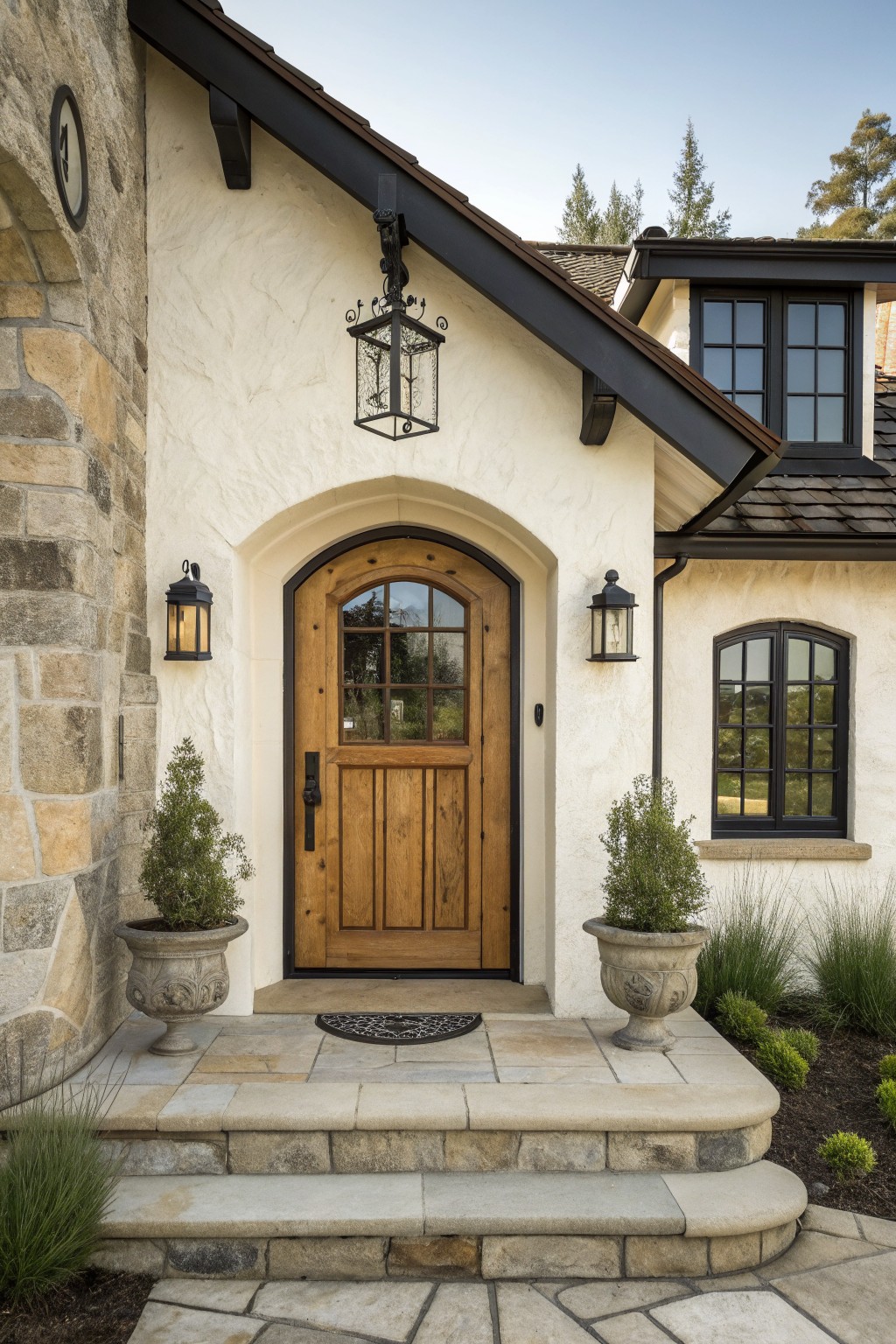
Many European farmhouses rely on dark trim to give the front a clear, organized shape. The contrast helps the door and windows read as intentional features instead of blending into the lighter walls.
This works best on homes that mix stucco and stone. Use the same dark finish on the door frame, window sashes, and any small brackets so the whole elevation feels pulled together rather than scattered.
Window Trim That Outlines the Facade
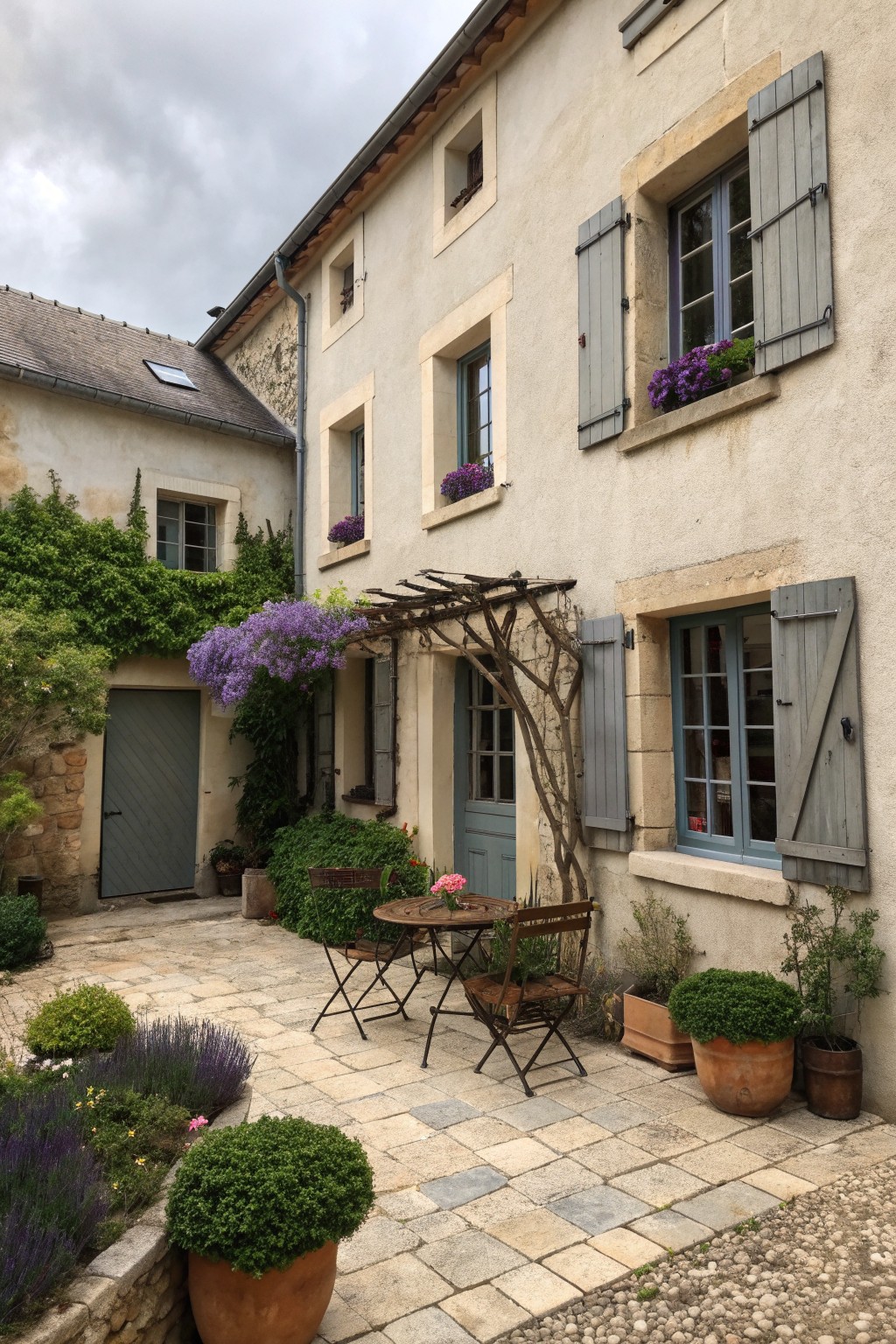
Many older farmhouses keep the walls simple so the trim can do the defining work. The shutters and door frames here sit in soft gray and blue tones that mark each opening clearly against the light stucco.
This works best on homes with fairly plain surfaces where you want the windows and doors to read as strong shapes. Keep the trim colors a step or two darker than the wall so the lines stay visible even from across the yard.
Dark Trim Defines The Windows
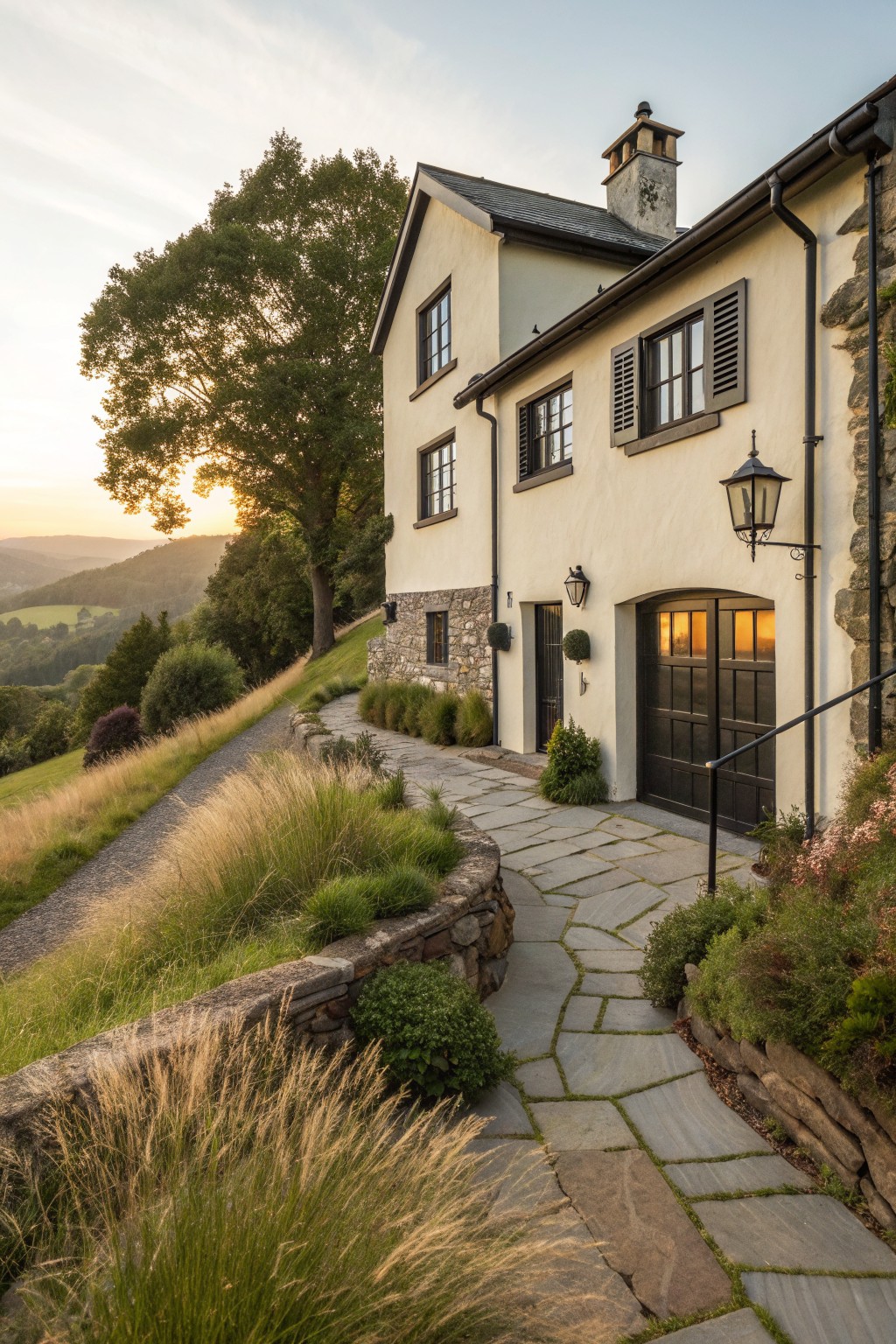
Dark trim works well on light farmhouse walls because it gives the whole front a sharper look. The contrast makes the windows and doors stand out instead of blending into the pale surface.
Try this on a simple stucco or plaster exterior where the roofline is already clean. Use the same deep color on the shutters and main door so the trim feels intentional rather than scattered.
Dark Trim Defines The Lines On White Siding
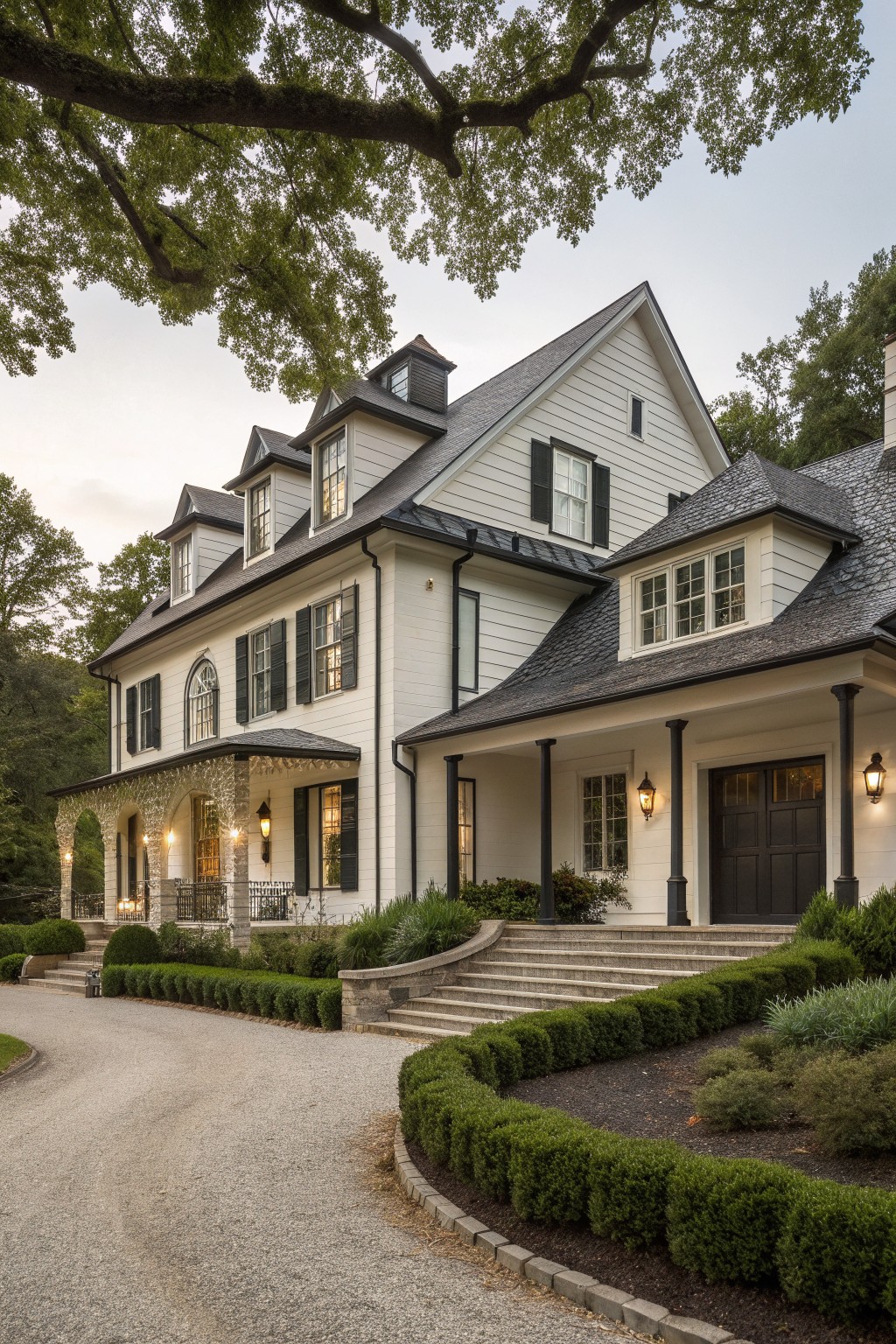
Many white farmhouses can start to look a bit flat once the siding goes up. Dark trim around the windows, doors, and roof edges gives the shape back without adding any extra ornament.
This approach works best on homes that already have clear gables and porch structures. Keep the trim color consistent on shutters, posts, and window frames so the contrast reads as intentional rather than scattered.
Dark Trim Defines the Windows and Doors
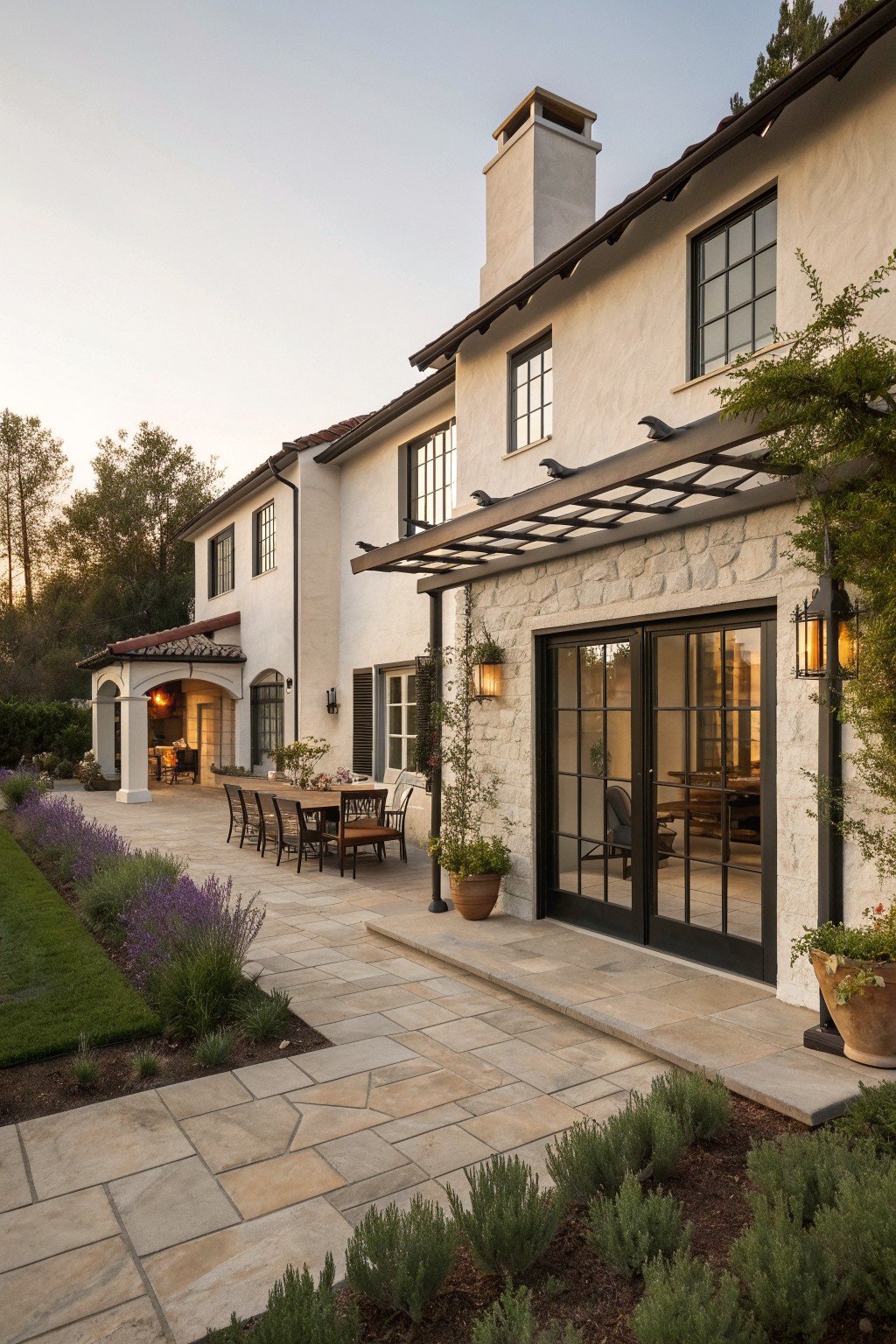
A light stucco exterior can start to look a little soft once the walls are finished. Dark frames around the windows and doors give those openings a clear edge so the whole front reads as more structured.
This works best on homes that already mix materials like stone bases or simple rooflines. Keep the trim color consistent on both windows and doors, and test the contrast in person before committing since the same shade can shift depending on the wall color.
Dark Trim Defines White Farmhouse Walls
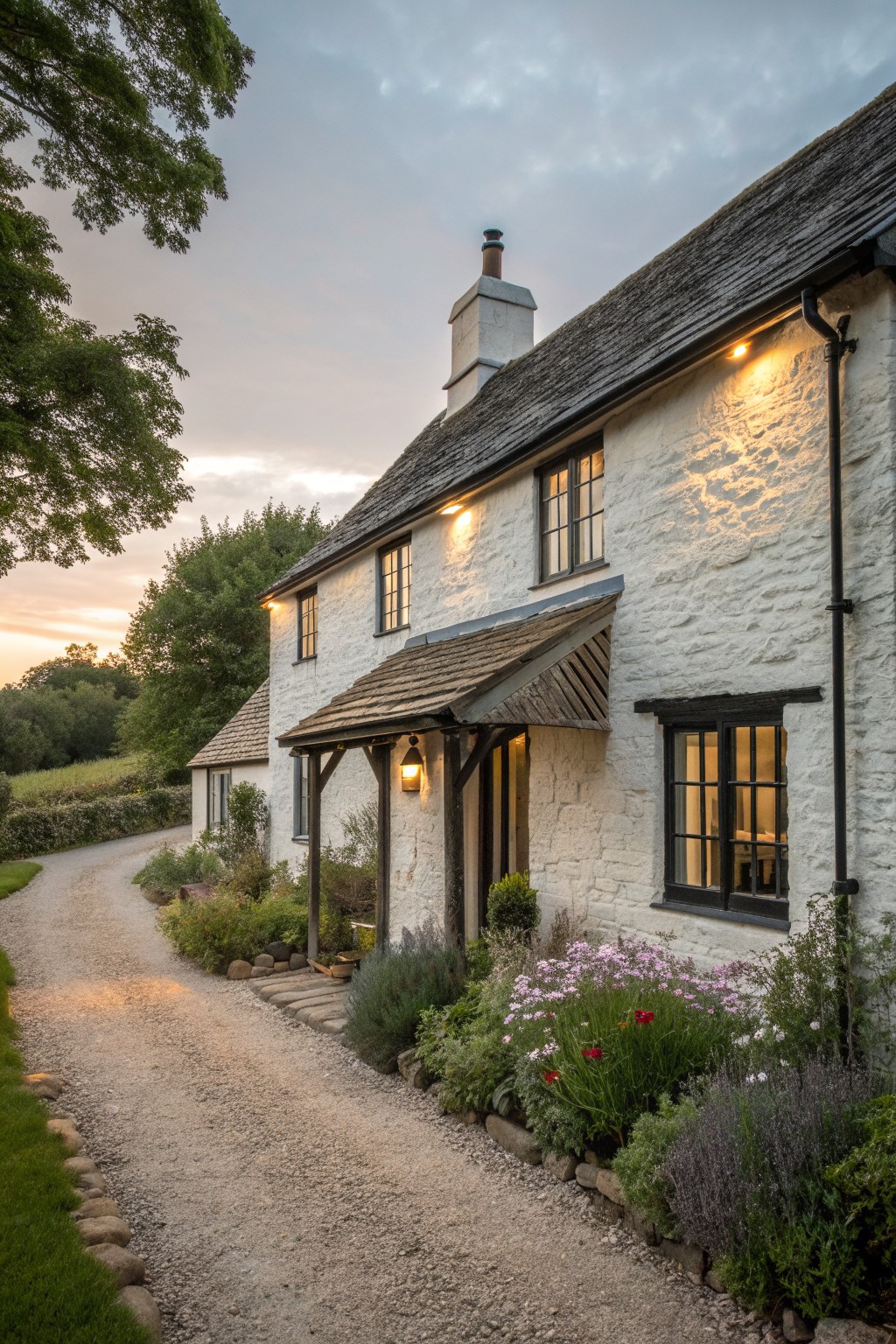
Dark trim around the windows gives a white stone house a clearer shape. It turns plain openings into strong lines that stand out against the light surface without adding any extra decoration.
This approach works best on simple European farmhouses where the walls are the main feature. Keep the trim color consistent on all windows and doors so the whole front reads as one clean design.
Dark Trim Framing Light Stone Farmhouse Openings
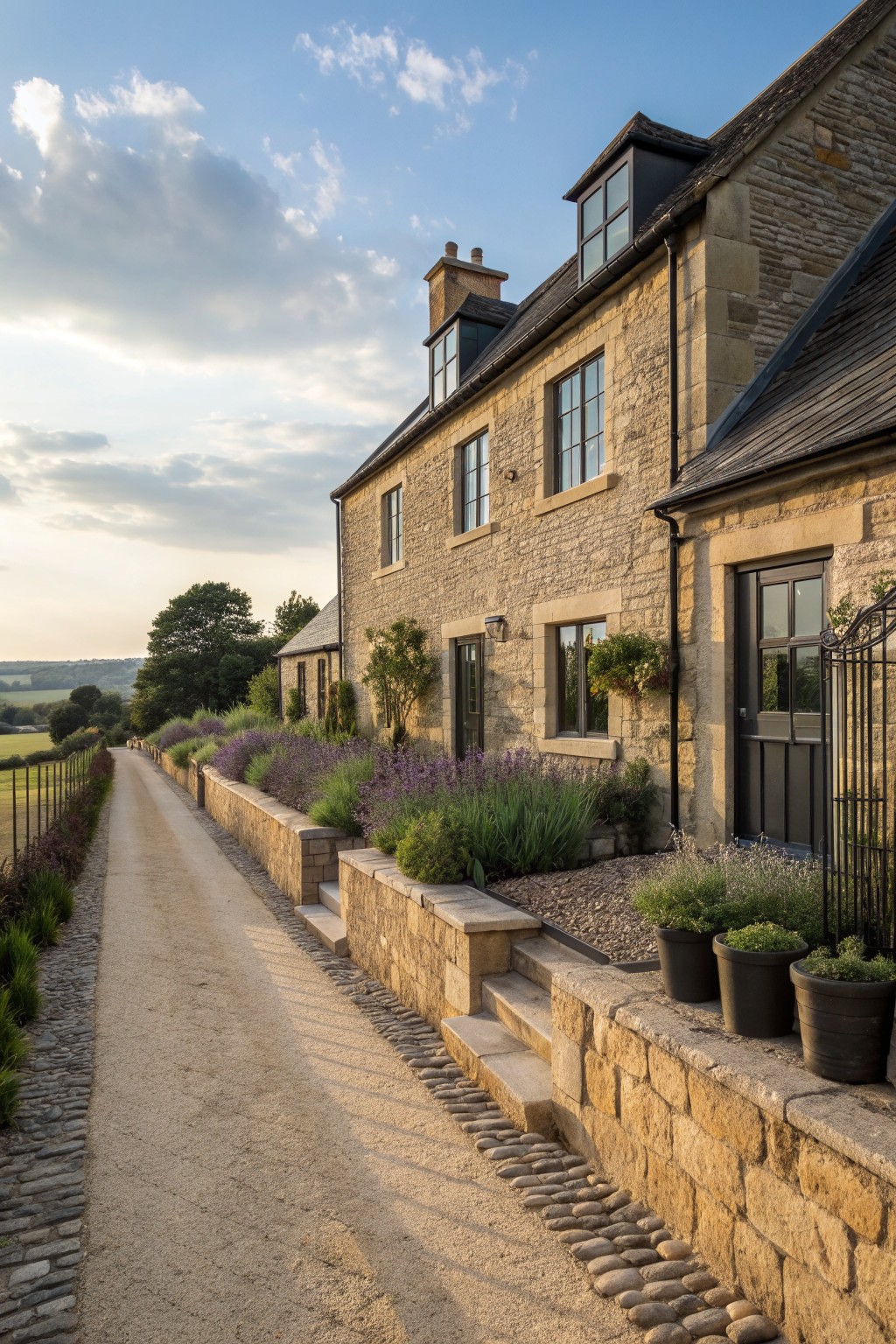
Stone farmhouses often need a little help standing out against the landscape. Dark trim around the windows and doors gives the facade clear lines without overpowering the natural texture of the stone.
This works best on lighter or mid-tone stone where the contrast can do its job. Match the trim color on the windows and main door, and keep the rest of the detailing simple so the dark frames stay the main focal point.
Dark Trim Defines a Light Farmhouse Facade
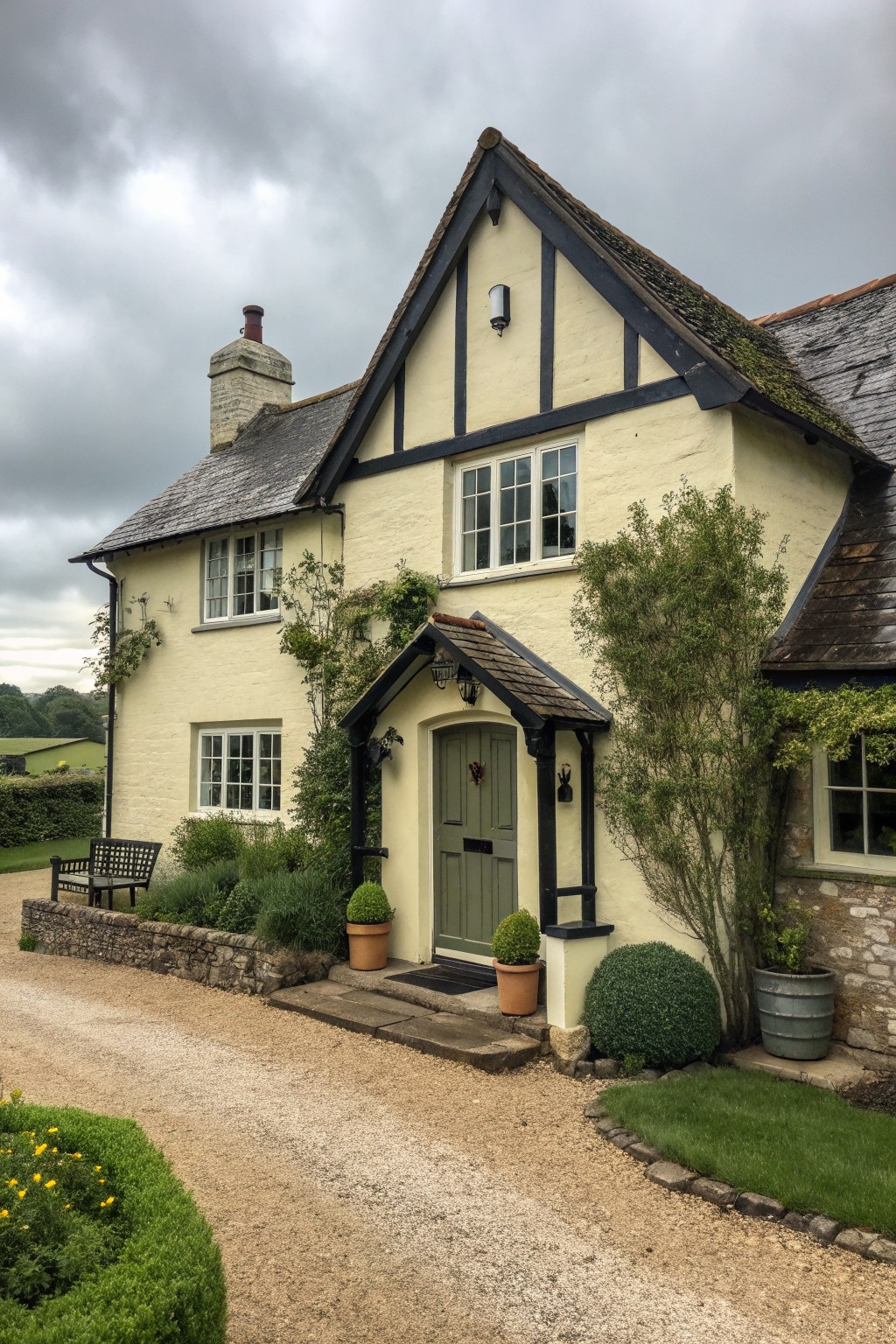
Many European farmhouses rely on dark trim to give the exterior clear lines. The black beams and window frames stand out against the pale walls, so the roof angles and openings read as intentional rather than flat.
This works especially well on homes with simple plaster or stucco finishes. Keep the trim color consistent on the gables, window surrounds, and entry canopy, and the whole front gains structure without needing extra ornament.
Dark Trim Highlighting Openings on Stone Farmhouses
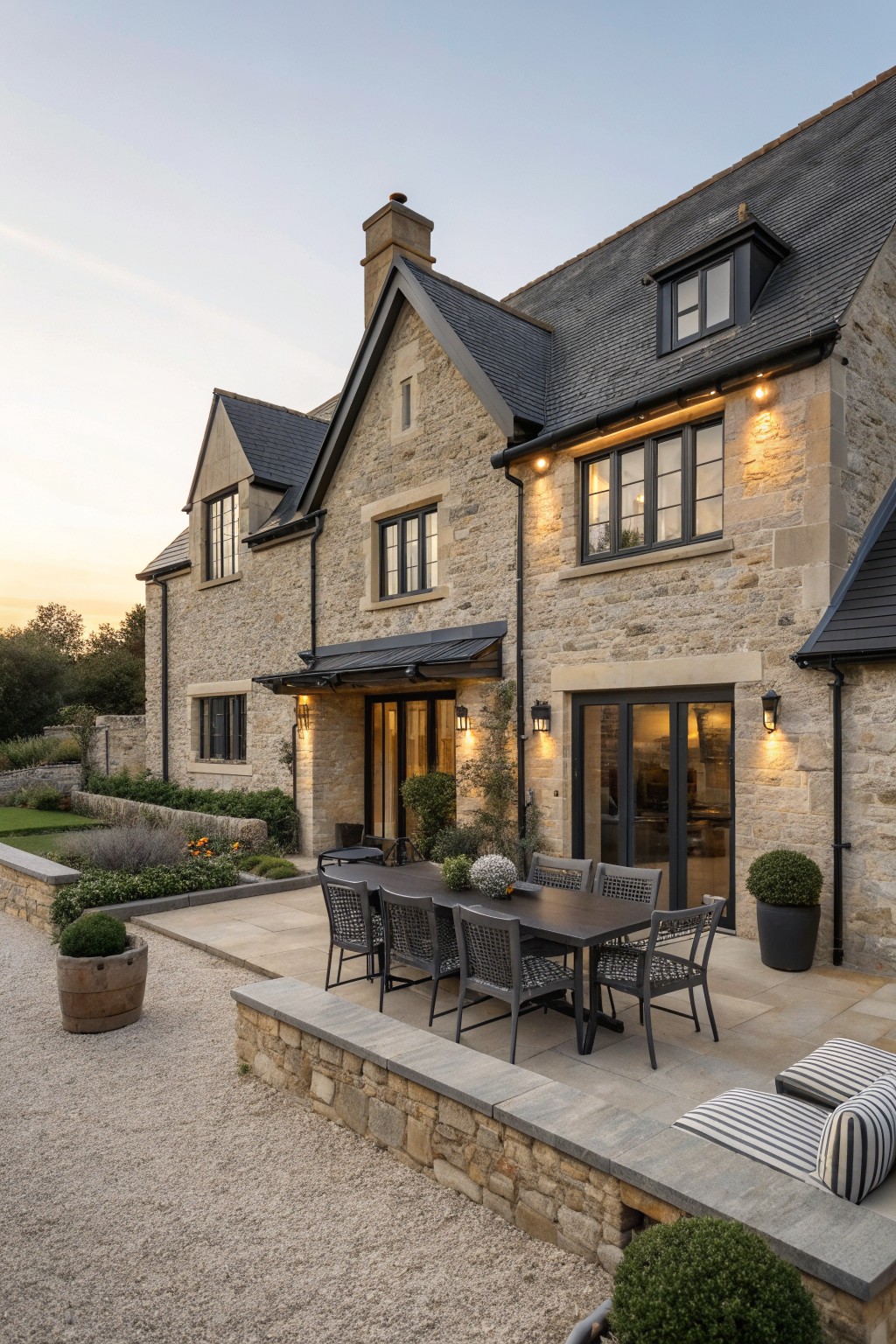
Dark trim works especially well on stone farmhouses because it outlines every opening without competing with the texture of the walls. The black frames on the windows and doors create clear lines that make the whole shape of the house read more sharply from a distance.
This approach suits homes with simple rooflines and larger window openings. It keeps the stone as the main material while giving the facade structure, and it tends to look best when the trim color stays consistent across windows, doors, and any metal accents like gutters or awnings.
Dark Trim Around Doors And Windows
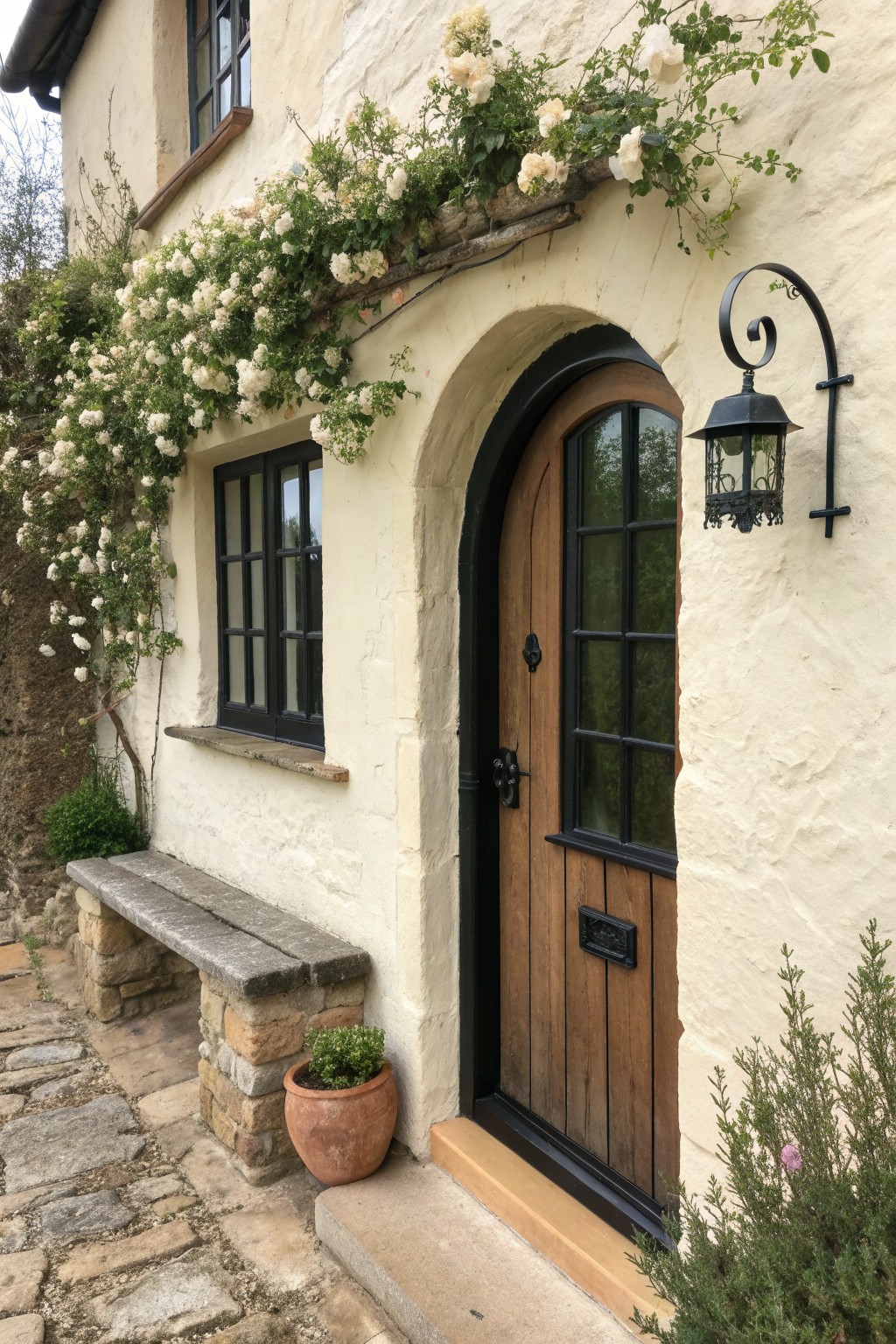
Dark trim gives a light stucco exterior a clear sense of structure. On this kind of farmhouse the black frame around the arched door and the matching window trim stand out against the pale walls and keep the front from looking flat.
This works best on simple European farmhouses where the walls are light and the roofline is fairly plain. Use the same dark finish on the door frame, window edges, and any wall-mounted fixtures so the contrast feels intentional rather than scattered.
Dark Trim Defines Light Stone Walls
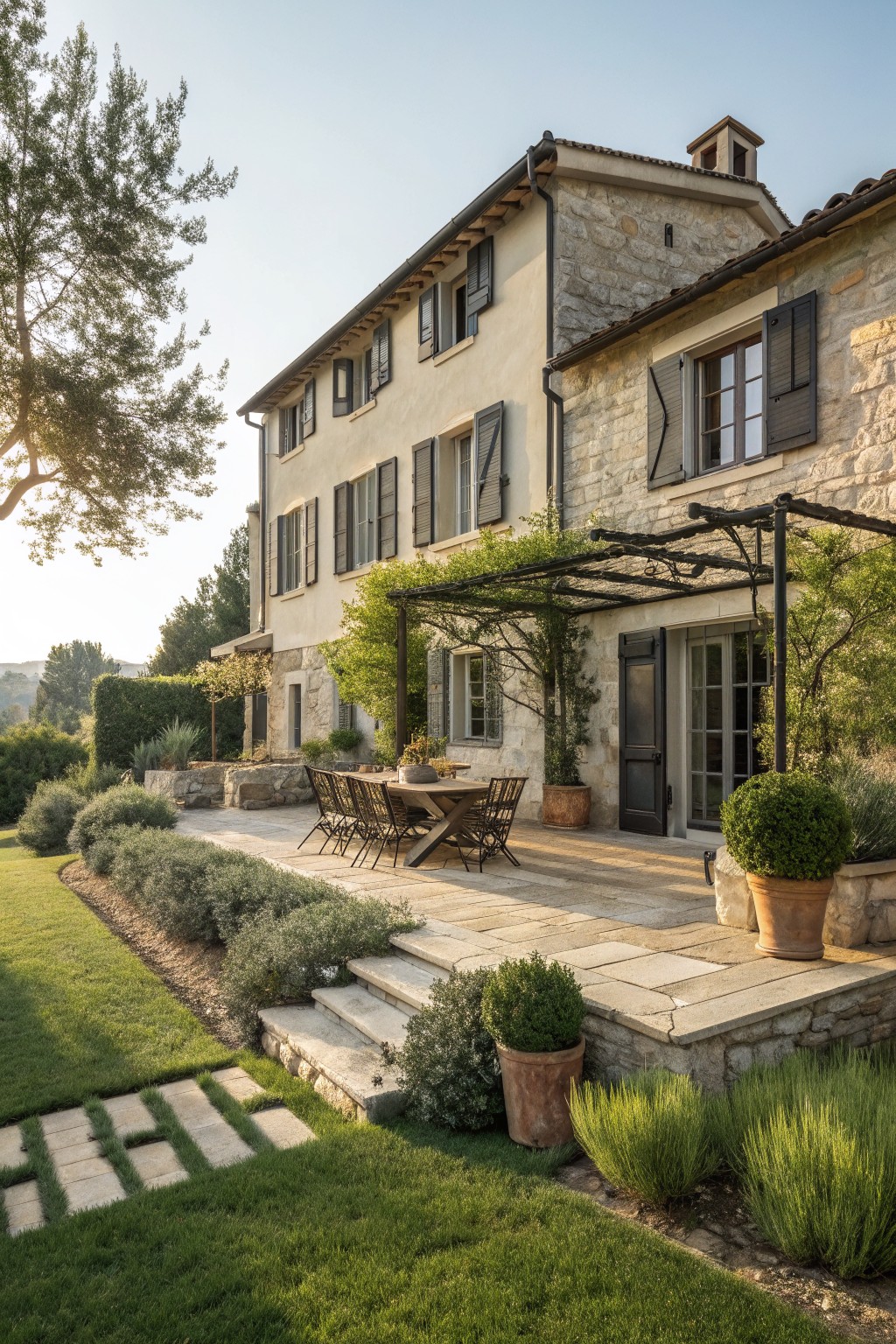
Many older farmhouses rely on dark trim to give the exterior clear lines and shape. The contrast against pale stucco and stone makes windows and doors stand out without adding extra ornament.
This works best on homes with simple proportions and plenty of wall surface. Use a deep charcoal or black on the shutters and door frames, and keep the rest of the trim minimal so the contrast stays strong.
Dark Trim Defines White Farmhouse Exteriors
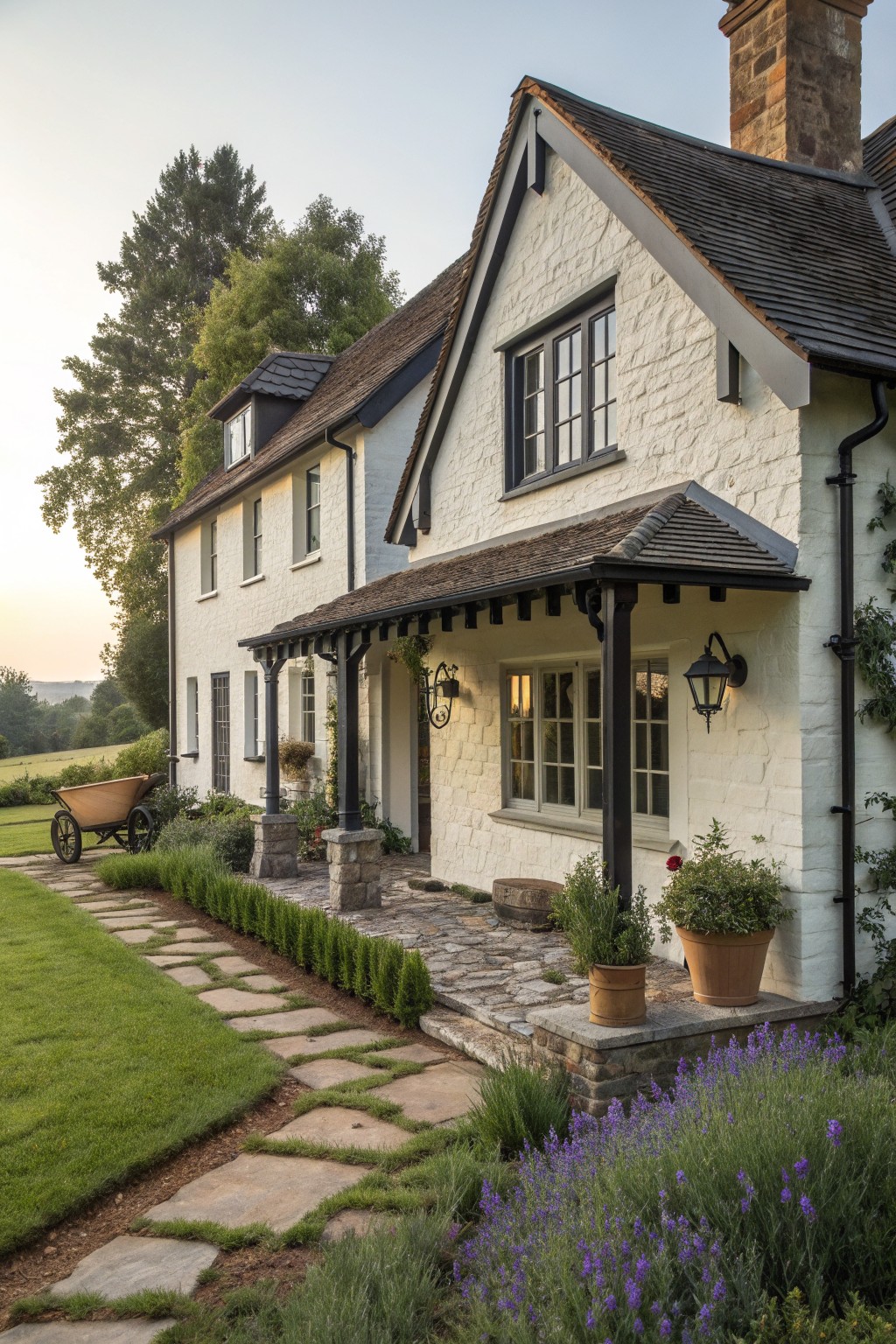
Dark trim works especially well on light stone or stucco walls because it gives the house clear lines without adding extra decoration. The contrast makes windows, posts, and roof edges stand out so the shape of the building reads more cleanly from the road.
This approach suits older farmhouses or new builds that want a traditional European feel. Keep the trim color consistent on every opening and overhang, and make sure it is a true dark shade rather than a soft gray so the definition stays strong even in low light.
Dark Trim Framing Shutters on Light Stucco
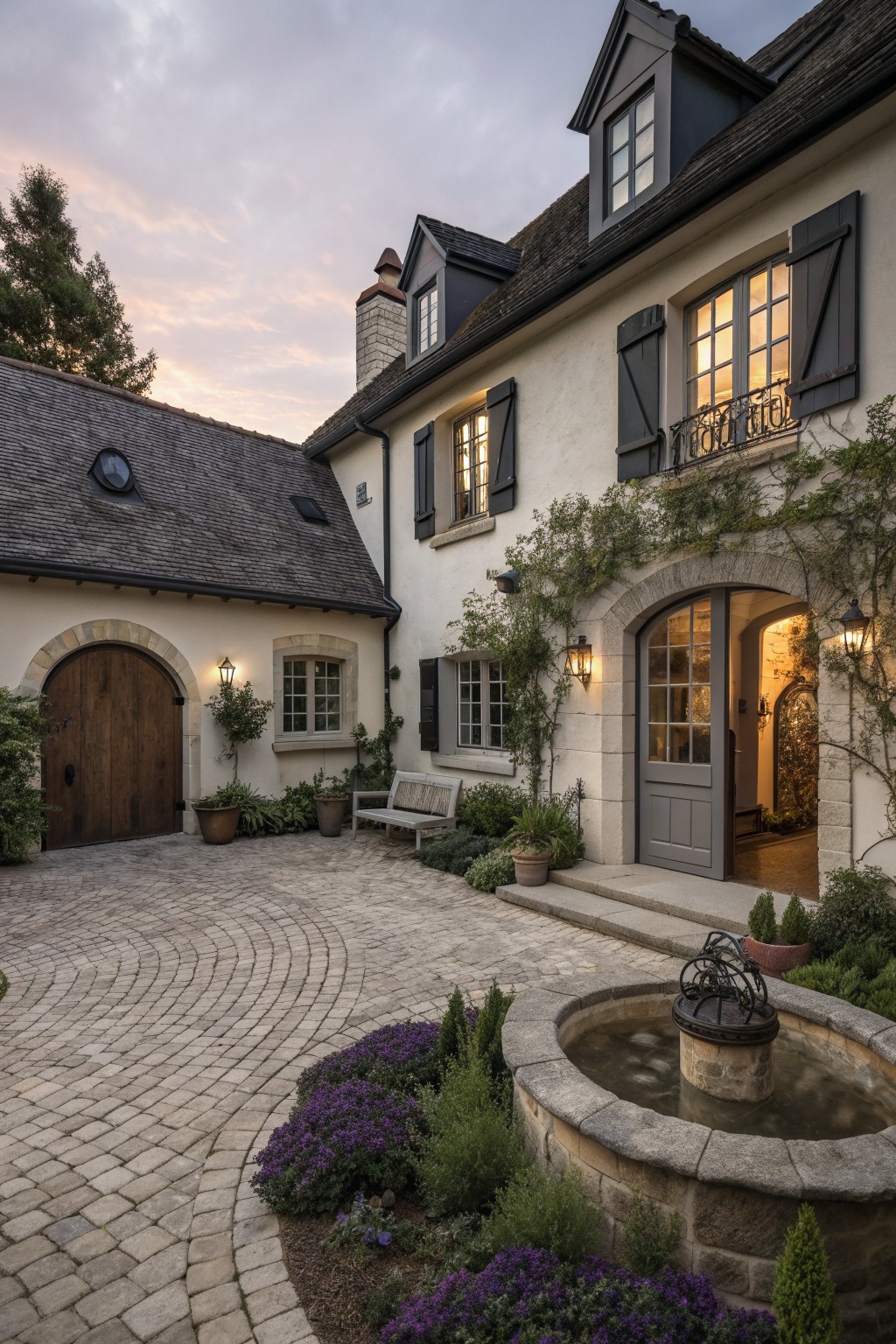
Dark trim works well on a light stucco exterior because it gives the windows and doors a clear outline without adding extra decoration. In this case the black shutters and frames stand out against the pale walls and make the house feel more structured and finished.
This approach suits European farmhouse styles that already have simple rooflines and varied window sizes. Keep the trim color consistent across all openings and match it to the roof or door hardware so the contrast stays intentional rather than scattered.
Dark Trim Unifying Windows, Eaves, and Gutters
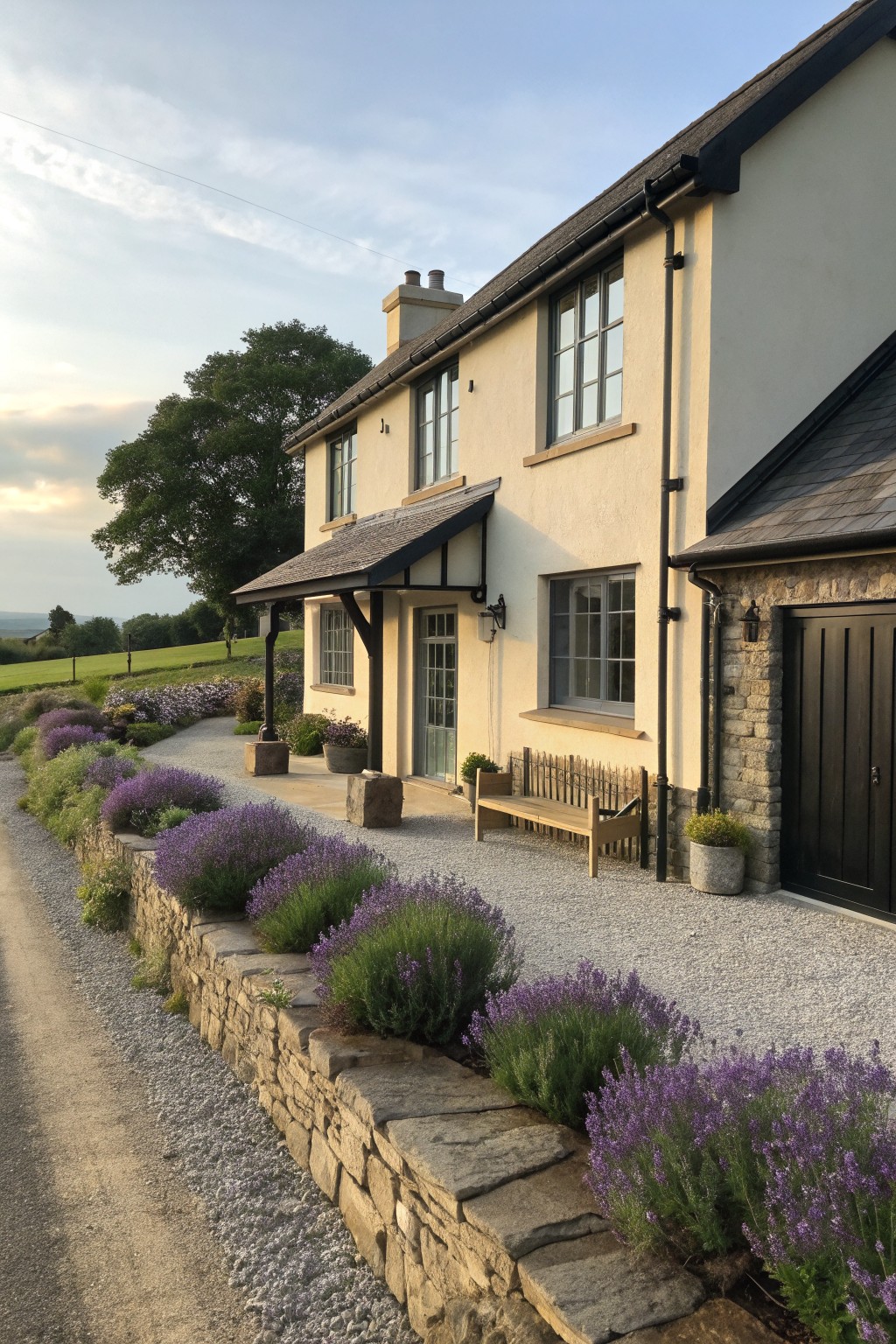
Many European farmhouses rely on dark trim to give the whole exterior a clear shape. The contrast against light walls makes windows, eaves, and rooflines read as intentional rather than just painted on.
This approach suits homes with simple stucco or mixed stone. Keep the trim color the same on windows, doors, and gutters so the lines stay consistent and the house does not feel busy.
Dark Trim Defines Window Openings
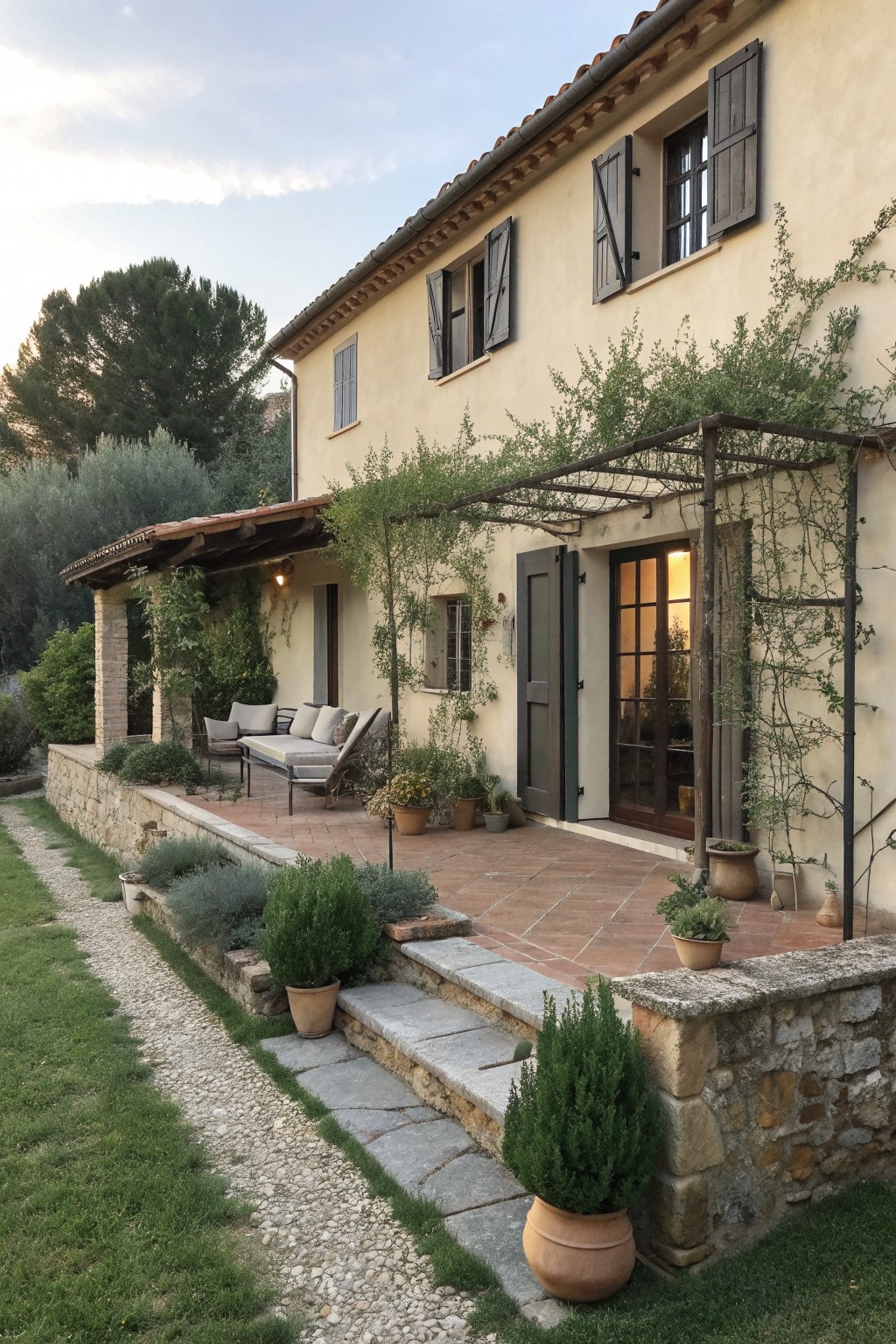
Many older farmhouses look softer when the walls stay light and the trim around windows and doors turns dark. The contrast makes each opening read as a clear shape instead of blending into the wall.
This works best on simple stucco or plaster homes where you want the architecture to feel crisp without adding moldings or extra details. Match the color on shutters, door frames, and window surrounds so the effect stays consistent from one side of the house to the other.
Dark Trim Defines Stone Farmhouse Lines
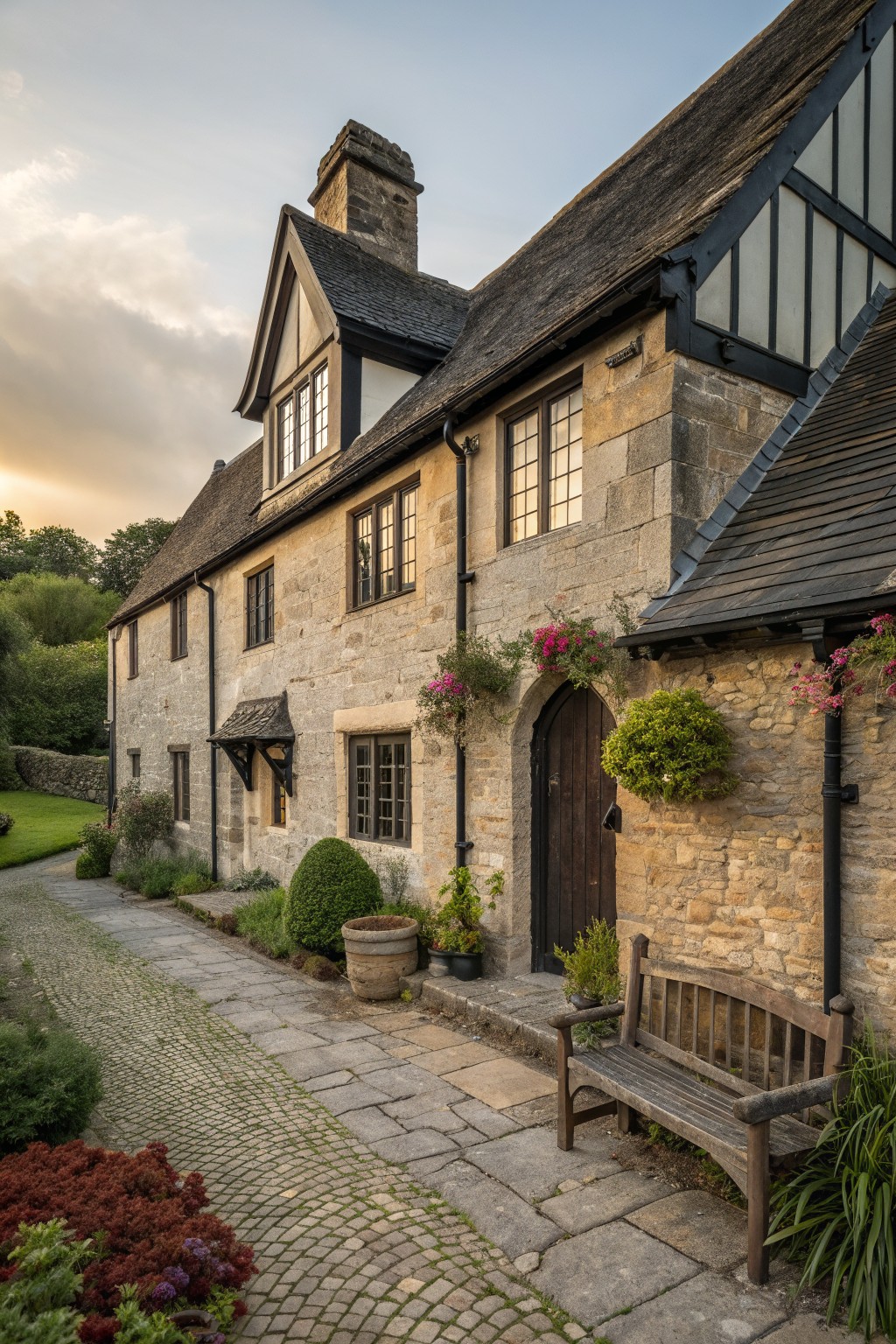
Dark trim stands out on stone farmhouses because it gives the windows, doors, and roof edges a clear outline against the heavy masonry. The contrast keeps the house from looking like one solid block and makes the shape easier to read from the road.
This works best on older stone homes where the walls already have texture. Use the dark color on window frames and gable ends first, then add it to the door surround if the look still feels balanced.
Frequently Asked Questions
Q: How do I pick dark trim that suits an older European style home?
A: Look at the existing siding tones first and test a few deep shades like charcoal or forest green right on the wall. The goal is contrast that sharpens the lines without swallowing the whole exterior. Walk around the house at different hours to see how light hits it.
Q: Does dark trim need special prep on wood siding?
A: Scrape away loose paint and apply a solid primer before the dark coat goes on. This step keeps the color from soaking unevenly into older wood. One good base layer makes the finish last longer in wet seasons.
Q: What happens if the dark color fades over time in sunny spots?
A: It softens into a slightly lighter tone but still keeps the definition you want. Repaint just the faded sections every few years instead of the whole trim. That approach avoids a patchy look and saves time.
