

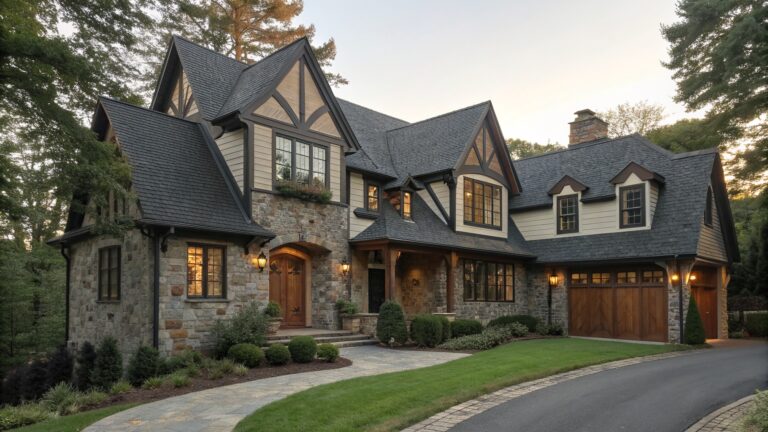
When I drive past older homes with mixed brick and timber details, the way the roof pitches catch the light always stands out first.
People tend to overlook how the placement of windows and doors affects the balance from the curb, yet that choice often decides whether the whole look holds together.
The right materials make a difference.
I have found that adding a simple stone base or adjusting the overhang can change how solid a farmhouse feels without needing major changes.
Testing a few of these proportions on paper first helps me see which ones might actually work on my own place.
Mixing Stone And Half-Timbering
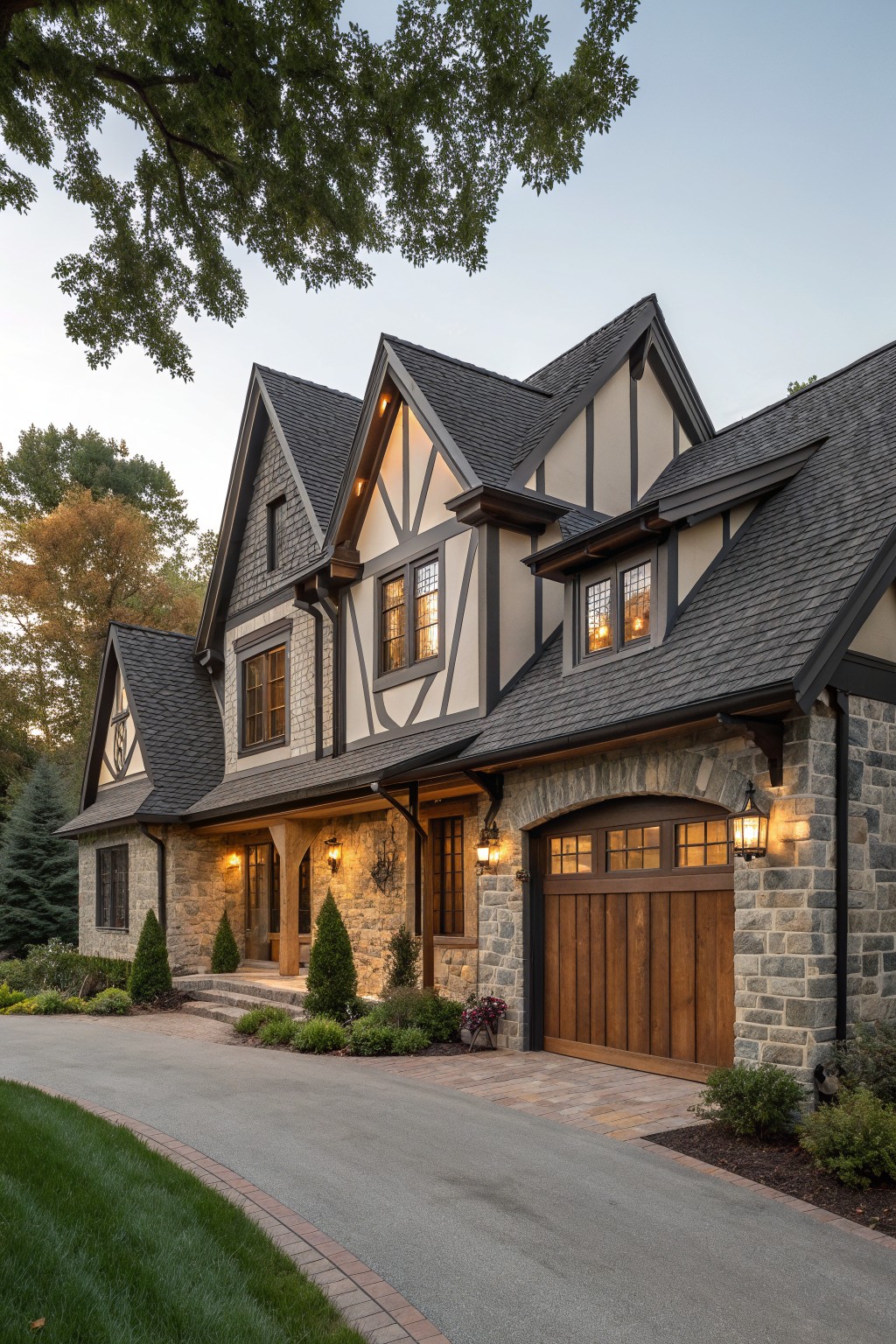
Half-timbering gives a house that clear European look without needing complicated trim or extra layers. The dark wood lines stand out against the lighter stucco and give the whole front a structured feel that still reads as farmhouse.
This works best on homes where the stone stays on the lower part of the walls and the timber stays above it. Keep the wood color dark and simple so the pattern stays bold instead of busy.
Anchor Tudor Style With A Stone Base
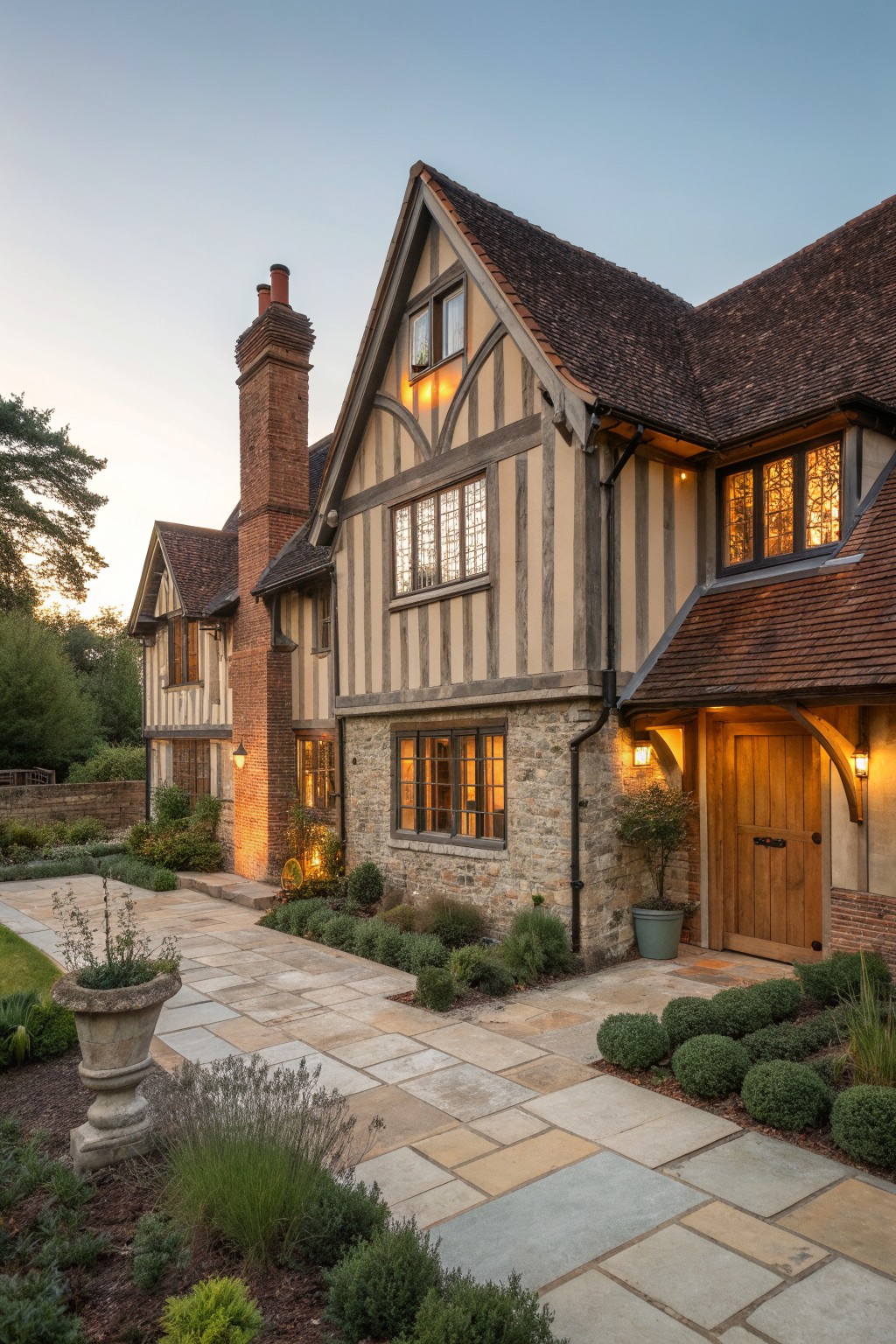
Stone at the base of a house gives the whole structure a settled look that works especially well with Tudor details. The weight of the material keeps the lighter half-timbering above from feeling too delicate, and it helps the house sit comfortably in its setting.
This approach suits older homes or new builds that aim for European farmhouse character. Keep the stone rough and the timber dark so the contrast stays clear, and make sure the stone runs at least to the height of the first-floor windows.
Arched Entries for Tudor Farmhouse Exteriors
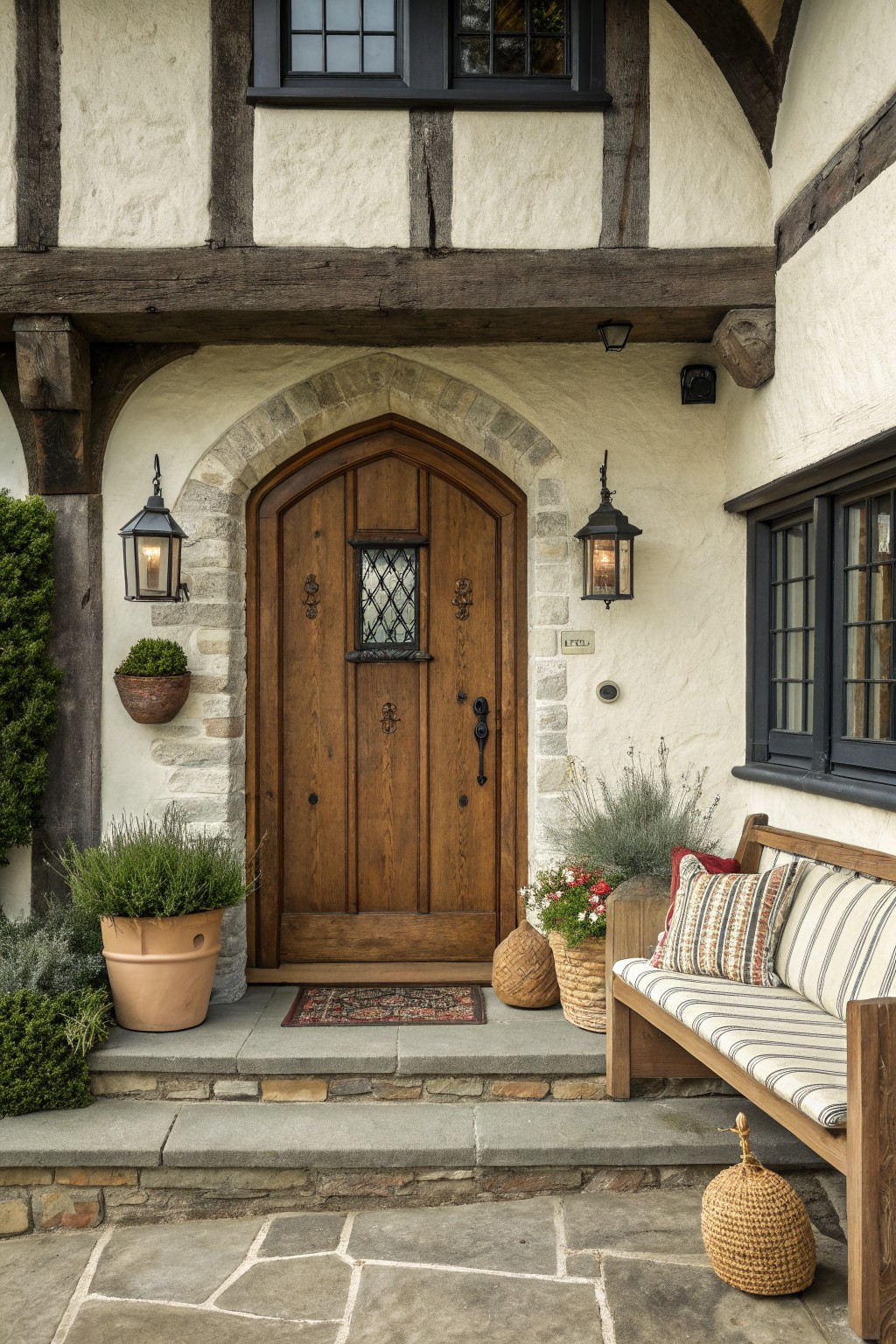
An arched stone doorway around a solid wood door gives a Tudor farmhouse a clear focal point without making the entrance feel stiff. The curve softens the heavy timber framing above it and helps the whole front feel more balanced.
This works well on homes that already have stucco and dark wood details. Keep the arch simple, add a pair of lanterns on either side, and let the door itself carry most of the character so the entry stays welcoming rather than formal.
Stone Towers in Tudor Farmhouse Designs
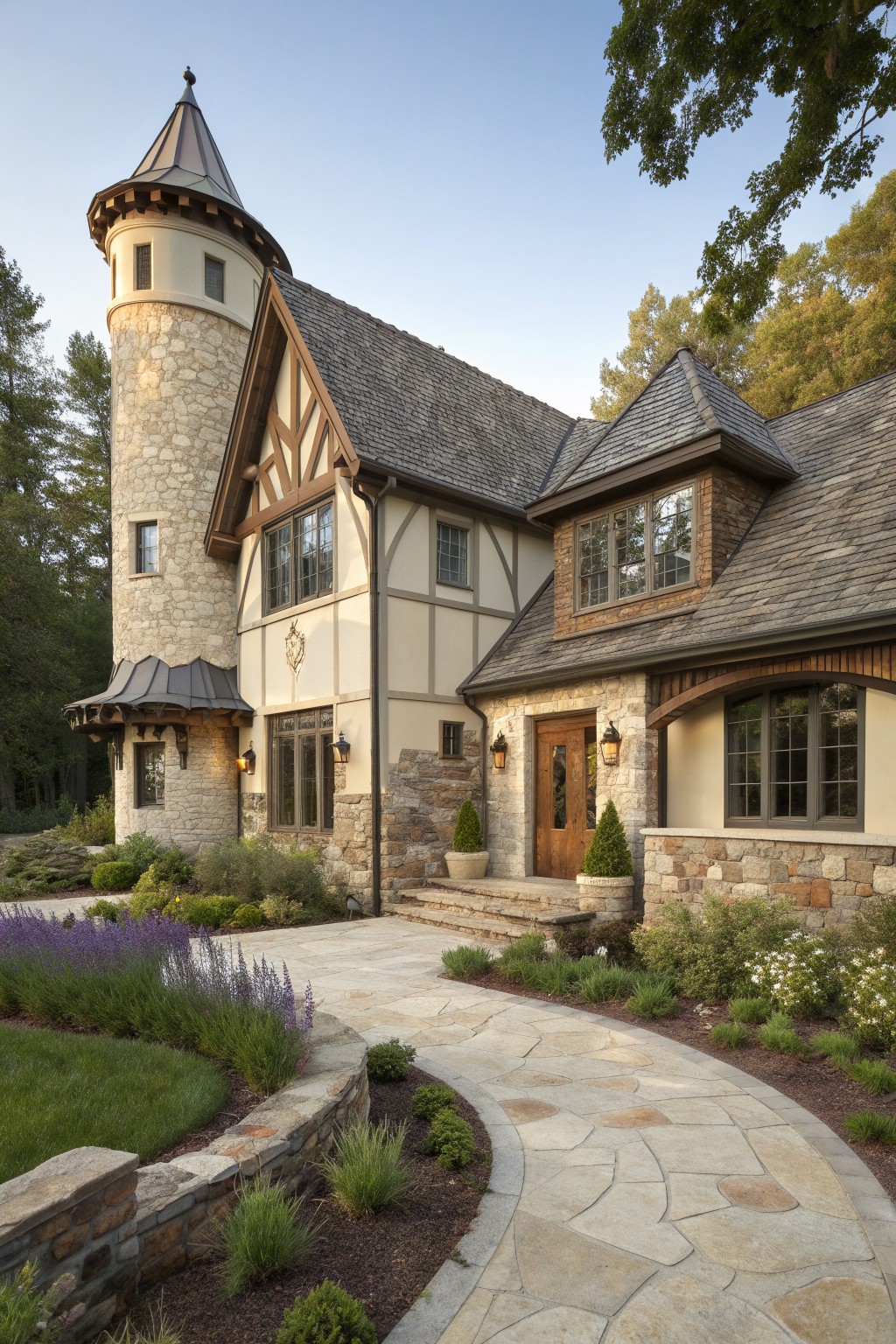
A round stone tower gives a Tudor farmhouse real presence without needing extra ornament. It pulls the eye upward and breaks the roofline in a way that feels natural rather than forced. The mix of rough stone against the lighter stucco and timber framing keeps the whole front from looking flat.
This works best on homes with enough width to let the tower stand out rather than crowd the rest of the facade. Keep the tower height modest so it does not overwhelm the main roof, and match the stone to any other masonry on the house so the look stays cohesive.
Frame the Entry with Climbing Roses
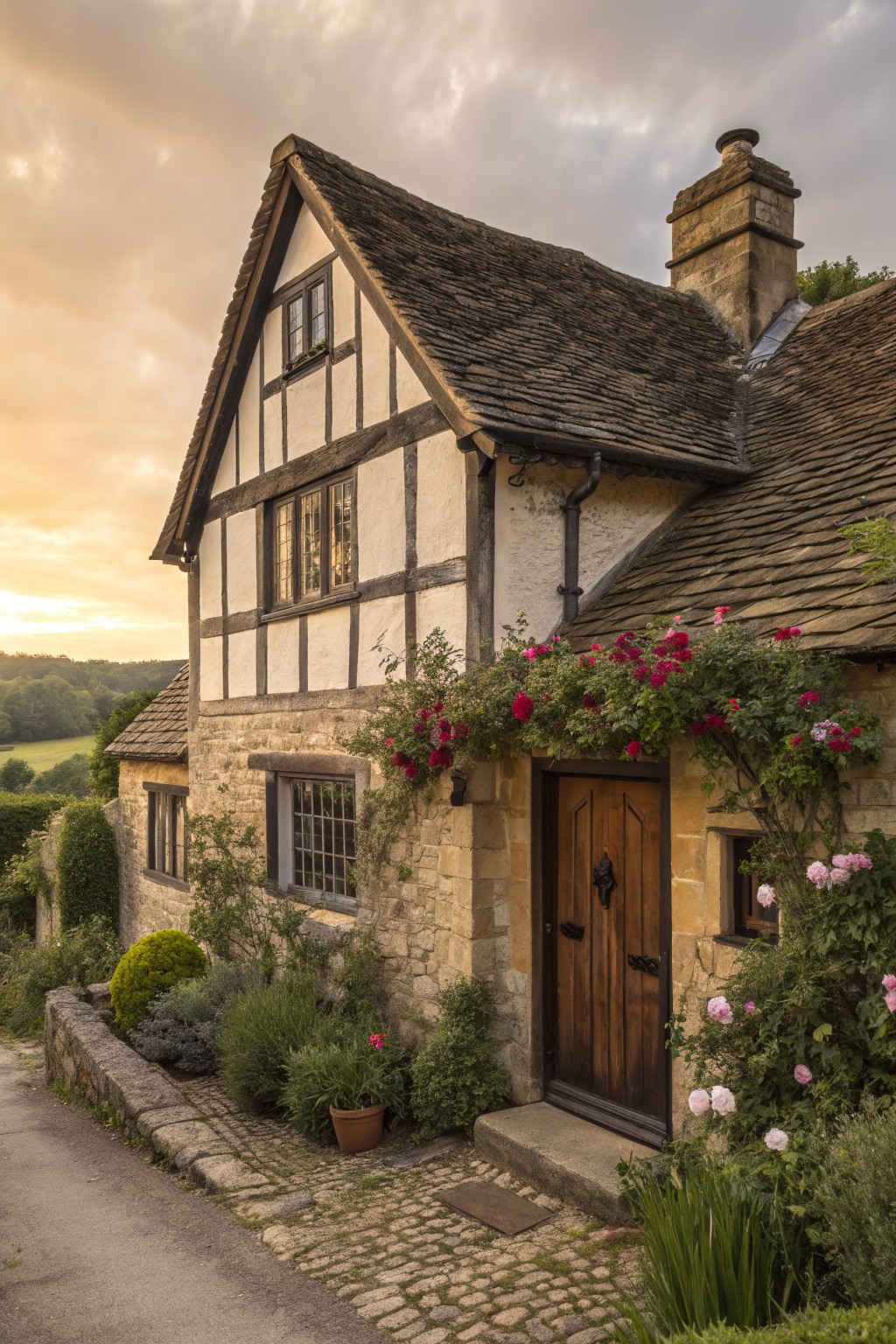
Climbing roses around a front door give a Tudor farmhouse that lived-in European look without needing big changes to the structure. The flowers soften the heavy stone and dark timber while adding color that shifts with the seasons.
This works best on homes with a simple door set into stone, where the plants can climb naturally along the wall. Choose varieties that stay manageable and plant them in beds right at the base so they reach the doorway without much extra support.
An Arched Brick Entry Highlights the Front Door
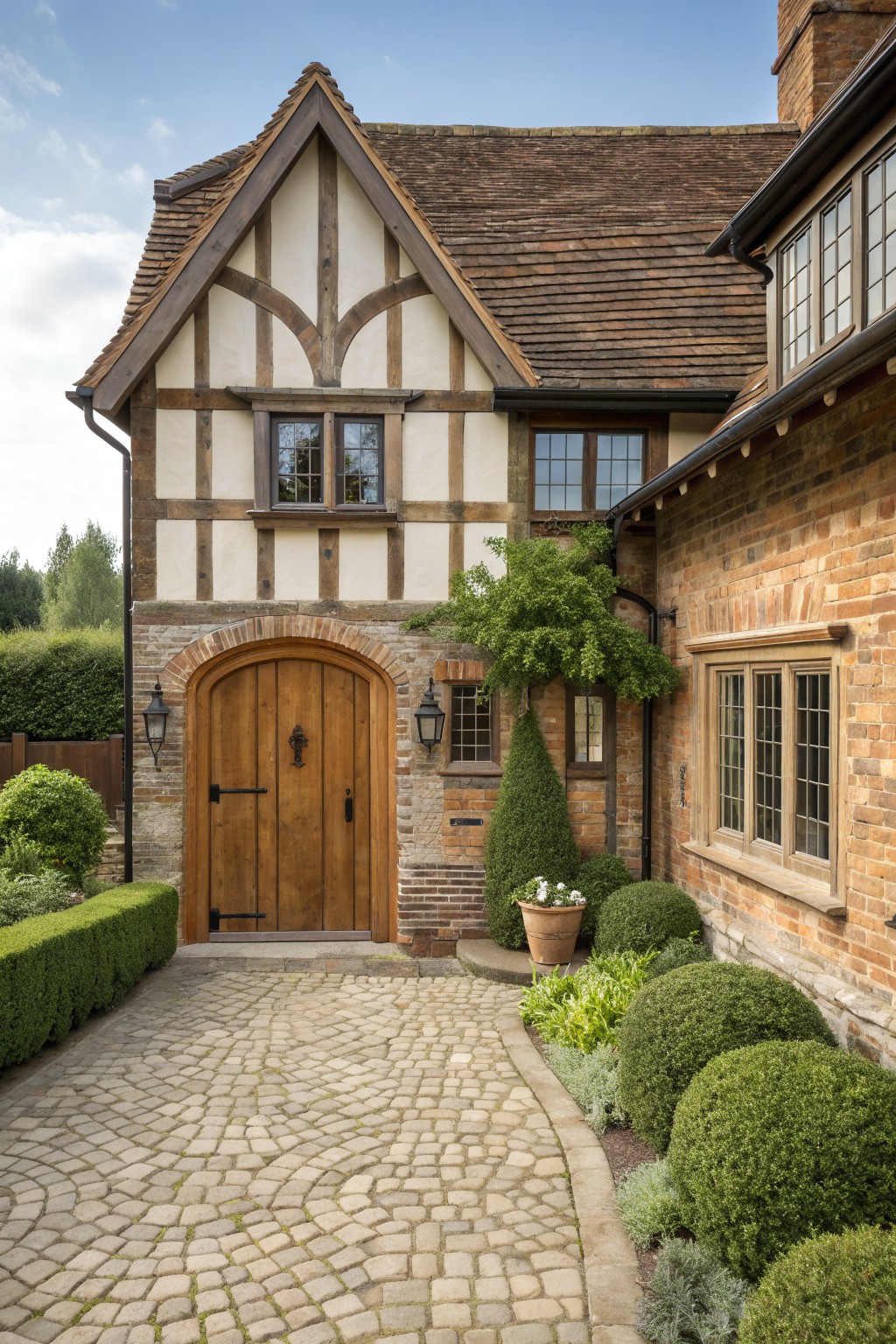
An arched brick surround around a plain wooden door gives the front of the house a clear focal point. The shape adds weight and structure without needing extra trim or decoration, and it works especially well when the rest of the facade already uses brick and timber.
This move suits Tudor or farmhouse exteriors that need a stronger entry without changing the whole roofline. Match the brick to the chimney or base walls so the arch feels built in rather than added on, and keep the door itself simple so the arch does the work.
Highlight the Entry with a Steep Central Gable
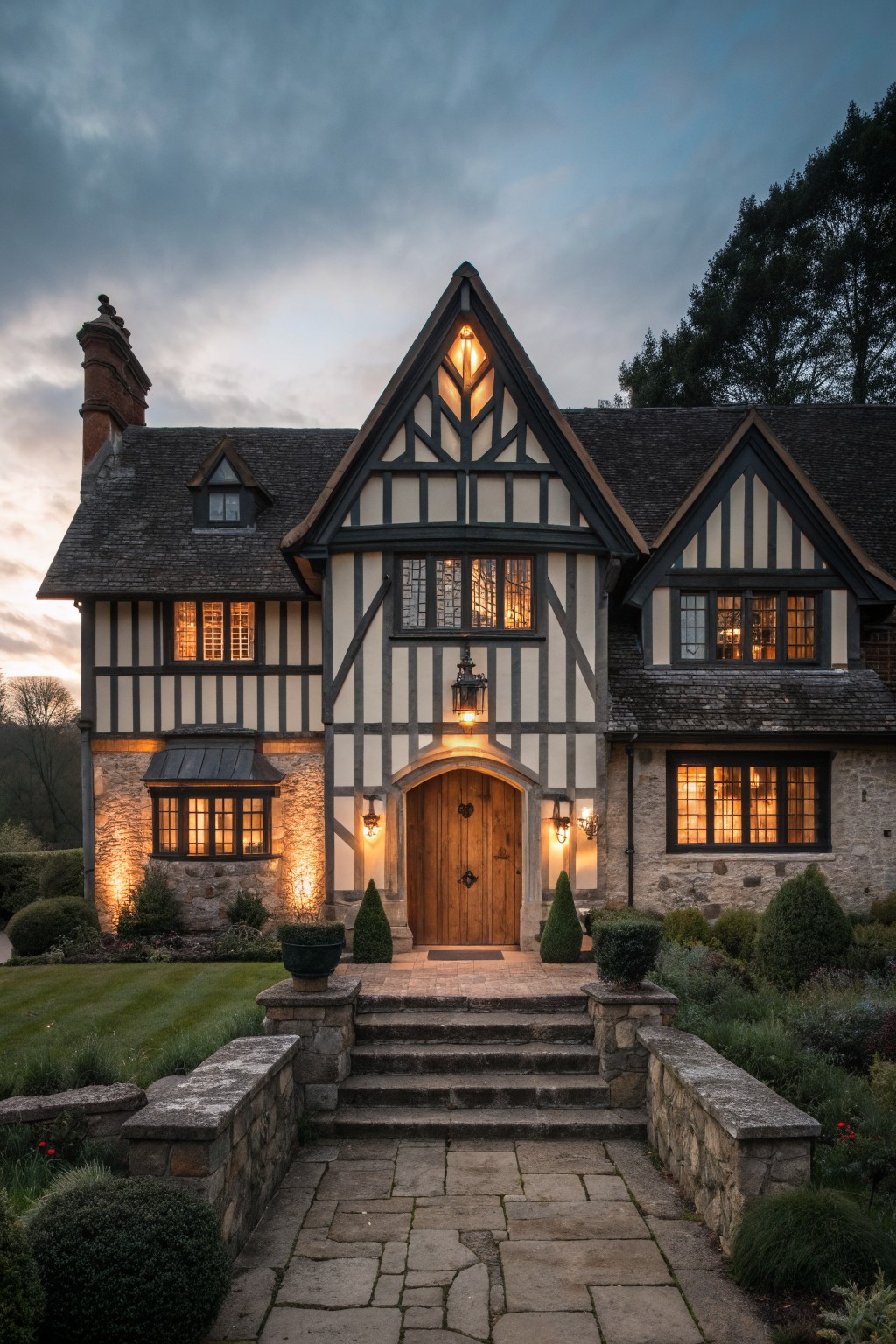
A steep gable right over the front door gives a Tudor farmhouse that strong, balanced look many people want. It pulls the whole facade together and makes the entrance feel like the main feature instead of just another part of the wall.
This approach works best on homes that already have a stone base and timber framing. Keep the door in natural wood and add simple lights on either side so the gable stays visible after dark without extra decoration.
Outdoor Dining Right Off The House
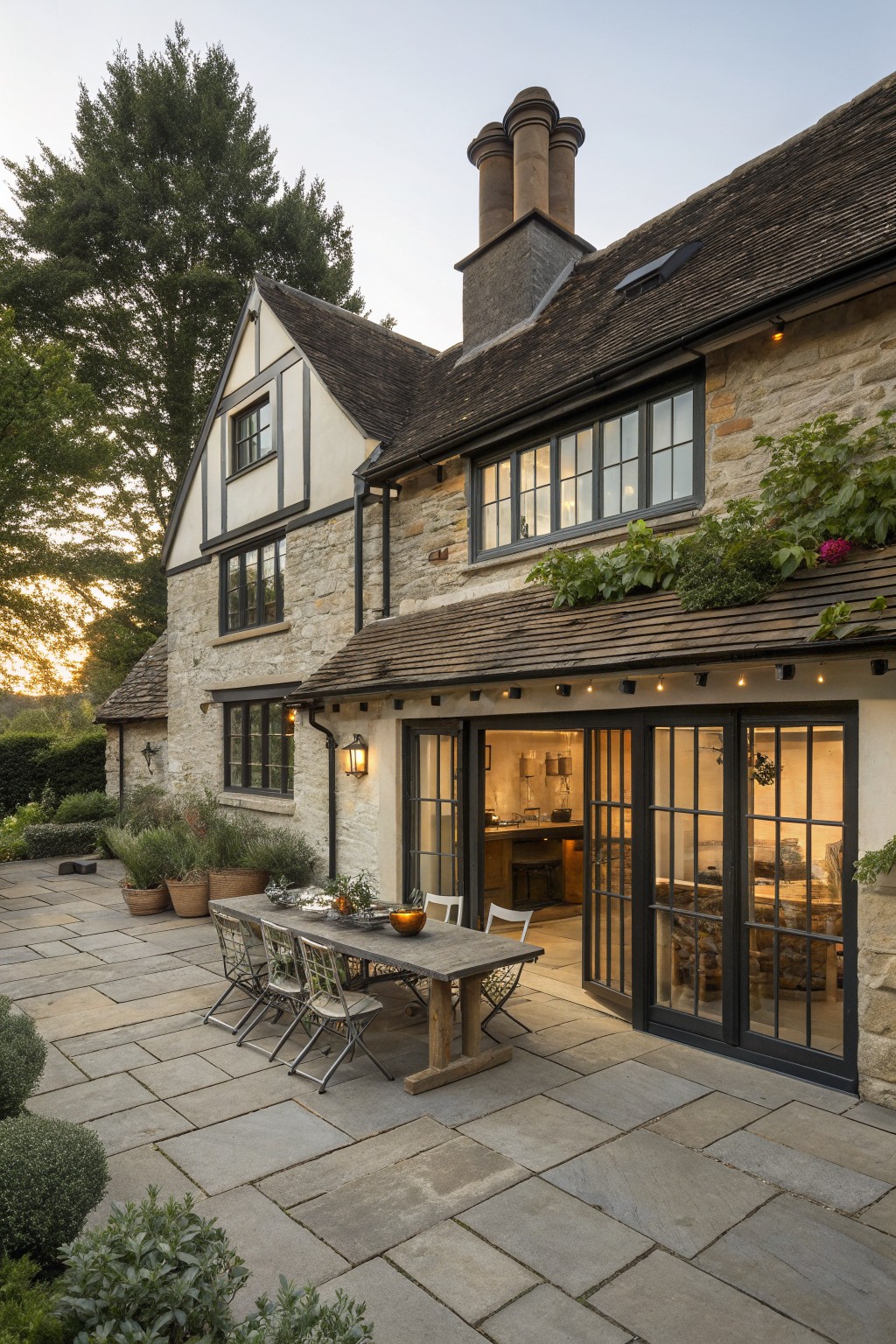
A stone patio with one long table works well when it sits directly beside the house. The open doors make it easy to carry food out and keep the space connected to the kitchen without extra steps.
This setup suits Tudor farmhouses that already have solid walls and a level area nearby. Use simple chairs that can stay out year round and avoid crowding the table with too many extras so the space stays practical for regular meals.
Stone Grounds the Timber Frame
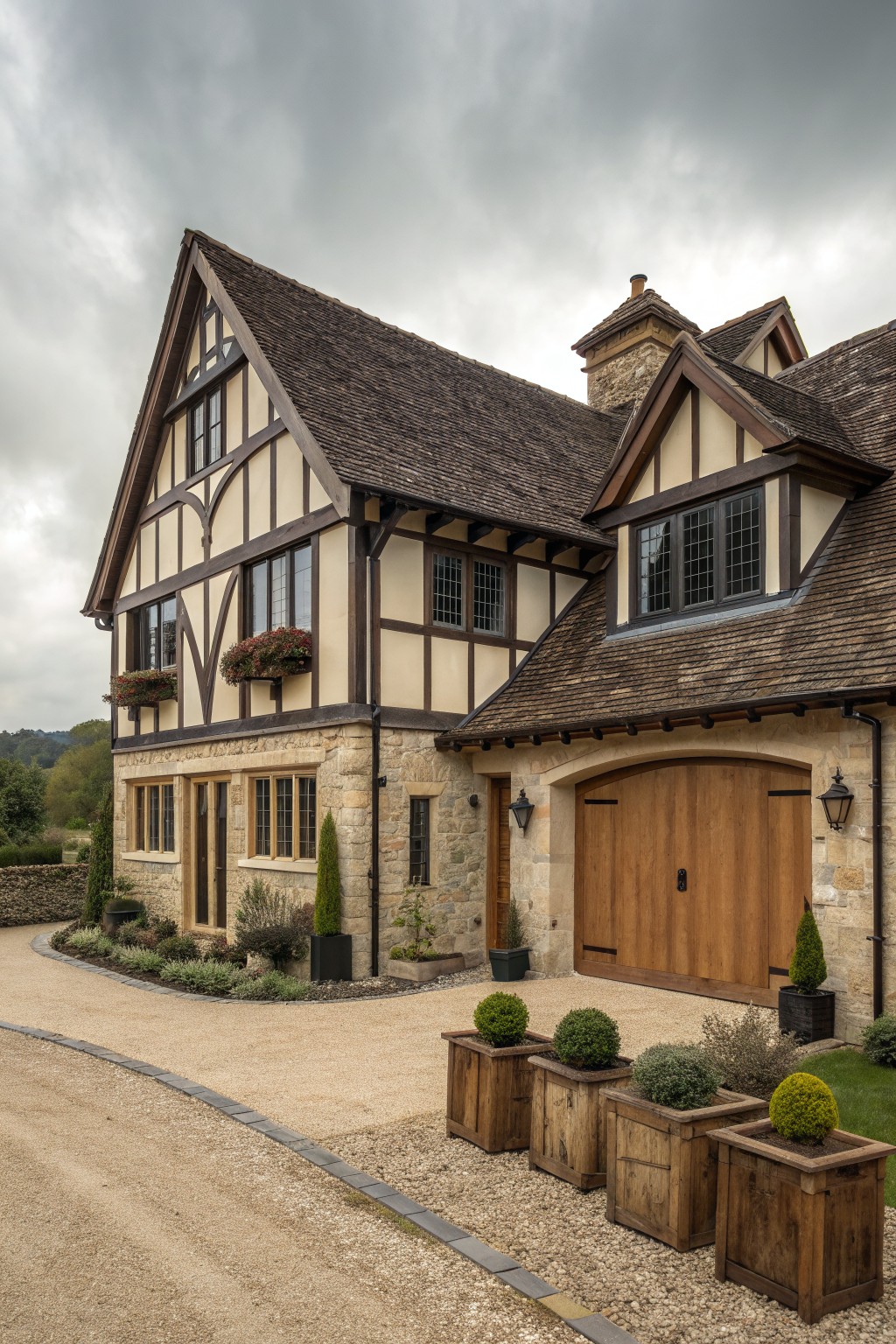
Mixing a stone base with half-timbered walls above gives the house real weight without feeling heavy. The stone handles the lower section where the building meets the ground, while the lighter stucco and dark beams keep the upper levels from looking too bulky.
This approach works best on larger homes that need some visual balance. Keep the stone in a warm, natural tone and let the timber pattern stay fairly simple so the two materials support each other instead of competing.
Stone And Half-Timbering On The Facade
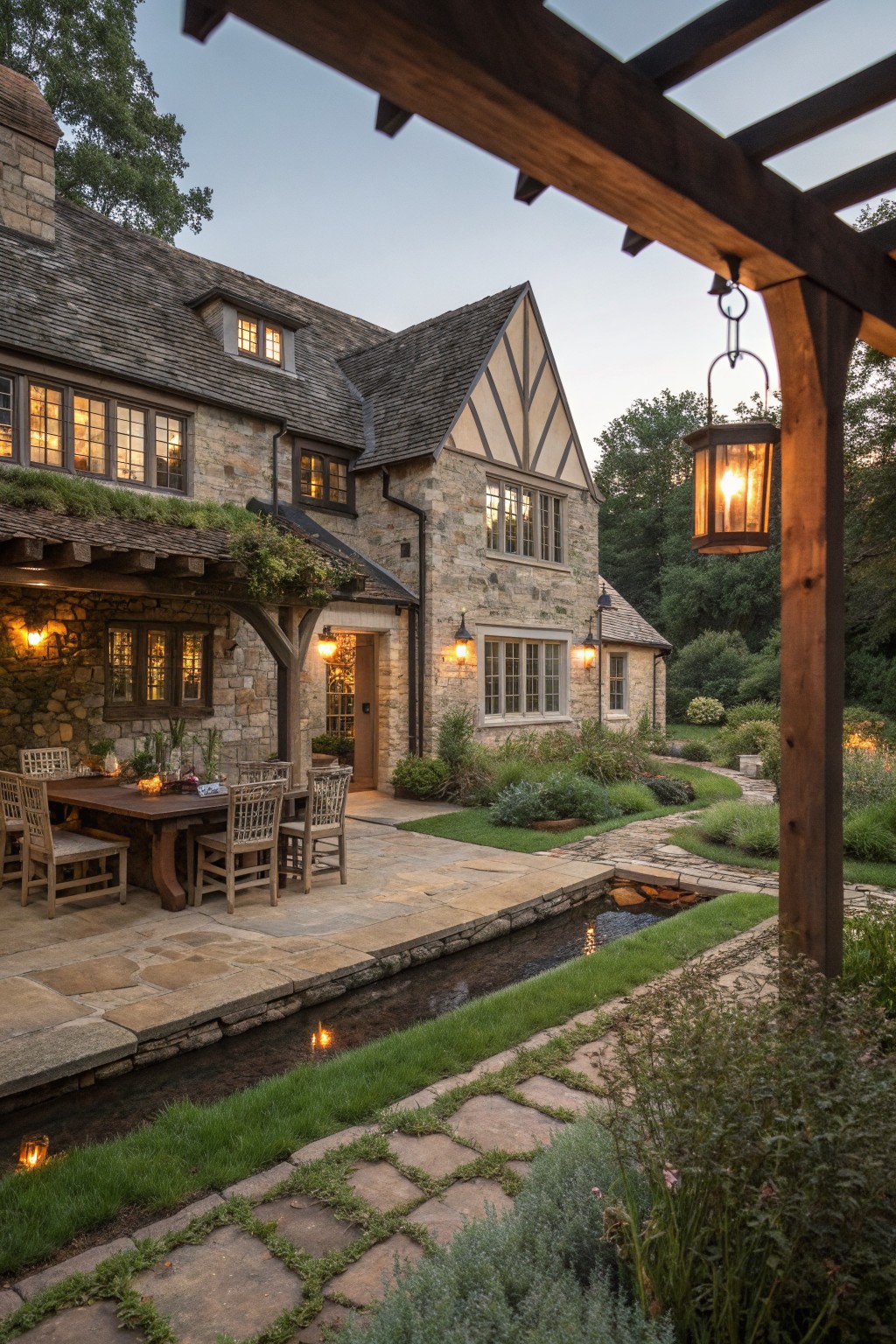
The mix of rough stone walls and dark half-timbering on the gables gives the house its clear Tudor farmhouse look. The contrast keeps the facade from feeling flat while the stone adds weight that suits the steep rooflines.
This works best on homes that already have strong roof shapes or sit in wooded settings. Stick to natural stone tones and keep the timber dark so the pattern reads from a distance.
Tudor Framing Details On Farmhouse Exteriors
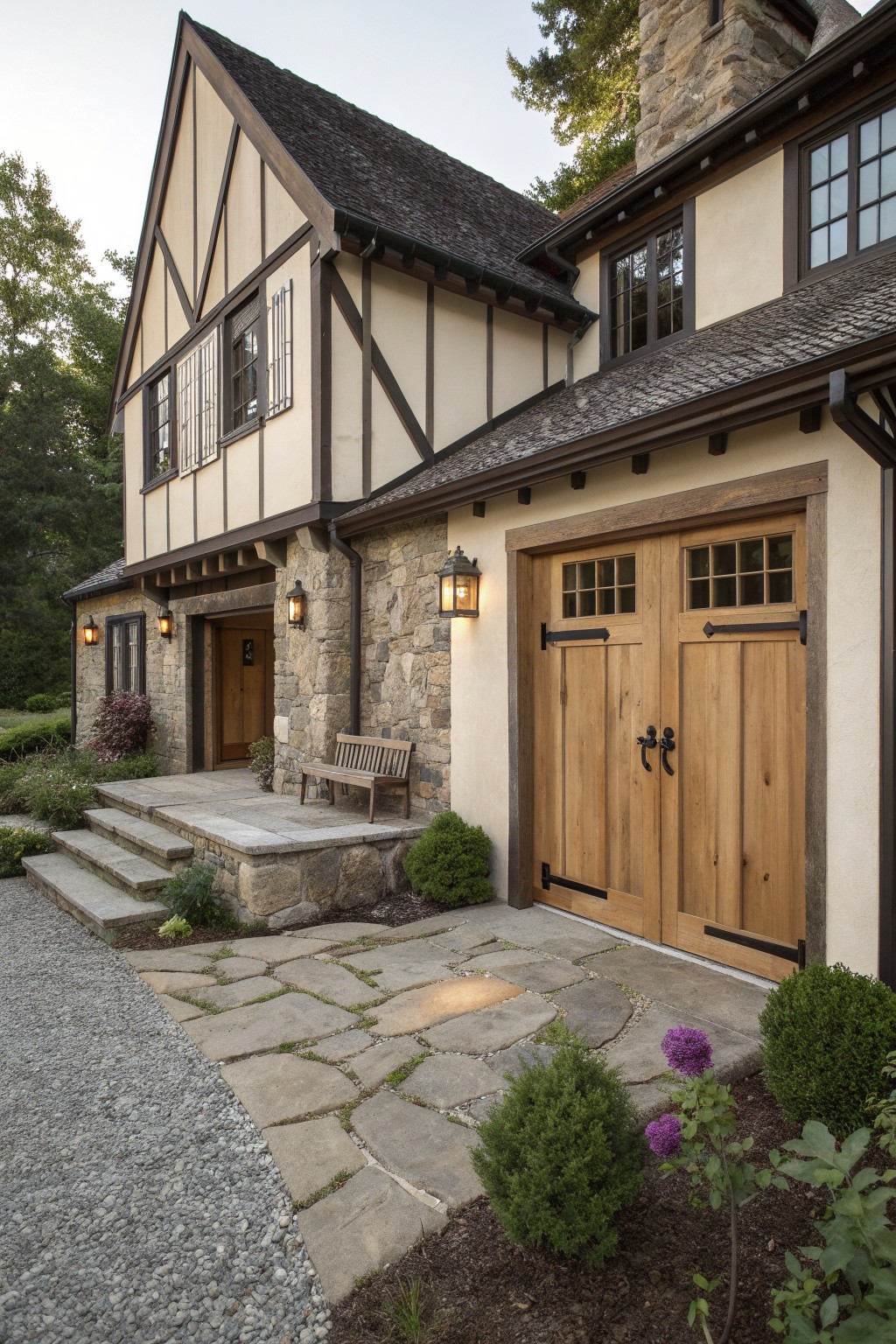
Half timbering adds a lot of character to a farmhouse without making it feel too formal. The dark beams against lighter walls create contrast that feels classic rather than fussy, and it pairs naturally with stone sections at the base.
This works best on homes that already have some roof pitch and gable ends to work with. Keep the beams simple and let them highlight just one or two main areas, like the upper story or entry gable, rather than covering every wall.
Stone And Timber Give A House Real Tudor Weight
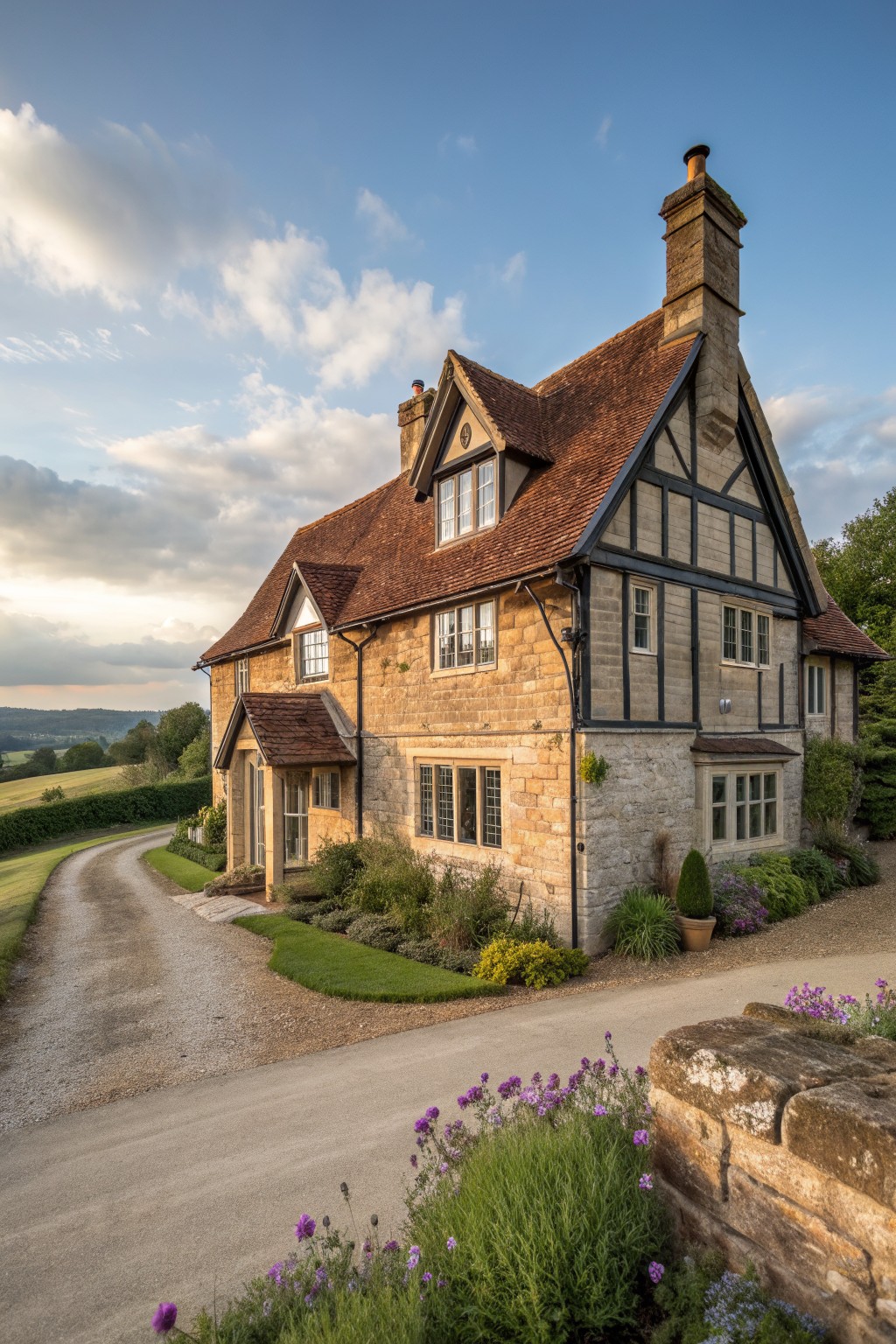
The mix of rough stone on the lower walls and dark timber framing higher up creates a clear, grounded look. It keeps the house from feeling too light or too heavy and gives it that settled European farmhouse feel.
This works best on homes with steep roofs and in areas where stone is easy to source. Keep the timber sections balanced so they sit above the stone rather than competing with it.
Adding A Fountain To The Courtyard
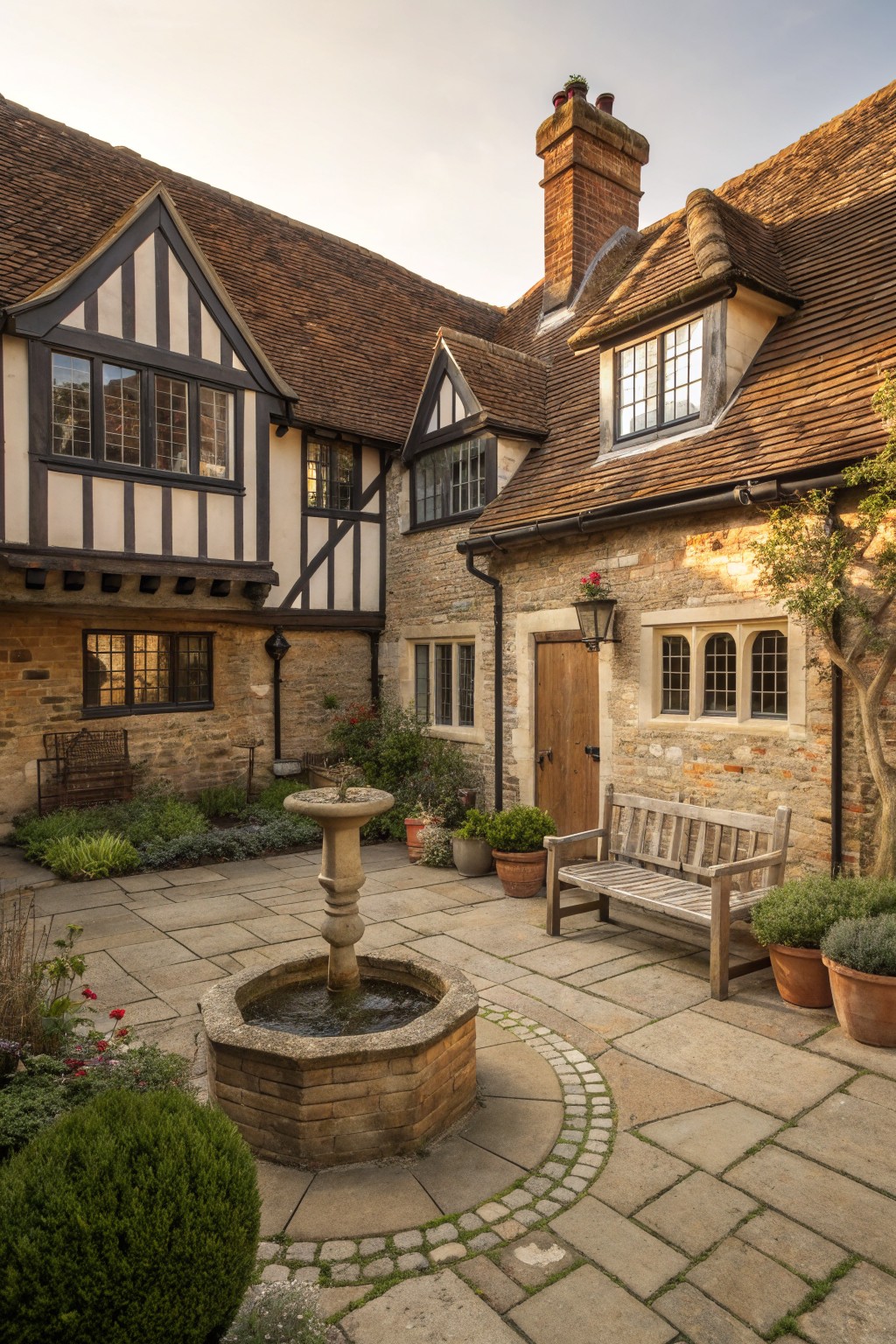
A stone fountain set in the middle of a paved courtyard gives the space a clear center without much extra effort. It fits well with Tudor farmhouses because the simple shape and material echo the old stone walls and keep the whole area feeling settled.
This works best in smaller enclosed yards where you want one main spot to draw the eye. Keep surrounding paving plain and add just a bench or two so the fountain stays the focus rather than competing with other pieces.
Mix Stone With Wood Shingles On The Facade
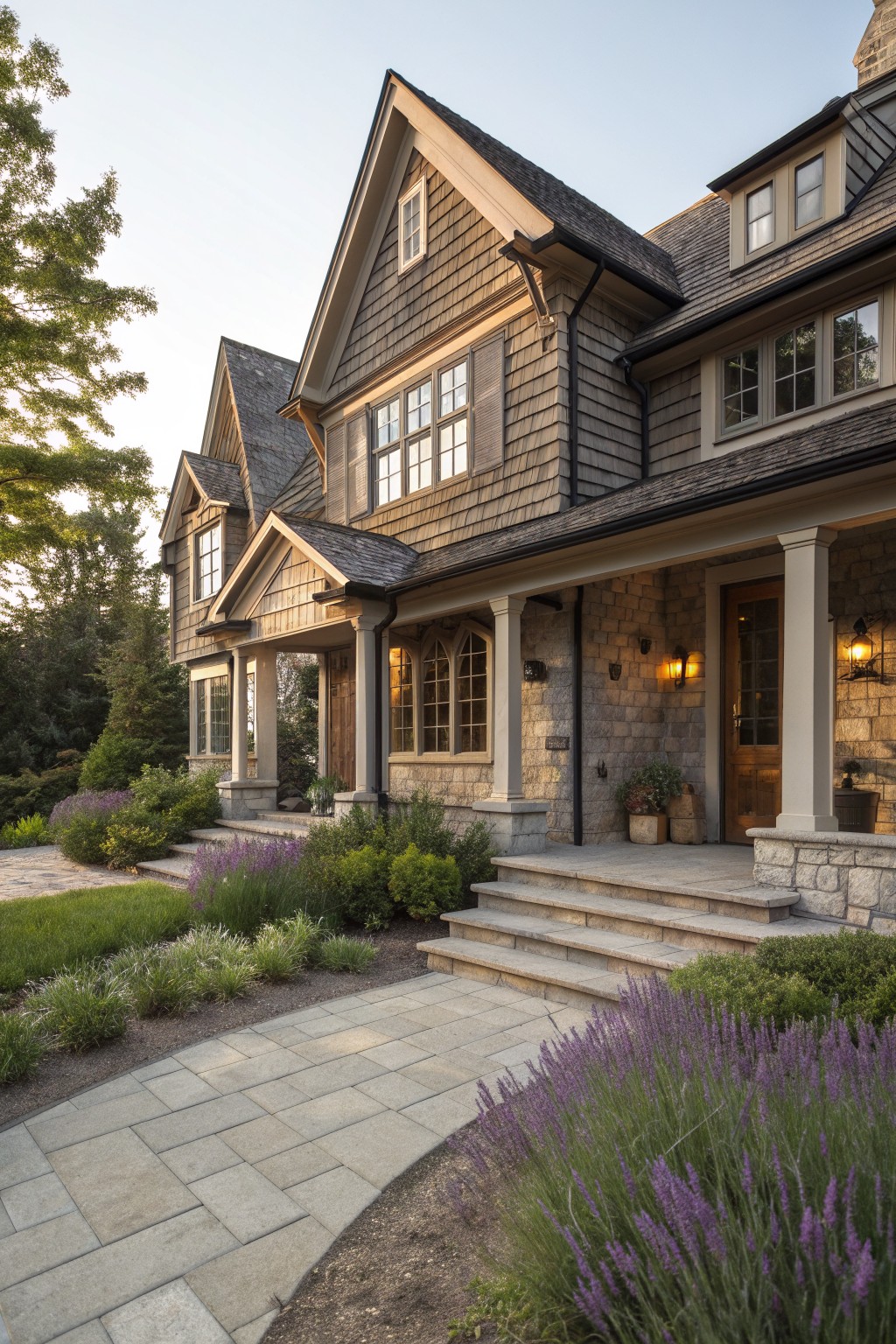
Mixing stone and wood shingles on the exterior adds depth without needing extra trim or ornament. The stone gives a solid base while the shingles keep the upper walls lighter and more textured, which helps the whole house feel grounded yet still farmhouse in scale.
This works especially well on homes with multiple rooflines or gables, since the change in material breaks up the mass. Use the stone mainly around the entry and lower walls, then let the shingles cover the rest so the contrast stays simple and easy to maintain.
Mixing Stone With Half-Timbering
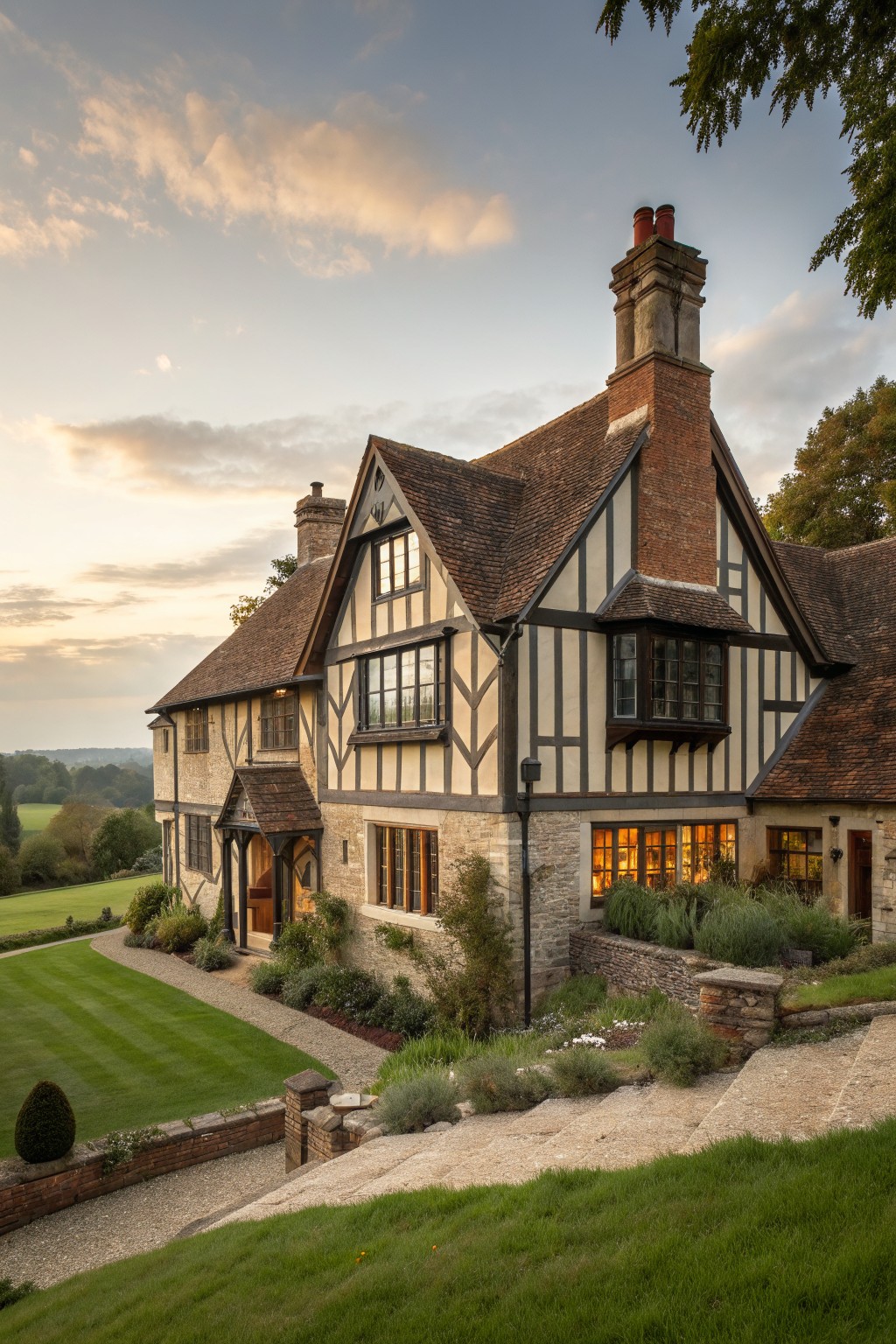
One simple way to give a Tudor farmhouse more presence is to start the walls in stone and then move up into half-timbering. The stone gives the house a heavier base that feels rooted, while the timber pattern above keeps the look lighter and more traditional.
This approach works best on homes with a sloped site or when you want the lower part of the house to look more permanent. Use local stone if you can, keep the timbers dark, and let the change in materials happen at a natural height so it reads as part of the original structure.
Setting Raised Planters On Stone Patios
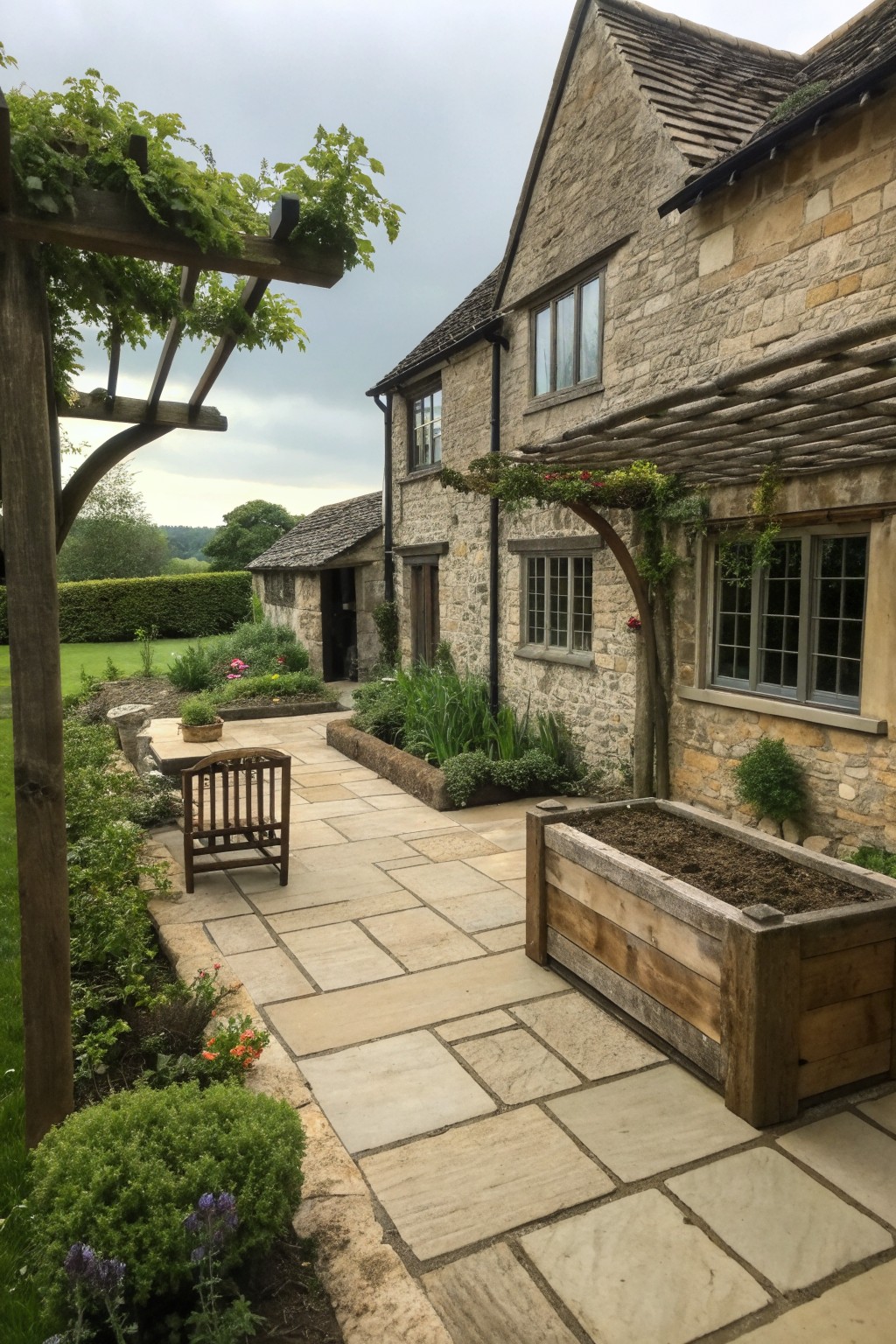
A raised wooden planter set right on the paving gives you planting space without cutting into the ground or crowding the walking area. It works especially well with stone houses because the wood softens the hard surface while the stone keeps everything grounded and low maintenance.
This approach suits older farmhouses or any home where the patio sits tight against the walls. Choose a sturdy box that matches other wood details like pergolas or gates, and keep the soil depth enough for vegetables or shrubs so the planter stays useful year after year.
String Lights For Outdoor Dining
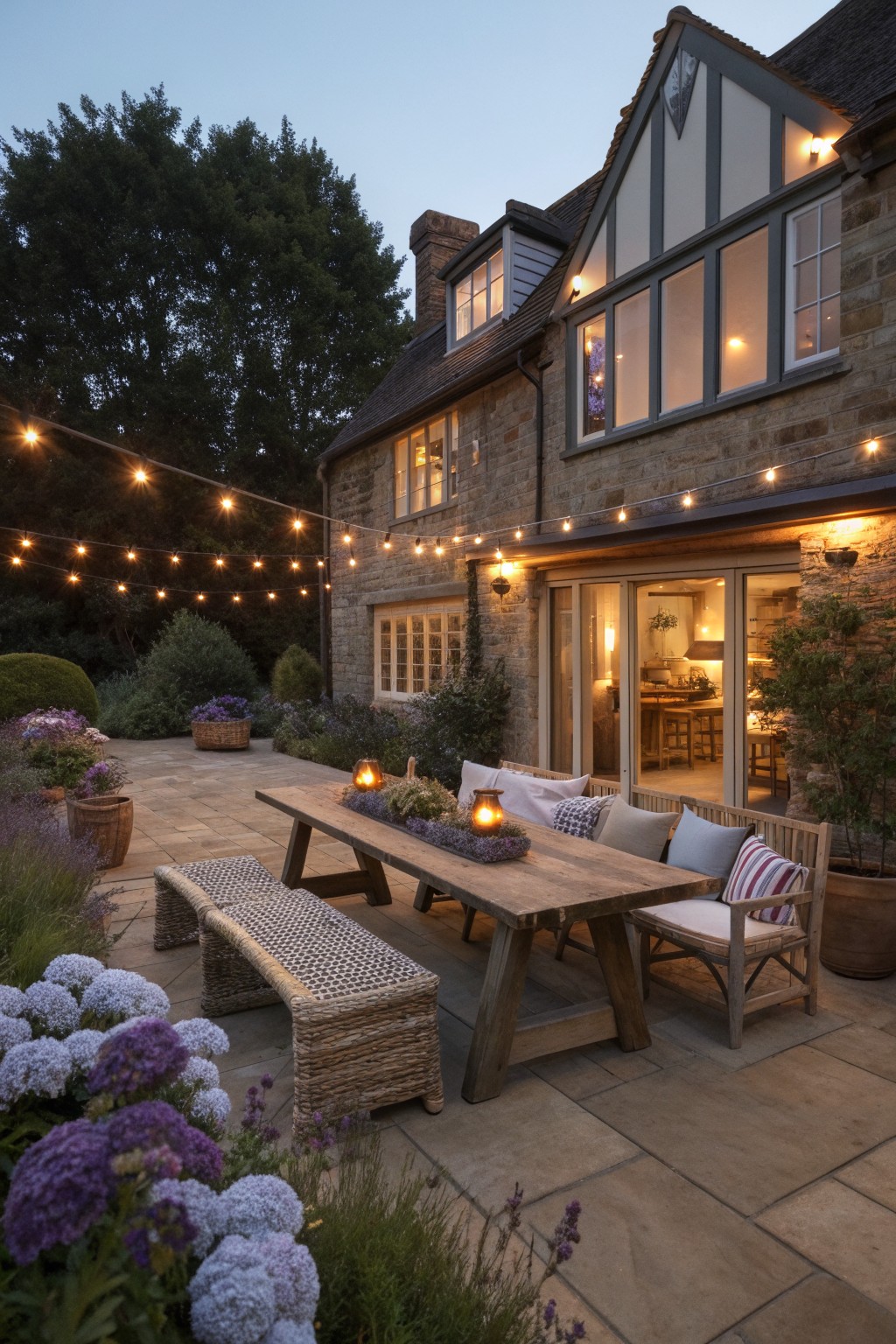
String lights work especially well on a patio when you want the space to feel usable after sunset. They provide just enough light for meals without overpowering the house or the garden around it.
A simple long table with benches fits easily underneath them and keeps the setup practical for groups. This works best on homes with some architectural weight, like stone walls, because the lights add warmth without needing extra structures or heavy fixtures.
Mix Stone and Half Timbering
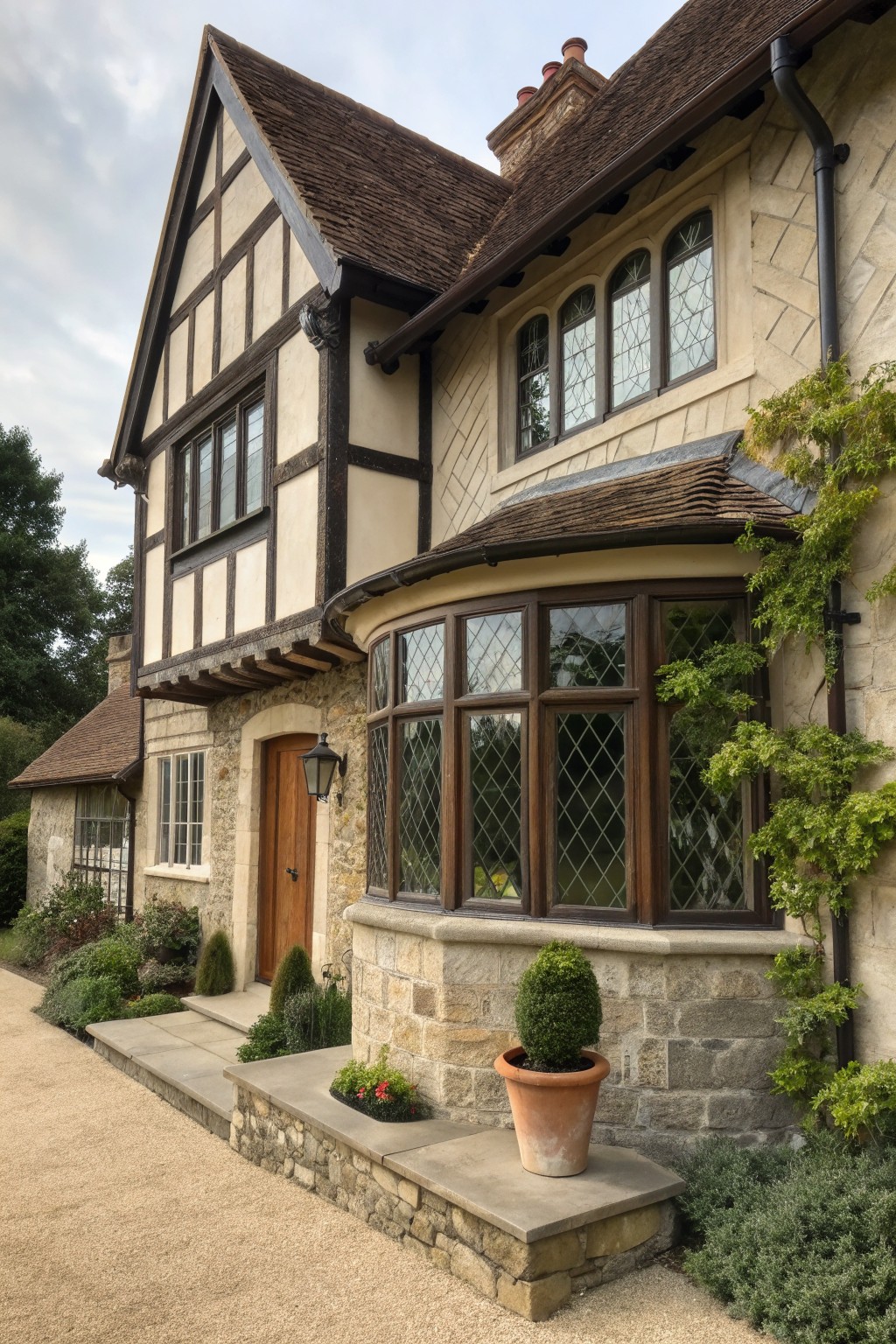
Stone at the base paired with half timbering above gives the house a solid, grounded feel while adding pattern higher up. The contrast keeps the exterior from looking flat and helps it read as a true Tudor farmhouse rather than a plain stucco box.
This combination works best on homes with a clear lower level that can carry the heavier material. Keep the stone low and let the timber frame handle the upper walls so the roofline and windows stay the main focus.
Arched Stone Entries Strengthen Tudor Facades
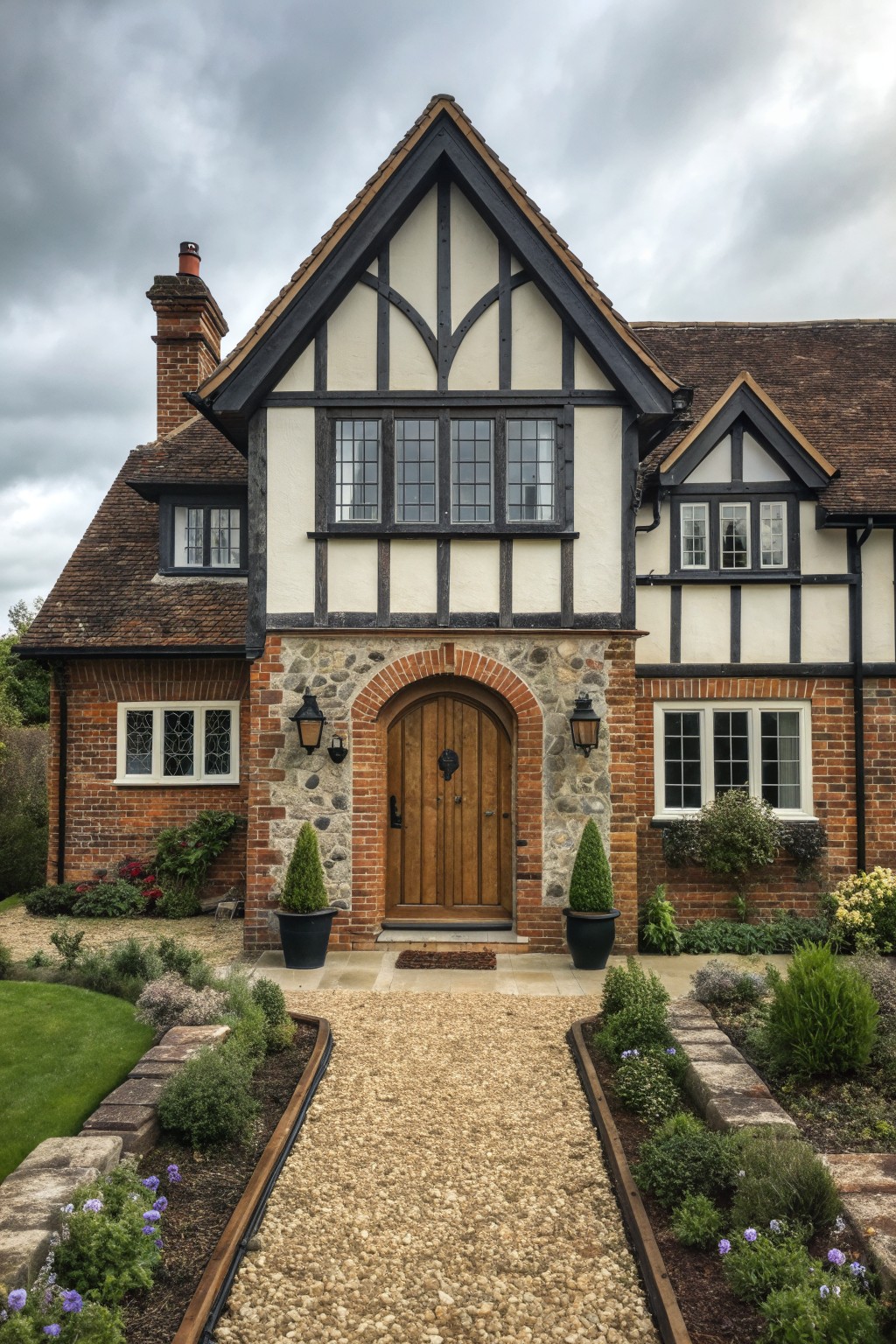
An arched entry gives a Tudor farmhouse a clear center point without needing extra decoration. The curve softens the sharp lines of the half-timbering above and pairs well with the heavier brick and stone base below.
This approach works best on homes that already use mixed materials. Match the arch stone to the foundation, keep the door simple and wood, and let the shape carry the weight rather than adding trim or hardware that fights the line.
Mixing Stone And Timber Framing
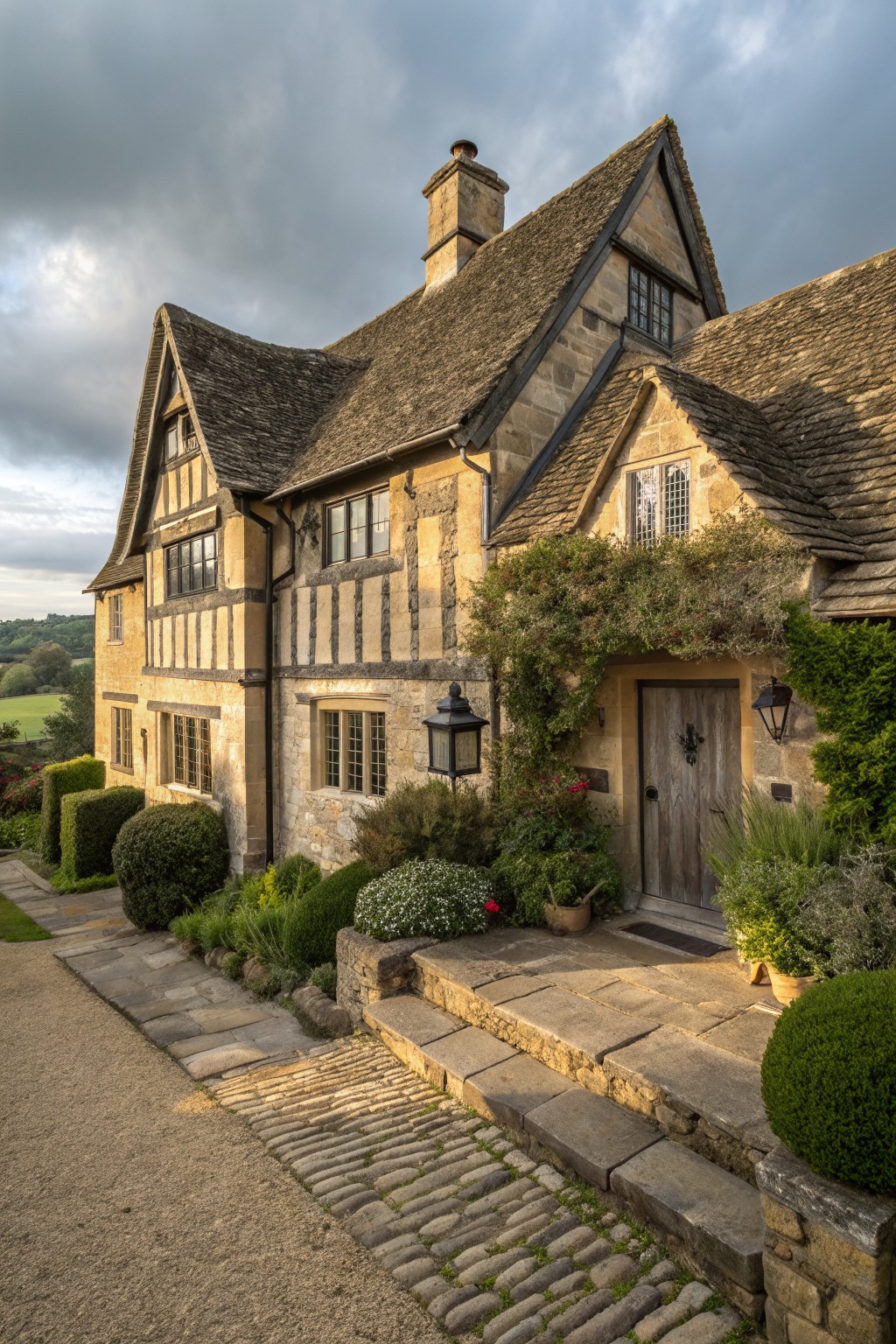
Stone paired with half timbering gives a farmhouse that solid, grounded look many people want in a Tudor style. The contrast between the rough stone and the dark wood lines adds interest without needing extra decoration or trim work.
This combination works best on homes with simple rooflines and a few well placed windows. Keep the stone sections large and let the timber break up the surface in a natural way so the whole front feels balanced rather than busy.
Stone Paths That Lead to the Door
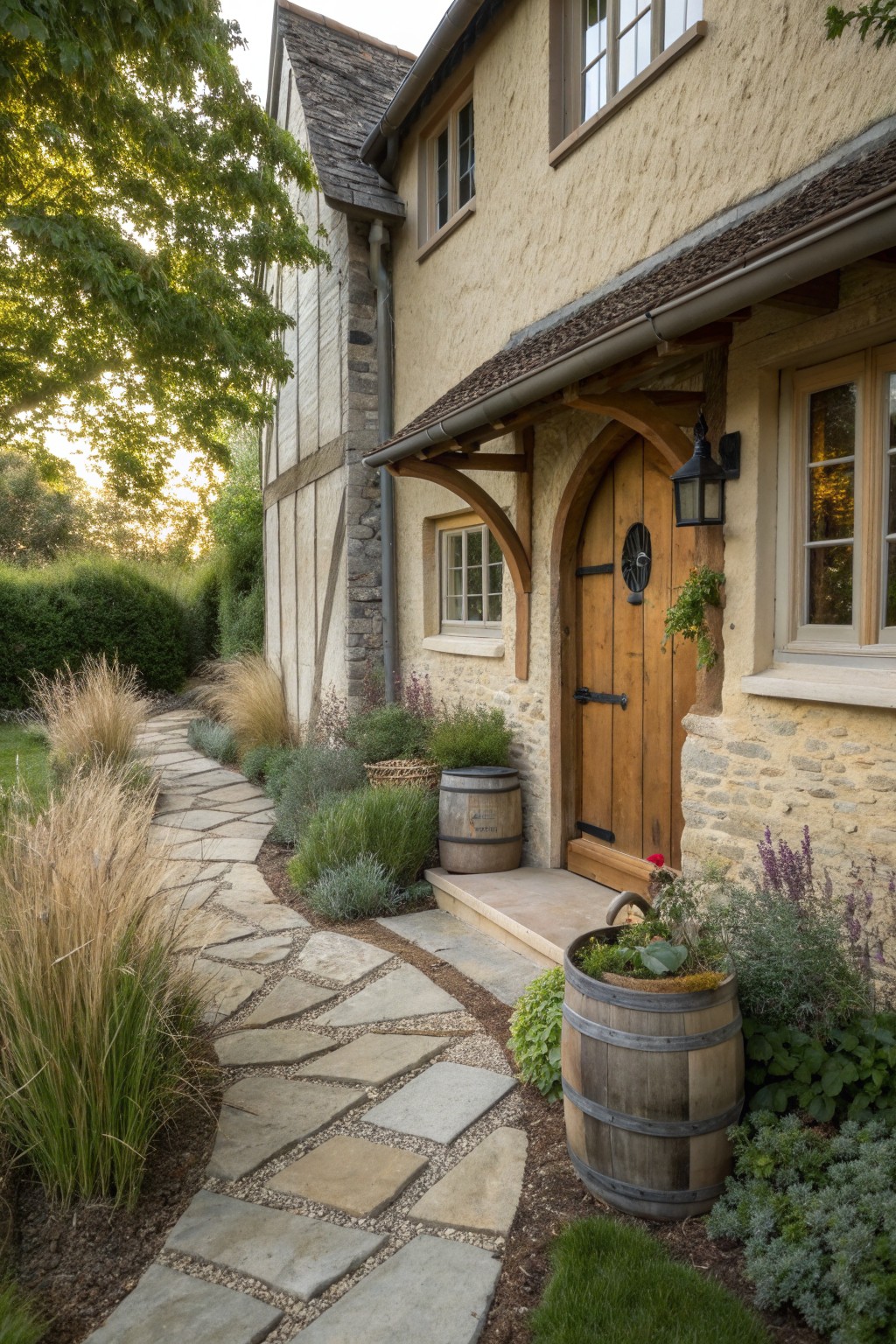
A winding stone path softens the approach to a house and makes the entry feel more connected to the garden. It breaks up hard surfaces and gives the whole front a relaxed, lived-in look that suits Tudor farmhouses especially well.
This works best on homes where the door sits a little back from the street. Keep the edges planted with grasses and low perennials so the path feels like it belongs there, and choose stones in natural tones that match the house materials.
Mix Stone And Timber On The Facade
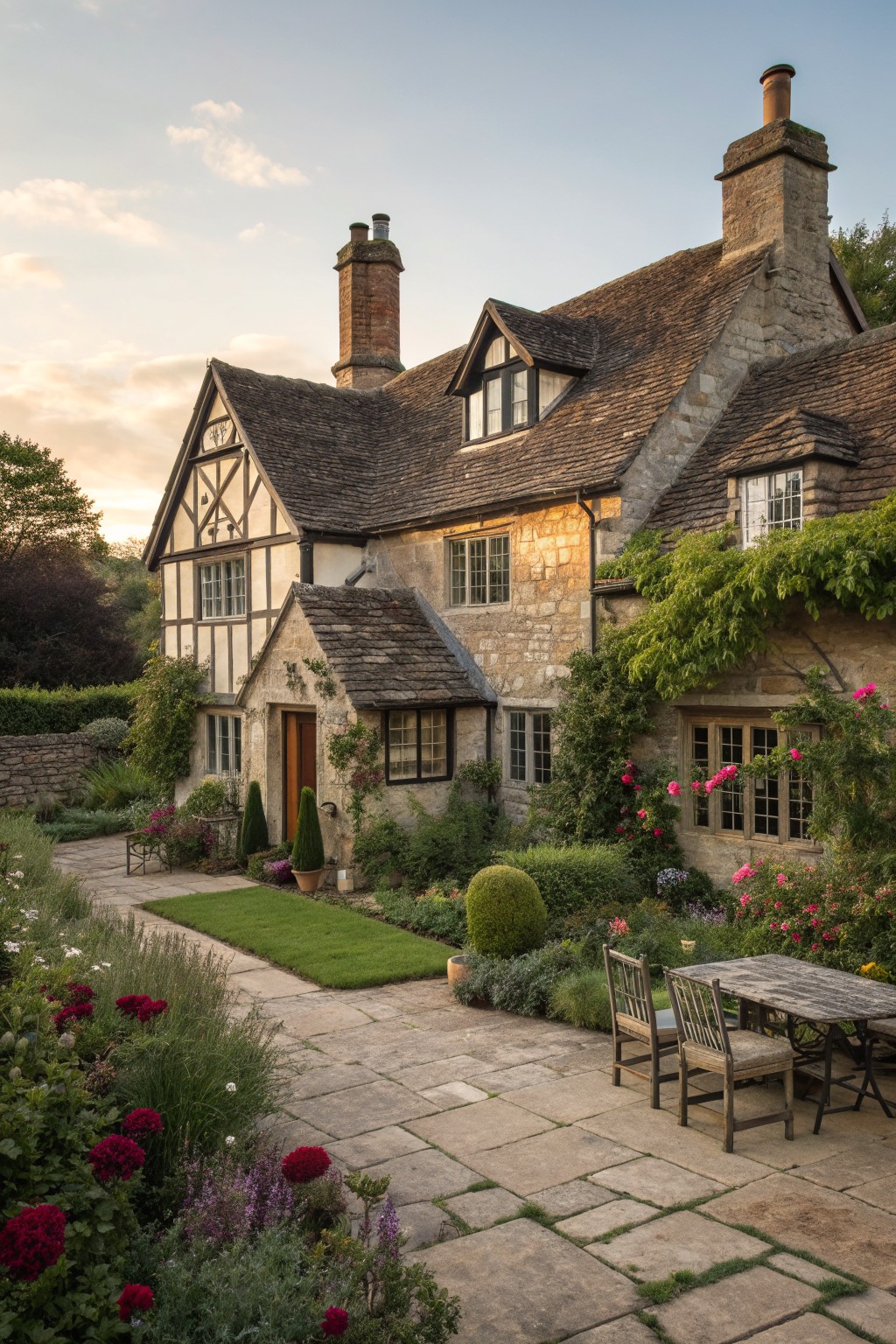
Stone and half timbering give a house that grounded European feel without needing a lot of extra detail. The contrast between the rough stone and the darker wood framing adds texture that holds up even when the house is surrounded by greenery. It keeps the exterior from looking flat or too uniform.
This approach works best on homes that already have some traditional lines or gables to work with. Keep the timber sections focused on key areas like gables or entries so the stone remains the main surface. Too much timber can start to feel busy.
Arched Stone Entries for Tudor Homes
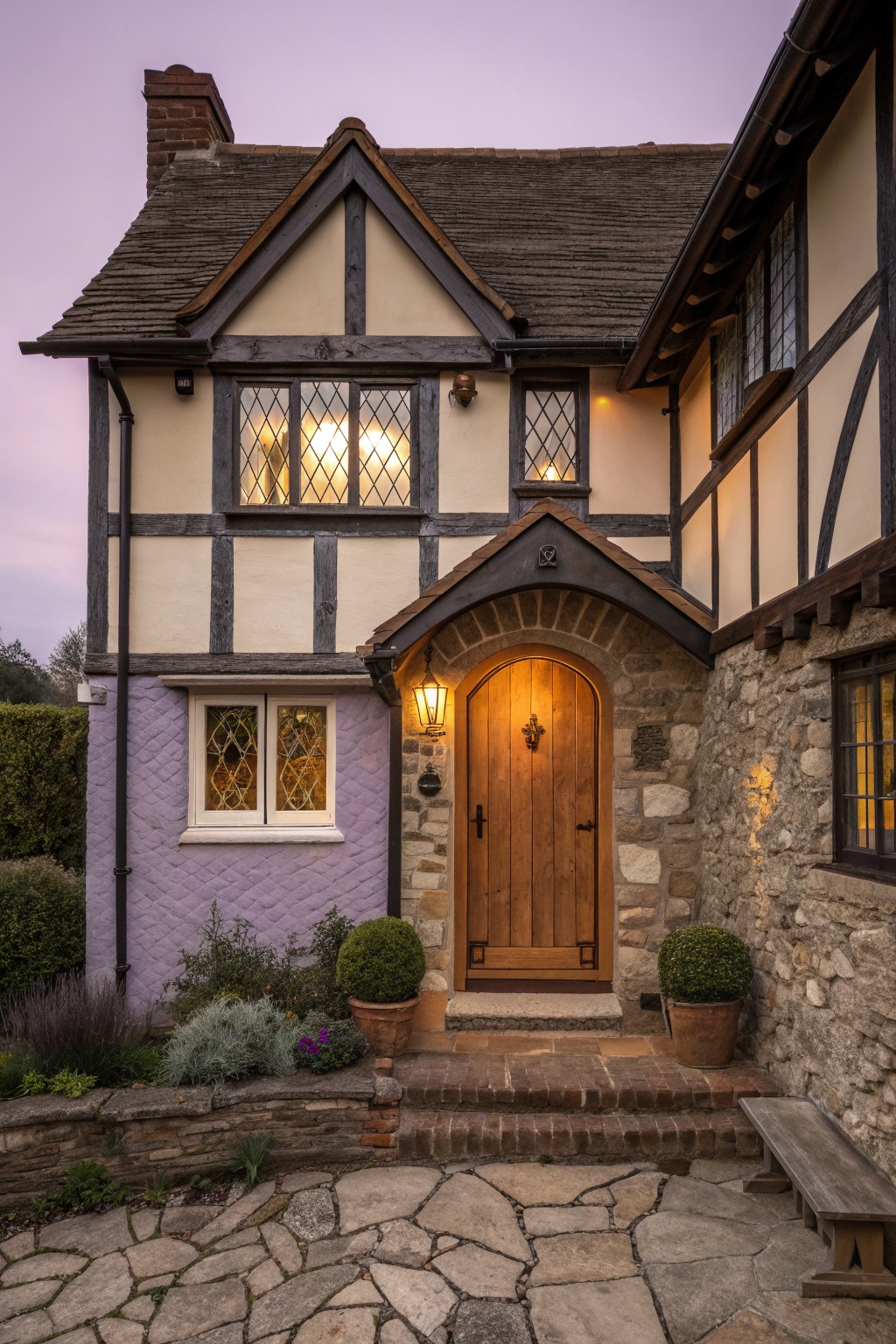
An arched stone entry gives the front of a Tudor farmhouse a clear focal point without needing extra decoration. The curve softens the straight lines of the timber framing while the stone adds weight and texture right where people approach the door.
This works best on homes that already lean toward traditional materials like stucco and wood. Keep the arch simple, match the stone to any existing masonry on the house, and add just one light fixture beside the door so the shape stays the main feature.
Frequently Asked Questions
Q: How do I add half-timbering to my farmhouse without losing the simple porch and roof lines? A: Focus the beams on the gable ends and upper walls first. Leave the porch posts plain and let the roof overhang stay wide and straightforward. This keeps the bold Tudor touch while the house still reads as farmhouse.
Q: What roof material works best for these exteriors in wet areas? A: Slate or dark asphalt shingles handle rain well and match the European drama. Slope the roof steeper than a standard farmhouse to shed water faster. Avoid flat sections that trap moisture.
Q: Can I try this style on a tight budget? A: Paint existing trim dark brown to mimic beams. Add a few wood accents around windows and doors. Skip full stucco and use board and batten instead for the lower walls.
Q: How do I choose siding colors that feel dramatic? A: Pick a warm off-white or pale gray for the main body. Let the beams stay deep brown for contrast. Test samples on the actual wall before committing.
