

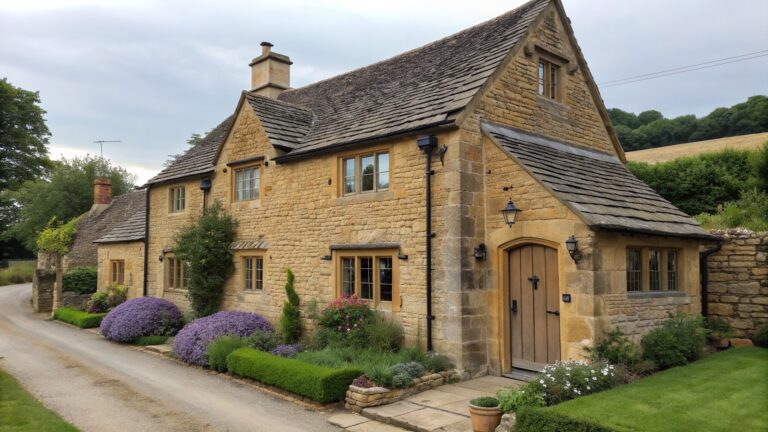
I have always paid attention to how natural stone changes the way an English cottage farmhouse sits against its landscape from the street.
When I look at homes like these, the texture of the stone often makes the facade feel more permanent and less like a surface treatment that might date quickly.
That choice of material tends to work best when it is paired with simple rooflines and modest entries rather than trying to compete with too many added details.
I usually test ideas like this by driving through older neighborhoods first to see how the stone ages in real weather before committing to anything on my own house.
Stone changes everything.
Natural Stone Facades for Cottage Exteriors
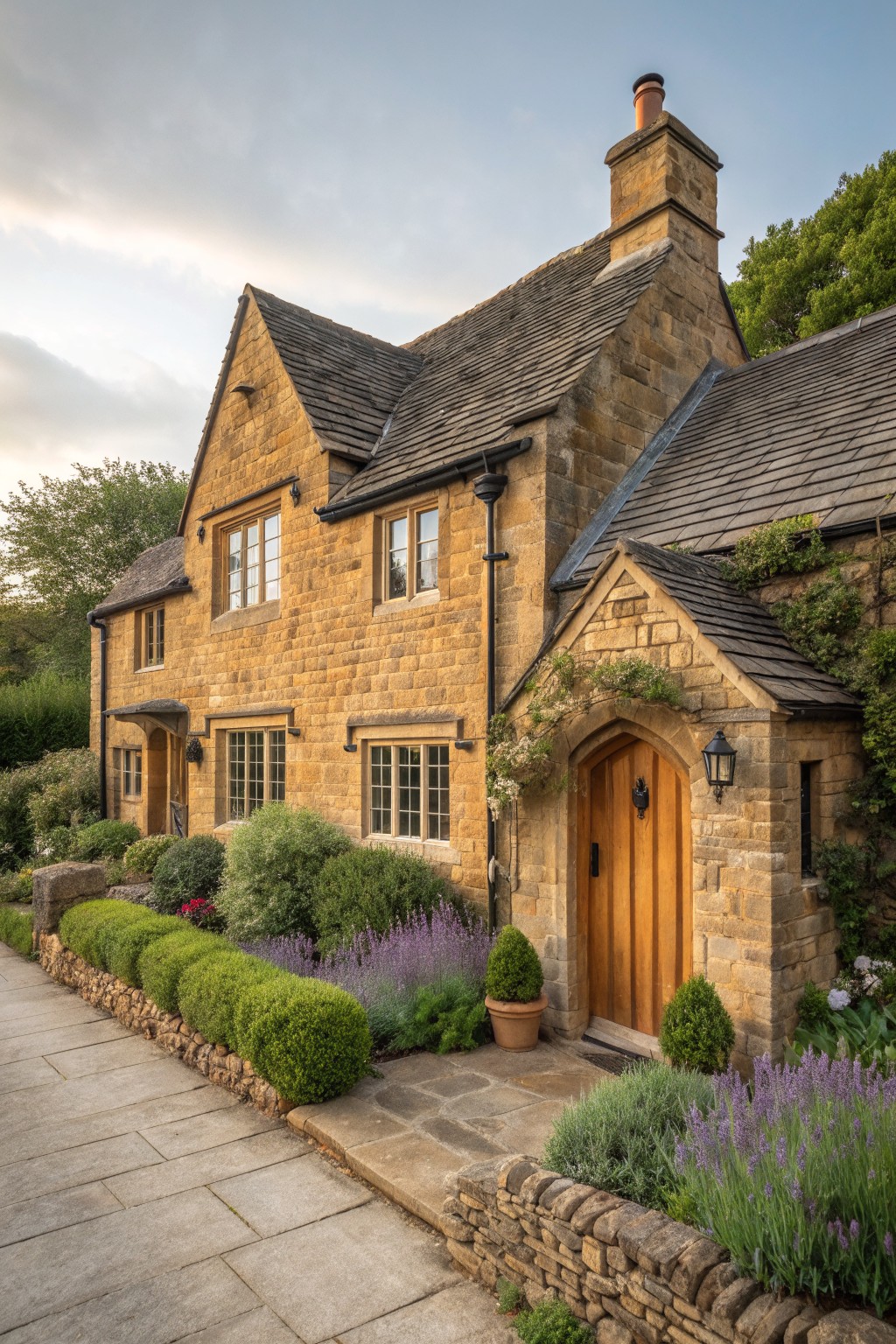
Natural stone gives an English cottage farmhouse that solid, settled look right from the start. It holds up well over time and the varied tones help the house sit comfortably in its setting without extra effort.
This approach works best on homes with simple rooflines and wood details. Keep the stone as the main surface and let smaller plantings soften the base rather than covering large sections of wall.
A Small Gabled Porch Over The Front Door
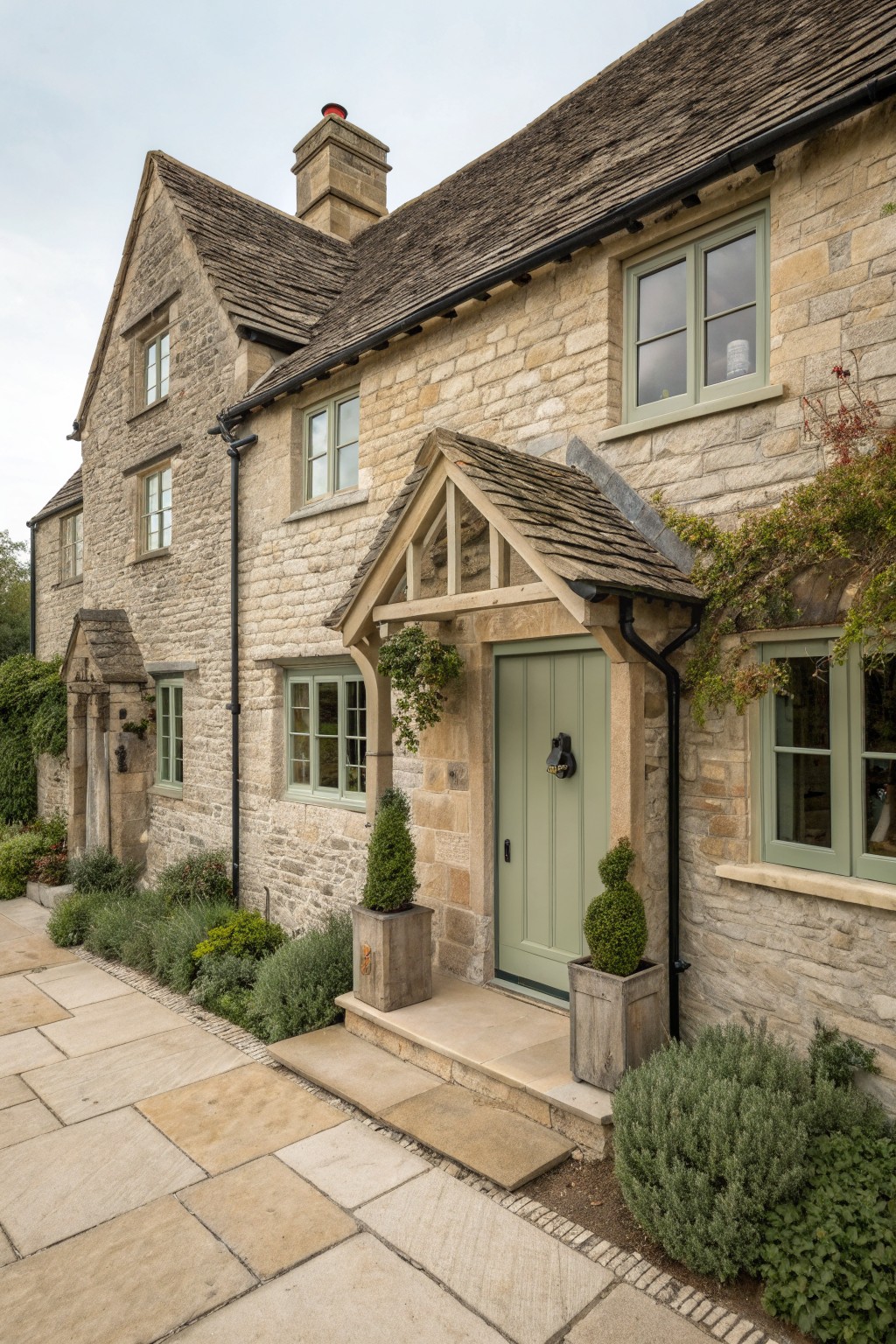
Many stone cottages look better with a simple gabled entry added right over the door. It gives the facade a clear focal point and creates a bit of shelter without making the whole house feel heavier.
This detail works well on natural stone because the wood and the stone play off each other nicely. Keep the structure modest in size and pair it with a soft door color so the entry feels welcoming rather than formal.
Mixing Stone And Brick On Cottage Walls
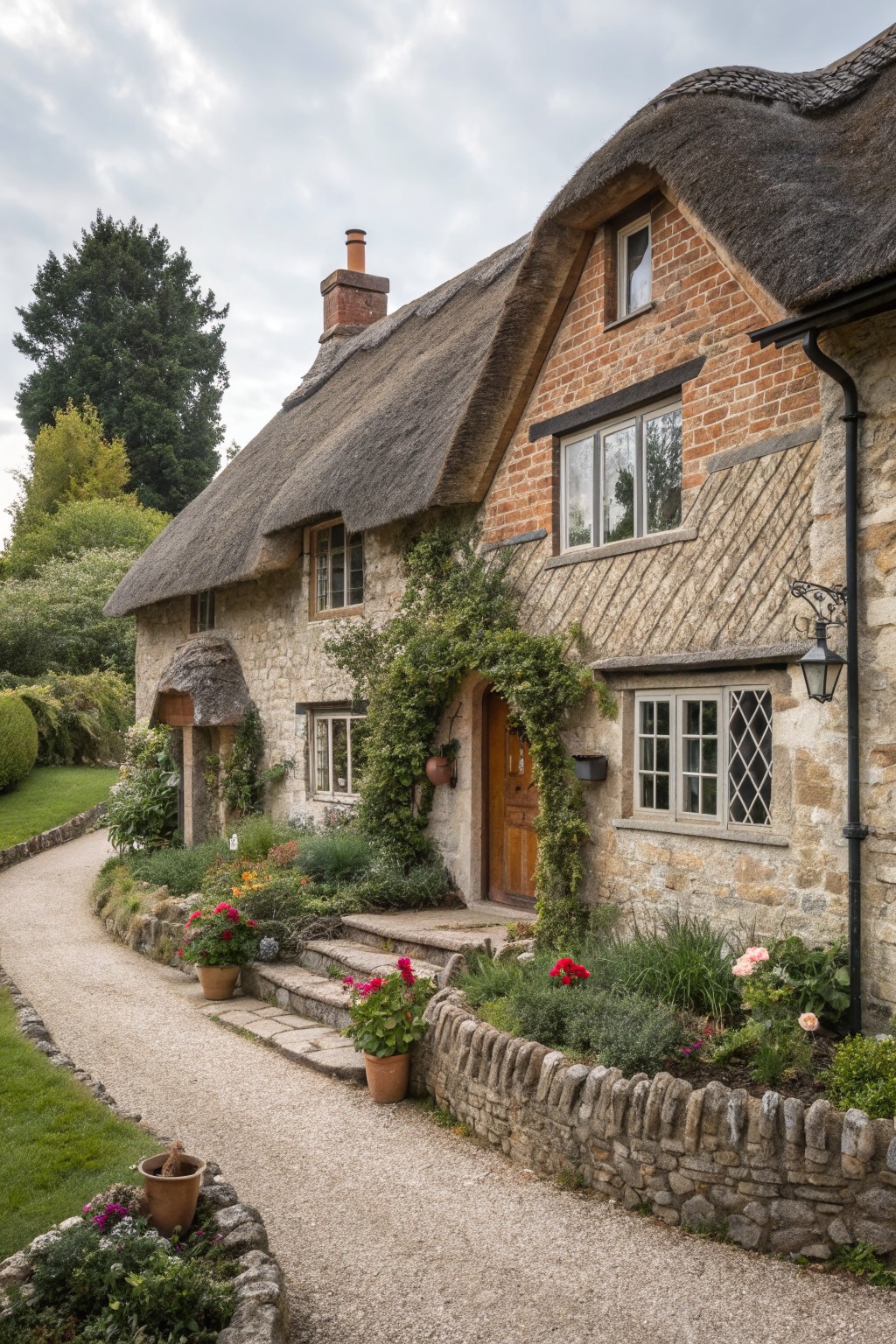
Mixing natural stone with brick gives an English cottage exterior real staying power. The stone grounds the house and adds texture while the brick keeps things warm and familiar. This approach avoids a flat look and lets the house feel settled into its setting without much extra effort.
It works especially well on older homes or new builds that want the same settled character. Keep the stone on the lower sections or around the main entry and let brick take over higher up. The contrast handles most of the visual interest so you can keep plantings and trim simple.
Natural Stone Walls On Cottage Exteriors
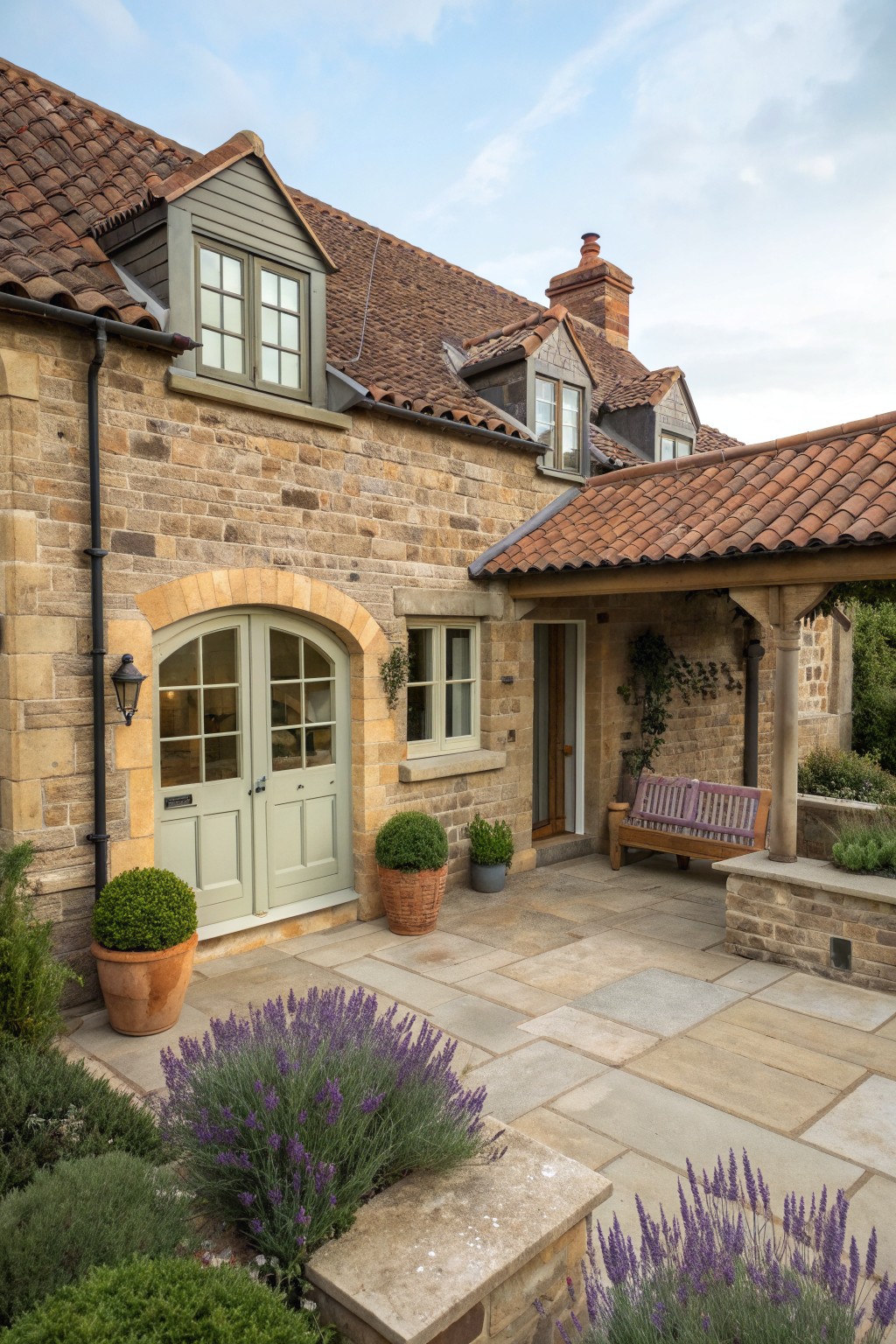
Natural stone gives these cottage farmhouses a solid base that feels settled and warm right away. The uneven tones and rough texture help the house blend into the landscape instead of standing out as something new.
This works best on homes with simple rooflines and small windows where the stone can do most of the work. Keep the trim and doors light so the stone stays the main feature rather than competing with too many details.
A Simple Gabled Entry Porch
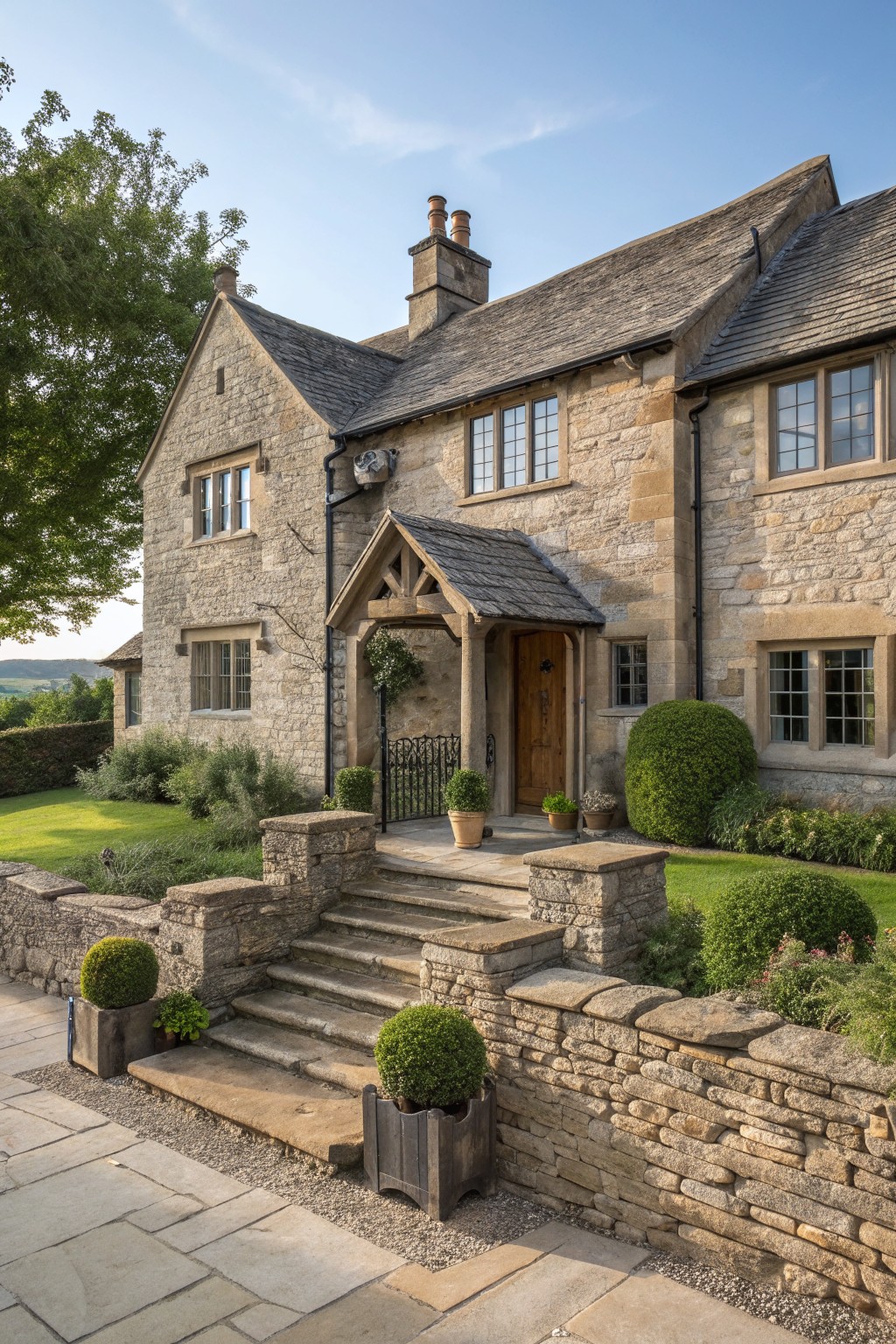
A small gabled porch over the front door helps a stone house feel more settled and welcoming. It adds just enough cover without crowding the facade, and the matching stone columns keep the whole thing tied to the rest of the building.
This approach works well on older stone homes where the entry feels a bit plain. Keep the structure narrow, use the same roofing material, and let the wood door stay simple so the porch reads as part of the original house rather than an add-on.
Stone Terraces That Match The House
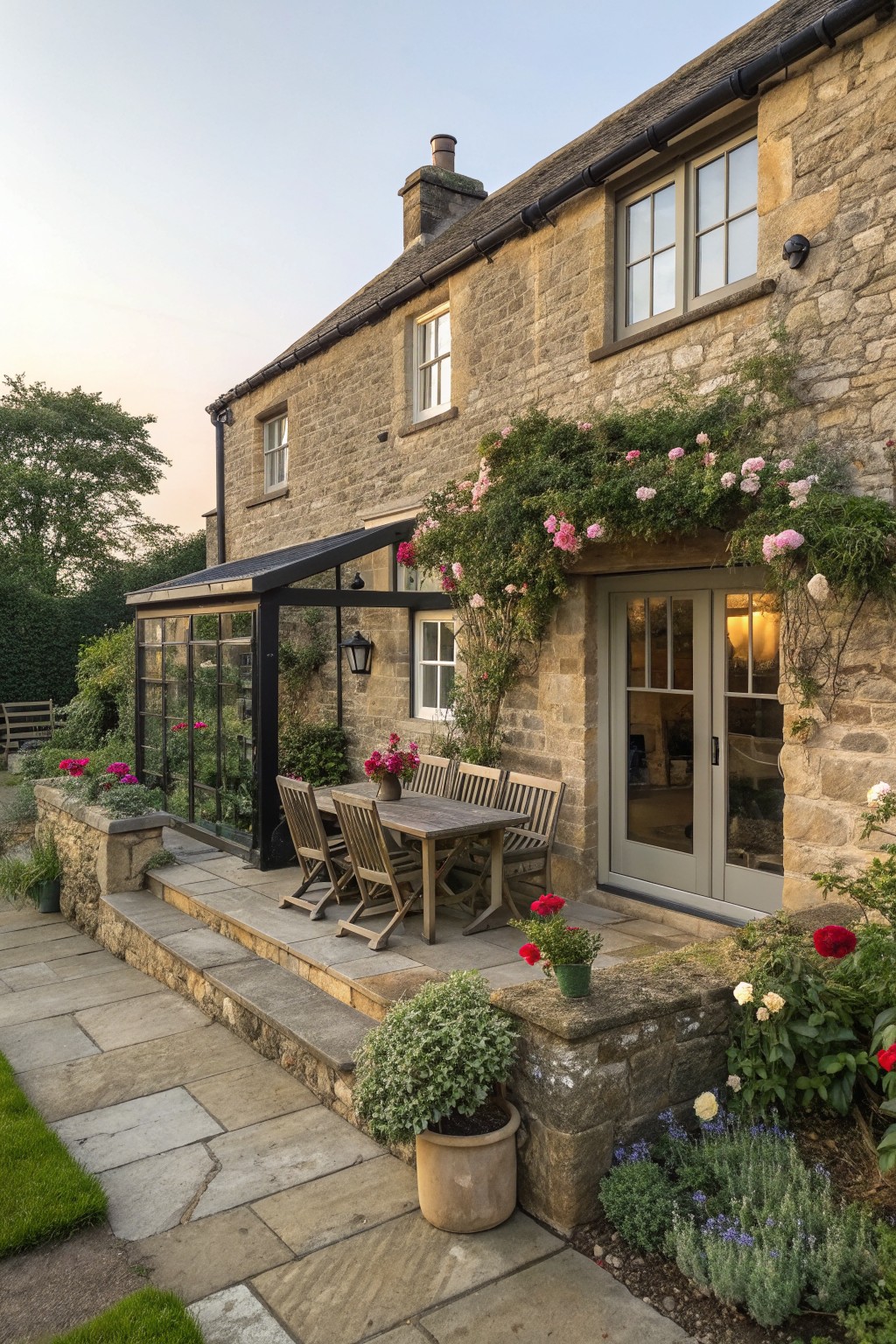
A stone patio built from the same material as the house walls gives the whole place a settled, connected look. It turns a basic outdoor table and chairs into something that feels like a real room instead of an afterthought. The surface stays cool underfoot, drains well, and ages nicely with the building.
This works best on smaller cottages or farmhouses where you want the outdoor dining spot right by the door. Keep the furniture simple, use the same local stone if you can, and let a few plants soften the edges. Avoid making the terrace too large or you lose the cozy scale that makes these homes feel welcoming.
Natural Stone For Cottage Exteriors
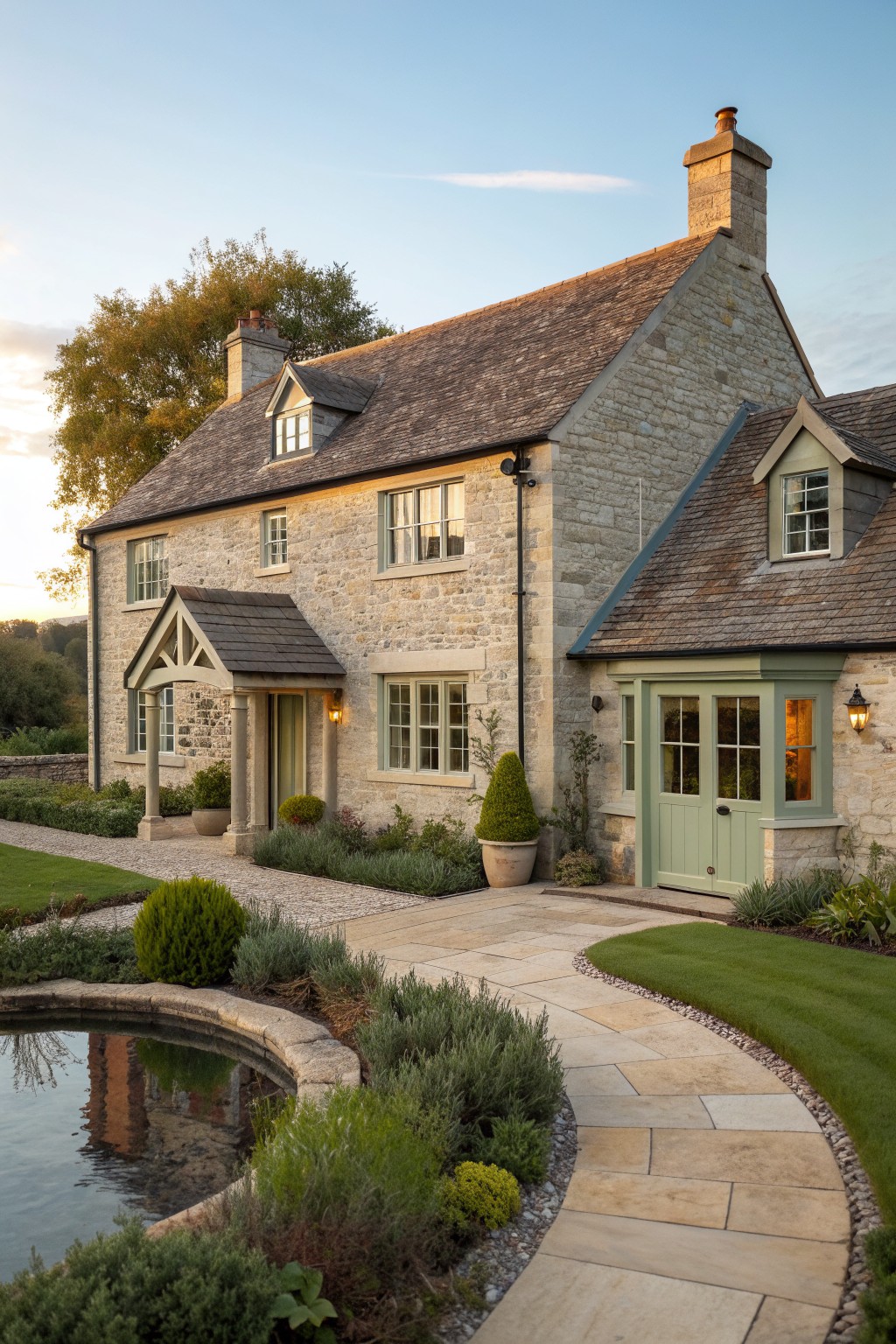
Natural stone gives a cottage exterior lasting character without any extra effort. The varied tones and rough texture help the house settle into its setting right away, especially when the roof stays low and the overall shape stays simple.
This works best on homes that already have some age or sit in rural areas. Keep trim and doors in muted colors so the stone stays the main feature instead of competing with bright accents.
Mixing Stone With Wood Accents
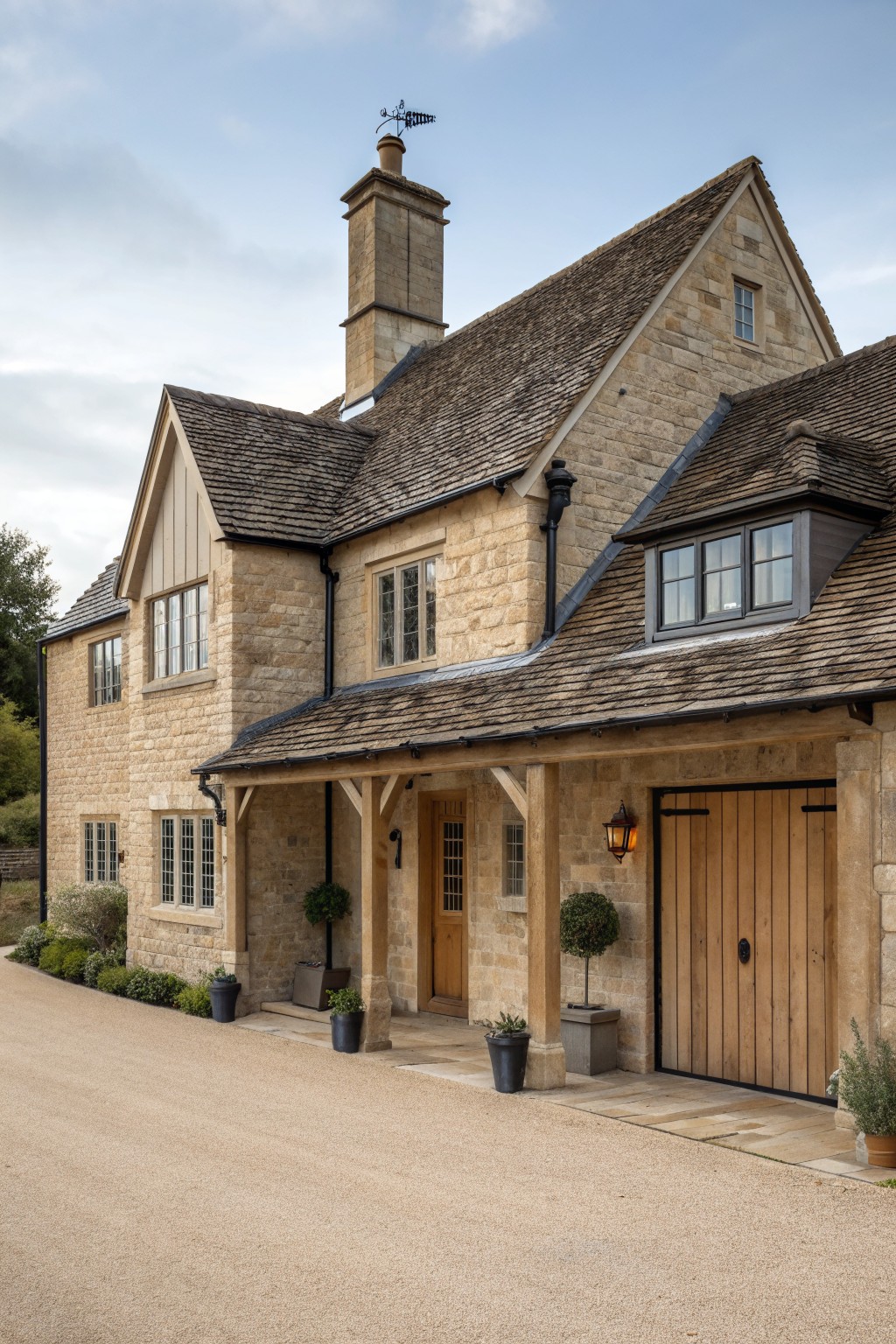
Stone walls give a house real presence, but they can look heavy without something to break them up. Wood posts, beams, and doors add warmth and help the stone feel more settled into the landscape.
This works best on homes that already lean traditional. Keep the wood tones simple and let them match the doors or any other trim so the mix stays easy to live with rather than busy.
Match Stone Walls to the House
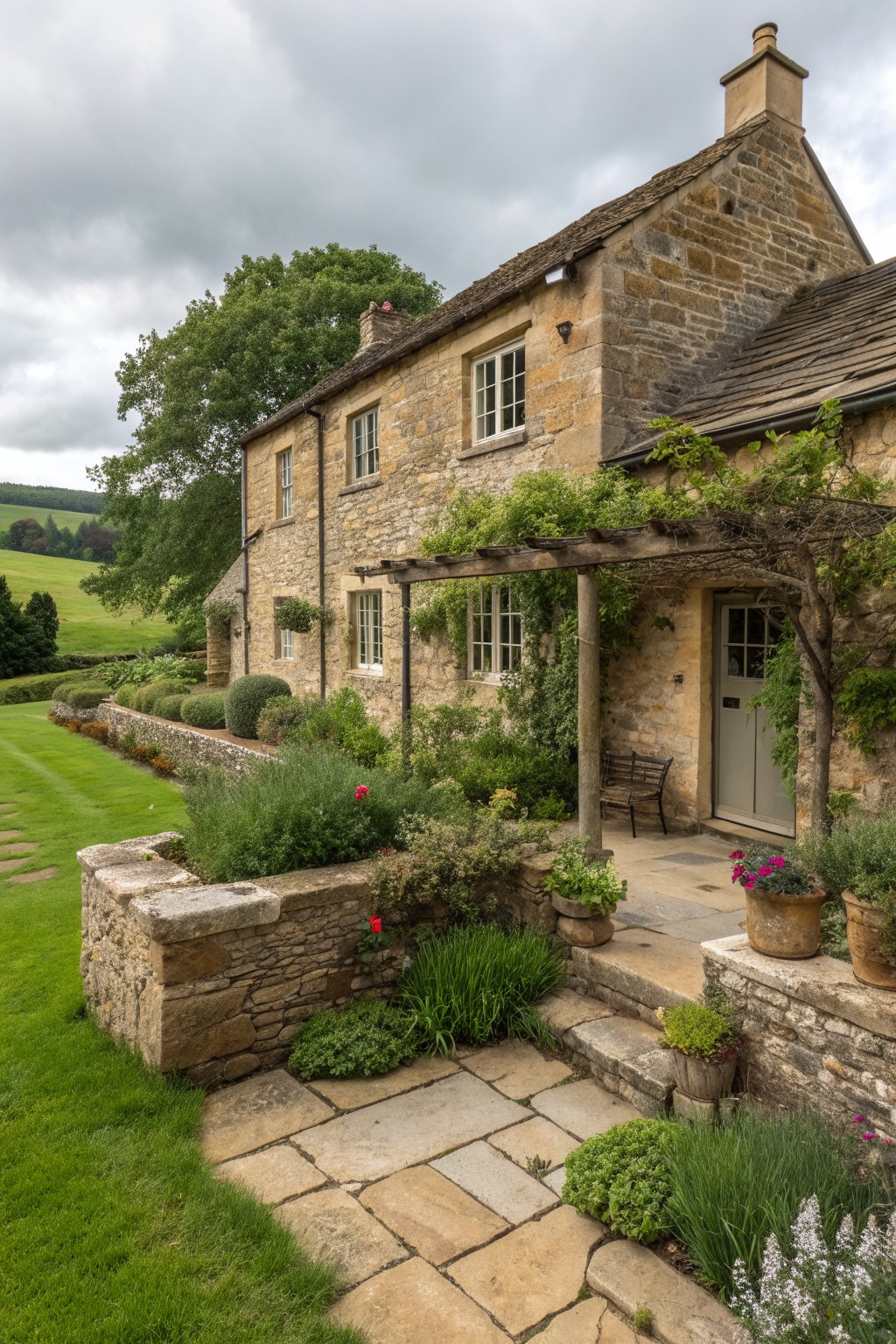
One simple way to give a cottage more presence is to repeat the same stone on garden walls and paths that already appears on the house. It makes the whole property feel like it belongs together instead of looking like separate pieces added over time.
This approach works best on homes set in the countryside or on sloped lots where walls already do a lot of work. Keep the stone color and texture consistent, then let plants spill over the edges so the hard lines do not feel too rigid.
Stone And Brick On Cottage Walls
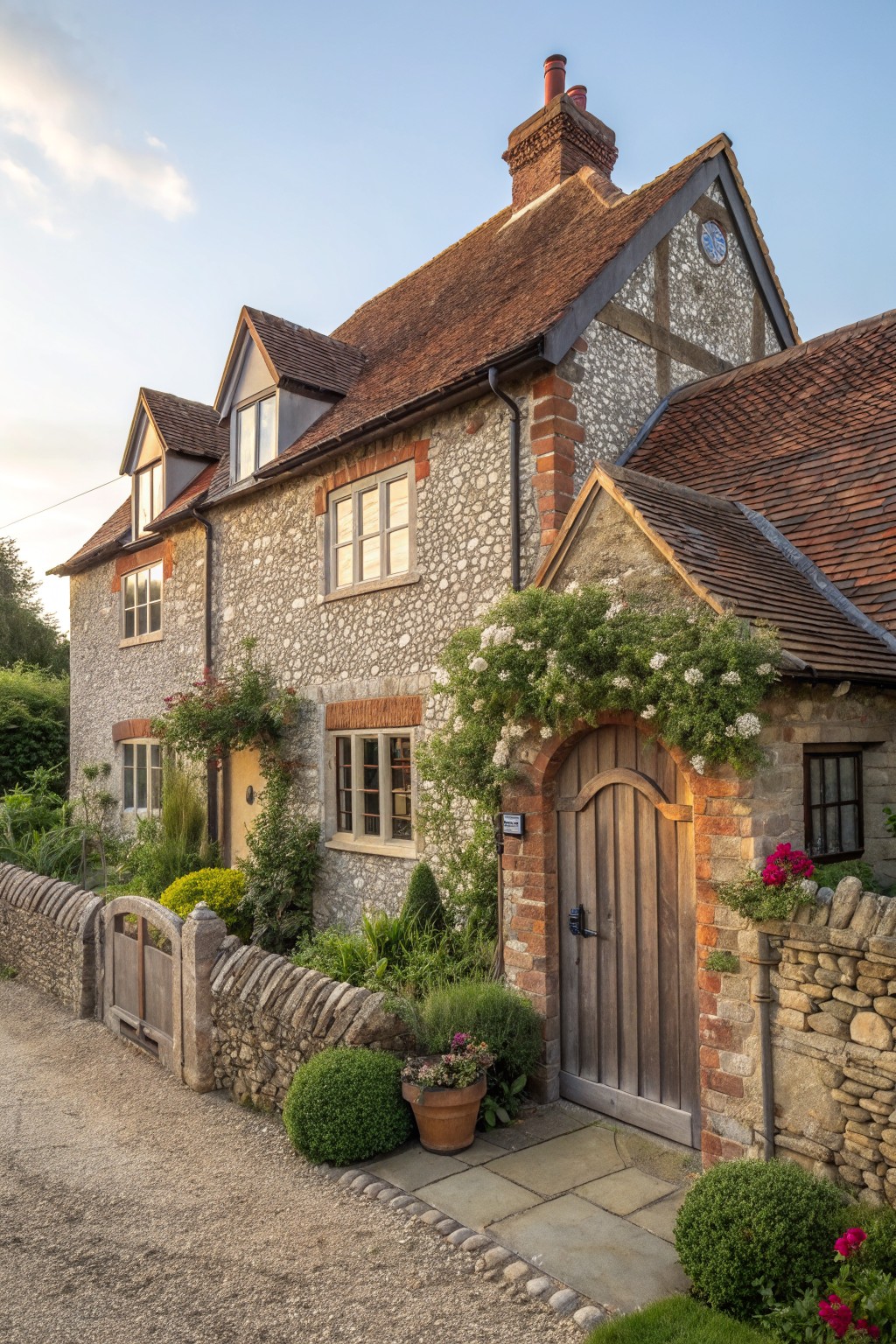
Natural stone forms the main surface on many English cottages because it holds up well and looks settled from the start. Adding brick around windows and corners breaks up the wall without adding extra trim or patterns.
This mix suits both older homes and newer builds that want a simple farmhouse look. Use the stone in larger blocks and keep the brick in narrow bands so the wall stays calm rather than busy.
Climbing Roses Over Stone Entries
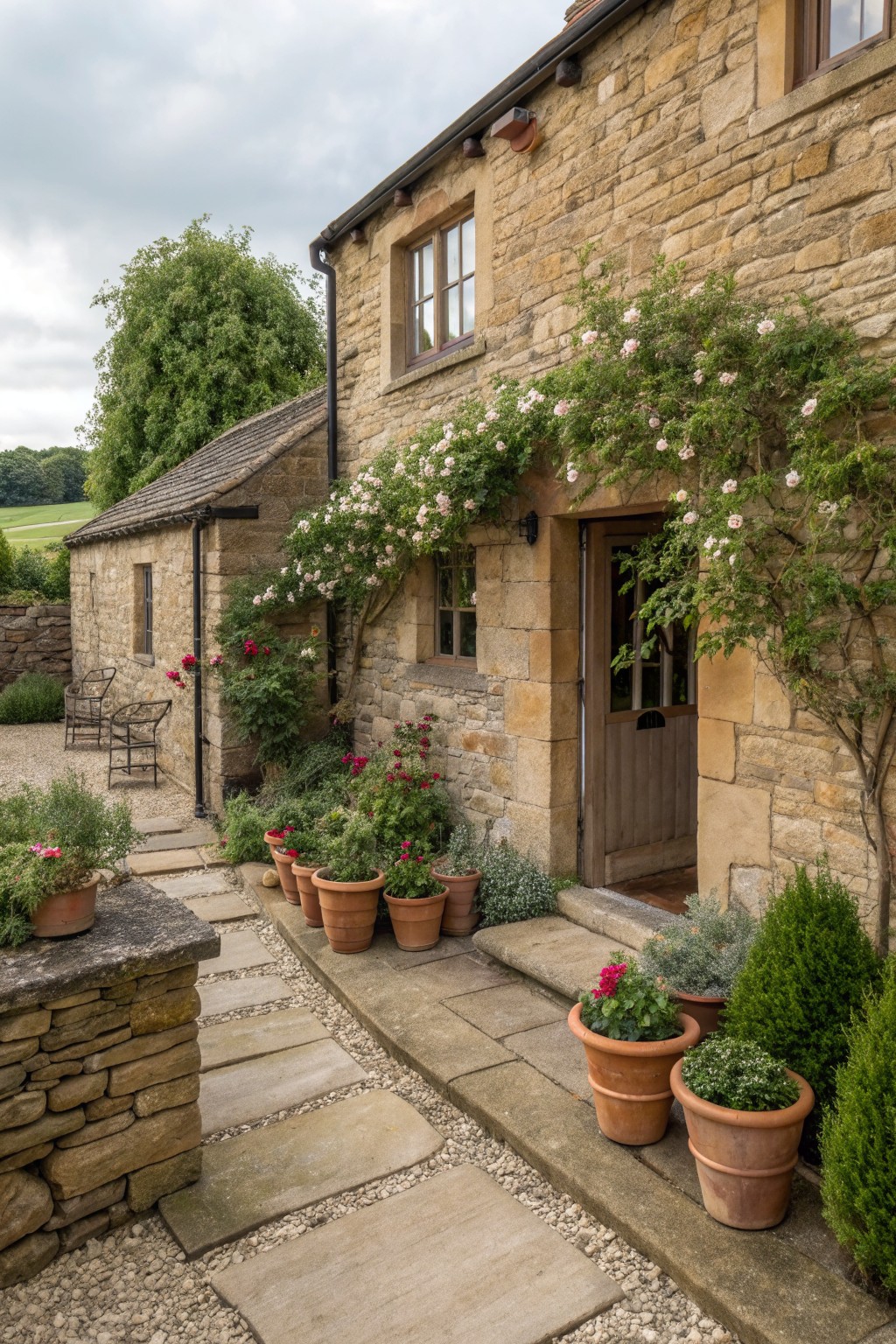
Stone walls give a cottage that solid, lasting look, but they can feel a bit heavy without something to break them up. Climbing roses trained around the door and windows add just enough softness and color while still letting the stone show through.
This approach works best on homes with simple entries where the plants have room to spread without covering too many windows. Keep the pots or beds close to the base so the roses can reach the walls on their own, and choose varieties that stay manageable in your climate.
Arched Stone Doorways
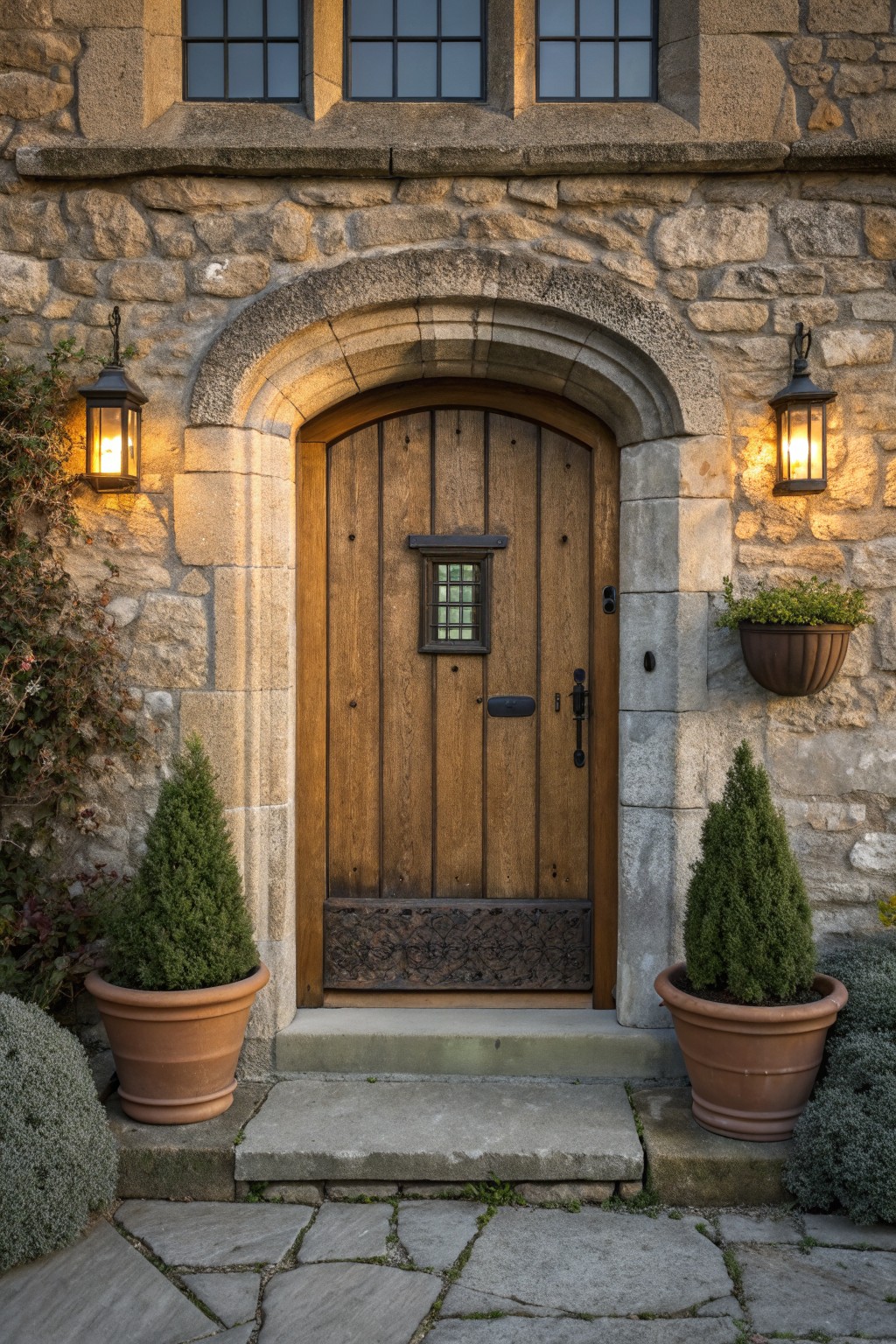
An arched stone surround around the front door gives the whole entrance a settled, cottage-like presence. The curve softens the strong lines of the stone while still feeling solid and permanent, which is why it reads as classic rather than trendy.
This detail works best on homes that already use natural stone on the facade. Keep the door itself simple in wood with basic hardware so the arch stays the main feature. It suits English cottage or farmhouse styles where you want the entry to feel welcoming without extra ornament.
Natural Stone Facades For Cottage Charm
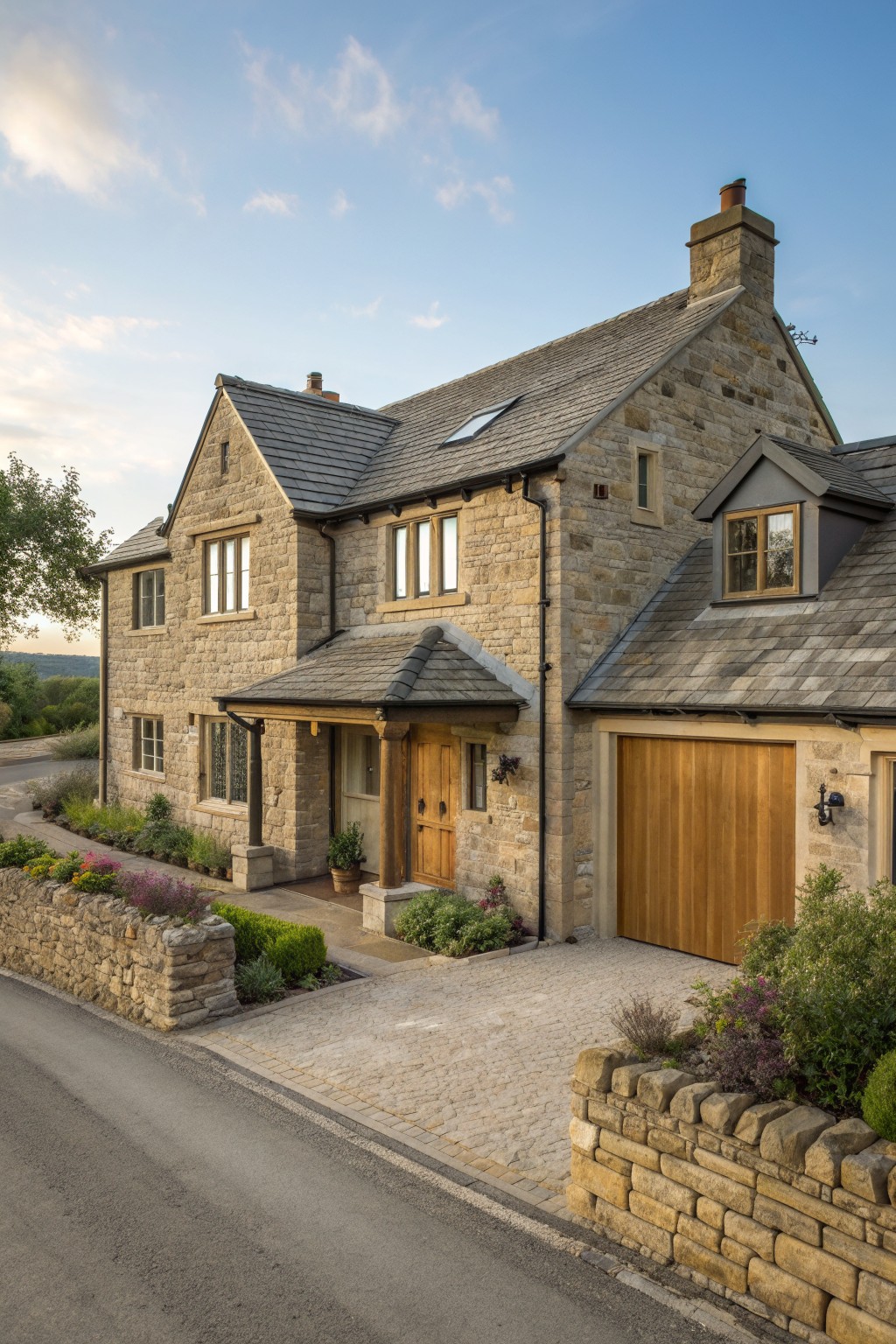
Natural stone gives a house that solid, settled look that fits right into the countryside. It ages well on its own and needs very little extra treatment to feel complete.
This approach works best on homes with straightforward roof shapes and wood accents at the doors and windows. It suits both new builds and updates in areas where stone feels native to the setting.
Stone Patios Built For Outdoor Meals
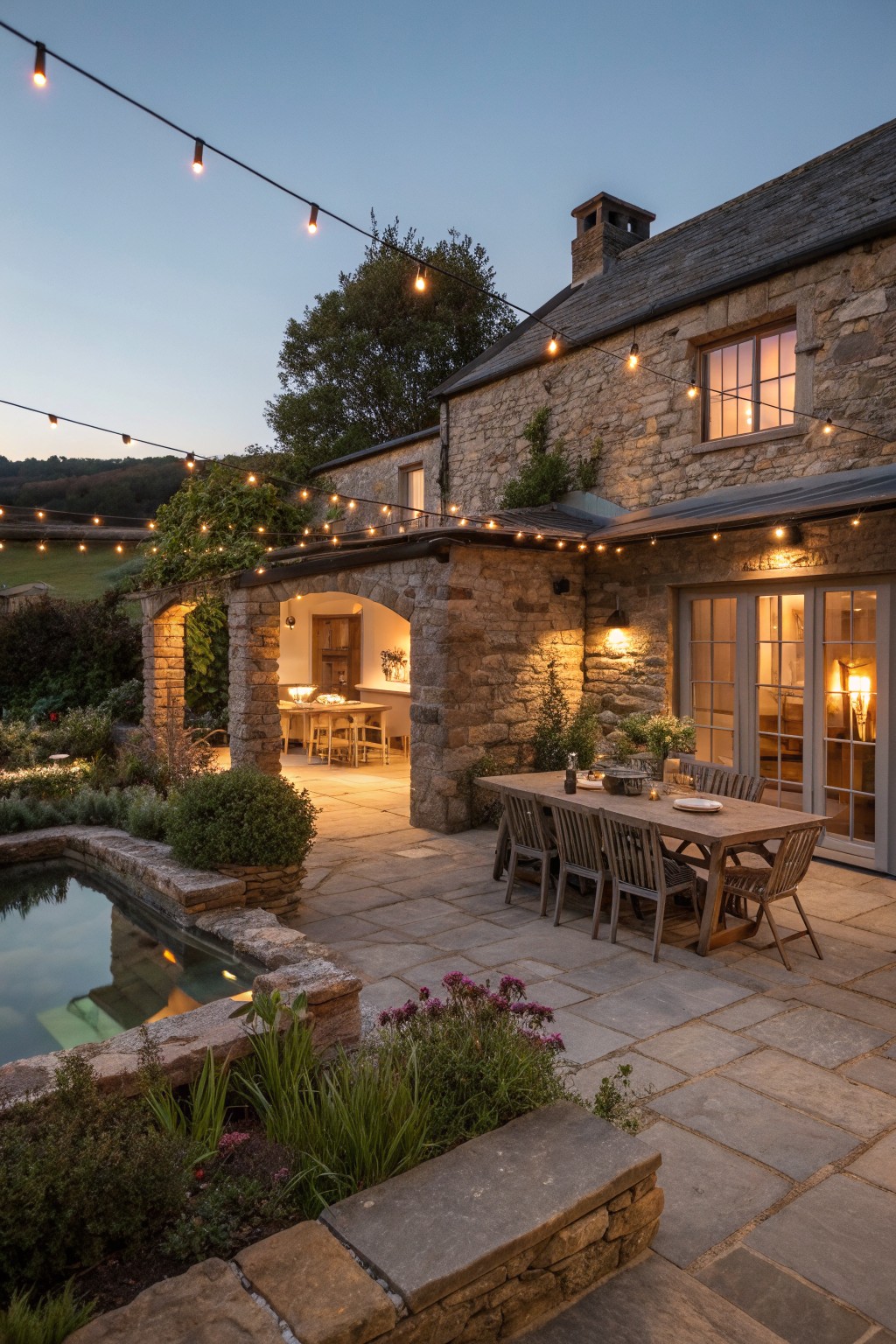
A stone patio placed right against the house gives you a solid spot for a dining table without needing a big deck or fancy setup. The flat paving stays level, drains well, and pairs naturally with the stone walls already on the building.
This works best on cottage or farmhouse homes where you want the outdoor area to feel like part of the main structure. Keep the table long enough for six or eight people, add simple overhead lights, and leave room to walk around the chairs.
Natural Stone As The Main Wall Material
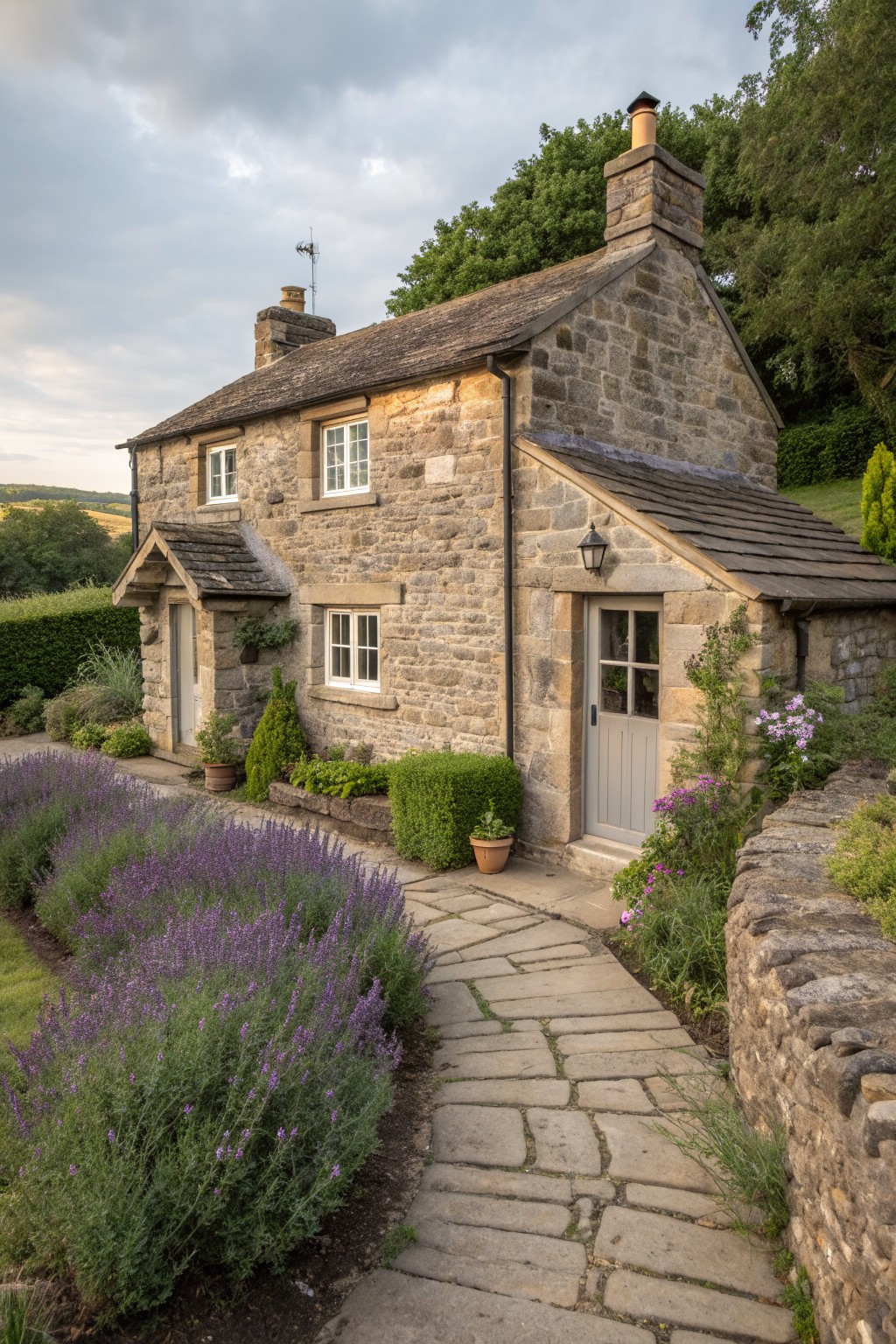
Natural stone gives a cottage exterior real presence without extra decoration. The walls carry most of the character, and the rest of the house can stay simple in form and color.
This choice works well on smaller homes in open countryside. Keep the roof plain, use a muted door, and let the stone do the main work so the whole place stays grounded rather than busy.
Roses Climbing Over Stone Walls
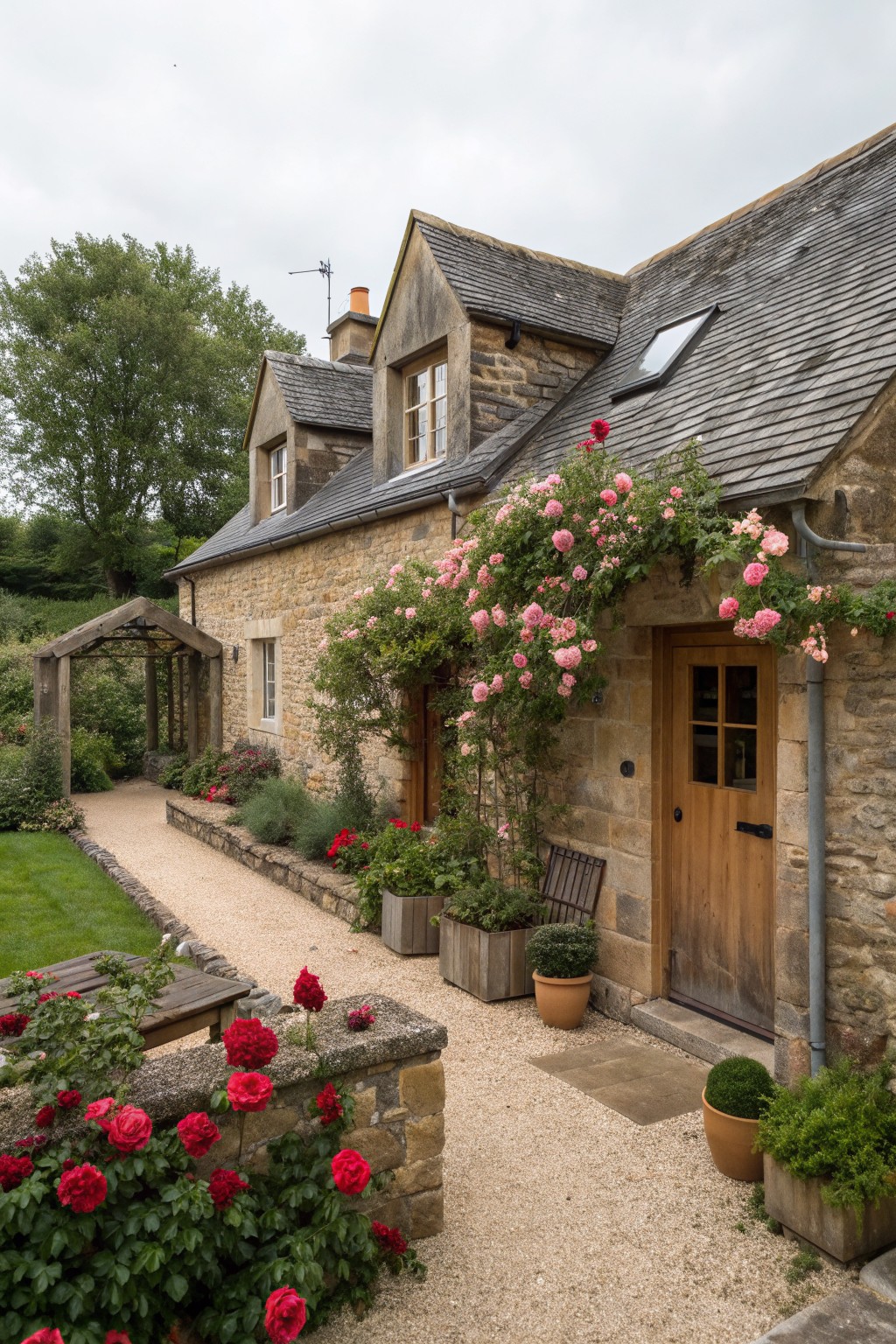
Natural stone already feels solid and permanent on a house exterior. Adding climbing roses gives it life and movement without any extra structure needed. The roses soften the edges around doors and windows while the stone keeps everything grounded year round.
This works best on cottage style homes where the walls are already textured. Choose a variety that blooms repeatedly and train it along wires or trellises so it does not block light from small windows. Keep the door and trim simple so the stone and flowers stay the main focus.
Natural Stone Exteriors That Feel Timeless
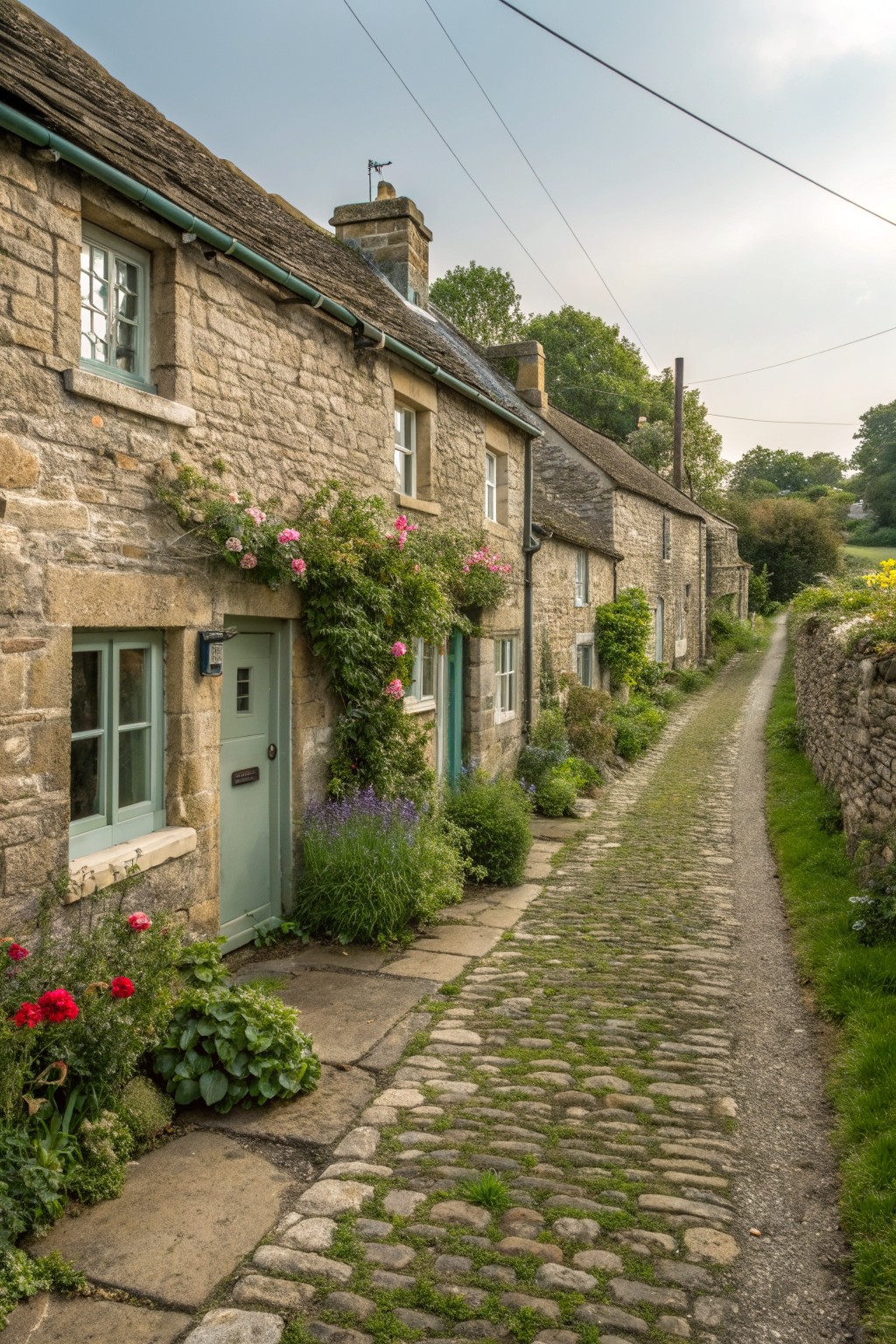
Natural stone gives these cottages a solid, settled look that newer materials rarely achieve. The uneven surfaces and soft color shifts help the houses sit comfortably in the landscape instead of standing apart from it.
This works best on smaller homes where you want the walls themselves to do most of the work. Pair the stone with simple painted trim and let a few climbing plants soften the edges over time.
Matching Stone for the House and Garden Walls
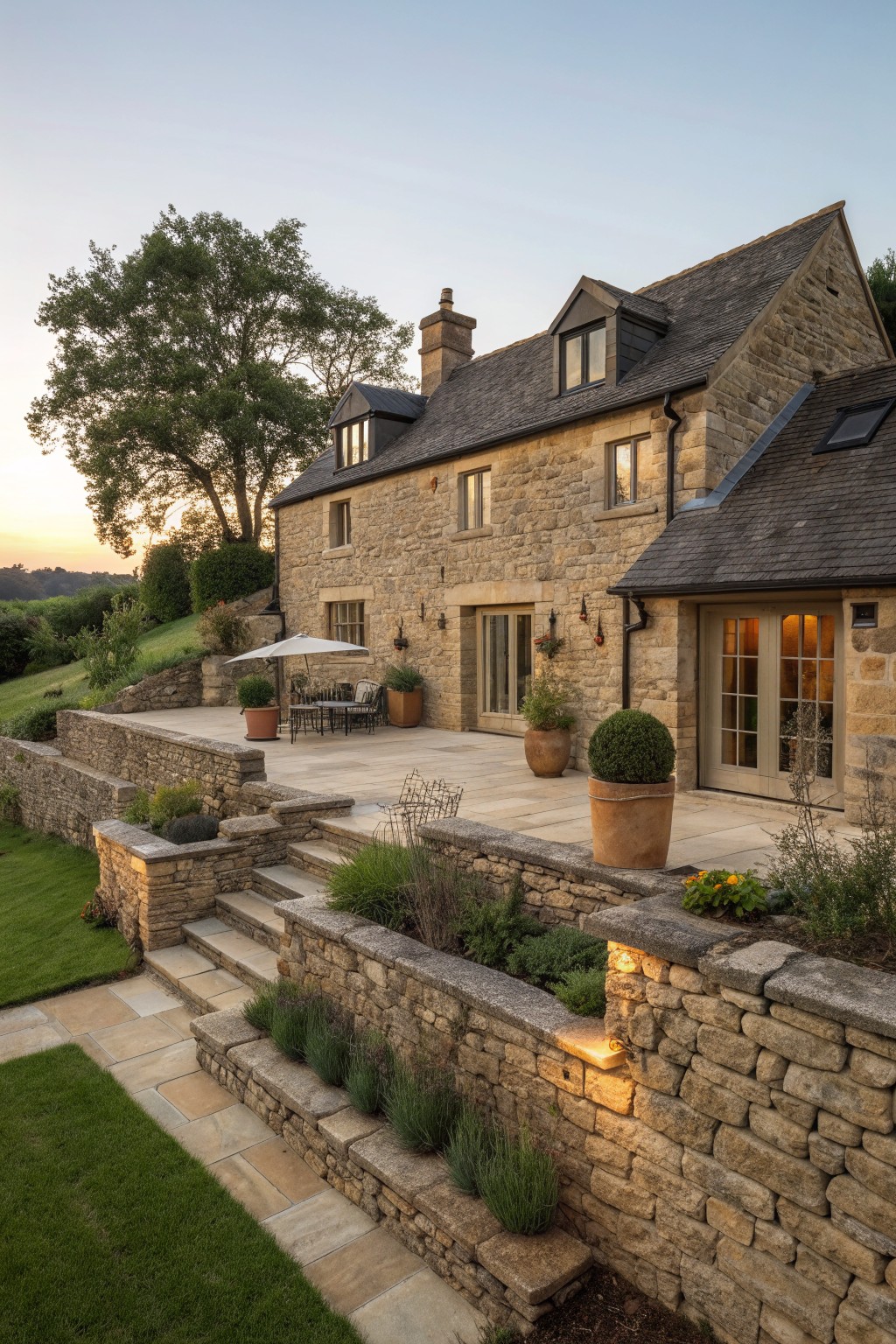
Using the same natural stone for the house and the garden walls gives the whole place a settled, connected look. The walls do not feel like an afterthought. They read as part of the original build, which helps older-style homes sit comfortably in their setting.
This works best on sites with gentle slopes or level changes where retaining walls are needed anyway. Keep the stone type and joint style consistent, and the walls will age alongside the house instead of standing out as newer additions.
Stone Arch Entries Add Cottage Charm
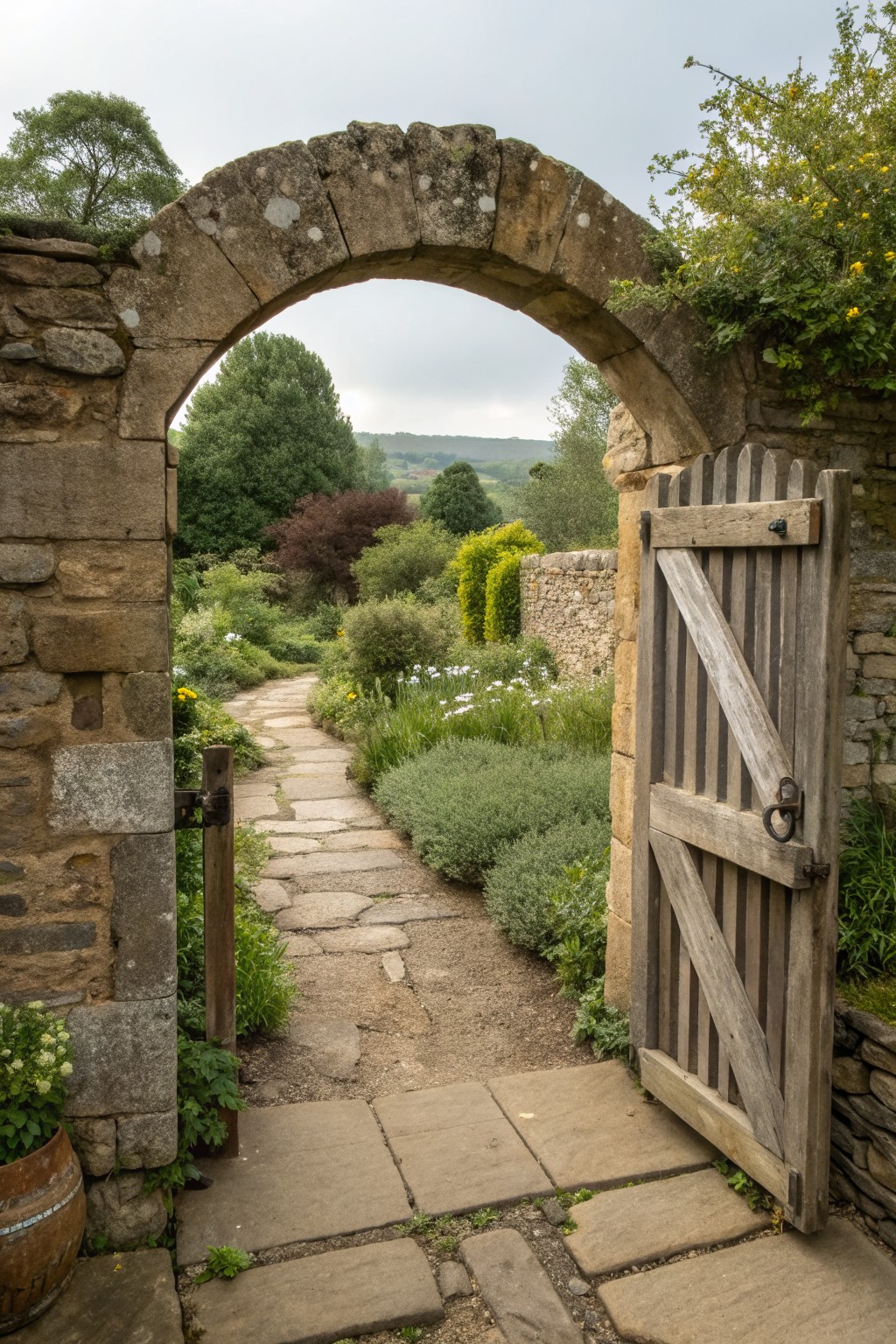
A low stone arch paired with a simple wooden gate gives an entrance real presence without feeling formal. The rough texture of the stone contrasts nicely with the weathered wood and helps the whole entry settle into the garden.
This approach suits older homes or new builds that want a bit of age and weight at the front. Keep the gate plain and let the stone do the work, and make sure the path beyond stays narrow so the arch feels like a true threshold.
Mixing Stone And Wood On The Facade
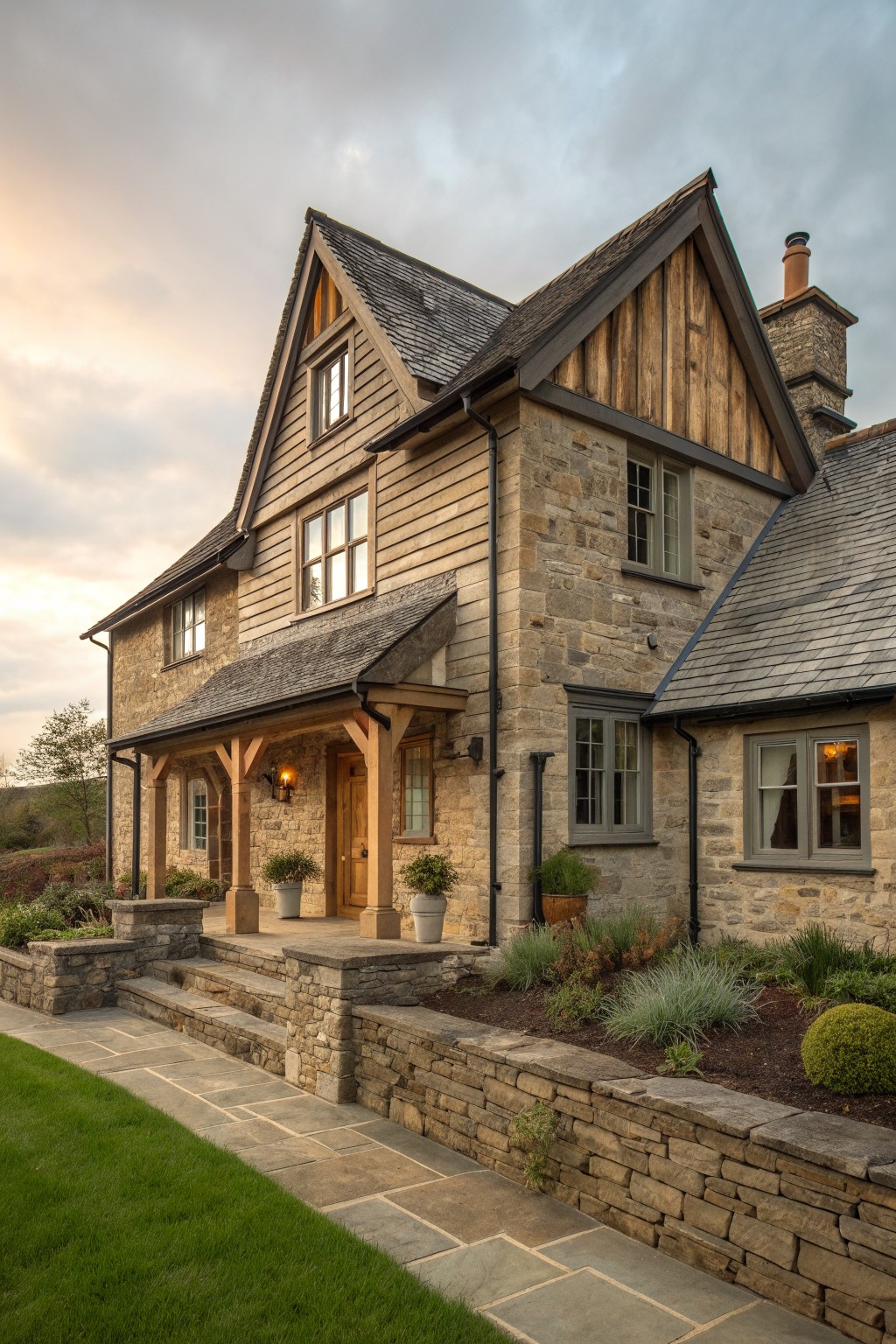
Natural stone and wood work well together on a house exterior because the stone gives weight and permanence while the wood keeps things from feeling too heavy. The two materials balance each other and help the house feel settled into its setting.
This approach suits older-style homes or new builds meant to look established. Use the stone on the lower walls and around the entry, then bring in wood siding or beams higher up so the house does not look too uniform.
Add a Pergola for Simple Outdoor Dining
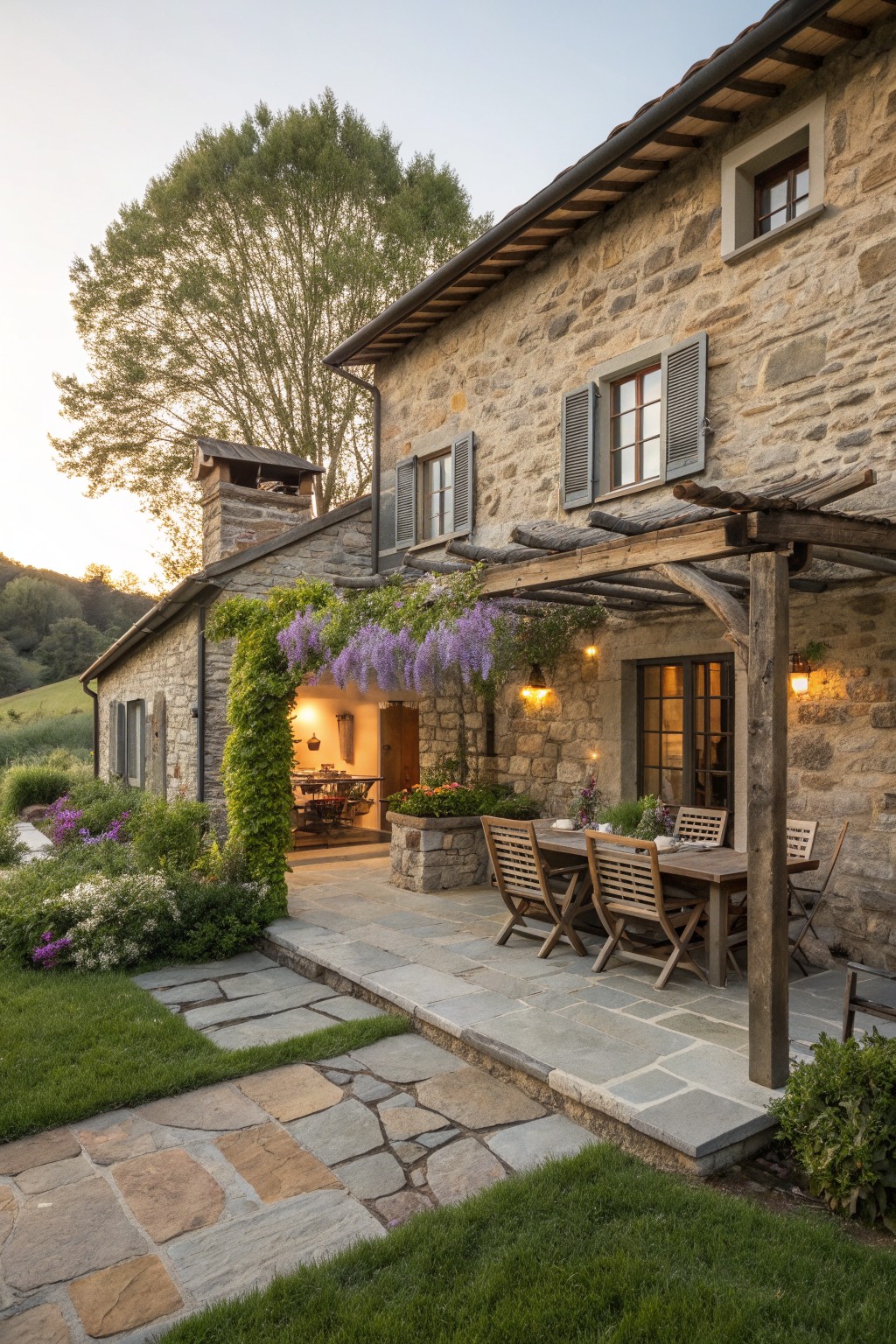
A pergola over a patio gives the space a clear purpose without needing walls or a full roof. It creates shade and a bit of enclosure while still feeling open to the garden, which works especially well next to a stone house where the natural textures already do most of the work.
This setup suits older or cottage style homes that have a flat area right off the back or side. Use basic wood beams and let vines grow over them so the structure softens over time and ties the house to the planting.
Choosing Natural Stone For The Exterior Walls
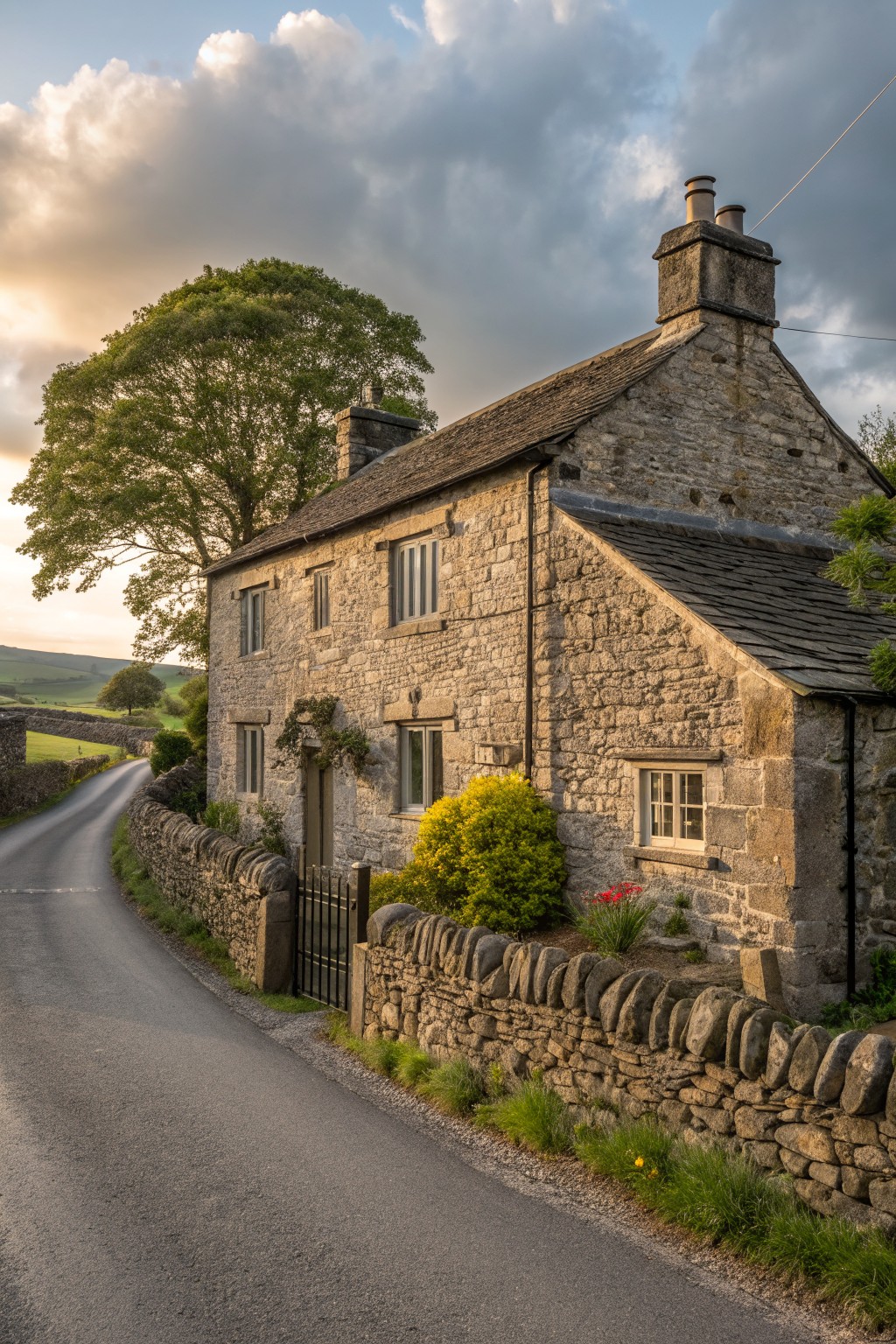
Natural stone gives a house real staying power. It handles weather without much fuss and settles into the landscape instead of fighting it.
This works best on smaller cottages or farmhouses where the goal is a simple, grounded look. Match the stone to local walls or outbuildings when you can, and keep windows and trim plain so the material carries the design.
Stone That Connects the House to Its Surroundings
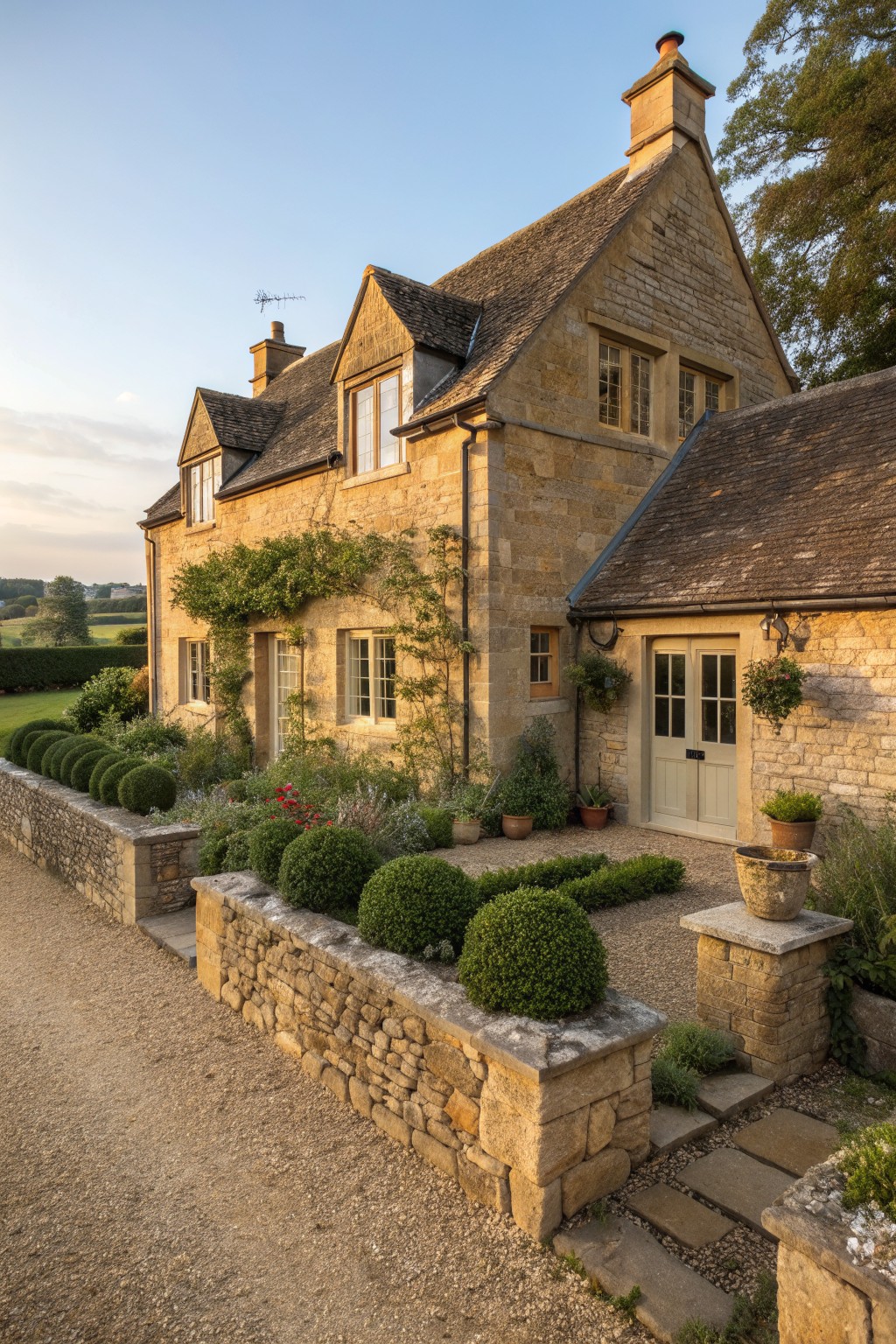
Natural stone works well when it runs from the main walls straight into the garden edges. It makes the whole place feel like it grew there instead of being added on later. The same material keeps everything tied together without extra effort.
This approach suits older style homes on bigger lots where you want the garden to feel like part of the building. Just match the stone color and texture as closely as you can and keep the wall heights low so the house stays the main focus.
Frequently Asked Questions
Q: How do I pick stone that matches the cozy look without making the house feel too heavy? A: Look for stones in soft grays or warm beiges that echo your roof color. Lay a few samples against the wall during different times of day to see how the light hits them.
Q: What if my current siding is wood and I want to add stone accents? A: Start with a chimney or the area around the front door. Keep the stone sections narrow so the wood still shows through and the whole exterior stays balanced.
Q: Do climbing plants help or hurt the stone over time? A: They soften the surface nicely when kept trimmed back a few inches. Pick varieties like clematis that do not hold moisture right against the wall.
