

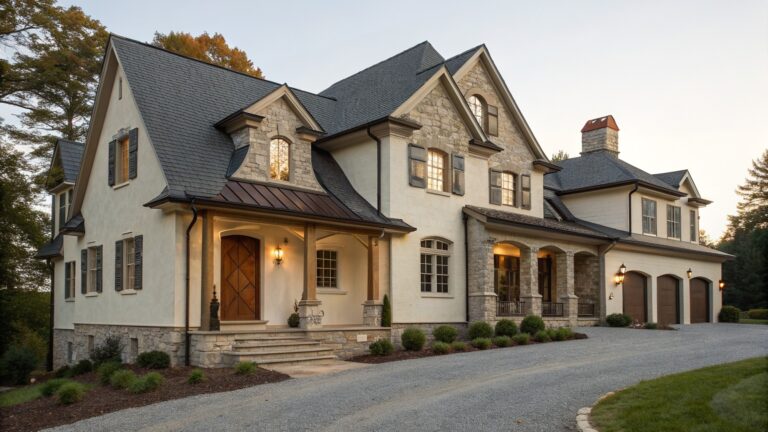
I’ve always noticed that stone and stucco pair well on farmhouses because the rough texture next to the smoother finish helps the whole front read as settled rather than stark.
The roof pitch and how the windows sit within the walls seem to matter just as much as the materials themselves when you stand across the street.
That balance is easy to miss on paper.
Over time I have seen how small shifts in entry placement or trim color can pull an exterior together or leave it feeling scattered.
A couple of these material mixes strike me as worth testing if I ever update the front of my own house.
Stone And Stucco On The Facade
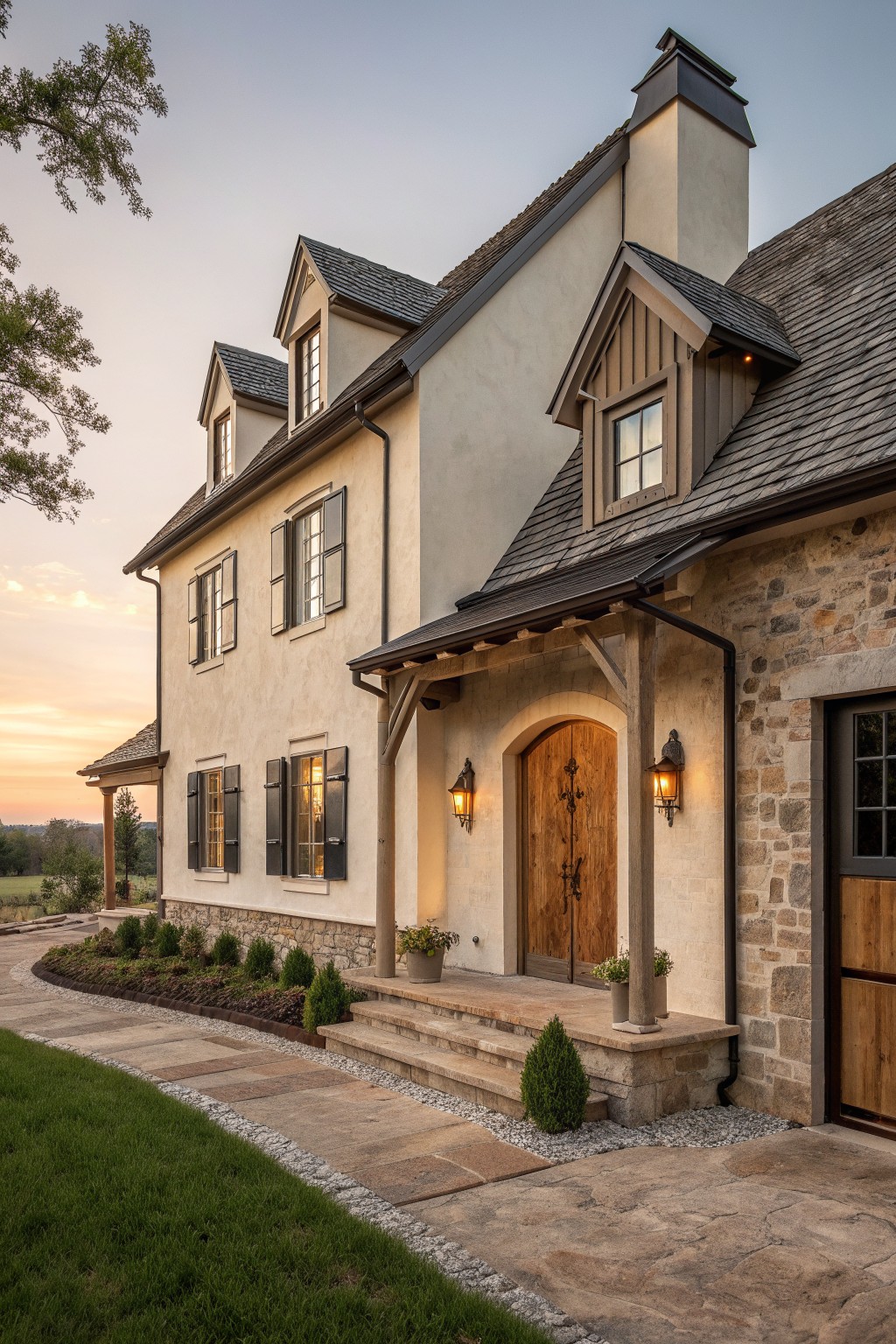
The stone base paired with stucco walls gives this house a settled look that still feels light. The lower stone grounds the structure while the upper stucco keeps everything from feeling too heavy or dark.
This mix works best on homes with straightforward rooflines and a few strong details like a centered entry. It suits places where you want some European character without adding too many extra materials or colors.
Stone And Wood For A European Farmhouse Look
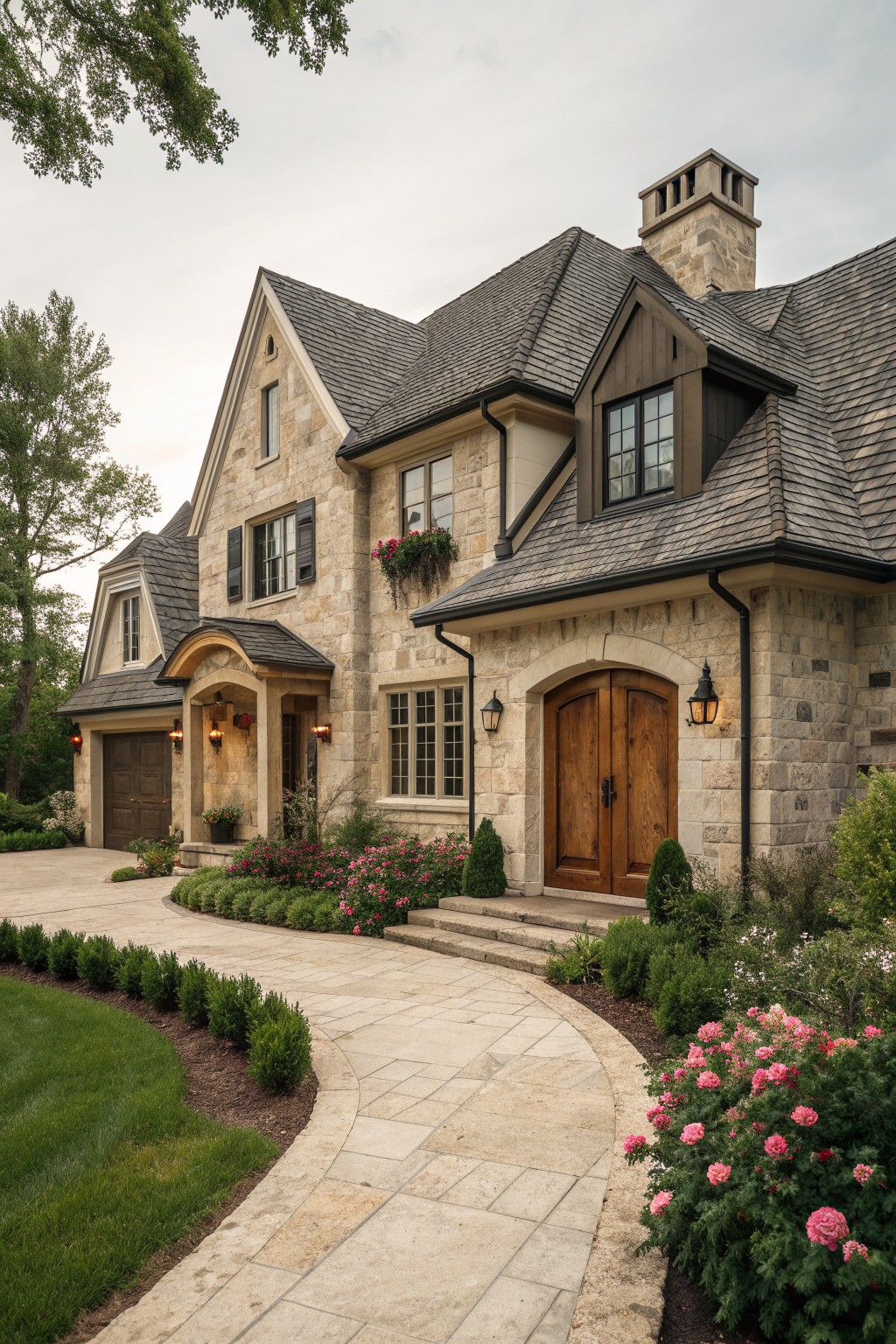
Many stone farmhouses gain a softer European feel when dark wood is added to doors, shutters, and trim. The contrast keeps the stone from looking too heavy while the wood brings warmth and a touch of age that fits the style.
This approach works best on homes with simple rooflines and gabled forms. Keep the wood tones deep rather than bright so the stone stays the main material and the whole exterior reads as calm and classic rather than busy.
Arched Stone Entries
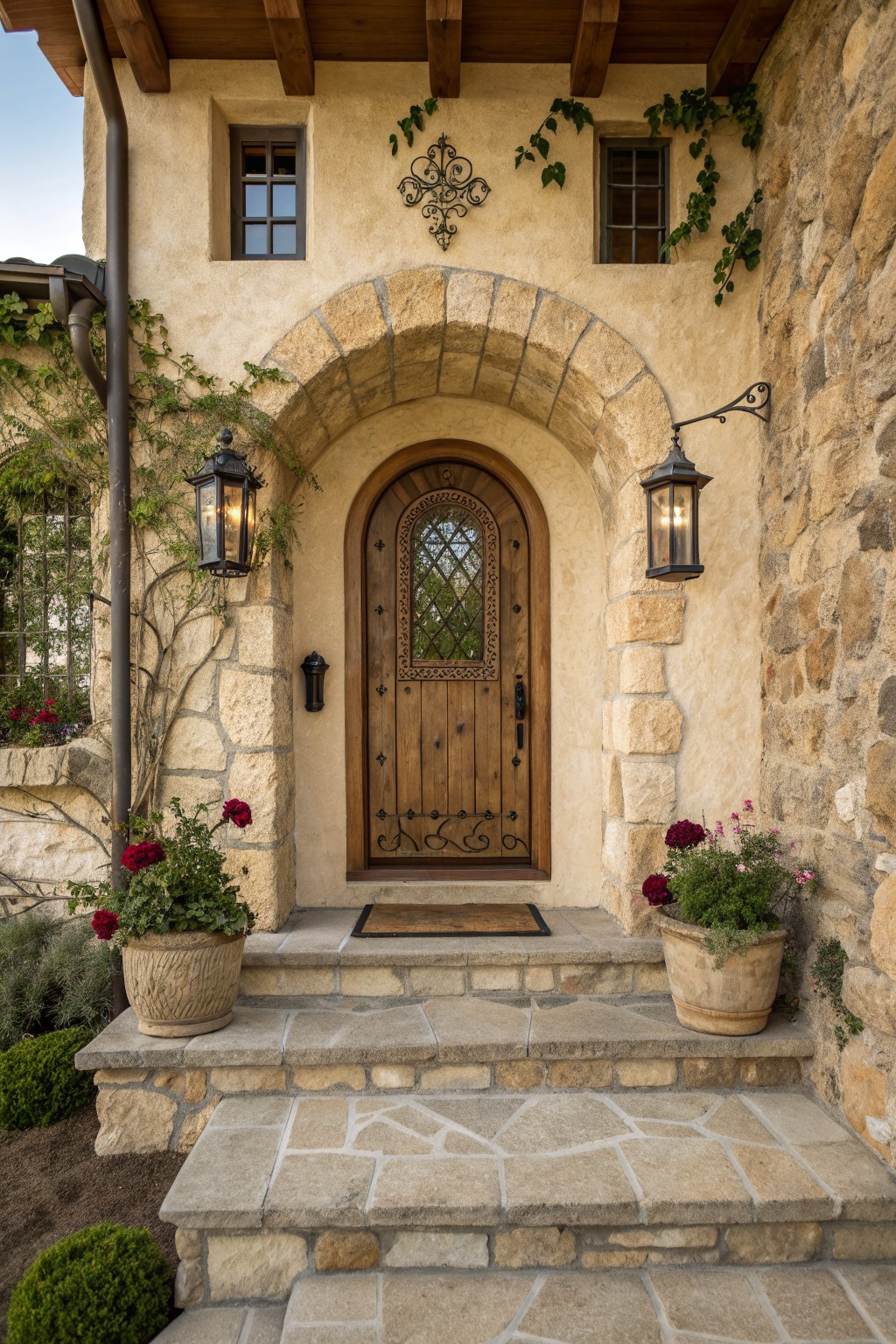
A stone arch over the front door gives a farmhouse exterior that softer European feel without changing the whole structure. It frames the entry in a way that feels both sturdy and graceful, especially when the arch sits against stucco walls. The contrast between the rough stone and the smoother surface keeps the house from looking too heavy.
This approach works best on simpler farmhouse shapes where the arch becomes the main detail. Keep the door itself fairly plain, like a straightforward wood style, and add only basic lighting so the arch stays the focus. It suits homes that want a touch of old-world character without extra ornament.
Stone Bases Under Stucco Walls
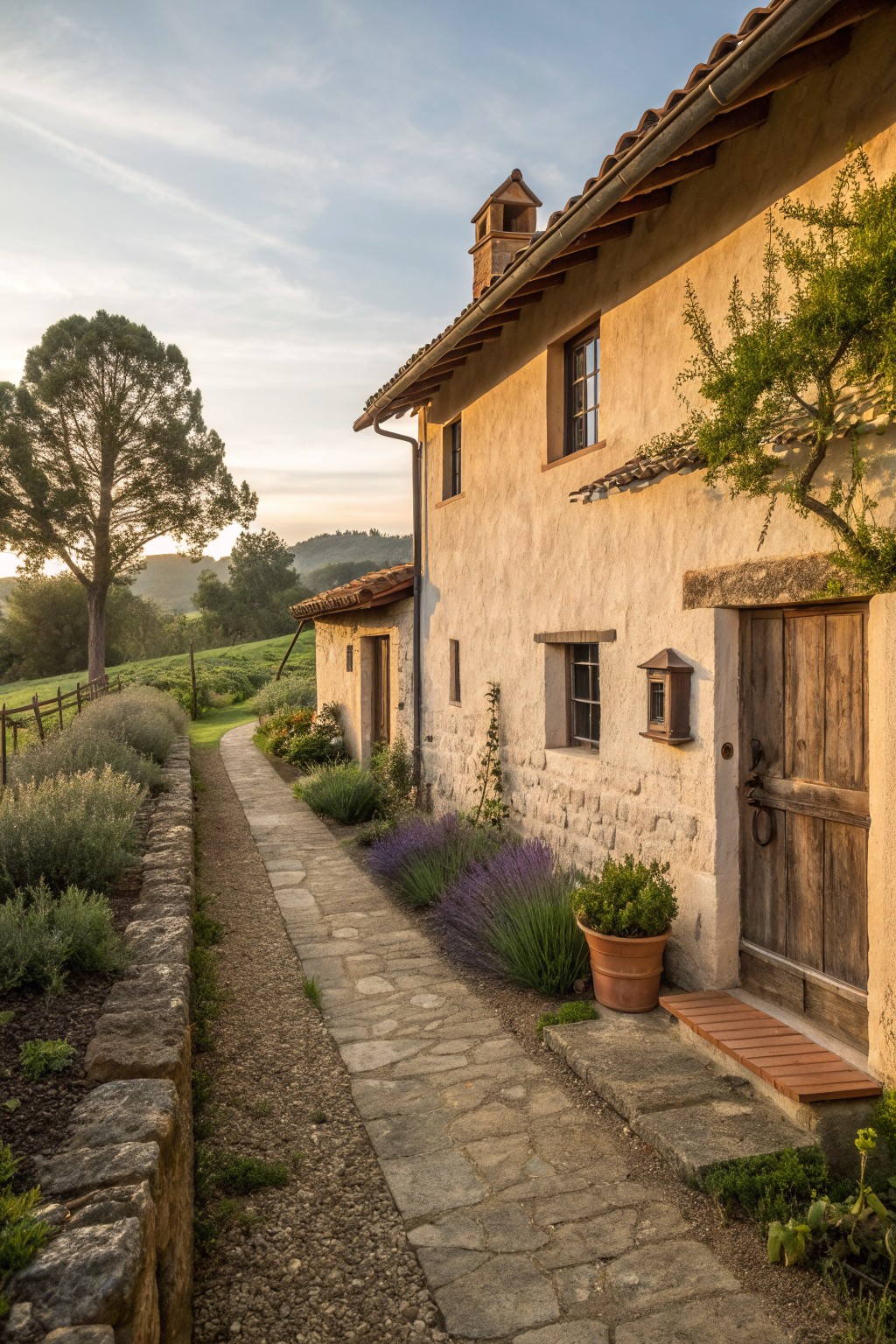
Many older farmhouses keep the lower part of the walls in stone while the rest is finished in stucco. The stone gives the house a solid, grounded feel and the stucco above stays light and simple.
This approach suits homes that sit on slight slopes or have existing stone garden walls. Match the stone color and size to any nearby paths or borders so the whole place reads as one quiet composition instead of separate pieces.
Mixing Stucco And Stone On The Facade
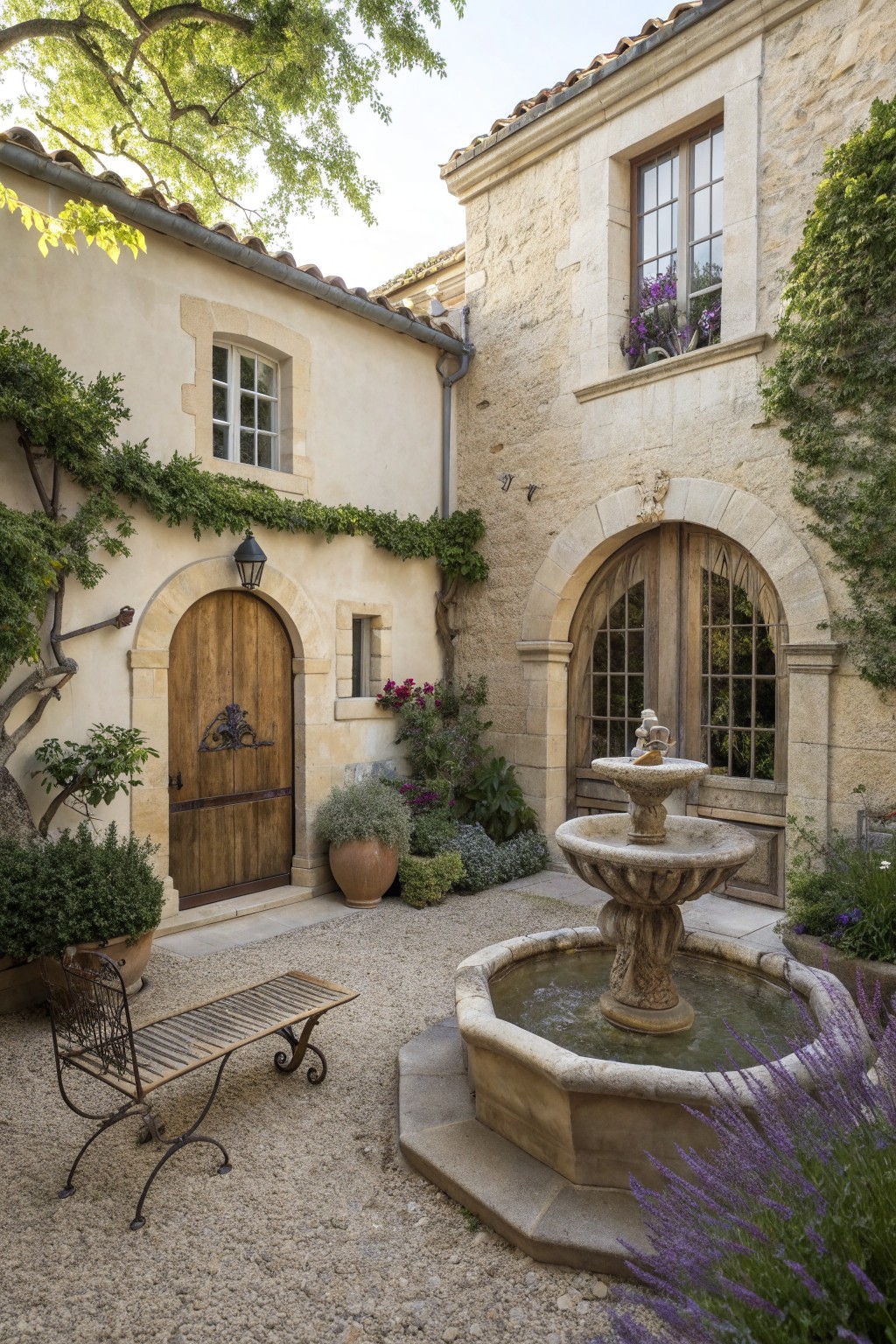
Stucco and stone work well together on farmhouse exteriors because the smooth plaster softens the heavier look of the stone. This mix keeps the house from feeling too solid or cold while still showing the natural texture of the materials. Many older European farmhouses use this approach to create a quiet, settled appearance that ages nicely over time.
It suits homes with simple rooflines and smaller window openings. Keep the stucco in a warm off-white or light beige and let the stone show around doors, windows, and corners only. Too much stone can make the walls feel busy, so using it as an accent works better for most properties.
Stone Bases With Stucco Walls
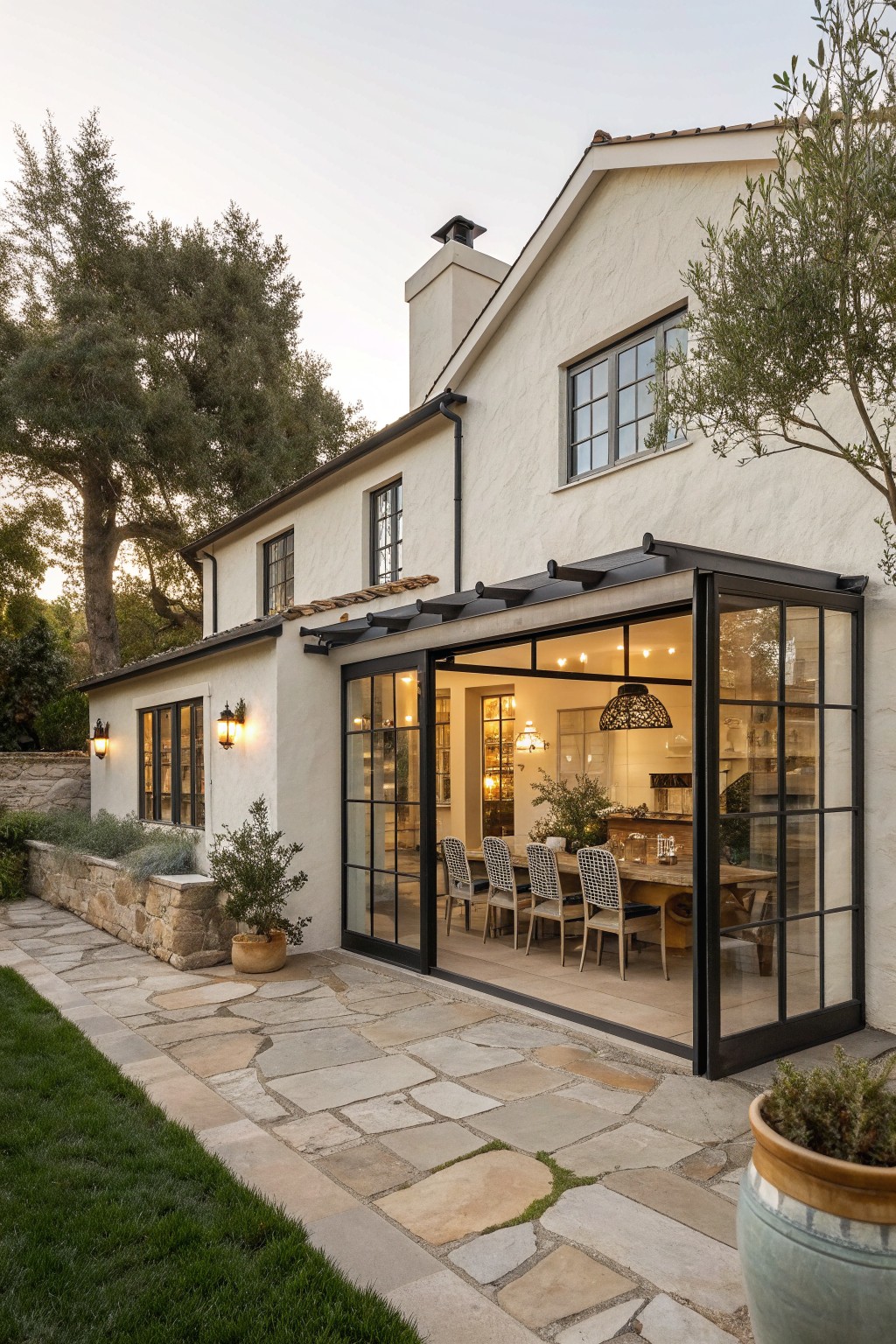
Stucco walls can look a little flat without something to ground them. Adding a low stone base along the foundation gives the house more weight at the bottom while keeping the upper walls light and simple. The contrast feels natural and helps the house sit better in its setting.
This approach works well on farmhouses that lean European. Keep the stone low and the stucco a warm off-white, and use dark frames on the windows so the whole exterior stays balanced rather than too bright or too heavy.
Soft Green Doors on Stone Farmhouses
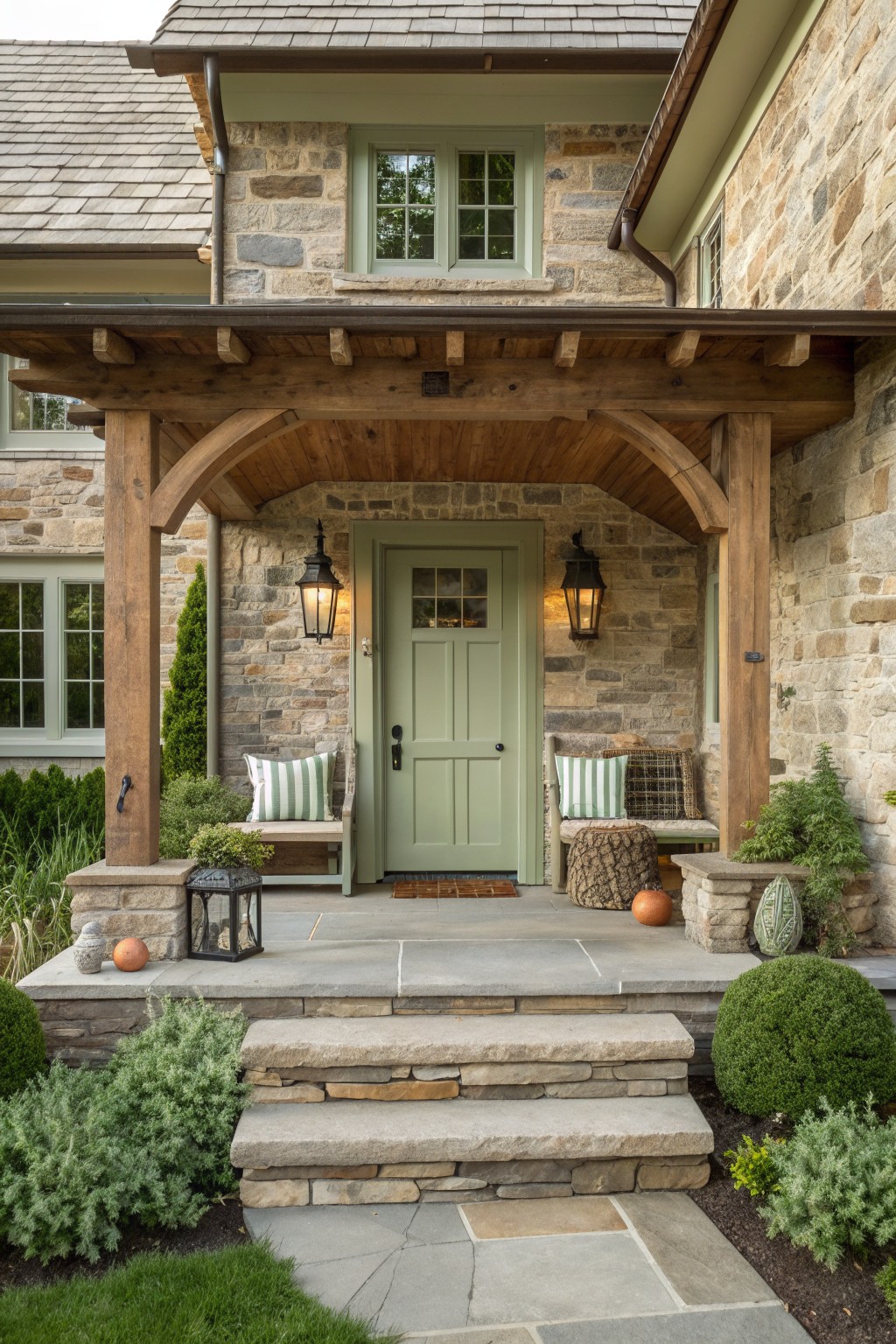
A soft green door stands out nicely against stone walls because it adds color without overpowering the natural texture. The choice keeps the entry feeling calm and slightly European while the stone does most of the visual work.
This works best on farmhouses that already have wood beams or trim around the door. Keep the green muted so it blends with the stone rather than fighting it, and test the shade in different light before committing.
Mixing Stone And Stucco
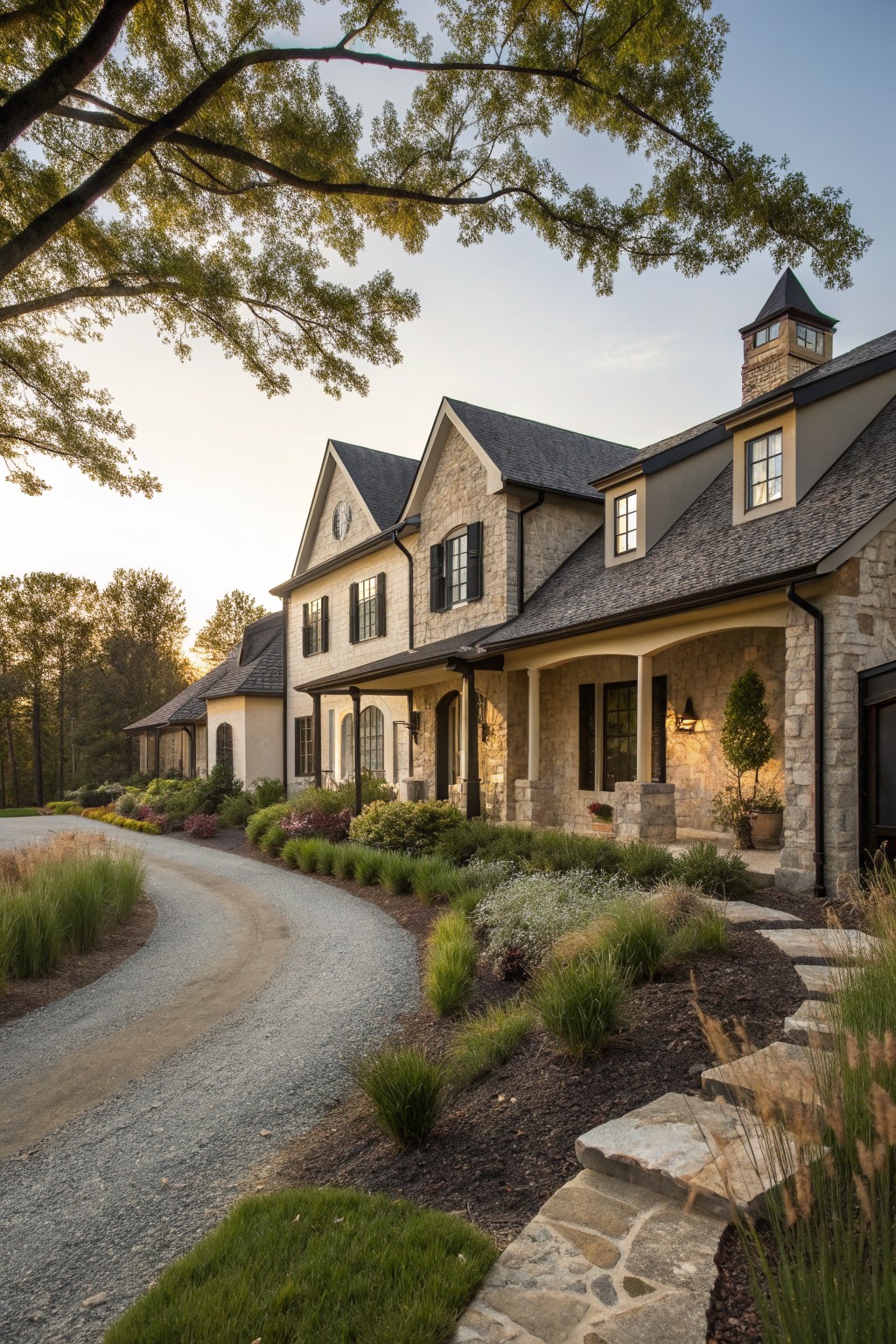
Stone and stucco work well together on farmhouse exteriors because the stone adds weight and texture while the stucco keeps the overall look lighter. This mix prevents the house from feeling too heavy or too flat, especially on larger homes with several rooflines.
It suits homes that need a bit of European softness without losing their farmhouse roots. Keep the stone on the lower sections or around key windows and let the stucco cover the rest for the best balance.
Let Vines Soften Stone Walls
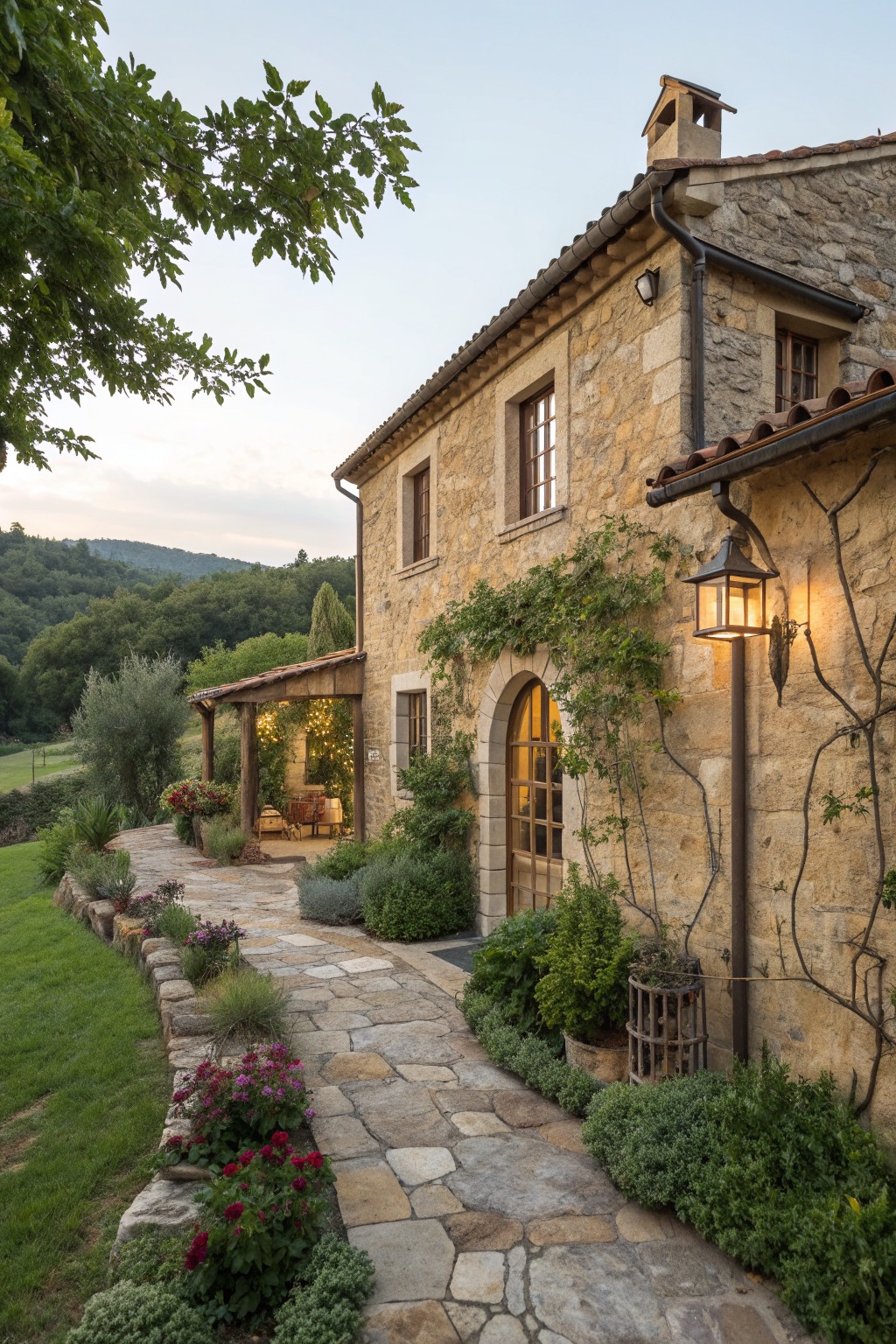
Stone can feel a little stark on its own, especially on larger farmhouse walls. Letting vines climb up the surface adds a gentle layer of green that breaks up the hard lines and gives the whole exterior a softer, more settled look.
This approach works best on homes with good sun exposure and sturdy stone that can handle a bit of moisture. Keep the plants trimmed around windows and doors so they frame rather than cover, and choose slower growing varieties if you want to avoid constant upkeep.
Stone And Stucco For A Softer Contrast
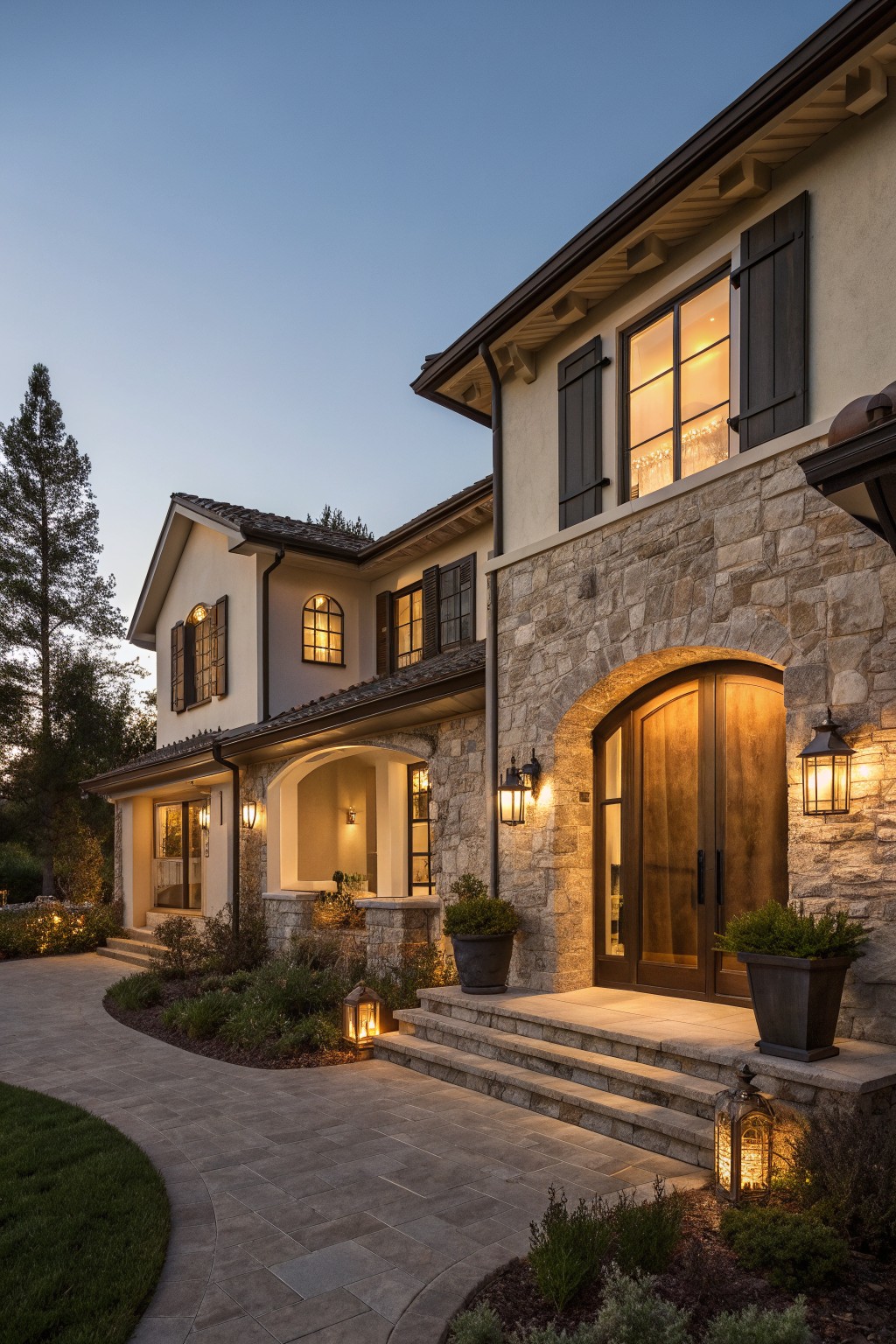
Many farmhouses gain a lot of warmth when stone covers the lower walls and stucco takes over higher up. The change in texture keeps the house from feeling too heavy while still giving it a solid base that looks settled into the ground.
This approach works especially well on two-story homes with simple rooflines. Keep the stone limited to the entry area and any projecting wings, then let the stucco run clean across the rest of the facade. Dark shutters and wood doors add just enough weight without fighting the lighter upper walls.
Stone and Stucco Blends
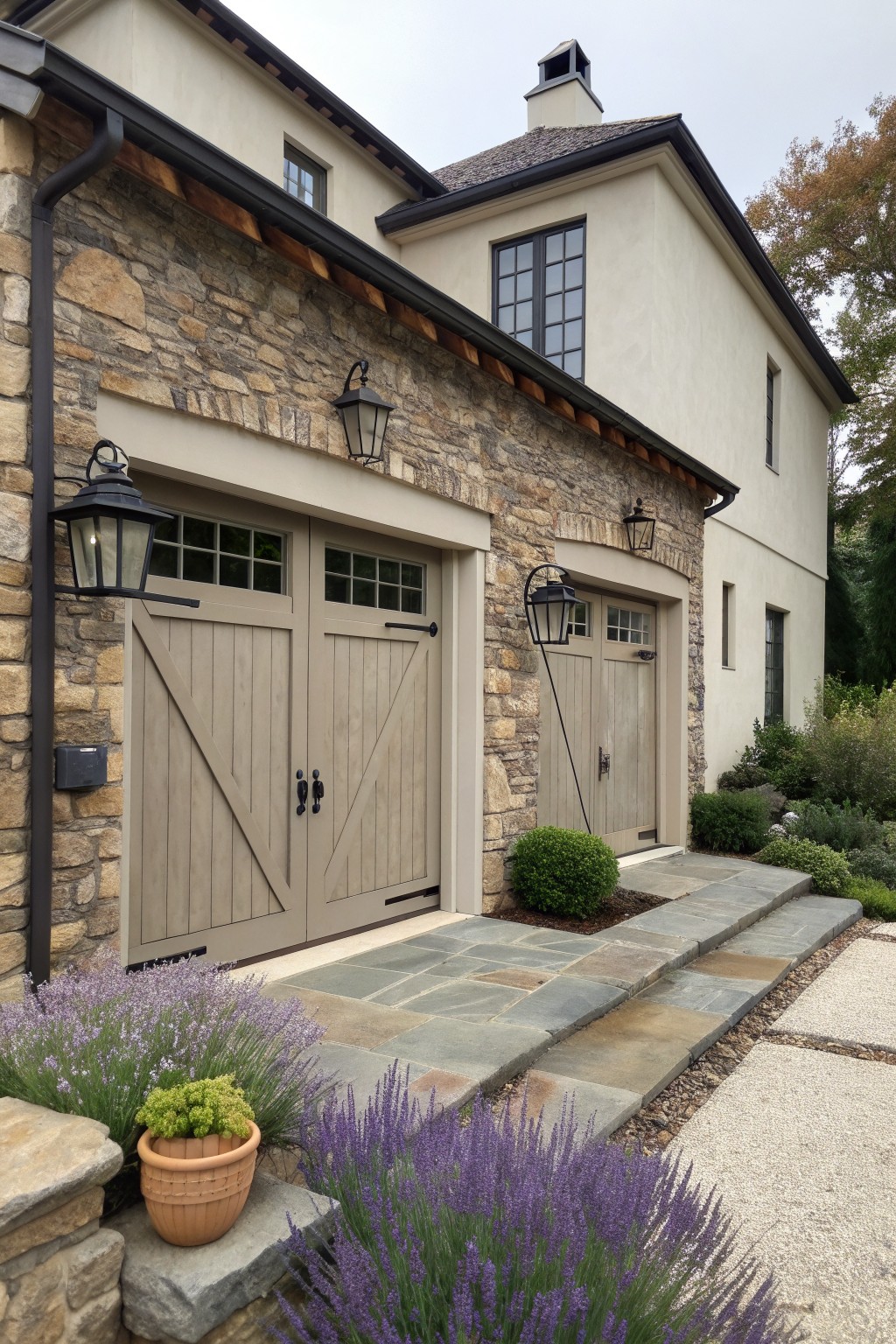
Stone and stucco work well together because the rough texture of the stone breaks up the smooth surface of the stucco without making the whole house feel heavy. This mix gives the exterior a softer European farmhouse feel while still looking grounded and practical. It works especially well on homes where you want some contrast but not a full stone facade.
This approach suits two-story houses with a simple roofline and works best when the stone stays on the lower sections or around key features like garage openings. Keep the stucco in a warm off-white or light cream so the stone stands out without competing. Too much stone can make the house look darker, so balance is key.
Stone and Stucco Side by Side
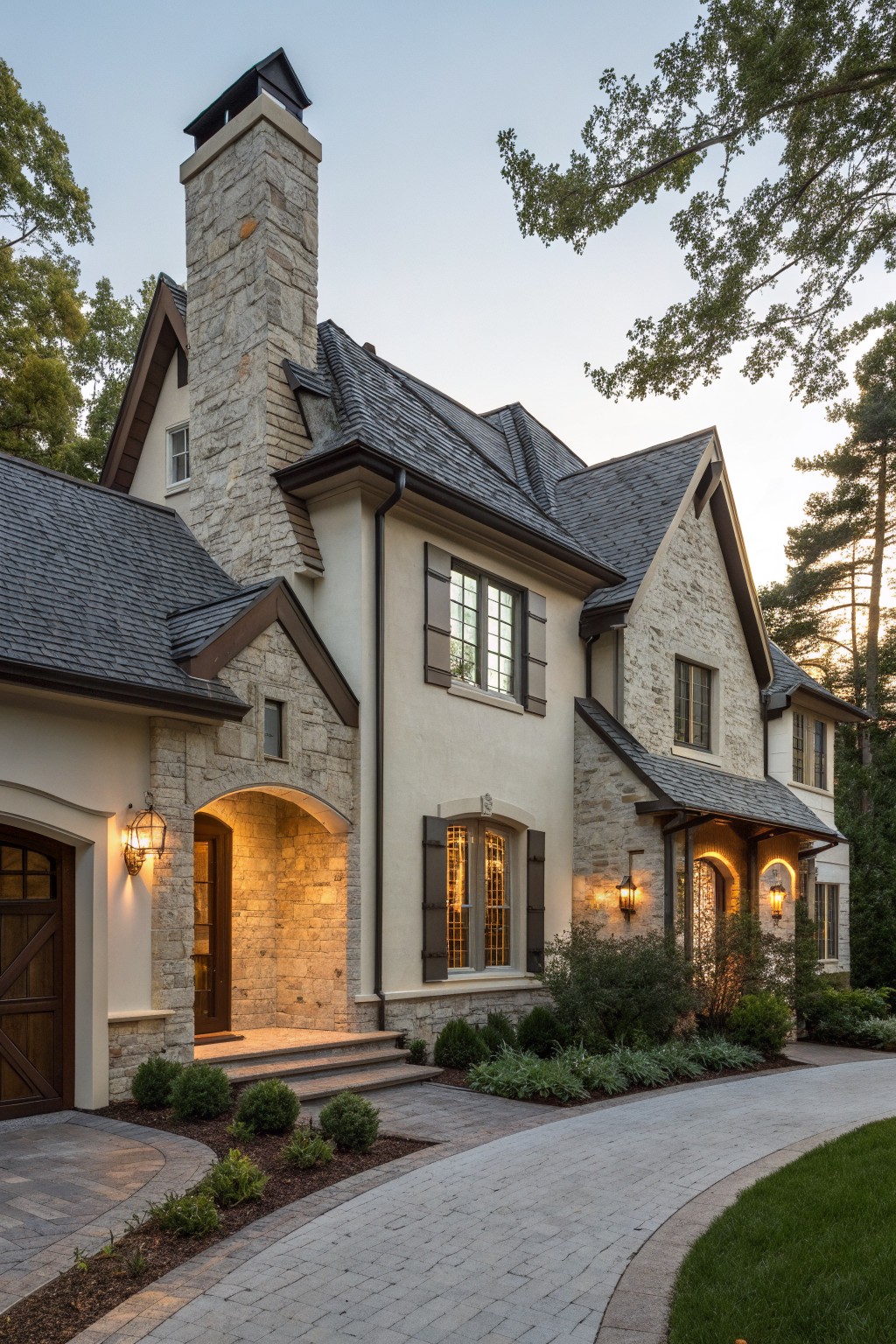
Many people like the look of stone used in just a few places on a stucco house. It gives the walls some weight and texture without covering the whole exterior. The stone sections stand out more when they frame doorways or run up the chimney.
This mix works best on homes that already have a simple roofline and dark trim. Keep the stone areas fairly small so the stucco stays the main surface. Too much stone can make the house feel heavier than intended.
Built-In Stone Seating For Outdoor Flow
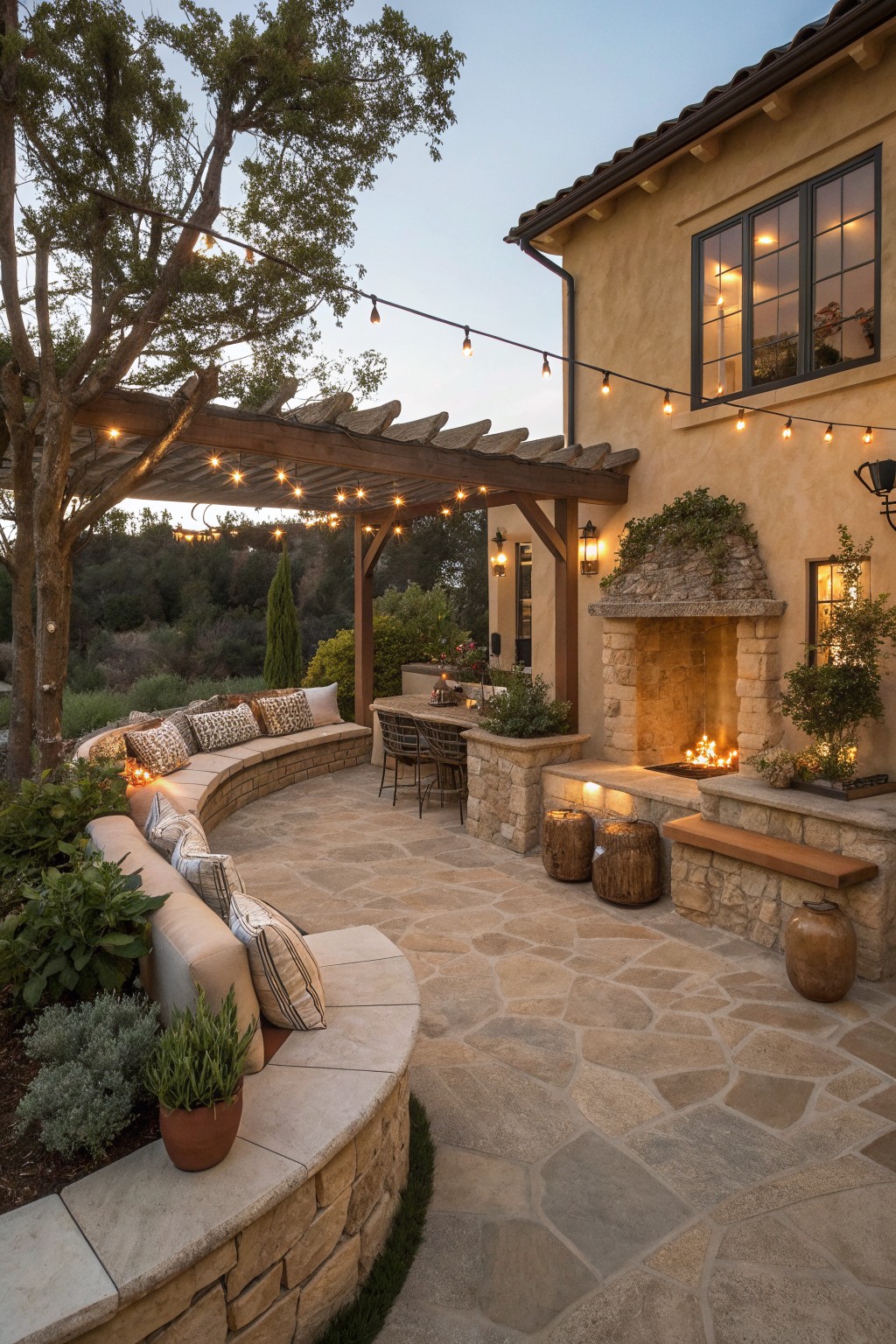
Curved built-in benches made from the same stone as the fireplace give the patio a settled, finished look without needing extra furniture. The seating wraps around the space in a way that feels natural and keeps the area open for walking through or pulling up extra chairs when needed.
This kind of seating works well on stucco farmhouses where the materials already match the house walls. It saves room on the patio and holds up better than loose pieces over time. Just make sure the curve follows the shape of the house so it does not feel forced into the layout.
Dark Frames on Light Stucco Walls
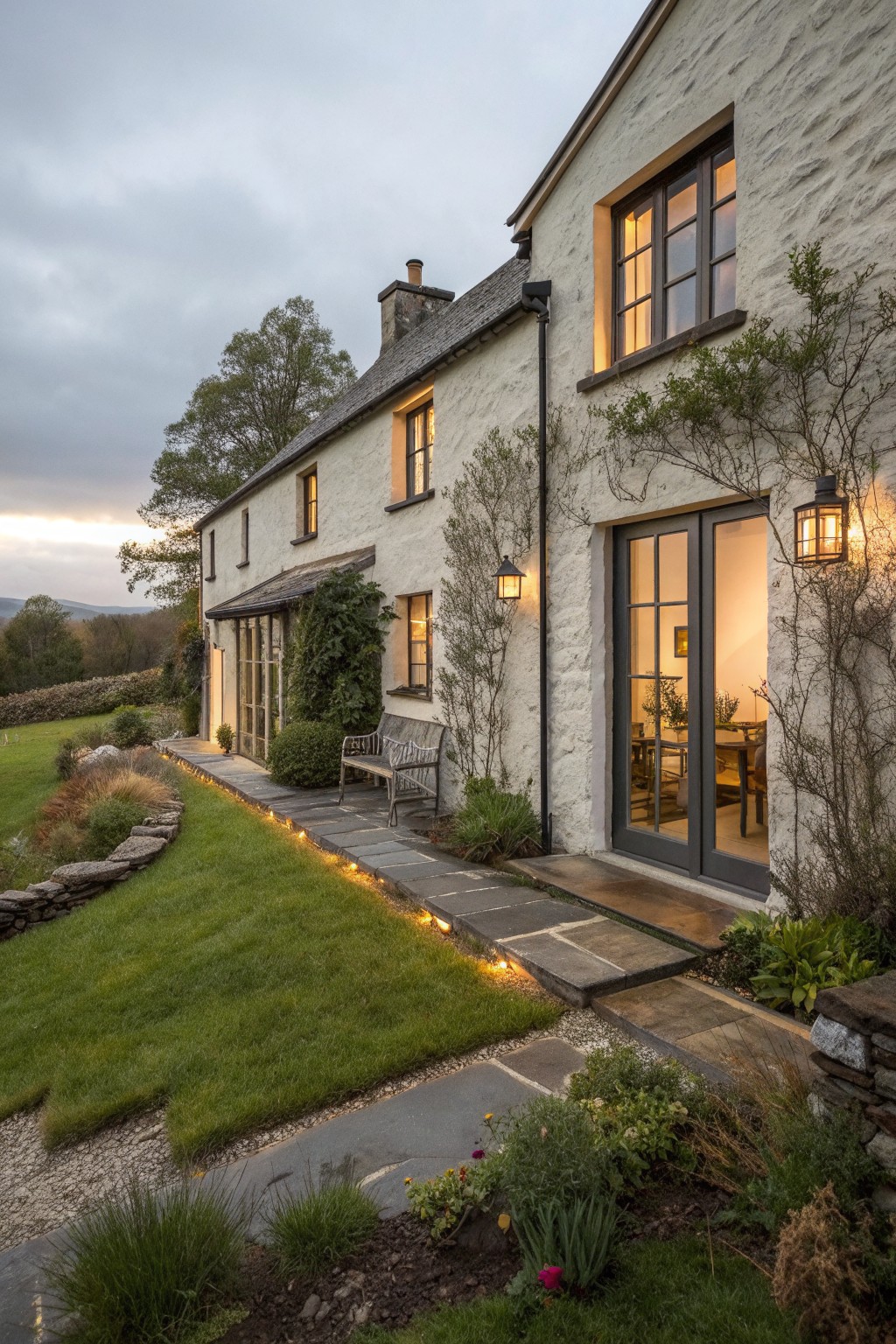
Many older farmhouses rely on light stucco or stone to keep the look soft and simple. Adding dark frames around the windows and doors gives the surface just enough definition without adding extra trim or decoration. The contrast keeps the facade from feeling flat while still reading as calm and traditional.
This approach works especially well on European-style homes that already have clean rooflines and few ornaments. Stick to matte or lightly textured black or deep charcoal frames so the look stays grounded rather than stark. It suits both new builds and renovations where the goal is to highlight the material rather than compete with it.
Stone And Stucco Combinations On Farmhouse Exteriors
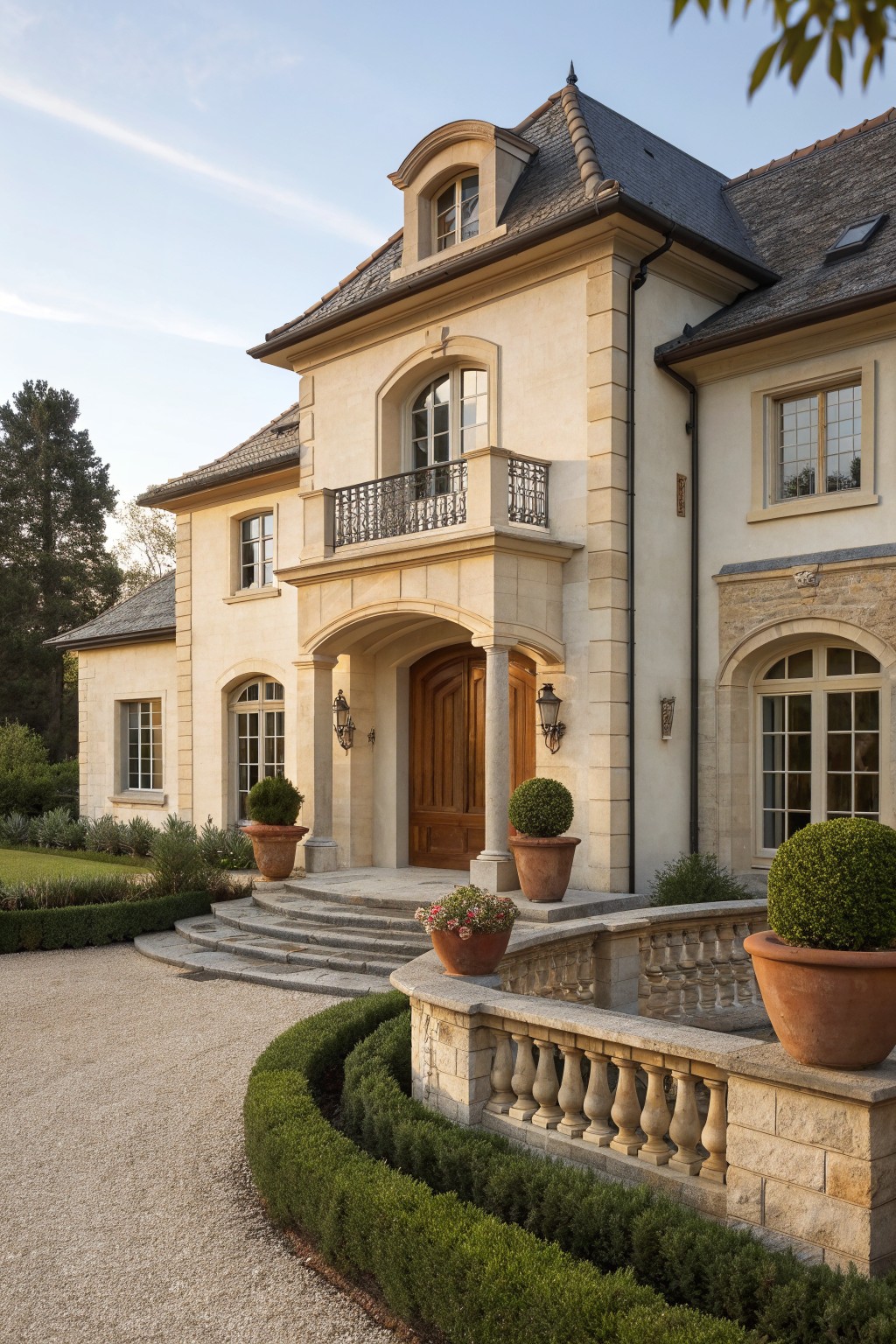
Many people like the look of light stucco paired with stone because it keeps the house feeling soft while still giving it some weight. The stone adds texture at the base and around key spots like the entry without covering the whole surface.
This approach suits farmhouses that want a European touch without looking too formal. Keep the stucco in a warm off-white and limit the stone to the foundation, steps, or a low railing so the contrast stays gentle rather than busy.
Raised Beds Against Stucco Exteriors
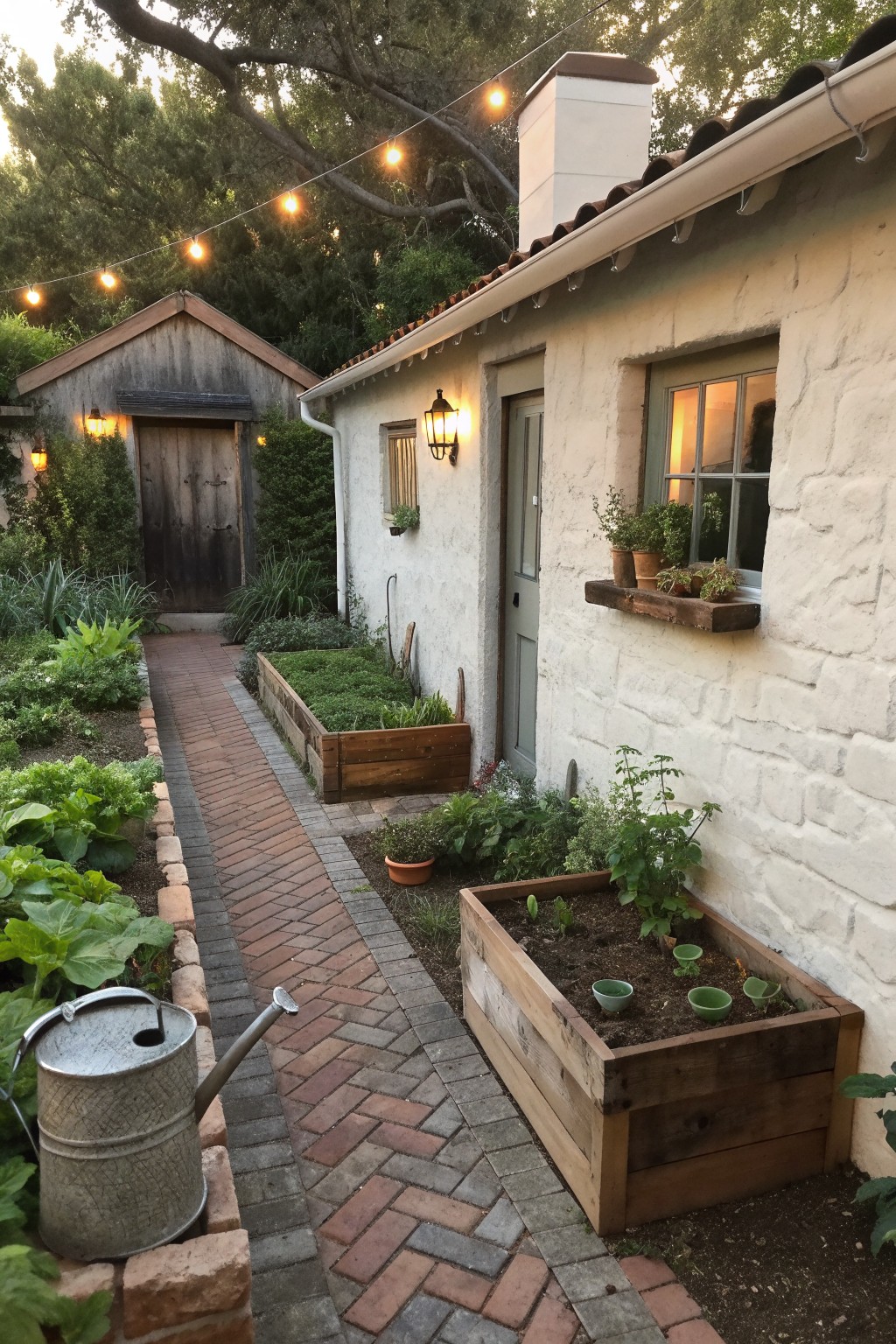
Raised beds made of simple wood give a stucco house an immediate working garden feel without any fuss. They sit right against the wall here and turn what could feel like a plain surface into something useful and lived in. The brick path running alongside helps tie the whole thing together and keeps the beds from looking scattered.
This approach works well on smaller lots or along side yards where you want some growing space without losing the clean look of the house. Keep the beds low and line them up with the main path so the planting stays orderly. Avoid crowding too many different plants in one box or the soft European contrast can start to feel messy.
Stone With Stucco For Soft Contrast
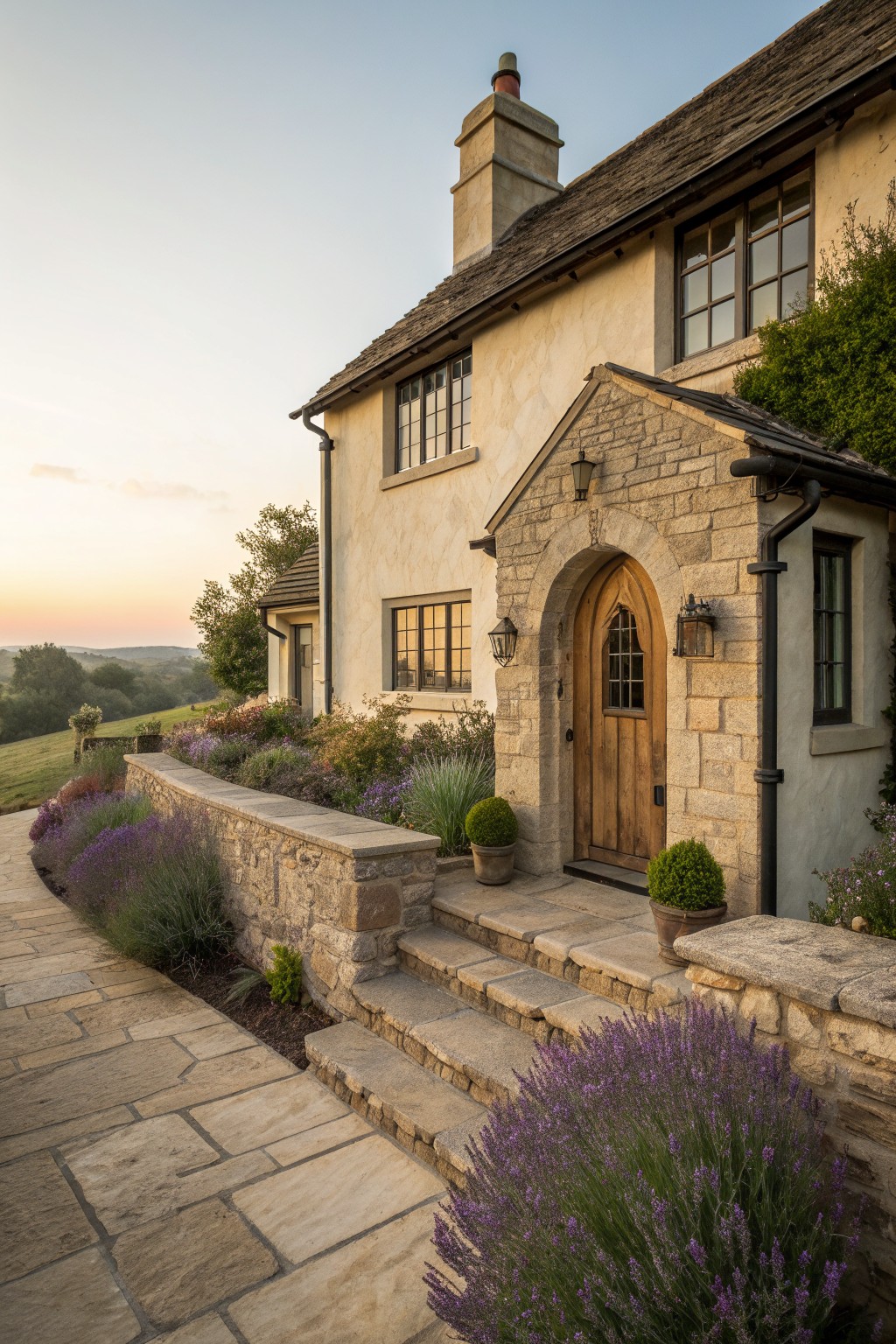
Stone and stucco work well together because the rough texture of the stone keeps the smooth walls from feeling too plain. On this house the stone is used mainly around the entry arch and the chimney, which gives the facade some weight without covering the whole surface.
This approach suits farmhouses or cottages that want a light European touch. Use the stone in small areas only, such as the entry or a chimney stack, and let the stucco cover most of the walls so the contrast stays gentle.
Stone Arches Over the Entry
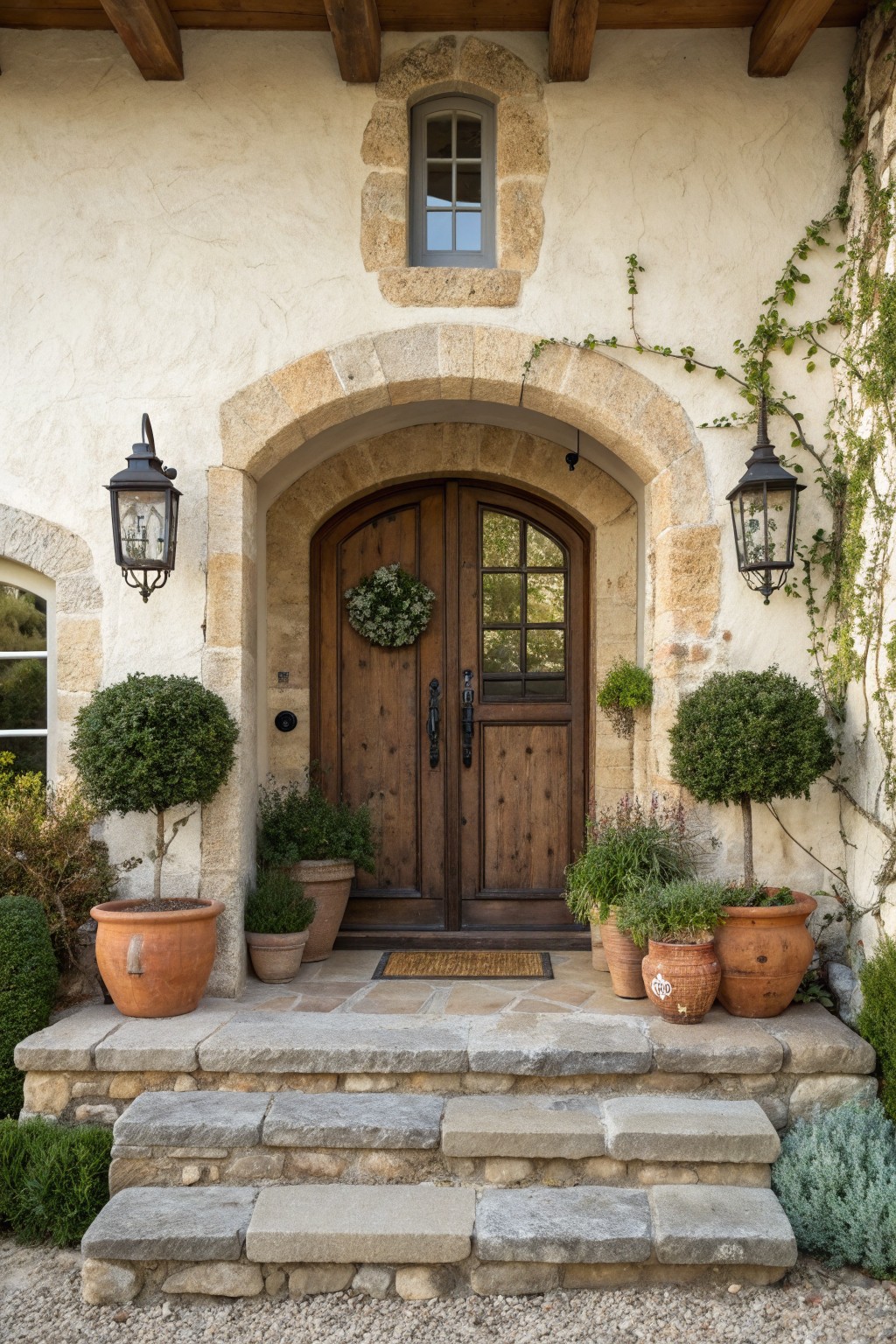
A stone arch around the front door stands out against plain stucco because it gives the entrance clear shape without adding much extra detail. The rough texture of the stone next to the smooth wall creates a quiet contrast that feels balanced and a little softer than an all-stone facade.
This approach works best on simple farmhouse exteriors that already have a clean roofline. Keep the rest of the wall fairly plain, use a solid wood door, and add just a couple of lanterns or pots so the arch remains the main focal point.
Frequently Asked Questions
Q: Will stucco hold up if my area gets heavy winter freezes? A: Apply it over solid insulation and a weather barrier so moisture stays out. That step alone stops most cracking before it starts.
Q: How do I choose stone that works with the stucco shade I already like? A: Pull samples of both materials and set them side by side in full sun. Pick stone that shares one or two warm tones with the stucco so the shift feels natural.
Q: Can I add stone and stucco details to a house I already own? A: Yes, focus on the front facade first and keep the changes at the same height across the wall. This keeps the work smaller and the look balanced.
Q: What if the soft contrast still feels too quiet next to my bright roof? A: But you can always add darker trim around windows to sharpen things up a bit. It keeps the European softness while giving more definition.
