

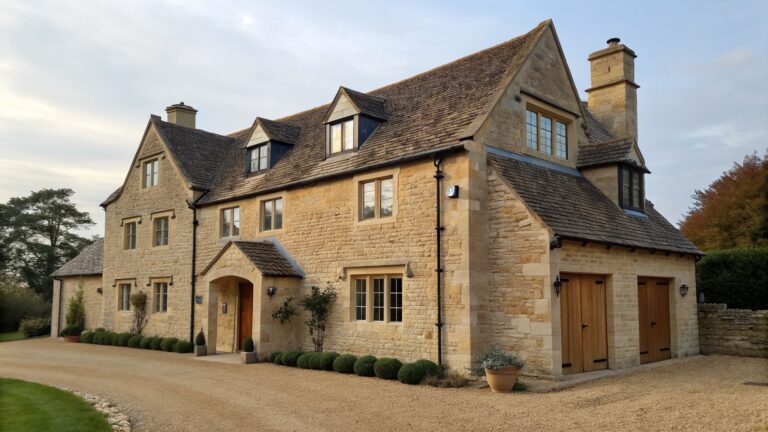
Limestone has a way of softening the edges of a farmhouse without losing any of its structure.
I have walked past homes where the stone facade made the entry feel more welcoming than I expected from the plans alone.
The way the material catches light throughout the day often decides whether the exterior feels European or just copied from a picture.
People tend to overlook how the windows sit within the limestone when they first review a design.
It matters more than most realize.
Limestone Walls For Real Texture
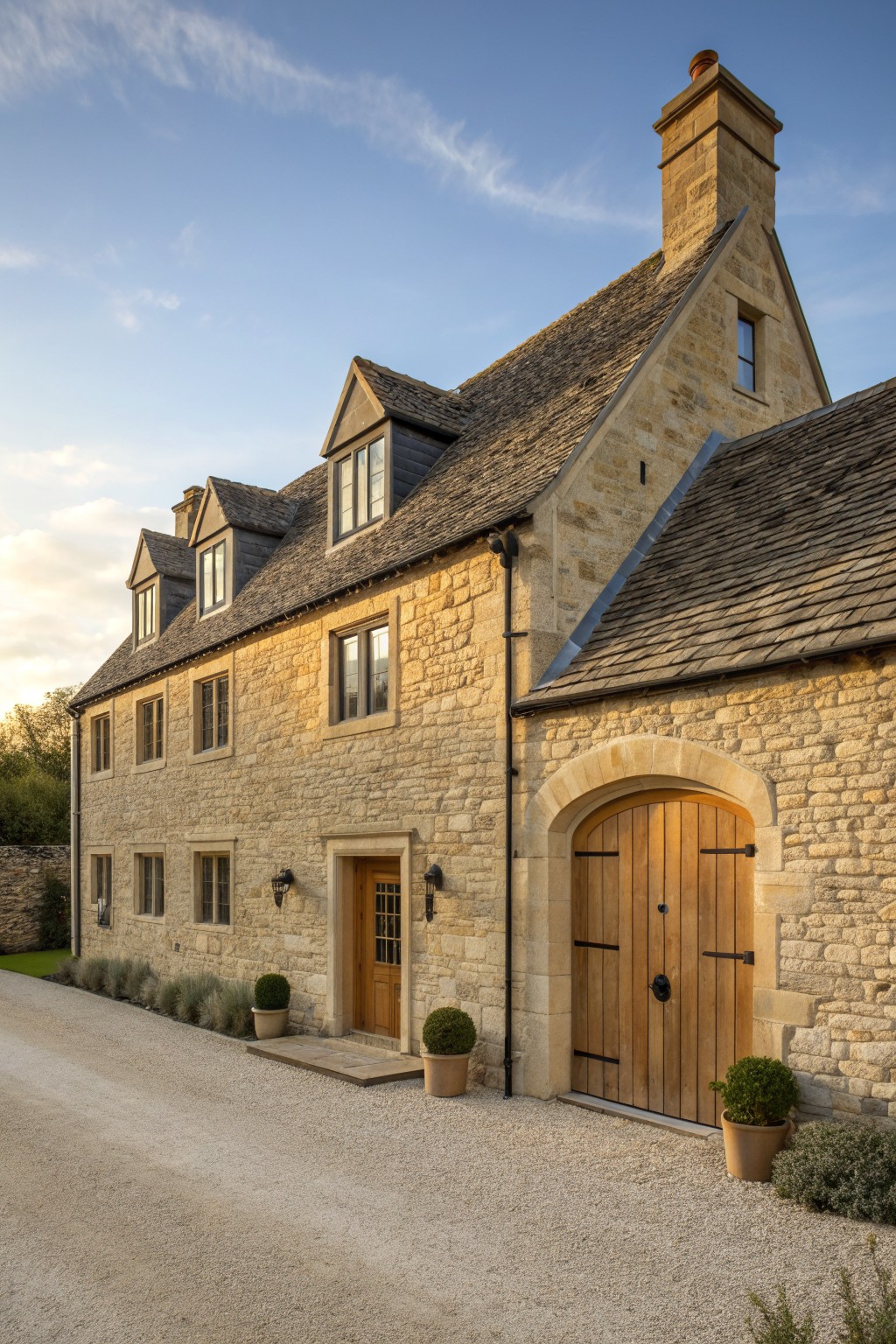
Limestone gives a farmhouse exterior the kind of texture that feels solid and lived in at once. The surface varies in tone and catches light differently as the day changes, which is why it has been used on European homes for generations.
This material suits homes with straightforward rooflines and wood accents. Keep doors and windows simple so the stone remains the main feature, and choose a mortar color that blends rather than contrasts.
Long Tables for Casual Outdoor Dining
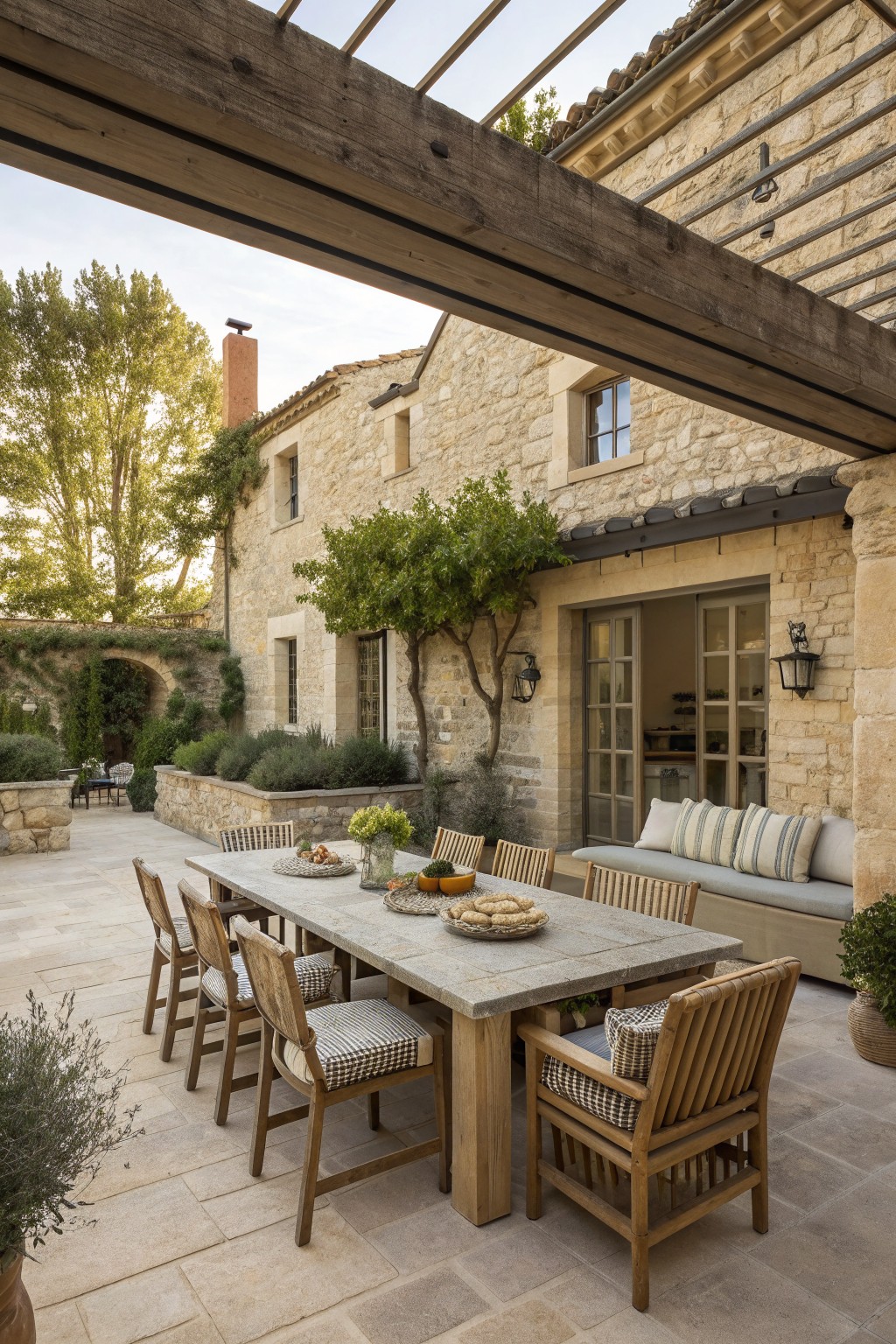
A long table gives an outdoor space a clear purpose without needing much else. It turns a patio into a place where meals happen regularly, and the scale works especially well against stone walls that already feel solid and grounded.
Place it under a simple overhead beam or pergola so the area stays usable in different weather. Pair it with a mix of chairs on one side and a built-in bench on the other, then keep the rest of the seating plain so the table stays the focus.
Limestone Arches Over Entry Doors
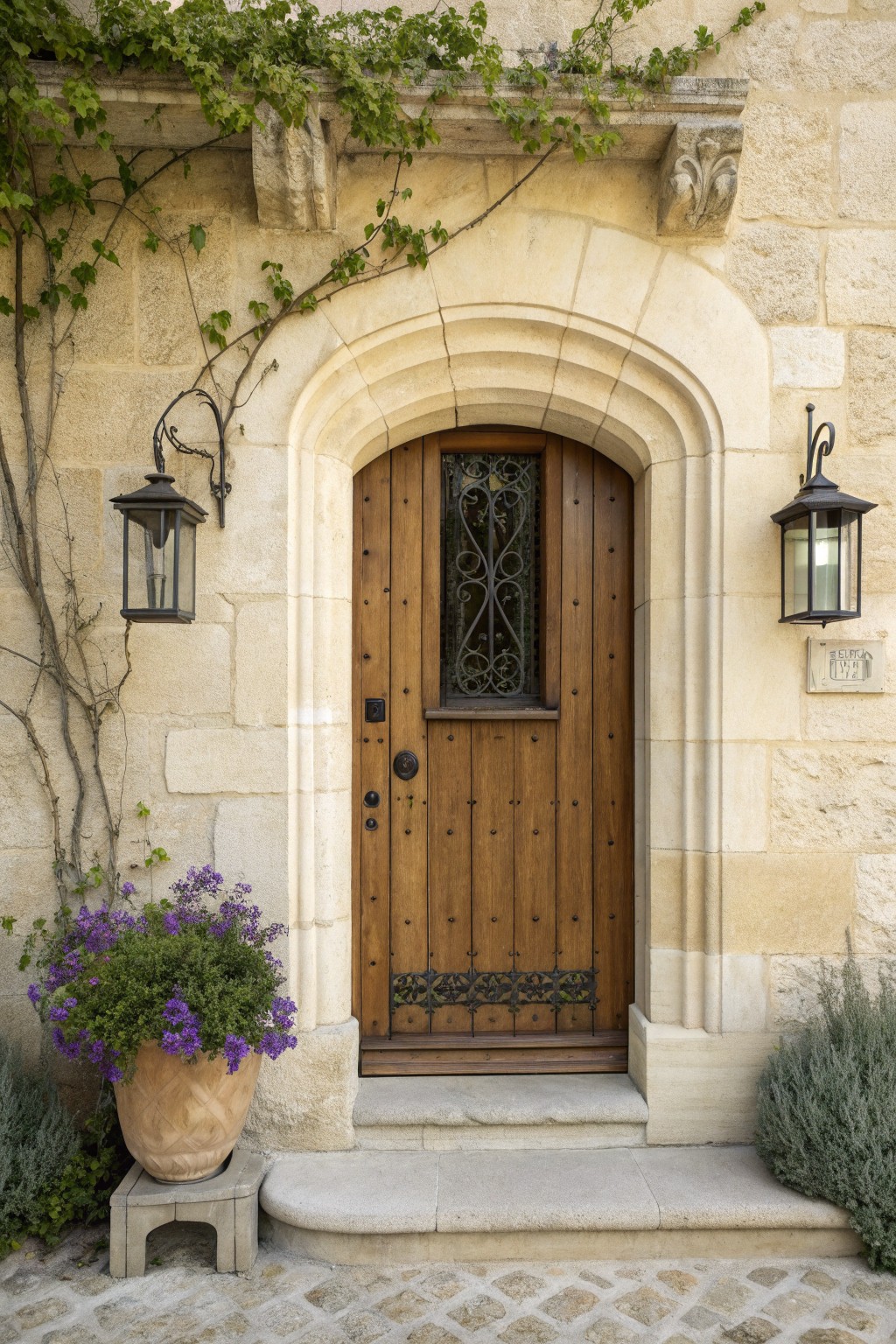
A limestone arch around the front door adds real texture to a farmhouse without needing a lot of extra trim or ornament. The curve softens the stone wall while the wood door keeps things warm and simple.
This works best on homes with similar stone or stucco walls. Match the arch to the main material, keep hardware dark, and let vines or a single large pot do the rest.
Limestone for the Facade
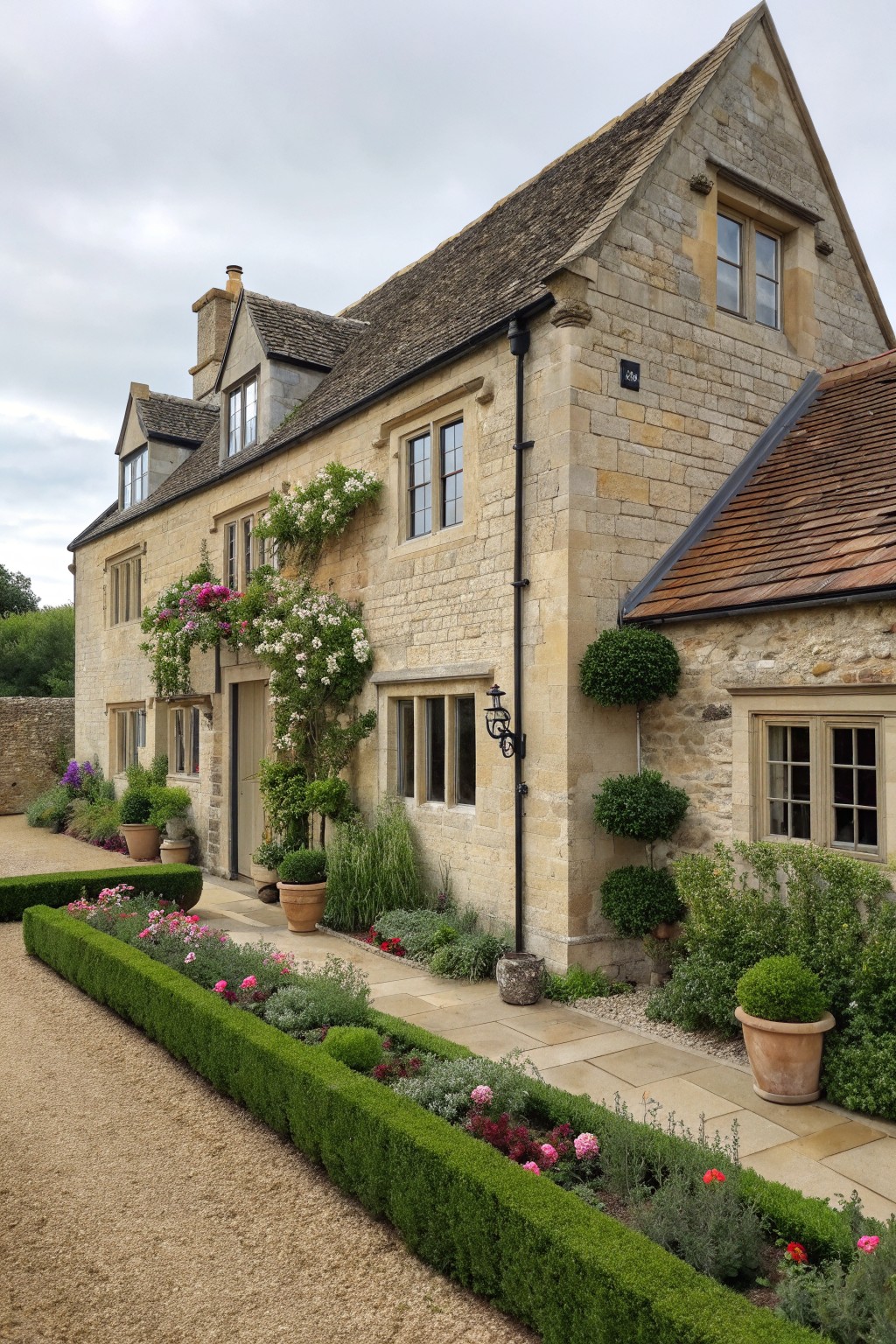
Limestone gives a farmhouse exterior that textured, settled look that feels European without trying too hard. The material shows its age in a good way and holds up well when the house sits in a garden setting.
It works best on homes that already have simple rooflines and balanced windows. Keep the planting low and layered near the base so the stone stays the main feature rather than getting buried in greenery.
Adding Blue Shutters to Limestone Exteriors
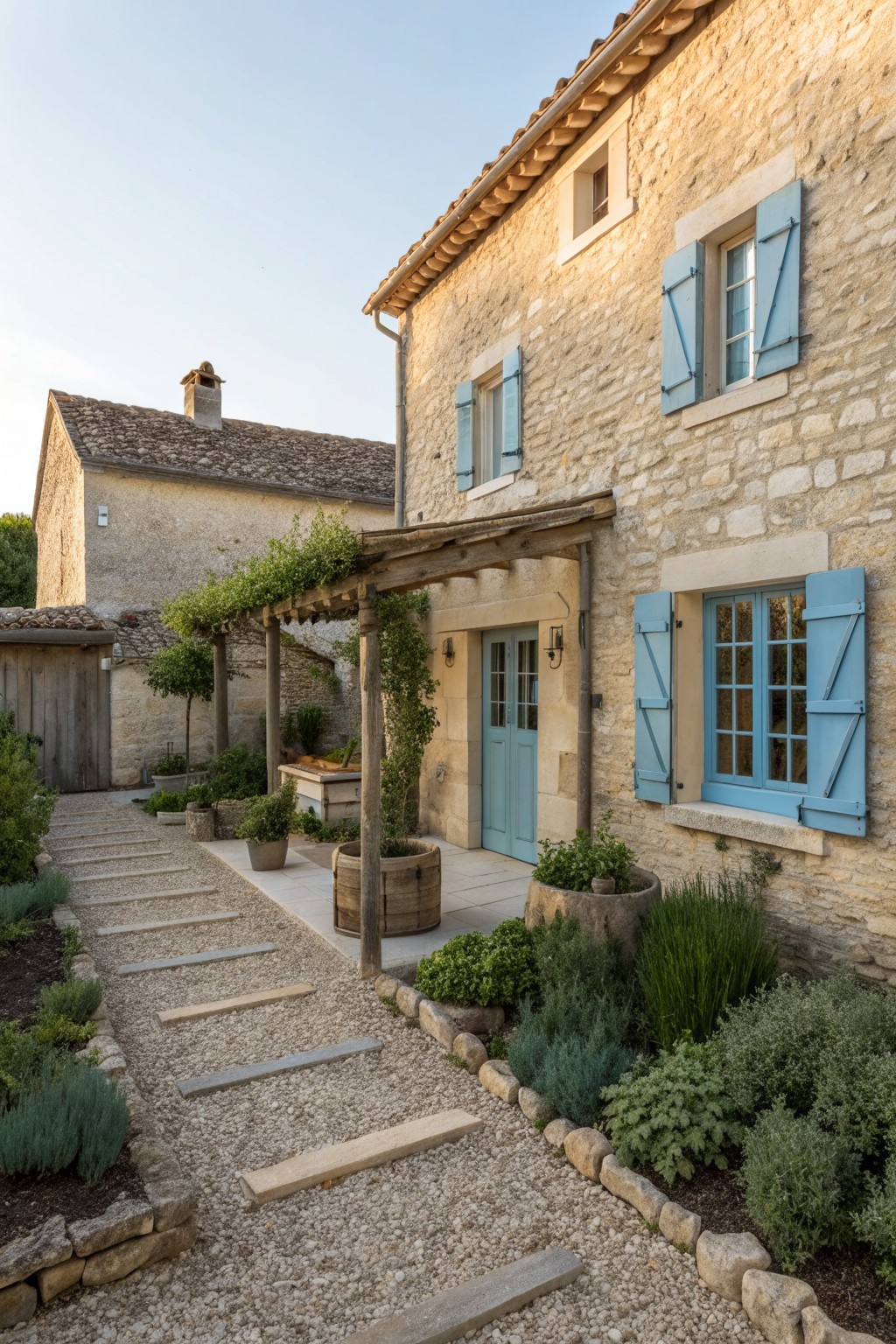
Blue shutters and doors give limestone walls a clear lift without covering up the texture. The soft color stands out against the rough stone and helps the windows and entry feel more defined. Many older farmhouses in Europe use this simple contrast to keep the look grounded while still adding some personality.
This approach works best on homes with fairly plain stonework where you want the surface to stay the main feature. Stick with muted or gray-leaning blues so the stone still reads as the stronger material. Avoid bright tones that can make the whole facade feel too busy.
Limestone Facades That Hold Up Over Time
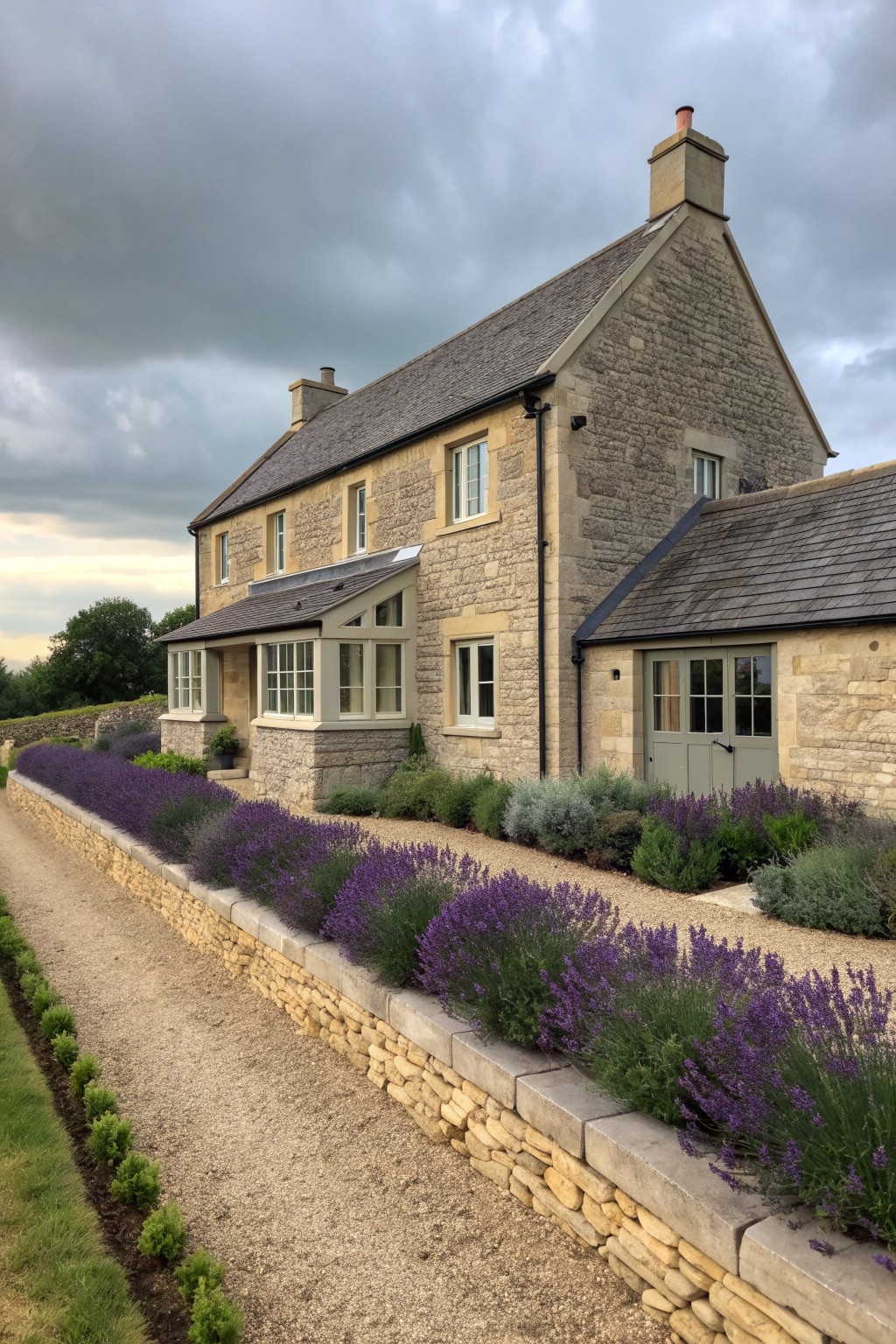
Limestone gives a farmhouse that solid look without trying too hard. The stone varies just enough in tone to feel natural, and it pairs well with simple shapes and a low roofline.
It suits homes in open settings where the walls can weather on their own. Keep the planting low and loose along the base so the stone remains the main feature rather than getting lost behind heavy shrubs.
Covered Porches Built With Limestone Columns
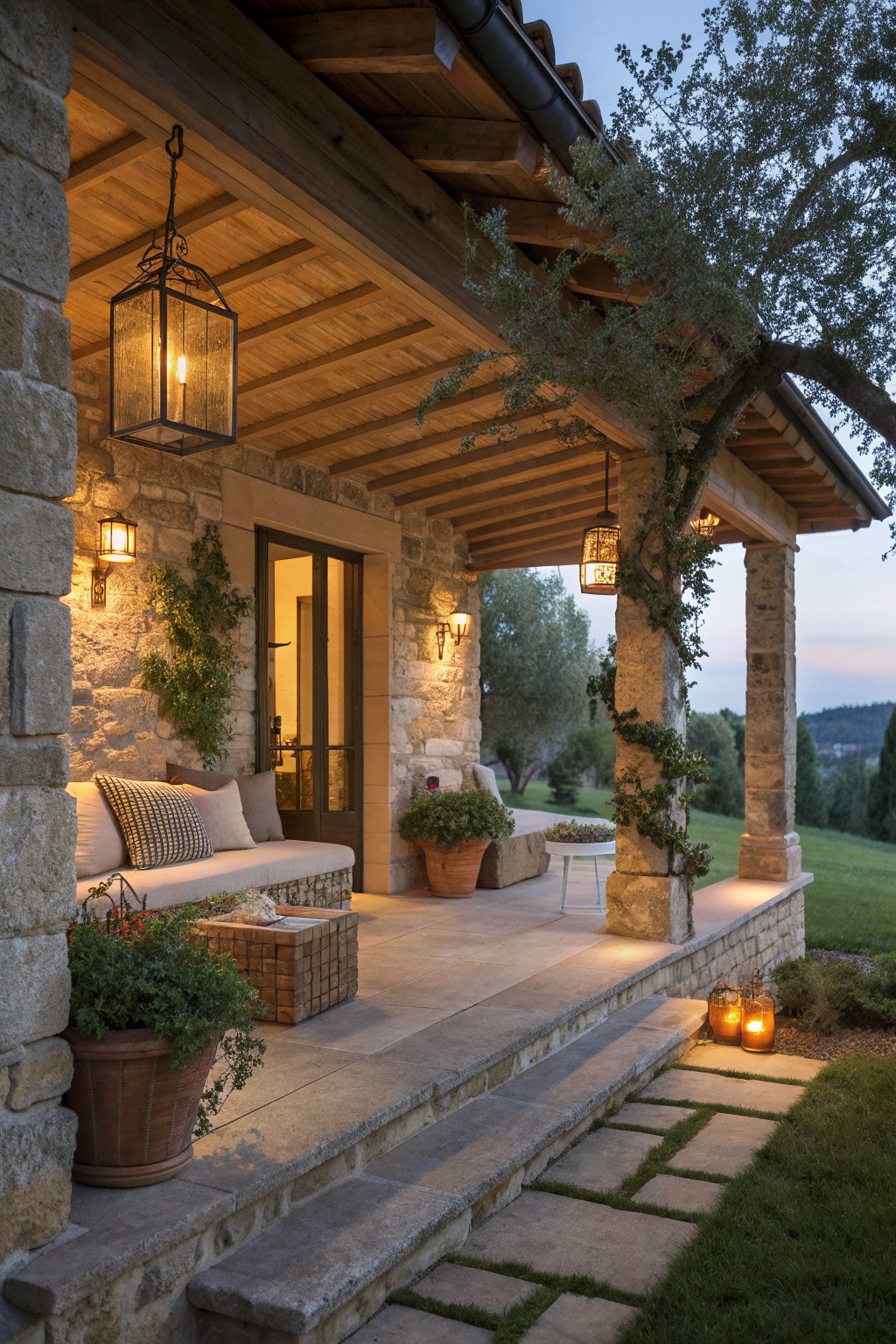
A covered porch supported by limestone columns gives the house a solid outdoor room that feels part of the main structure. The stone matches the walls and holds up a simple wood ceiling, which keeps the space usable in different weather without looking added on later.
This works best on farmhouses that already use natural stone and want the porch to feel permanent. Keep the seating low and built in along the wall, and use a couple of hanging lights so the area stays practical after dark. Avoid crowding it with too many separate pieces.
Limestone for Outdoor Kitchen Areas
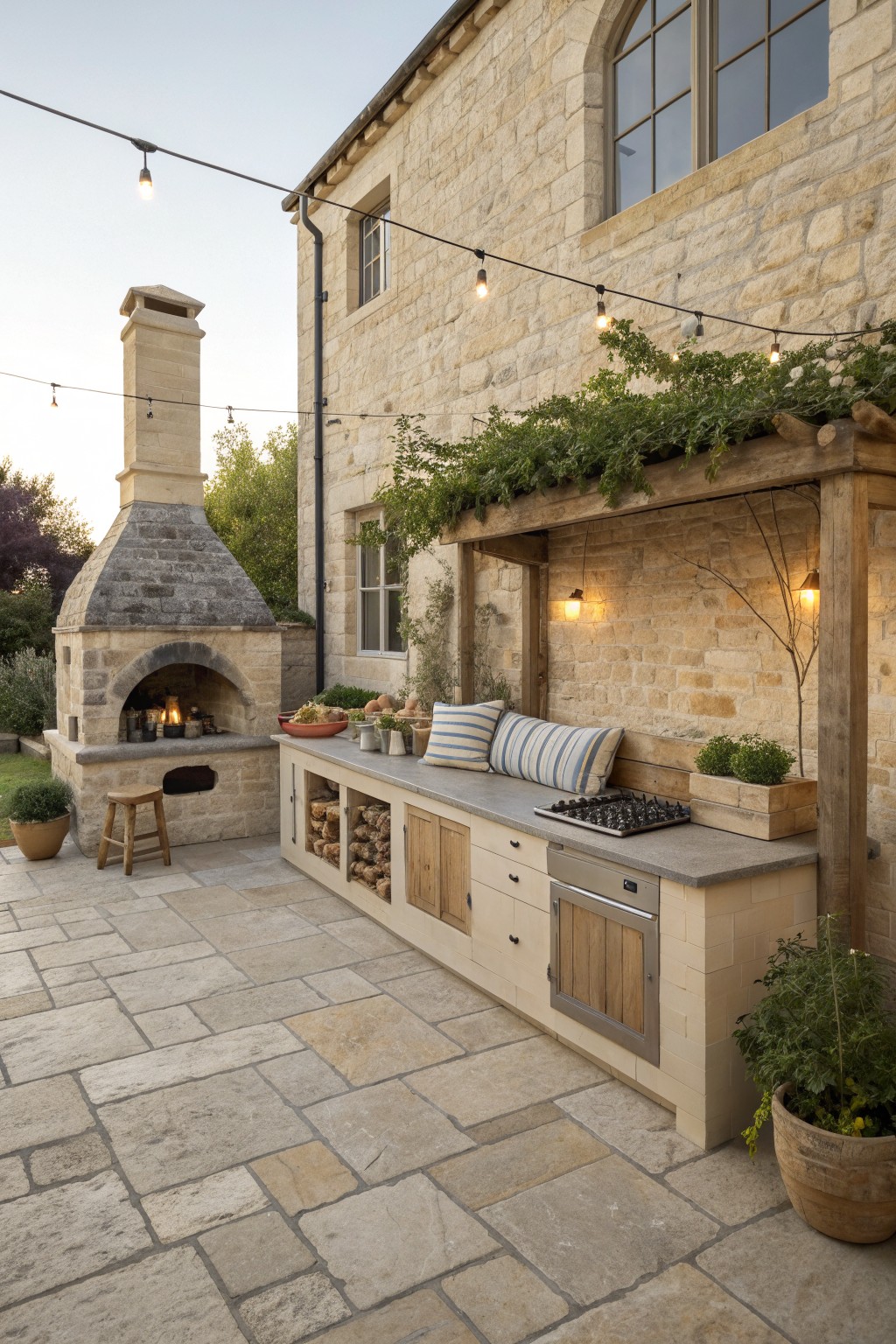
Carrying the same limestone from the house walls into an outdoor kitchen helps the whole setup feel like one piece instead of an add-on. The stone base and counters match the building so the cooking area blends right in without looking like a separate project.
This works best on homes where the patio runs along the back wall. Use the same blocks for the main structure and keep the layout simple with room for a stove and storage. Just seal the stone well since it sits outside full time.
Stone Arches Over Entry Doors
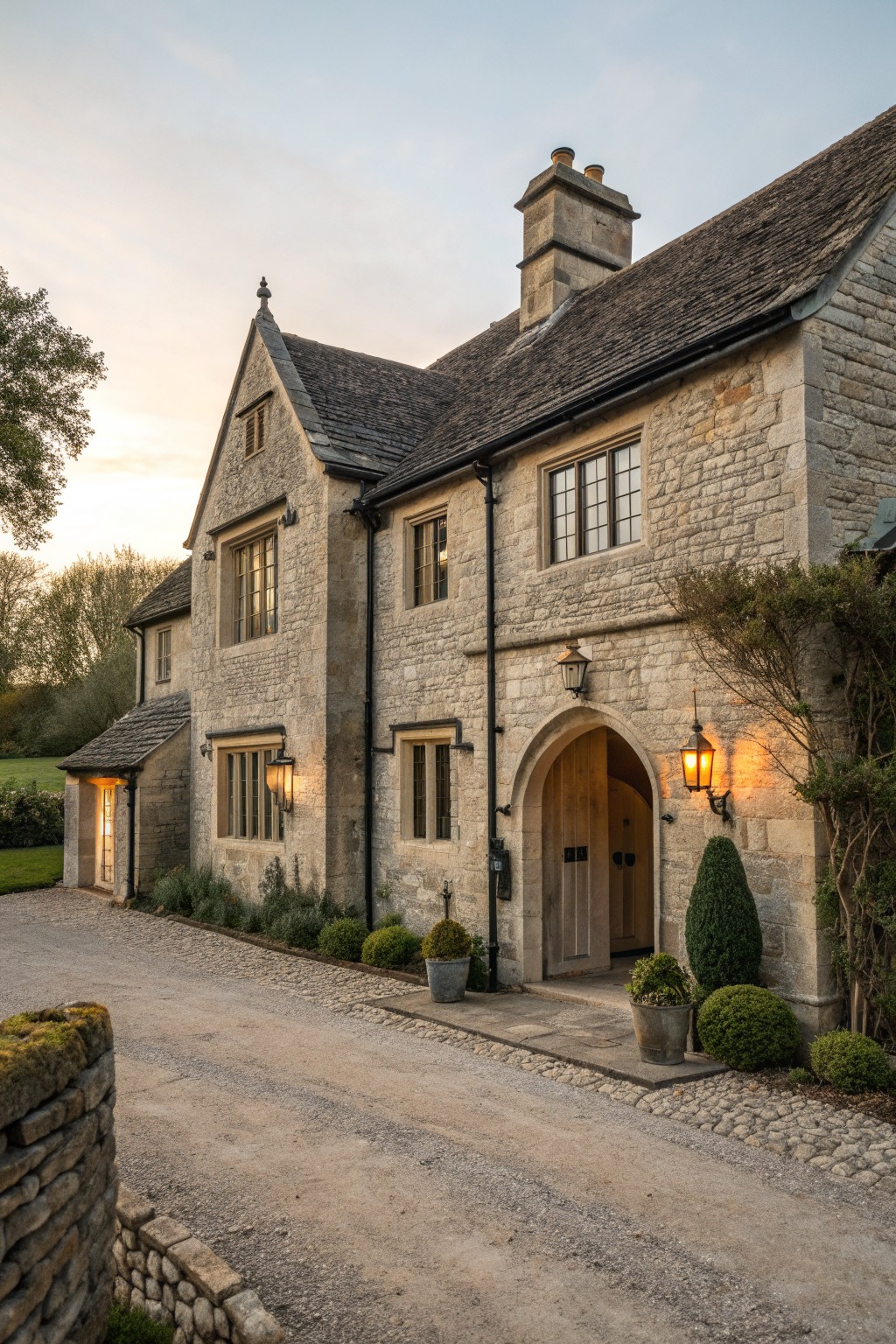
An arched doorway cut into limestone gives the front of a farmhouse a settled look that feels older than it is. The curve softens the hard edges of the stone and draws the eye without any extra trim or ornament.
This detail works best on homes with thick walls and simple rooflines. Keep the door itself plain and let the arch carry the character, especially if the rest of the facade already has varied window sizes and natural stone texture.
Continuing The Limestone To The Pool Edge
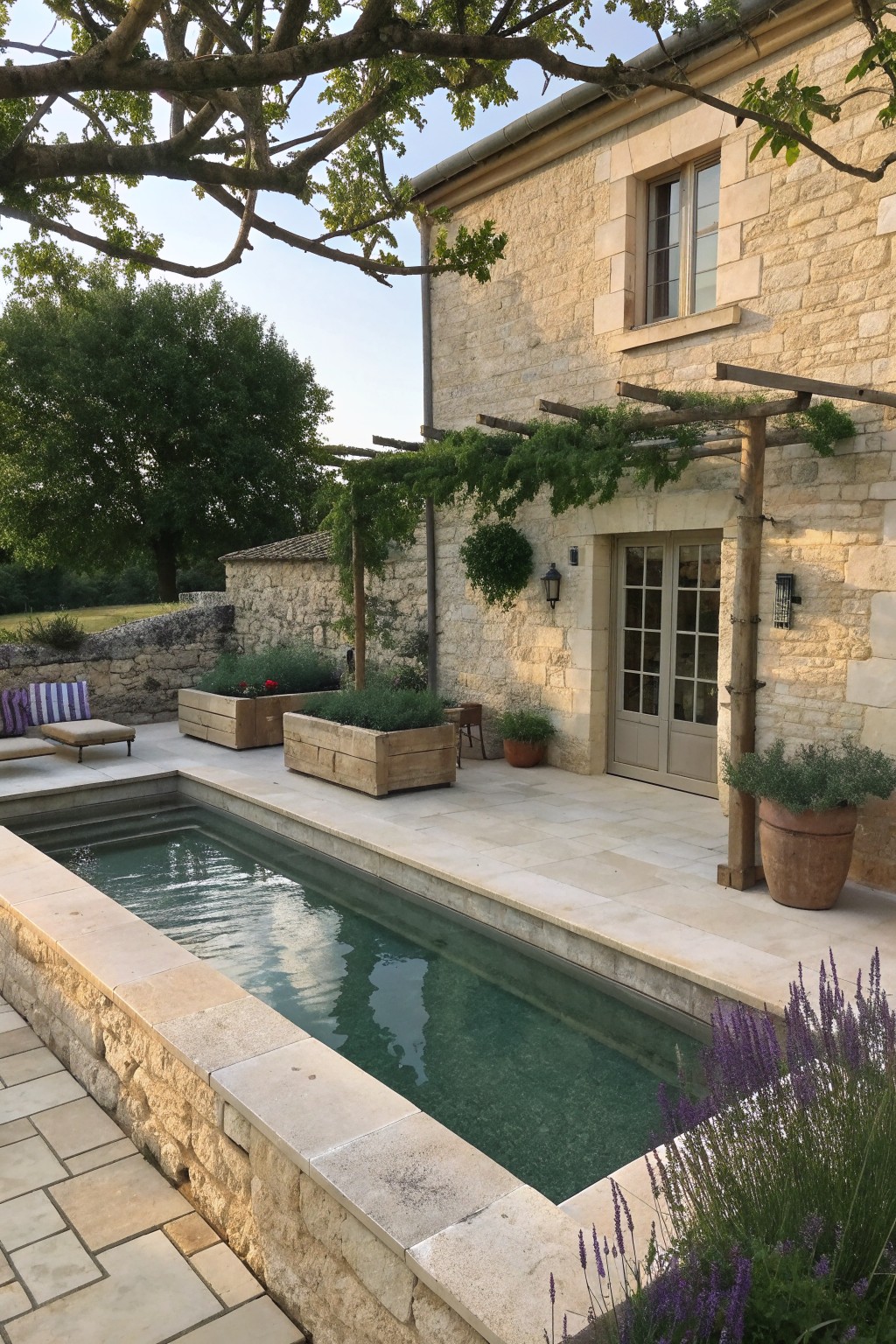
Many older farmhouses in Europe use the same local stone for both the walls and any hard surfaces around the house. Carrying that stone right up to the pool edge keeps the whole place feeling like one building rather than a collection of separate parts. The coping sits low and simple, so the water looks like it belongs with the house instead of sitting on top of it.
This works best on properties where the pool sits close to the main structure. Keep the coping the same width as the patio slabs and let the planters and pots do the softening. It suits limestone or similar stone houses that already have a quiet, textured look. Just make sure the stone is sealed properly for wet areas.
Stone Arches Strengthen Limestone Entries
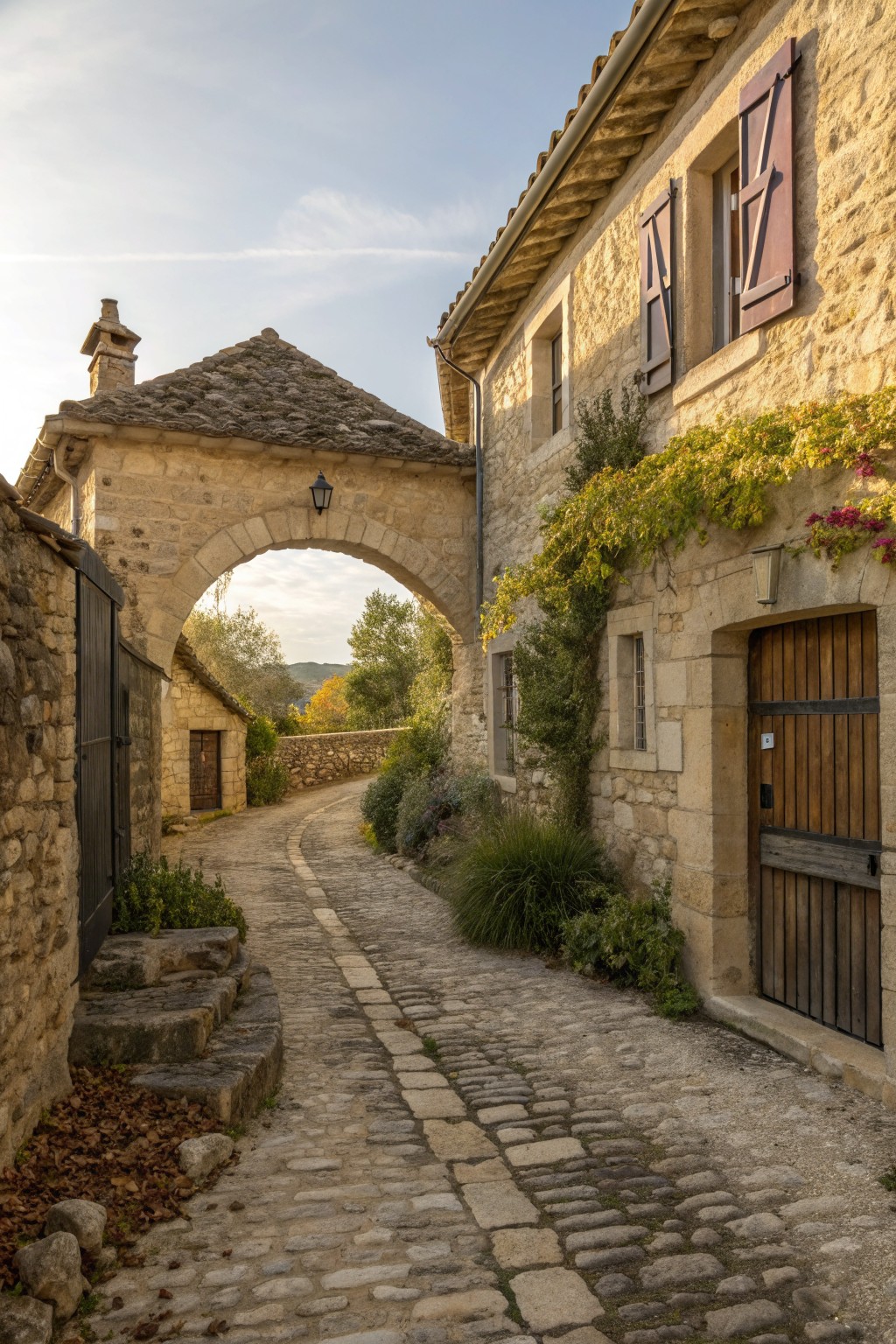
A stone arch built from the same limestone as the house walls gives the exterior a clear focal point and a sense of arrival. It breaks up the flat plane of the facade while keeping everything simple and tied to the material already in use. The arch also frames the path beyond, so the eye moves naturally through the space instead of stopping at a blank wall.
This approach works best on farmhouses or village homes where the stone is local and the roofline stays low. Match the arch thickness to the wall depth so it reads as part of the structure rather than an add-on, and keep doors and shutters in plain wood so they do not compete.
Adding a Fireplace to Your Outdoor Patio
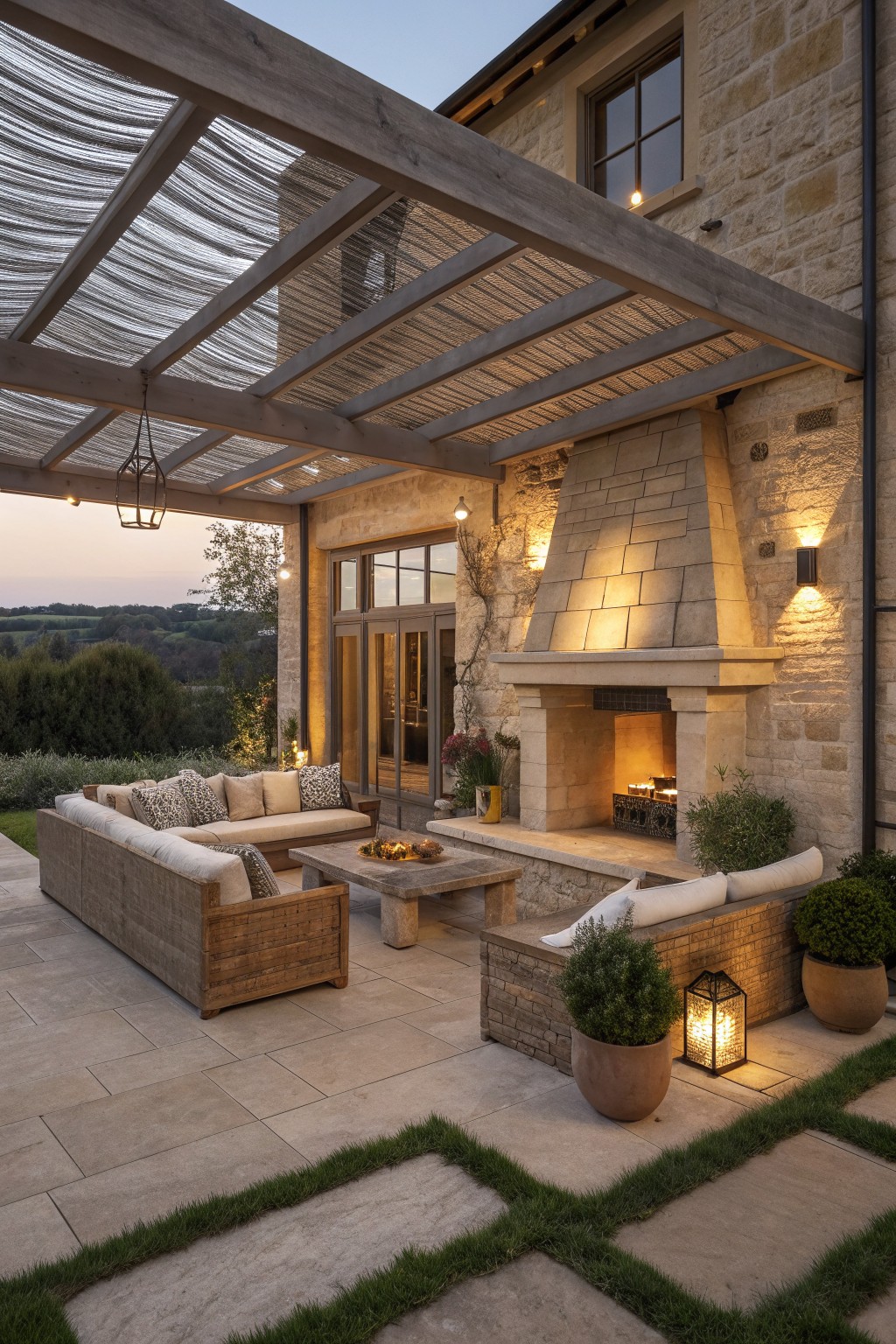
Many farmhouses gain real use from an outdoor fireplace built against the main wall. It turns the patio into a spot people actually sit in after dark instead of just looking at it during the day.
Place the fireplace where the seating can face it without blocking the doors. Limestone works well for this because the new stone blends right into the existing house and keeps the whole area feeling connected instead of added on later.
Limestone for the Main Exterior
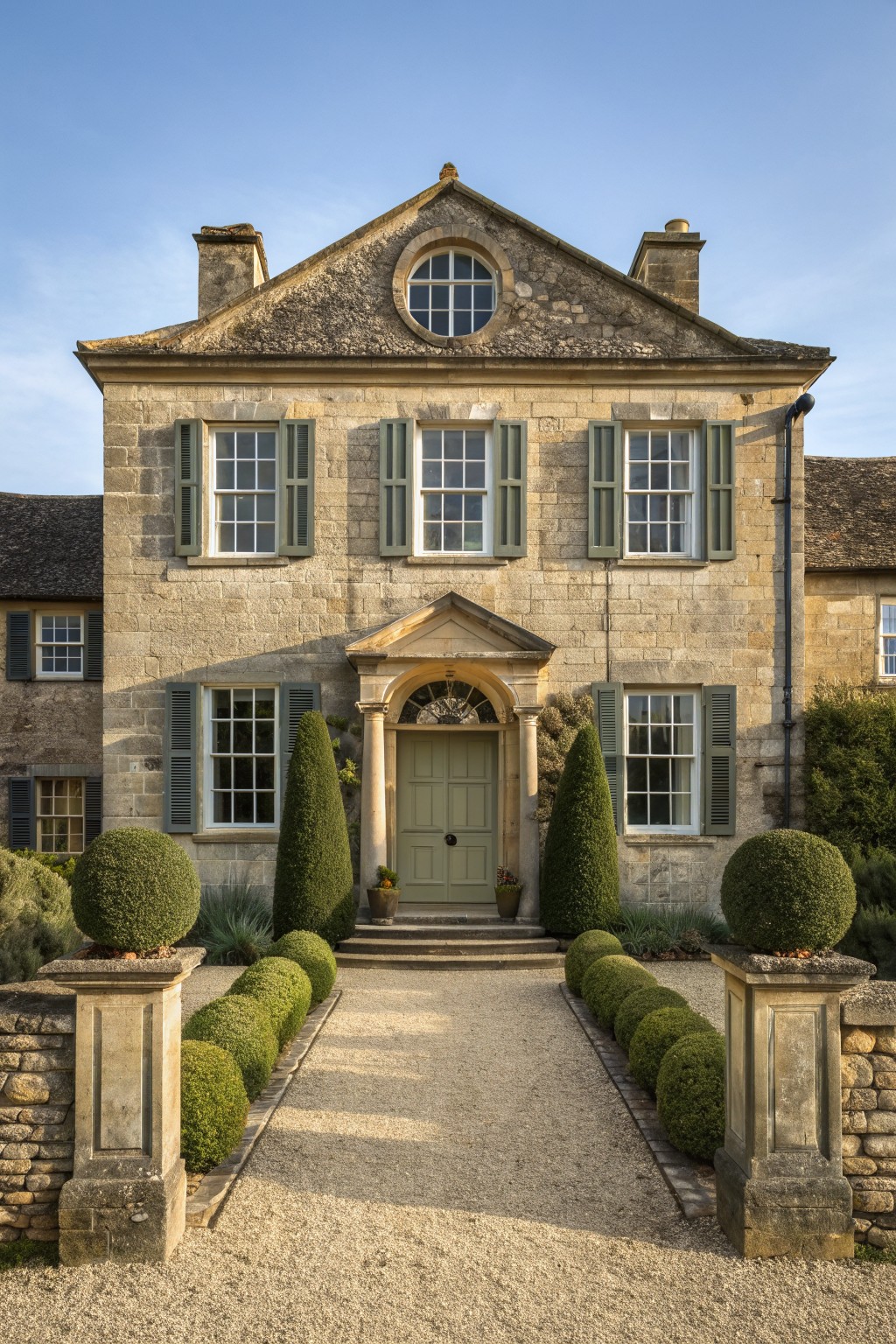
Limestone gives a farmhouse exterior real texture that feels rooted in older European building traditions. The natural variations in the stone keep the surface interesting even when the overall shape stays simple and symmetrical.
It works best on homes that already lean traditional or rural. Keep the details quiet with painted shutters and a straightforward central door so the stone itself does most of the work.
Stone Arches for Outdoor Dining
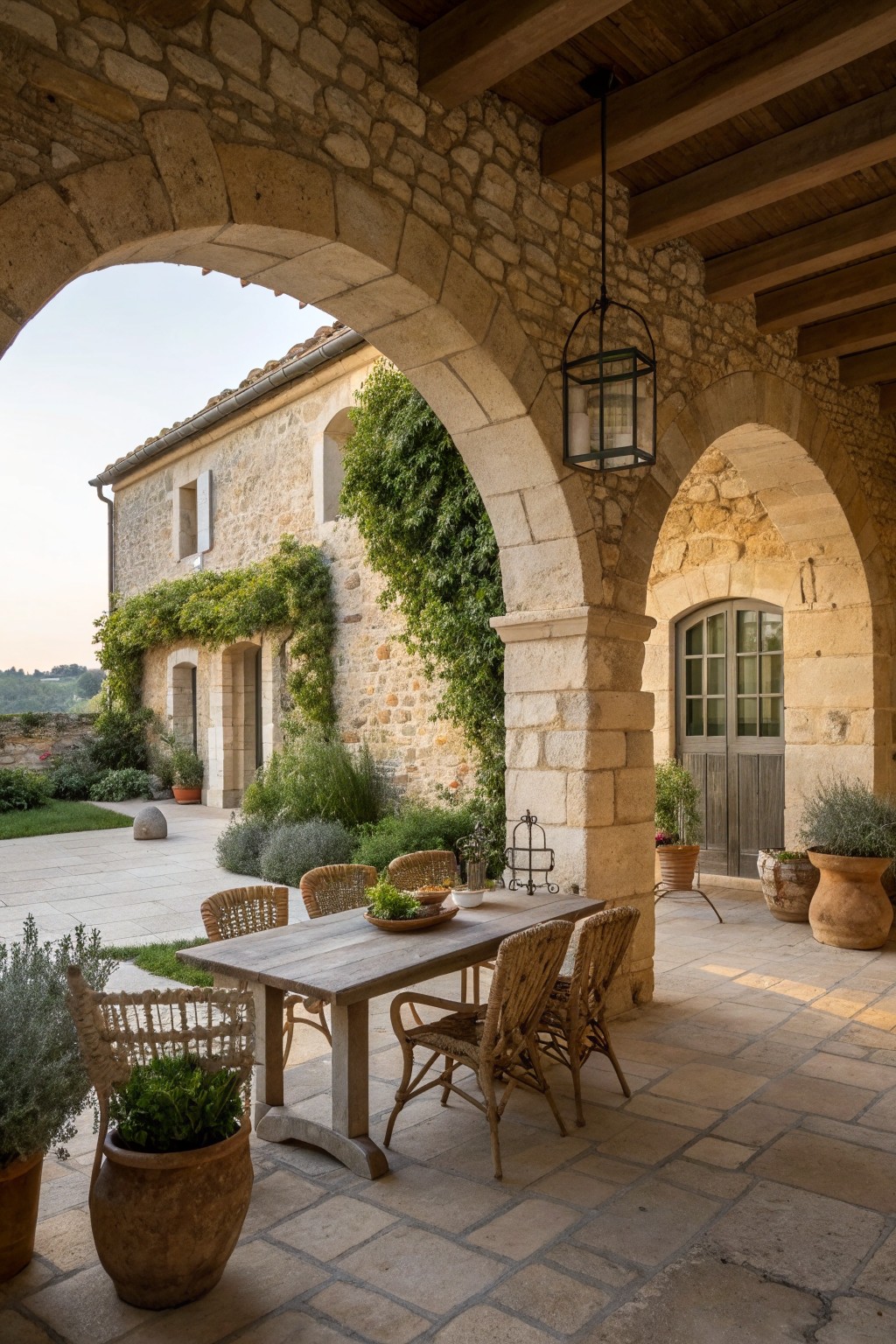
Stone arches turn a simple patio into a defined dining spot that feels sheltered without closing it in. The curve of the stone gives shade and a bit of protection from weather while still keeping the space open to the garden.
This setup suits limestone farmhouses where the arches are already part of the structure. Set the table directly under the covered section so the space reads as an extension of the house rather than an afterthought.
Stone Patios for Casual Outdoor Dining
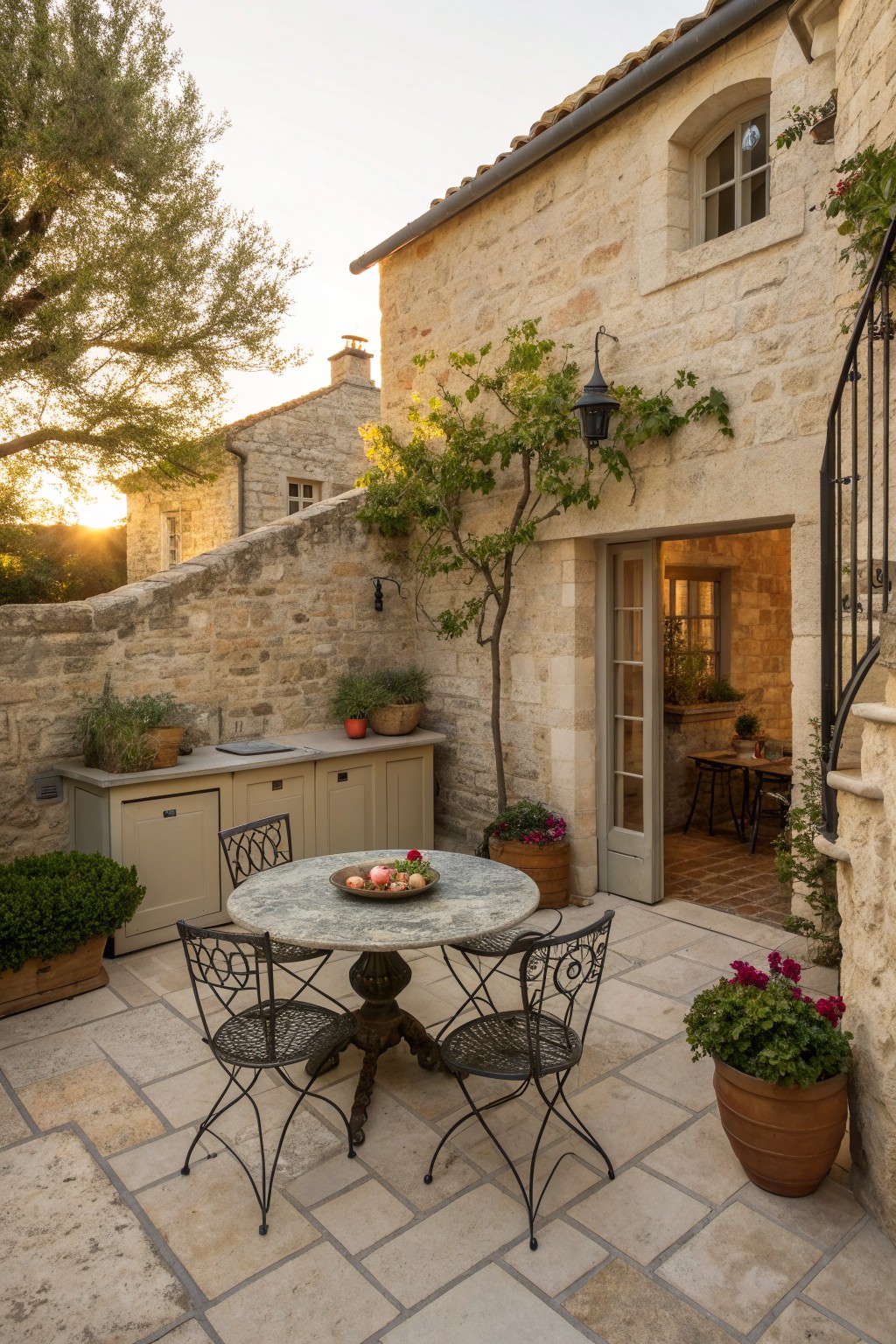
A paved patio right against the house wall gives a limestone farmhouse an easy place to eat outside without extra structures. The round table and simple metal chairs keep the focus on the stone and the view rather than on fancy furniture.
This layout suits older homes that already have thick walls and uneven ground. Place the table where the door opens directly onto the patio, use durable chairs that can stay out year round, and add a couple of large pots so the space feels finished but not crowded.
Limestone Facades for Farmhouse Character
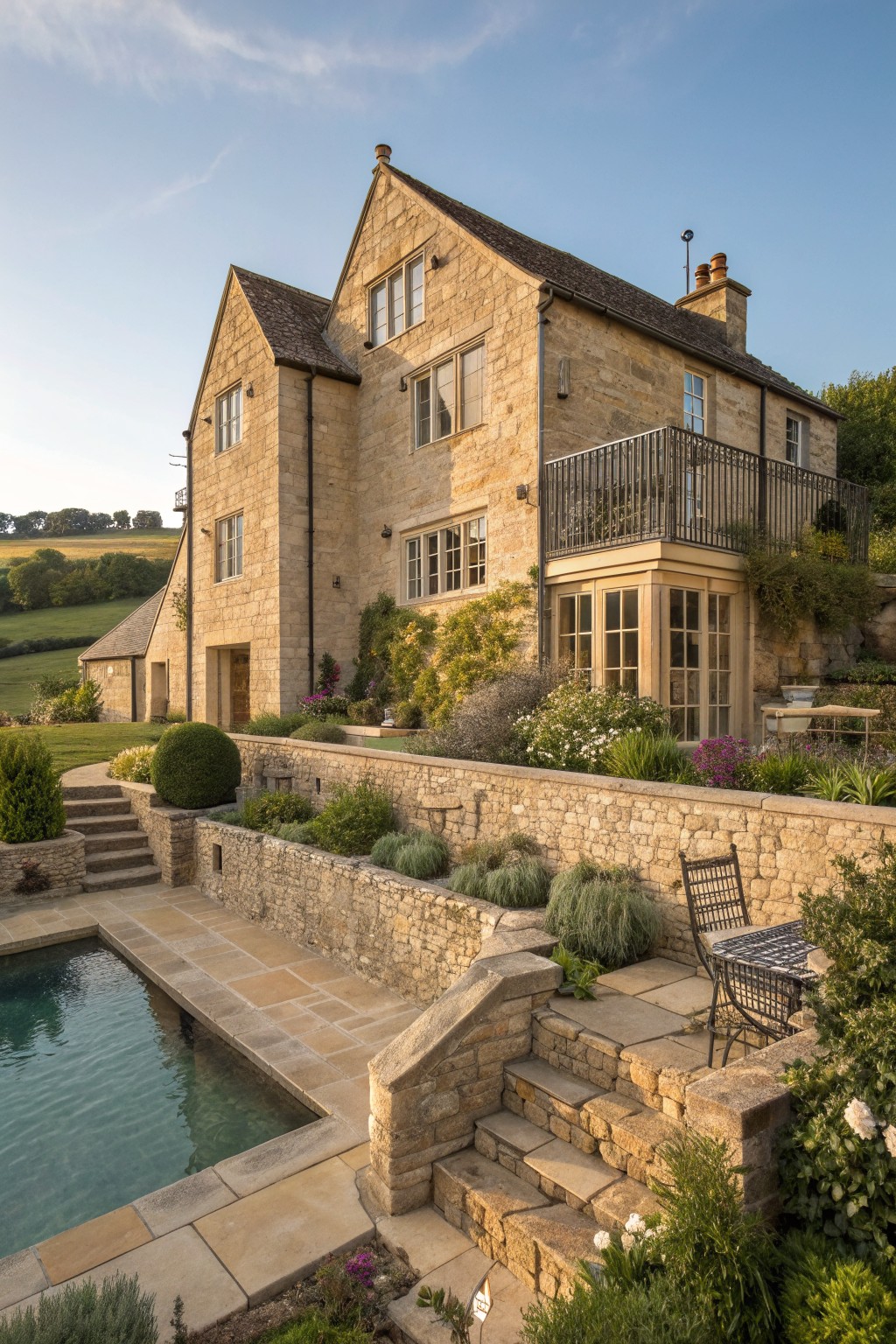
Limestone gives a farmhouse exterior real weight and texture that other materials often miss. The natural color shifts and rough edges help the house settle into the landscape instead of sitting on top of it.
This approach works best on homes with simple rooflines and modest window placements. Keep the stone dominant and let any trim or metal details stay quiet so the material itself carries the look.
Frequently Asked Questions
Q: How do I clean limestone without wearing down the texture over time?
A: Start with a soft brush and plain water to lift off loose dirt. For spots that stick around mix a gentle soap with water then rinse everything clean right after. Skip any strong cleaners since they can dull the natural surface.
Q: Can I add limestone accents if the full exterior costs too much?
A: Focus the stone on key spots like the entryway or window surrounds. This keeps the European farmhouse feel without covering every wall. Match the limestone color to your existing siding so everything flows together.
Q: Will limestone hold up in rainy spots without turning dark and streaky?
A: It weathers to a softer tone but stays durable when you slope the ground away from the base. Good mortar joints help water run off instead of soaking in. Many older farmhouses in wet regions show this exact patina after a few seasons.
