

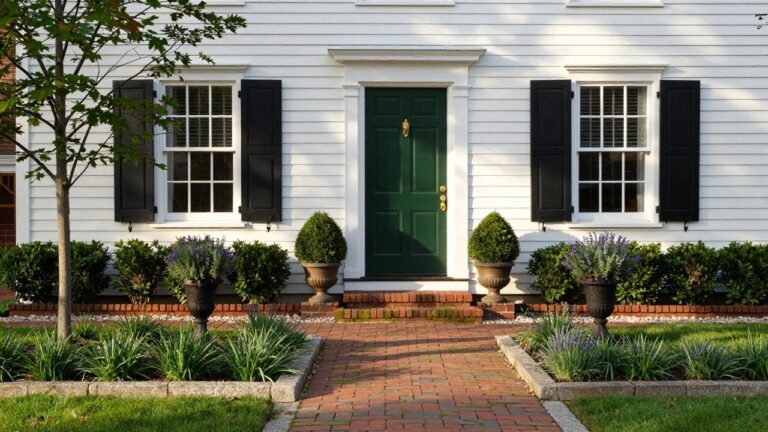
I still remember driving past a restored Colonial where the front yard landscaping made the symmetrical facade read even stronger from the street. Those setups work best when plantings and paths respect the home’s proportions, using low hedges and gravel walks that guide you right to the door without clutter. You spot the difference first in how mature shrubs frame the windows and brickwork, softening edges while keeping that classic structure intact. Simple repeats of evergreens pull it all together. A handful of these ideas feel worth sketching out for your own curb, especially if you’re tweaking an older place.
Boxwoods Flanking the Front Door
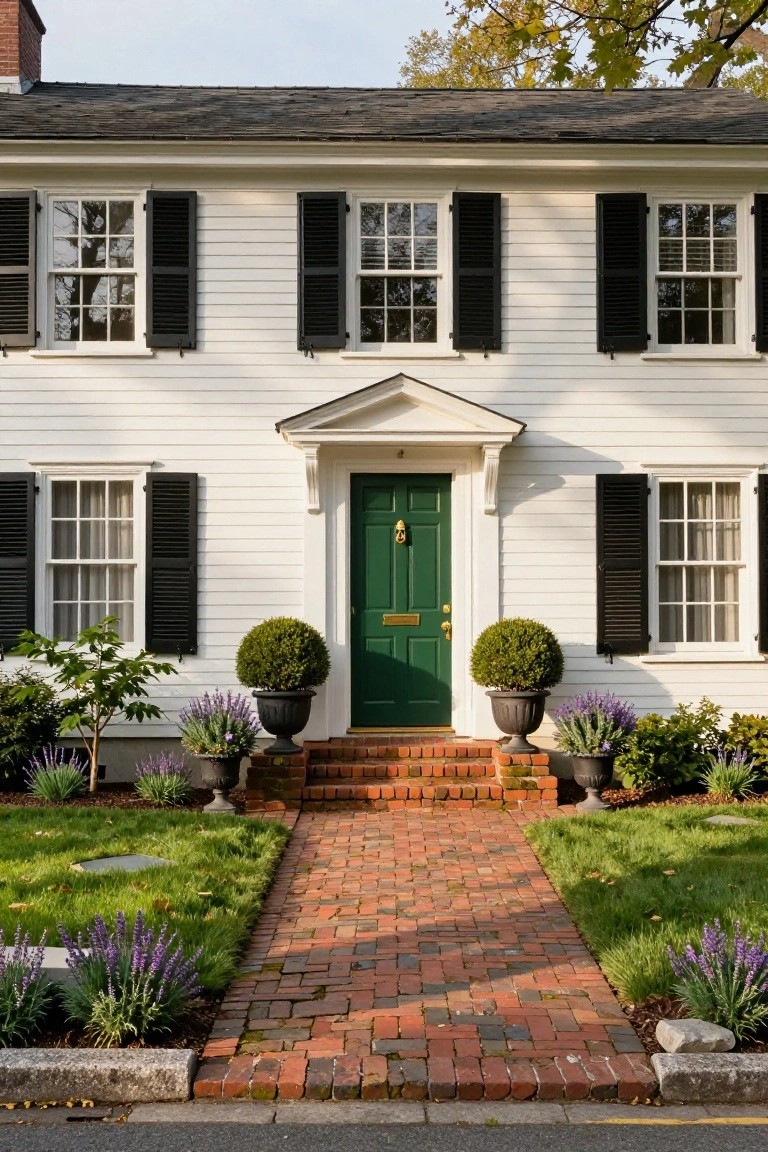
Boxwood spheres planted right by the entry steps give this colonial house a neat, balanced look. They sit in big urns on both sides of the green door, drawing your eye straight to the entrance without much fuss. That simple repeat pulls the white siding and black shutters together, and keeps things looking tidy year round.
You can use these on smaller lots too, since boxwoods stay compact if you trim them a couple times a year. They suit older homes with straight paths like this brick one. Just pick a spot with decent sun, and edge the walk with low plants like lavender to fill out the edges.
Brick Path Bordered by Boxwoods
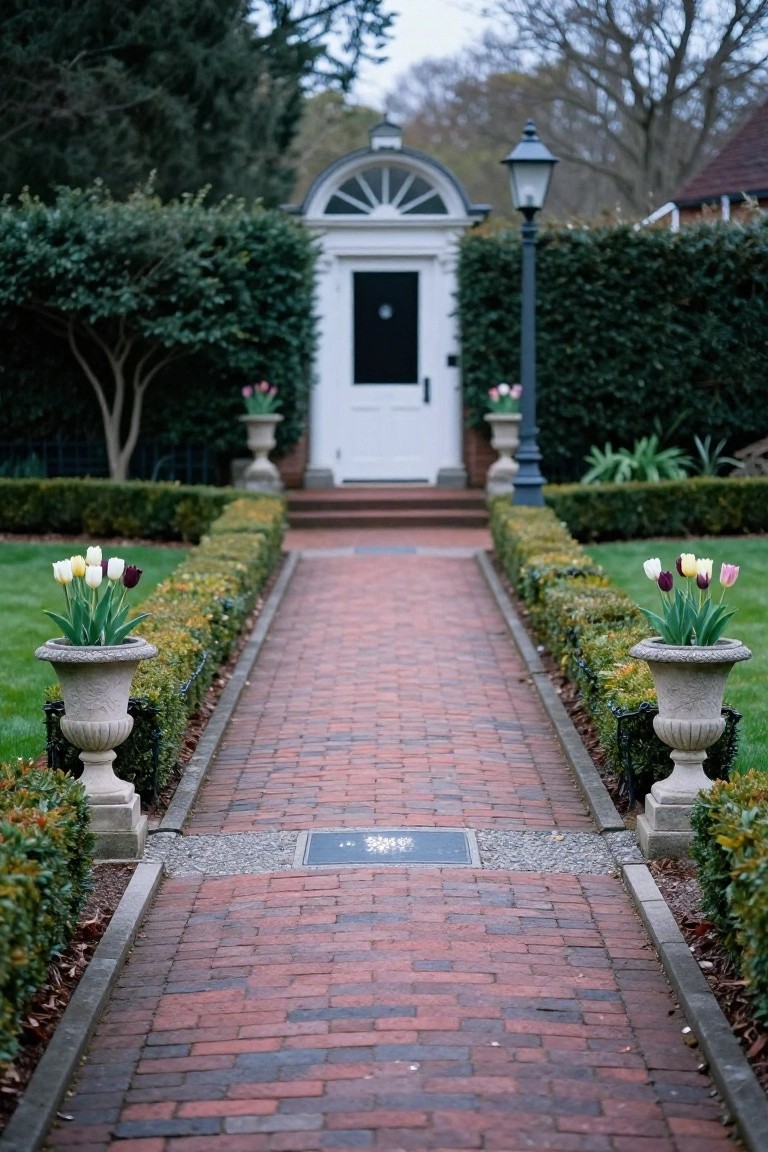
A straight red brick walkway runs from the street right up to the front door. Boxwood hedges line both sides nice and low. Urns with tulips mark the edges. The whole thing makes the entry feel planned and welcoming without much fuss.
This kind of path suits colonial homes best. It keeps the yard looking sharp year round. Trim the boxwoods a couple times a year and swap flowers in the urns for seasons. Avoid letting the hedges get too tall or it loses that clean look.
Flank Entry Steps with Potted Hydrangeas
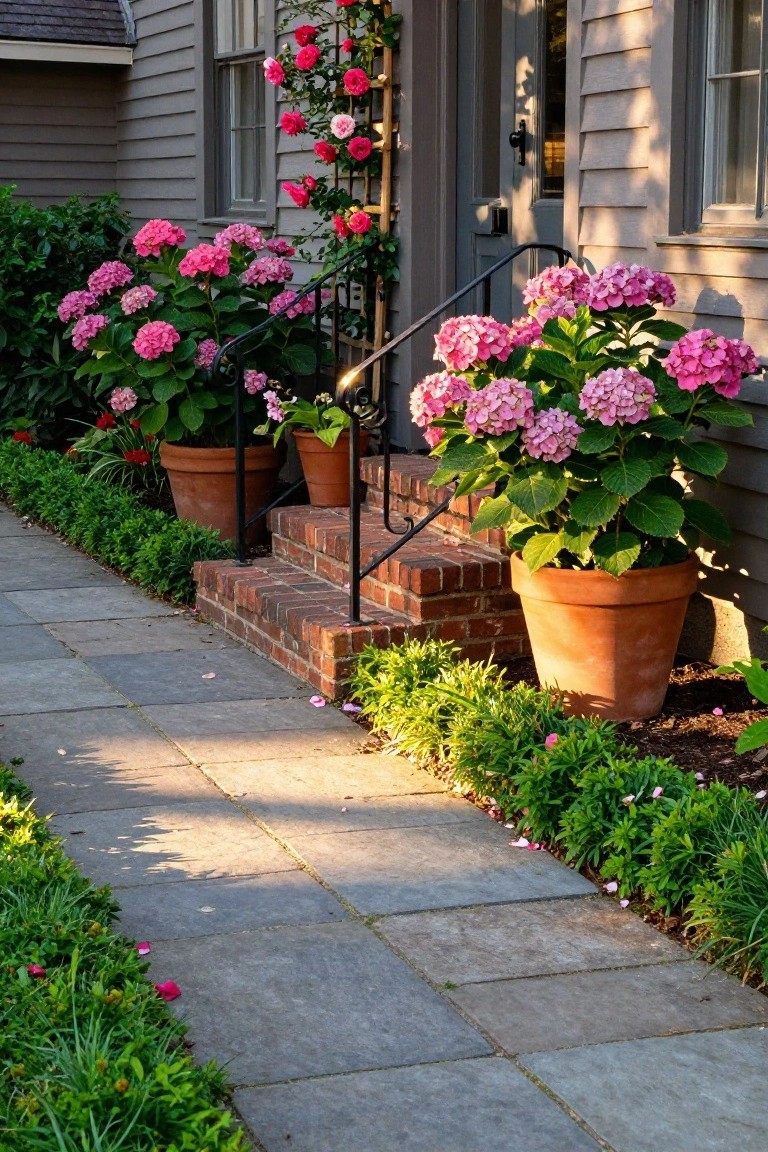
One straightforward way to dress up colonial entry steps is to place matching large terracotta pots of pink hydrangeas right on either side. The soft pink blooms repeat the climbing roses on the nearby trellis, and they sit at just the right height to soften those brick stairs without blocking the path. It pulls the eye straight to the door in a gentle way.
This setup works best on homes with simple gray or beige siding where you want some color without a lot of fuss. Go for big pots at least two feet tall so they hold their own, and pick mophead hydrangeas for fuller flowers. Keep the ground planting low around the base, like boxwood edging, to let the pots stand out. Just check your sunlight. These need some shade or they fade fast.
Gravel Paths with Stone Circle Steppers
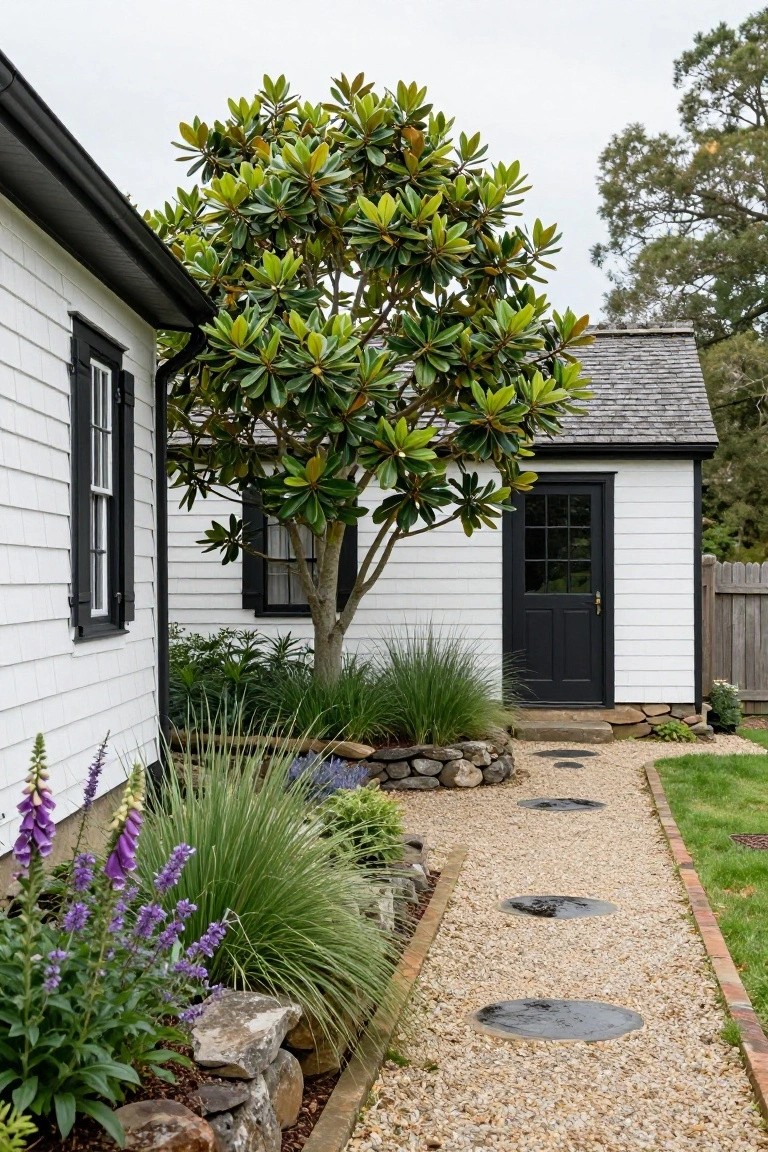
A gravel path like this one runs right along the house side, using big round black stone circles as steps set into the loose pebbles. It keeps things simple and practical, especially for side yards where you need easy access without a lot of upkeep. The edging with rocks and low plants like grasses and foxgloves holds it all in place and adds some color without overwhelming the clean colonial lines.
This setup works great on smaller lots or where you want to connect the house to the backyard without paving everything over. Go for light-colored gravel to brighten shady spots, and pick stepping stones that match your trim color for a pulled-together look. Just make sure the path drains well, or you’ll end up with puddles after rain.
Symmetrical Boxwood and Lavender Beds
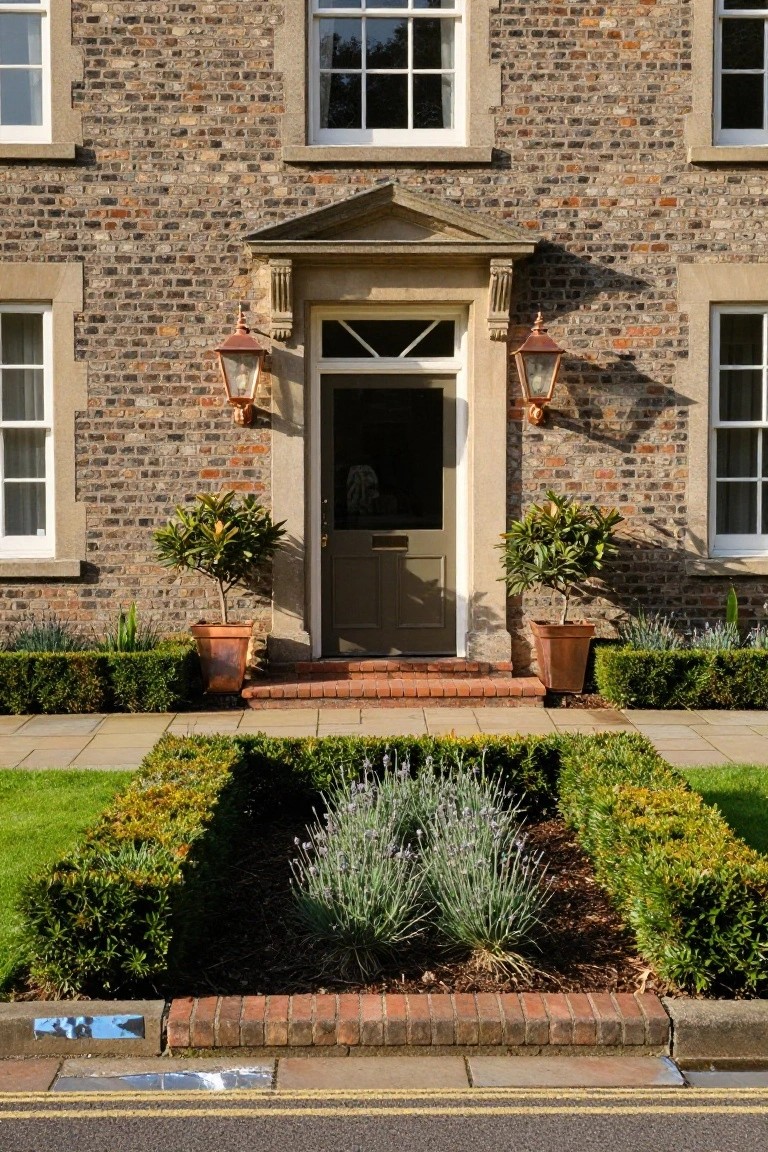
One straightforward way to tidy up a colonial front yard is with low boxwood hedges outlining beds of lavender plants. Right in front of the entry steps, this setup makes a simple rectangle that repeats on both sides of the path. It pulls the eye straight to the door without much fuss, and the soft purple flowers add a bit of color against brick walls.
These beds suit narrow urban lots or any spot with full sun. Plant compact boxwoods for easy trimming, tuck in lavender varieties that don’t spread too far, and mulch to keep weeds down. Pair them with matching terracotta pots holding small trees on either side of the stoop. Skip it if your soil stays too wet, since lavender needs to dry out between waterings.
Perennials in Raised Brick Beds
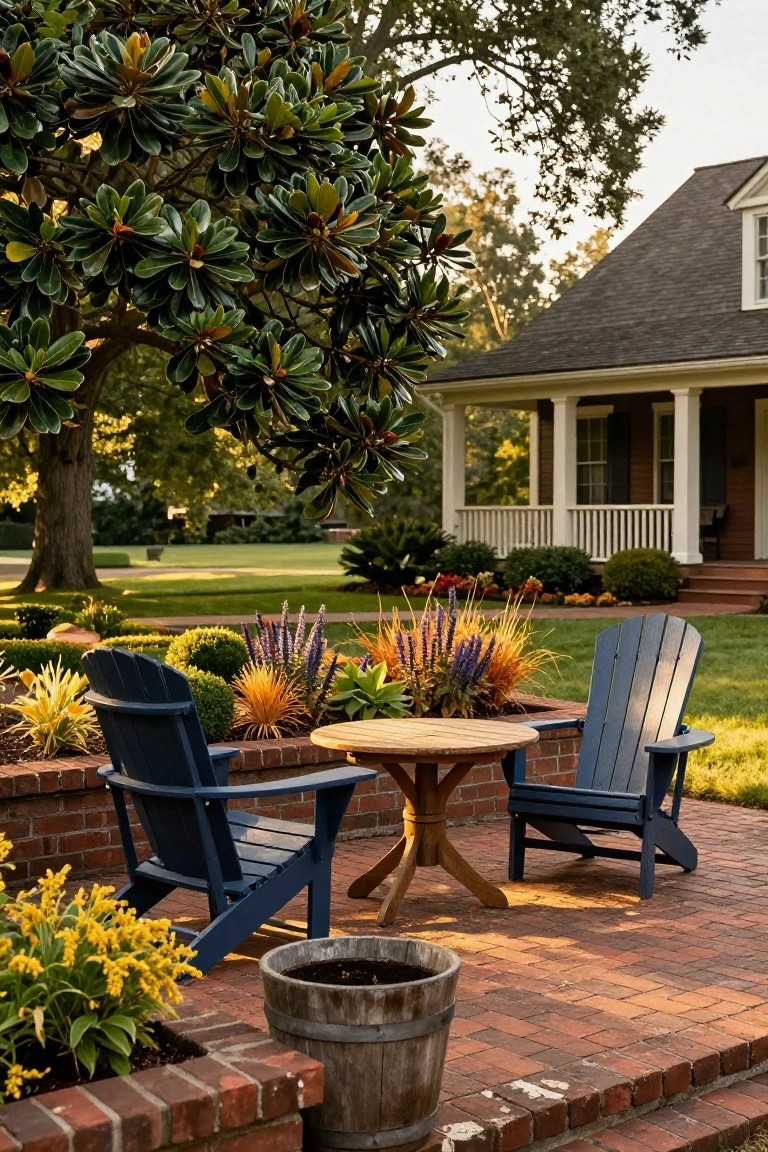
One nice landscaping touch for colonial homes is filling raised brick beds with mixed perennials and grasses right next to a simple patio. Here, tall orange grasses and purple spikes mix with lower yellow flowers along a brick wall that matches the patio pavers. It pulls the house into the yard without much fuss, and the plants give some movement and color that feels right for the style.
This works best on smaller side patios or entry steps where you want seating but not a big open deck. Pick tough, repeat-blooming plants like fountain grass or salvia that handle sun well. Brick keeps everything neat, even in winter… just trim back the dead stuff come spring.
Boxwood Parterre Gardens
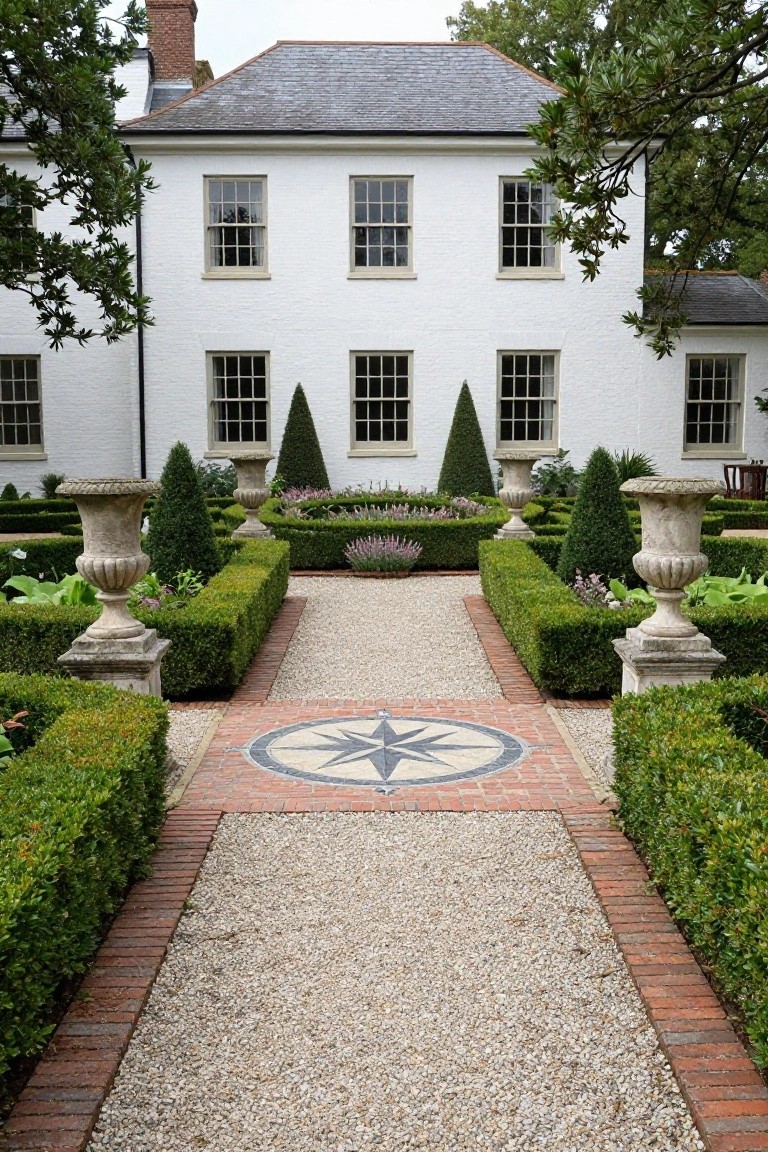
Boxwood parterres give colonial homes a tidy, old-world front yard that feels put together. Neatly clipped hedges outline flower beds and frame a simple gravel path right to the door. Stone urns sit at key spots for some scale, keeping everything balanced against a plain white facade.
This layout suits wider front yards on traditional homes. Lay out the hedges in mirror patterns first, then add gravel edged with low bricks. Trim boxwoods a couple times a year. It holds up well through seasons and points visitors straight to the entry.
Garden Arbor with Climbing Roses
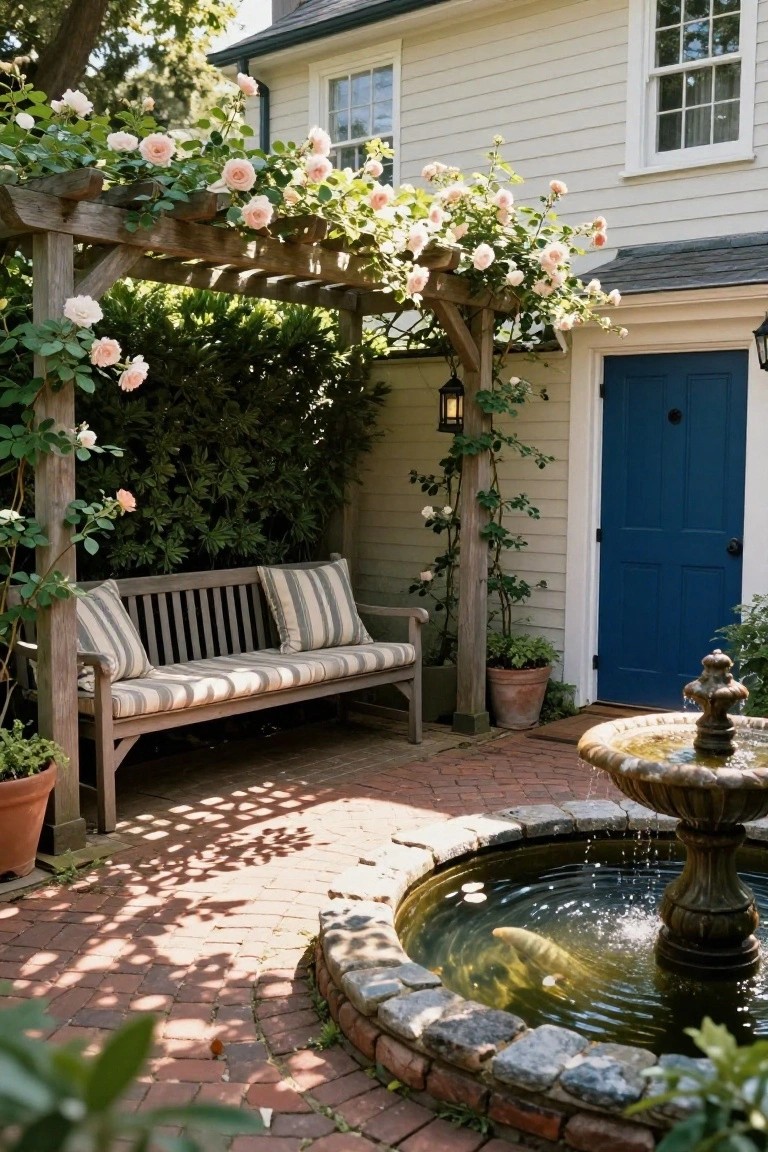
One simple way to add charm to a colonial home’s side yard is a wooden arbor draped in climbing roses. It creates a natural frame around the entry door and pulls the eye right to that pop of blue paint. The soft pink blooms soften the straight lines of the house while giving a shady spot to sit and enjoy the garden.
This setup works best in a small courtyard or tucked along the side where you want some privacy from the street. Choose repeat-blooming roses that won’t overwhelm the structure, and pair with a simple bench and fountain for that easy flow. It keeps things low fuss once established.
Curved Brick Path with Boxwood Edges
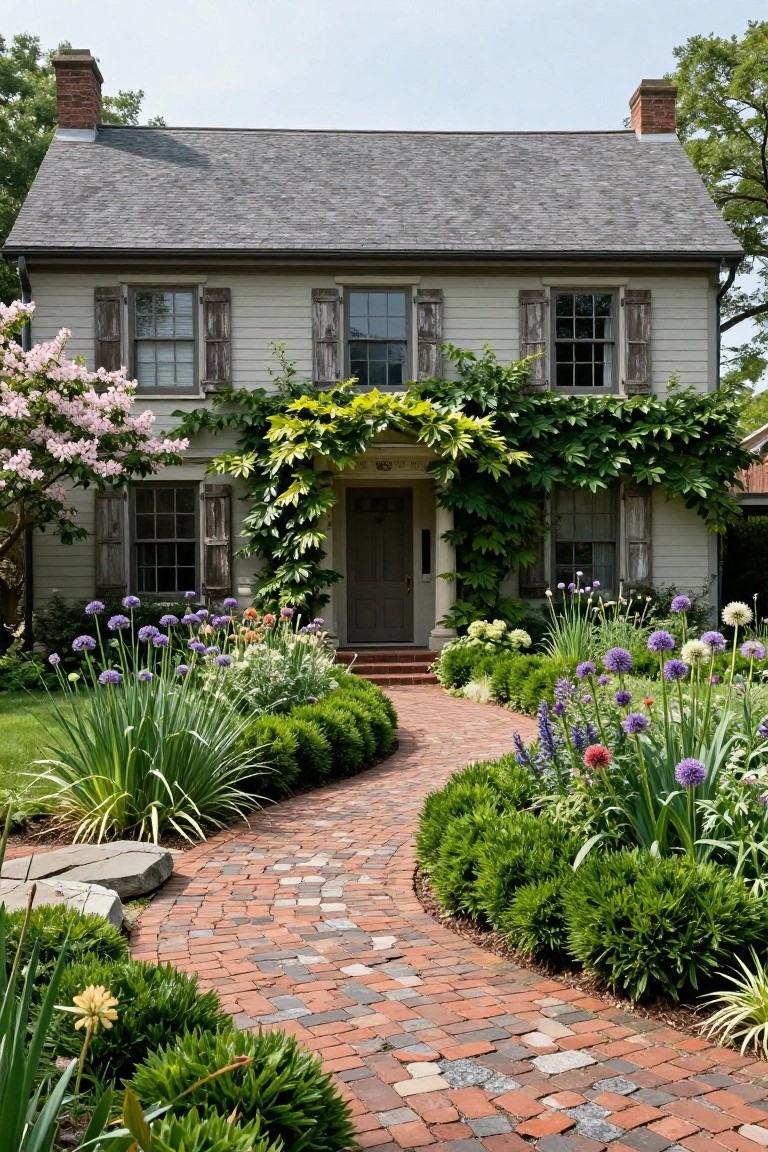
A curved brick path like this one makes the walk up to your colonial front door feel easy and natural. It starts wide at the street and gently bends toward the entry, edged by neat rows of boxwood shrubs. Those low green hedges keep things tidy, while clusters of purple alliums and other perennials add color without overwhelming the house. The vines climbing the porch tie it all together nicely.
This setup works best in front yards with enough room for the curve, maybe 20 feet or so from curb to door. Go for old-style bricks to match the colonial look, and pick boxwoods that stay under three feet tall. Plant the flowers in spring bulbs for repeat blooms each year. Just keep the path clear of weeds, and it stays low fuss.
Flank the Entry Door with Large Potted Lavender
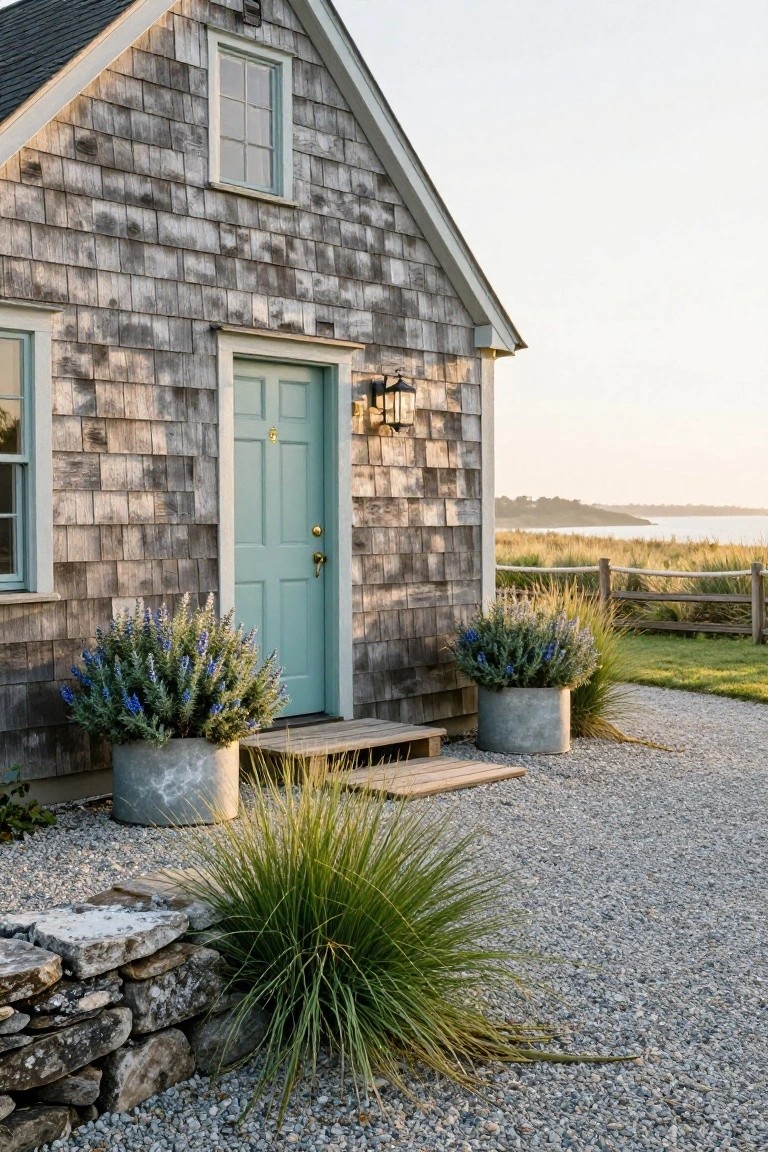
One easy way to frame a front door is to place matching oversized pots of lavender right on either side. The soft blue blooms pick up nicely against a light green door like this one, and they add some height without crowding the space. It’s a simple move that draws the eye straight to the entrance and feels fresh year after year.
These galvanized metal pots work great because they handle coastal spots or gravel driveways without much fuss. Plant lavender in full sun areas on older homes where you want low upkeep. Just trim them back in spring, and they’ll stay tidy. Skip it if your entry gets too much shade, though. Go for bigger pots to make the impact really count.
Tiered Stone Steps with Built-In Planters
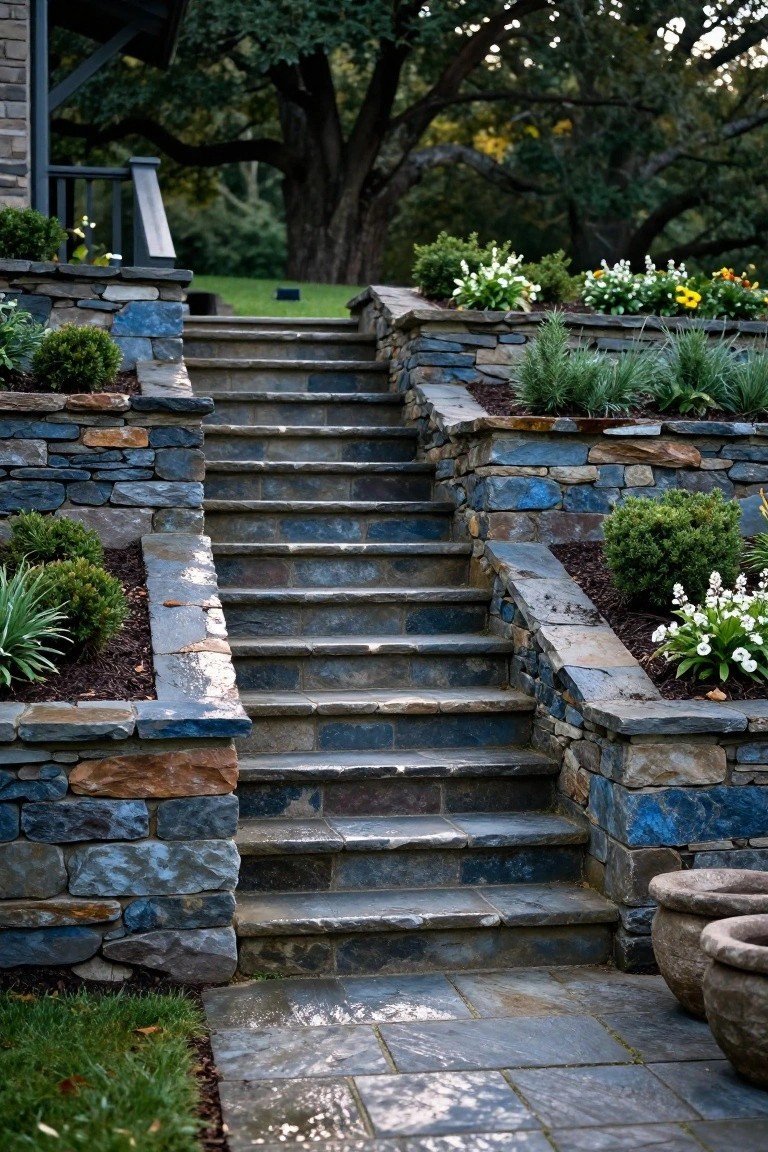
One solid way to handle a sloped entry is with wide stone steps set into tiered retaining walls. Each level has its own planting bed filled with low boxwoods, white flowers, and some grasses. The blue-gray stone ties right into the house siding nearby, and it turns what could be a steep climb into an easy walk that pulls you right up to the door.
This works best on lots with a rise to the front door, especially older homes like colonials where stone feels at home. Pick plants that stay neat and don’t need much water. Keep the beds mulched to cut down on weeds, and you have low upkeep that looks good year round.
Tulips Lining the Entry Path
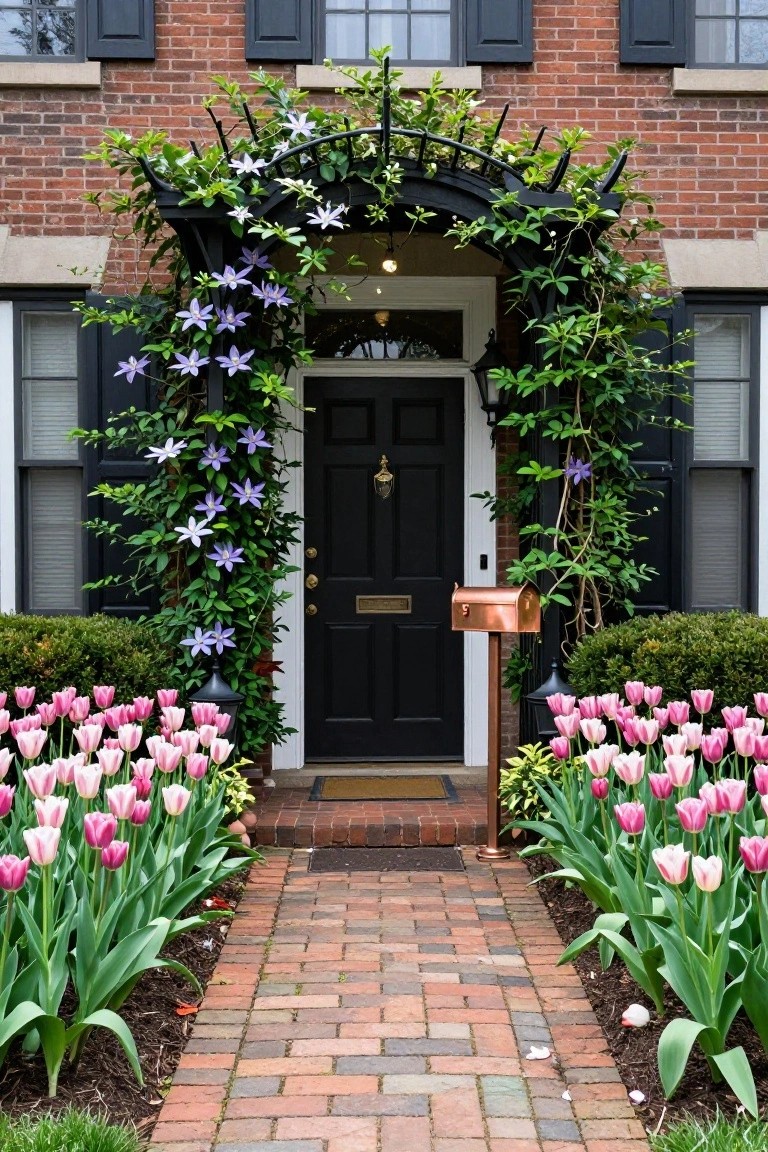
Nothing beats a straight brick path to the front door lined with tulips on both sides. Here the pink and white blooms fill low beds right along the edges, leading your eye straight to the black door under that vine-covered arch. It keeps things simple and colorful, softening the brick house without overwhelming it.
These work best in spring on colonial homes with a clear walkway. Plant the bulbs in fall, keep the beds about two feet wide, and mix colors for some variety. Skip this if your path curves or if deer are a problem in your area.
Boxwood Hedges Line the Front Path
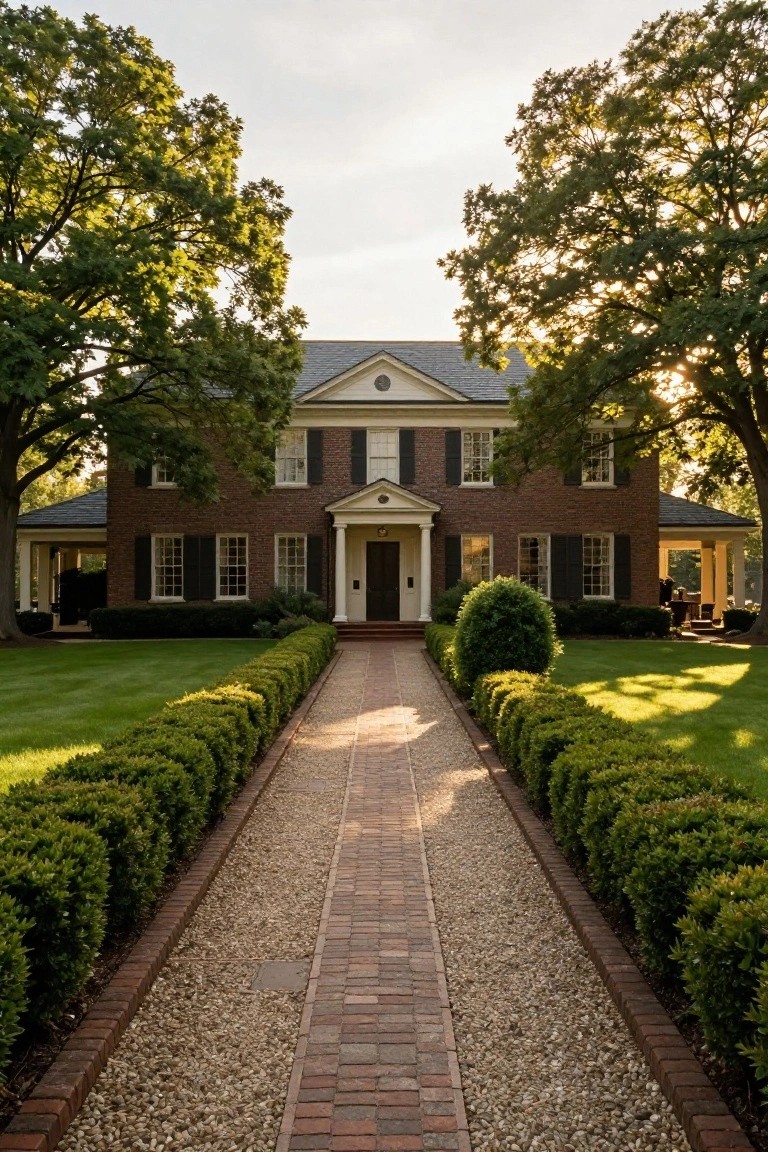
A row of low boxwood hedges runs tight along both sides of a central brick walkway, right up to the colonial front door. That simple planting pulls the eye forward and sets up a clean, formal approach without hiding the house at all. It’s a classic move that makes the entry feel important and the whole yard more put-together.
This works best on level front yards where you want some structure but not a lot of upkeep. Boxwoods trim easy and hold their shape through seasons. Lay bricks for the path with gravel shoulders to handle rain, and keep the hedges under three feet so they frame instead of crowd. Suits traditional brick homes like this one.
Boxwood Edges for Curved Paths
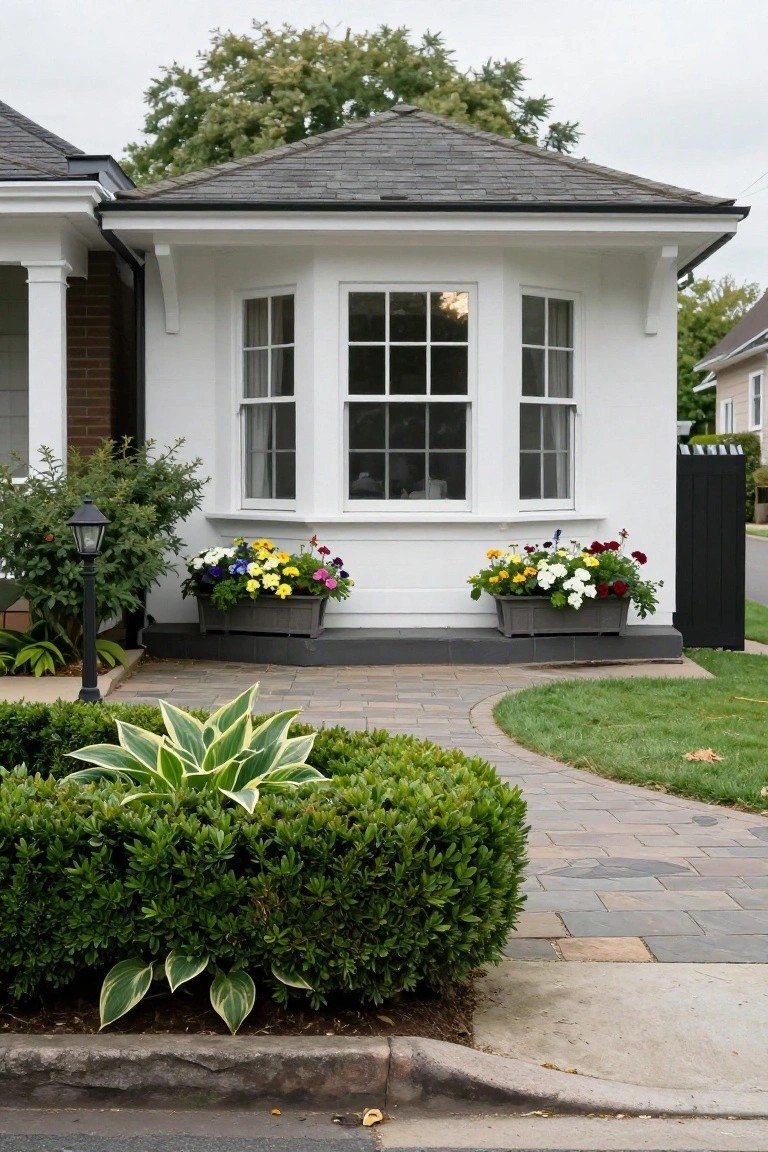
A simple curved path like this one makes the walk up to your house feel easy and natural. Low boxwood hedges run right along the gray pavers, keeping things neat without much upkeep. Add in some bold hosta leaves poking out, and you get that nice mix of green that pulls your eye toward the door. It works because boxwoods stay compact year-round, so the path always looks trimmed and welcoming.
This setup fits older colonial homes best, especially where you want to soften straight lines from the street. Plant the boxwoods close to the path edge, about 18 inches high to start, and curve them to match the pavers. Keep hostas in the front for color contrast, but watch for too much shade, or they might stretch out. Easy to copy on a small front yard.
Roses Climbing a Trellis Beside the Door
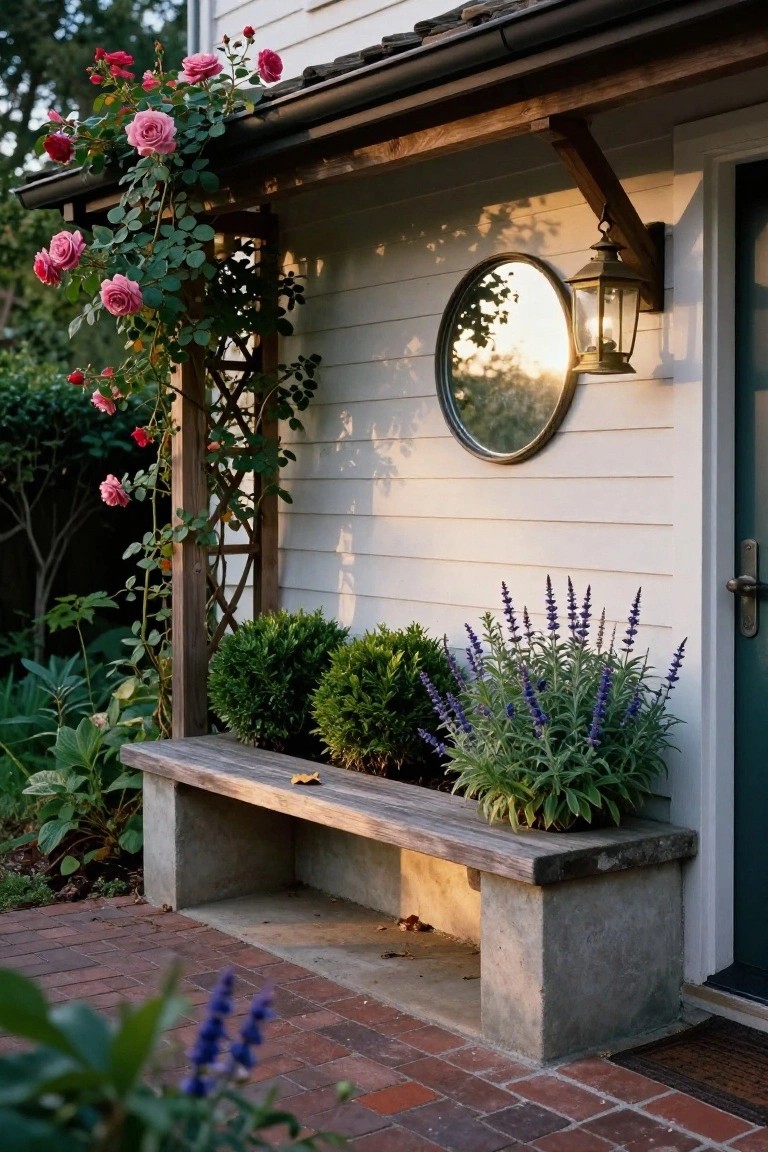
A wooden trellis covered in pink climbing roses runs up the side of this house, right next to the entry. It pulls the eye up and adds a soft touch of color that feels right for an older home. The roses mix well with the low boxwoods and lavender below, giving some structure without getting too busy.
This works best on a sunny wall where the roses can thrive. Set the trellis a foot or so out from the siding so air circulates, and pick a repeat-blooming variety for flowers most of the summer. It suits colonial styles that want a bit more garden charm around the door… just trim the shrubs now and then to keep it neat.
Lavender-Lined Brick Pathway
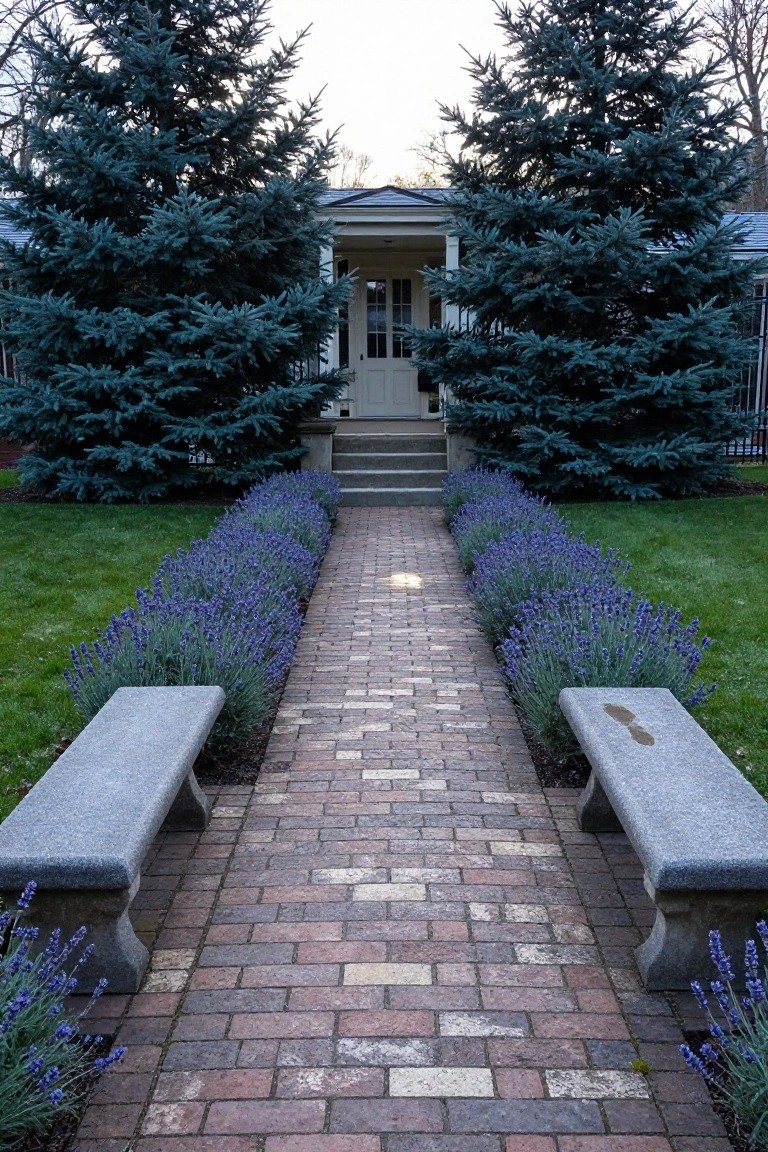
A simple brick path edged with low lavender plants makes a gentle lead-in to the front door. The purple blooms add color without much fuss, and they release a nice scent when you brush past. Pair it with stone benches right at the edge, like these granite ones, for spots to pause before heading up the steps.
This setup fits older colonial homes with a formal porch. Plant lavender in full sun along straighter paths, keeping the beds narrow to save space. It stays tidy with just a yearly trim, and the benches give a practical touch without crowding the walk. Watch for too much shade though, since lavender needs good light.
Lilac Trees Beside the Front Steps
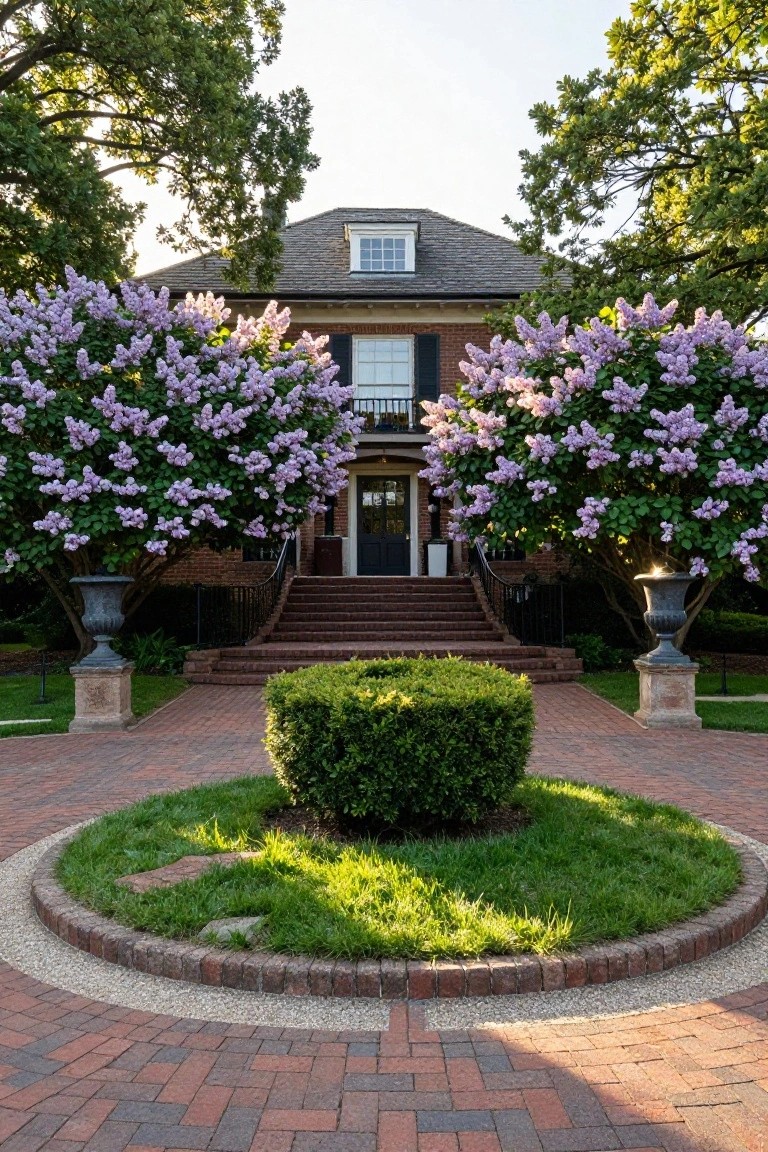
One simple way to dress up a colonial house front is planting matching lilac trees right next to the entry steps. Here, a pair of them loaded with purple blooms sits in stone urns on pedestals, drawing the eye straight to the dark wood door. The soft color plays nice off red brick without overwhelming the architecture, and they add height that matches the two-story scale.
This works best where you have room for trees about 10 to 15 feet tall at maturity. Go for common lilac varieties that bloom reliably in your zone, and position them symmetrical to the house layout. Keep the bases mulched and watch for powdery mildew after wet springs, but otherwise they stay low fuss once established.
Soft Hydrangea Clusters by the Pool
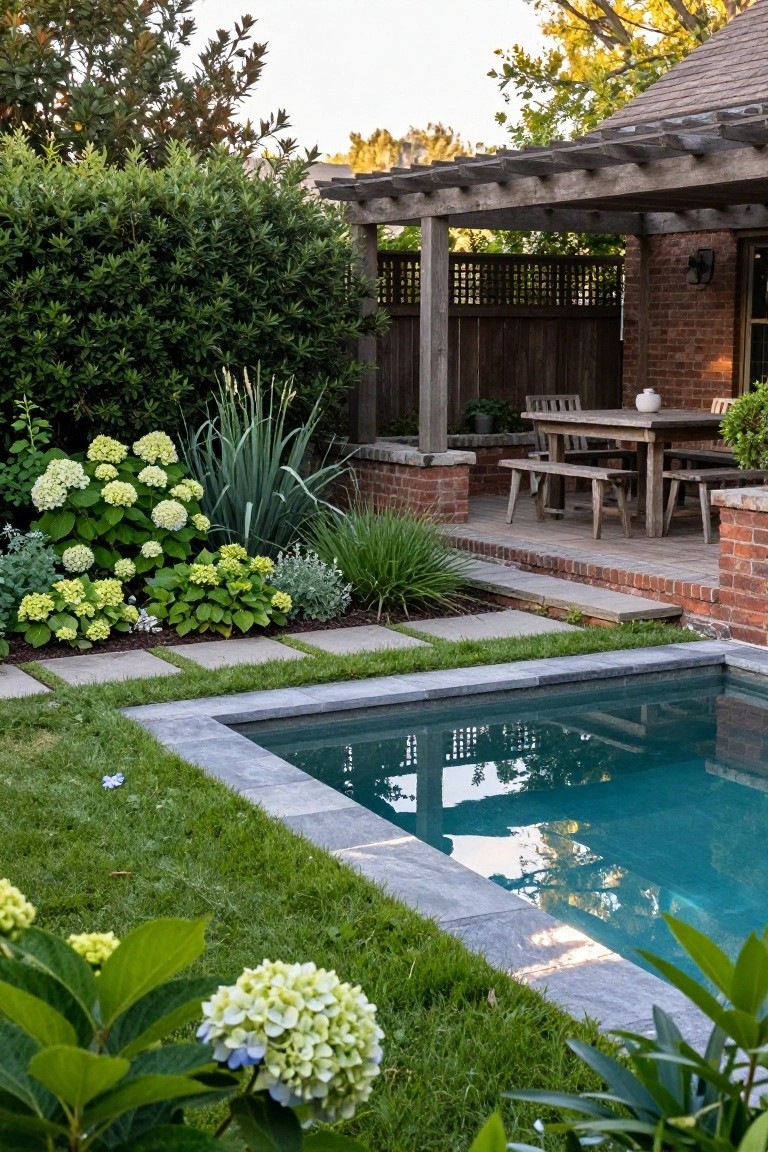
Big white hydrangeas planted in loose groups make a gentle edge right next to the pool. Paired with upright grasses and some low groundcovers, they add plenty of green texture that bumps up against the stone coping without spilling over. It’s a simple way to fill that narrow strip between lawn and water, and it ties right into the brick house wall nearby.
This planting works best around smaller pools in backyards where you want some privacy but not a full hedge. Go for mophead hydrangeas that stay under five feet, and mix in a few agaves or sedges for year-round interest. It suits colonial-style homes with patios, but watch the roots near pool plumbing.
Frequently Asked Questions
Q: Do I need a big yard for these Colonial landscaping ideas to work? A: Scale them to fit your space. Focus on the entry path with paired shrubs and a simple gravel walk. It frames the house just right without overwhelming a small lot.
Q: What plants hold up best through winter? A: Evergreens like boxwoods keep the structure intact when everything else goes bare. Prune them lightly in spring, and they bounce back strong.
Q: How do I start if I’m short on time? A: And potted topiaries by the door give instant symmetry. Swap them out seasonally for fresh color.
Q: Can I handle the hardscaping myself? A: Lay pavers for paths with basic tools and sand base. Rent a compactor for a pro finish that lasts years.
