

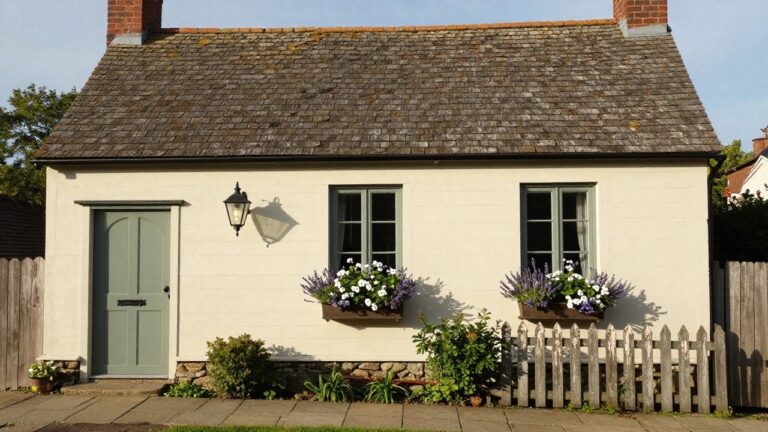
I remember pulling up to a neighbor’s cottage last summer and realizing their new siding made the whole front porch pop without changing much else.
From the street, it’s the siding that first tells you if a home feels cozy or dated, especially when it nods to the roofline and entry door.
I’ve always liked how board-and-batten pulls the eye upward on shorter facades, giving that cottage a bit more height in real life.
Mixing textures like shakes with smooth panels can soften hard angles and make the house read better year-round.
A couple of these ideas use affordable materials that weather nicely, worth sketching out for your own spot.
Shingled Gables with Clapboard Siding
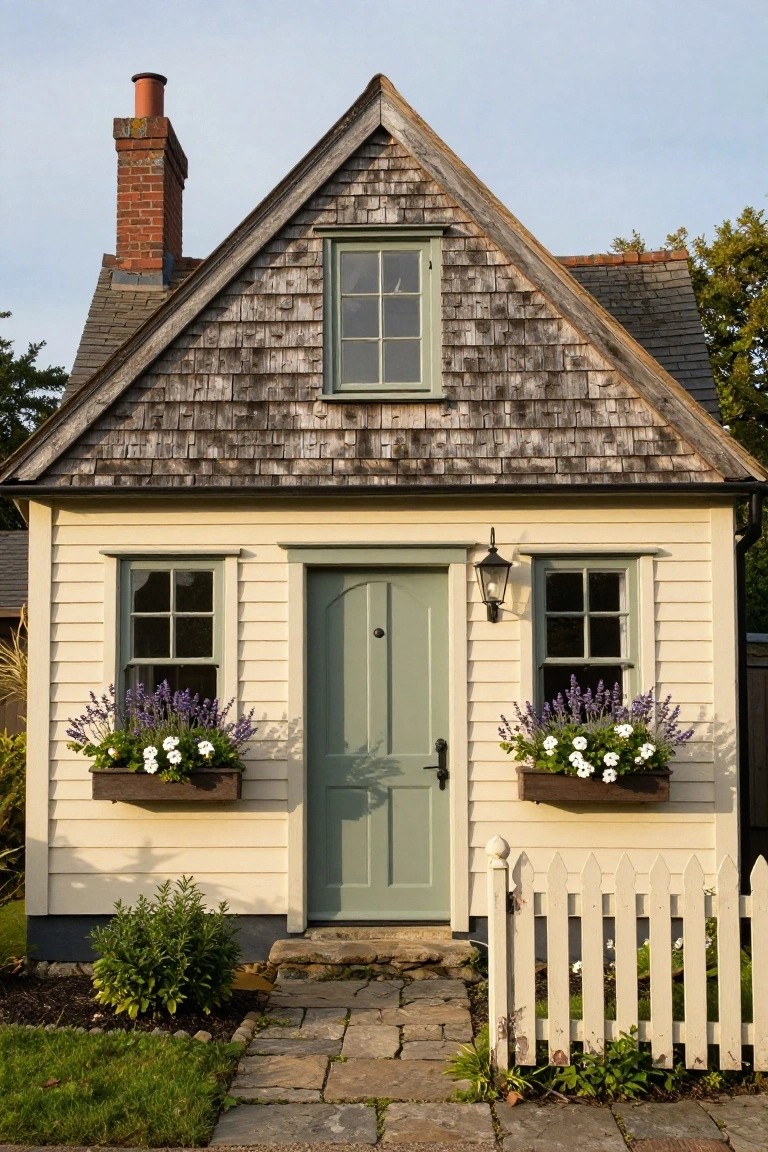
Cedar shingles on the gables give this cottage a lot of character right away. They add rough texture up top that contrasts nicely with the smooth clapboard walls below. It’s a look that’s common in older coastal homes and really boosts curb appeal without much fuss.
You can pull this off on smaller houses or bungalows where you want some visual interest at eye level and above. Paint the clapboard a soft cream or pale yellow to keep it light. Just plan for regular sealing on those shingles since they weather fast outdoors. Works best where you like that slightly rugged feel.
Cedar Shingle Siding on Cottage Sides
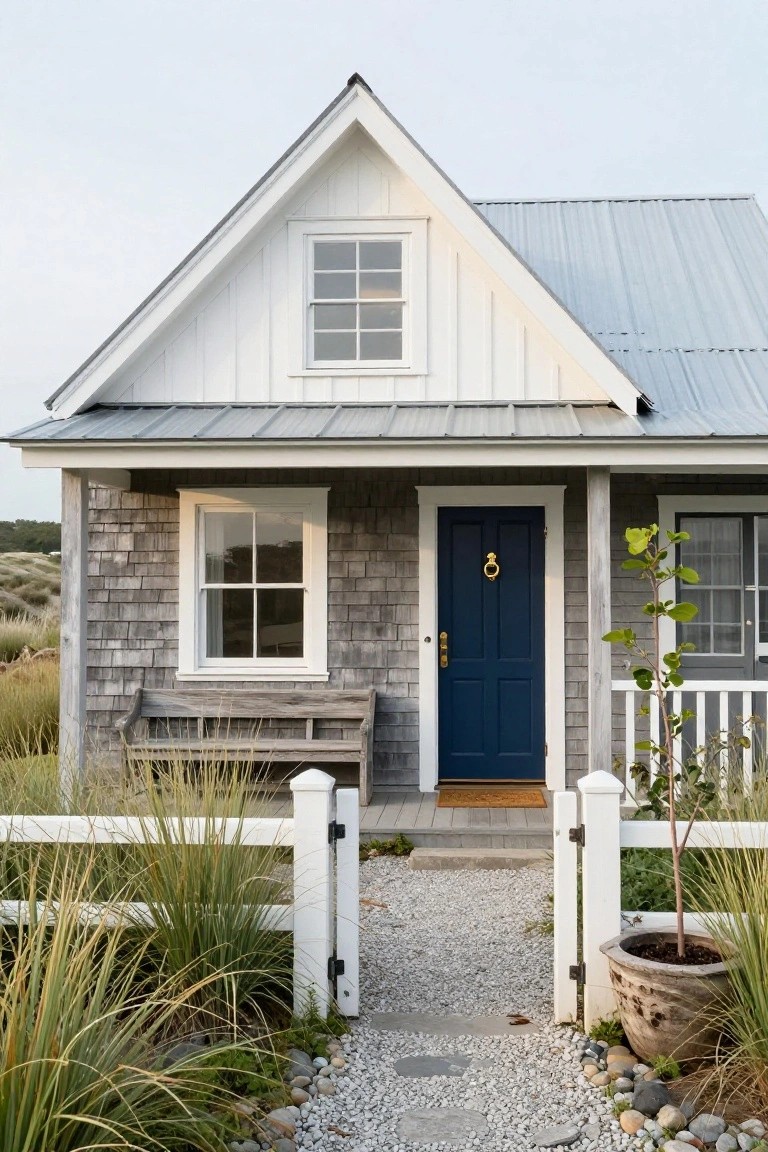
Cedar shingles work great on cottage exteriors, especially along the sides where they add texture without overwhelming the front. In this setup, the gray shingles blend right into the dunes and grasses nearby, while the white trim up top keeps everything crisp and balanced. It’s a low-key way to give your place that lived-in coastal feel that draws people in from the street.
Go for shingles on homes near the water or in sandy spots, since they weather nicely over time. Pair them with board-and-batten on the gables or porch for contrast, like the navy door here adds a pop. Just make sure to treat the wood at first to hold off graying too fast if you want.
Dark Wood Siding Over Stone
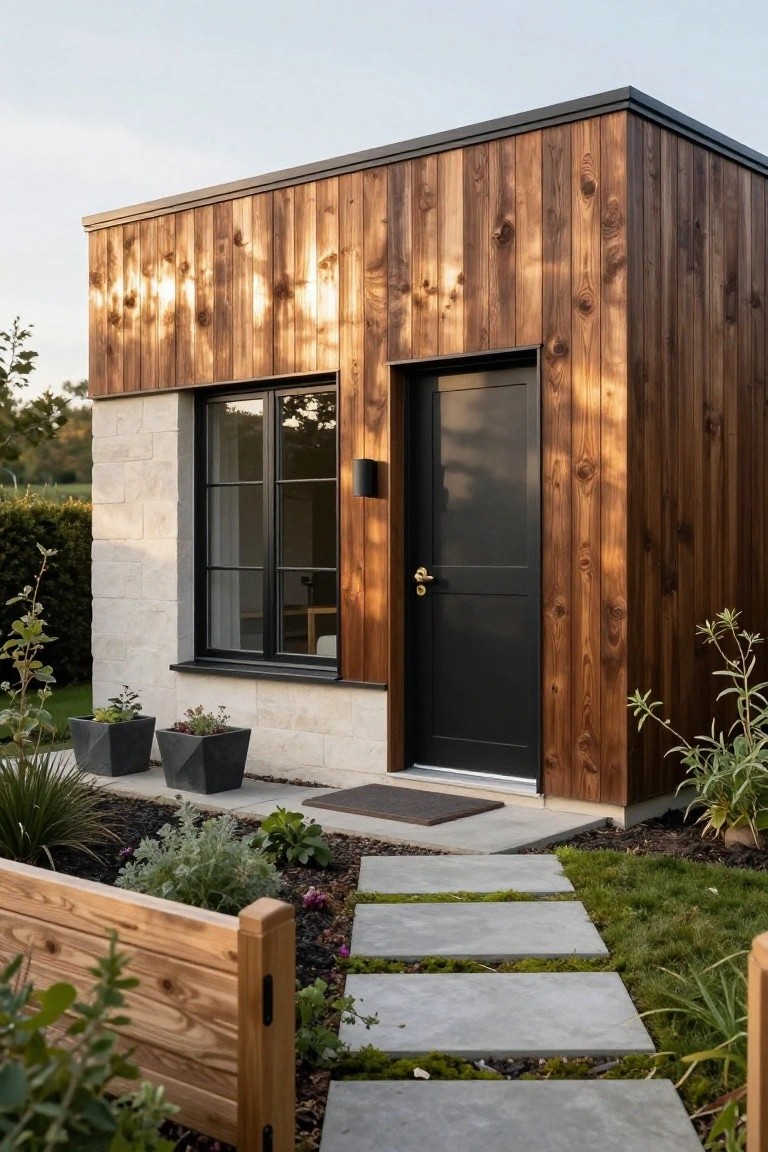
One solid way to update a cottage exterior is dark wood siding over a light stone base. Here the vertical planks have a charred look that picks up the sun and shows off the wood grain. It keeps things modern but ties right into the natural setting around it.
This combo works best on compact homes like garden studios or small guest houses. The stone anchors the bottom while the wood lightens the top. Go for black-framed doors and windows to sharpen the lines. Just make sure the wood is treated for weather since it faces the elements directly.
Smooth Stucco Siding with Rustic Brackets
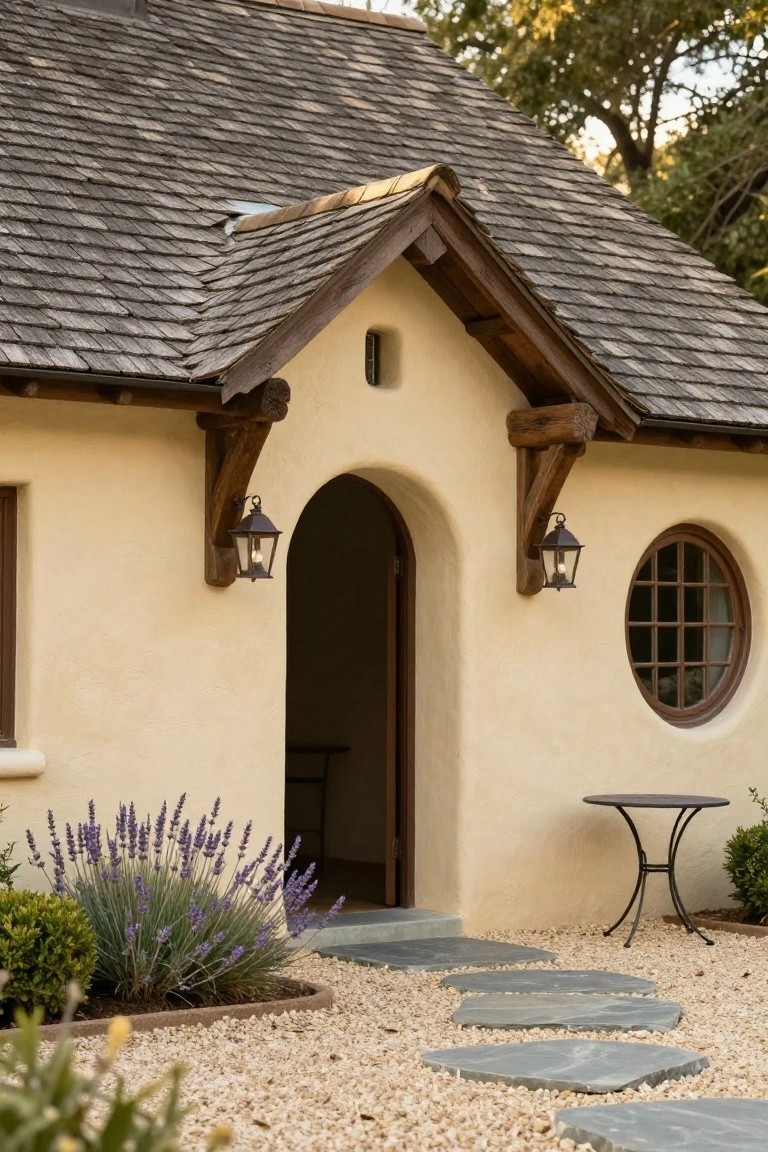
Smooth stucco siding like this gives a cottage a soft, handmade look that feels right at home in a garden setting. The creamy beige color picks up on the surrounding landscape, and those rough wooden brackets add just enough texture without overdoing it. Paired with a shake shingle roof, it keeps things simple and timeless.
This siding works best on smaller homes or additions where you want a cozy entry that draws folks in. Frame an arched door with lanterns like these, and add gravel ground cover plus a few lavender plants nearby. It suits warmer spots with dry yards…just make sure the stucco is sealed well against moisture.
White Siding on a Beach Cottage
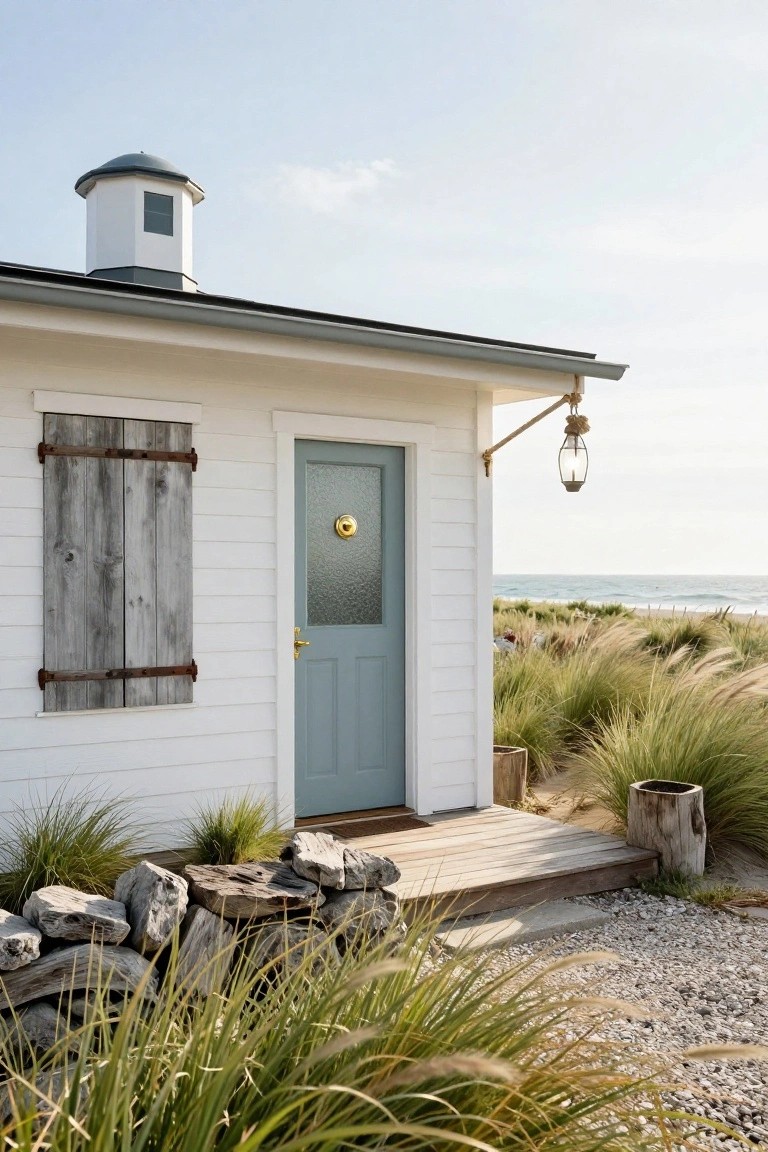
White siding keeps things simple and clean on this little beach cottage. It lets the teal door and those old-looking shutters stand out without overwhelming the look. That fresh coat makes the place feel bright against the dunes and ocean, like it’s been there forever but still looks sharp.
You can pull this off on any small coastal home or cabin near water. Pick a smooth lap siding in bright white, then add one color pop like that door. It works best where you want low upkeep, since white hides salt and sand better than dark shades. Just repaint every few years to stay crisp.
Board-and-Batten Siding with Shingle Accents
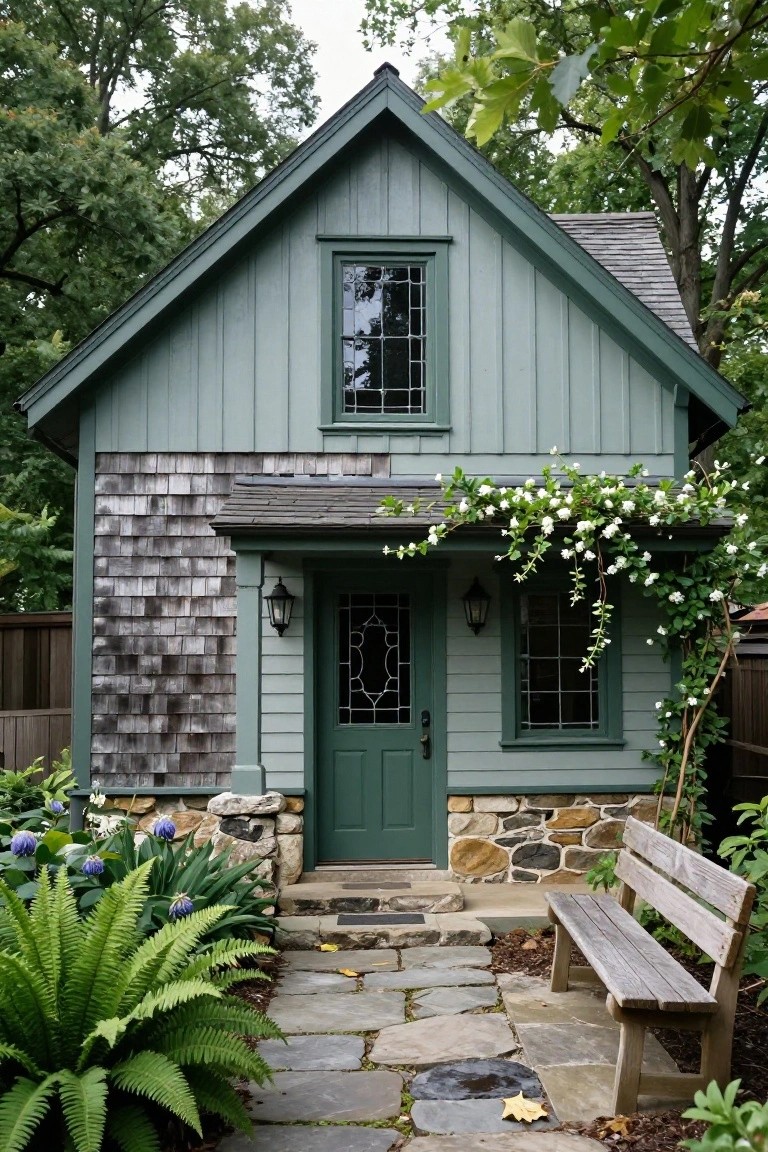
A cottage like this pulls off a nice mix of siding types. The main walls use board-and-batten in a pale green paint that feels fresh and easy on the eyes. Then shingles cover the gable end for a bit of texture. That combo keeps things simple but adds enough interest to stand out from plain clapboard.
Try this on a small backyard structure or a modest home where you want low-key charm. The stone base at the bottom ties it together nicely, especially with plants nearby. Go for weathered shingles if you like a bit more rustic feel, but paint the boards to protect the wood and keep maintenance down.
Soft Gray Shingle Siding
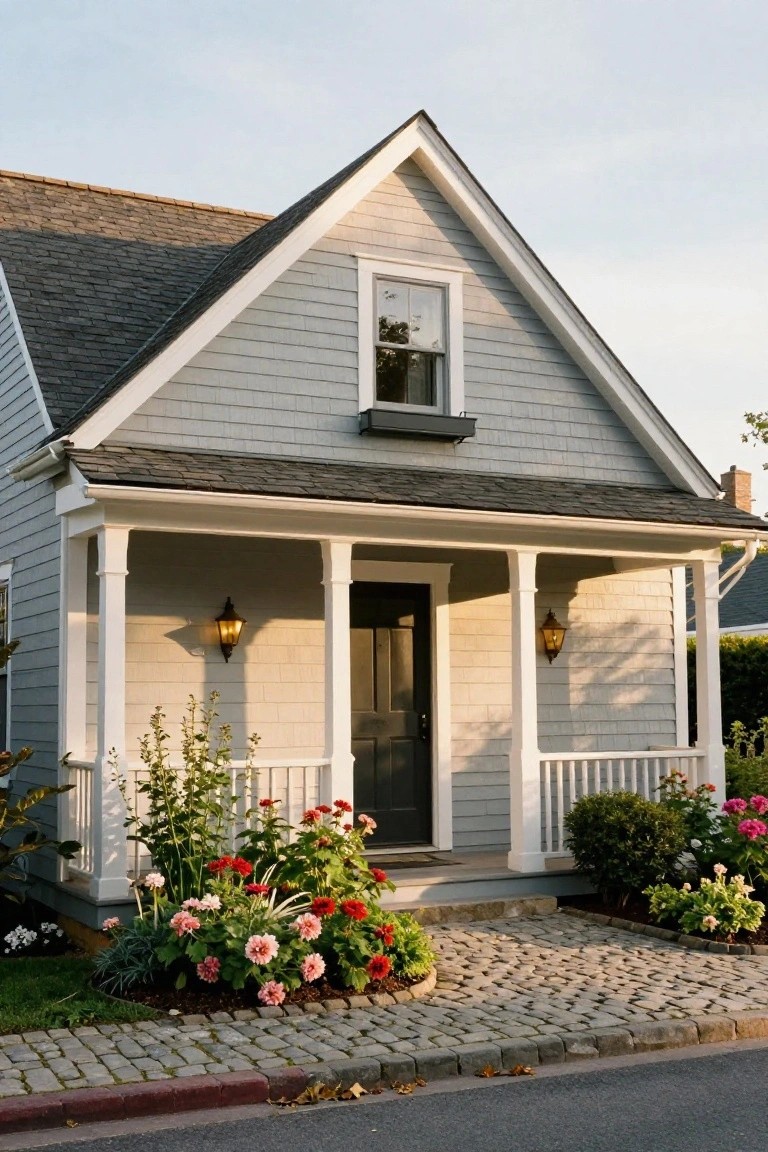
A soft gray shingle siding like this gives a cottage that easy, lived-in look without trying too hard. The muted tone picks up the sky and sea around it, so the house blends right into its spot. White trim on the edges and porch columns keeps things crisp and pulls your eye to the entry.
This siding fits small homes in older neighborhoods or coastal areas best. Go for it on a gabled roofline with a basic porch setup. Add flower beds at the front to soften the base… just don’t overplant or it crowds the path.
Pink Siding on Cottages
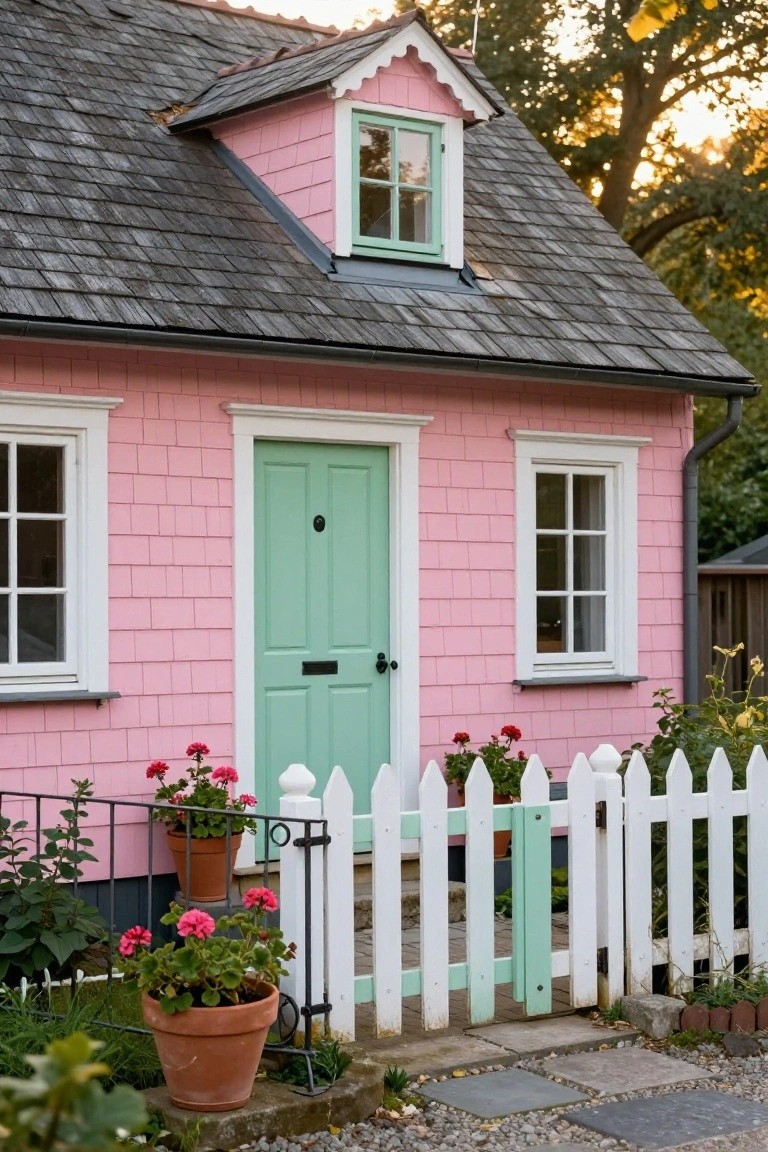
Pink siding like this gives a cottage that fun, storybook look without trying too hard. It stands out against green trees and gray roofs, making the house feel welcoming right from the street. The mint green door pulls it all together and adds just enough contrast.
Try it on a small home where you want more personality. White trim keeps things crisp, and potted flowers by the entry tie in nicely. It suits relaxed garden settings best, but tone down the pink if your area leans more formal.
Dark Wood Siding on Cottages
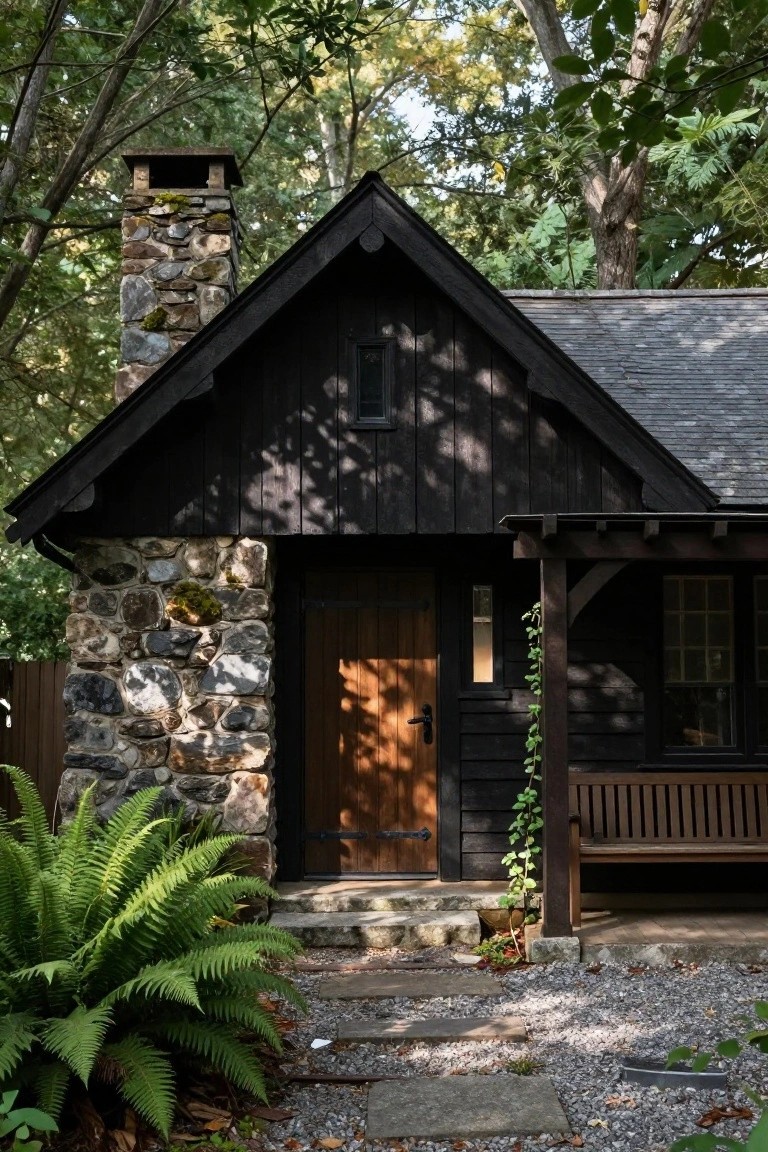
Dark wood siding like this gives a cottage that tucked-away forest feel without much effort. The near-black stain on the vertical boards makes the house recede into the trees around it, while the rough stone at the base and chimney keeps things sturdy and real. It’s a simple switch from lighter paints that can wash out smaller homes.
Try it on cabins or bungalows under tall trees, where the dark tone hides dirt and wear better. Use cedar or pine that’s properly sealed, and match it with a heavy wood door. Skip bright trim; let the siding do most of the talking. Works year-round, especially in shady spots.
Crisp White Siding with Green Trim
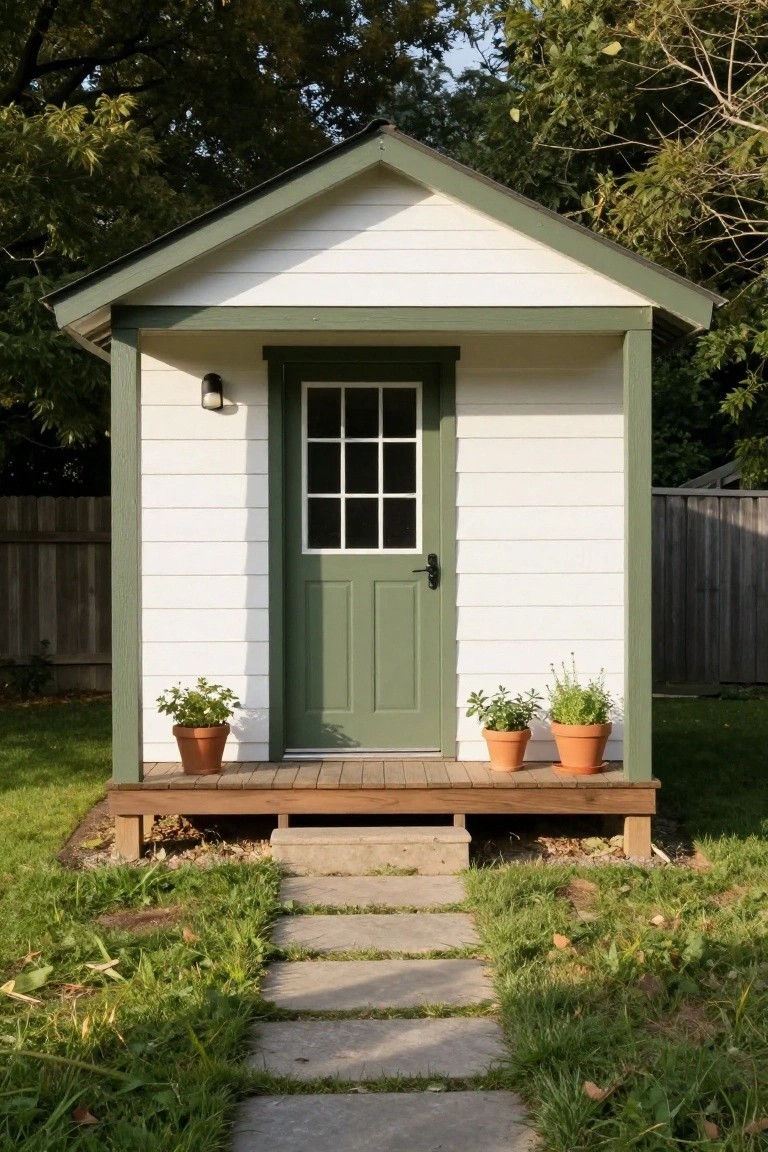
A simple white siding like this on a cottage shed keeps things looking fresh and clean. The green trim outlines the roofline, corners, and door just enough to give it shape and pull your eye right to the entry. It fits right into a backyard without trying too hard, and those pots of herbs on the little porch make it feel lived-in already.
This setup works best on smaller structures like sheds or workshops where you want easy curb appeal from the street or yard view. Pick a soft sage green to match nearby plants, and it suits most home styles from traditional to casual country. Avoid darker greens unless your landscaping is bold, or it might clash a bit.
Recommended Products

TRUE-TO-NATURE 3D REALISM: Crafted from premium high-density polyurethane (PU), our faux stone wall panels perfectly replicate the rugged texture, deep crevices, and color variations of natural stone. Unlike cheap foam or flat wallpapers, these 1.18-inch thick 3D artificial rock veneers fool the eye and touch, instantly upgrading your space with a high-end, realistic masonry aesthetic.

DECK AND PATIO WASH: Home Armor Deck & Patio Wash lifts stains from dirt and grime to keep decks and patios looking great over their lifespan.

True Net Installed Coverage (3.63 Sq. Ft.): Unlike sellers who only list gross panel size, we provide the actual net coverage of 3.63 sq. ft. per panel, excluding the interlocking tabs. This ensures 100% accuracy for your project calculations. Each lightweight PU panel measures $46.63" imes 12.5"$, making it easy to handle for professional results.
Half-Timbered Siding Boosts Cottage Curb Appeal
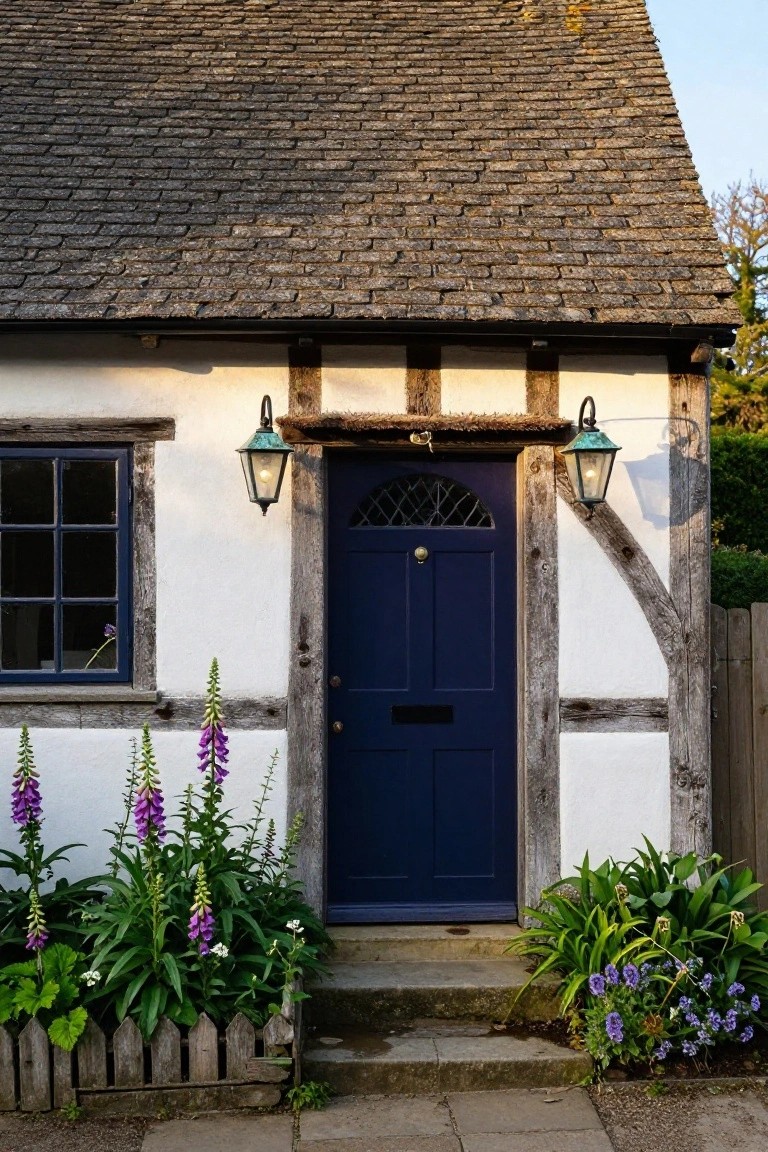
Half-timbered siding uses dark wooden beams laid over white plaster walls. It creates that classic English cottage feel, sturdy and charming at the same time. The black-and-white contrast pops from the street. Makes any small house look like it’s been there forever.
You’ll see this a lot on older homes in rural spots. It suits bungalows or storybook-style cottages best. Paint the beams regularly to keep off rot. Add a deep blue door and tall foxgloves out front… and folks will slow down to look. Not too fussy to maintain if you stick to the basics.
Pale Yellow Siding with a Blue Front Door
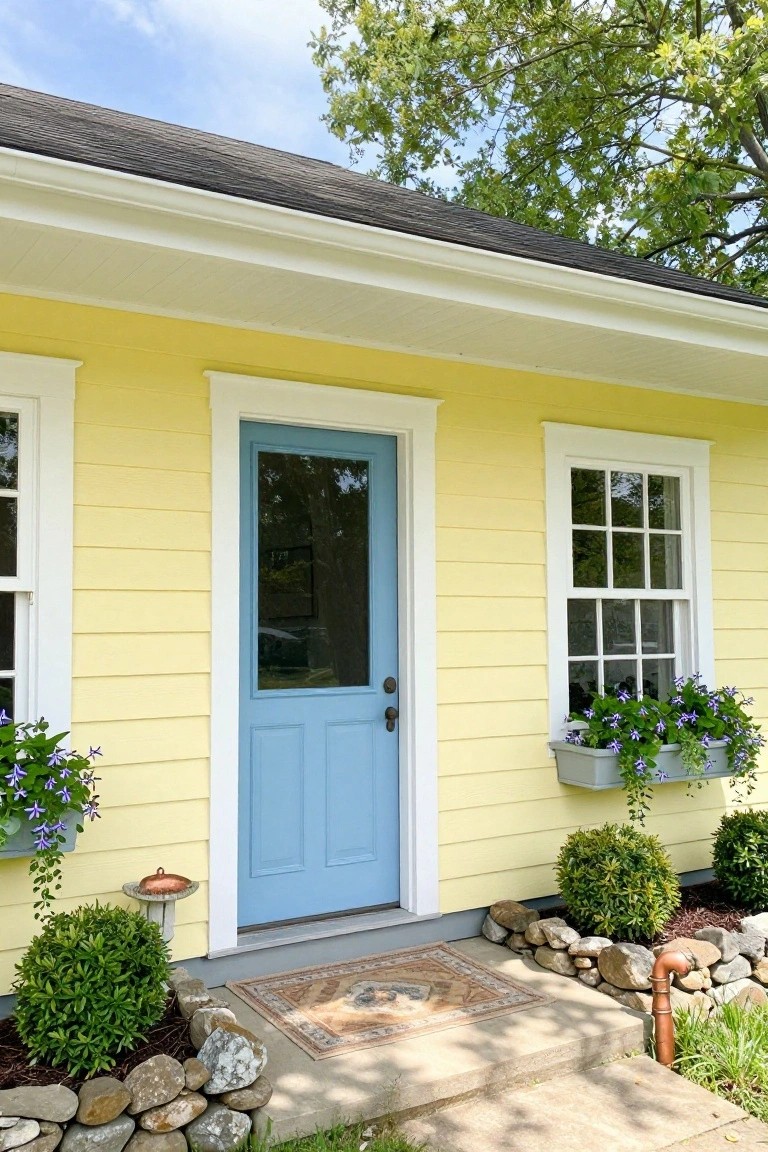
Nothing says cottage charm like pale yellow siding meeting a bright blue door. That soft buttery yellow keeps things light and sunny without overwhelming the yard. The blue door adds just enough punch to make folks smile as they drive by. Flower boxes on the windows tie it together nicely, but the color play is what grabs you first.
This setup works great on smaller homes or bungalows where you want easy curb appeal without a big budget. Pick a muted yellow siding to stay classic, then go bolder on the door for contrast. It suits sunny spots best. Watch the trim, though. White keeps it crisp, but test shades in daylight to avoid clashing.
Light Gray Clapboard Siding
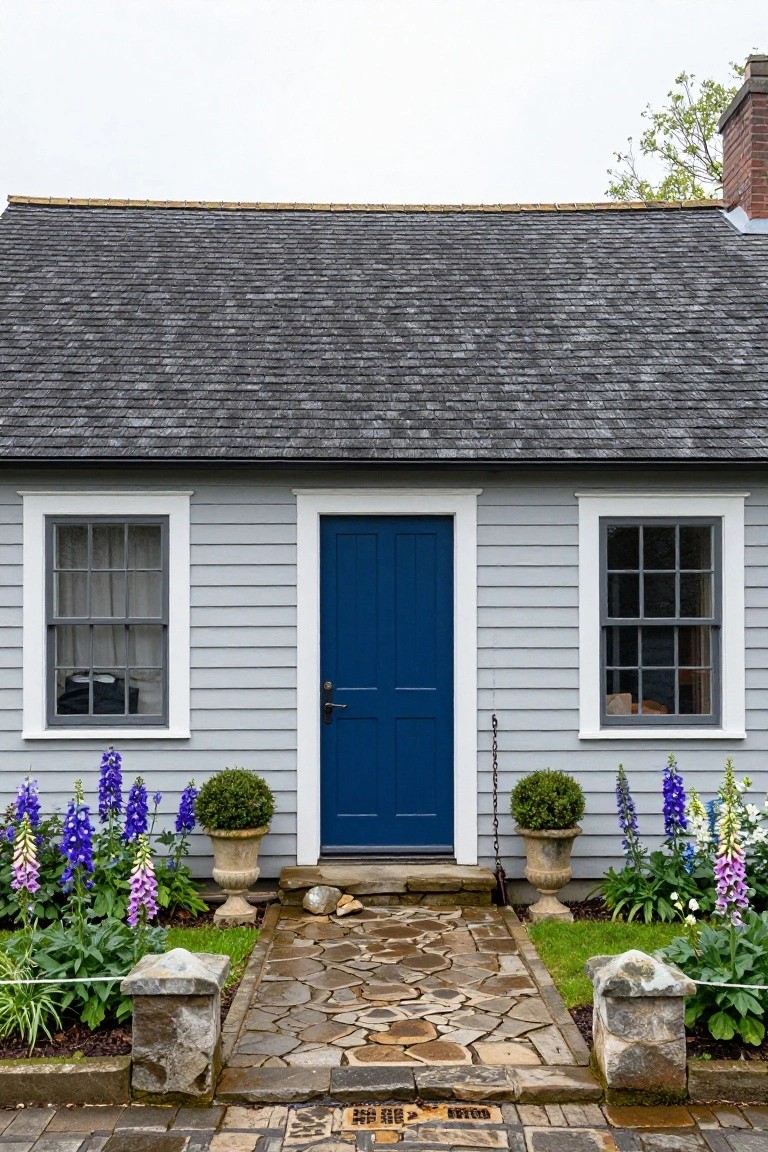
Gray clapboard siding in a soft, silvery tone fits right into cottage style. It has that worn-in look without any work, blending with stone paths and green plants around the base. White trim on the windows and door pulls it together neat, and lets bolder touches like a navy front door stand out without clashing.
This siding choice suits older homes or new builds aiming for traditional charm, especially in cooler climates where it won’t show dirt fast. Go for it on compact facades under 1,500 square feet. Keep the trim bright white for contrast, and add low boxwoods or tall flowers nearby to frame the entry without crowding.
Shingle Siding for Cottage Charm
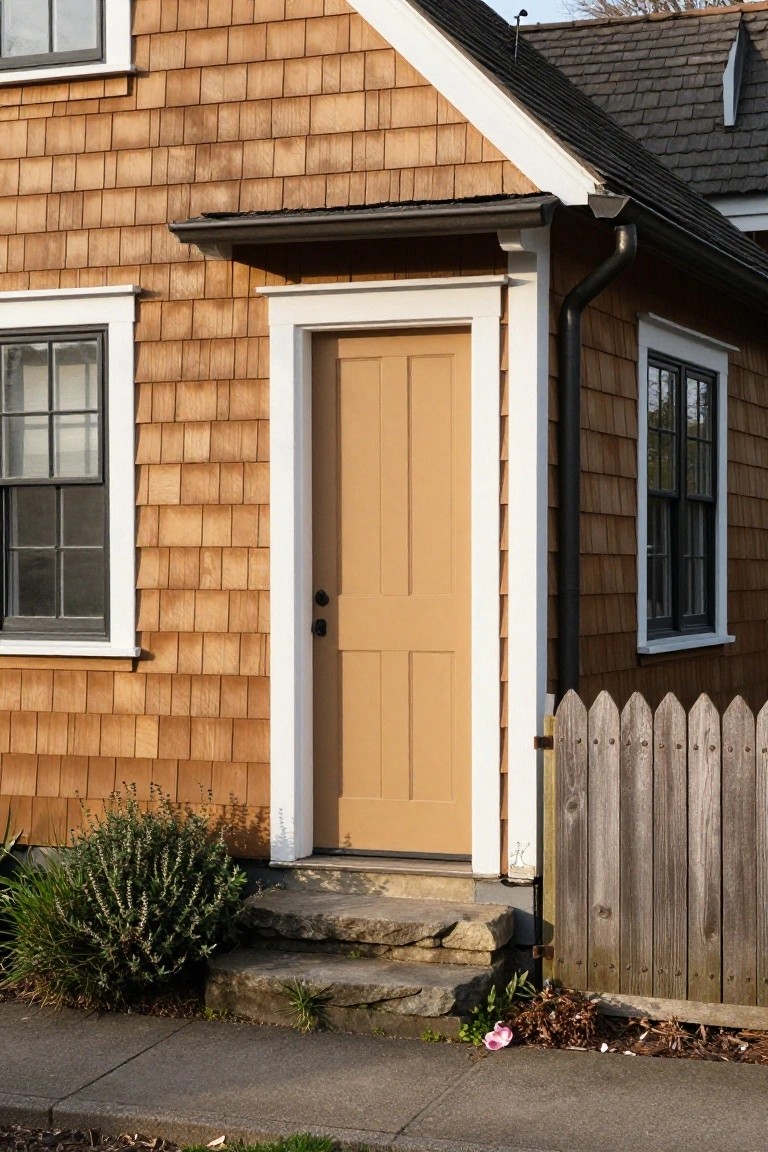
Shingle siding covers this cottage in a warm tan color that feels right at home on older-style houses. The horizontal boards create texture without much fuss, and they wrap around the entry nicely. It pulls the whole front together, making the place look settled and welcoming from the street.
You see this a lot on coastal homes or ones tucked into neighborhoods with trees. Go for cedar shingles if you want that natural fade over time, or treated ones to hold color longer. Pair it with a plain door and stone steps like here, and skip busy trim to keep things simple. Works best on single-story spots where you want subtle curb appeal.
Pale Green Siding on Cottages
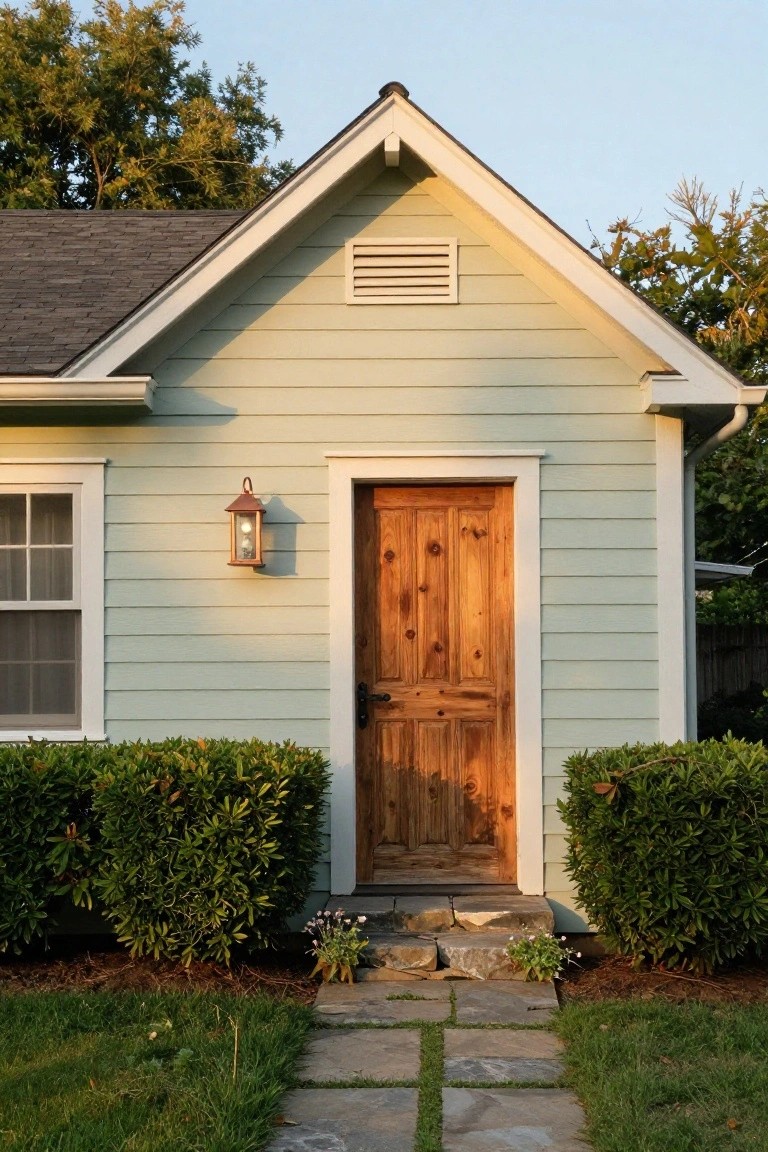
Pale green siding like this gives a cottage that fresh, easygoing feel right from the street. It softens the whole front without looking too bold, and the horizontal boards add a bit of texture that catches the light nicely. Here, it pairs well with the warm wooden door and simple lantern, making the entry pop just enough.
This color works great on smaller homes tucked into green neighborhoods. Go for it if your house has clean lines and a gabled roof. Keep the trim white and add boxwoods on the sides to frame things out. One thing… test the shade in different lights first, since greens can shift a lot.
Soft Gray Clapboard Siding
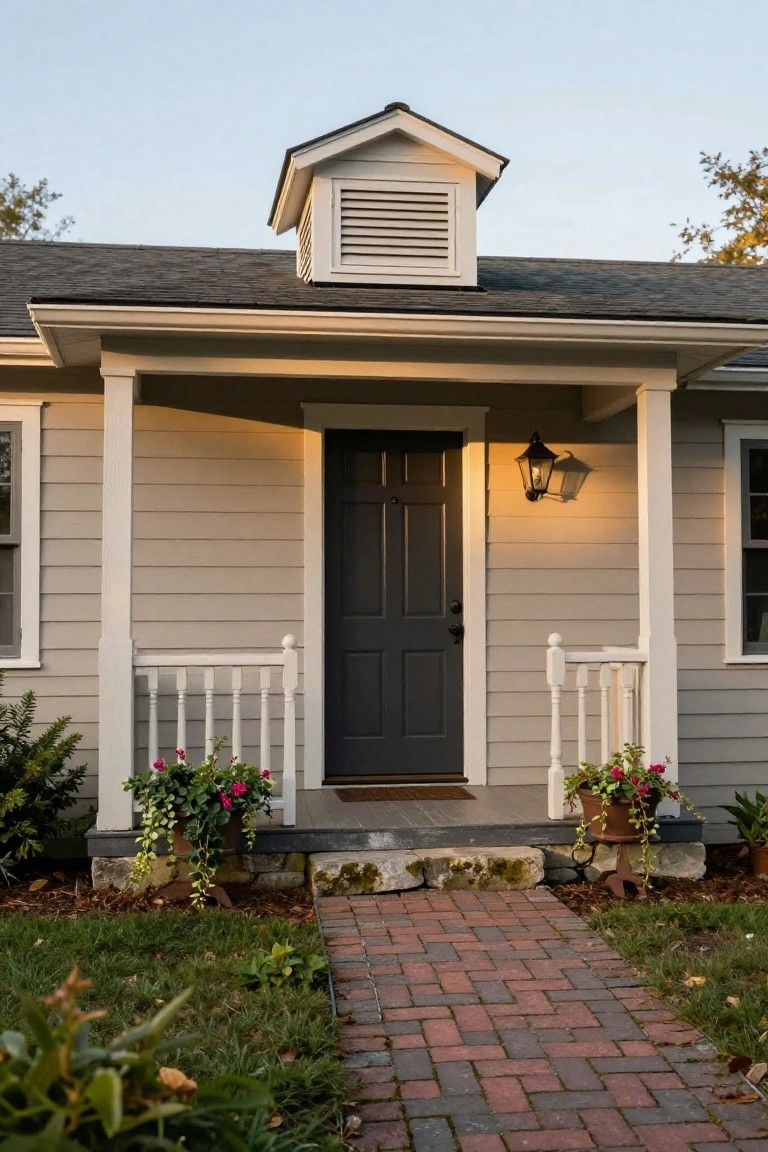
Soft gray clapboard siding like this keeps a cottage looking fresh and timeless. It picks up on natural surroundings without overpowering them. The light tone brightens the facade on overcast days, and the horizontal lines add that easy rhythm cottages do well. Pair it with a dark door for some pull at the entry.
This siding works best on homes with front porches or simple rooflines. It’s low fuss, holds paint longer than darker colors, and fits older neighborhoods or rural spots. Just make sure trim stays crisp white to keep the look clean. Avoid it on super modern builds where it might feel too folksy.
Soft Stucco Siding on Cottage Entries
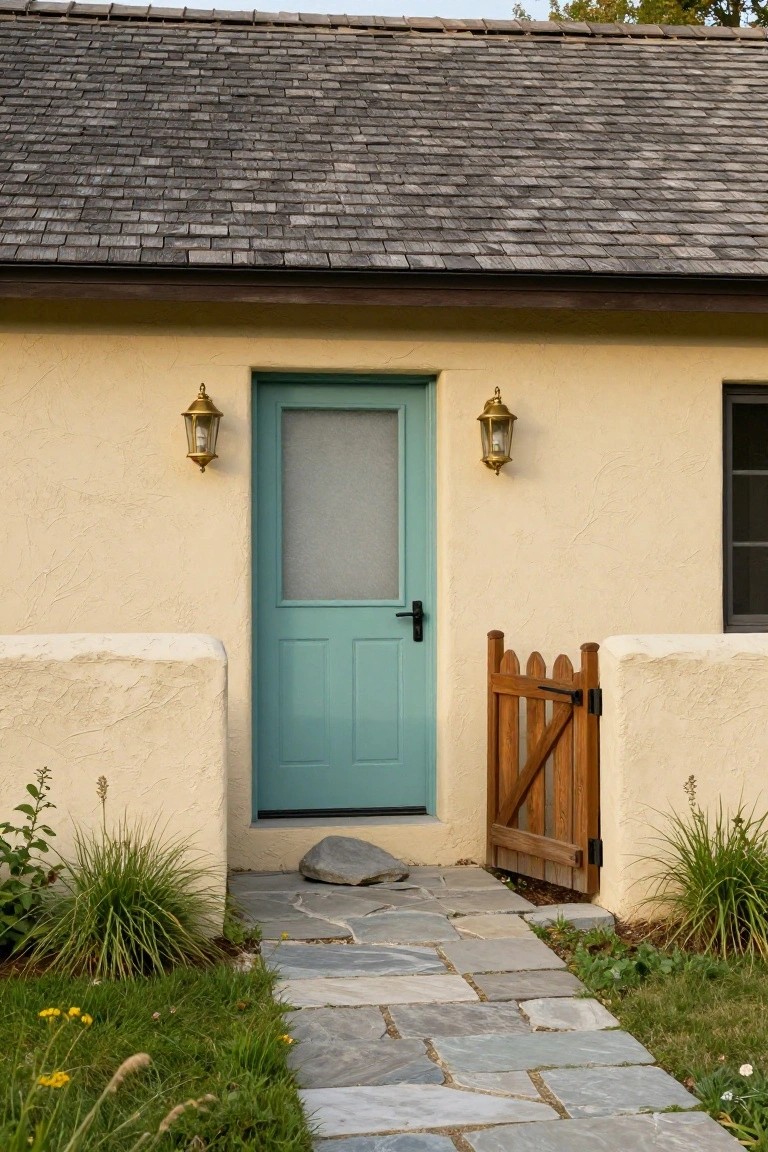
Stucco siding like this pale yellow version keeps things simple and cottage-like. It has that smooth, slightly textured finish that feels right at home on smaller structures. Paired with a turquoise door, it lets the entry stand out just enough to draw folks in from the path.
This works best on low-slung homes in warmer spots, where the light color bounces back heat and stays clean with little effort. Stick to earthy tones for the stucco so bolder doors or lanterns don’t fight it. Add a gate or stone steps, and you’ve got real curb appeal without much fuss.
Red Door on White Cottage Siding
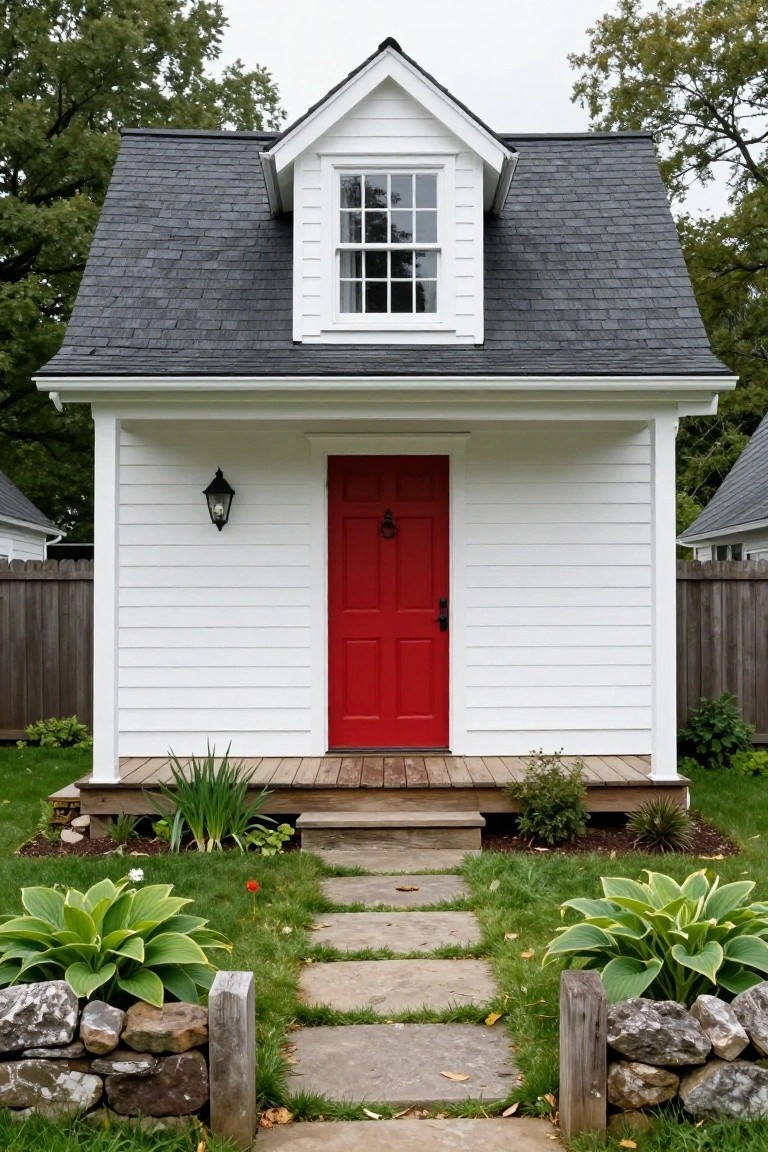
A bright red door stands out sharp against clean white siding like this. It pulls your eye right to the entry without much fuss. That simple color switch gives a little cottage a welcoming kick. The black lantern next to it keeps things straightforward too.
This works best on smaller homes where you want some personality up front. Go for it on a classic clapboard setup in a yard with green plantings around. Just make sure the red isn’t too glossy or it might clash in bright sun. Keeps the look fresh year round.
Frequently Asked Questions
Q: Can I paint my old siding instead of replacing it?
A: Paint it if the boards look solid with no rot or major cracks. Scrape off loose paint, clean everything with a pressure washer, and slap on two coats of high-quality exterior paint. That quick refresh mimics a lot of those 21 ideas without the big spend.
Q: How do I pick siding that matches my cottage roof and trim?
A: Walk around your house and note the roof’s color and texture first. Grab siding samples that echo those tones, like a subtle gray shingle siding under asphalt shingles. Test them in natural light right on your wall to see the real vibe.
Q: What’s the best siding for a cottage in a rainy spot?
A: Grab fiber cement siding. It shrugs off moisture way better than wood and keeps its charm. Just seal the edges during install to lock out water.
Q: Can I mix siding types for more curb appeal?
A: Mix them, but keep it simple. Pair board-and-batten on the front gable with shake siding on the sides. It adds depth without chaos.
