

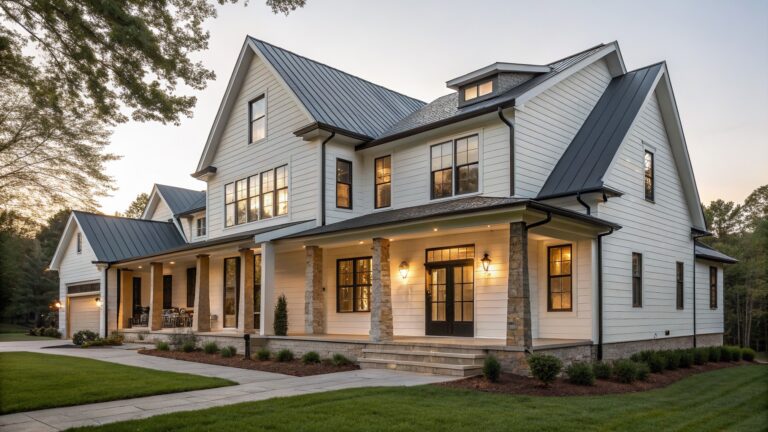
I have spent years noticing how the front of a farmhouse holds up once you step back and take in the full view from the road.
Materials that look fine in a single photo often shift once they meet real sunlight or sit next to each other for more than a season.
Balance is what separates a facade that feels settled from one that just looks busy.
I usually test a new siding or trim pairing against the roofline first because that single junction tells me whether the rest will work.
A few of the combinations I have tried on paper end up staying in my notes until I can see them on an actual wall.
Mixing Stone With Siding On Farmhouse Exteriors
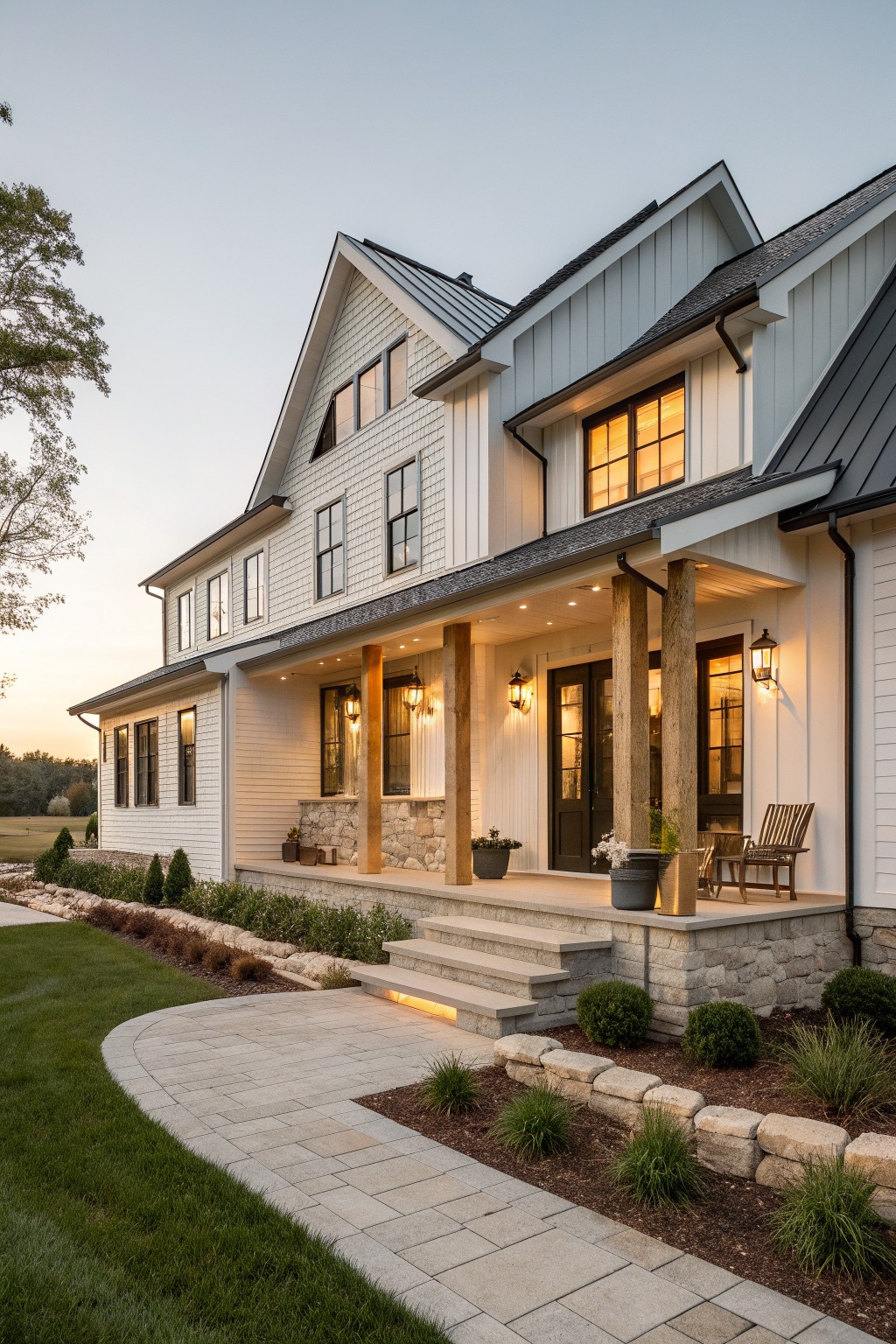
Many farmhouses look more grounded when stone covers the lower walls and porch base while the upper sections stay in white siding. The contrast adds texture without making the whole house feel busy or overdone.
This approach suits homes with wide porches and simple rooflines. Keep the stone low and let wood posts help blend the two materials so the transition feels natural rather than abrupt.
Stone Bases That Balance White Siding
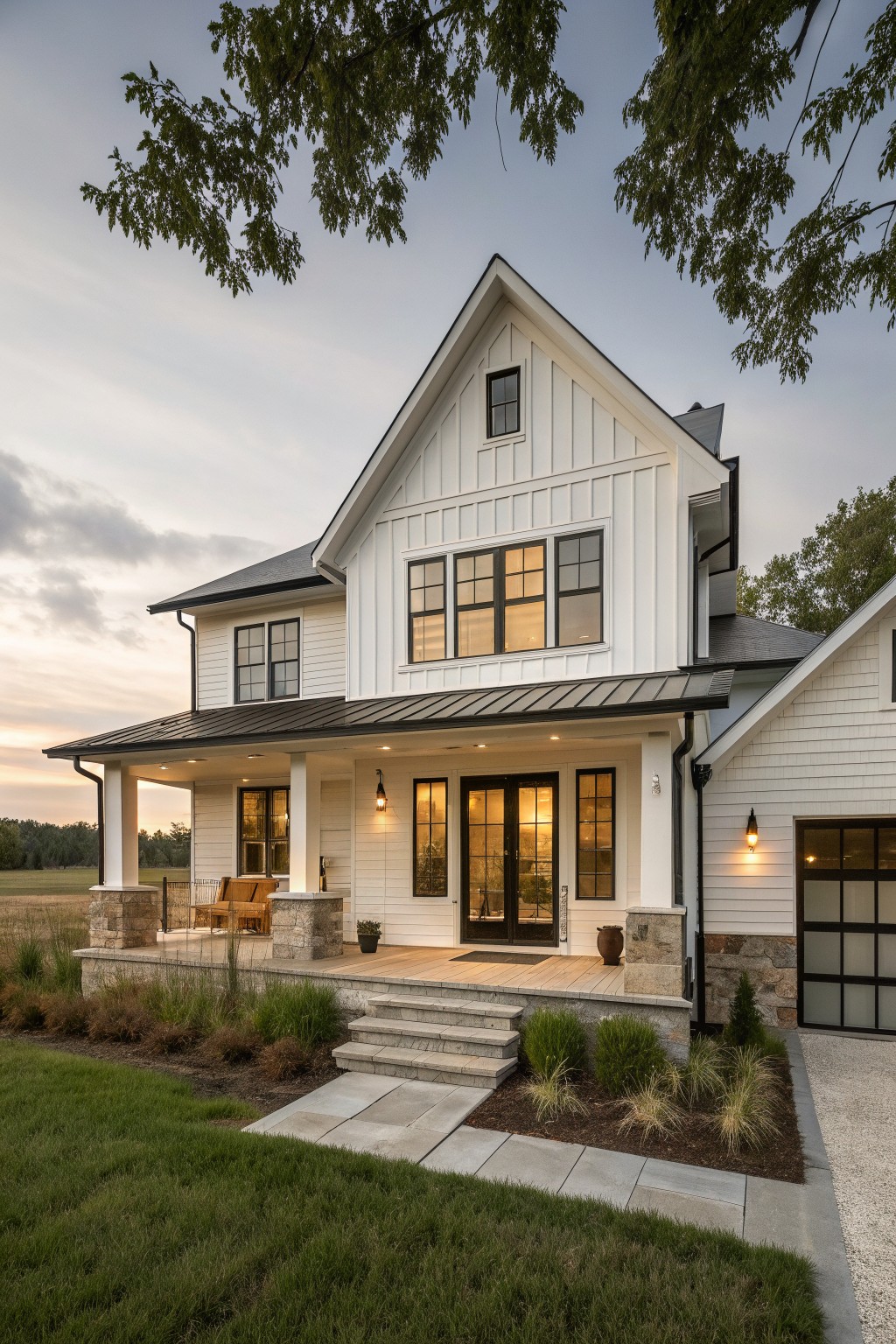
Stone at the base of a farmhouse can make white siding feel more settled and less stark. The material mix works because the stone adds weight and texture right where the house meets the ground, which keeps the lighter upper sections from looking too tall or thin.
This approach suits homes with simple gable roofs and open porches. Place the stone on column piers and along the lower walls, then keep everything else painted white or a soft off-white. Watch the scale so the stone sections do not overpower the siding above them.
Mixing Stone With Siding On Farmhouse Exteriors
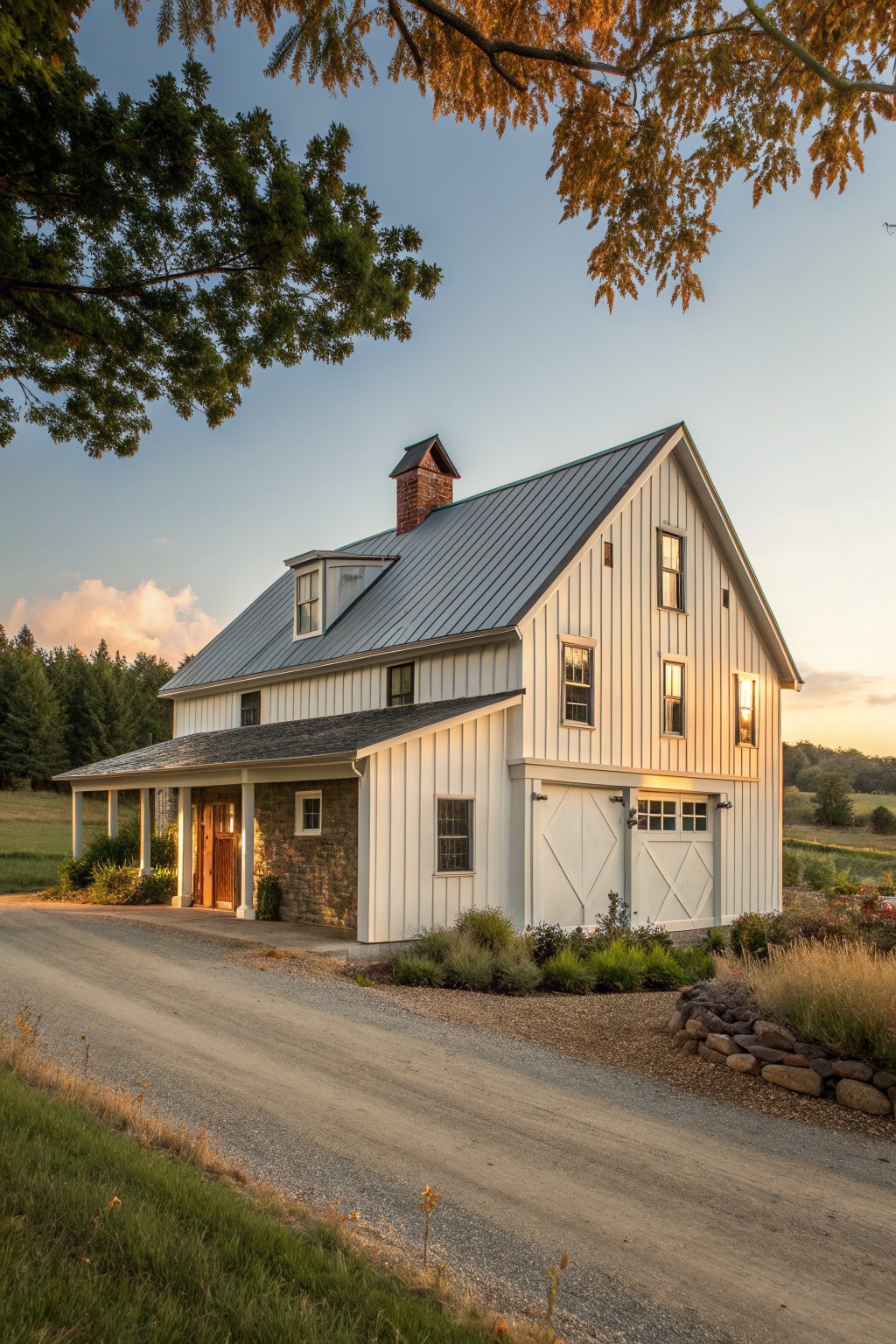
Stone at the base of a white farmhouse gives the whole elevation a steadier look. It breaks up the long stretches of siding and keeps the house from feeling too light or tall. The contrast also makes the roofline and windows stand out more without needing extra trim or color changes.
This approach works best on simple gable forms where you want a bit of weight near the ground. Use the stone only on the lower walls or around the main entry, and let the rest stay clean white siding. It suits homes that sit on open lots and need to feel settled rather than floating.
Mixing Stone And Siding On The Facade
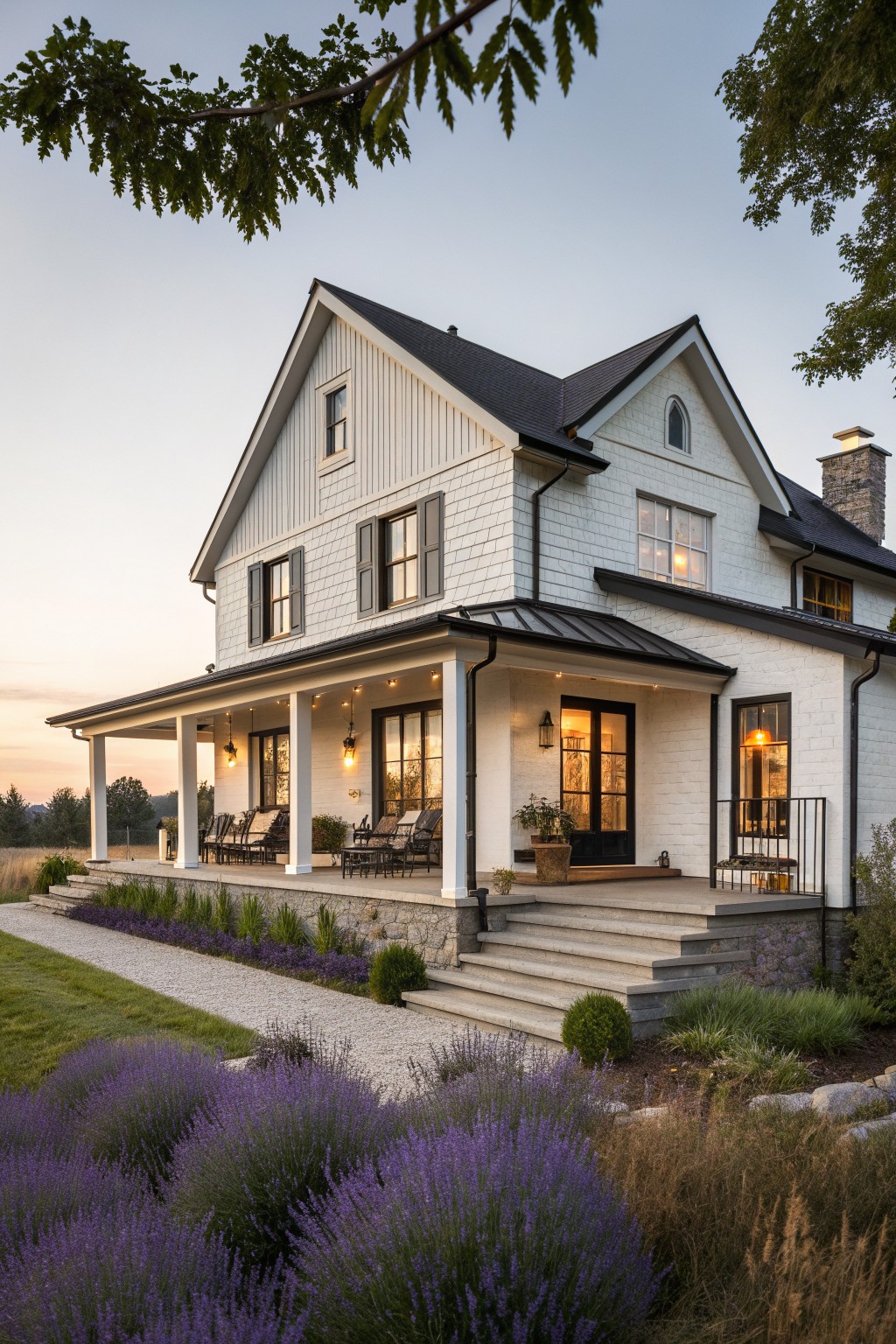
Pairing a stone base with white siding gives a farmhouse just enough weight at the bottom while keeping the upper walls light and simple. The contrast adds texture and makes the house feel grounded without needing lots of extra details or busy patterns.
This approach works best on homes that already have a clean roofline and simple window shapes. Keep the siding bright and use dark trim to hold everything together. Too many extra materials on top of the stone can start to feel cluttered.
Mixing Siding With Metal Roofing
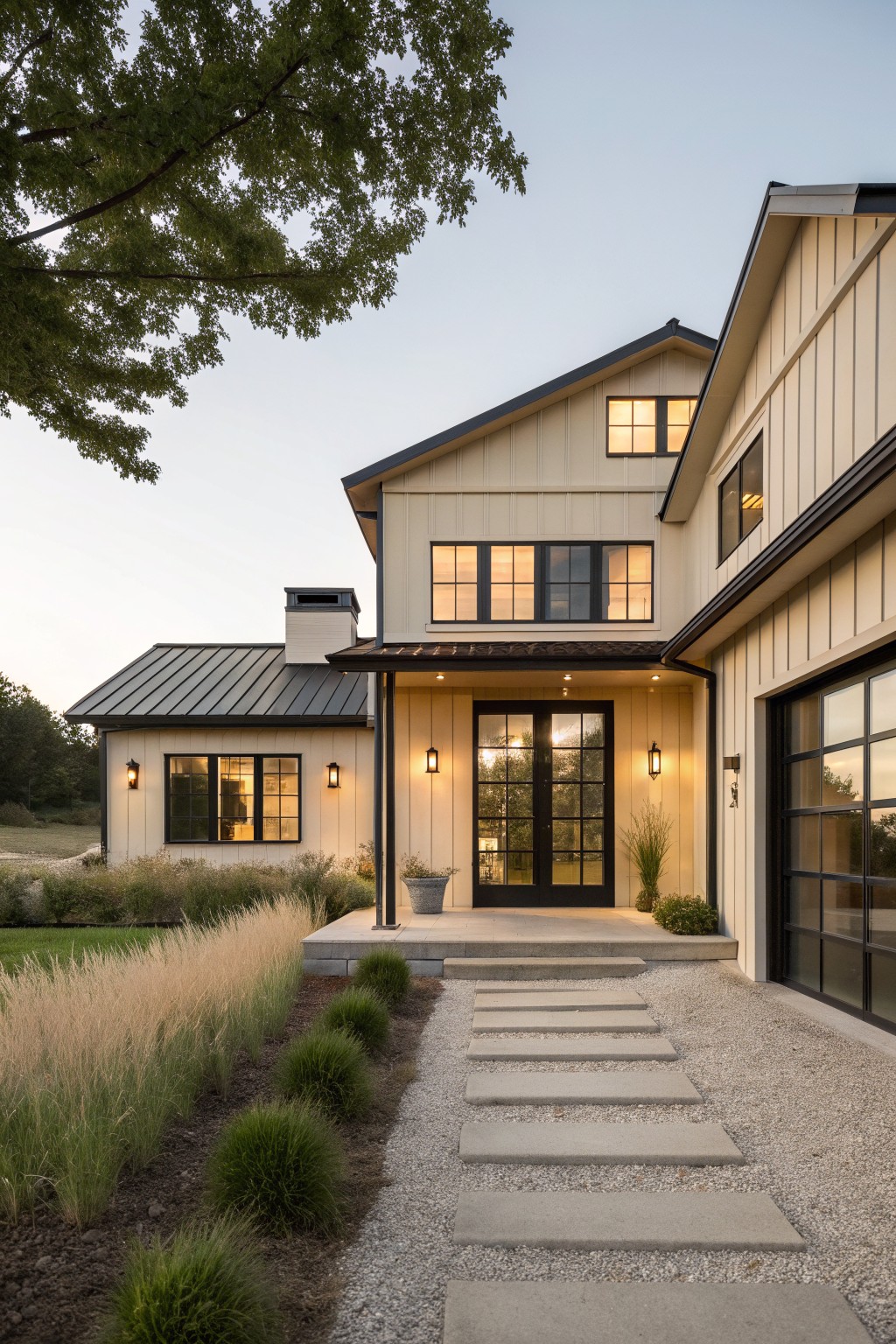
One approach that keeps a farmhouse exterior interesting without feeling busy is to combine painted siding with a metal roof on a smaller section of the house. The contrast adds some texture while the simple color palette holds everything together.
This works best on homes where the main body stays fairly plain and the metal roof is limited to a wing or lower roofline. Keep the trim and windows consistent so the materials read as one design rather than separate pieces.
Balancing Light Siding With A Dark Roof
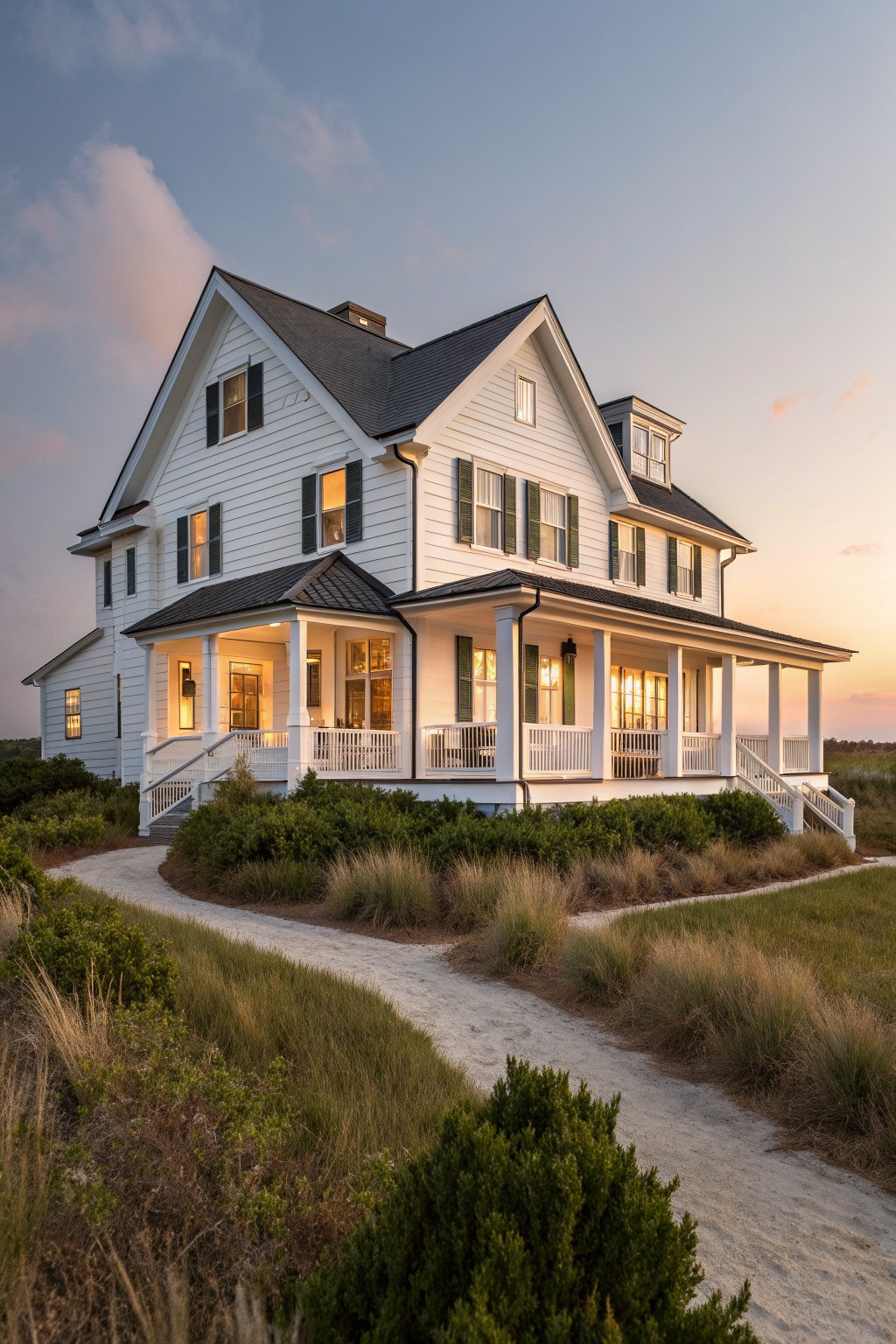
Many farmhouses gain a lot from keeping the main walls light while letting the roof stay dark. The contrast helps the shape read clearly and stops the whole elevation from looking flat or overloaded.
This works best on homes that already have several roof angles. Stick with one or two accent colors on the shutters and trim so the mix stays simple rather than busy.
Mixing Stone And Siding On The Facade
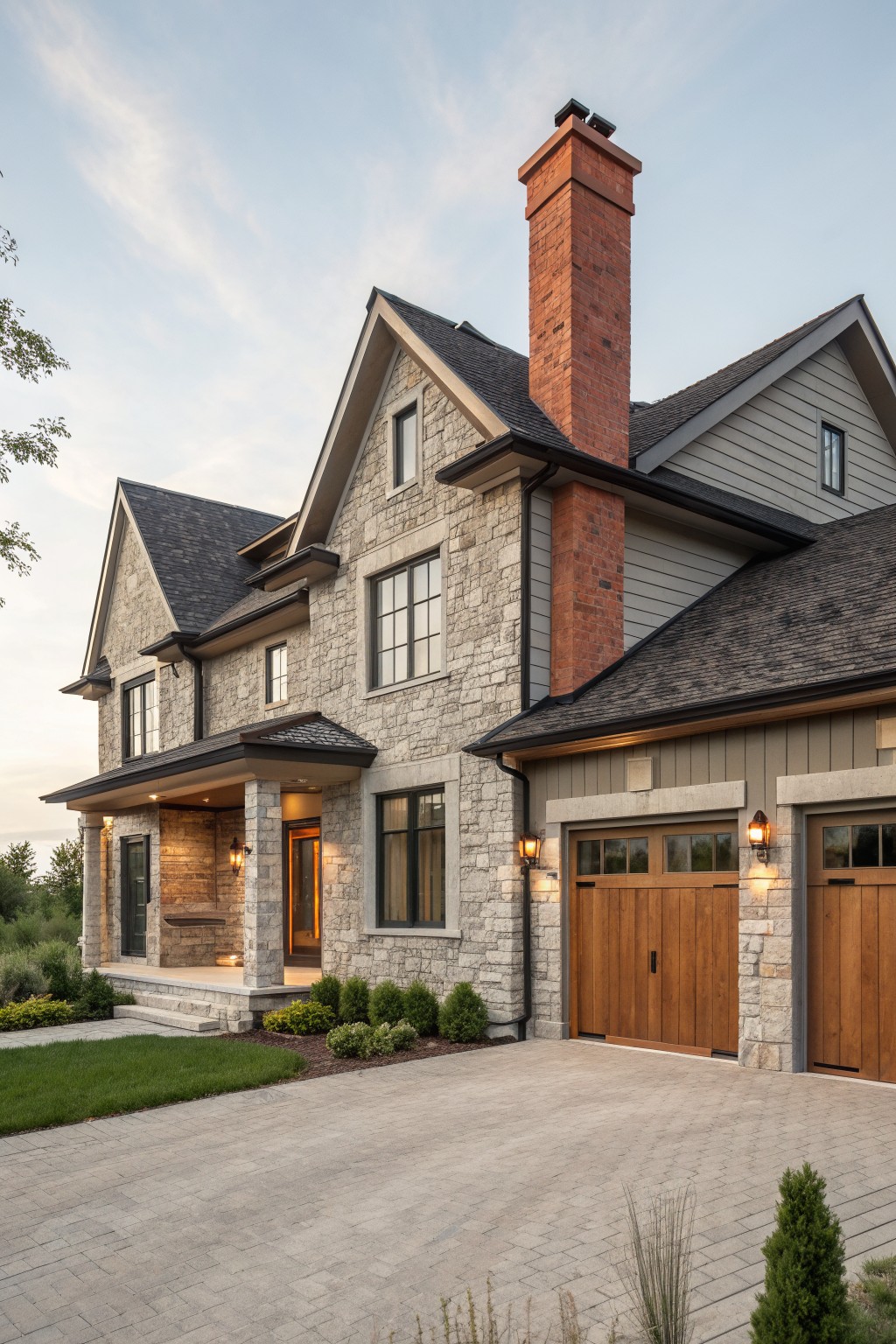
Mixing stone with horizontal siding gives a farmhouse elevation more texture without making it feel busy. The stone sections ground the house while the siding keeps the upper areas lighter and simpler. This approach works especially well on larger homes where one material alone can start to feel flat.
Keep the stone mostly on the lower half or main gable areas and let the siding carry the rest. It helps if the wood tones on doors or accents stay warm and natural so the whole mix stays cohesive. Too many materials in small patches can start to look scattered.
Mixing Stone With White Siding On Farmhouse Exteriors
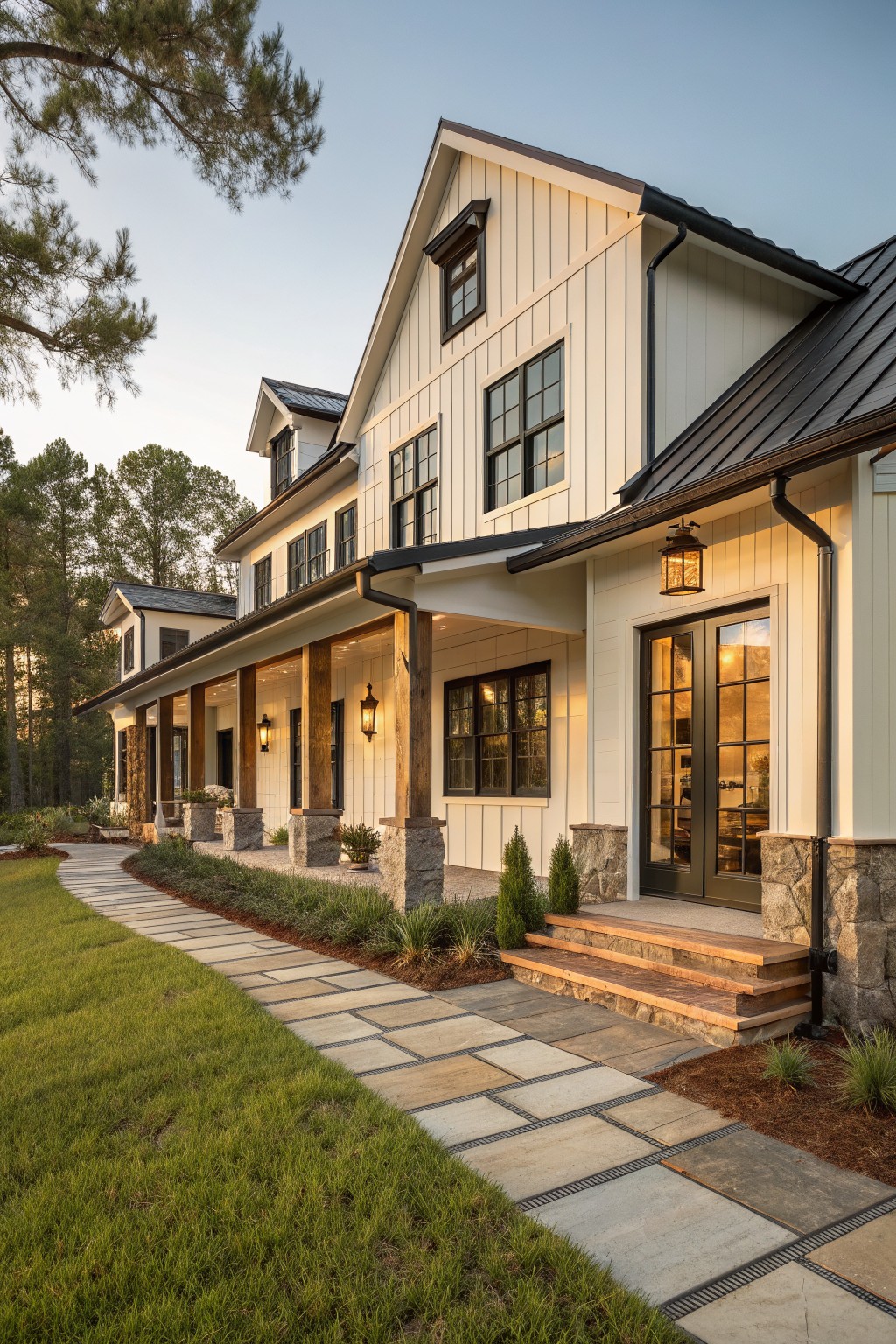
Stone at the base of columns and along the lower walls gives a farmhouse some real weight. It keeps the white siding from feeling too light and helps the whole front stay grounded even when the roofline gets busy.
This mix works best on homes with a simple siding color and a dark roof. Keep the stone to the lower third or on key supports so it does not take over. It suits most suburban or rural lots where you want the house to feel solid without adding extra trim or color.
Mixing Stone And Wood Shingles
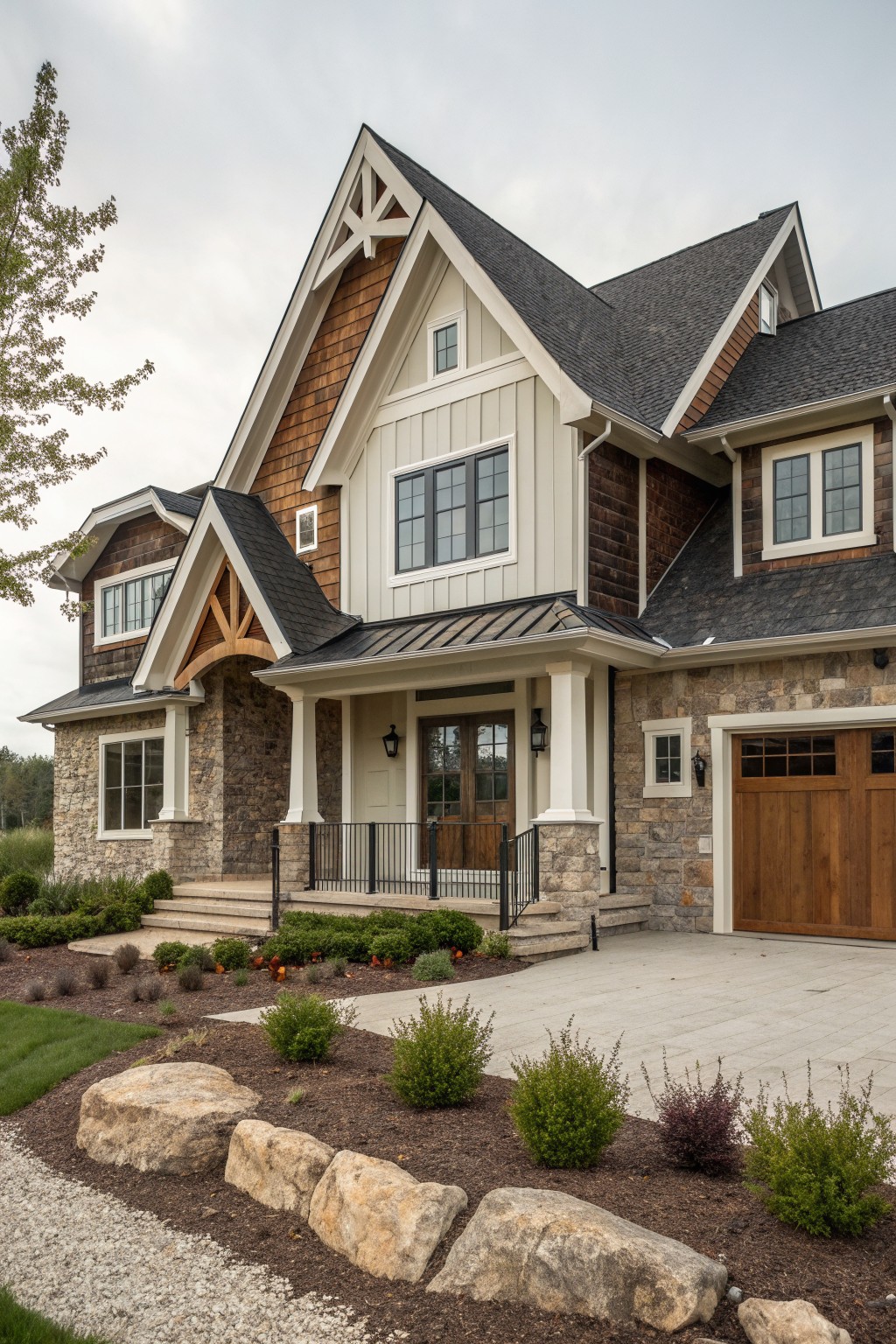
Stone at the base gives a house weight and makes the upper wood details stand out without feeling busy. The mix keeps the elevation interesting while still looking grounded and simple.
This approach works best on larger homes where there is room for the materials to breathe. Keep the stone low and let the shingles cover the gables or accents so the look stays balanced rather than scattered.
Brick Bases with Painted Siding
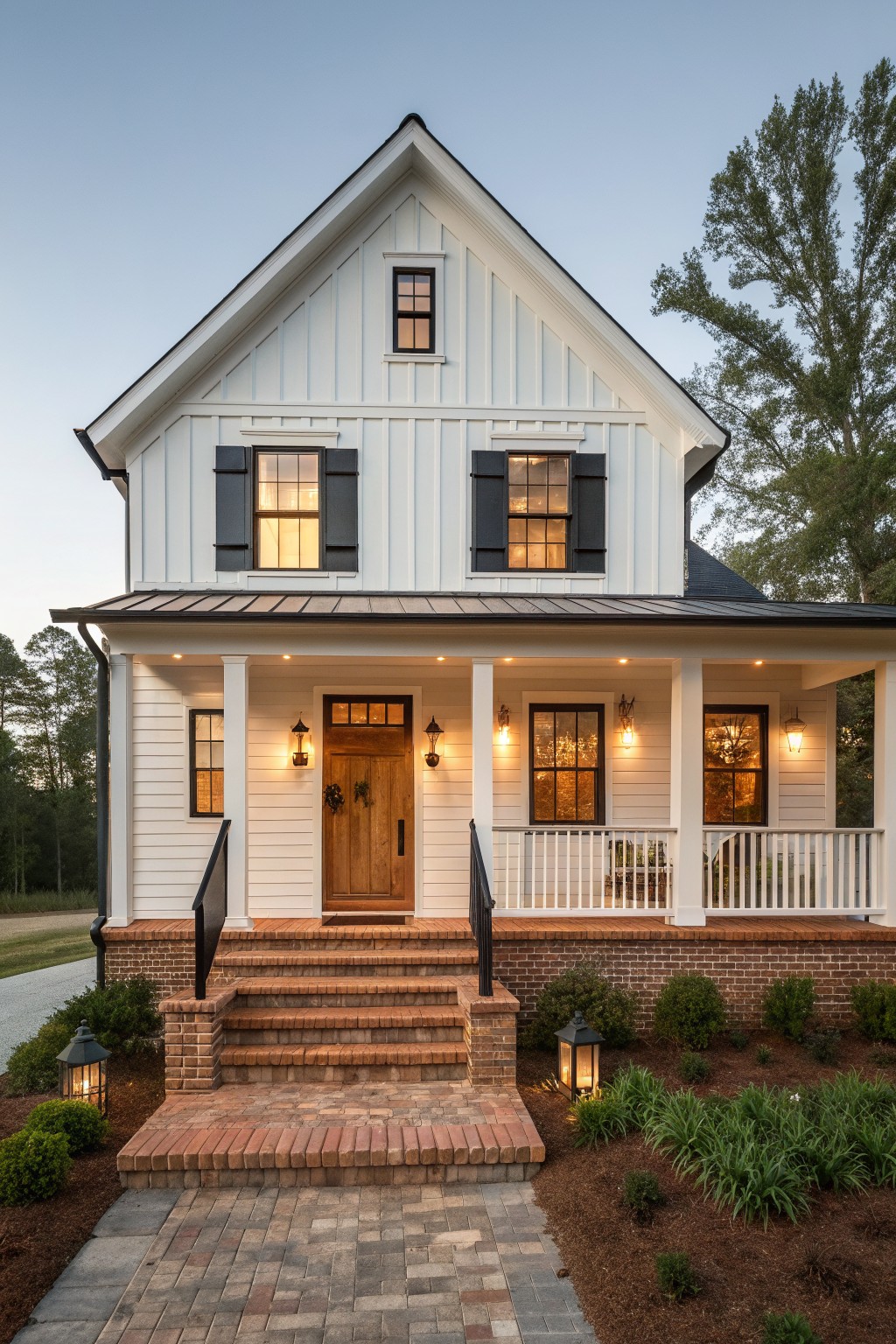
A brick base gives a farmhouse elevation more weight at the bottom without making the whole house feel heavy. The white siding above stays bright and simple, while the brick adds texture and a sense of permanence right where the house meets the ground.
This approach works best on two-story homes with a front porch. Keep the brick low, usually to the height of the porch floor, and let the siding carry the rest of the facade. It keeps the look balanced and avoids the flat appearance that comes from using only one material from top to bottom.
Mixing Wood Siding With Stone Foundations
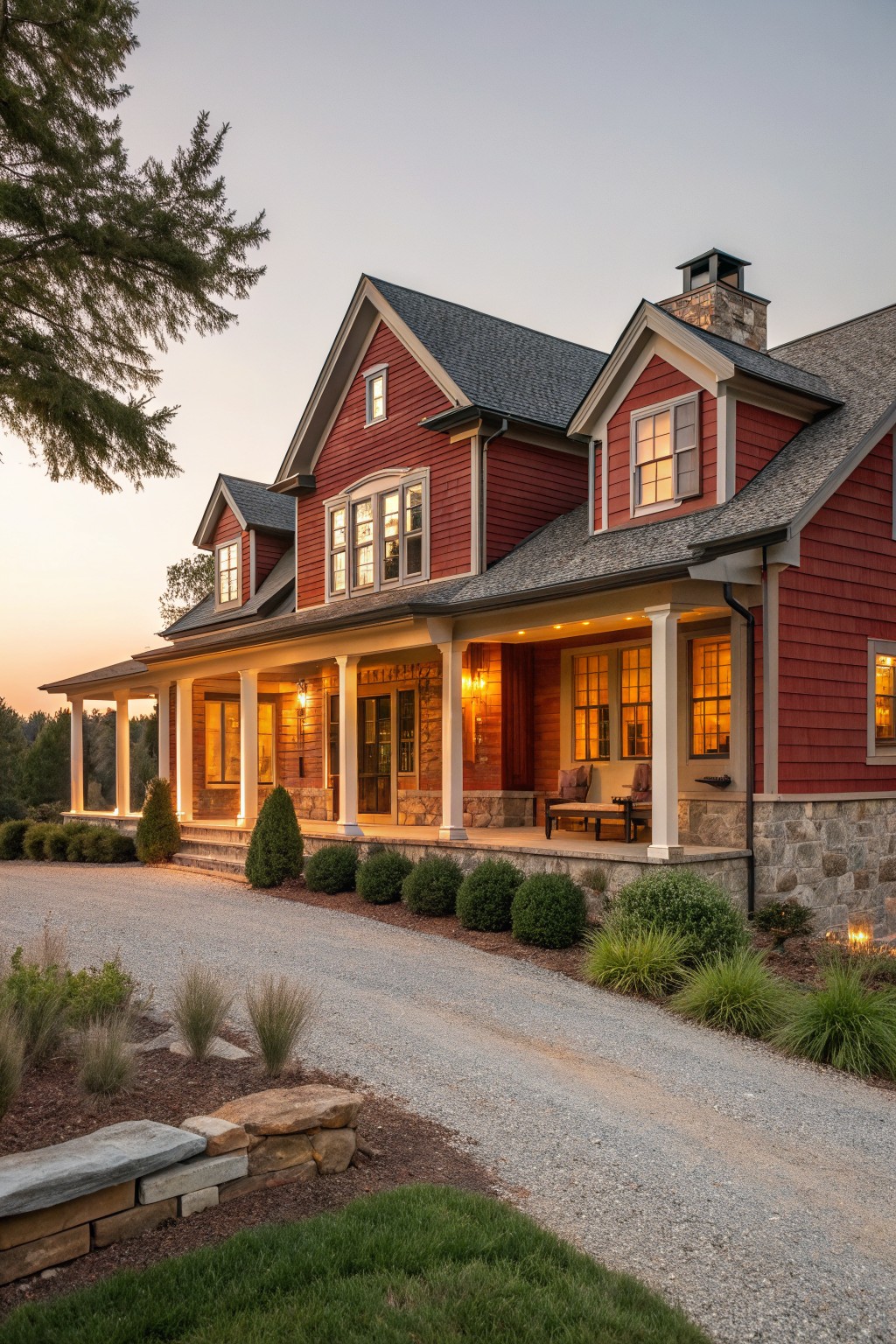
One simple way to give a farmhouse more character is to run wood siding over a stone base. The stone adds weight and texture low to the ground while the painted siding keeps the upper walls lighter and more familiar.
This mix works best when the stone stays limited to the foundation and porch supports. It keeps the look balanced on larger homes and prevents the elevation from feeling too heavy or too plain.
Stone And Dark Roofing Balance Each Other Well
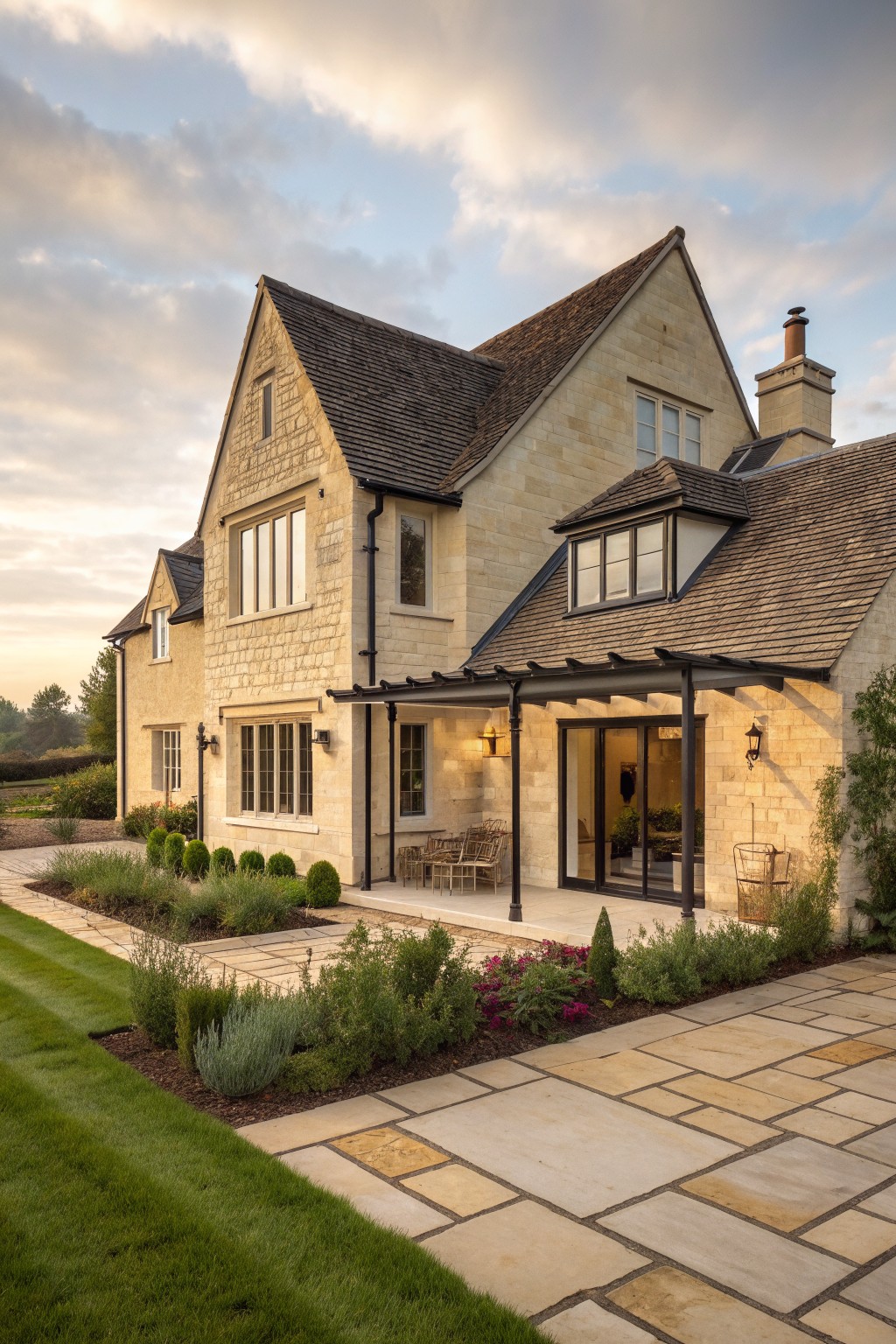
Stone walls paired with dark shingle roofs give a farmhouse elevation weight without feeling heavy. The contrast keeps the look grounded and helps the rooflines stand out against the lighter stone.
This mix works best on homes with straightforward gables and simple trim. Keep the stone dominant on the main walls and let the roofing provide the darker anchor so the materials support each other rather than compete.
Mix Vertical Siding With Stone Accents
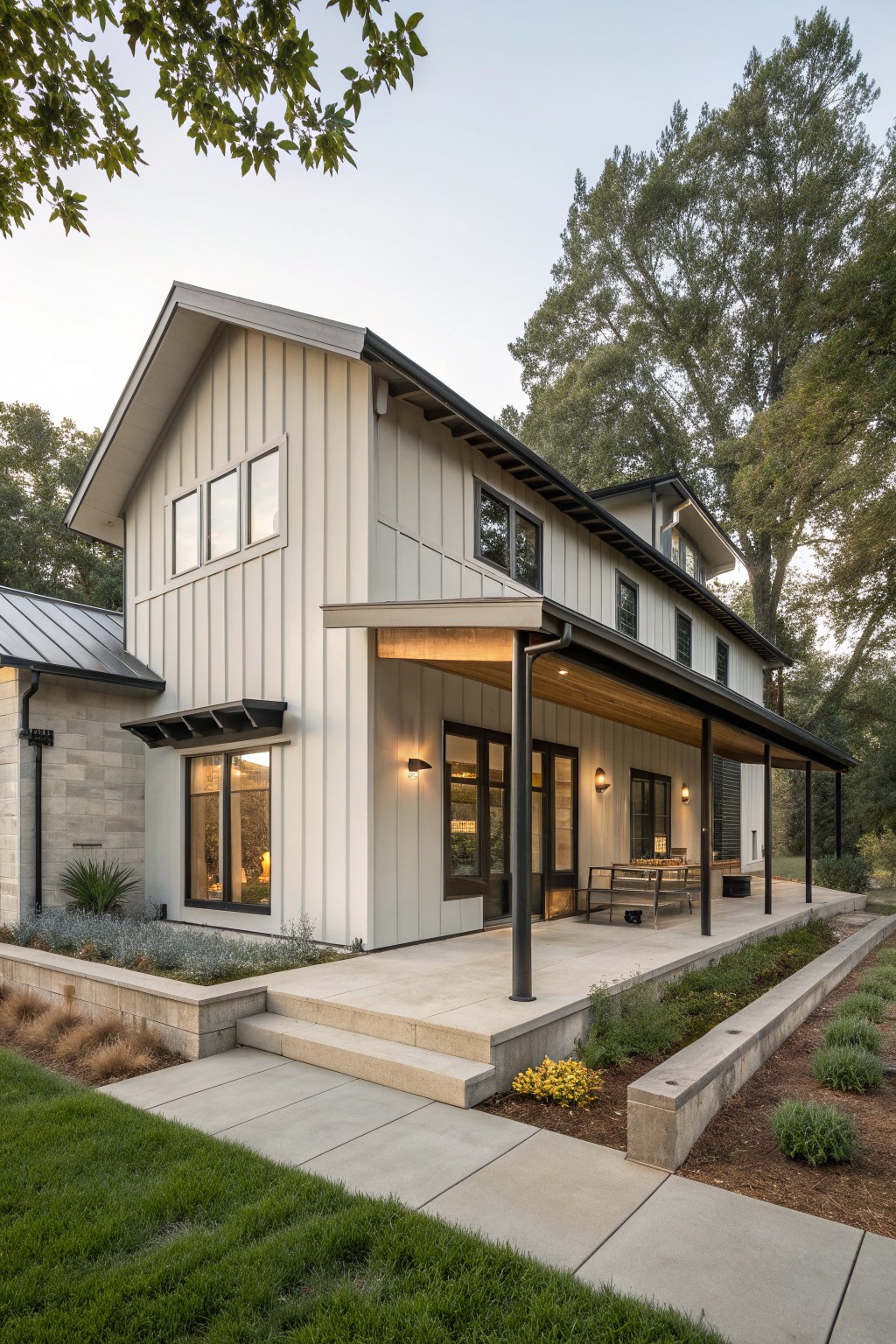
Vertical siding gives a farmhouse a taller, cleaner look, and pairing it with stone keeps the whole exterior from feeling flat. The stone adds weight at the base and breaks up the long walls without needing extra trim or color changes. This mix works because the siding stays simple while the stone brings in texture that feels natural rather than added on.
Try it on homes where one side or the lower portion can take the stone, then let the siding cover the rest. Keep the roof metal and the trim dark so the two main materials stay balanced. It suits both new builds and updates to older farmhouses that need more visual interest.
Stone Bases That Balance White Siding
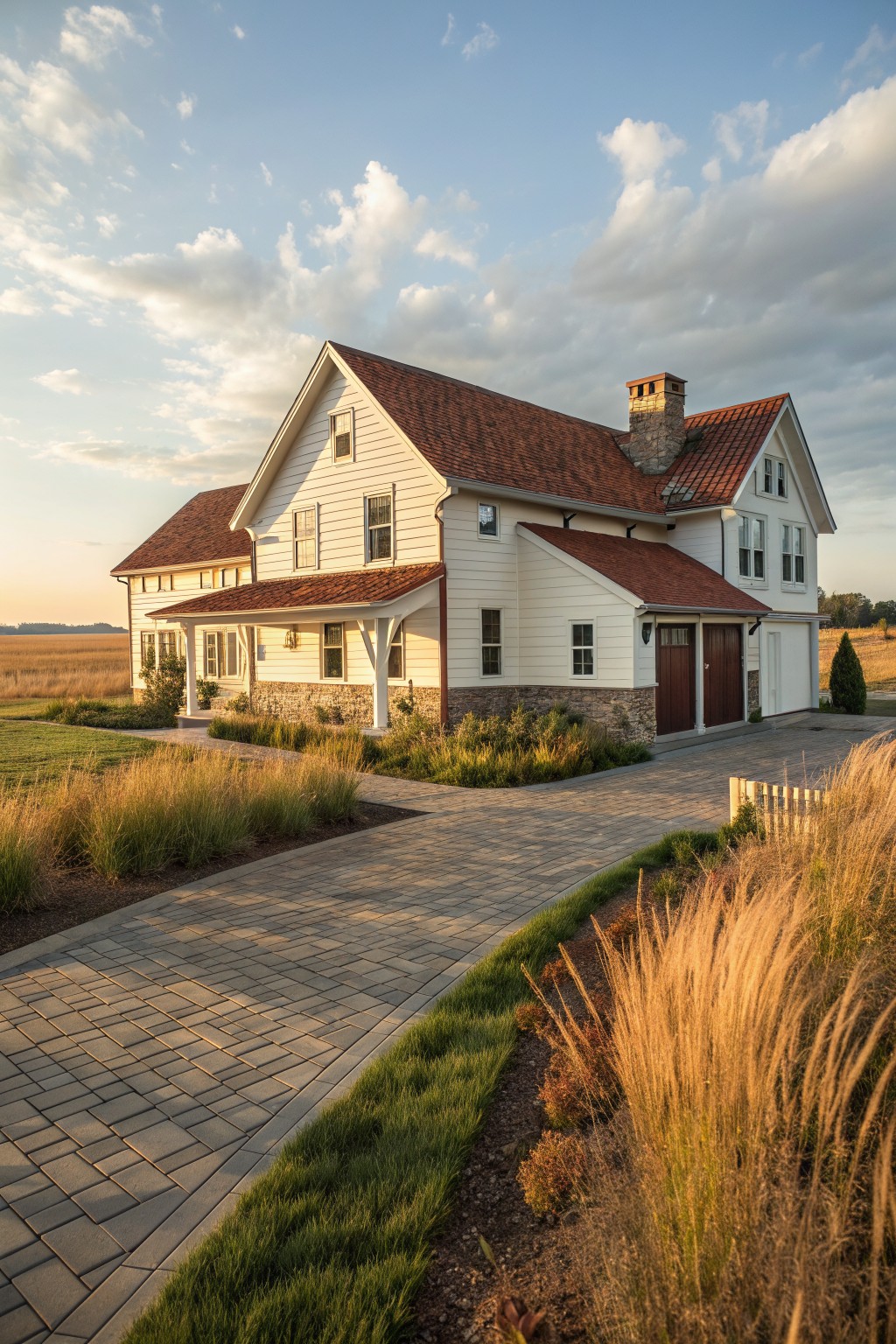
A stone base paired with white siding gives the house a steadier look. The lower material adds weight where it is needed most, so the upper siding does not feel too light or tall against the rooflines.
This mix works best on farmhouses that have several gables or a long horizontal stretch. Keep the stone band at a consistent height, usually three or four feet, and let it wrap only the main body and garage so the contrast stays clean rather than scattered.
Balance Stone and Render on the Elevation
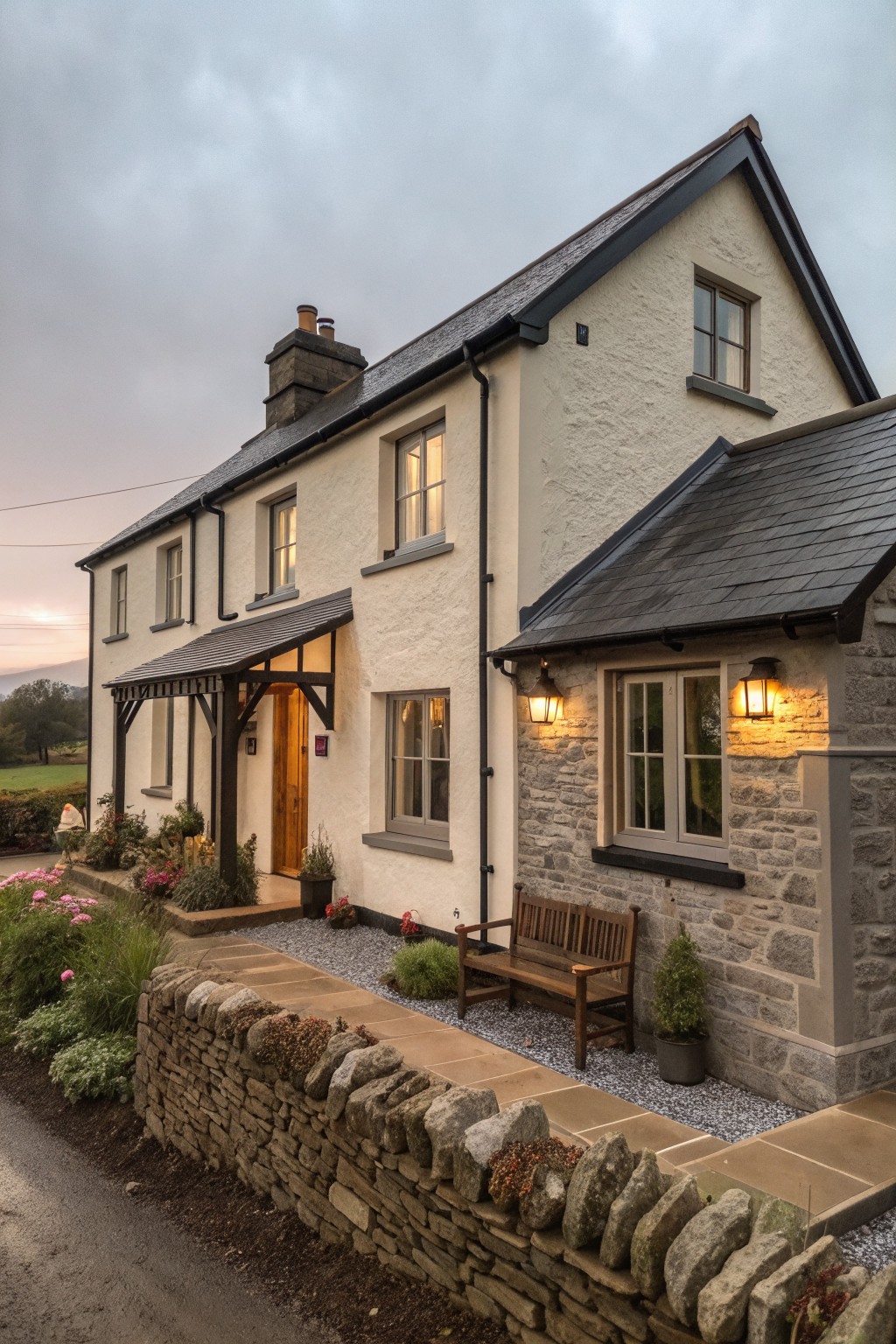
Mixing stone with rendered walls gives a farmhouse elevation weight without looking heavy. The stone sections ground the house and add texture, while the lighter render keeps the overall look bright and simple. This approach works especially well on homes that sit in open countryside where the materials need to feel at home with the landscape.
Try placing the stone on one gable or around the base and letting the render cover the main walls. It suits older properties being updated or new builds that want a traditional feel without full stone construction. Keep the stone tones natural and limit how much you use so the render stays the dominant surface.
Stone And Wood Balance Each Other On The Facade
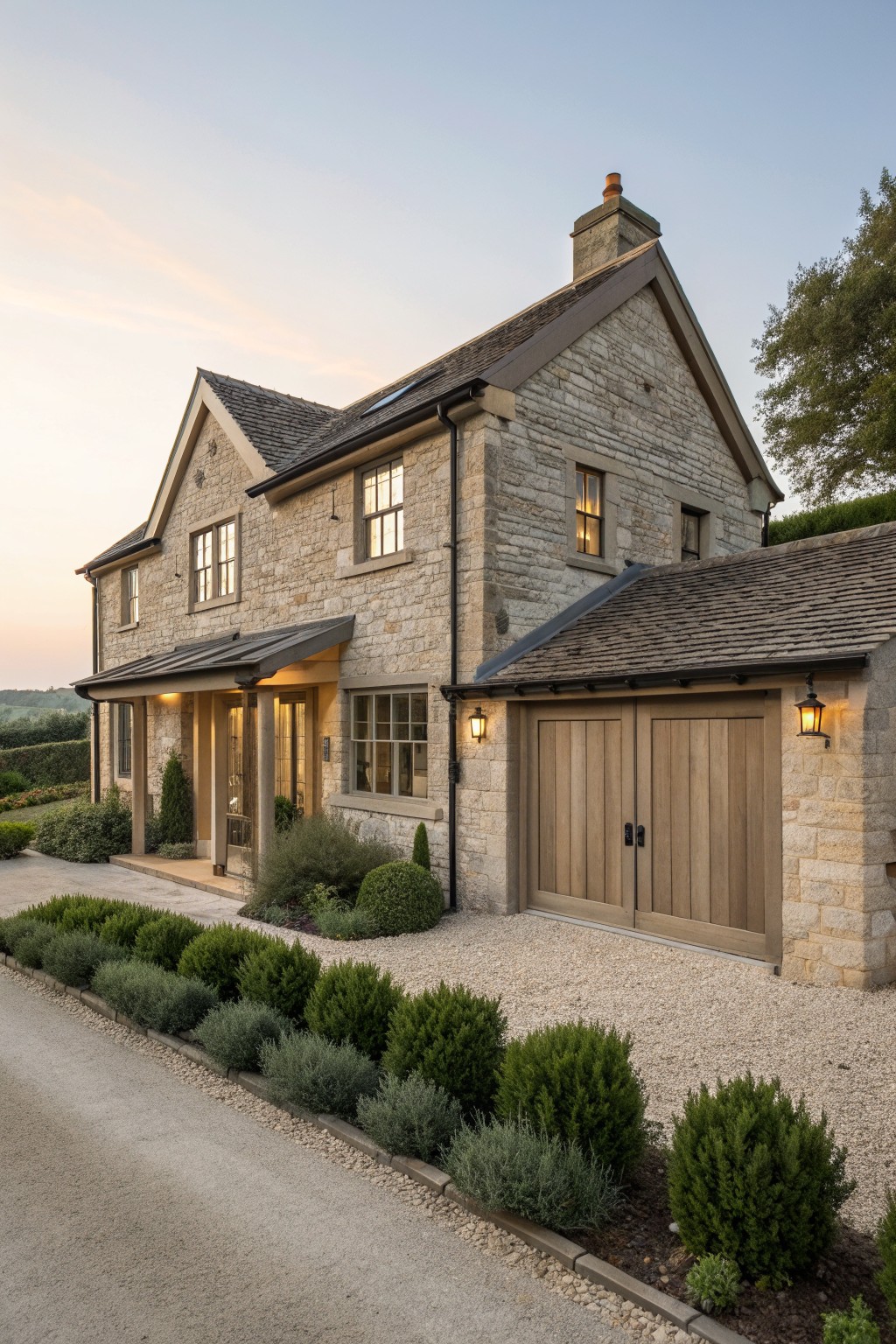
Stone can feel heavy on its own, especially across a large wall surface. Adding wood garage doors gives the eye a place to rest and keeps the overall look from turning too solid or cold. The contrast also highlights the texture of the stone without needing extra trim or color changes.
This approach works well on farmhouses where the garage sits close to the main entry. Keep the wood tone natural and mid-range so it reads as a material shift rather than a bright accent. Avoid matching the wood too closely to any painted trim, or the balance starts to flatten out.
Mixing Wood Siding with Stone
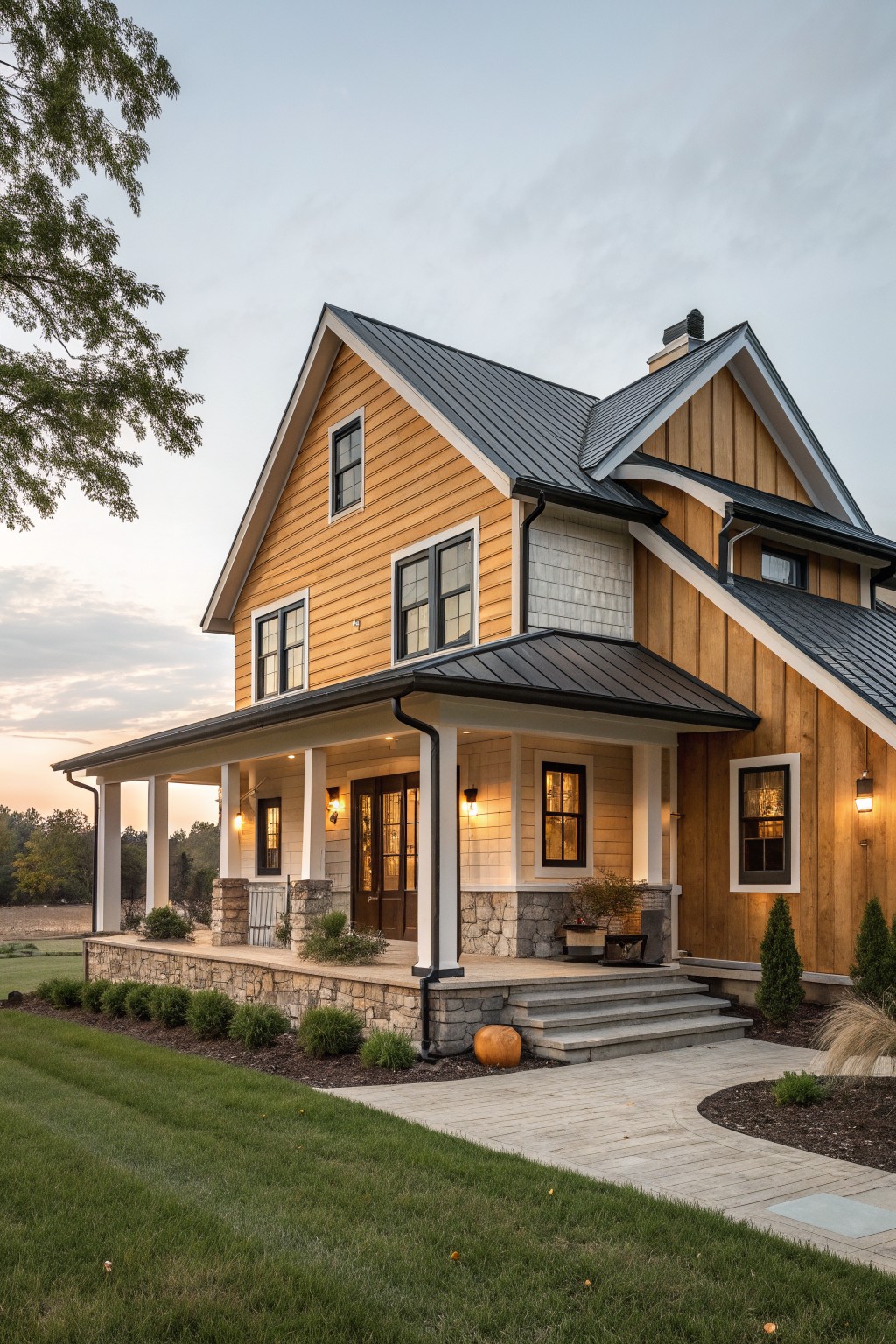
Many farmhouses gain a steadier look when the lower part uses stone and the upper walls stay with wood siding. The change in texture keeps the house from feeling flat and gives it a natural base that fits the style without extra trim or details.
This approach works best on homes that already have a porch or steps to separate the levels. Keep the stone low and let the siding cover most of the height so the mix stays balanced rather than heavy.
Balance Siding With Stone Accents
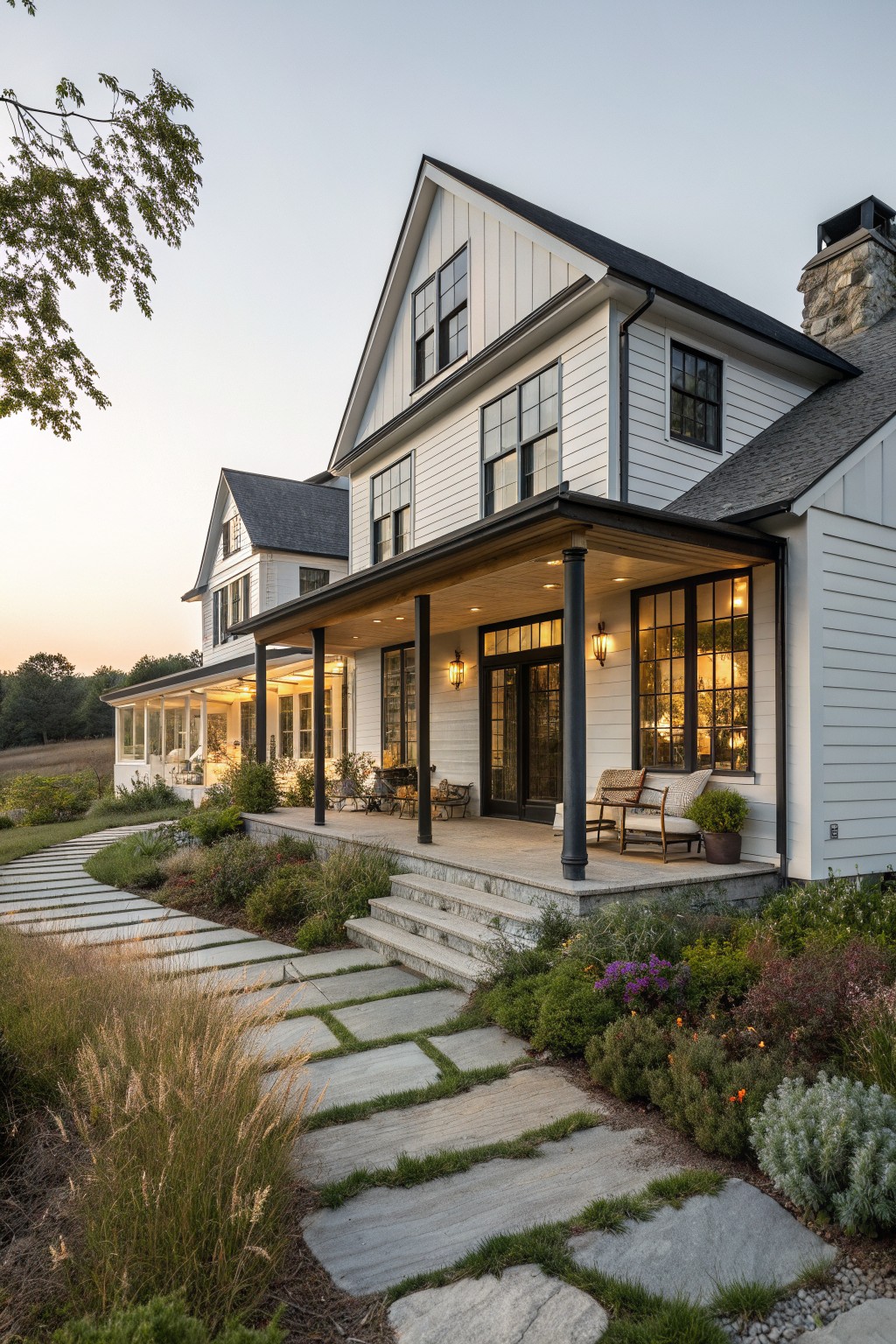
Mixing painted siding with a stone accent is one of the simpler ways to add interest to a farmhouse exterior. The white siding keeps things light and clean while the stone adds weight and texture where it matters most. Dark trim around the windows helps hold the two materials together so nothing feels scattered.
This works best on homes with a clear focal point like a chimney or a gable end. Limit the stone to one or two areas rather than spreading it across the whole facade. Too much stone can make the house feel heavy, especially on smaller lots.
Mixing Stone With Dark Siding
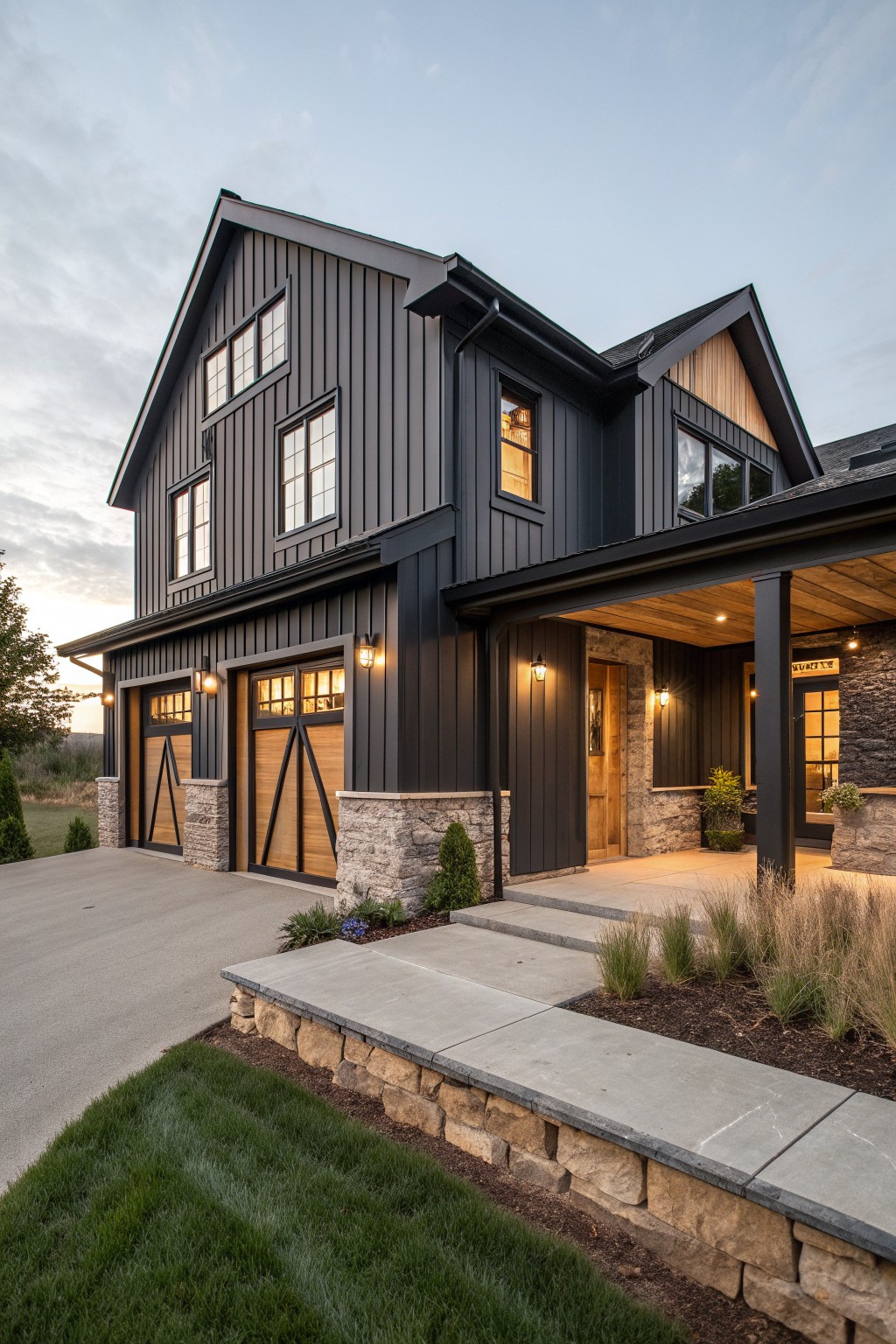
Stone at the base of a house helps keep dark vertical siding from feeling too flat or heavy. The contrast adds texture and makes the whole front look more solid without needing extra trim or details.
This mix works best on farmhouses that already have clean lines and simple roof shapes. Keep the stone sections low and let the siding take up most of the wall space so the two materials stay balanced.
Blend Painted Siding With White Trim And Wood Accents
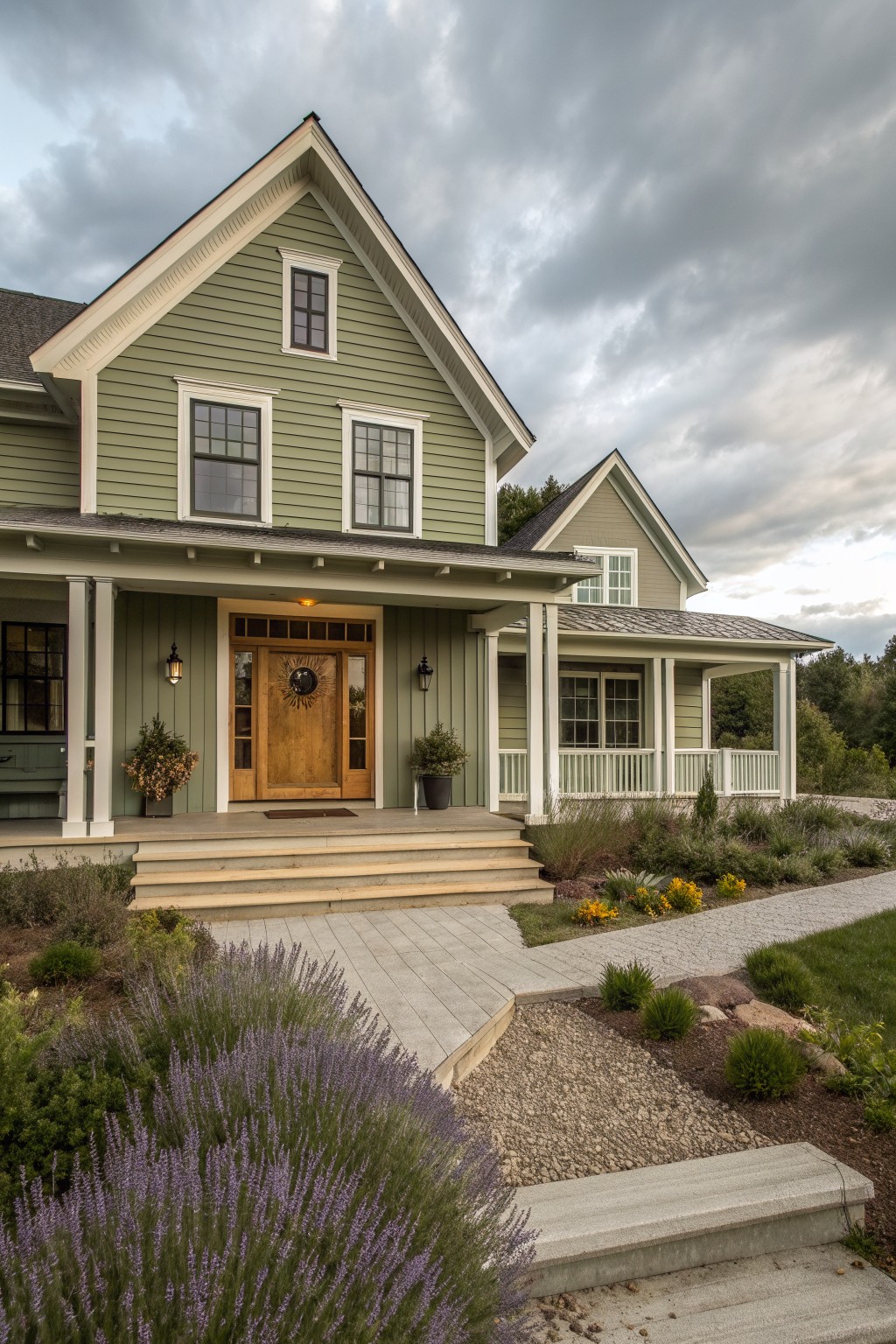
A soft green siding color paired with bright white trim gives the house a clean look while still feeling relaxed. The natural wood door adds just enough warmth so the front does not come across as too plain or too busy.
This mix works best on simple gable roofs with a front porch. Keep the wood limited to the door and maybe one or two posts so the siding stays the main surface.
Mixing Materials On Farmhouse Exteriors
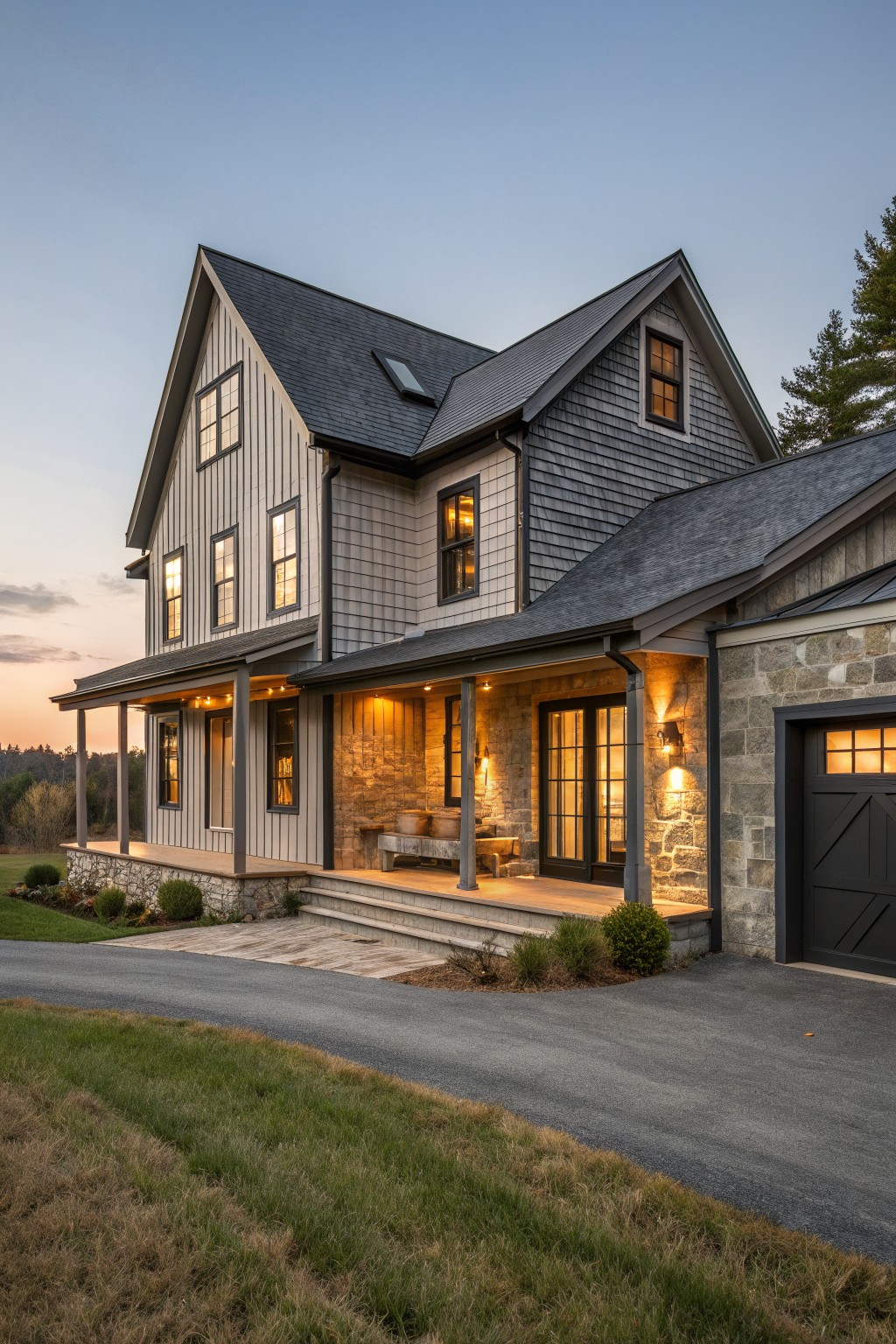
Mixing materials helps a farmhouse exterior feel more interesting without looking busy. Vertical siding on the upper levels can sit next to stone around the entry and porch, which breaks up the mass of the house and gives it a grounded look.
This works best on homes that already have some rooflines or projections to work with. Keep the heavier material like stone lower and in smaller sections so it supports the rest of the siding rather than competing with it.
Mixing White Brick With Wood Siding
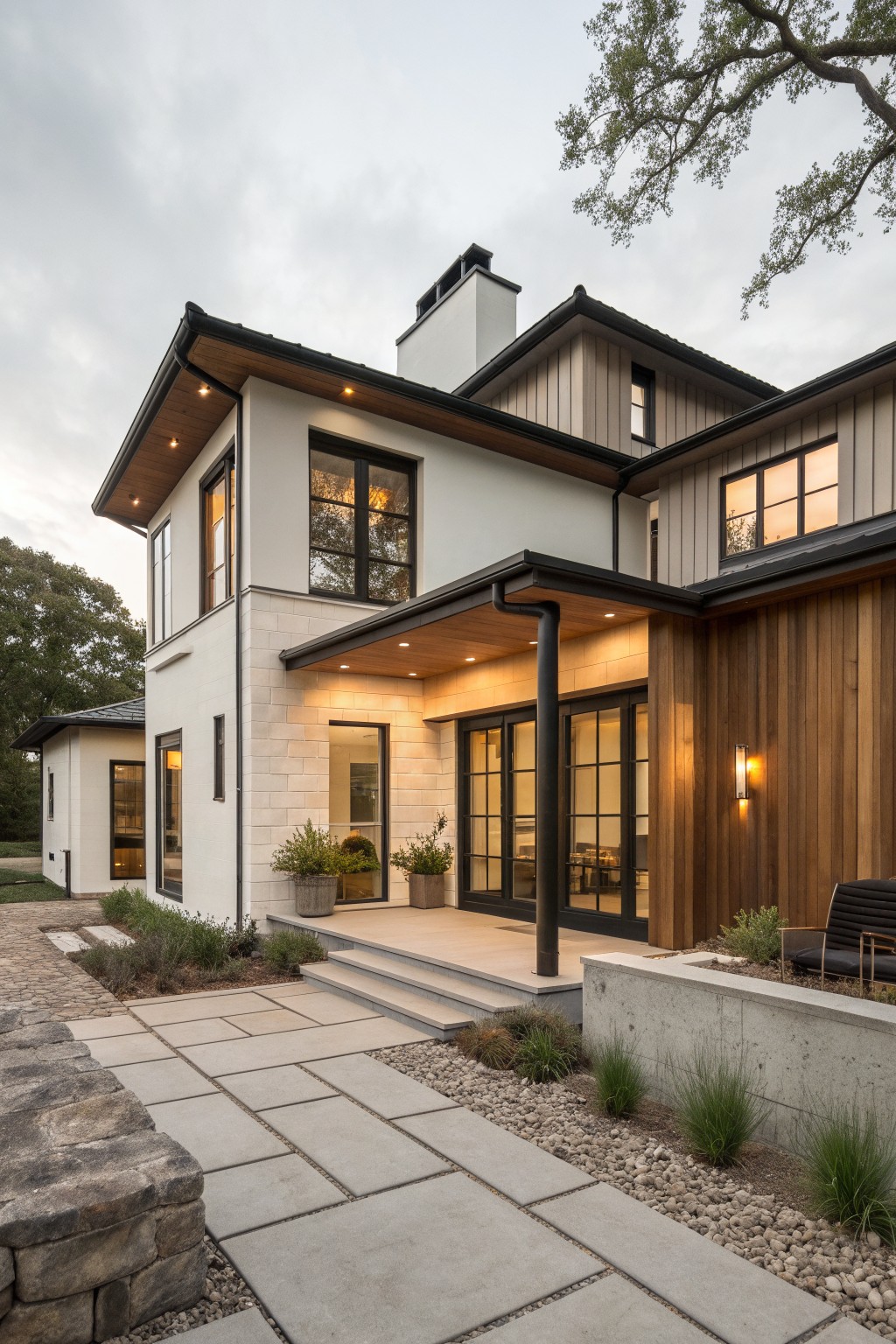
Many farmhouse exteriors look more balanced when white brick covers the main walls and wood siding fills in the gables or side sections. The contrast adds texture without making the front feel busy or overly styled.
This approach works best on two-story homes where the materials stay in large, simple blocks rather than small patches. Dark window frames and trim help hold the mix together so the eye moves easily across the facade.
Frequently Asked Questions
Q: How do I mix stone and wood on my farmhouse front so the stone does not take over the whole look? A: Place the stone only on the base and around the main entry. Run horizontal wood siding above it on the upper walls. This keeps the stone grounded while the wood brings in that lighter farmhouse feel.
Q: What if my porch already has metal posts and I want to add wood beams without it looking busy? A: Wrap the lower part of each metal post in wood to tie the two together. Leave the upper metal exposed in a simple black finish. The mix stays clean when you limit the wood to just those wraps.
Q: Can I try these mixed material ideas on a tight budget without cutting corners on the main walls? A: Focus the wood and stone on the gable ends and porch only. Paint the rest of the siding a matching neutral color to pull everything together. That approach saves money while still showing off the balanced mix.
