

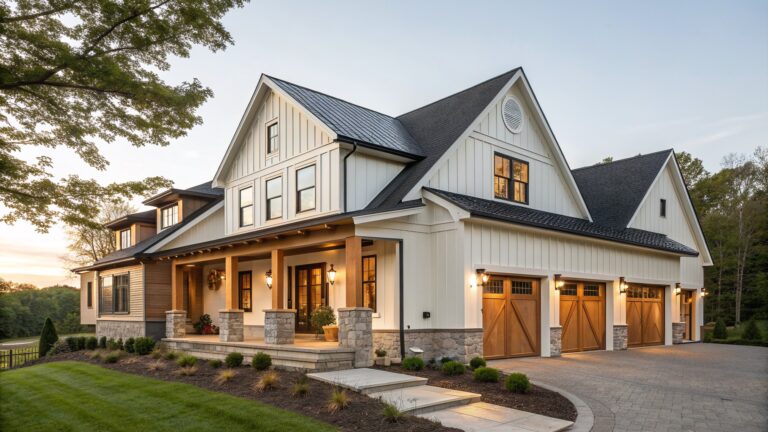
I have always noticed that farmhouse exteriors tend to look more pulled together once the busy trim work and mismatched accents get pared back in a thoughtful way.
When I drive past older farmhouses that have undergone these kinds of updates, the shift in how the whole structure reads from the road is usually pretty clear.
Details matter most at the entry points.
Homeowners often end up choosing simpler shutters or unified siding tones that reduce visual noise while keeping the classic shape intact.
If I were tackling this on my own house I would start by looking at the window casings because those small fixes seem to change the overall feel faster than bigger projects.
Stick With a Small Material Palette
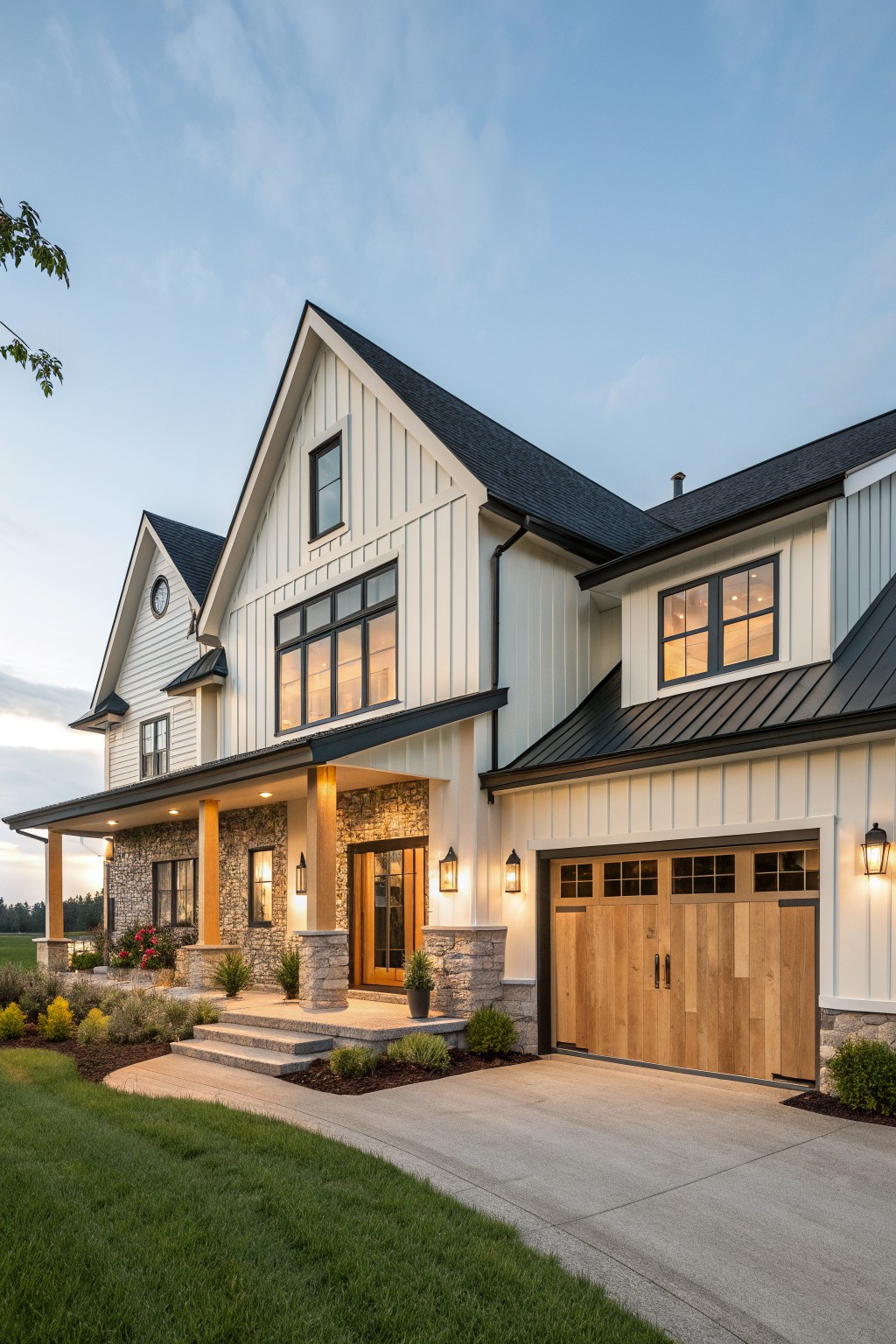
Many farmhouses end up looking busy because they layer too many finishes across the front. This house shows how keeping things to just three main materials, white vertical siding, stone at the base, and wood on the garage door, lets the shape of the house do the work instead of extra trim or patterns.
The approach works well on homes with strong rooflines or multiple gables. It keeps the eye moving across the facade without stopping at competing details. Try it on a new build or a remodel where you want the architecture to feel calm rather than decorated.
Frame the Porch With a Simple Arch
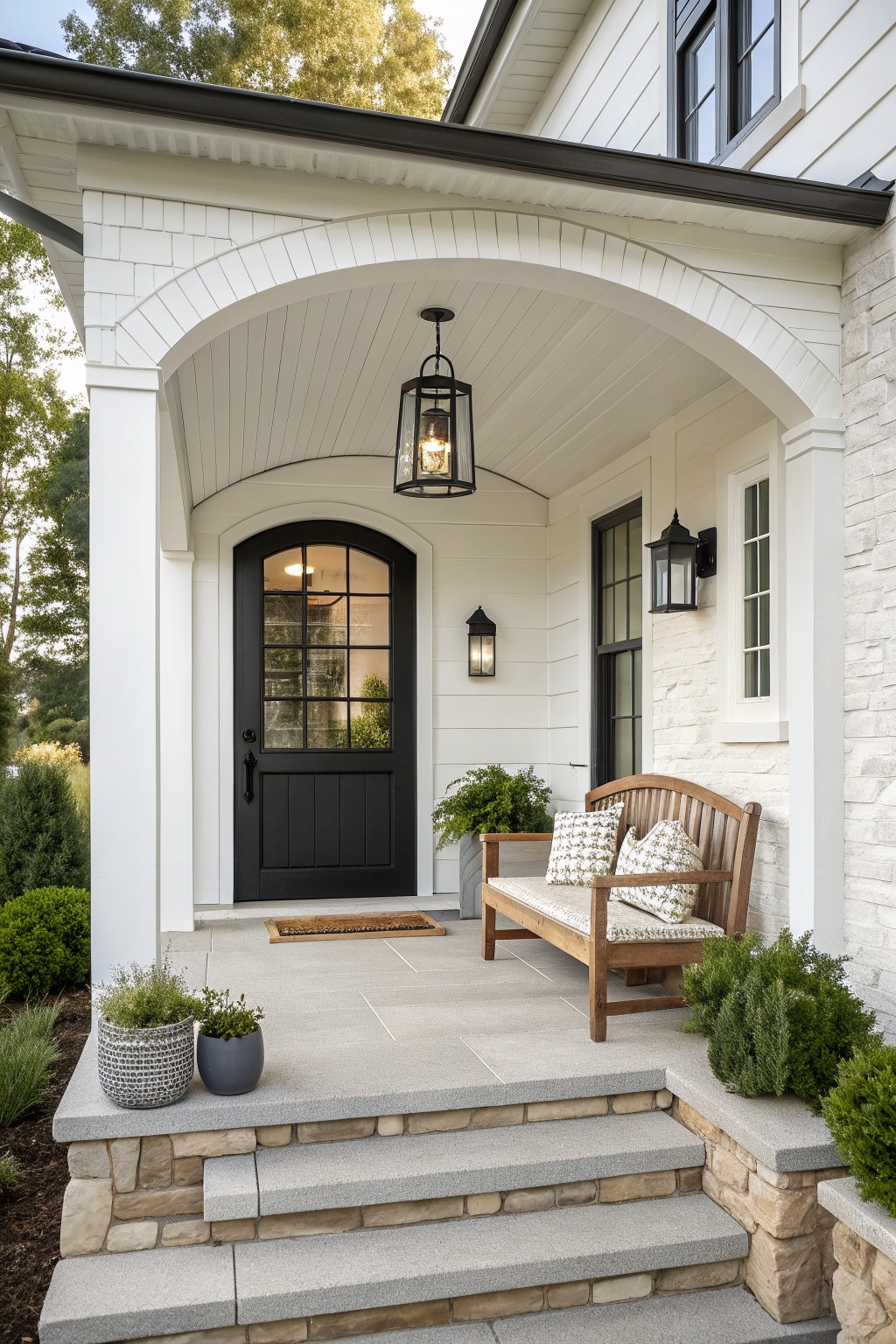
An arched opening over the front porch gives the whole entry a clean shape that cuts down on extra trim and fussy details. It pulls the eye toward the door without needing columns, brackets, or layered moldings that can start to feel busy.
This move works especially well on farmhouse exteriors where you want the porch to feel open but still defined. Keep the finish simple, match the arch to the roofline, and let the door and one or two seating pieces do the rest.
Use A Dark Metal Roof With White Siding
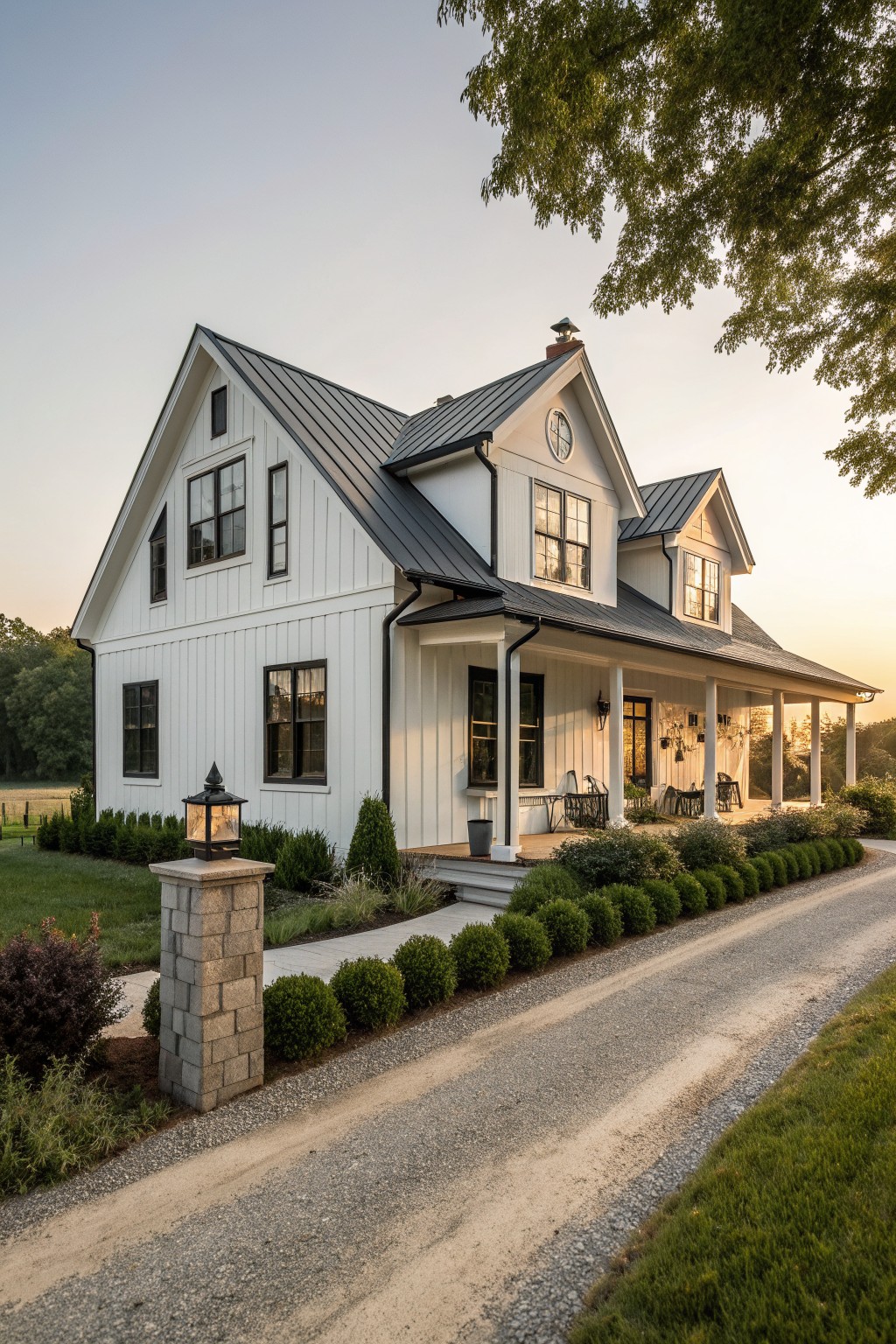
A dark metal roof paired with plain white siding cuts down on visual noise right away. The strong contrast handles the main interest so there is no need for extra trim, brackets, or mixed materials that can make a farmhouse front feel busy.
This works best on homes that already have simple rooflines and gables. Keep the siding bright and the roof in a deep charcoal or black, then match the window frames and gutters to the roof color. Skip any added roof accents and let the two tones carry the look.
Add A Low Retaining Wall To Clean Up The Front
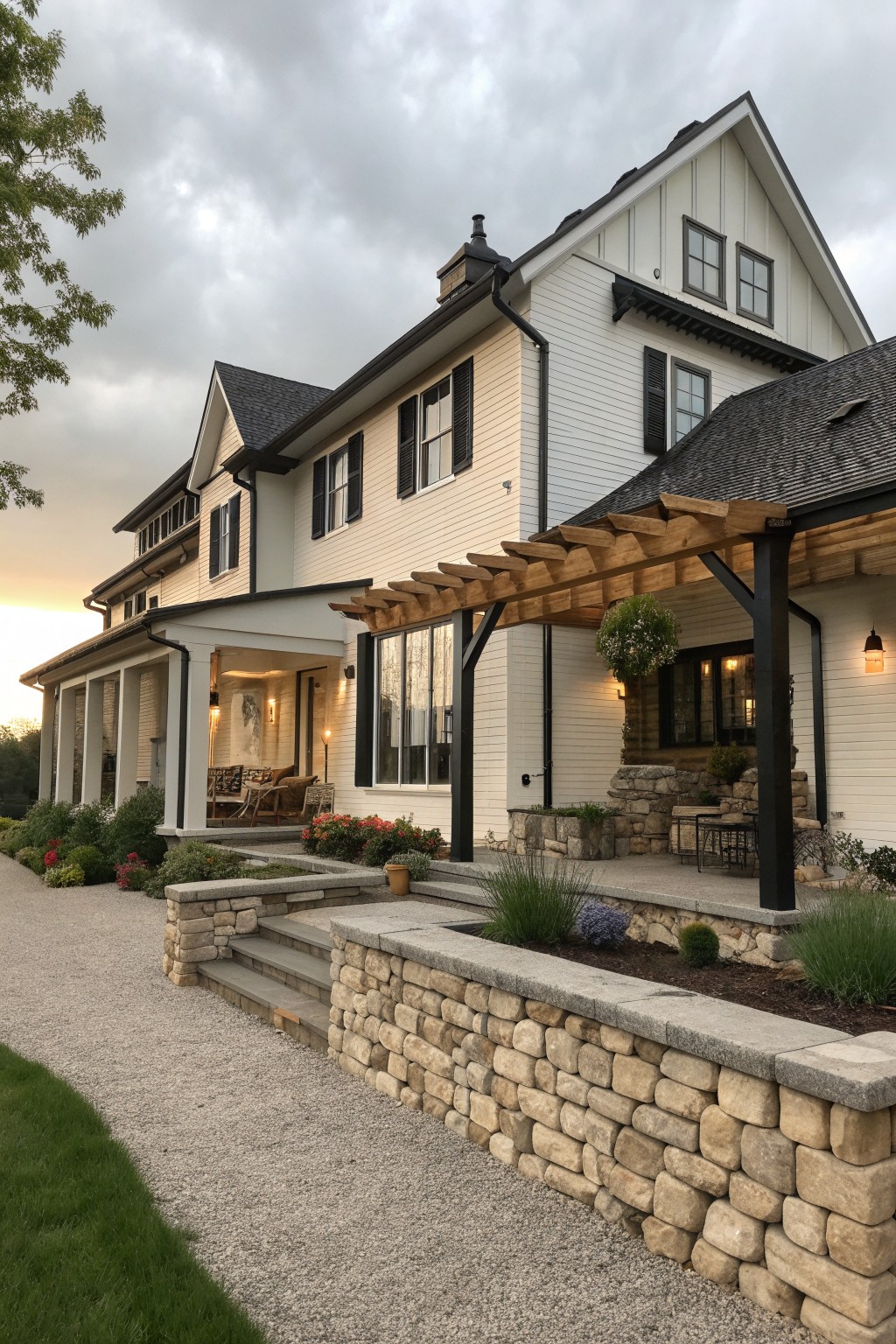
A low stone retaining wall can pull together the front of a farmhouse by turning a messy slope or scattered planting area into something much simpler. It creates a clear edge that keeps everything from looking scattered and helps the house feel more grounded without adding extra trim or details.
This approach works best on homes where the ground drops away from the foundation or where flower beds tend to sprawl. Use the same stone as the foundation if possible and keep the wall height modest so it feels like part of the house rather than a separate feature.
Add Black Shutters To Simplify The Windows
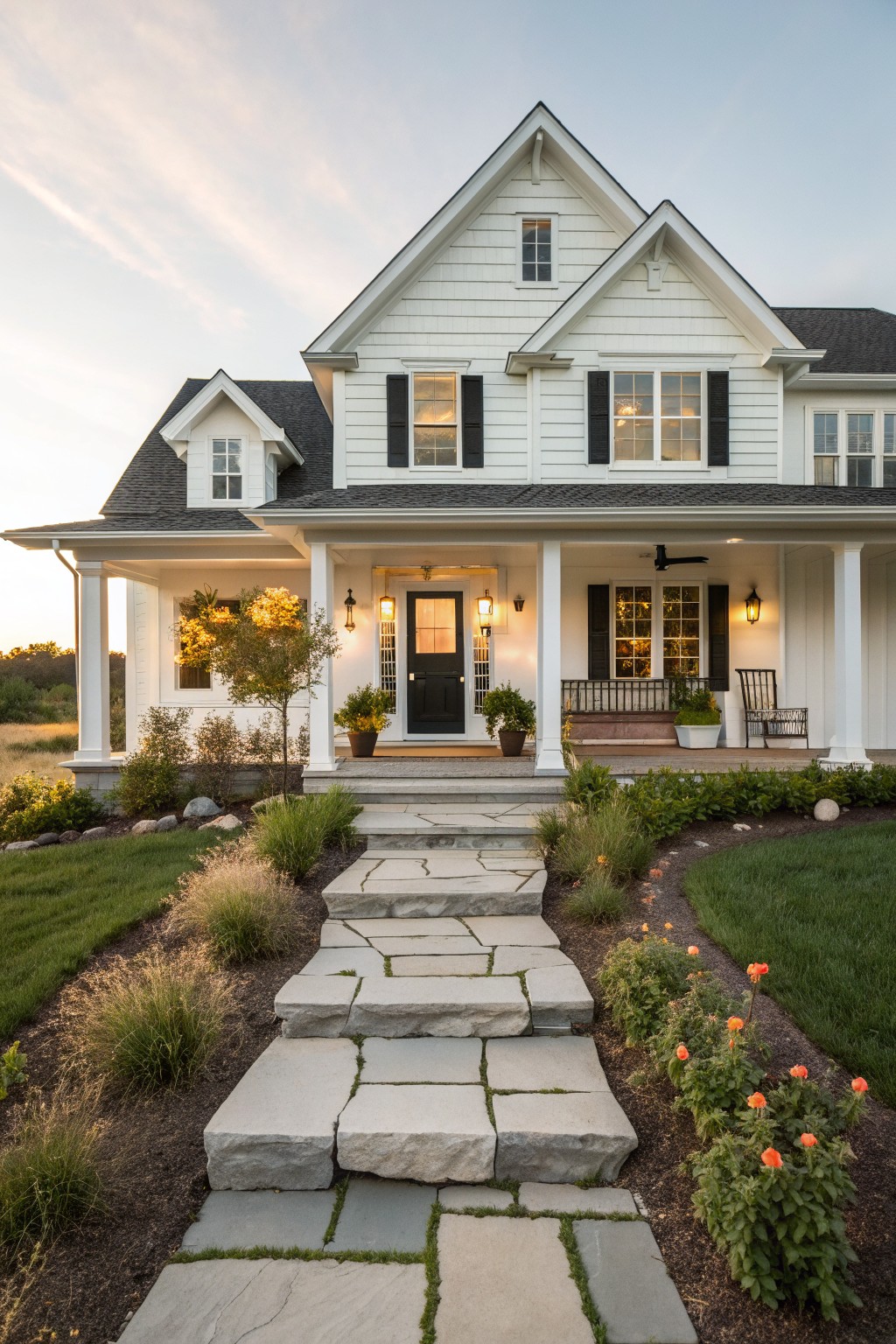
Black shutters give the front a clear shape without adding extra trim or layers. They break up the white siding just enough to keep the whole house from feeling flat while still looking simple.
This works best on homes with several windows across the front. Match the shutter color to the door and any other dark accents so nothing feels scattered. Skip them only if your windows already sit in deep reveals or have strong trim already.
Use a Covered Porch to Simplify the Exterior
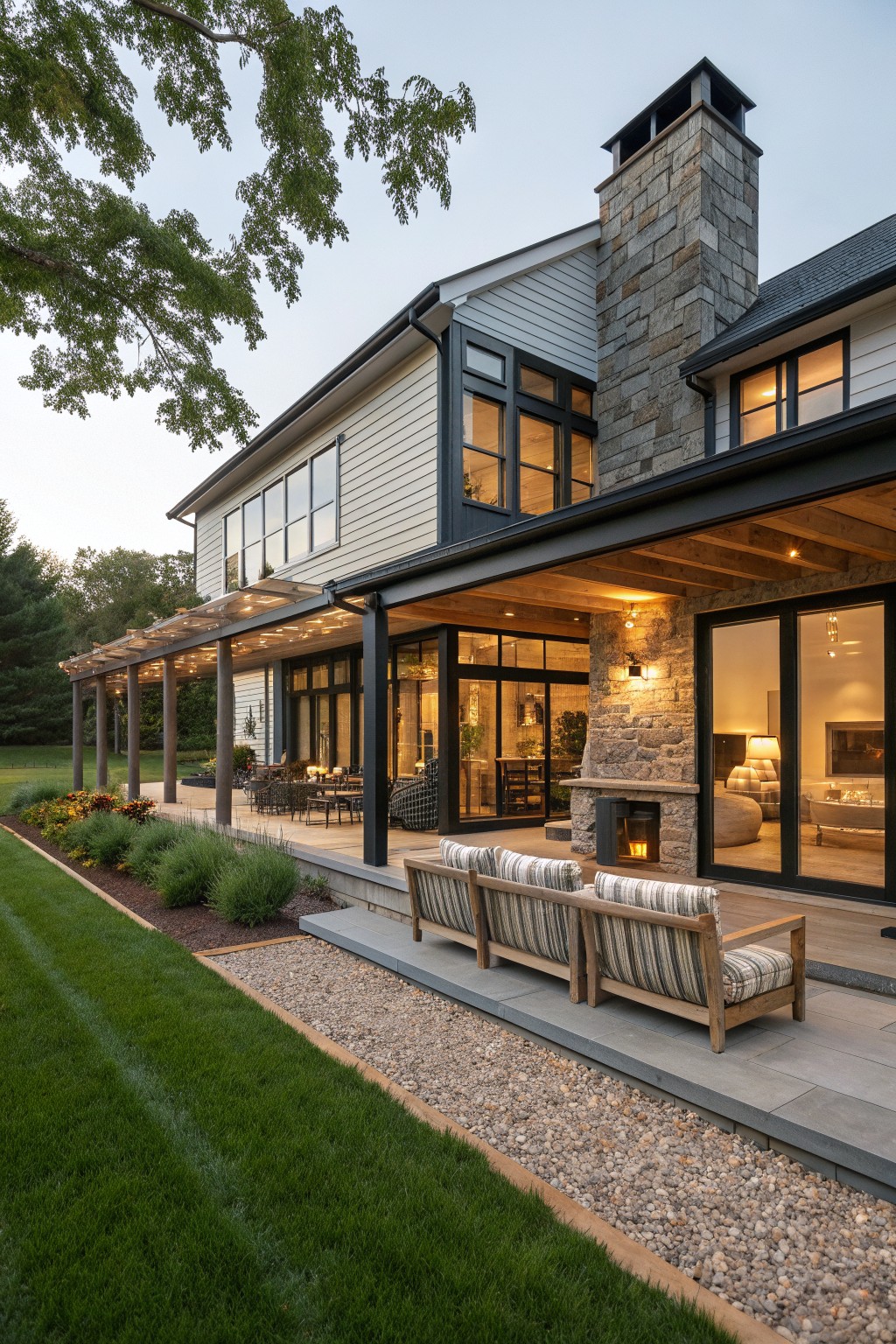
A covered porch gives the outside of a farmhouse a clean, steady line without extra trim or fussy details. It pulls the windows, doors, and siding together under one roof edge and turns what might feel scattered into one usable space.
Place a few seats and a simple fireplace along the length so the area gets used every day. This works well on homes that already have a long back or side wall and need a practical way to add outdoor room without crowding the look.
Use One Dark Color Across The Exterior
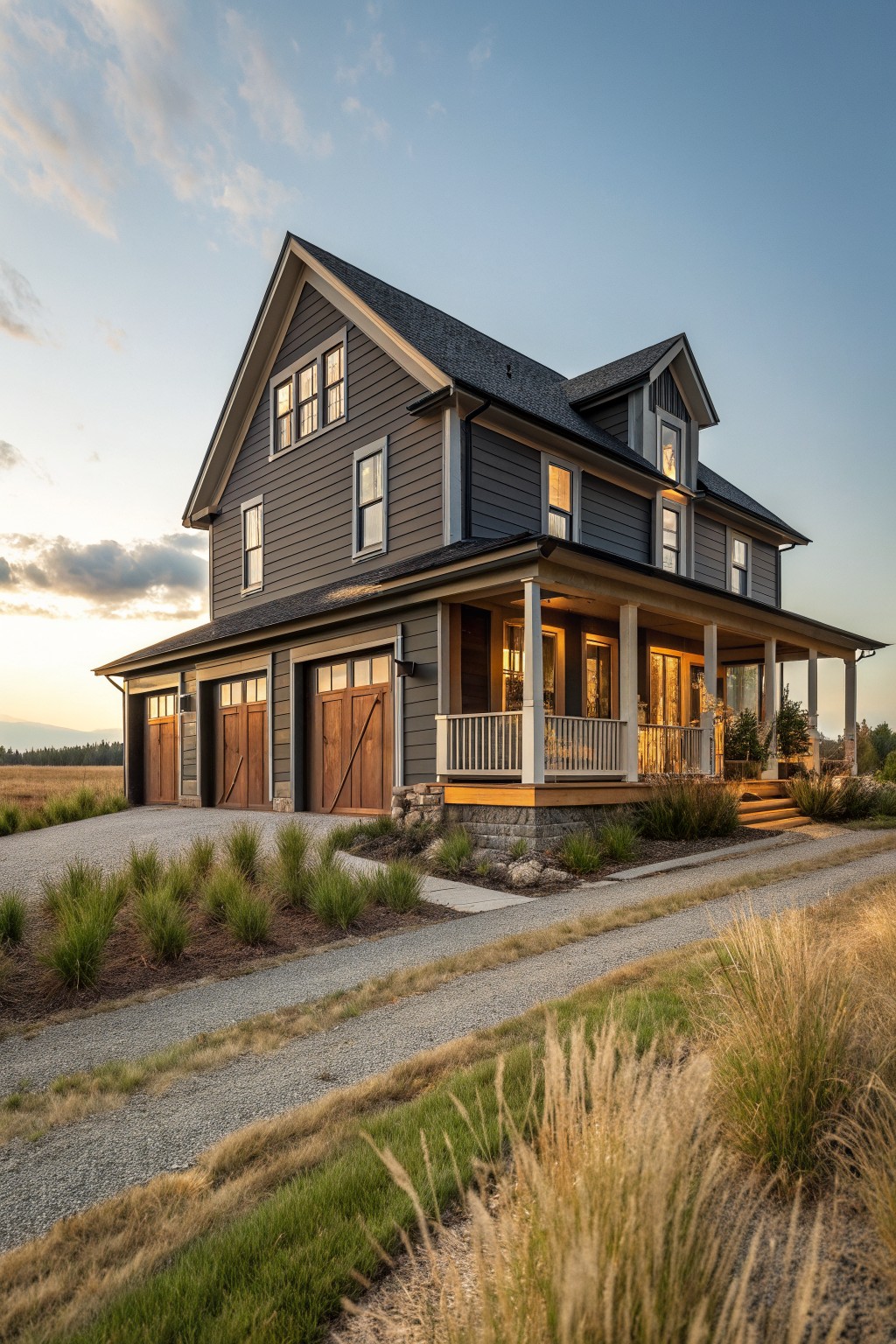
A single deep shade on the siding and trim cuts down on the scattered look that many farmhouses get after years of add-ons. It lets the shape of the house stand out instead of a mix of competing colors and small details.
This works best on homes with gables or multiple roof sections. Keep wood accents limited to doors or a few trim pieces so the overall surface stays simple and easy to maintain.
Let the Driveway Curve
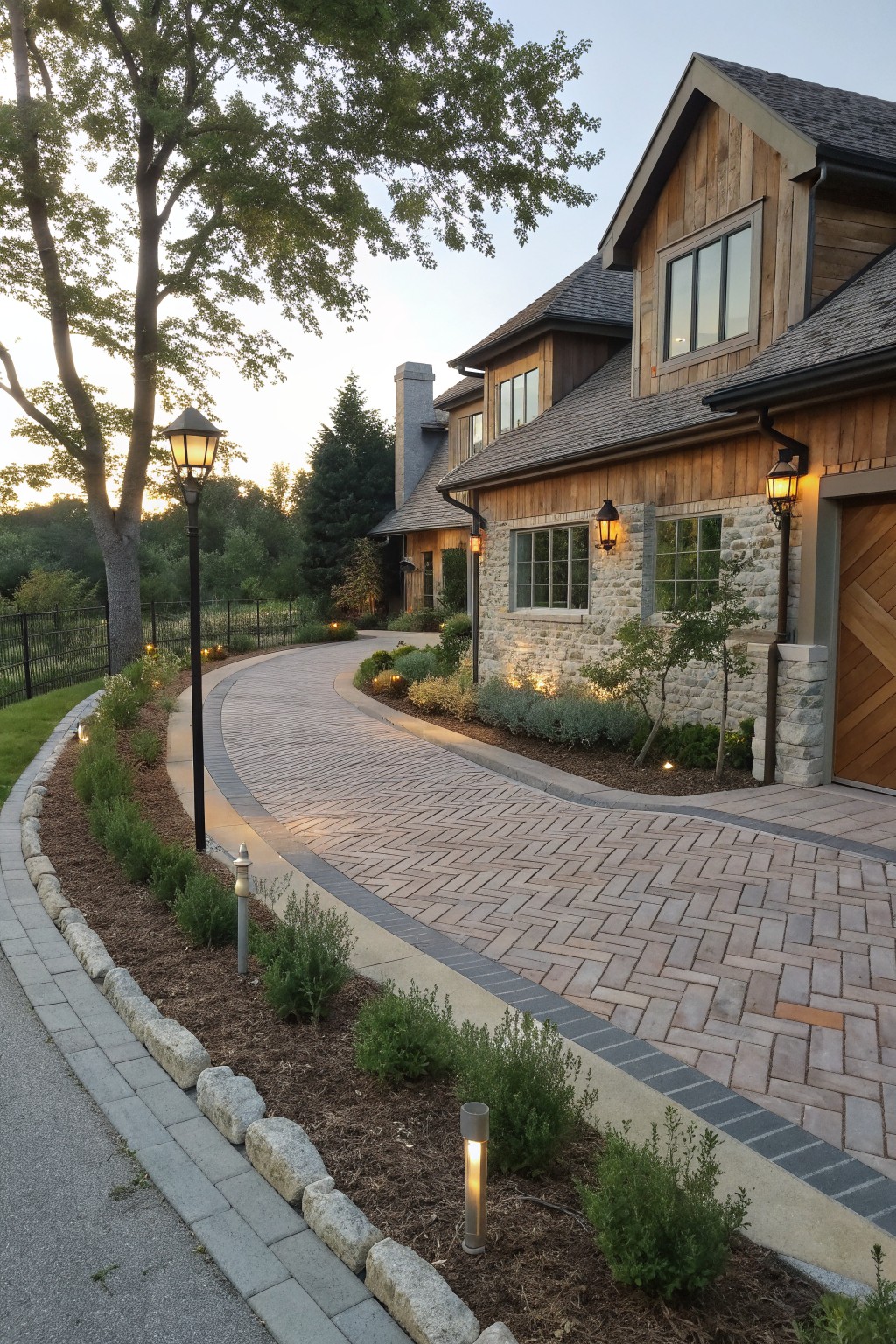
A gentle curve in the driveway softens the front of a house and keeps the whole approach from feeling stiff or overly planned. It also helps the eye follow the path toward the door without needing extra ornaments or tight borders.
This works best on homes with some space in front so the curve can flow naturally. Stick with one simple paving pattern and keep plantings low along the edge so the house stays the main focus.
Dark Shutters Simplify Window Details
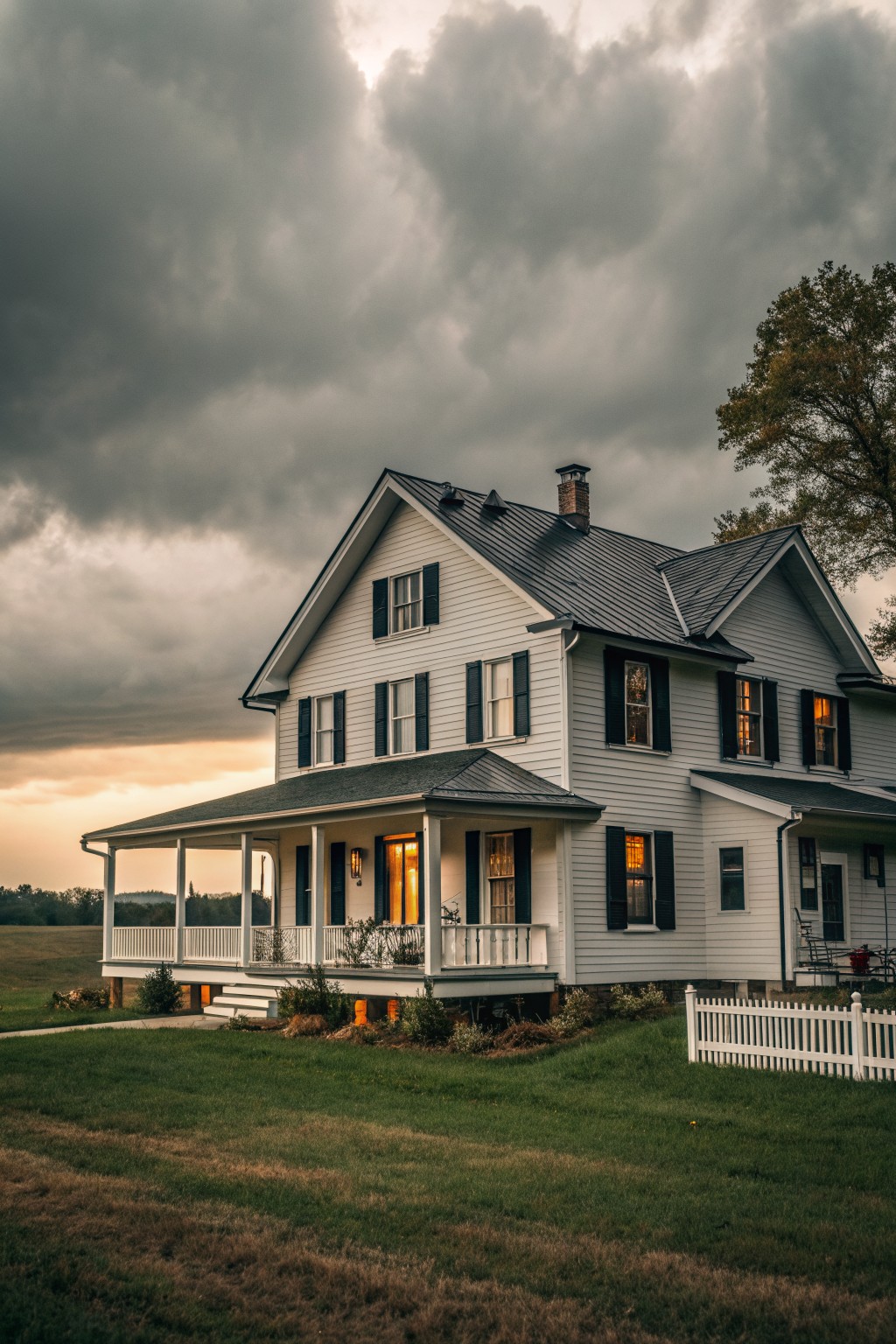
Many older farmhouses end up looking cluttered because every window gets treated differently. Using the same dark shutters across all the openings gives the facade a steadier, quieter look without adding more trim or decoration.
This works best on homes that already have a simple white or light siding. Keep the shutters the same size and color so they frame the glass evenly and let the roof and porch stay the main features.
Stone Paths Set In Gravel
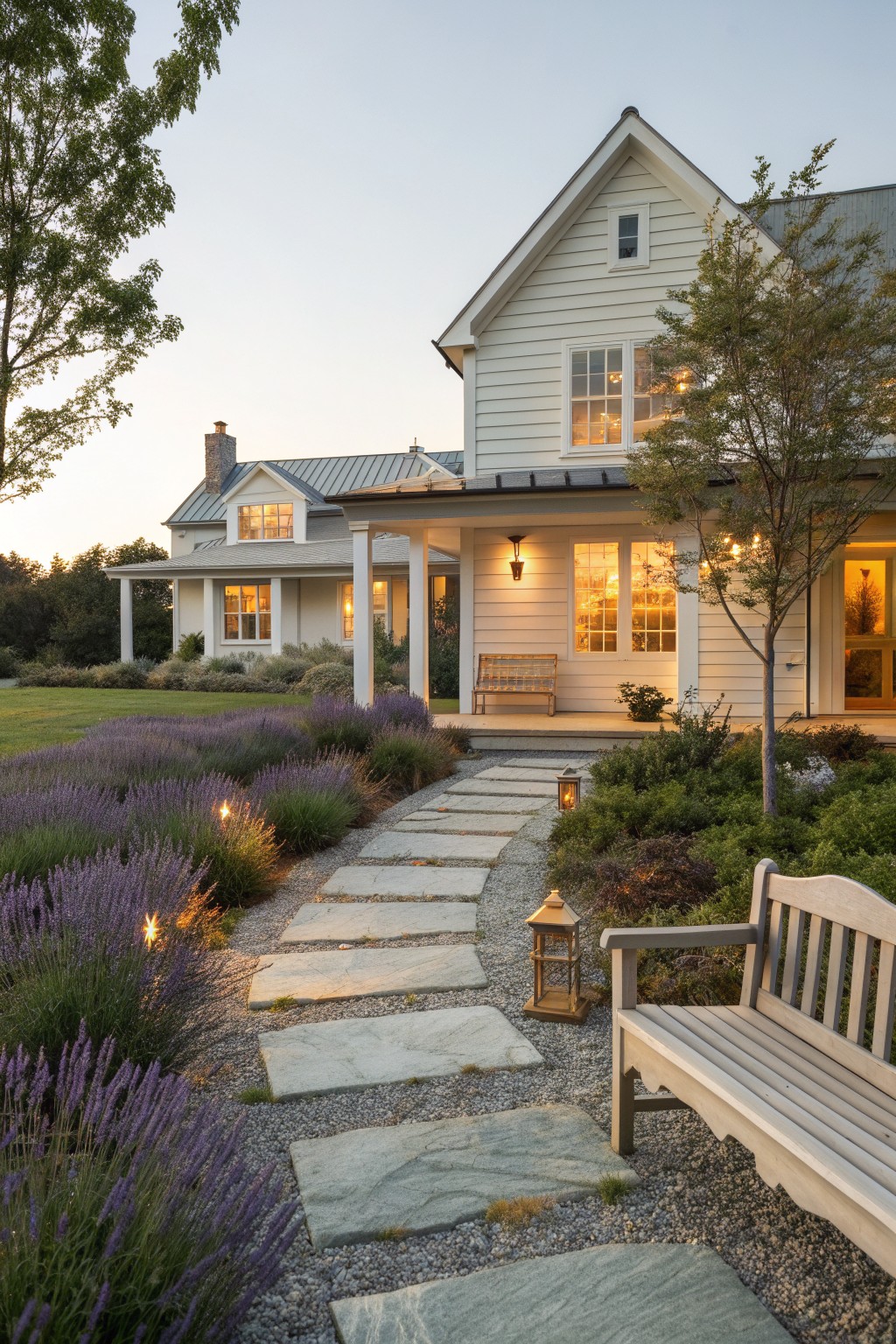
A stone path laid into gravel gives the front approach a simple, settled look without extra borders or fussy edging. It keeps the eye moving forward and cuts down on the scattered details that often make an entry feel cluttered.
This setup works best on homes with some open ground where you can let the gravel spread a bit and plant low along the sides. Stick to one or two plant types so the path stays the main feature instead of competing with the beds.
Stone Walls Create Terraced Beds On Slopes
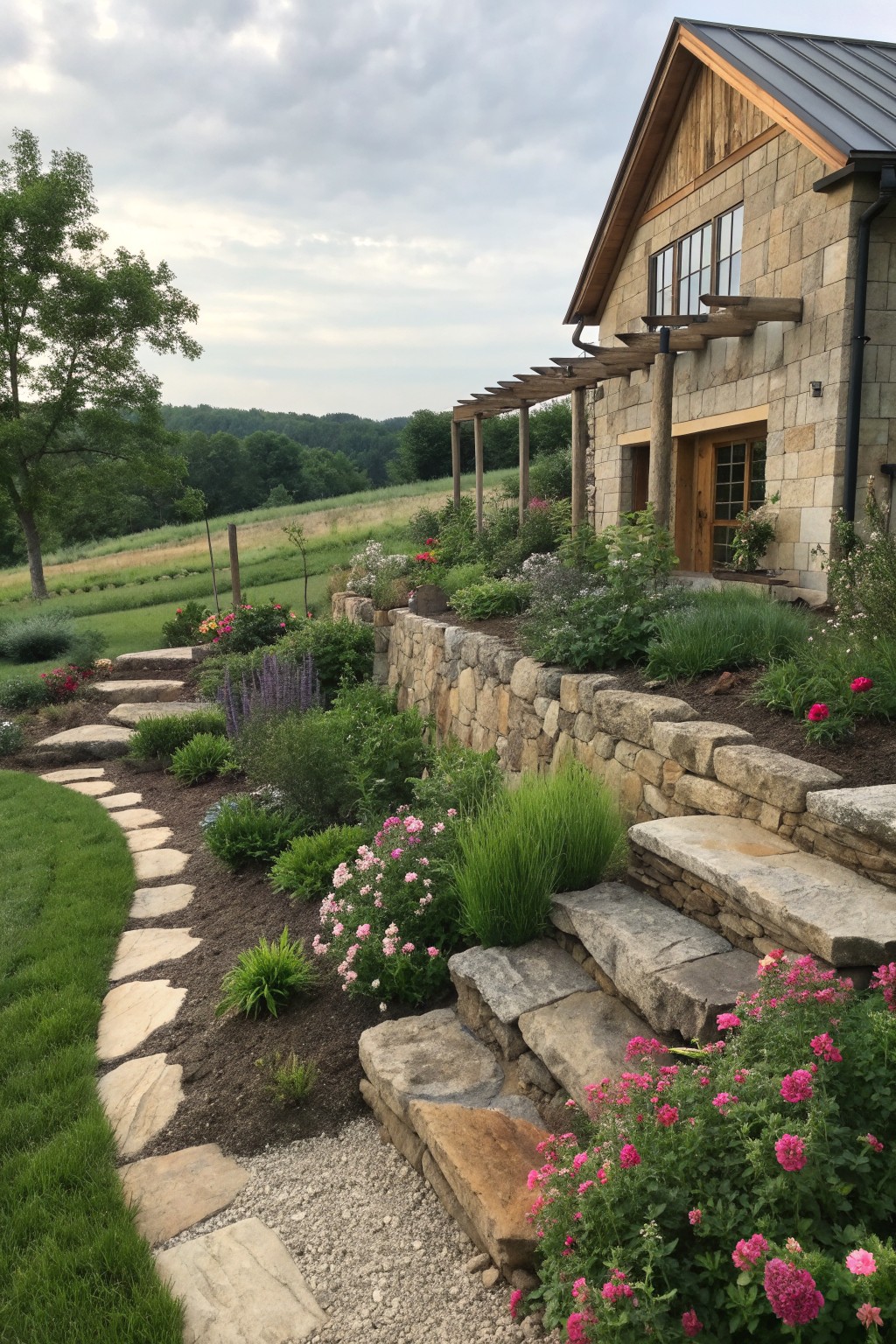
Many older farmhouses sit on land that slopes, and one practical fix is to build low stone retaining walls that turn the drop into a series of flat planting beds. This keeps the garden from spilling down the hill and gives the house a settled, finished look instead of a jumble of plants at different heights.
The walls work best when the stone matches the house foundation and the beds stay fairly narrow. They suit homes with similar gentle grades and make mowing and weeding much simpler once the levels are set.
Match the Trim Color on All Windows and Doors
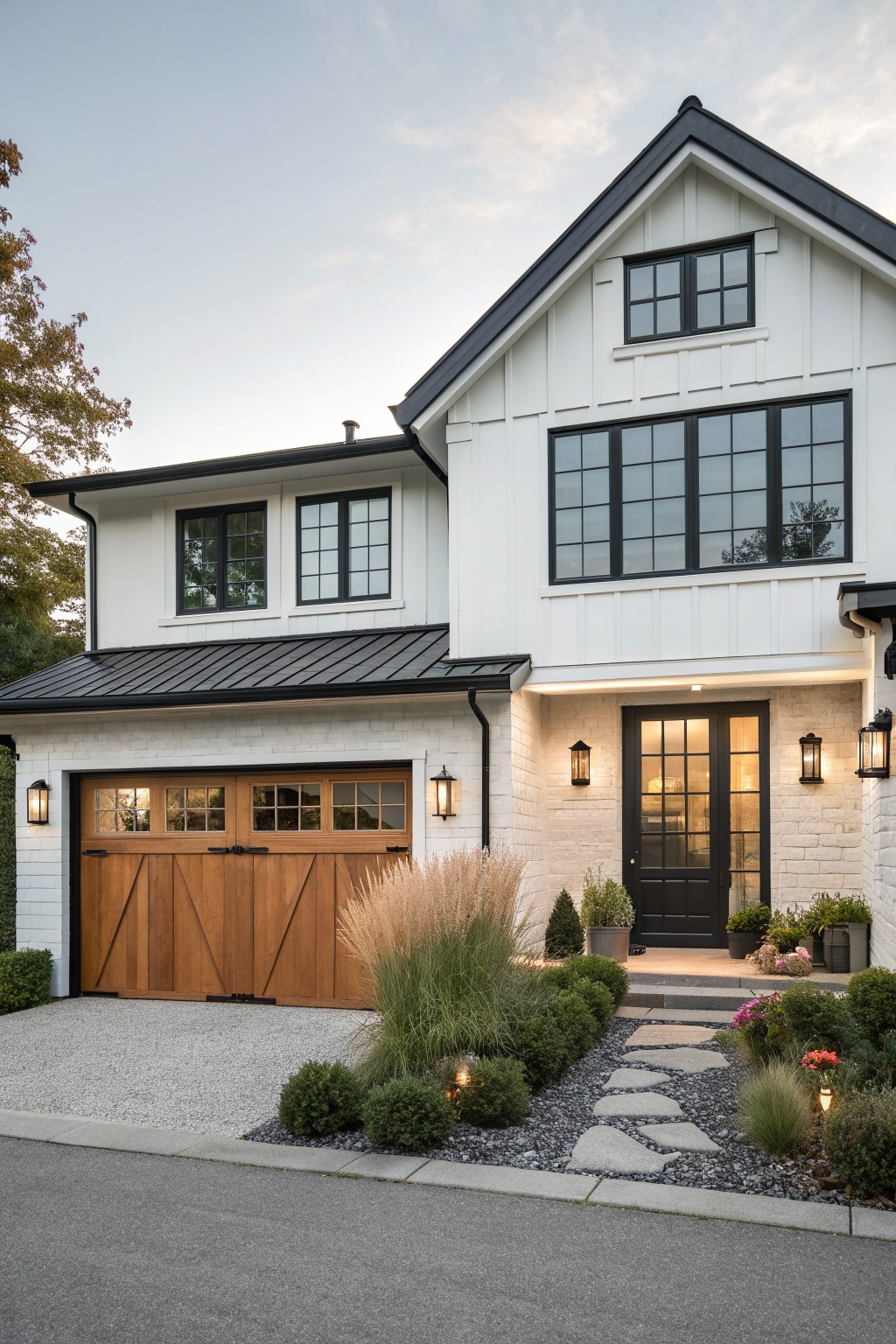
Using the same dark trim color on windows and doors is one of the easiest ways to reduce clutter on a farmhouse exterior. It creates a quiet rhythm across the front without adding extra trim pieces or fussy details that can make the house feel busy.
This works best on homes with several windows of different sizes. Keep the frames consistent and let the siding and one warmer material, like wood on the garage, provide the only contrast needed.
Keep the Porch Seating Simple
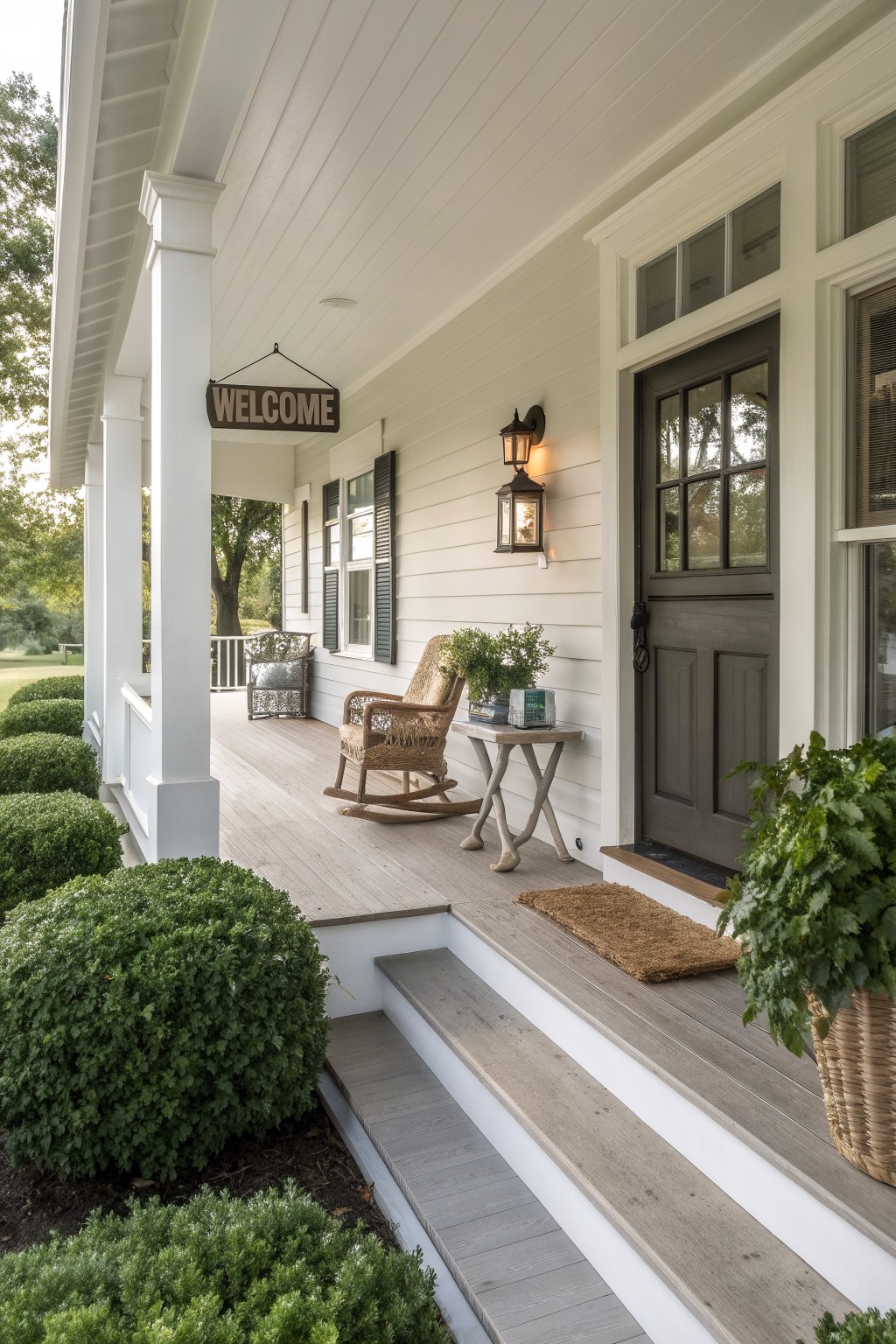
A single rocking chair and small side table can do more for a porch than filling it with extra pieces. This approach cuts down on visual noise around the door and windows, letting the house lines stay clear and easy to read.
It works best on farmhouses or older homes where the architecture already has plenty of character. Start with one comfortable seat near the door and add only what you actually use, then stop before the space starts to feel crowded.
Keep the Color Palette Simple
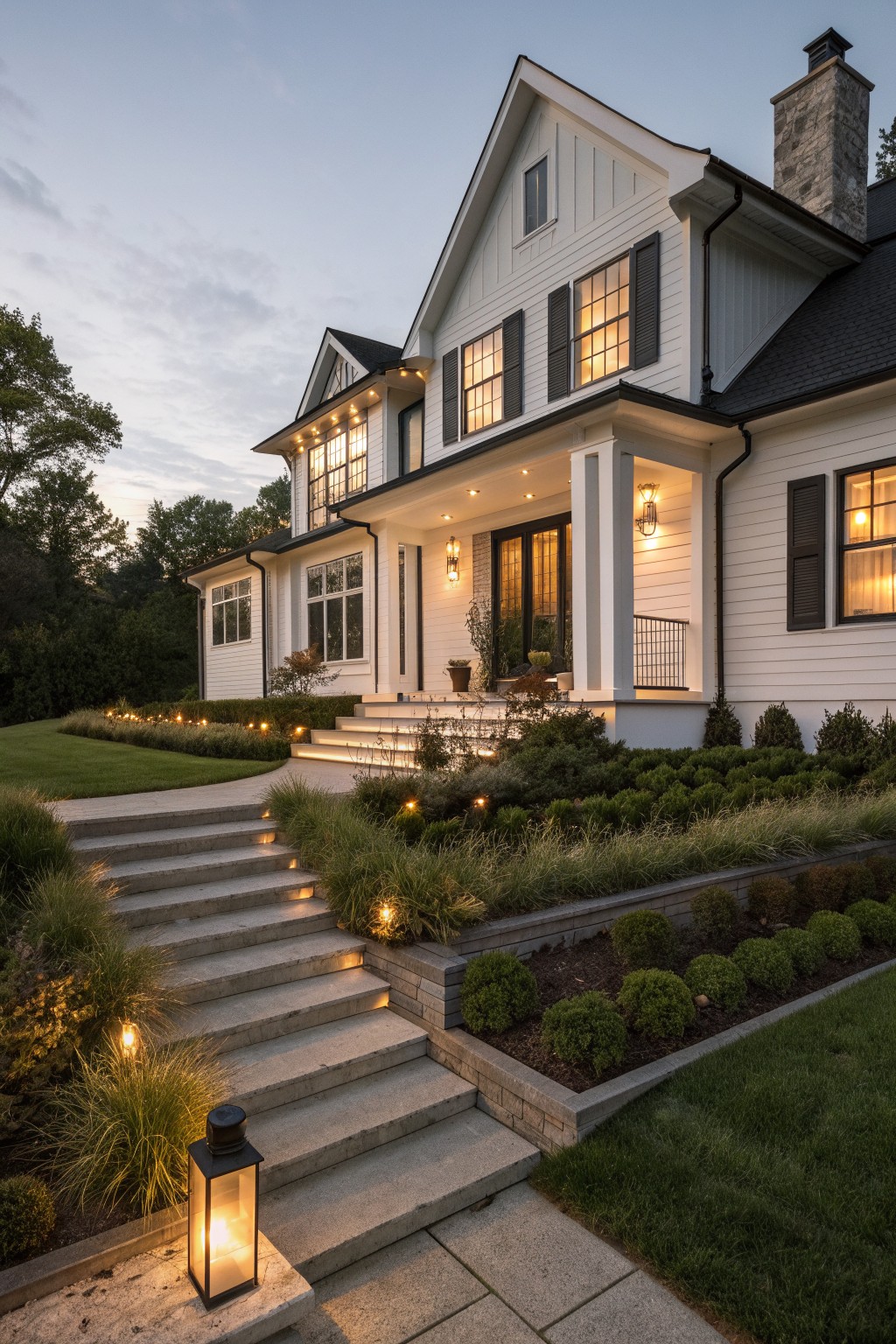
A limited color scheme helps a farmhouse exterior feel calmer and more organized. White siding with black shutters and dark trim cuts down on visual noise while still showing off the rooflines and porch structure.
This works best on houses that already have clear shapes and details. Stick to two or three colors max and keep the trim consistent so the front does not feel scattered.
Built-In Planters Keep A Deck Organized
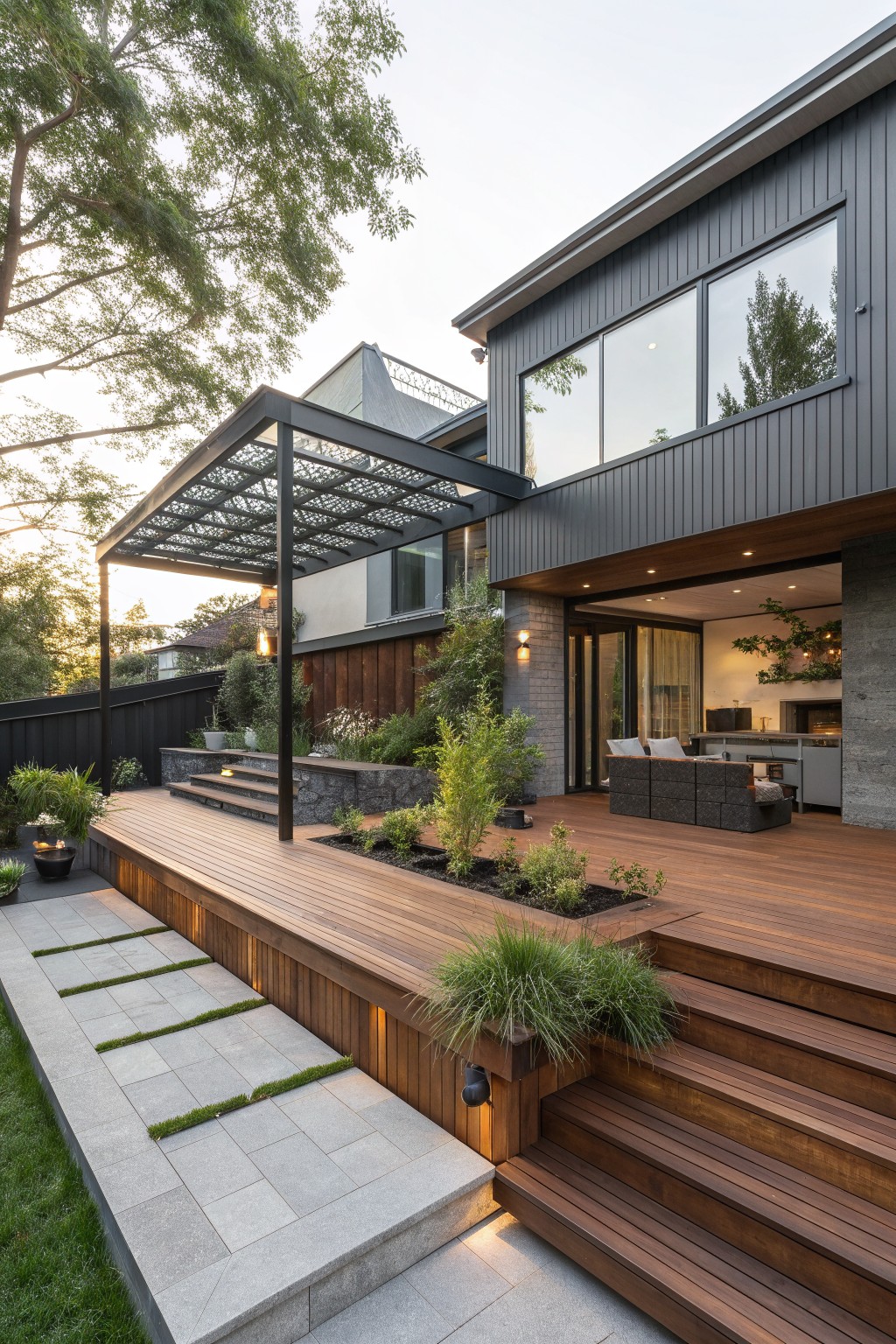
One thing that works well here is the way built-in planters are set right into the deck levels. They mark off different zones without adding extra furniture or screens, so the whole space stays open but still feels divided.
This setup suits homes where the backyard sees regular use. It keeps plants from spreading across the boards and makes the drop from the house down to the grass feel more natural. Just size the planters for what you actually want to grow so they do not end up empty.
Run a Porch Along the Front to Simplify the Look
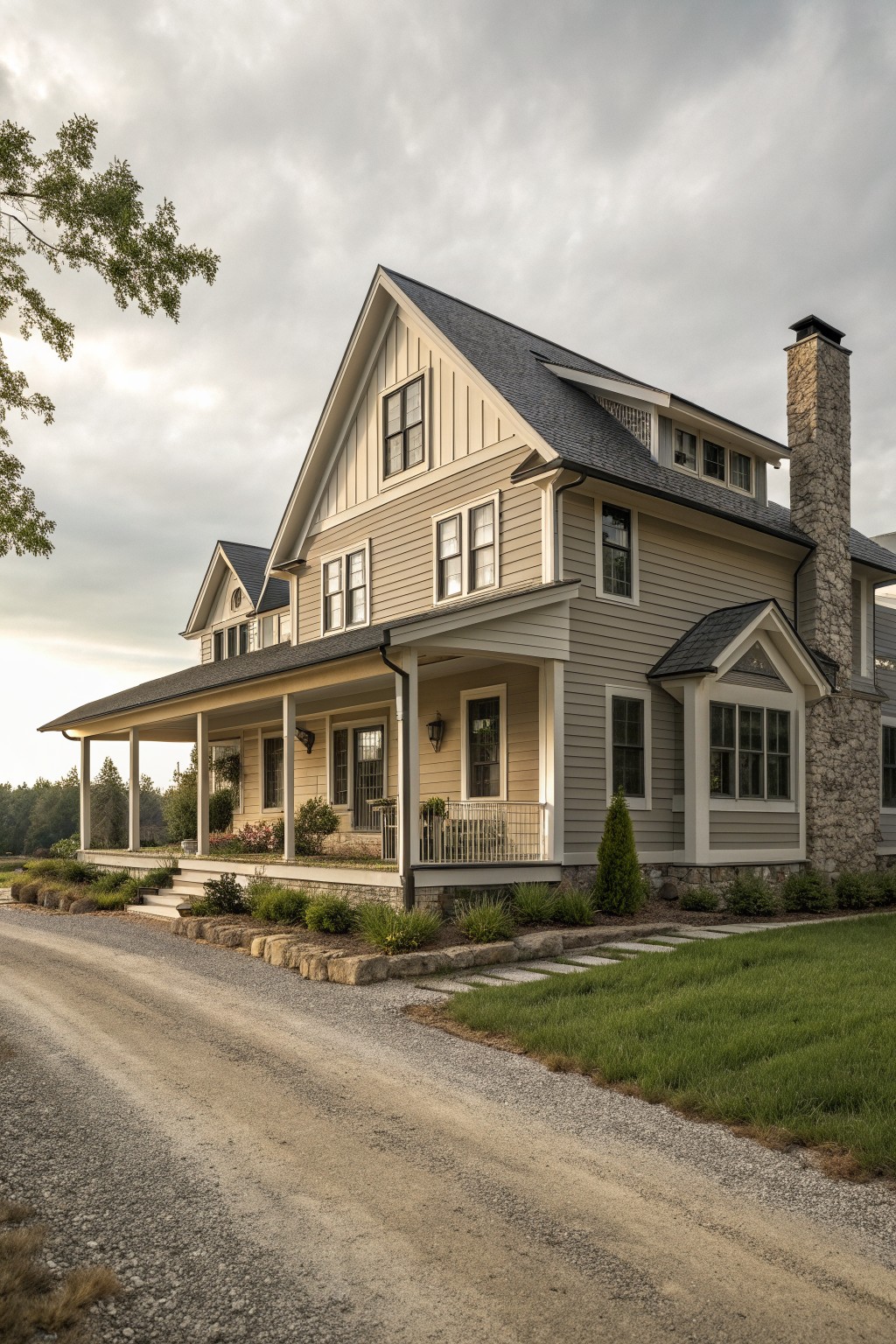
Many older farmhouses collect too many roof angles, windows, and small details over time. A single long covered porch cuts across all of that and gives the front one steady line that feels much calmer.
This approach works best on houses that already have decent siding and rooflines but look scattered from the street. Keep the columns simple and the roof low so the porch does the quiet work without adding more decoration.
Using Vertical Siding To Simplify The Facade
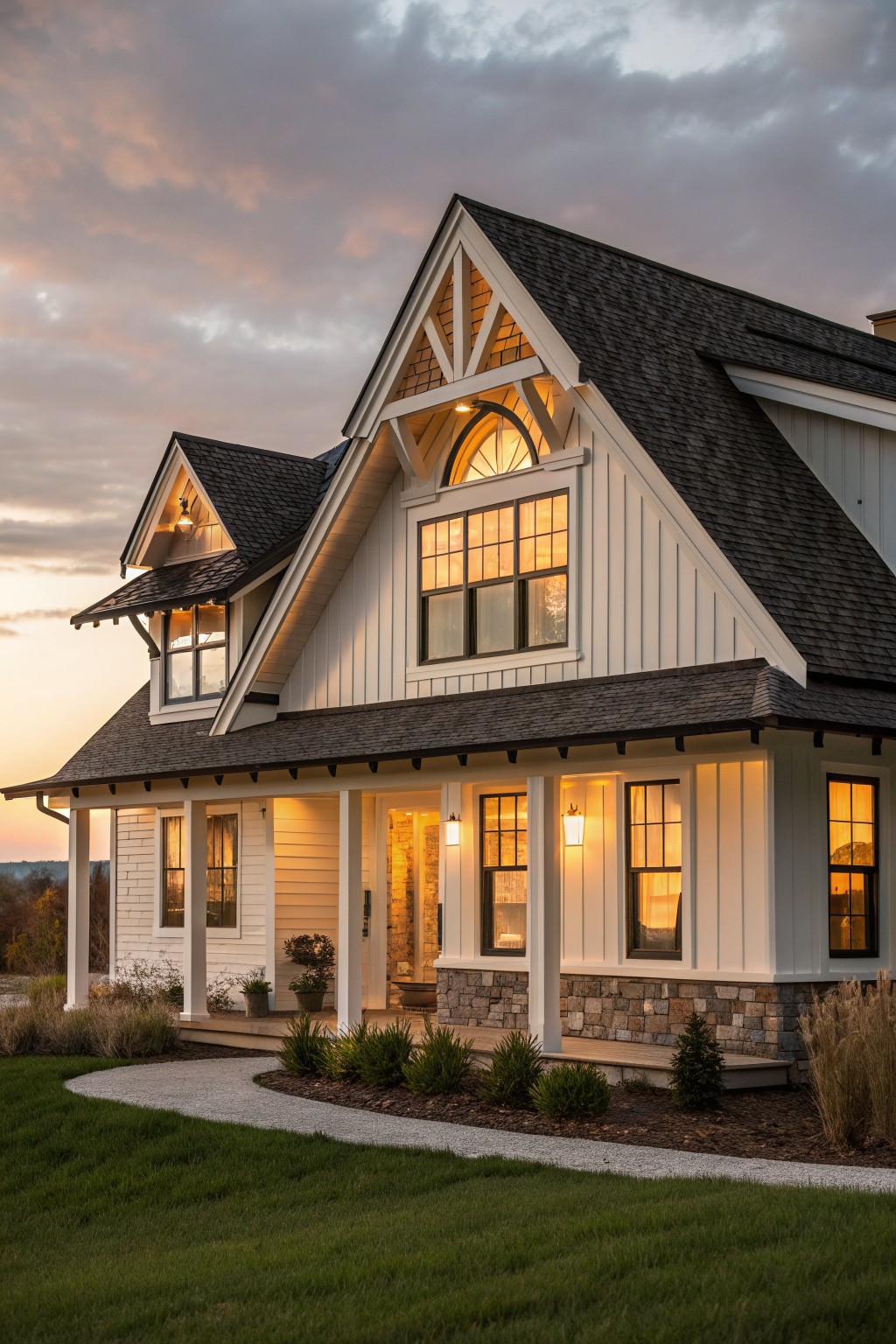
Vertical siding works well when you want to cut down on the number of lines and materials on a farmhouse exterior. It gives the walls a taller, smoother look that makes the whole front feel less crowded, especially on homes with several roof angles.
This approach pairs best with a simple color scheme and a low stone base. The stone anchors the house without adding more patterns, and the white siding keeps everything bright and easy to maintain. It suits two-story homes that already have busy rooflines or multiple gables.
Stone Paths That Keep The Entry Simple
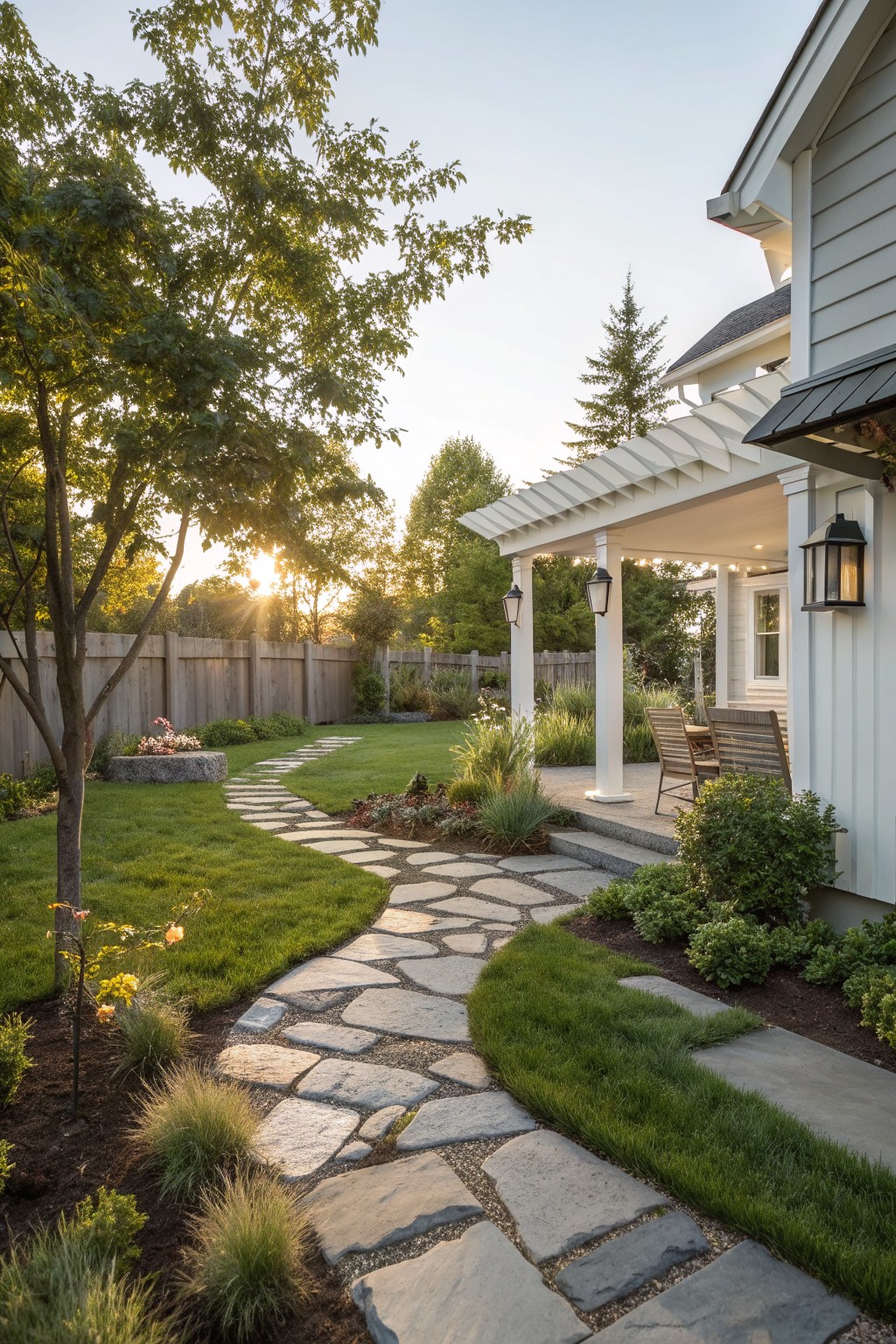
A winding stone path cuts through the lawn and leads visitors straight to the porch without any extra fuss. It gives the front yard a clear route while letting the grass and plantings stay open and easy to maintain.
This kind of path works well on farmhouse properties where the lot has some depth. Keep the stones irregular and set them in gravel so grass can grow between them, and plant low beds only along the edges rather than scattering them everywhere.
Black Trim Defines The Entry
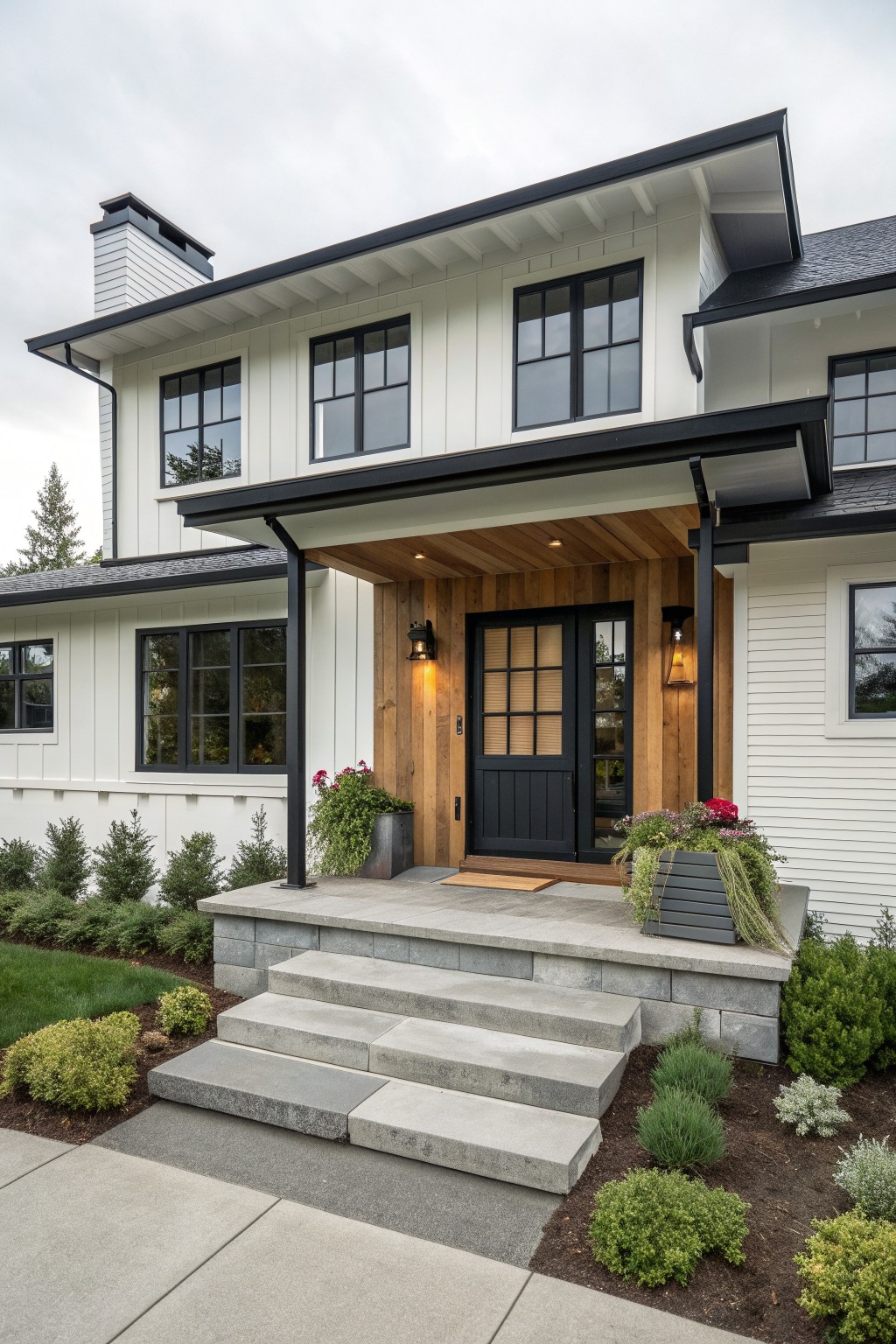
A black front door with matching trim gives the whole front a clear stopping point. It cuts through the mix of siding and windows without needing extra molding or decoration.
This approach works best on homes with light walls and a simple roofline. Use it when you want the door to read first and keep the rest of the facade from feeling scattered.
Border Gravel Paths With Low Hedges
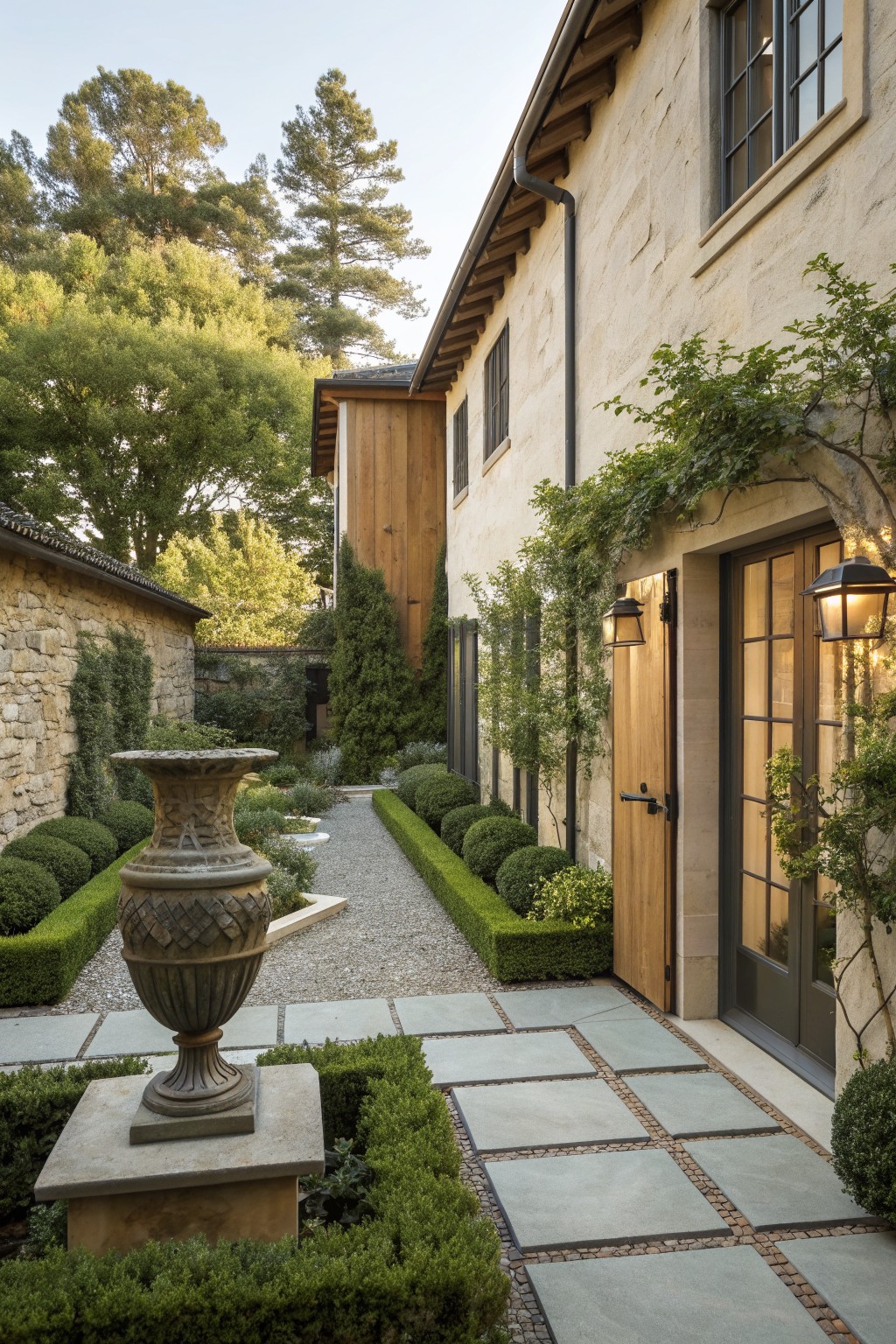
Low hedges along a path keep the approach to a house looking neat without extra decoration. They frame the walkway, direct foot traffic, and cut down on the scattered look that often comes with mixed plantings around an older exterior.
This setup works best on farmhouses or similar homes where the garden sits right up against the building. Keep the hedges low and evenly trimmed, and use gravel or simple pavers for the surface so the whole entry stays easy to maintain.
Frequently Asked Questions
Q: My front porch has way too many railings and trim pieces. Which ones do I remove first to calm things down? A: Pull off the extra railings that sit close together and block the view. Replace them with one simple horizontal rail that matches your door style. The open space instantly makes the whole entry feel bigger and cleaner.
Q: I want to update my shutters but worry they will still look fussy. What style works best for a quick swap? A: Choose flat panel shutters without any cutouts or curves. Mount them so they sit tight against the house instead of sticking out. One coat of paint in the same color as your trim finishes the change fast.
Q: My budget only covers one or two fixes this year. Which update gives the most noticeable difference on a busy exterior? A: Paint all the window frames and door trim the same color. That single step hides mismatched details and pulls the whole front together without new construction.
