

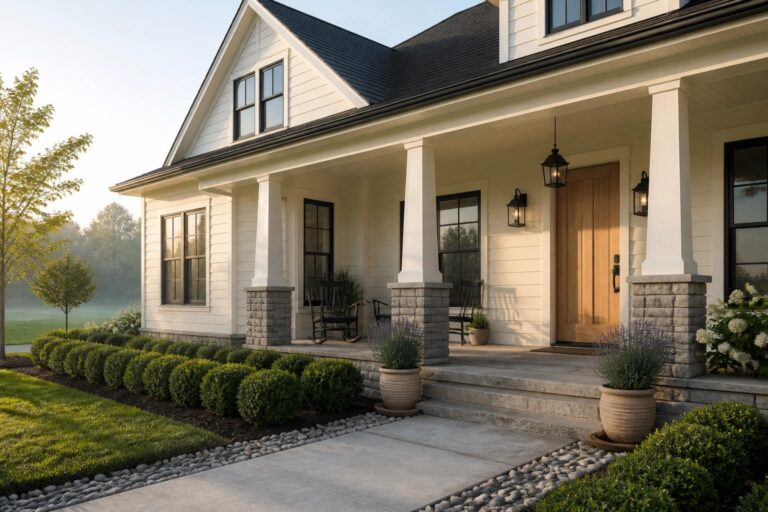
When picking colors for Hardie Board, I pay close attention to how each shade will sit next to the roof and any stone or brick details once the light changes throughout the day.
Exterior colors often look different in morning sun than they do under overcast skies, so I usually test a few boards in place before committing.
Some shades just do not hold up outside.
I have noticed that certain grays and taupes can pull warmer or cooler depending on the landscaping around the house, which changes the whole feel of the siding.
It helps to see how the color reads against white trim or black windows in real conditions rather than relying only on a digital preview.
Creamy White Siding
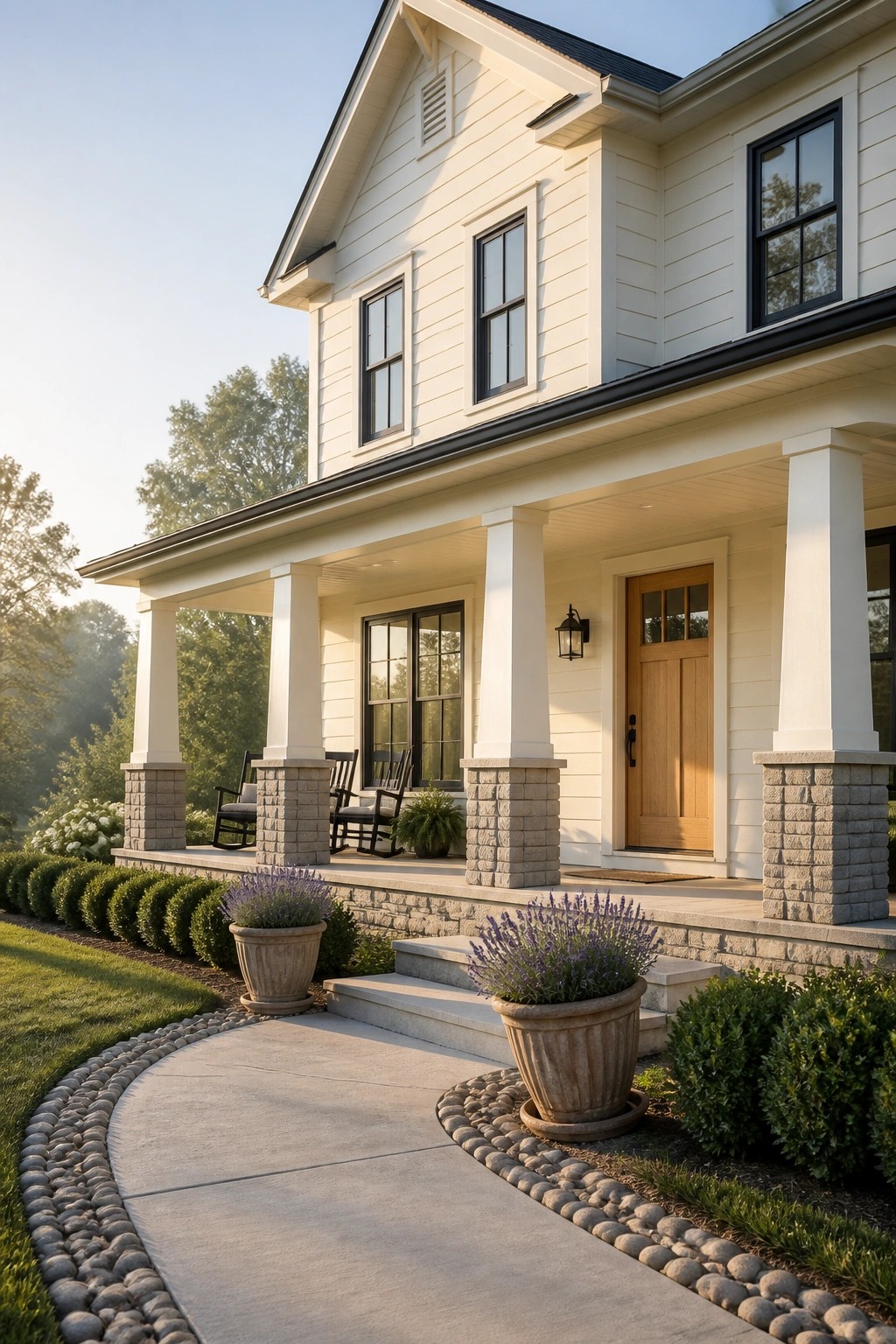
This creamy white on the Hardie board gives the house a soft, warm look without going too bright. It reads as a light off-white with just enough warmth to feel inviting rather than stark next to the stone and wood details.
The undertone stays gentle outdoors and works best with black windows or dark trim. It also pairs cleanly with natural wood doors and most roof colors, though it can pick up a slight yellow cast in strong afternoon light.
Soft Gray Siding
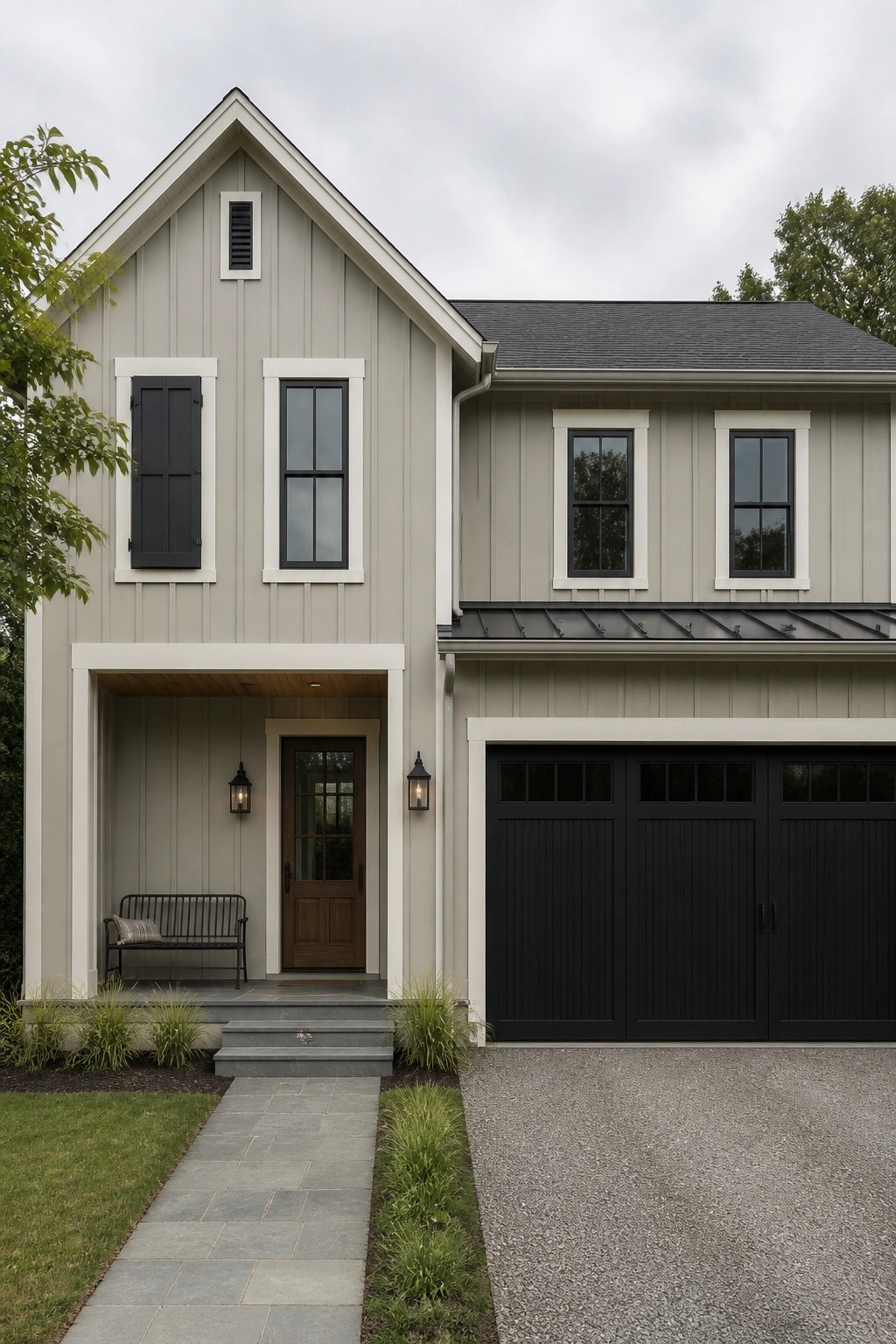
This light gray hardie board has a muted, slightly warm tone that sits nicely between gray and greige. It feels calm without going flat, and the color holds up well next to white trim and darker accents like the black garage doors.
The undertone stays fairly neutral in most light, so it works on larger surfaces without feeling too cool or too muddy. Pair it with charcoal roofing and natural wood doors if you want a clean modern farmhouse look. Watch for strong afternoon sun, which can pull a bit more warmth out of it than expected.
Soft Sage Green Siding
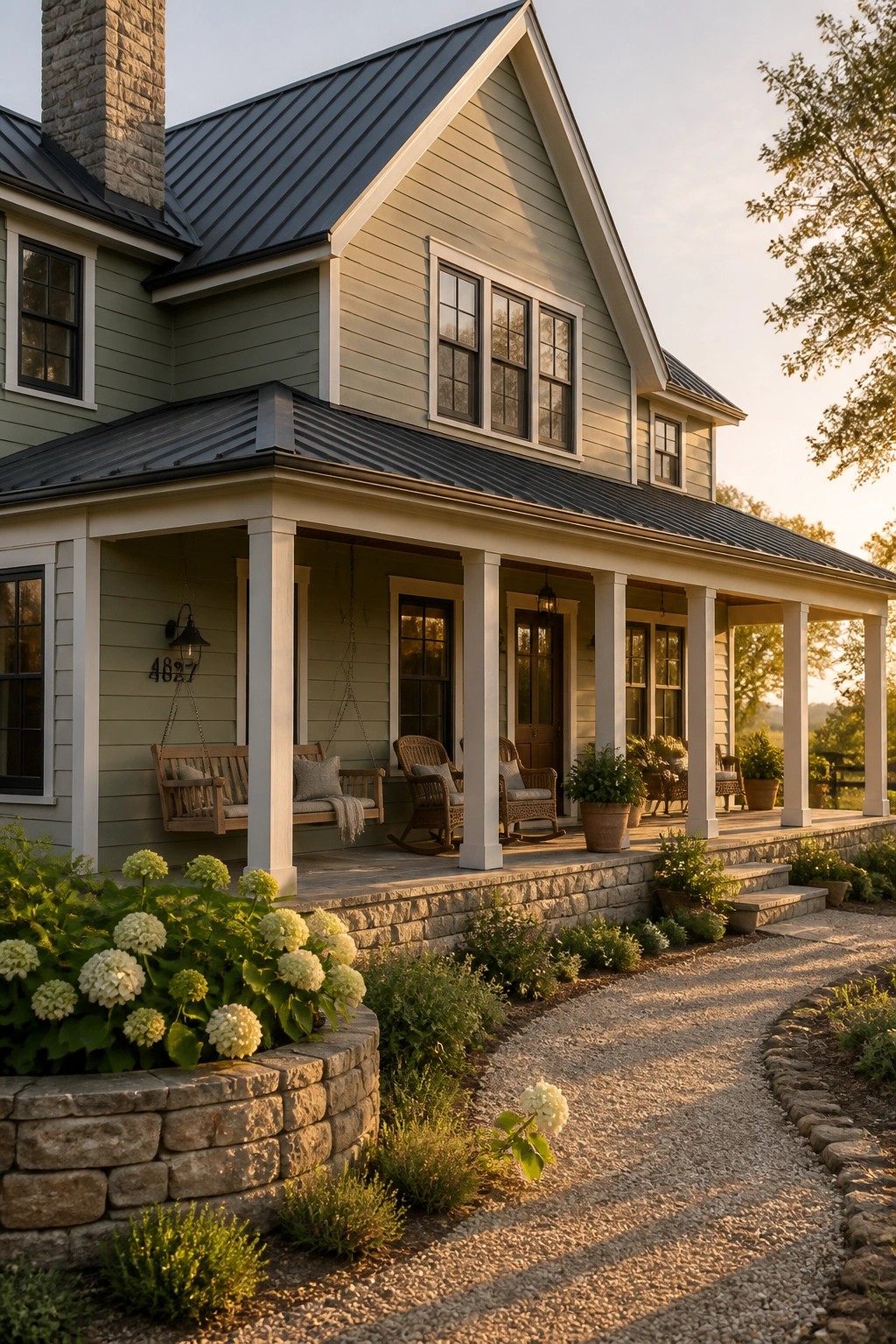
This soft sage green on the Hardie board gives the house a calm, grounded look that still feels fresh. It sits right between gray and green without leaning too hard in either direction, which helps it work across different light conditions.
The color has a slight cool undertone that keeps the whole exterior feeling balanced next to dark roofing and white trim. It pairs easily with stone foundations and simple wood details. Look at Sherwin Williams Clary Sage or Benjamin Moore October Mist if you want something very close. Behr Aged Olive would be another solid option.
Soft blue gray siding
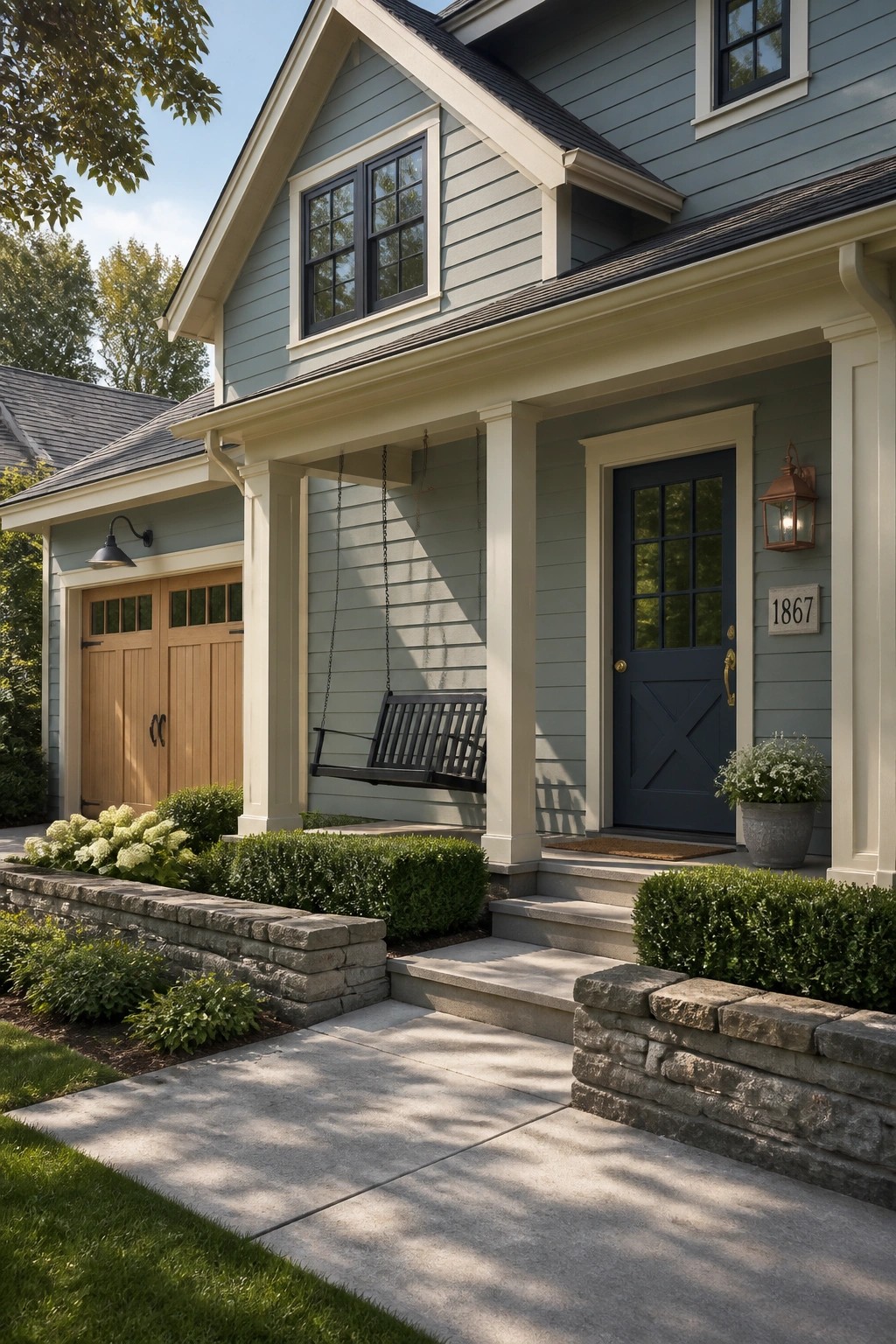
This soft blue gray is a nice choice for Hardie board on a modern farmhouse. It feels calm and a little cool, with enough gray to keep it from looking too bright or cottage-like.
The color has a slight green undertone that shows up more in shade. It works best with warm white or cream trim and can handle dark doors or black windows without clashing. Look at Sherwin Williams Rainwashed, Benjamin Moore Wythe Blue, Behr Silver Bullet, or Farrow & Ball Pigeon for close matches.
Deep navy siding
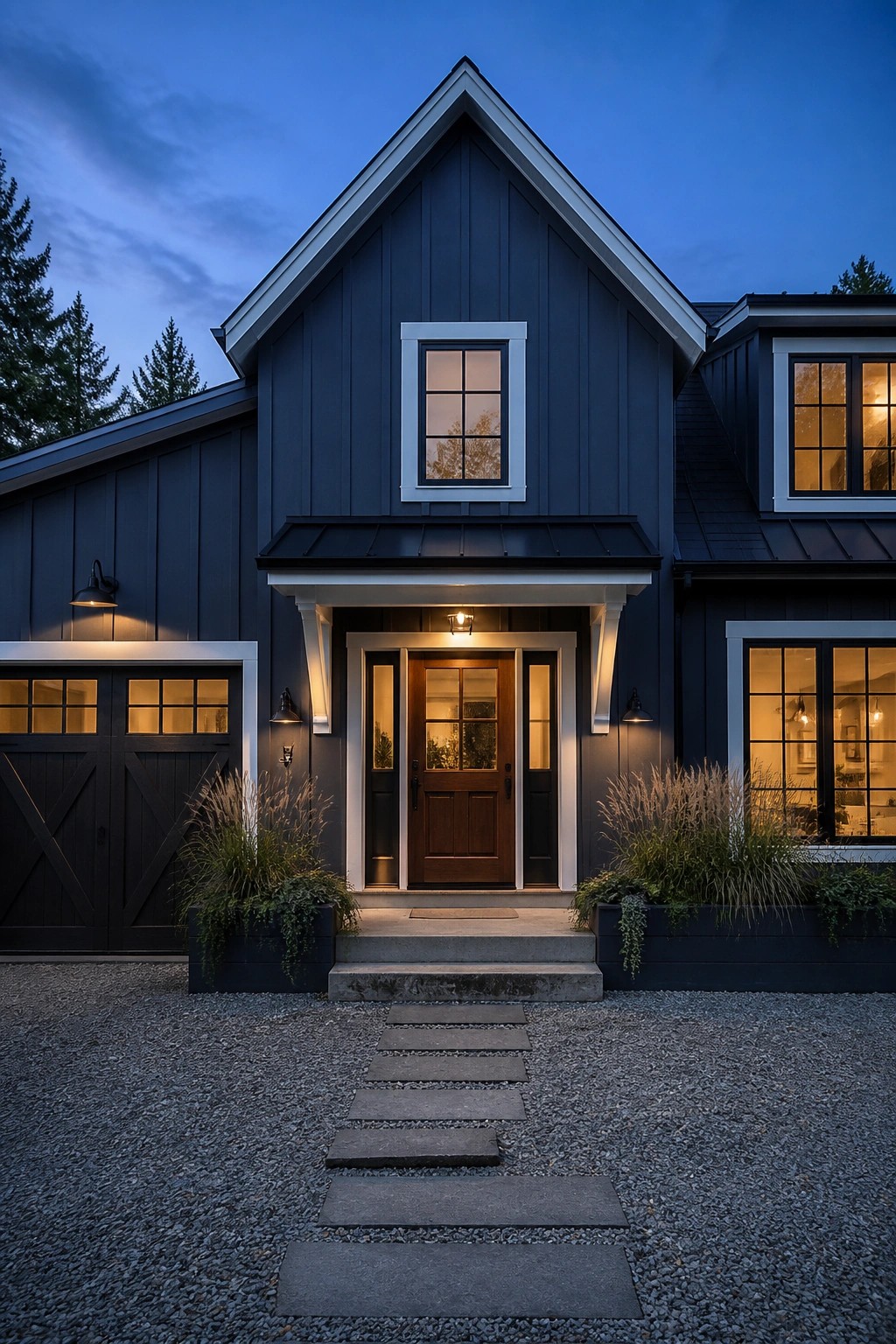
This deep navy blue on the Hardie board siding gives the house a strong but grounded look. It sits in that cool blue-gray range and feels solid without turning black or too heavy next to the white trim.
The color has a slight gray undertone that helps it stay calm in changing light. It works best on modern farmhouse homes when paired with warm wood doors and simple white or charcoal details around windows and roofing.
Dark Blue Gray Siding
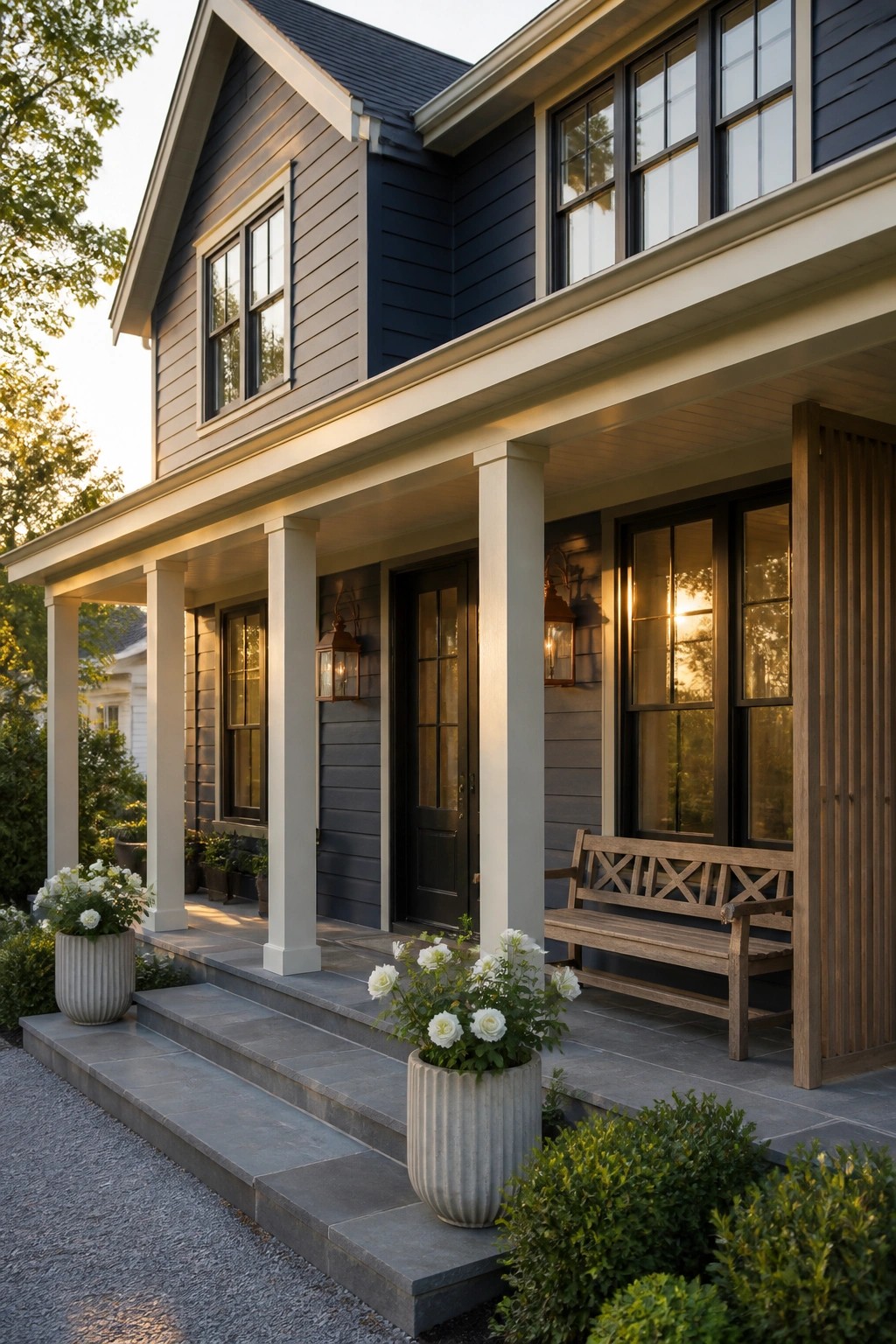
This deep blue gray on the Hardie board gives a solid, grounded look that fits the modern farmhouse style. It sits between navy and charcoal so it feels a little cooler than pure gray but not as bold as a true navy.
The color works best with warm white trim and wood accents. Sherwin Williams Naval, Benjamin Moore Hale Navy, and Behr Midnight Blue all read close to it. It can shift a bit depending on the light, so testing a sample on the actual siding helps.
Warm Greige Siding
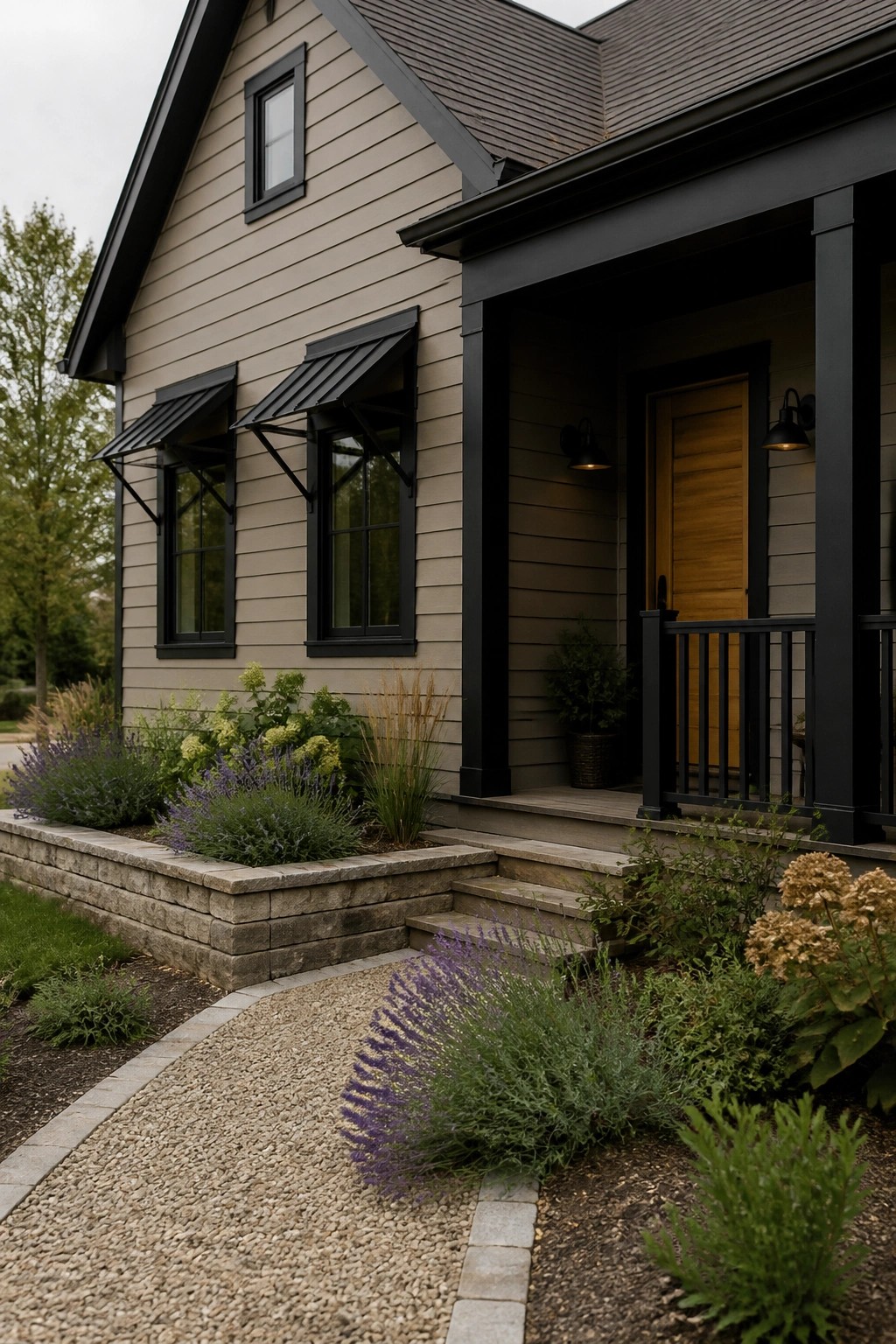
This warm greige works well on Hardie board because it sits between gray and beige without leaning too far either way. It gives the house a soft, grounded look that still feels current. The color holds up nicely against black trim and wood accents.
It has a light warm undertone that can read a bit more beige in morning light and slightly grayer later in the day. It pairs best with charcoal roofing and natural wood doors. Good matches include Sherwin Williams Accessible Beige, Benjamin Moore Edgecomb Gray, and Farrow & Ball Ammonite.
Soft Greige Siding
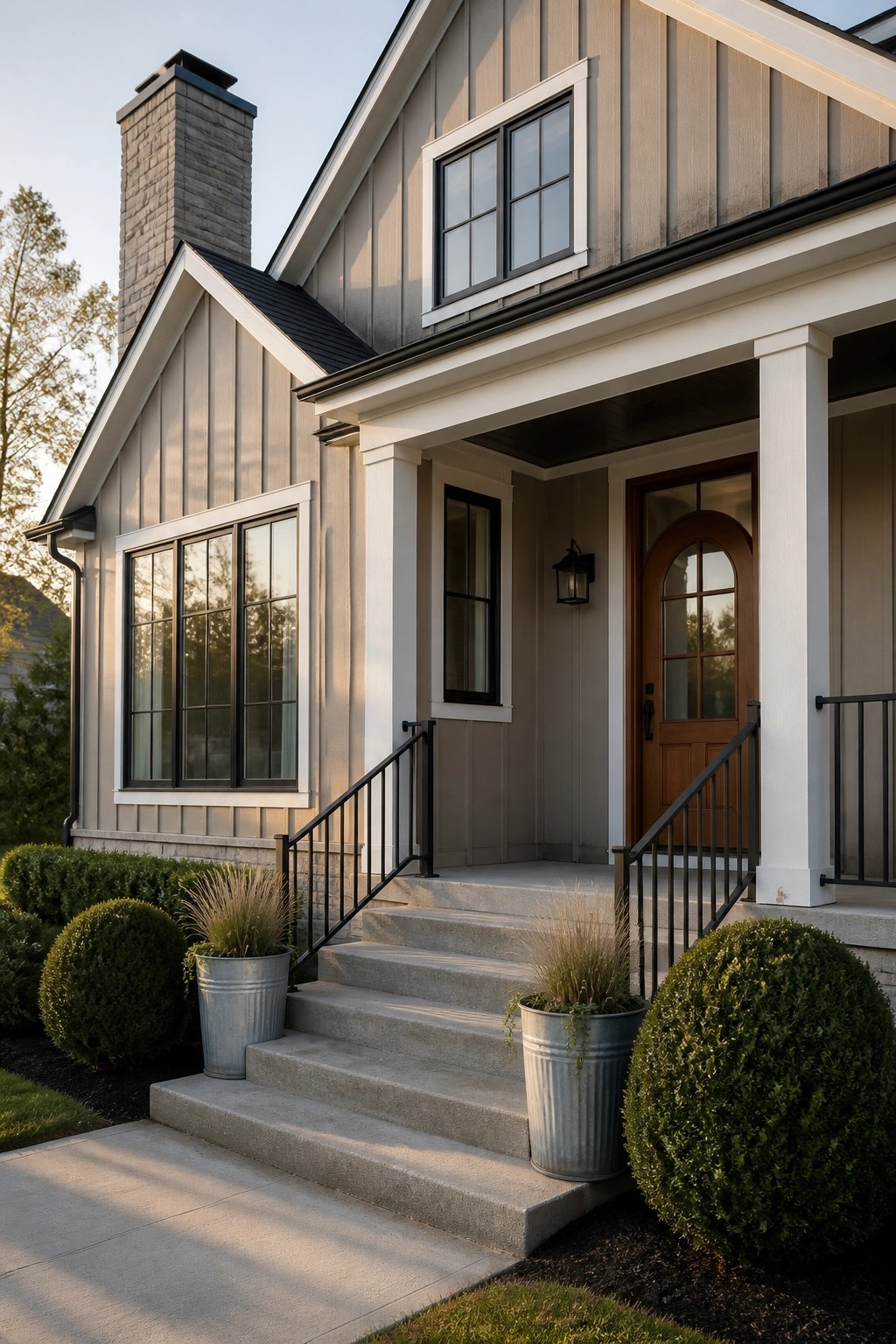
This soft greige on the Hardie board gives a modern farmhouse exterior a quiet, balanced look. It sits between gray and beige with a light warm undertone that feels natural rather than stark.
It works best with crisp white trim and darker accents like black windows or railings. Colors in this range can shift a little in different light, so samples on the actual siding are worth doing. It reads close to Sherwin Williams Repose Gray or Benjamin Moore Revere Pewter.
Muted Earthy Sage Siding
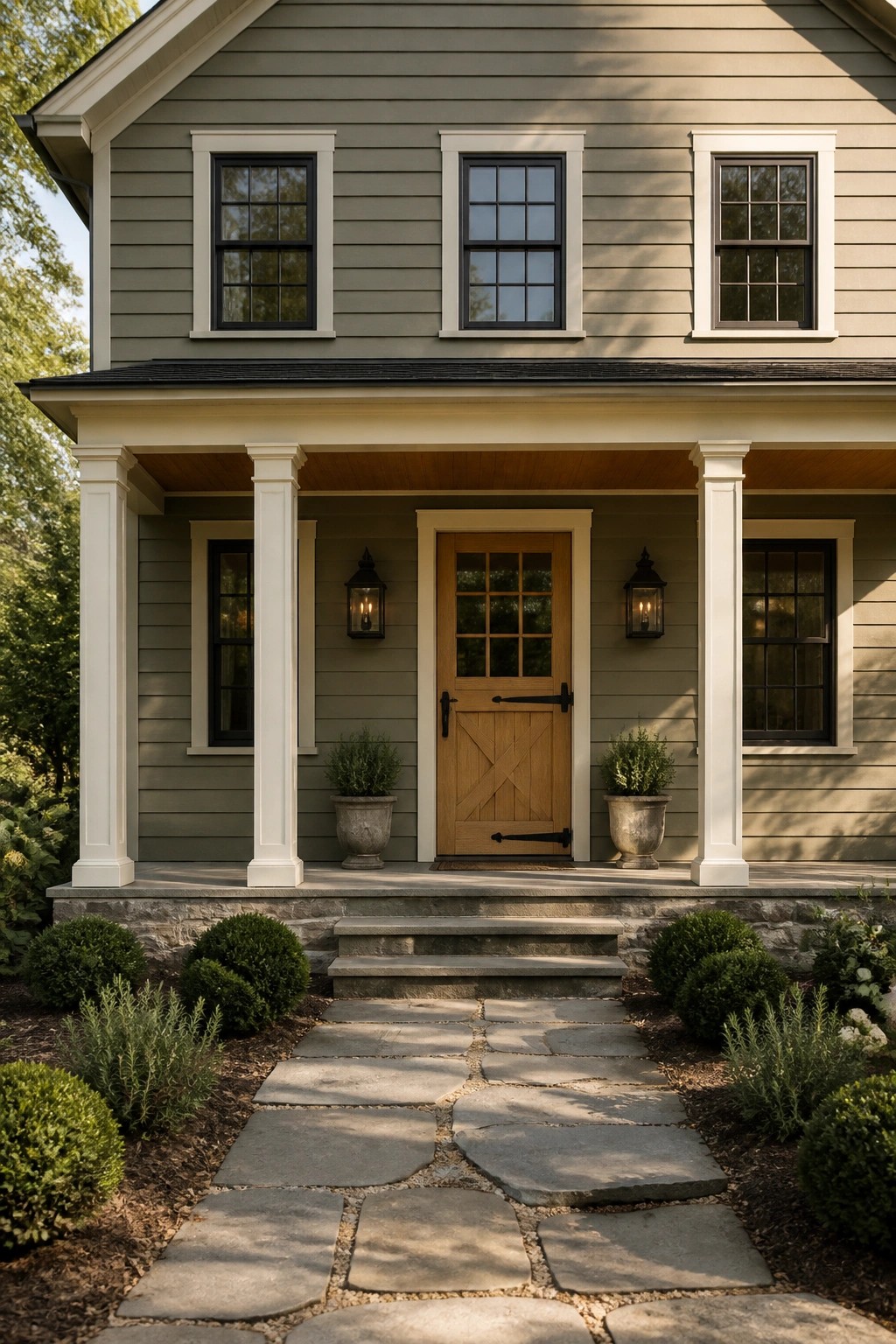
This muted sage green on the Hardie board siding sits right between gray and green. It has a soft warmth that keeps the whole house feeling calm and a little earthy. Closest matches are Sherwin Williams Retreat, Benjamin Moore Saybrook Sage, and Behr Aged Sage.
The color works best with crisp white trim and natural wood doors. It stays steady in changing light and pairs easily with stone bases. Just watch that it does not pull too gray next to very cool landscaping.
Balanced Greige Farmhouse Siding
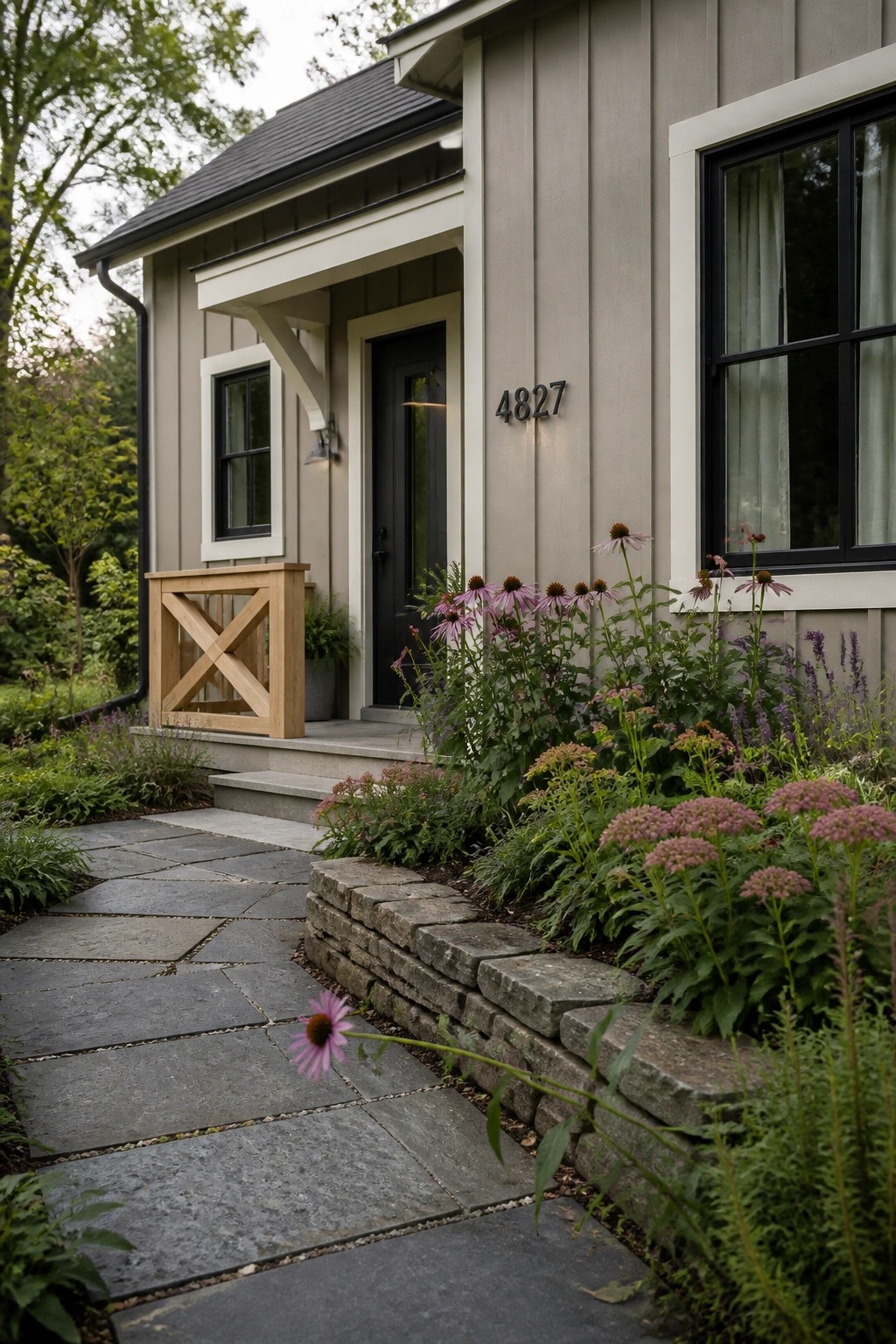
This soft greige on the Hardie board gives the house a calm, updated look that still feels like a farmhouse. It sits right between gray and warm beige, which keeps the whole exterior from feeling too stark or too plain.
The color has a light warm undertone that works well with black windows and stone at the base. It stays steady in different light and pairs easily with natural wood accents without competing with them.
Warm Gray Beige Siding
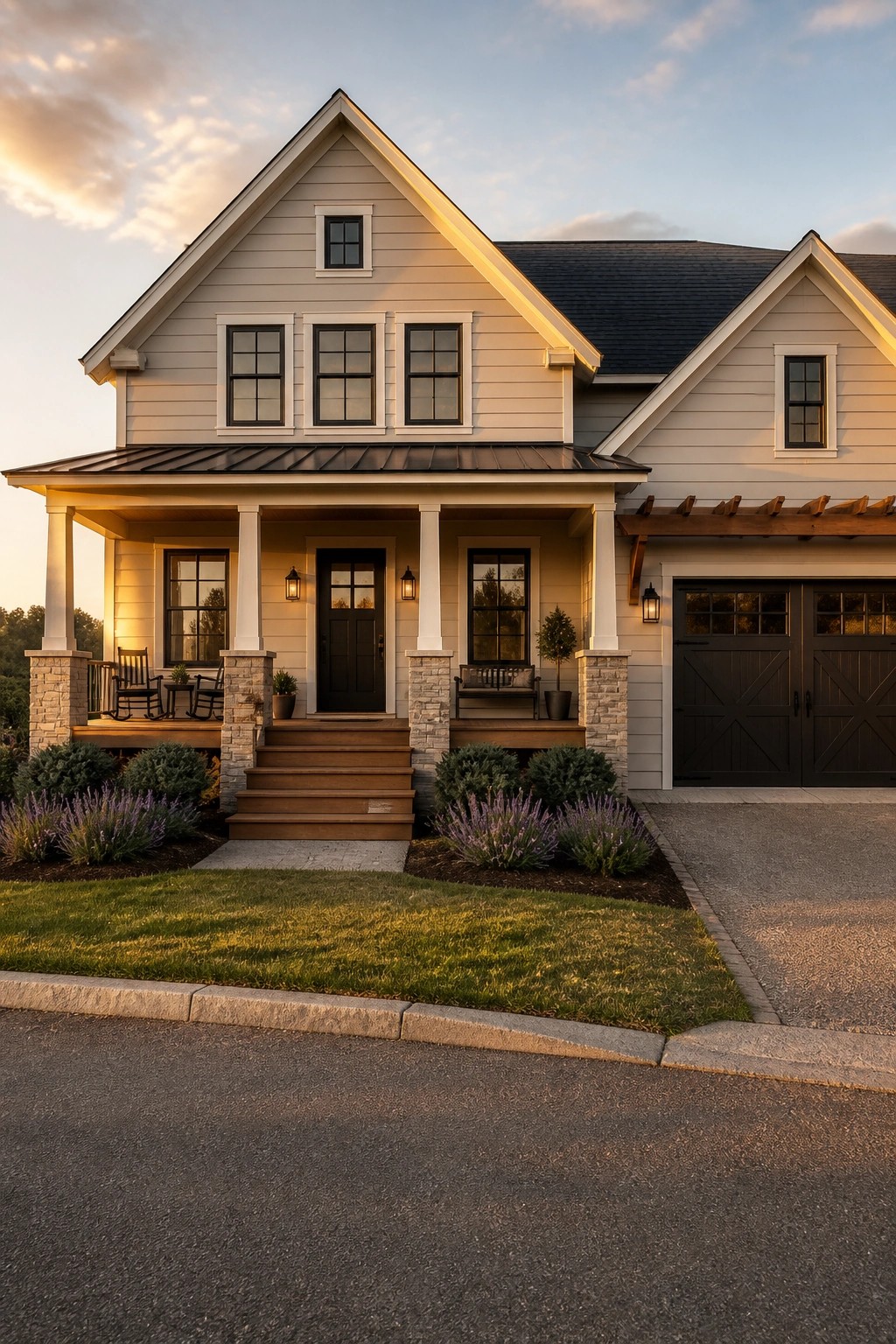
This siding uses a soft greige that sits between warm gray and light beige. It gives the house a clean look that still feels grounded and a little bit warm. The color stands out because it does not fight with the dark trim or roof and instead lets those details take the lead.
It reads very close to Sherwin Williams Repose Gray or Benjamin Moore Edgecomb Gray. The slight warmth keeps it from turning too cool in shade, and it works best on homes that already have stone or wood accents. Pair it with black windows or a dark roof if you want the contrast to stay sharp.
Warm Terracotta Siding
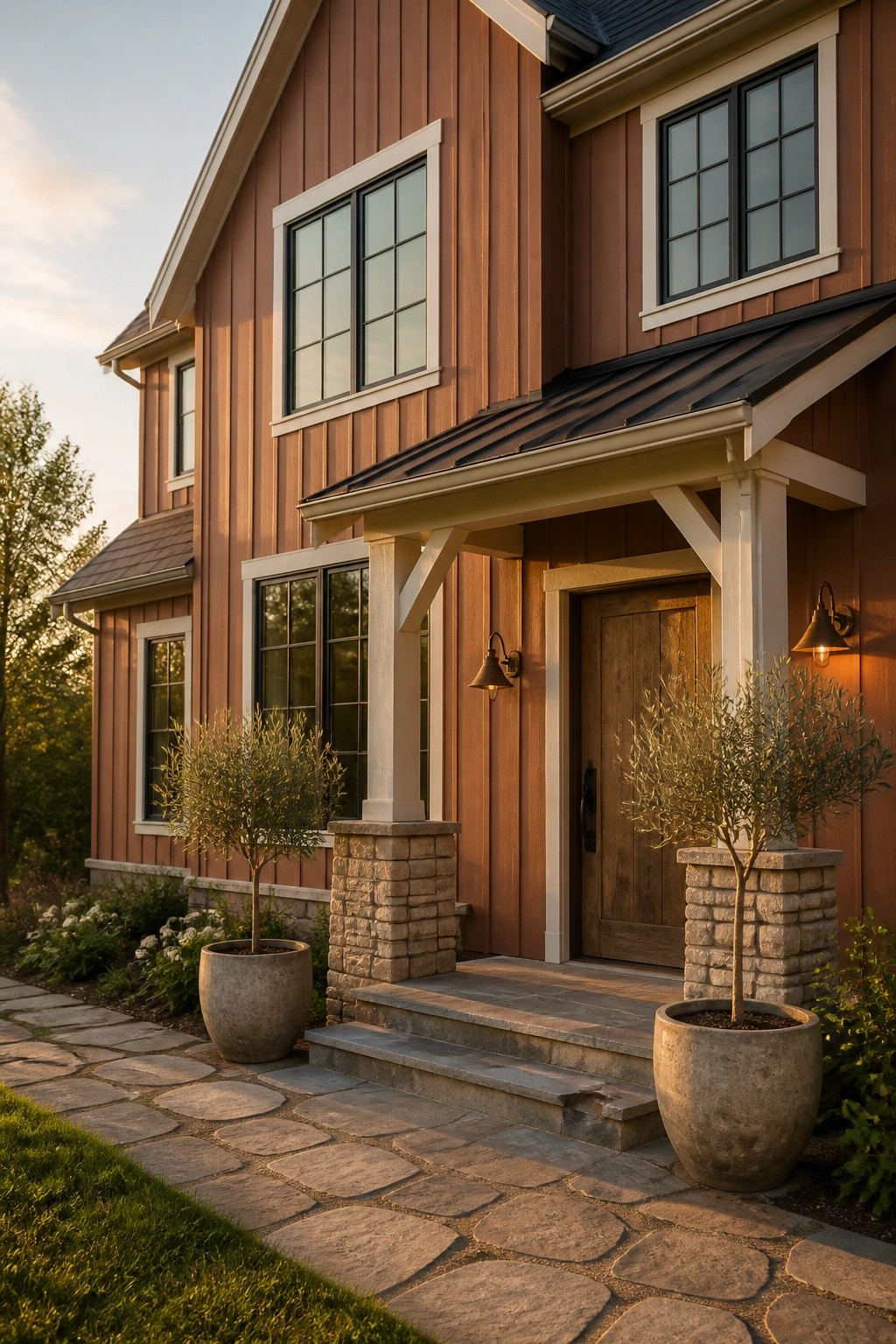
This Hardie board is painted a warm terracotta brown. It sits somewhere between red and brown, giving the house an earthy tone that feels settled rather than bright or trendy.
The color has a slight orange undertone that shows up more in direct light. It works best with white trim, dark metal roofs, and stone details, and it suits modern farmhouses that want a bit of color without going too bold.
A Muted Blue Gray
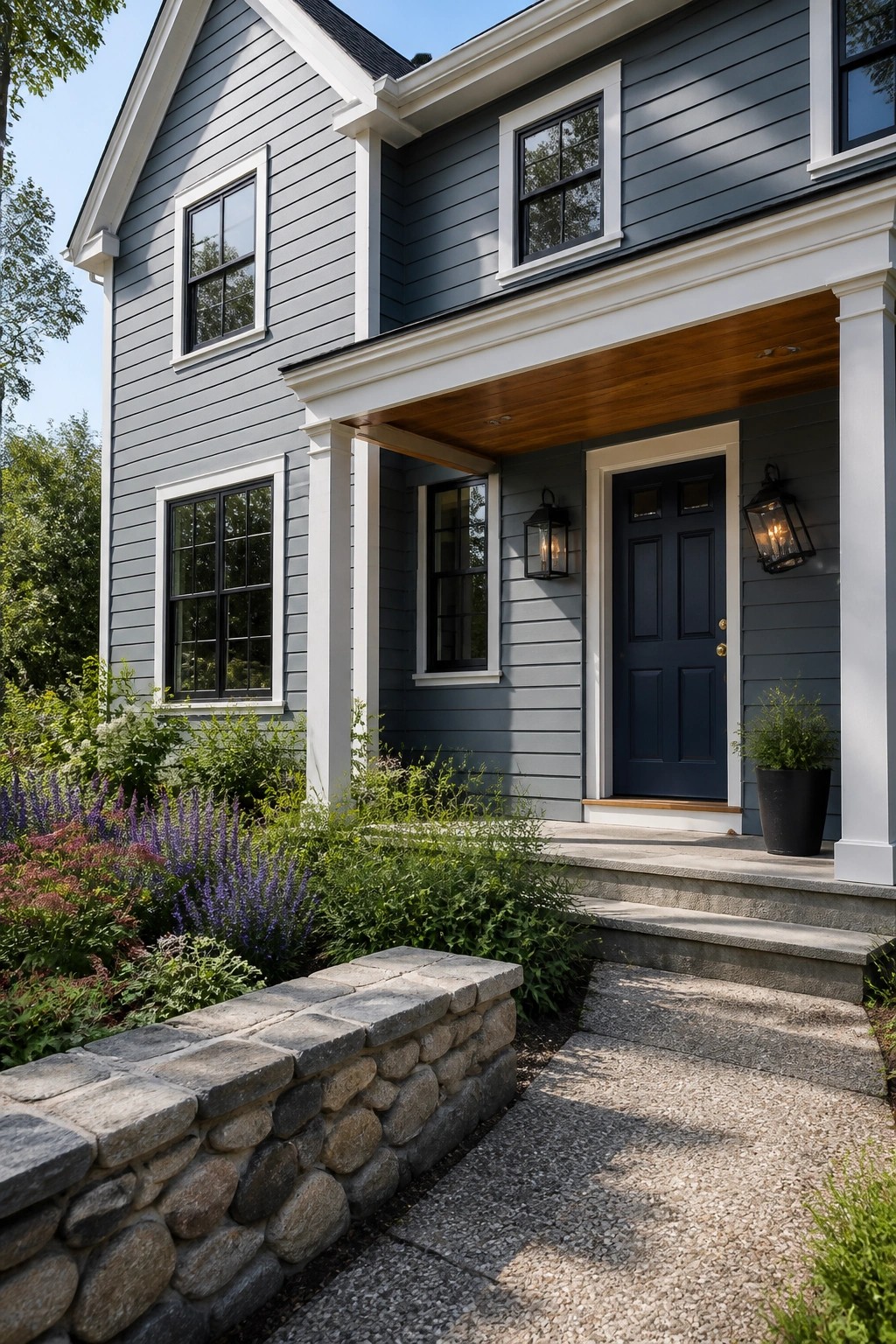
This muted blue gray on hardie board siding gives a calm, steady look that fits modern farmhouse homes. It reads as a cool blue gray with just enough depth to feel solid rather than washed out, and it seems closest to Sherwin Williams Slate Tile, Benjamin Moore Coventry Gray, Behr Pewter, or Farrow & Ball Pigeon.
The undertone stays cool, so it shows up stronger against warm white trim and wood accents. It works best on homes with simple shapes and can start to feel flat if the roof or masonry pulls too warm.
Light Coastal Blue Gray Siding
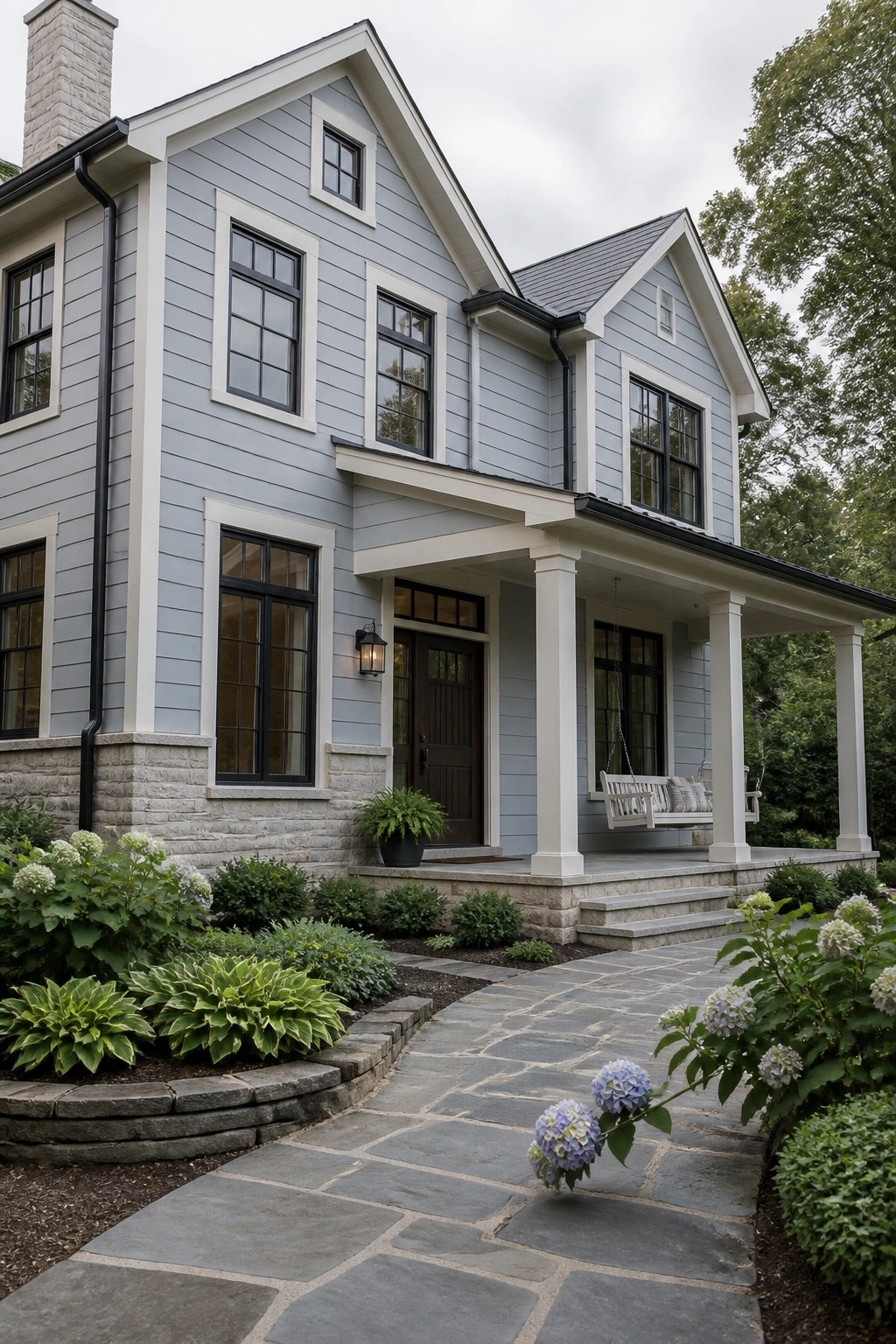
This light blue gray on the Hardie board has a cool tone that keeps the house looking fresh and simple. It reads as a muted gray with just enough blue to stand out from plain grays. The color looks closest to Sherwin Williams Worldly Gray, Benjamin Moore Gray Owl, Behr Silver Strand, or Farrow & Ball Light Blue.
It works best with crisp white trim and dark windows since those keep the blue from feeling too cold. The shade also sits nicely next to stone at the base without competing. Watch how it shifts in strong afternoon light, as cool grays can pick up a slight green cast outdoors.
Warm Beige Siding
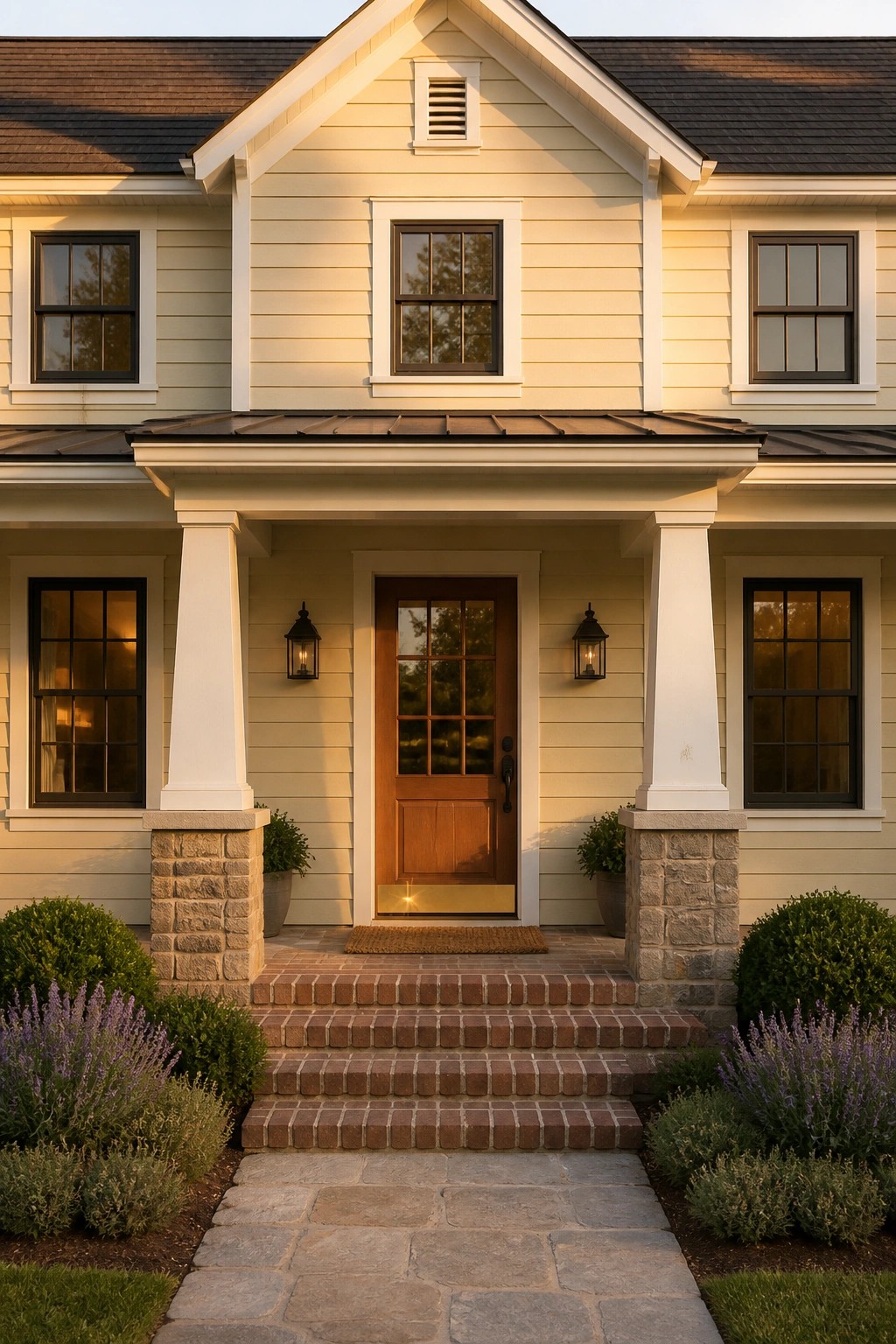
This warm beige siding color gives a house that soft, lived-in look without feeling too stark. It sits in the light neutral family and reads closest to Sherwin Williams Accessible Beige, Benjamin Moore Edgecomb Gray, Behr Almond Wisp, or Farrow & Ball Pointing.
The slight yellow undertone keeps it from looking flat next to stone and brick. It works best with white trim and dark windows, though it can start to feel muddy if the roof or masonry runs too cool.
Dark Charcoal Siding
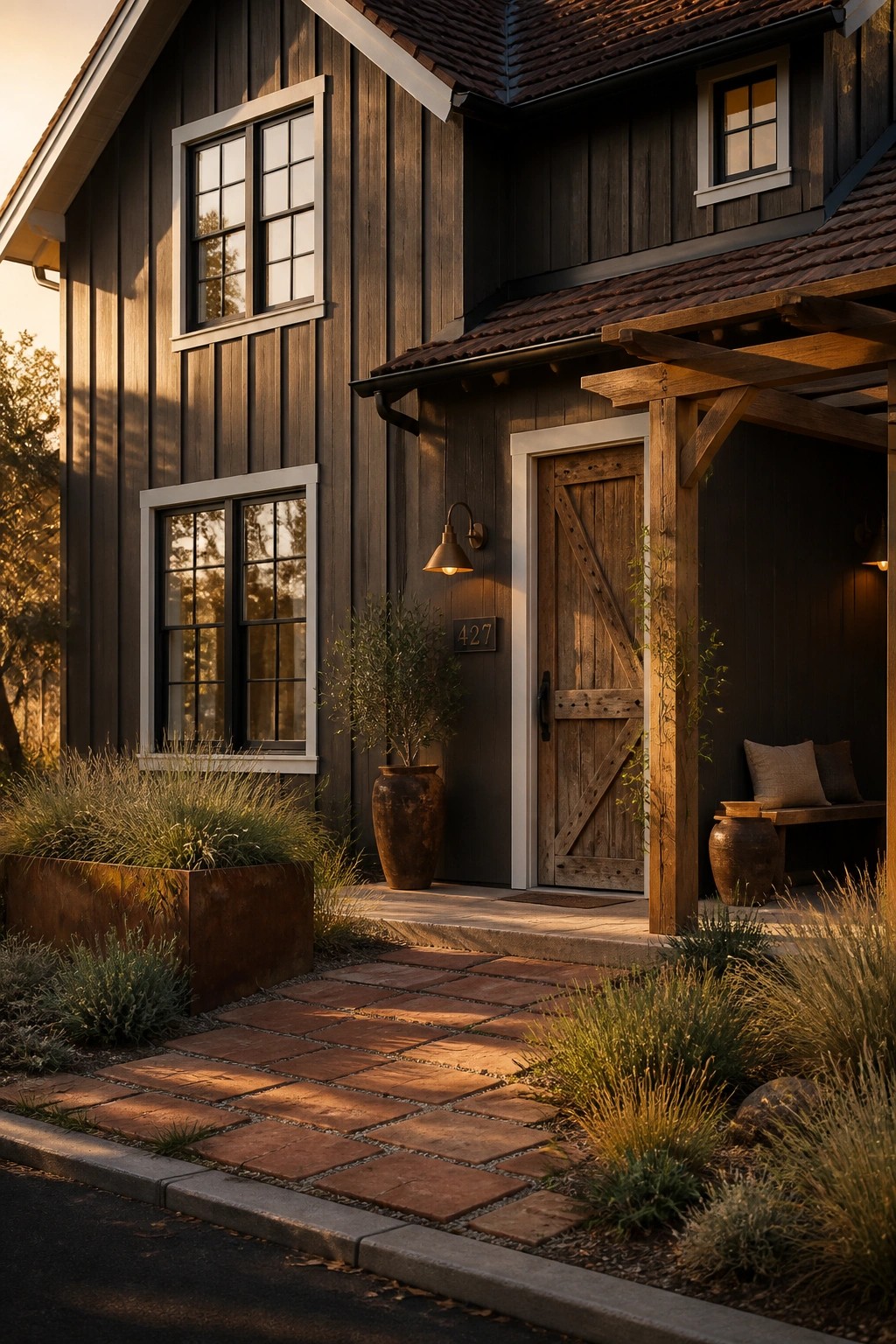
This deep charcoal gray on the Hardie board gives a modern farmhouse a strong but simple base. It leans slightly warm rather than cool, which helps it sit comfortably next to wood doors and trim without looking stark.
The color holds up well in changing light and pairs best with natural wood, light stone, and soft greens in the yard. Avoid using it if your roof or masonry already runs very cool, since the two can fight.
Coastal Sage Green Siding
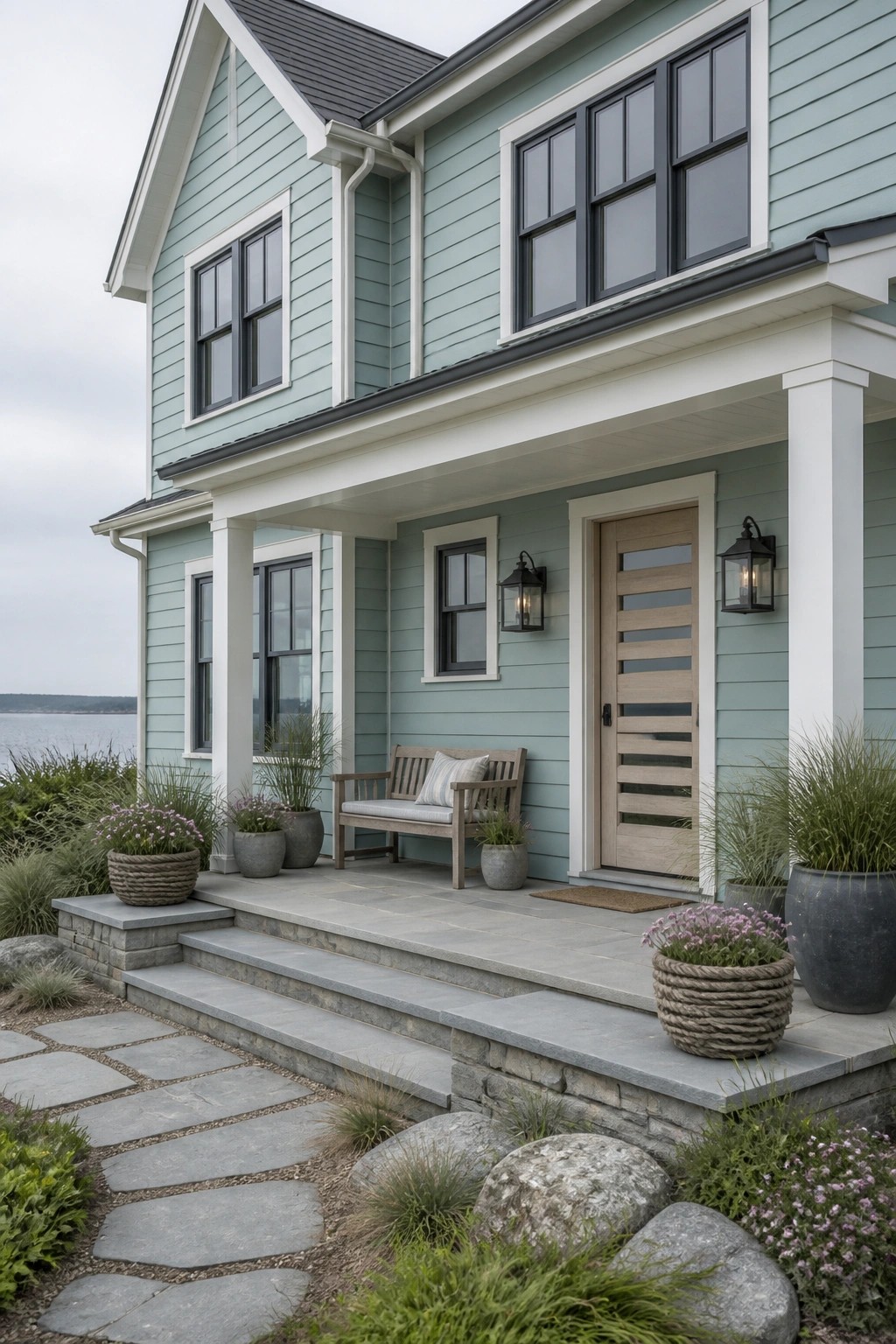
This soft sage green on the Hardie board gives the house a calm, slightly coastal feel without looking too bright or trendy. It sits in that middle ground between green and blue, which helps it blend with natural surroundings while still standing out against the white trim. Colors like this often read as fresh on modern farmhouses, especially when the siding has a matte finish.
It has cool undertones that can look a bit grayer in low light, so it works best on homes with plenty of natural light or near water. Pair it with warm wood doors and dark window frames to keep it grounded. Sherwin Williams Rainwashed, Benjamin Moore Saybrook Sage, Behr Quietude, and Farrow & Ball Light Blue all sit close to this shade.
Deep red siding
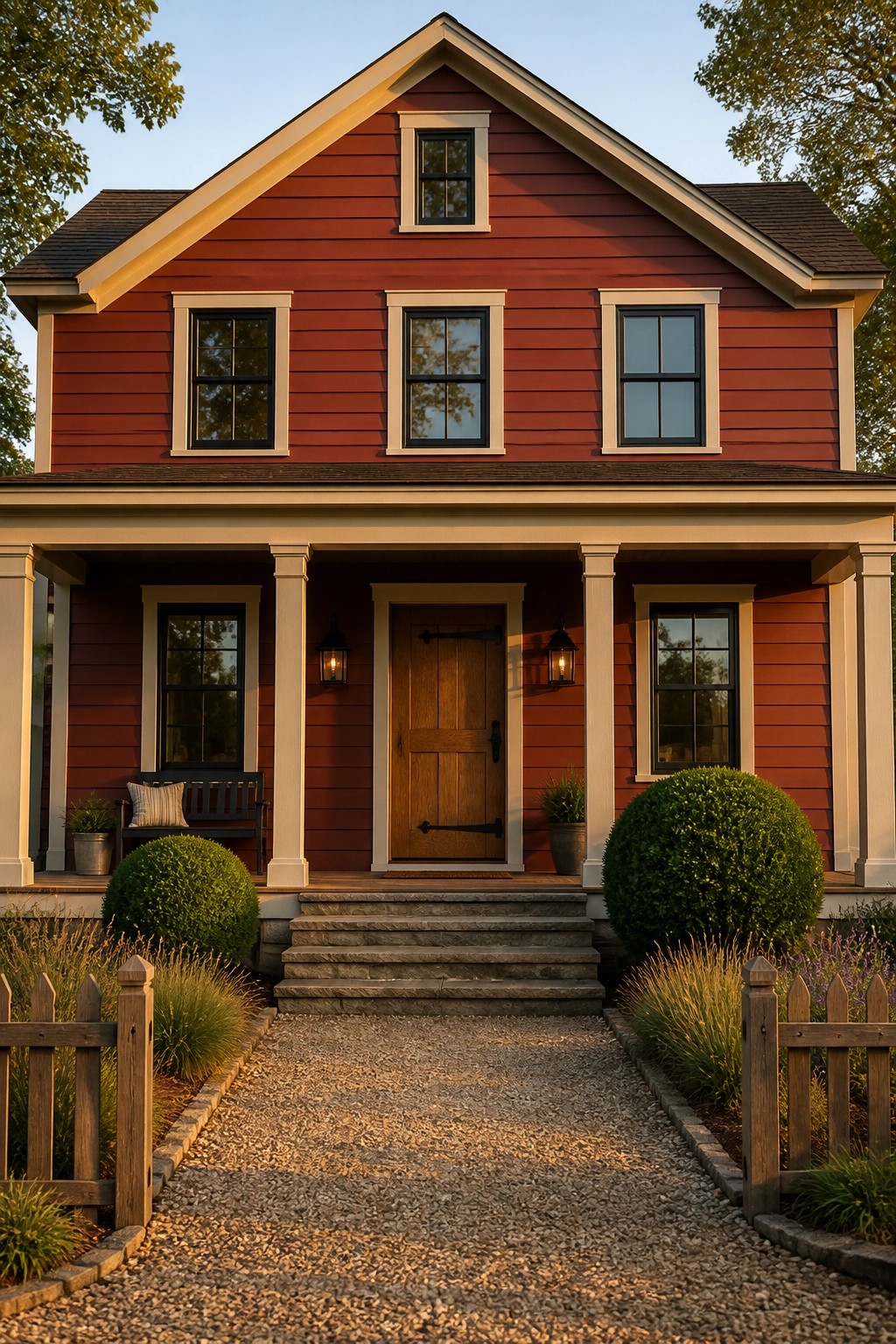
This deep red works well on Hardie board because it has a warm, slightly earthy tone that feels solid rather than flashy. It sits in the middle ground between bright barn red and softer brick red, which keeps it from looking too bold or too dull on a modern farmhouse. The color reads closest to Benjamin Moore Caliente, Sherwin Williams Heritage Red, Behr Moroccan Red, or Farrow & Ball Incarnadine.
It pairs best with warm white trim and natural wood doors, and it holds up nicely next to stone or gravel details. The red can start to feel heavy if the house gets very little sun, so it helps to test a large sample on the actual siding first.
Frequently Asked Questions
Q: Will darker Hardie colors like charcoal make the house hotter inside during summer? A: Dark shades absorb more sun so your cooling bills might rise a bit. Light colored curtains and good attic ventilation help offset that heat. Many people still choose them for the bold look and manage fine.
Q: How do I choose a trim color that works with the siding shades in the article? A: Start with a crisp white or soft greige to keep the modern farmhouse feel. Test a small board outside at different times of day before you commit. That quick check prevents clashing once everything is up.
Q: Should I paint my own Hardie boards or hire it out? A: Hiring usually gives cleaner results on large areas. You avoid brush marks and get even coverage that lasts longer. If you enjoy the work though a weekend project on accents stays manageable.
