

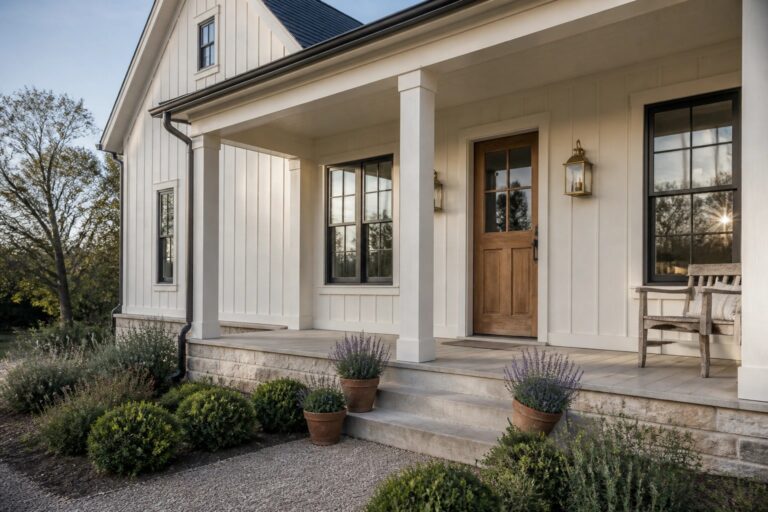
I’ve spent time watching how board and batten siding takes on different tones once the sun moves across it and the roof or landscaping starts to influence the overall look.
Colors that seem straightforward on a fan deck can shift once they meet the trim or sit beside existing brick and stone.
Testing samples on site saves a lot of regret.
I tend to check how a shade holds up in both morning light and late afternoon because those are the times when the house shows its true character.
A few options end up working better than expected when they sit next to natural elements rather than against a blank background.
Warm White Board And Batten
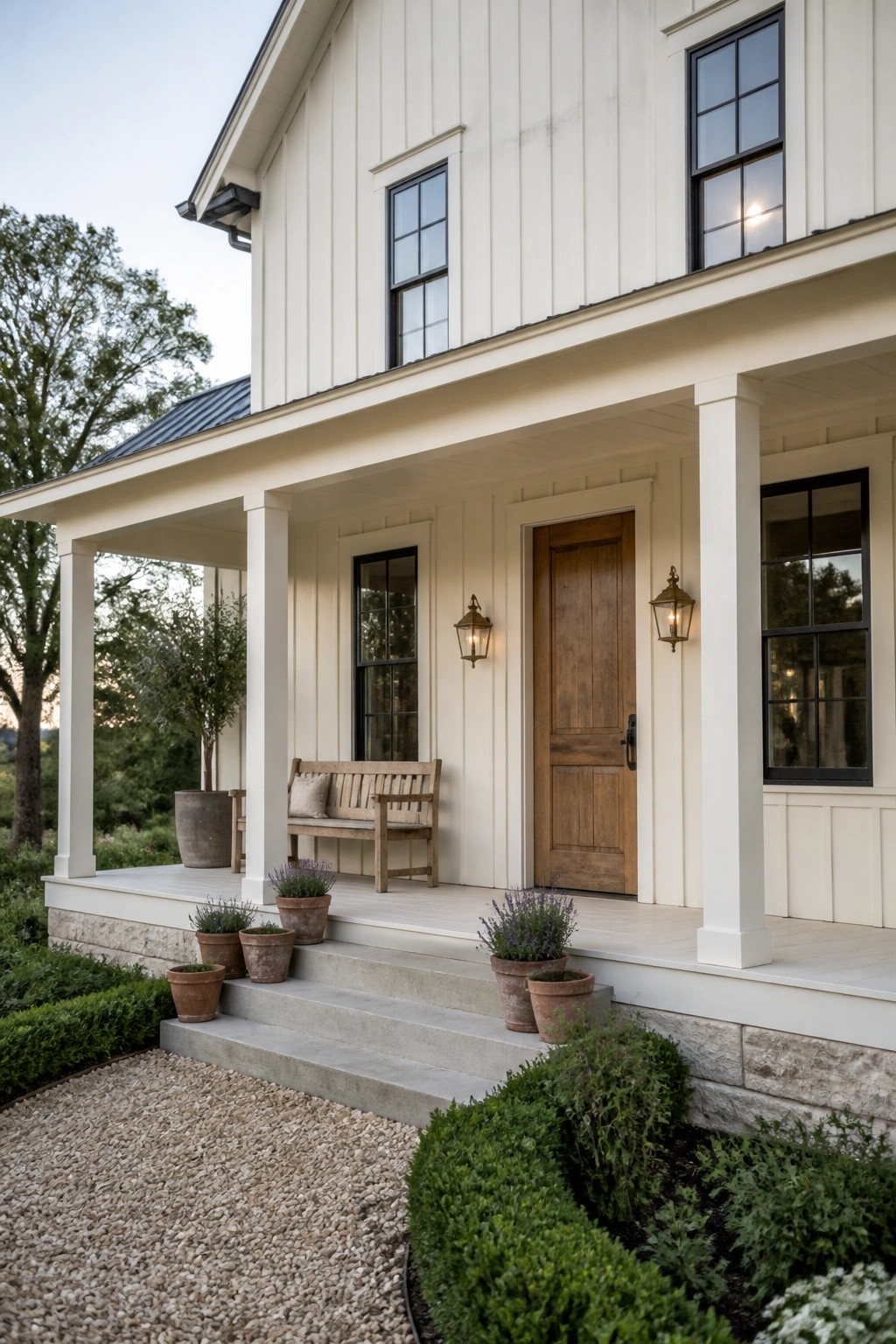
A warm white is the main color on this board and batten siding. It has a soft cream feel that keeps the house looking clean but not harsh next to the wood and stone.
This shade works well on farmhouse exteriors because it holds up against changing light and pairs easily with natural wood doors or dark trim. It can look a little more yellow in strong sun, so testing a sample on site helps.
Crisp White Board And Batten
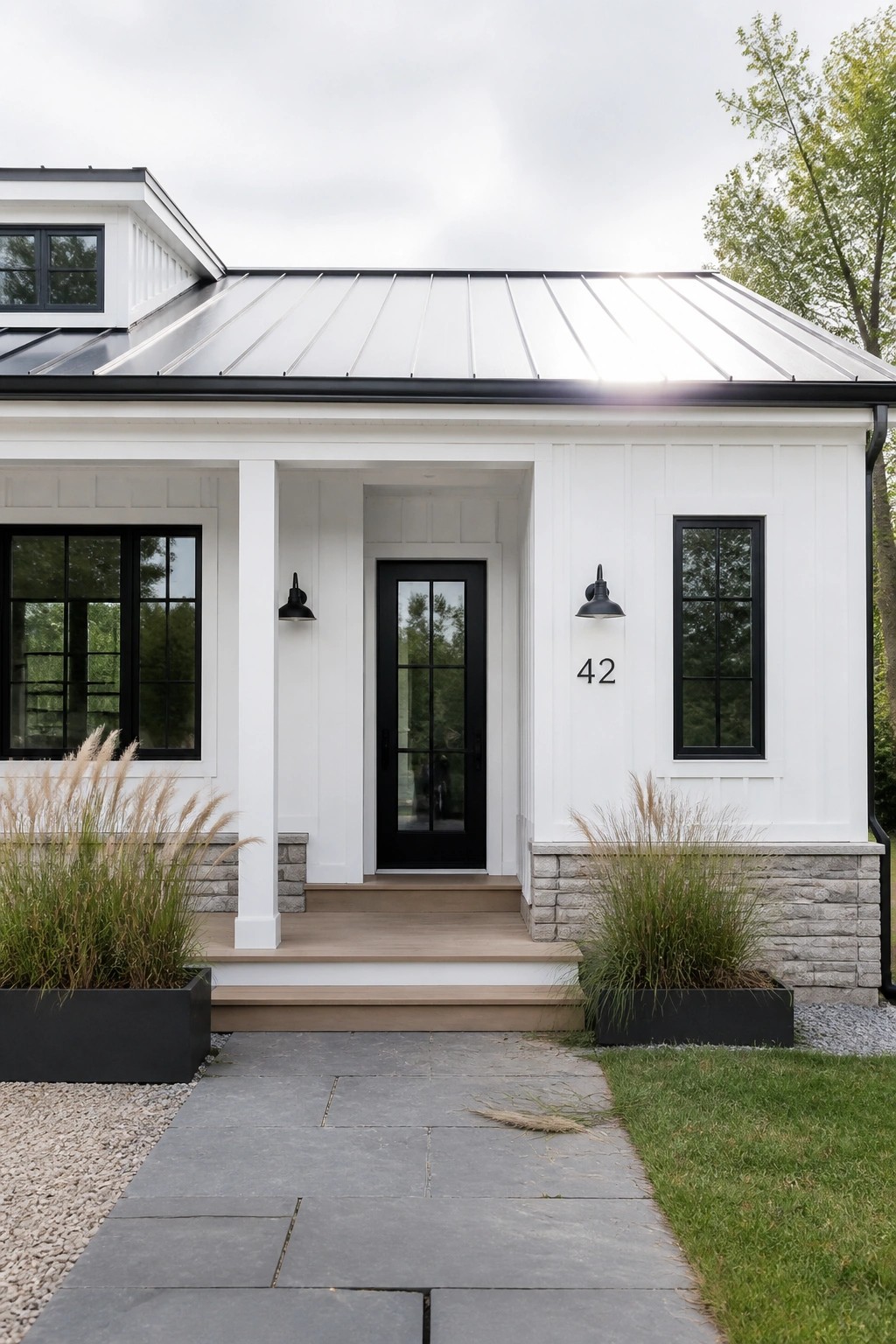
This crisp white on the board and batten siding keeps the whole house looking light and simple. It is a clean white with a slight cool lean that helps it read bright even on overcast days.
The color pairs easily with dark windows and roofing. It can show every shadow though, so it works best on houses where you want a sharp, unfussy look rather than something softer.
Warm Greige Siding
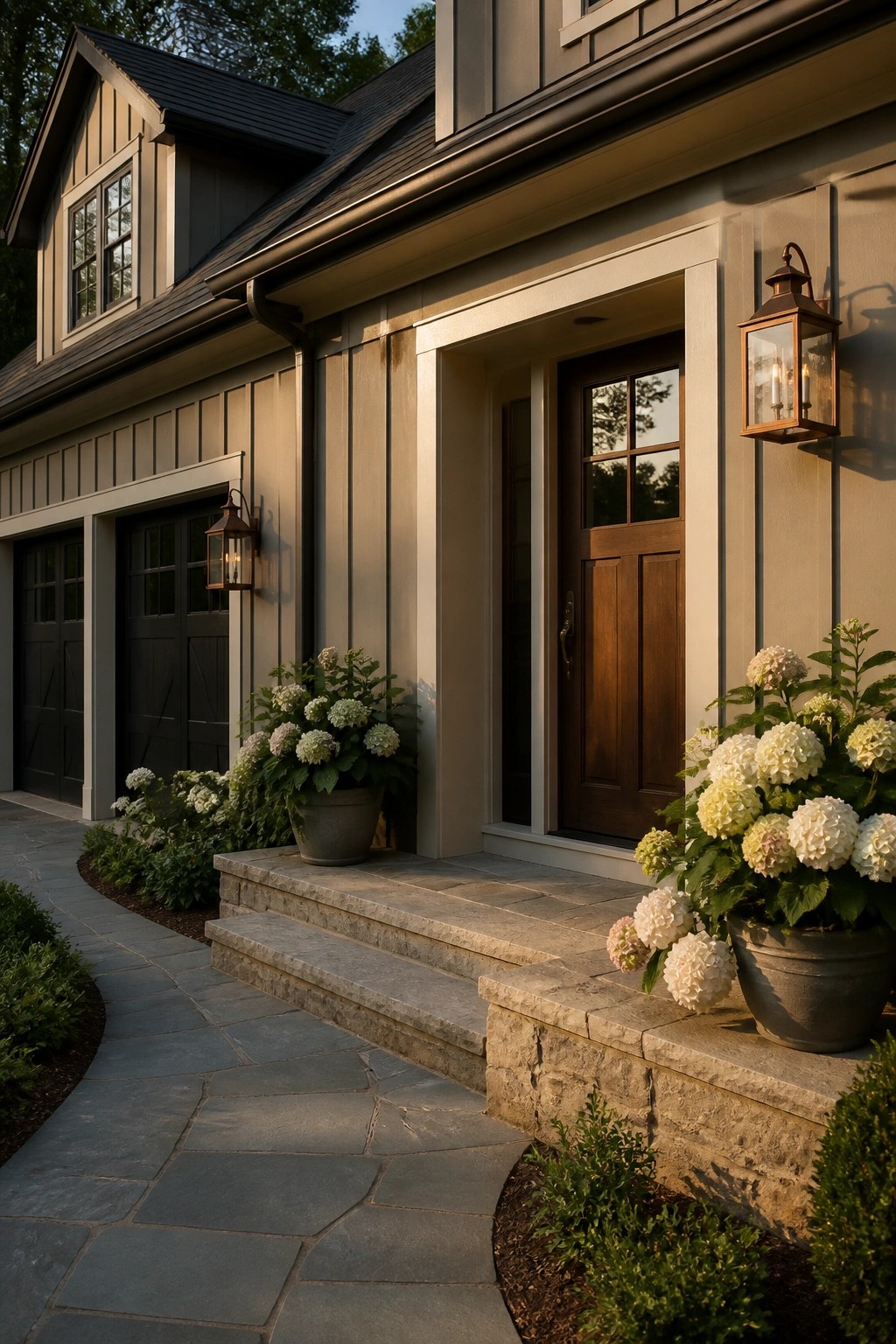
This warm greige on the board and batten siding sits right between gray and beige. It has enough warmth to feel friendly but stays neutral enough to work with darker roofs and wood tones. The color reads very close to Sherwin Williams Accessible Beige, Benjamin Moore Edgecomb Gray, or Farrow & Ball Elephant’s Breath.
It holds up well in changing light and pairs easily with stone and natural wood. Just watch that it does not pull too pink or too cool next to your other materials.
Soft Sage Green Siding
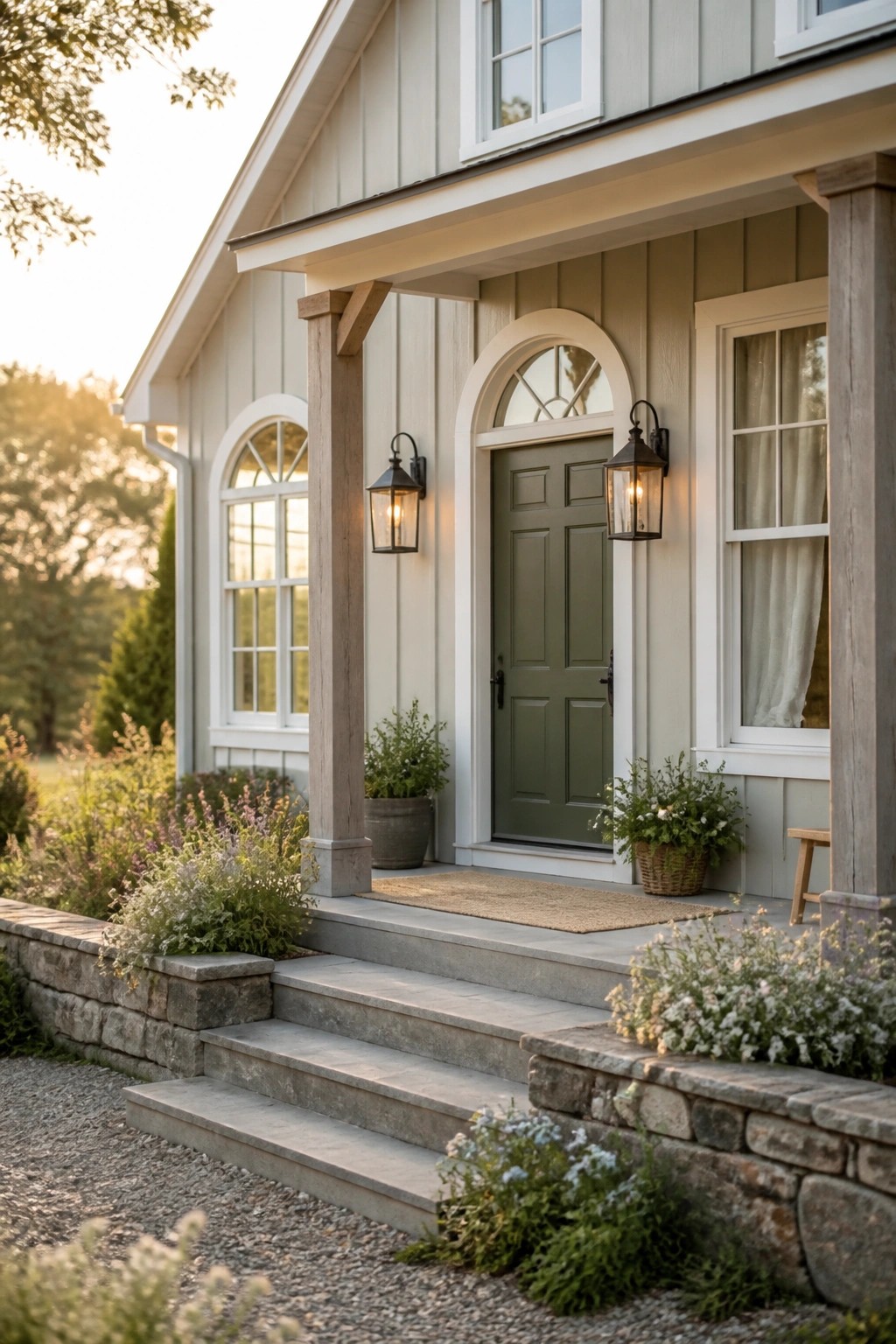
This soft sage green brings a quiet, natural feel to board and batten siding. The color sits between gray and green, giving it a calm look that still feels a little fresh outdoors.
It has a muted tone that works best with warm wood posts and simple stone details. Light changes can make it read more gray at times, so testing a sample on the actual wall helps before committing.
Deep navy board and batten
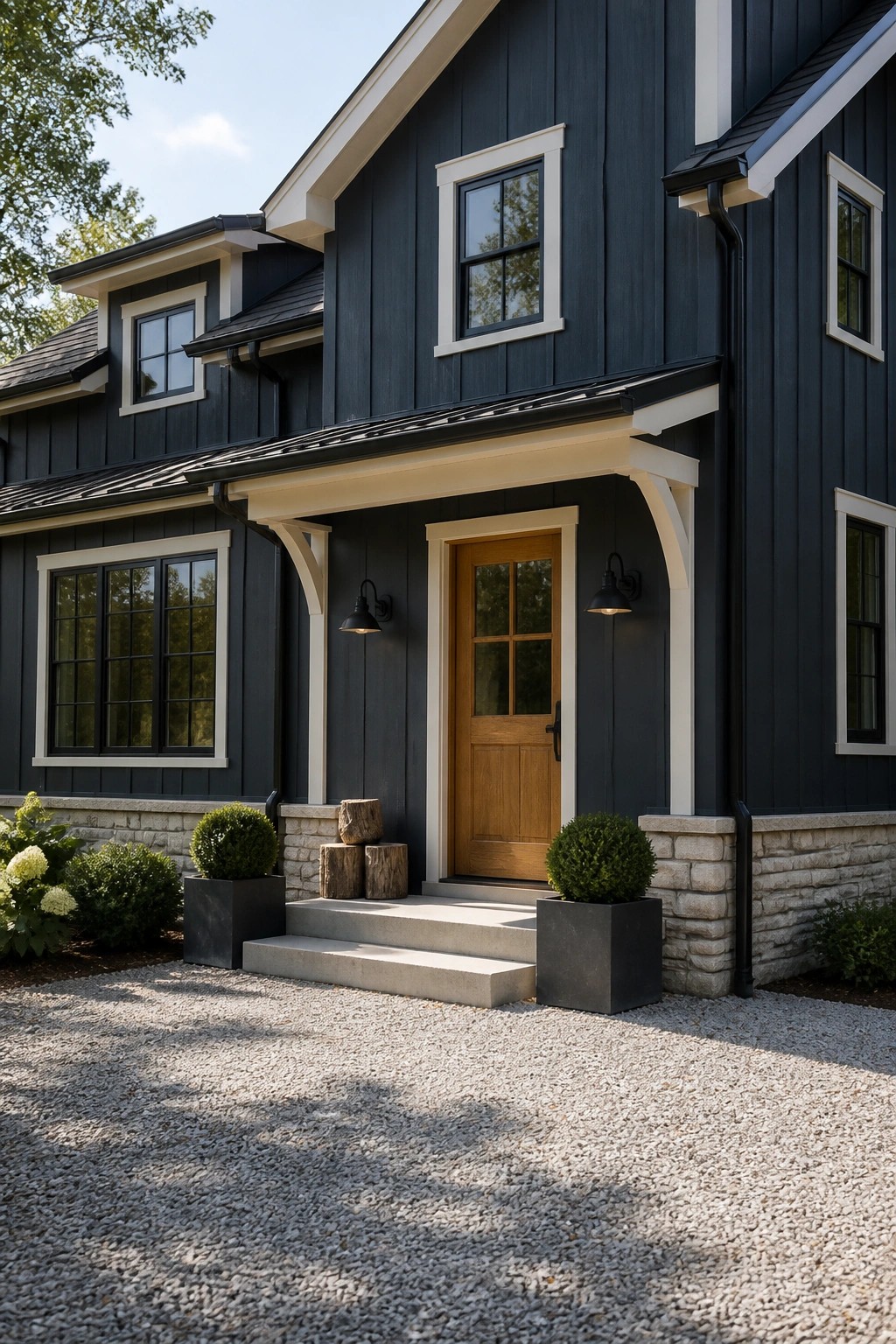
This deep navy reads as a cool blue gray that feels solid on board and batten siding. It gives the house a clean modern edge while still fitting a farmhouse shape. The color looks closest to Sherwin Williams Naval, Benjamin Moore Hale Navy, Behr Deep Sea Diver, or Farrow & Ball Hague Blue.
It works best with crisp white trim and a lighter stone base. The blue undertone can shift slightly in shade depending on the light, so test a large sample on the wall before committing.
Muted blue gray siding
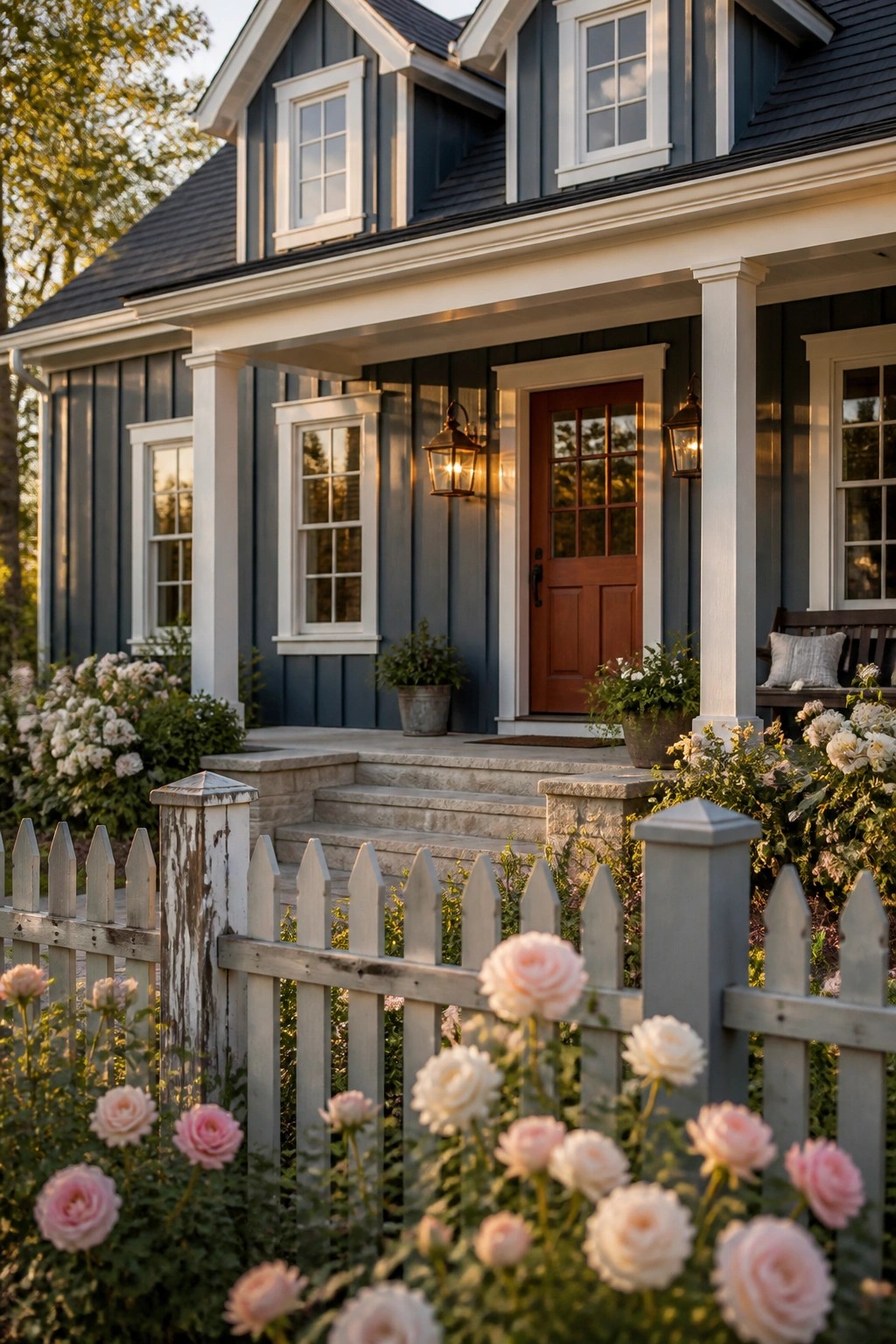
This blue gray works nicely on board and batten because it has a cool tone that still feels soft outdoors. It sits between gray and blue without leaning too hard in either direction. Popular matches include Sherwin Williams Rainstorm, Benjamin Moore Boothbay Gray, Behr Silver Strand, and Farrow & Ball Stiffkey Blue.
The color holds up well next to white trim and light stone, though it can look a bit flat if the light is very harsh. It suits simple farmhouse shapes and pairs best with natural wood doors or black hardware.
Blue Green Gray Siding
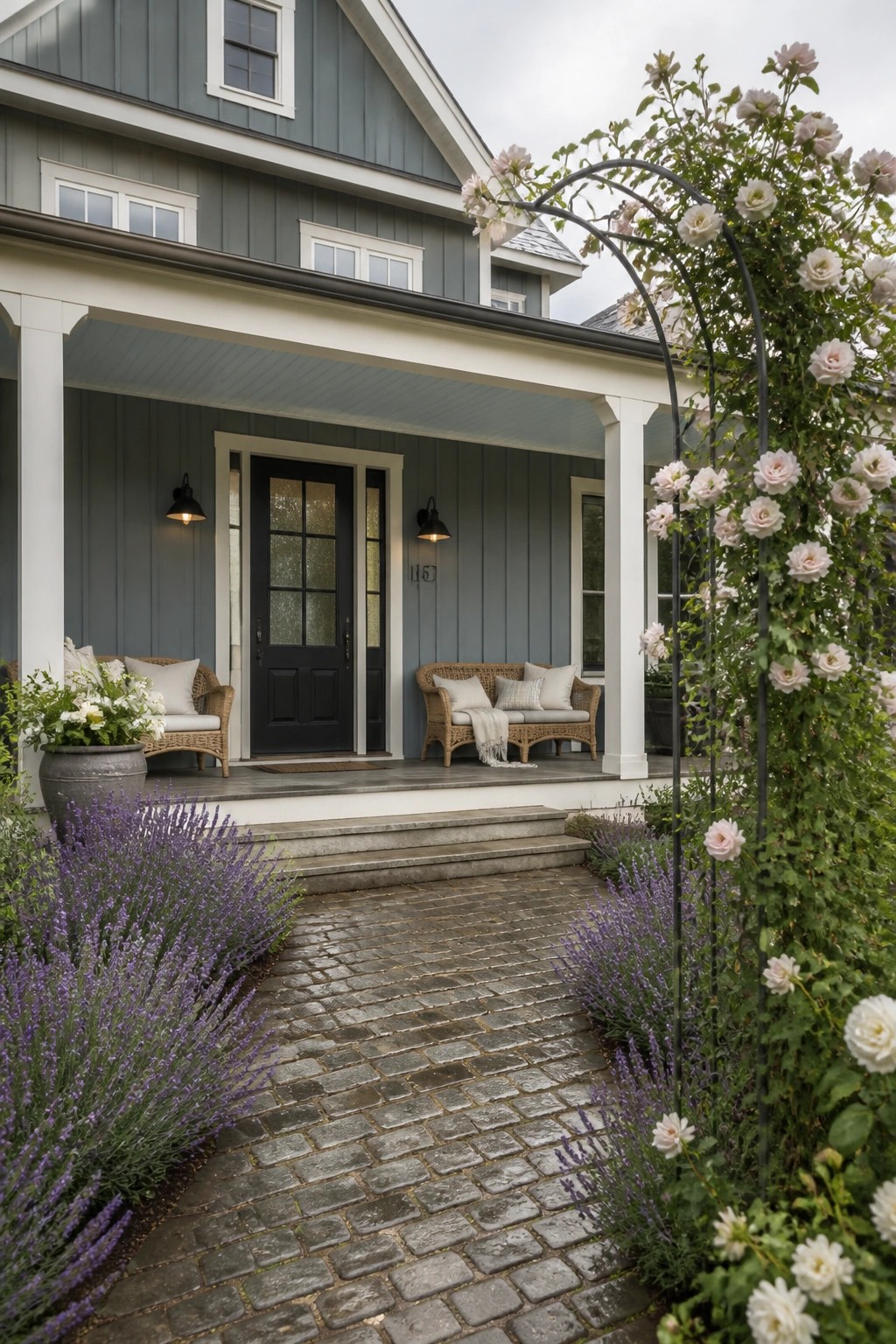
This muted blue gray gives board and batten siding a calm, slightly cool look that still feels grounded. It sits somewhere between gray and soft green, which keeps the house from looking too stark or too warm. Colors like Sherwin Williams Pewter Green, Benjamin Moore Wythe Blue, or Behr Silver Bullet come close.
It pairs easily with white trim and a dark door, and the green undertone helps it blend with garden plantings without disappearing. In brighter light it can lean a touch cooler, so testing a sample on the actual wall is worth doing before committing.
Muted Sage Green Board And Batten
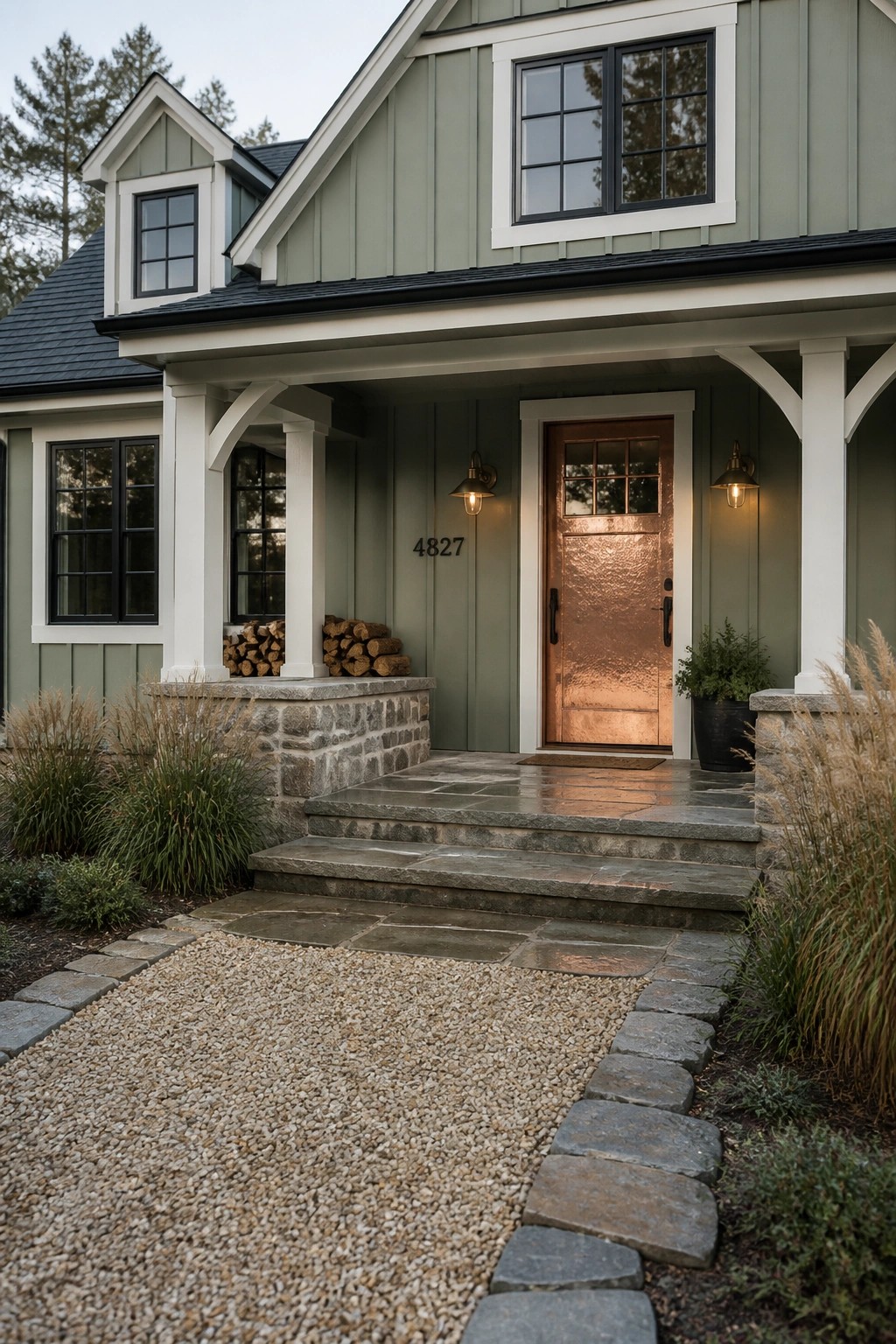
This muted sage green on board and batten siding sits nicely between gray and green. It feels calm without looking washed out, and the vertical lines help the color show a little depth. Many people like it because it reads fresh next to white trim but still blends with natural surroundings.
The undertone stays fairly neutral, though it can lean cooler in low light. It pairs well with stone bases or wood accents, but it can look flat if the trim is too bright. Try testing a few samples on site first since the finish changes with the time of day.
Muted Sage Siding
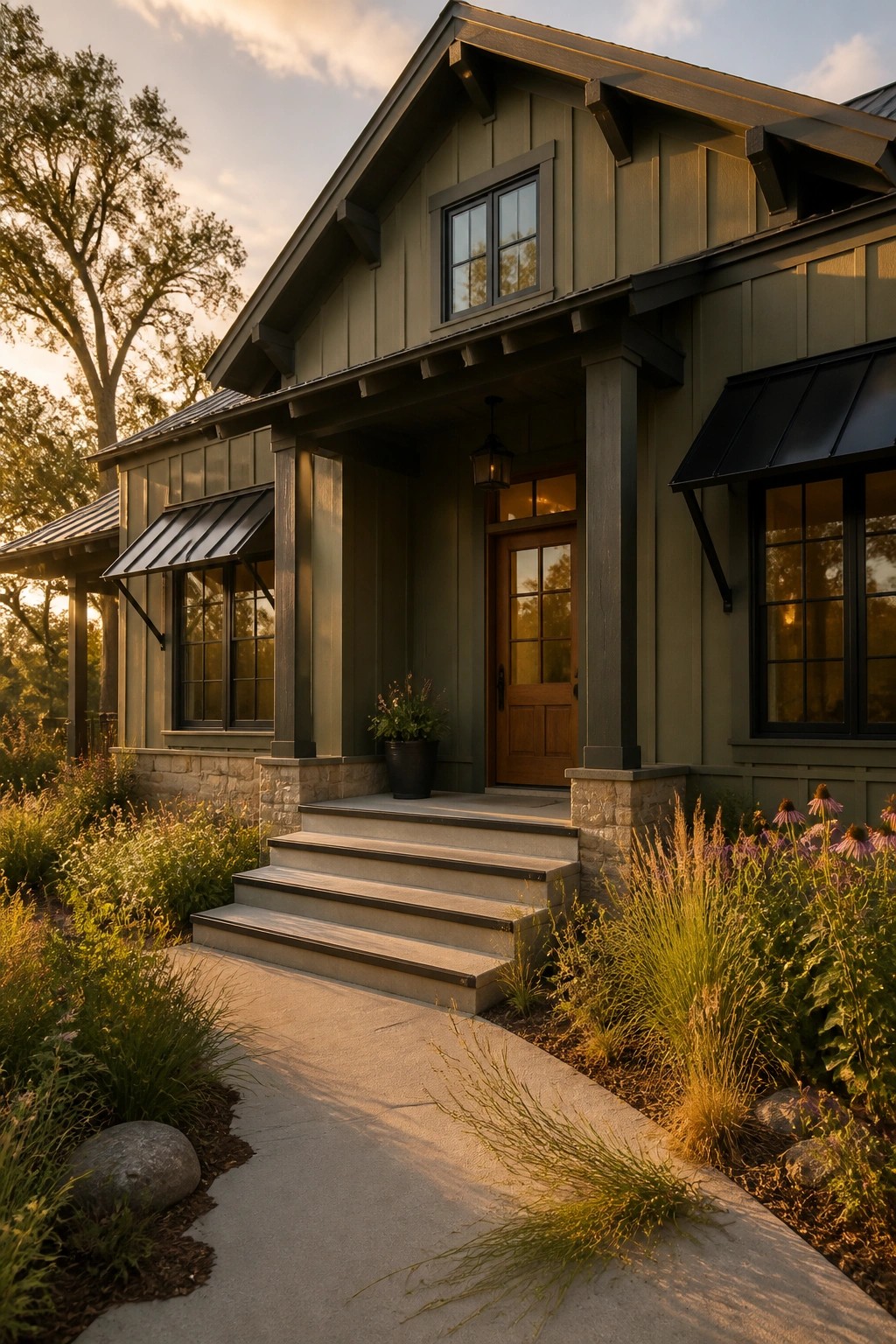
This muted sage green works nicely on board and batten because it feels soft without looking washed out. It reads close to Sherwin Williams Evergreen Fog, Benjamin Moore Saybrook Sage, and Behr Aged Olive.
The gray undertone keeps it from turning too bright in sunlight. It pairs well with stone bases and dark trim but can look flat if the roof is too light.
Brown-Toned Greige Siding
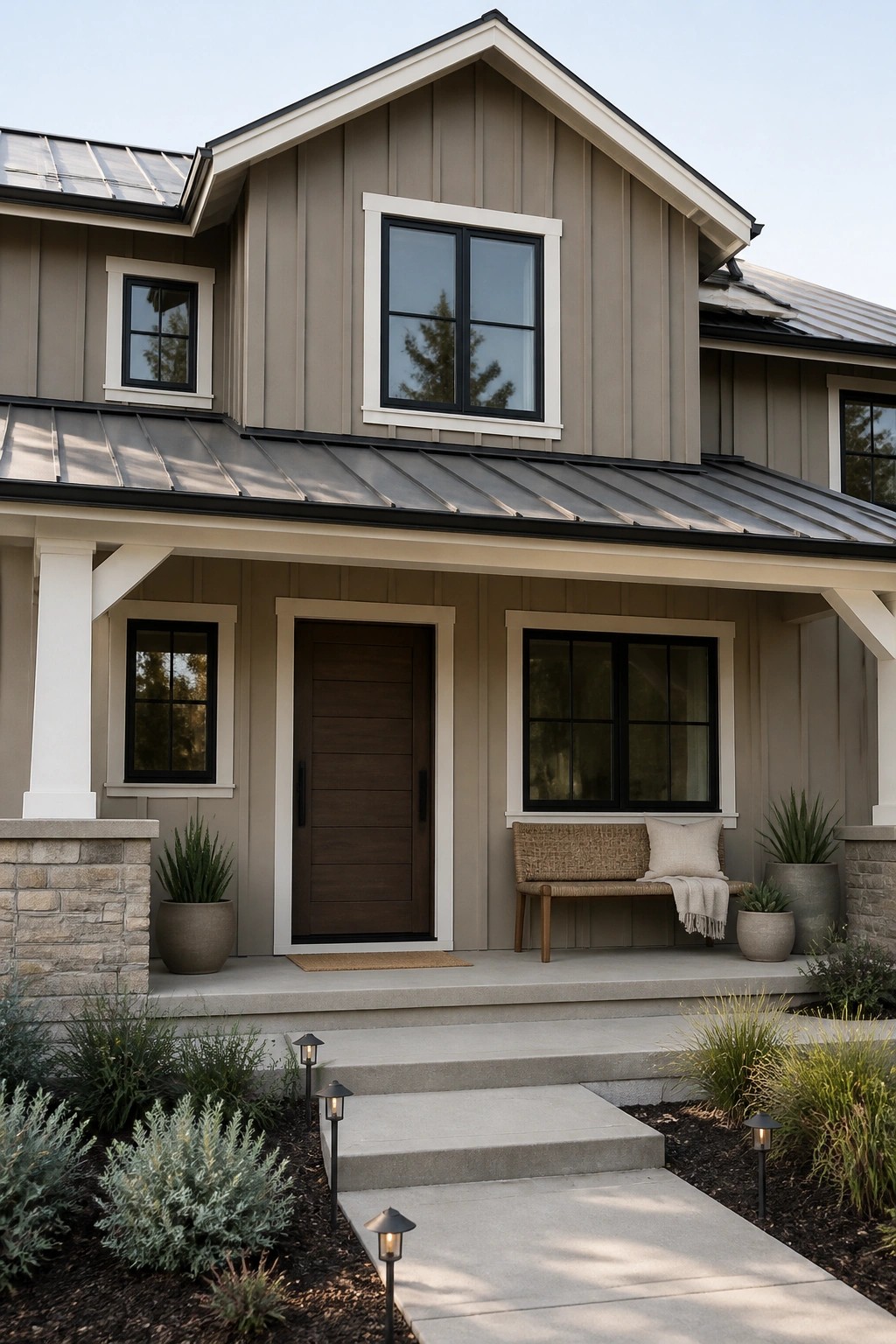
This siding color is a warm greige with some brown in the mix. It sits between gray and beige without leaning too far either way, which is why it works well on board and batten exteriors. The tone feels grounded next to the dark roof and keeps the whole house from looking too stark.
It has a soft neutral base that pairs easily with white trim and black windows. On overcast days it can read a little cooler, so testing it in different light helps. Colors like Sherwin Williams Accessible Beige, Benjamin Moore Edgecomb Gray, or Behr Greige often land close to this look.
Soft Greige Siding
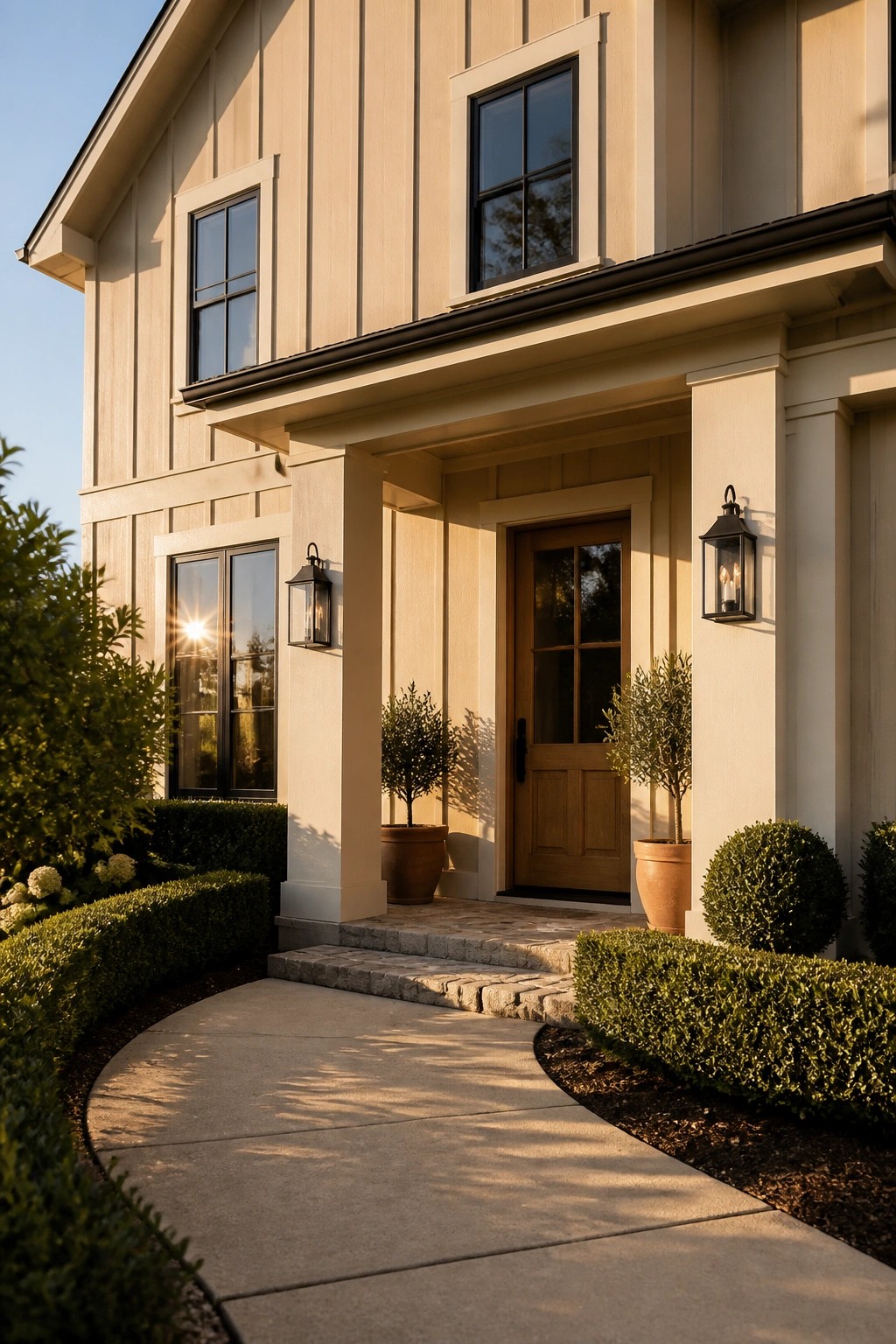
This light warm greige on the board and batten siding gives a farmhouse exterior a calm and balanced feel. It reads as a soft neutral that sits between beige and gray, which helps the house look current without trying too hard.
The color has a gentle warmth that works well with natural wood doors and dark window frames. It holds up nicely outside and pairs easily with most roof colors and masonry.
Warm Terracotta Siding
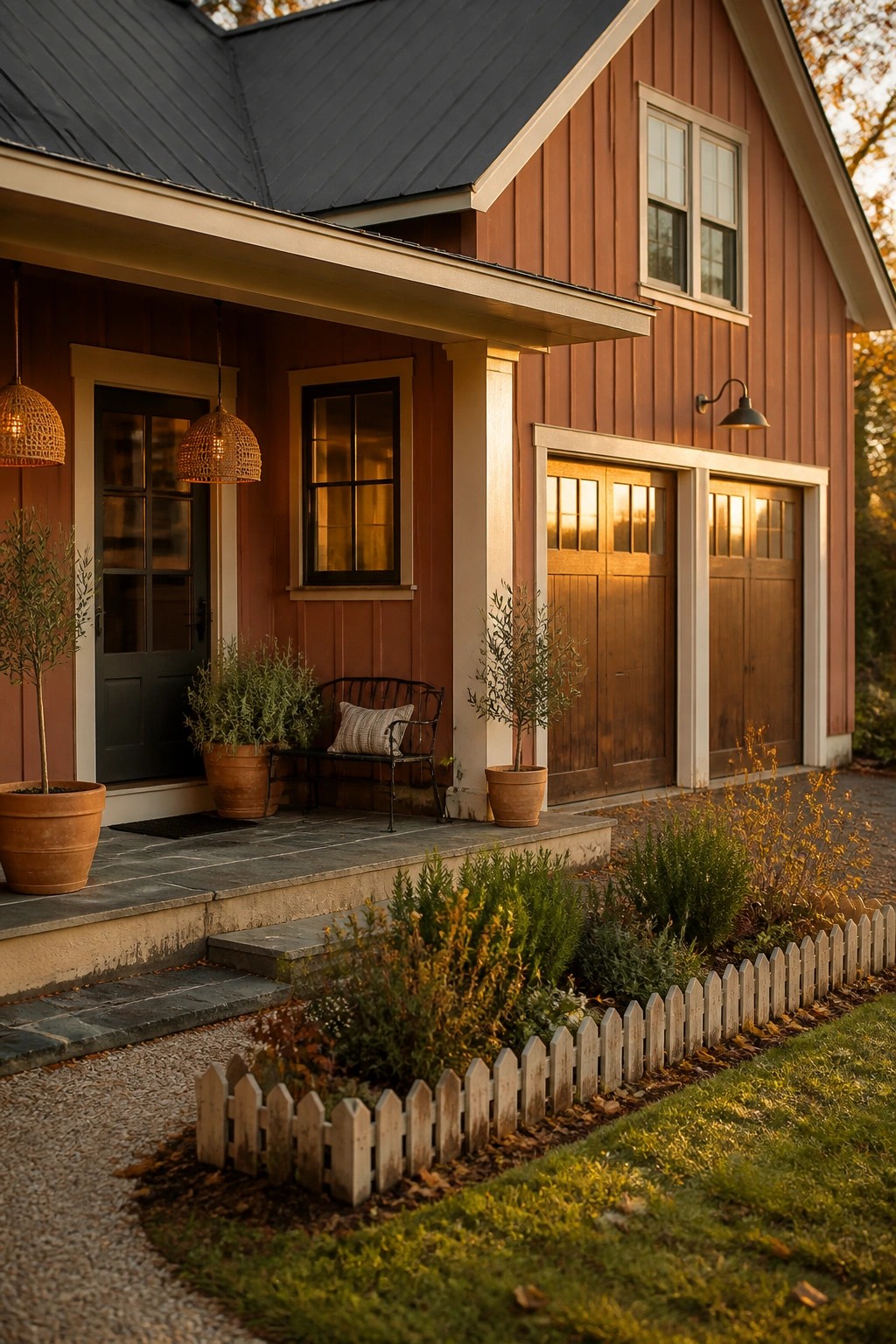
This siding color is a warm terracotta red with noticeable brown undertones that keep it from reading too bright. It works especially well on board and batten because the vertical lines add texture without making the color feel heavy. Many people like this shade for farmhouse exteriors since it pairs naturally with wood tones and simple trim.
It tends to look a little deeper in shade when the light is low and can pick up more brown depending on the roof color nearby. Try it with warm white trim or black window frames. Good matches include Sherwin Williams Barn Red, Benjamin Moore Heritage Red, Behr Red Barn, and Farrow & Ball Red Earth.
Soft Yellow Siding
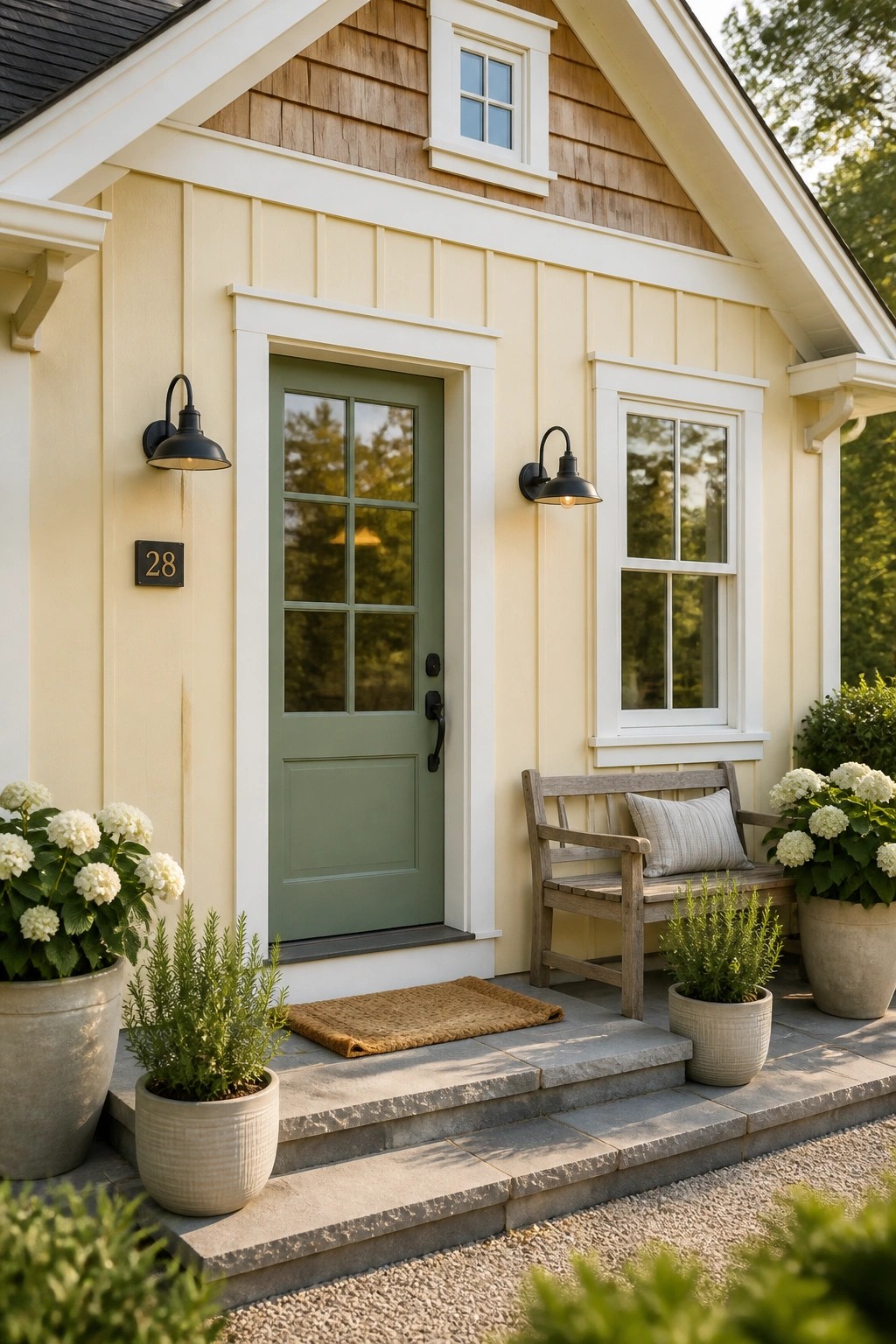
This pale yellow works nicely on board and batten exteriors because it feels bright without looking harsh. It has a gentle warmth that keeps the house from feeling too stark next to white trim. The color sits somewhere between a soft butter and a light cream.
It reads closest to Sherwin Williams Lemon Verbena, Benjamin Moore Windham Cream in a yellow direction, or Behr Sunflower Seed. The tone stays calm in full sun and pairs well with natural wood accents or a darker door. Just watch that it does not pull too green in certain lights.
Soft gray siding
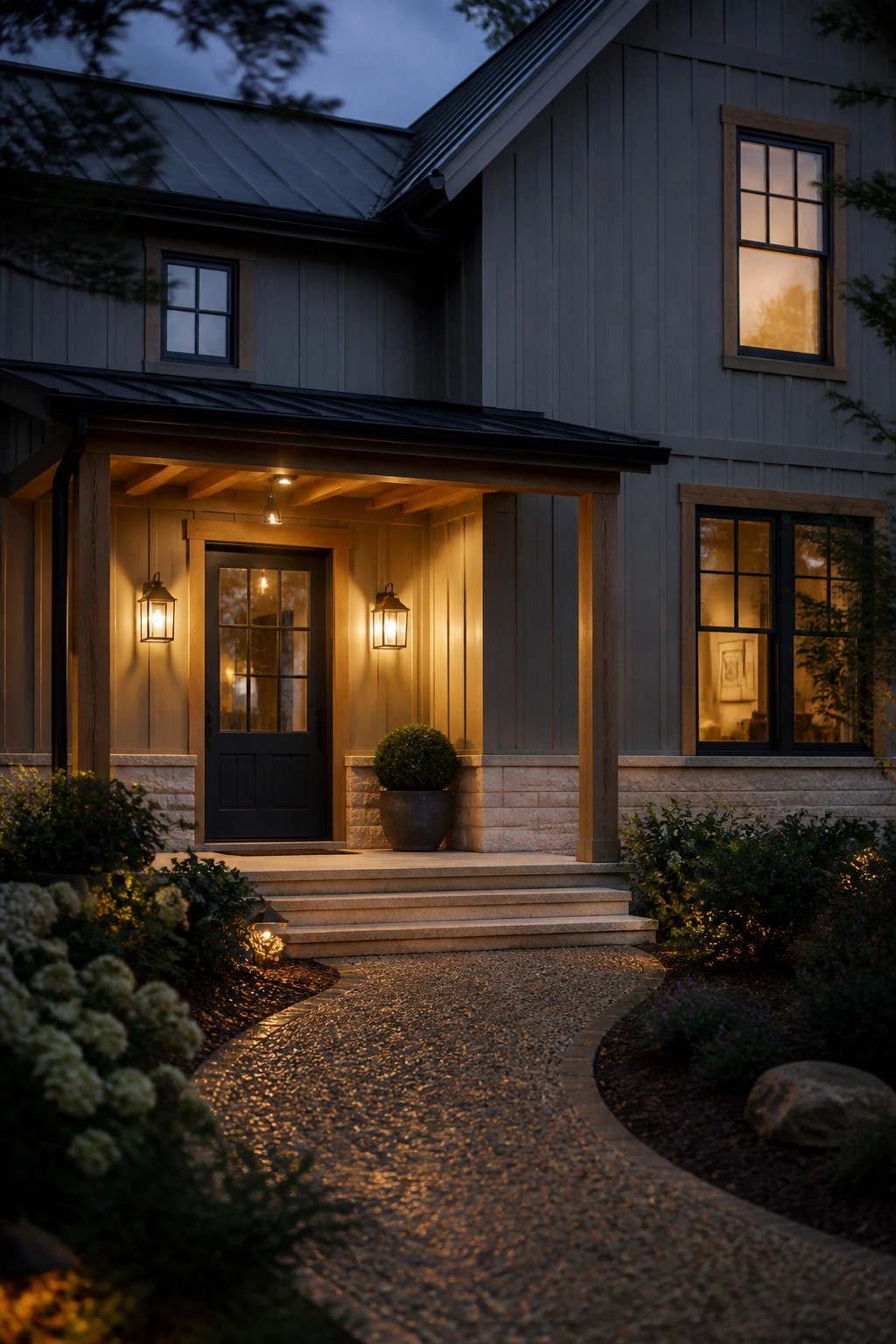
This soft gray gives board and batten a calm, updated look without feeling stark. It has a slight warmth that keeps the siding from going cold next to wood and stone.
It pairs easily with black windows and natural wood doors. The color can shift a bit depending on the light, so test it on a large section before committing.
Warm taupe siding
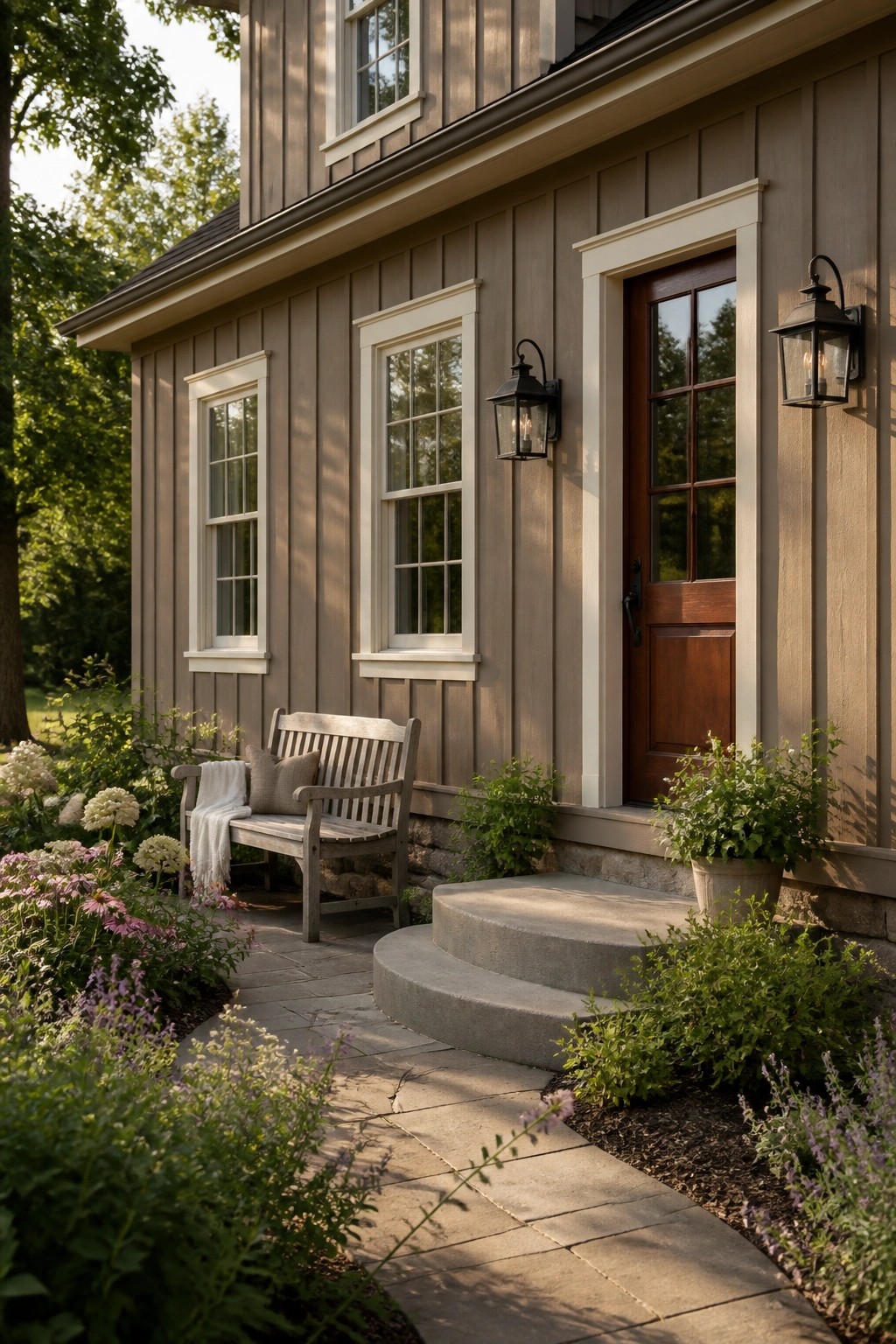
This warm taupe works nicely on board and batten siding. It sits in that soft space between gray and brown, giving the house a calm look without going too cool or too dark.
The color has a hint of brown in it that keeps the whole exterior from feeling flat next to stone or wood. It pairs well with white trim and holds up in different kinds of light. Try it on a farmhouse if you want something low-key but still pulled together.
Dark Blue Gray Siding
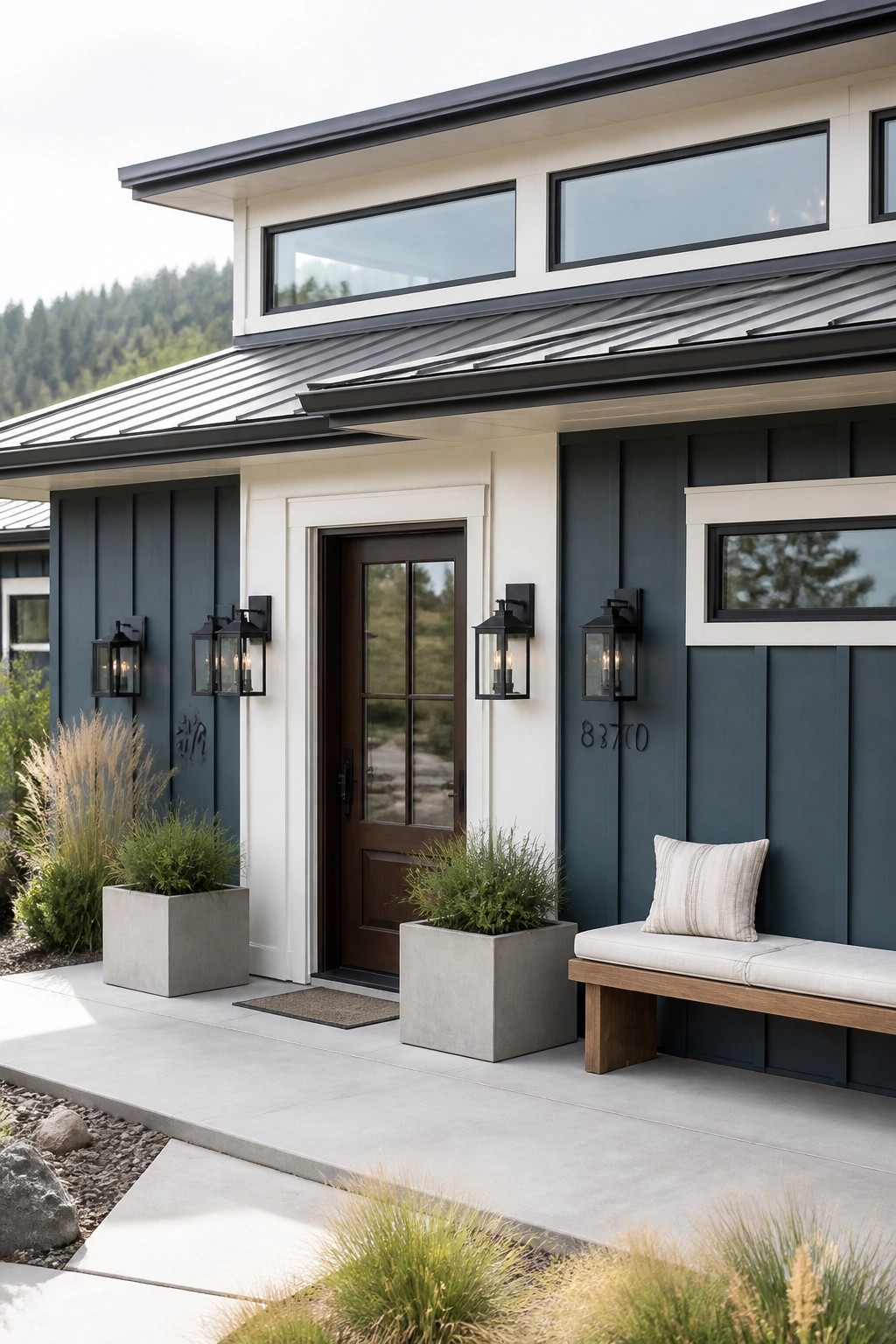
This dark blue gray on the board and batten siding reads as a cool, slightly muted shade that sits between navy and charcoal. It gives the exterior a solid, modern farmhouse feel without turning too stark or overly dark in daylight.
The color holds up well next to white trim and wood elements. It suits homes with simple lines and works best when you want the siding to feel substantial but still blend with natural surroundings.
Soft Blue-Gray Siding
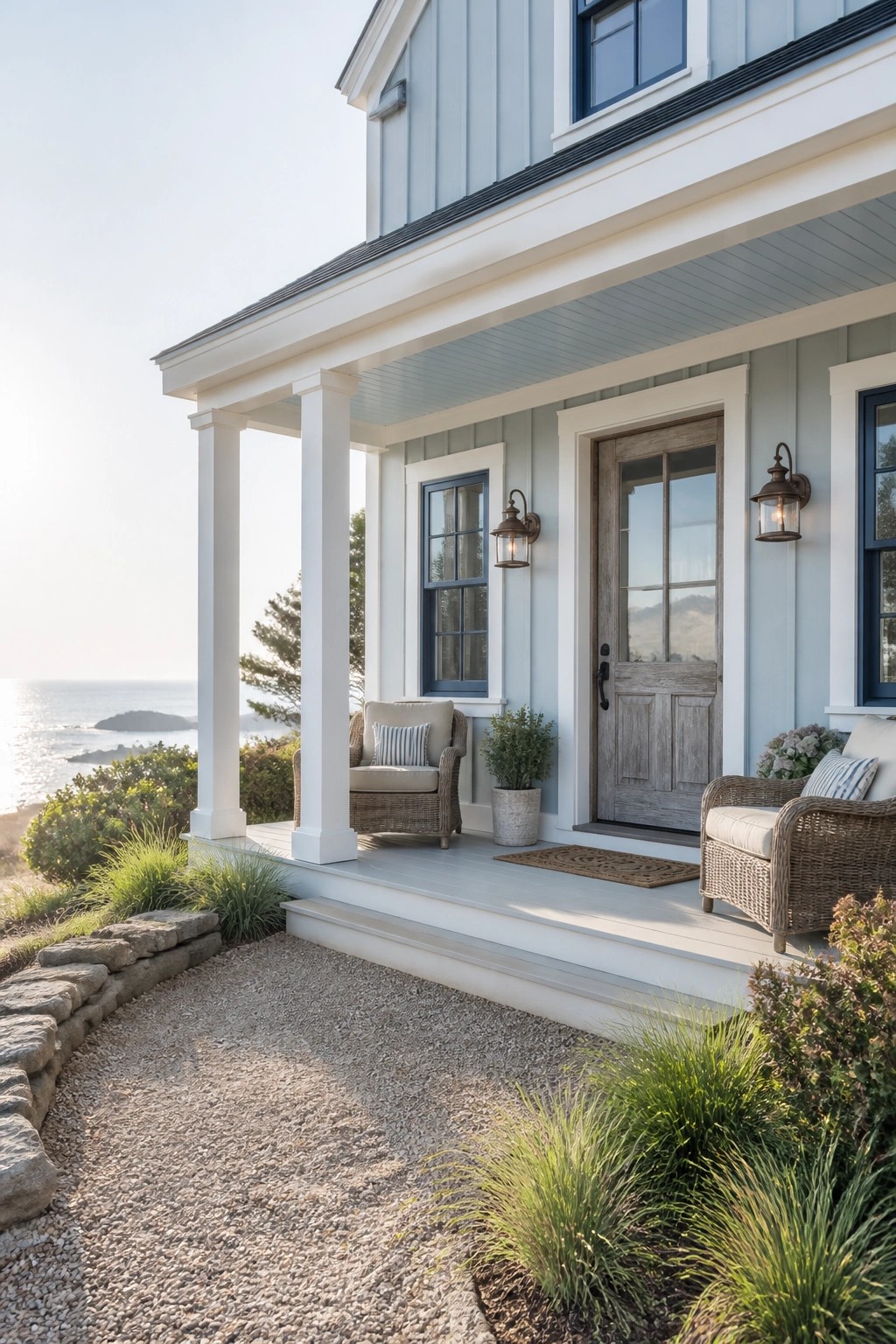
A soft blue-gray works nicely on board and batten exteriors. It gives the house a calm, slightly coastal look that still feels grounded for a farmhouse style.
This shade has cool undertones that show up more in bright light. It pairs best with white trim and wood doors, and it tends to look cleaner against darker roofs or stone bases.
Light Greige Board And Batten
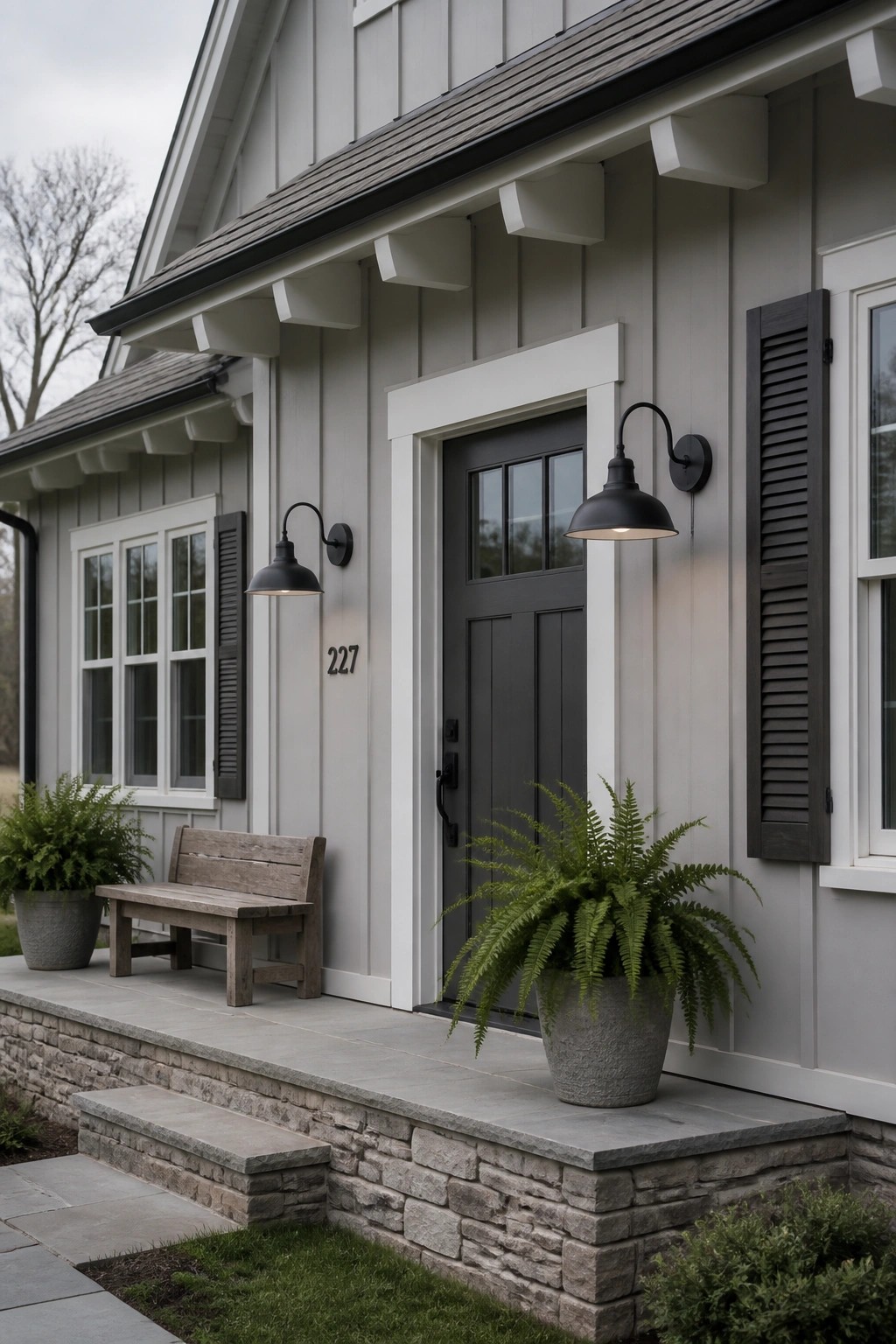
A soft gray like this one gives board and batten siding a clean but relaxed look. It sits right between gray and greige, so it picks up a little warmth from the light instead of turning cold or flat.
It seems closest to Sherwin Williams Agreeable Gray or Benjamin Moore Revere Pewter. The color works well with white trim and a stone base, and it holds up outside without needing much contrast to feel finished.
Deep red board and batten
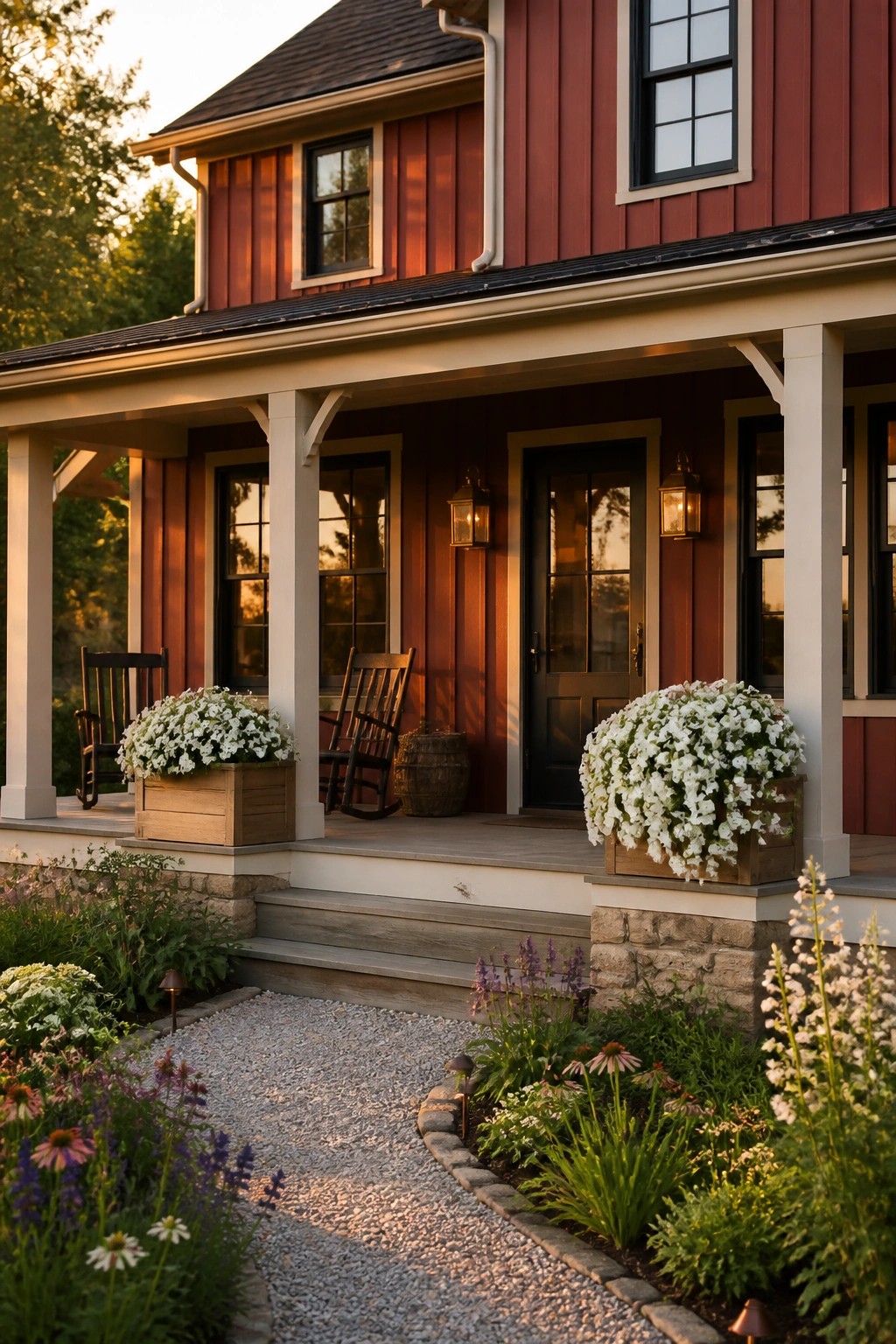
This deep red paint brings a classic farmhouse look to board and batten siding. It has a warm base that keeps the color from feeling too bright or harsh on a large surface.
It works best with white trim and dark roofing. Colors in this range can start to look flat if the house sits mostly in shade, so they suit spots with decent sunlight. Close matches include Sherwin Williams Red Barn, Benjamin Moore Heritage Red, and Behr Autumn Red.
Clary Sage Green Siding
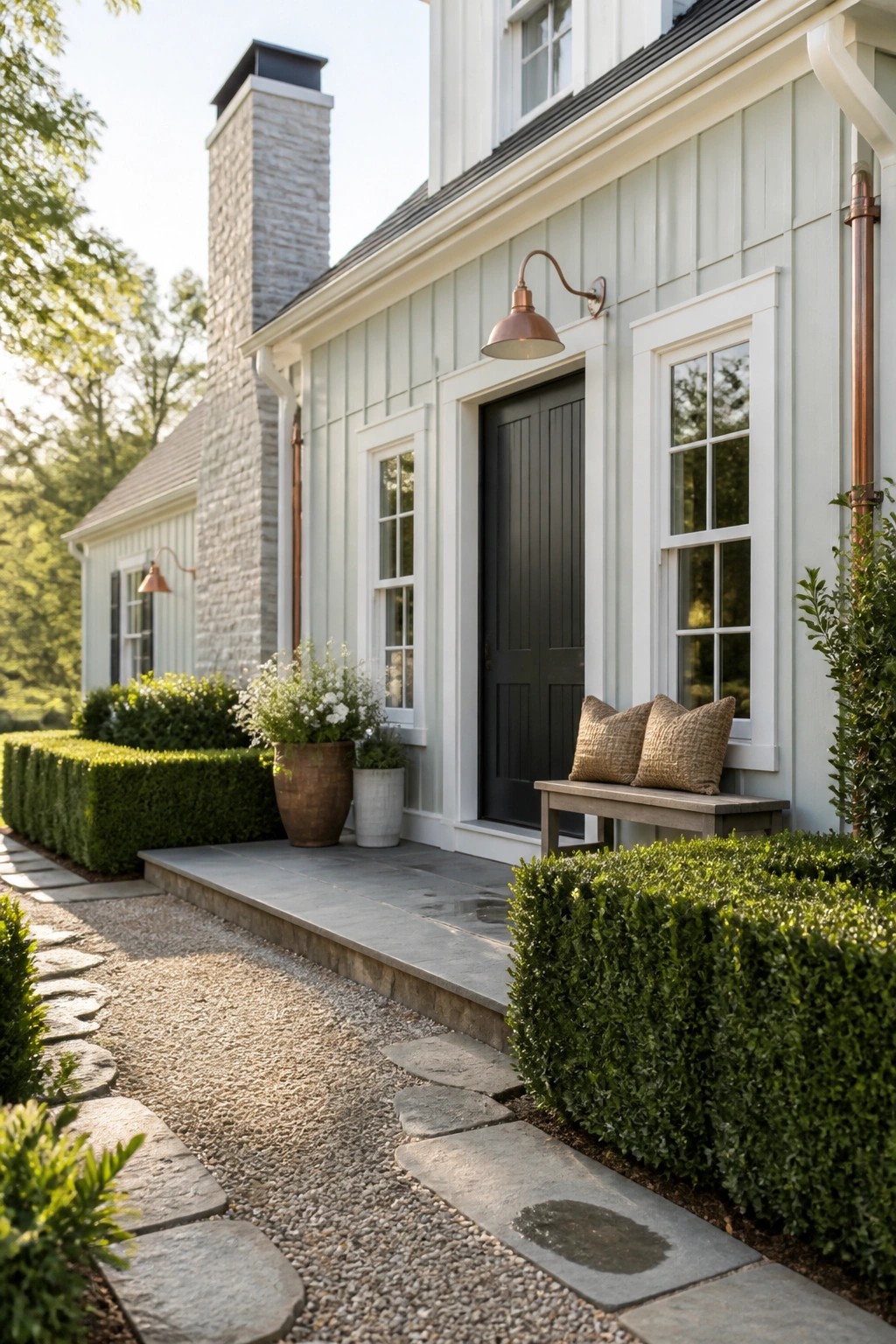
This soft sage green on the board and batten siding gives a calm, lived-in look that fits right into farmhouse style. It reads as a muted green with some gray in it. The color looks closest to Sherwin Williams Clary Sage or Benjamin Moore Saybrook Sage, with Behr Quietude as another close option.
It works best with crisp white trim and a dark door for contrast. The cool undertones help it stay fresh next to stone or wood, though it can lean a bit cooler in shade. Try it on homes with simple landscaping so the color stays the focus.
Warm Beige Board And Batten
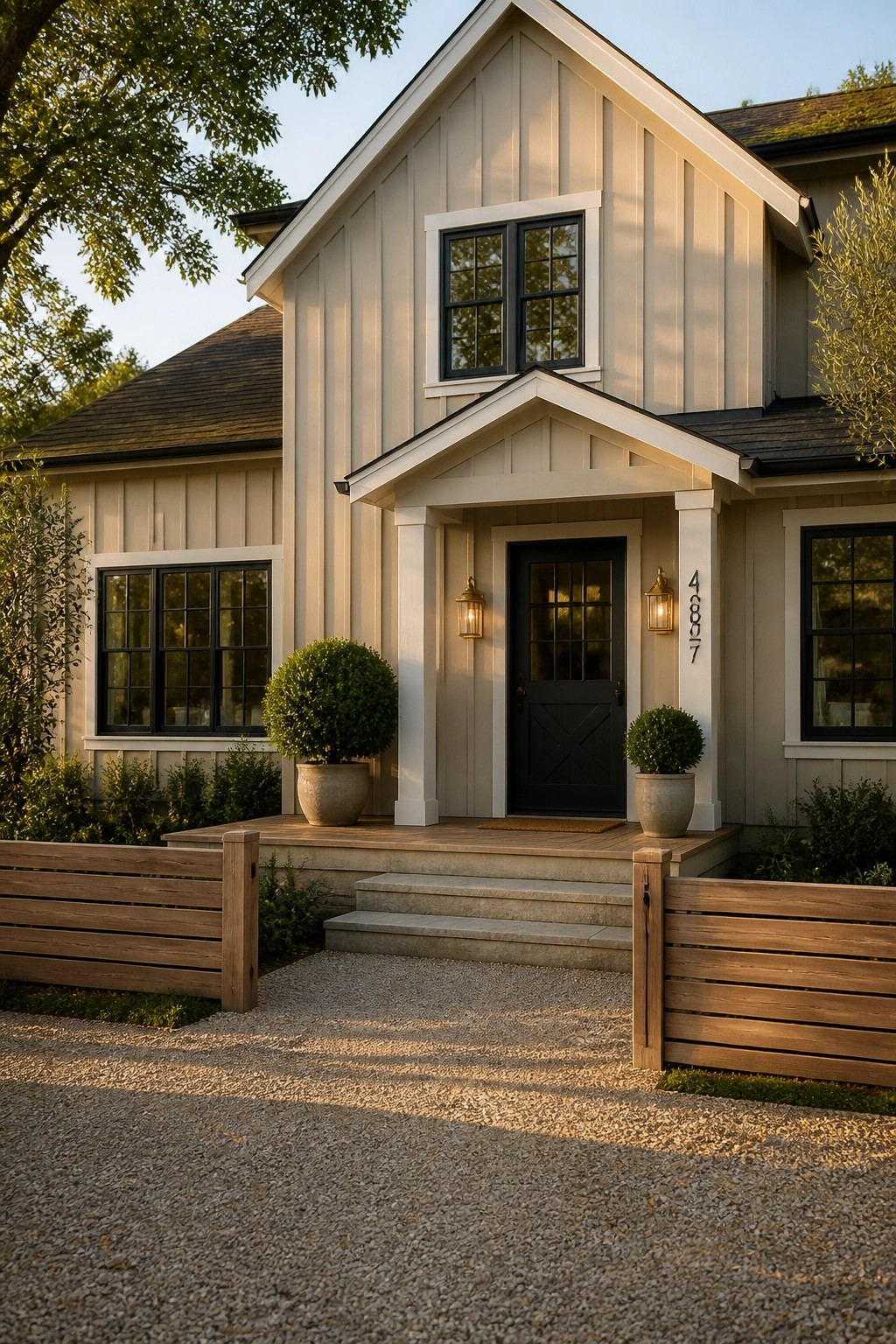
This siding color is a soft warm beige that leans slightly toward greige. It keeps the house feeling light but still grounded, and the vertical lines of the board and batten show up nicely without the color fighting them. It reads as a natural choice for a modern farmhouse because it does not demand too much attention on its own.
The warmth helps it sit comfortably next to dark trim and roofing. Benjamin Moore’s Edgecomb Gray or Sherwin Williams’ Accessible Beige would be close matches, though the exact tone can shift a bit depending on the light. Pair it with black windows or a dark door if you want the contrast to stay crisp.
Deep green siding
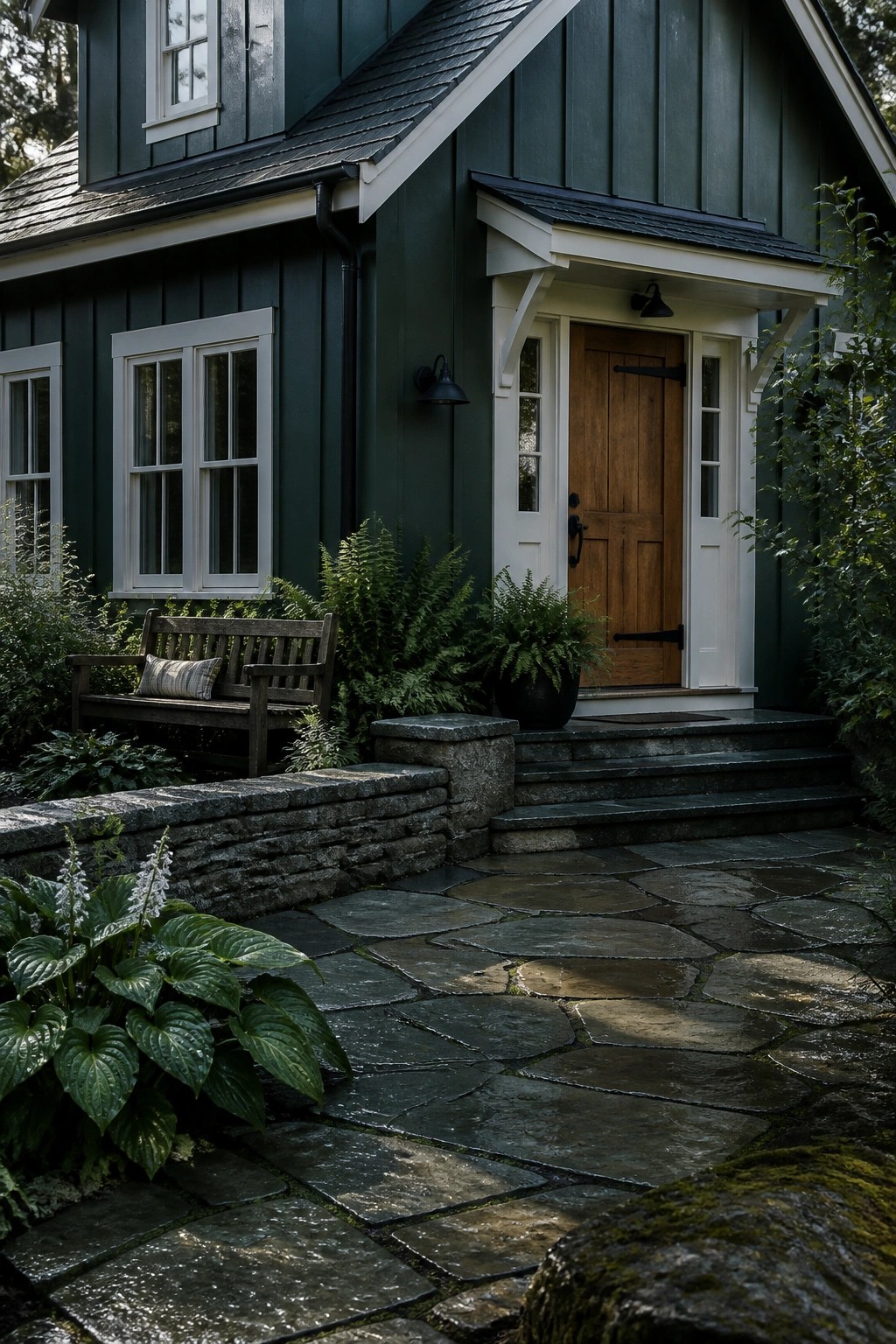
This deep green is a strong option for board and batten exteriors. It sits in the forest green family and gives the house a solid, grounded feel that still reads modern. The color holds up well next to white trim and natural wood.
It leans slightly cool with blue undertones that show more in bright light. It works best on homes with clean lines and pairs easily with stone or dark roofing. Too much shade can make it look nearly black, so test it on a large sample first.
Warm brown siding
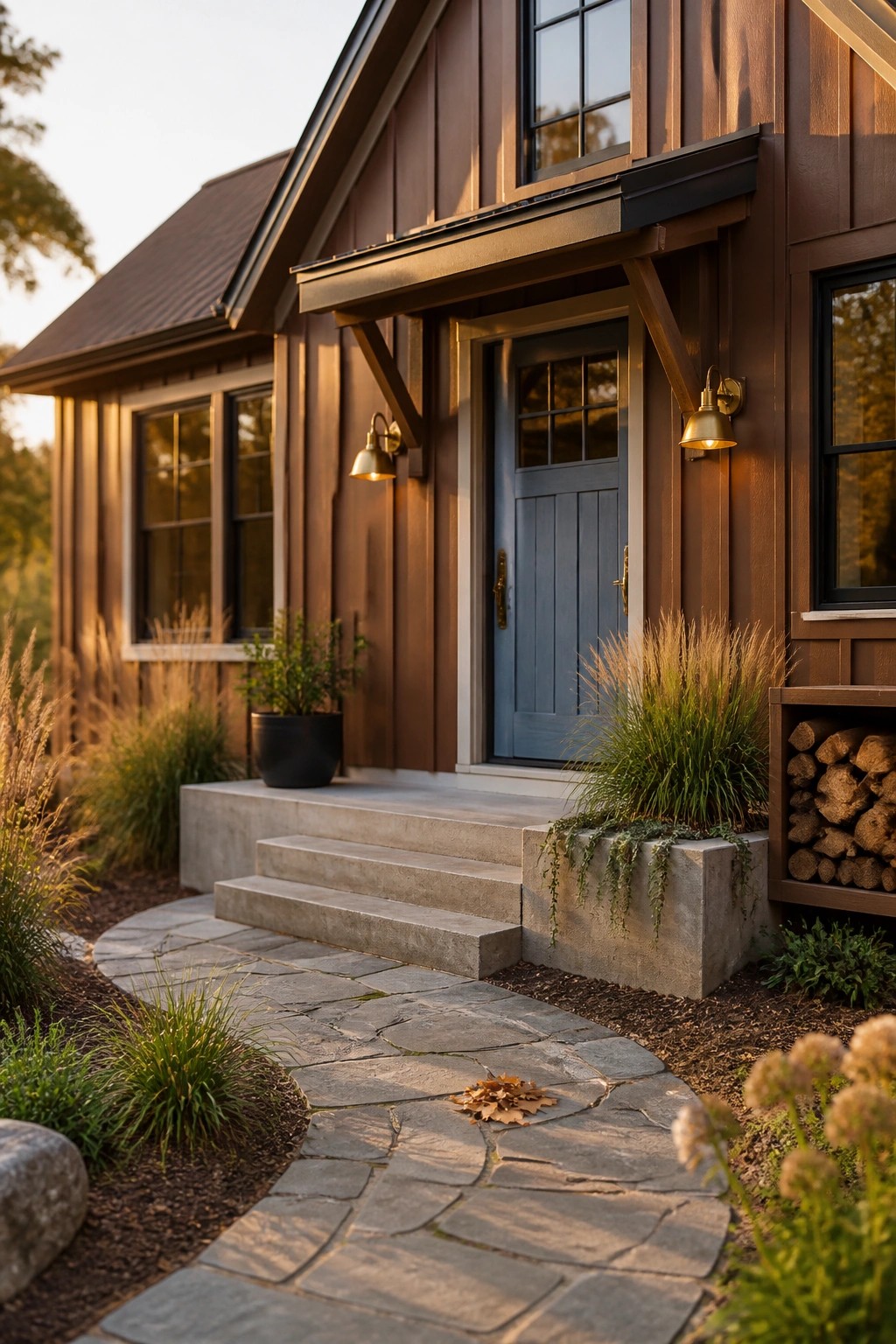
This deep warm brown on the board and batten siding gives the house a solid, grounded look that feels right for a modern farmhouse. It sits between brown and taupe with a touch of red in the undertone, which keeps it from going too cool or flat against the roof and concrete.
It works best on homes that already have natural wood or stone nearby, since the color holds its own without needing extra contrast. Watch how it shifts in different light though, as the warmth can pull stronger in the afternoon.
Light Blue Gray Farmhouse Siding
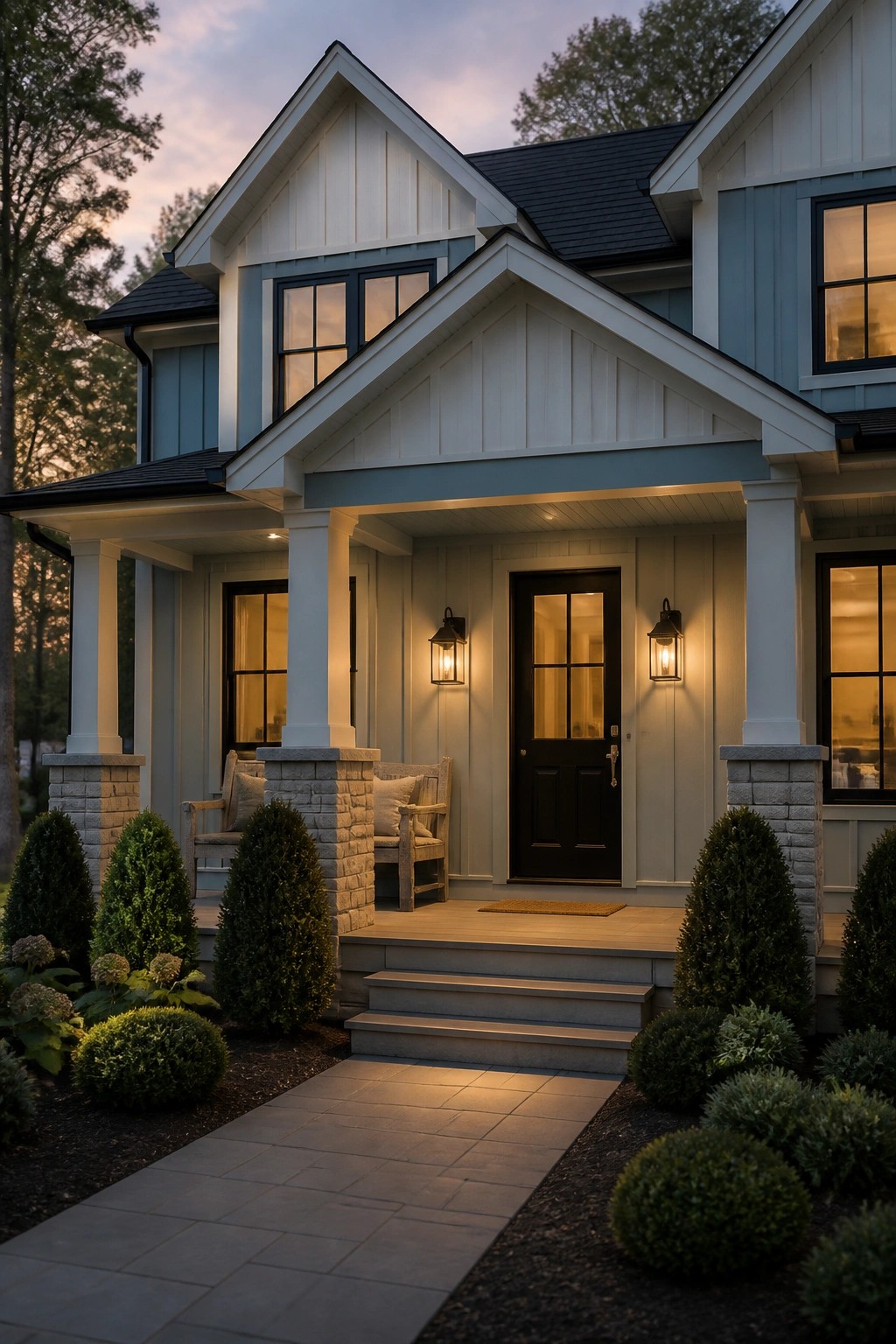
This light blue gray on board and batten siding gives a farmhouse a calm updated look. It sits right between gray and blue without pushing too hard in either direction.
The color has a cool undertone that stays steady next to white trim and dark windows. It works well on homes with stone bases and black roofing since it keeps the whole exterior from feeling too stark or too plain.
Frequently Asked Questions
Q: How do I know if a bold color will look right on my house?
A: Paint a big test patch on the actual siding and look at it morning and evening. The light changes everything, so you see the real effect before you commit.
Q: What if my roof is a warm brown tone?
A: Go with a cool gray or soft green from the options. Those pull the whole exterior together without fighting the roof.
Q: Does the vertical board style make colors feel different up close?
A: Yes, the lines catch shadows and give depth, so even mid-tone shades read richer from the street. Stick to one color family if you want it to stay simple.
Q: Should I worry about how fast these colors fade?
A: Pick a quality exterior paint with UV protection and you can stretch the time between coats. But test a small area first if your house faces full sun all day.
