

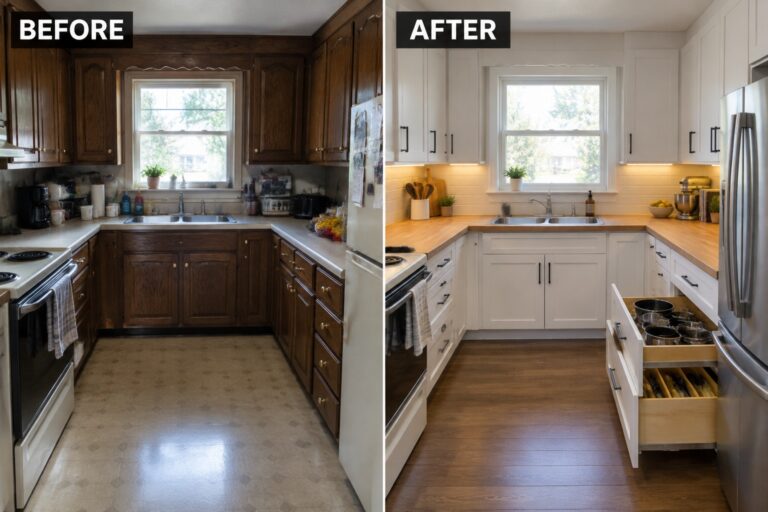
Outdated kitchen cabinets can make a room feel tired, especially when shelves are crowded and everyday items have nowhere sensible to go.
I find that a kitchen often feels more pulled together when storage works with the way people actually cook, rather than simply adding more cupboards.
Replacing cabinets can also be a chance to rethink awkward corners, deep shelves, and wasted wall space.
The best changes make daily routines easier while giving the room a clearer, more finished look.
I’d save the ideas that suit your kitchen’s layout and adapt them to the storage problems you notice most.
Replace Old Cabinets With Practical Storage
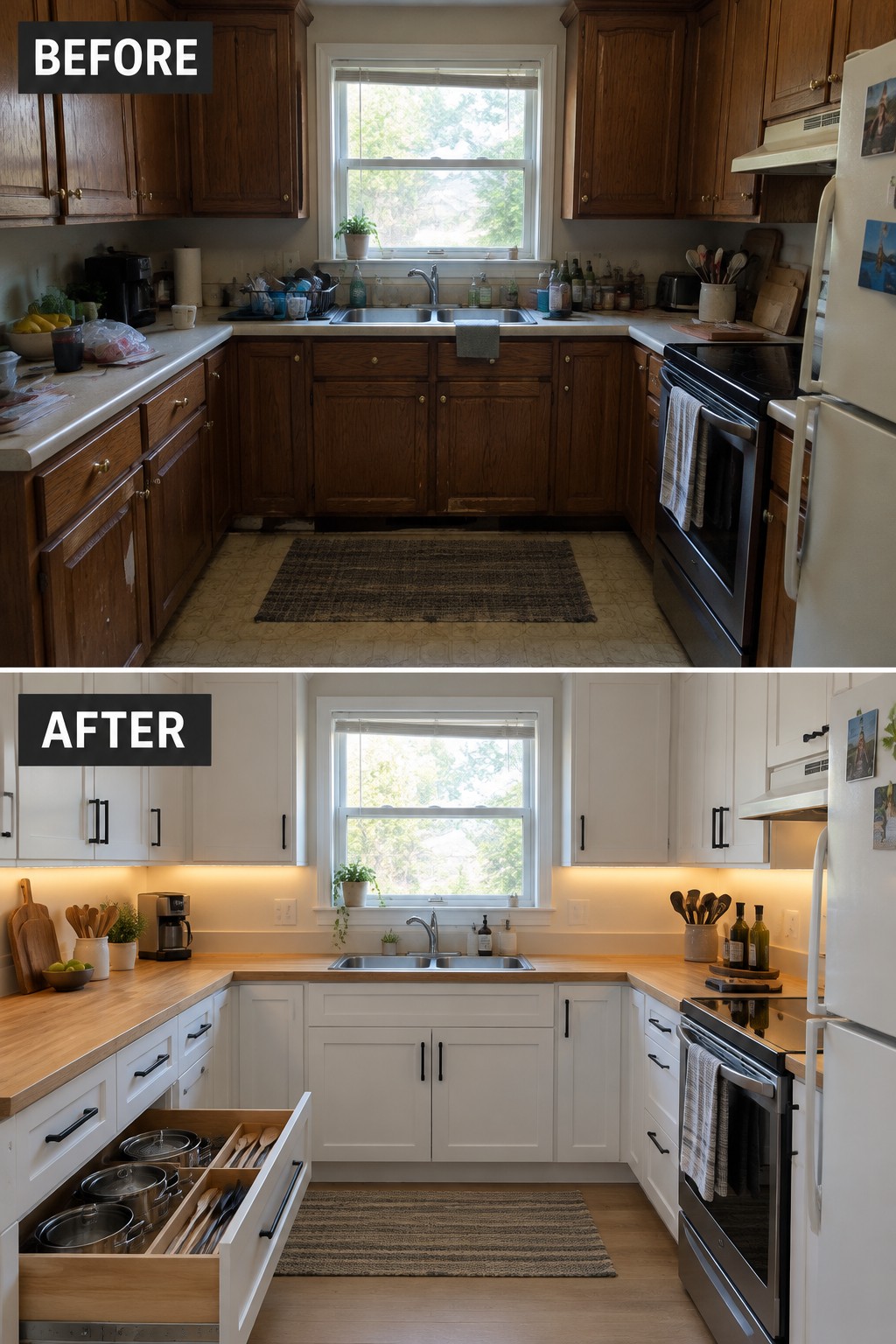
Replacing dark, worn cabinets with simple white cabinetry makes this kitchen feel brighter and more usable. A wide pull-out drawer keeps pots and pans close at hand, so everyday items are easier to reach than they would be in a deep, crowded cupboard.
In a small kitchen, use a few well-planned drawers for cookware and utensils, and keep cabinet interiors simple so the storage stays easy to use. Choose layouts that leave clear space to open drawers and move around.
Replace Closed Cabinets With Open Shelving
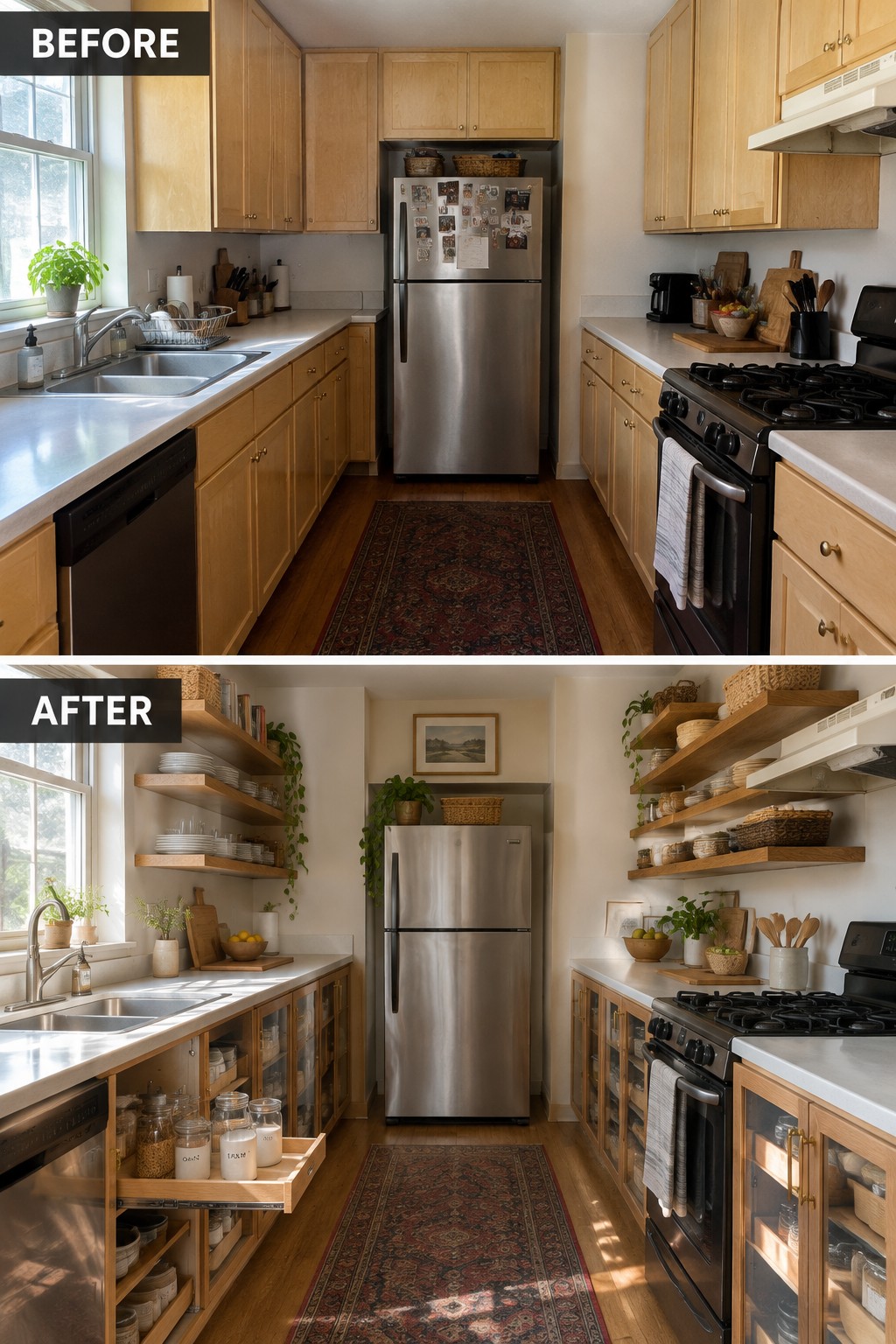
Swapping some upper cabinets for open shelves makes everyday kitchen storage easier to reach and gives a narrow room a more open feel. Here, the shelves take the place of bulky upper cupboards, while glass-front lower cabinets keep stored dishes visible without leaving everything exposed.
This idea works well when you have a few neat stacks of dishes or jars you use often. Keep the shelves to items you can maintain, and leave less attractive or seldom-used kitchen supplies behind closed doors.
Add Pull-Out Storage To Make Cabinets More Practical
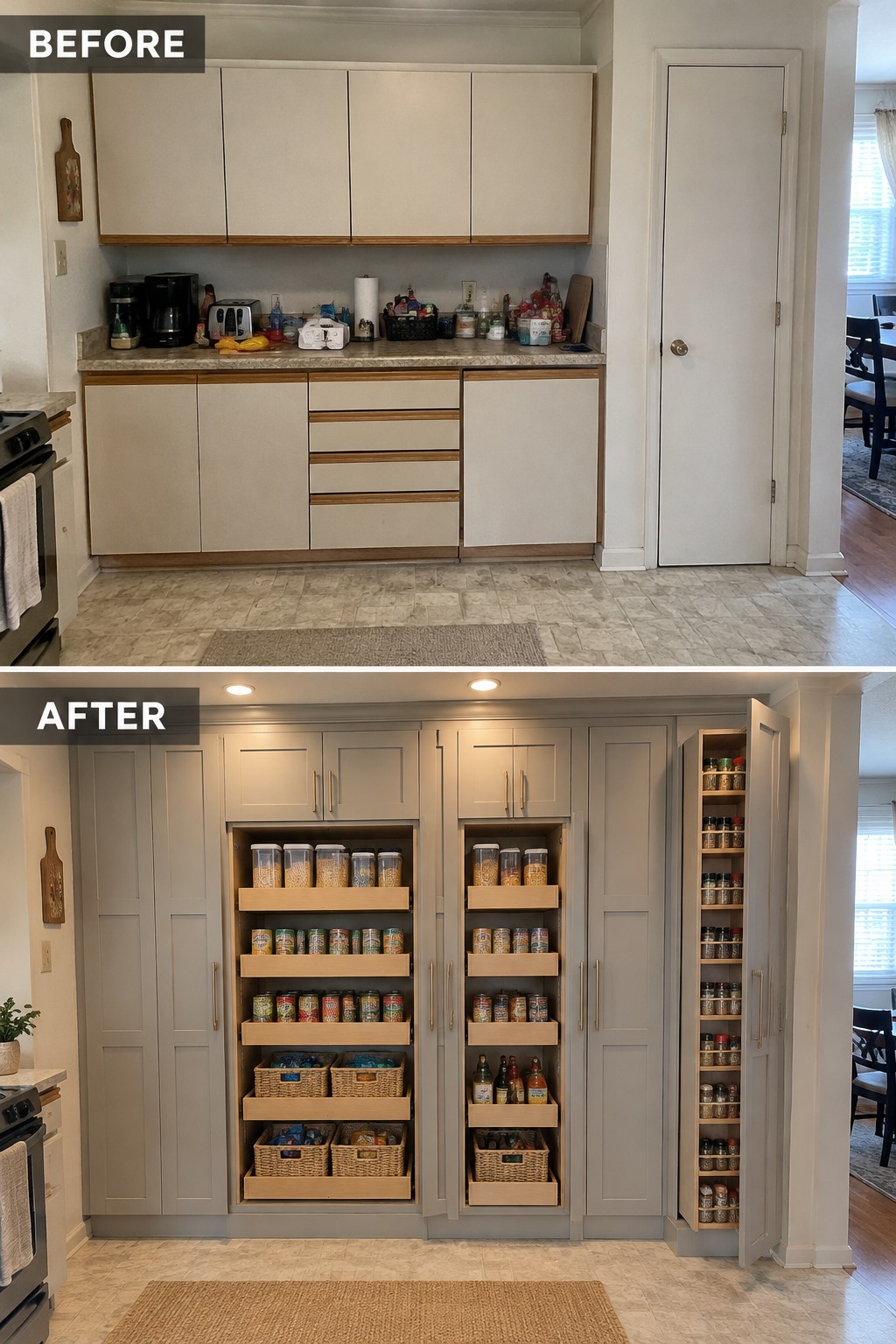
The old cabinets had little room for organizing pantry goods, while the updated layout uses pull-out shelves to keep food easier to see and reach. This kind of storage makes deep cabinets more useful and cuts down on items getting lost at the back.
For a similar update, add pull-out trays to cabinets you already have or plan them into new cabinetry. Measure carefully and leave enough space for the shelves to slide out without blocking nearby doors or walkways.
Add Pull-Out Storage To A Corner Cabinet
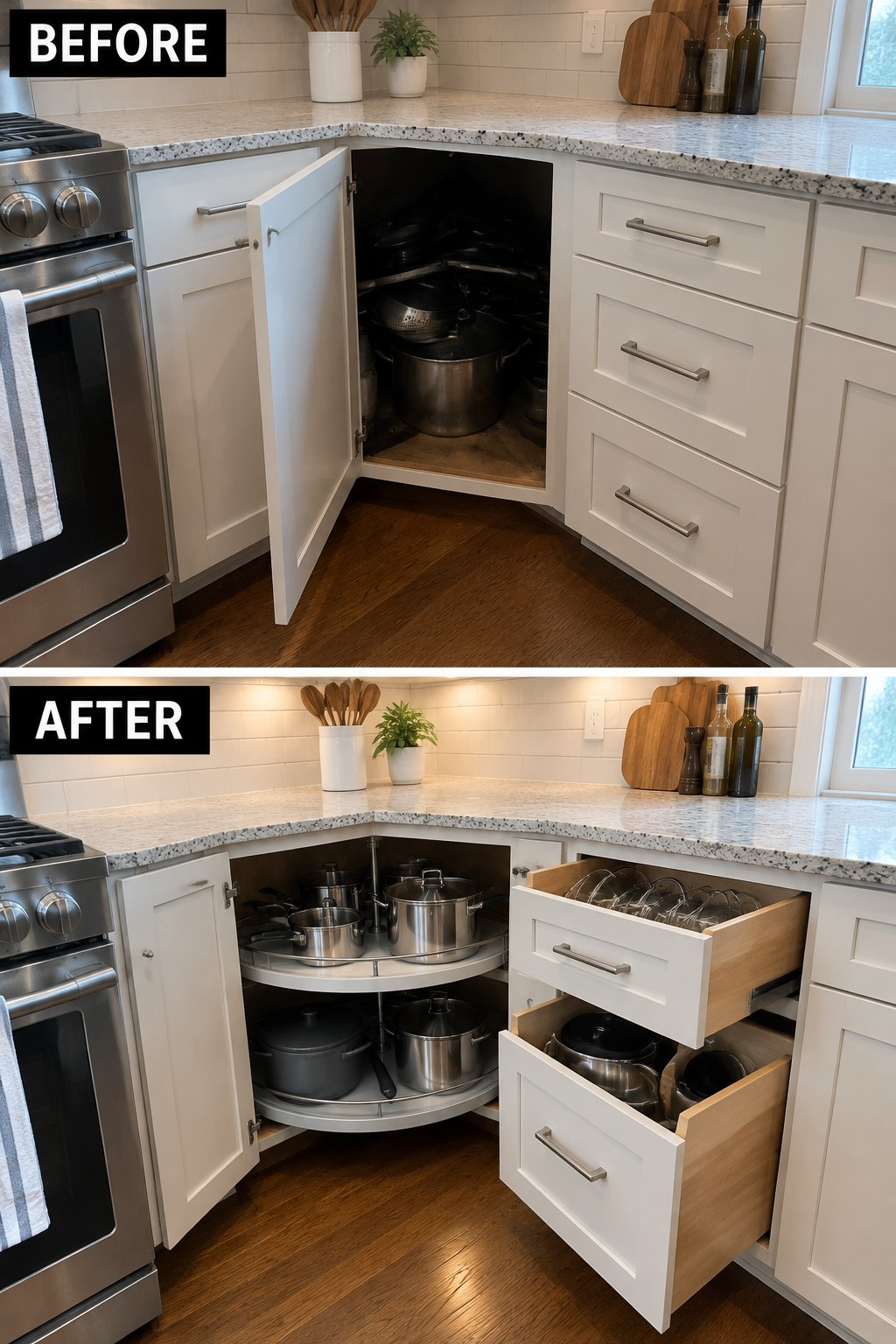
The corner cabinet was hard to use when pots were stacked inside, but rotating shelves make the space easier to reach and keep cookware visible. Pull-out drawers nearby give dishes their own place instead of leaving them piled in the cabinet.
This approach works well in kitchens with deep corner cupboards that are awkward to organize. Check the cabinet’s dimensions before choosing a rotating unit, and leave enough room for drawers to open without blocking nearby walkways.
Add Wall Storage To Clear The Countertops
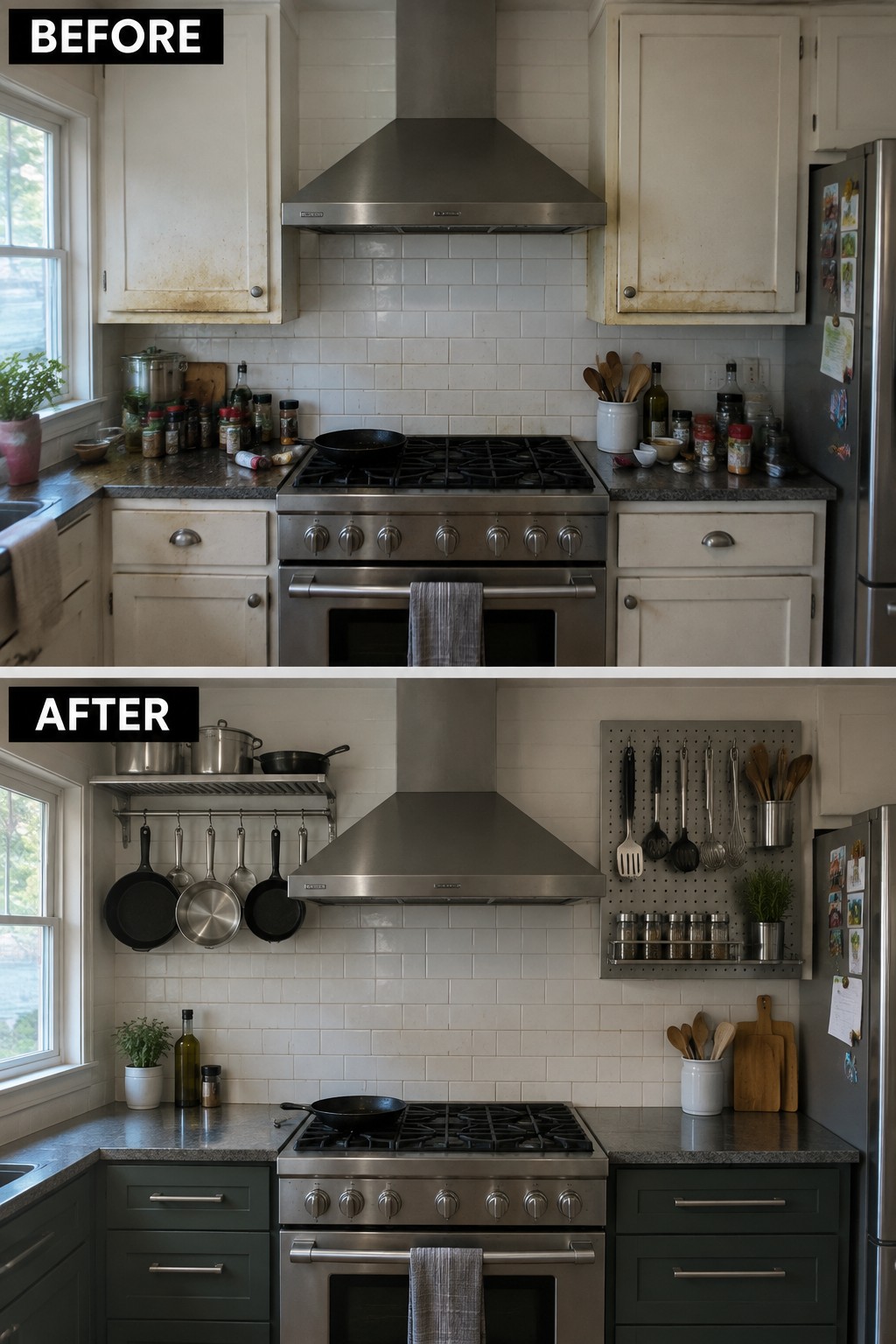
The cluttered counters in this kitchen made prep space hard to use. In the updated room, wall-mounted racks hold pots, utensils, and jars, leaving the counter beside the range mostly clear. It’s a practical way to make everyday items easy to reach without filling the room with more cabinets.
This works well when there’s open wall space near the stove. Choose sturdy racks, keep the most-used items within reach, and leave enough room around the cooking area to work safely.
Organize Kitchen Drawers For Everyday Tools
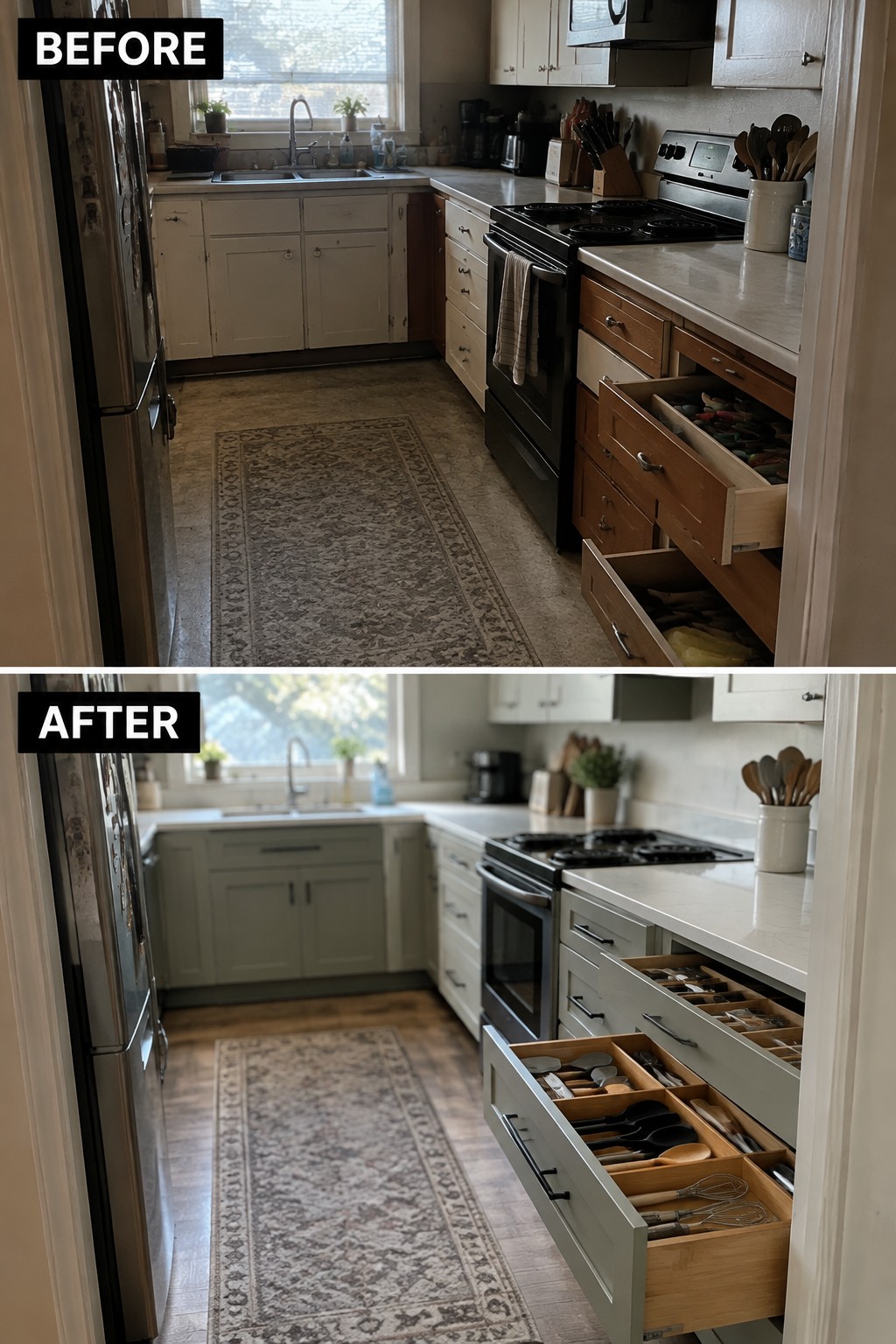
The kitchen feels more practical when storage is arranged around the things used every day. In the updated space, wide drawers have built-in sections that keep utensils sorted and easy to reach, rather than jumbled together.
Use drawer dividers to group cutlery and cooking tools near the counter where you use them. This works especially well in a busy kitchen with limited cabinet space; just measure the drawer first so the organizers fit without wasting room.
Add A Roll-Up Cabinet Door To Hide Small Appliances

Replacing standard upper doors with a roll-up front can make a kitchen counter easier to keep clear. In this makeover, the toaster and coffee maker are tucked away behind a slatted cabinet door, while the counter is left mostly open.
This works well for a small appliance station that you use often but do not want on display all day. Check that the cabinet has enough depth and an outlet inside before adding the door, and leave room for the appliance to cool when in use.
Update Cabinets To Make Better Use Of Kitchen Space
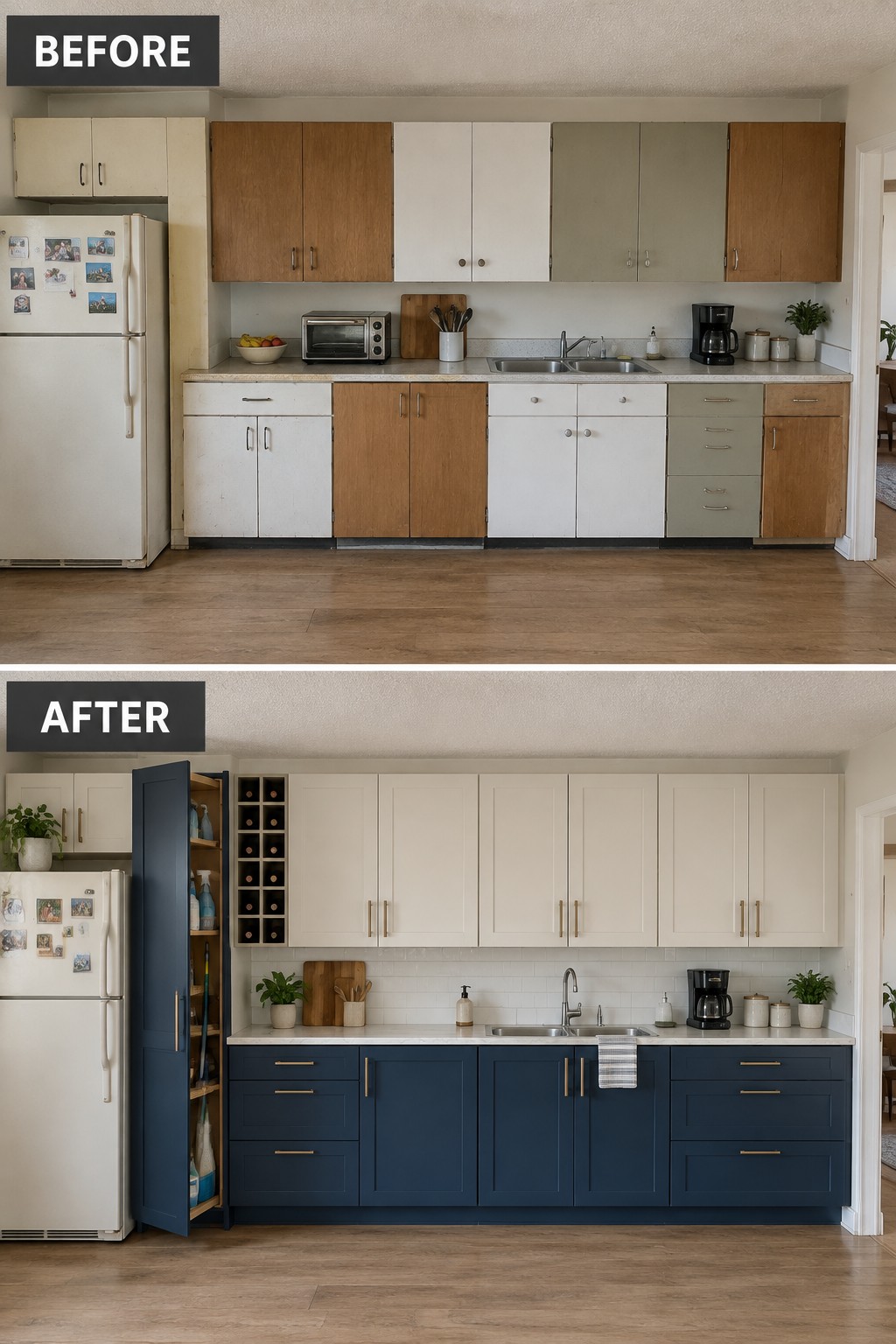
The makeover replaces mismatched, worn cabinets with a coordinated set that includes a tall pull-out pantry beside the refrigerator. This makes everyday supplies easier to store and reach, while giving the kitchen a more practical, unified layout.
A narrow pull-out cabinet can work well in a small gap beside a fridge or at the end of a cabinet run. Measure carefully before choosing one, and keep frequently used items on the easiest-to-reach shelves.
Replace Cabinet Doors With Woven Storage
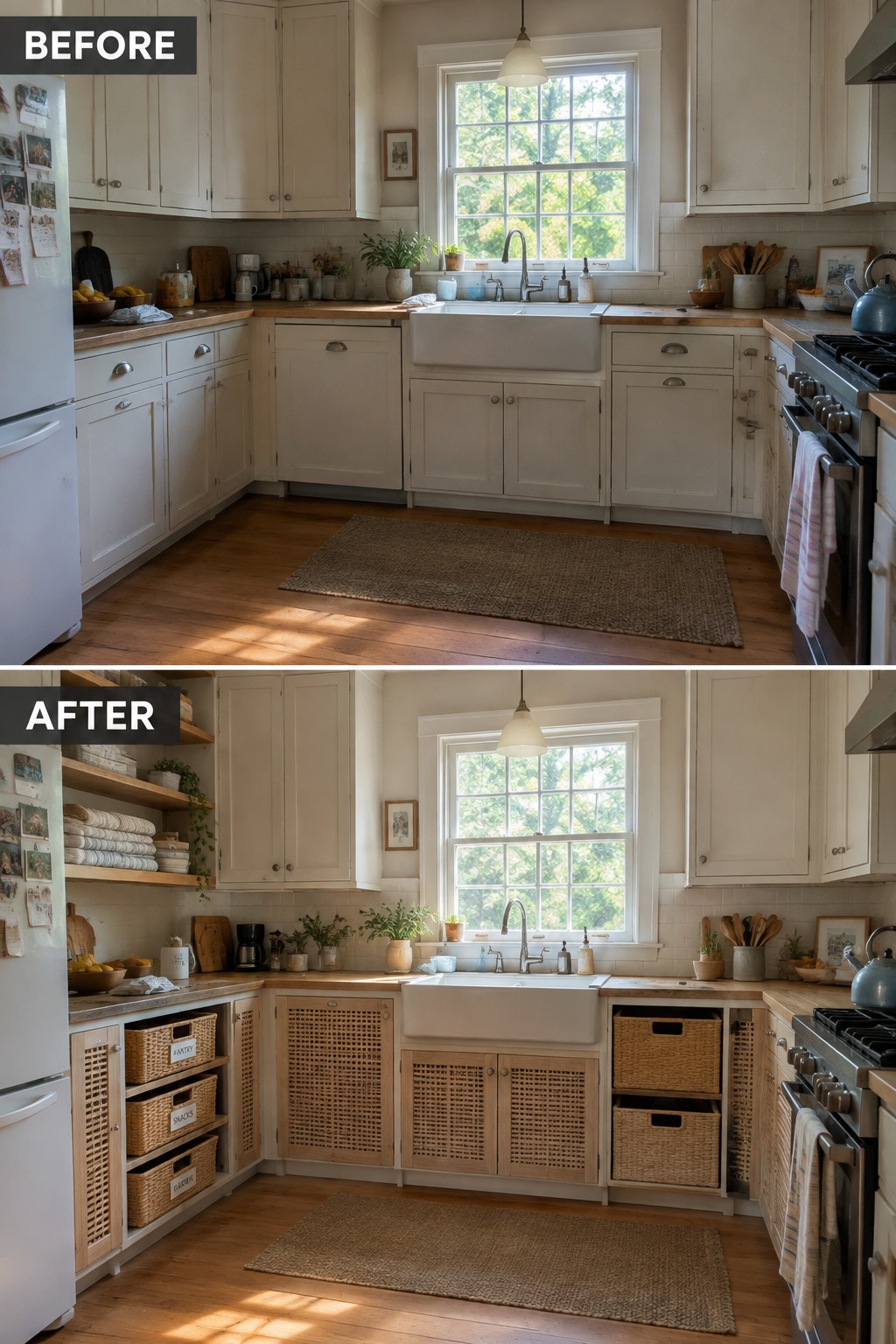
The lower cabinets go from closed doors to woven panels and open cubbies, making everyday supplies easier to reach and giving the kitchen more practical storage. The change works especially well where cabinet interiors tend to become catchalls.
For a similar update, use baskets or ventilated fronts in just one section rather than replacing every cabinet door. Keep frequently used items within easy reach, and measure carefully so baskets slide in and out without blocking nearby doors.
Add A Pull-Out Recycling Station
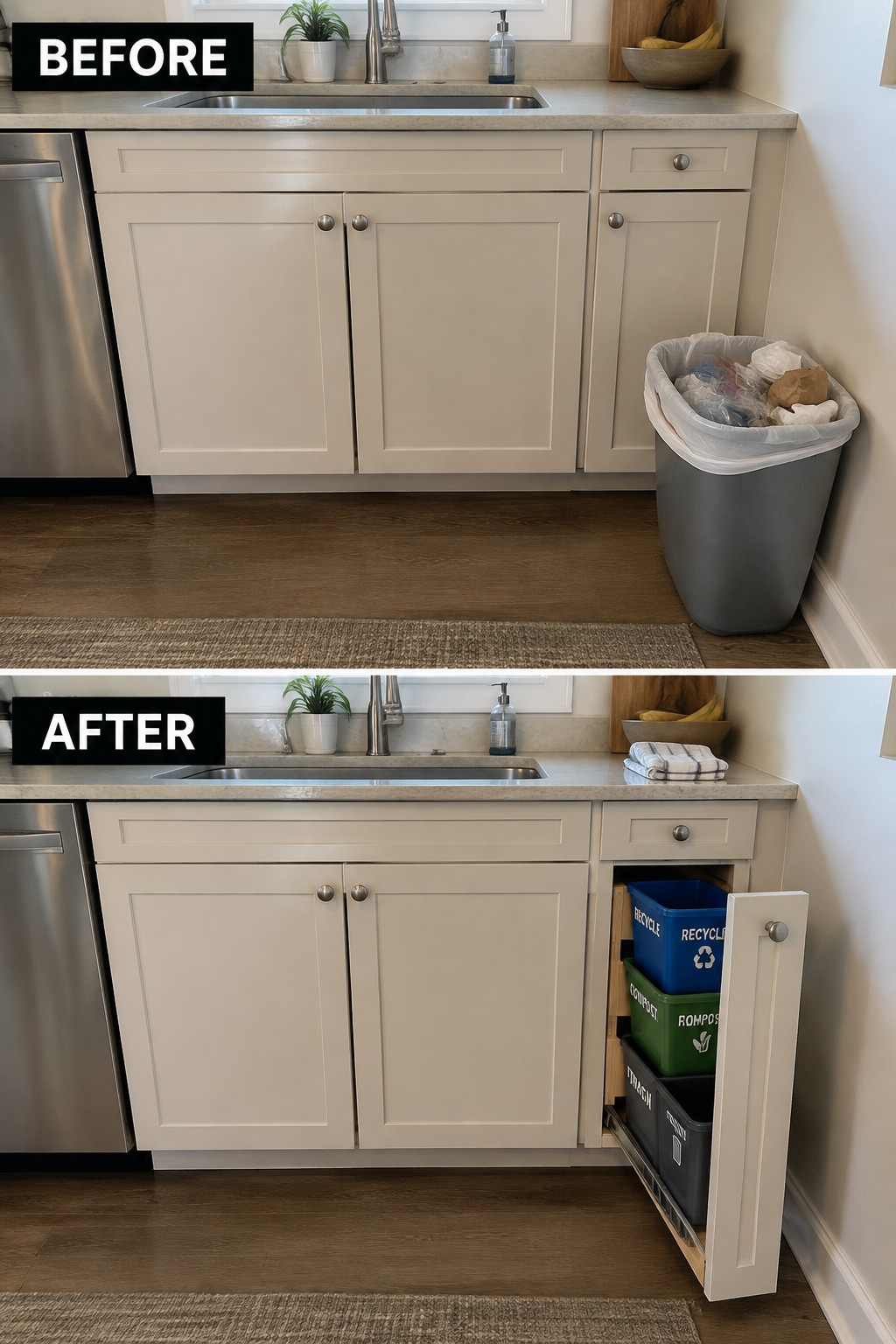
The small cabinet beside the sink becomes much more useful when it holds a pull-out recycling station instead of a wastebasket taking up floor space. In the after photo, separate bins sit inside the cabinet and slide out when needed, keeping sorting close to the sink.
This setup works well in a narrow cabinet near where you prep or wash dishes. Measure the opening and the bins first, and leave enough room for the door and pull-out hardware to move freely.
Turn Solid Cabinets Into Practical Display Storage
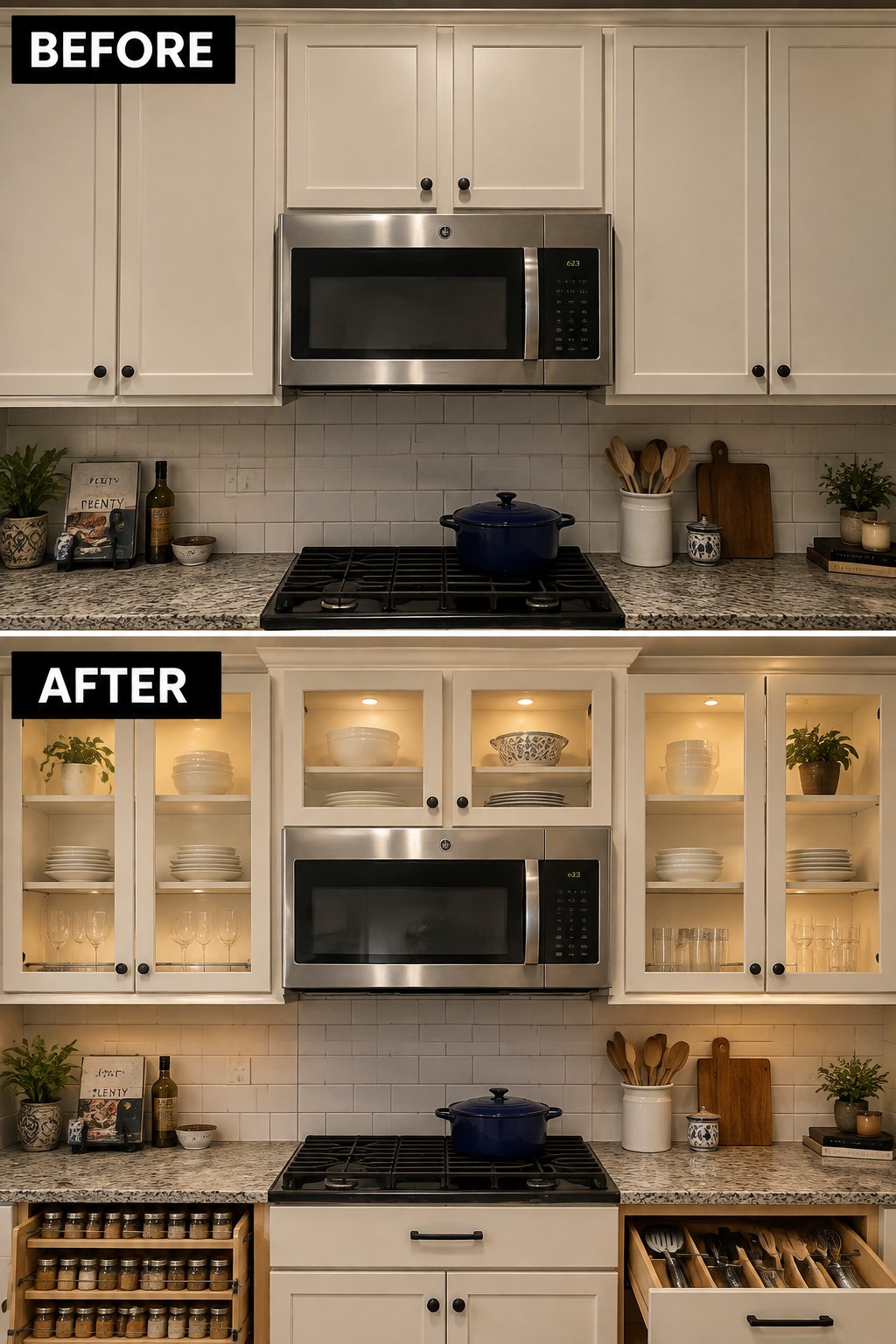
Replacing a few solid cabinet doors with glass fronts makes everyday dishes easier to see and gives the kitchen a lighter, more open feel. Here, lit glass cabinets display dishes and glasses, while storage below the cooktop keeps spices and utensils close at hand.
Use glass doors where you can keep shelves fairly tidy, and leave closed cabinets for items you would rather tuck away. A mix of display and concealed storage works well when you want a more open look without giving up useful cupboard space.
Add Hidden Storage To The Kitchen Island
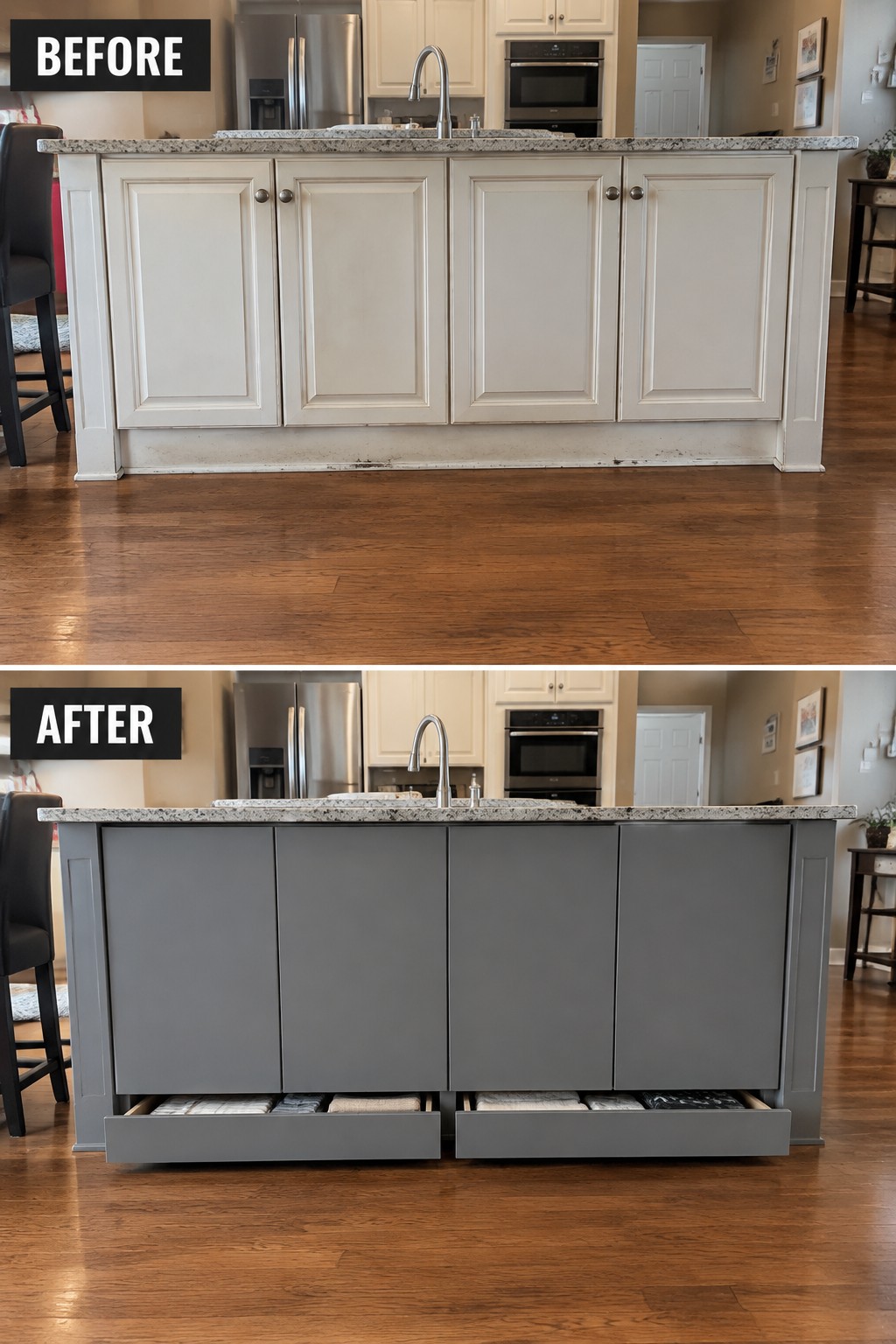
Painting the island cabinets a simple gray and adding wide drawers makes this kitchen storage more practical. The drawers use space that was easy to overlook, while the plain fronts give the island a cleaner, more current look.
This idea works well when the island has room for deep drawers and you want everyday items close at hand. Measure what you plan to store before choosing drawer depth, and keep heavier items in drawers that are easy to reach.
Add Deep Drawers For Kitchen Appliances
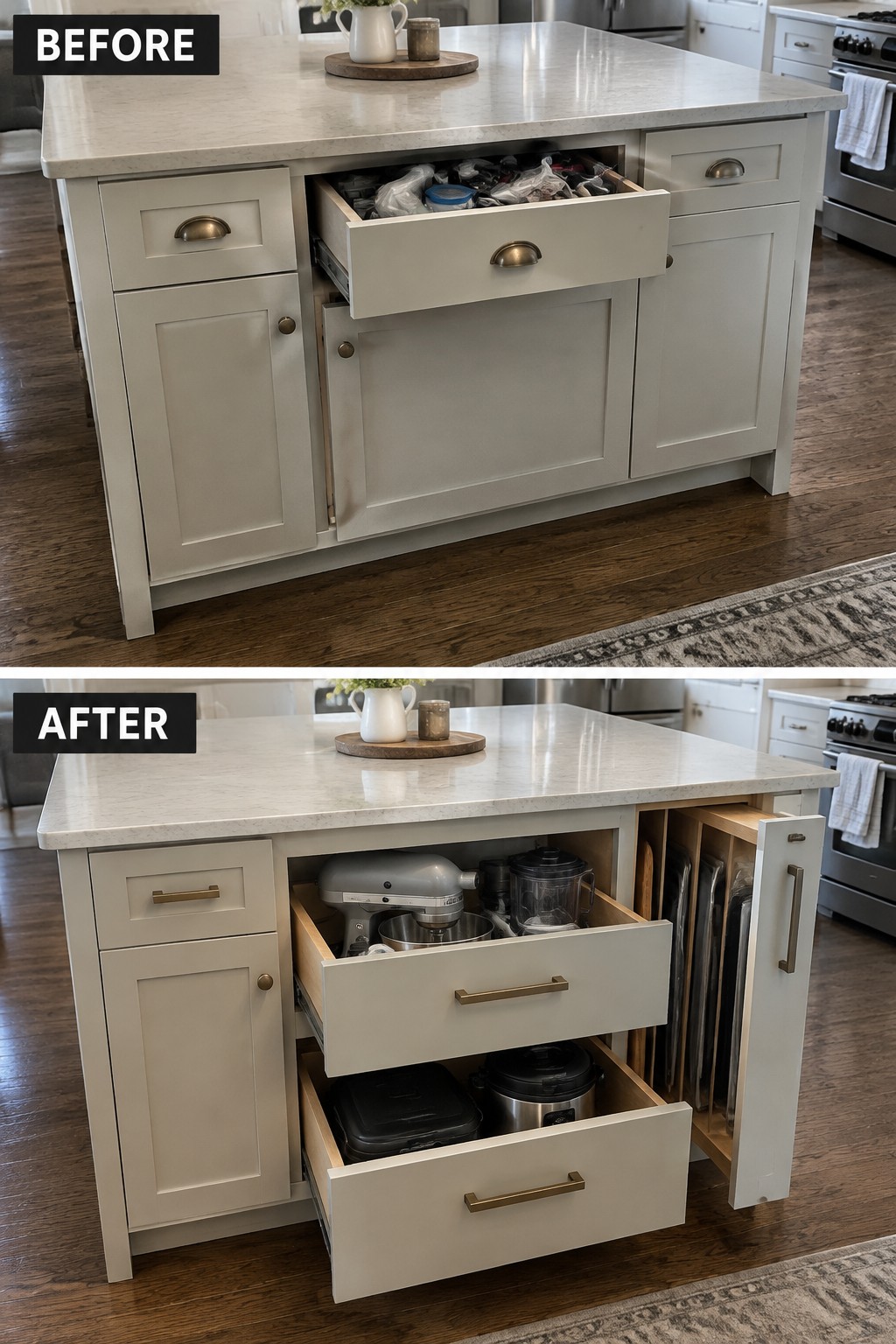
The island’s shallow, cluttered drawer becomes much more useful when storage is planned around the items you keep there. In the updated setup, deep drawers hold countertop appliances, so they’re easier to reach and the work surface stays clear.
This idea works well in an island or a wide base cabinet, especially if appliances are awkward to lift from a low shelf. Measure the items first and leave enough room for handles and cords; a drawer that is too tightly packed can be hard to use.
Add A Tall Pull-Out Rack For Kitchen Storage
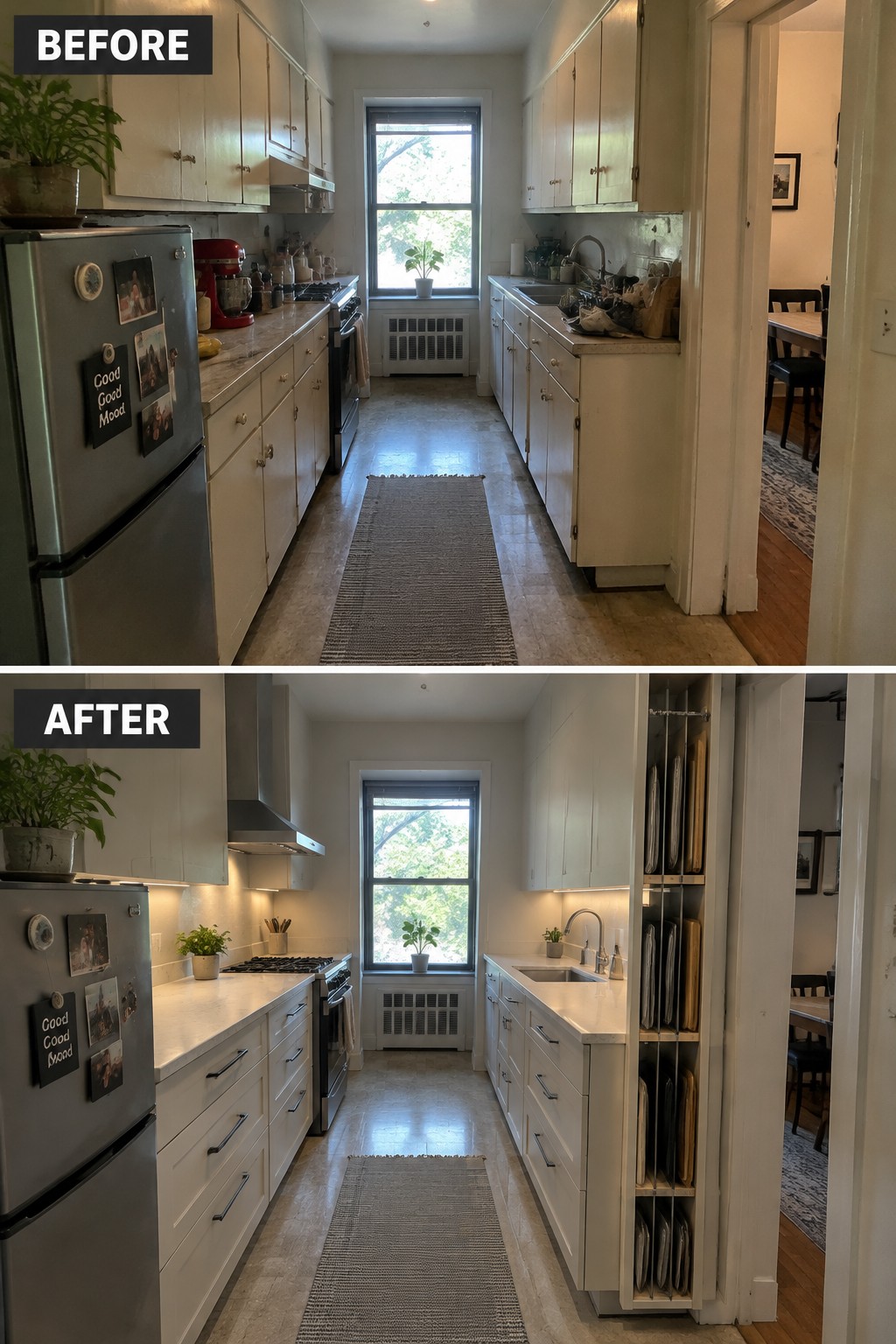
Replacing a narrow section of standard cabinetry with a tall pull-out rack makes awkward space useful for trays and serving pieces. In this kitchen, the added vertical storage helps clear the counters while keeping those items close at hand.
This idea works well beside a doorway or at the end of a cabinet run, where a full-depth cabinet might feel bulky. Measure the opening carefully, and make sure the rack slides out without blocking the walkway.
Organize A Pantry With Pull-Out Shelves
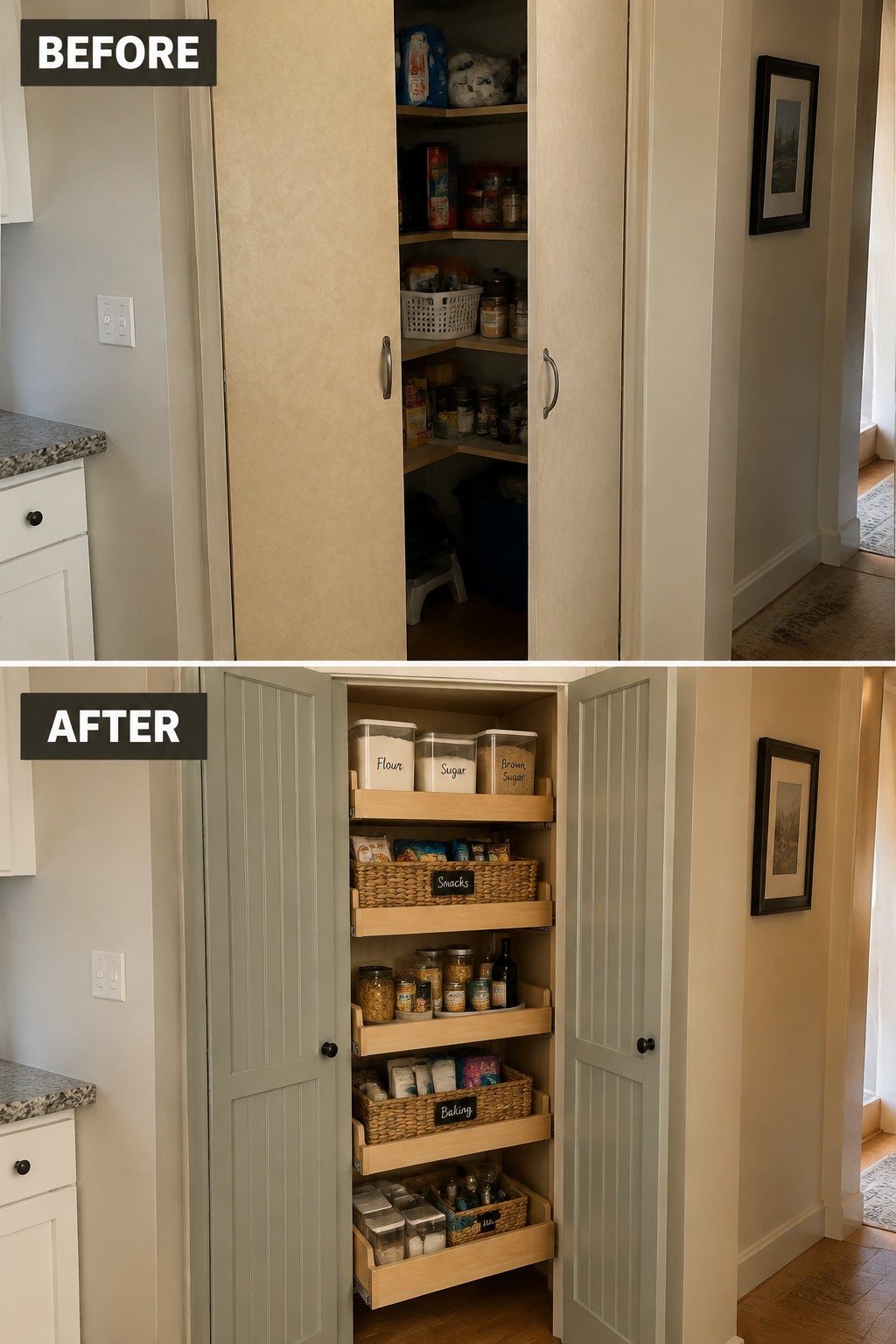
The pantry is easier to use when its shelves slide out instead of leaving supplies tucked into a deep, hard-to-reach cabinet. Here, pull-out shelves separate everyday food into clear sections, while labeled baskets keep similar items together.
This idea works well in a narrow pantry where fixed shelves make it hard to reach things at the back. Measure carefully before choosing the hardware, and leave enough room for the shelves to extend without hitting the doors.
Replace Upper Cabinets With Open Shelves
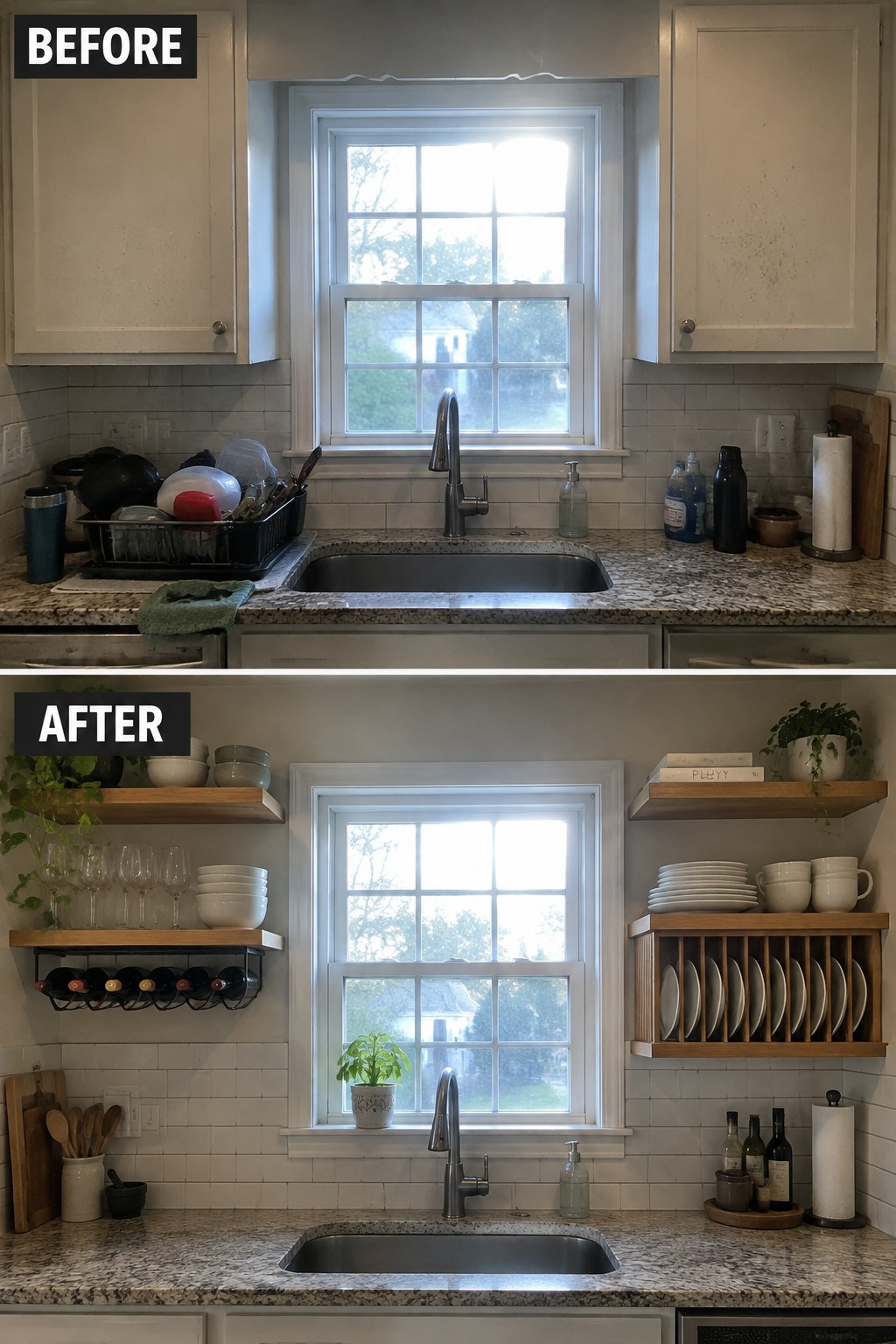
Removing the upper cabinets opens up the wall and makes everyday dishes easier to reach. In this kitchen, wood shelves and a plate rack provide visible storage without bringing back the bulky, closed-in look.
This idea works well when you have room to keep only frequently used items on display. Measure carefully, secure shelves into studs, and avoid crowding them; a little open space makes the storage easier to use and maintain.
Frequently Asked Questions
Q: Do I need to replace all my cabinets, or can I update just the problem areas?
A: You can often replace only the cabinets that waste space or no longer work for you. Keep sturdy cabinets that fit well, then add practical upgrades like pull-out shelves or deeper drawers where they’ll make the biggest difference.
Q: How can I add storage without making a small kitchen feel crowded?
A: Use the space you already have before adding more cabinets. Drawer dividers, a narrow pull-out beside the fridge, or shelves inside cabinet doors can hold everyday items without taking up more floor space.
Q: Are open shelves a good replacement for upper cabinets?
A: They can work well for dishes you use often, but they need regular tidying and dusting. Try replacing just one short run of upper cabinets with shelves before committing to a full wall.
Q: What should I store in deep drawers?
A: Deep drawers are handy for pots, pans, and mixing bowls because you can see and reach items without digging through a cabinet. Add a divider to keep lids from sliding around.
