

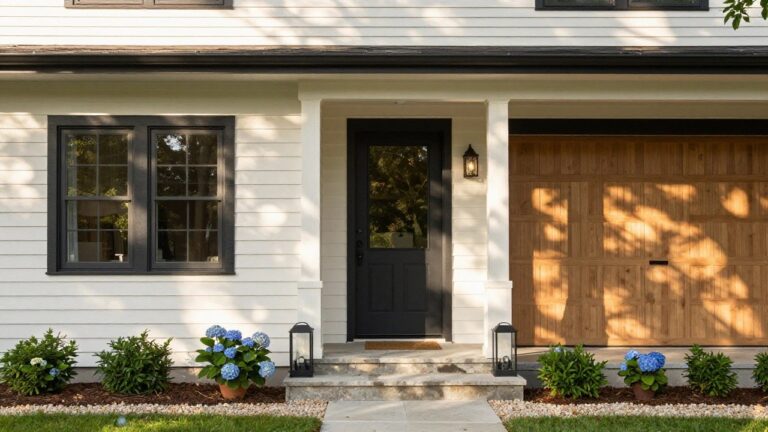
When you approach a house from the street, the exterior colors hit you first, defining the facade’s character through how they wrap siding, trim, and rooflines together.
I’ve found that modern combinations work best when they balance bold contrasts with neutrals that let natural light shift the mood throughout the day.
A few years back, I watched a neighbor refresh their entry with charcoal gray against warm beige brick, and it made the whole front porch feel more welcoming without any major changes.
These palettes consider real-world factors like regional weather and nearby trees, so they hold up better than fleeting trends.
One or two might fit your home’s lines perfectly.
White Siding with Black Trim and Wood Door
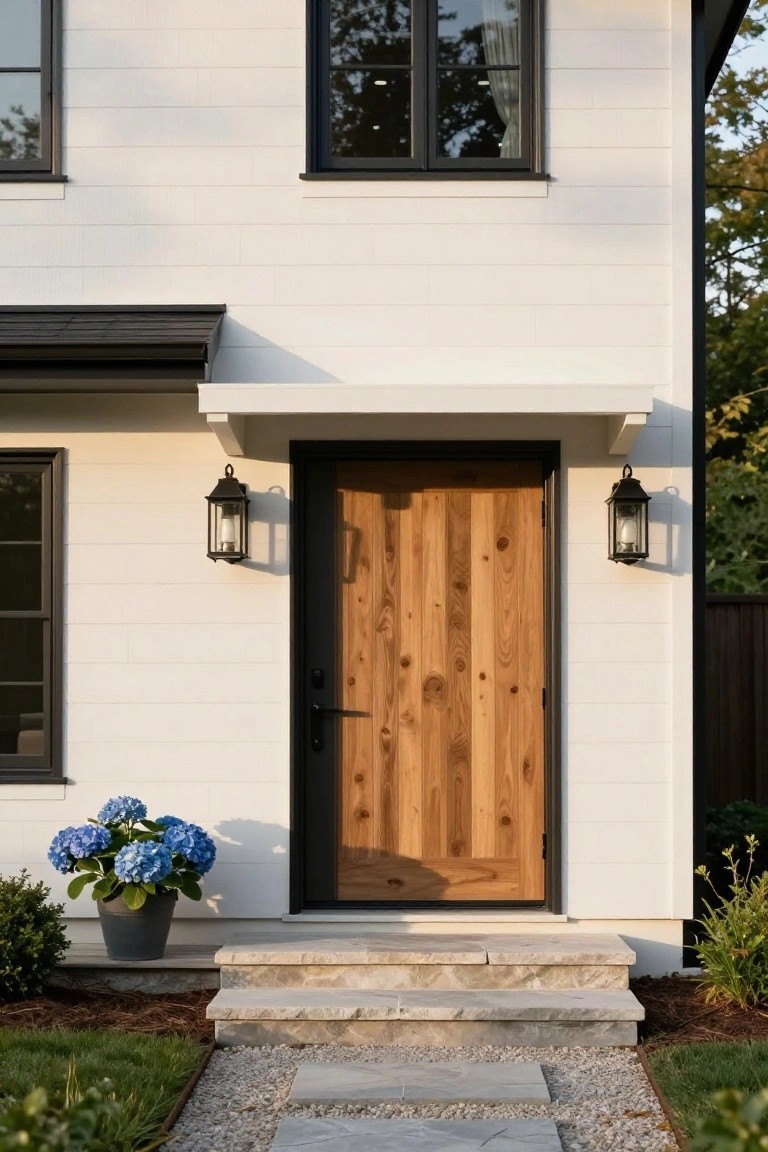
This setup uses bright white board-and-batten siding as the base, with black window frames and trim adding sharp contrast. A warm cedar wood door pulls it together without overpowering things. The result feels fresh and modern, but still approachable, especially with simple plants like those blue hydrangeas out front.
It works great on homes in suburban spots or newer builds aiming for that clean farmhouse style. Pair it with stone steps or gravel paths to keep the entry grounded. Just make sure the wood door gets a good sealant, since it stands out so much.
Dark Stucco with Warm Wood Cladding
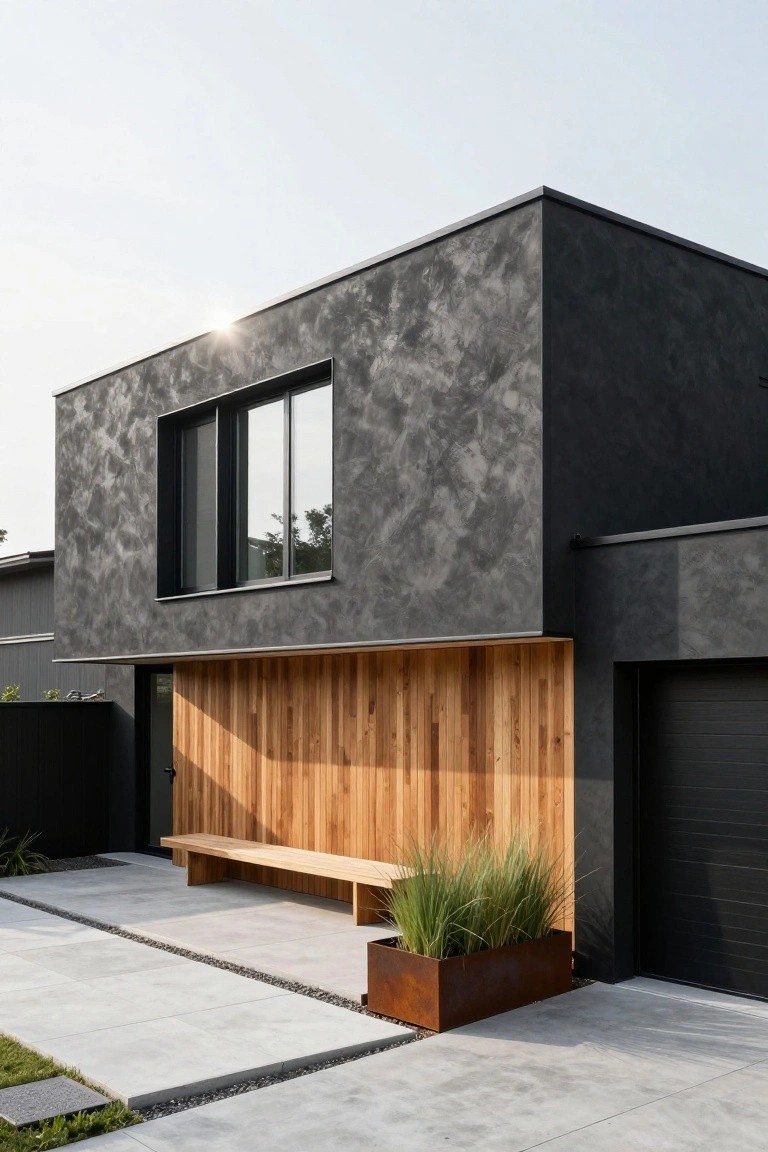
One solid way to handle a modern exterior is dark stucco walls paired with warm wood cladding. The stucco here has a subtle texture that catches the light, while the cedar-like wood runs along the entry and bench area. That mix keeps things sleek but adds real warmth up front, so the house doesn’t feel stark.
Try this on low-profile homes where you want curb appeal without bright colors. Run the wood horizontally around doors or garage edges, and add a simple planter nearby for balance. It suits shady lots too, since the dark base hides dirt well.
Light Blue Clapboard Siding
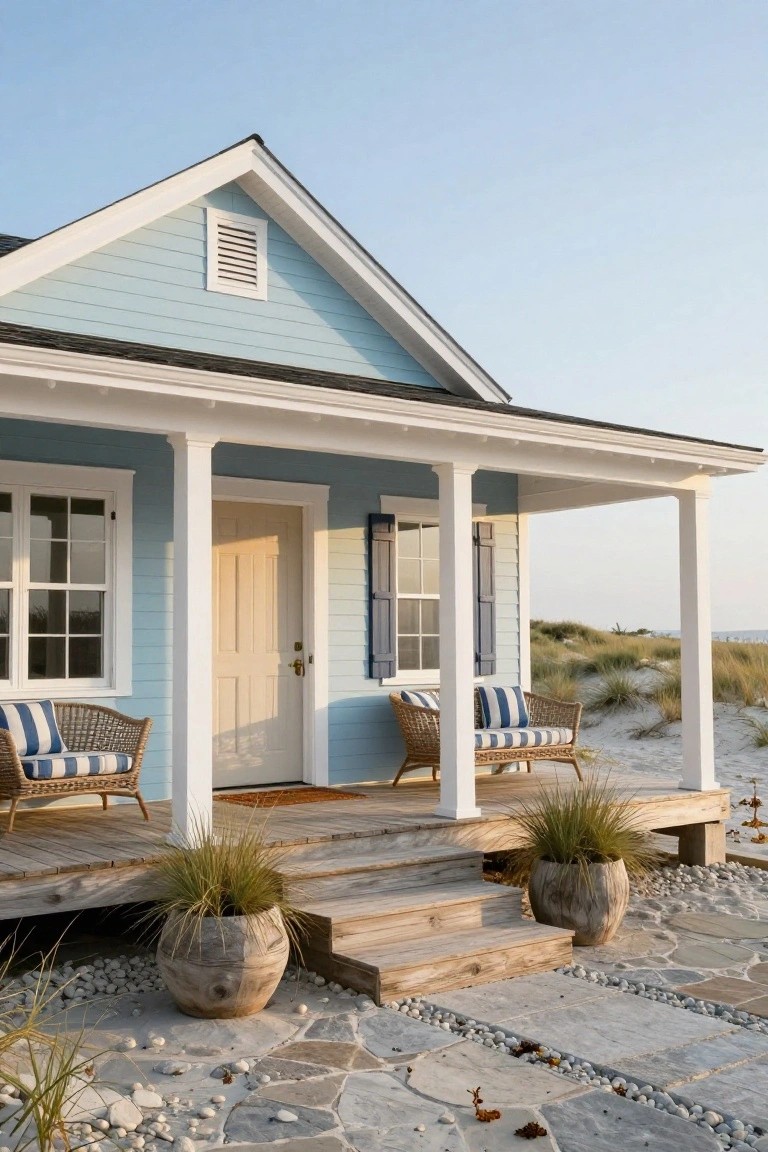
A soft blue like this on clapboard siding brings out the best in coastal homes. It picks up the sky and water nearby without overwhelming the simple lines of the house. White trim keeps everything crisp, and that porch pulls it all together for easy curb appeal.
This works well on smaller cottages or bungalows in beach areas. Pick a pale shade that fades nicely in the sun, pair it with white columns and natural wood decking. Skip darker accents unless you want more shadow play… just keep the door neutral.
Recommended Products

✅【Durable and Sturdy】—The siding mounting blocks for outdoor lights is made of thick, quality plastic and has a solid feel to it. Outdoor light siding mount is white and surface upgrade can be painted to match the color of the vinyl siding or light.

【Premium Quality】With textured and paintable white surface, this siding mounting kit is made of solid and sturdy plastic material. You may also paint the fixture to finish with your desired colors to match the color with your vinyl siding or just fine left with its natural off-white color. 【Note】: Only good snug fit on for 1/2 inch Lap Double and 4 inch height Siding.

Kit includes mounting block with built-in electrical box, NM cable connector, and 4 screws.
Gray Cladding Over White Walls
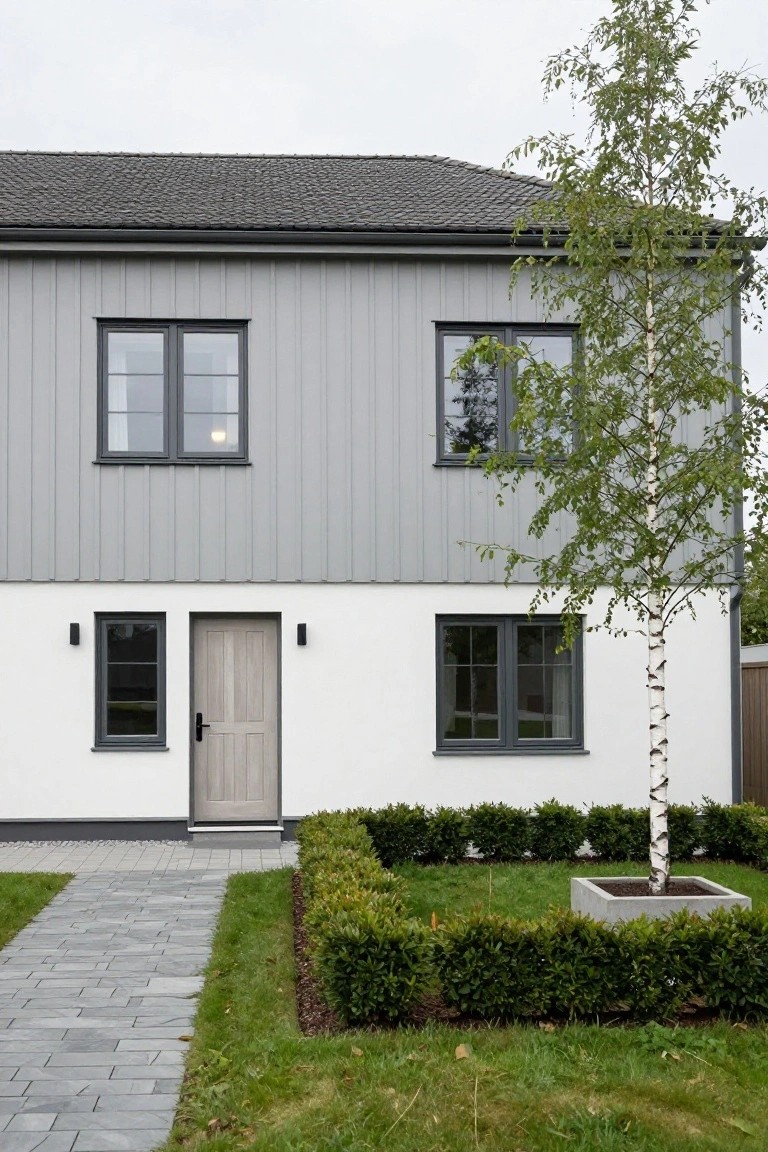
This exterior splits the facade with white render on the bottom half and light gray vertical cladding above. It keeps things simple and modern. The shift in materials adds just enough interest, while black window frames pull the look together without overwhelming it.
Try this on a two-story house where you want subtle height. It suits suburban spots with some grass and low hedges around the path. A pale wood door softens the gray nicely, and one tall tree nearby keeps the yard from feeling empty. Watch the proportions so the gray doesn’t dominate.
Creamy Stucco with Red Shutters
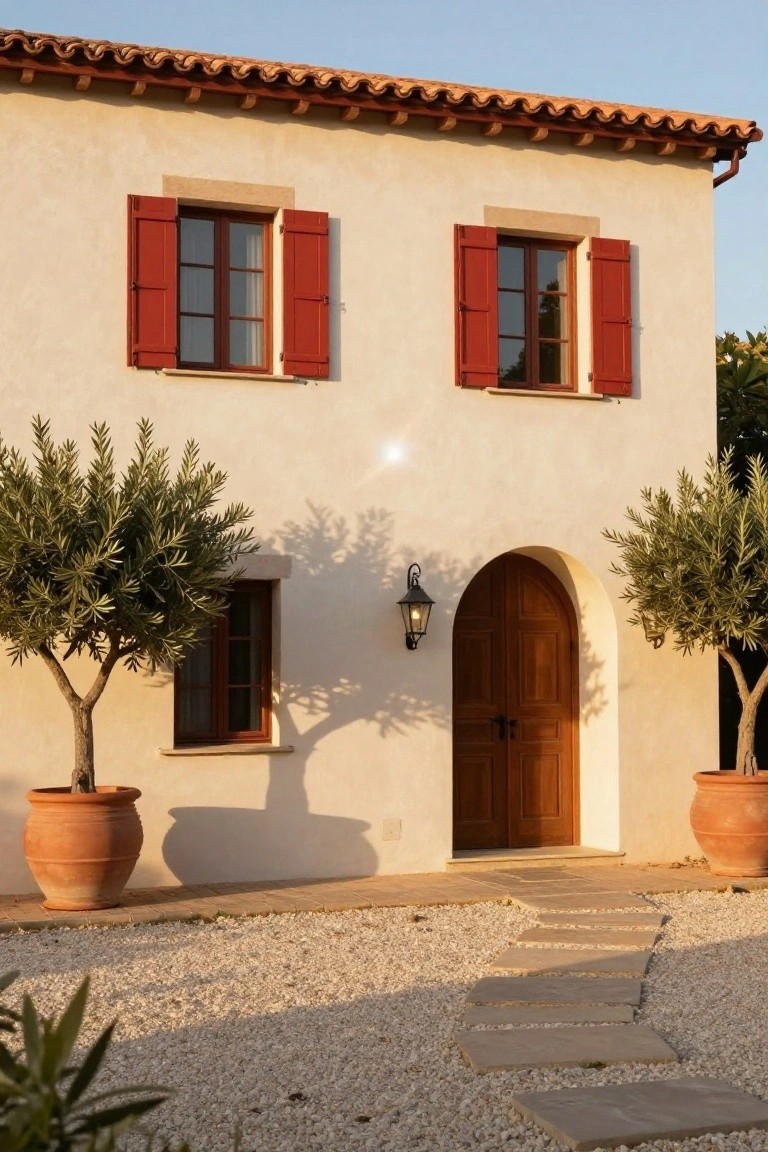
Light stucco walls in a soft creamy tone pair nicely with bold red shutters. This combo brings a bit of Mediterranean warmth to the front of the house. The red pops against the neutral walls, especially in good sunlight, and keeps things feeling fresh and lived-in.
You can pull this off on ranch-style or Spanish-inspired homes pretty easily. Stick with a wooden arched door for balance, and flank the entry with terracotta pots holding olive trees. It suits warmer climates best, but watch that the red doesn’t fade too fast in harsh sun.
White Walls with Dark Gray and Warm Wood
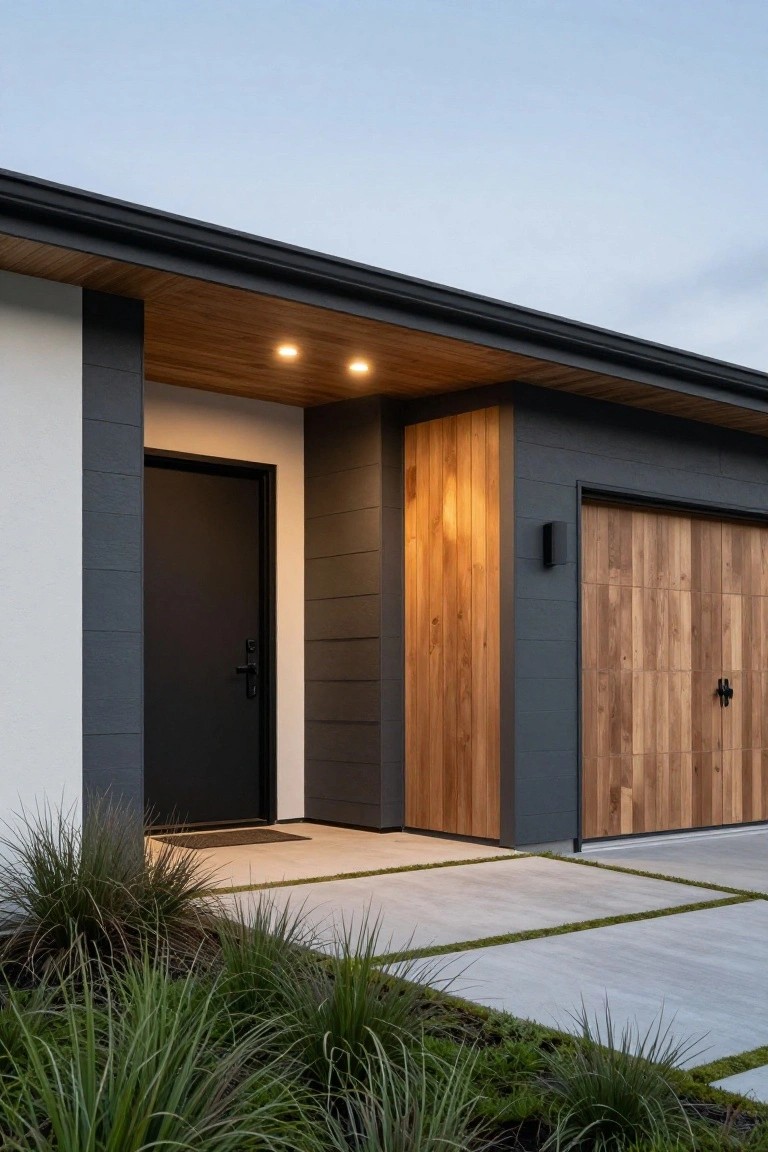
This setup takes crisp white stucco walls and pairs them with dark gray panels and vertical wood cladding around the entry. The white gives a fresh, open look that reflects light nicely. Dark gray adds structure without overwhelming things. Then the wood steps in with its natural tones, making the whole facade feel less stark and more approachable.
It works best on newer homes or remodels where you want modern lines but a touch of coziness. Try it on a street-facing side to boost curb appeal. Stick to protected wood like cedar or ipe so it holds up over time, and pair with simple grasses out front to let the house stay the focus.
Green Siding with a Warm Wood Door
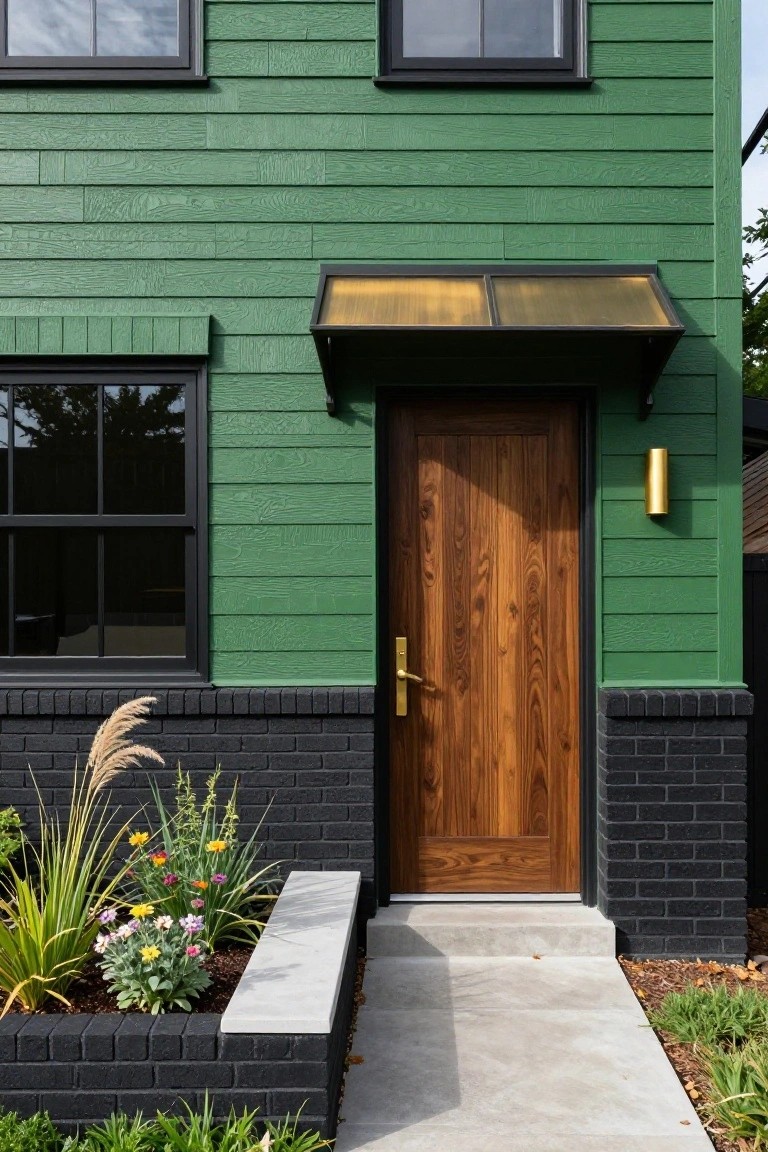
A deep green siding like this one brings a fresh pop to the house front without going overboard. The walnut wood door pulls it together nicely. It warms up the green and makes the entry feel more inviting right away. Black brick along the base adds some weight down low. Brass touches on the awning and light keep things simple.
This combo suits modern homes or ones with clean lines. It holds up well in shady spots too. Just make sure the wood door gets a good finish to stand up to weather. Skip busy landscaping around it. Let the colors do the talking.
Beige Walls and Black Door
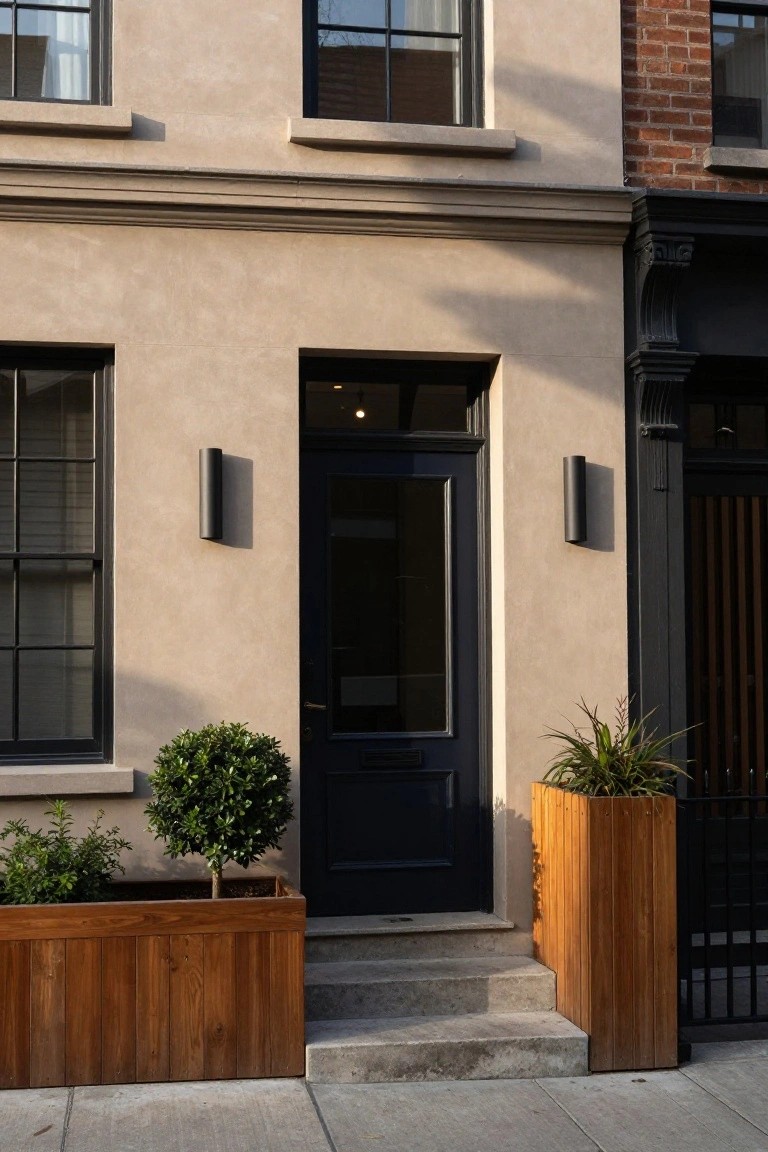
A soft beige plaster on the walls works nicely with a black front door and trim around the windows. It keeps things calm and modern, especially next to busier brick neighbors. Those wood planters with boxwood on one side and grasses on the other bring in some natural color without overdoing it.
This combo suits row houses or urban homes where you want subtle update. Paint the door a deep matte black, match the lights, and add simple pots. Skip bold colors elsewhere, or it gets busy. Good for city streets… stands out just enough.
White Stucco Walls with Dark Wood Siding
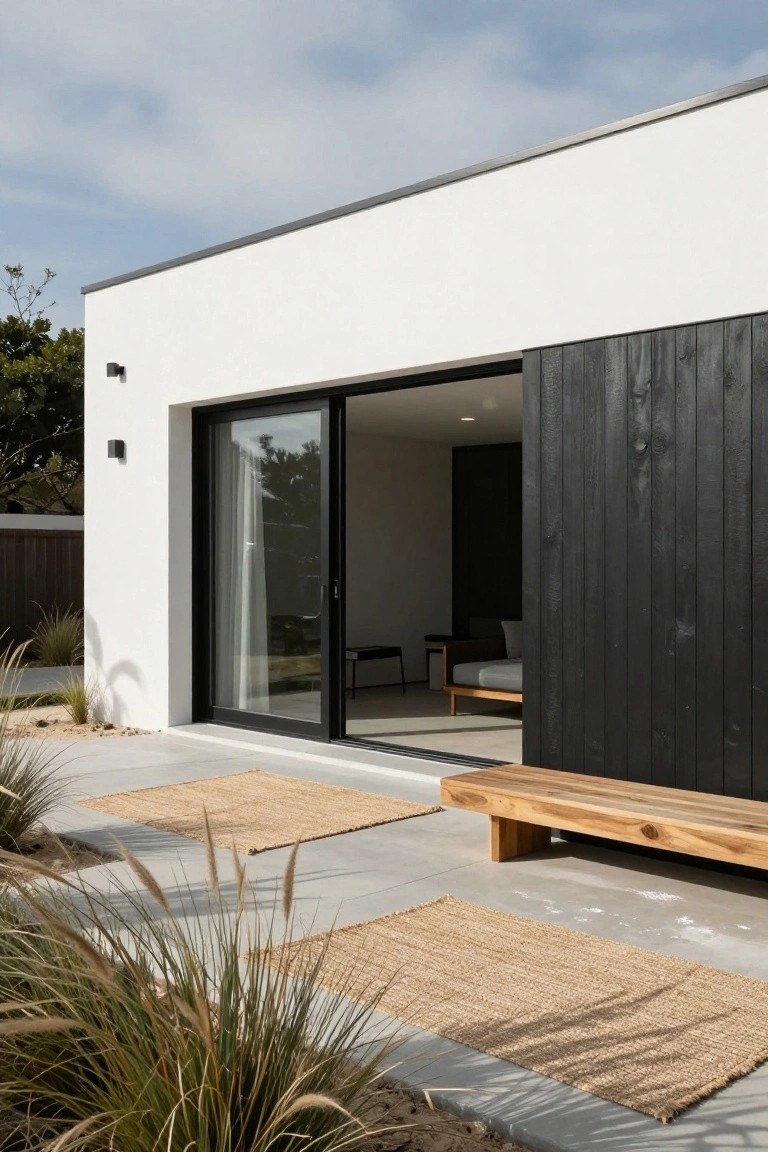
One clean way to handle a modern exterior is white stucco walls next to dark wood siding. The white keeps everything bright and simple. That dark siding adds just enough texture and weight. Black doors fit right in without pulling focus. It’s a look that stays sharp year-round.
This combo works best on low single-story homes or beach houses where you want low upkeep. Stick to vertical wood planks for rhythm. Keep plantings minimal around the base, like tall grasses. Skip bold colors elsewhere or it gets too busy.
Soft Blue Shingles with Stone Base
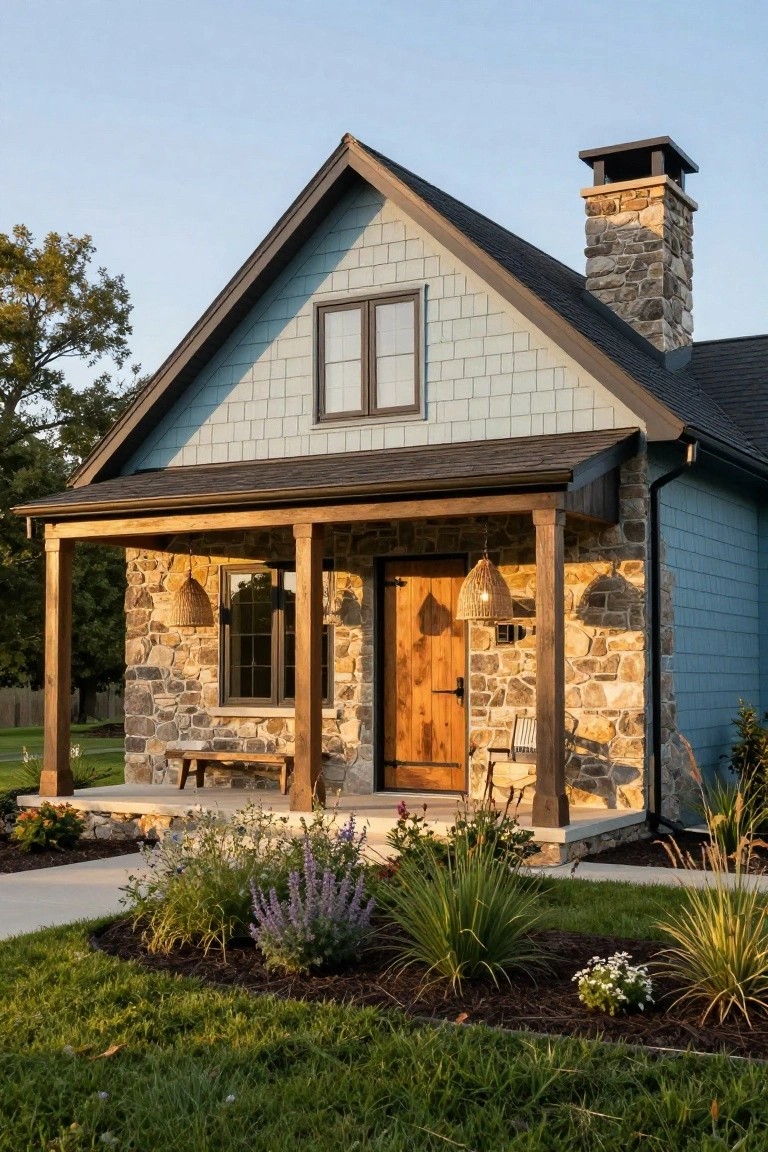
A soft blue on shingle siding like this brings a calm, fresh vibe to a simple cottage exterior. The color picks up the sky without overpowering the stone base or timber porch posts. It keeps things modern yet rooted, especially with the dark roof tying it down.
This combo fits homes in wooded or rural spots, where the blue echoes nature around it. Use it on one or two-story builds with some stone details already. Skip it if your area leans too formal. The wood door adds warmth… easy to match almost anywhere.
Bold Yellow Door on Dark Walls
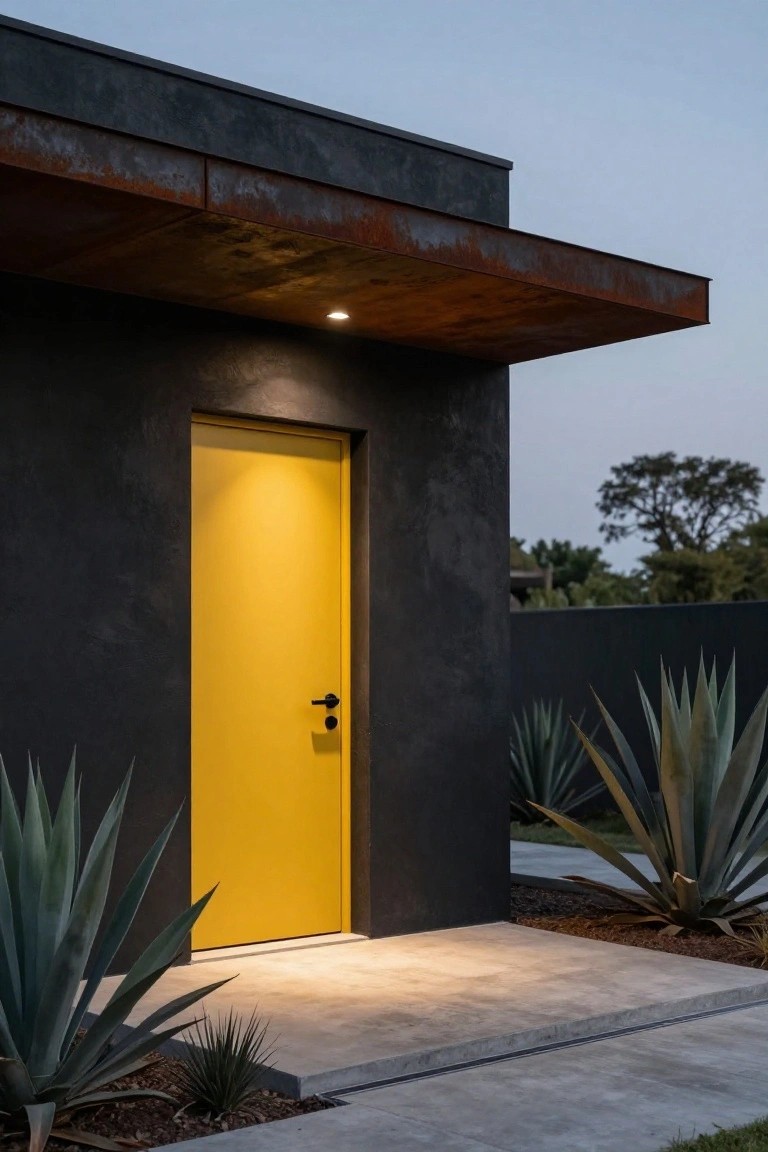
A bright yellow door really pops against dark exterior walls like this. It pulls your eye right to the entry without much fuss. The contrast makes the house feel more welcoming, especially on a minimalist design with textured black siding and a simple rusted metal overhang. That single color choice adds life to what could otherwise look too stark.
This works best on modern homes in warmer climates, where the yellow stays bold year-round. Pair it with low-water plants like agaves along the path to keep things clean. Just make sure the door material holds up to sun, and skip busy trim around it. The dark walls do the rest.
Yellow Siding with a Blue Front Door
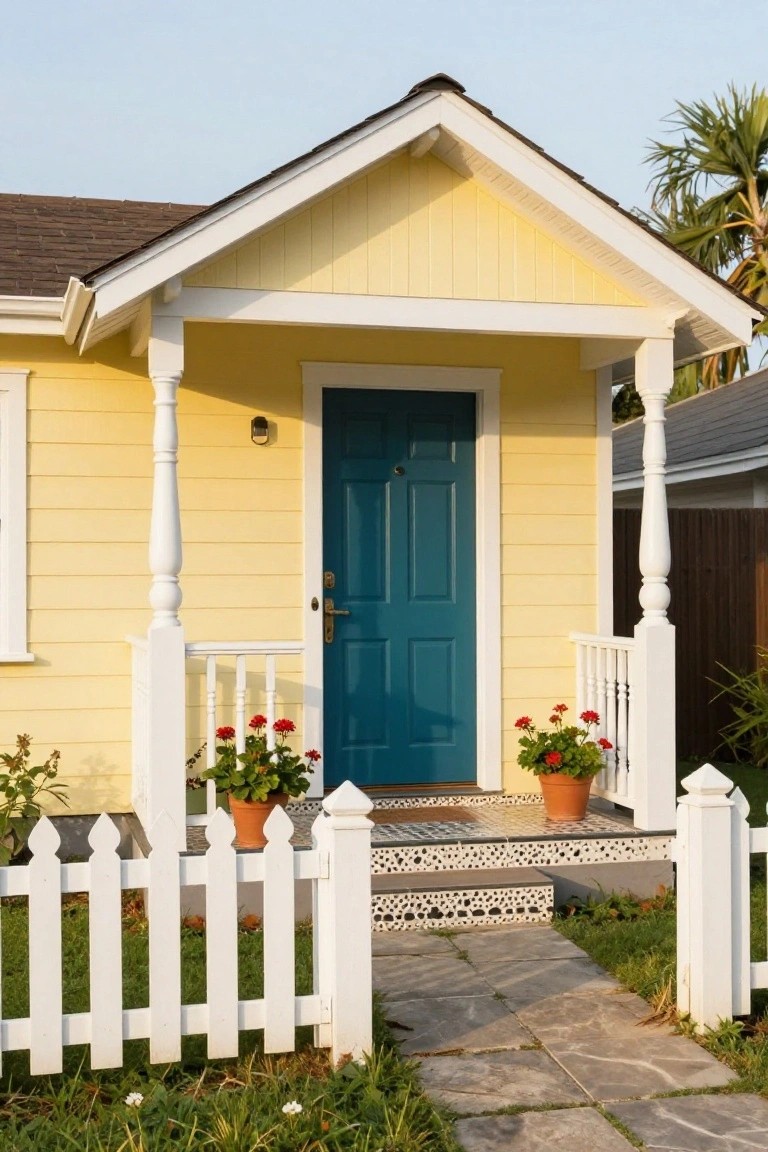
This color combo takes a simple cottage-style house and makes it pop without trying too hard. The pale yellow siding gives off a sunny, welcoming feel, especially in a coastal spot like this one. Then that turquoise blue door pulls your eye right to the entry, and the white trim keeps everything crisp. A couple pots of red geraniums on the porch tie it together nicely.
It works best on smaller homes or bungalows where you want curb appeal that feels fresh but not overwhelming. Pick a soft buttery yellow for the body, something like a muted teal for the door, and stick to white for accents. Avoid going too bright on the yellow, or it might look dated. Test samples in morning light first.
Wood Siding with Pale Stucco Walls
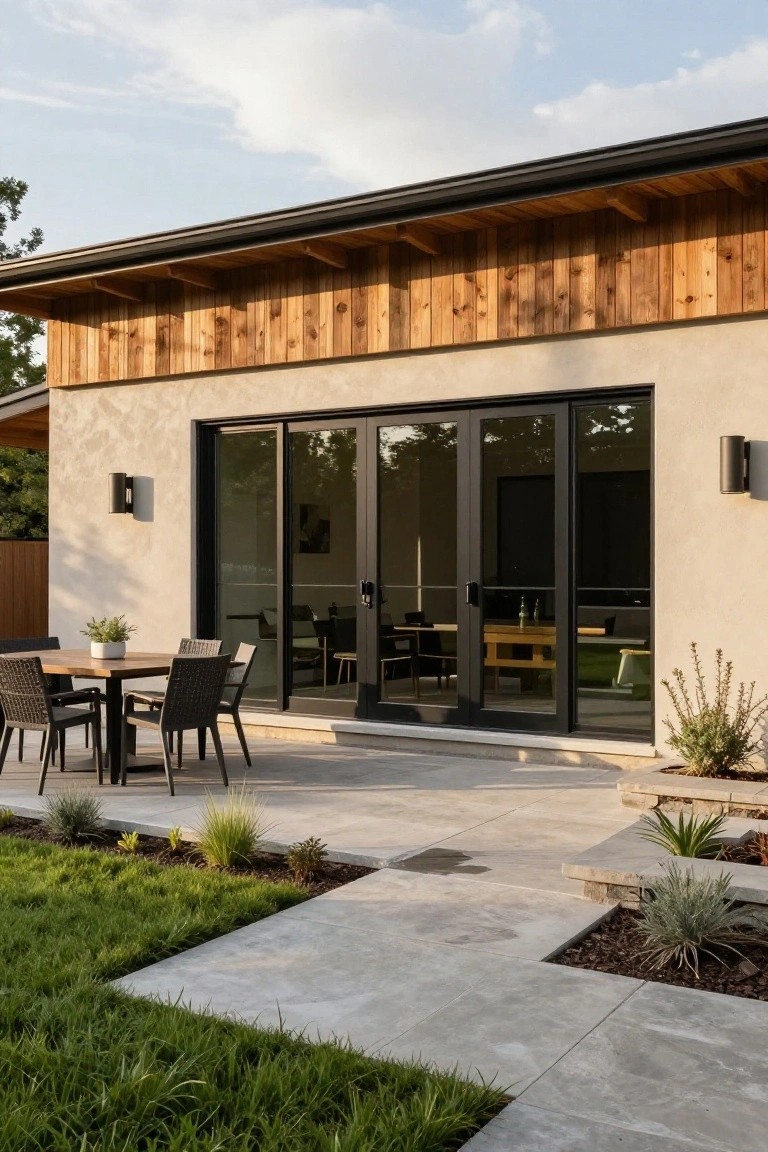
One solid exterior combo pairs vertical wood siding up high with pale stucco on the main walls. The wood brings in those natural warm tones, while the stucco keeps things light and clean. Black frames around the big sliding doors tie it together without overwhelming the look. It’s a simple way to add texture and interest to a plain boxy house.
This setup shines on modern homes with clean lines, especially where you want some coziness against all that glass. Use it on a back facade opening to a patio, like with those grey pavers leading to the yard. Skip it if your climate is too wet, since wood needs protection. Otherwise, it ages nicely over time.
Gray Siding with Mint Green Doors
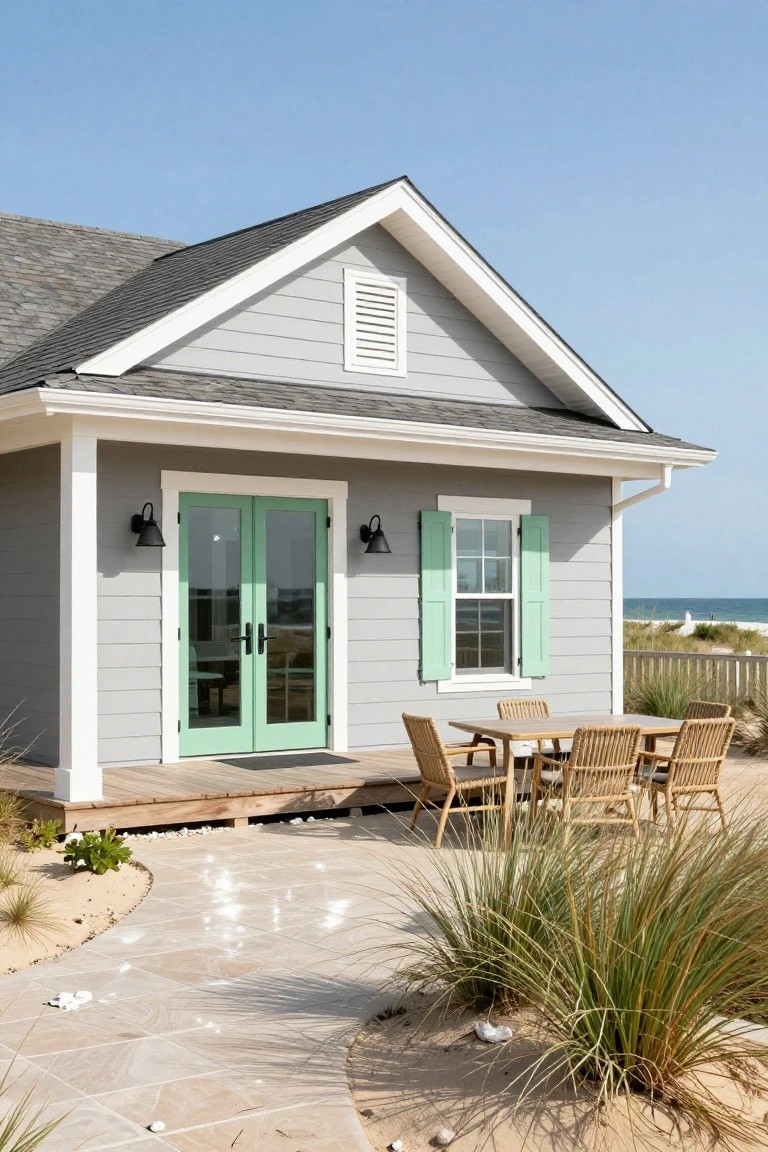
A soft gray siding gives this little beach house a clean, modern look that doesn’t fight the sandy surroundings. Then mint green doors and shutters add just enough color to make the entry pop without going overboard. It’s a simple way to bring some life to a neutral base, especially near the water where everything else is beige or blue.
This works best on smaller homes or cottages in coastal spots, where you want fresh vibes but nothing too bold. Pick a muted gray like this one, and match the green to nearby plants or sea glass tones. Keep windows white or clear so the accents stay the focus… one thing to skip is darker trim, as it can muddy the clean lines.
Warm Beige Stucco with Dark Wood Door
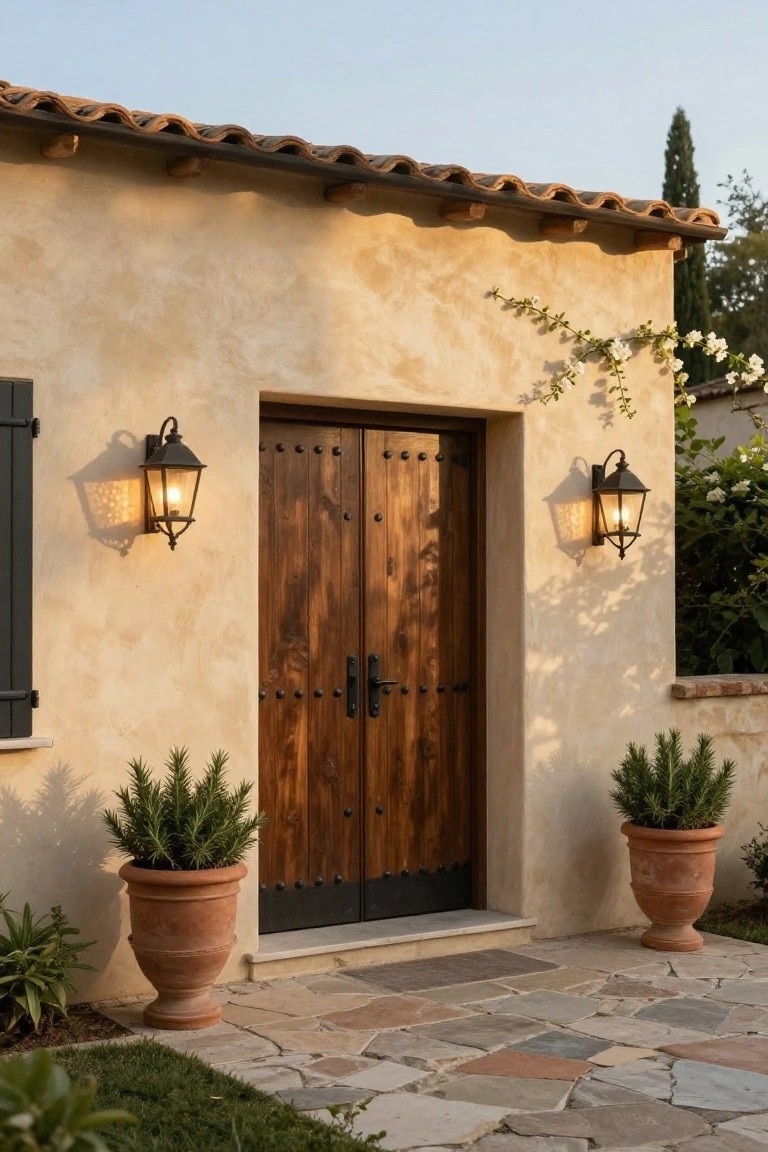
A soft beige stucco wall sets off a sturdy double wooden door in this entry design. The warm tan color on the walls picks up the natural tones in the wood, while black iron hardware and lanterns add just enough contrast. It gives the house a grounded, lived-in feel without trying too hard.
This combo suits homes in dry or sunny areas, think Southwest or Mediterranean styles. Use it on a simple facade where you want the entry to stand out naturally. Add terracotta pots nearby to tie in more earthy reds, but keep plantings low-key so the wall and door stay the focus.
Warm Wood Siding with Black Trim
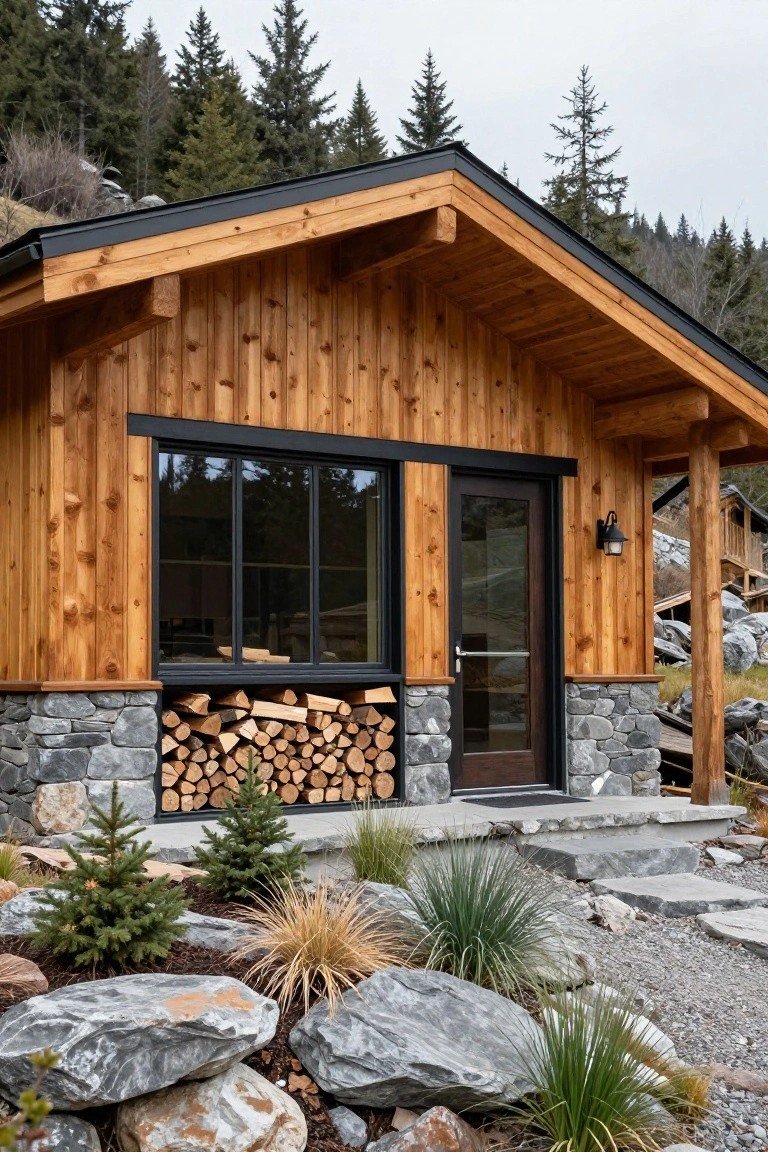
This setup uses natural golden-brown wood planks for the main siding, paired with black metal trim around the windows, roof edges, and door. The dark accents make the warm wood tones pop without overwhelming them. It gives a cabin feel that’s updated for today, especially with the stone base holding a neat stack of firewood right by the entry.
Try this on sloped sites or wooded lots where you want the house to blend in but still stand out. It works well on mid-sized homes like chalets or modern cabins. Just keep the wood sealed to handle weather, and match the black to matte finishes so it stays low-key over time.
Neutral Brick with Dark Wood Accents
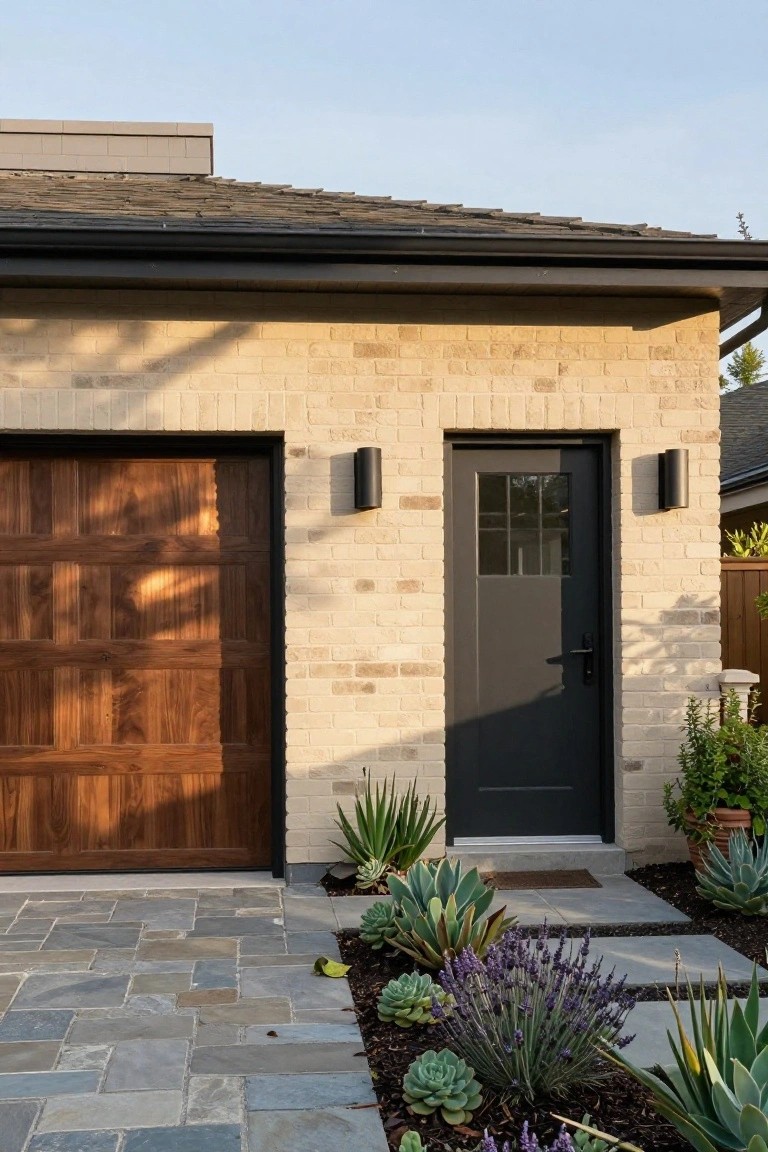
A light beige brick gives this house a soft, warm base that feels timeless. The dark walnut garage door pulls in rich wood tones right at the street level, while the black entry door and matching sconces add sharp modern edges. That mix keeps things balanced, not too busy.
Try this on ranch or craftsman-style homes where you want curb appeal without big changes. It suits sunny spots like California yards. Just keep plantings simple, like those succulents here, so they don’t steal the show.
Bright Orange Door on Sage Green Siding
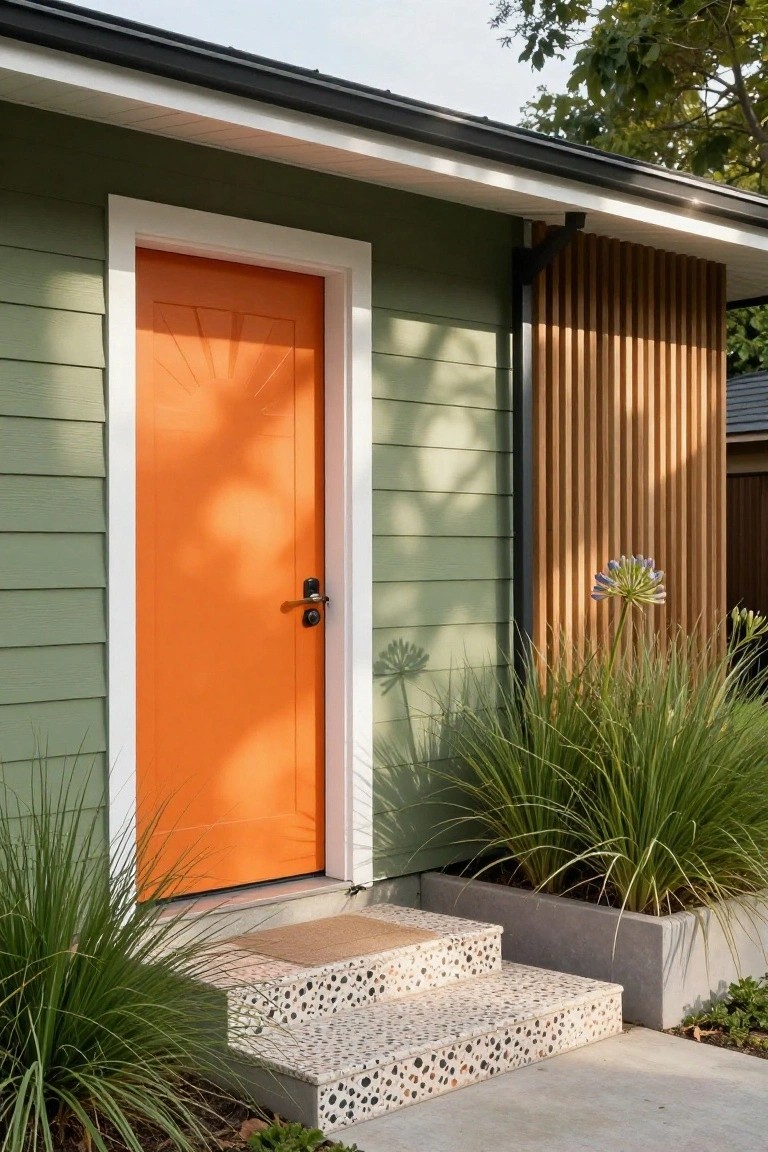
A bright orange door really stands out against sage green siding like this. The green keeps things calm and natural, almost blending into the garden around it. Then that door hits with a pop of color. It’s simple but makes the entry feel welcoming right away. The white trim around the door cleans it up nicely too.
This combo works best on mid-century style homes or any house with clean lines. Go for a muted green so the orange doesn’t overwhelm. It suits spots with some landscaping nearby, like grasses or low plants. Just make sure the door hardware is dark to match the modern vibe.
Navy Blue Door on Gray Shingles
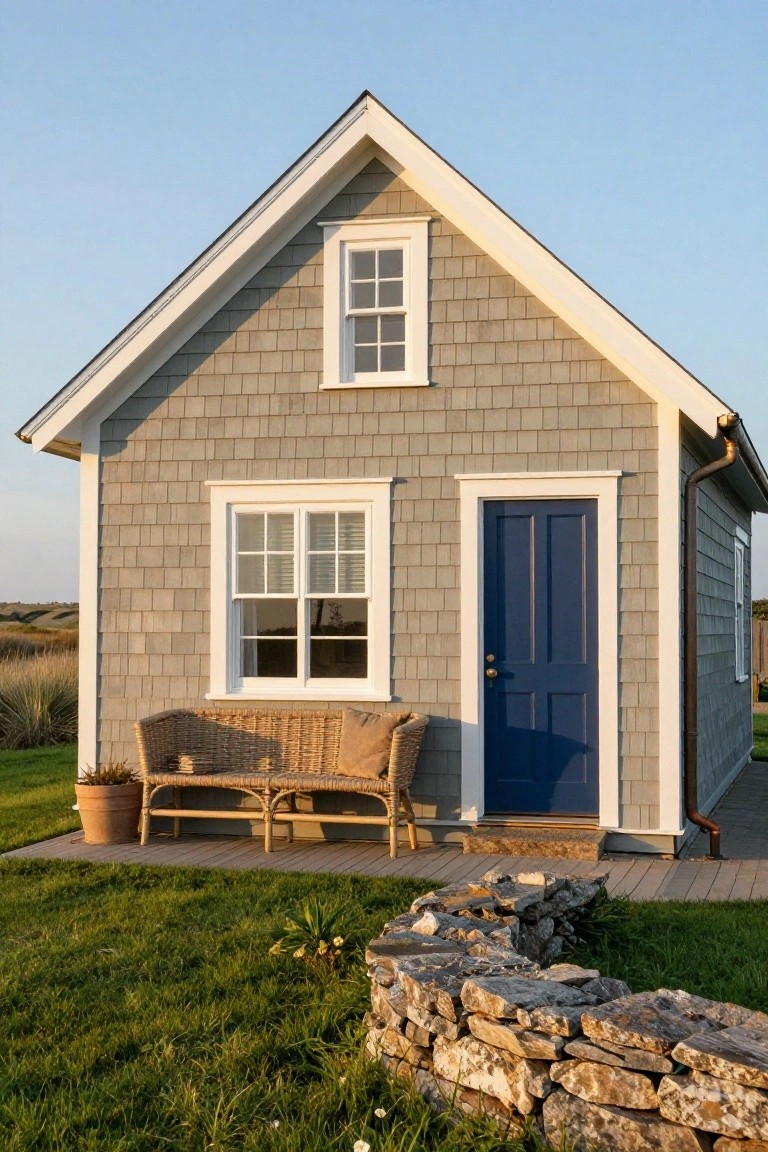
A navy blue door gives this shingle house a strong focal point right at the entry. The soft gray siding stays neutral so the door can shine, and white trim outlines everything neatly. It’s one of those easy updates that makes a plain facade more interesting without much fuss.
This combo works best on smaller homes like cottages or bungalows, especially in coastal spots where shingles feel right at home. Pick a true navy shade for good contrast, and add a simple bench out front to settle the look. Just keep the rest of the trim bright white so it doesn’t compete.
Frequently Asked Questions
Q: How do I test a color combo before painting the whole house?
A: Grab some sample paints and slap them on poster board or scrap plywood. Hang those next to your house at different times of day to see how the light hits them. Pick the one that pops just right with your siding and roof.
Q: What colors hide dirt and weathering the best on a busy street?
A: Go for deeper grays or warm taupes on the body, they shrug off grime without showing every speck. Pair with crisp white trim to keep things fresh. You save time on touch-ups that way.
Q: Can I pull off a dark combo like charcoal and navy on a smaller home?
A: Dark shades slim things down, so they work great on compact houses. Just add lighter accents around windows to keep it from feeling cave-like. Test it out, you’ll love the drama.
Q: How do neighborhood rules factor into picking these combos?
A: Check your HOA guidelines first, most limit wild neons but greenlight modern neutrals. Chat with a neighbor who’s painted recently for the real scoop. Stick close, and you avoid headaches.
