

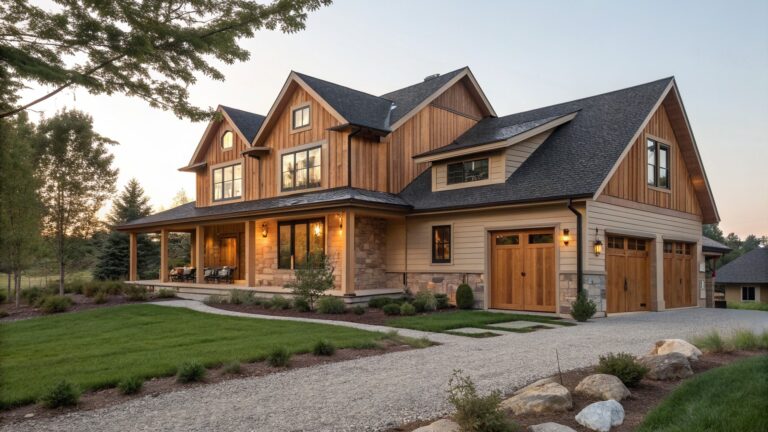
I have always paid attention to how the siding and trim on the front of a house shape the first impression long before anyone reaches the door.
Natural wood tends to soften sharp rooflines and give entries a settled look that painted surfaces rarely achieve on their own.
Some choices stand out more than others.
When I study farmhouses that use wood around windows or along porch posts, I find myself wondering which details would still look right after a few seasons of rain and sun.
Testing one or two of these accents on a small section of my own exterior feels like the safest way to judge what actually works.
Vertical Wood Siding for Texture
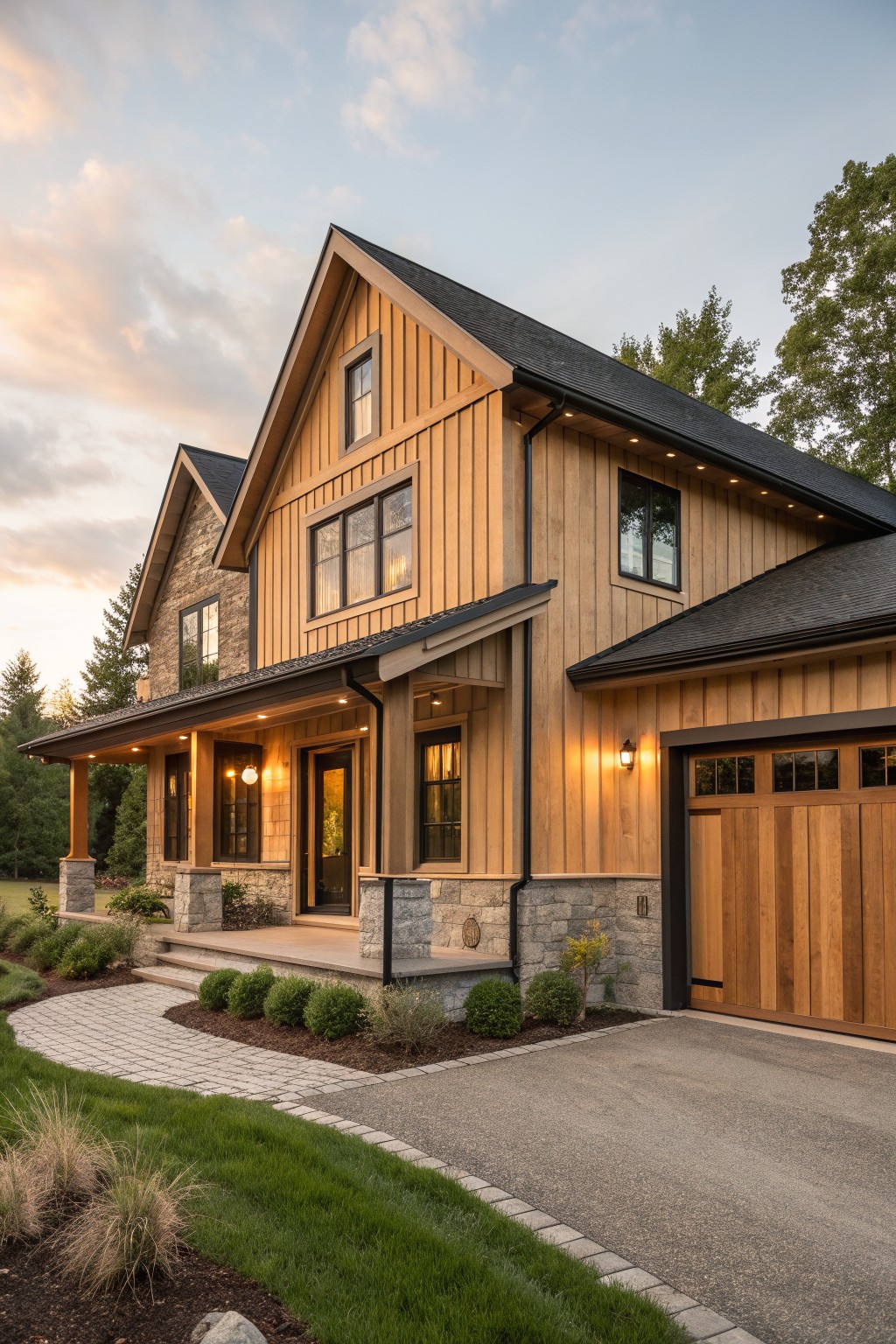
Vertical wood siding gives a farmhouse exterior a simple lift without looking fussy. The planks run straight up the gables and main walls, which makes the house feel taller and adds a bit of movement that horizontal boards often miss. It pairs naturally with the stone base below and keeps the whole look warm but still clean.
This approach works best on two-story homes where the upper level needs some visual weight. Keep the wood tone light and let the dark trim handle the contrast. Just watch the scale on smaller houses so the vertical lines do not feel too narrow.
Mix Wood Shingles With Horizontal Siding
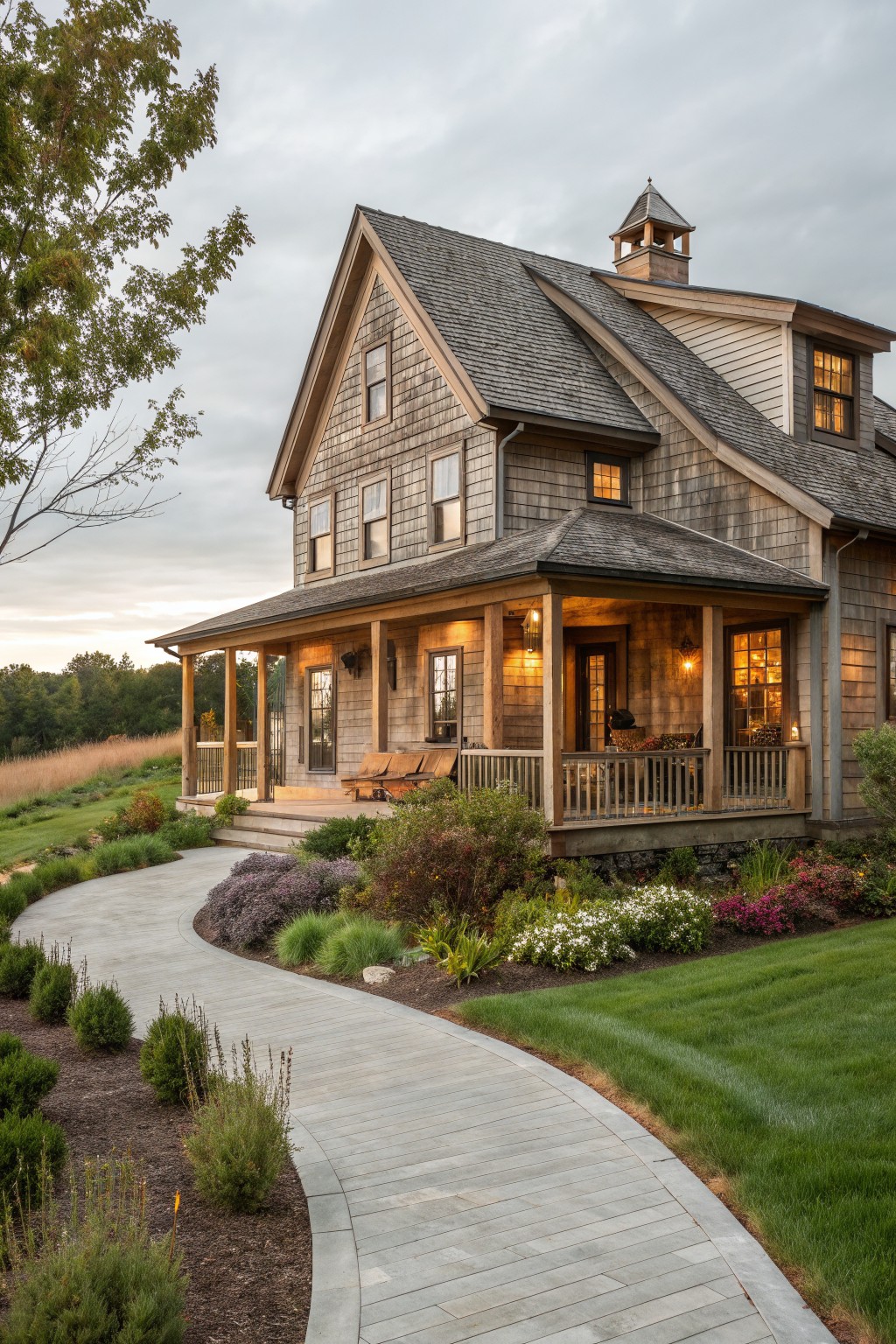
Natural wood on a farmhouse exterior adds warmth that paint alone rarely matches. Shingles on the upper walls paired with wider horizontal boards below create layers of texture that catch the light differently throughout the day.
This mix works best on homes that already have a simple roofline and a decent sized porch. Keep the wood tones close so the change in pattern stays subtle and the whole house still reads as one material rather than several.
Natural Wood Doors for Farmhouse Entries
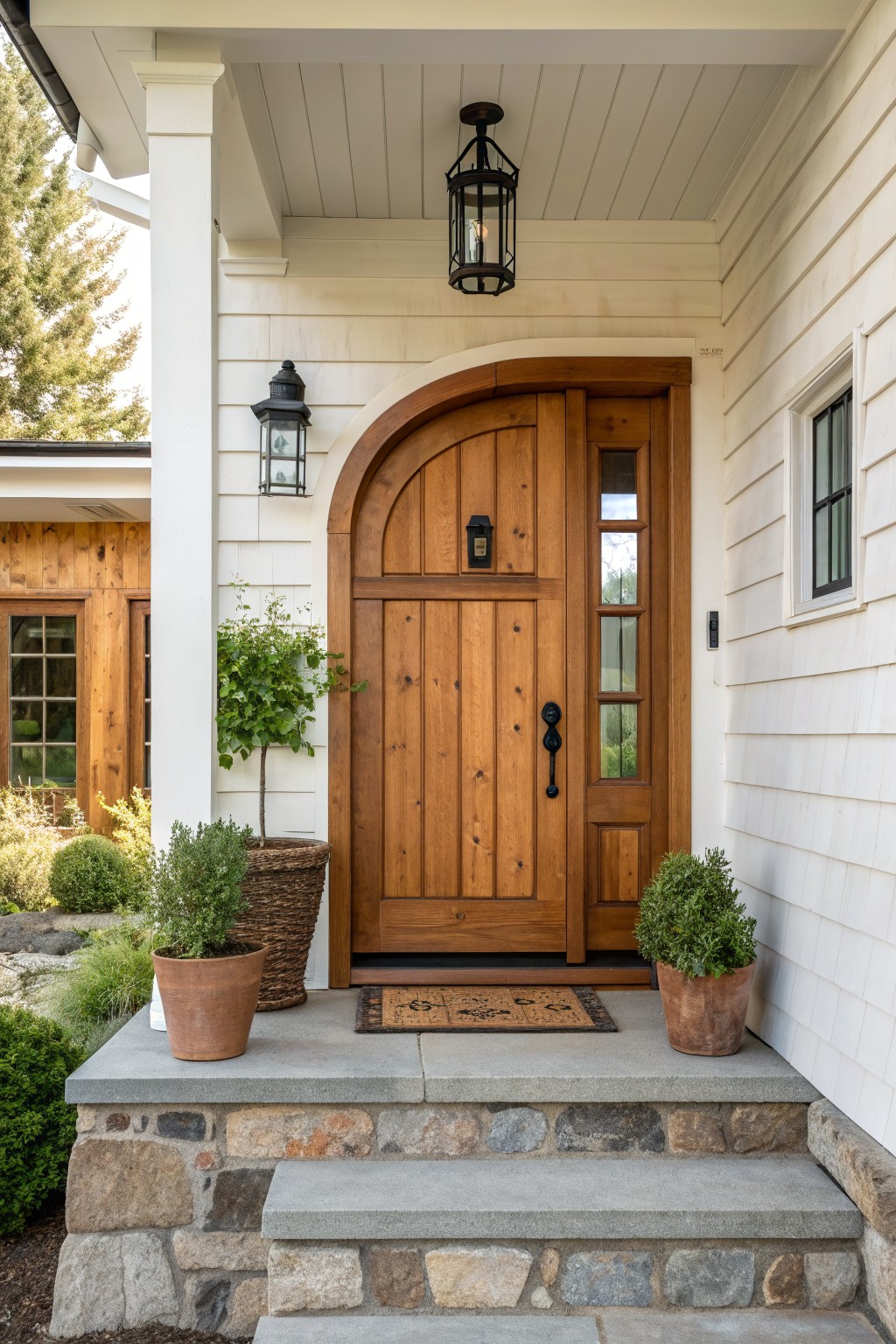
A natural wood door gives a farmhouse exterior real warmth without needing much else. The grain and tone stand out nicely against white siding and help the entry feel more grounded.
This works best on homes with simple trim and a stone base. Keep the hardware dark and minimal so the wood stays the main feature.
Pergola Covered Patios for Outdoor Meals
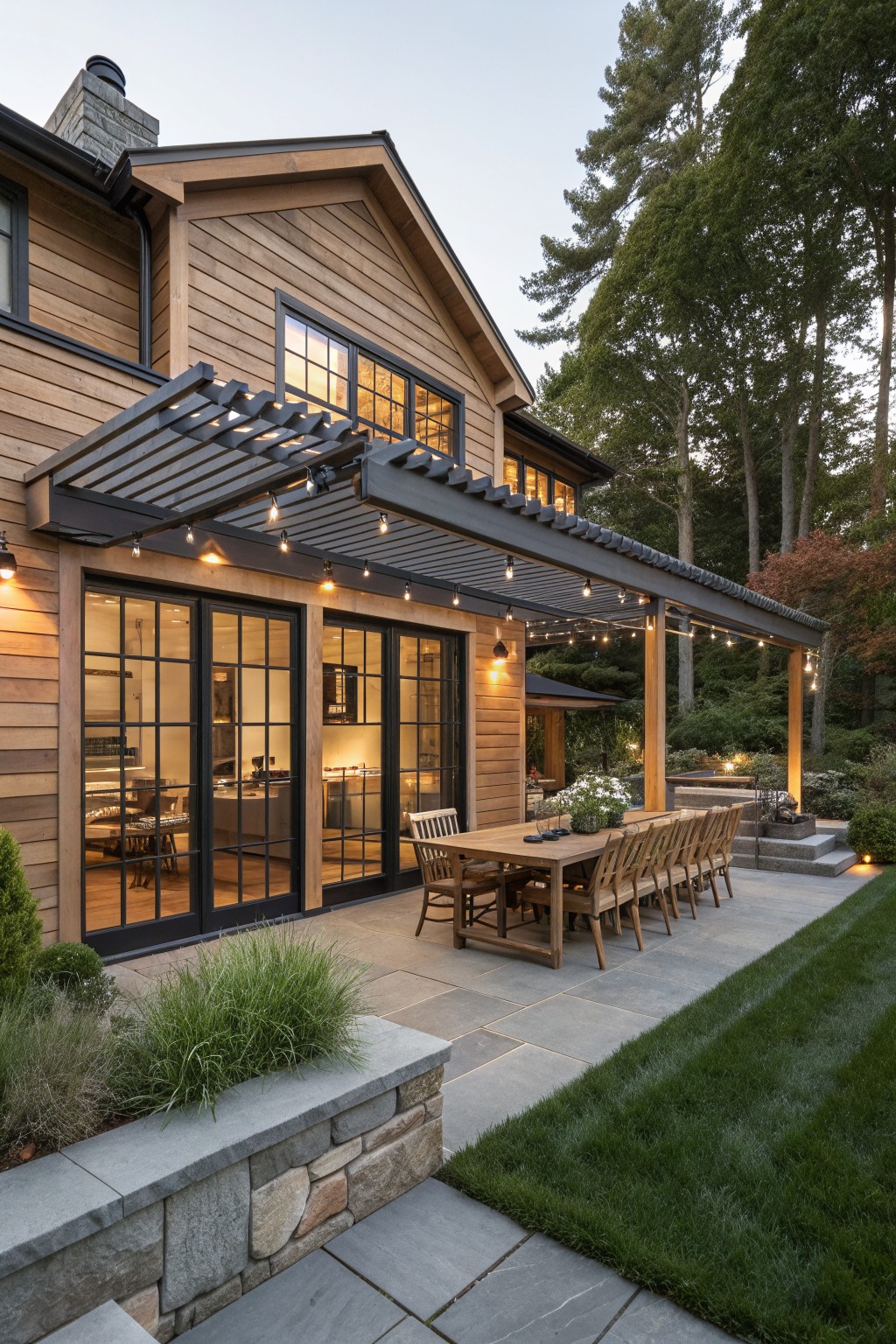
A pergola over the patio gives you a defined spot for a long table without leaving everyone sitting in full sun or rain. It turns the space right outside the house into something you can actually use most days instead of just on perfect weekends.
This setup works best on homes where the back doors already open wide to the yard. Keep the structure simple and match the wood tones on the house so it feels like part of the same build. Add lights along the beams if you want to keep meals going after dark.
Wood Garage Doors On Mixed Exteriors
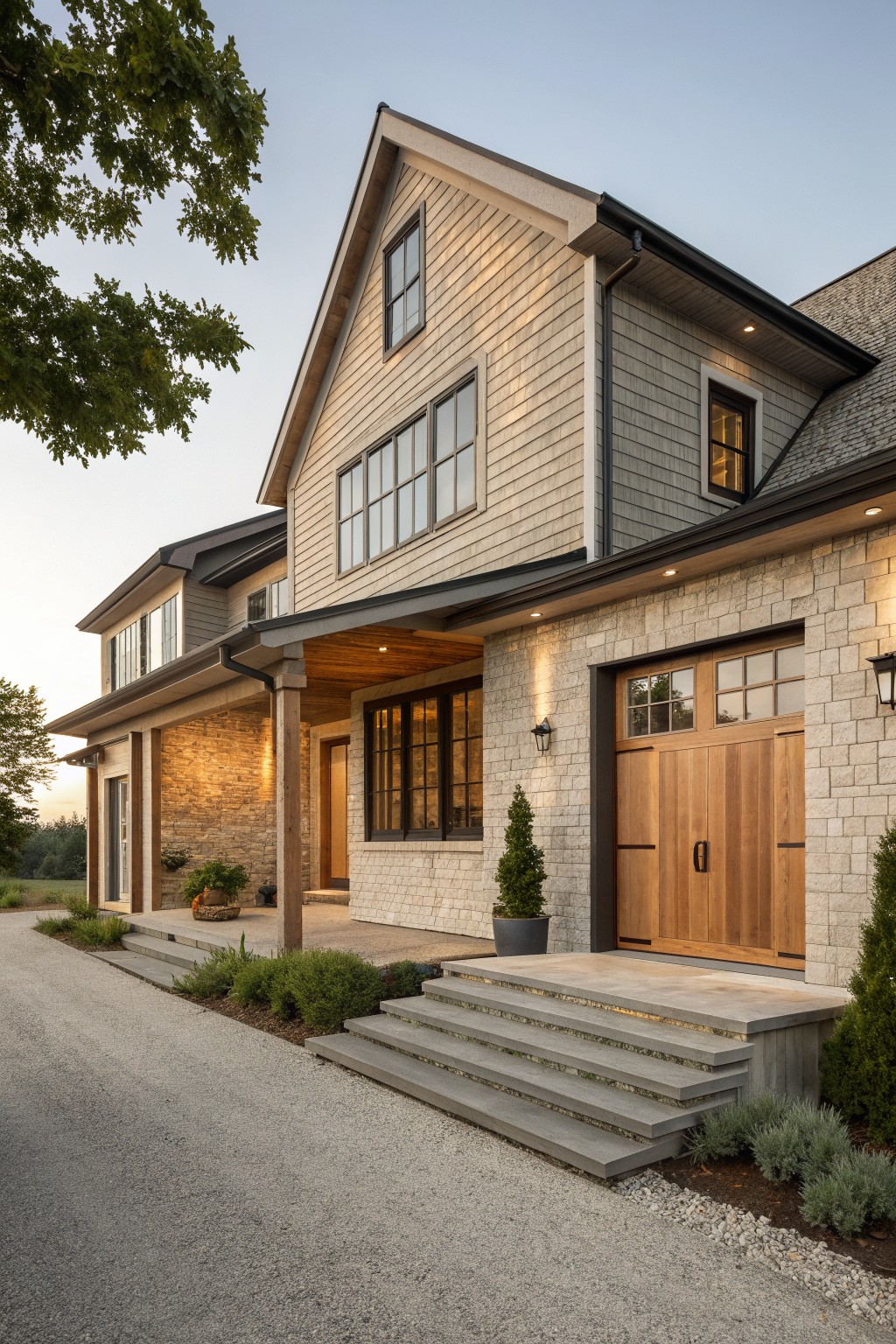
Many farmhouses get a warmer look when the garage doors are made from real wood instead of metal. The natural grain shows up nicely against stone and painted siding, and it helps the whole front feel less flat.
This choice works well on homes that already mix a few materials, but it needs proper sealing and regular checks for moisture. It suits places where the garage sits close to the main entry rather than off to the side.
Mix Stone With Natural Wood Accents
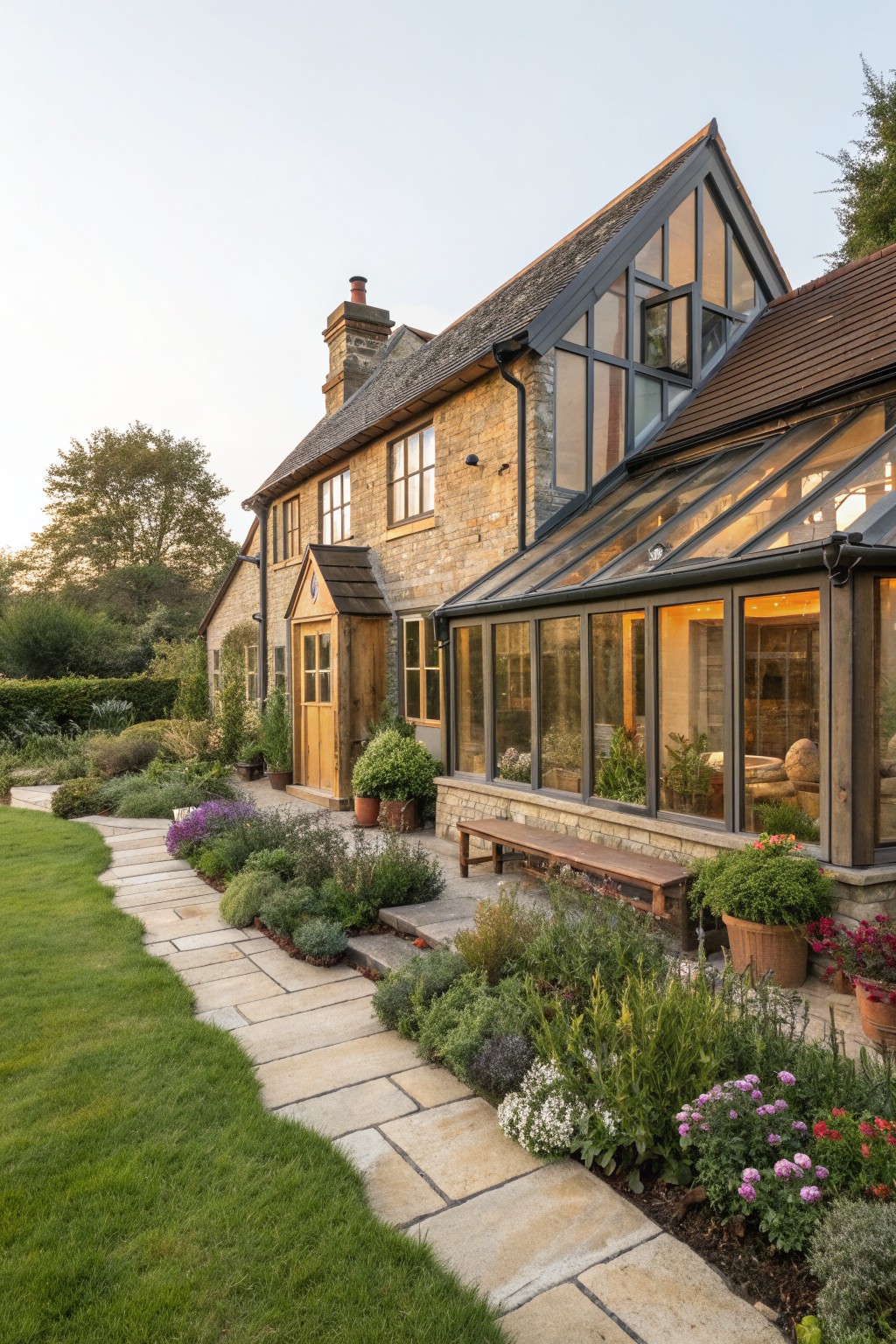
Stone walls give a farmhouse a solid base, but they can look a bit stark without something softer next to them. Natural wood doors and a simple bench add warmth and texture that stone alone does not provide. The contrast keeps the exterior from feeling too heavy while still looking grounded.
This approach works best on older or traditional homes where the wood can be allowed to age on its own. Use it near the main entry or along a path so the wood gets noticed without needing extra pieces. Keep the wood finish simple and avoid too many matching elements so the look stays relaxed.
Natural Wood Siding For The Exterior
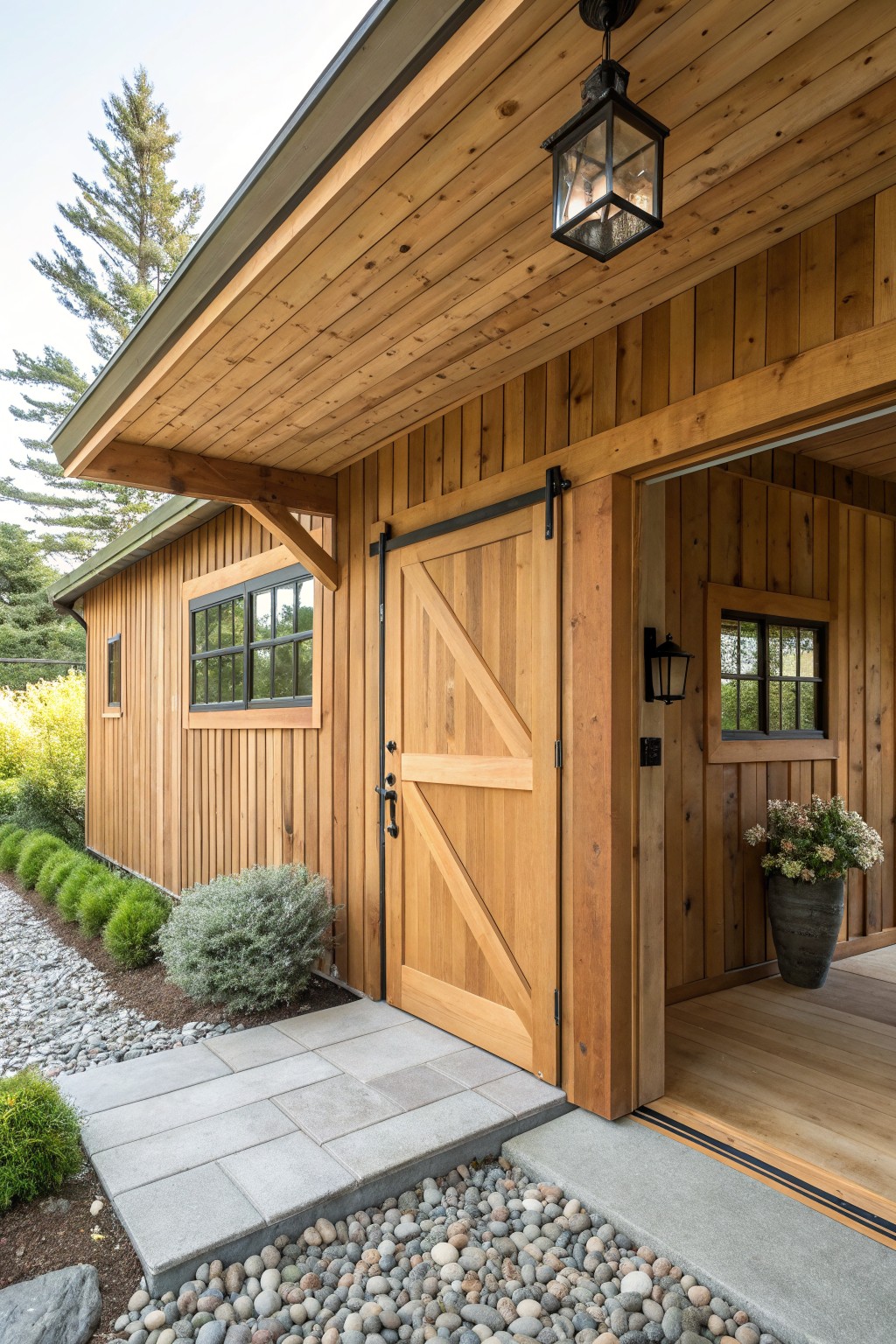
Natural wood siding gives a farmhouse exterior real texture that feels warm without any extra effort. The grain shows through and changes with the light, so the house looks softer and more settled than it would with painted boards.
This approach works best on homes with clean rooflines and simple trim. Pair the wood with dark hardware on doors and windows to keep the look balanced, and let the natural color handle most of the visual interest.
Natural Wood Doors for Extra Warmth
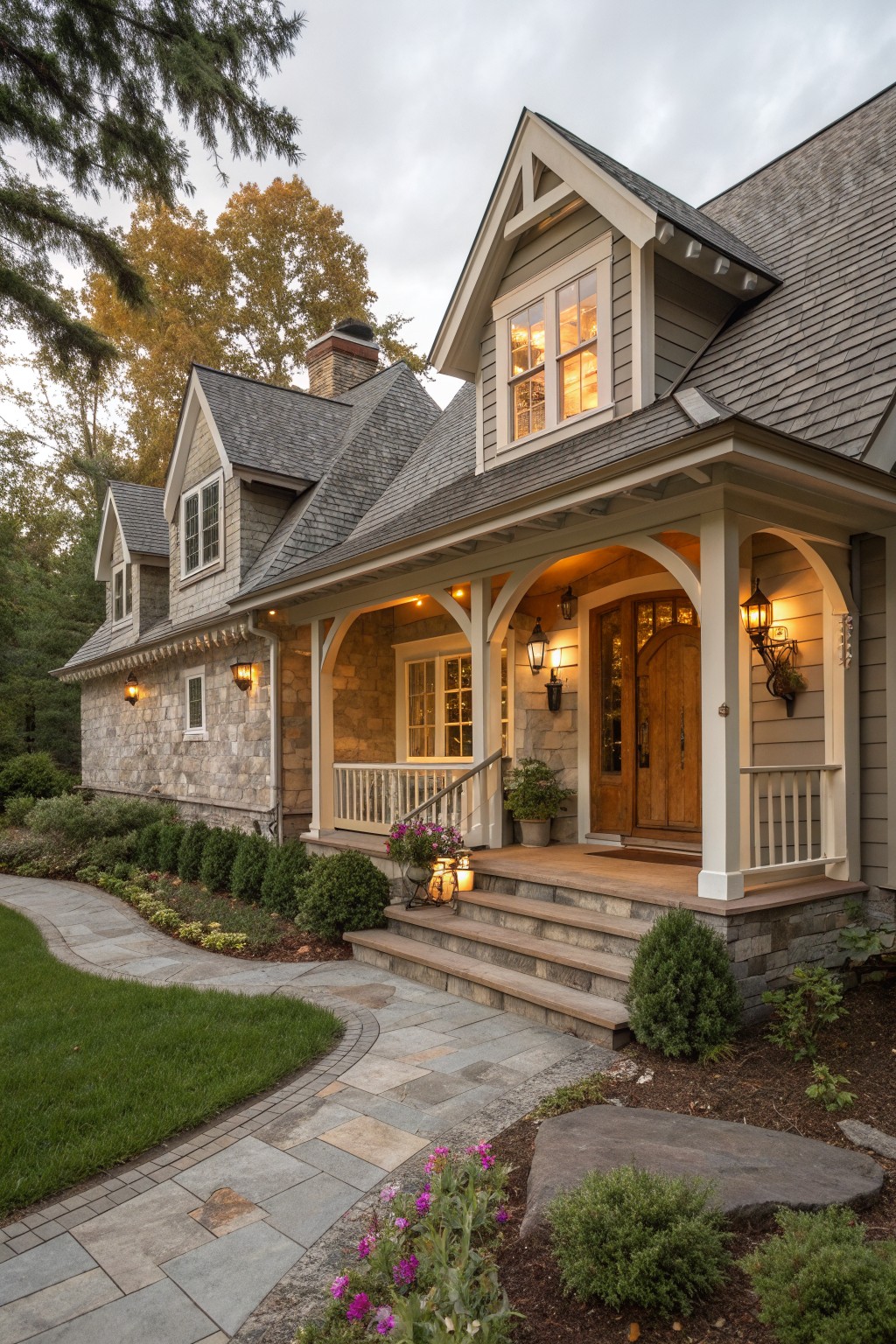
A natural wood front door brings noticeable warmth to a farmhouse exterior that uses stone and siding. The grain and tone of the wood soften the harder surfaces around it and give the entry a more lived-in feel.
This approach works well on homes that already mix materials. A simple door style with a clear finish keeps the focus on the wood itself and suits both classic and updated farmhouses without overpowering the rest of the facade.
Vertical Wood Siding
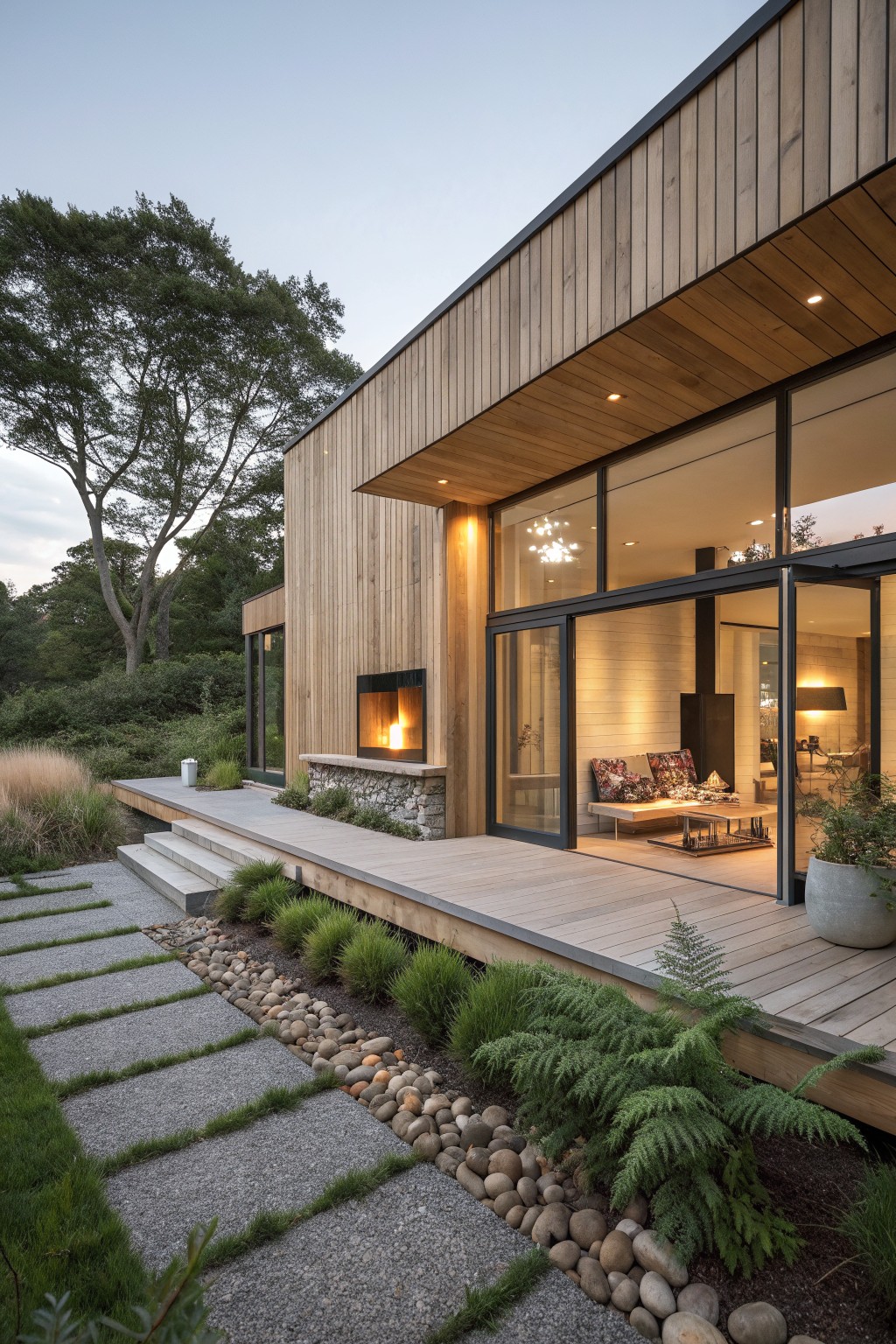
Vertical wood siding gives a house exterior a straightforward texture that feels natural without trying too hard. It adds warmth through the grain and color of the wood while keeping the overall look simple and grounded.
This choice works well on modern farmhouse styles where you want the material itself to carry most of the interest. Use it on the main facade and keep other details minimal so the siding stays the focus.
Natural Wood Doors on White Farmhouse Exteriors
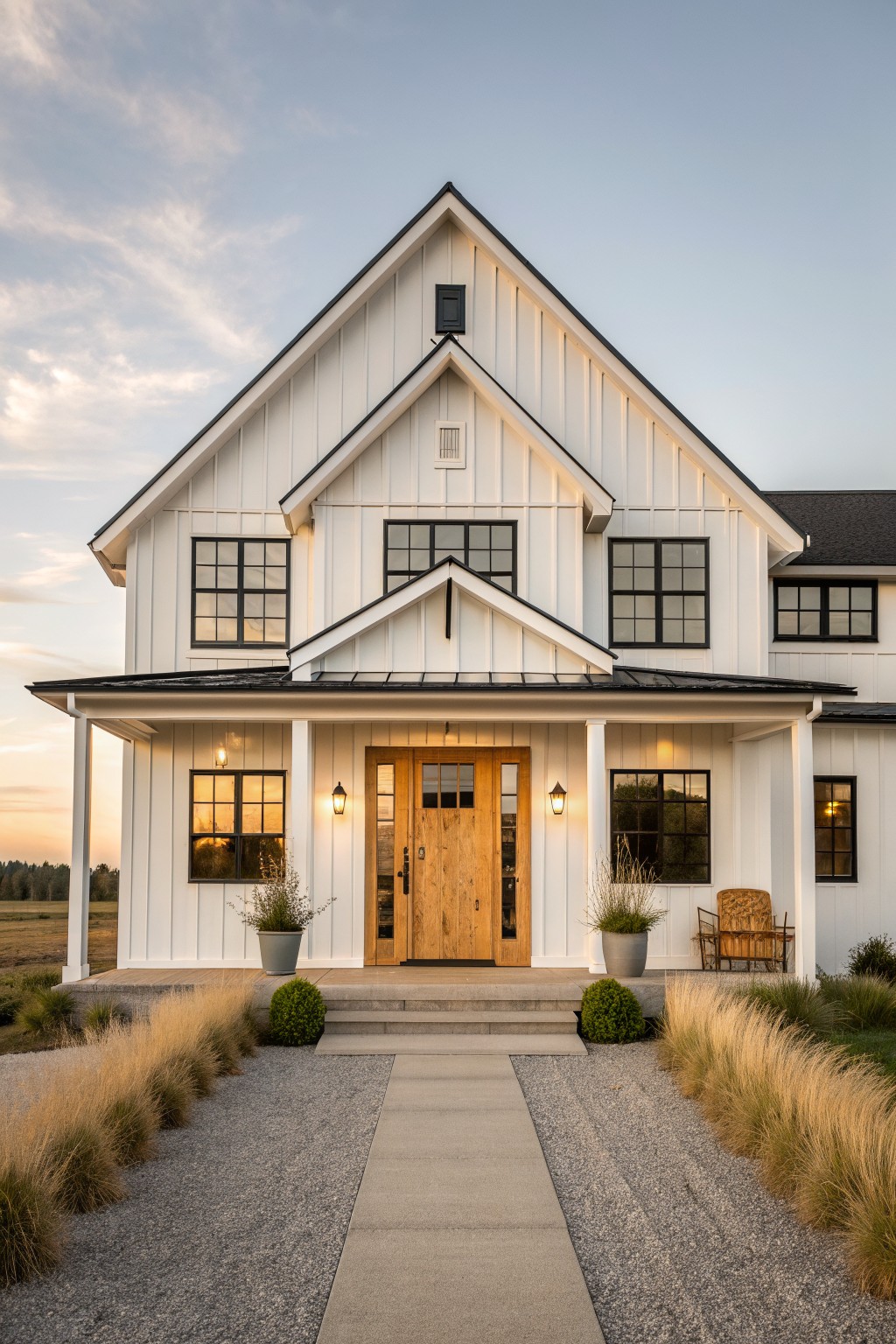
A natural wood door adds a clear point of warmth against white siding. It breaks up the clean look without extra trim or color and gives the front a more grounded feel right away.
This works well on simpler farmhouses that already have black window frames. Choose a straightforward wood door with minimal glass and dark hardware so the material stays the focus.
Raised Beds in Matching Wood
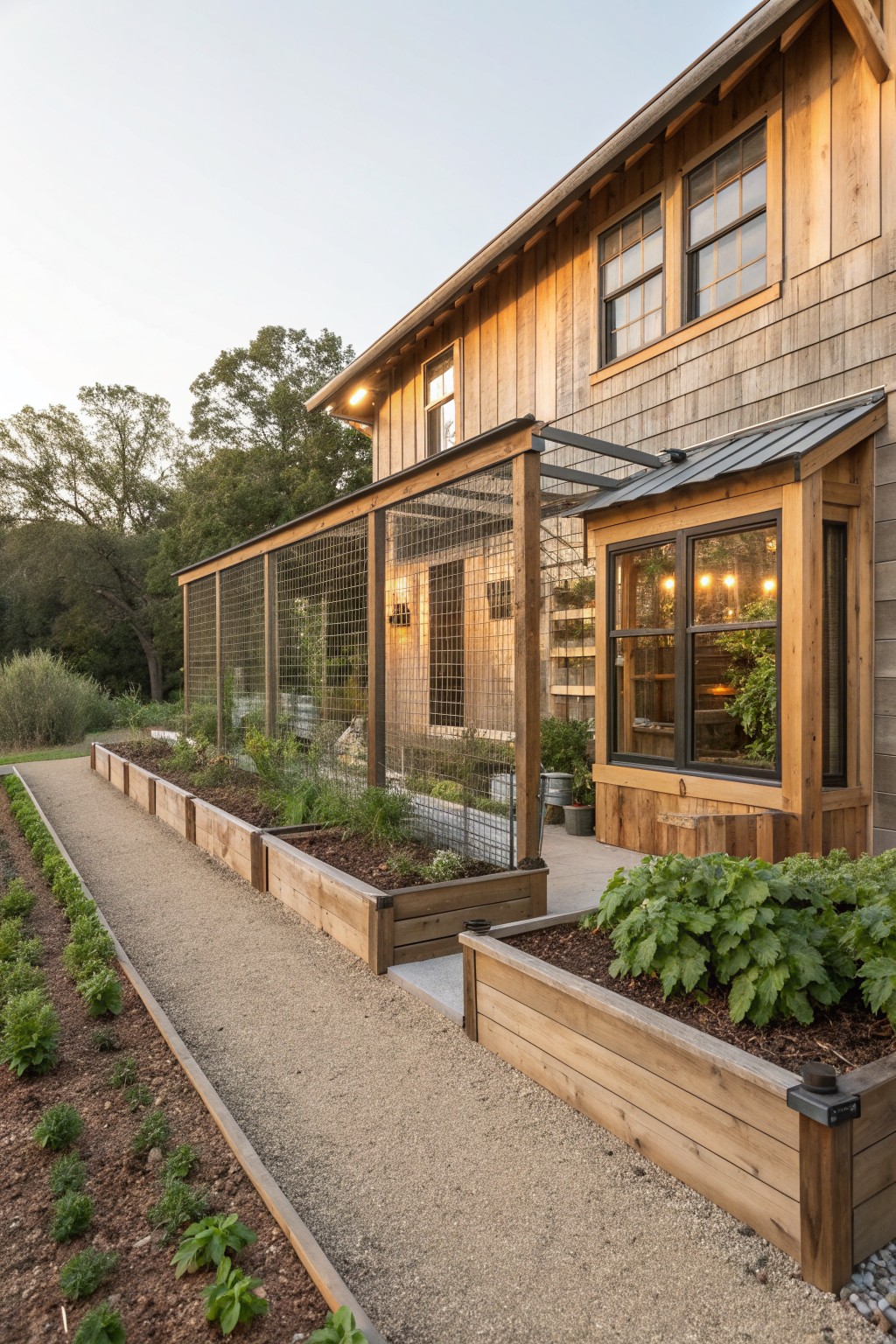
Building raised beds from the same wood as the house siding gives the whole side of the home a pulled-together look. The beds sit low and run straight along the foundation, turning what could be plain wall space into usable growing area without adding clutter.
This setup works well on longer side yards or back walls where you want both vegetables and a tidy edge. Match the timber as closely as you can, keep the beds under window height, and leave a simple path beside them so the beds do not feel crowded.
Add A Wooden Pavilion By The Pool
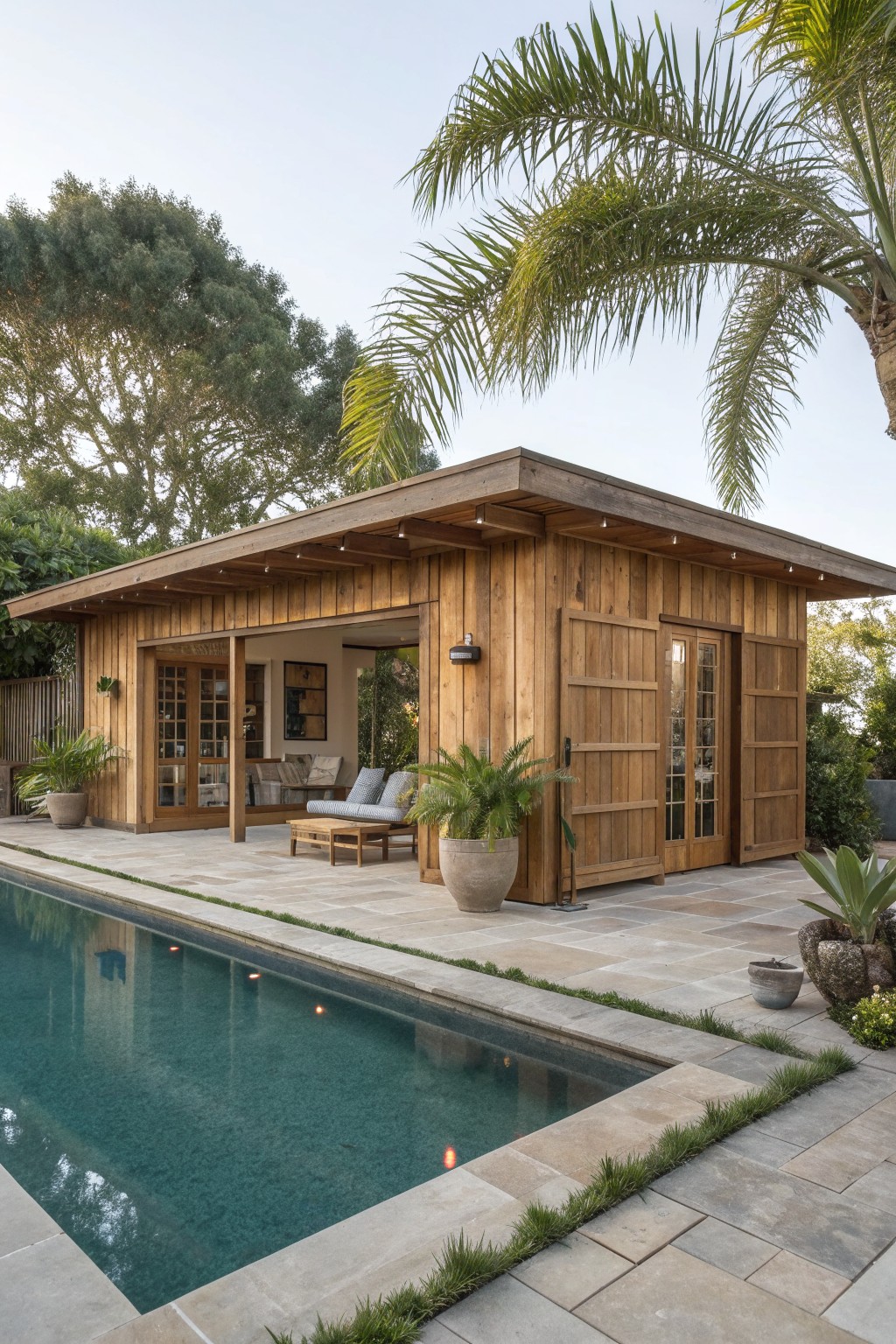
A wood pavilion next to the pool gives you a clear outdoor room without building anything enclosed. The natural siding and simple roof keep the space feeling tied to the yard while offering shade and a place to sit.
This setup works best on homes with room along one side of the pool. Leave the sides mostly open and use basic doors that can swing shut when you need storage. The wood tones add warmth that concrete and water alone often lack.
Wood Siding With Stone Accents
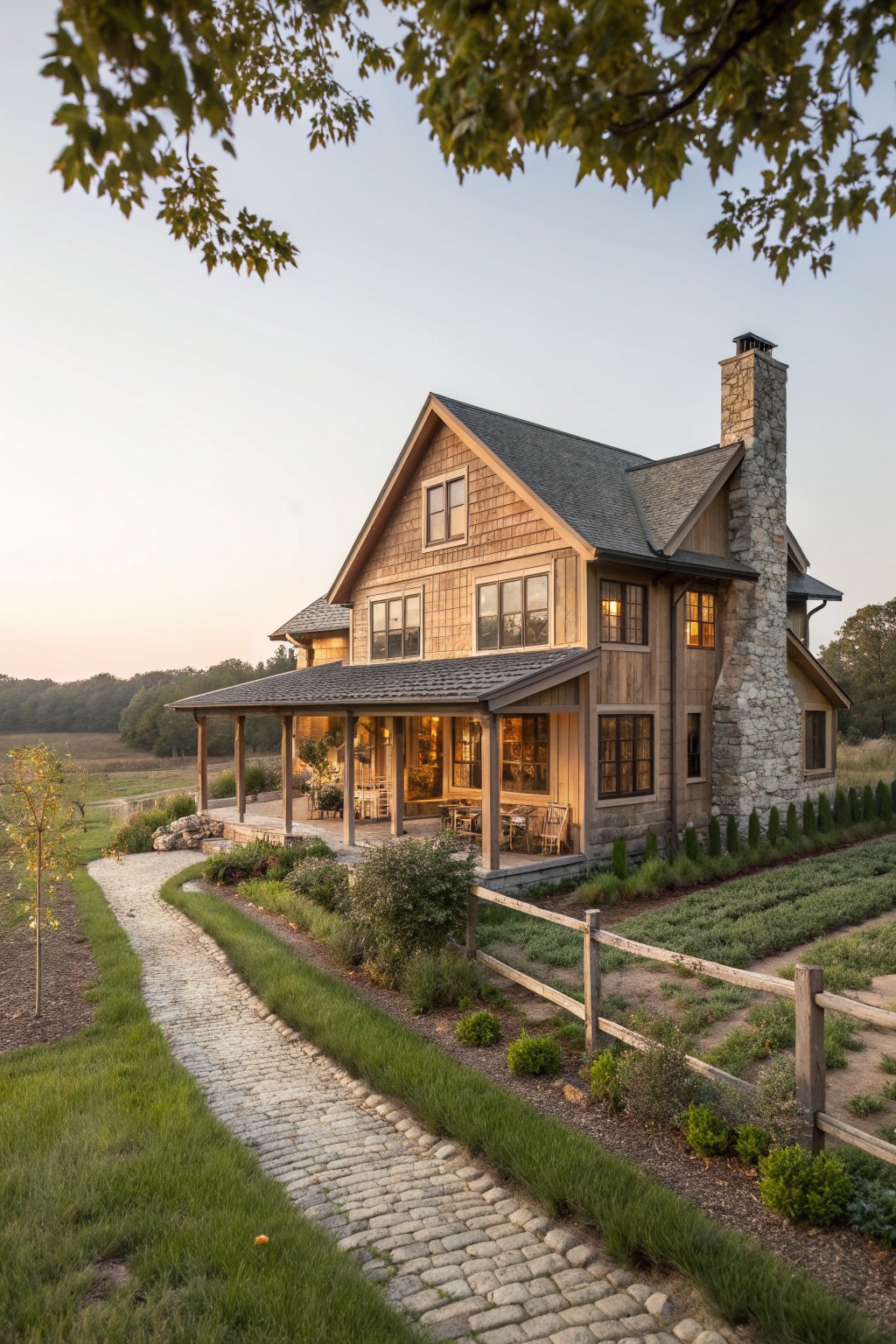
Natural wood siding brings a simple warmth to a farmhouse that paint alone cannot match. The shingles on the upper walls and gables add visible texture and help the house sit comfortably in a rural setting.
Pairing the wood with a tall stone chimney gives the right amount of weight and contrast. This approach works well on homes with straightforward rooflines and open surroundings where the materials can age naturally.
Natural Wood Siding For Farmhouse Exteriors
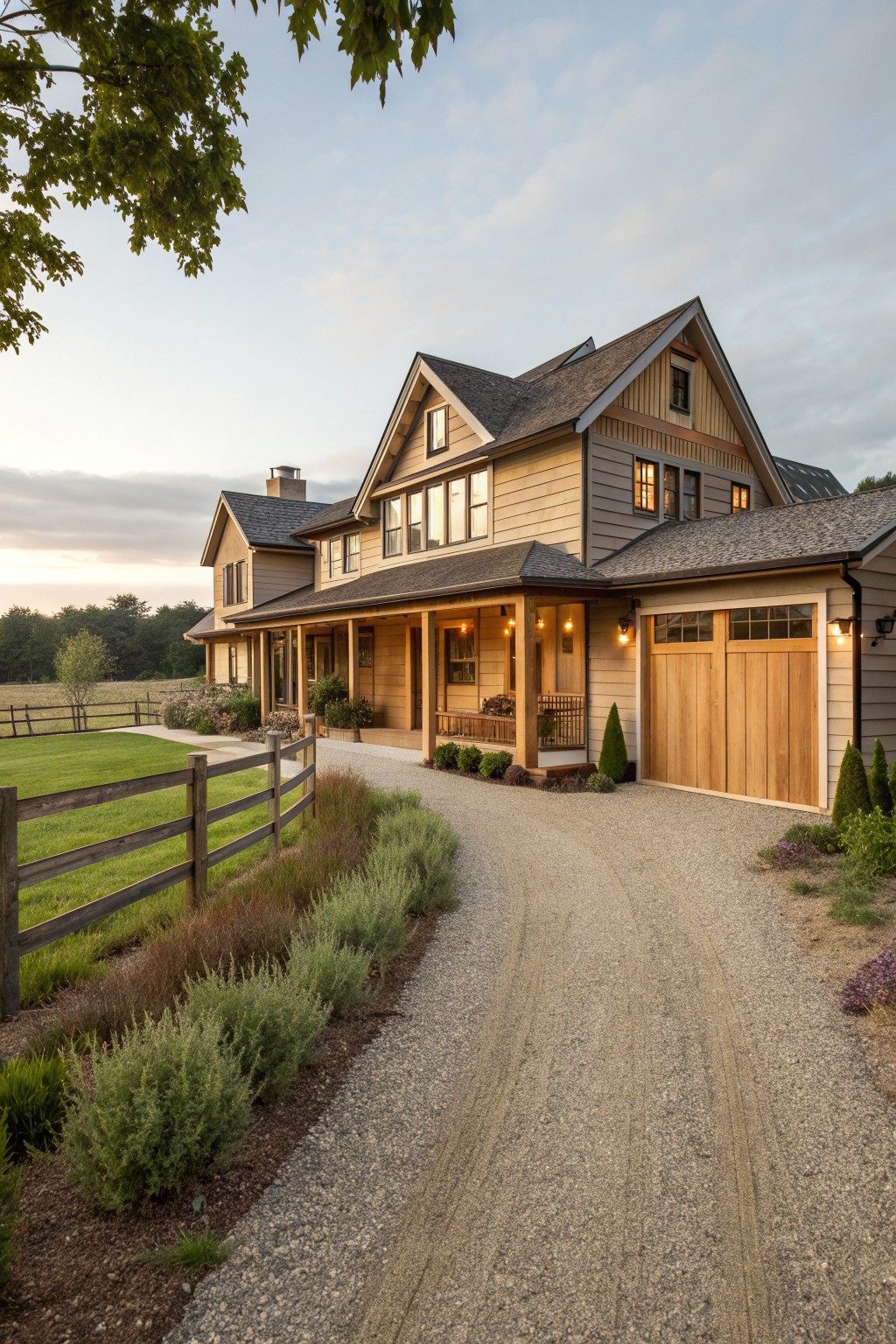
Natural wood siding gives a farmhouse exterior a softer, more textured look than painted surfaces or vinyl. The warm tones stand out against the roof and trim, and they help the house feel grounded in its setting.
This works best on homes with straightforward rooflines and a mix of window sizes. Keep the wood tones close in color and let the grain show through rather than painting over it.
Extend Your Home with a Covered Wood Patio
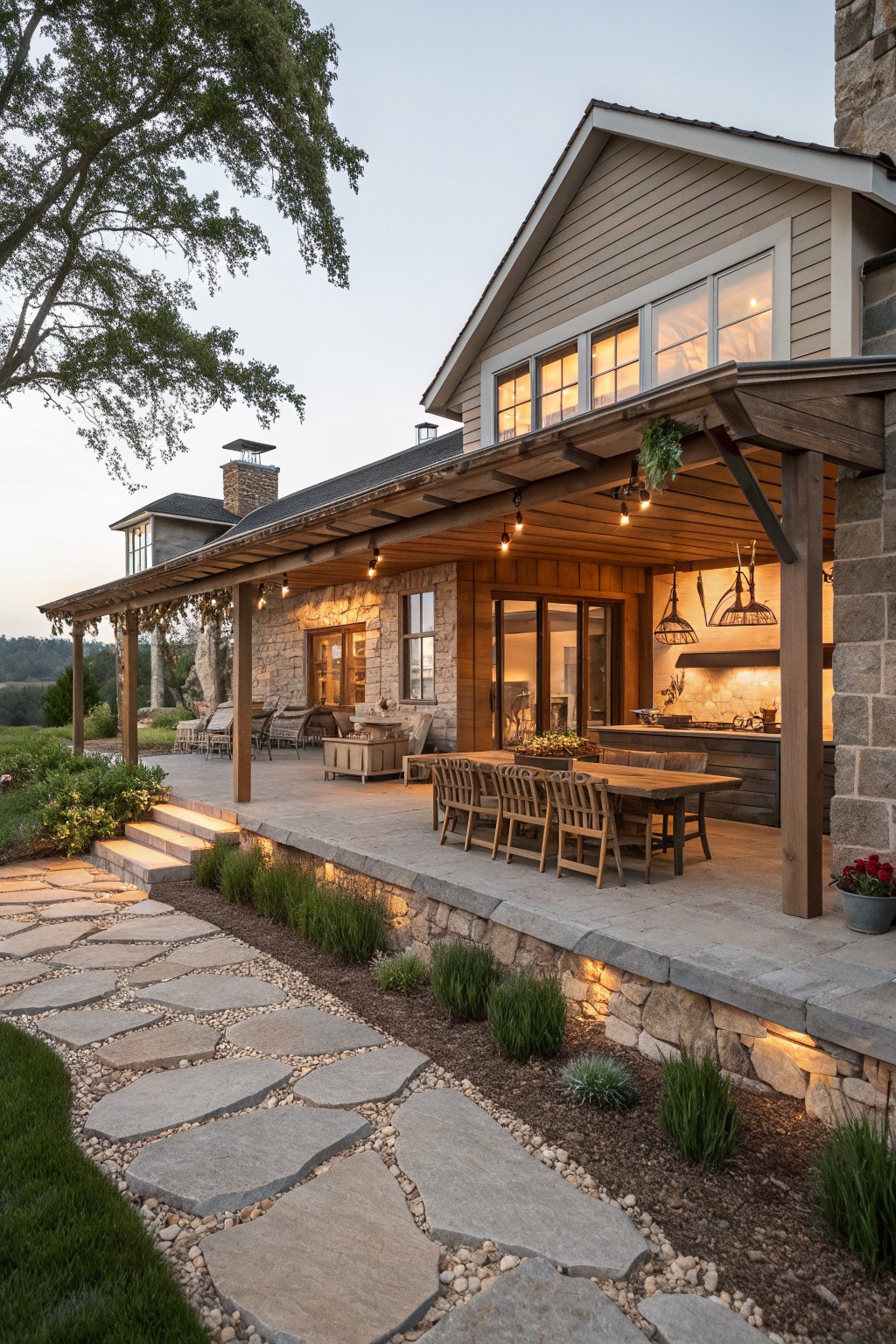
A covered patio right off the main living areas gives you a place to eat and gather without worrying about sun or light rain. The wood ceiling and posts tie into the house itself, so the space feels like a natural part of the structure instead of something added on later.
This setup works best on homes with enough wall space to support a deep overhang. Keep the table long and simple so it seats a crowd, and add basic string lights for evenings. Just make sure the posts do not block the main views from inside.
Blend Wood Siding With Stone On The Exterior
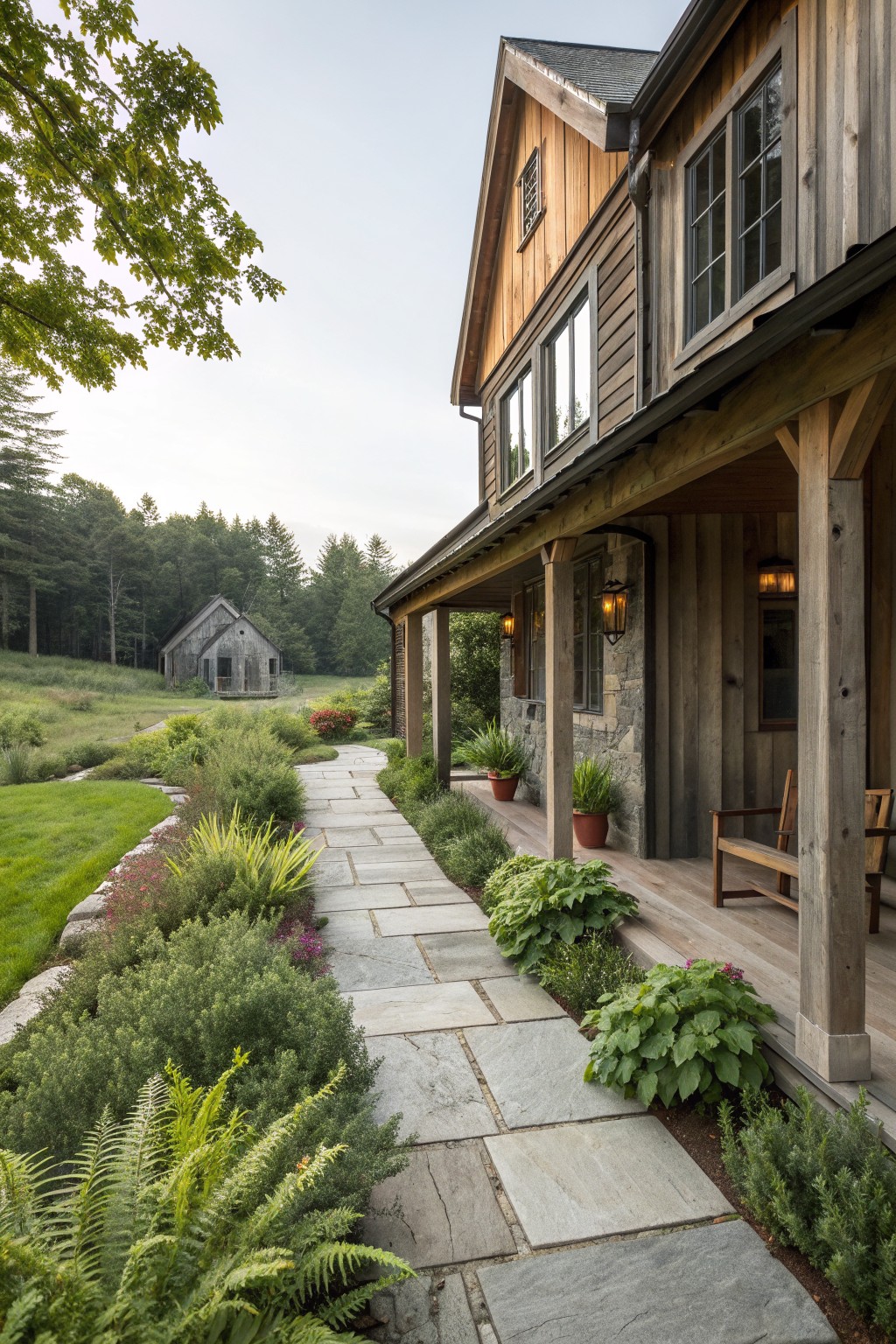
Natural wood siding stands out on farmhouses because it adds real texture that paint alone cannot match. The mix of lighter and darker boards, paired with stone at the base and around the porch, keeps the house from feeling flat or too new.
This works best on homes with a simple roofline and some land around them. Keep the wood tones close to what already grows nearby so the whole place settles into the setting instead of fighting it.
Wood Pergolas Over The Entry
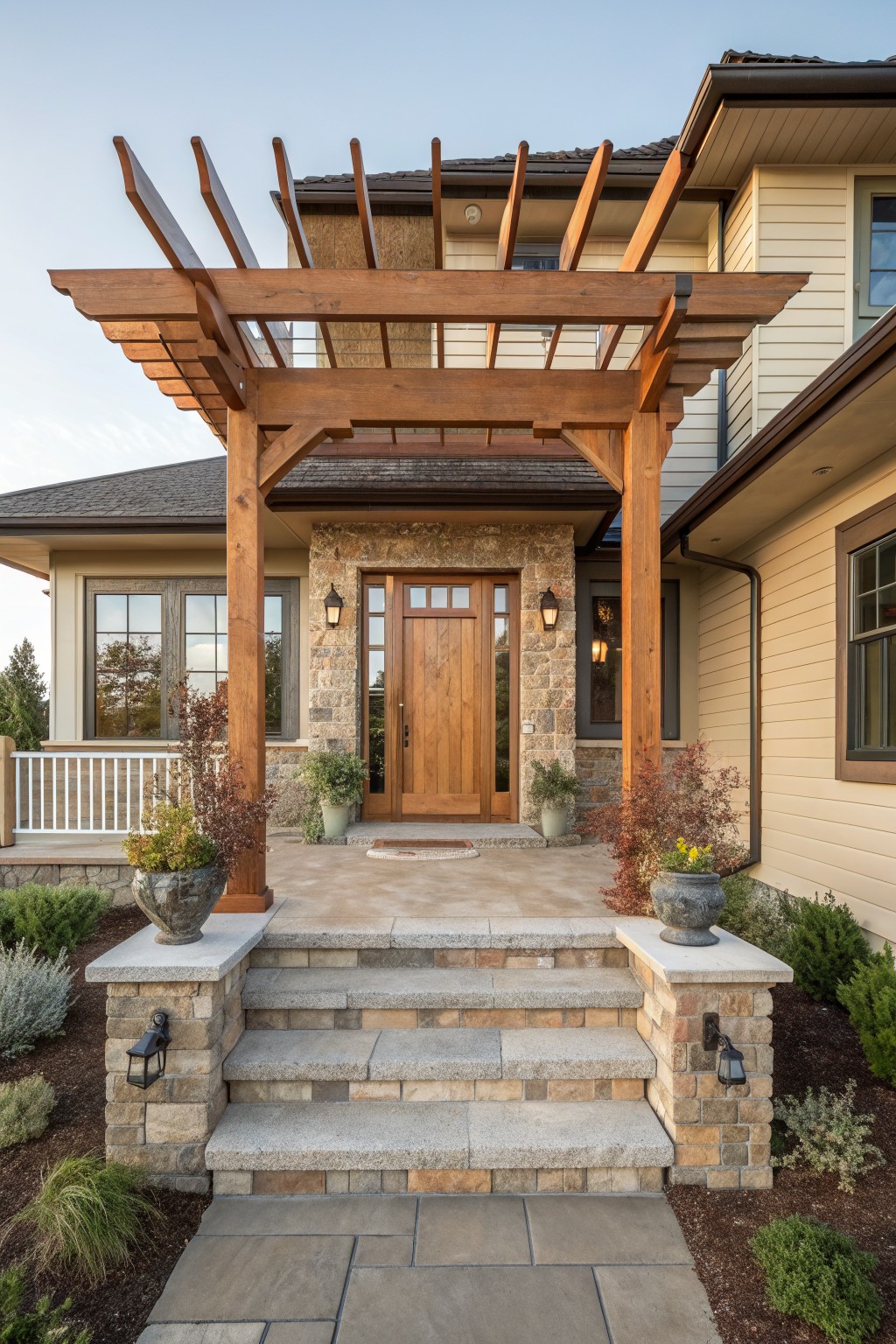
A wood pergola right over the front door adds structure and texture without making the entrance feel closed off. The open beams bring in natural material and shadow play that softens the look of the house while still keeping things straightforward.
This approach works best on farmhouses or similar styles where you want the entry to feel grounded. Match the wood tone to other exterior trim and keep the overall size modest so it fits the scale of the facade rather than fighting it.
Create a Covered Outdoor Room With Wood
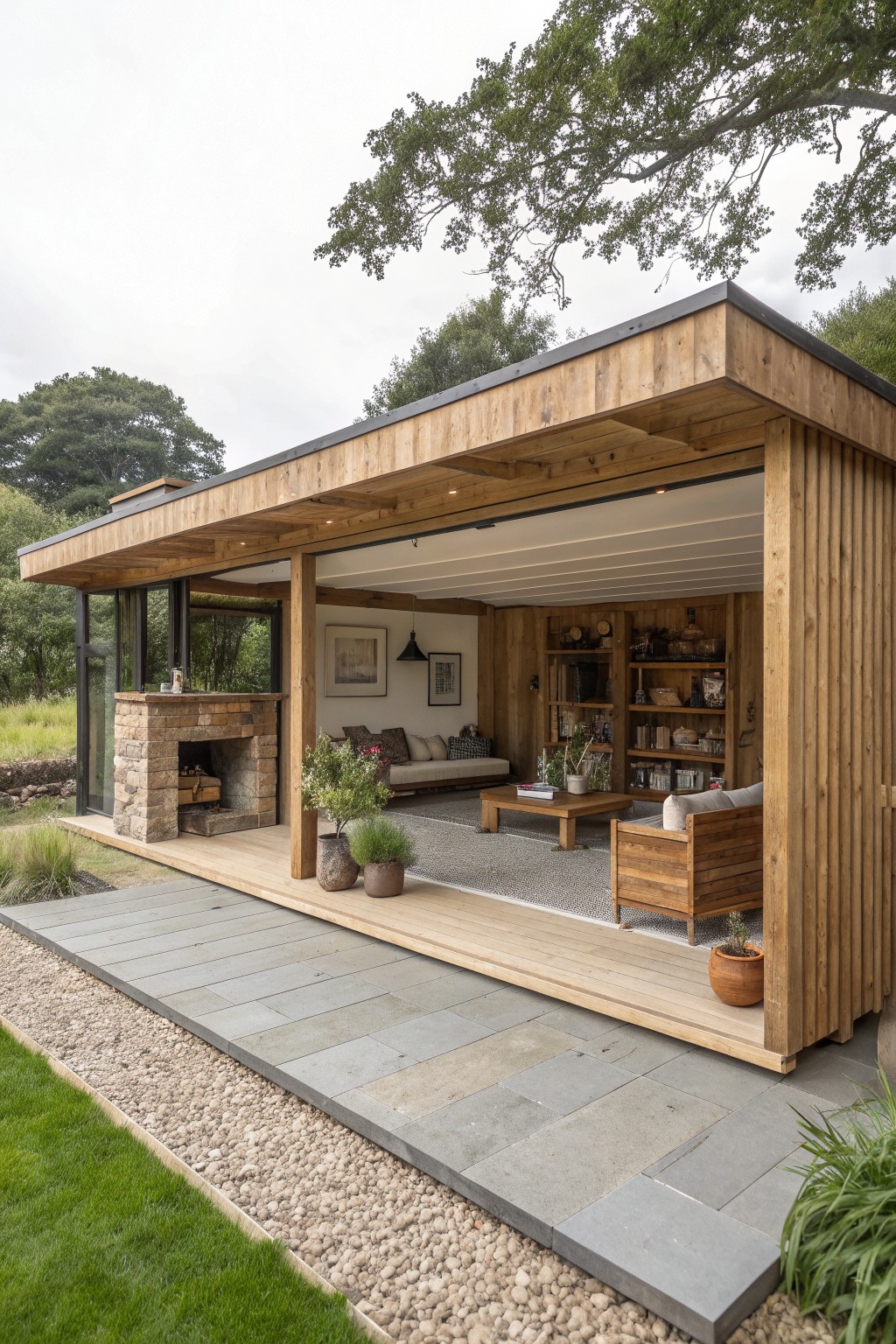
A covered wood structure like this turns a basic deck into something more useful. The roof and open sides give shelter from rain or sun while still keeping the space connected to the yard. Natural wood on the walls and ceiling adds texture that fits right into a farmhouse look without needing much extra decoration.
This works well on homes with some yard space where you want an extra seating area that feels like part of the house. Keep the wood finish simple and let the structure stay open on most sides so light and views stay strong. Avoid crowding the edges with too many plants or furniture if you want the space to feel roomy.
Natural Wood Shingles for the Exterior Walls
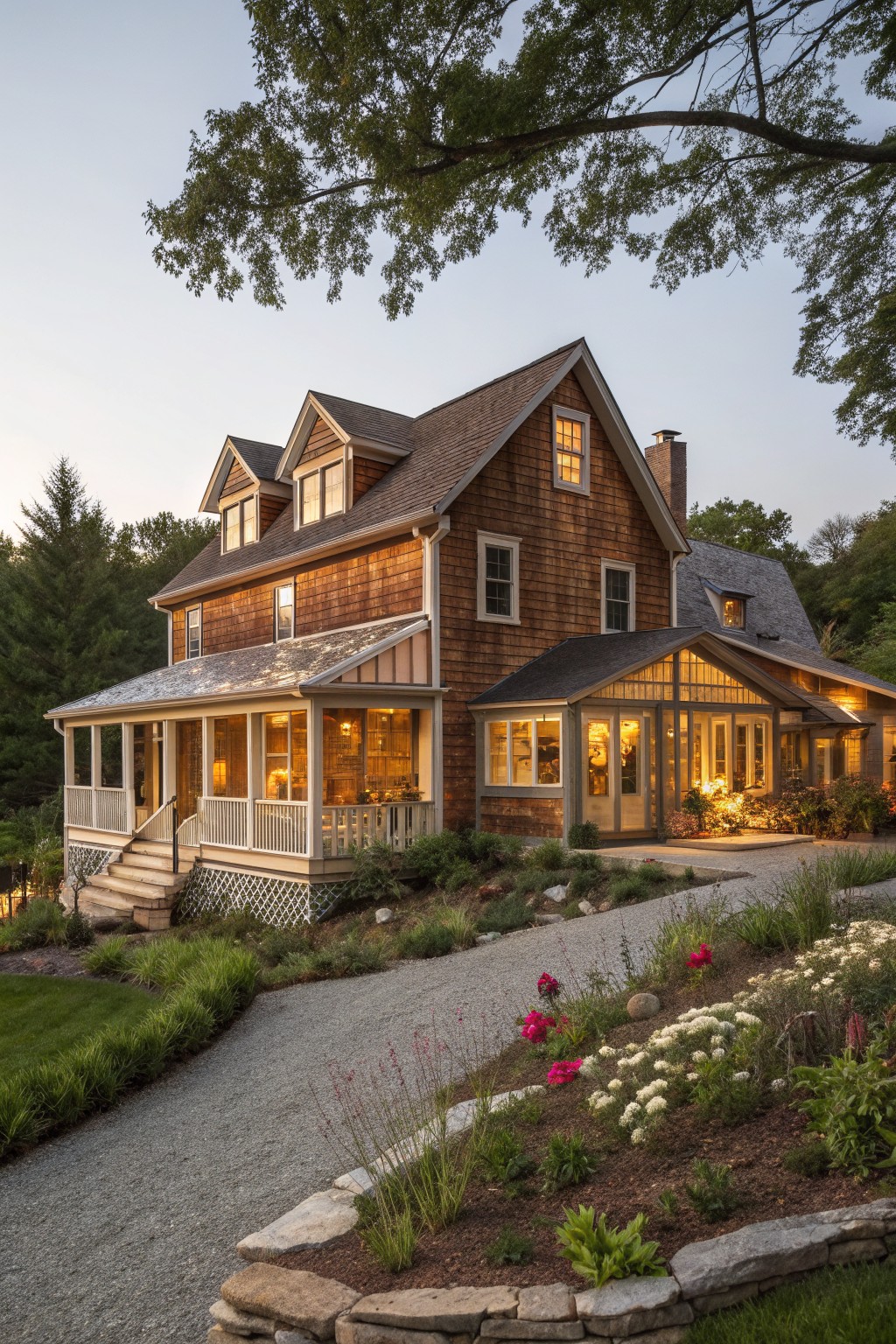
Natural wood shingles give a farmhouse that lived-in texture without needing much extra detail. They age nicely on their own and pick up a soft color that fits right in with trees and garden beds around the house. Many people like them because they feel more honest than flat siding or heavy paint.
They work best on homes with simple rooflines and some trim in a lighter color. Keep the lower part of the house a bit more solid, like stone or horizontal boards, so the shingles do not overwhelm the whole look. Watch how the sun hits them through the day since that changes the tone quite a bit.
Built-In Storage at the Entry
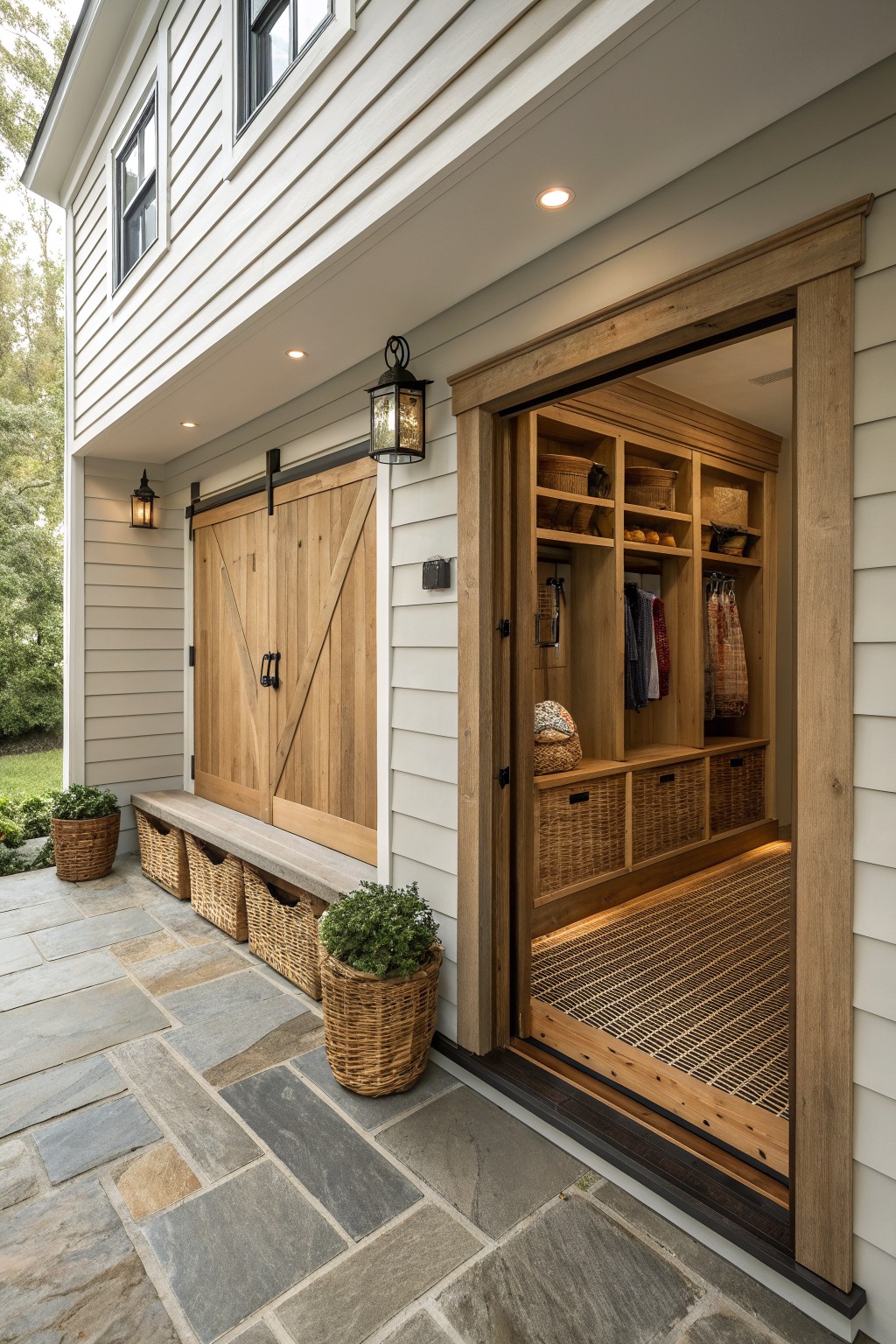
Natural wood built-ins right at the door give a farmhouse exterior both storage and texture without needing extra structures. The warm tone of the wood stands out against the siding and makes the entry feel more useful instead of just a pass-through spot.
This works best on homes with enough wall space beside the main door. Keep the shelves and bins simple so they do not compete with the siding or windows, and choose a finish that matches other wood accents on the house.
Natural Wood Doors On White Exteriors
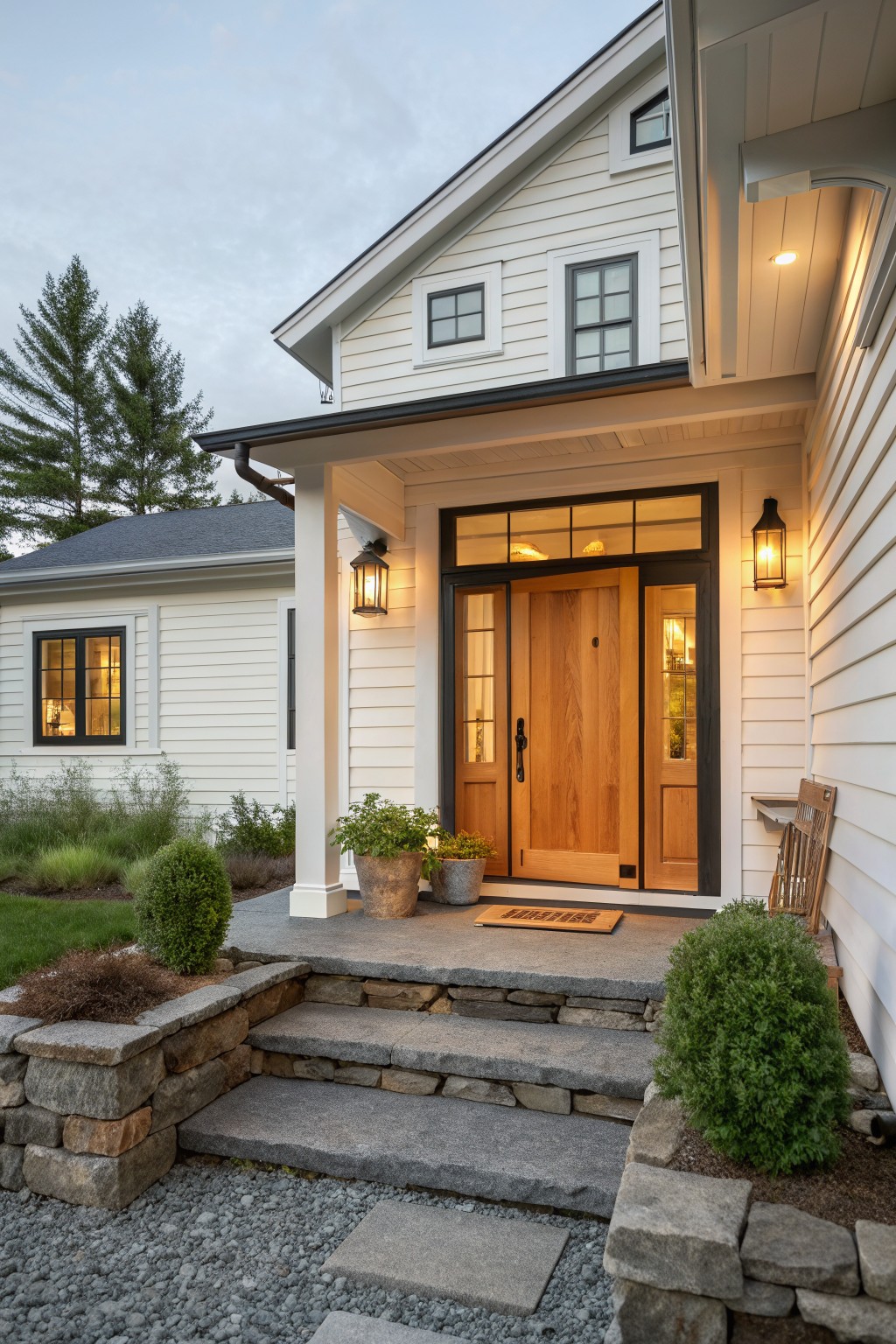
A natural wood door gives a white farmhouse just enough texture without overpowering the rest of the exterior. It stands out against the light siding and makes the entry feel more grounded.
This approach works best on simple homes where the siding is already light and clean. Keep the trim dark or black so the wood reads as the main material choice rather than one more detail.
Natural Wood Ceilings Over Outdoor Kitchens
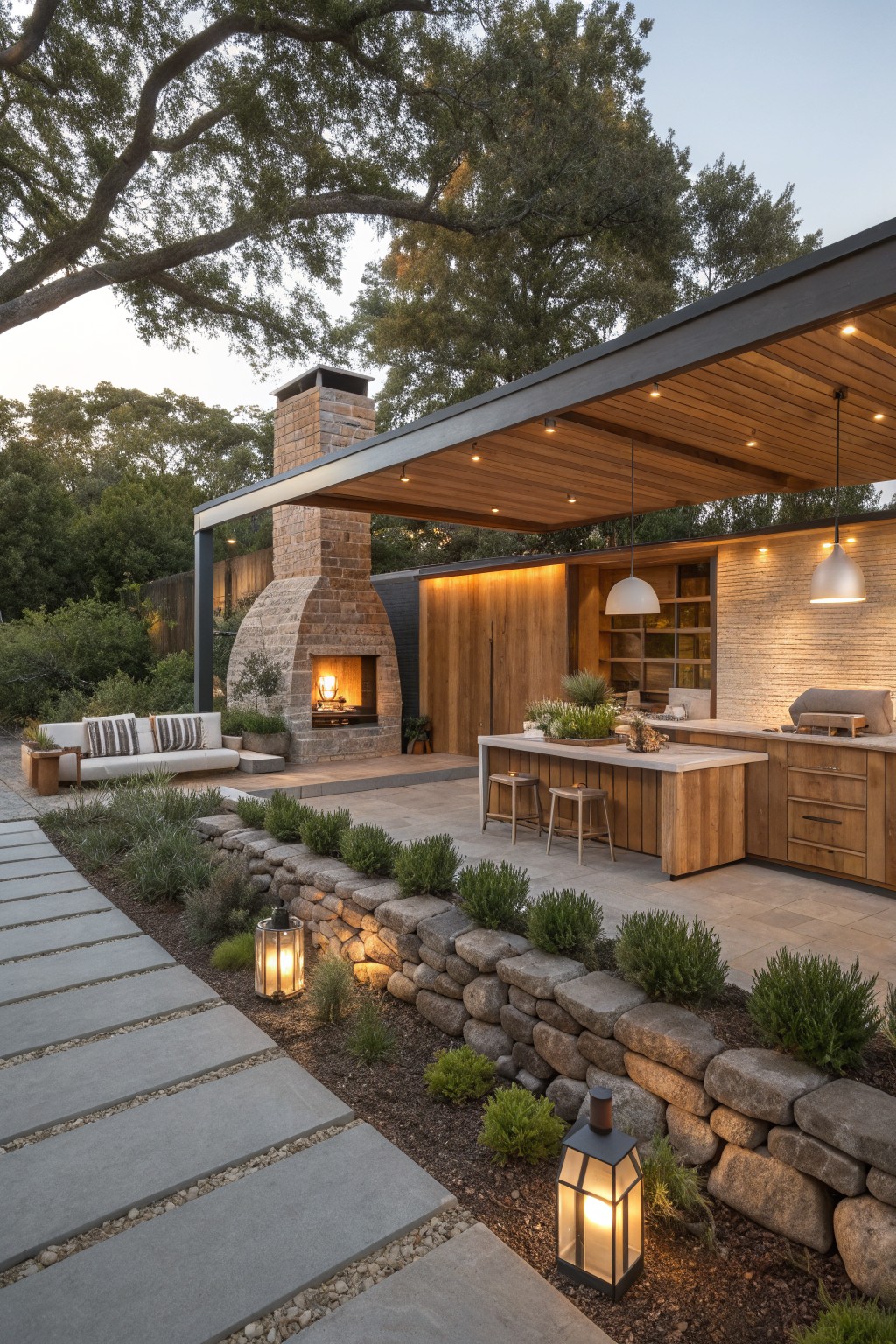
A wood ceiling on a covered patio adds warmth and texture that plain overhangs often lack. It turns the space into something that feels more finished and usable, especially when paired with matching wood cabinetry in the outdoor kitchen.
This approach works best on patios that sit right off the house and get regular use for cooking or sitting. Choose a durable, weather-treated wood and keep the rest of the structure simple so the ceiling stays the main feature.
Frequently Asked Questions
Q: How do I protect the wood from fading in strong sun?
A: Pick a stain with built in UV protection and apply it once a year. The sun hits south facing walls hardest so start there.
Q: Is it okay to combine cedar and pine in the same project?
A: Cedar and pine pair well because their tones warm up next to each other. Seal both types the same way so they age evenly over time. Watch how the grain runs when you lay out the boards.
Q: What if I live where winters get really cold?
A: Choose a wood that expands and contracts without cracking like oak. Give the boards a little space when you install them so they have room to move.
