

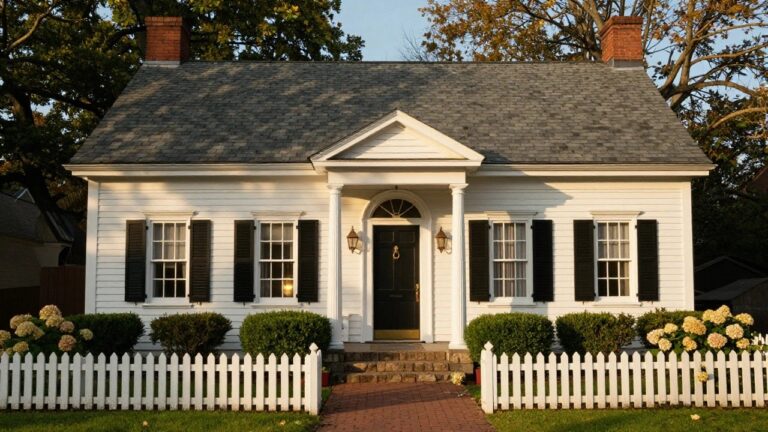
I’ve driven past plenty of New England colonials over the years, and it’s the way their facades settle into the landscape that always stops me. Clapboard siding in soft grays or whites, paired with steep gabled roofs and sturdy chimneys, gives them a quiet strength that feels right at home amid rocky hills and salt air. I remember eyeing one with mismatched trim that threw off the whole street view until a simple repaint brought back its balance. These exteriors shine when the entry porches and window placements guide your eye naturally, rather than competing for attention. A handful here might just fit your own house’s lines.
Classic White Siding with Black Shutters
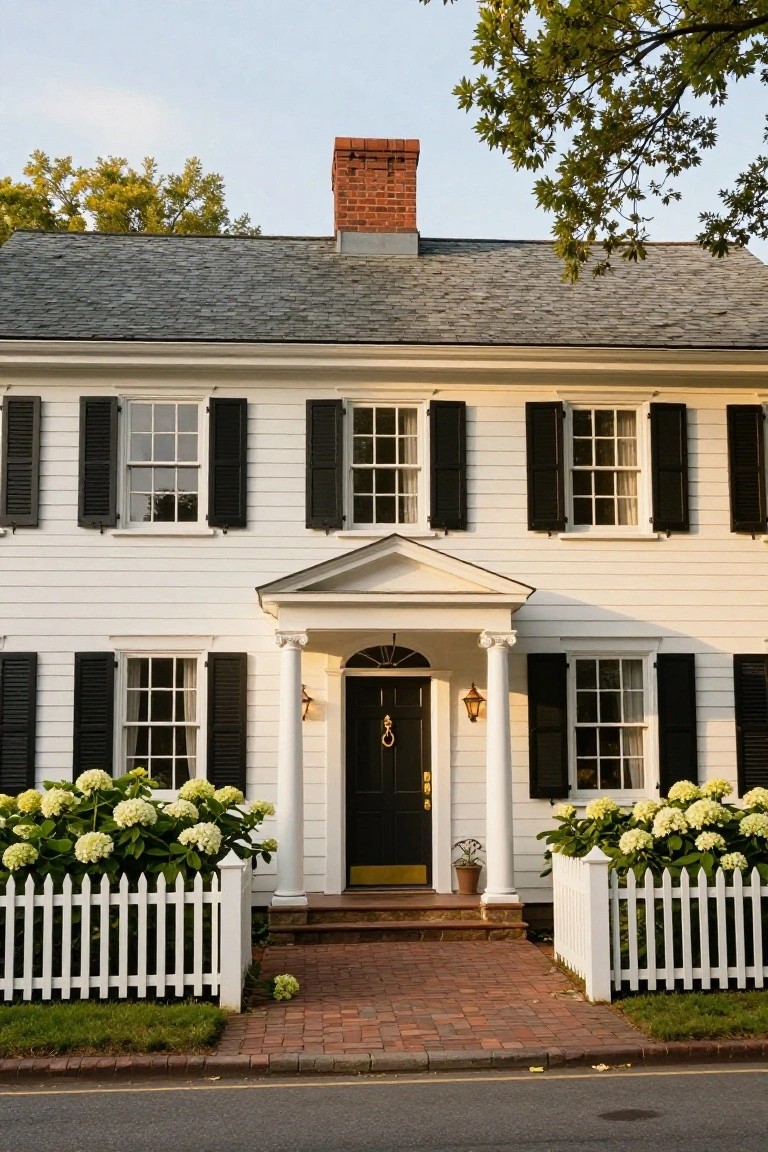
Nothing says New England colonial quite like crisp white clapboard siding topped with black shutters. This combo gives the house clean lines and a sharp contrast that stands out nicely, especially with those evenly spaced double-hung windows. It keeps things simple yet polished, pulling the eye straight to the front door without any fuss.
You’ll see it on homes from Cape Cod to Connecticut, and it suits most two-story colonials with good symmetry. Go for semigloss black on the shutters to make them pop, and keep the siding bright white for that fresh look year-round. Just avoid dark trim elsewhere… it can throw off the balance.
Shingle Siding Cottage Exterior
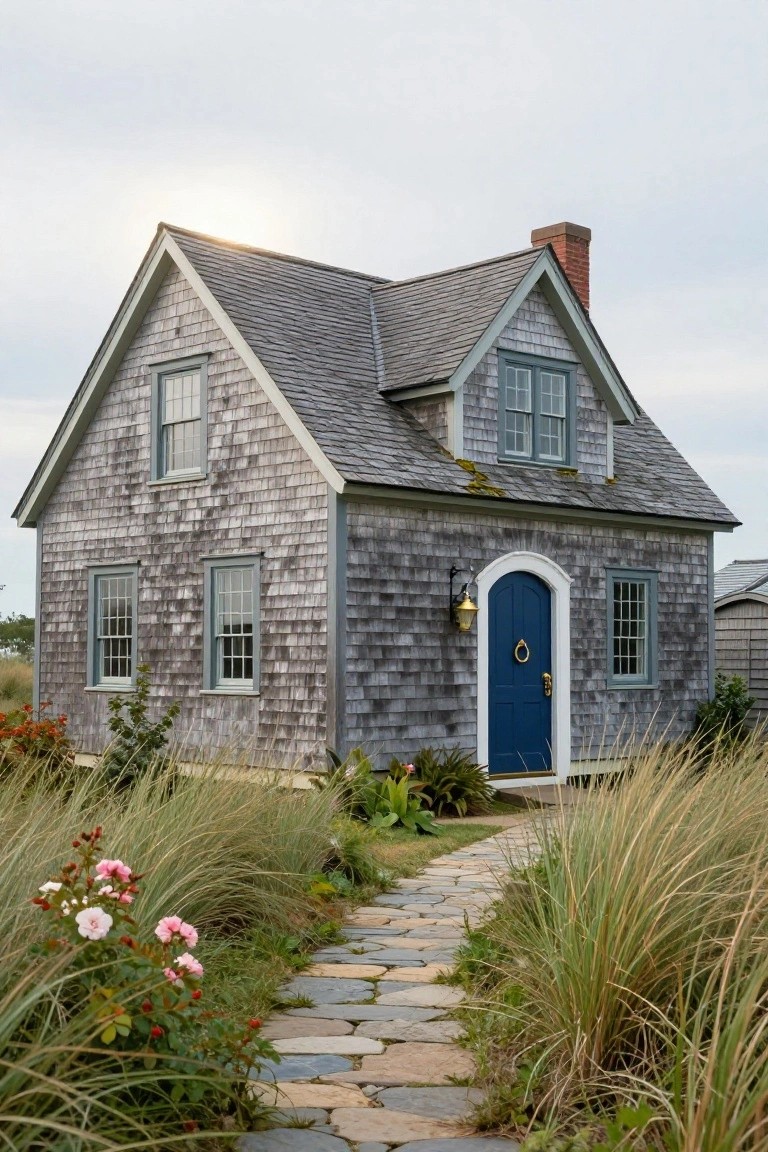
Shingle siding like this gives a New England home that settled-in coastal feel. The gray cedar shakes weather naturally over time, picking up moss and blending with the surroundings. On this compact cottage, it covers the walls and roof, keeping things simple and sturdy against salt air and wind.
You see it a lot on Cape Cod or island homes where upkeep stays low. Add a bright door like the blue one here, and it pulls folks right to the entry without much fuss. Works best on smaller houses under two stories, especially if you skip paint and let the shingles gray on their own.
Gray Shingles with Brick Chimney
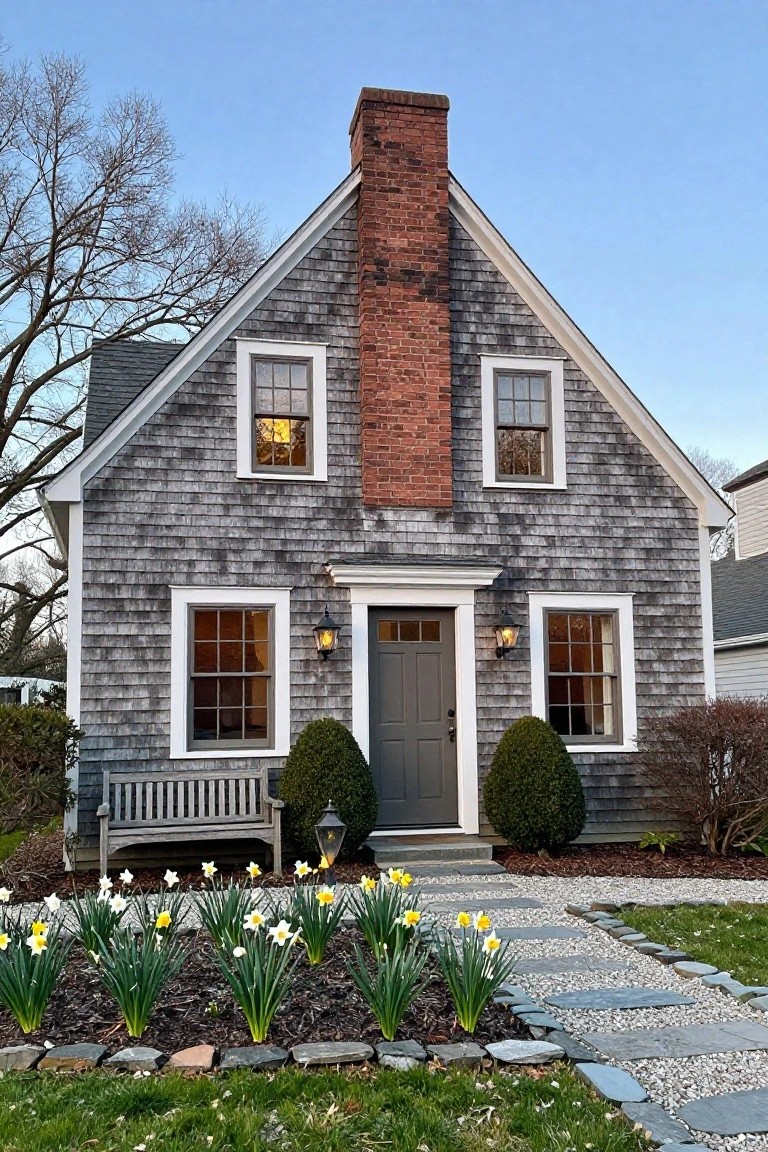
Nothing says New England coastal like gray cedar shingles climbing up the sides of a house, topped with a sturdy red brick chimney right in the center. That brick stands out against the shingles, giving the whole facade some solid warmth and a bit of height without overdoing it. It’s a look that’s been around forever because it just fits the region.
Try this on a classic colonial or cape-style home, especially if you’re near the water where the shingles can pick up that natural patina. Keep the trim white and the door dark for clean lines. A stone path to the entry keeps things practical, and early flowers along the way make it feel lived-in right away.
Classic Brick Facade with Black Trim
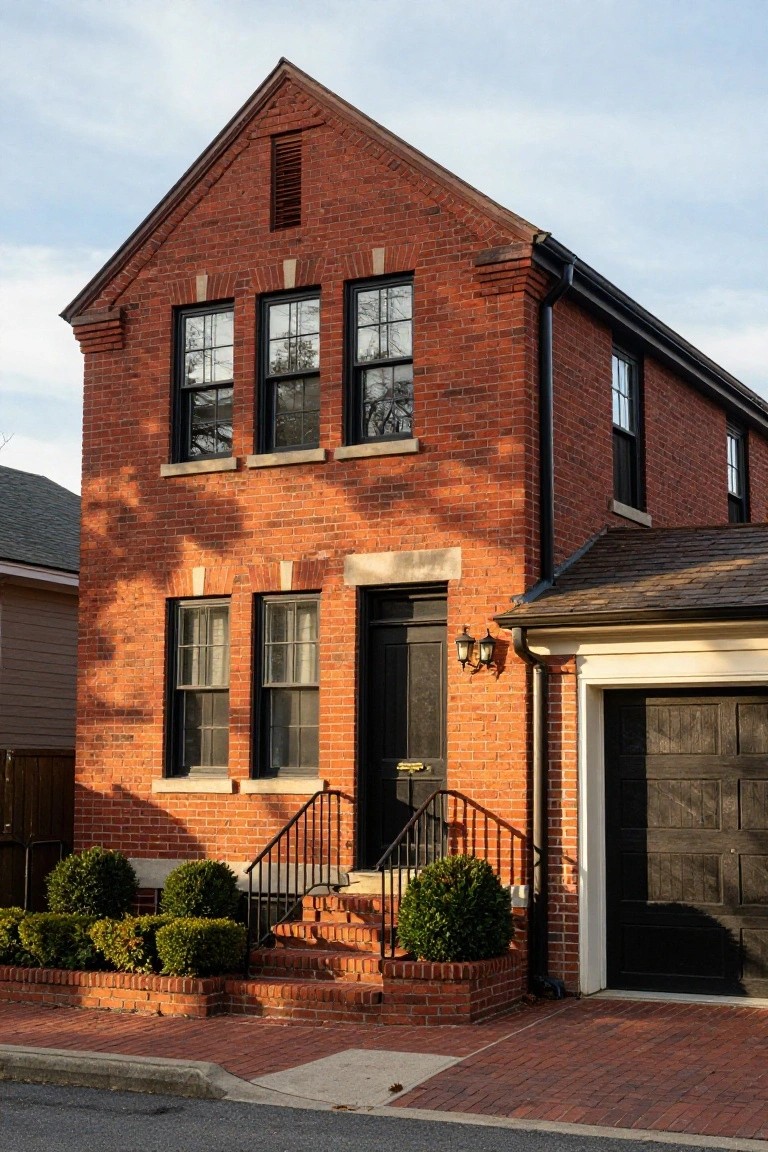
Red brick has long been a go-to for New England colonials. It gives the house that sturdy, lived-in feel folks expect from the region. Pair it with black frames around the windows and door like this one does. The sharp contrast pulls your eye right to those tall, narrow panes. And honestly, it just looks right on a gabled roofline.
Use this setup on a two-story front-gabled home facing the street. Brick handles the weather up here pretty well. Add simple iron stairs to the entry and a couple boxwoods nearby for some green. Skip busy details. It suits neighborhoods with a mix of old and updated houses. One thing. Make sure the mortar matches the brick tone so it stays cohesive.
Shingle Siding with a Green Front Door
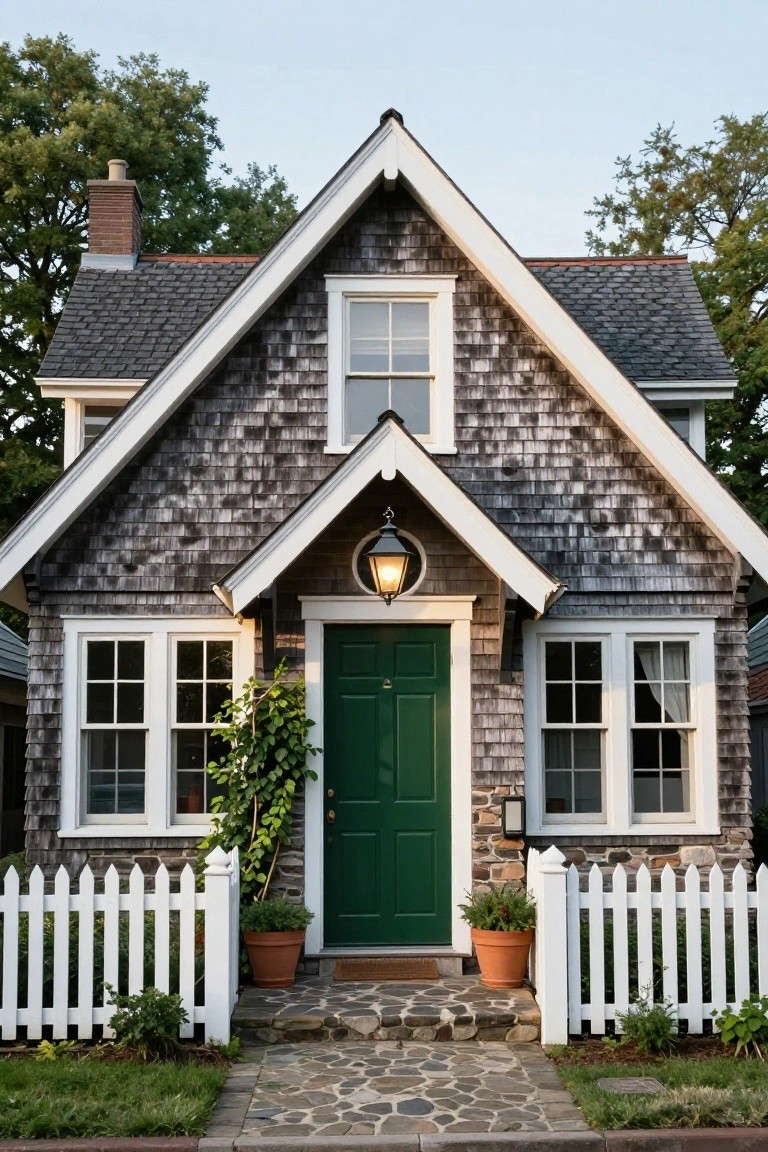
Shingle siding gives a house that classic New England look, especially when it’s in a dark gray tone like this. Pair it with a bright green front door, and you get a simple way to add some color without overdoing it. The white trim around the windows and door keeps things crisp, making the green really pop. It’s a look that feels right at home in coastal areas.
This setup works best on smaller colonials or cottages where you want curb appeal without much fuss. Go for a glossy green paint on the door to catch the light, and add a white picket fence if there’s room. Just make sure the siding is weathered a bit. Fresh new shingles can look too perfect next to that bold door color.
Navy Door and Shutters on Pale Siding
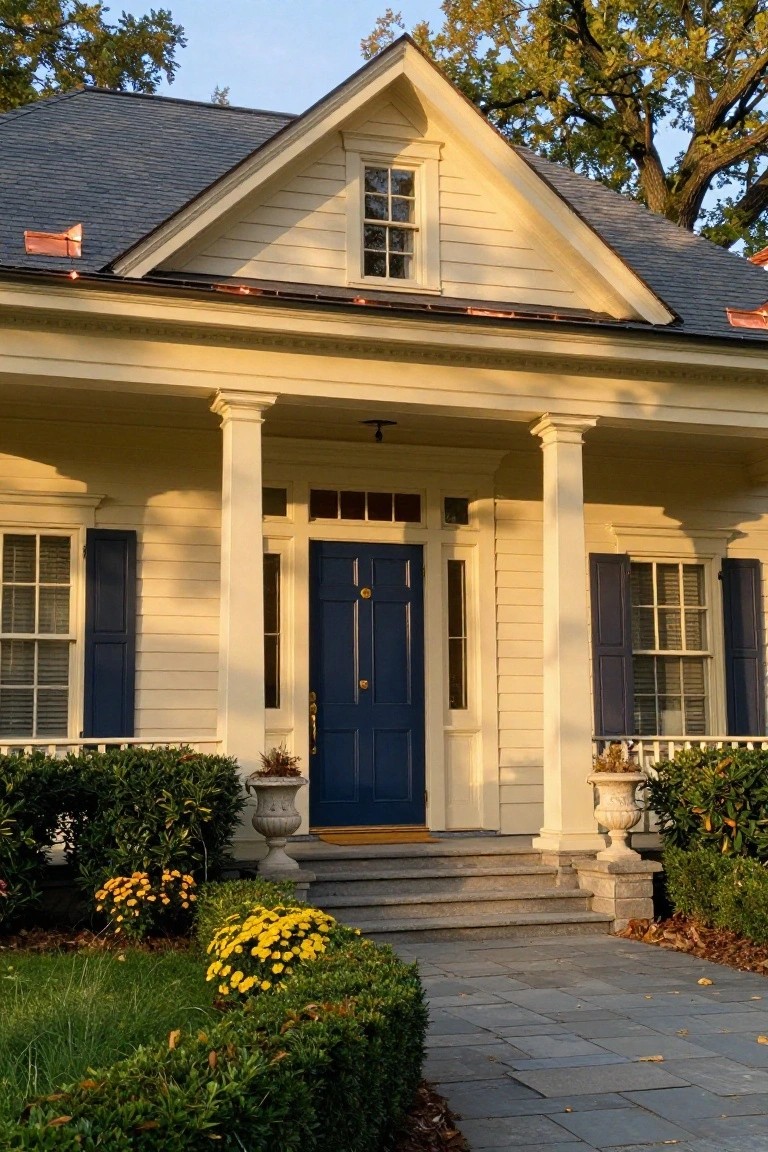
One simple way to give a New England colonial that regional charm is painting the front door and shutters a deep navy blue against pale yellow siding. It pulls the eye right to the entry without overwhelming the classic lines. The white columns and copper roof edge just frame it nicely, keeping things crisp and traditional.
This color combo works best on older homes with clapboard siding, especially where you want a fresh look that nods to history. Go for a buttery yellow that’s not too bright, and make sure the navy has some gloss to stand up to weather. It suits shady spots under big trees too, since the contrast pops even in soft light. Just avoid darker shades if your house faces south, or the fading might show sooner.
Classic Brick Colonial Facade
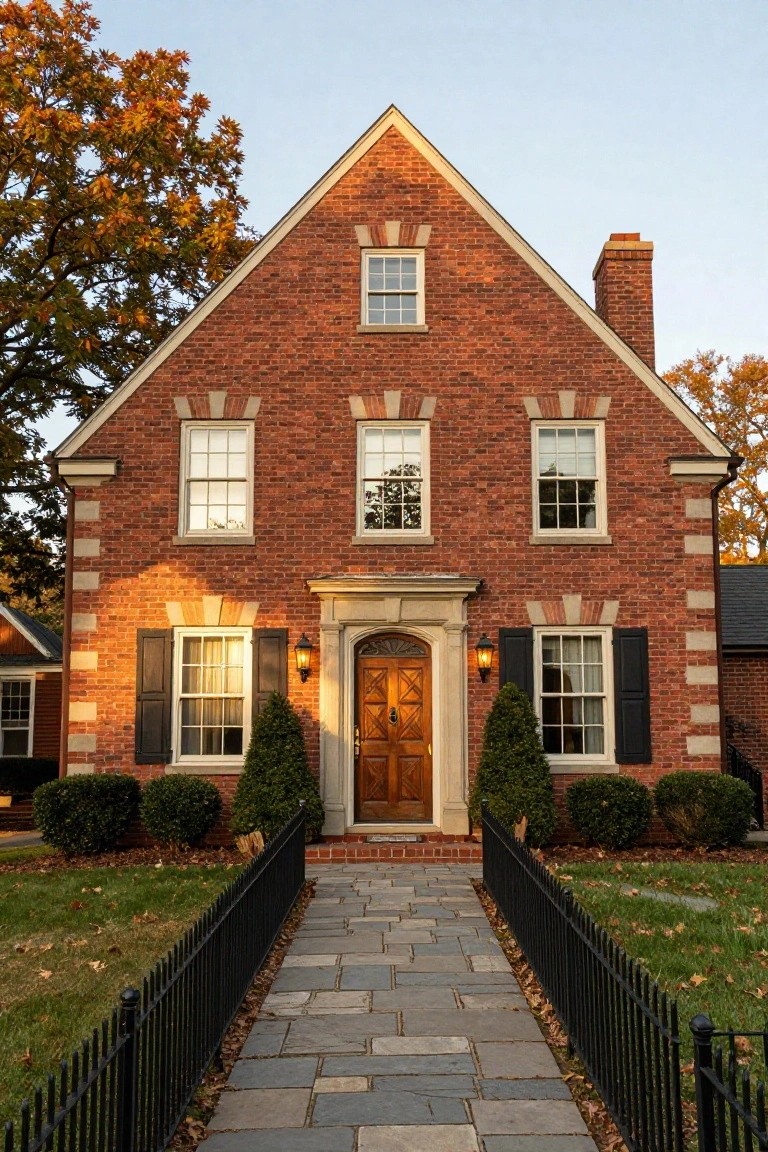
A red brick house like this nails that straightforward New England Colonial style. The even rows of double-hung windows and centered front door keep everything balanced and calm. White stone trim on the edges and around the entry gives just enough lift to the brick without fuss.
This setup suits homes in wooded suburbs or historic areas where you want reliable curb appeal. Line the path with boxwoods and add lanterns by the door for evenings. Skip bold colors. It holds up well year-round.
Navy Blue Siding with Black Shutters
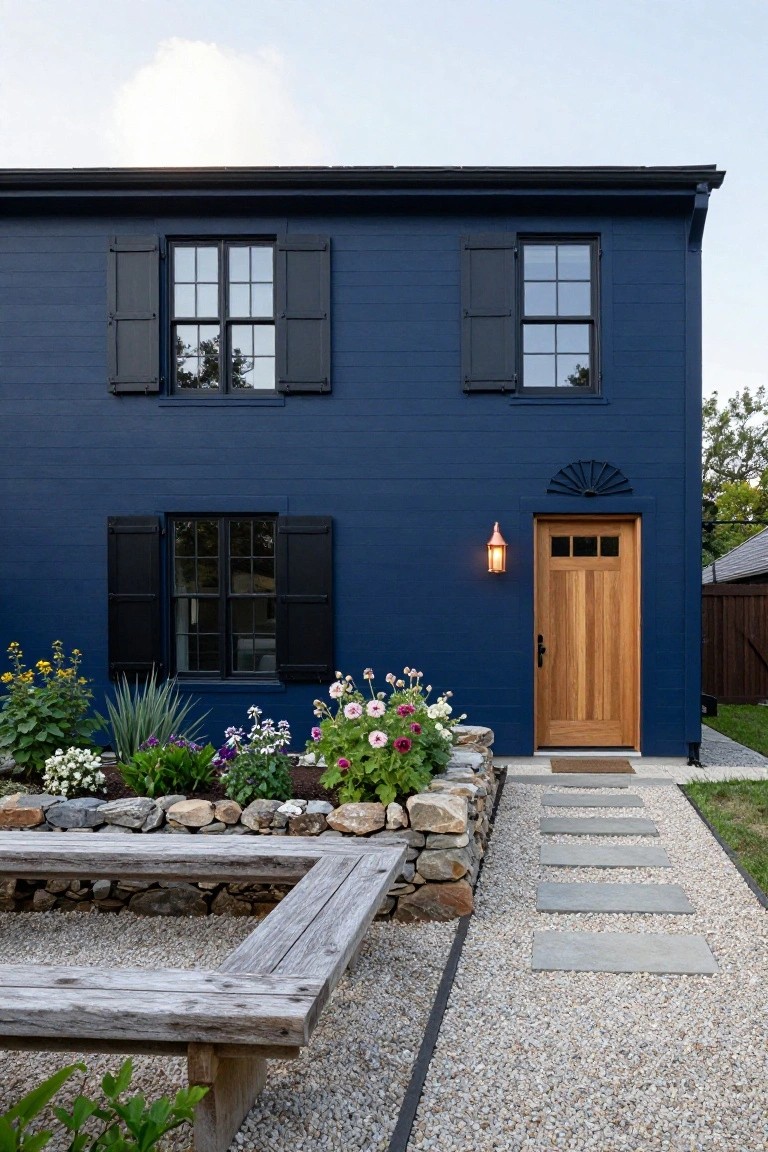
A deep navy blue paint on the siding turns this colonial house into something striking yet familiar for New England homes. The black shutters pull it together nicely, framing the windows without overpowering the simple clapboard style. That wood door in a warm tone keeps things from feeling too cold. It’s a straightforward way to update an older exterior.
This look works best on houses with straightforward shapes and good trim work. Go for high-quality exterior paint since dark colors show dirt more. It suits coastal or wooded spots where you want some punch but not flashy reds or whites. Just test the shade in different lights first.
Rustic Stone and Brick Facade
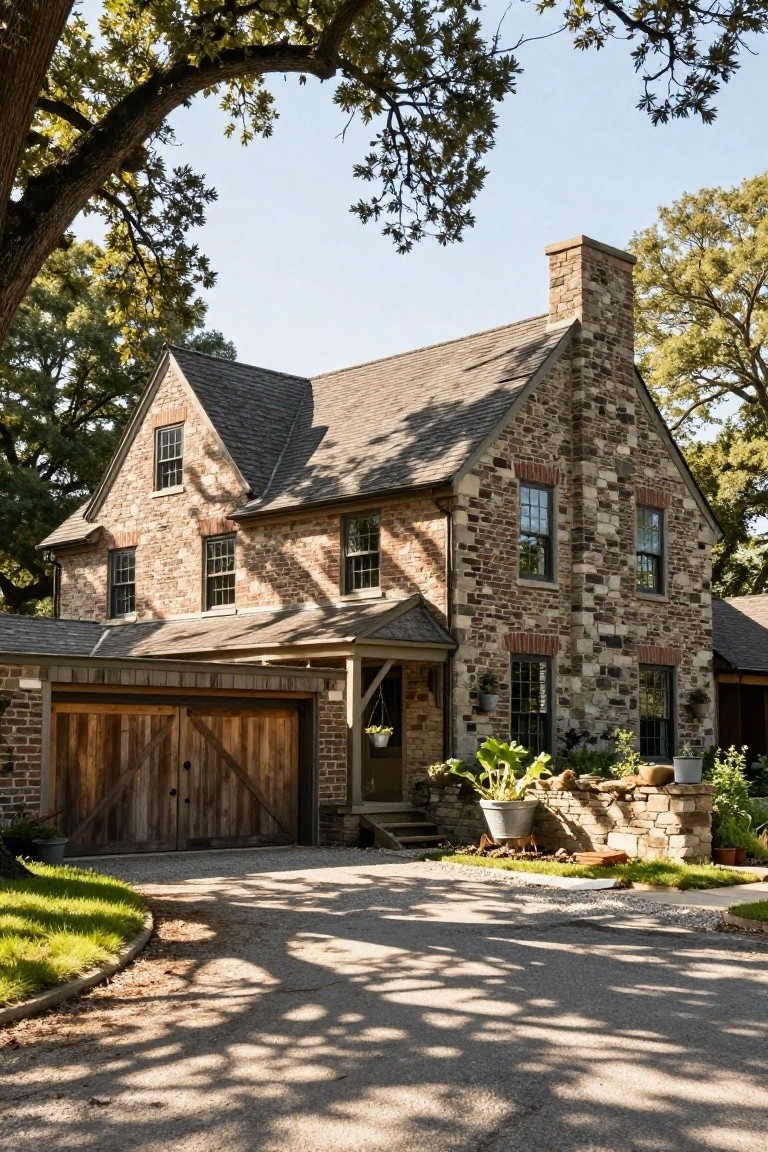
A mix of fieldstone and brick gives this Colonial house its solid, old New England feel. The rough natural stones pair up with orderly brick rows around the windows and chimney. It looks right at home under big oak trees, pulling the house into the landscape without trying too hard.
Try this on a two-story home where you want history mixed with upkeep in mind. Stone holds up to weather, and brick adds clean lines. It suits places with some woods nearby. Just balance the textures so one does not overwhelm. Wooden garage doors like these keep it from feeling too stiff.
Classic Brick Colonial Facade with Black Shutters
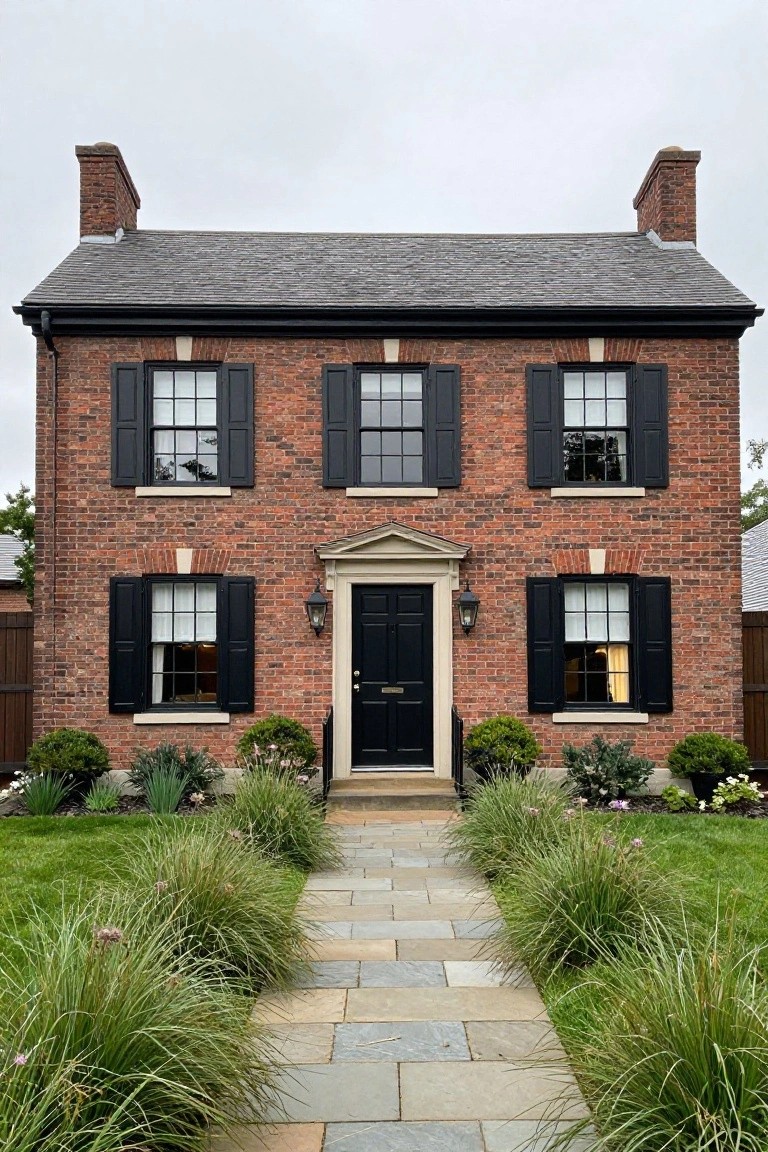
This setup takes a simple red brick house and gives it that solid New England look with black shutters framing the windows. The symmetry pulls everything together. Tall windows on both floors match up perfectly, and the centered door with its pediment keeps it traditional without extra fuss. Black shutters stand out sharp against the brick. It feels sturdy and right at home in an older neighborhood.
Try this on a two-story Colonial if you want curb appeal that lasts. Paint shutters glossy black for contrast, and keep the trim light. A stone path edged with grasses leads right to the door nicely. Works best where winters are rough. Brick holds up. Just make sure the mortar is tucked in tight.
Copper Accents on Classic Colonial Siding
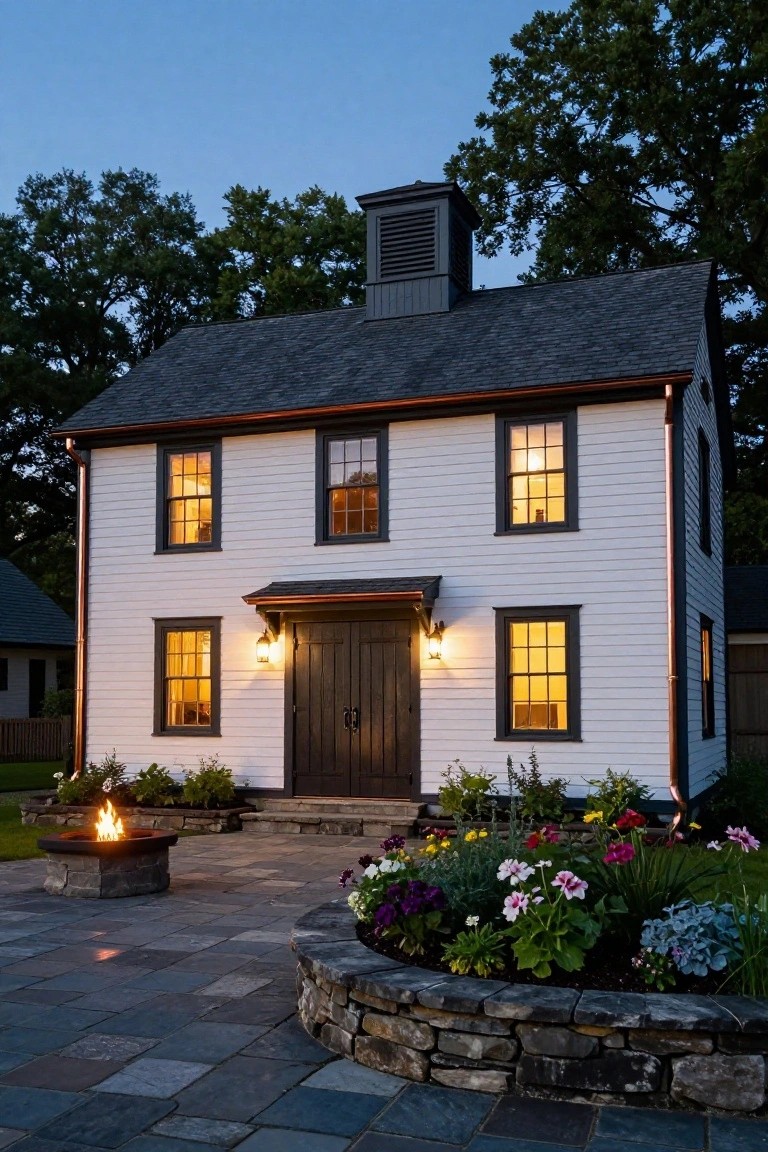
White clapboard siding is a staple for New England Colonials. It gives that clean, crisp look folks expect from the region. Pair it with copper gutters and flashing like on this house, and you get a nice touch of warmth. The copper picks up the evening light here, glowing softly against the white. Over time, it patinas to green, blending right into the landscape.
This setup works best on straightforward Colonials with dark trim and roofs. It suits homes in wooded or rural spots where you want subtle shine without flashiness. Go for it if your house has good proportions already. Just plan for the upkeep, since copper needs occasional cleaning to stay sharp.
Climbing Roses on Porch Brackets
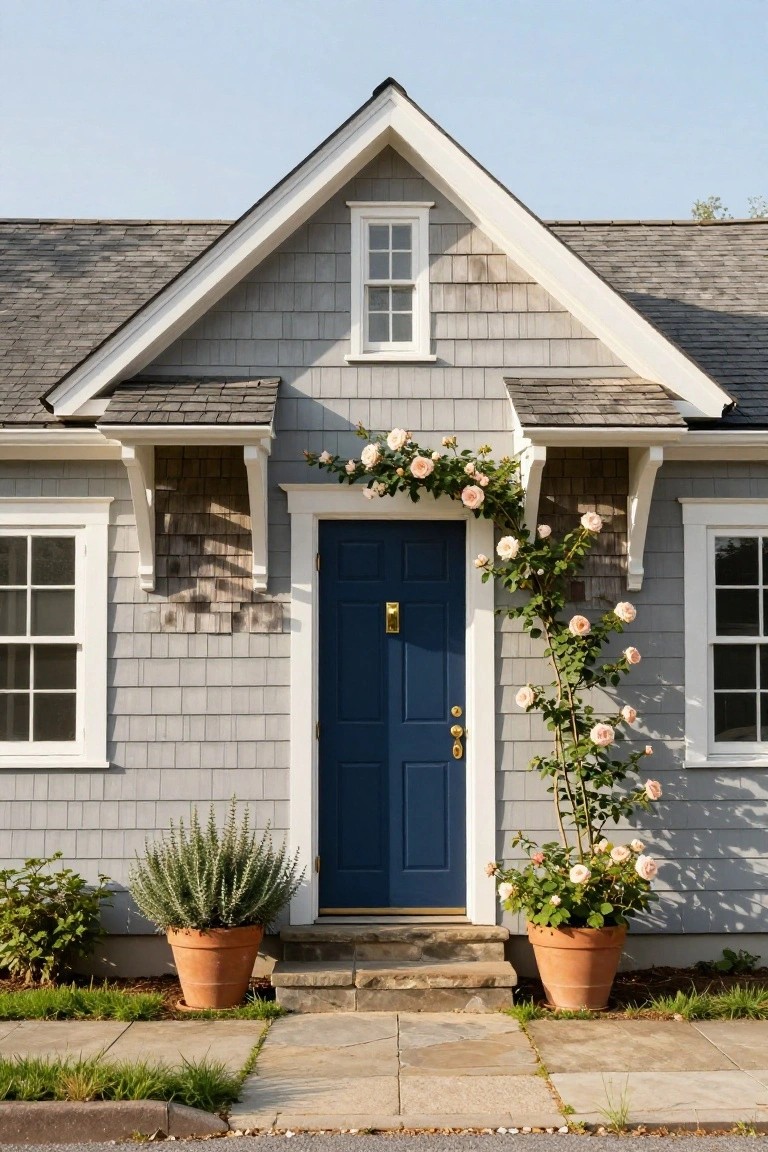
Climbing roses wrapped around the porch brackets make this shingle house entry feel cozy and full of life. The pink blooms trail up from a pot beside the navy door, adding a soft touch to the gray siding without much upkeep. It’s a simple way to bring garden color right to the front step.
Plant a repeat-blooming variety near your porch supports and guide the canes up with garden twine. This looks right at home on coastal colonials or cottages with white trim. Pair it with potted evergreens on the steps for year-round interest, but trim back in late winter so it stays neat.
Classic White Clapboard with Black Shutters
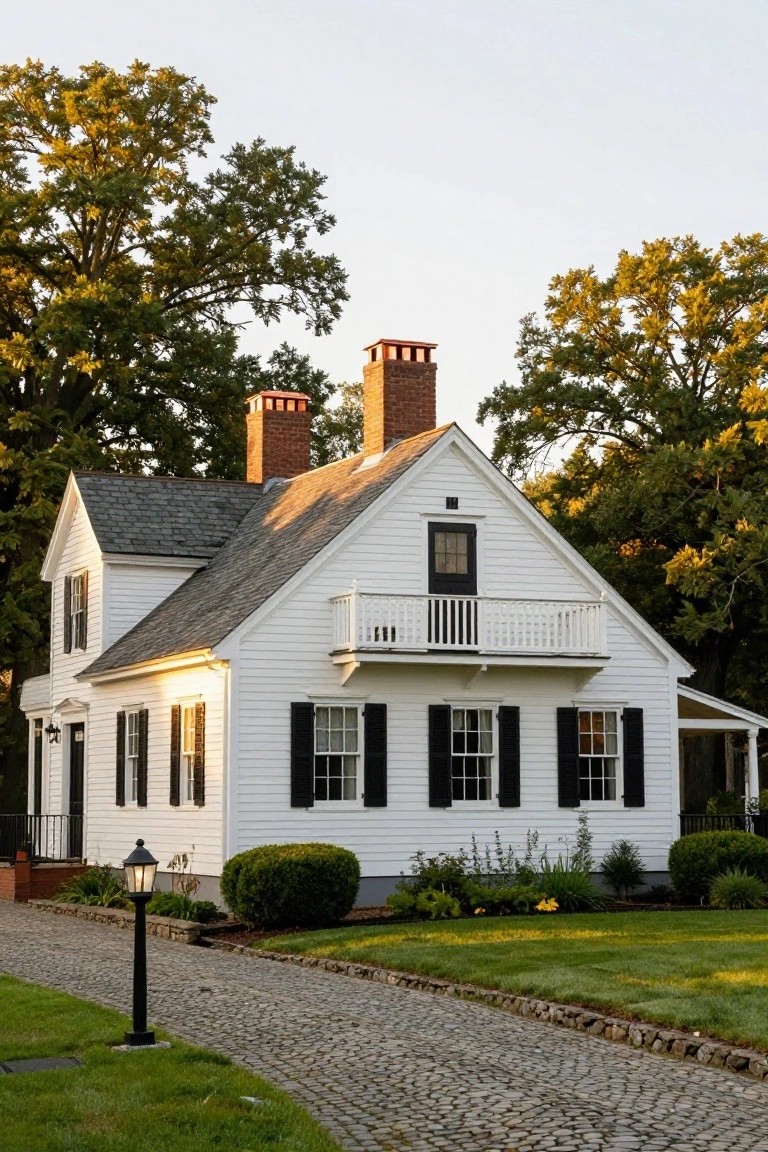
White clapboard siding painted crisp white, paired with black shutters, gives this New England colonial its clean, no-fuss look. The dark shutters pop against the siding and frame the windows nicely, while brick chimneys add a bit of warmth up top. It’s a setup that feels right at home in the region, straightforward and easy on the eyes.
This combo works great on homes with simple rooflines and plenty of windows. Try it if you want curb appeal without much upkeep, especially on a house set back from the road with some trees around. Just keep the paint fresh, since white shows dirt over time.
Wooden Pergola Over the Entry Door
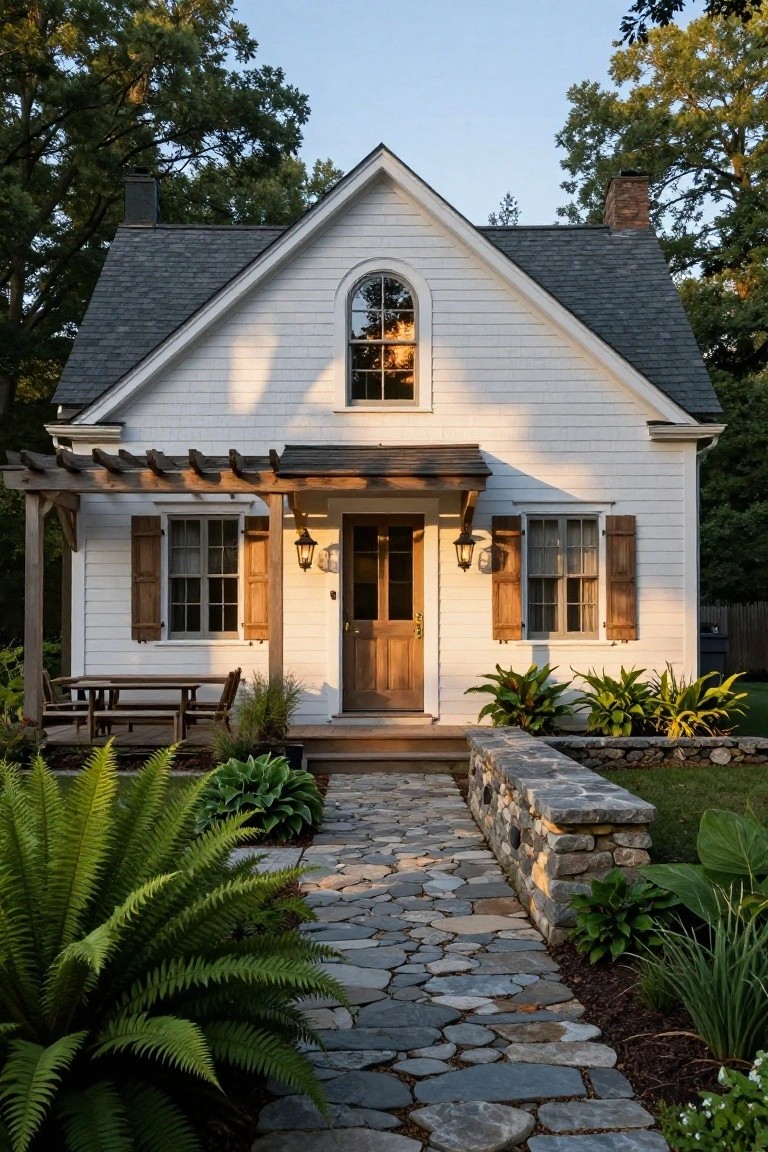
A wooden pergola like this one softens the look of a classic white clapboard Colonial. It sits right over the front door, with rough beams that match the wooden shutters and door. Those lanterns on each side add a practical touch for evenings. The whole setup pulls you right up the path without feeling too fussy.
This works best on homes tucked into trees, where you want some open shade at the entry. Go for untreated cedar or pine beams to weather naturally, just like here. Keep the posts simple and let plants climb up over time. Avoid it on super modern facades, though. It shines on traditional New England styles.
Classic Brick Colonial Portico
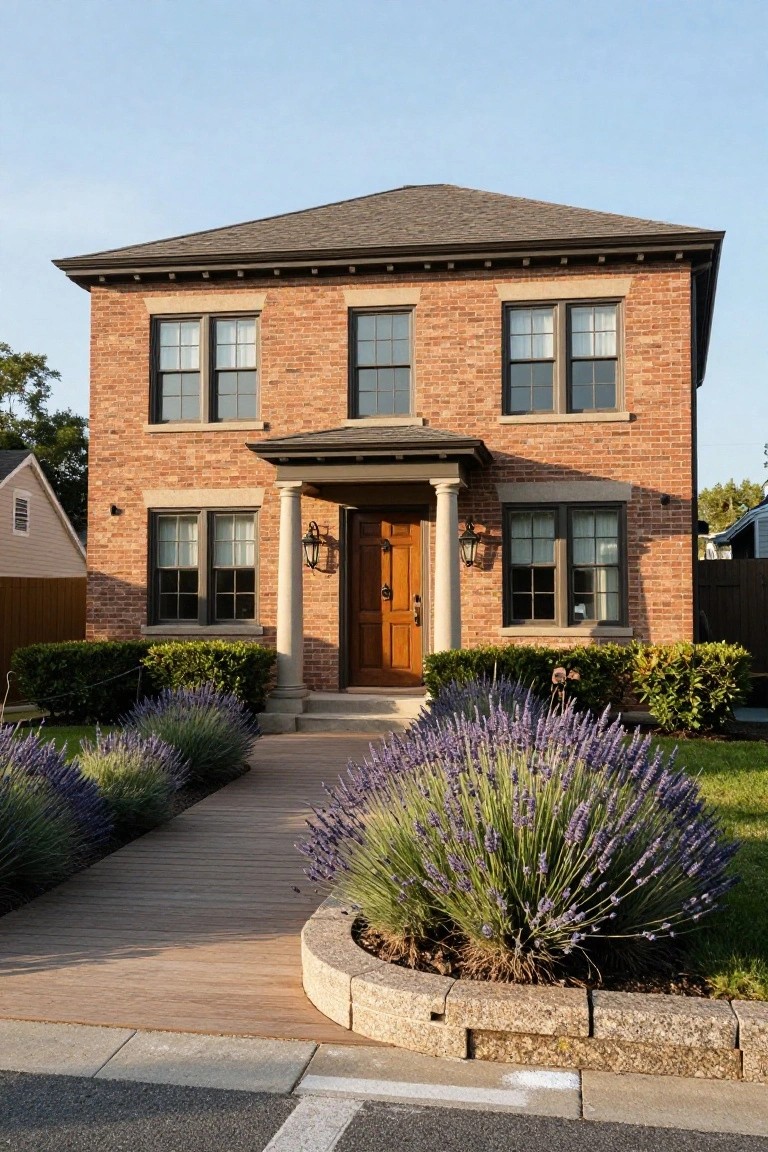
A columned portico like this one on a two-story brick house pulls together that familiar New England Colonial feel. The sturdy brick walls and simple gable roof set a solid base, while the porch with its round columns frames the front door just right. Dark lanterns on each side keep things practical too, lighting the way without fuss.
This entry style suits older neighborhoods or homes aiming for timeless curb appeal. Add a wood walkway edged with low plants, like lavender here, to guide folks right up. It works best on facades with some height, avoiding anything too modern or squat.
Brick Colonial with Columned Portico
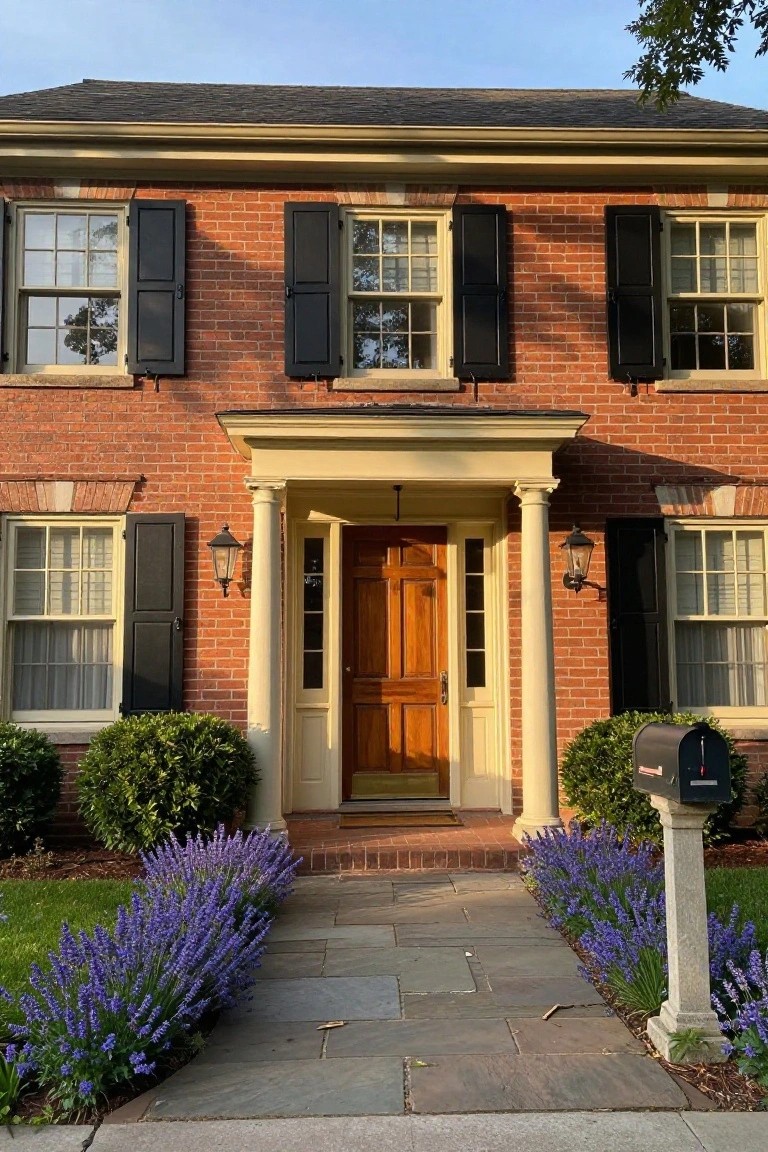
A columned portico like this one takes a basic brick Colonial and turns the front entry into the real focal point. The cream-painted columns frame the wooden door nicely, and paired with black shutters on the multipane windows, it gives off that solid New England feel without trying too hard. The lanterns on each side add just enough light to make it welcoming at dusk.
This setup suits older homes or revivals in cooler climates where brick holds up year-round. Run a stone path right up to it, maybe edge with low plants like lavender for some color that doesn’t overwhelm. Skip fussy details. It draws eyes to the door and keeps the facade clean. Works on smaller lots too, as long as you keep plantings tight.
Green Shutters on White Siding
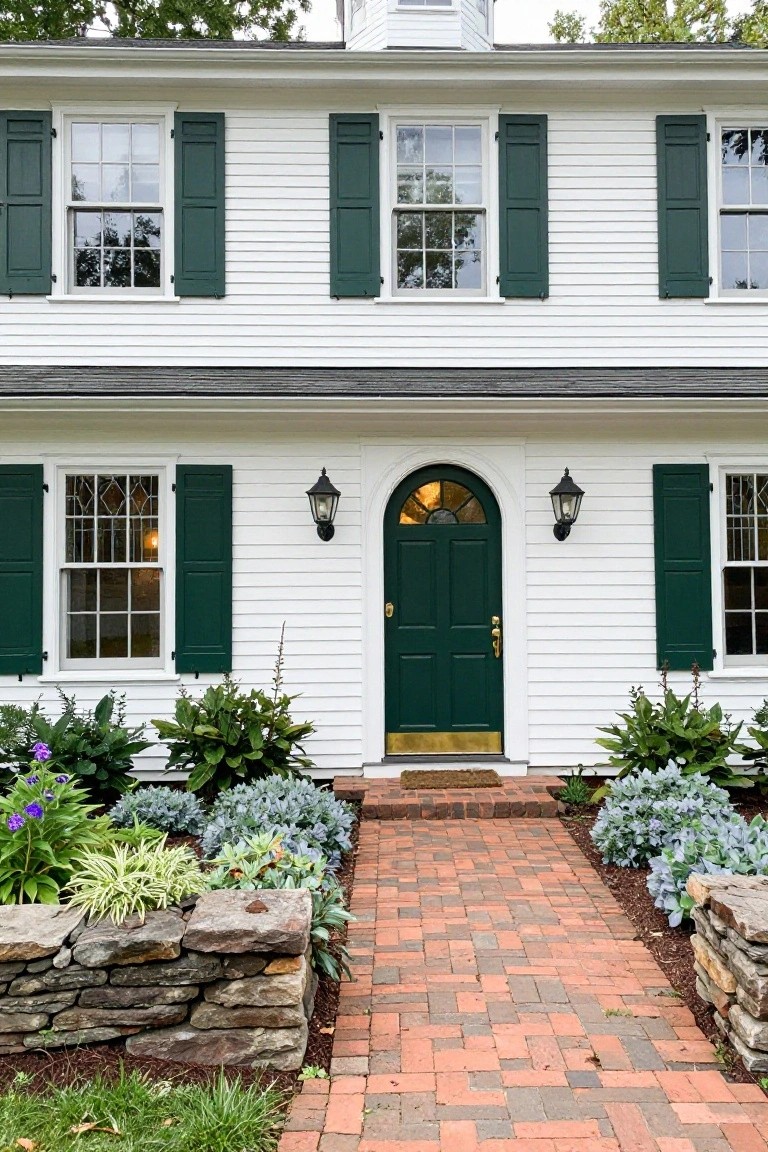
White clapboard siding paired with deep green shutters is one of those looks that just fits a New England Colonial. The high contrast pops against the siding, making the windows and front door stand out right away. That green door with its rounded top adds a bit of formality too, without overdoing it.
This setup works best on homes with good symmetry, like evenly spaced windows. Go for a glossy finish on the green paint to catch the light. It suits clapboard houses in wooded areas… keeps things fresh even as leaves change. Just plan to repaint the wood every few years.
Frequently Asked Questions
Q: Do I have to stick with white paint for my Colonial exterior?
A: Whites and pale grays give that crisp New England glow homeowners love. Pick one with a touch of warmth to fight off the coastal fog look. Slap samples on your siding and watch them through the day.
Q: What’s a quick way to refresh my front porch?
A: Swap out the railings for turned spindles in natural wood. Stain them dark to echo the originals. Add hanging lanterns for evening warmth.
Q: How do I choose shutters that fit a Colonial house?
A: Grab louvered ones in a size that matches your window height. Paint them the same deep color as your door. Hang them just right at the window’s edge… perfect proportion every time.
Q: Can I add solar panels without killing the charm?
A: Mount them flat on the rear roof slope. They hide from the street view. Your house keeps its storybook roofline intact.
