


Old house bathrooms can feel awkward when worn finishes, dim light, and mismatched updates leave the room short on character and function.
I’m drawn to period-appropriate tile because it can bring back a sense of the home’s original style while still making the space feel more considered.
A thoughtful pattern, durable surface, or well-placed border can tie together the fixtures and layout without making the room feel like a museum.
The change can be subtle, but it’s satisfying to see a bathroom feel more cohesive and easier to use.
Some of these tile ideas may be worth adapting to your own home, whether you’re planning a full renovation or starting with one small detail.
Restore Period-Appropriate Bathroom Tile

Replacing worn flooring with small white mosaic tile brings back a look that suits an older bathroom and gives the room a cleaner finish. Here, the dark border and simple accent pattern add definition without competing with the classic tub.
For a similar update, choose tile that fits the home’s age and keep the pattern modest, especially in a narrow room. Check the floor’s condition and have the base prepared properly before installing new tile.
Choose Period-Appropriate Tile For A Bathroom Update

Replacing the worn floor and dated pink tile with small white tiles and a dark border gives this older bathroom a cleaner look while still suiting its original style. The black-and-white floor adds pattern without making the room feel busy.
In a small bathroom, keep the main tile simple and use a contrasting border or floor pattern for interest. Check that new tile works with any original features you plan to keep, so the update feels at home in an older house.
Use Period-Appropriate Tile To Update An Old Bathroom

Replacing the worn floor with small hexagonal mosaic tile and adding green tile around the lower walls gives this bathroom a more finished look while still suiting the older house. The wood vanity also fits naturally with the existing trim.
In a small bathroom, tile can bring character without needing to change the room’s layout. Choose colors and shapes that feel at home with the house’s age, and keep the pattern simple enough that the room doesn’t feel crowded.
Use Patterned Tile To Give An Old Bathroom Character
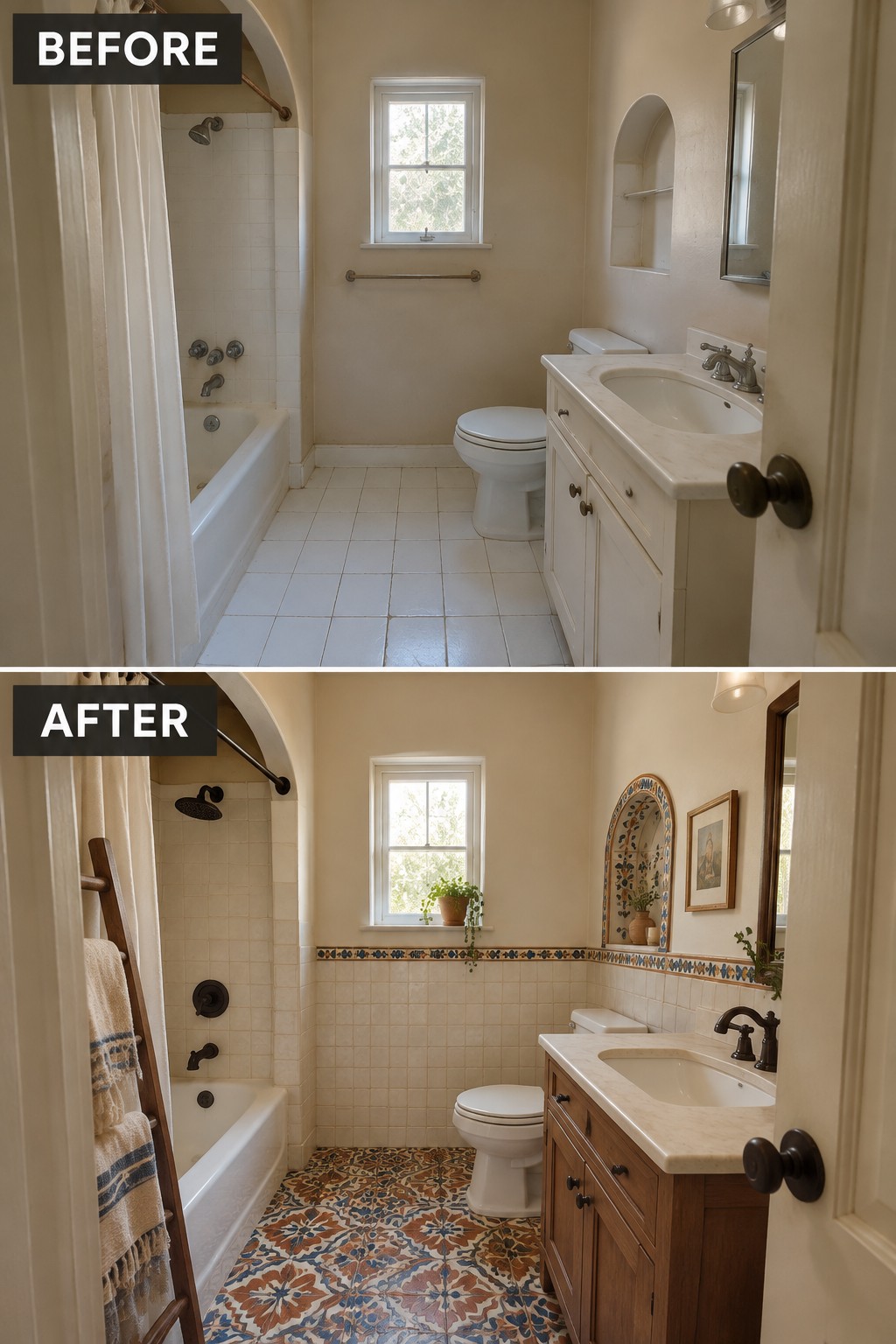
The plain bathroom feels more finished after patterned floor tile and a decorative border are added. These period-style details bring character to a small room without changing its basic layout.
In an older home, look for tile colors and patterns that suit the house rather than competing with it. You can keep the fixtures simple and use one patterned surface as the main feature, especially in a narrow bathroom where too many bold finishes may feel busy.
Keep The Original Tile And Update The Fixtures
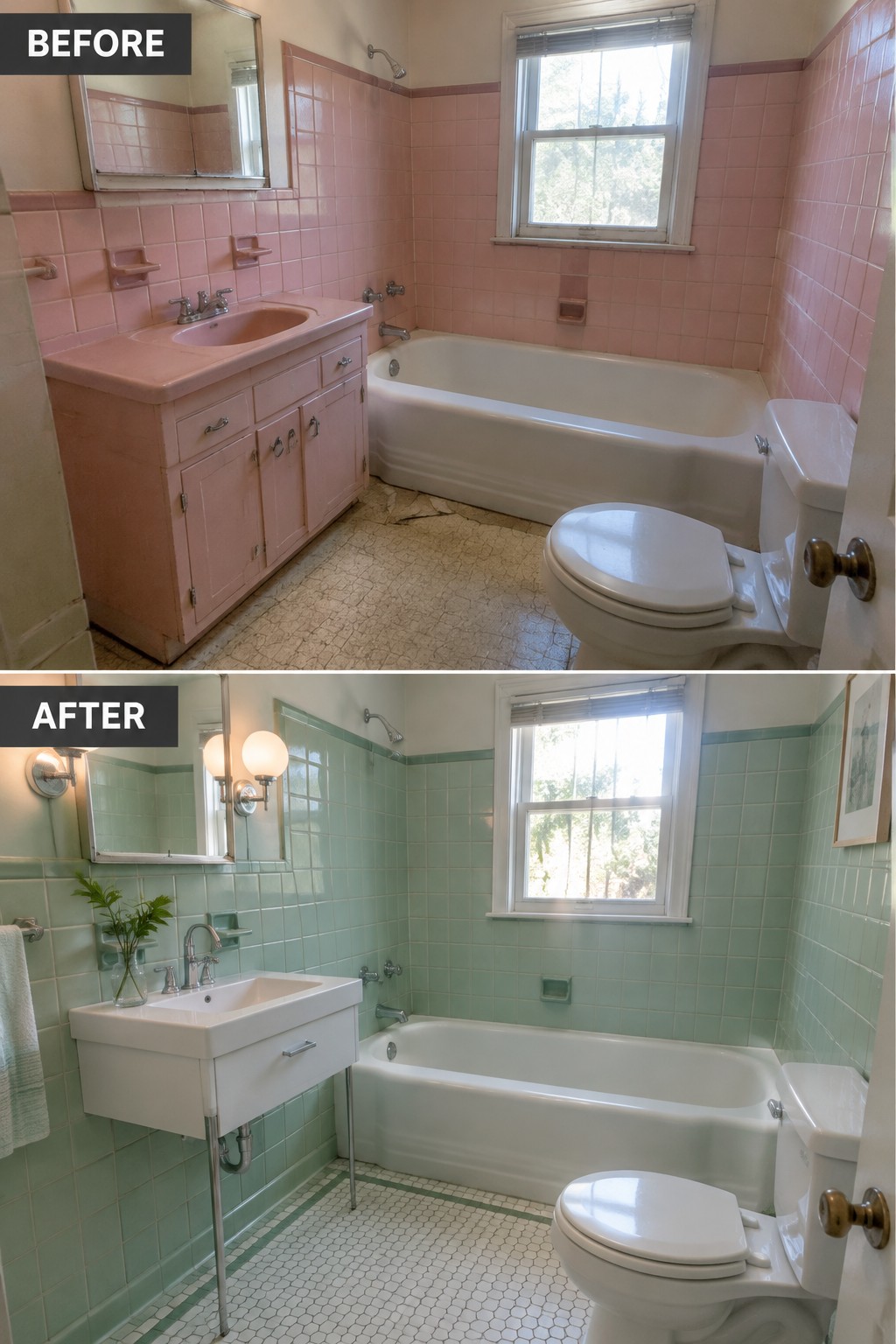
Replacing every old finish is not always necessary. Here, the pink wall tile gives way to mint-green tile, while a simple pedestal sink replaces the bulky vanity. The coordinated tile and cleaner sink make the bathroom feel lighter without changing its basic layout.
In an older home, consider keeping tile that is in good shape and refreshing the fixtures around it. A pedestal sink can suit a small bathroom, though it offers less storage, so plan for a nearby cabinet or shelf if you need one.
Use Checkerboard Tile To Refresh A Small Bathroom
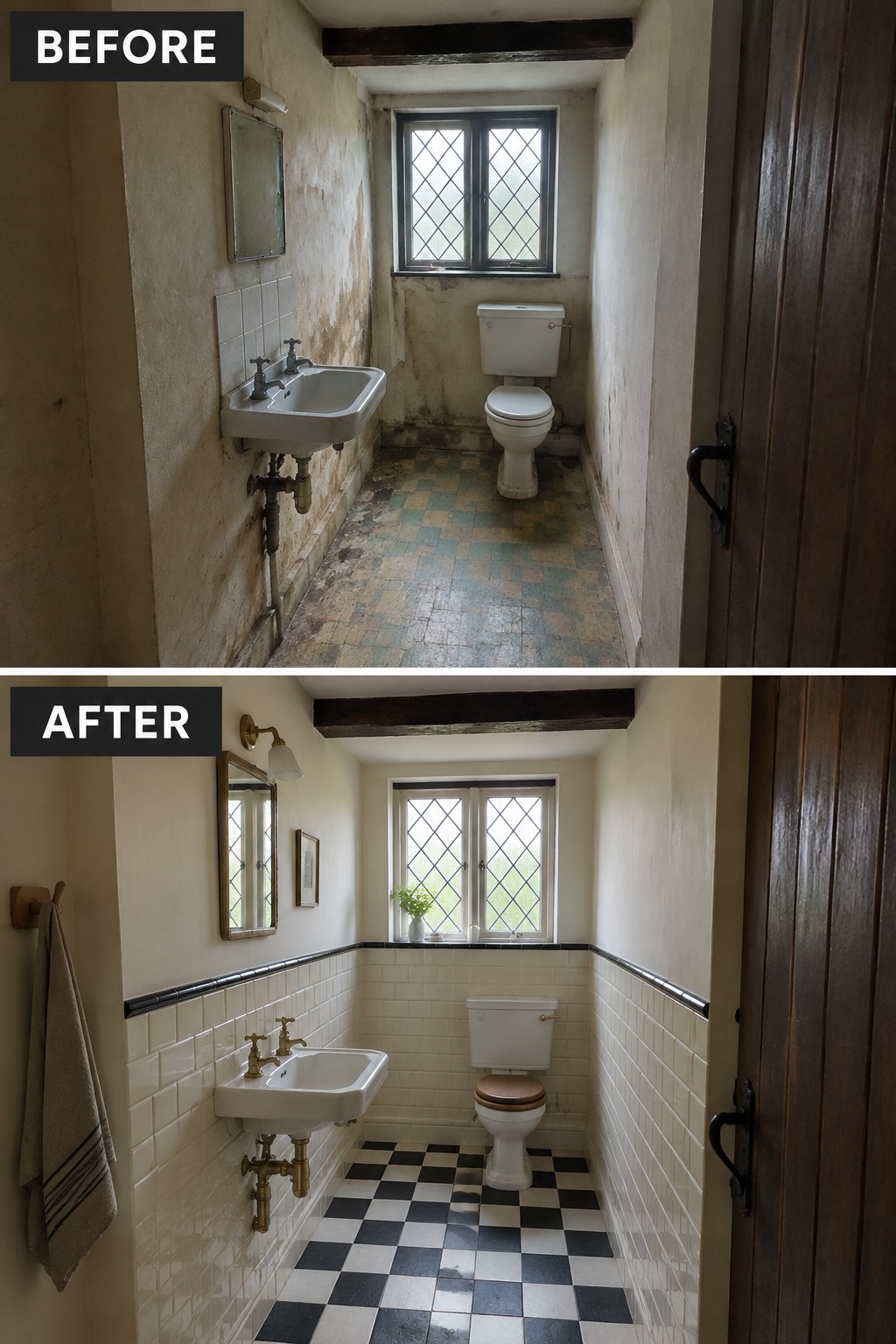
The worn bathroom floor has been replaced with black-and-white checkerboard tile, giving the narrow room a cleaner, more finished look while keeping its older character. This simple pattern suits a period-style bathroom without requiring a lot of extra decoration.
For a small bathroom, use a classic tile pattern on the floor and keep the other finishes fairly simple. Check the tile size against the room before choosing it, since oversized squares can make a tight floor feel busy.
Use Classic Tile Patterns To Refresh An Old Bathroom
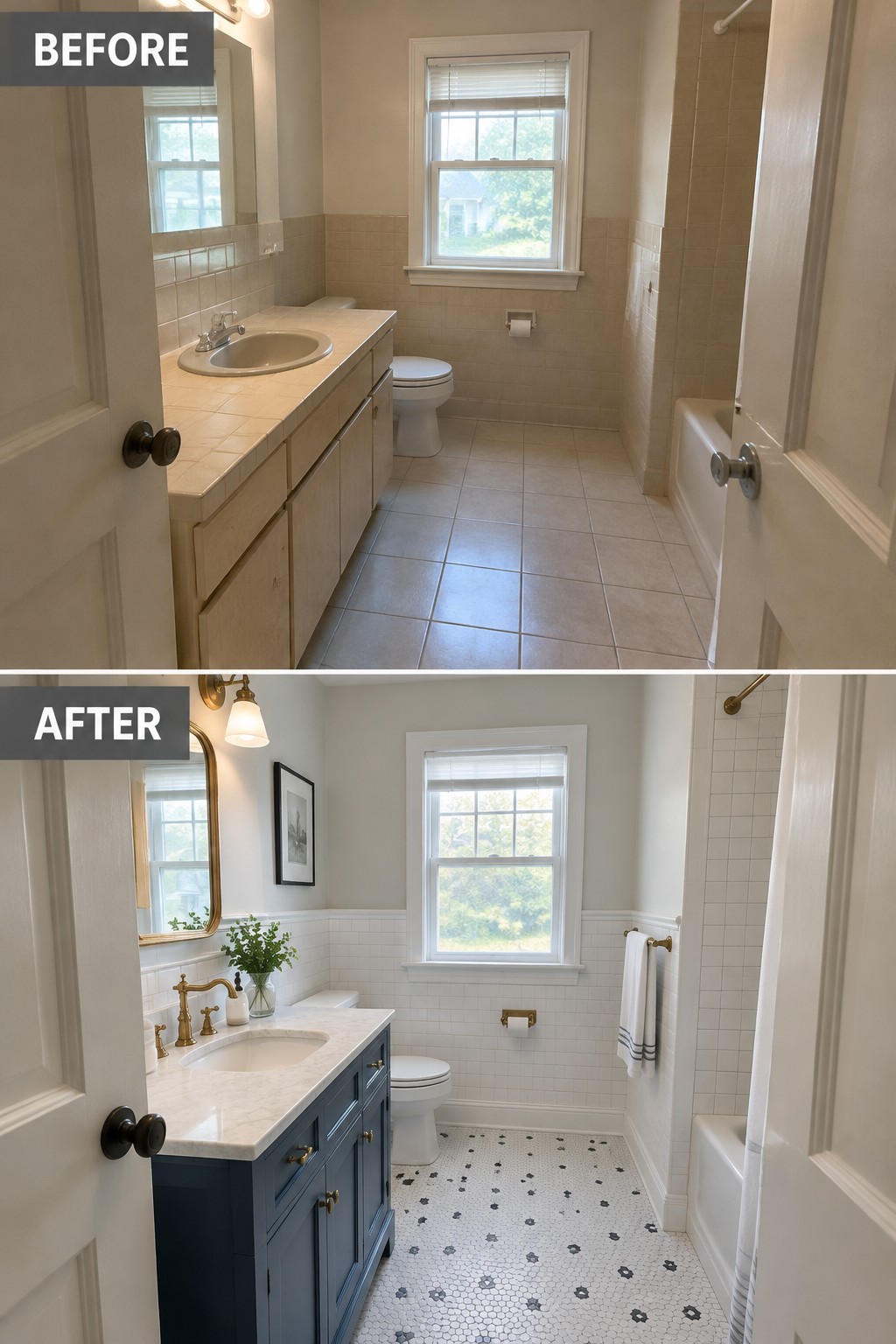
Replacing the dated beige surfaces with white wall tile and a small patterned floor gives this bathroom a cleaner look while still suiting an older home. The restrained colors let the floor pattern provide character without making the narrow room feel busy.
For a similar update, keep the wall tile simple and choose a period-friendly floor pattern in a scale that fits the room. Test a sample in place first, since a dense pattern can feel overwhelming in a small bathroom.
Replace Worn Tile With Period-Appropriate Patterns
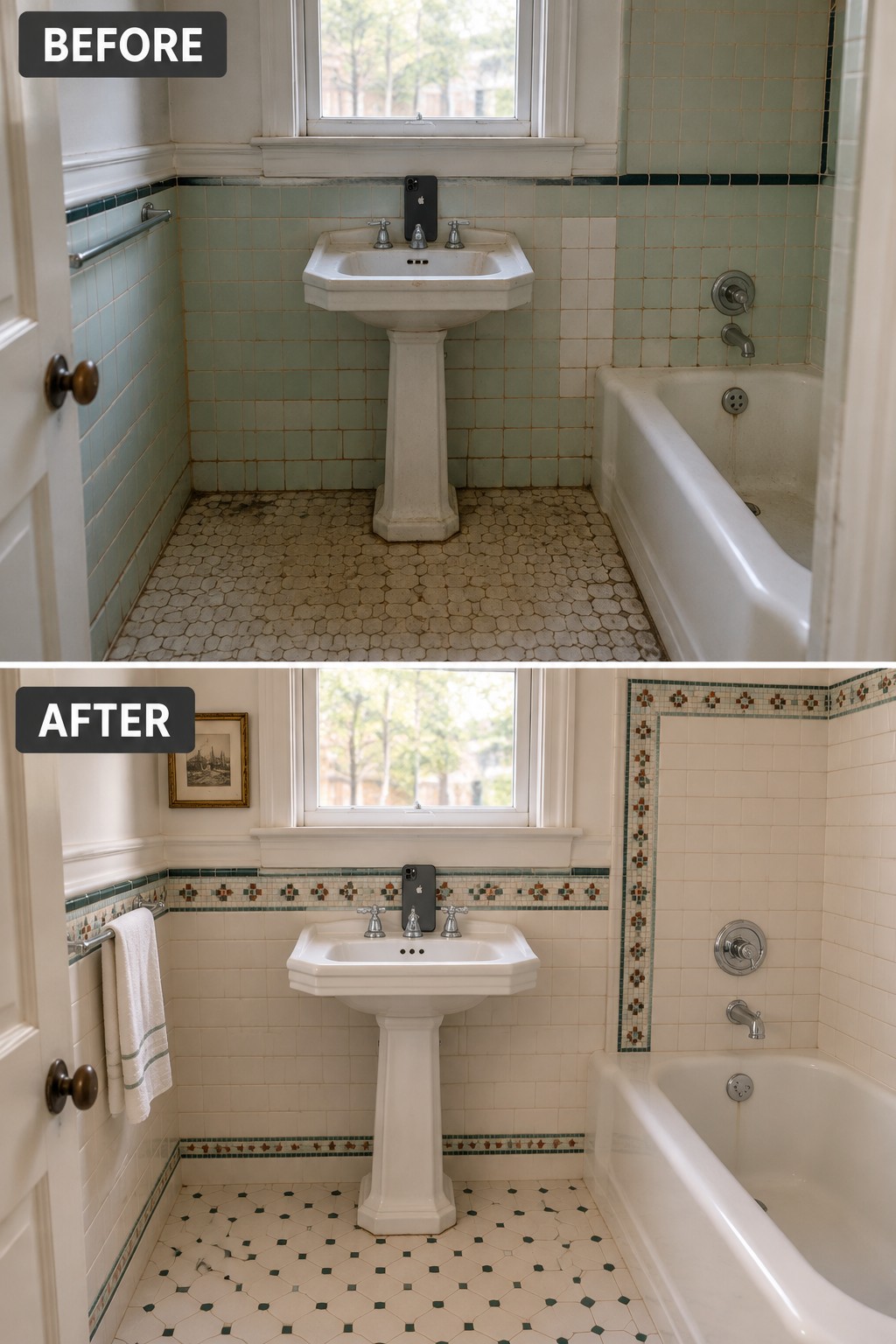
The worn green wall tile and mottled floor made this old bathroom feel tired. Replacing them with cream tile and small patterned borders keeps the room’s traditional character while making it feel cleaner and more considered.
For a similar update, choose tile details that suit the age of the house, such as a simple geometric floor or a narrow decorative border. Repeating a few colors across the walls and floor helps the pattern feel connected without making a small bathroom too busy.
Use Subway Tile To Refresh A Small Bathroom

Replacing dated floral wallpaper with white subway tile gives this small bathroom a cleaner, more fitting backdrop. The simple tile suits an older home and lets the pedestal sink remain a natural focal point.
For a similar update, keep the tile to wainscot height if you want to preserve some wall space above it. A dark mosaic floor can add period character, but choose a small-scale pattern that won’t make a tight room feel too busy.
Use Period-Style Tile To Give An Old Bathroom Character

Replacing the worn floor and plain vanity with terracotta-colored tiles and a dark wood vanity gives this bathroom a more fitting older-home look. The green tile around the lower walls helps the floor feel like part of the room rather than a separate update.
For a similar effect, choose tile colors and patterns that suit the age of the house, then keep the rest of the finishes simple. In a small bathroom, a border can add pattern without making the floor feel too busy.
Update An Old Bathroom With A Lighter Color Scheme
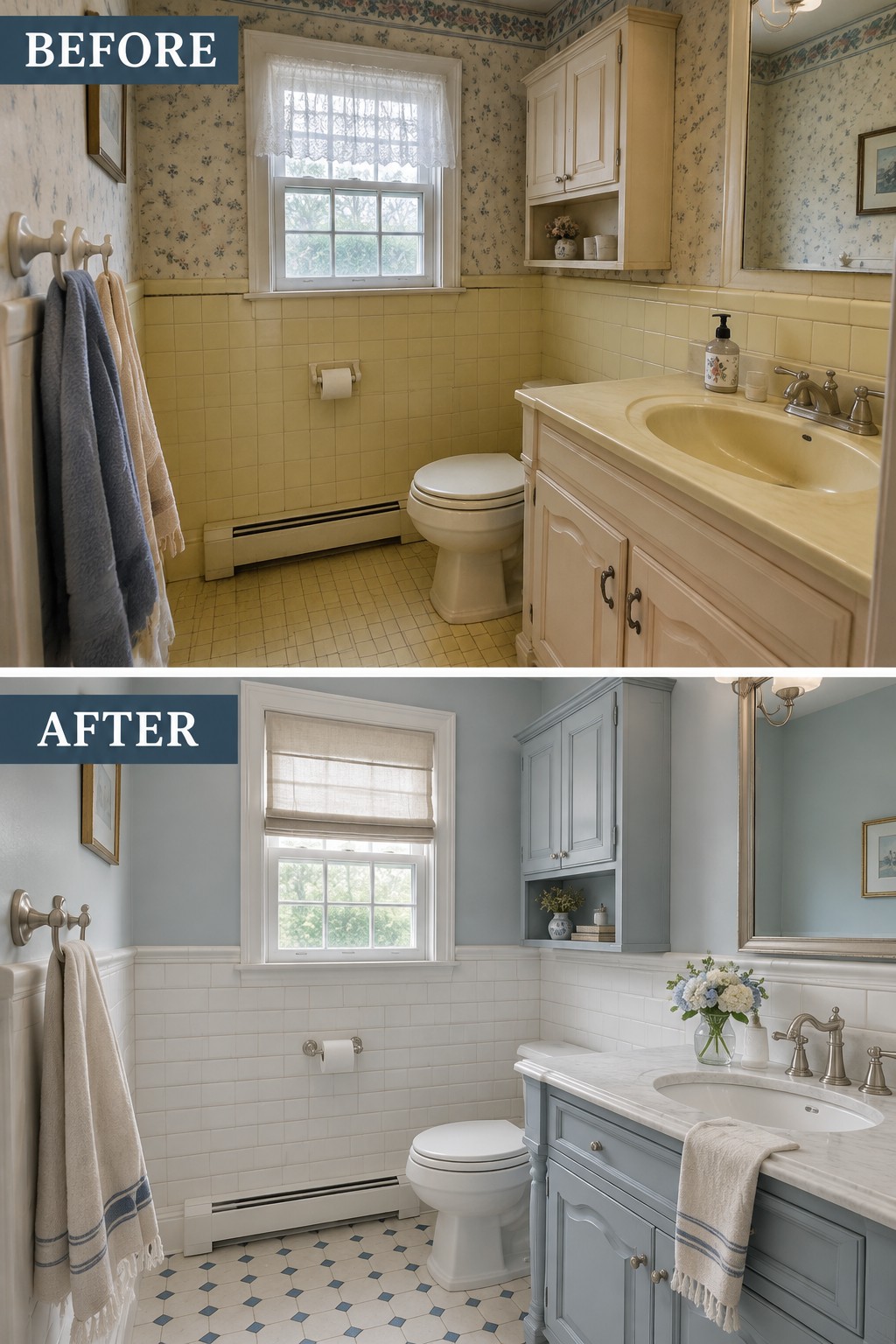
Replacing yellowed finishes with pale tile and soft blue cabinetry gives this older bathroom a fresher look without losing its traditional character. The simple tile keeps the room from feeling busy, while the painted vanity brings in color.
In a period home, choose finishes that suit the room’s existing lines rather than making every detail look brand new. Light square tile is a practical option for walls, and a muted vanity color can update the space without competing with it.
Use Colorful Wall Tile To Refresh An Old Bathroom

The old yellow wall panels made this bathroom feel dated, while the blue-green tile gives it a cleaner, more finished look without changing the basic layout. Using tile on the lower walls and around the tub also makes the update feel at home in an older house.
For a similar remodel, choose a simple rectangular tile in a color that suits the age of the home, then keep the grout and upper walls fairly quiet. In a small bathroom, extending the same tile around the tub can make the finishes feel consistent without adding extra patterns.
Make Patterned Tile The Main Bathroom Feature
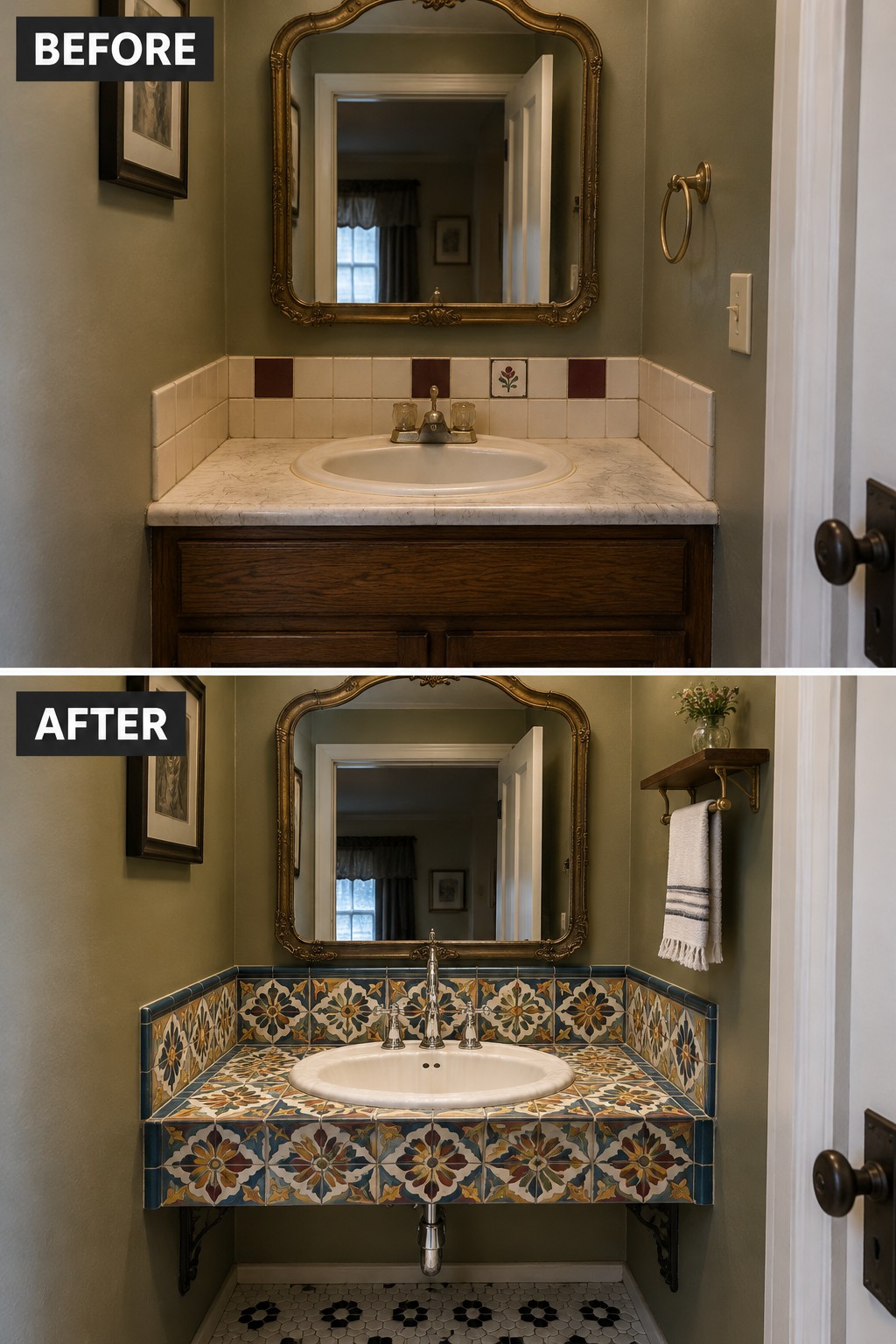
Replacing plain, dated tile with a coordinated patterned surface can give an old bathroom a clear focal point while keeping its original character. Here, the colorful tile carries across the vanity and backsplash, so the room feels more finished without needing a full remodel.
For a similar update, choose one tile pattern you enjoy and use it consistently on the counter and a short backsplash. Keep the sink and fixtures simple, and check that the tile scale suits the vanity so the pattern does not overwhelm a small bathroom.
Use Simple Tile To Refresh An Old Bathroom

The worn bathroom feels much cleaner after damaged walls and flooring are replaced with white wall tile and a simple gray floor. Keeping the tile restrained lets the old room’s basic layout and traditional fixtures still feel at home.
For a period-appropriate update, choose straightforward shapes and colors that suit the age of the house rather than chasing a modern pattern. In a small bathroom, keeping the wall tile light can also help the space feel less closed in.
Use Dark Green Tile To Give An Old Bathroom Character

The beige tile made this older bathroom feel dated and plain. Replacing it with deep green wall tile gives the room a stronger period look, while the simple white fixtures keep the color from taking over.
In a small bathroom, use a rich tile color on the walls and keep the sink and tub light. A traditional square tile suits an older home especially well, but check that the grout and tile finish will be practical to clean.
Replace A Worn Tub With A Tiled Walk-In Shower

Replacing the old tub surround with white subway tile gives this bathroom a cleaner, more period-friendly look. The walk-in shower also makes better use of the narrow bathing area.
This approach can suit an older bathroom where the tub is rarely used, but check that the shower floor drains properly and that the curb is easy to step over. A classic tile pattern helps the new shower feel at home in an older house.
Frequently Asked Questions
Q: How can I make period-style tile work in a small old bathroom?
A: Keep the pattern simple and use it on one main surface, such as the floor or shower wall. Smaller tiles can suit a compact room, but a busy pattern on every surface may feel crowded.
Q: Do I need to match the tile to the house’s exact era?
A: Not exactly. Look at the home’s original details for clues, then choose tile with a similar shape, color, or level of formality. A thoughtful nod to the period often feels more natural than a perfect historical recreation.
Q: Can I use modern materials without losing the old-house feel?
A: Yes. Modern porcelain tile can echo classic patterns while standing up to everyday moisture and wear. Pair it with period-inspired grout colors and simple fixtures to keep the room’s character.
Q: What grout color works best with vintage-style tile?
A: A shade close to the tile usually keeps the pattern calm, while contrasting grout makes each shape stand out. Test a small sample first, since grout can change how the whole floor reads.
