

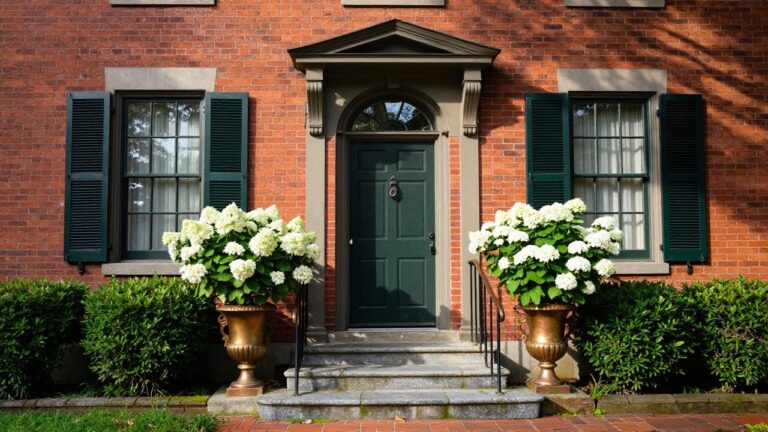
When you pull up to a Colonial house, the entryway hits you first, framing the facade with its signature symmetry and hinting at the welcome inside.
I once watched a neighbor swap out a mismatched door for one with proper fanlight glazing, and it instantly grounded their whole front elevation in authentic style.
These designs lean on smart material mixes, like clapboard siding paired with stone steps, to build curb appeal that ages gracefully through New England winters or Southern humidity.
Details such as dentil molding or sidelight proportions often decide if an entry feels grand or just fussy from the street.
A couple of these could adapt easily to your setup, worth noting down for that next project.
Columned Portico Entryway
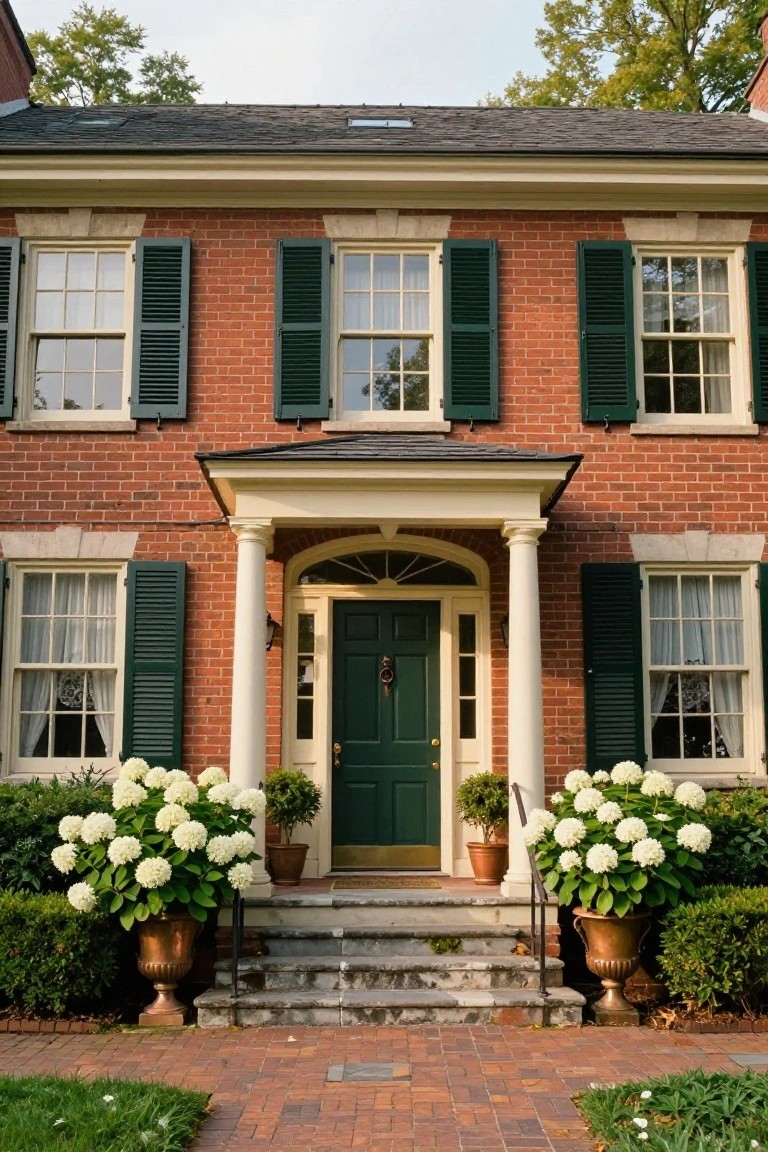
A columned portico like this one gives a colonial home that solid, welcoming front. It sits right over the door with clean lines and a bit of arch detail that pulls the eye up. The red brick base and green door keep things traditional without fuss. What stands out is how it frames the entry just right, making guests feel expected.
You can pull this off on most older brick houses or even add one to a simpler facade if the proportions work. Pair it with matching urns on the steps, like those big white hydrangeas here, for extra punch. Skip anything too busy around the base. It fits best where you want curb appeal that lasts through seasons.
Recommended Products

Instant Upgrade with Door Molding Trim Peel and Stick – Transform flat, plain doors into elegant architectural features in minutes. This premium door molding trim peel and stick kit delivers a high-end, custom-built look without hiring a contractor. Perfect for refreshing bedrooms, hallways, offices, and living spaces with a timeless panel-style finish.

2 Rosettes fit most 2-1/4" interior door and window frames - Rosette size 2-3/4" x 2-3/4"

Style and Durability: This 16.4FT glossy black body side molding trim enhances your vehicle’s appearance with a modern aesthetic. UV-protected and scratch-resistant, it offers lasting protection against road debris, dings, and environmental damage
Navy Door on White Colonial Facade
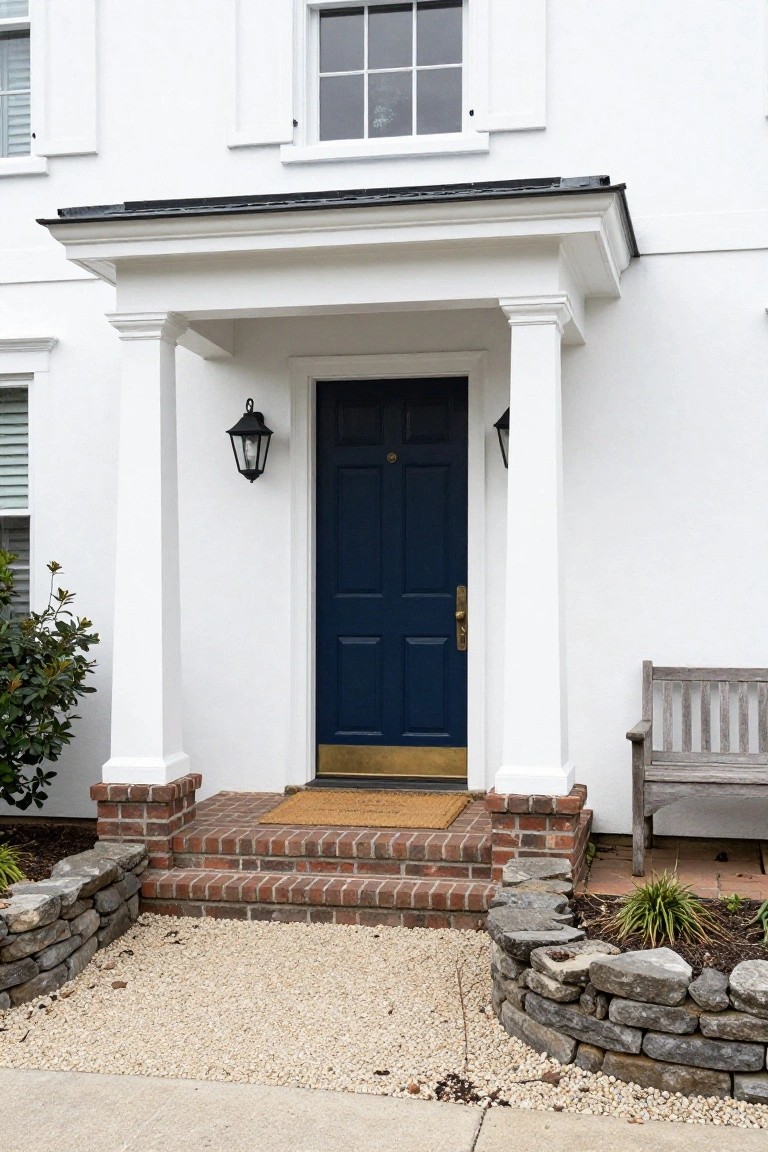
A navy blue front door gives this white colonial house a simple pop of color right at the entry. It stands out against the clean white siding without overwhelming the classic lines. Flanked by white columns and lanterns, the door pulls your eye in and makes the porch feel more like a proper welcome spot.
This look fits older homes or new builds aiming for traditional curb appeal. Go for a deep navy paint on a paneled door, keep brass hardware, and add brick steps if you have them. It suits sunny spots where the contrast really shows… just test the shade in daylight first.
Red Door on White Colonial House
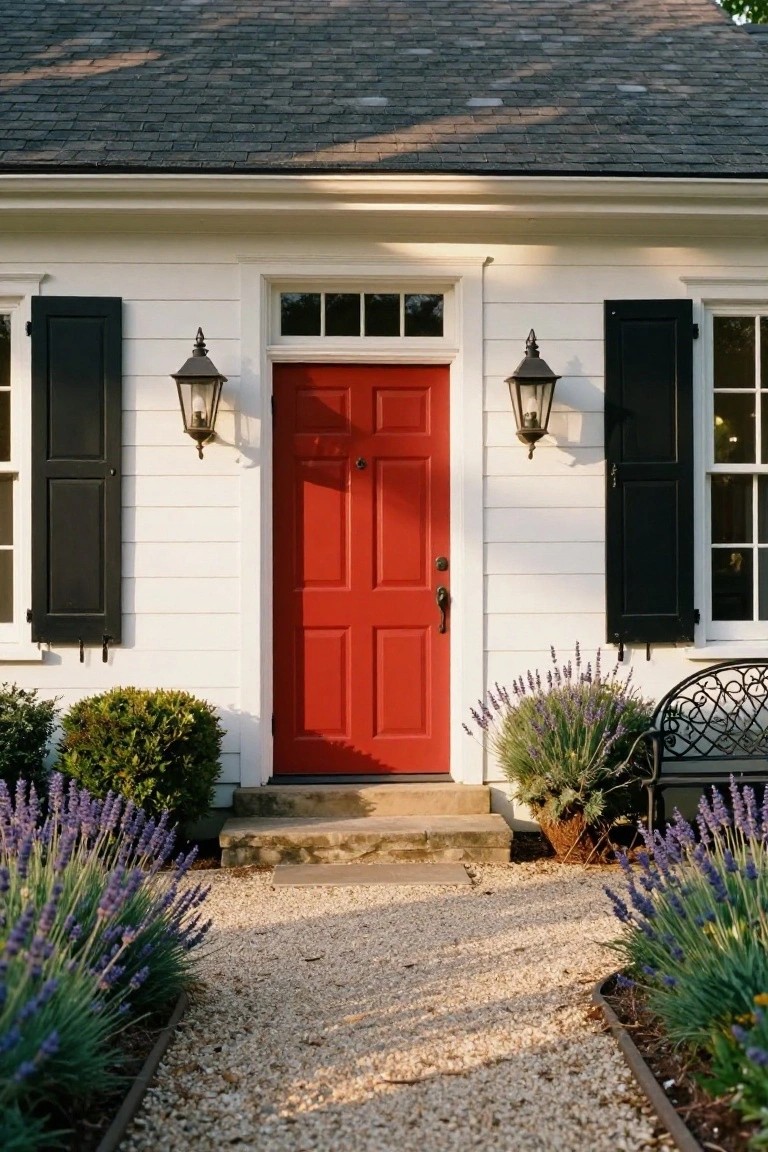
A bright red front door stands out nicely against crisp white siding on this colonial-style home. Black shutters frame the entry windows, and matching lanterns add a touch of tradition without fuss. That pop of color pulls your eye straight to the door. Makes the whole facade feel more alive and inviting right away.
This works great on classic homes where the exterior stays mostly neutral. Pick a true red paint that holds up to weather, and pair it with simple landscaping like lavender along the path. Suits smaller houses especially. Skip it if your siding has bold patterns already… might fight too much.
Blue Door on Shingle Siding
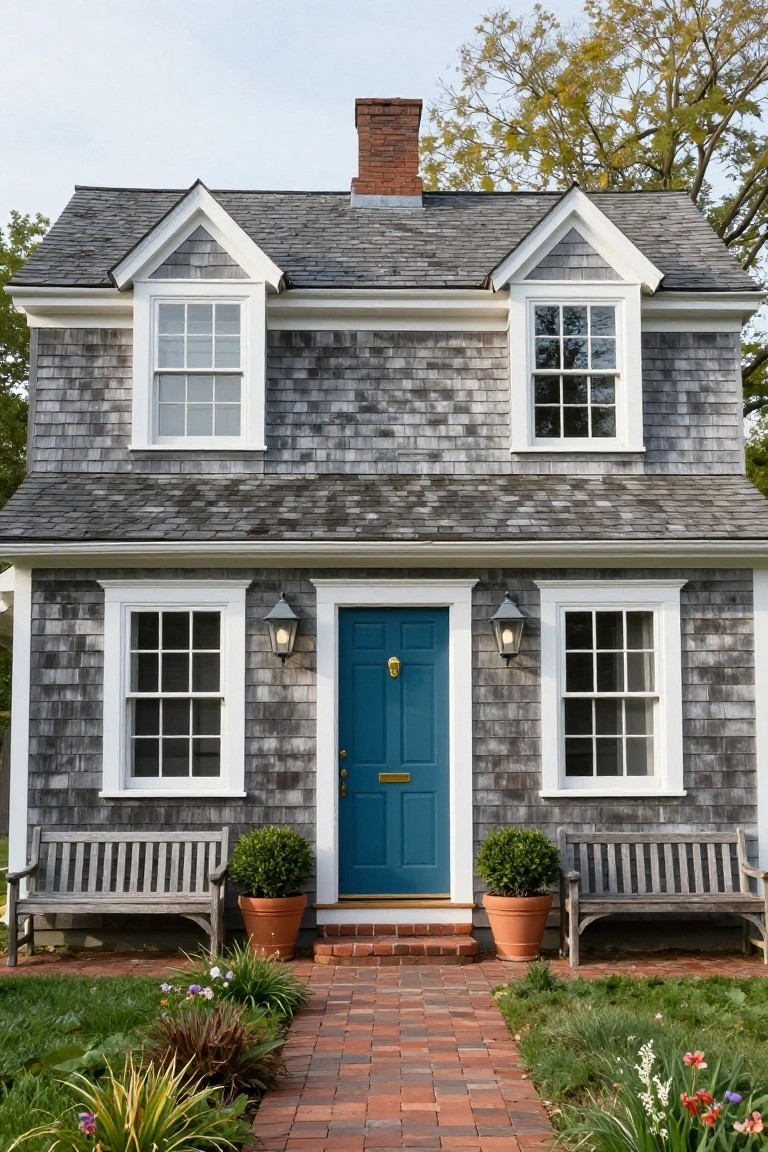
A bright blue door like this one pops nicely against gray shingle siding on a colonial home. It draws attention straight to the entry without overwhelming the simple architecture. The color adds a bit of cheer that fits right into traditional New England or coastal styles.
You can pull this off on smaller houses where the facade stays neutral. Frame the door with lanterns and weathered benches for balance. It works best where you want subtle color without a full repaint. Just make sure the shade ties into your trim or plants nearby.
Roses Climbing a Colonial Portico
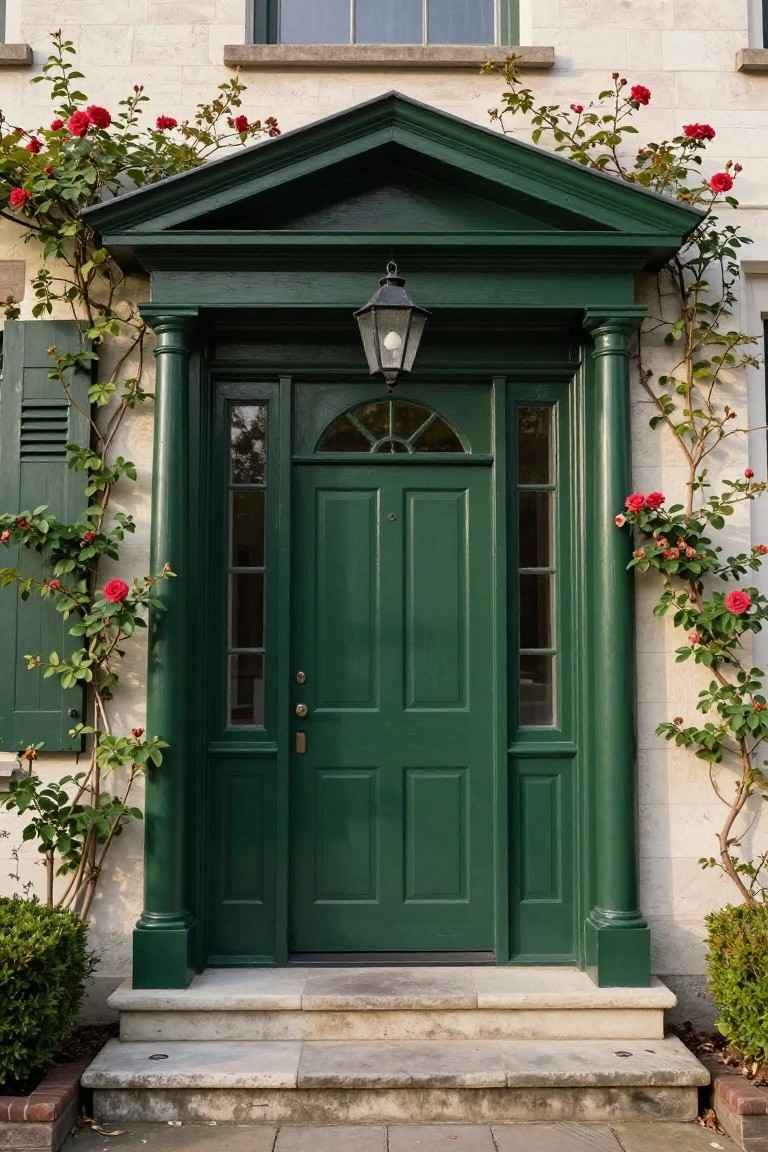
A deep green painted portico with its columns and lantern makes for a solid classic entry. But add climbing roses draping over the edges and you’ll get that extra bit of charm right away. Those red blooms bring some color and softness without changing the traditional lines.
This setup suits stone or brick colonial homes best, especially where you want curb appeal that feels lived-in. Plant tough climbers like ‘New Dawn’ along the columns, train them loosely, and trim once a year. It keeps things welcoming… just watch for thorns near the path.
Red Door on White Colonial House
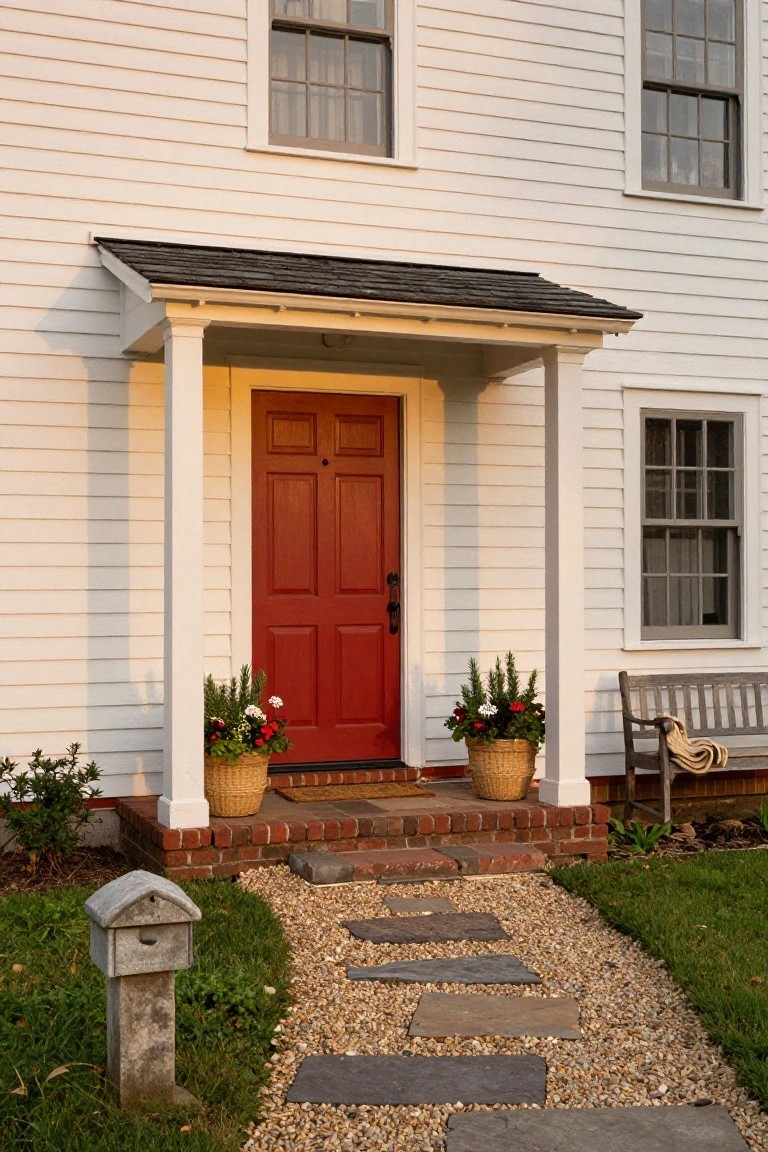
A red front door stands out strong against the clean white siding of a classic colonial. It draws folks right to the entry without trying too hard. That pop of color warms up the whole facade and says welcome before you even knock.
Try this on older homes or new builds nodding to tradition. It fits suburbs or small towns best, where the house sits close to the street. Keep the door freshly painted and add a couple pots of flowers nearby… simple fix for big curb appeal.
Classic Portico Entryway
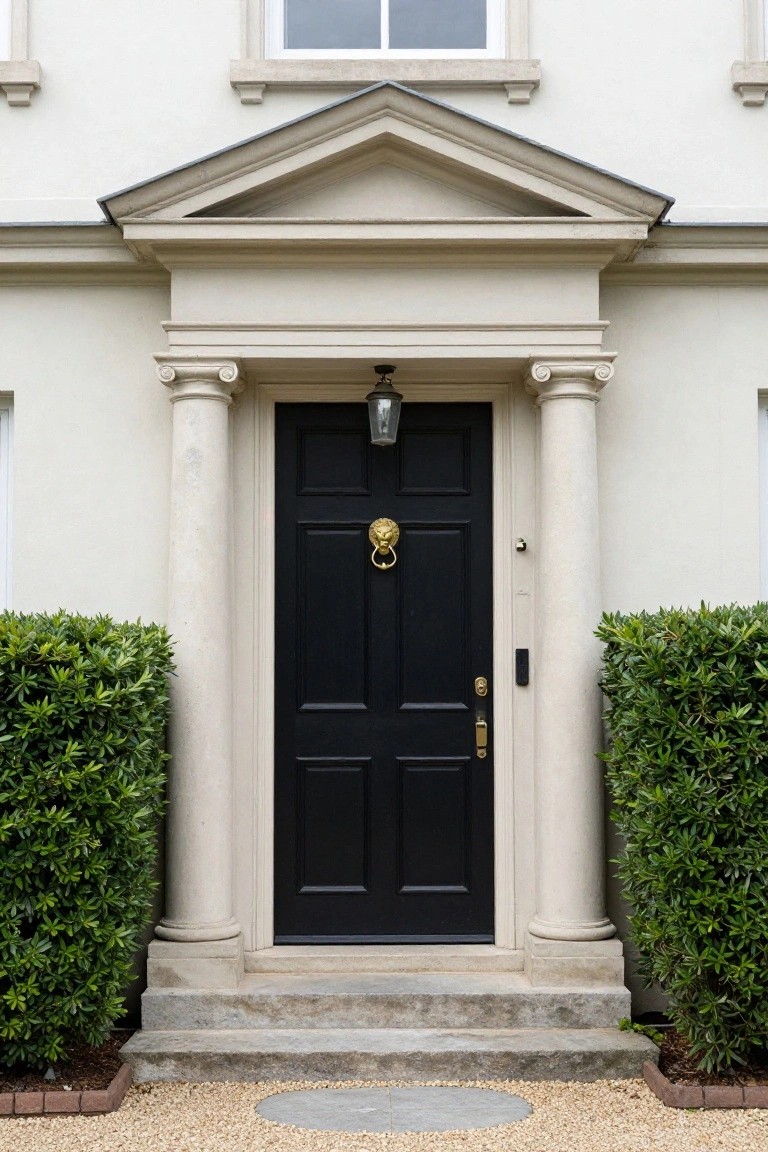
A simple portico like this one takes a colonial house entrance up a notch. Fluted stone columns support a clean pediment over the door. It gives that sense of arrival without overdoing it. The black door stands out against the white walls. And those boxwoods on either side keep things neat and green year-round.
This setup works best on traditional homes where you want curb appeal that lasts. Pair dark wood doors with brass hardware for contrast. It suits spots with a gravel or stone path leading up. Just make sure the columns match your siding scale. Too big and it overwhelms. Small homes can pull it off with slim pillars.
Brick Path to the Porch Entry
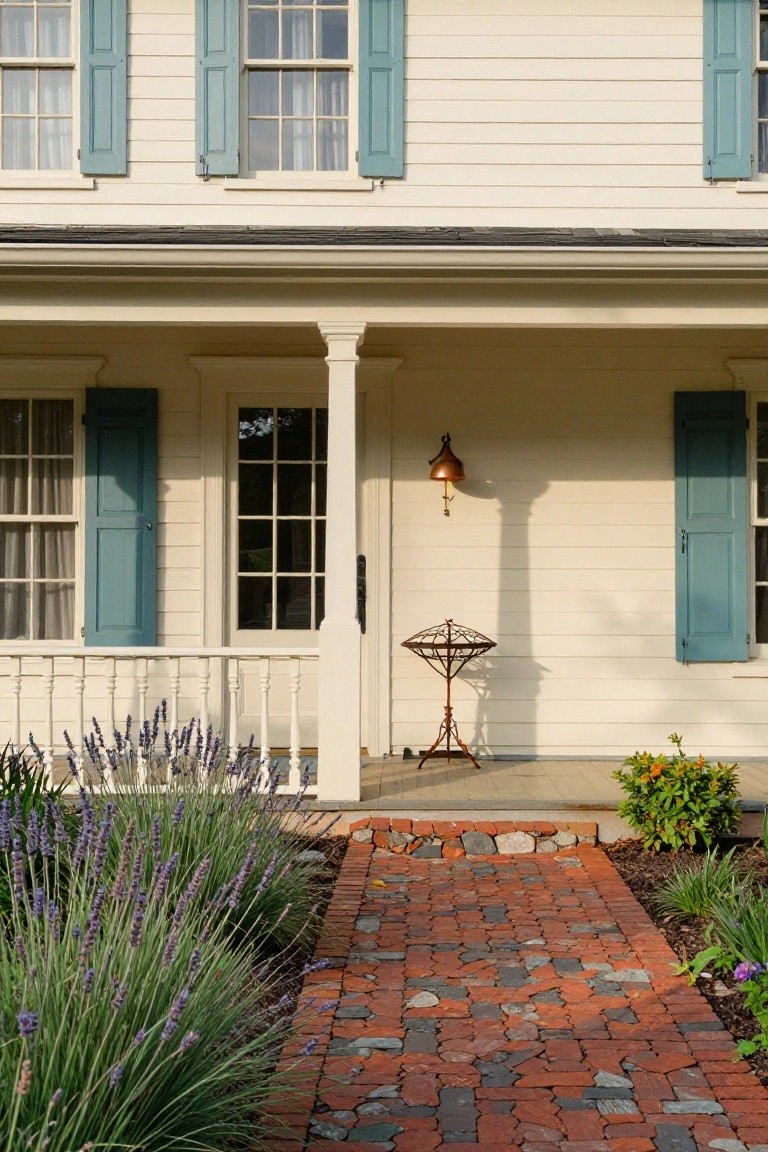
A simple brick walkway like this one makes the front entry feel more intentional. It curves gently up to the porch steps, bordered by tall lavender plants that frame the path without crowding it. On a classic white colonial house with blue shutters, the red bricks add warmth and pull your eye straight to the door. It’s a straightforward way to boost curb appeal.
This works best on homes with a raised porch, where the path can build a little drama on the way up. Go for irregular pavers to keep it looking natural, and stick to drought-tolerant plants along the edges for easy upkeep. Skip it if your front yard is too small, since it needs room to breathe.
Entry Porch with a Simple Bench
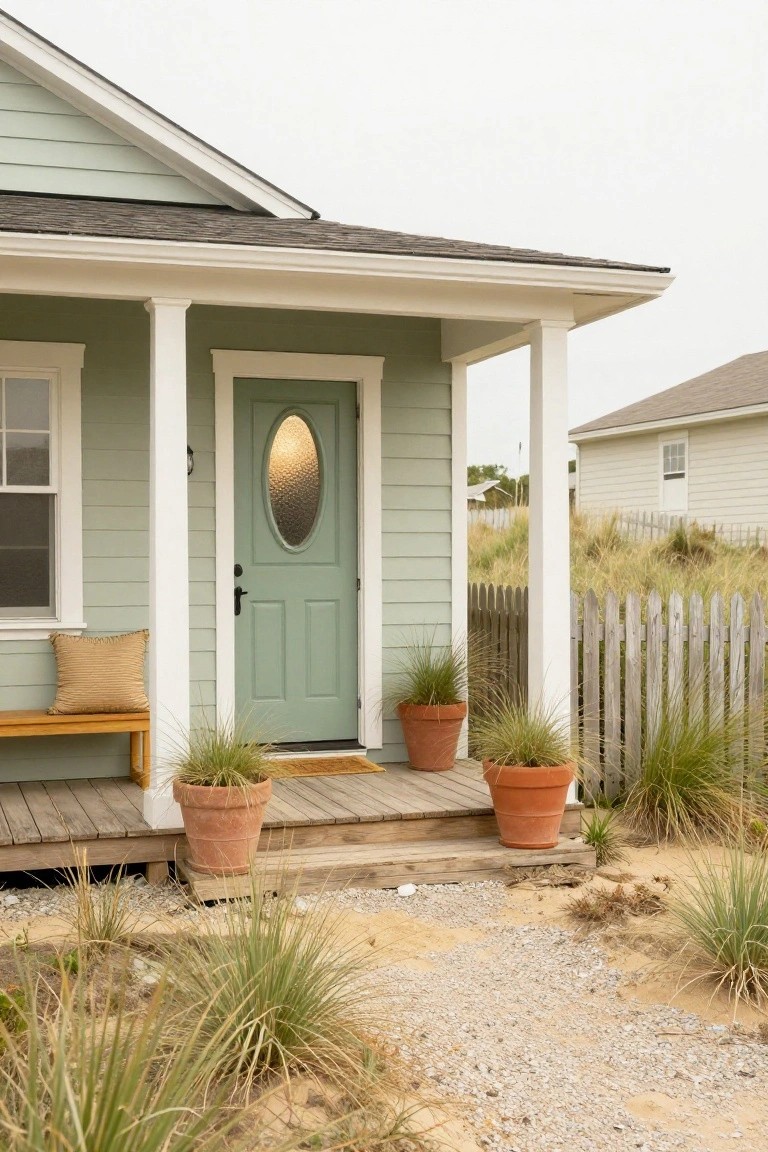
A plain wooden bench tucked right next to the front door turns a basic porch into a spot that feels lived-in and friendly. Here, it sits on a weathered deck with a single tan cushion for comfort, paired with big terracotta pots of dune grass that nod to the beach nearby. It’s nothing fancy, but that bench gives guests a place to pause, kick off sandy shoes, or just sit a minute before knocking. The whole setup keeps the focus on the sage green door without overwhelming the space.
This works best on smaller colonial porches or cottages where you want casual curb appeal without much upkeep. Bolt a similar bench to the wall if space is tight, or pick rot-resistant wood for coastal spots. Skip fancy cushions if rain is common. Add matching pots on both sides of the steps to frame the entry and make it feel balanced.
Brick Facade with Stone Pediment Entry
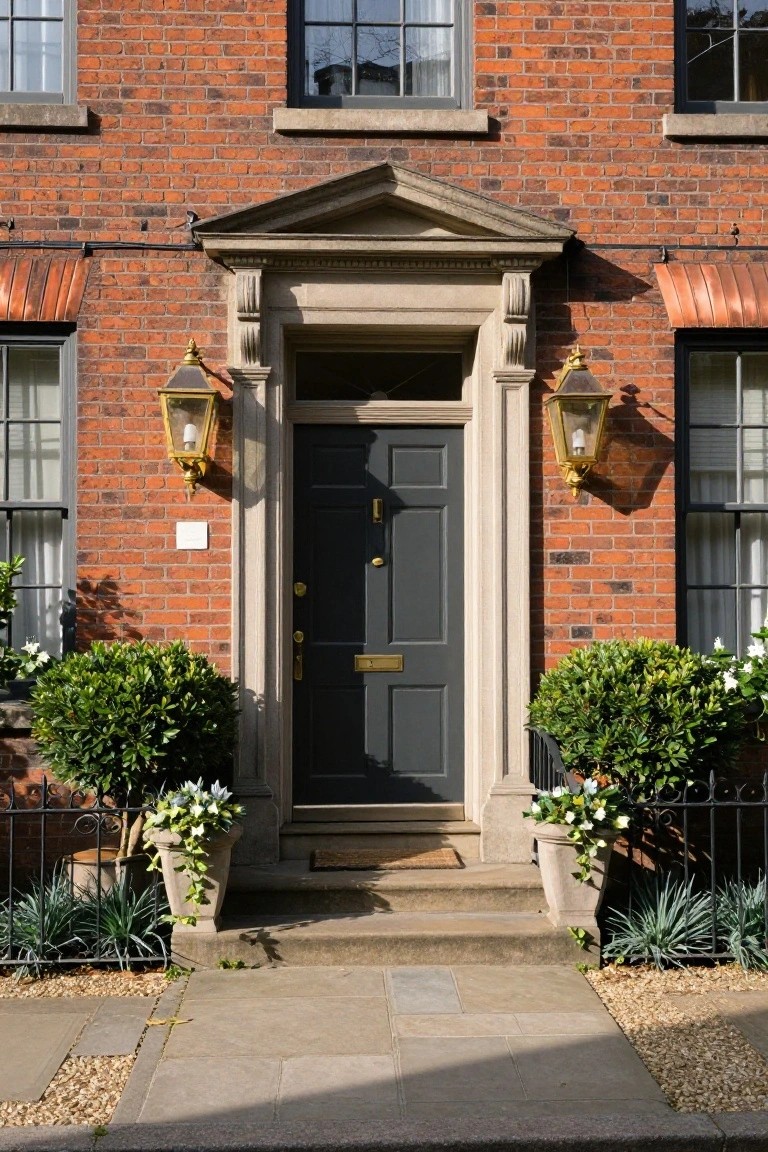
A simple way to give a brick house more presence at the front door is adding a light stone pediment and columns. Here the pale stone stands out clean against the warm red bricks. Brass lanterns on each side catch the light just right. Boxwood topiaries in pots add some green without overdoing it. The dark door pulls it all together for a solid, welcoming look.
This setup fits older brick homes wanting a touch of formality. It works best where the house already has straight lines. Keep the plants trimmed and lanterns classic. Skip it if your facade has too much going on already. Steps lead right up, making guests feel expected.
Blue Door Entry on a Gray Colonial House
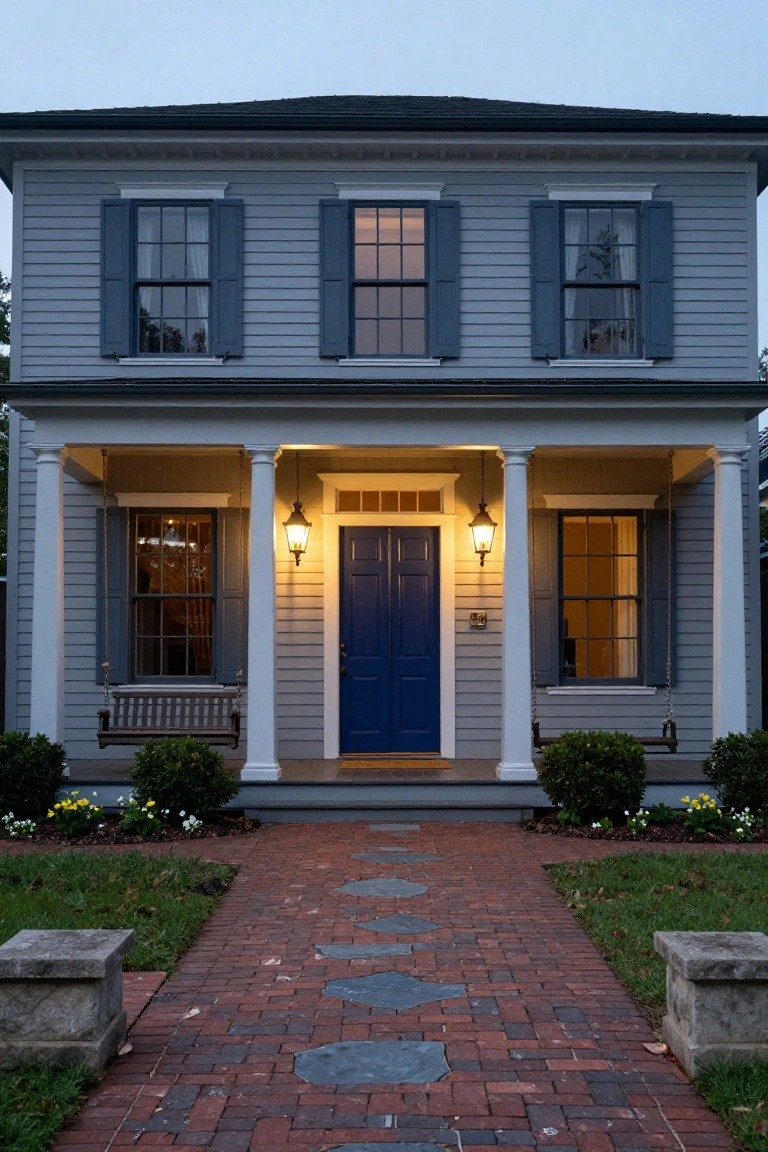
This colonial home pulls off a simple but effective entry by painting the front door a deep blue. It stands out sharp against the light gray siding and black shutters. The pair of lanterns on either side light it up warm at dusk. That color choice draws your eye right to the door. Makes the whole facade feel more alive without changing much else.
Try this on any classic colonial where the siding is neutral. It suits homes with columned porches best. Keep the path straightforward like the brick one here leading up. Avoid real bright blues though. Go navy so it stays grounded and timeless.
Classic Entryway Lanterns
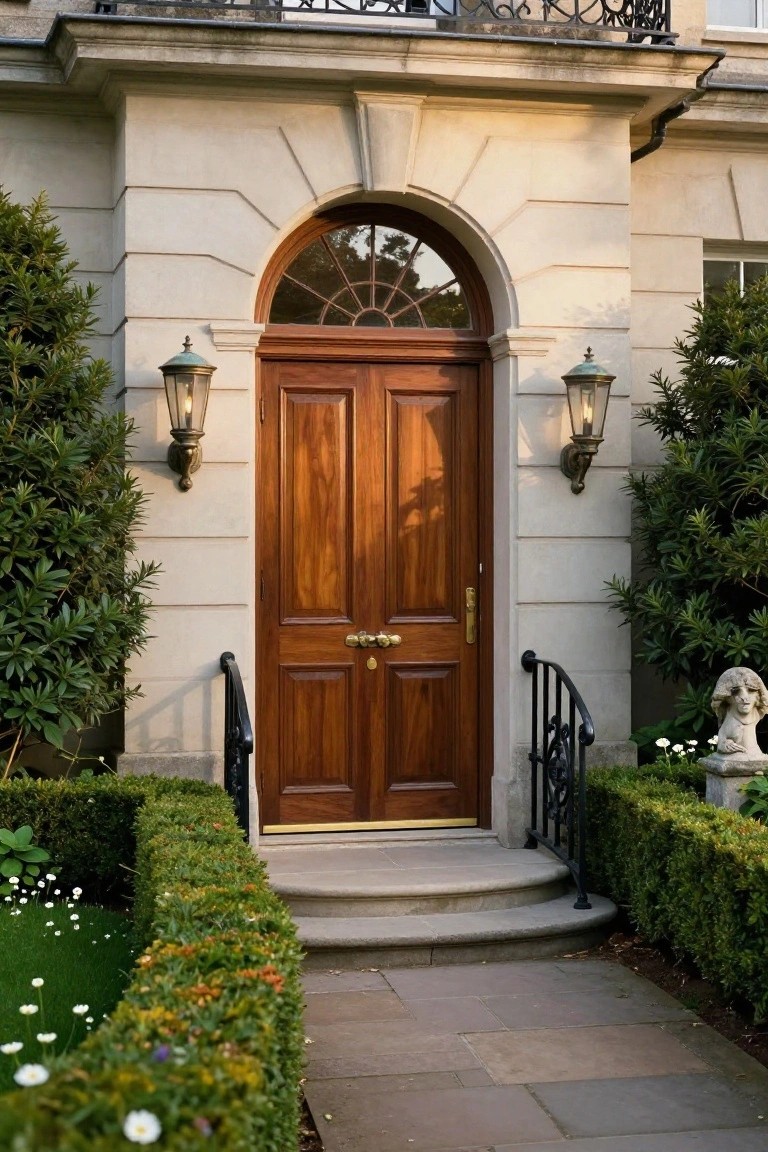
A pair of wall-mounted lanterns sits right beside the double wooden door on this colonial front entry. They cast a soft, even light that highlights the rich wood tones and brass hardware without overwhelming the stone facade. It’s a simple touch that adds real warmth and makes the whole entrance feel more alive, especially at dusk.
These lanterns suit traditional homes with symmetrical designs, like stone or brick colonials. Position them at eye height on either side of the door for balance, and go for aged metal finishes that weather nicely over time. Keep the scale right. too big and they overpower, but matched like this they pull the entry together nicely.
Colonial Porch Entry with Black Door
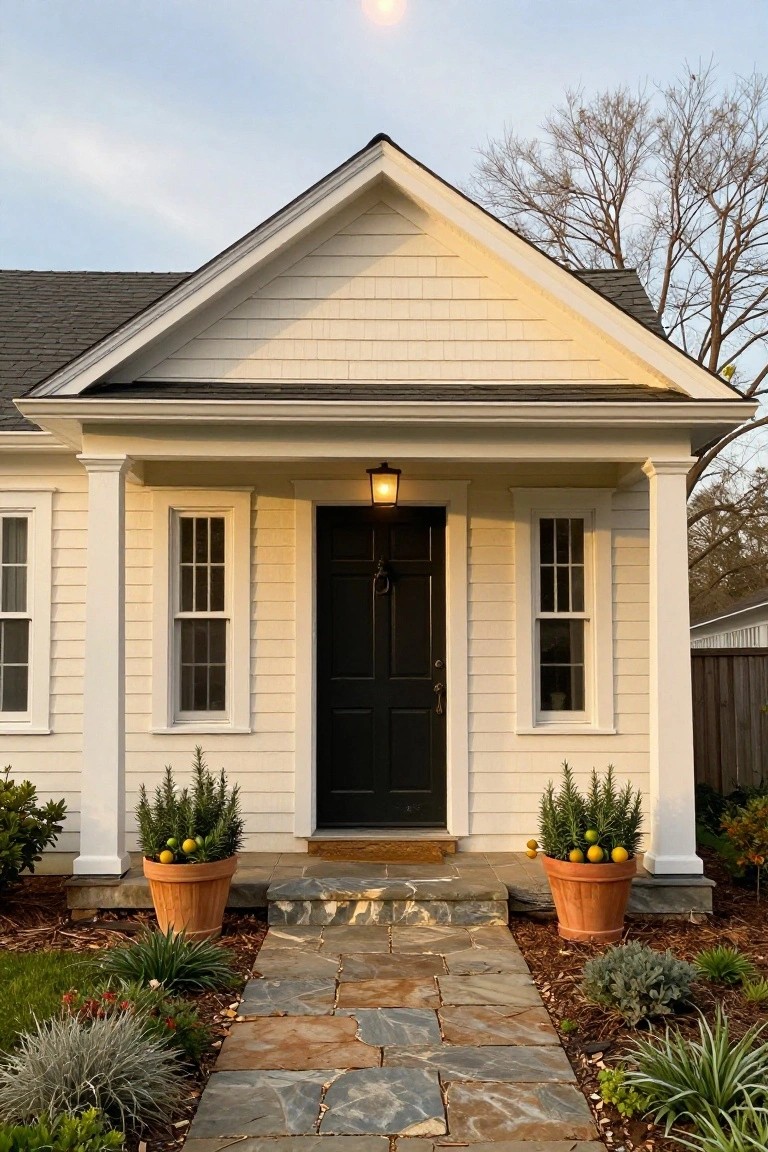
A black front door stands out strong against white clapboard siding on this little colonial house. The porch columns frame it just right, giving that classic look without fuss. Potted rosemary plants with lemons on either side add a bit of green life. It’s simple. Makes guests feel welcome from the street.
This works best on compact homes where you want clean lines and easy curb appeal. The dark door pulls focus to the entry. Use a stone path like this one to lead right up. Keeps mud off the porch too. Stick to neutral siding so the contrast pops. Not too much landscaping or it gets busy.
Black Door Entry with White Trim
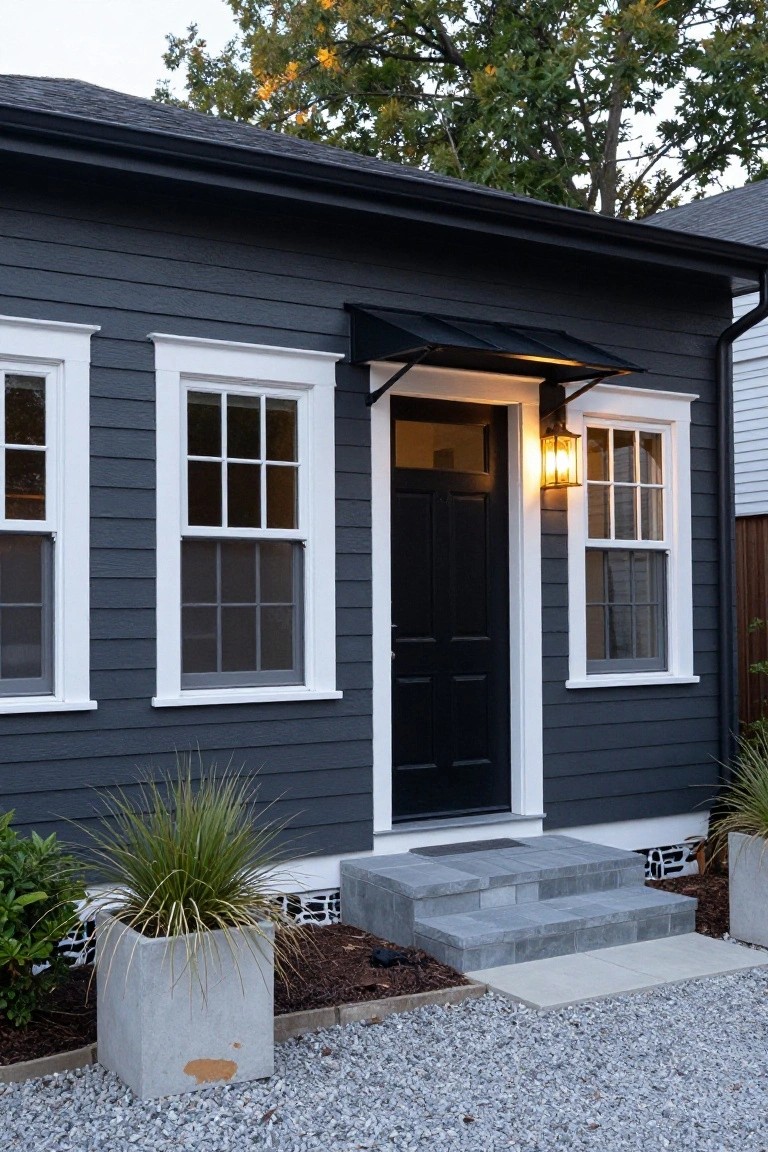
A black front door stands out nicely against dark gray siding on this Colonial house. White trim frames the door and side windows cleanly, keeping things simple and sharp. That setup draws the eye right to the entry without extra decoration.
Try it on traditional homes that need a modern edge. It pairs well with stone steps and a lantern light for evenings. Works great in town settings or smaller lots, just make sure the trim stays bright to keep the contrast.
Columned Portico Entry Design
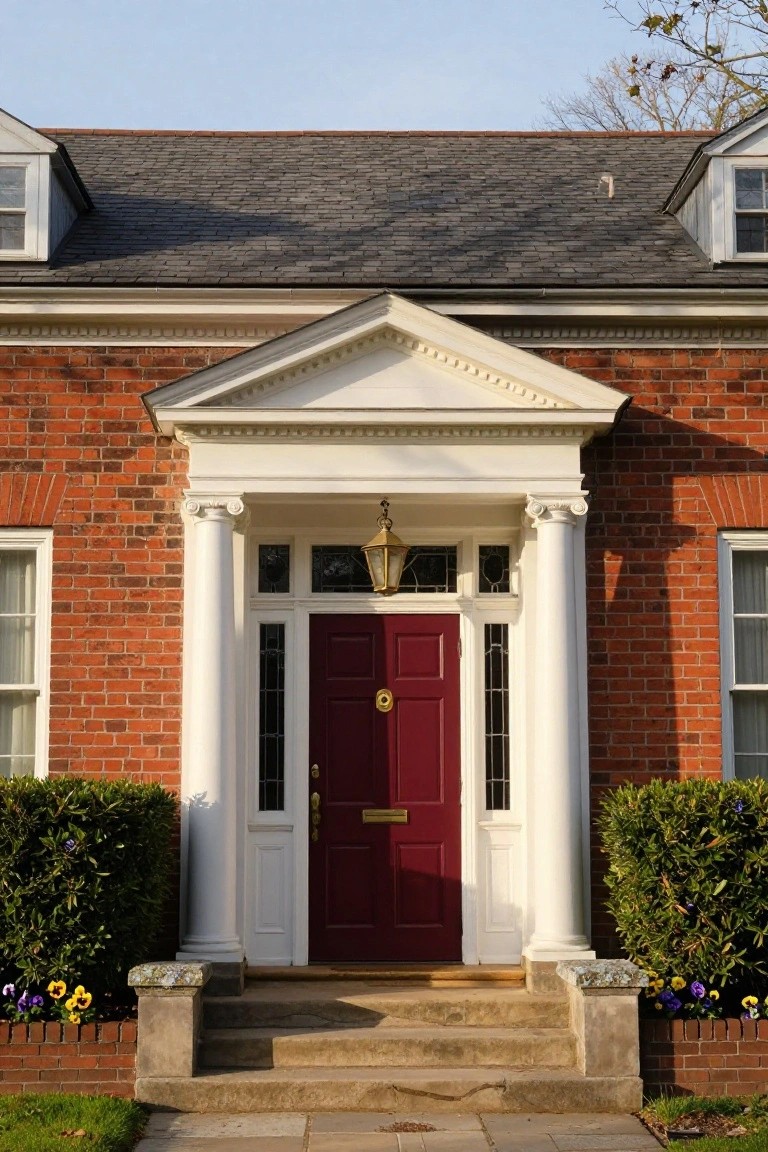
A white columned portico over the front door gives this brick colonial house a real sense of arrival. The two round columns support a simple pediment, and that deep red door sits right in the middle. It pulls the whole entry together without much fuss.
This setup suits older brick homes looking for curb appeal. Paint the door in a strong shade like burgundy to stand out against the brick. Keep the columns bright white… they’ll frame things nicely. Works best where you want classic style that holds up over time.
Symmetrical Topiaries Beside the Door
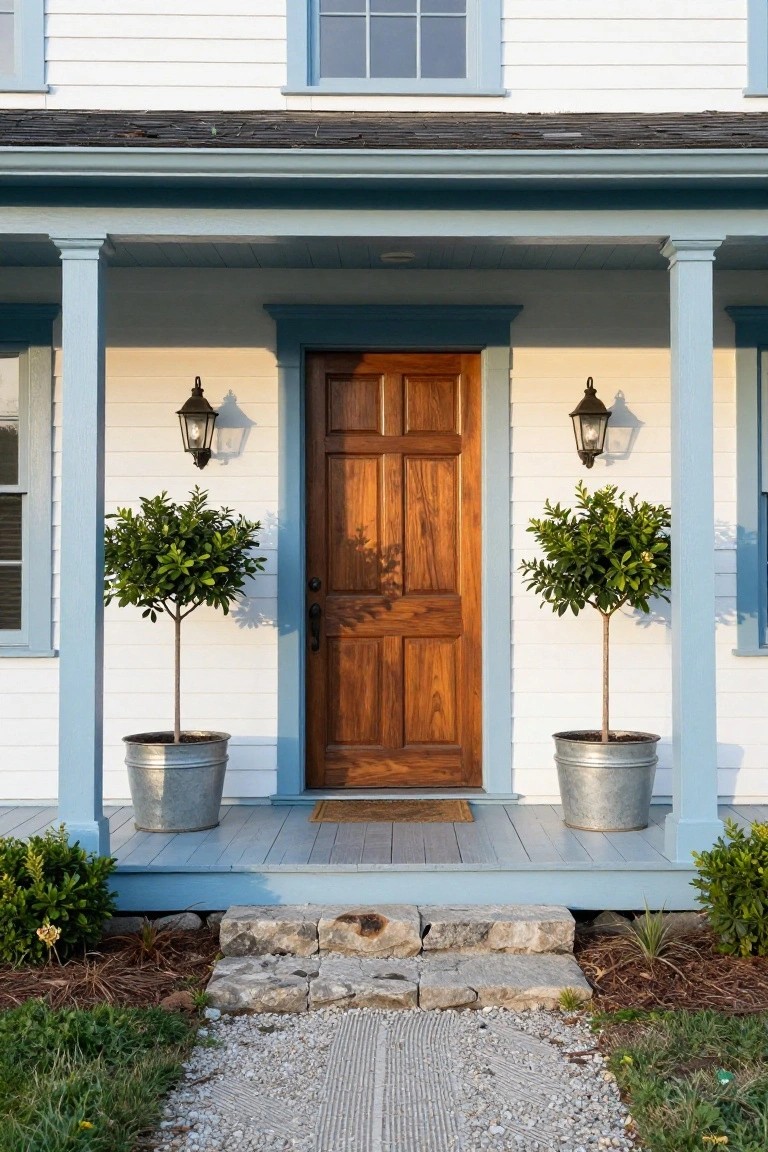
A pair of matching topiaries in metal buckets stands on either side of the front door here. They give this porch entry a clean, balanced look that fits right into colonial style. The plants pick up on the house’s white and blue without stealing focus from the wood door.
Put them to work on any front porch with room for pots. Go for boxwoods or similar evergreens that trim easy and hold shape. Keep heights even. This setup suits classic homes… just watch watering in hot spots.
Classic Colonial Entry with Green Door
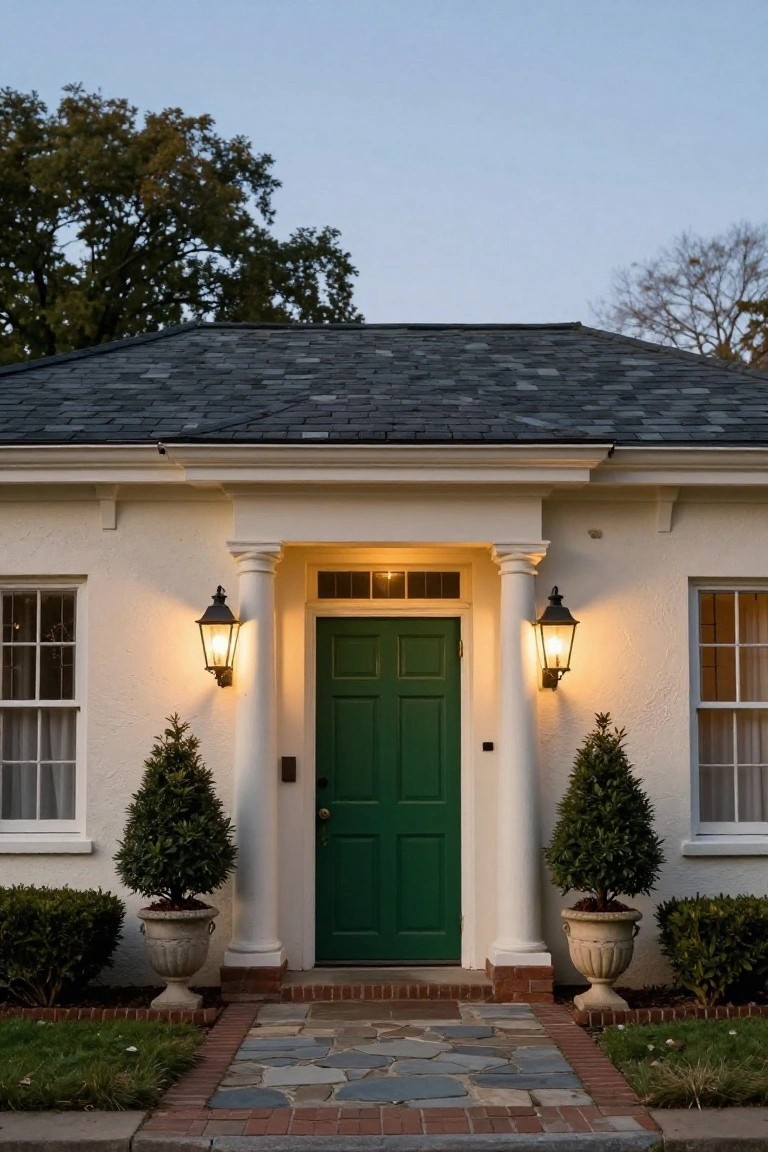
A green front door stands out nicely against the white siding of this colonial home. It draws folks right to the entrance without much fuss. The paired lanterns and simple columns frame it just right, keeping things traditional yet lively.
This look fits older homes or new builds aiming for that timeless curb appeal. Paint your door a strong green like this, then add lanterns for light at dusk. Potted plants on the sides help too. Skip it if your house has too much color already… might feel busy.
Navy Blue Door on Yellow Siding
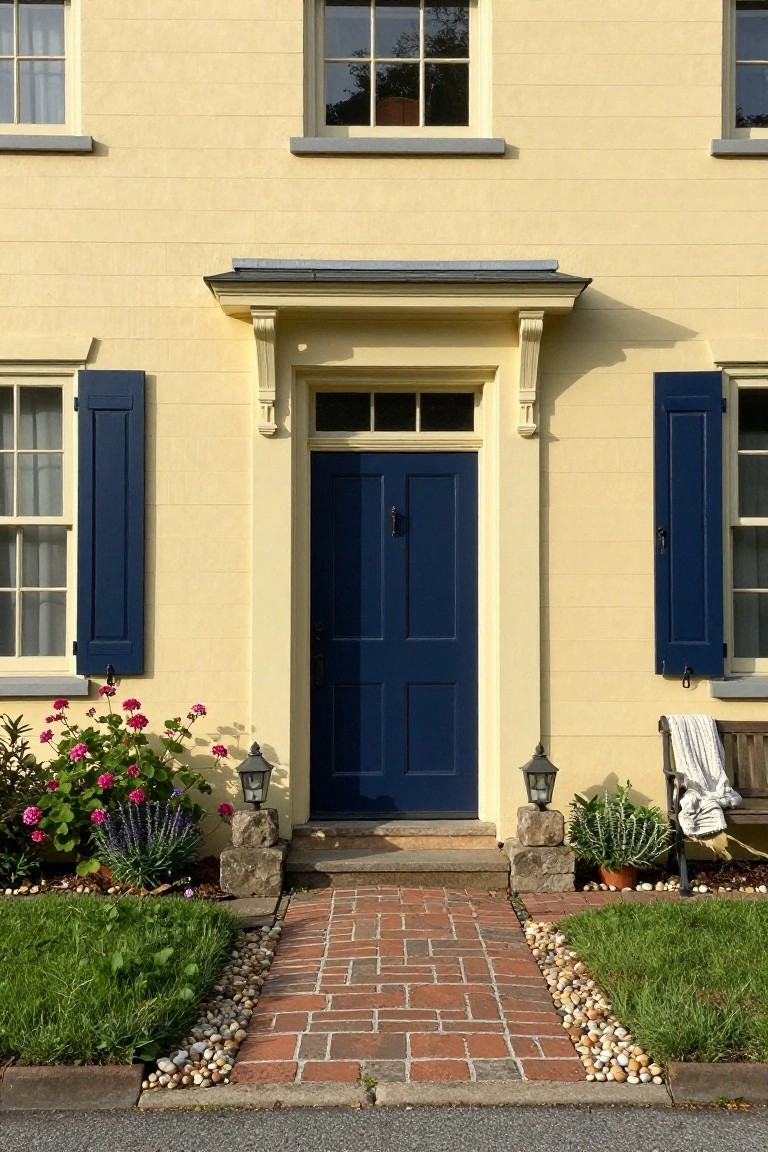
A deep navy blue door stands out strong against this pale yellow colonial house. The color pulls your eye right to the entry, making it feel more welcoming from the street. Matching blue shutters on the flanking windows keep things simple and tied together. No need for extra trim or fuss.
This works well on older homes with light siding colors. Pick a bold door shade that contrasts without clashing, like navy on yellow or buttery tones. Best for front-facing entries where curb appeal matters. Just make sure the hardware shines a bit to finish it off.
Frequently Asked Questions
Q: How do I pick a front door color that fits colonial style?
A: Choose deep reds or inky blacks, they pull from old-school charm and grab attention. White doors keep things crisp and clean against brick or siding. Test samples in morning light to see the real glow.
Q: What plants make the entryway look sharp without much fuss?
A: Flank the door with boxwoods clipped into neat shapes. They stay green year-round and echo the symmetry of colonial designs. Water weekly, and they thrive.
Q: Can I sneak in modern touches?
A: Swap curvy hardware for matte black levers, they blend right in. And skip fussy details, keep lines straight. Guests feel the style update without a clash.
Q: How do I light the entryway at night?
A: Mount lanterns or sconces even with the door handle. Pick warm filament bulbs for that cozy invite. They highlight details without washing everything out.
