

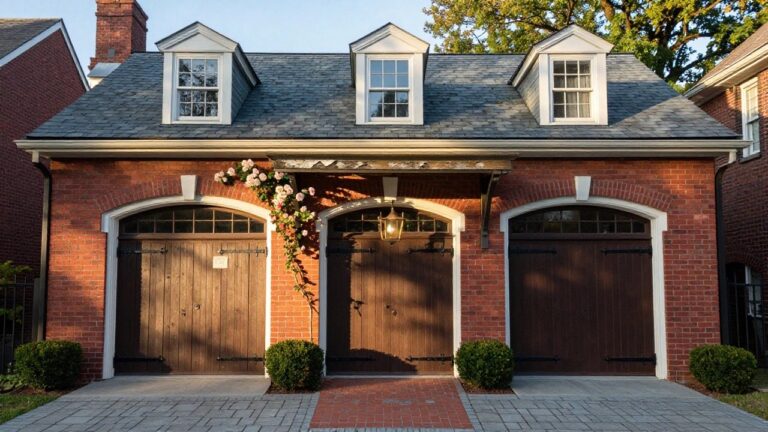
I’ve driven through enough Colonial neighborhoods to know a garage that clashes with the facade can ruin the whole street view. Blending it seamlessly means matching the brick or clapboard siding, echoing the gabled roof pitch, and aligning window shapes so the front reads as one balanced whole. From the curb, drivers spot those entry proportions first. I once painted a garage door to match the house trim, and it changed how the entire exterior felt from down the block. These designs offer practical tweaks like subtle dormers or side hinges that are worth sketching for your own setup.
Matching Double Doors for Garage Entries
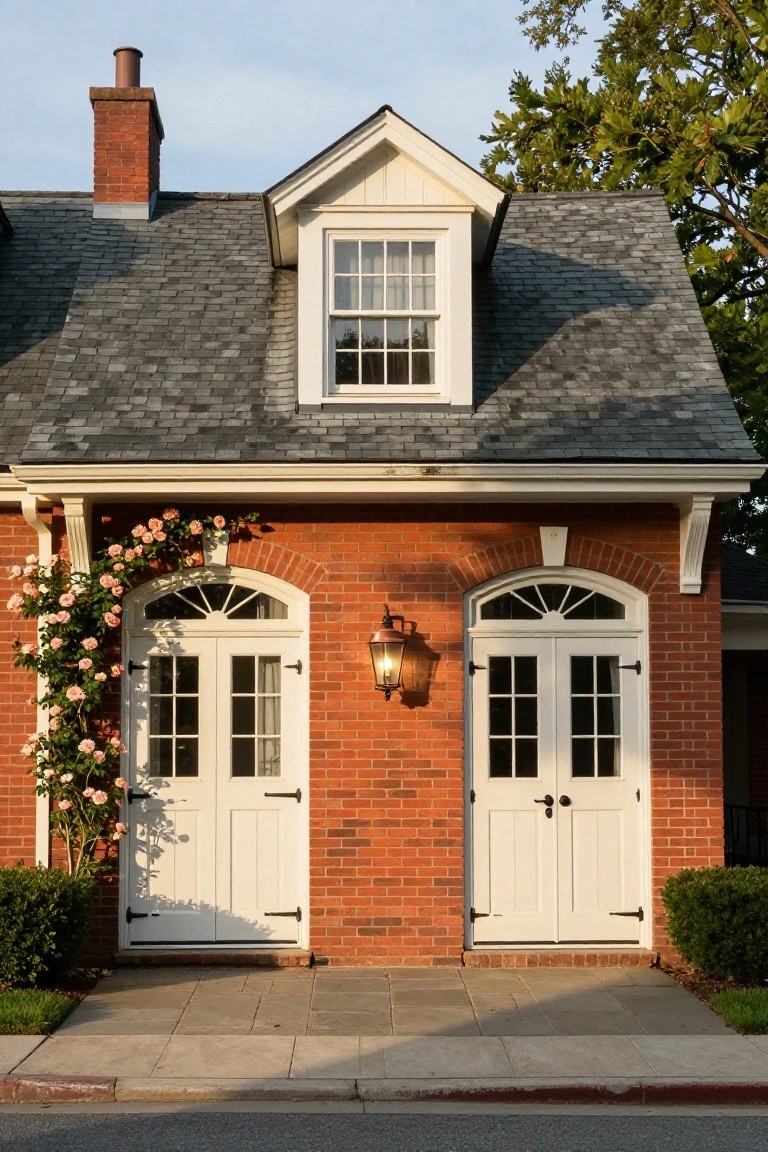
A smart way to blend a garage into your colonial home is using double doors that echo the front entry design. These white paneled doors with arched fan windows sit right on the brick wall like they belong there. The lantern light between them and climbing roses on one side pull it all together without a hint of garage feel.
This setup shines on detached garages or carriage houses where you want the house to look complete from the street. It suits brick or stone facades with slate roofs best. Just match the door style to your main entry, and skip any shiny modern handles that would stand out.
Navy Garage Door on White Colonial Facade
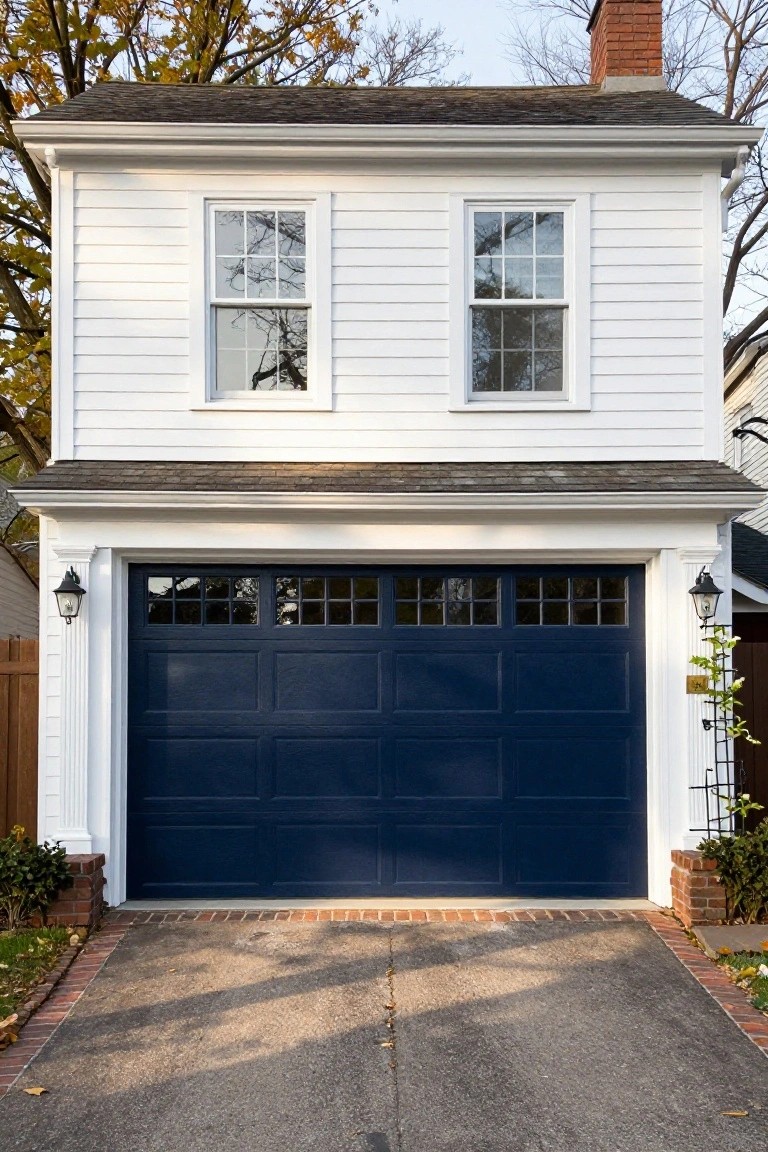
A deep navy garage door gives this white colonial house some real front-door interest. It contrasts nicely with the clean siding and keeps the look traditional instead of plain. The lanterns on each side frame it without overdoing things.
You can pull this off on most two-story colonials in older neighborhoods. Go for a glossy navy paint on the door to make it stand out, then stick to white trim and simple brick at the base. Just match the roof color so it all stays balanced.
Shingled Garage Facade with Wood Doors
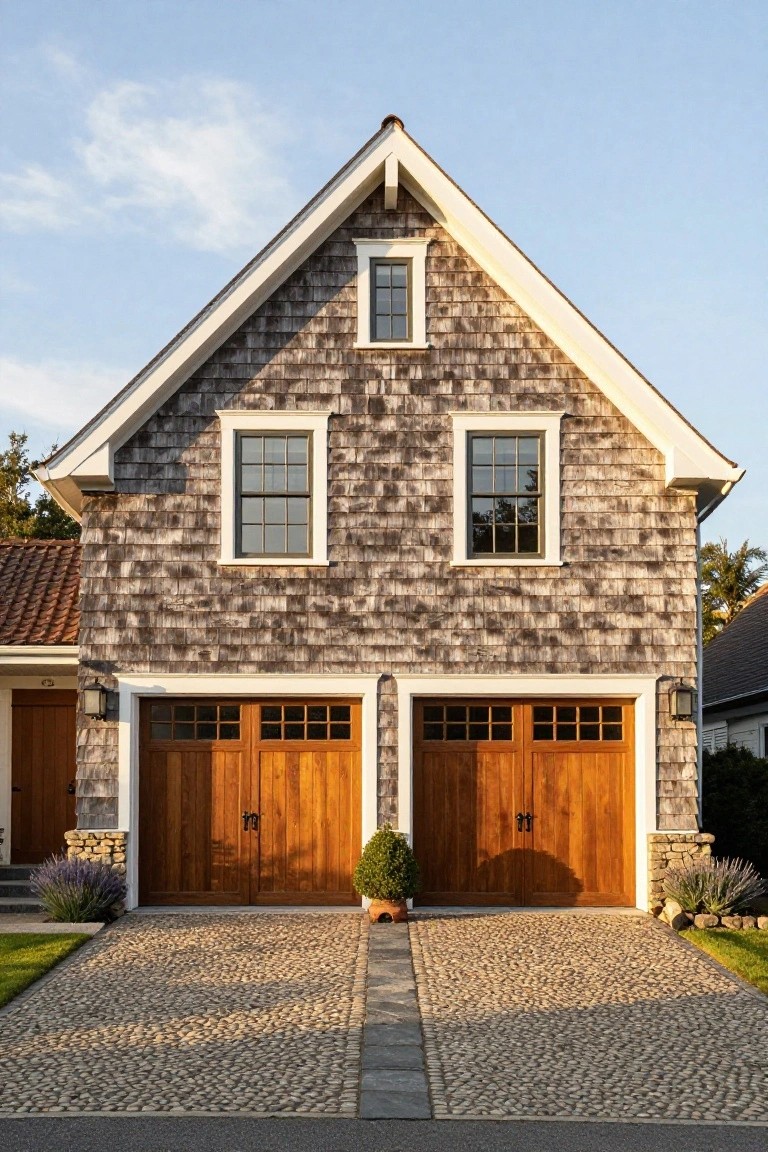
One straightforward way to make a garage feel like it’s always been part of the house is covering it in cedar shingles that match the main siding. Here, the double wood doors with their glass panels sit right under the gable, framed by crisp white trim. It keeps everything looking balanced and not like an add-on. The pebbled driveway in front pulls it all together without drawing extra attention.
This setup works best on Colonial or Cape Cod style homes where you want curb appeal without flash. Use matching wood tones on the doors to echo the shingles, and keep the trim simple. Skip bold colors or oversized hardware. It suits sloped sites or neighborhoods with traditional houses. Just make sure the shingles are weather-treated for longevity.
Garage Facade Mimicking House Design
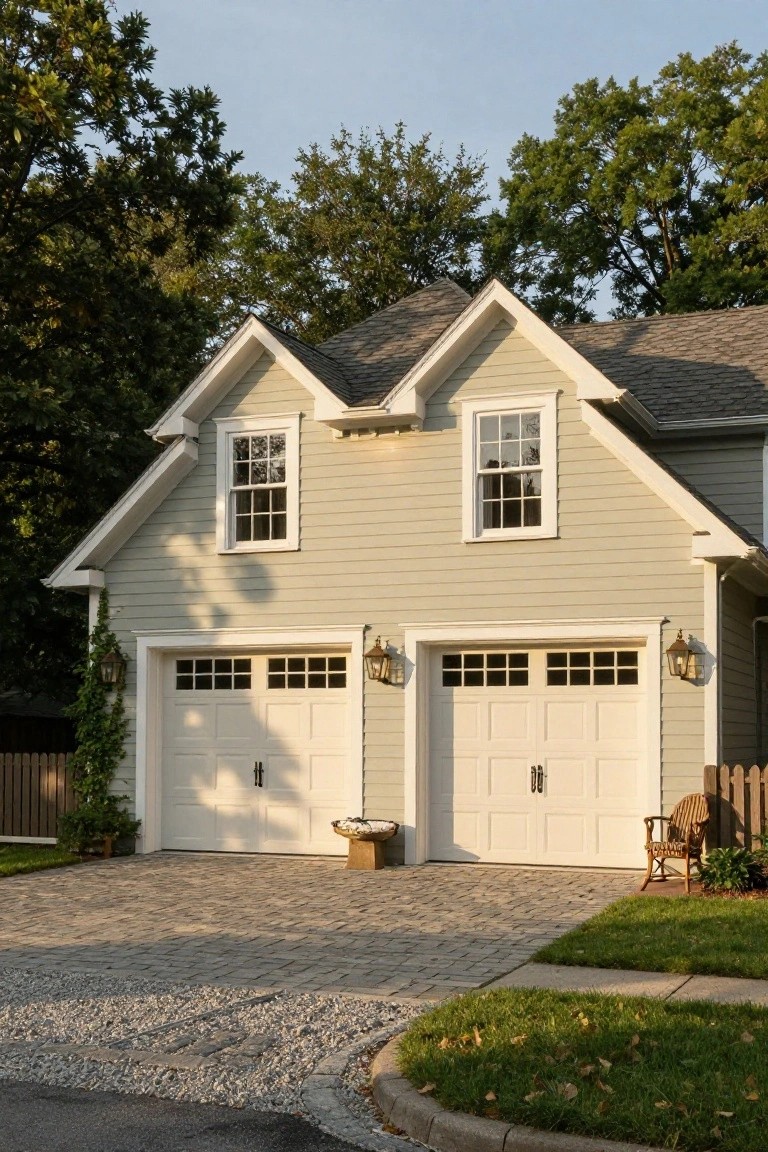
One smart way to make a garage fit right in is giving it the same look as the main house up top. Here you see a two-car setup with a gable roof, matching light green siding, and those double-hung windows that echo the home’s style. White paneled doors down low keep things simple while the lanterns add a touch of welcome. It turns what could be a plain addition into something that belongs.
This works best on colonial homes where you want curb appeal without drawing extra attention to the garage. Match the roof pitch and trim exactly, and keep plantings light around the edges so the architecture stands out. Avoid busy details on the doors themselves. Fits driveways facing the street nicely.
Colonial Garage Door with Arched Fanlight
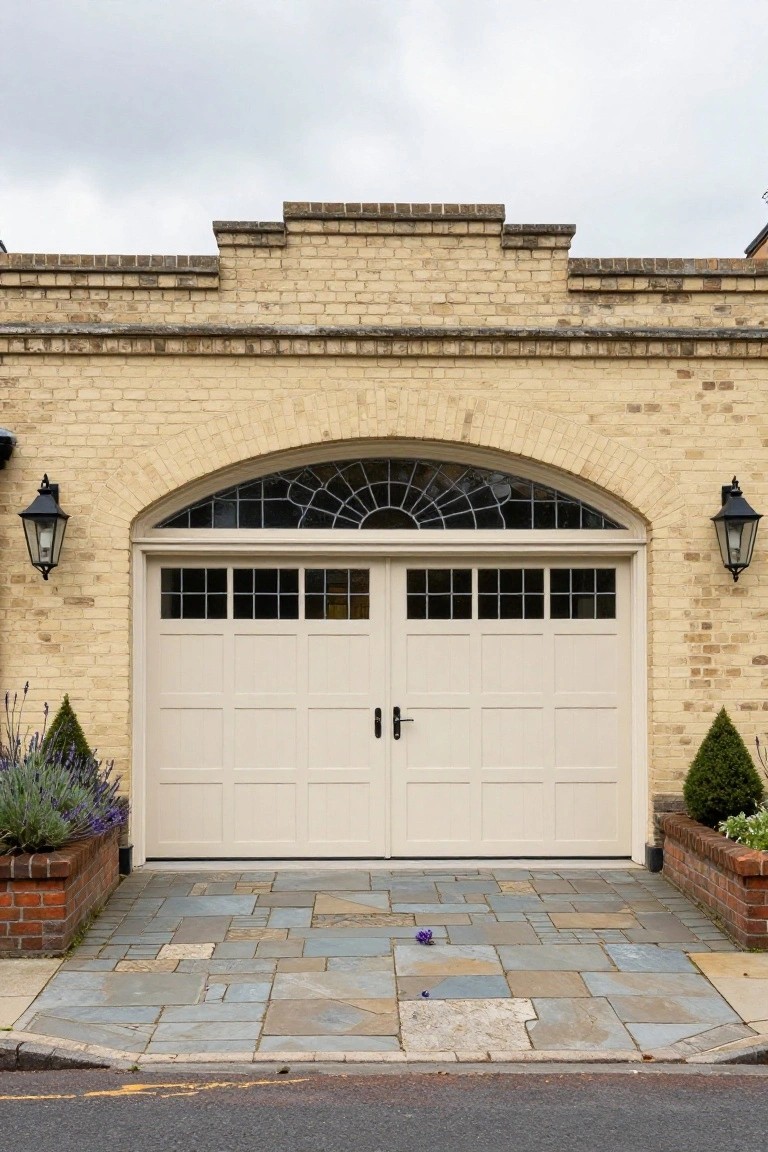
A cream paneled garage door like this one fits right into the brick facade without drawing extra attention. The arched fanlight window up top pulls in some natural light and echoes old house details. Black lanterns on each side keep things balanced and welcoming.
This works best on brick colonials or similar traditional homes where you want the garage to play second fiddle to the architecture. Match the door color to your trim, and if you can add a fanlight kit or custom arch, do it. Skip it on super modern places… might feel off. Plants in low brick beds help tie it to the driveway too.
Garage Pergola Blends It Right In
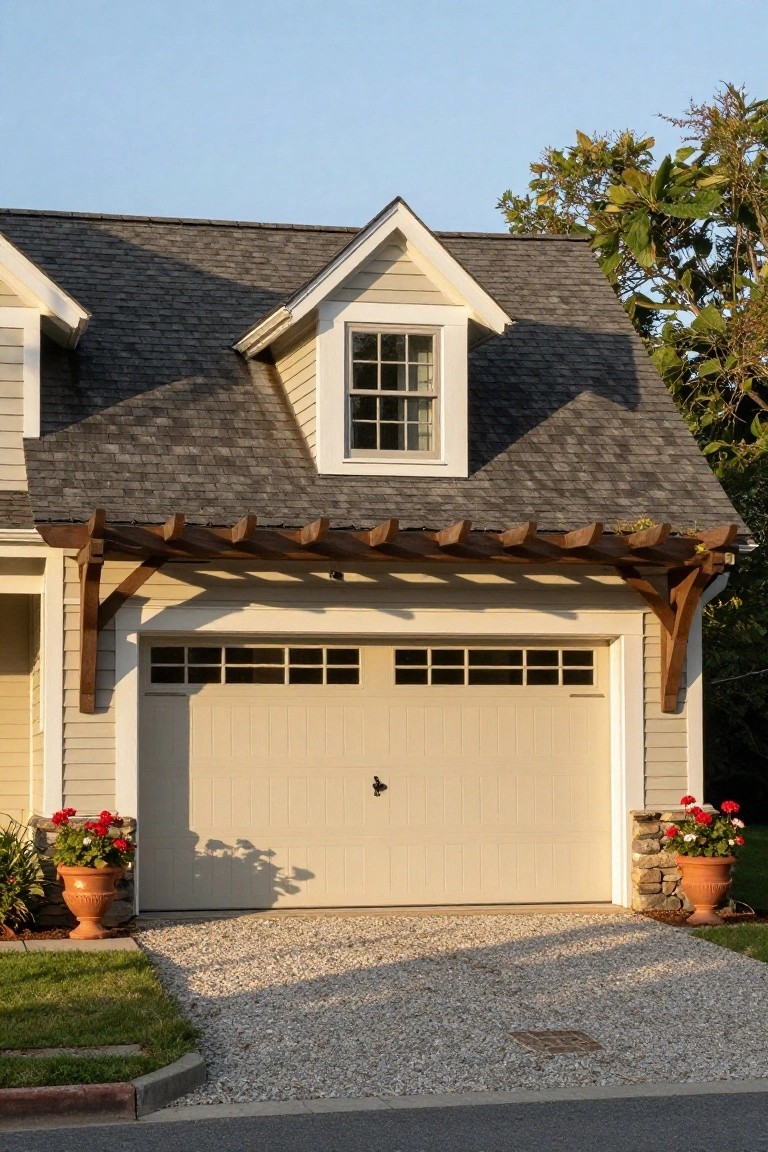
A wooden pergola stretched over the garage door is a straightforward way to tie the garage into the rest of the house. Those thick beams in a dark stain pick up on the roof shingles and add just enough overhead structure to make the beige door look planned, not tacked on. It keeps the colonial lines clean while giving the front some casual depth.
This works best on homes with gabled roofs and neutral siding. Bolt the brackets right into the existing frame, maybe add stone pillars if your foundation allows. Skip heavy vines at first, let it age naturally. Suits quieter neighborhoods where you want curb appeal without overdoing it.
Stone Arch Over the Garage Door
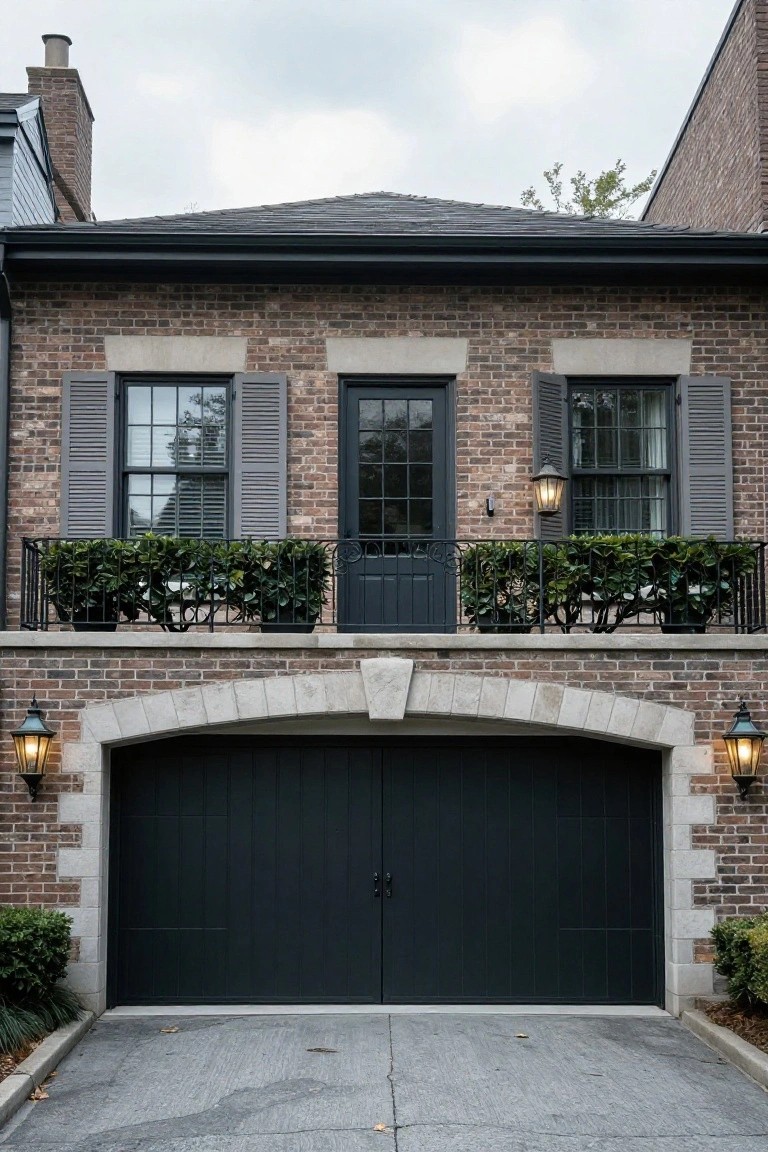
One simple way to make a garage fit right into a colonial brick house is to top the doors with a stone arch. Here, the light stone arch sits above dark wood garage doors, tying into the brick walls around it. It gives the front a more finished look, like the garage was always part of the original build. The lanterns on each side add a bit of balance too.
This works best on homes with brick or stone facades where you want curb appeal without drawing extra attention to the garage. Go for it if your house has some traditional details already. Just match the arch stone to any other trim on the place, and keep the doors simple in color so they don’t overpower the front.
Wisteria Pergola Over Garage Doors
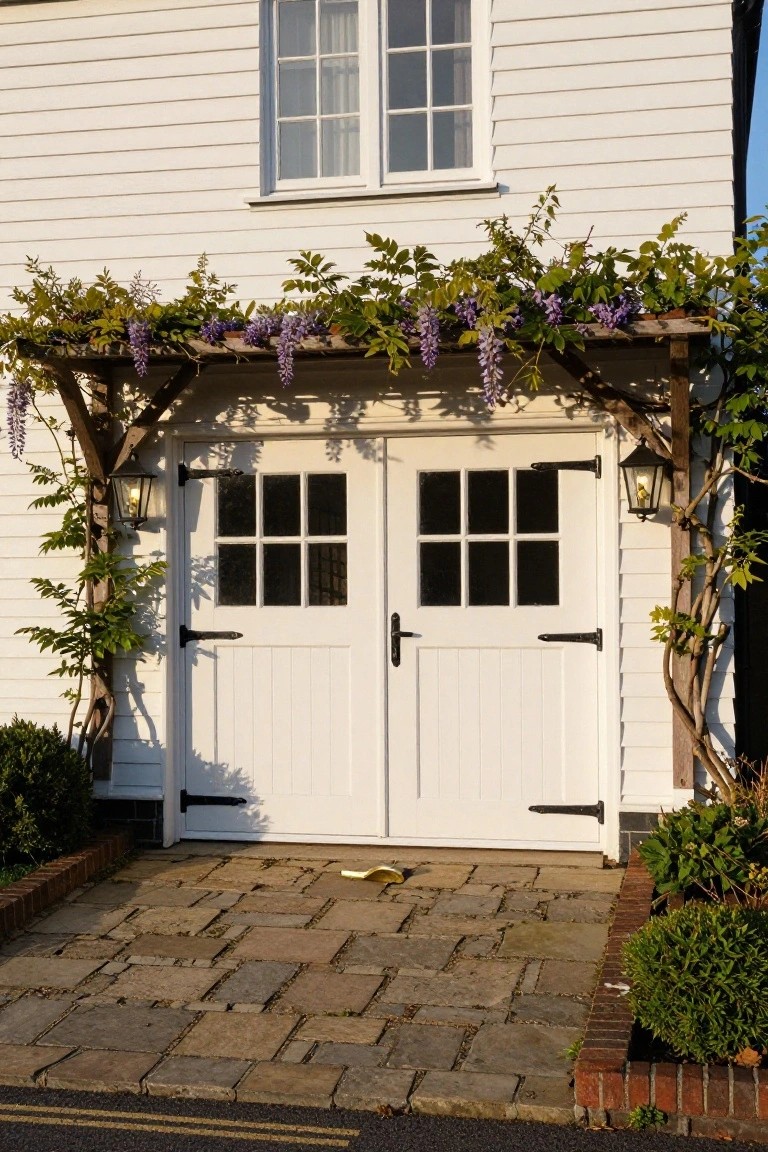
One simple way to make a garage fade into the background is a wooden pergola right over the doors. Here, thick wisteria vines climb and drape across it, turning what could be a plain white double door into something that looks like part of the house garden. The white clapboard walls and paneled doors already match, but the vines pull it all together without much effort.
This works well on homes with a driveway off to the side, like colonials in a neighborhood setting. Pick a sturdy pergola frame that can handle the weight of mature vines, and plant wisteria where it gets sun. Add matching lanterns on each side for light at night. It suits older-style houses wanting that cottage feel… just keep the vines trimmed so they don’t block the doors.
Double Garage Doors Blending into Brick Facades
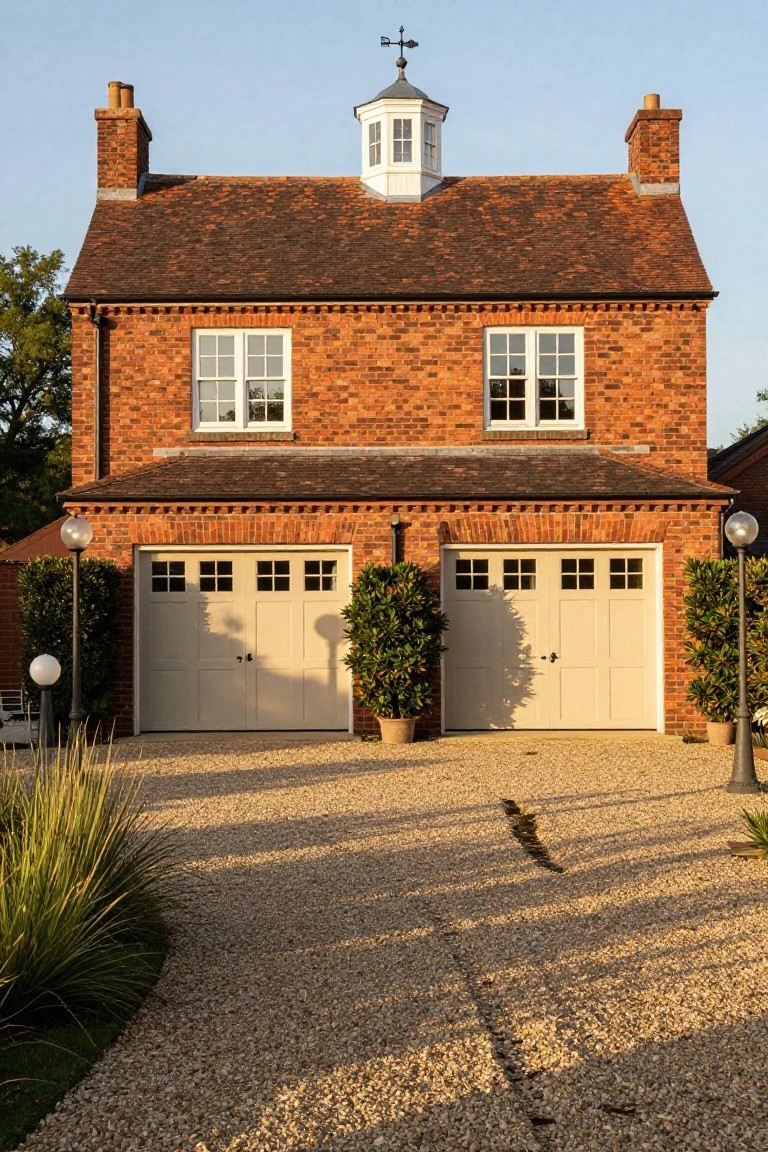
One straightforward way to make a garage disappear into your colonial house is with paneled doors that echo the main windows. Here, soft cream doors with multiple glass panes sit under a brick arch, matching the upper story’s rhythm. The red brick wraps around everything nicely. No jarring contrast. Just a smooth extension of the house.
This approach suits two-story brick homes in traditional neighborhoods. Pick doors in a muted cream or off-white to offset warmer bricks. Add matching lanterns on posts for scale. It keeps street appeal high without custom builds. Steer clear of plain slab doors. They break the flow.
Garage Entry with Flanking Columns
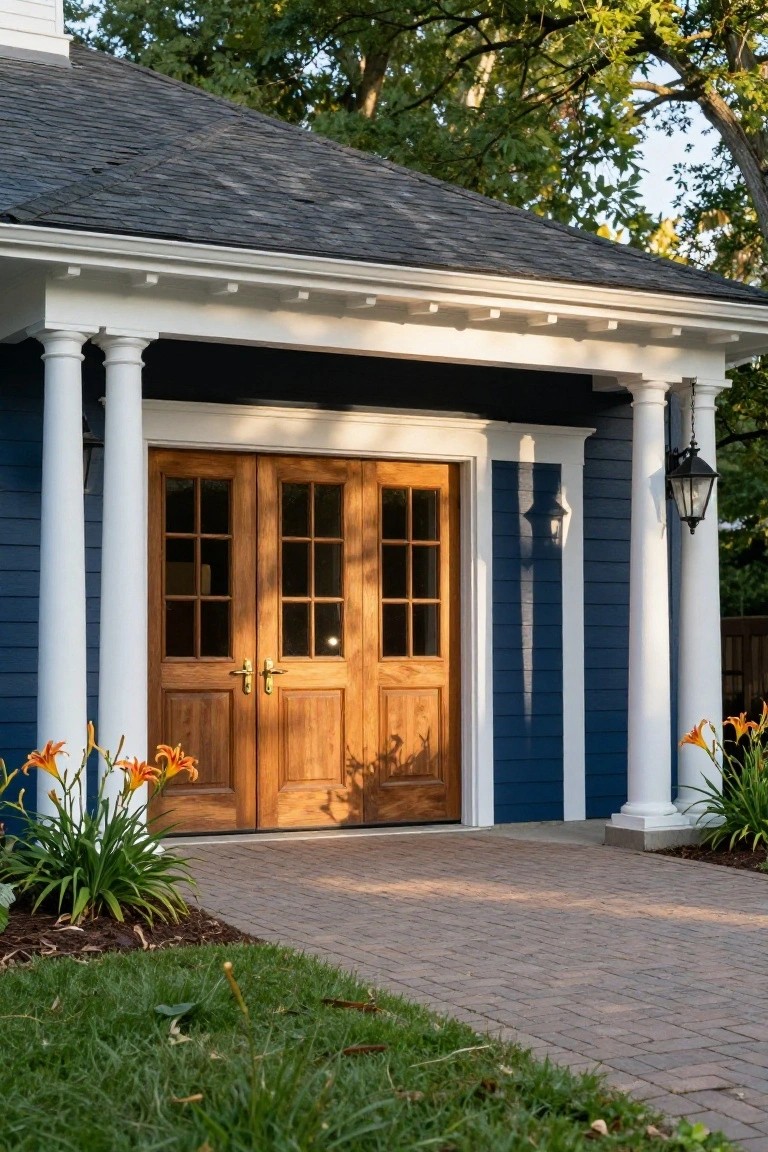
White columns like these give a garage that classic porch feel without much extra work. They frame the wooden double doors nicely against the navy blue siding. It pulls the whole setup together so the garage doesn’t stick out like an afterthought. Folks notice how it echoes the main house style right away.
Put this on a detached garage where you want curb appeal that lasts. Works best on colonial or traditional homes with some yard space. Keep the columns simple, no fancy capitals, and match the siding color to your house trim. Skip it if your place is super modern… it just won’t fit.
Wood Garage Doors on Brick Colonial Garages
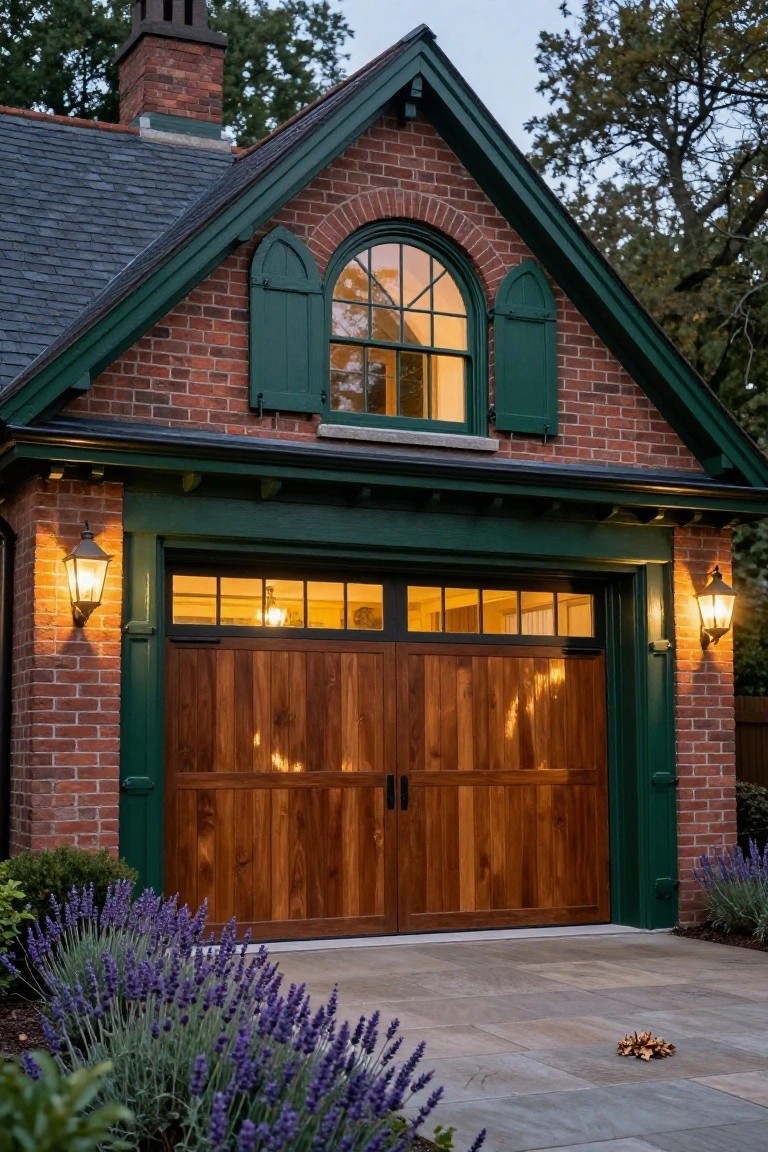
A wood garage door like this one brings a touch of warmth to a brick colonial garage. The rich tones of the mahogany pick up on the brick’s reds without overpowering it. Those glass panels in the door let light spill out at night. It keeps the garage from looking like an add-on.
This works best on homes with some traditional details already. Pair it with trim in a deep green to tie everything together. Stone pavers on the driveway help too. Skip it if your house is all white or super modern. It suits driveways that see regular use.
Classic Shingle Garage with Blue Door
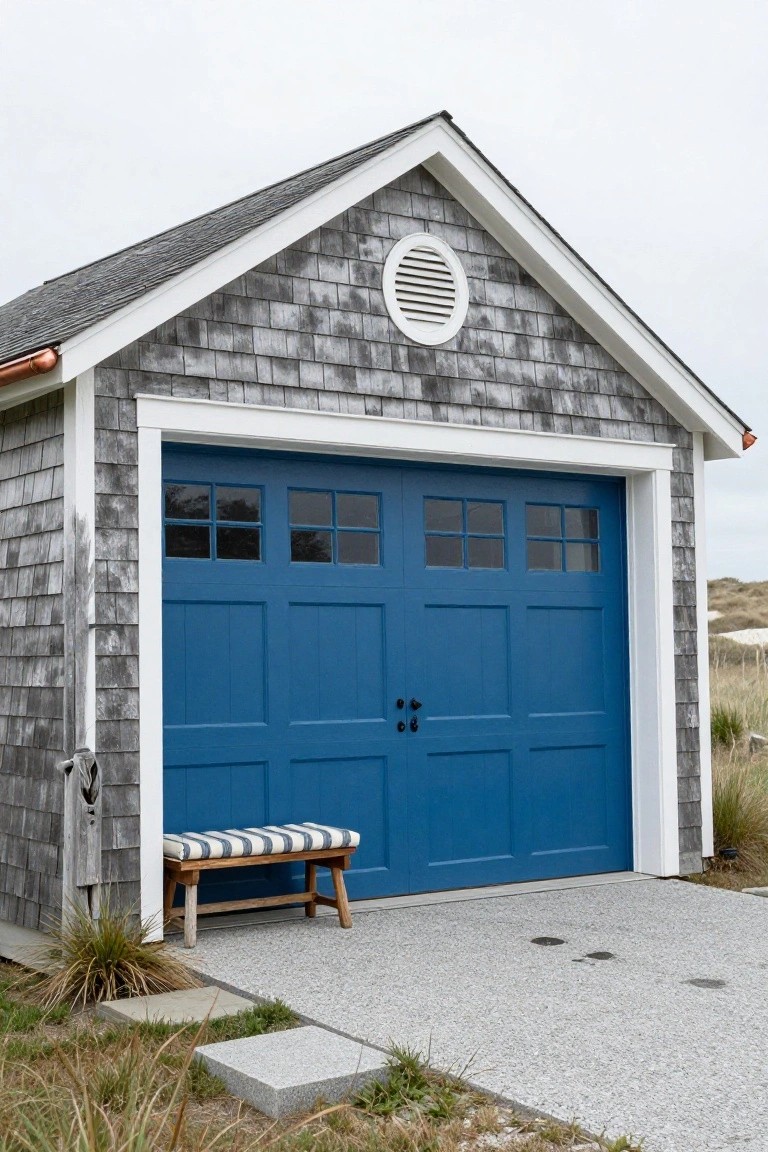
Shingle siding gives garages that timeless coastal look, especially when paired with a bold door color like this deep blue. The gray shingles fade into the background on a foggy day, letting the door pull your eye right in without clashing. It’s a simple way to add some life to what could be a plain box.
Try this on homes near the water or in wooded spots where neutrals blend best. Go for a door shade that nods to the sea or sky, and keep the hardware simple. A bench out front ties it together nicely, making the spot feel more like home. Just make sure the color won’t fade too fast in harsh sun.
Carriage-Style Garage Doors Fit Colonial Homes
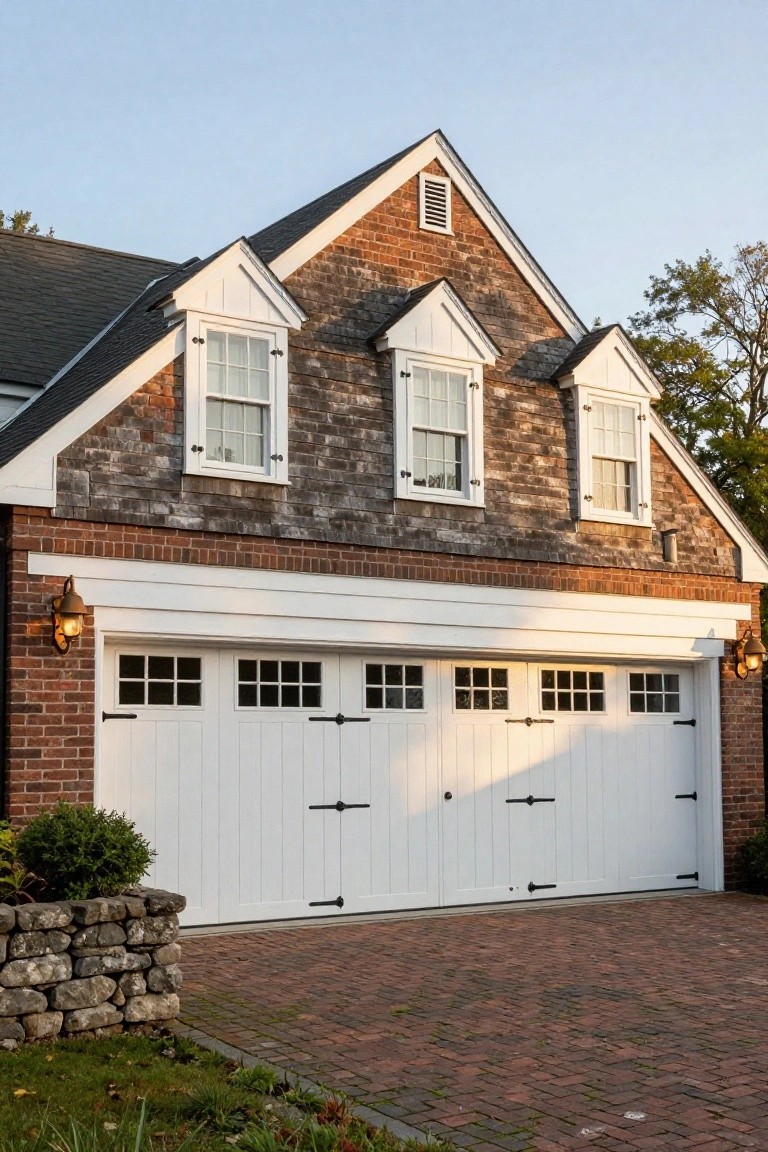
One smart way to handle a garage on a Colonial house is carriage-style doors like these. They have that paneled white look with black strap hinges that mimic old stable doors. Paired with a brick base and shingled upper walls, the garage just blends into the facade instead of sticking out. It keeps the house looking balanced and traditional without much fuss.
These doors work best on homes with some brick or stone already. Pick ones scaled to your house height so they don’t overwhelm the front. Add matching lanterns for light, and you’re set. Avoid plain slab doors here… they pull focus the wrong way.
Brick Colonial Garage That Fits Right In
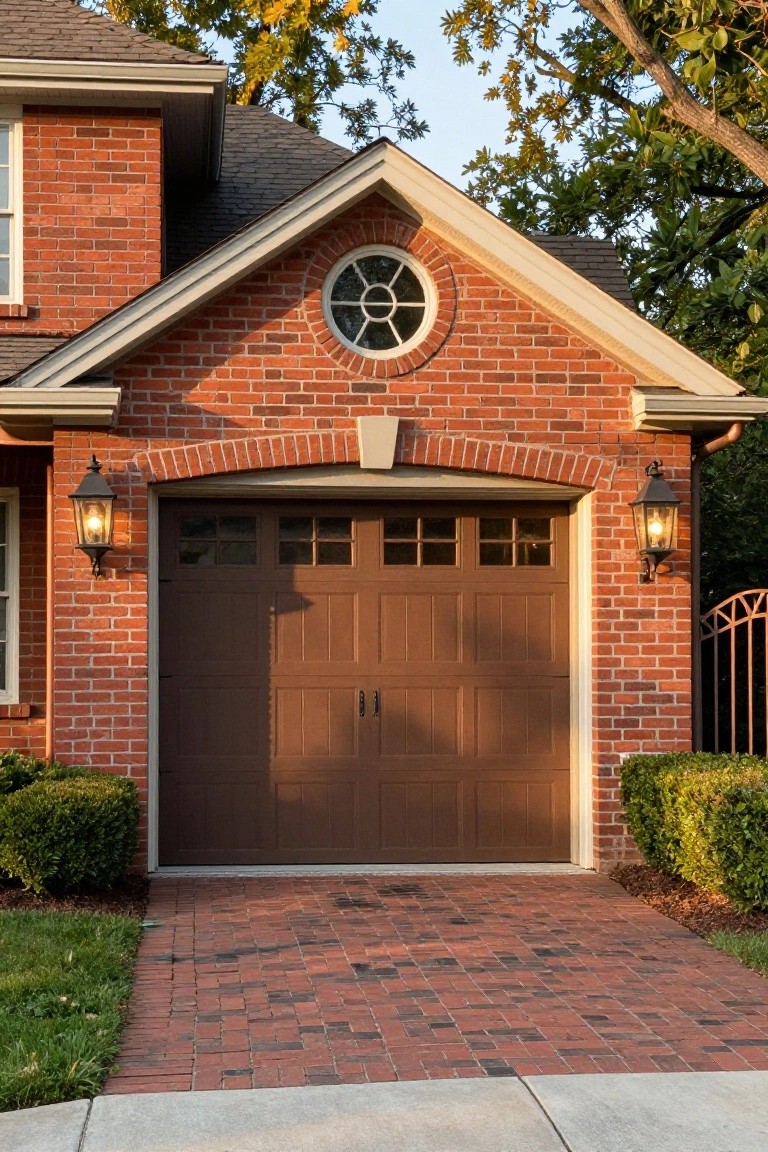
A warm brown wood garage door like this one sits perfectly against red brick walls. It has those small windows and panel lines that echo the house’s traditional lines. Flanking lanterns light it up nicely at dusk. The whole entry feels balanced, not like an add-on.
This works best on classic brick Colonials where you want curb appeal without flash. Match the door’s tone to your brick’s warmth, and keep hardware simple. Skip stark white or metal doors here. It suits driveways with paver aprons too… keeps everything grounded.
Rustic Barn Door on a Colonial Garage
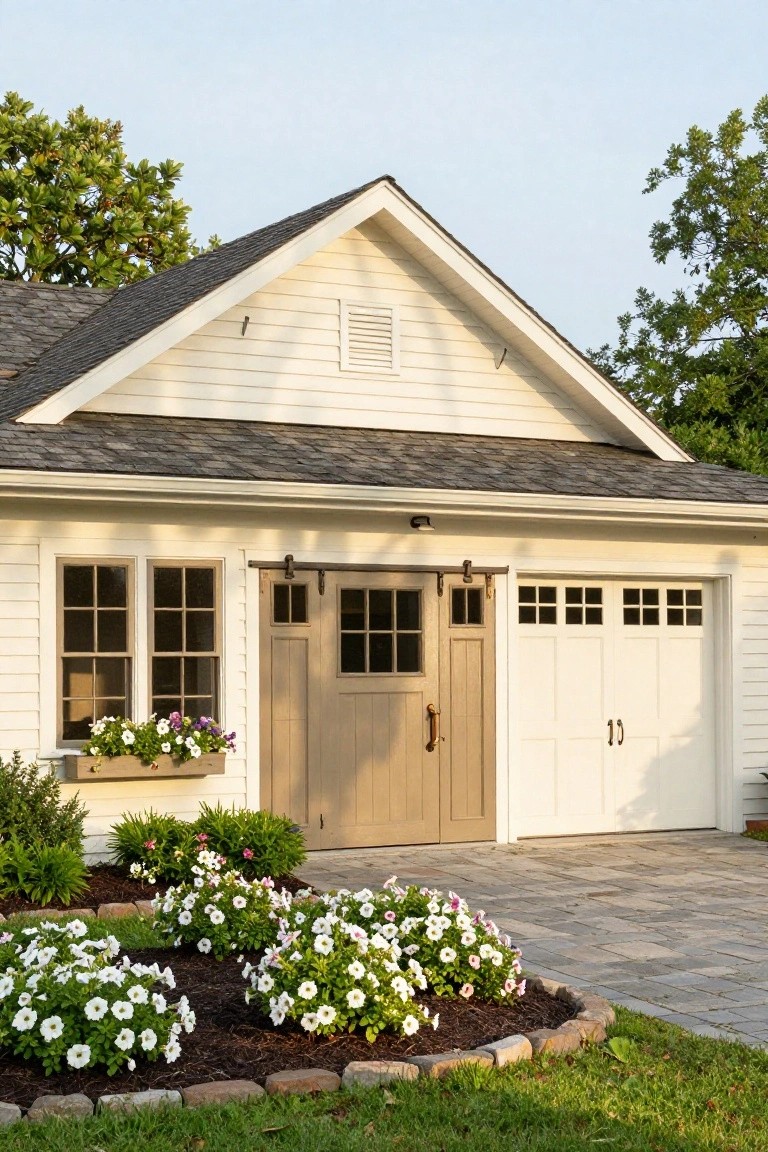
A simple way to give your colonial garage some personality is swapping one door for a sliding barn-style one. Here, the taupe wood door with glass panels sits right next to a plain white garage door on a crisp white clapboard house. It keeps the traditional lines but adds a bit of farmhouse warmth that fits right in.
This works best on smaller garages where you don’t want too much change. Go for muted wood tones to match the siding, and keep the hardware simple. It’s practical for side access too, especially if your main driveway stays clean and white. Just make sure the track is sturdy for everyday use.
Arched Garage
Warm Wood Garage Doors on Stucco Facades
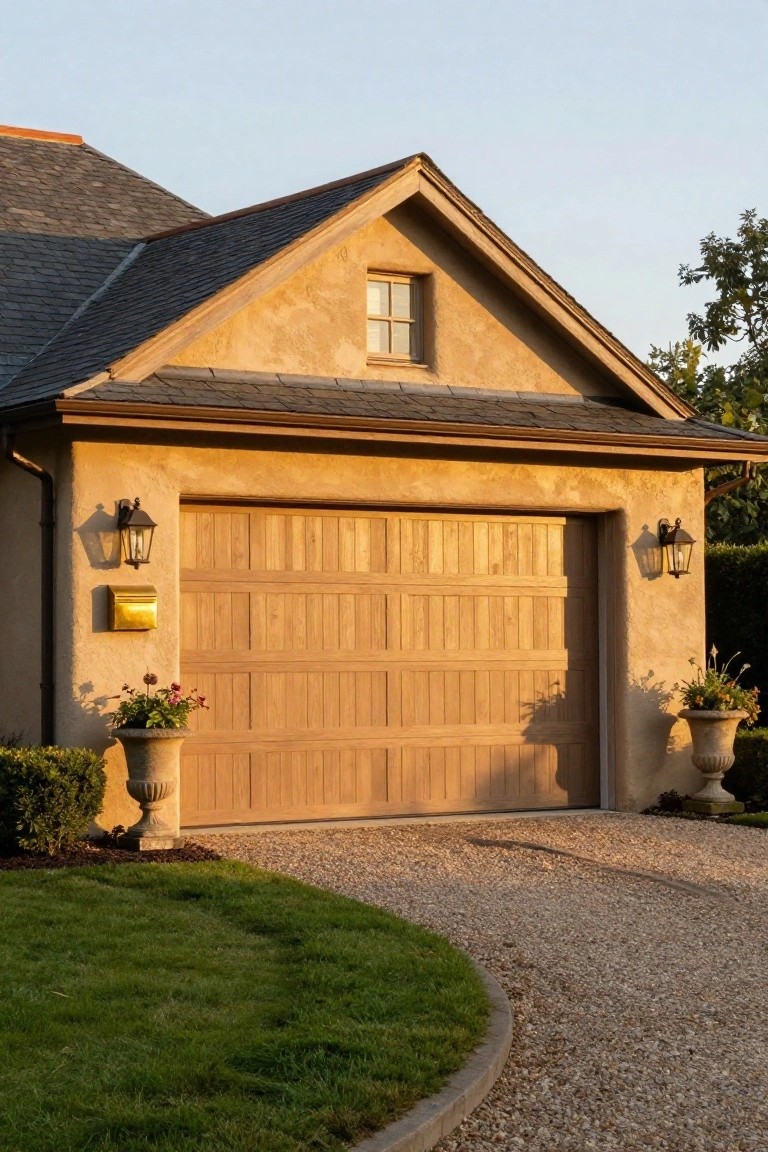
A wooden garage door like this one pulls the whole front of the house together. The vertical planks in a natural finish echo the earthy tones of the stucco walls, so the garage doesn’t stick out like a sore thumb. Flanking lanterns and simple planters keep things balanced without overdoing it.
This approach works best on homes with neutral exteriors, especially if you’re after that subtle, lived-in feel. Pick a stain that tones with your walls, and size the door right for the house scale. It suits milder climates where wood holds up well… just seal it regularly to avoid weathering.
Rustic Barn Doors on a White Colonial Garage
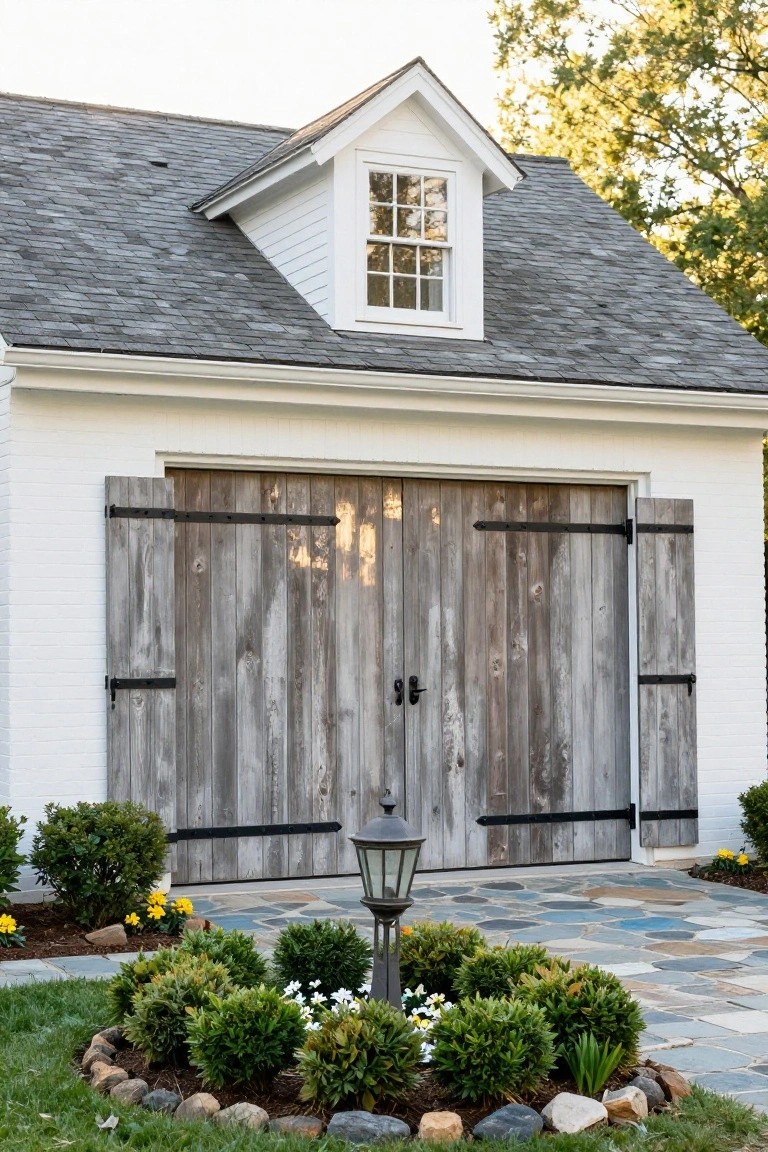
Rustic barn doors like these work great on colonial garages. The weathered gray wood gives a bit of texture and age against the clean white siding. It keeps the look traditional but adds warmth that plain painted doors just don’t have. That dormer window up top helps too. It ties everything into the house style without standing out too much.
You can pull this off on a detached garage next to your main house. It suits older neighborhoods where you want subtle updates. Go for real wood if you can. Avoid anything too shiny or new-looking. Pair it with simple black hardware and a stone path out front to lead the eye right in.
Red Garage Door on Shingle Exterior
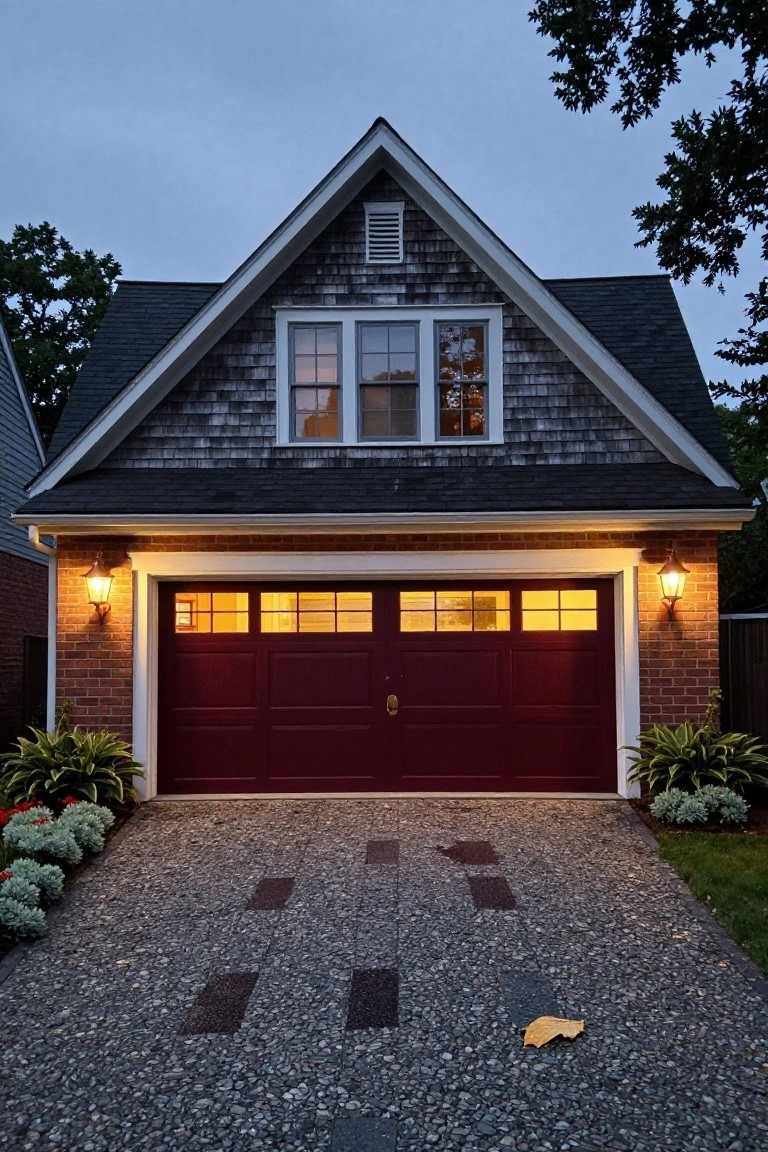
A deep red garage door like this one gives a classic shingle-style colonial home a nice lift. The gray shingles and white trim stay neutral and traditional. But that red door adds just enough color to make the front feel welcoming without overpowering the whole look. The lanterns on either side pick up the warmth too.
You can pull this off on most older colonials or craftsman homes with muted siding. Go for a muted red, not candy-apple bright. Keep plants low around the base so the door stays the focus. It shows up great at dusk. Works best where the house sits close to the street.
Frequently Asked Questions
Q: How do I make my attached garage blend better with the house?
A: Tuck the garage under a gable roof that matches the home’s pitch and materials.
Stick to the same siding and trim details right across the facade.
That pulls the whole thing together without much fuss.
Q: What garage door style screams colonial without trying too hard?
A: Go for a raised-panel door in wood or fiberglass that echoes your front door’s lines.
Paint or stain it to match the trim, and add wrought-iron hardware for punch.
Skip the glass-heavy modern ones, they jar the vibe.
Q: Can I add windows to the garage and keep the colonial look?
A: Yes, frame them like the house windows with divided lights and shutters.
Place two or three up high to avoid a busy feel…
And they let in light without changing the proportions.
Q: How do shutters work on a garage door?
A: Bolt on faux shutters that flank the door, sized to look proportional, like two per section.
Paint them the same as the house accents.
They add that instant colonial charm.
