

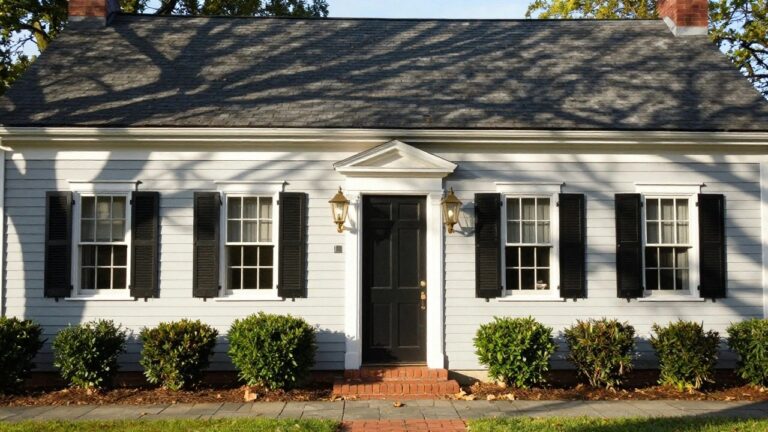
I’ve noticed that gray on a Colonial house exterior often bridges that gap between historic roots and a cleaner, more current look.
From the curb, the color choice really shapes how the whole facade reads, especially against the steep roofline and symmetrical windows.
People driving by pick up on it fast, deciding right then if the home feels welcoming or just dated.
A medium charcoal gray with subtle blue undertones worked wonders on a friend’s place last year.
These ideas give you solid starting points to tweak for your own siding and trim setup.
Light Gray Siding with Black Shutters
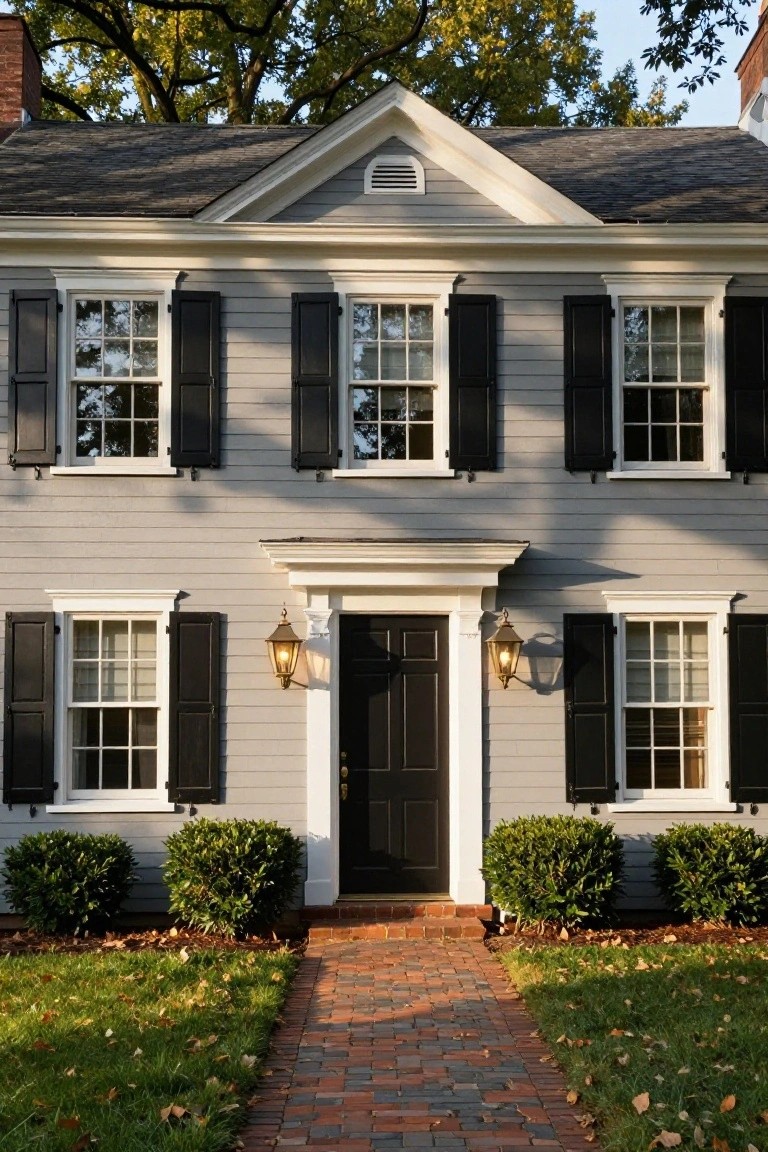
Black shutters stand out nicely against light gray siding on this classic colonial house. The dark color pulls your eye to the windows and door without overwhelming the soft gray background. White trim around the edges keeps everything clean and balanced. A pair of lanterns by the entry adds a touch of welcome.
This setup works well on two-story homes like this one, especially in neighborhoods with older houses. Use it where you want a look that’s put-together but not too busy. Keep plantings simple, like those boxwoods, so they frame the door instead of stealing the show. Just make sure the gray isn’t too dark, or the black might blend in.
Recommended Products

Available in various color options
Board and Batten Shutters are Decorative Shutters which fit Window Heights of 80in - 82in (Window not included)

Item Description: 12"W x 39"H Lifetime Vinyl, Standard Cathedral Top Center Mullion, Open Louver Shutters, w/Installation Shutter-Lok's & Matching Screws (Per Pair), Black
Dark Gray Brick Colonial Facade
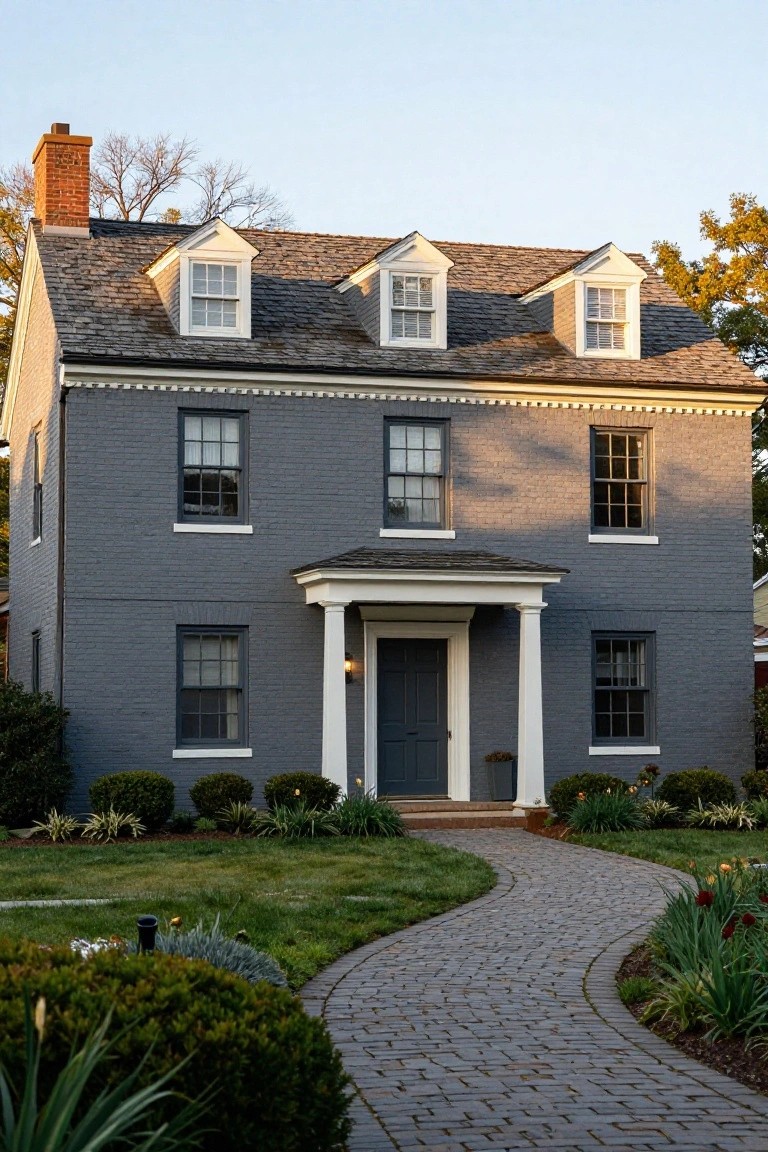
Dark gray brick wraps this colonial house in a way that feels fresh but still true to its roots. The color picks up the slate roof and ties into the fall trees nearby without stealing the show from those clean lines and dormers. White trim on the windows and portico keeps everything crisp. It just works.
Try this on a two-story colonial in a neighborhood with some mature trees. The gray softens the brick’s usual redness. Stick to symmetrical windows and a simple entry to avoid clutter. Low boxwoods along the front help frame it without fuss.
Shingle Siding in Soft Gray
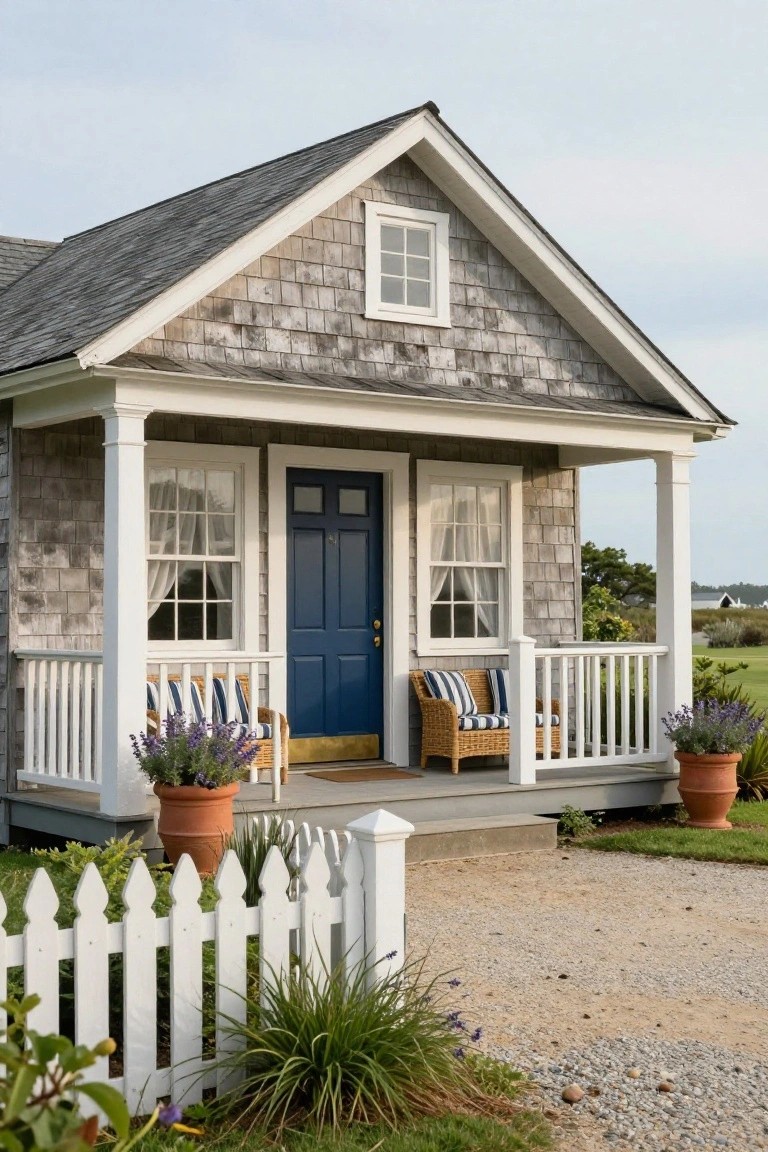
Shingle siding in a soft gray tone gives this colonial cottage a quiet sophistication that feels right at home by the coast. The weathered look of the shingles blends with the natural surroundings, while white trim around the windows and porch keeps things clean and defined. A navy blue door adds just enough color to draw the eye without overwhelming the gray base.
You can pull this off on smaller homes or gabled designs where you want curb appeal that doesn’t shout. Stick to crisp white for the porch posts and railings to frame it nicely, and consider a bold door if the gray feels too neutral on its own. It suits relaxed areas with some grass or gravel out front.
Recommended Products

Authentic Vintage Appearance: Restore the timeless charm of classic homes with our fiber cement siding shingles. Designed to match the look and size of old asbestos siding shingles, these panels offer a beautiful, textured surface that mirrors the traditional style, without the asbestos.

Authentic Vintage Appearance: Restore the timeless charm of classic homes with our straight edged fiber cement siding shingles. Designed to match the look and size of old asbestos siding shingles, these panels offer a beautiful, textured surface that mirrors the traditional style, without the asbestos.

Authentic Vintage Appearance: Restore the timeless charm of classic homes with our straight edged fiber cement siding shingles. Designed to match the look and size of old asbestos siding shingles, these panels offer a beautiful, textured surface that mirrors the traditional style, without the asbestos.
Black Door on Gray Siding
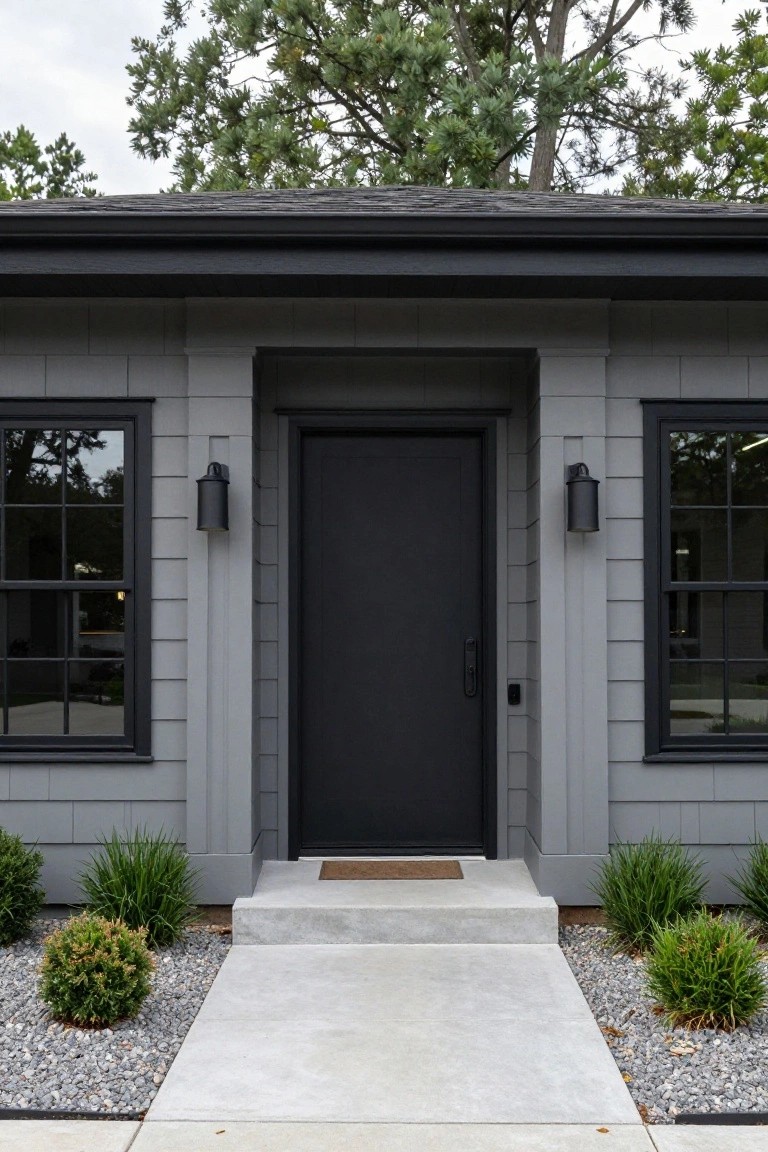
A black front door like this one gives a gray colonial house some real punch right at the entry. The dark color pops against the light gray siding and black window frames. It keeps things simple but makes the whole facade feel more put together and modern.
This look fits older homes that need a fresh curb appeal boost. Use it where you want contrast without changing the siding. Add matching black sconces for light at night. Just make sure the door hardware is simple too… nothing too fancy.
Soft Gray Clapboard on a Colonial Facade
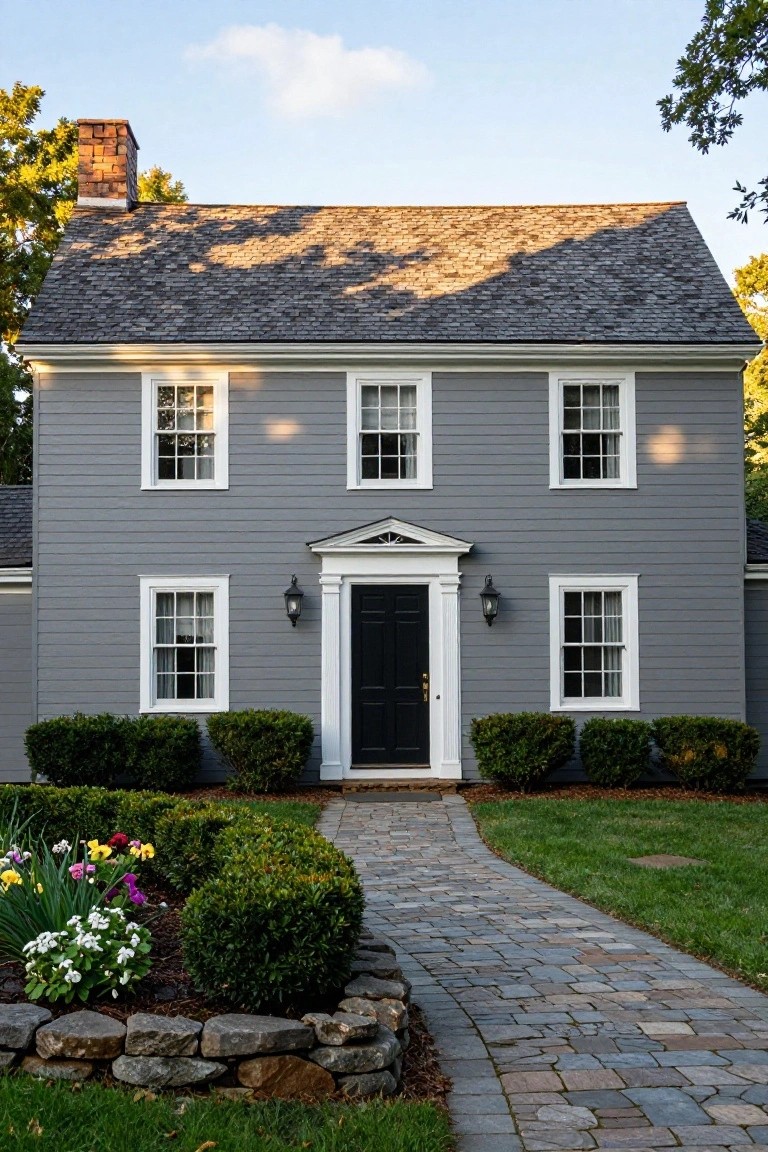
A soft gray clapboard siding like this one turns a classic colonial house into something quietly sophisticated. The color picks up the shadows just right on a sunny day, making the white window frames and door trim pop without any fuss. That balanced look with evenly spaced windows across two stories gives the front a steady, settled feel. It’s the kind of exterior that fits right into an older neighborhood.
Try this on a two-story colonial or saltbox style home, especially where you want curb appeal that doesn’t shout. Keep the trim white for that clean edge, and a black door adds a simple punch. Watch the shade of gray though. Too dark and it can feel heavy. Lighter ones like this work best around green lawns and trees.
White Columns on Light Gray Siding
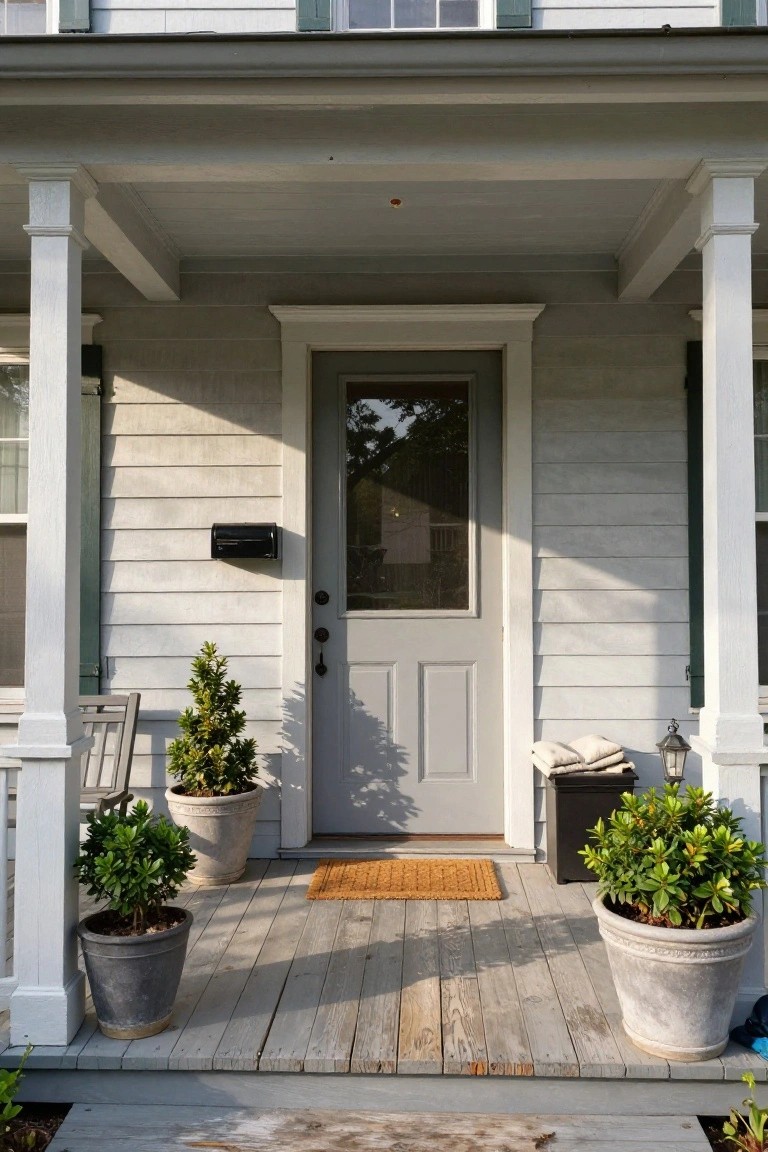
White columns stand out clean and strong against light gray siding like this. They keep the Colonial look traditional without overwhelming the soft gray color. That contrast makes the whole front feel balanced and easy on the eyes, especially with the porch wrapping around just right.
Try this on any older home with a front porch. It suits places where you want simple curb appeal that lasts. Add a couple pots of boxwood by the door to fill out the entry, but skip busy details. Keeps things looking fresh year round.
Rustic Pergola Porch
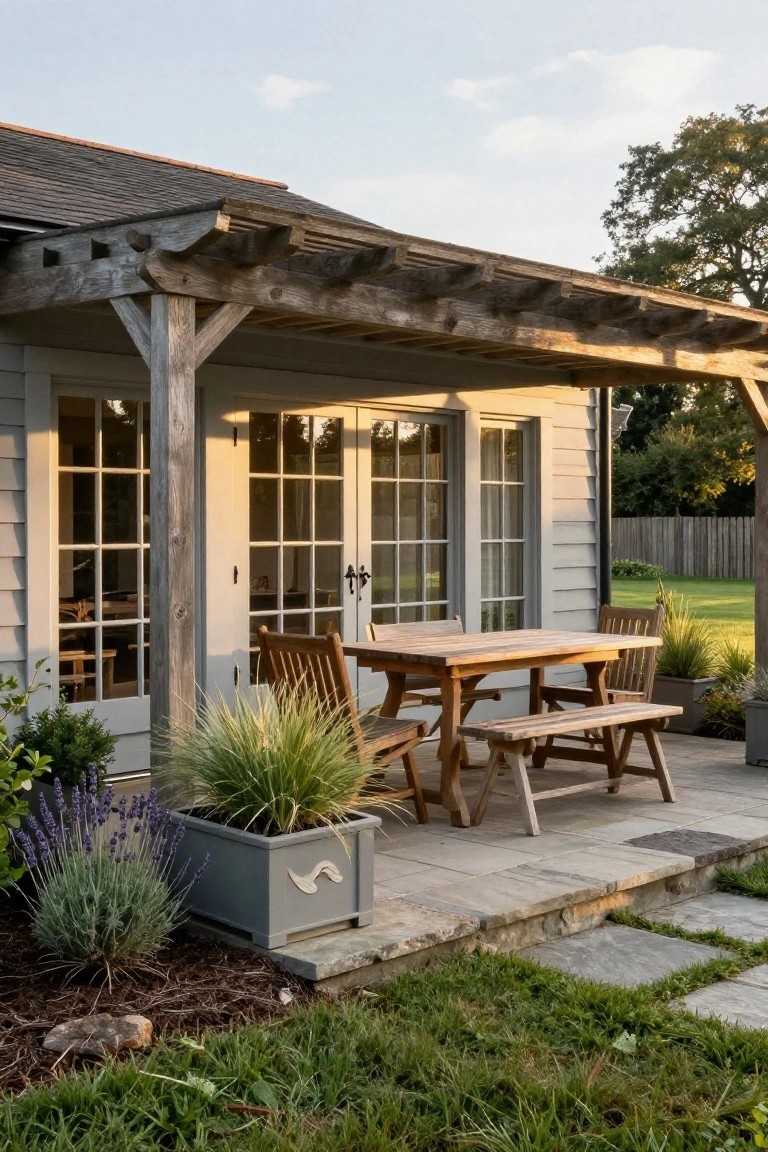
A simple wooden pergola like this one pulls a gray colonial house right into outdoor living. The weathered beams sit over the patio without much fuss, giving shade for meals and letting light filter through. It adds some texture to the smooth gray siding. Folks like how it feels sturdy yet relaxed, especially with that teak table and chairs underneath.
Put this on a side entry or back area where you want to eat outside more. It suits homes with clean lines already. Go for rough-sawn wood to match the house color, then keep furniture plain and add a couple pots of lavender or grass. Watch the scale. Too big and it overpowers. Small yards do fine with one like this.
Black Door Entry on Gray Brick
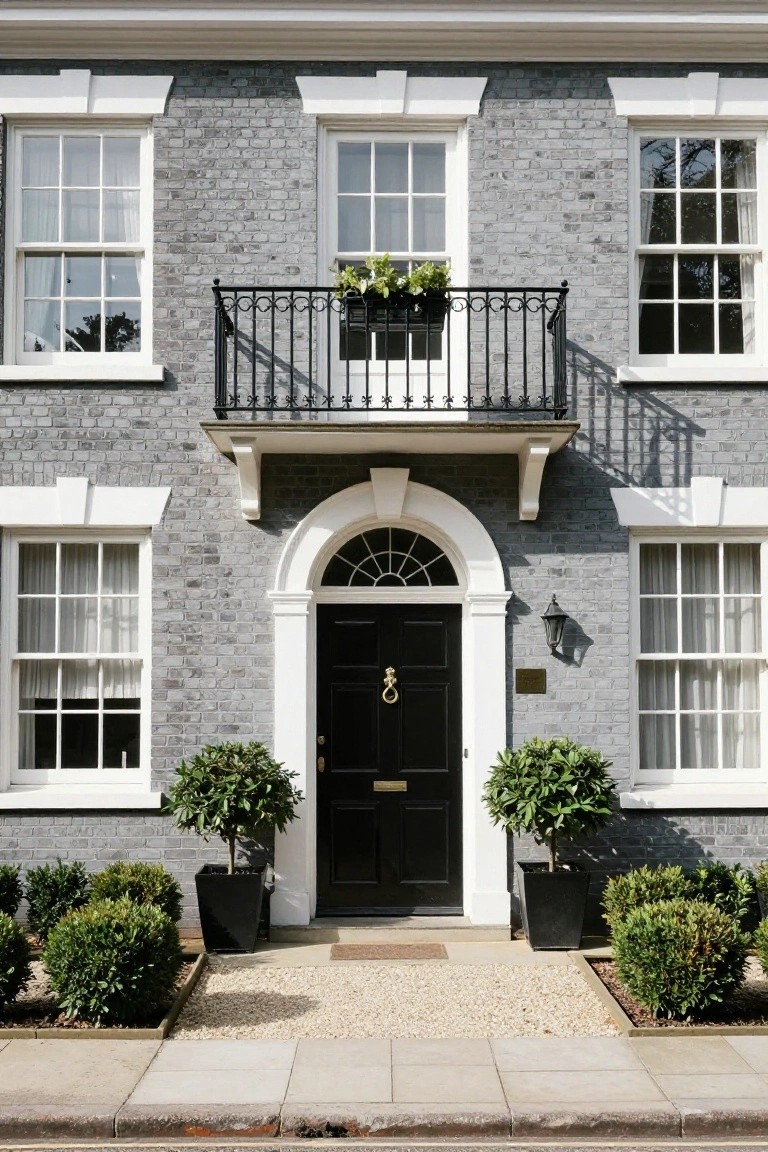
A black front door like this one pulls the eye right to the entrance on a gray brick house. Set in a crisp white arched surround with a brass knocker, it adds punch without much fuss. The soft gray brick keeps things calm, while the white trim sharpens everything up nicely.
This setup suits classic townhouses or row homes in the city. Pair it with matching black pots of boxwood on either side for simple symmetry. Skip busy colors around the door, stick to whites and greens to let the contrast do its job.
Gray Shingle Siding on Colonial Homes
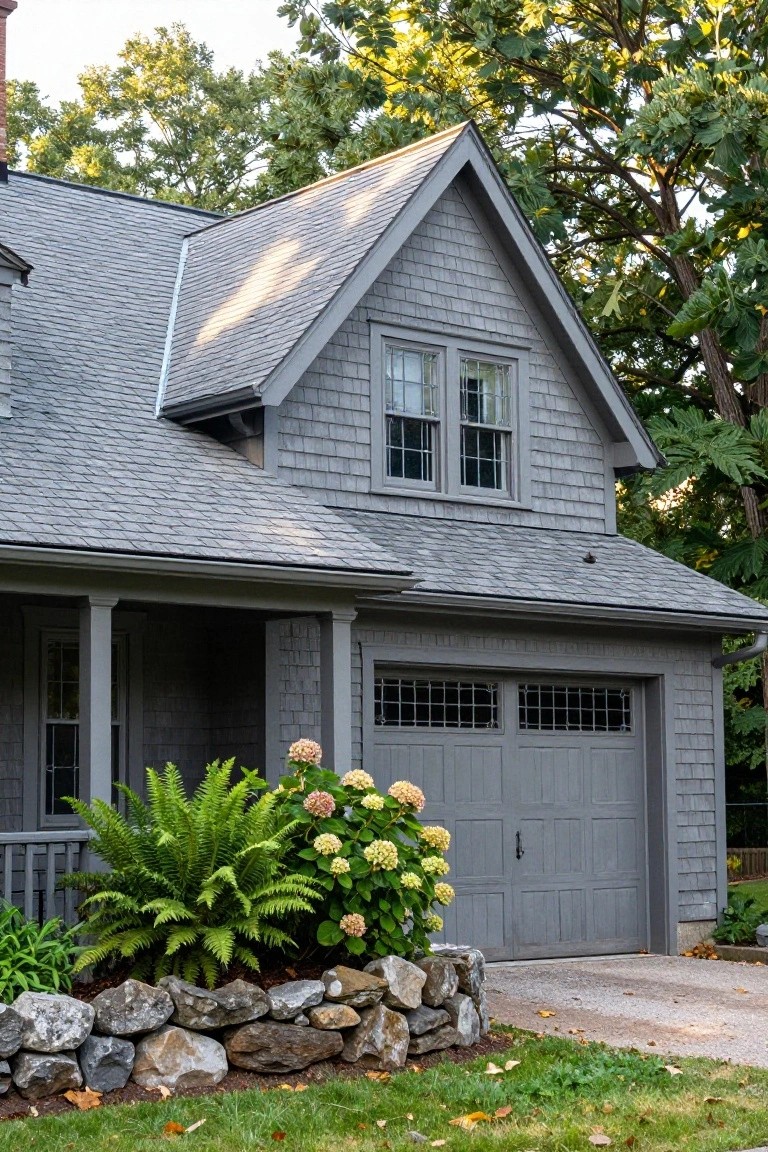
Gray shingle siding gives Colonial houses a textured look that feels right at home in wooded spots. The soft gray color keeps things calm and ties into the trees and sky without overpowering the simple lines of the roof and porch. It’s a straightforward way to add interest to plain clapboard styles.
This siding works best on homes with garages or entry porches, like the one here with matching gray doors. Use it where you want low upkeep and a nod to coastal or New England vibes. Just keep plantings simple, maybe some hydrangeas by a stone wall, so the house stays the focus.
Gray Colonial with Pedimented Entry
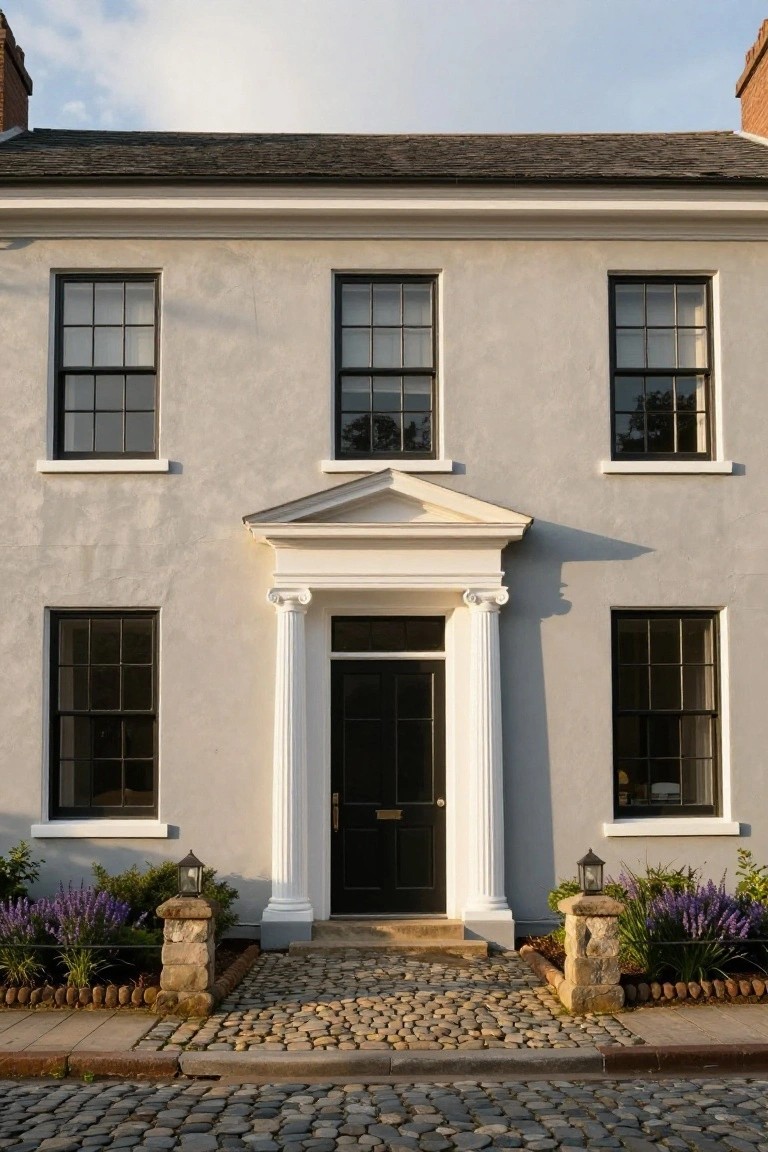
A soft gray stucco finish on this colonial house pairs perfectly with a classic pediment and columns at the front door. It gives the facade that polished, historical feel without looking fussy. The white trim stands out just enough to draw the eye right to the entry, and black windows keep everything crisp.
This setup suits most two-story colonials in town settings or quiet neighborhoods. Frame your door the same way if you want easy curb appeal, maybe add matching lanterns like these. Skip bold colors around it though. Let the gray do the quiet work.
Recommended Products

Weather Resistant: Measuring 12.95"H x 5"L, with high quality material and weather-resistant design, this outdoor wall sconce light fixture is rust-proof and can be used durable for years, which is suitable for any weather conditions like cloudy, heavy rain, snowy, icing, hot weather, etc

QUALITY MATERIALS: Made with premium acrylic material. Digitally printed, UV and weather-protected for durable indoor and outdoor use.

【IMPORTANT - Perfect Fit Size Guide】Magnetic Screen Size: 74"x81" | Fits Door Size: 72"x80" (Measure DOOR ONLY, exclude frame). For proper fit, ensure your door size is ≤72"x80". Always measure your door before purchase to avoid ill fit and ensure full functionality.
Classic Colonial in Dark Gray
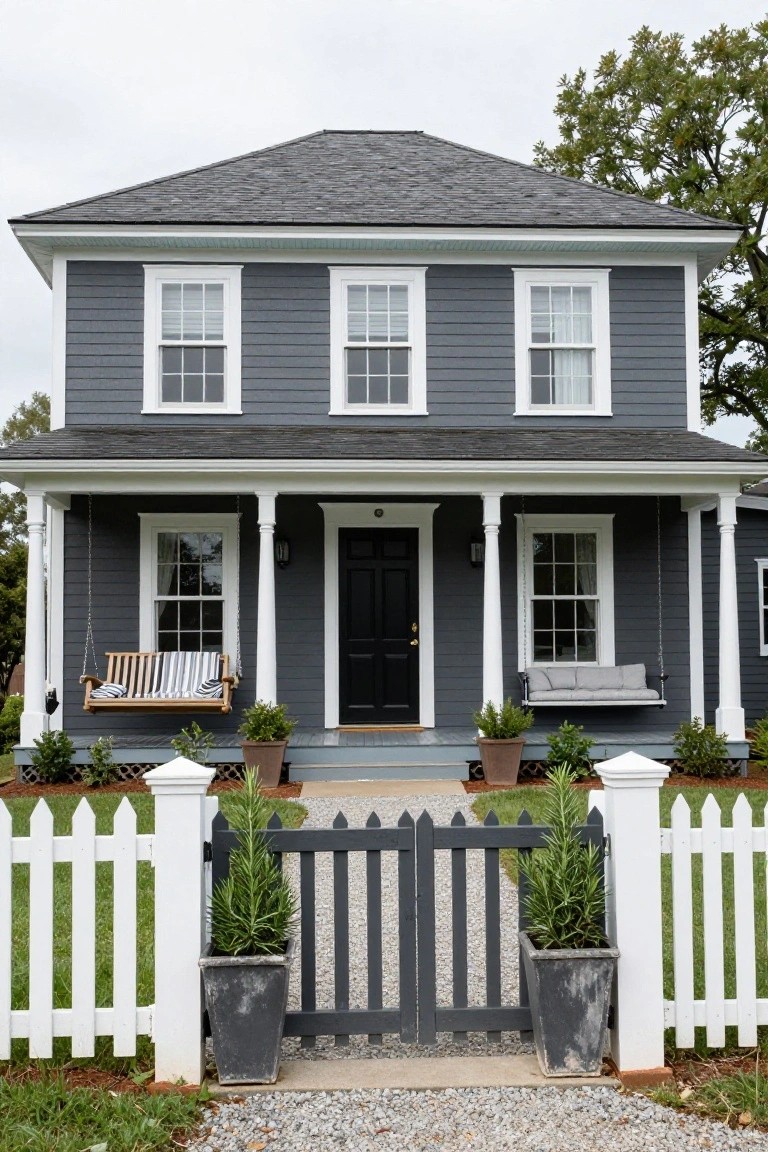
Dark gray siding on a colonial house like this one keeps things traditional but adds a sleek edge. The clapboard texture gives it depth, and that crisp white trim on the porch columns and windows makes everything stand out clean. A black front door ties it together without overpowering the gray.
This look suits two-story homes with gabled roofs and front porches. It shines on suburban streets where you want curb appeal that feels fresh yet familiar. Go for matte gray paint to avoid glare, and keep landscaping simple with potted evergreens at the entry.
Soft Gray Clapboard on a Colonial Facade
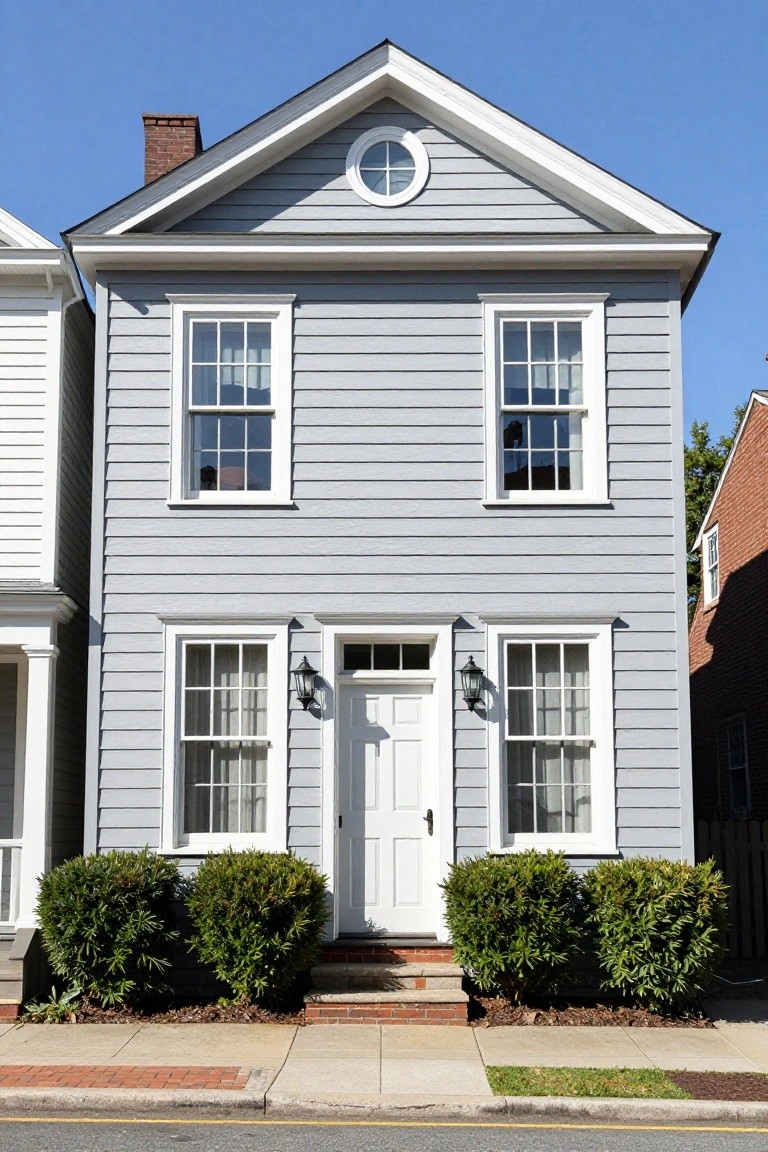
A soft gray clapboard siding like this one takes a basic colonial house and makes it look put-together without trying too hard. The light color picks up the sky and nearby trees, so the house blends right into its spot on the street. White trim on the windows and door keeps everything crisp and draws the eye up to that simple gable roof.
This setup suits older neighborhoods or any spot where you want the house to feel steady and calm. Stick with boxwood shrubs at the entry steps to frame the door nicely. Just keep the gray on the lighter side, or it might feel too heavy next to brick sidewalks.
Black Door on Gray Siding
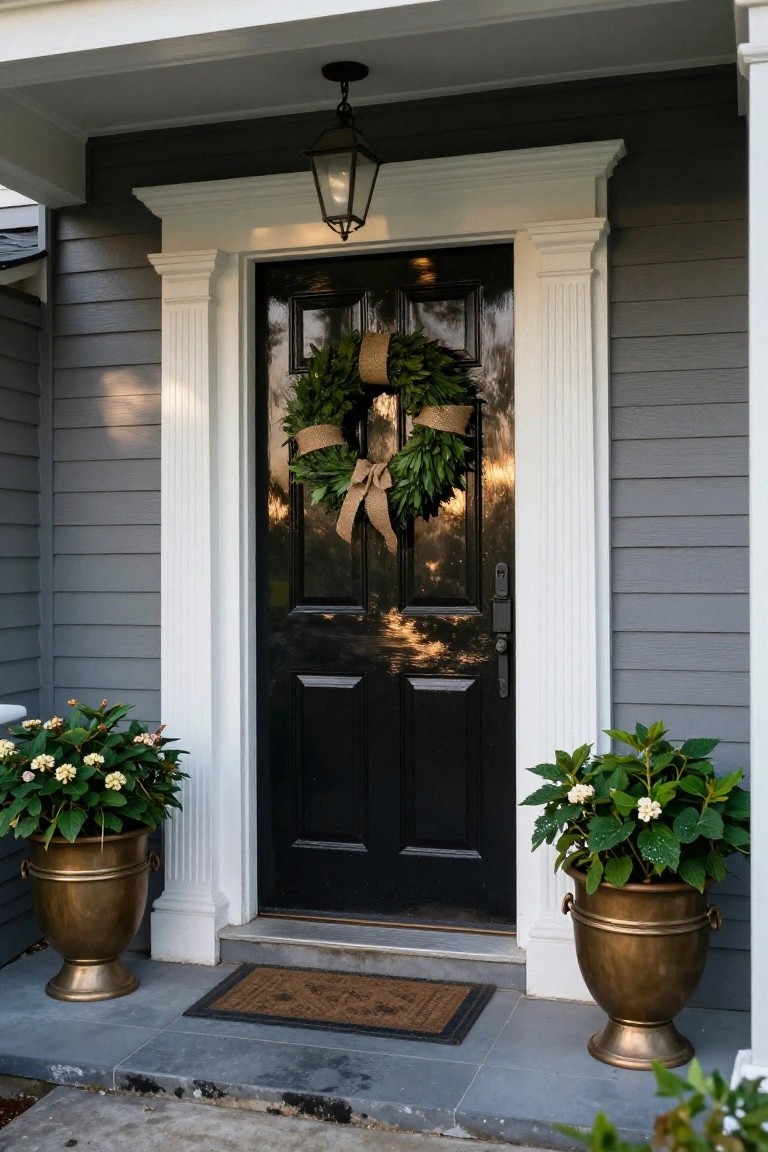
A black front door really stands out against gray siding like this. It gives the whole entry a sharp, polished look that feels both classic and a bit fresh. The white columns frame it just right, and those brass urns with plants on each side add some life without overdoing it.
This works well on colonial homes where you want more contrast up front. Go for a glossy black finish to catch the light, and keep the trim crisp white. It’s simple to pull off, even on a smaller porch, but make sure the door hardware matches the pots for that pulled-together feel.
Colonial Gray Siding with Black Trim
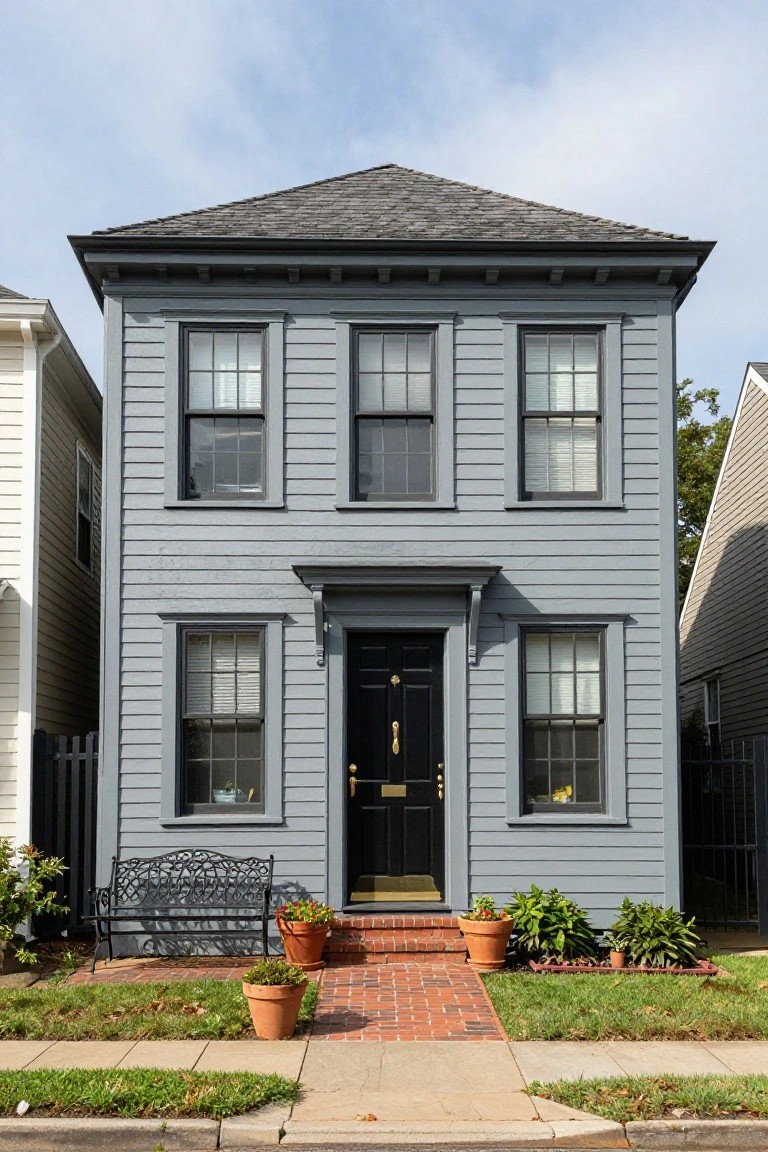
Gray clapboard siding like this turns a basic colonial house into something sharp and put-together. The light gray covers the whole facade evenly, while black frames around the windows and the solid black door pull your eye right to the center. It keeps the traditional two-over-two window setup and gabled roof looking crisp, without any extra fuss.
This setup suits older neighborhoods or tight city streets where you want curb appeal that doesn’t shout. Paint your trim matte black to match, and skip bold colors elsewhere. A couple pots by the steps and a simple bench out front add just enough life. Watch the shade of gray though, too dark and it feels heavy on a small house.
Light Gray Brick Colonial Facade
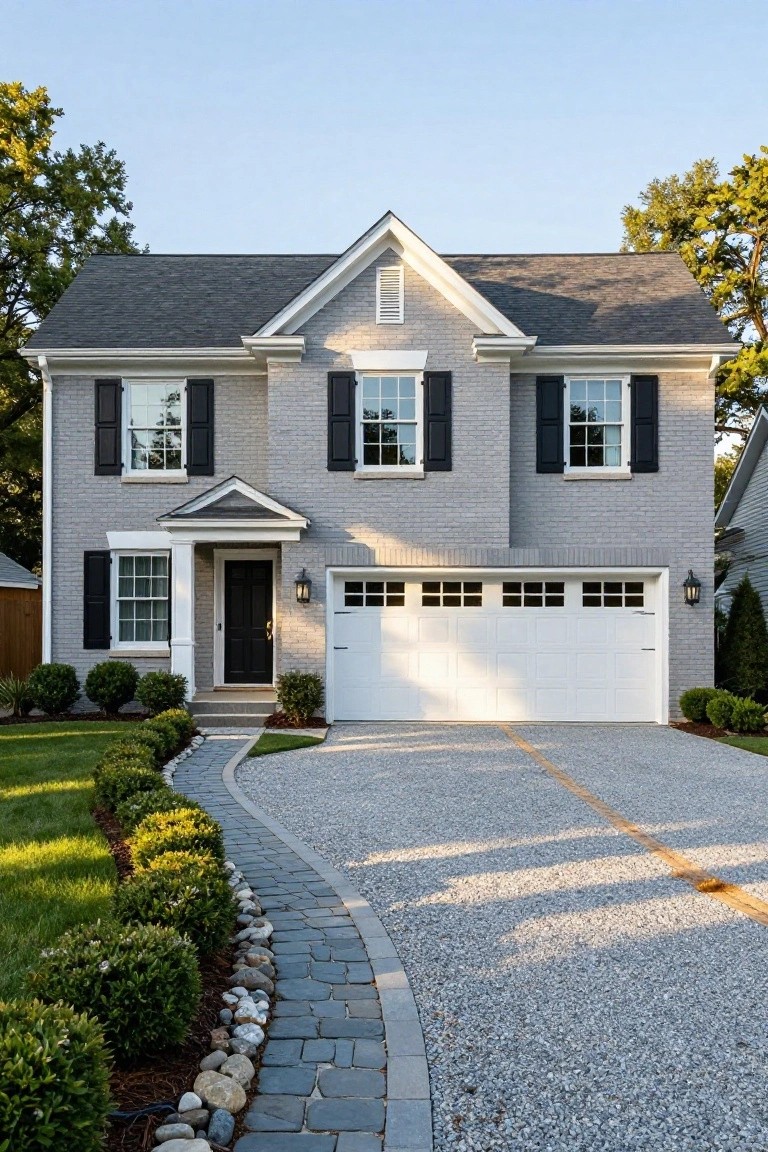
Light gray brick gives this colonial house a clean, sophisticated look that feels fresh but still nods to tradition. The soft color avoids the heaviness of darker bricks, letting the architecture shine through with its gabled roof and balanced windows. Black shutters add just enough contrast to make the gray pop without overwhelming it.
This setup suits two-story homes in suburban neighborhoods where you want curb appeal that lasts. Pair the brick with white trim on the garage and entry, plus simple boxwoods along the front. It holds up well in varied weather, but keep the mortar clean to maintain that sleek edge.
Window Boxes Brighten Gray Colonial Exteriors
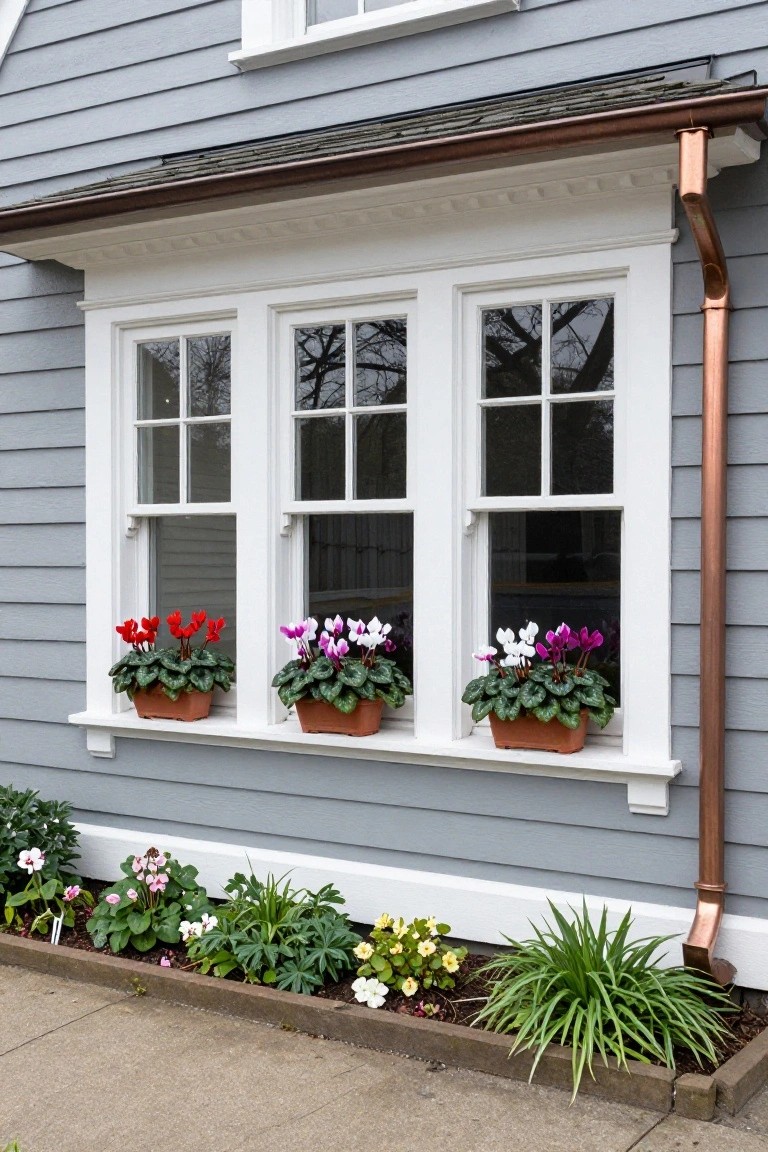
A gray colonial house gets a simple lift from window boxes packed with cyclamen. The soft blue-gray siding stays sleek and understated. But those reds, pinks, and whites in the boxes pull the eye up to the windows. It adds life without messing with the classic lines.
Put them on front-facing triples or pairs for best effect. Trailing plants like these work well since they soften the edges. They suit most colonial setups aiming for curb appeal. Watch the watering though. Dry spells can wilt them fast.
Warm Porch Light on Gray Colonial Facade
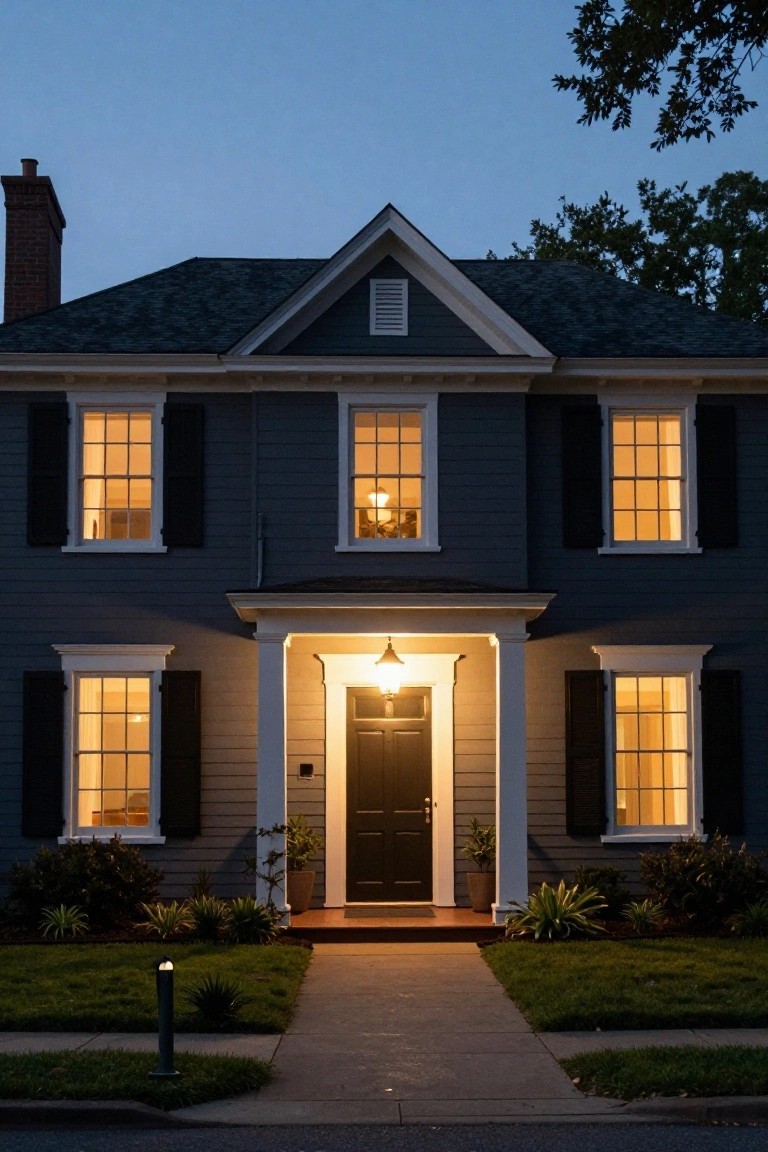
Gray siding gives colonial homes that sleek, timeless look folks keep coming back to. Pair it with a simple porch lantern like this one, and you get a soft glow right at the front door. It pulls the eye to the entry without overpowering the house. Those lit windows inside add to it, making the whole facade feel lived-in and welcoming as the sun goes down.
This setup works great on two-story colonials with white trim. Hang a lantern over the door at about eye level, and keep the bulb warm, not harsh white. It suits quieter neighborhoods where you want curb appeal without bright spotlights. Just make sure the plants around the steps stay trimmed so the light isn’t blocked.
Soft Gray Siding on a Colonial Facade
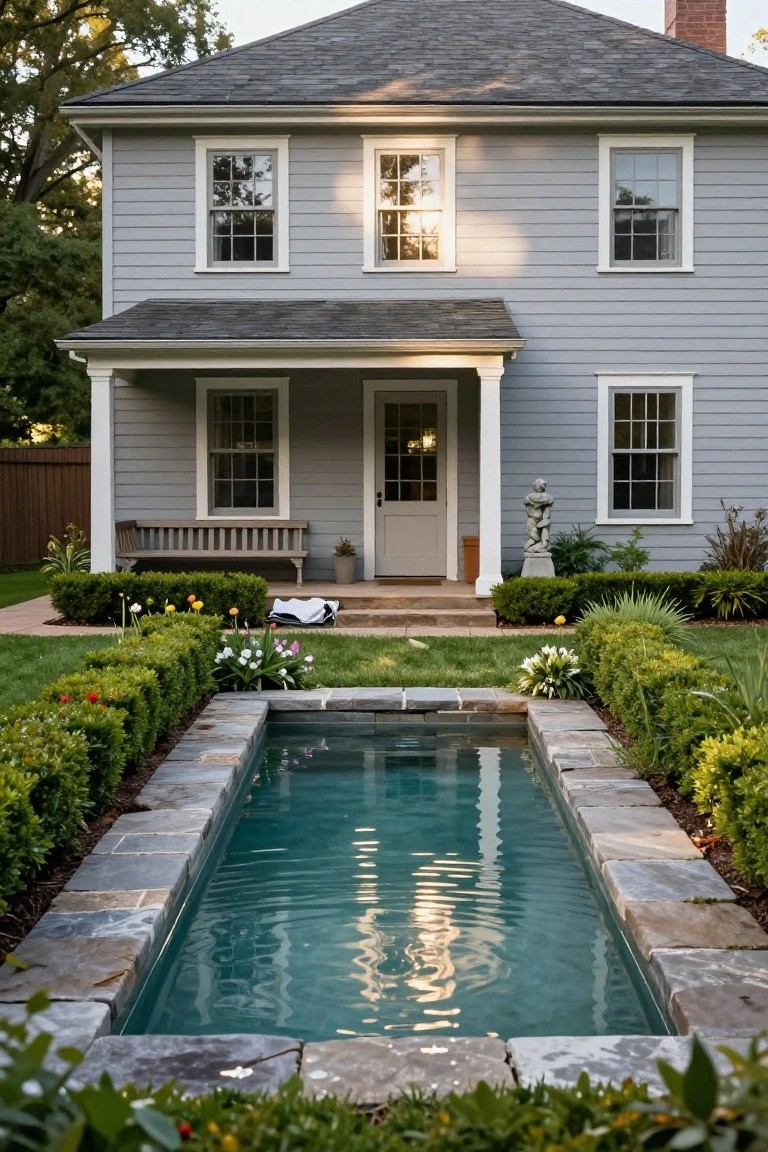
A soft gray clapboard siding like this one takes a traditional colonial house and makes it feel fresh without losing its roots. The light tone catches the light nicely, especially around the symmetric windows and simple porch. White trim keeps things crisp, and that bench out front adds a casual touch.
This look suits older homes in suburban spots with some yard space. Go for it if your colonial has clean lines already. Just keep landscaping straightforward, like low boxwoods along a path, so the house stays the star. Avoid darker grays unless you want more shadow play.
Frequently Asked Questions
Q: How do I test gray paint shades on my actual house before buying a ton?
A: Snag small sample cans and brush them on pieces of cardboard or scrap siding. Prop them up around your colonial at morning, noon, and evening. Light changes everything, so you’ll nail the right one.
Q: Will gray hide dirt and wear better than white or beige?
A: Gray camouflages dust, pollen, and grime way better than lighter shades. Just rinse it off with a garden hose once a year…
Q: What trim colors pop best with these gray exteriors?
A: Crisp white trim brightens the whole look and keeps that classic colonial feel. Black trim adds punch if your house faces south for extra contrast.
Q: Can gray work on my colonial if it has a red brick foundation?
A: Pick a gray with warm brown undertones. It blends seamlessly with the brick and ties the base to the siding.
