

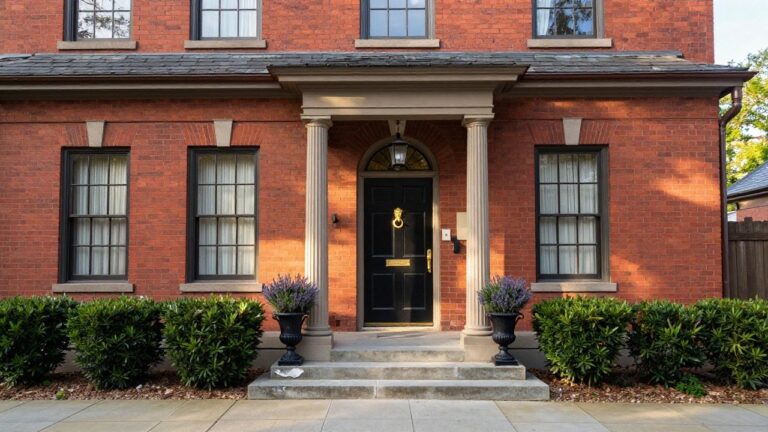
When you approach a colonial home, the portico shapes your first impression more than any other exterior feature.
I pay close attention to how it aligns with the roofline and siding because poor matches often make the whole facade feel off-balance in person.
Buyers and neighbors notice the entry’s scale right away, especially if columns add that grounded sense of welcome without overwhelming the front.
Proportions like that rarely fail.
I’ve sketched a few variations from similar setups for my own curb, and they translate well once you factor in your house’s actual pitch and width.
Classic Portico with Columns
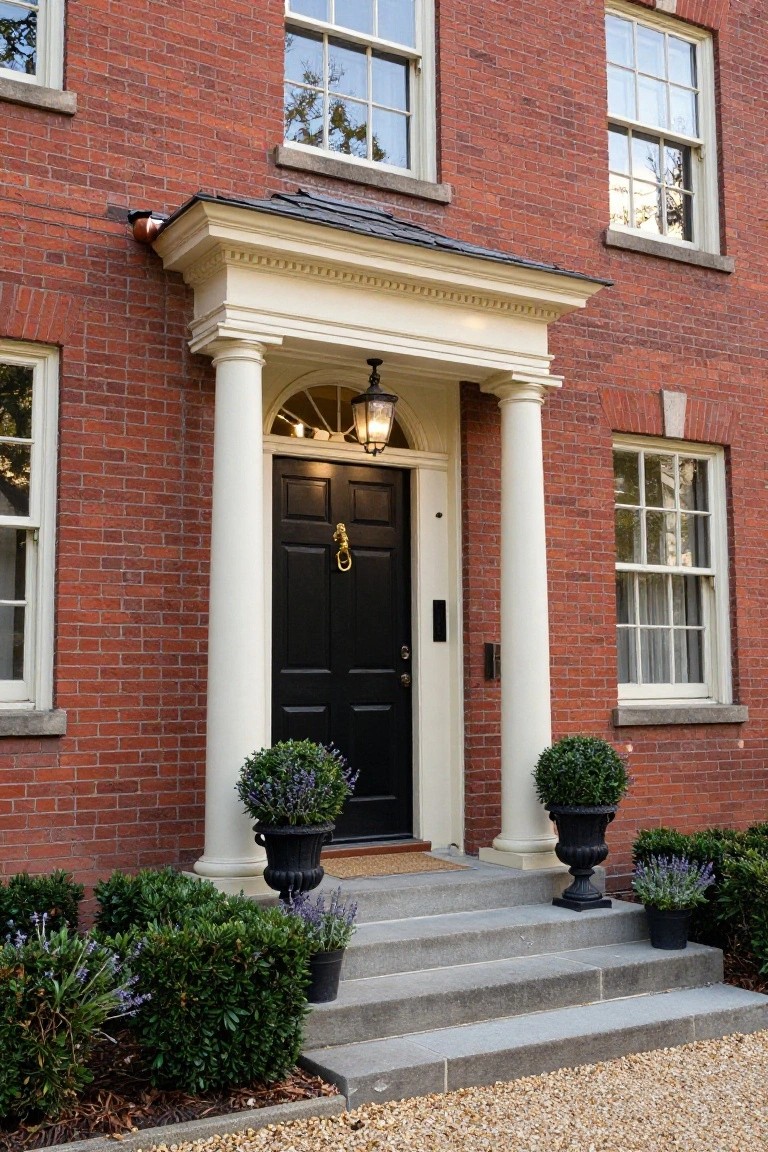
A portico like this one makes the front entry feel grand without much fuss. Tall white columns hold up a simple pediment over the black door, and they stand out clean against the red brick walls. That setup pulls your eye right to the entrance and gives the whole house a bit more presence from the street.
You can pull this off on most colonial homes or older brick houses. Keep the columns fluted for that traditional touch, and match them with stone steps. Potted plants on either side add life but stay easy to manage. Just make sure the proportions fit your door height so it doesn’t look off.
Recommended Products

◆Specification: Product Size(L*H): 27*88cm/10.63*34.65in; Net Weight: 2.5kg/5.51lbs; Each Bearing Capacity: About 50kg/110.23lb
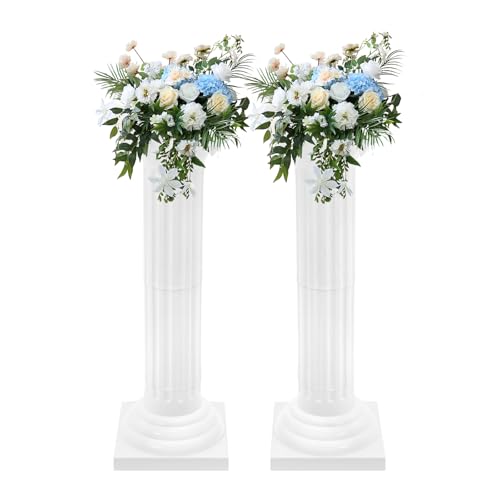
【Sturdy and Durable】This wedding pillars is made of high-quality plastic and manufactured through an injection molding process, offering resistance to wear, shock, and deformation while maintaining an attractive and practical appearance.

【Easy to Assemble】: It can be assembled at home by simply connecting the docking parts, without any tools and can be installed independently.
Classic Portico with White Columns
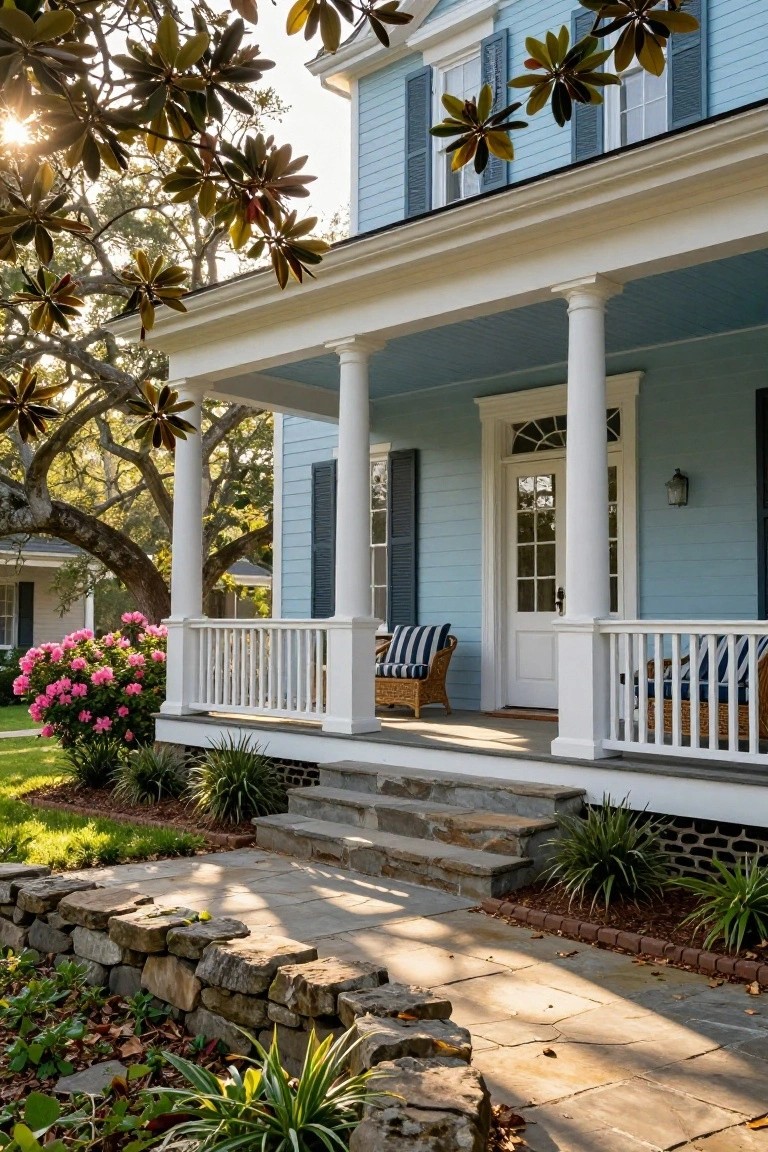
Tall white columns like these give a colonial house real presence at the entry. They frame the door nicely and hold up the porch roof without overwhelming the soft blue siding. That clean contrast keeps things looking fresh and pulled together, especially with the stone steps leading right up.
This works well on homes with some southern charm or in milder spots where porches get used. Keep the columns simple and paint the trim white to match. Throw in a couple chairs for sitting, but don’t crowd it. Just right for curb appeal without much upkeep.
Classic Portico on Brick Colonial
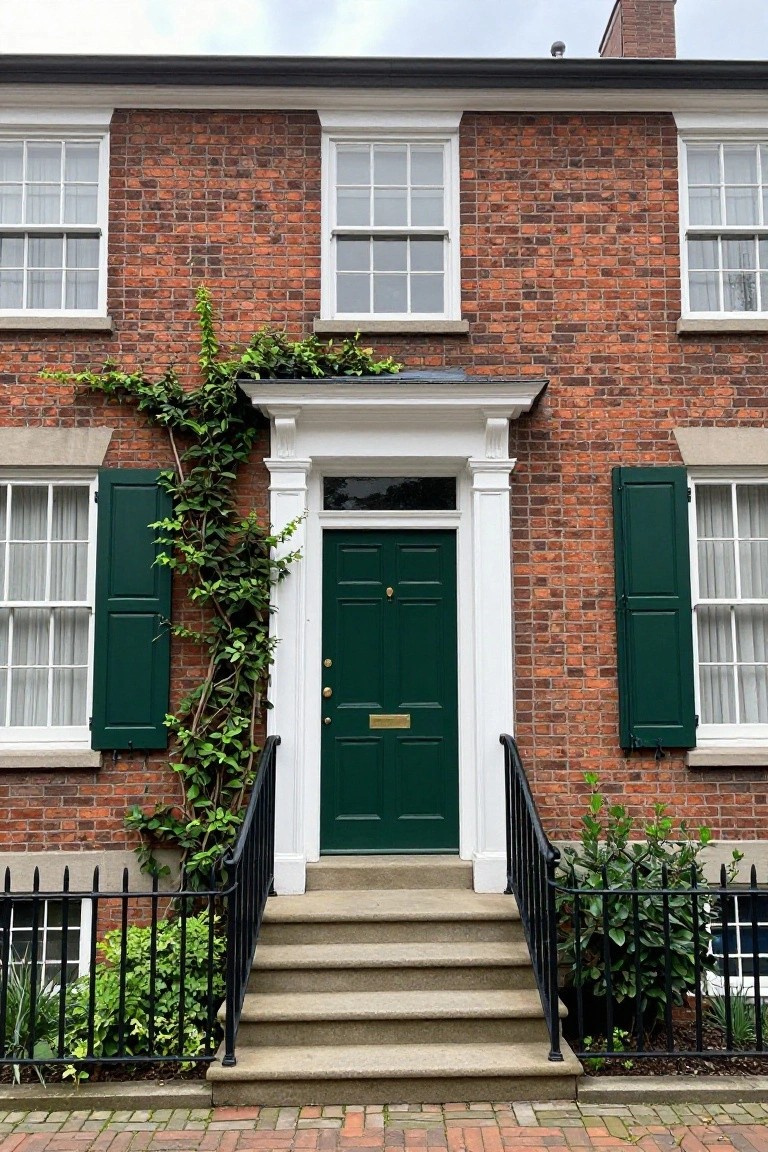
A white portico like this one sits right over the front door on a red brick house. It uses simple columns and a pediment to frame the entry and make it feel more important. The green door pulls the eye straight in, and a bit of ivy on one side softens things up without overdoing it. This setup works because it adds height and structure to what could be a plain brick facade.
You can pull this off on most colonial or federal style homes with brick or stone sides. Keep the columns crisp white against darker brick, and pick a bold door color that matches the shutters. Watch the scale though. Steps and a railing help if your entry sits up a bit. It gives real curb appeal without much fuss.
Gabled Portico with Brick Column Bases
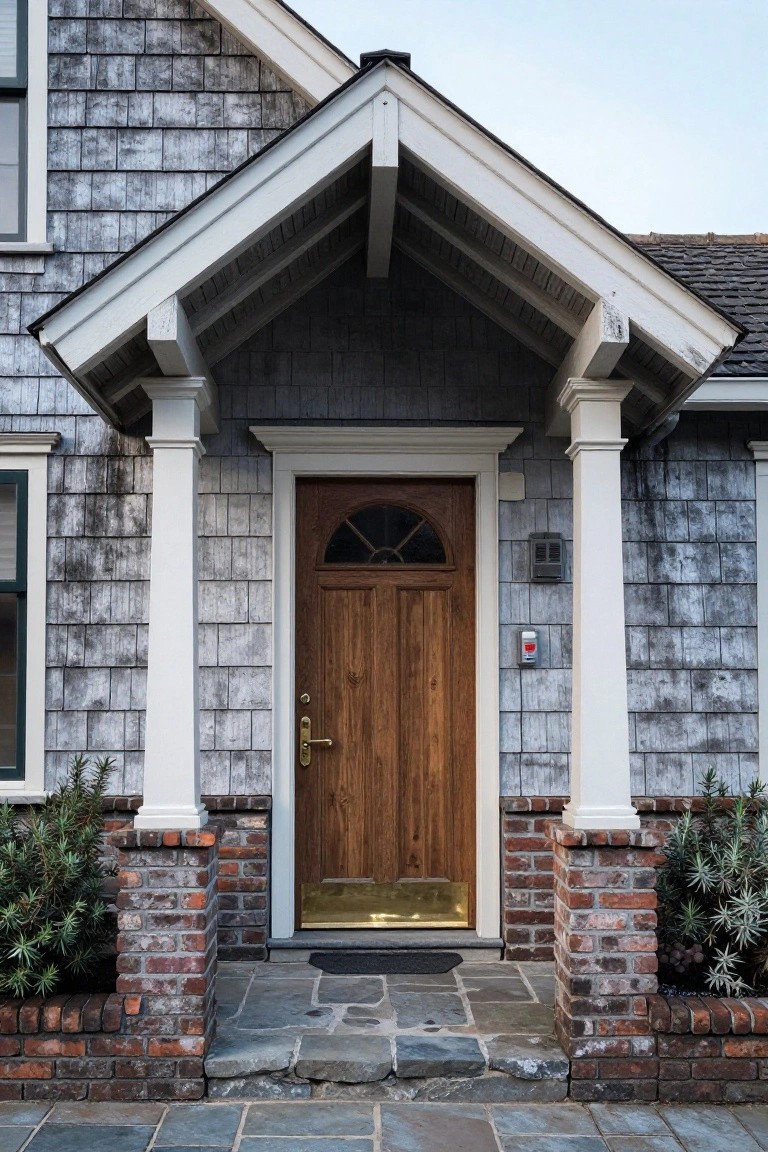
A simple gabled portico like this one uses white columns set on short red brick bases to frame the front door. It gives the entry a lifted, formal feel without overwhelming the house. The dark wood door sits right under the peak, and the white trim pops against the gray shingles. That’s what makes the whole facade look put-together and classic.
This setup works best on two-story homes with shingle siding or similar textures. Keep the columns plain, maybe fluted a bit, and match the brick to any chimney or foundation you have. It adds curb appeal to colonial-style houses, but watch the scale, if the portico gets too big it can look heavy.
Pedimented Portico with Fluted Columns
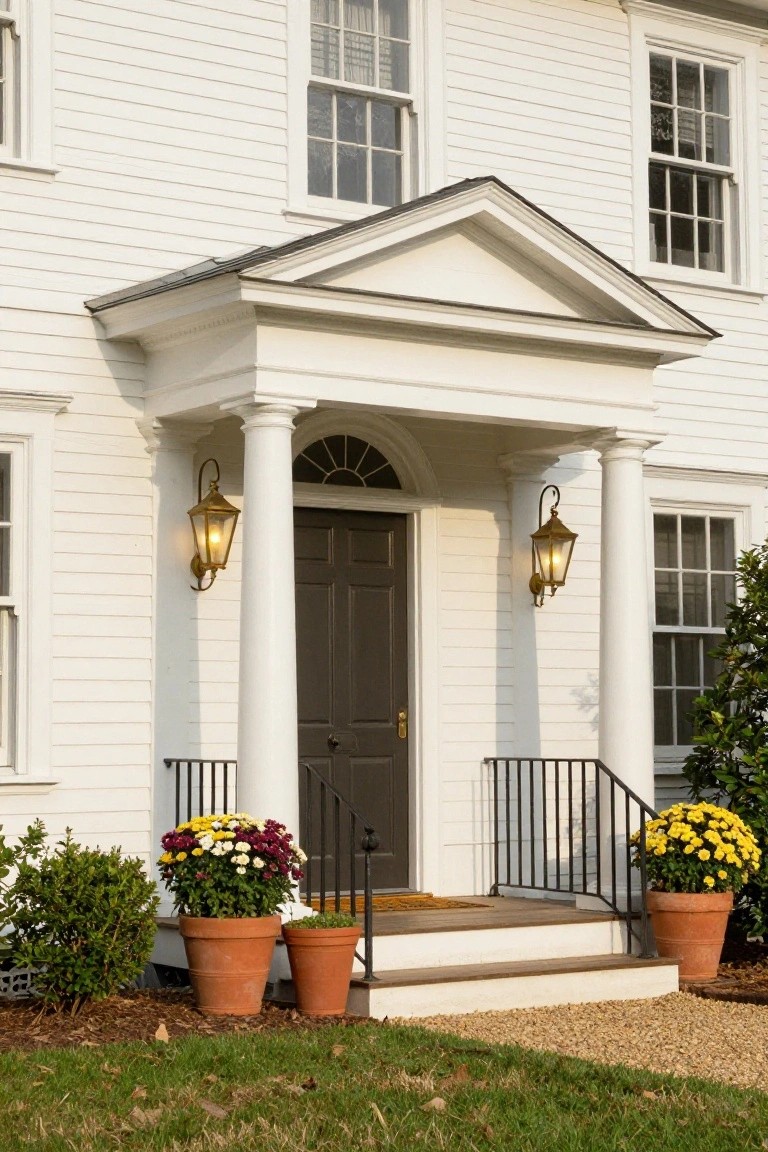
A pedimented portico like this one takes a simple colonial front and turns it into something more formal and welcoming. The fluted columns support a clean white triangle roofline over the door, and gold lanterns on each side add just enough glow without overdoing it. On a white clapboard house, it pulls the eye right to the entry.
This style fits older homes or new builds aiming for that traditional look. Place it over your main door with steps leading up, and flank the sides with pots of fall flowers. Paint everything crisp white except a dark wood door for contrast. It holds up well in mild climates where you want curb appeal year round.
Classic Portico with Navy Blue Door
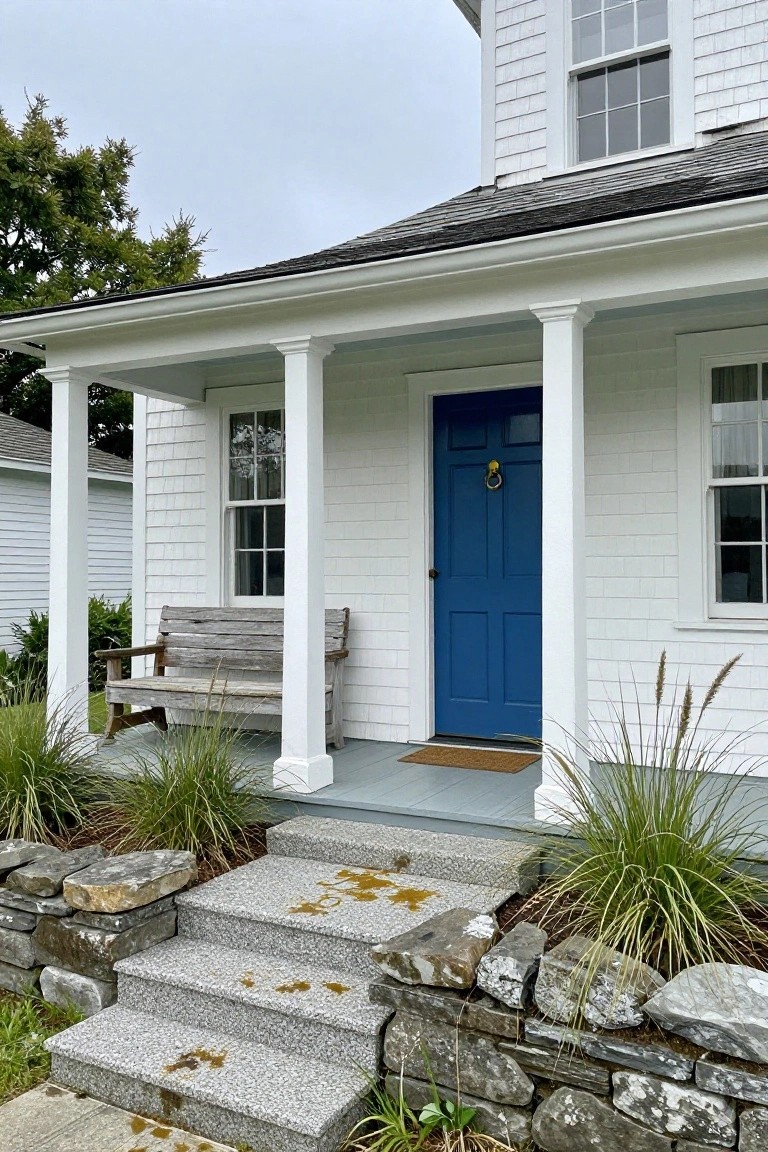
A simple navy blue door turns an ordinary colonial portico into something memorable. White columns and shingle siding give that timeless look folks expect from these homes. But the bold color on the door pulls your eye right to the entry. It adds a bit of cheer, especially against the gray steps and soft landscaping.
This works best on light-colored houses in casual neighborhoods, maybe near the coast. Keep the porch bench weathered wood for balance. Avoid busy patterns around it. The color pops more on overcast days too.
Brick Home Portico with Fluted Columns
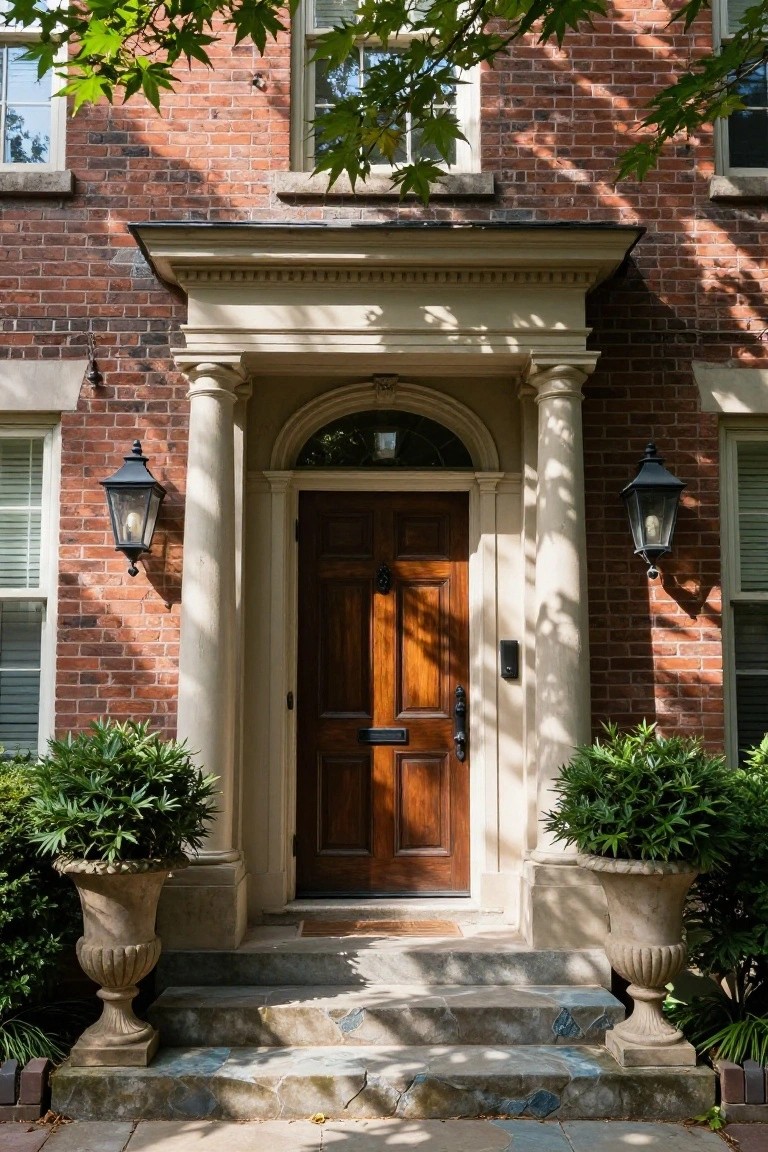
A simple portico like this one turns a plain brick facade into something more formal. Tall fluted columns support a plain pediment over the door. Black lanterns hang on each side. Potted plants in urns sit at the base of the steps. It gives the entry a sense of arrival without much fuss.
This design fits older brick colonials or revivals that need better curb appeal. Keep the columns proportional to the house height so they don’t overwhelm. Stone steps help lead the eye right to the door. Watch the plant scale too. They should stay low next to those columns.
Classic Pediment Portico Entry
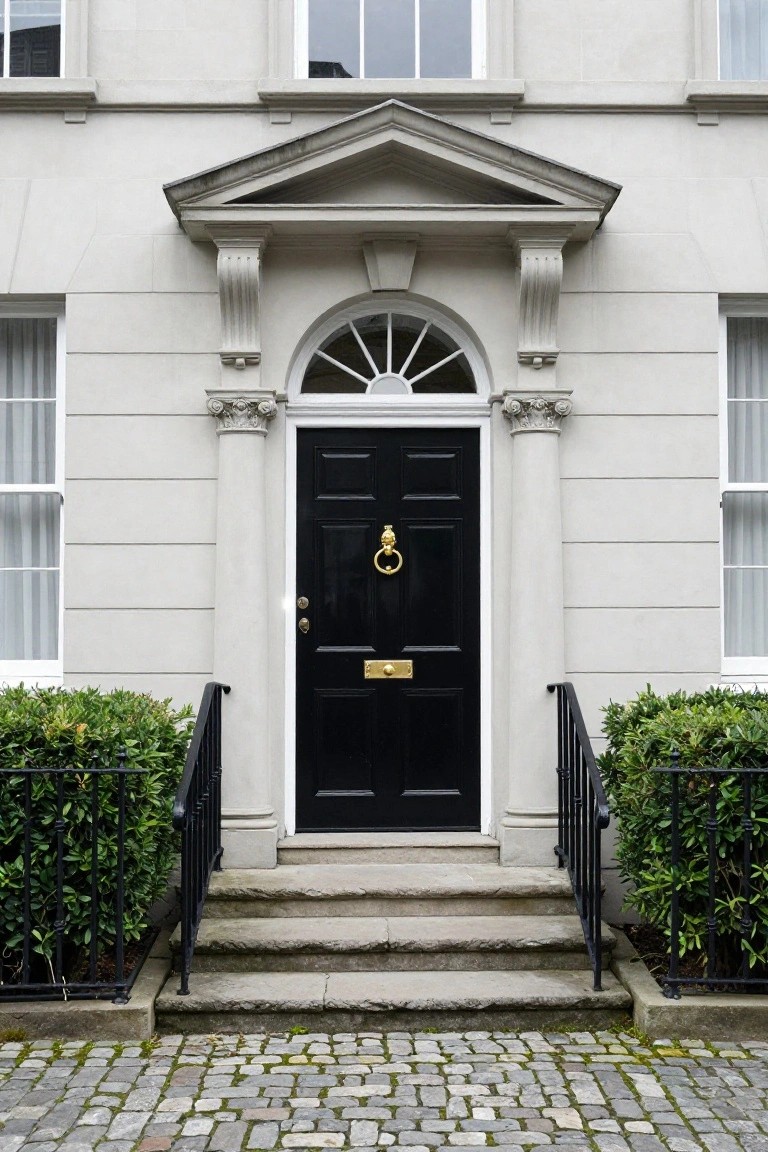
A simple pediment portico like this one frames the front door nicely. The white stone triangle sits over columns that match the house’s light facade. That black door with its gold knocker pulls your eye right to the entrance. It gives the whole front a balanced, formal look without much fuss.
This style suits older townhouses or colonial-style homes on city streets. Use it where you want the entry to feel important but not overdone. Pair with low boxwood shrubs along the steps and keep the path clear. Just make sure the door color contrasts the stone so it stands out on approach.
Portico Entry with Tall Columns
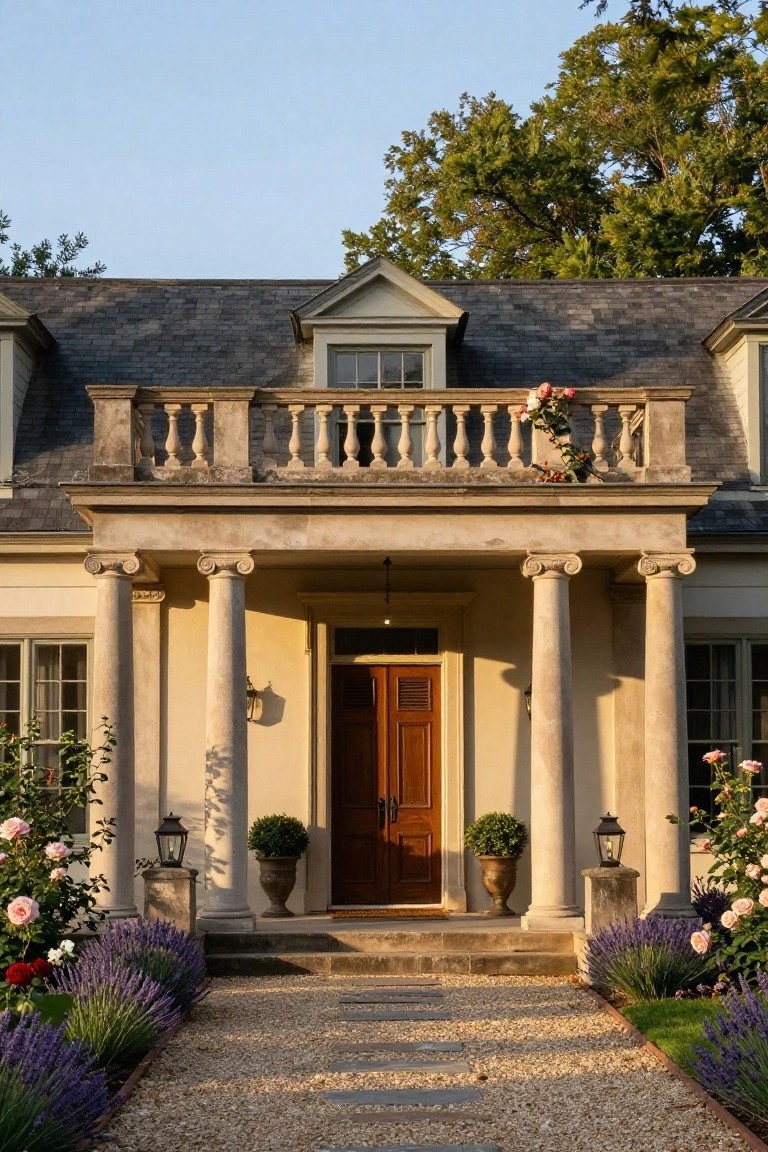
A portico like this one uses paired, fluted columns to frame the front door and create real presence at the entry. The raised design pulls your eye up to the balcony while keeping the focus on that welcoming wooden door. It fits colonial style perfectly, giving the house a grounded, timeless look from the curb.
This works best on two-story homes with a flat front facade and some setback from the street. Scale the columns to match your door height, about two stories tall here. Pair it with a simple gravel path edged in low plants like lavender. Skip fussy details, let the columns do the talking.
Brick Portico Entryway
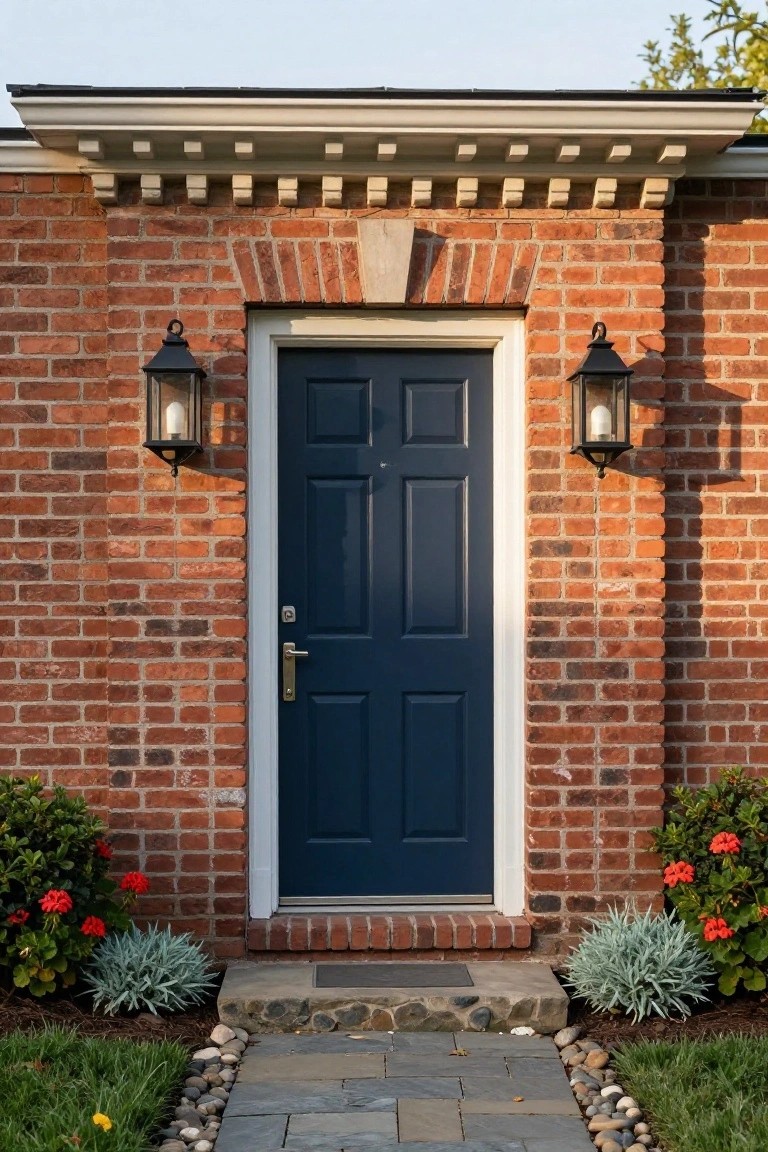
A straightforward brick portico like this one frames the front door nicely and gives a colonial home that solid, welcoming feel right at the curb. The white pediment sits over the arch just so, pulling the eye up without any fuss, and those matching lanterns add a practical glow for evenings.
This setup suits traditional brick houses best, especially if you want the entry to stand out on its own. Keep plants simple on the sides, like low shrubs with a few red blooms, and run a stone path straight in. It stays low-key but makes coming home feel a bit special.
Columned Portico Entry
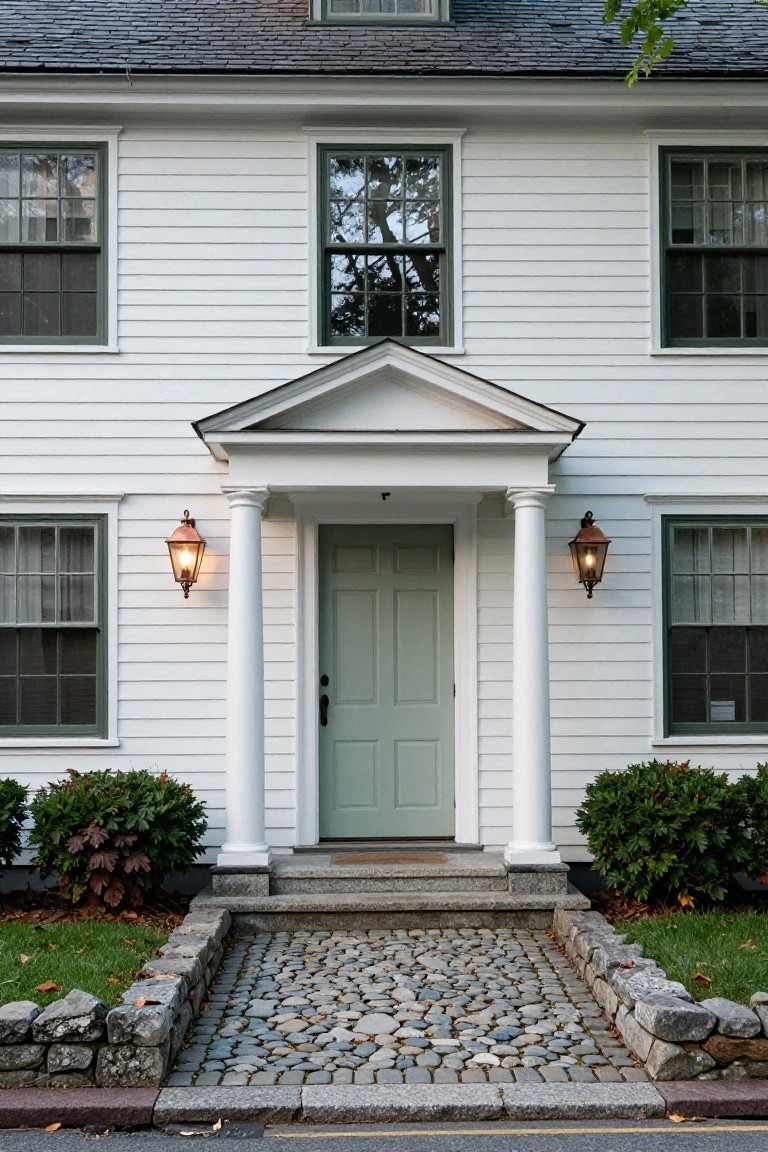
A columned portico gives a Colonial house that solid, welcoming front. Here, tall white columns flank the green door under a simple pediment. Flanking lanterns add a touch of glow, making the entry feel established without much fuss.
This works best on clapboard-sided homes in older areas. Scale it to your door height so it doesn’t overpower. Pair with a stone path for easy access, and it boosts curb appeal on any quiet street.
Recommended Products

Elegant Dimensions for Versatile Display: our Roman column pedestal base, measuring 9.84 x 9.84 x 21.65 inches/ 25 x 25 x 55 cm and weighing 6 kg, is the ideal platform for showcasing plants or statues; This size is nice for integrating elegance and sophistication into any room, making it an excellent choice for enhancing your home decor

STURDY AND DURABLE: Made of high-quality plastic with an injection molding process, this roman column set can resist wear, shock, and deformation while remain beautiful and practical.

【Sturdy and Durable】: Made of high-quality plastic with an injection molding process, it can resist wear, shock, and deformation while keeping a smoother and more beautiful exterior.
Traditional Portico with Brick Supports
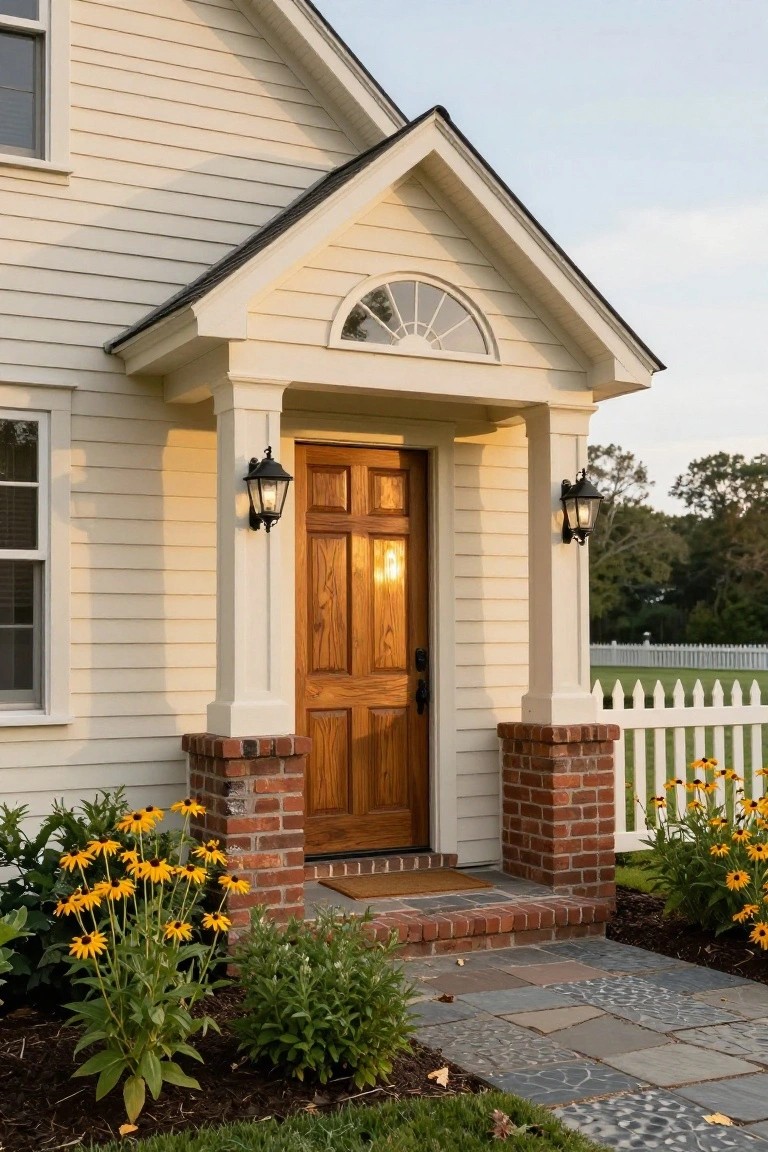
Brick pillars at the base of a portico add real weight and warmth to a simple entryway. They contrast nicely with light siding like this beige clapboard, making the whole front feel more solid and classic. The dark wood door and lanterns fit right in without much fuss.
This setup works best on Colonial-style homes where you want a grand look on a budget. Pair the bricks with plants like black-eyed Susans along the sides for some color. Skip it if your house is all brick already… it might feel too heavy. Keeps things welcoming yet sturdy.
Classic Portico with Fluted Columns
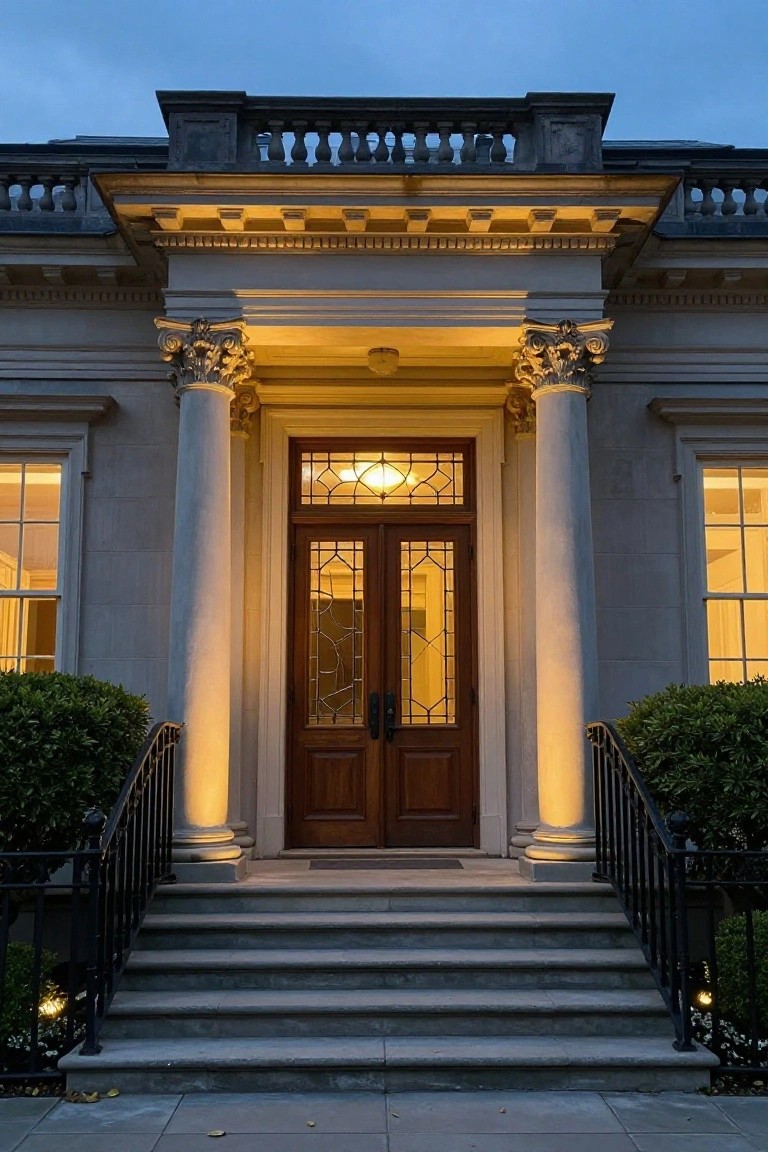
Tall fluted columns like these give a colonial entry real presence. They support a simple pediment over the double doors, drawing the eye right to the front step. The warm uplighting at dusk makes the stone and wood pop without much effort.
This setup suits traditional homes or revivals aiming for curb appeal. Use it on wider facades where steps lead up to the door. Stick to clean lines in the planting and railings so the columns stay the focus. Scale them to your house height, or they might overwhelm.
Shingled Portico with Red Trim
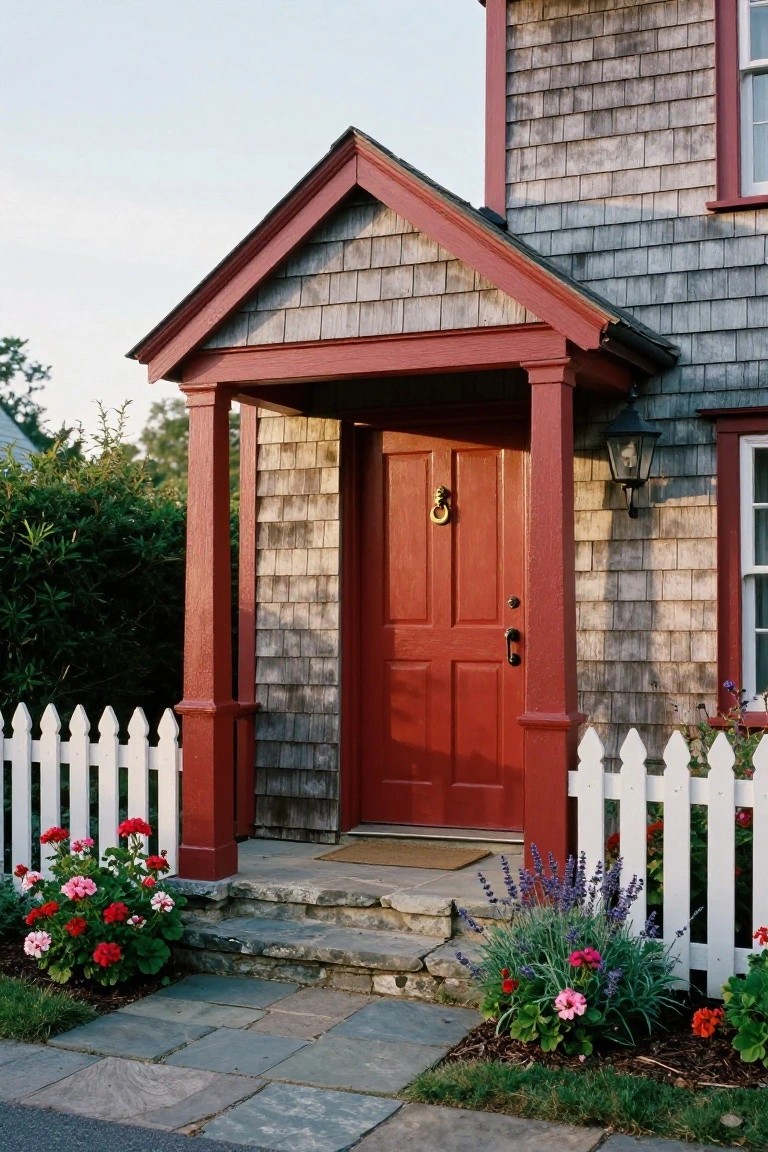
A simple gabled portico painted red on the trim and door stands out against gray cedar shingles. It pulls the eye straight to the entry and gives that classic Colonial feel. Flowers in the beds and a white picket fence keep things welcoming around the stone steps.
This look fits older homes in coastal areas or anywhere with traditional architecture. Paint just the portico elements red to contrast the siding, maybe add a lantern light. It boosts curb appeal on a budget… but pick a true red that won’t fade fast in the sun.
Classic Brick Arch Portico
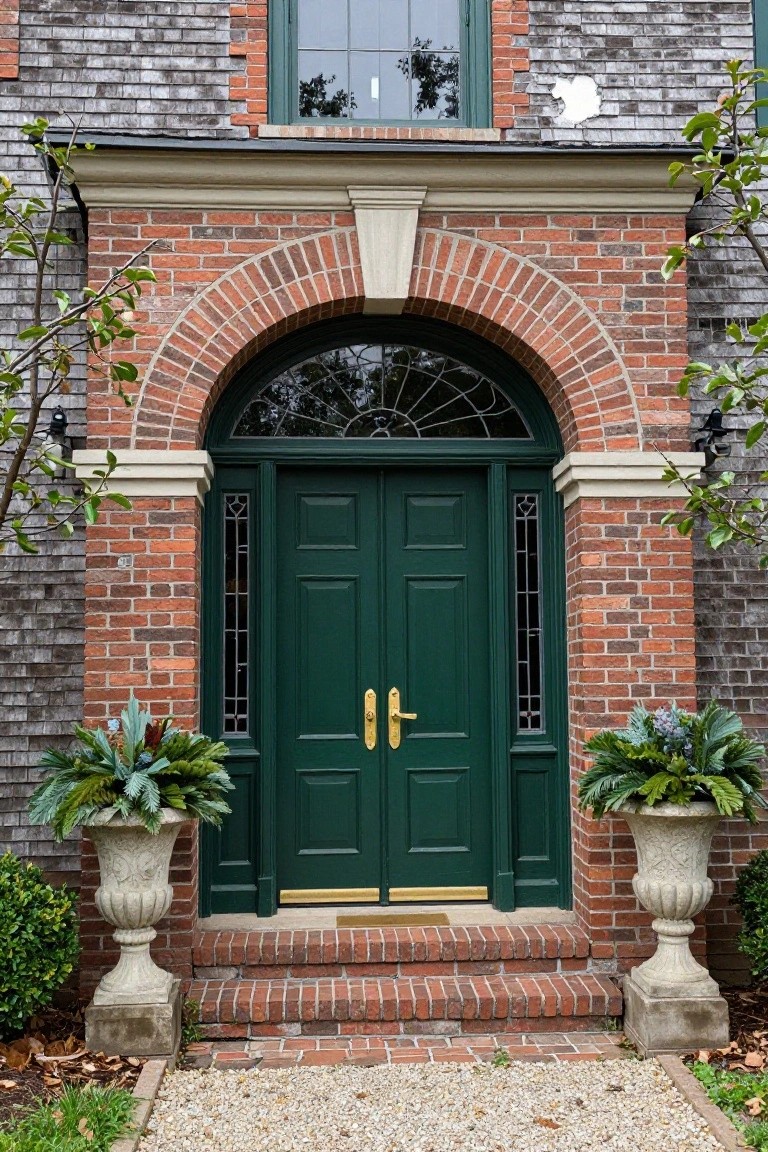
A brick arch over the front door makes a simple statement for colonial homes. It frames the entry like an old invitation, pulling the eye up to that curved top. Here the dark green double doors sit right under it, steady and formal, while matching brick ties into the side walls for a smooth look.
This kind of portico suits brick or shingle houses on a smaller lot. Center it over double doors for balance, and add urns with greens on the sides to soften things a bit. Skip fancy trim if you want it to stay straightforward. Works best where you want welcome without flash.
Symmetrical Columns Frame the Entry Door
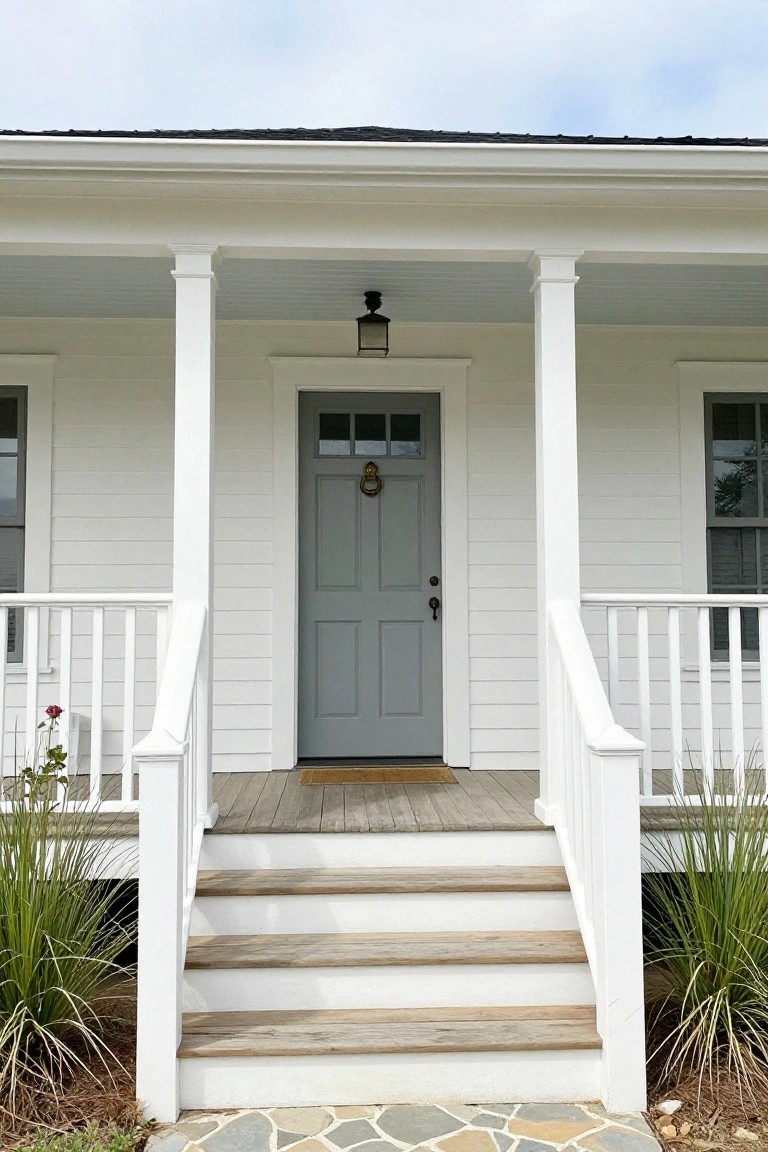
Tall white columns stand on each side of the front door here, pulling your eye right to the center of the house. The gray door pops nicely against all that white siding, and a simple brass knocker adds just a touch. It’s a straightforward way to give a colonial house that welcoming front porch feel.
This works great on ranch-style homes or cottages wanting more presence. Pair the columns with clapboard siding and keep the porch floor wood for a natural look. Skip heavy decorations. Let the symmetry do the talking.
Brick Portico with Fluted Columns
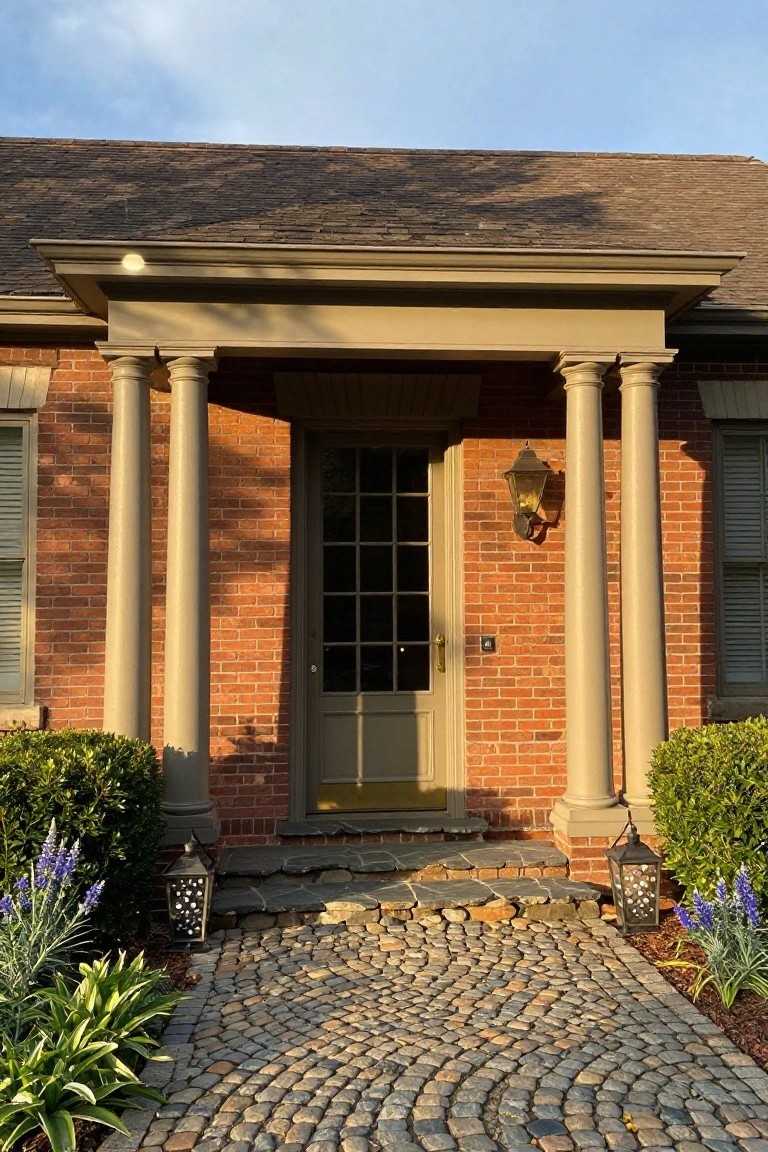
A classic brick house like this one gets a real boost from its simple portico setup. Those tall fluted columns in soft beige stand out against the warm brick walls, framing the entry just right. Add lanterns on each side, and you have that old-school welcome without overdoing it.
This kind of portico fits older homes in the suburbs or small towns, where you want grand without the fuss. Use it on colonial-style places with a green door like here, and run a cobblestone path up to the steps. Keep the columns painted to stay crisp, or let them weather for a softer look over time.
Classic Portico with White Columns
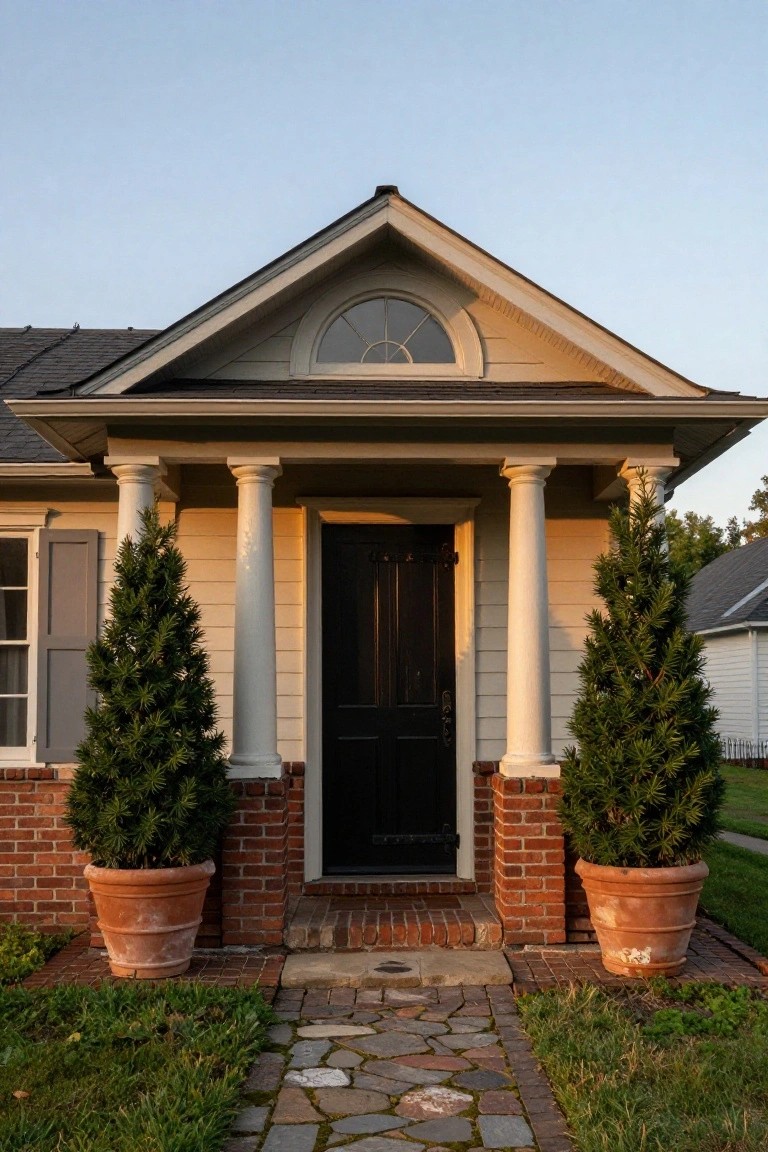
A simple portico like this one uses tall white columns to frame the front door just right. The columns stand on brick bases and hold up a small gabled roof with a fan window above. That setup makes the entry feel grand yet approachable, especially with the dark door pulling focus. It’s a nod to old colonial style that fits cozy homes.
You can pull this off on ranch or bungalow fronts too, as long as the columns match the house scale. Flank them with potted evergreens for balance, and run a casual stone path up to the door. Skip fancy lanterns if you want to keep costs down… just let the architecture do the talking.
Columned Portico Entryway
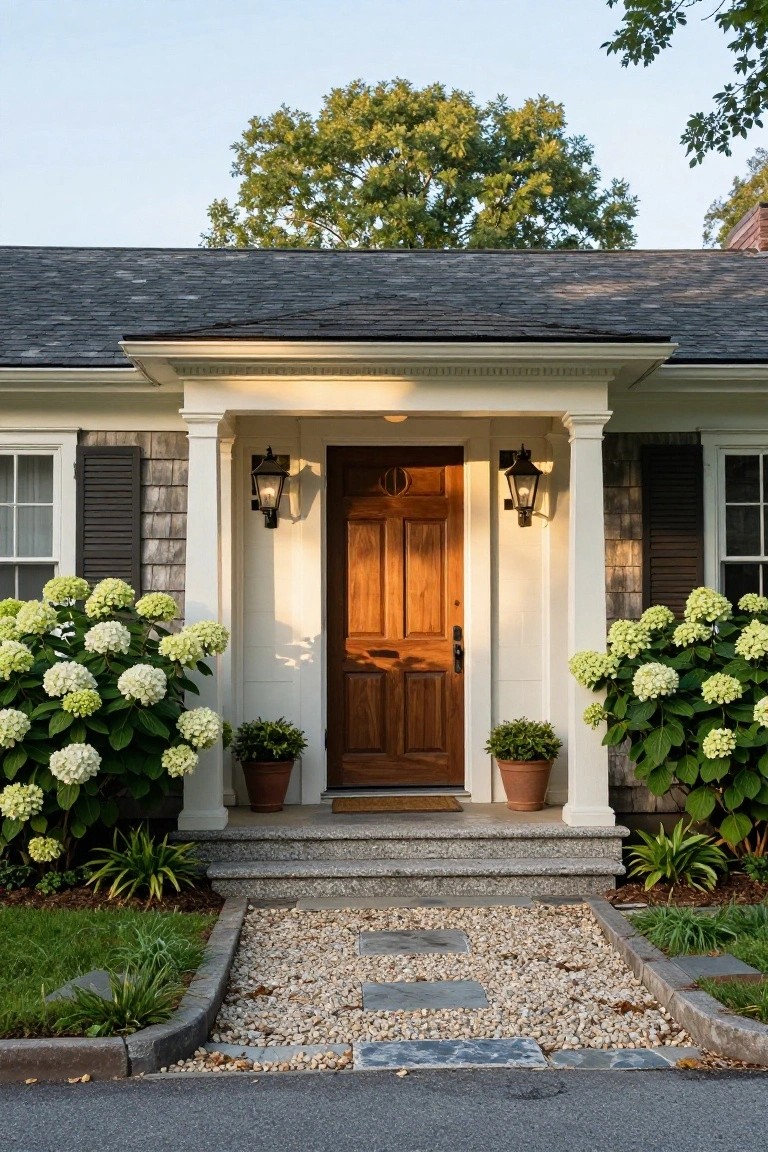
A simple white portico with tall columns gives this colonial house a formal front entrance that feels grand without trying too hard. The dark wooden door sits right in the center, and matching lanterns on each side add just enough light to make it welcoming at dusk. White hydrangeas planted symmetrically on both sides pull the eye in and soften the stone steps.
This setup works best on smaller homes where you want more presence at the door. It suits traditional neighborhoods or older houses getting a refresh. Keep the plants low enough not to block the columns, and stick to neutral colors so the architecture stays the focus.
Portico Entry with Flanking Urn Planters
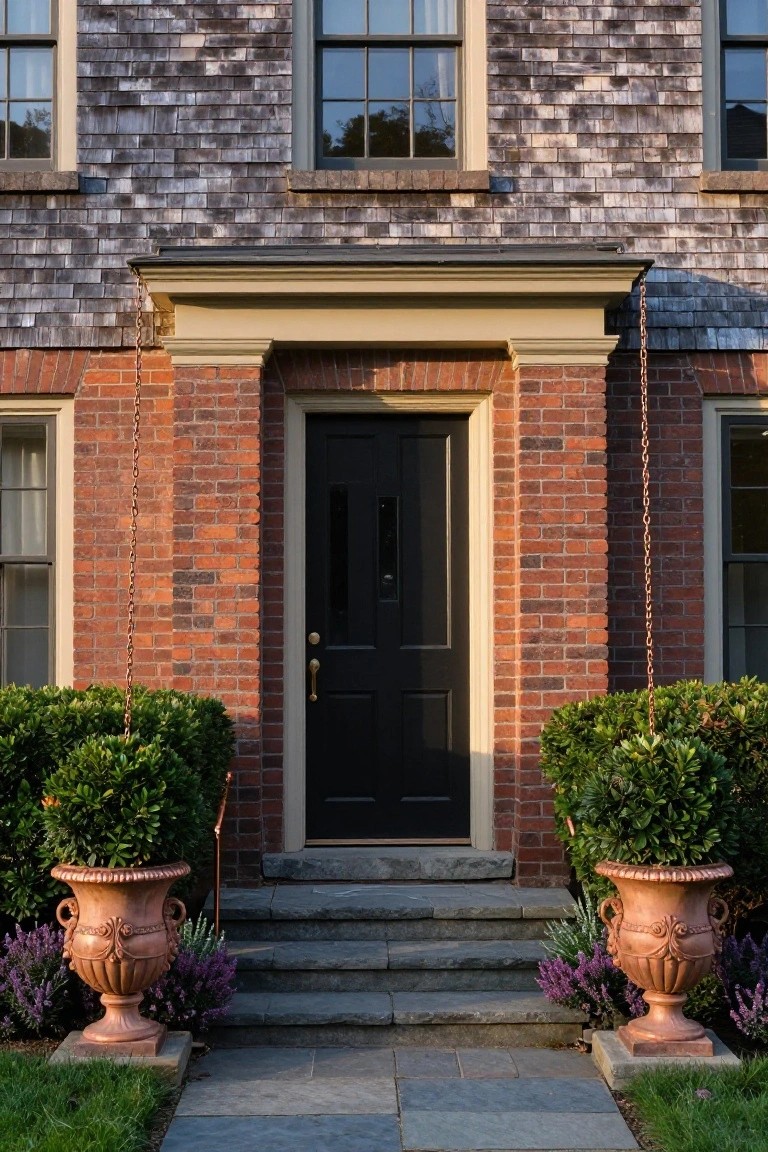
A classic way to make a colonial portico feel more grand is to place matching urn planters right at the base of the steps. These large terracotta pots filled with clipped boxwood topiaries stand tall on either side of the entry, giving the whole front a balanced, formal look. The copper patina on the urns picks up the chains running down from the portico roof, tying everything together without much fuss.
This setup works best on homes with brick or stone bases where you want some height and structure around the door. Go for evergreens like boxwood so they stay neat year-round, and keep the pots proportional to your steps, maybe two-thirds as tall. It suits traditional neighborhoods… just make sure the plants get enough sun or swap in something hardier if needed.
Frequently Asked Questions
Q: How do I nail the right size for my portico?
A: Start by measuring your front door width plus a foot or two on each side for cover. Check your home’s roofline height so the portico sits proportional and welcoming. Guests love stepping under something that feels just right.
Q: What material holds up best in rainy climates?
A: Cedar stands out because it naturally fights off moisture and bugs. Seal it with a good exterior stain from day one. You avoid rot headaches for years.
Q: Can I build a portico myself?
A: Skip DIY unless you swing a hammer daily. Pros get the angles and supports spot-on for safety. Your grand entry deserves that pro finish.
Q: How do I make my portico pop at night?
A: Hang lanterns from the ceiling or mount them on columns. Warm bulbs draw eyes right to the door. It turns your entry into a showstopper after dark.
