

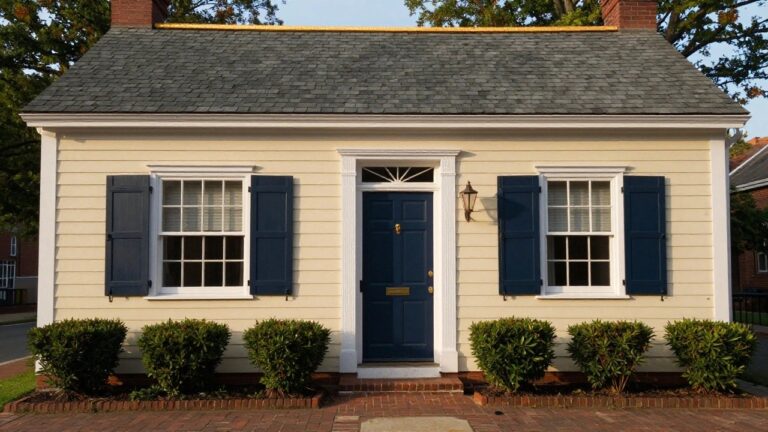
When you pull up to a Colonial house, the siding wraps the facade in a way that either grounds the symmetry or leaves it feeling flat. Wood options like beveled lap or shingle styles add that subtle depth, softening rooflines and drawing attention to the entry without overwhelming the clean lines. I saw this play out on a friend’s reno, where they chose vertical paneling that picked up the brick chimney’s warmth and made the whole street view pop. Folks usually spot the siding texture first as they approach, especially how it shifts with sunlight or seasons. A handful of these patterns feel right for testing on your own place, blending authenticity with upkeep that lasts.
Pale Yellow Wood Siding with Blue Door Contrast
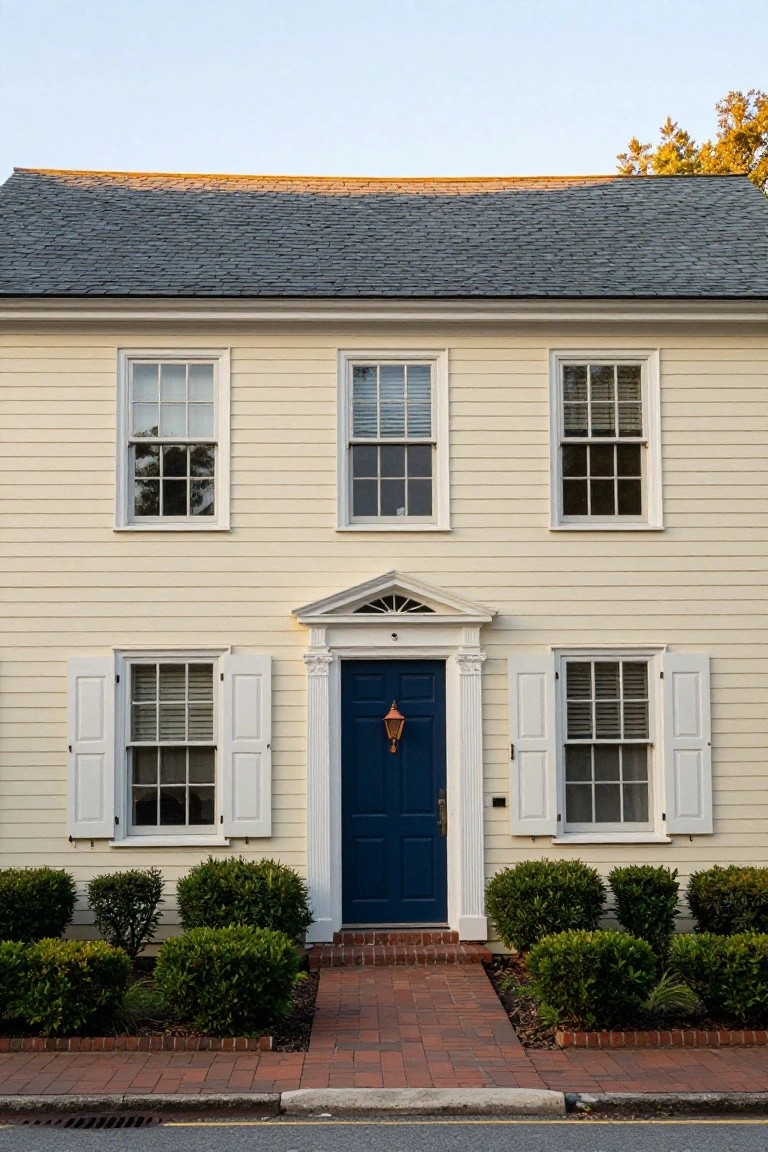
Pale yellow wood siding gives a colonial house that soft, authentic warmth without feeling too bright. It works well on these classic facades because the light color picks up the sun and makes the home feel welcoming from the street. Pair it with a navy blue front door, and you get a simple pop of color that draws the eye right to the entry without overwhelming the look.
This setup suits older neighborhoods or traditional homes where you want curb appeal that lasts. Use clapboard siding like this on a two-story colonial, keep windows symmetrically placed, and add boxwoods along the walk for balance. Just make sure the yellow isn’t too creamy, or it can look dated, stick to a buttery tone instead.
Classic Red Clapboard Siding
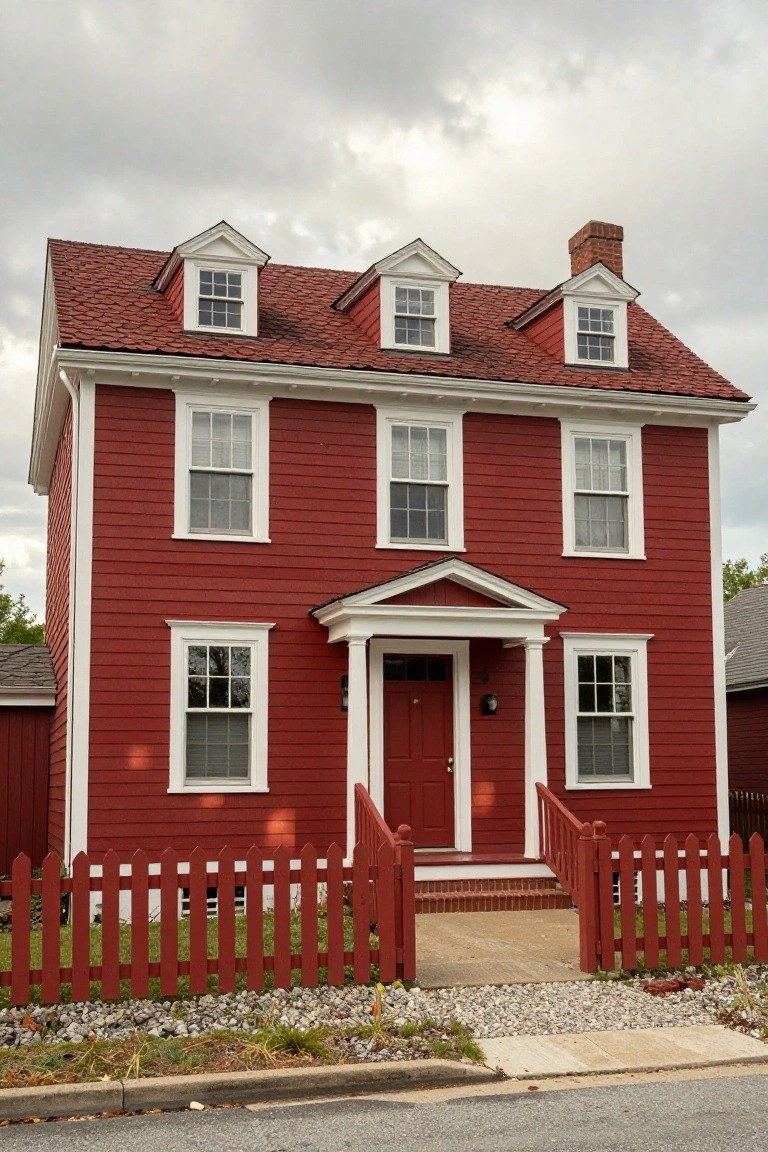
A deep red clapboard siding like this one gives a colonial house that authentic warmth folks remember from older neighborhoods. The color pops against white trim on the windows and entry, making the whole facade feel lively yet settled. It ties right into the gabled roof and dormers without overpowering them.
This look suits two-story colonials in suburban spots or small towns. Paint fresh cedar or pine siding in a quality exterior red, then add white accents for contrast. A matching picket fence out front pulls it together nicely. Just seal everything well to handle weather over time.
Weathered Shingle Siding for Colonial Charm
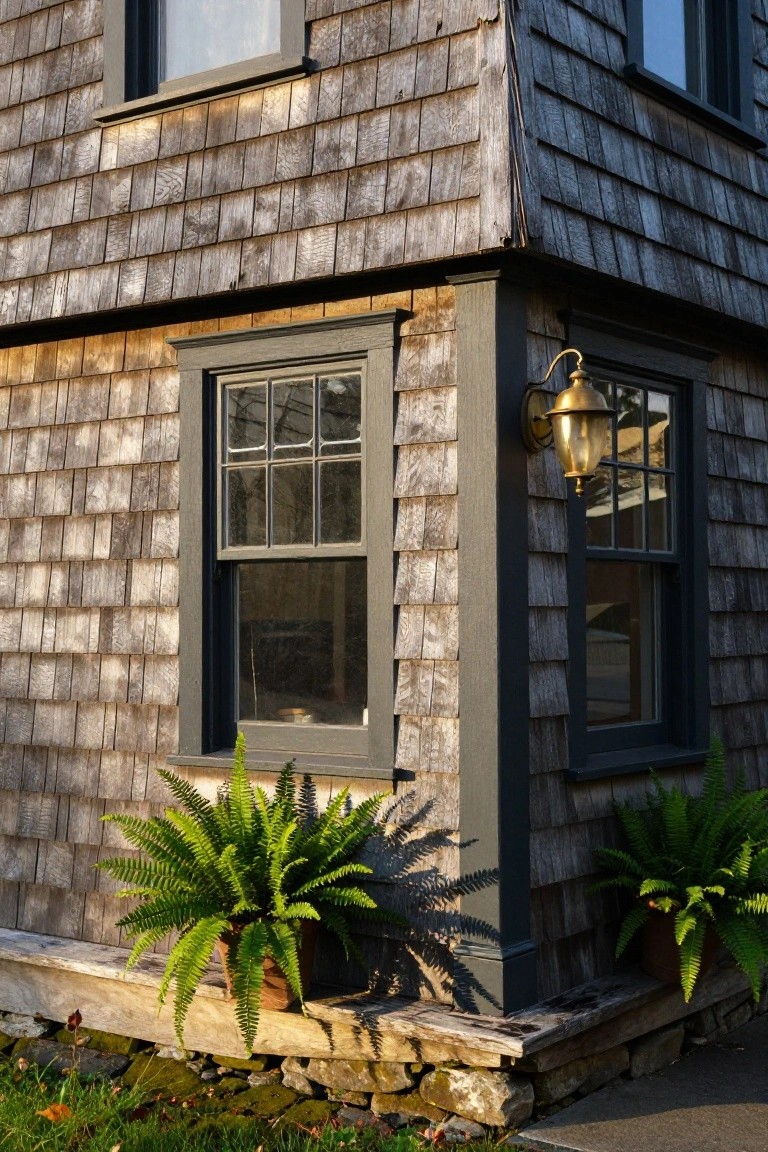
Weathered shingle siding gives a Colonial house that settled-in feel right away. The wood takes on a soft gray patina over time, from sun and rain, and it just works with the style’s simple lines. Here the shingles wrap a corner with dark frames on the multipane windows, looking sturdy but easy on the eyes.
This siding fits older homes in New England or coastal spots where wood holds up well. Lay it over the upper walls, keep a stone base underneath, and tuck in potted ferns along the edge. Skip fresh stain… let it age naturally for real warmth.
Recommended Products

Patented PanelThermometer for precise installation True Texture finish

True Net Installed Coverage (3.63 Sq. Ft.): Unlike sellers who only list gross panel size, we provide the actual net coverage of 3.63 sq. ft. per panel, excluding the interlocking tabs. This ensures 100% accuracy for your project calculations. Each lightweight PU panel measures $46.63" imes 12.5"$, making it easy to handle for professional results.

Optimal Size & Fit: the overall opening size of 17 x 23 inches, combined with a duct opening of 12 x 18 inches, makes these vents a versatile choice for any standard installation. Their dimensions are thoughtfully designed to seamlessly integrate with both new constructions and home renovations
Colonial Porch with Sage Green Siding
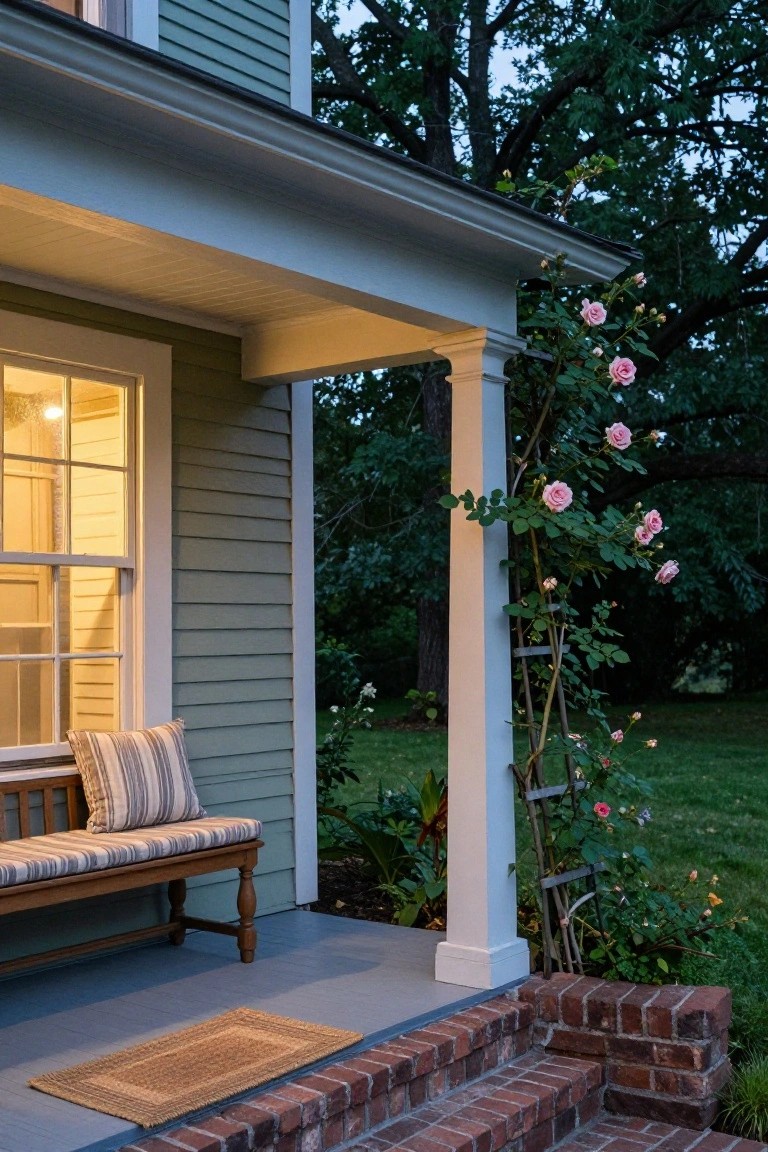
Wood siding painted in a soft sage green gives this colonial porch a gentle warmth that feels right at home in an older neighborhood. The color picks up on the surrounding trees and garden without overpowering the architecture. It works because it tones down the usual stark whites or grays, making the house look lived-in and approachable right from the street. That lit window inside peeks through just enough to hint at comfort.
Try this shade on homes with good porch columns and trim details. It suits Craftsman or older colonial styles where you want curb appeal without a lot of fuss. Pair it with climbing roses on the posts like here, and a simple bench for seating. Just keep up with repainting every few years to hold the color against weather.
Shingle Siding on the Gable End
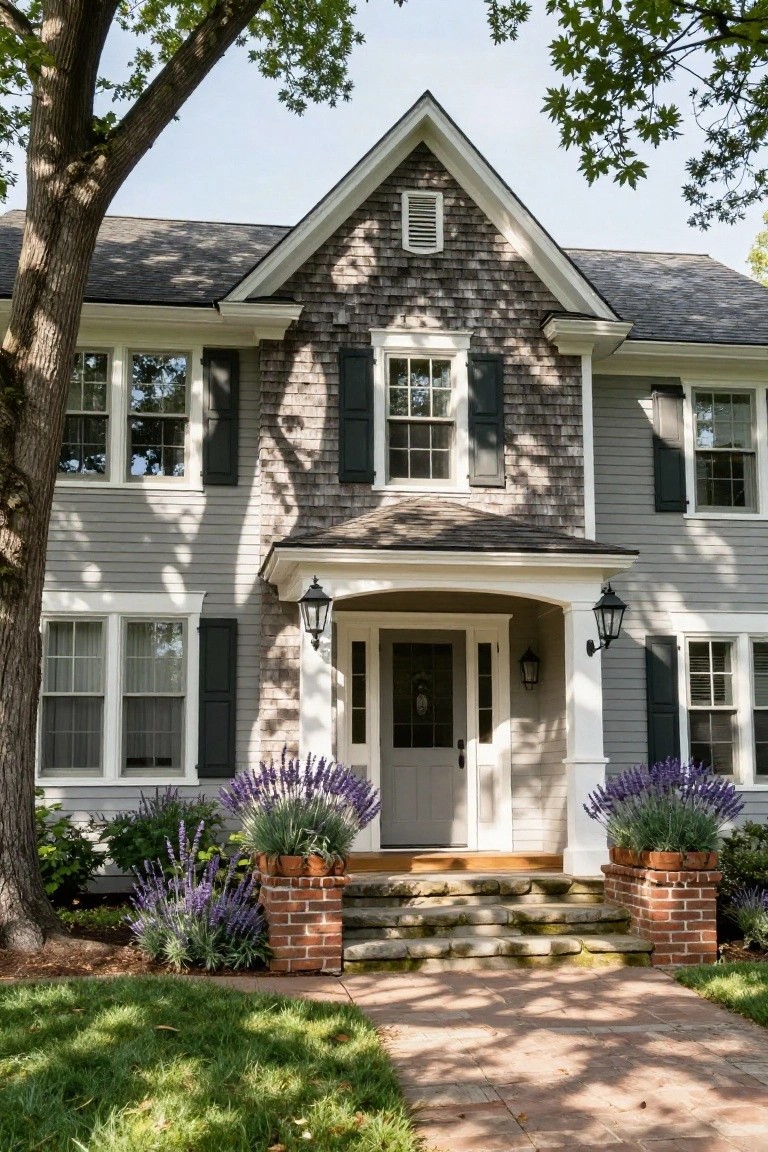
Shingle siding up on the gable gives this Colonial house a nice bit of texture right where you notice it first. The gray shingles mix well with the smoother clapboard lower down, keeping things interesting without overdoing it. That upper contrast pulls the eye up to the roofline and makes the whole front feel more layered, like older seaside homes.
You can pull this off on most two-story Colonials, especially if your main siding is horizontal boards. Stick to muted grays or blues for the shingles to blend in. Just make sure the transition at the trim is clean, or it might look patched together. Works great with a simple porch like this one.
Light Gray Clapboard Siding on a Colonial Home
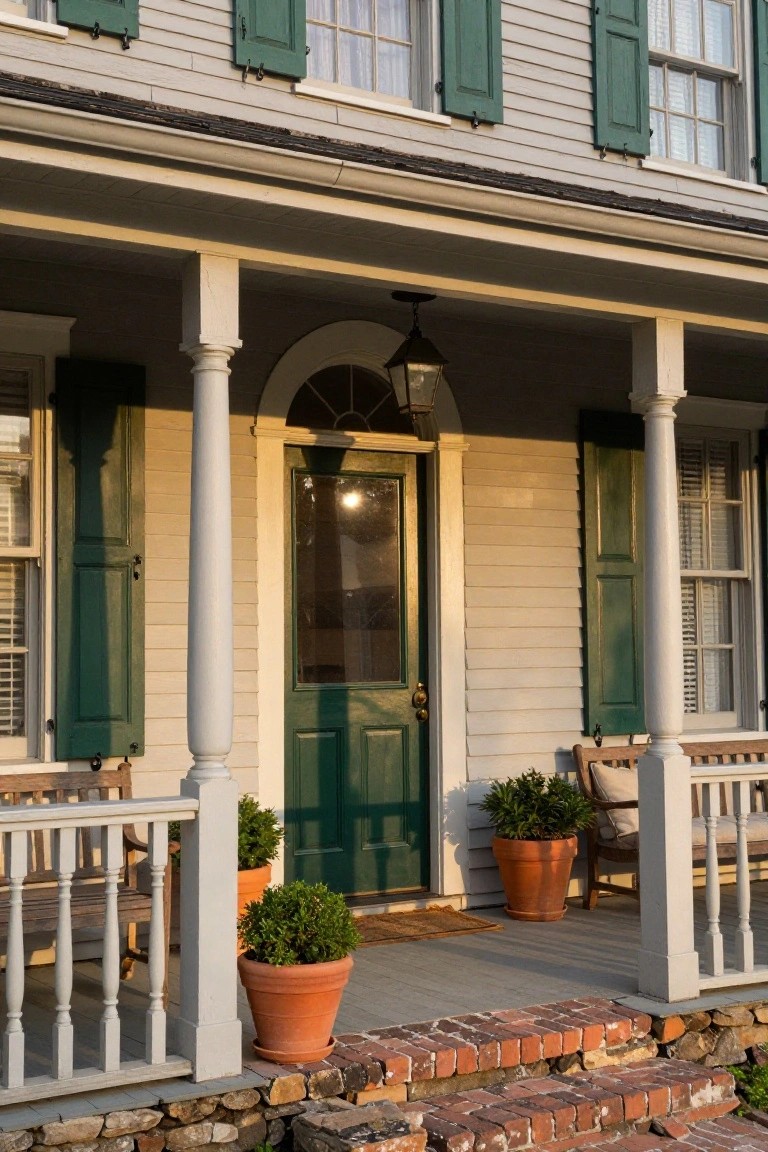
A soft, weathered gray clapboard siding like this one brings real warmth to a colonial exterior. It picks up on the natural patina of aged wood without going too dark or stark. Paired with those green shutters and a matching front door, the whole facade feels settled and lived-in right away.
This look suits older homes or new builds aiming for that authentic colonial style. Stick it on houses with a front porch to let the siding wrap around the columns and benches. Just keep the trim white or cream to let the gray shine, and add a few pots out front for extra life.
Pale Yellow Wood Siding on a Colonial Porch
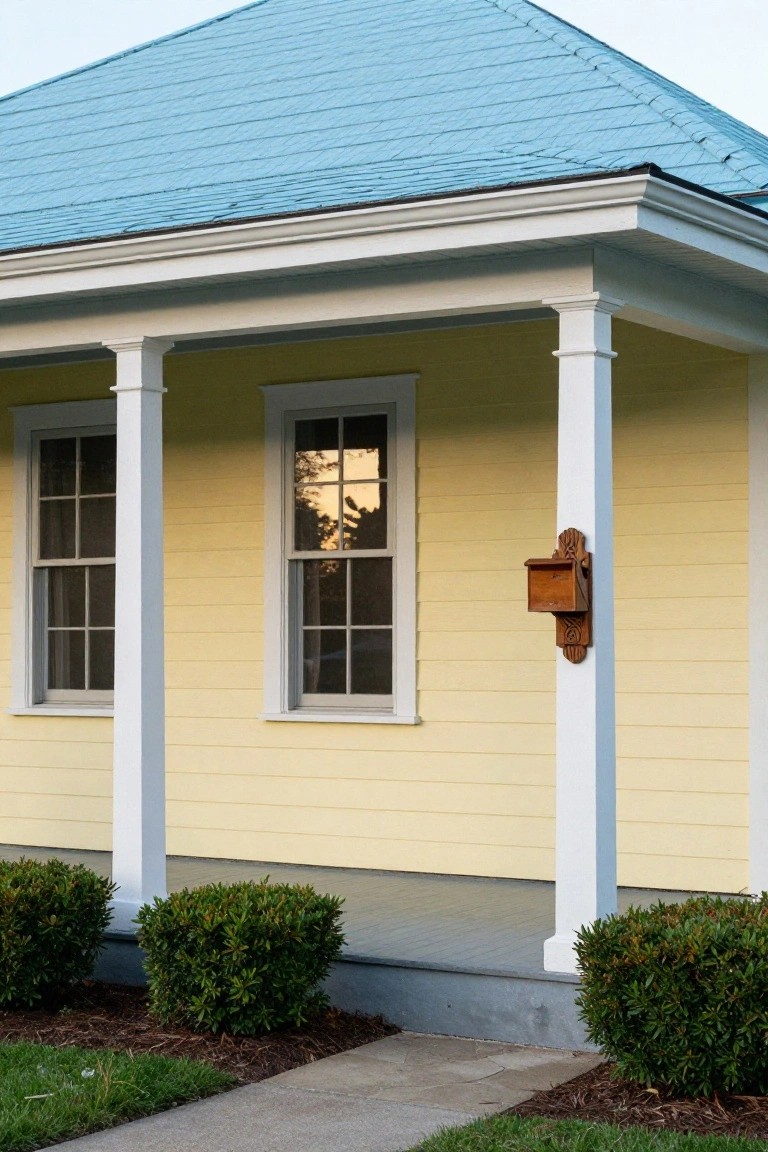
Pale yellow wood siding gives a Colonial home that soft, welcoming glow without going too bright. It picks up the warmth of sunlight and settles nicely against white trim and columns. Here, the buttery shade on horizontal clapboards looks right at home on this porch side, with simple double-hung windows letting light play across the surface.
This color works best on homes with clean lines and porches, especially facing south or west where the sun hits. Pair it with white columns for contrast that keeps things crisp. Steer clear of super glossy finishes, though. A satin or semi-gloss lets the wood breathe and age naturally over time.
Weathered Wood Siding Over White Clapboard
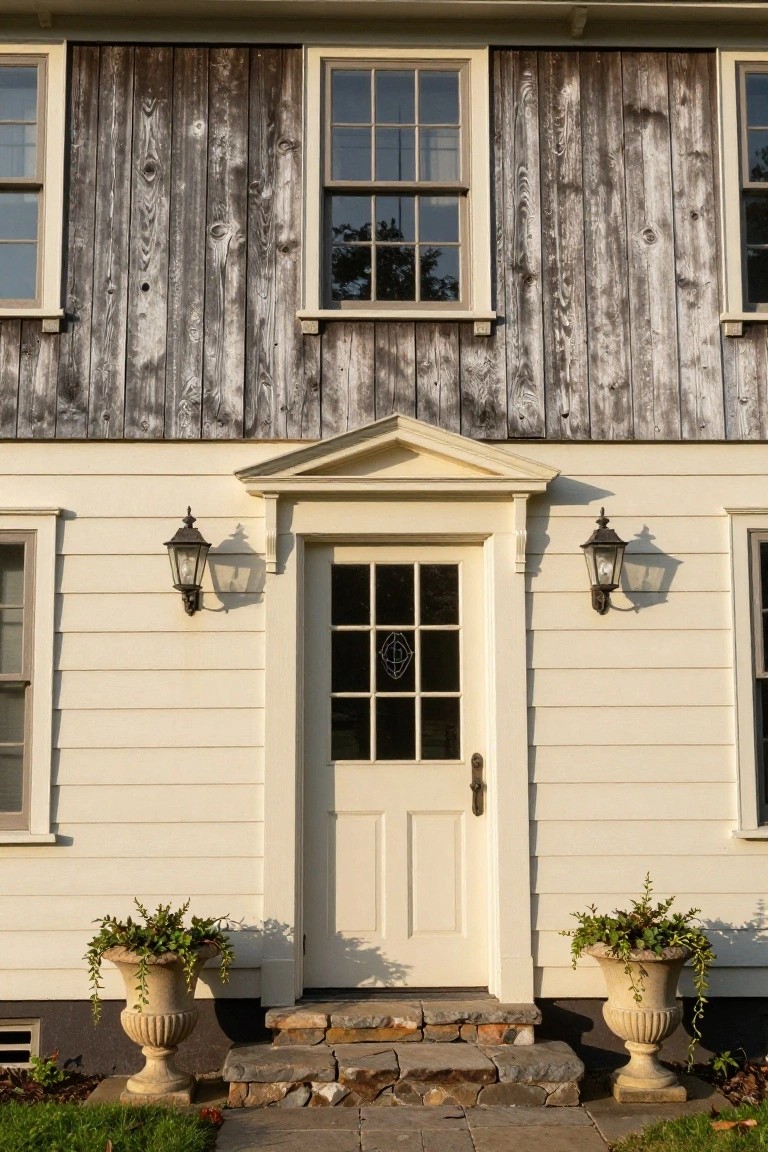
One straightforward way to add real character to a colonial exterior is layering different siding types like this. The upper gable uses dark, aged vertical boards that look like they’ve been there for generations. Below that, smooth white clapboard keeps things clean and bright. That mix gives the house a settled-in feel without trying too hard.
It works best on homes with a classic gable front, especially if you want some texture up high to draw the eye. Pair it with simple lanterns by the door and urns on the steps, like here, to frame the entry nicely. Just make sure the wood is sealed against weather, or it’ll age faster than you might like.
Copper Downspouts on Colonial Brick and Wood Houses
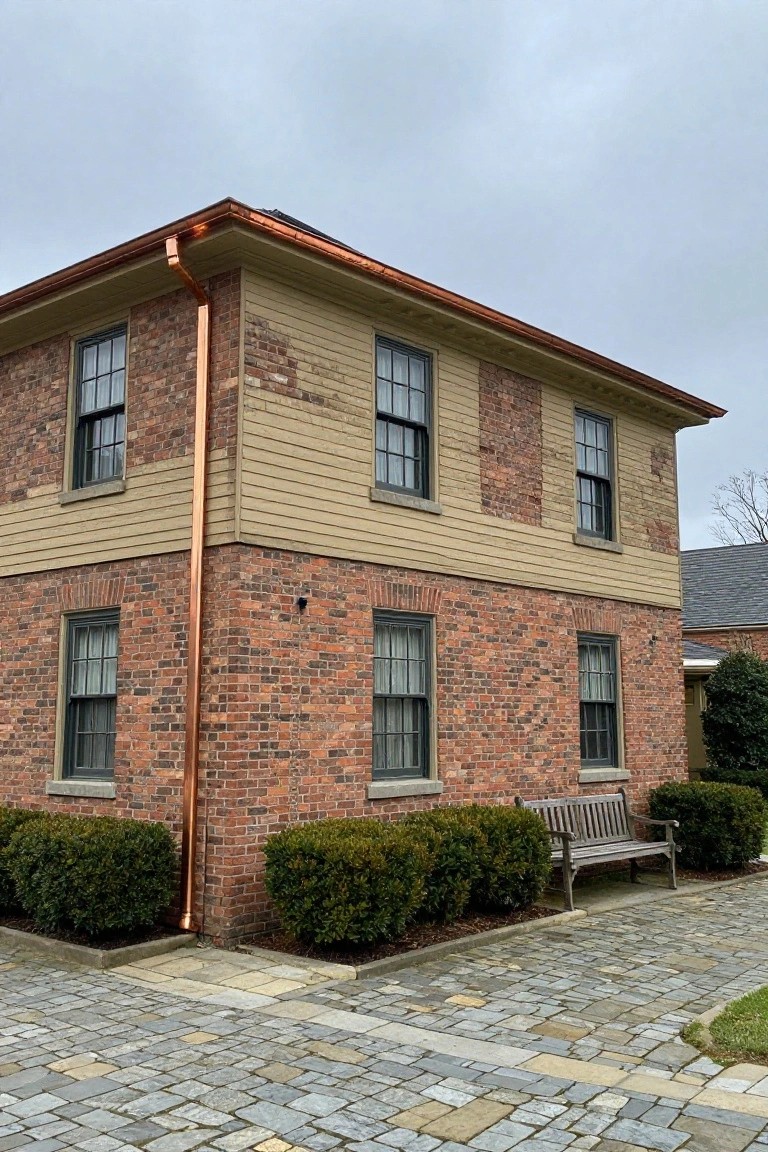
Copper downspouts running the full height of the house catch the eye here. They work well against the brick base and light wood siding. Over time that copper gets a green patina. It fits right into the colonial style without trying too hard.
You see this on older homes around the Northeast a lot. It suits brick and clapboard combos best. Make sure the copper is half-round or simple to keep things traditional. They handle rain well too. Just clean them now and then so they age nicely.
Open Shutters Frame the Entry Door
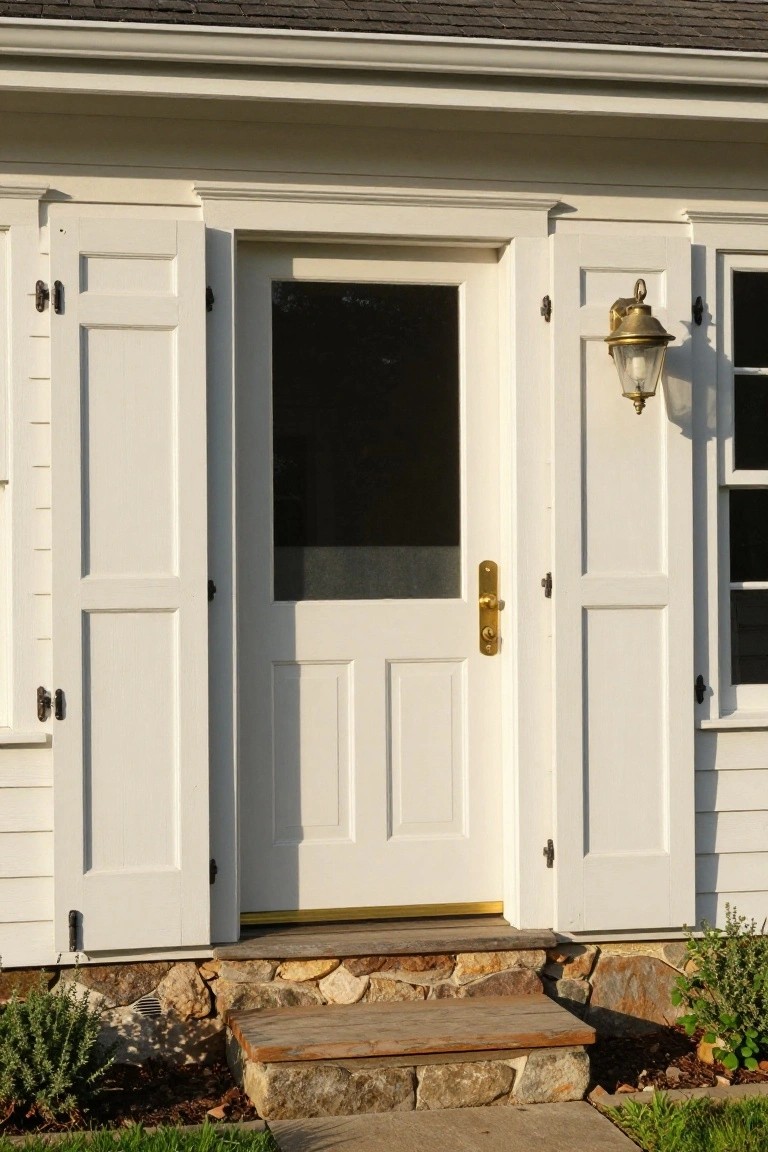
One straightforward way to add real Colonial character to a wood-sided house is to pull back louvered shutters from the front door. In this setup, the open white shutters sit right beside the matching paneled door and its glass panels. That symmetry draws folks right up the steps. It keeps things balanced and homey, especially with brass hardware catching the light.
This idea fits older homes with clapboard or board-and-batten siding. Hang the shutters so they actually work, or keep them decorative if that’s easier. Pair with stone steps for a grounded feel. Just match the wood tones so nothing fights.
Shingled Gables on Gray Wood Siding
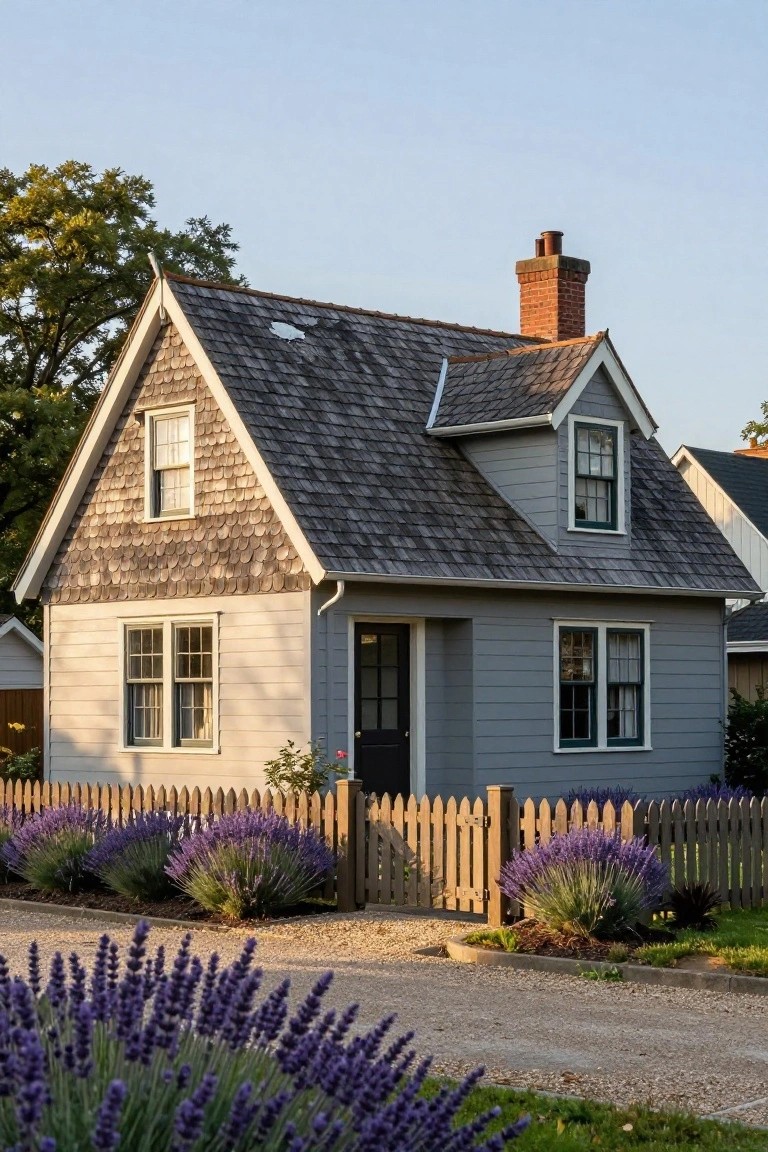
Wood shingles on the gables and roof bring real texture to this gray clapboard siding. It gives the Colonial style a bit more depth, like those old coastal homes you see. The soft gray keeps it calm, and the shingles add that natural warmth without overdoing it.
Try this on a smaller cottage or starter home where you want classic looks on a budget. It pairs well with a gravel path and low plants like lavender out front. Just make sure the shingles match the siding grain so it all blends right.
Classic White Siding with Navy Shutters
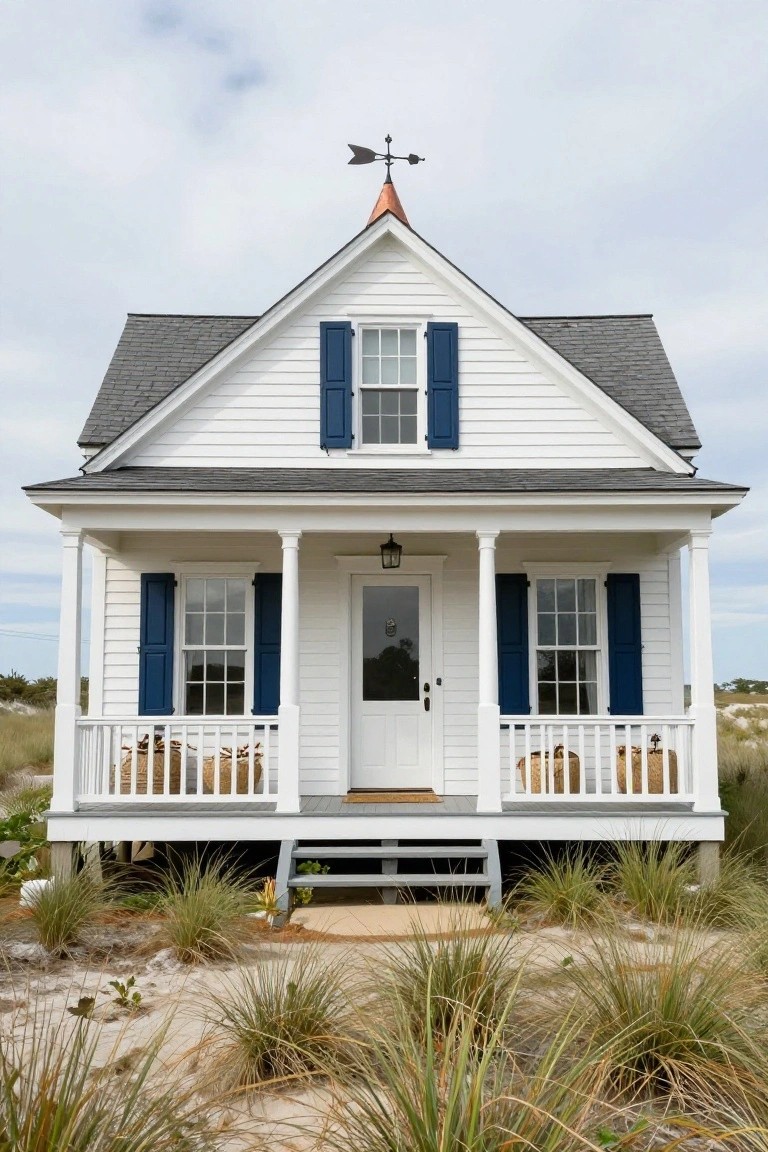
White clapboard siding keeps things simple and clean on this little colonial house. Navy shutters on the windows and porch give a strong pop of color that pulls your eye right to the front door. The look feels right at home on the coast, with that raised foundation blending into the dunes.
You can pull this off on compact homes or vacation spots where wood siding adds a bit of honest warmth. Stick to smooth lap siding for easy upkeep, and match the shutters to porch posts if you have them. It suits salt-air spots best, but watch for peeling paint if you’re not near the water.
Red Wood Shingle Siding
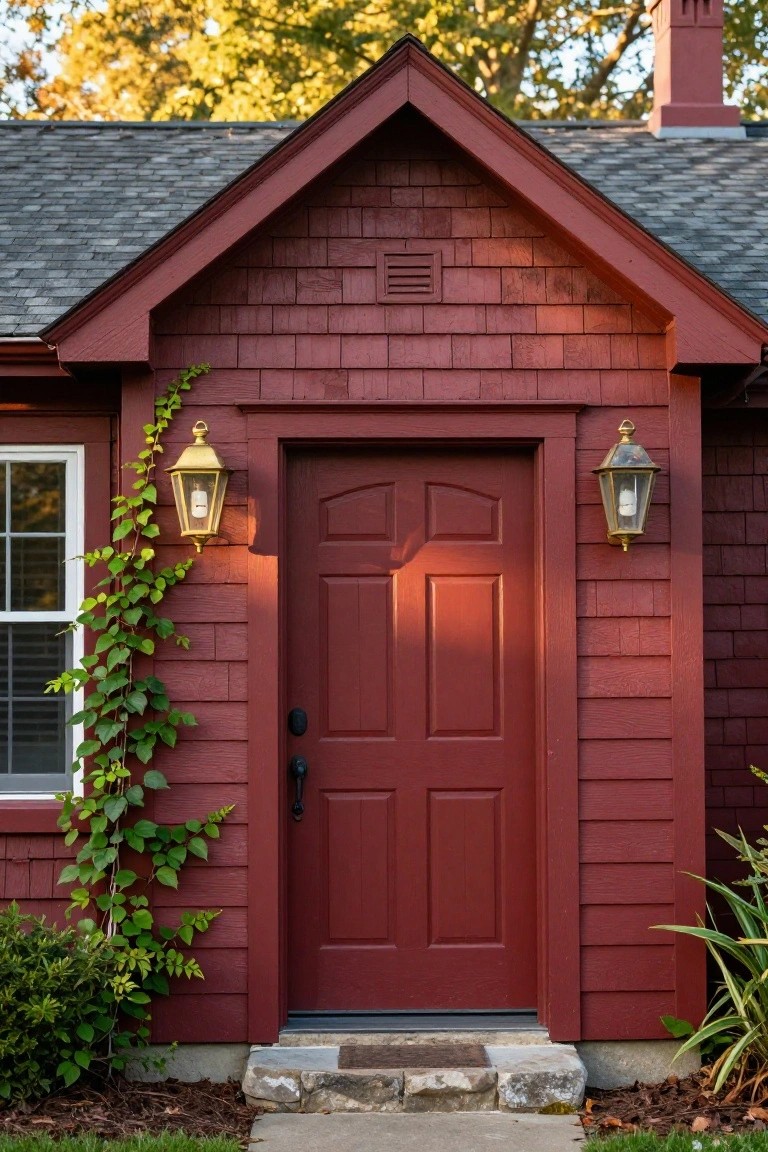
Red wood shingle siding like this gives a colonial house that honest warmth folks have always liked. The deep red stain on the shakes catches the light just right, making the entry feel solid and lived-in. Pair it with a matching door and those old-style lanterns, and you get curb appeal without trying too hard.
This look fits smaller homes or additions where you want a nod to tradition. Stain the shingles yourself for the color you need, and let ivy climb one side for a natural frame. It holds up in cooler climates… just keep the stain fresh every few years.
Gray Wood Siding on Colonial Homes
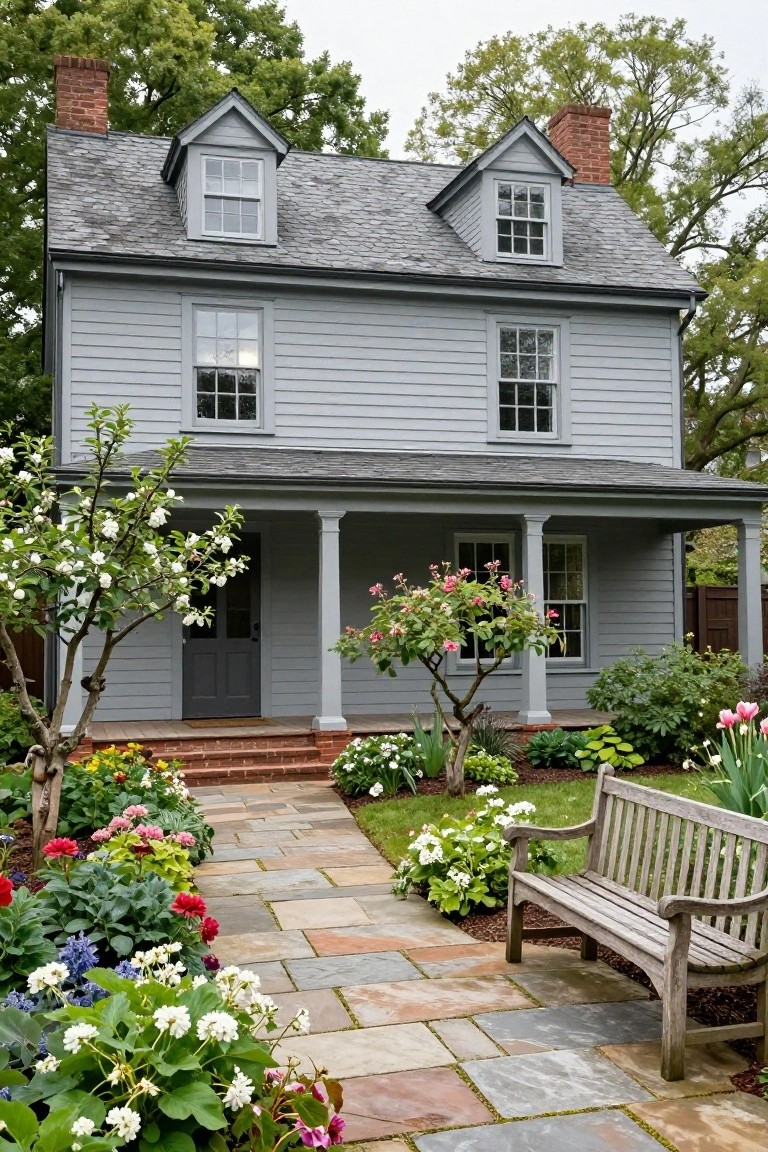
A soft gray paint on wood clapboard siding gives this colonial house a calm, lived-in feel that fits right into its surroundings. The color picks up the quiet tones of the trees and sky without stealing the show from the simple roofline or porch columns. It keeps things looking fresh yet true to the original style.
This approach works best on two-story colonials with some brick details, like the chimney here. Pick a gray with a bit of blue undertone for shade variation through the day. It holds up well around gardens too, blending the house into the yard instead of standing out too much.
Warm Tan Wood Siding
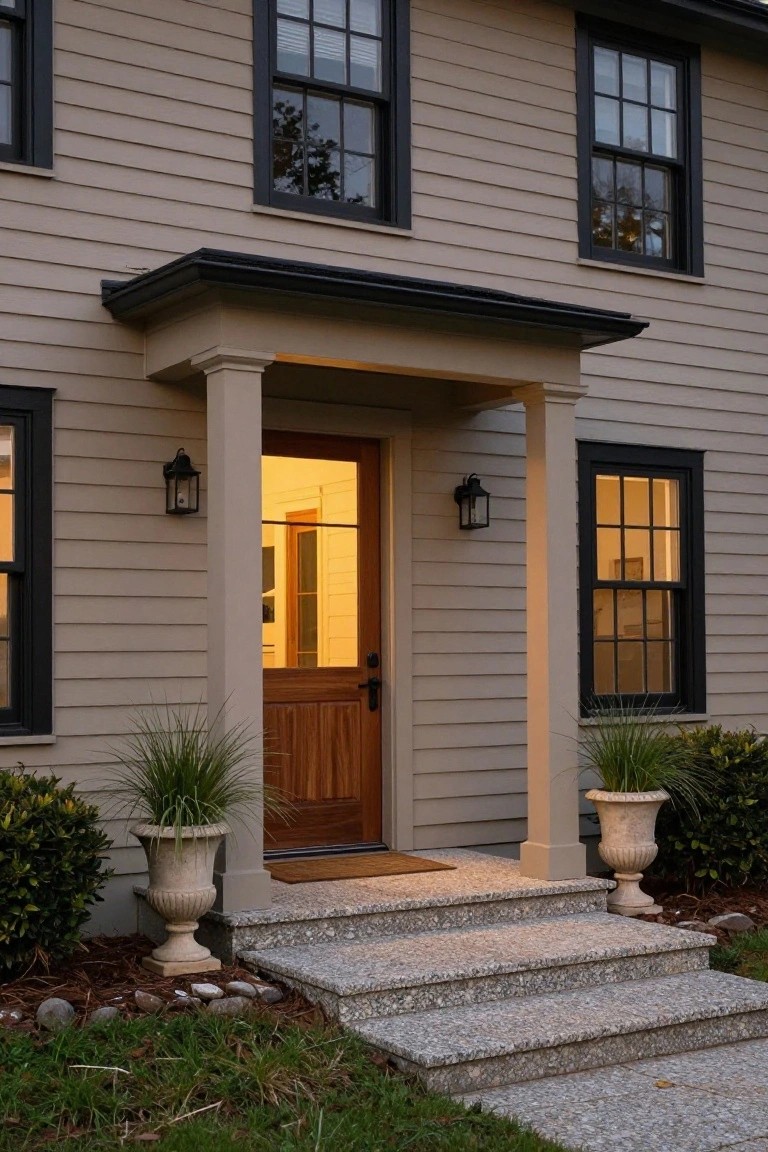
A soft tan wood siding like this one brings real warmth to Colonial exteriors. It softens the lines of the house without losing that classic shape. Black frames around the windows stand out nice and clean, while the siding keeps everything feeling approachable and lived-in.
This look fits older neighborhoods or rural spots where you want curb appeal that lasts. Go for it on two-story homes with simple porches. Just match the wood door and add lanterns out front. Keeps maintenance low if you seal it right.
Classic White Clapboard Siding on a Colonial Facade
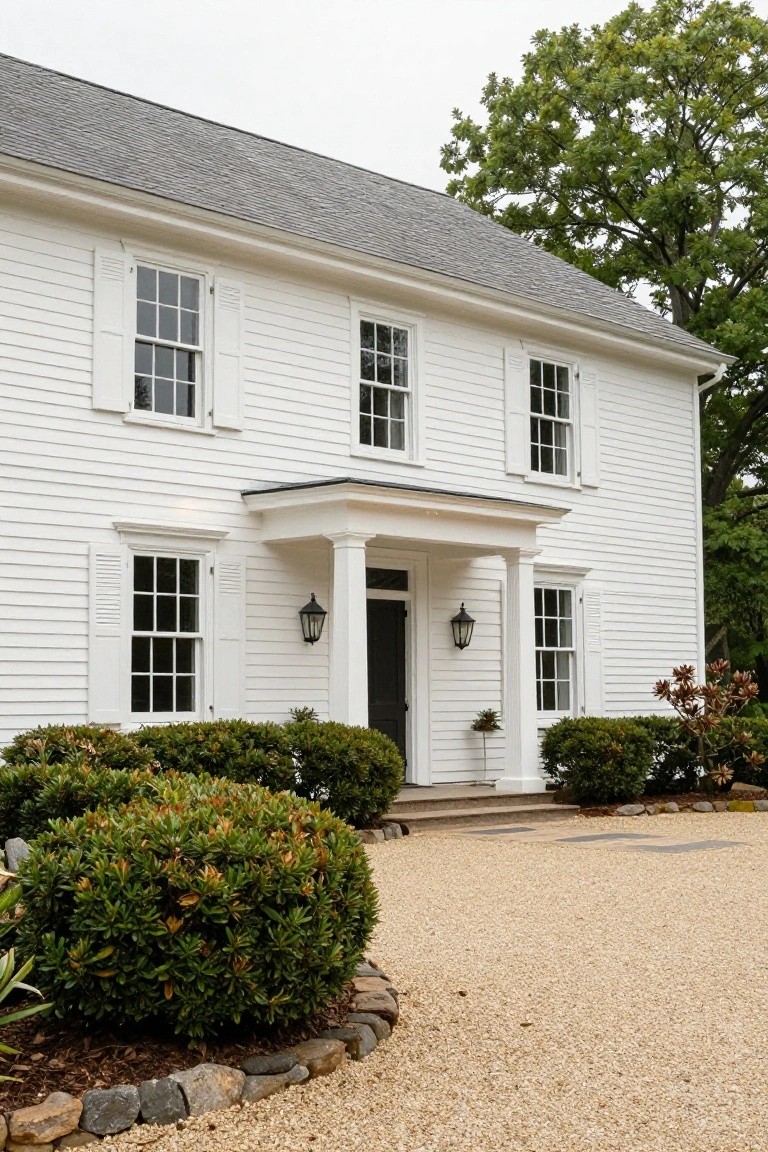
White clapboard siding like this gives a colonial house that real sense of history and warmth. It’s painted a clean, bright white that makes the whole front feel fresh yet settled in. The horizontal boards catch the light just right, and pairing it with a simple columned portico keeps everything balanced and welcoming.
This look suits older homes or new builds aiming for tradition, especially where you want low-key curb appeal. Go for quality wood or fiber cement that mimics it, then add boxwoods at the base for some green without overwhelming. Watch the trim paint though. Keep it the same white to avoid busyness.
Black Trim on Light Gray Siding
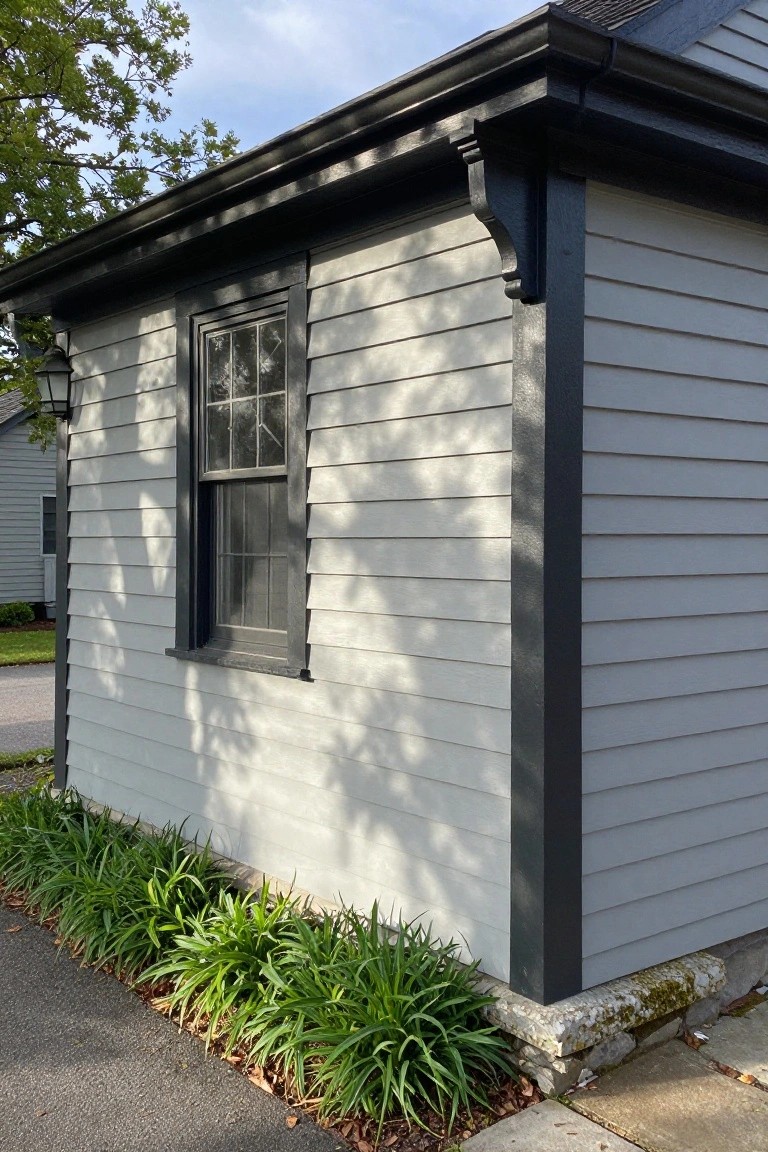
One straightforward way to give wood siding some punch is black trim against a pale gray base. Here, the siding stays soft and light, almost like a weathered clapboard, while black lines the windows, eaves, and corners. That sharp contrast pulls out the house’s shape. It feels rooted in older Colonial homes, adding definition without much fuss.
You can pull this off on most traditional houses, especially ones with gabled roofs or brackets like these. Go for semi-gloss black paint on the trim to handle weather better. Keep landscaping low around the base, say with hostas or similar plants. It won’t suit super sleek modern builds… stick to classics.
Classic Shingle Siding Entry
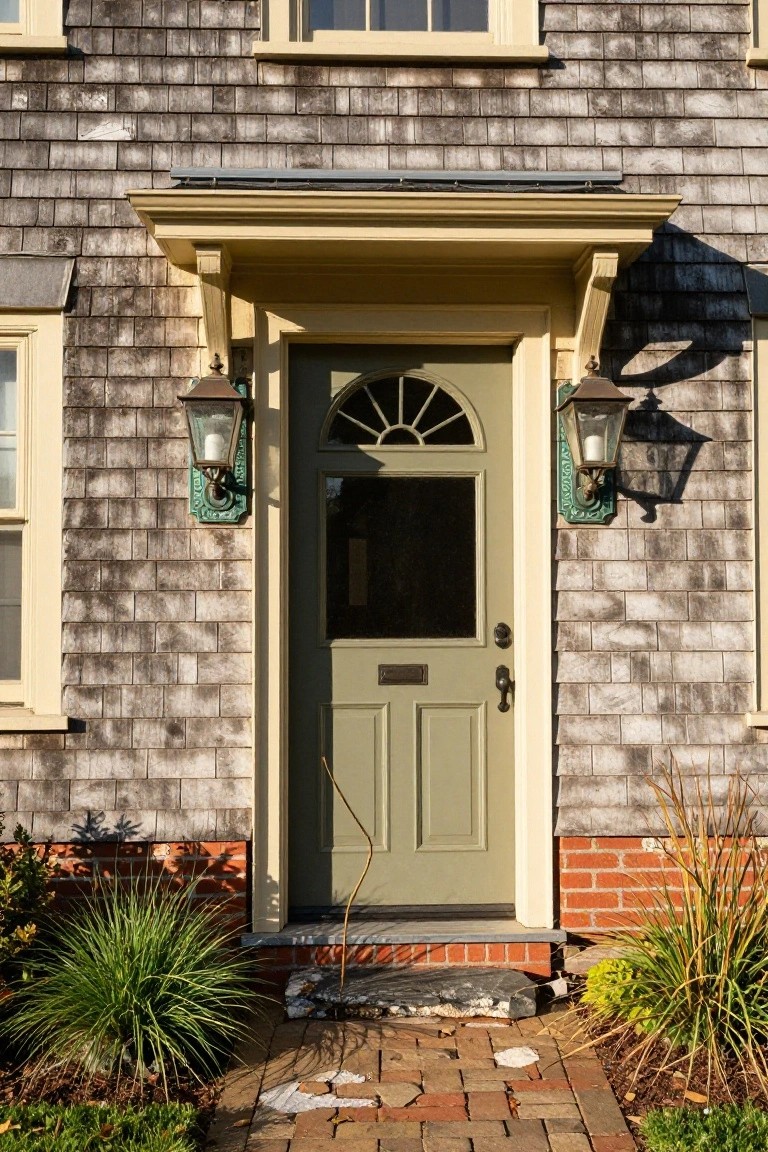
Wood shingle siding wraps this Colonial front like it belongs there. The gray tones pick up the weathered look that fits older homes, and it frames the door just right. Brass lanterns on either side add a steady glow without overdoing it.
This setup suits homes in coastal spots or anywhere with a nod to New England style. Use medium-gray shingles on the main facade, then yellow trim to brighten things up. A simple green door keeps it grounded. Let the shingles age naturally for honest warmth.
Navy Shutters Framing a Black Colonial Door
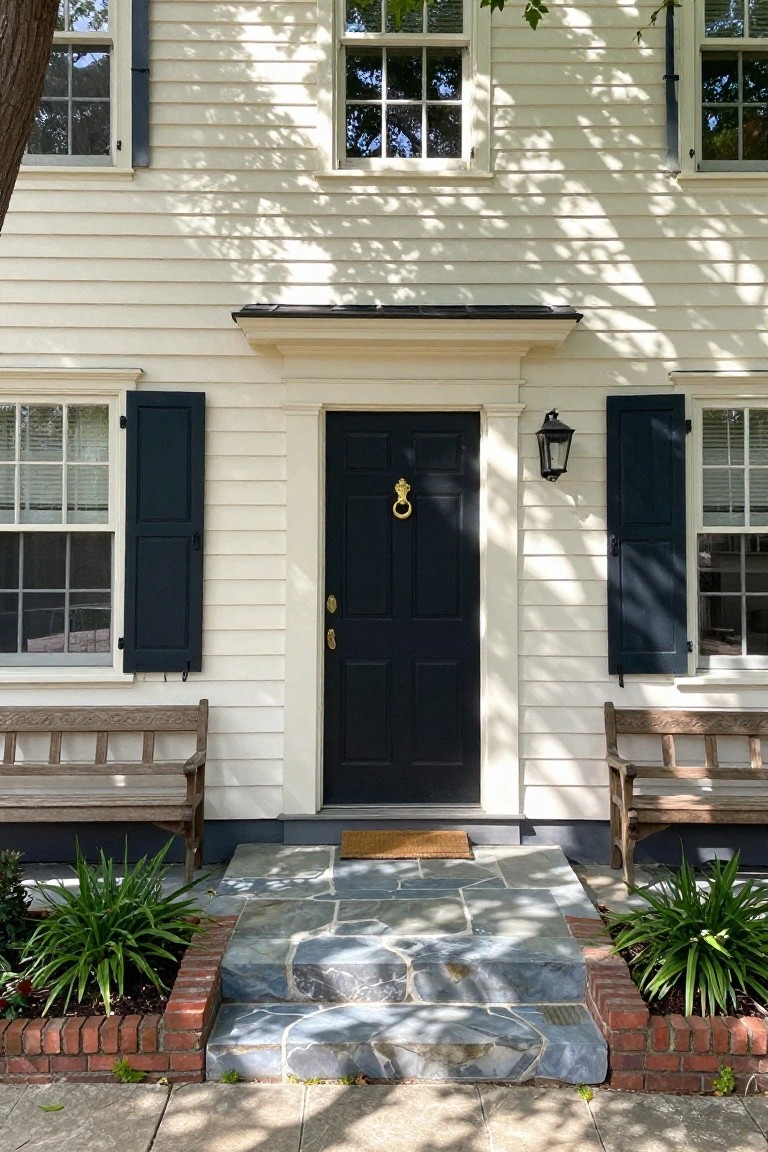
A black front door with a brass knocker sits right in the center of this white wood-sided house. Navy blue shutters on either side pull your eye straight to it. That simple contrast keeps the look clean and pulls from old-school colonial style. It makes the entry feel solid and welcoming without any fuss.
This works well on clapboard siding homes that need a bit more punch up front. Pair it with plain wooden benches like these for extra seating. It suits most neighborhoods, especially where you want warmth that lasts. Keep the door freshly painted and hardware polished to avoid a tired look.
Classic Shingle Siding on Colonial Homes
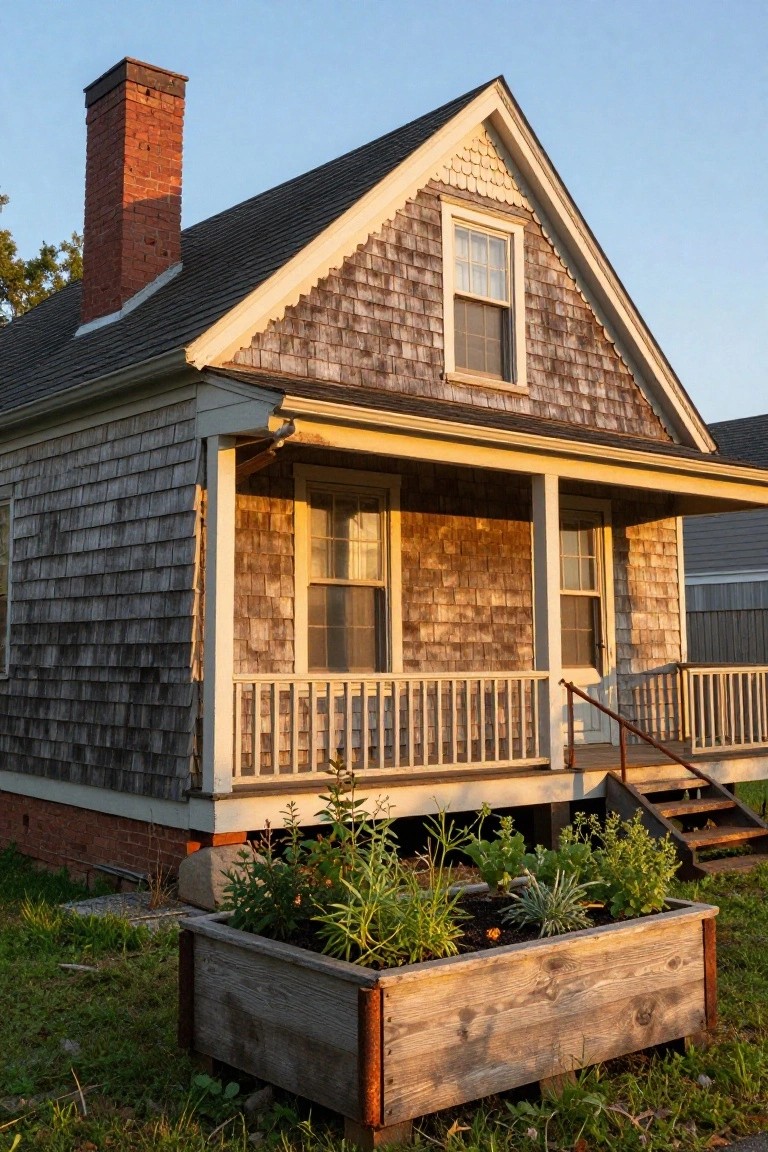
Shingle siding covers this colonial house in a way that feels right for the style. The wood shakes have that natural weathered patina, which brings out warmth against the crisp white trim and yellow porch. It keeps things authentic without looking brand new.
You can pull this off on modest homes with gabled roofs and front porches. Stick to cedar or similar wood for the siding, and let it age naturally. Add a brick base or chimney for balance, and keep landscaping simple like that planter box out front. It suits coastal or older neighborhoods best.
Soft Gray Wood Siding on a Colonial Facade
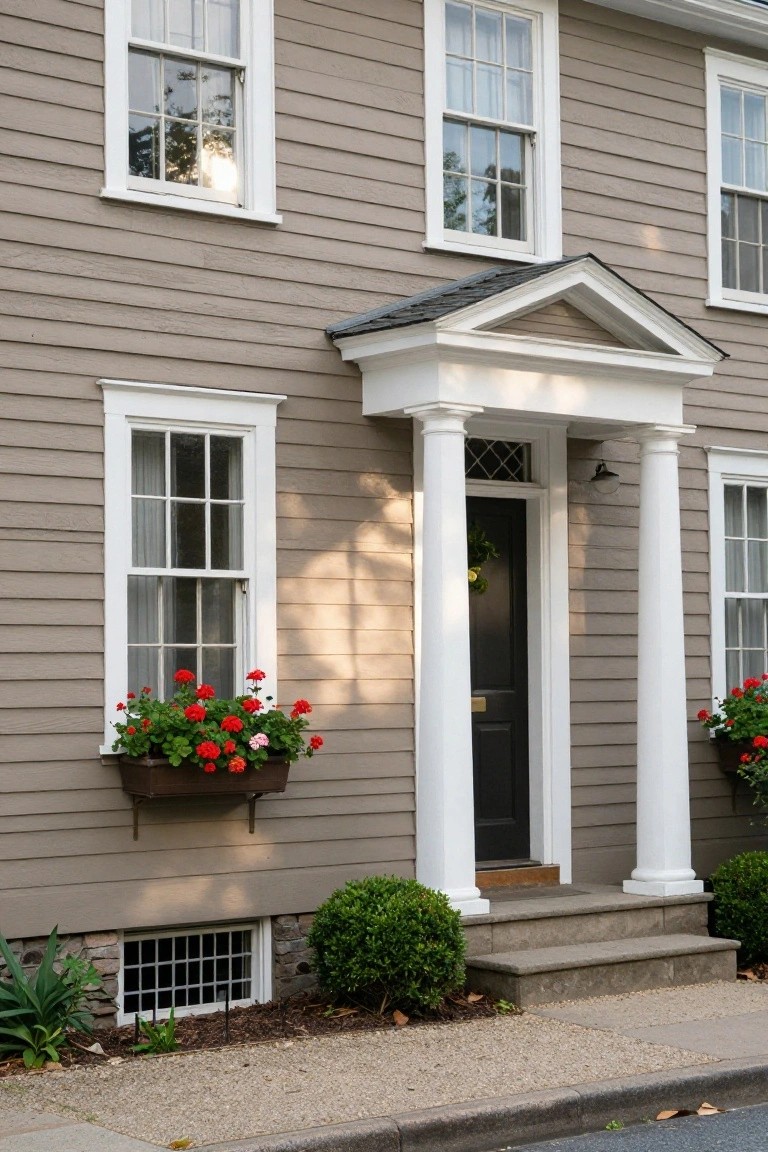
A soft gray wood siding like this one gives a colonial house that real sense of warmth and history. It’s not stark white or harsh brown. Instead, the muted tone picks up on natural surroundings and lets the white trim pop around the windows and entry. Those flower boxes with red blooms add a homey touch without overdoing it.
This look fits older neighborhoods or places aiming for classic curb appeal. Try it on two-story homes with simple rooflines and balanced windows. Pair the siding with a black door for contrast, and keep plantings low around the base. It holds up well in varied weather, just make sure to seal the wood regularly.
Pale Yellow Clapboard Siding for Evening Warmth
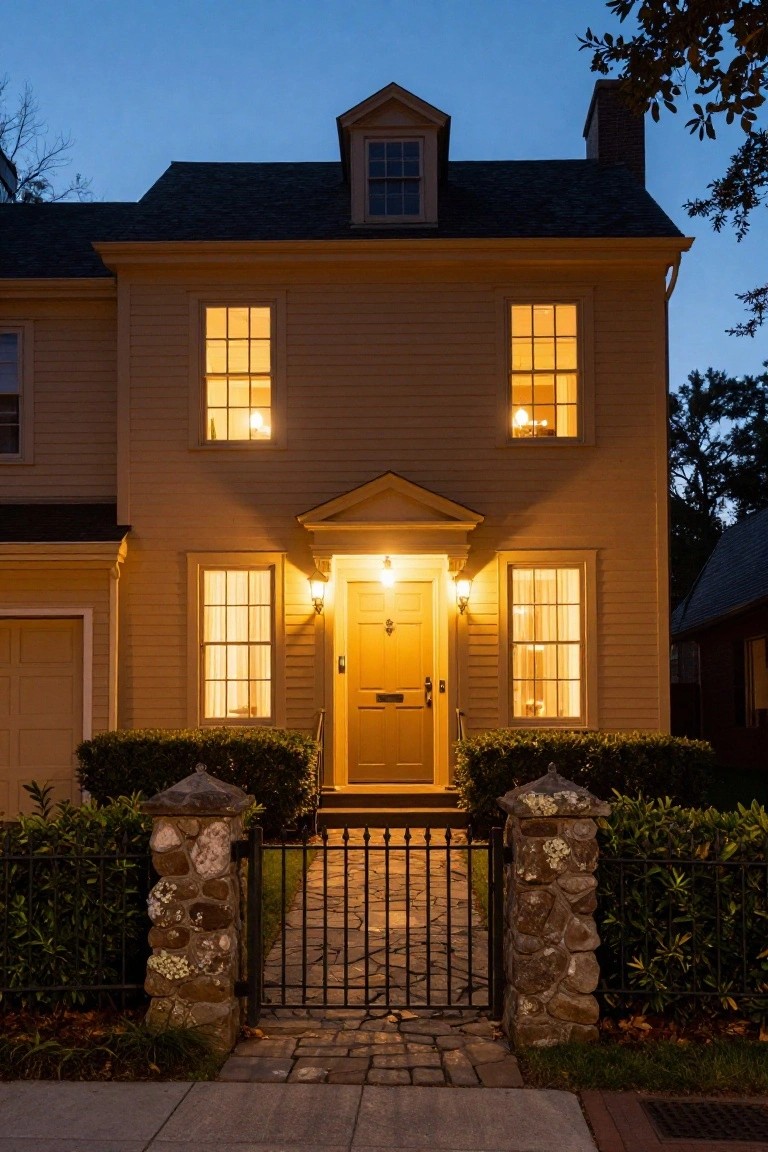
Colonial homes often use clapboard siding like this pale yellow version to catch the light just right. At dusk, it picks up the glow from lanterns and windows inside, giving the whole front a soft, lived-in feel. The color isn’t stark white. It’s more buttery, which keeps things authentic without looking too new.
This siding works best on homes with simple rooflines and multi-pane windows. Paint it on a facade facing west or east to get that natural evening shift from yellow to gold. Pair it with black iron details like the gate here, and skip bold trim colors. It suits older neighborhoods where you want warmth that blends in.
White Wood Siding with Black Door Contrast
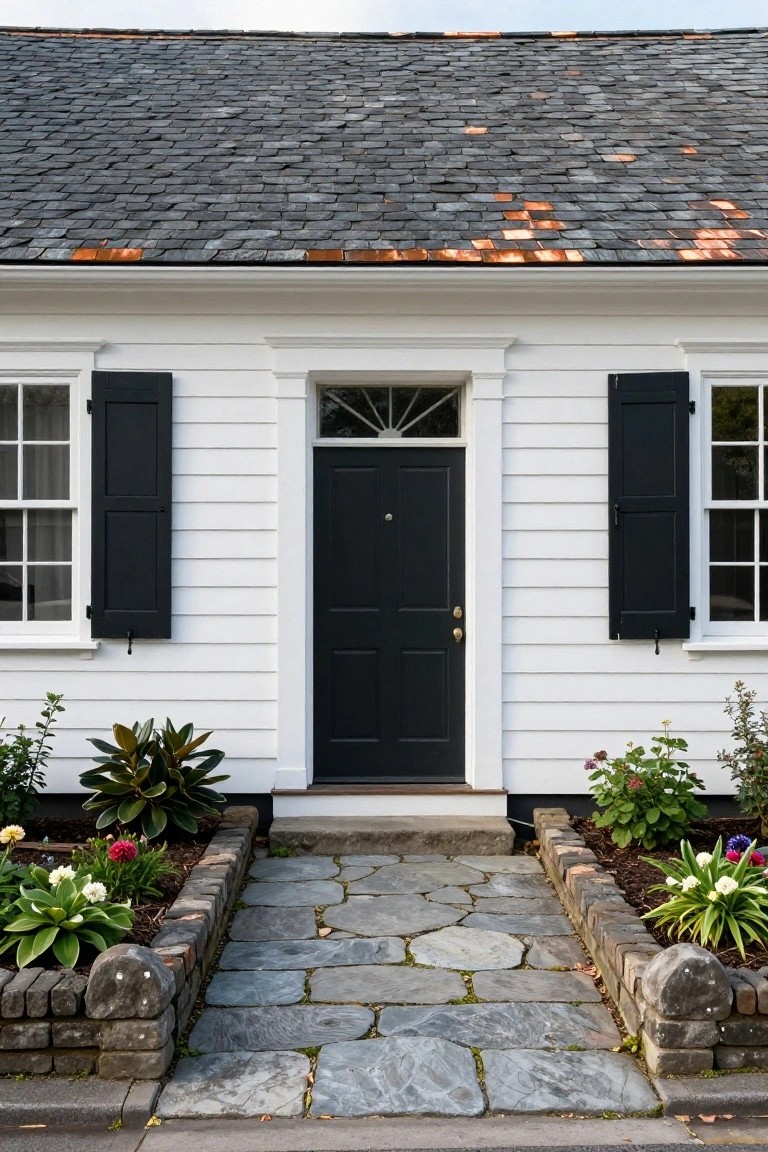
White horizontal siding like this gives a colonial house that clean, timeless look folks have loved for generations. The smooth clapboard catches the light just right, while the black front door stands out bold in the center. It pulls your eye straight to the entry without any fuss, and those matching black shutters keep things balanced on the sides. A touch like that adds real warmth to the whole facade.
Try this on a straightforward two-story colonial or cape style home where you want the siding to shine. Paint the trim glossy black for pop, and keep the door simple with brass hardware. It works best on a street-facing spot, maybe with a short path leading up. Just make sure the siding stays fresh with regular cleaning, or the contrast can fade over time.
Frequently Asked Questions
Q: How do I clean wood siding without scratching up that warm finish?
A: Grab a soft-bristle brush, mild soap, and a garden hose. Scrub gently from top to bottom, then rinse well. Skip the pressure washer, it strips the wood too fast.
Q: Will wood siding warp in a wet climate?
A: Choose air-dried cedar or redwood, they handle moisture without twisting. Seal the back side during install for extra protection.
Q: What’s the easiest stain for that classic Colonial glow?
A: Go with a semi-transparent oil-based stain in a warm honey tone. Brush it on evenly and wipe off excess right away. And it soaks in deep for years of rich color.
Q: Can I mix clapboard with board-and-batten for my Colonial?
A: Stick to clapboard on the main body and add batten accents near doors. It nods to history without overwhelming the look.
