

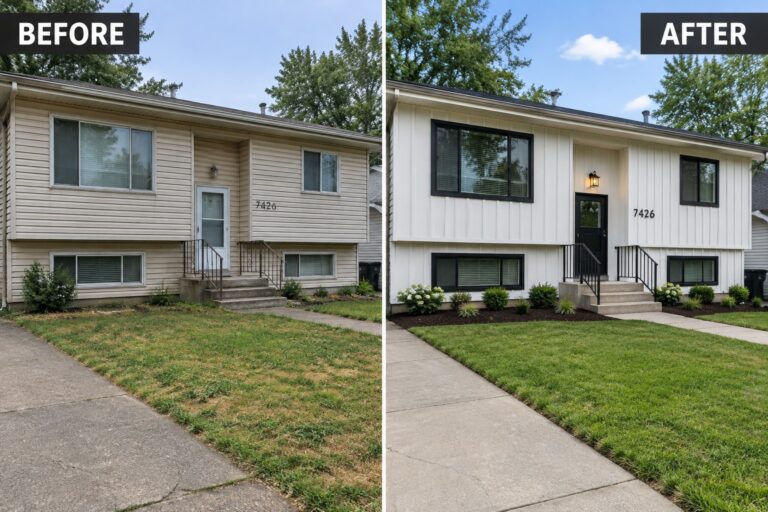
Split-level homes can look a little disjointed from the street when the entry, garage, and upper facade compete for attention.
I find that changes to siding, paint, windows, and landscaping often help tie those separate sections together without requiring a complete rebuild.
A clearer path to the front door or a more defined porch can also make the home feel easier to approach and better cared for.
It’s satisfying to see how practical updates can change the way a familiar house sits on its lot.
Some of these ideas are worth saving and adapting to suit your home’s shape, budget, and existing features.
Update A Split-Level Exterior With New Siding
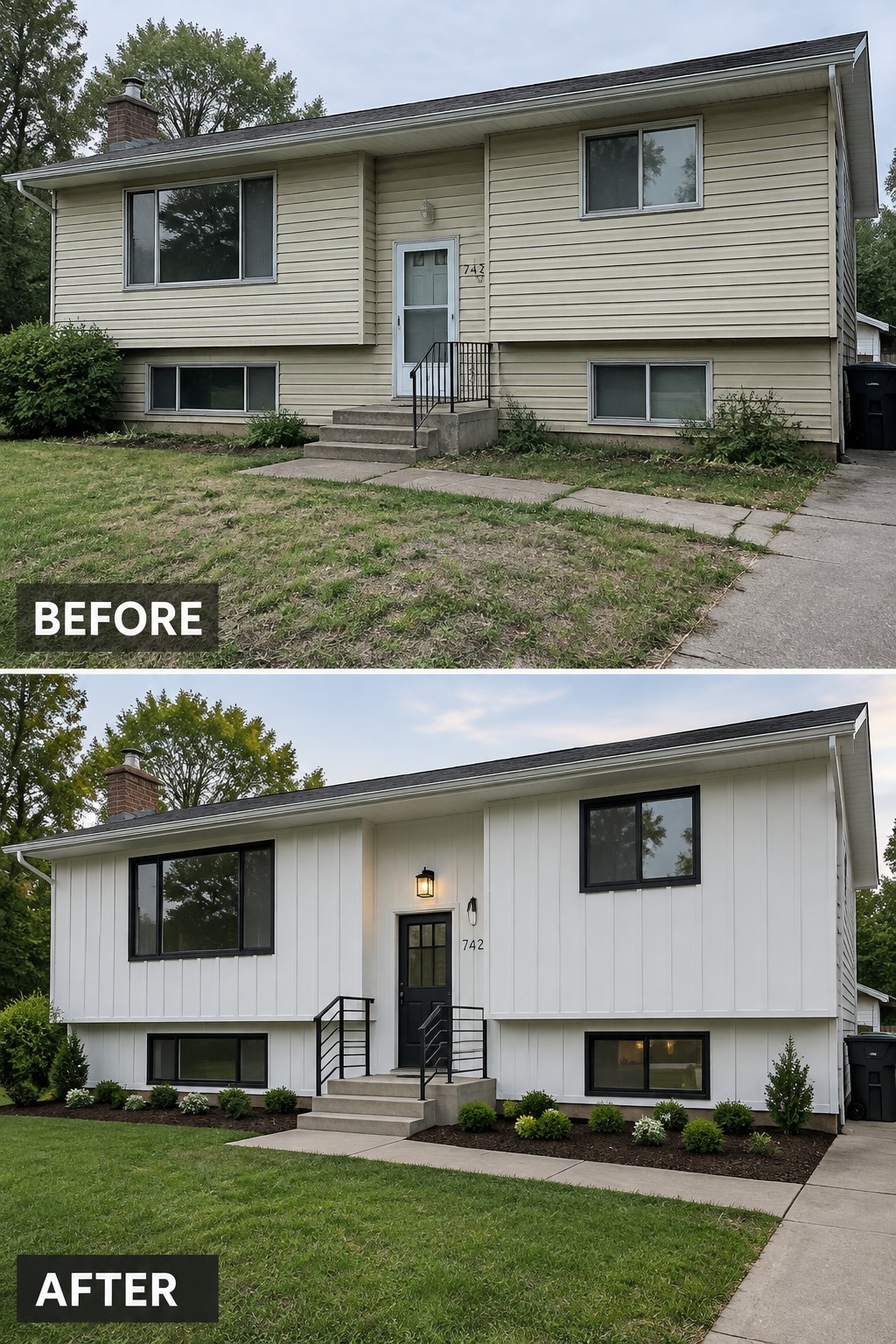
Replacing dated horizontal siding with clean white vertical siding gives this split-level a simpler, more current look. The facade feels more unified, and the dark window frames and front door stand out without changing the home’s basic shape.
For a similar update, choose a siding color that suits the roof and keep trim details simple. Vertical siding can work well on a plain split-level facade, but check that the style fits the house and your budget before committing to a full replacement.
Update A Split-Level Exterior With A New Color Scheme
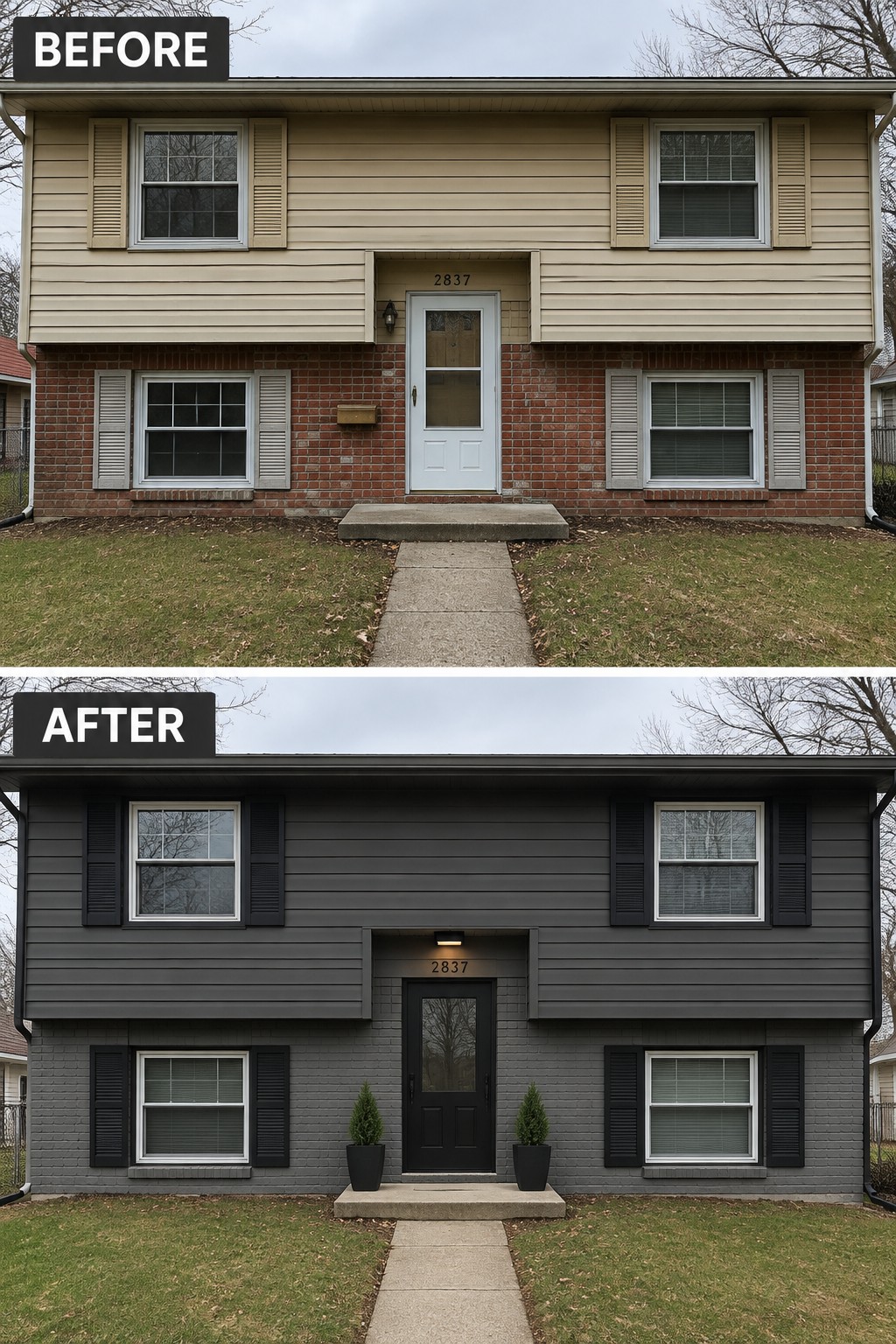
A fresh exterior color scheme can make a dated split-level feel much more current without changing its basic shape. Here, dark gray siding and brick give the facade a more unified look, while the black shutters and front door keep the entry easy to spot.
This idea works well when the siding and brick feel mismatched or worn. Choose a main color that suits both materials, then use a contrasting trim or door color sparingly. Test paint samples in different light first, especially where the brick and siding meet.
Turn A Bare Porch Into A Welcoming Entry

A plain, worn entry can feel much more useful when the porch becomes a place to sit, not just a route to the front door. Here, a full-width covered porch replaces the small, tired entry, with the added space making the house feel more welcoming.
For a similar update, start by making sure the porch is sturdy and has enough room to walk comfortably around the seating. A pair of chairs can give a wide front porch a clear purpose without crowding the door.
Rebuild The Front Steps For Better Curb Appeal

Replacing worn, uneven concrete steps with a clean, finished staircase makes the entry look cared for and easier to use. Here, stone-look treads and sturdy railings give the front approach a clear, more welcoming shape.
For a similar update, start by checking that the stairs are safe and well supported, then choose materials and railings that suit the house. Keep the handrails easy to grip, and leave enough room on the path to reach the steps comfortably.
Replace An Aging Garage Door
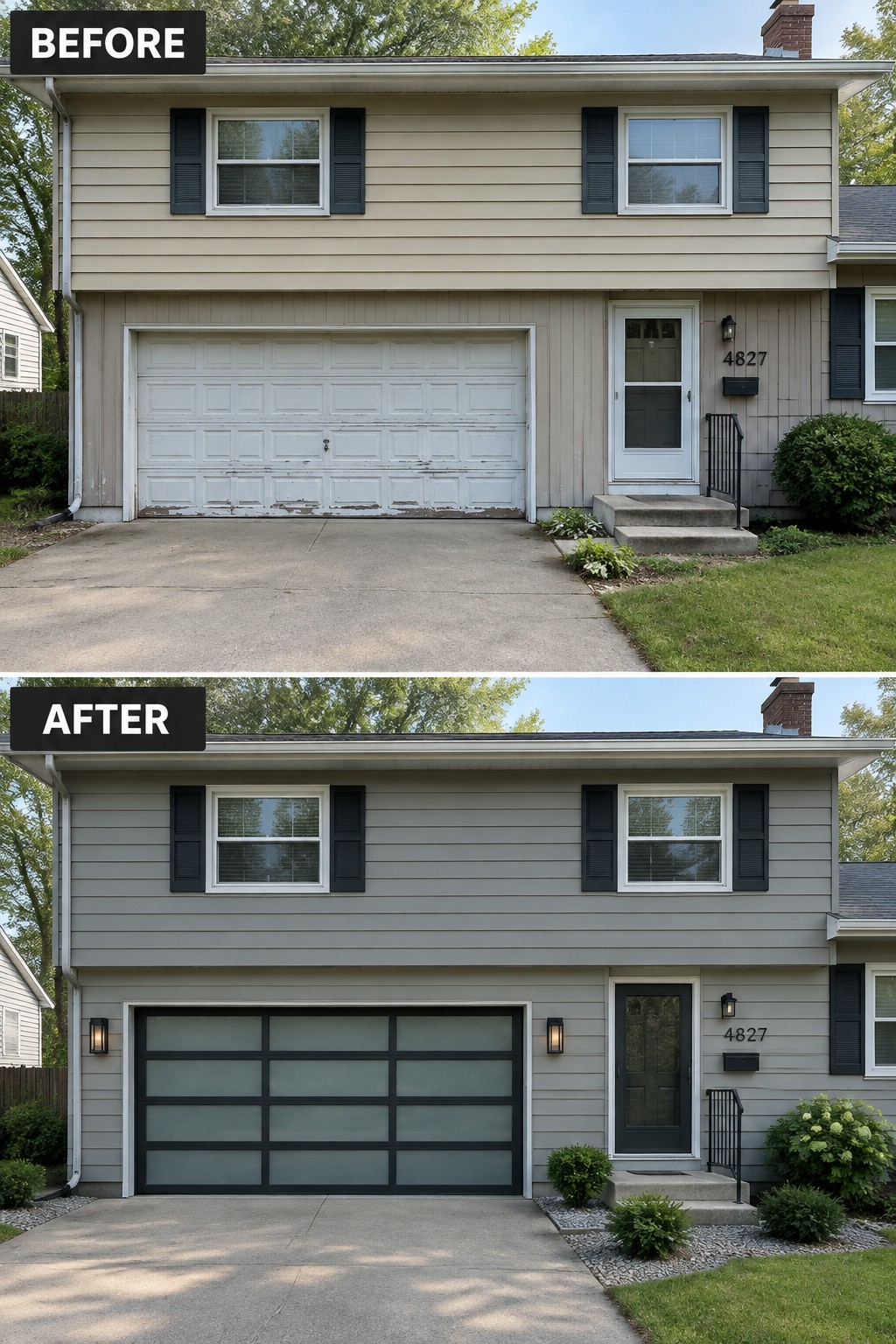
The peeling garage door made the front of this split-level look worn, while the new dark-framed door gives the facade a cleaner, more current appearance. Since the garage takes up so much of the lower level, updating it can change the look of the whole exterior.
If your garage door is in good condition but dated, consider a simpler panel style and a color that works with the siding and trim. Choose a design that suits the home’s proportions, and keep the hardware understated.
Replace Plain Foundation Walls With Stone
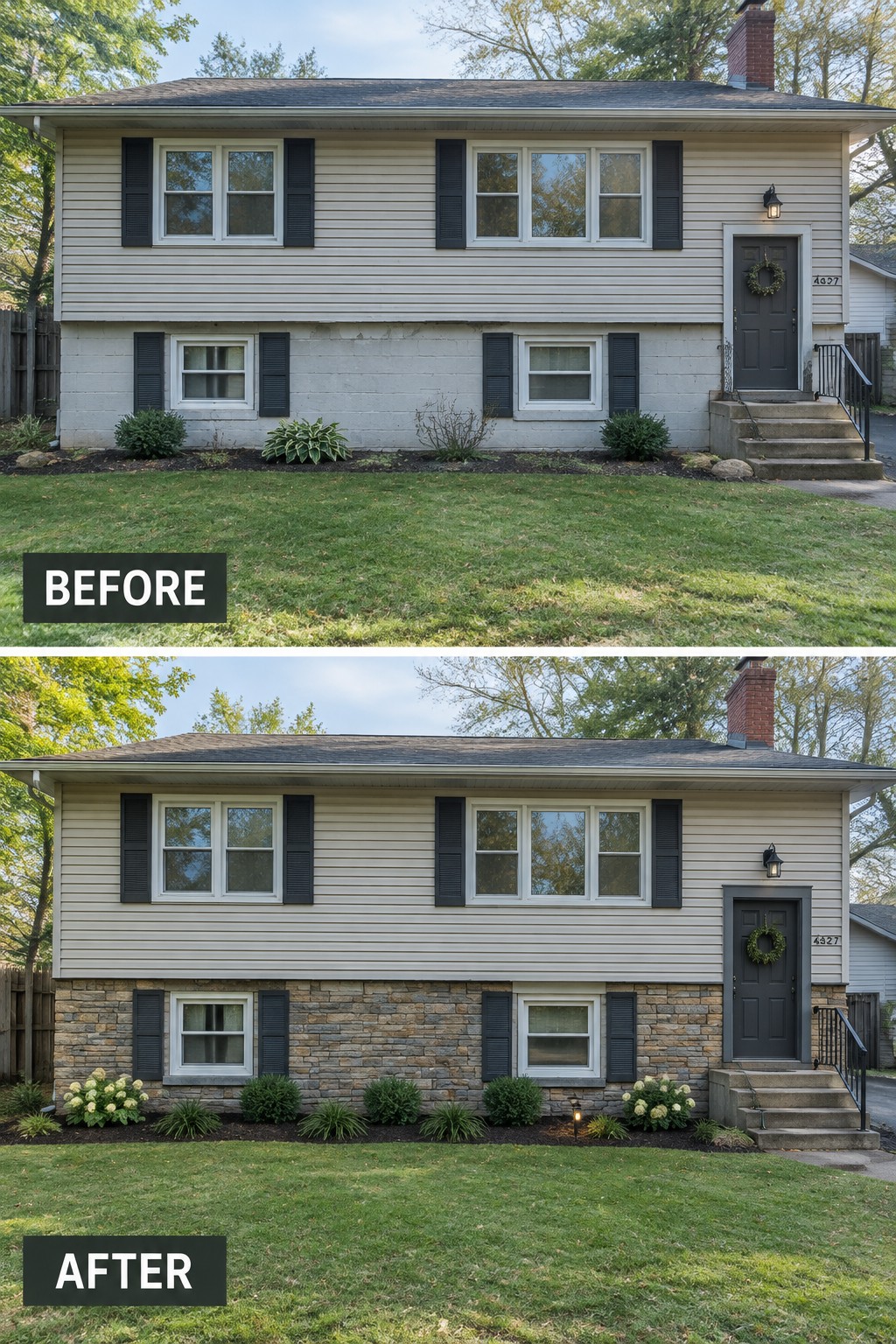
The lower level’s plain concrete-block walls make the split-level facade feel unfinished. Replacing that surface with stone gives the base a more finished look and makes the siding above feel more intentional.
This idea works well when the foundation is highly visible from the street. Choose a stone color that sits comfortably with the existing siding, and keep the treatment to the lower level if you want to update the facade without changing the whole exterior.
Enclose An Open Carport To Create A Garage
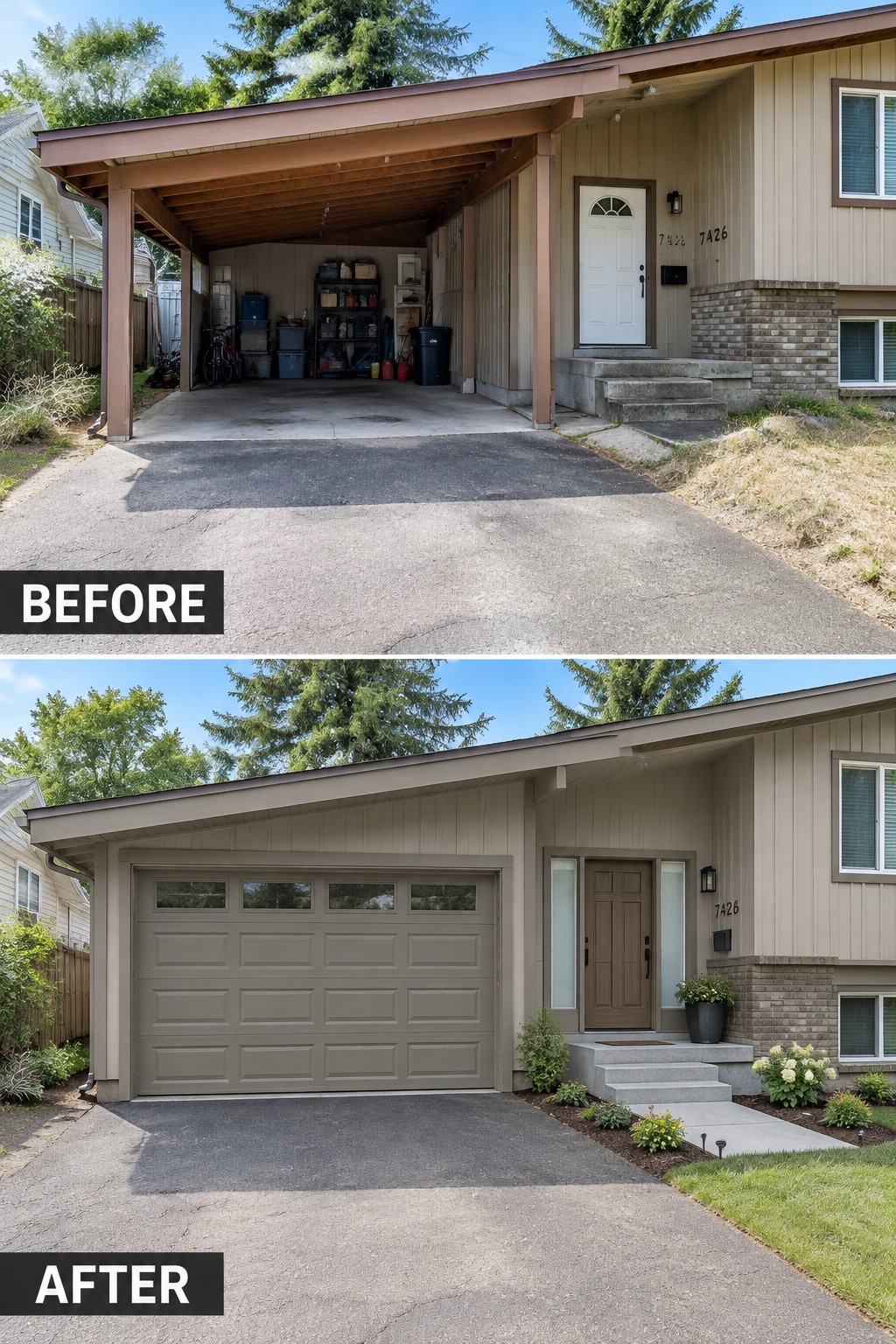
The open carport left the front of this split-level looking unfinished and offered little protection for stored items. Enclosing it with a garage door gives the house a cleaner, more complete facade while adding secure, covered storage.
This approach can work well when a carport is already attached to the house and its roof and supports are in good condition. Check that the opening can accommodate a properly fitted door, and plan for ventilation and lighting so the new garage is practical to use.
Add A New Focal Point To A Split-Level Exterior

The original upper facade had a row of small windows that made the front feel plain. A raised section with larger windows gives the house a clearer focal point and adds interest without changing the lower half.
This idea can work well on a split-level with a broad, simple front. Keep the new section in scale with the roofline, and use a siding material that suits the rest of the house so it feels like part of the design.
Replace Worn Roofing To Refresh A Split-Level Exterior
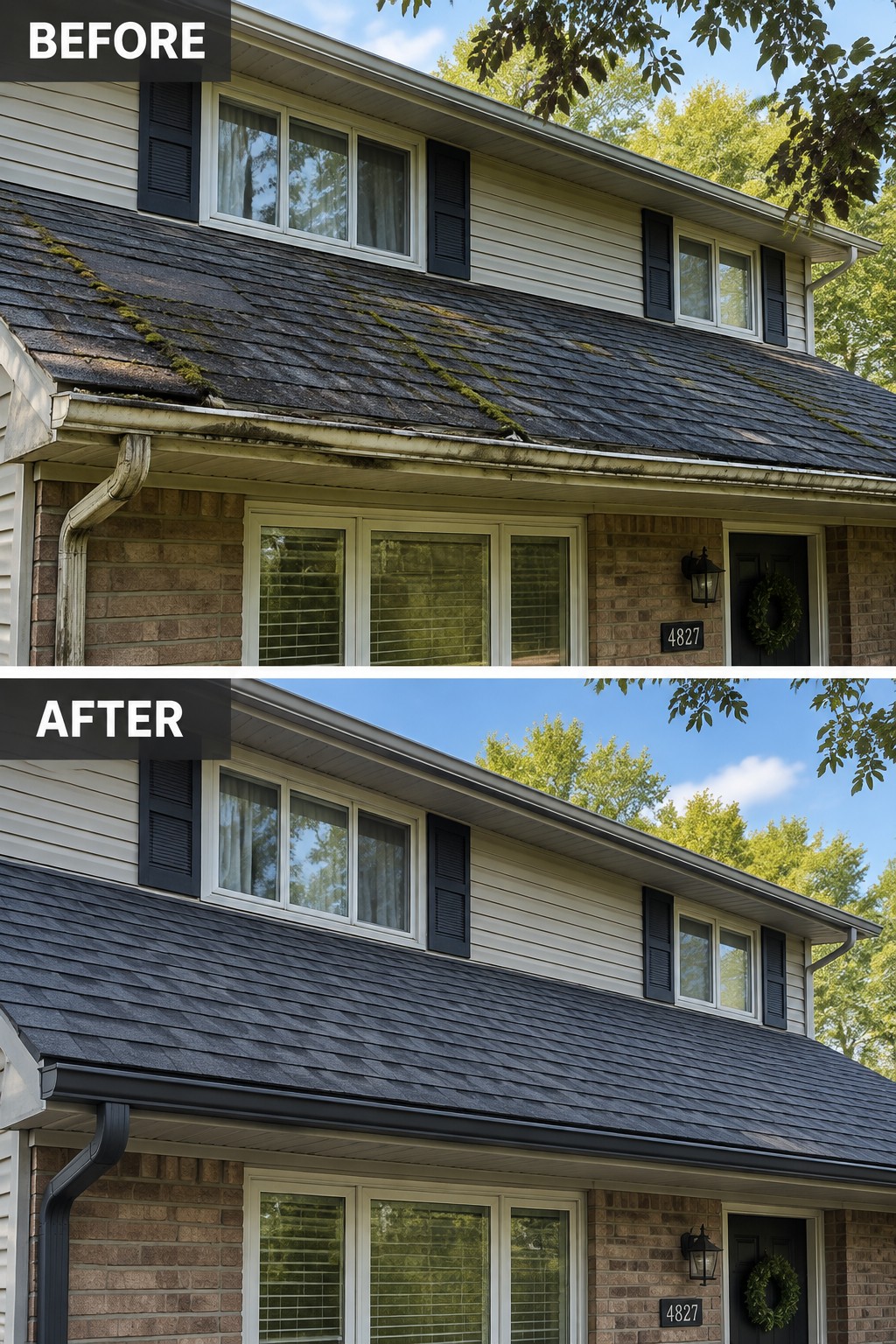
The weathered roof makes the exterior look tired, while the new dark shingles give it a cleaner, more cared-for appearance. Replacing worn roofing can make a noticeable difference on a split-level home because the roof covers such a large part of the facade.
If your shingles are stained, mossy, or near the end of their life, start by having the roof inspected and address any needed repairs before choosing new materials. A simple, consistent shingle color suits many older homes and can refresh the exterior without changing its basic character.
Add Structure To A Sloped Front Yard
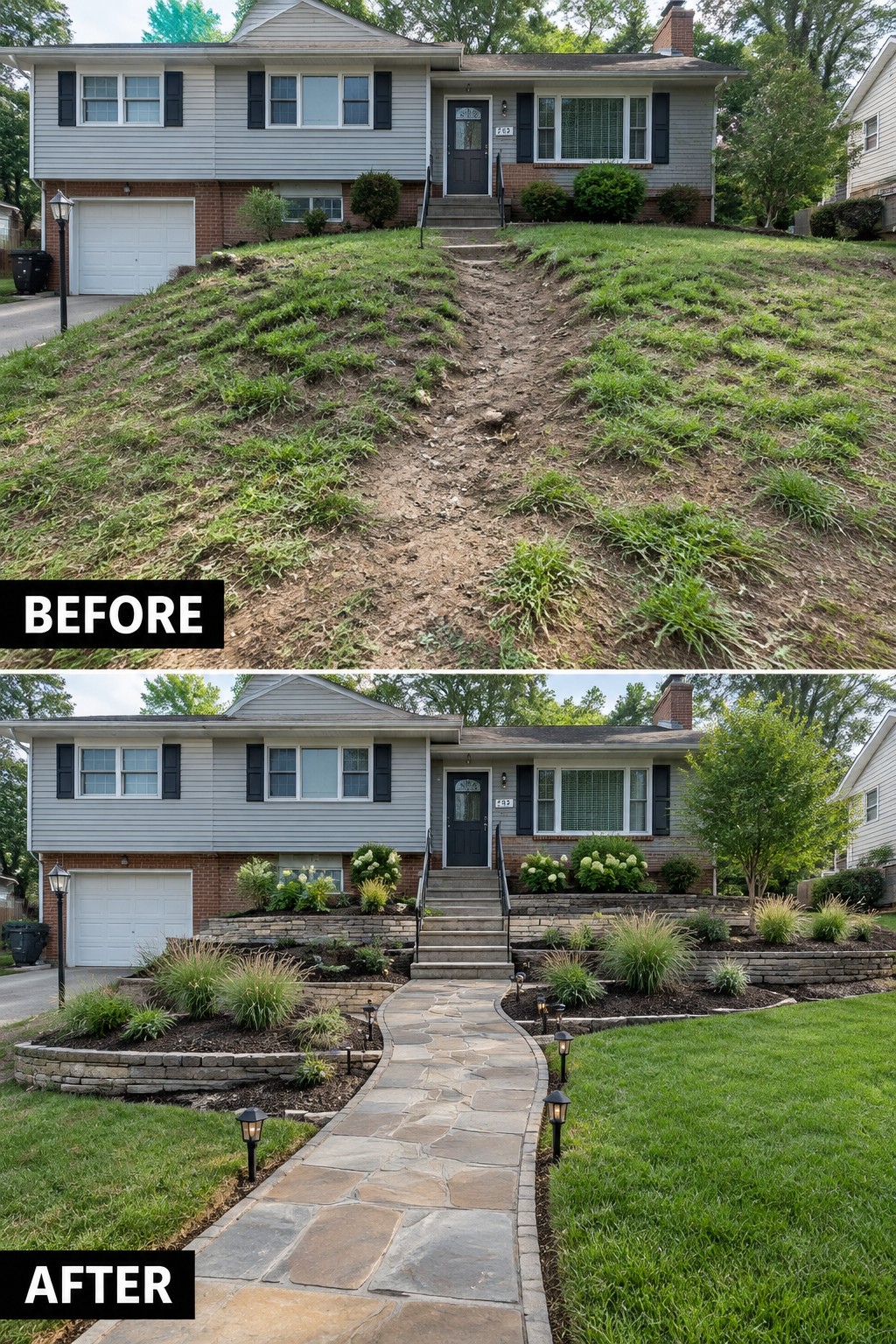
A worn dirt track and scattered grass can make a sloped front yard feel unfinished. Defined retaining walls and a curved stone path give the yard a clearer layout and make the walk to the front steps easier to follow.
This approach suits split-level homes where the entry sits above the street. Use low retaining walls to create manageable planting beds, and keep the path wide enough for comfortable access. Check that the steps and path handle runoff safely before adding plants.
Replace A Worn Front Door And Refresh The Entry
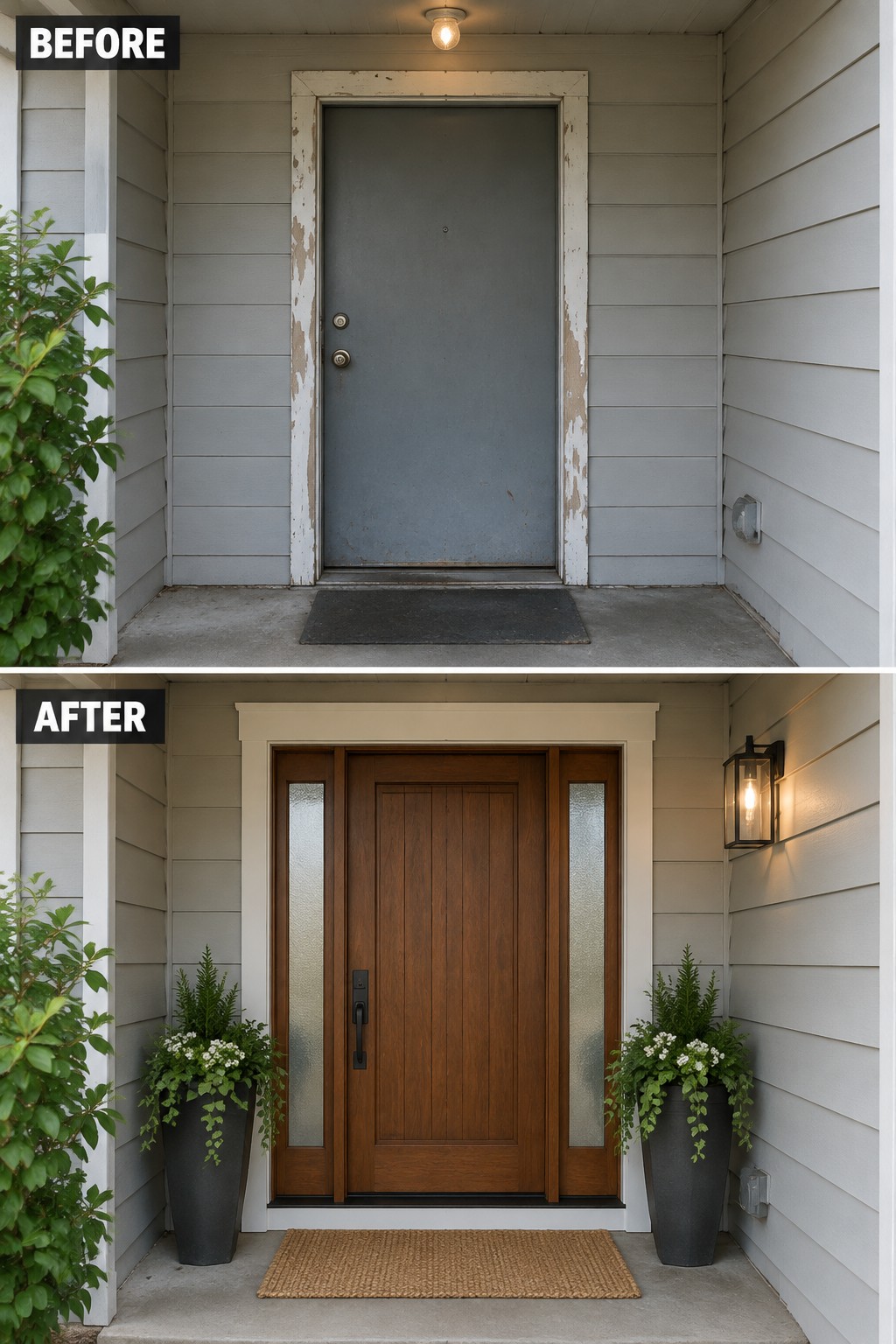
A new front door can make an older exterior feel cared for without changing the whole facade. Here, a weathered door and peeling trim give way to a wood door with glass sidelights, making the entry feel more finished and welcoming.
If your porch has a similar recessed doorway, consider replacing the door and repairing the surrounding trim first. Choose a style that suits the house, and keep enough clear space for the door to open comfortably.
Refresh A Plain Split-Level Exterior With Updated Details
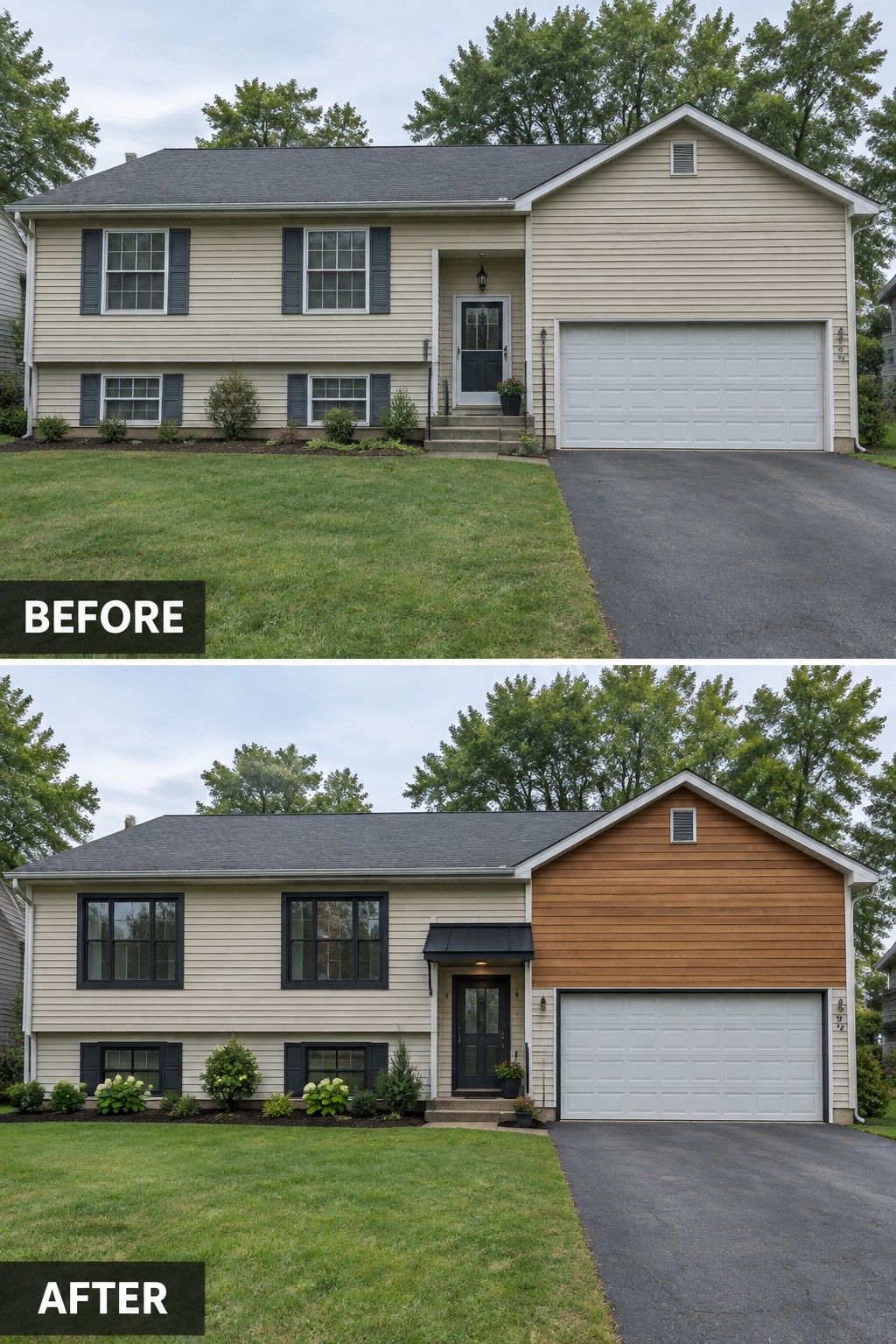
The front of this split-level looked dated, but changing the siding color and adding dark window trim gave it a cleaner, more current look. The warm wood siding on the garage-side gable also breaks up the long facade without changing the home’s basic shape.
For a similar update, repeat a dark trim color around the windows and entry, then use one contrasting material on a smaller section of the facade. Keeping the changes limited helps a long split-level exterior feel more cohesive.
Replace Worn Steps With A Safer, Cleaner Entry
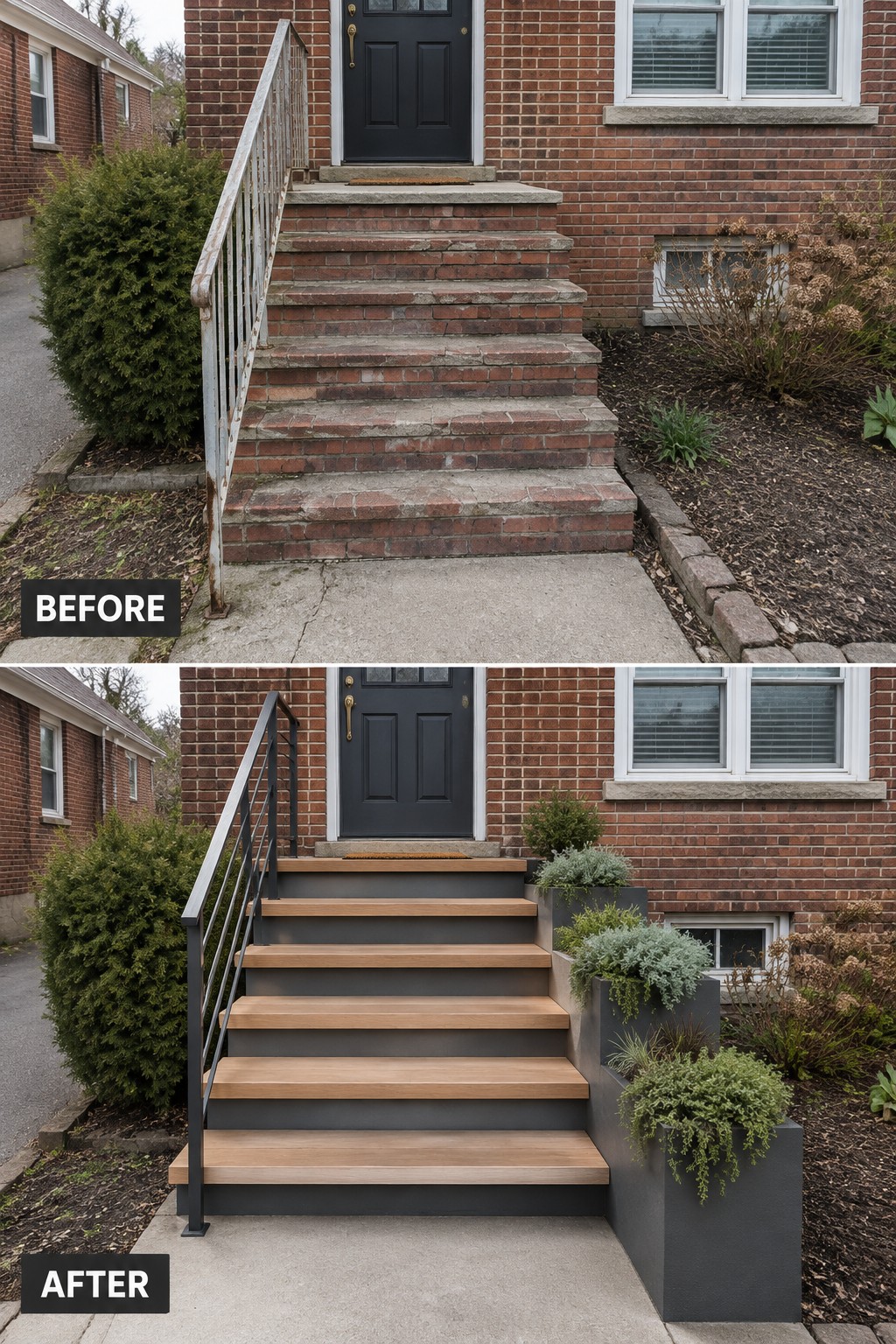
Cracked brick steps can make an otherwise solid entry look neglected and may be difficult to use. Replacing them with a sturdy stairway and a simple railing gives the approach a cleaner look while making it easier to go up and down.
For a similar update, choose durable materials and make sure the railing feels secure. Keep the stair width comfortable for the entry, and check local building requirements before construction.
Use Exterior Lighting To Improve Curb Appeal
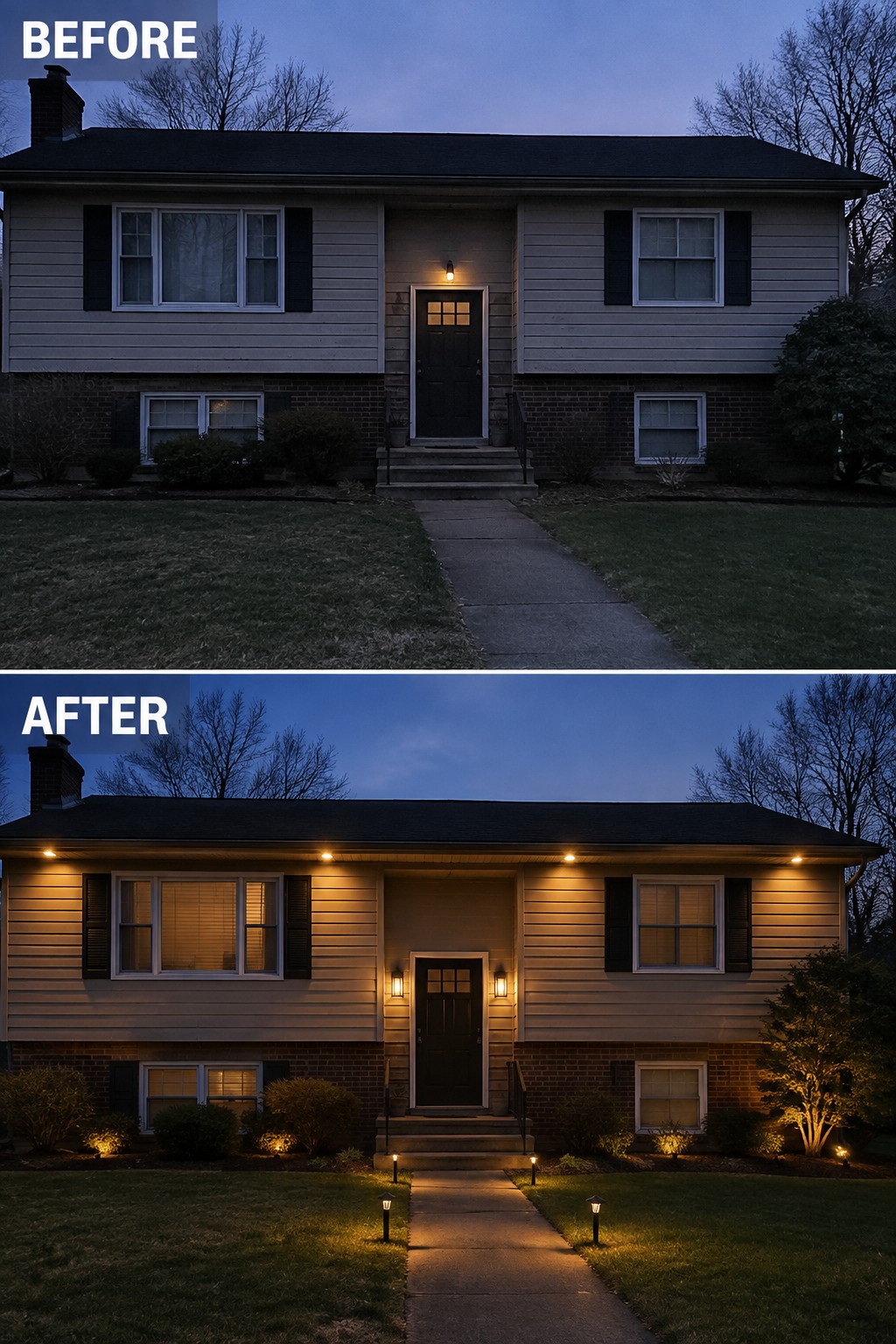
The house feels more welcoming after exterior lights brighten the facade and make the front entry easier to see. In the earlier version, the single light by the door left most of the front of the home in shadow.
For a similar update, place a few fixtures along the roofline and near the entry, then add low path lights where people walk. Keep the light warm and aimed where it is useful, rather than adding more fixtures than the facade needs.
Give A Split-Level Exterior A Cleaner, More Modern Look
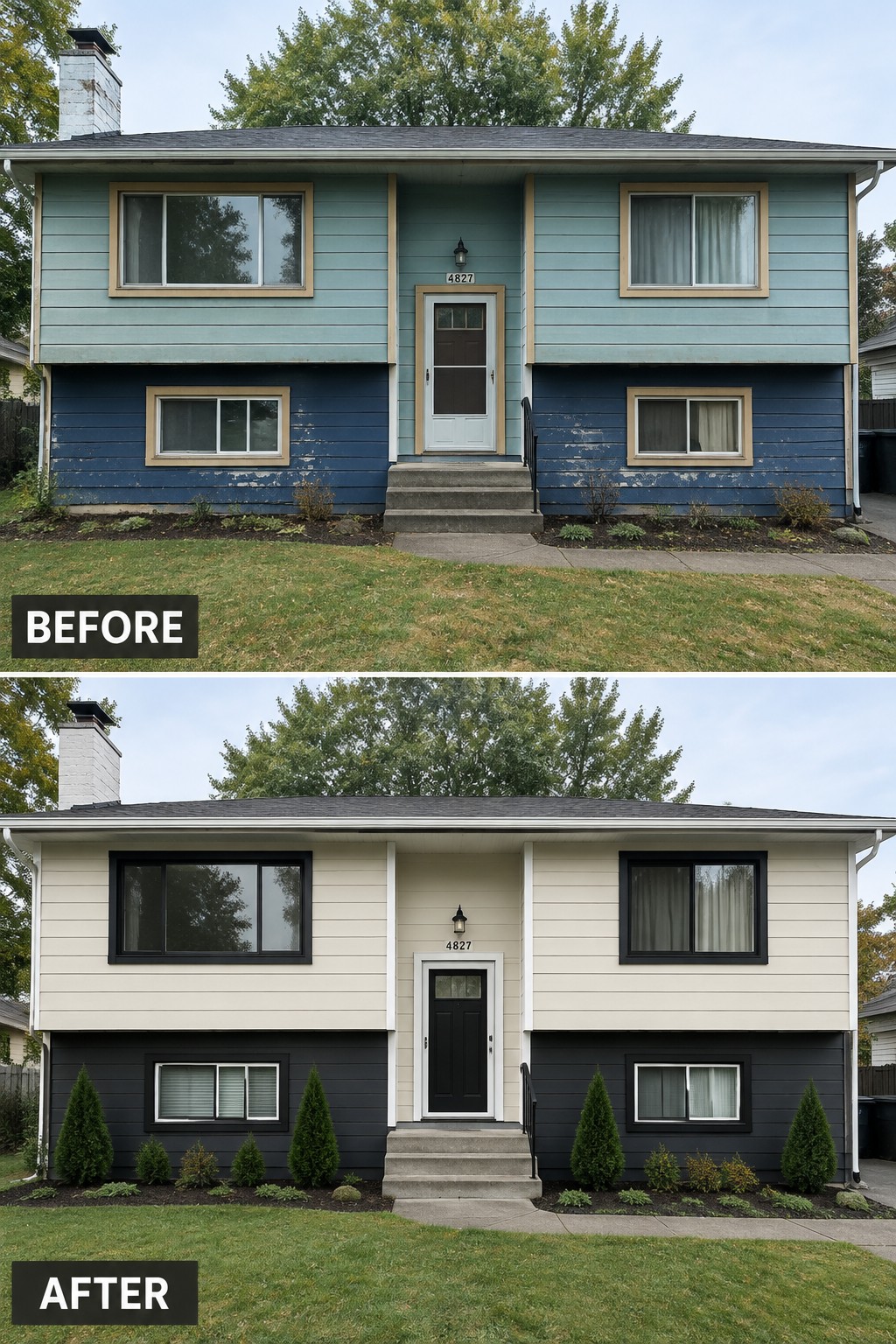
The old two-tone blue siding made the front feel dated and worn. A simple shift to warm white upstairs and charcoal below gives the split-level a clearer, more current look without changing its shape.
For a similar update, use two exterior colors to distinguish the upper and lower levels, then keep the trim simple so the facade does not feel busy. This approach works well when the siding is sound but the color scheme is holding the house back.
Replace Plain Foundation Walls With Stone
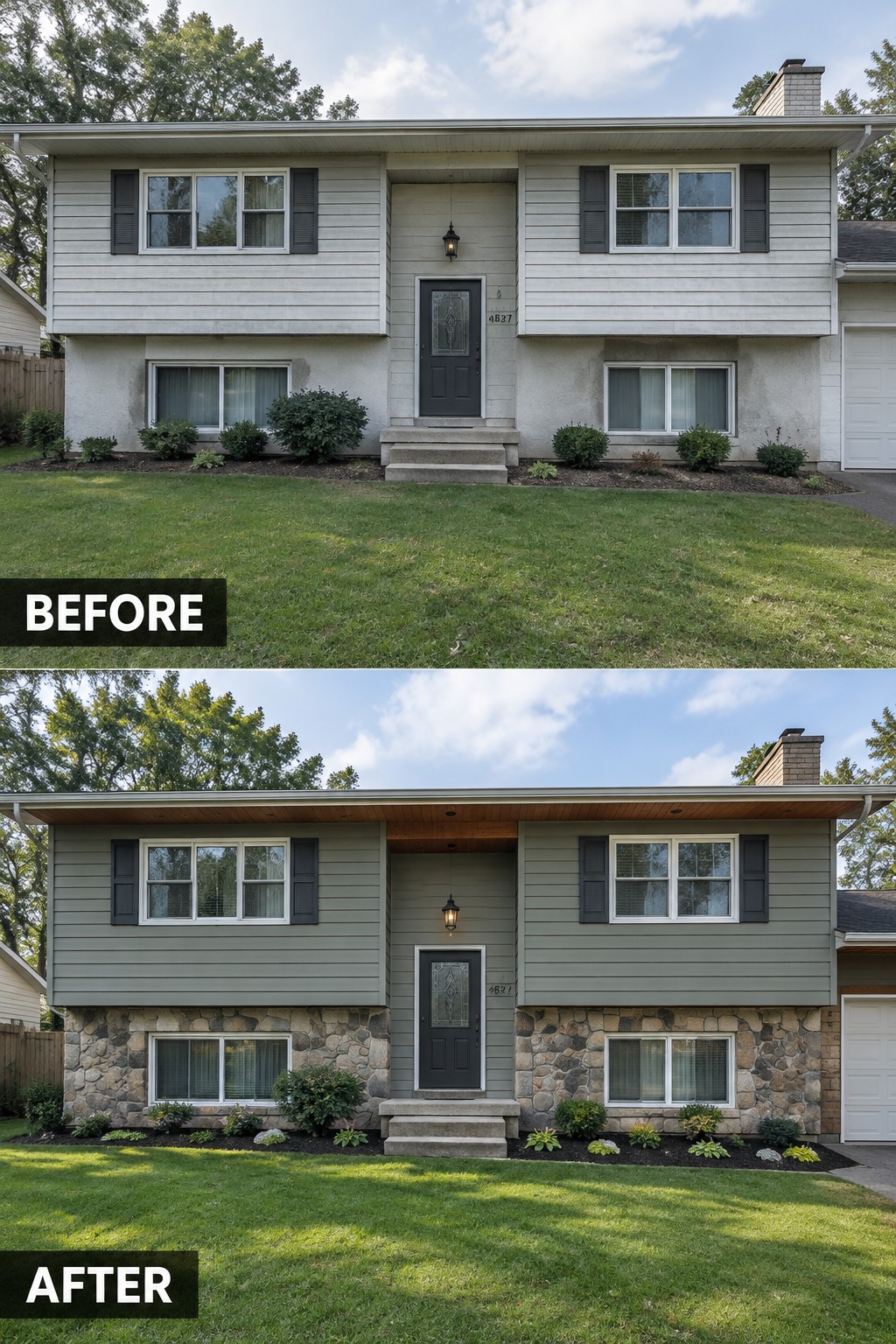
The plain lower walls made this split-level exterior feel unfinished. Adding stone veneer to the foundation gives the facade a more substantial look while letting the existing siding remain the main feature.
Stone can work well on the lower level of a split-level, where it helps distinguish the foundation from the upper story. Choose a stone color that suits the siding, and keep the coverage limited so the front of the house doesn’t feel too busy.
Add Window Boxes And Shutters For Better Curb Appeal

The plain upper windows look more finished with dark shutters and flower boxes, giving this split-level a clearer focal point without changing its basic shape. It’s a practical way to refresh a facade when a full siding or window replacement isn’t in the plans.
Use this idea where the windows are prominent and the exterior has room for simple accents. Keep the boxes sized to the windows, and choose flowers that are easy to maintain so the entry stays tidy through the season.
Add Structure To A Sloped Front Yard
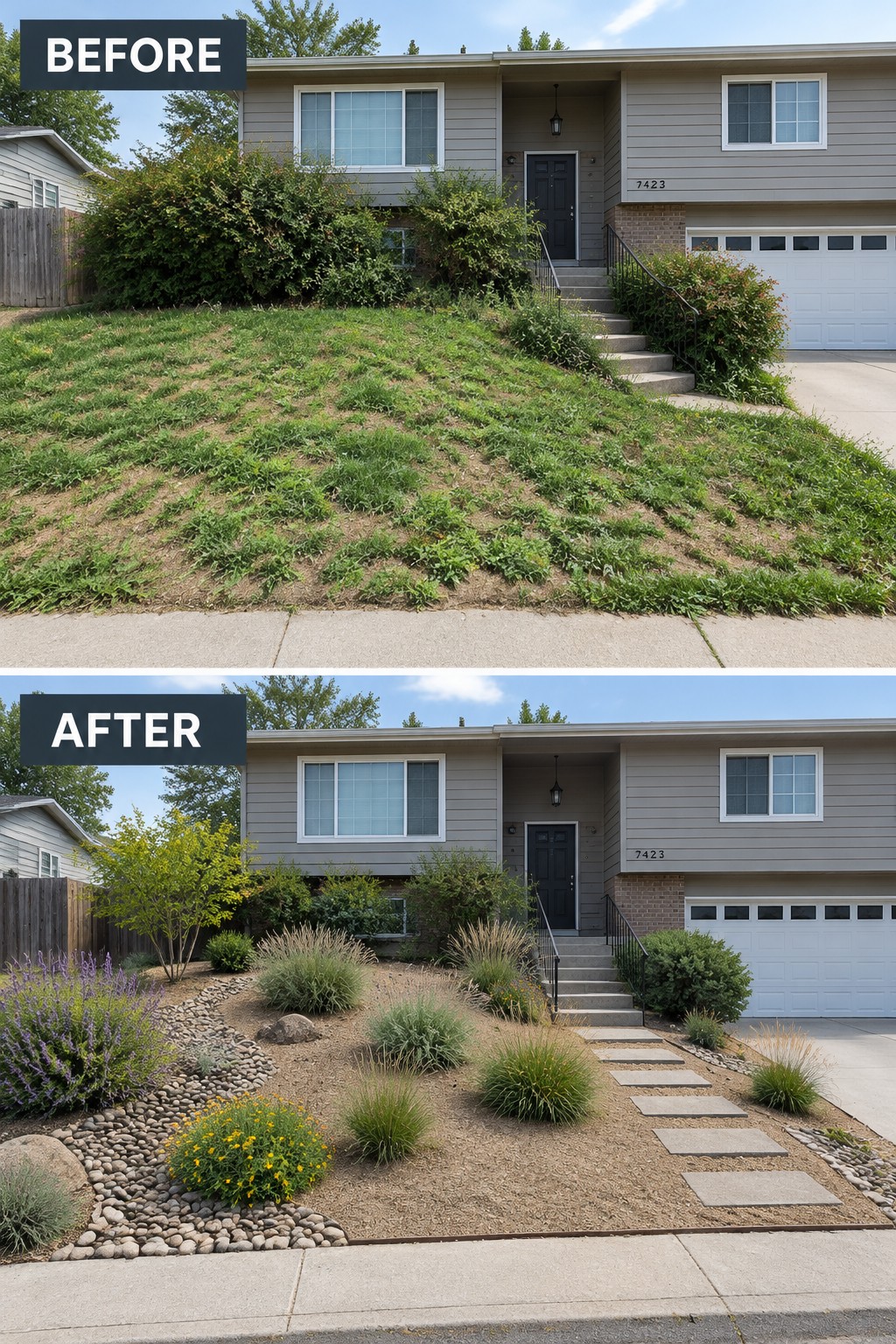
The front yard looks hard to manage when grass and weeds cover the slope without a clear layout. Replacing much of that patchy lawn with gravel, stone borders, and a simple path gives the hillside a more organized look and makes the entry easier to reach.
For a sloped yard, start by deciding where people need to walk, then use sturdy steps or pavers to guide the route. Keep plantings in manageable groups and check that gravel and edging will stay in place during rain.
Add Privacy With A Simple Side Yard Fence
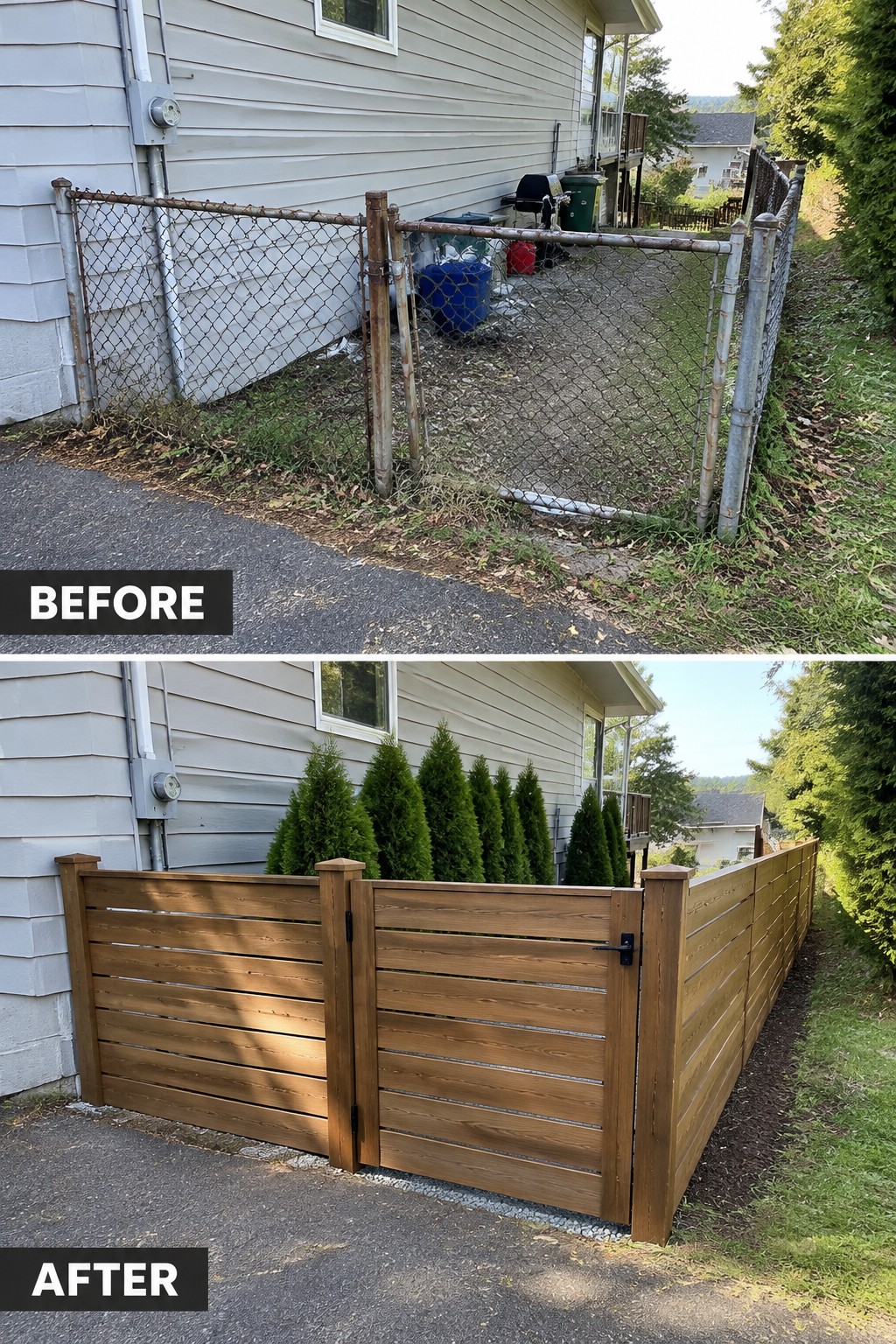
Replacing a worn chain-link fence with a solid wood enclosure makes this narrow side yard feel neater and more private. A matching gate keeps the area accessible while giving the space a clear boundary.
This idea works well beside a house where bins or storage are visible from the driveway. Measure carefully before building, and leave enough room for the gate to open and for people to pass through comfortably.
Replace Cracked Concrete With A Paver Walkway
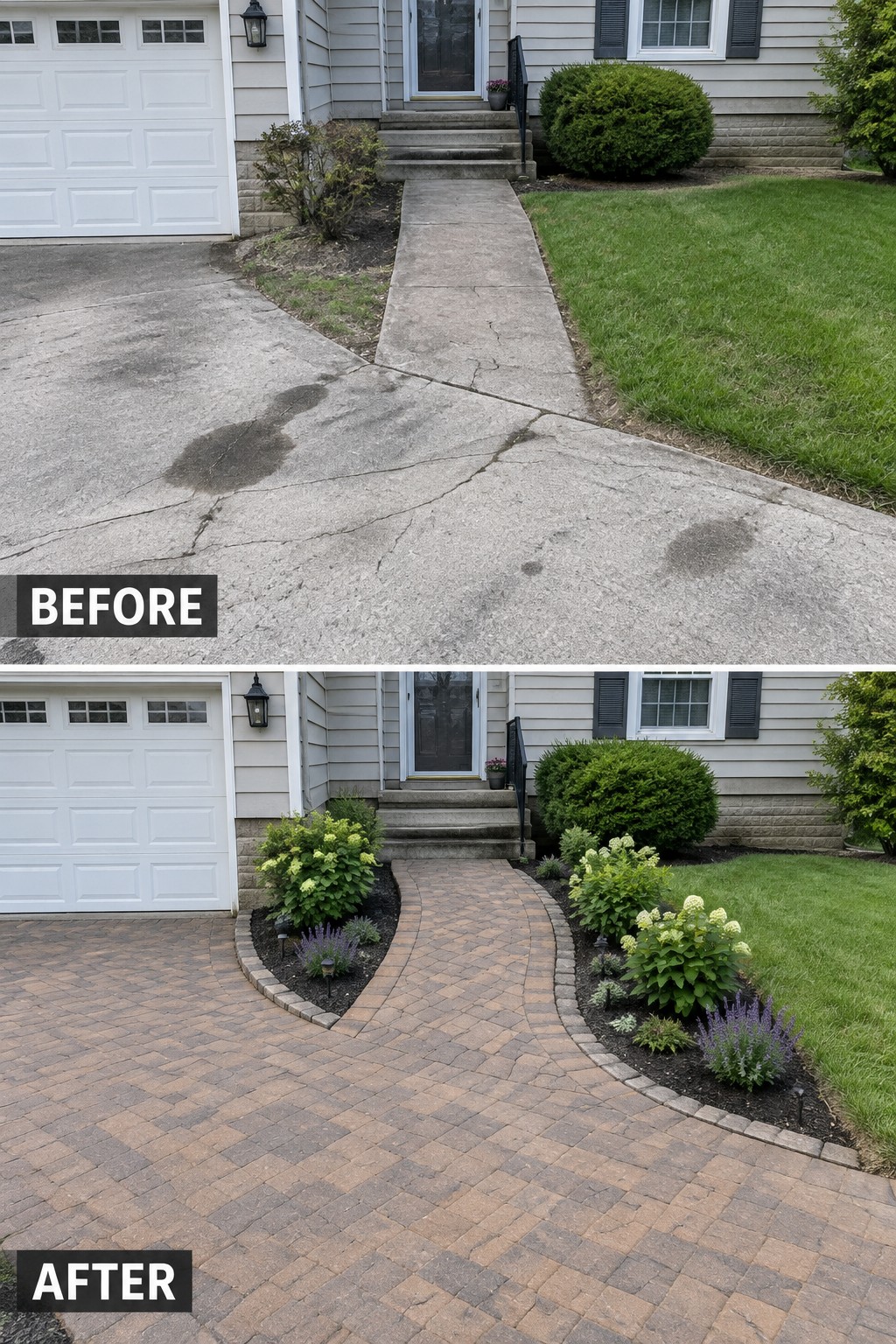
The cracked concrete made the approach to the front steps look tired. Replacing it with pavers gives the entry a clearer path and makes the surrounding yard feel more planned, without changing the house itself.
This idea works well when a walkway or driveway is worn but still needs to stay practical. Choose pavers that suit the home and leave enough room for easy passage; defined planting beds along the path can help keep the finished area neat.
Give Basement Windows A Cleaner Setting
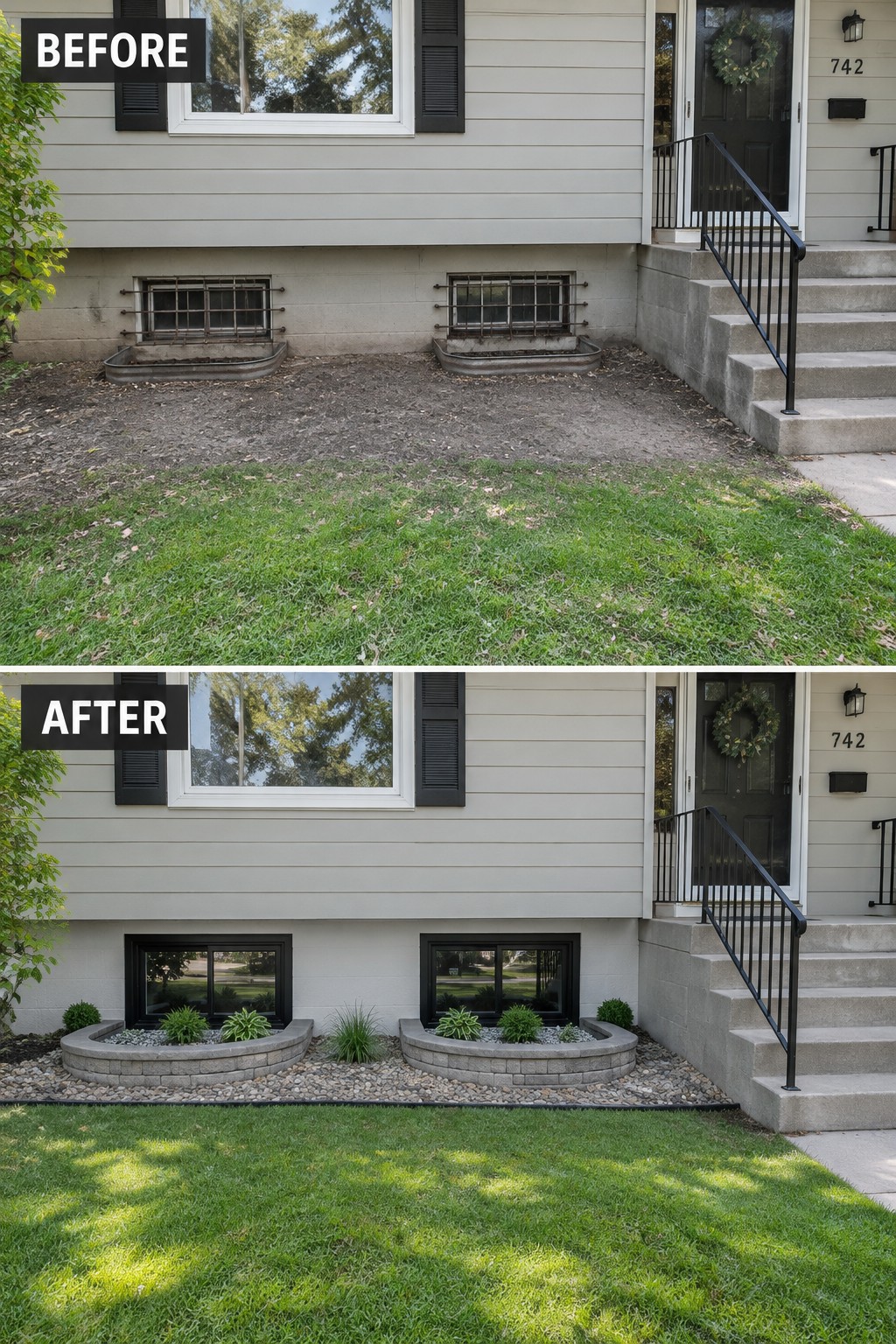
Replacing the old barred basement windows and worn window wells with dark-framed windows and neat stone-edged planting beds gives this split-level exterior a more finished look. The defined beds also make the foundation area feel cared for instead of neglected.
For a similar update, keep the planting low enough to leave basement windows clear, and use a simple edging material that suits the house. Tidy window wells and fresh gravel can help, too, without requiring a major exterior renovation.
Frequently Asked Questions
Q: What’s the best place to start if my split-level exterior feels dated but I can’t renovate everything at once?
A: Start with the front entry and the most visible siding or trim. A fresh door, updated lighting, and a consistent color scheme can make a noticeable difference while you plan larger changes.
Q: Can I change the look of my split-level without removing the siding?
A: Often, yes. Painting sound siding and updating the trim, entry, or porch can give the house a fresh look. Check that the siding is in good condition first, since paint won’t fix rot or water damage.
Q: How do I make a split-level entrance feel less awkward?
A: Give the entry a clear focal point with a defined path, a wider landing, or a small porch. Better lighting also helps visitors spot the door right away.
Q: What should I fix before choosing new exterior colors?
A: Take care of leaks, damaged siding, and loose steps first. Once those repairs are done, test paint samples in daylight so you can see how they look on your home.
