

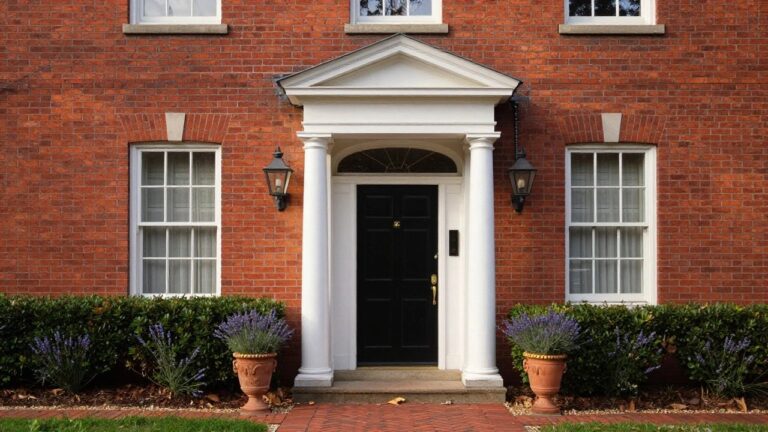
Approaching a Colonial house, you first take in how the walkway frames the front door and pulls your eye along the facade without stealing the show.
I remember eyeing one neighbor’s brick path that echoed their red shutters perfectly, making the whole entry feel settled and right.
These paths work best when they blend materials like flagstone or gravel with the house’s siding and roofline, creating that seamless curb appeal real homes need.
Walkways matter.
Some of the ideas here, like subtle curves leading to a centered stoop, are ones I’d sketch out for a house that needs its exterior to welcome people in naturally.
Herringbone Brick Walkway to the Front Door
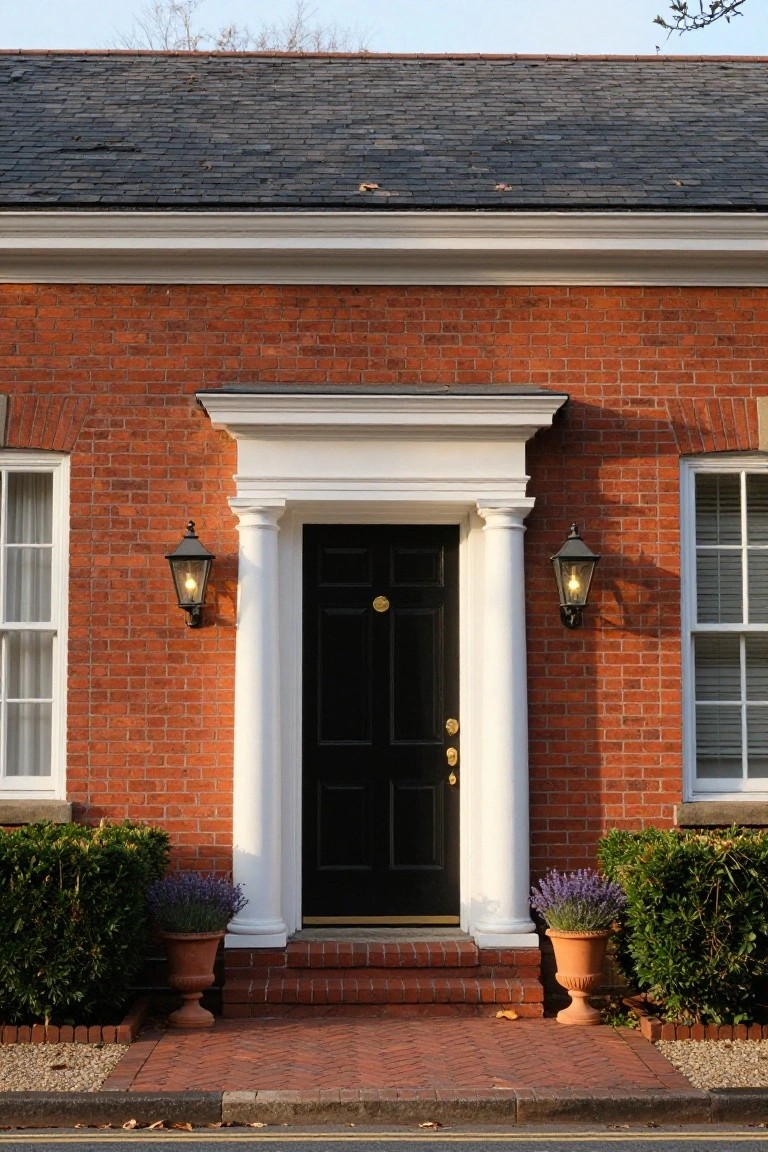
A herringbone brick walkway like this one pulls your eye straight to the entry on a classic brick house. The pattern gives it some interest without overdoing things. It matches the red brick walls nicely and feels right at home on a Colonial-style place. Those lanterns and lavender pots on the sides just finish it off.
This works best leading up a few steps to a covered door like here. Use it on homes with brick or stone facades where you want a traditional look that lasts. Go for durable pavers to handle foot traffic. Skip it if your front is super modern. Keeps things clean and welcoming year round.
Rose Arbor Walkway to the Door
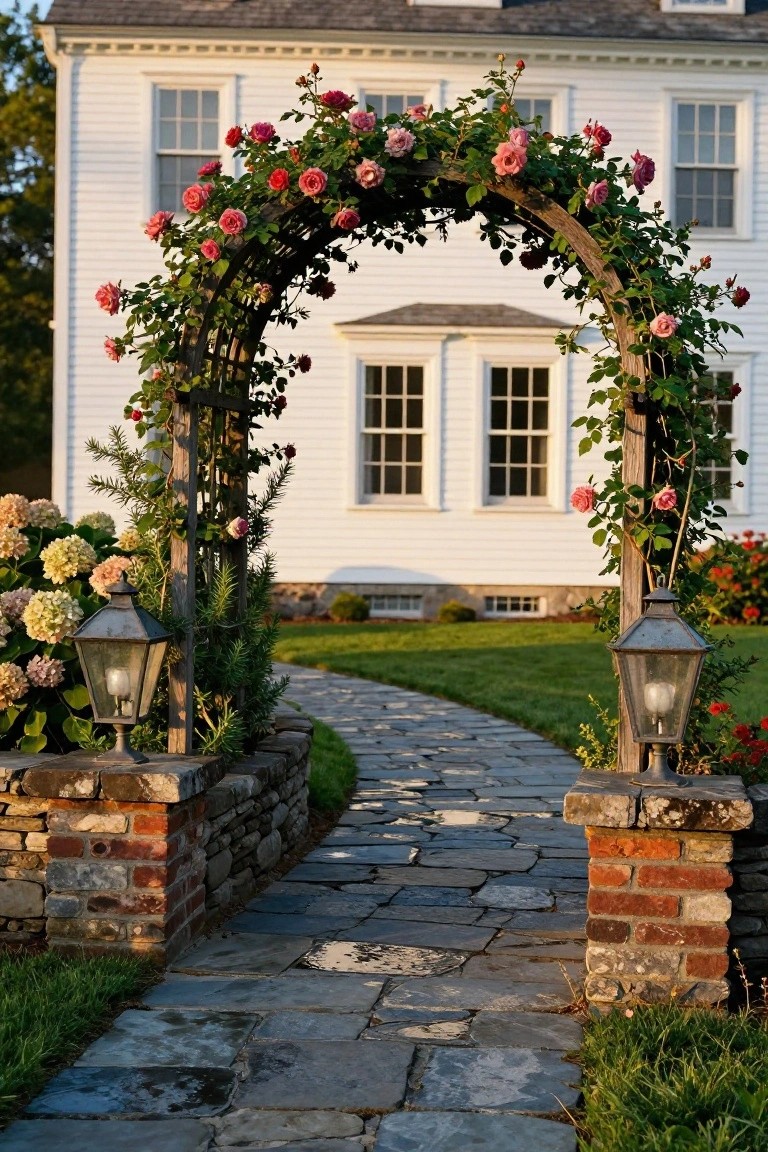
A wooden arbor draped in climbing roses makes a plain stone path feel special as it leads right up to the house. Those soft pink blooms hang down just enough to brush your shoulder, and paired with the white colonial siding, it gives the whole entry a gentle, old-fashioned charm without much fuss.
This idea fits older homes like colonials where you want to soften the front approach. Go for hardy rambling roses that cover the arch quickly, set it over flagstone or brick pavers, and add lanterns on low brick pillars for light at dusk. Just prune the roses yearly to keep the path clear.
Brick Walkway with White Rose Borders
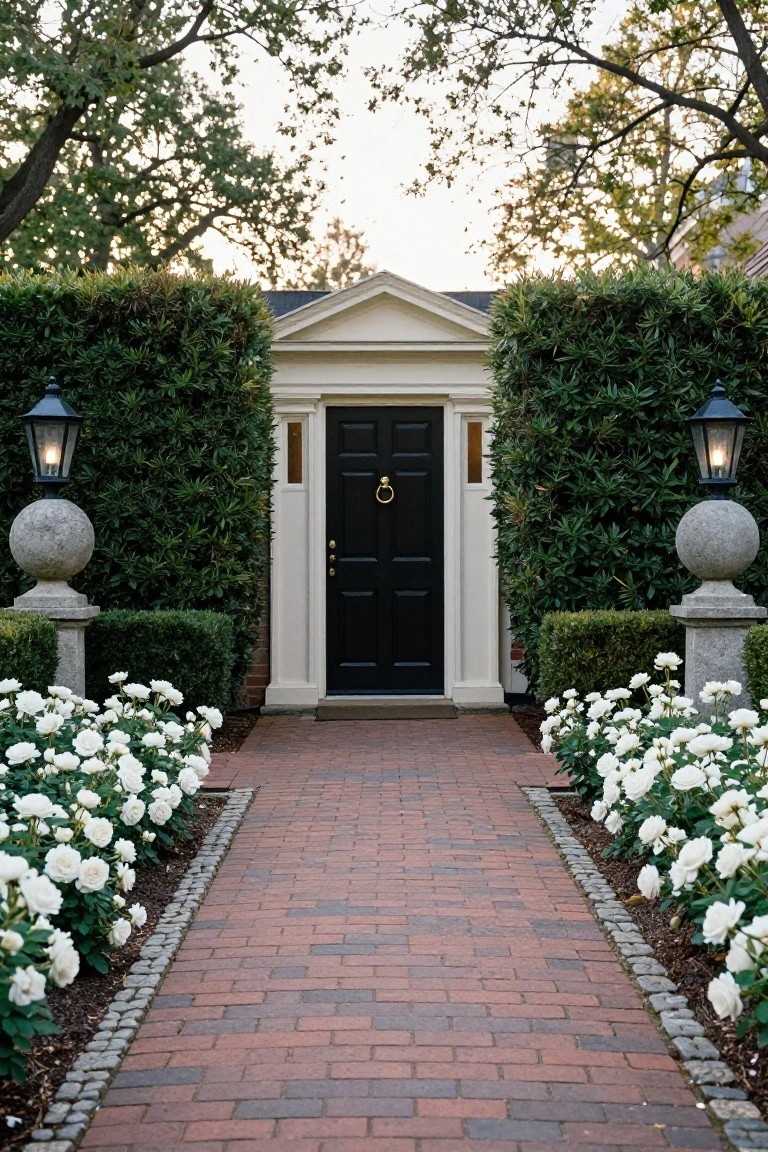
A straight red brick path like this leads the eye simply to the front door. White roses massed along both sides add a soft touch that repeats through the season. Paired with low boxwoods and tall green hedges, it keeps things neat and formal without much upkeep.
This kind of walkway fits colonial style homes or older properties with a classic entry. Lay the bricks in a running bond pattern for stability, then edge with cobblestones and plant tough white roses like Knock Out varieties. Skip the curves, stick to symmetry, and it welcomes guests right up.
Line Walkway with Potted Boxwoods
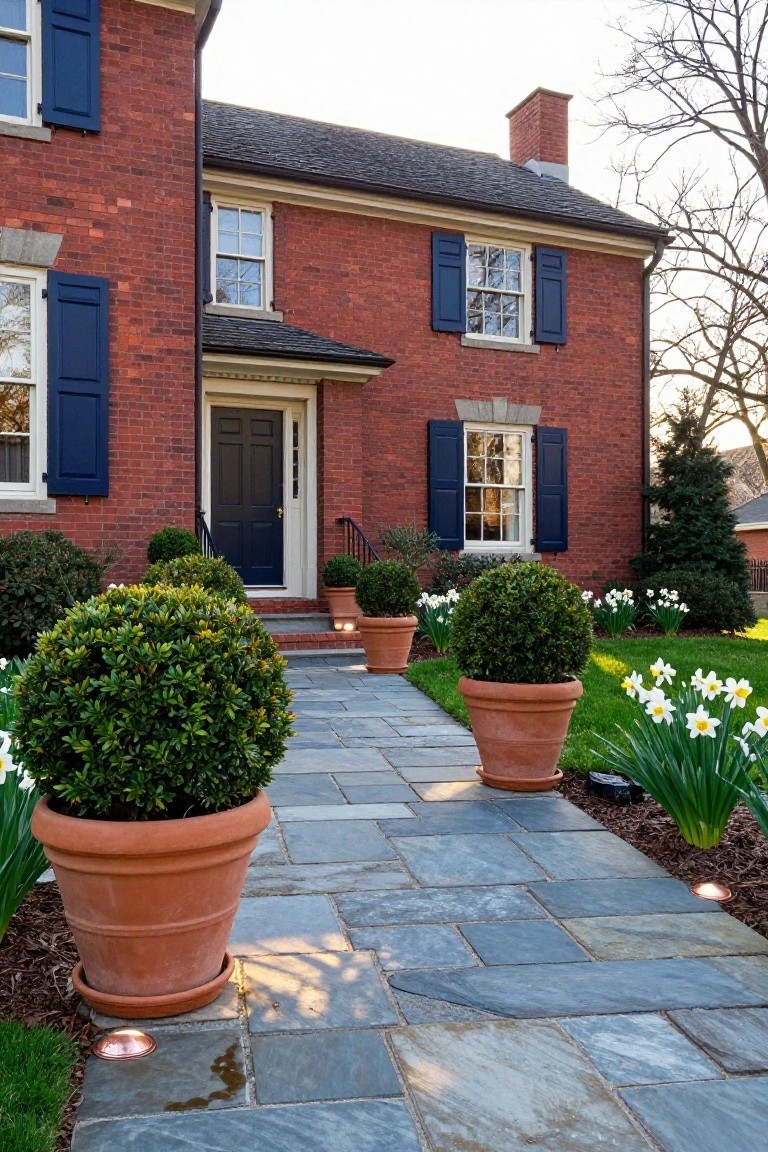
One simple way to make a colonial walkway feel more finished is to line it with boxwoods in big terracotta pots. These round topiaries give a neat, formal look that matches brick houses and dark front doors. They stay green year round, so the path always looks put together without much work.
Place the pots right along the edges of your stone or slate path, keeping them the same size for balance. This works best on straight walks leading to the entry, especially where you want low upkeep. Just pick pots big enough to hold mature plants, and group a few daffodils nearby in spring for color.
Brick-Edged Gravel Walkway
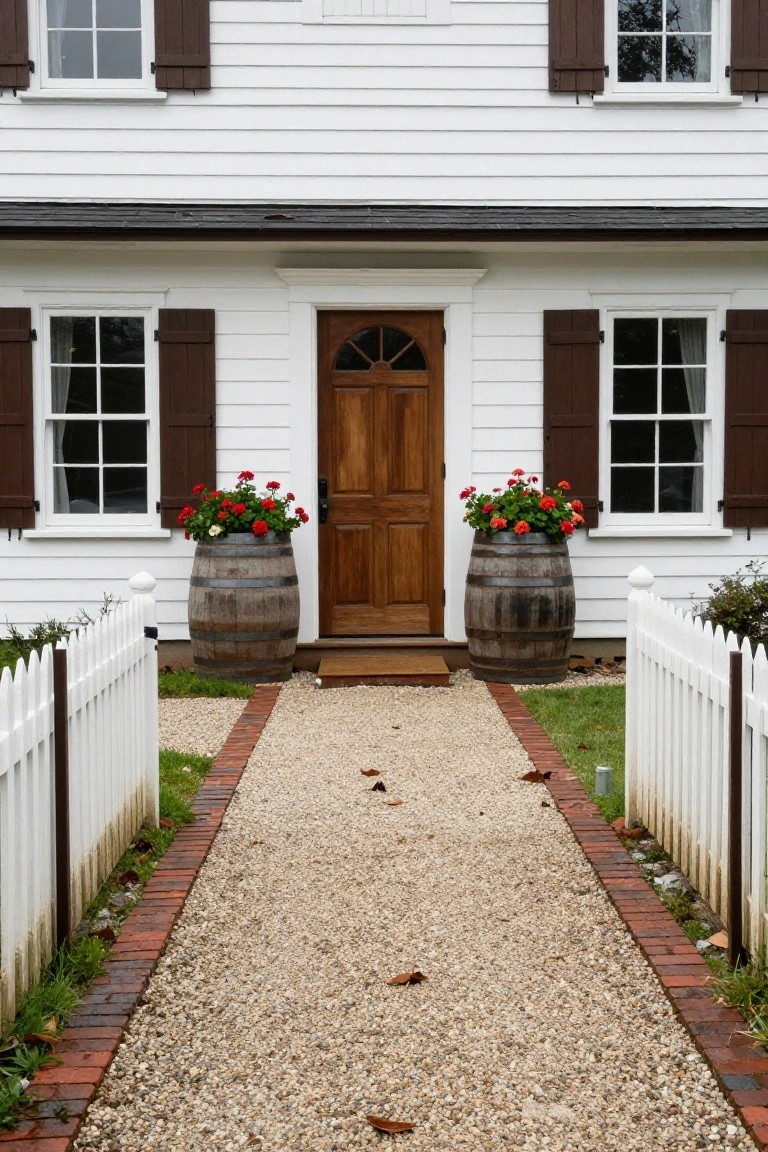
A gravel path edged in bricks makes a clean, straightforward approach to the front door. It fits right into the colonial style of this white clapboard house, with its simple lines and dark shutters. Those big wooden barrel planters filled with red geraniums sit on either side, marking the entry without much fuss. The whole thing feels settled and easy on the eyes.
You can pull this off in smaller front yards where you want low upkeep. Gravel drains well, and bricks keep it from spreading. Pair it with a picket fence like here for that classic yard feel. Just make sure the base is solid so it doesn’t shift over time.
Straight Bluestone Walkway to the Entry
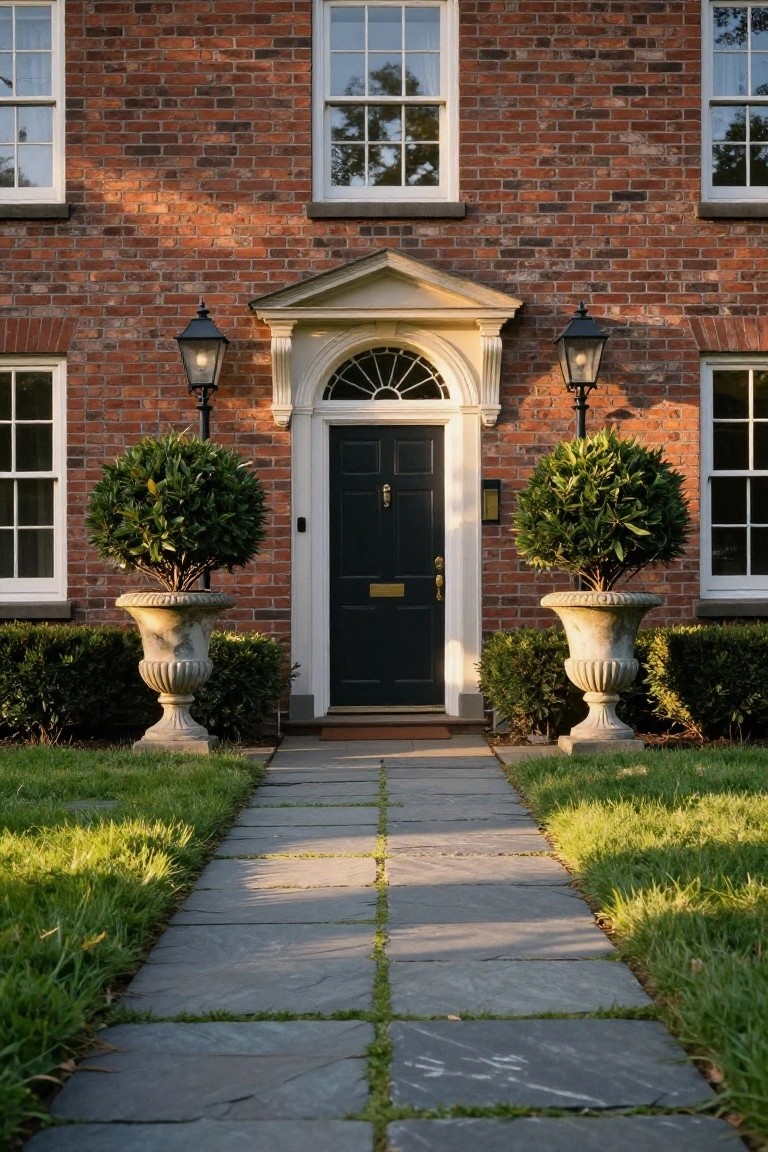
A straight bluestone walkway like this one cuts right through the front lawn and heads straight for the door. Those irregular gray pavers give it a natural look that fits older colonial homes without feeling too fussy. The path keeps things simple and formal. It makes the whole facade more welcoming from the street.
This works best on homes with centered entries and some lawn space out front. Lay the pavers in a running bond pattern for stability. Flank the end with matching urns if you want that extra touch of symmetry. Just make sure the stone is set properly so water drains off. It stays looking good year after year.
Herringbone Brick Walkway
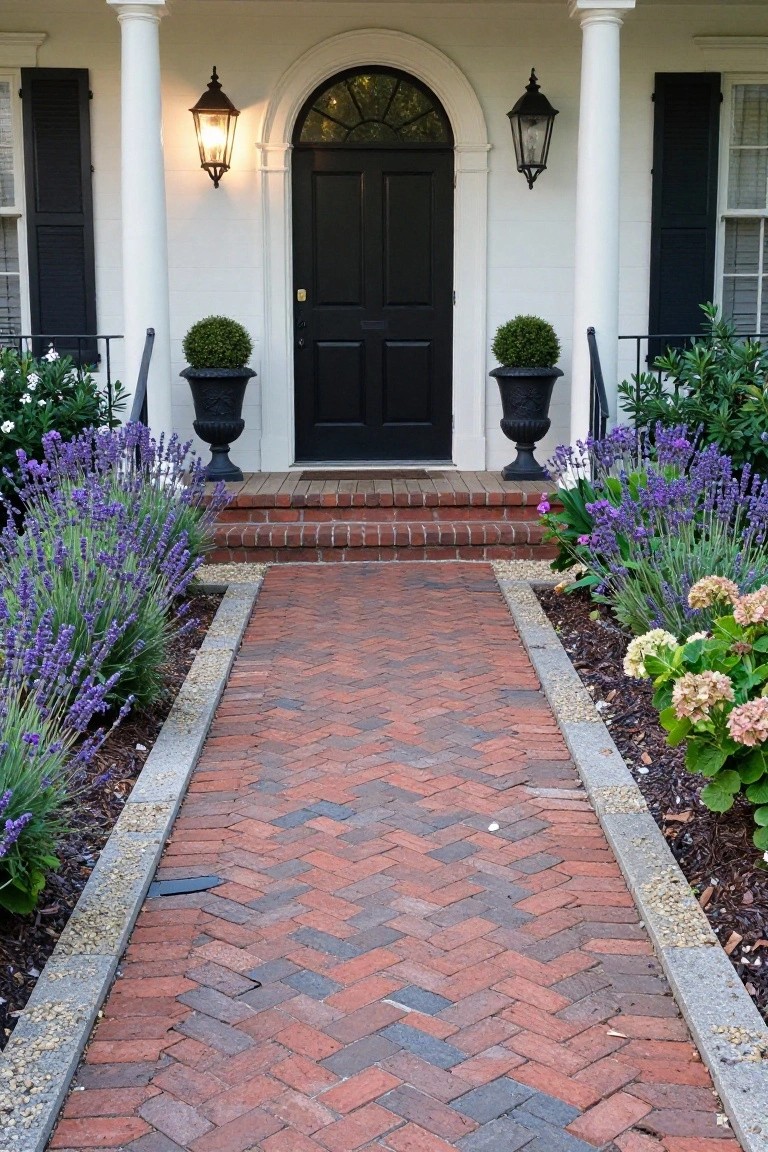
A simple brick walkway laid in a herringbone pattern makes a strong path to the front door on this colonial home. The red bricks catch the eye right away and fit the traditional style without much fuss. Flanked by low lavender plants, it keeps things neat and adds a bit of color along the way.
This setup works best where you have a few steps leading up to the entry. Use it on a straight run like this one, and edge it with gravel or stone to hold everything in place. It suits most colonial or older homes, especially if you want low upkeep. Just make sure the bricks are set tight so they don’t shift over time.
Curved Concrete Walkway to the Porch
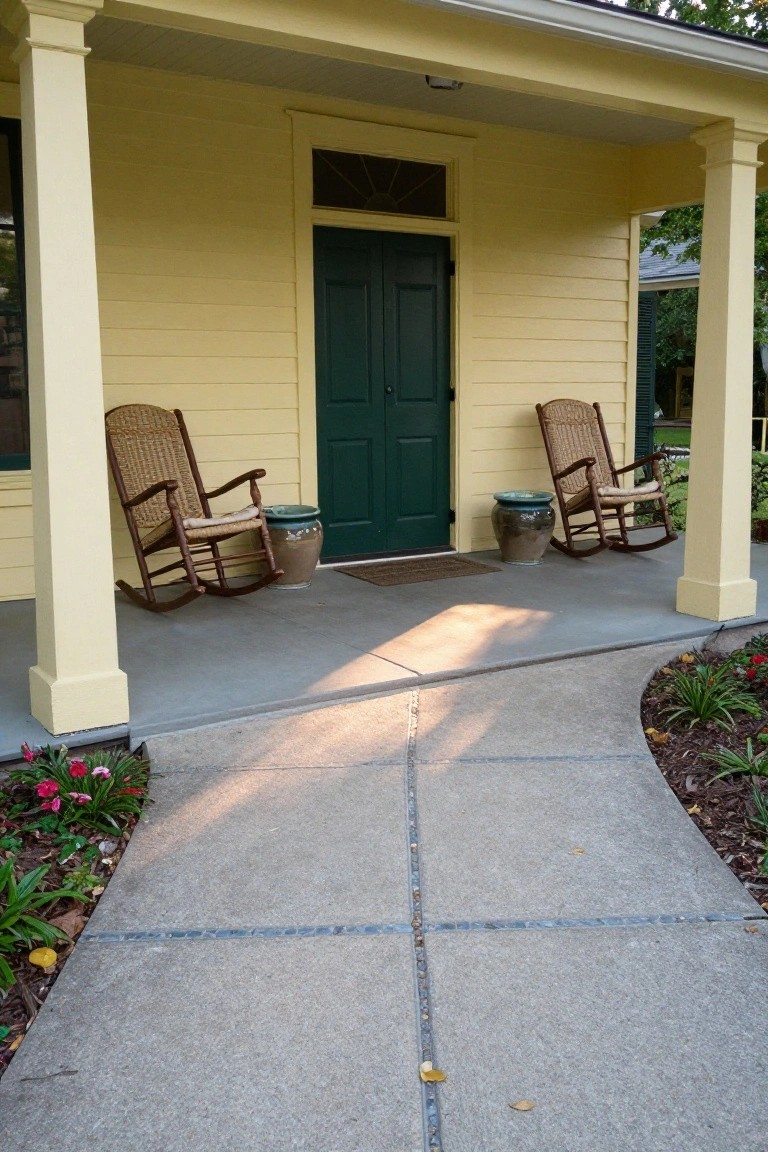
A gentle curve in the walkway makes the approach to this colonial porch feel natural and welcoming. The plain concrete path has subtle lines and a few embedded stones that add just enough interest without extra cost. Low plants and mulch along one edge keep things tidy and frame the path nicely, leading straight to the front door.
This setup fits older homes with a bit of front yard space. It works on flat or slightly sloped lots, and the curve helps guide visitors around any trees or bumps. Stick to simple flowers like these pink ones so maintenance stays low, and pair it with a porch that has some seating already in place.
Cobblestone Walkway to Colonial Entry
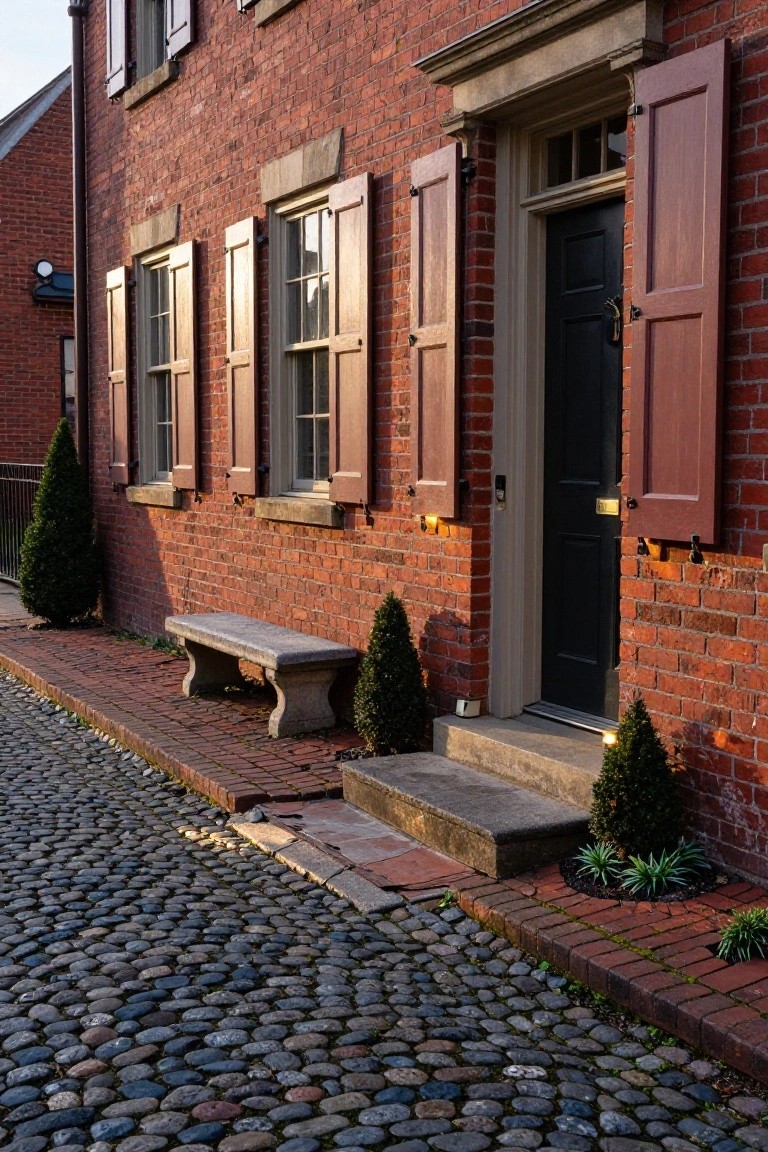
A narrow cobblestone path runs right alongside this red brick colonial house, guiding you straight to the black front door. The rounded stones give it that worn-in, historic feel that fits older homes perfectly. A plain stone bench sits there too, adding a spot to stop before heading in.
This kind of walkway suits tight urban lots or narrow streets where you want to keep things simple. Lay the cobbles in a loose pattern, maybe edge them with matching brick pavers to tie into the house. It keeps foot traffic clear and looks right at home with traditional architecture. Just make sure the stones are set firm so they don’t shift over time.
Brick and Stone Entry Walkway
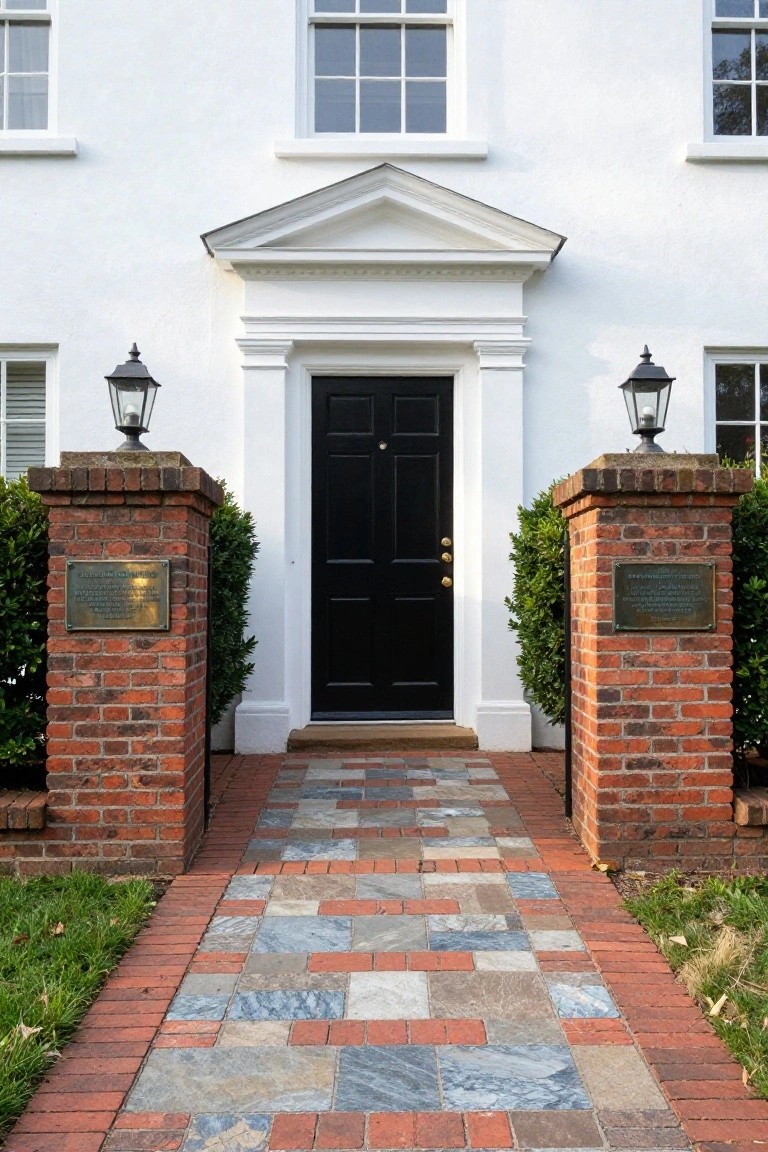
This walkway uses red brick borders around mixed stone and brick pavers in different shapes and colors. It pulls your eye right up to the door without being plain. The brick pillars on each side add structure, and those lanterns on top give a nice touch at dusk. On a classic white colonial house like this, it feels right at home and makes the entry more interesting.
You can do something similar on most front approaches with gentle slopes. Lay the bricks along the edges first for clean lines, then fill in with affordable stone slabs from a local supplier. It suits traditional homes best, especially where you want low upkeep. Just keep the pavers level so no tripping, and add boxwoods or something evergreen by the pillars to frame it all year.
Stone Walkway Lined with Perennials
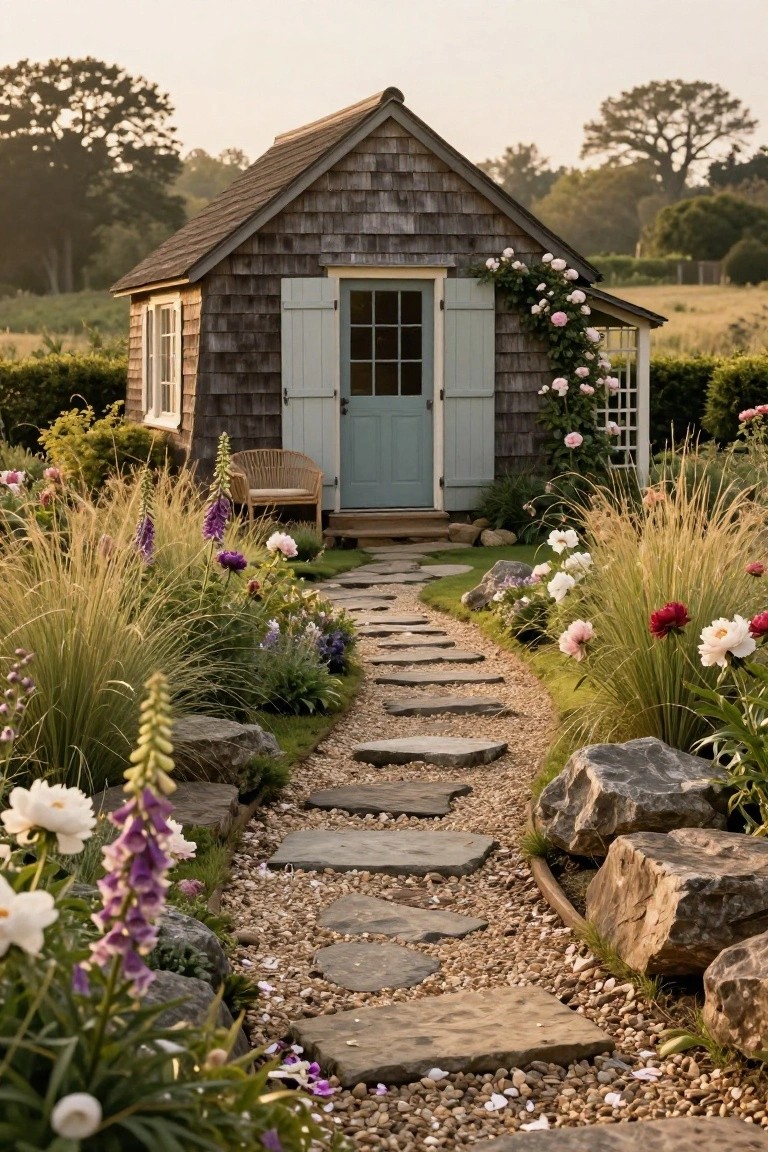
A simple stone walkway like this winds through gravel and plants right up to the door. The flat slabs are set loose enough to follow the ground’s natural curve, with tall foxgloves and peonies brushing the edges. It keeps things from feeling too rigid, and points your eye straight to that sweet blue entry on the shingle cottage.
You can pull this off in front of older colonial homes or any place with a side garden. Pick rough-cut local stone for the path, then fill gaps with gravel and add repeat bloomers along the sides. It suits sloped yards best… just watch the weeds in the gravel.
Rustic Boardwalk Walkway
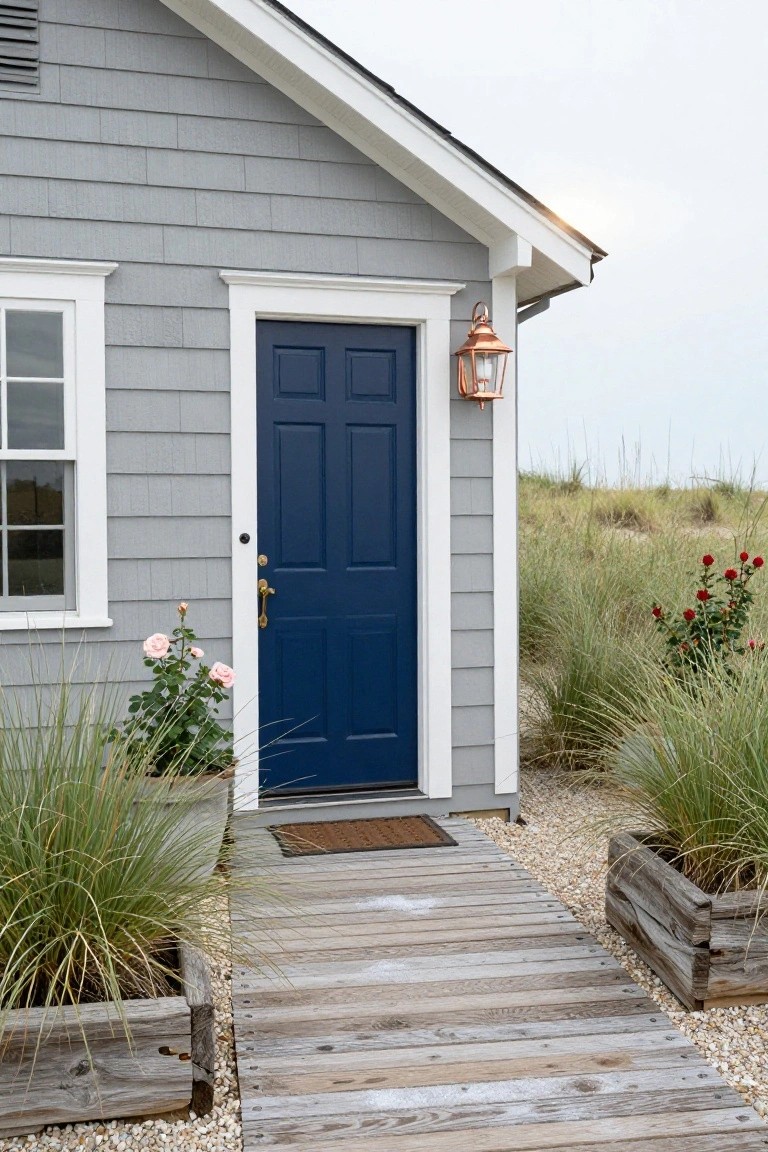
A simple weathered wood boardwalk makes a natural path right up to the entry door. It keeps things casual and beachy, especially with sea grass planters lining the sides. That soft gray house siding and navy door pop just enough without trying too hard.
This works best on coastal colonial homes or vacation spots near dunes. Lay down treated lumber or reclaimed boards over gravel for drainage. Skip fancy edging, it stays low-key and holds up to sand and salt air.
Brick-Edged Concrete Walkway
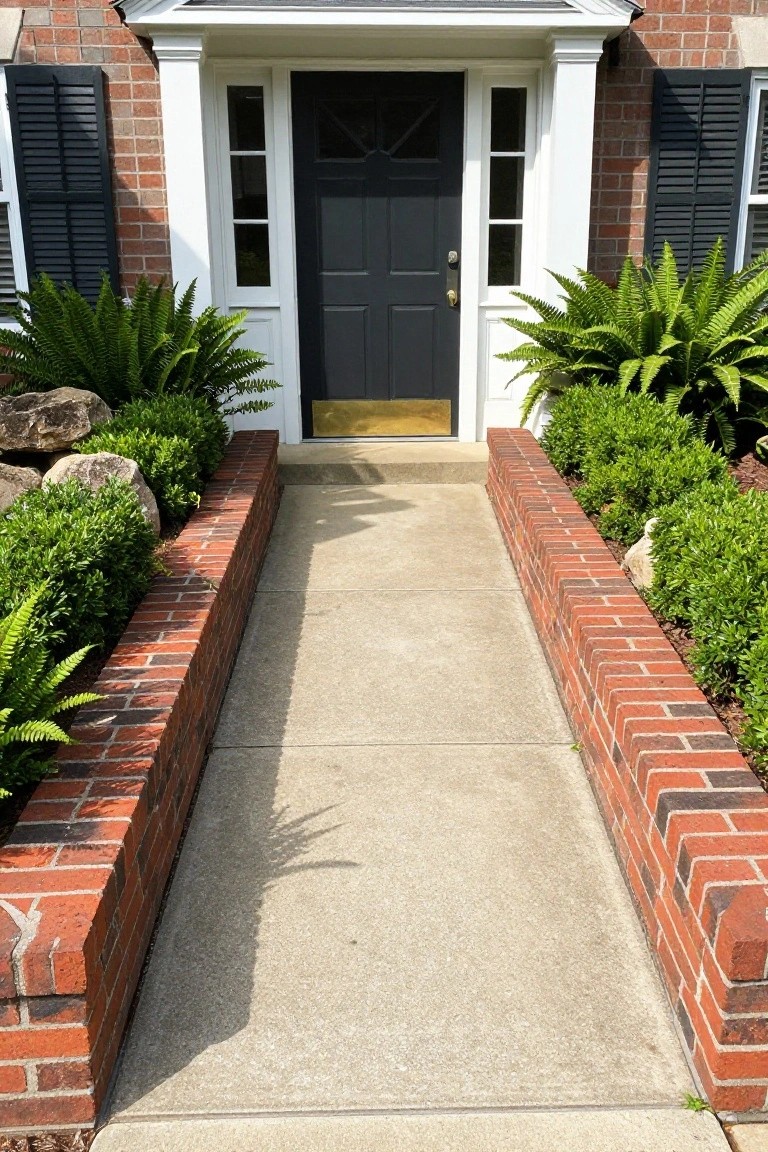
A plain concrete walkway like this one gets a classic lift from low brick walls along both sides. The brick matches the house perfectly, so it feels like part of the whole front. Soft plants tucked in, like those ferns and boxwoods, keep things green without crowding the path. It makes the approach feel straight and welcoming, especially for colonial style homes.
This works best where you have flat ground leading to the door. Use it to replace a plain slab or gravel path. Stick to bricks that echo your house color, and pick tough, low plants that won’t flop over the edge. One thing… keep the concrete simple, no fancy stamps needed.
Simple Gravel Walkway for Colonial Entries
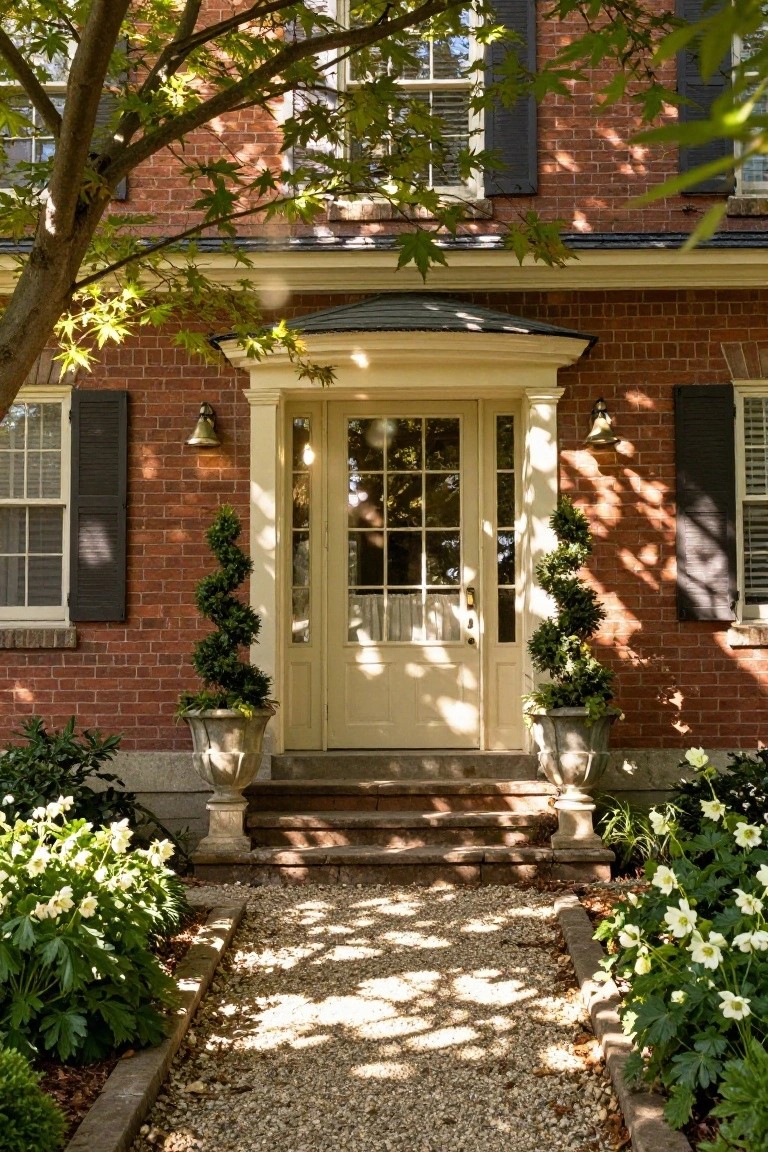
A straight gravel path like this one keeps things clean and easy on a colonial front approach. It runs right up to the door without any fuss, edged neatly with stone blocks that hold everything in place. The light-colored pebbles catch the sun nicely, making the walk feel bright and welcoming, especially with those low white flowers tucked along the sides.
This setup works best on homes with brick or stone facades where you want low upkeep. Just lay down landscape fabric first to stop weeds, then add gravel over it, two or three inches deep. Skip it if your area gets heavy rain… gravel can wash out. Pair it with clipped boxwoods or simple perennials for that finished colonial look.
Curved Bluestone Walkway with Moss Edging
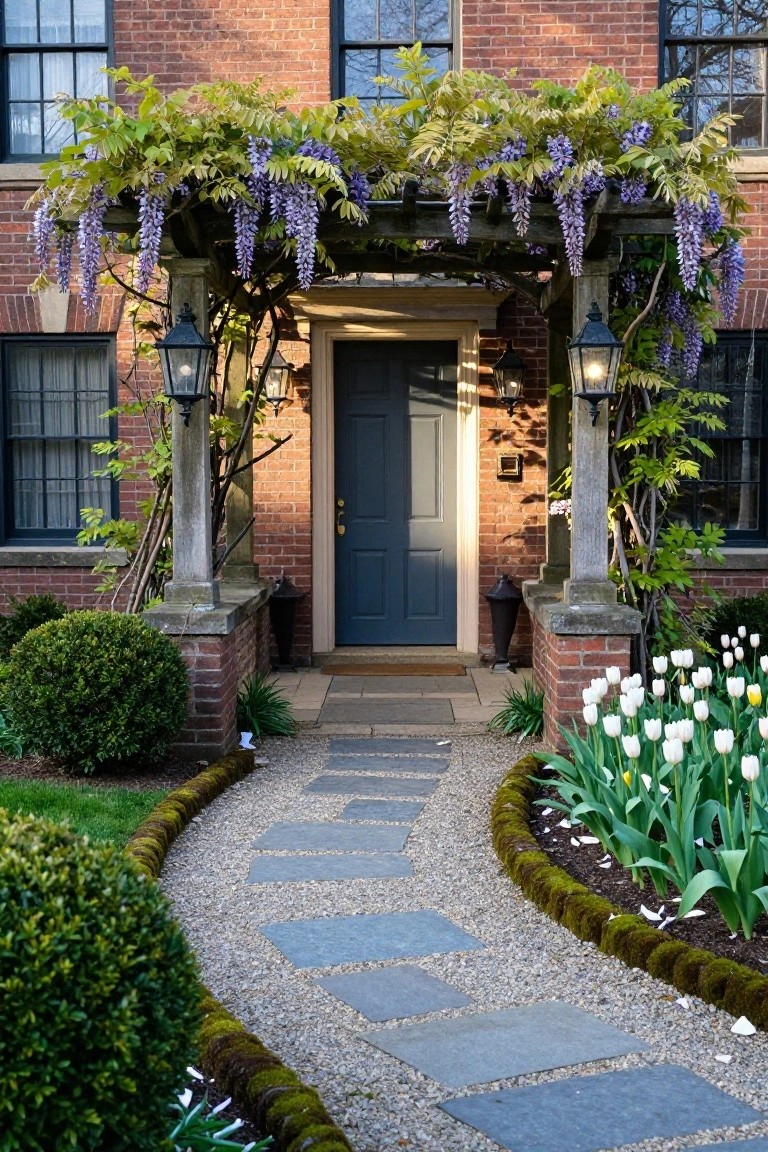
A curved path like this one uses rough-cut bluestone slabs laid in gravel to guide you right to the front door. The mossy border keeps it neat without much trimming, and a few tulips add color in spring. It fits a colonial brick house perfectly because the gentle bend makes the approach feel less formal, more like you’re strolling into a garden.
Try this in yards with room for a little curve, especially where the house sits back from the street. Source local stone for that aged look, and plant low evergreens or sedges along the edge to hold it together year-round. Skip it on super narrow lots, though. The path stays practical for wheelbarrows too.
Mosaic Pebble Walkway
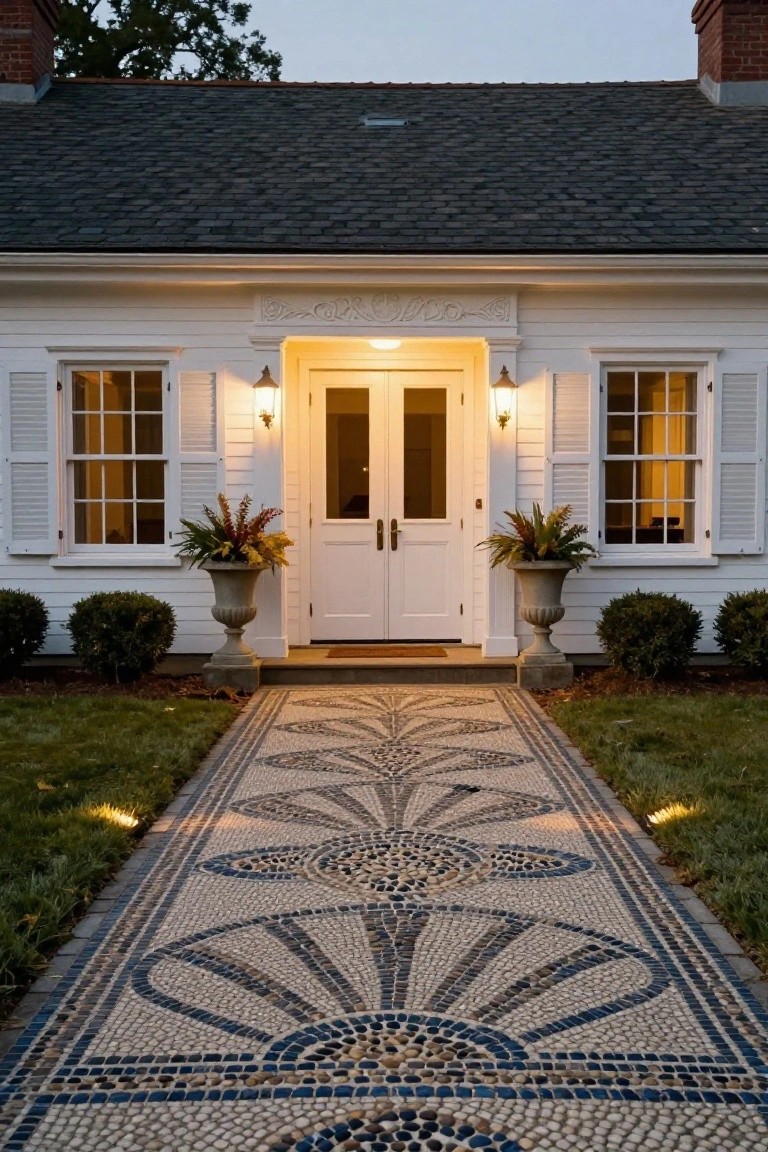
A mosaic pebble walkway like this one turns a simple path into something special. The fan and shell shapes made from smooth pebbles in whites, grays, and blues catch the light just right, especially at dusk when the entry lanterns glow. It fits right in with a classic white colonial house, making the front door feel more grand without overdoing it.
You can use this idea on any straight path to your entry, especially if your home has traditional lines. Stick to neutral pebble colors to keep it timeless, and edge it with low grass or brick for clean borders. It works best in milder climates where moisture won’t loosen the stones, and it’s a good pick for homes wanting low upkeep with high style.
Brick Walkway Borders
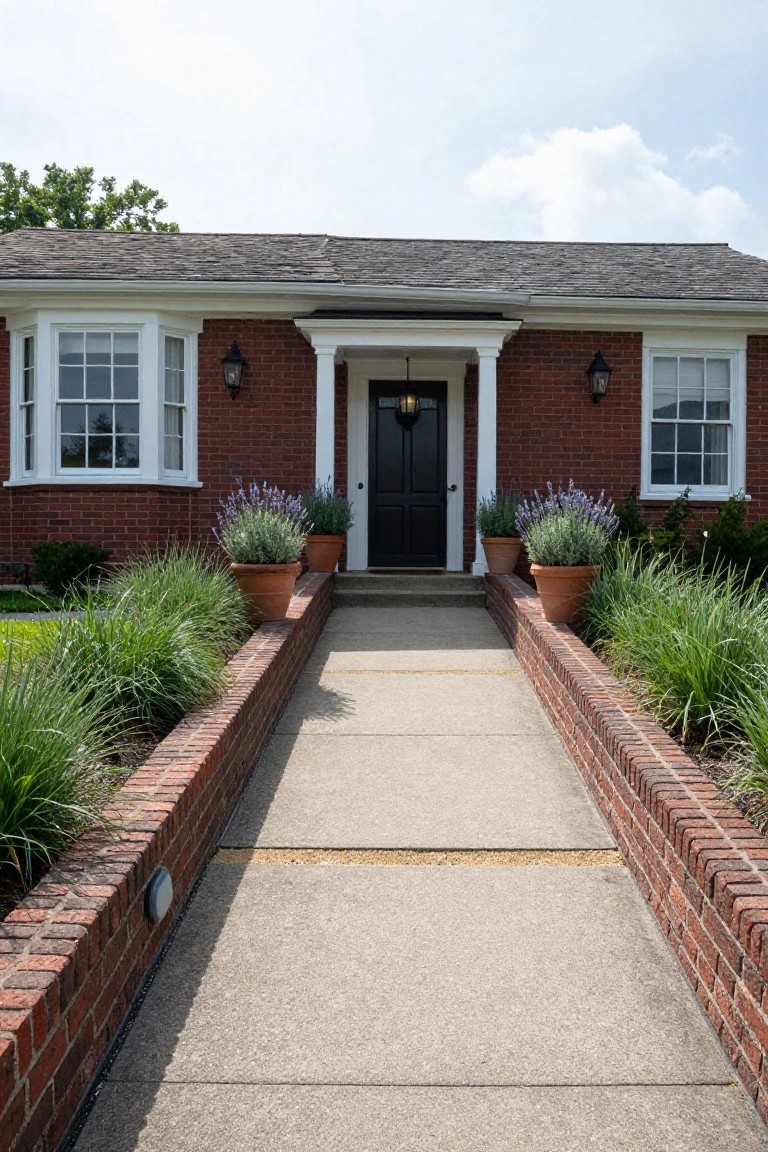
A simple concrete walkway gets a big lift from low brick walls that run right alongside it. Here they match the house brick perfectly, so the path feels like part of the front of the home instead of just something slapped on. Ornamental grasses spill over the edges a bit, and those terracotta pots with lavender add some color without trying too hard. It keeps things neat and leads your eye straight to the door.
This setup works best on smaller front yards where you want to define the path without taking up space. Use it on colonial or traditional homes with brick facades, since the material tie-in makes everything look pulled together. Just keep the walls low, around two feet, so they don’t block the house view. Skip it if your yard slopes a lot, unless you build them sturdy.
Frequently Asked Questions
Q: How do I clean brick walkways without damaging them?
A: Grab a stiff broom and sweep away debris every week. Hose it down monthly, and spot-treat weeds with vinegar before they take hold.
Q: Can I DIY a gravel path for my Colonial front yard?
A: Level the ground first, lay down landscape fabric, then spread 4 inches of gravel. Rake it smooth, and edge with stone for that crisp Colonial border.
Q: What plants pair best along these walkways?
A: Go for boxwoods or hydrangeas. They stay tidy and nod to old garden styles… plant them 2 feet back so folks don’t brush against them.
Q: Does a curved path work on a straight-laced Colonial house?
And gentle curves? They soften the approach beautifully. Keep the radius wide to blend right in.
