

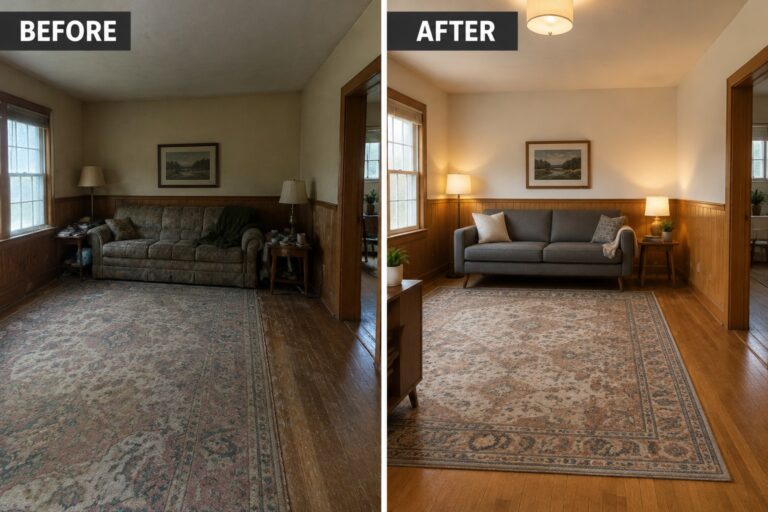
Older homes can feel awkward when new finishes cover the details that give them character, or when the original woodwork looks worn beside newer updates.
I find that preserving trim, doors, and built-ins often gives a room a sense of continuity, while thoughtful repairs and a simpler color palette help the space feel more useful and cared for.
The best changes make old details feel at home in daily life, rather than treating them as decoration that no one can touch.
Even small improvements can make a room feel clearer and more settled.
I’d save the ideas that suit the woodwork already in your home and adapt them to your layout, budget, and the way you use each room.
Make A Plain Living Room Feel Finished
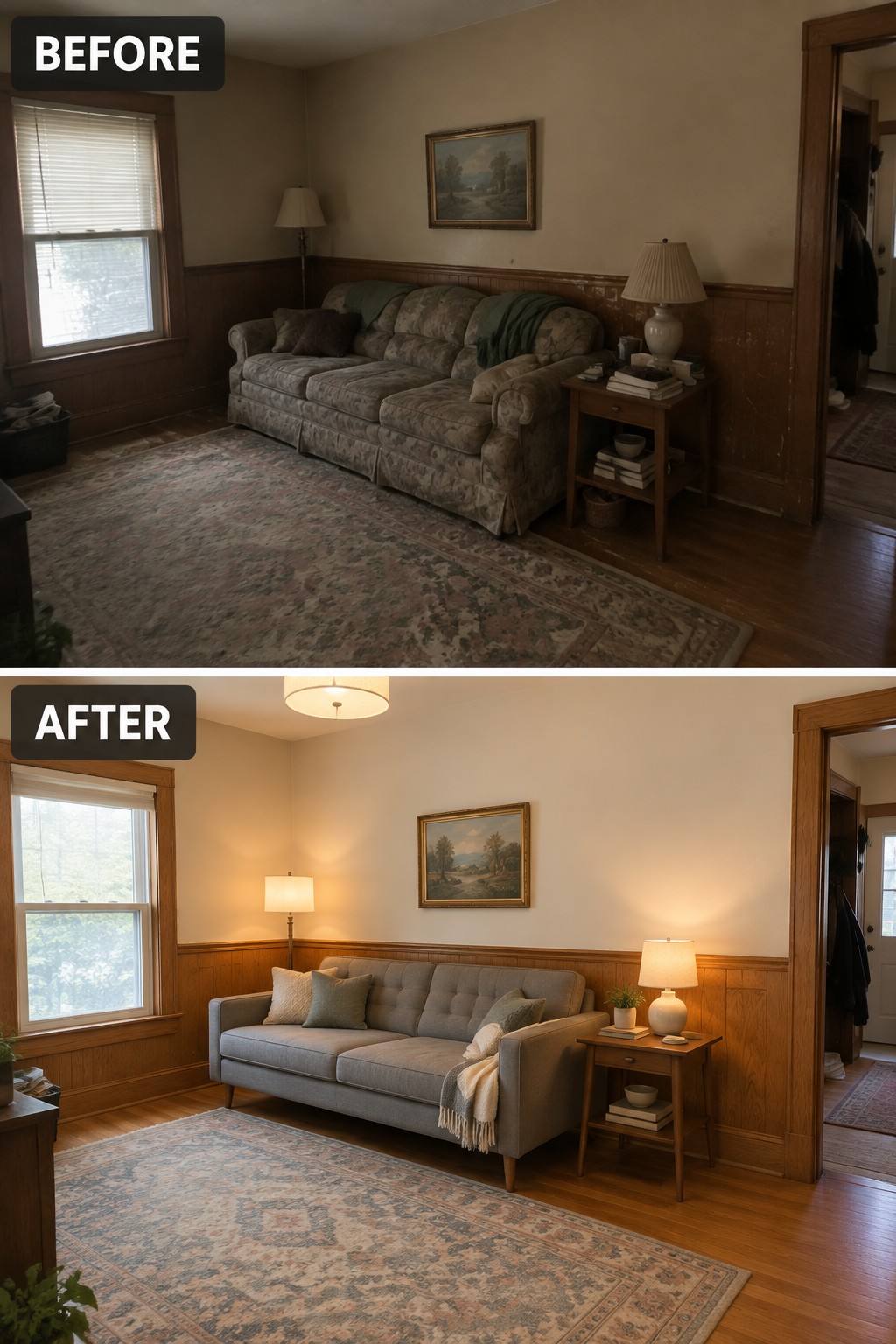
Replacing the bulky patterned sofa with a simpler, well-scaled one makes the room feel less crowded while leaving the original wood paneling in place. A rug helps define the seating area, so the room feels arranged rather than merely furnished.
In an older home, keep the woodwork as part of the room’s character and choose seating that leaves comfortable space to move around. A rug in a quieter pattern can help tie the room together without competing with the paneling.
Use A Rug To Define The Dining Area

The old dining room felt crowded, partly because the large patterned rug extended well beyond the table. Replacing it with a smaller, simple rug makes the dining area feel more settled and leaves the original wood floor visible.
This approach works well in older homes where the floors are worth showing off. Choose a rug large enough for the chairs to stay on it when pulled out, but avoid one that overwhelms the room.
Update A Narrow Kitchen With Simple, Practical Finishes

The kitchen feels more usable after dated surfaces are replaced with a light countertop and a clean tile backsplash. Keeping the existing cabinet layout makes the change feel manageable while giving the room a fresher look.
In a narrow older kitchen, start with the surfaces you use every day, and keep finishes light so the room does not feel crowded. Preserve sound cabinets and original trim where possible, then update hardware or add open shelving only where it helps with storage.
Restore The Woodwork And Brighten The Hallway
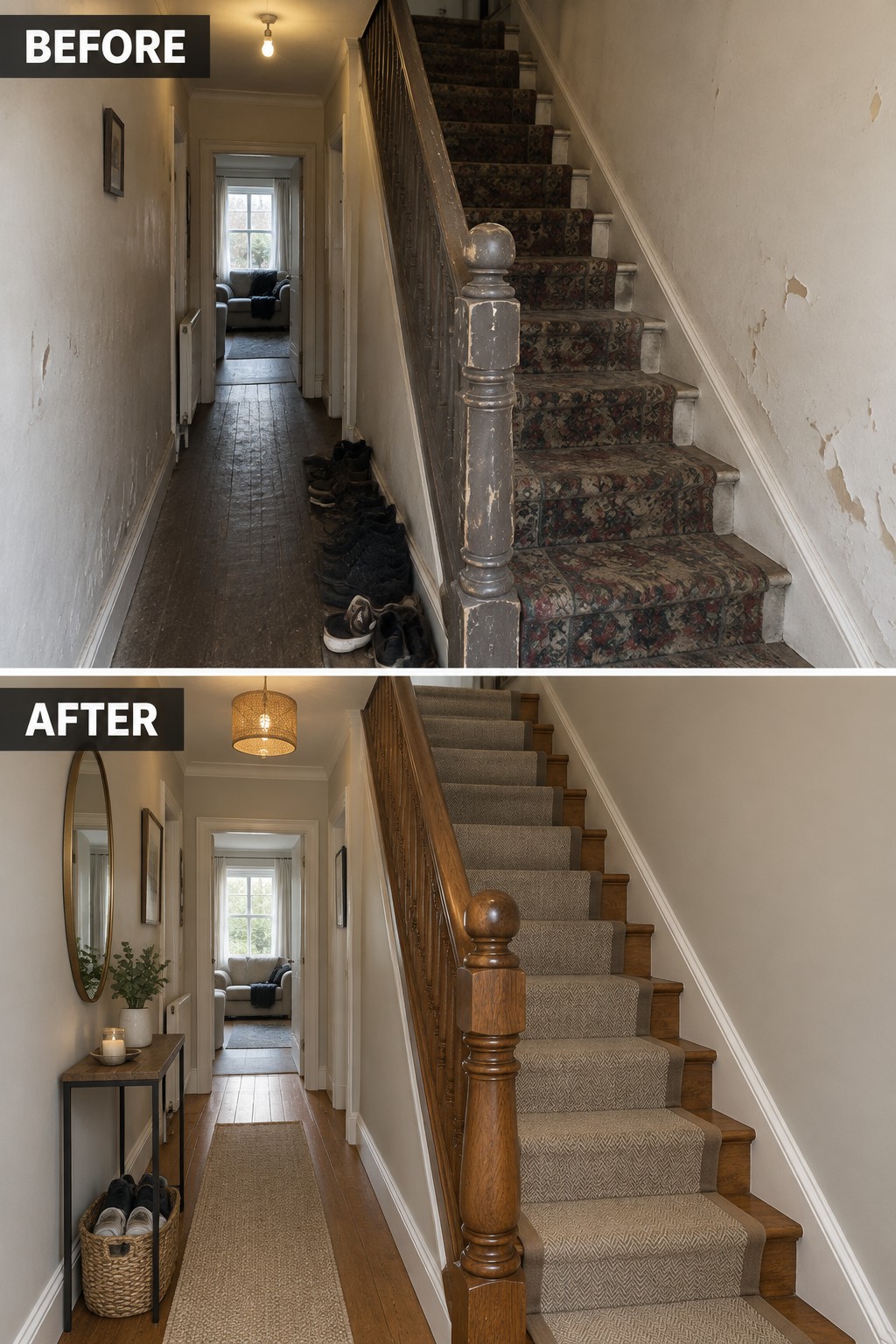
Replacing the worn stair carpet and repainting the walls makes this narrow hallway feel cleaner, while the original wooden banister remains the main feature. Keeping that woodwork lets the update feel suited to an older home rather than starting from scratch.
If you have a similar staircase, clean and repair the banister before deciding whether it needs refinishing. A plain runner and fresh wall paint can tidy the space without covering up its character. Keep the walkway clear, especially in a narrow hall.
Refresh The Bathroom Without Replacing The Wood Vanity

The bathroom feels cleaner and more settled after the cluttered counter was cleared and the sink area was updated. Keeping the original wood vanity lets it remain part of the room while the simpler countertop and faucet give the space a fresh look.
This approach works well in an older bathroom when the cabinets are still in good shape. Clear the counter first, then focus on one practical update, such as a new faucet or countertop. That can make the room feel more current without losing its original woodwork.
Refresh The Fireplace Wall And Keep The Woodwork
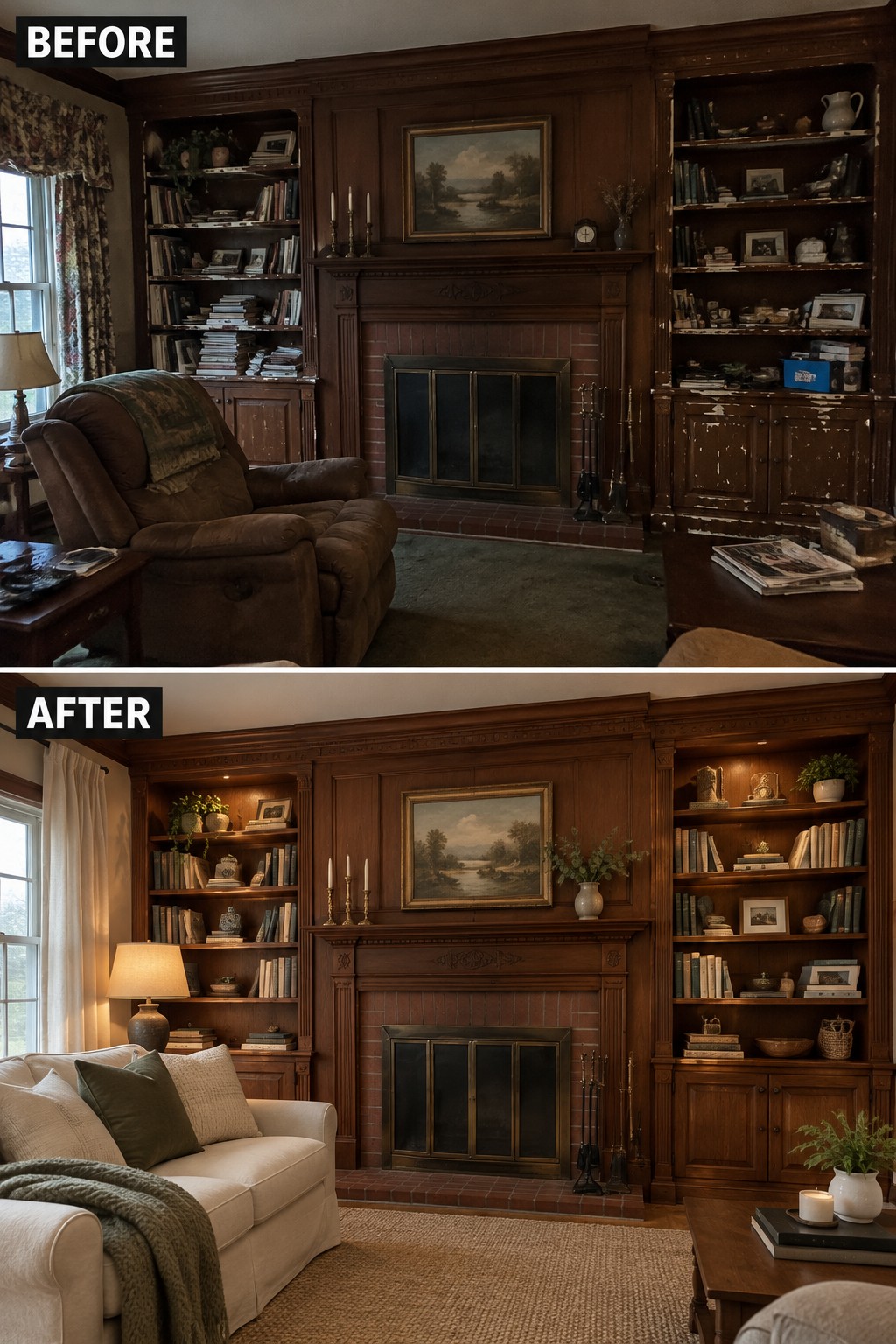
The built-in bookcases and carved fireplace surround give this older living room plenty of character, but clutter and dim finishes make them easy to overlook. Clearing the shelves and styling them more simply lets the original woodwork stand out without replacing it.
This approach works well when a room has sound built-ins or trim worth keeping. Start by removing excess items, then arrange a smaller mix of books and a few objects on the shelves. A light sofa and a simple rug can make the seating area feel more current while leaving the woodwork as the room’s main feature.
Bring Out The Character In A Bedroom
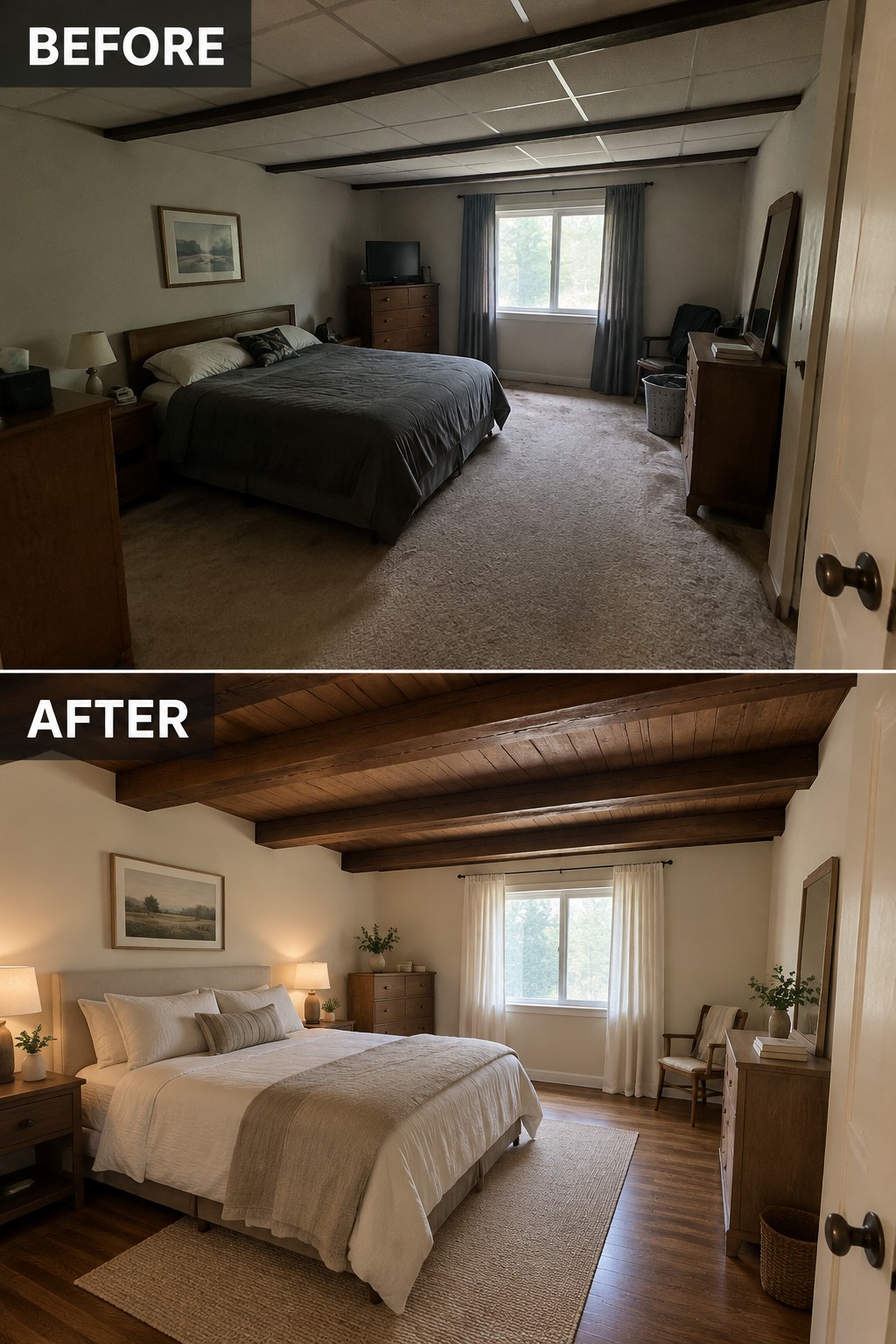
The bedroom feels more finished once the ceiling beams become a feature instead of blending into the old drop ceiling. Exposing and refinishing original woodwork can give a plain room a clear focal point while keeping the house’s character.
If your home has covered beams, check their condition before deciding whether to uncover them, and keep the rest of the finishes fairly simple. Light bedding and a neutral rug let the wood stand out without making the room feel busy.
Give A Narrow Hallway A More Finished Look

The hallway feels more considered after its worn, mismatched finishes are replaced with consistent wood doors and a runner. Keeping the original woodwork in view, or choosing doors that suit the house’s character, can make an older home feel cared for without changing its basic layout.
In a narrow passage, keep the route clear and choose a runner that leaves some floor visible along the edges. A bench can be useful near the entry, but avoid bulky pieces that make the hallway harder to move through.
Refresh The Fireplace Surround
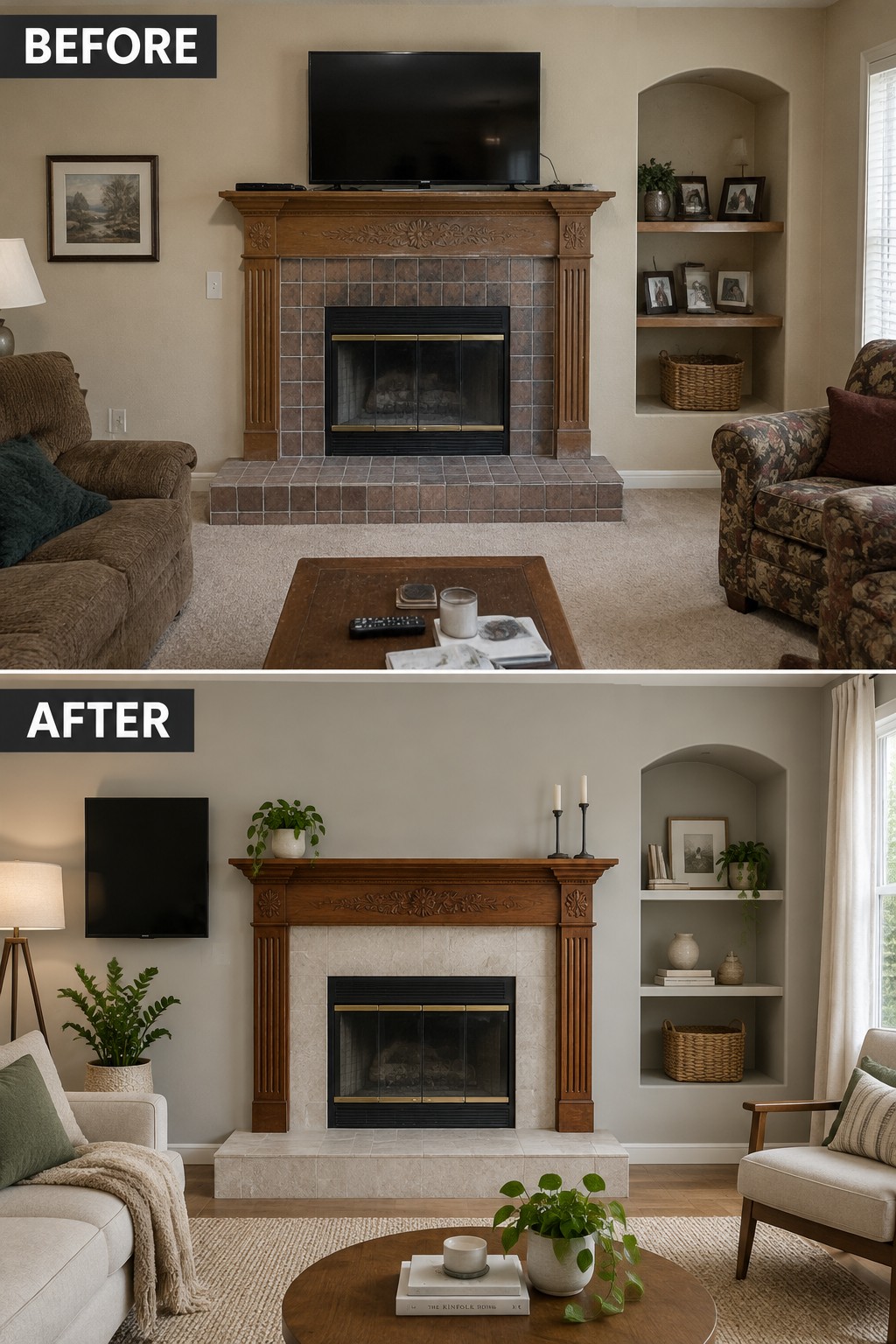
The fireplace already has the room’s strongest original feature: its carved wood mantel. Replacing the dated tile around it with a simple, light finish makes that woodwork stand out while giving the whole living room a cleaner look.
This approach works well when an older fireplace is sound but its surround feels tired. Keep the mantel, choose a surround that suits the home’s character, and avoid adding so many decorations that the carving gets lost.
Turn A Cluttered Closet Into Useful Storage

An old closet can work much better when storage is planned around how you use it. Here, open shelves and hooks replace a jumble of stored items, making room for everyday coats and bags while keeping supplies organized.
In a narrow entry closet, use the upper shelf for baskets and add hooks at a comfortable height for frequently used items. Keep the floor clear enough to reach the back, and choose a simple finish that suits the home’s existing trim.
Repaint Kitchen Cabinets To Refresh The Room
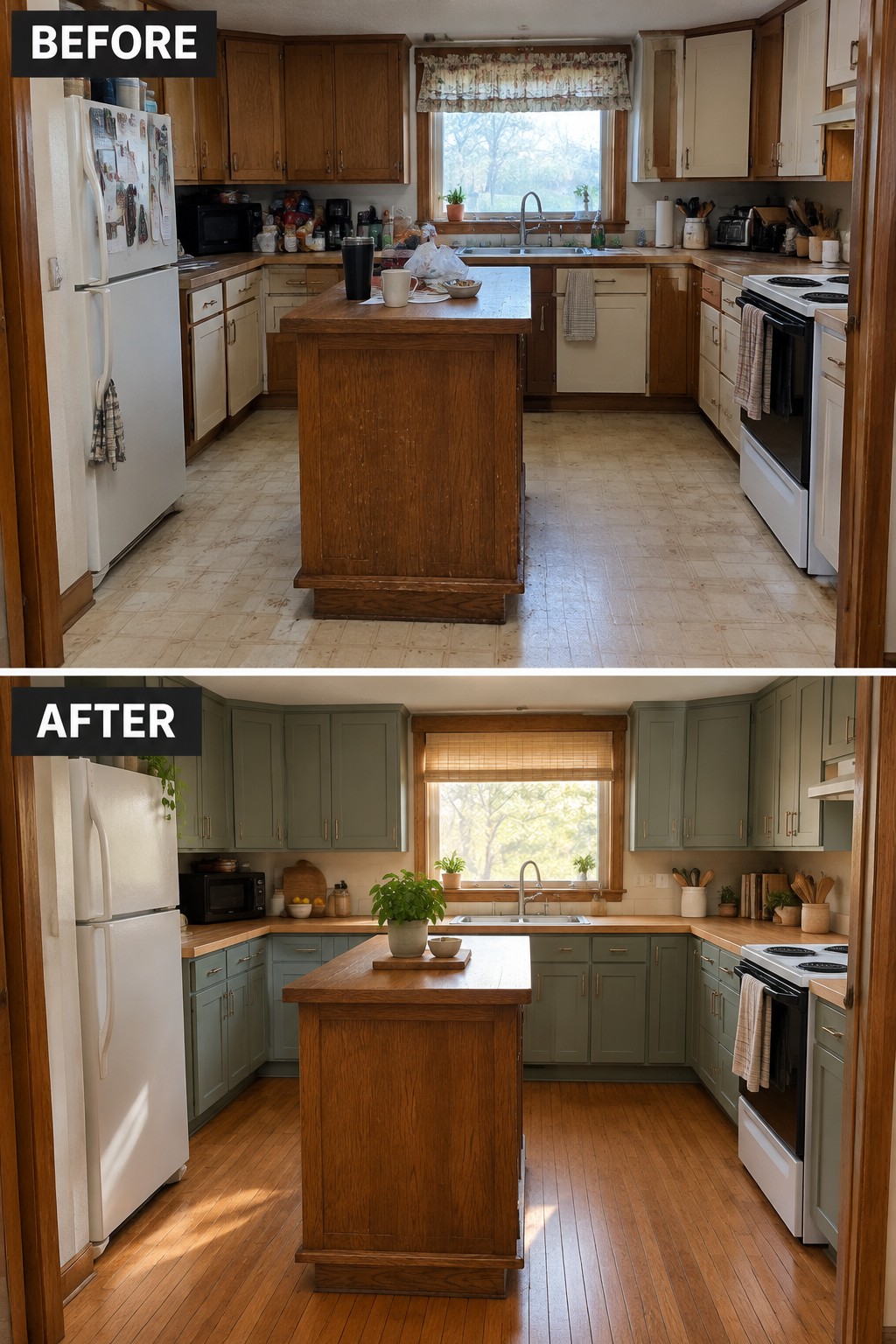
The dated kitchen feels more current after the cabinets are painted a muted green, while the wood island remains in place. Keeping that original wood gives the room a practical focal point without replacing every cabinet.
This approach suits an older kitchen with solid, usable cabinets. Clean and prep the doors carefully before painting, and leave sound woodwork exposed where you want to retain the home’s character.
Refresh A Dining Room With Color And Wood Trim

The room feels more finished once the plain walls are painted a muted green and the existing woodwork is given a clear role. Keeping the wood trim visible lets the older character stand out while the color makes the dining area feel more settled.
This idea works well in older homes with original crown molding or window trim. Choose a wall color that suits the wood, then keep the table and rug in scale with the room so there is still space to move around.
Refresh The Staircase While Keeping Its Woodwork
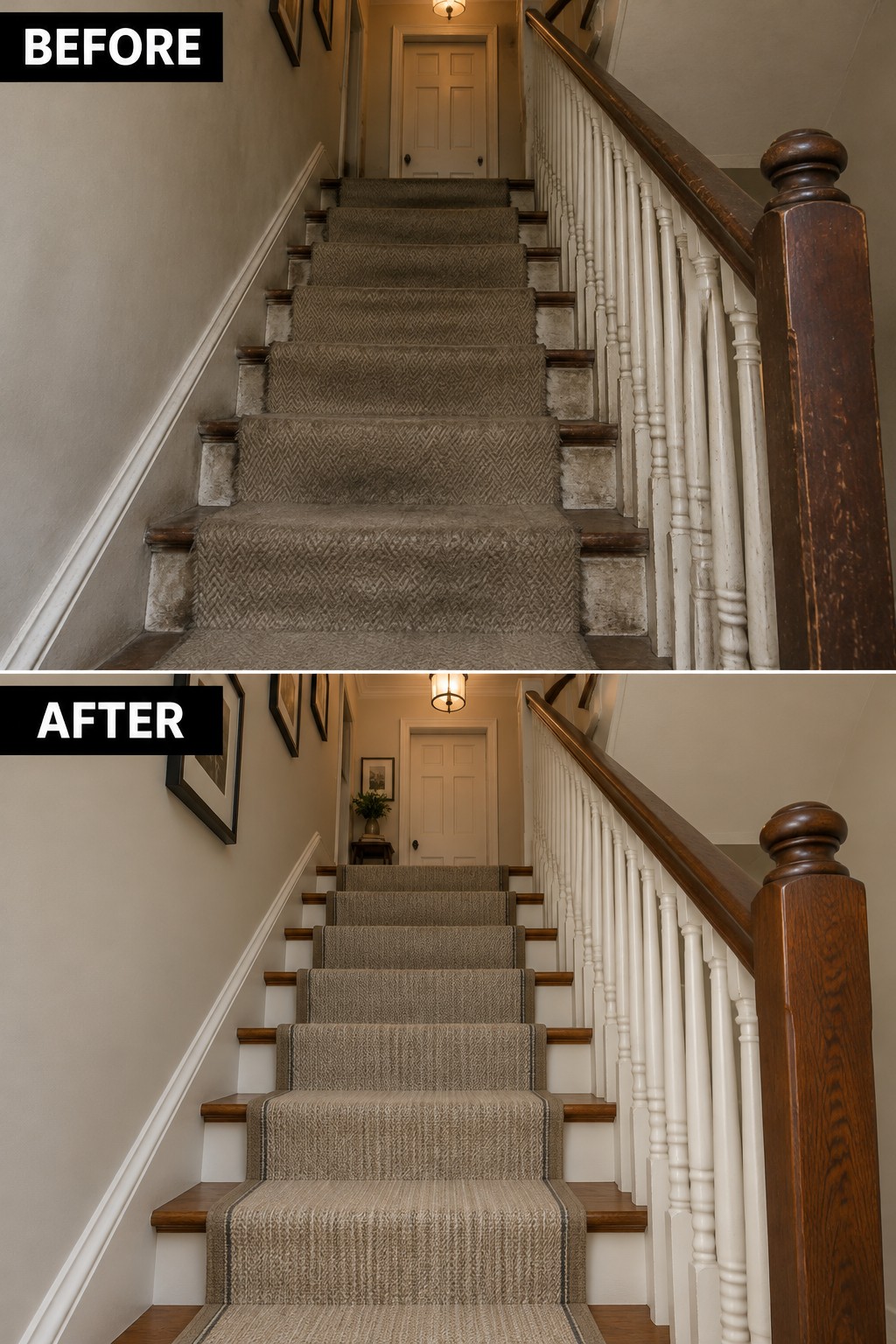
A tired staircase can look much cleaner without losing the wood details that give an older home its character. Here, fresh paint on the stair risers and a simpler runner replace the worn, dingy look while the wooden treads and handrail remain visible.
This approach works well when the staircase is sound but its finish feels dated. Clean and repair the steps first, then choose a durable runner that fits the stair width and leaves the wood edges showing. That keeps the original woodwork part of the room rather than covering it up.
Turn A Built-In Desk Into A Useful Workspace

The built-in desk had become a drop zone for papers, but clearing the surface and giving the shelves a simple arrangement makes the nook useful again. A laptop and desk lamp are all it takes to make the original woodwork feel like a practical part of the room.
This idea works well in an older house with a desk alcove or built-in shelves. Keep only a few things you use often within reach, and leave enough open desk space to work comfortably.
Make A Sunroom Feel Finished With A Defined Seating Area

The sunroom already has a great place to sit, but the bare floor and matching floral upholstery make it feel unfinished. In the updated room, a large woven rug sets off the seating area, while lighter cushions give the wicker furniture a simpler look.
A rug can help a sunroom feel like a real living space, even when the floor is concrete or the room gets plenty of outdoor light. Choose a size that lets the front legs of the seats rest on it, and keep the original woodwork as it is.
Keep The Wood Vanity And Simplify The Bathroom
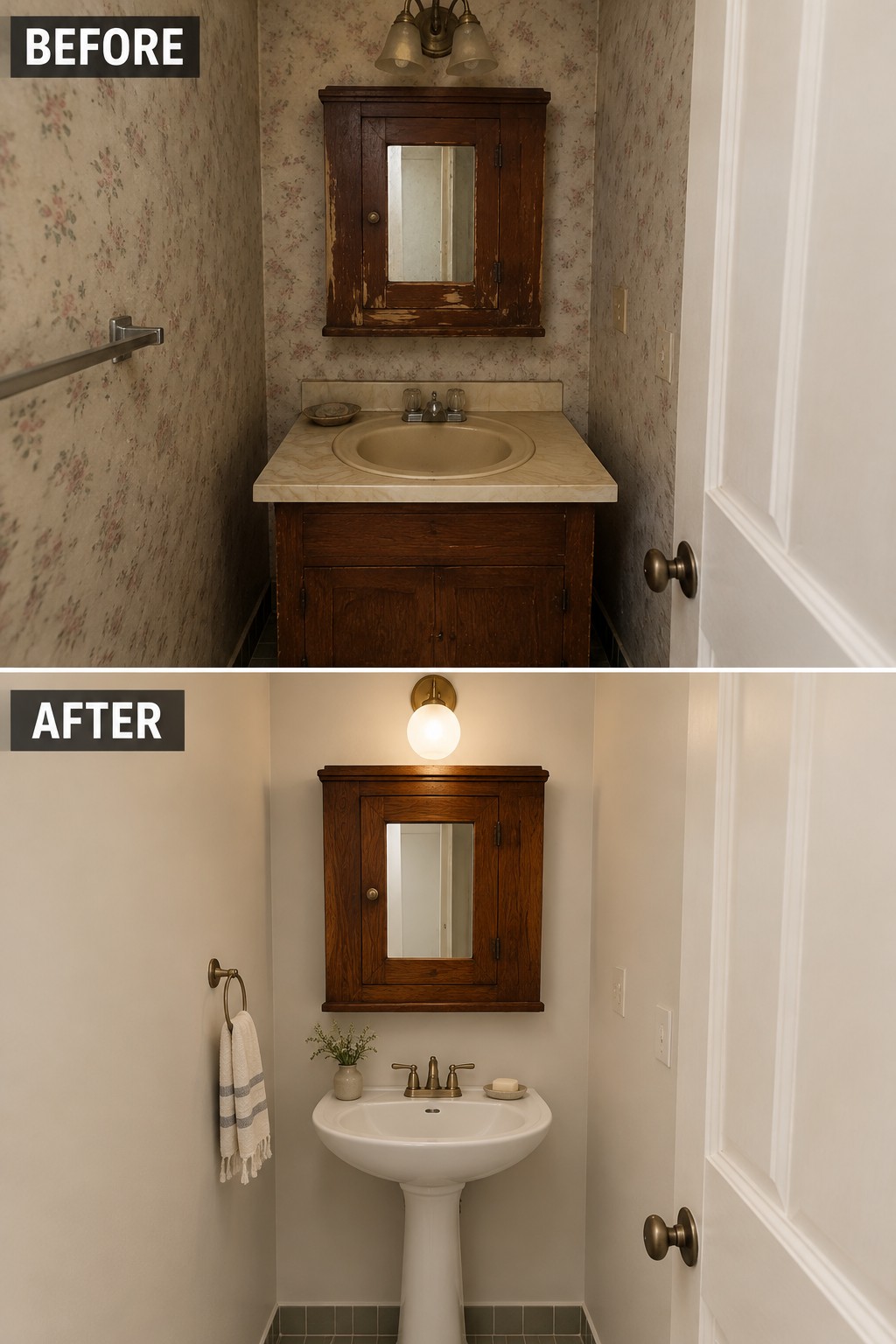
The bathroom feels less crowded once the old vanity and countertop are replaced with a pedestal sink, while the original wood medicine cabinet stays in place. Keeping that well-made woodwork gives the room character without requiring every fixture to remain.
This approach works well in a small bathroom where a bulky vanity takes up too much visual space. Before removing storage, make sure you have another practical place for toiletries, such as a nearby cabinet or shelf.
Restore The Woodwork And Brighten The Living Room

The room feels far more usable once the damaged wallpaper is replaced with a calm wall finish and the original wood window and door trim is left in place. Keeping that wood visible gives an older living room character without making it feel worn or gloomy.
If you’re updating a similar room, repair the walls first and choose a simple paint color that works with the existing wood tone. Light curtains can let the windows stand out, but avoid painting sound trim just to make the room feel brighter.
Update The Dining Room With Better Lighting

The ornate ceiling medallion is a natural feature of this older dining room, but the small fixture left it feeling dim and unfinished. A simple pendant below the medallion gives the table a useful pool of light while letting the original detail remain part of the room.
In a room with original trim or plasterwork, choose a fixture that suits the scale of the table and hang it low enough to light the dining area without blocking conversation. Keep the older wood pieces if they’re in good shape; a few thoughtful updates can make the room feel cared for without replacing its character.
Update A Breakfast Nook With A Built-In Bench

Replacing the worn, mismatched seating with a built-in bench makes this breakfast nook feel more settled and gives the small area a clearer purpose. The wood paneling and bench keep the room’s original character while the simple cushions make it more comfortable to use.
In a narrow nook, a bench can fit more neatly than separate chairs and leave the center open for moving around. Keep the wood finish in keeping with the home, and choose cushions that are easy to clean.
Frequently Asked Questions
Q: How can I tell whether old wood trim is worth saving?
A: Look for solid sections without deep rot, loose joints, or extensive insect damage. Scuffs and old paint are usually fixable, so don’t write off a piece just because it looks tired.
Q: Should I refinish original woodwork before or after remodeling?
A: Wait until messy work like drywall repair and flooring is done, then clean and refinish the trim. If the woodwork needs to come off for repairs, label each piece so it can go back where it belongs.
Q: What if the trim has been painted over?
A: Try a small, hidden spot before deciding to strip it. Old paint may contain lead, so test it before sanding or scraping, and use a professional if you find lead or the layers are hard to remove safely.
Q: How can I update a room without making the woodwork feel too formal?
A: Pair the trim with simple, relaxed pieces like linen curtains, plain rugs, and comfortable furniture. The woodwork can be the standout detail without making the whole room feel like a period set.
