

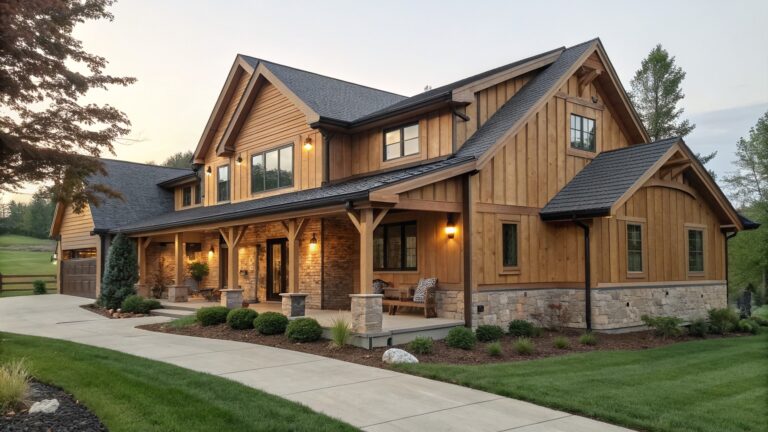
I have always paid attention to how the front of a house sets the tone before you even step inside.
Materials matter more than people realize when they face daily sun and rain.
The right mix of wood and earth tones can make a facade feel grounded without trying too hard.
I keep a few sketches on hand because I want to test how these finishes look on my own place after a couple of seasons.
Many homeowners overlook how rooflines and entry details pull everything together in a way that feels lasting.
Blend Wood Siding With Stone Accents
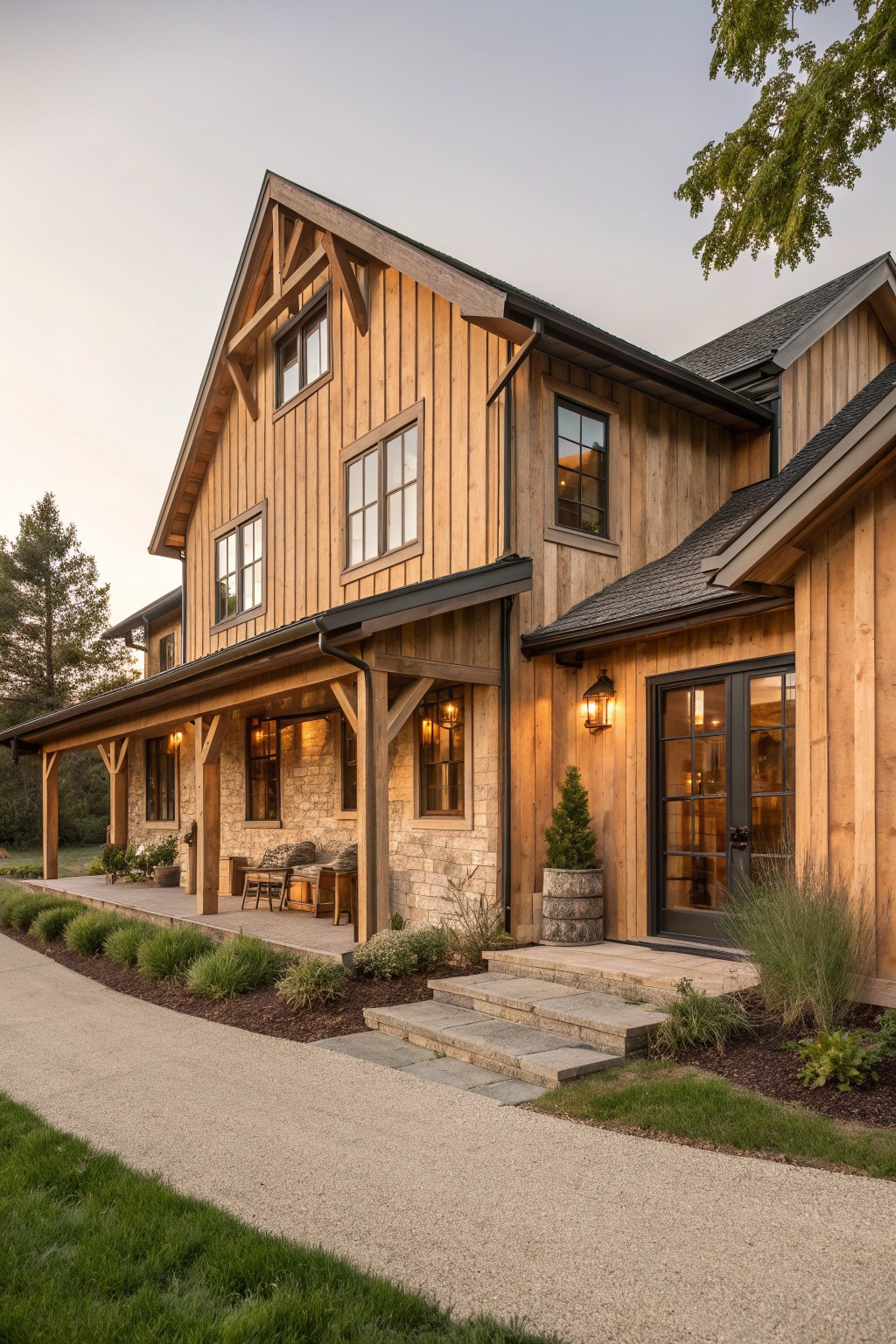
Many western farmhouses feel more grounded when the wood siding stops at a stone base or wraps around a few key spots. The contrast keeps the house from looking too light or flat while the natural tones still read warm and simple.
This mix suits homes that already have a strong roofline and a front porch. Use vertical boards for the wood and let the stone stay low or frame windows so the materials support each other instead of fighting for attention.
Mixing Wood And Stone On The Facade
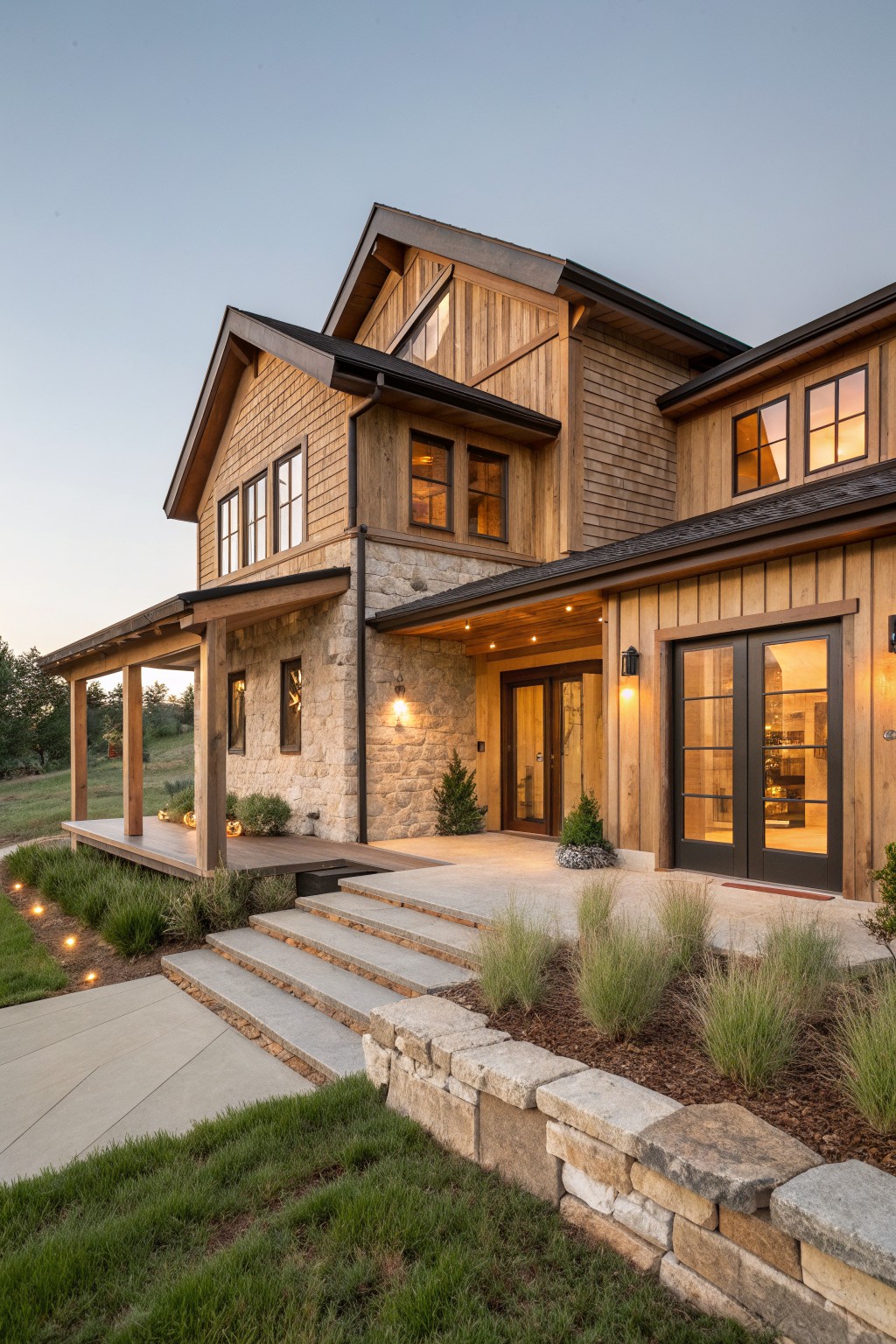
Many western farmhouses feel more settled when wood and stone are used together on the outside. The wood adds a lighter texture up high while the stone gives the base some real weight and keeps the whole look from floating.
This approach works best on homes with a bit of height or a gentle slope. Keep the wood tones natural and let the stone stay its own color so the two materials balance each other without extra effort.
Blend Wood And Stone For The Exterior
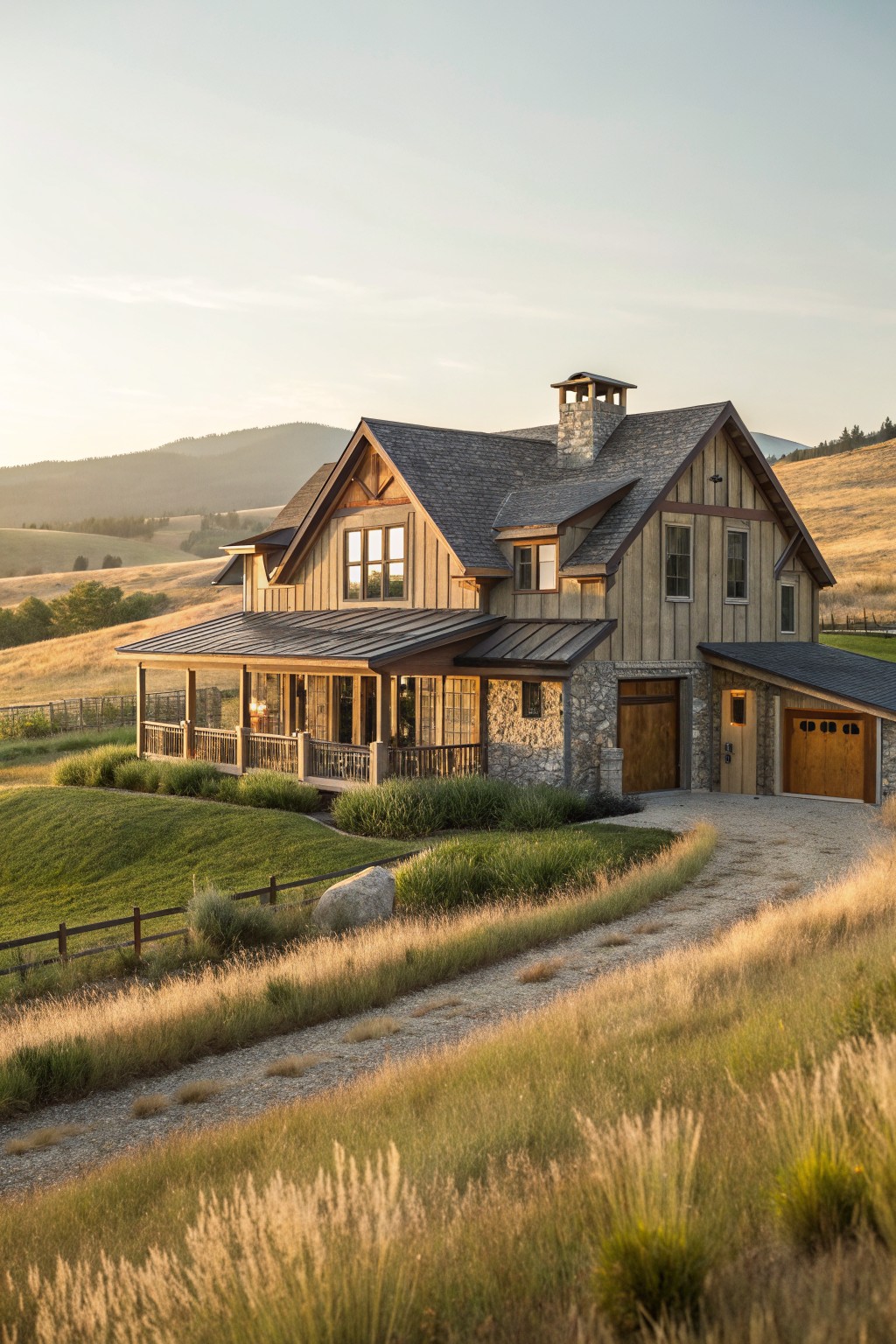
Many Western farmhouses feel warmer when wood siding covers most of the walls and stone shows up on the base or around key spots like the chimney. The contrast keeps the house from looking flat while still reading as simple and tied to the land.
This mix suits homes on open hills or in dry climates where the materials already match the setting. Use rough-sawn boards in a light brown tone and let the stone stay its natural color so the whole front stays grounded and easy to maintain.
Timber Beams For A Covered Porch
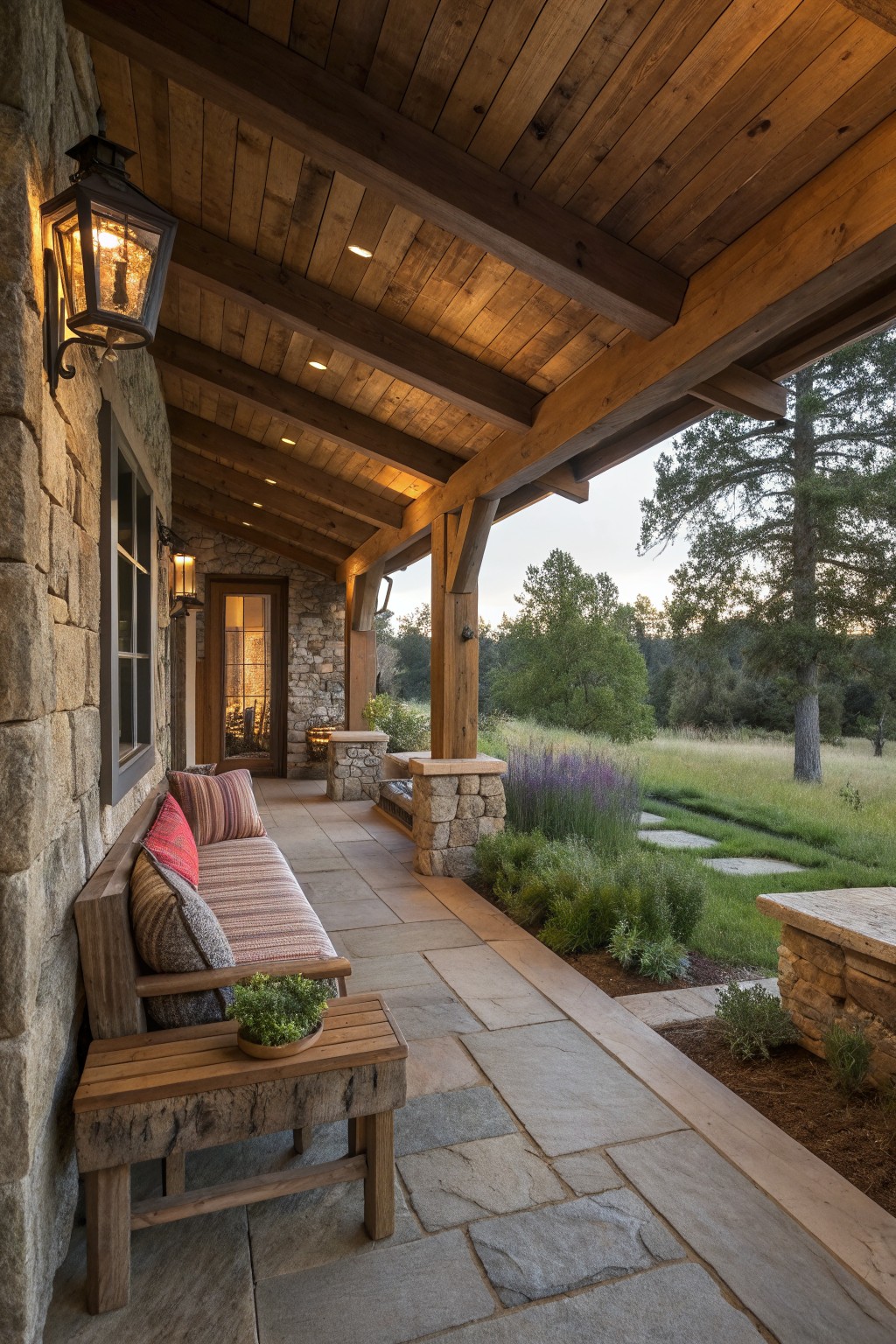
A covered porch built with thick timber beams and posts gives you shade and a clear spot to sit without building a whole new room. The wood feels solid and ties the house to the land around it, especially when the floor stays in simple stone.
This works best on homes that already use wood and stone on the outside. Keep the seating low and close to the wall so the space stays open and easy to walk through. Avoid crowding the edges with too many plants if you want the view to stay the main focus.
Weathered Wood Siding for Farmhouse Warmth
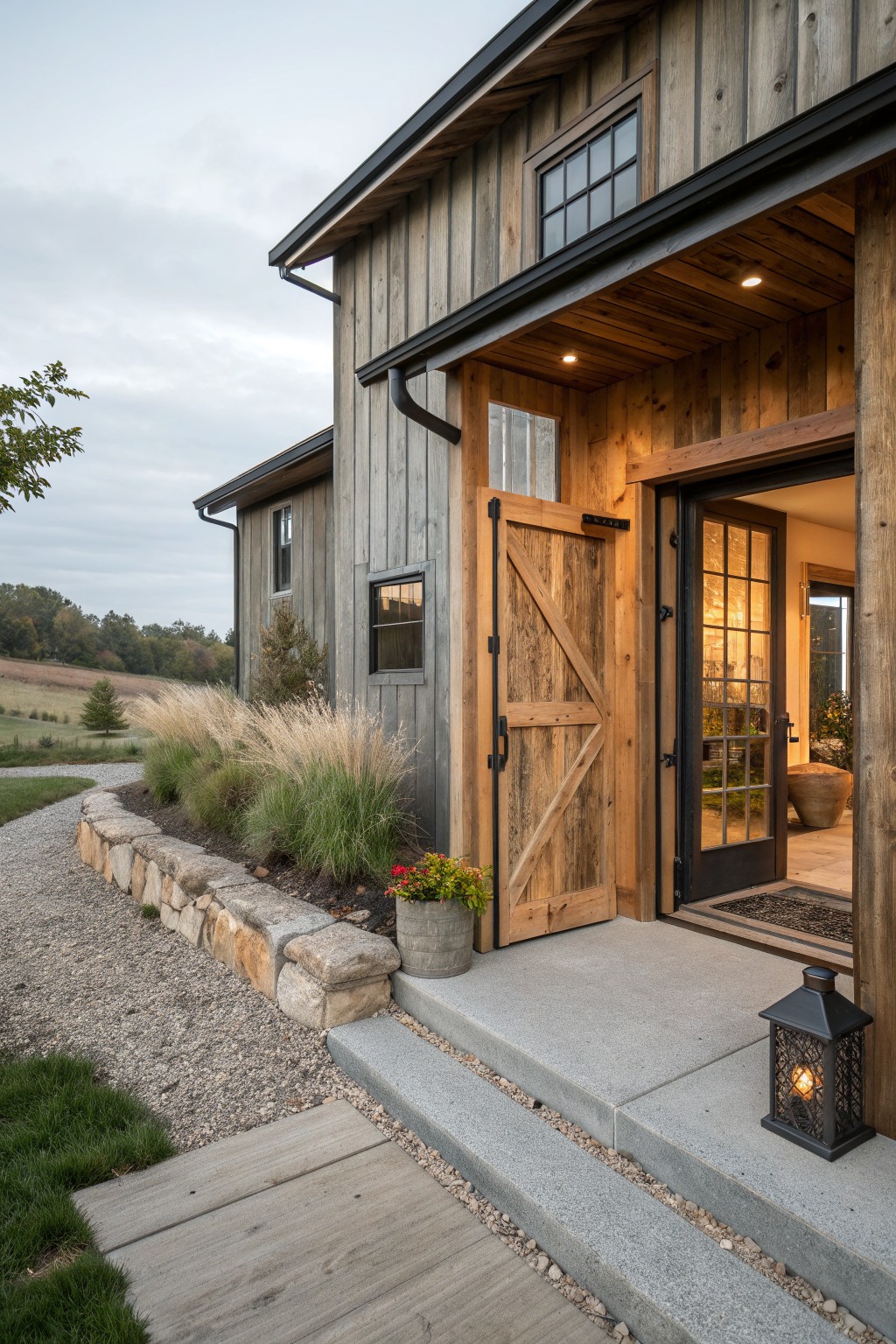
Weathered wood siding gives a farmhouse exterior that soft, lived-in look right away. It works especially well when the boards are left in their natural gray tones and paired with a heavier wood door at the main entry.
This choice suits homes that sit on open land or have simple rooflines. Keep other materials to a minimum so the wood stays the main feature instead of fighting with too many accents.
Gravel Paths With Stepping Stones
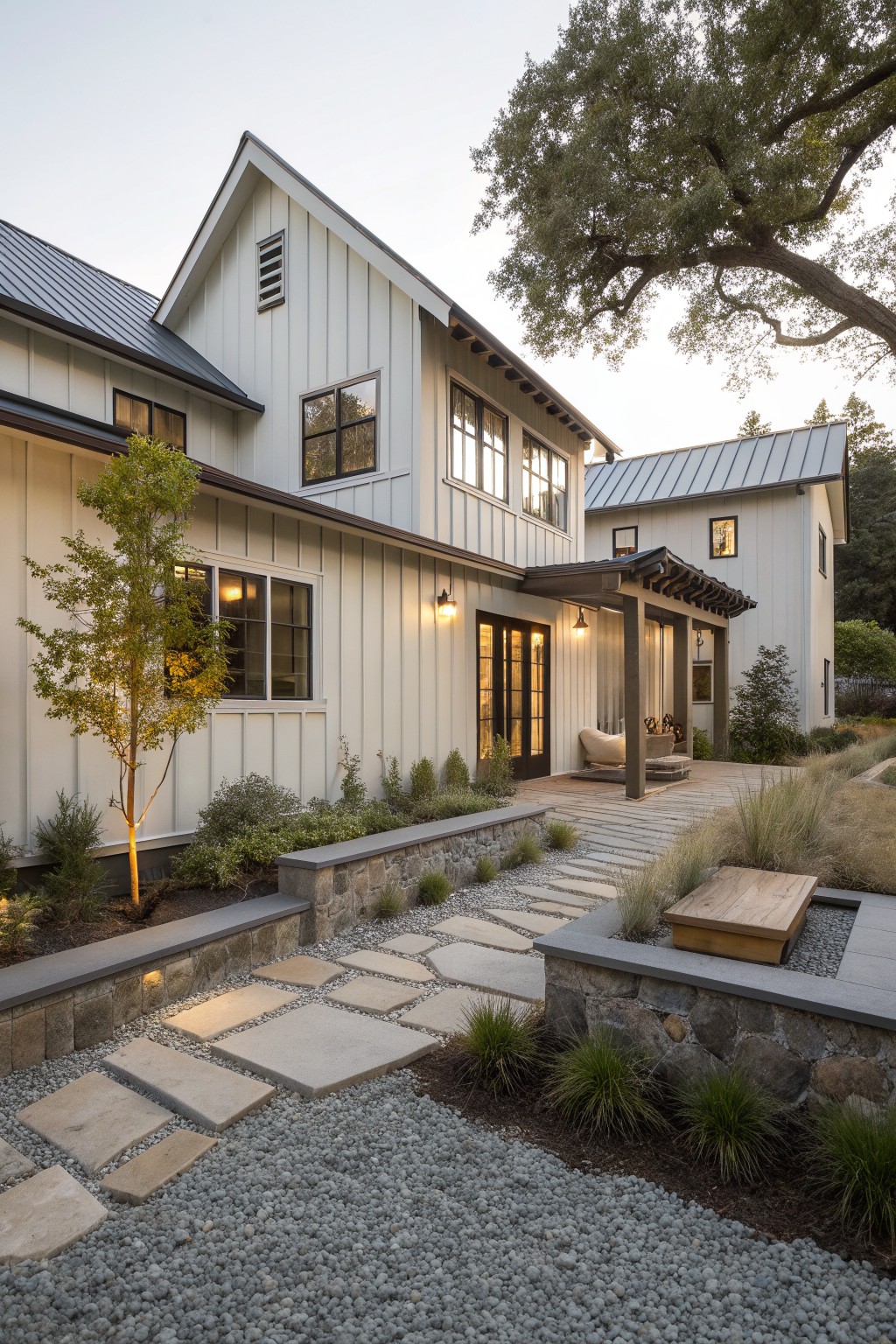
Gravel paths with large stepping stones give a farmhouse a relaxed, grounded feel without looking too formal. They let the landscape flow right up to the house and work especially well when the siding is light and simple.
This approach suits homes with some slope or open yard space where you want easy movement but not a solid paved surface. Keep the stones big and somewhat irregular, and let low plants spill over the edges a bit so the whole thing stays soft rather than rigid.
Stone and Wood at the Entry
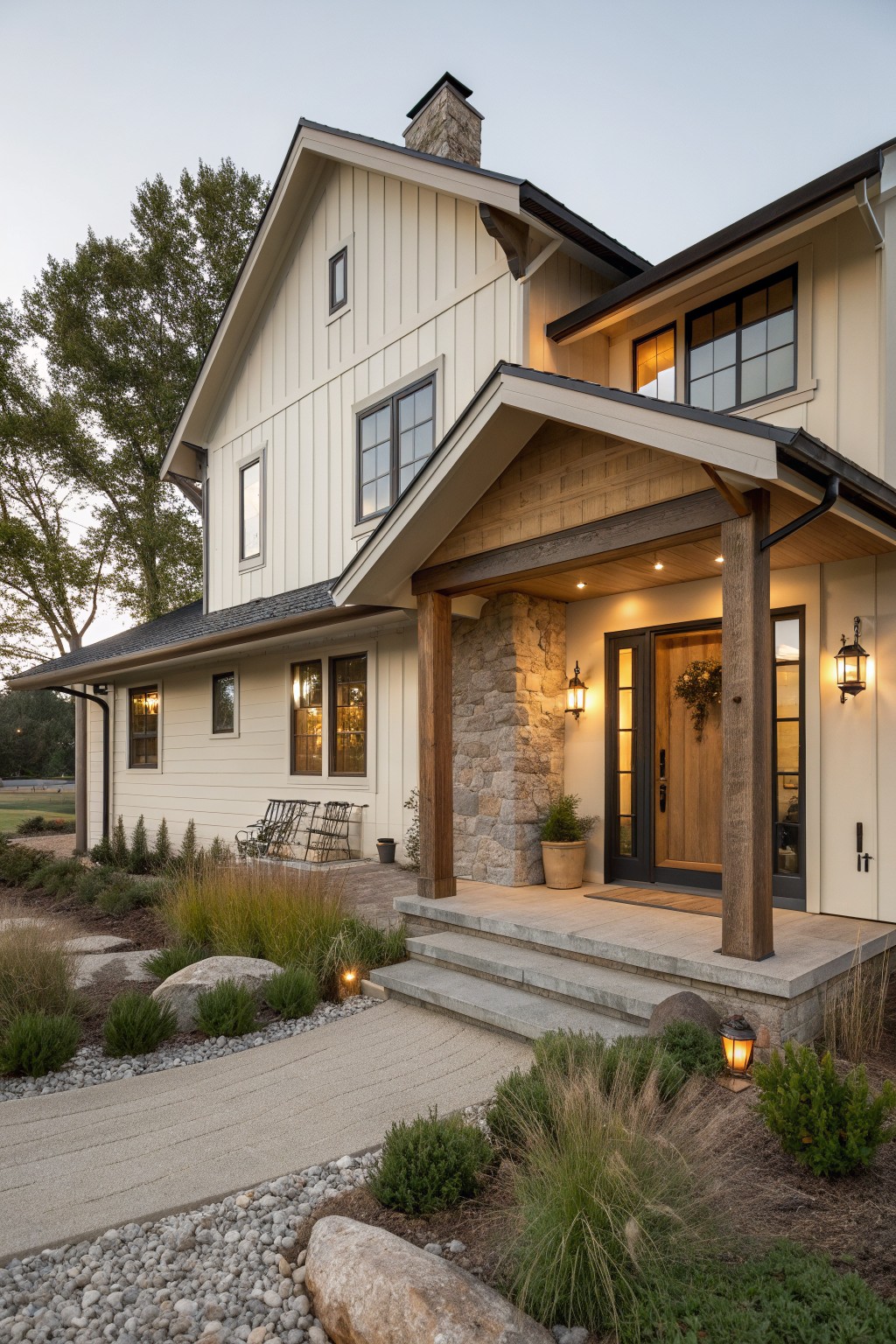
Many Western farmhouses use a stone section right at the front door to give the house a solid base. The wood posts and beams above it keep the whole entry from feeling too heavy while adding that natural warmth the style needs.
This works well on houses with a simple gable over the porch. Limit the stone to the main support area and let the siding carry the rest of the facade so the materials stay balanced.
Mix Wood Siding With Stone Bases
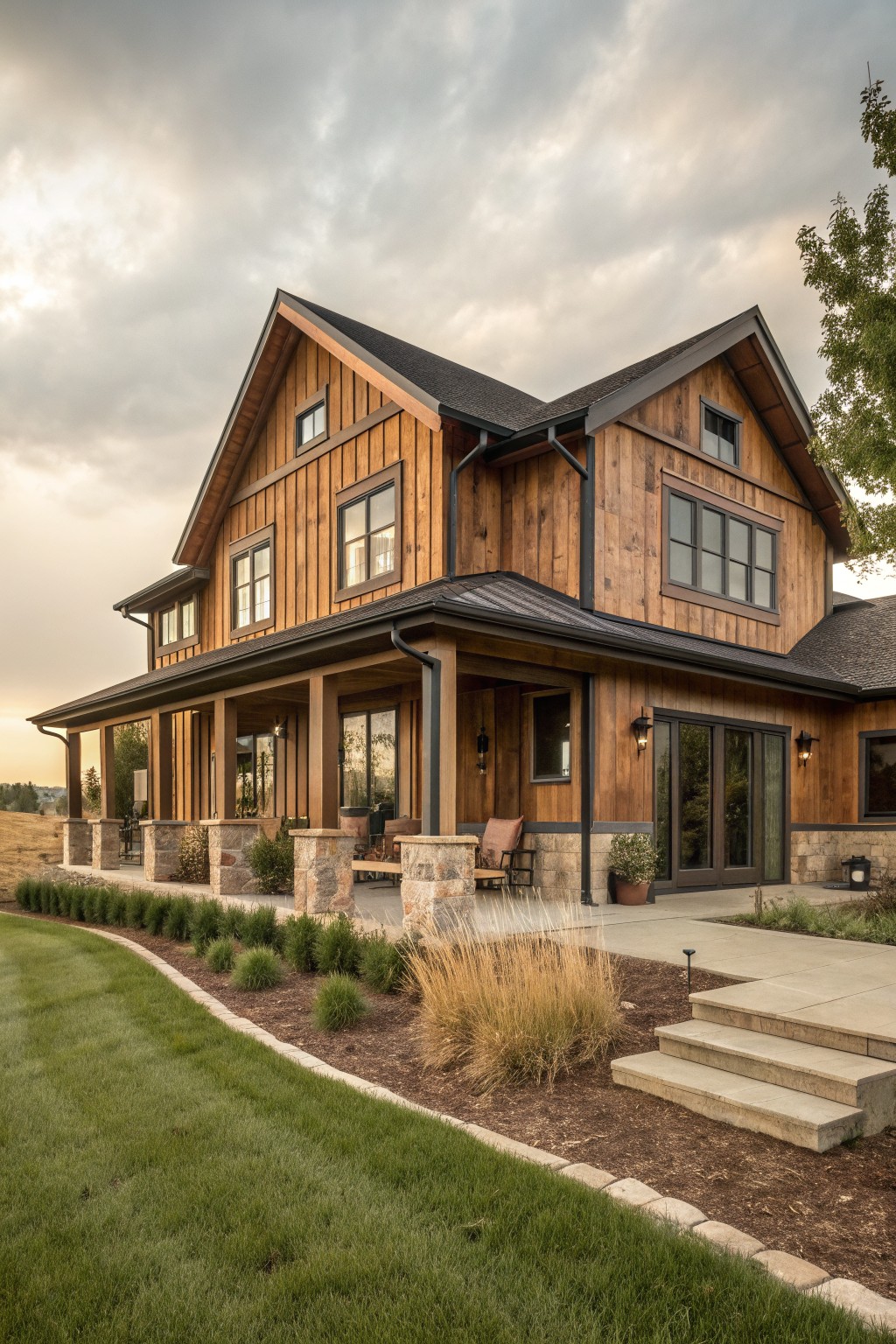
Many homes feel more grounded when the main siding stays wood while the lower parts and porch supports switch to stone. The contrast adds texture and keeps the look from going flat across a large facade.
This works best on two-story houses with wide porches. Use the stone only where the structure meets the ground or on the columns, then let the horizontal wood run the rest of the way up. Match the wood tone to the stone so the change feels natural instead of forced.
Pairing Wood Siding With Stone
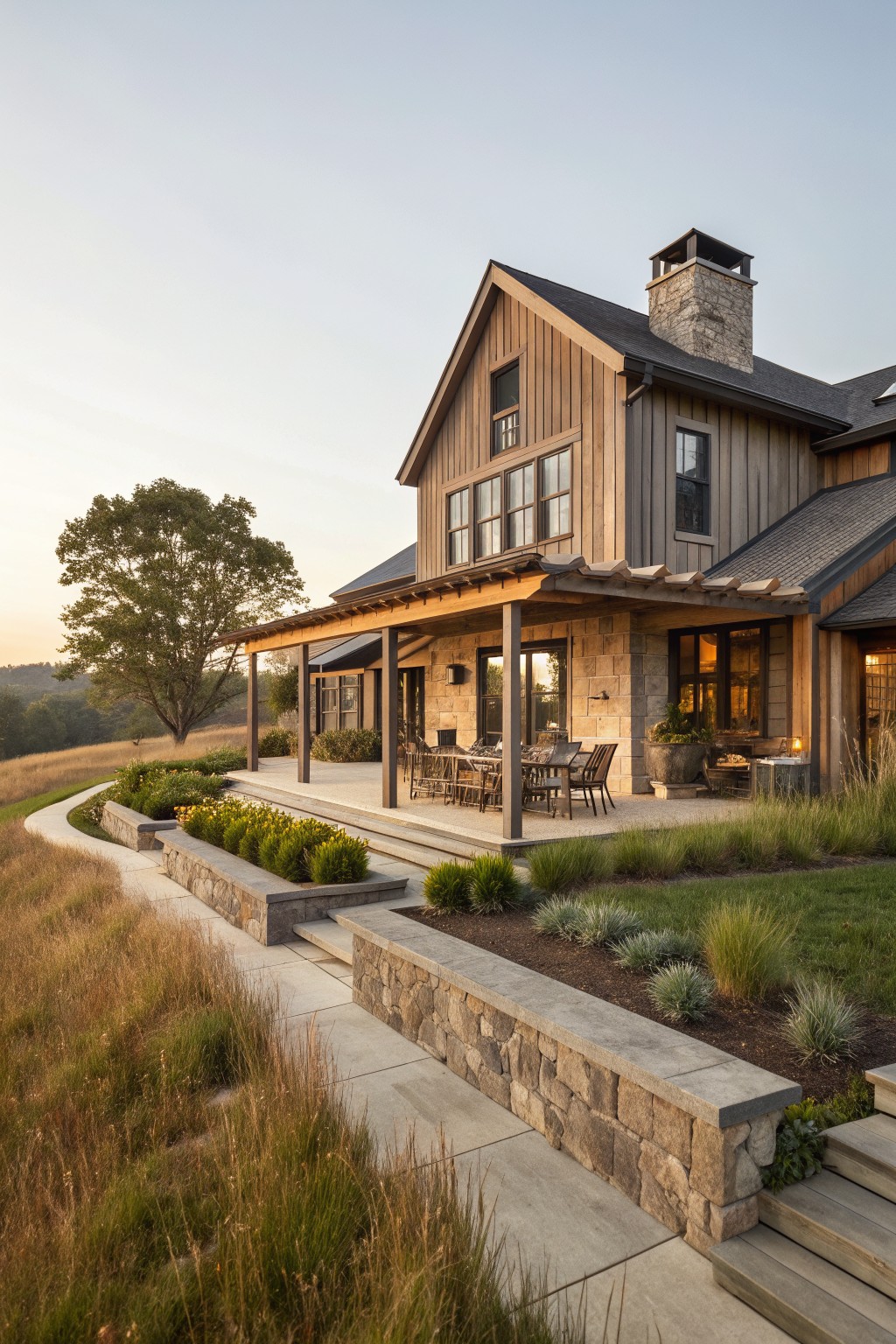
Natural wood siding works especially well when it sits next to stone on the same wall. The contrast keeps the exterior from feeling too heavy while still giving it that solid, settled look most farmhouse styles need.
This mix suits homes with simple rooflines and plenty of windows. Keep the stone low on the foundation and around chimneys, then let the wood run up the main walls so the whole house feels lighter without losing its weight.
Mix Wood Siding With Stone For Warmth
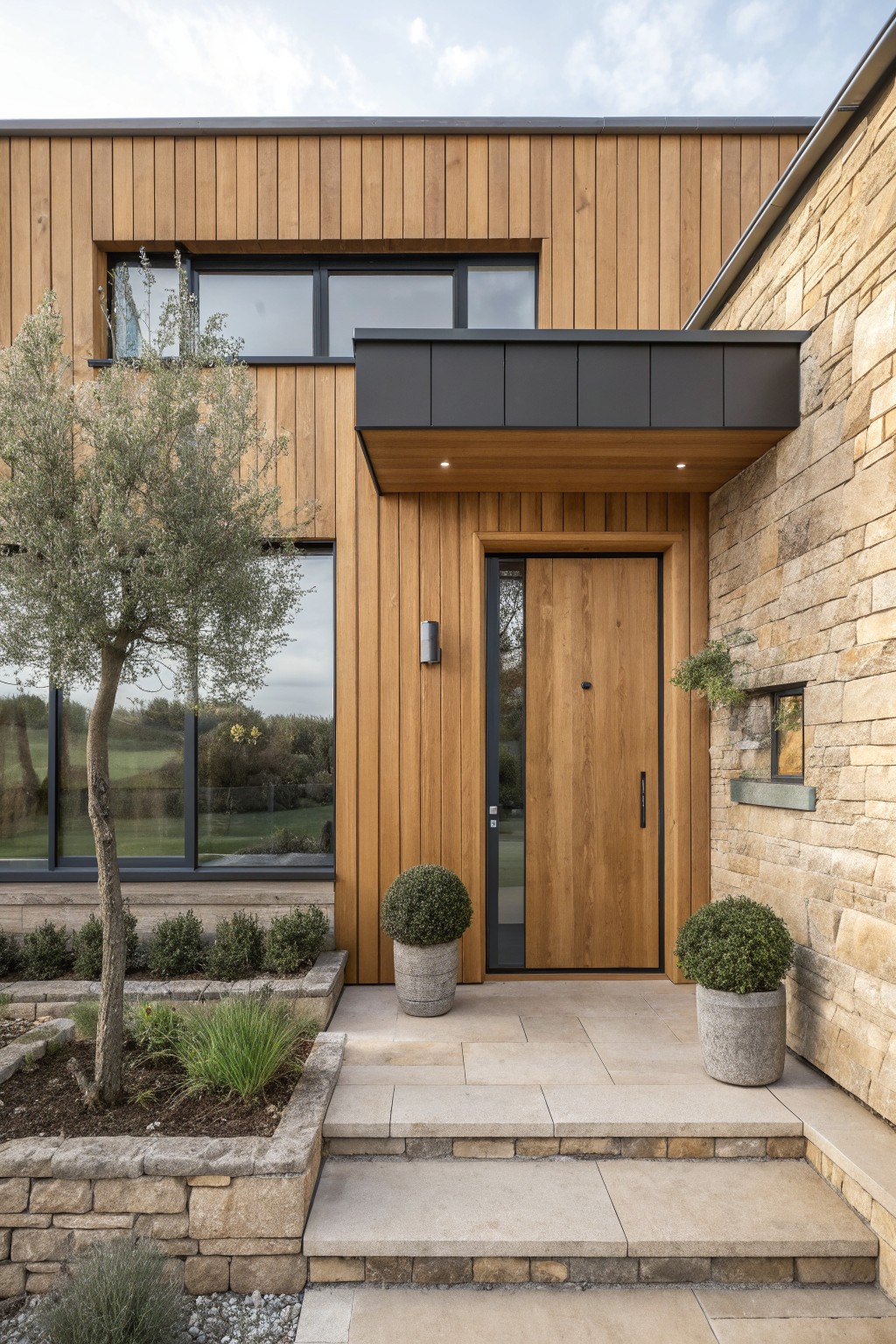
Wood siding paired with stone gives a western farmhouse that settled, natural look without extra effort. The two materials balance each other, with the wood keeping things light and the stone adding weight where it is needed most.
This works best on homes that sit low to the ground or have simple rooflines. Run the wood across the main wall and bring stone up on the sides or around the entry so the house feels tied to the land rather than built on top of it.
Mixing Stone And Wood On The Exterior
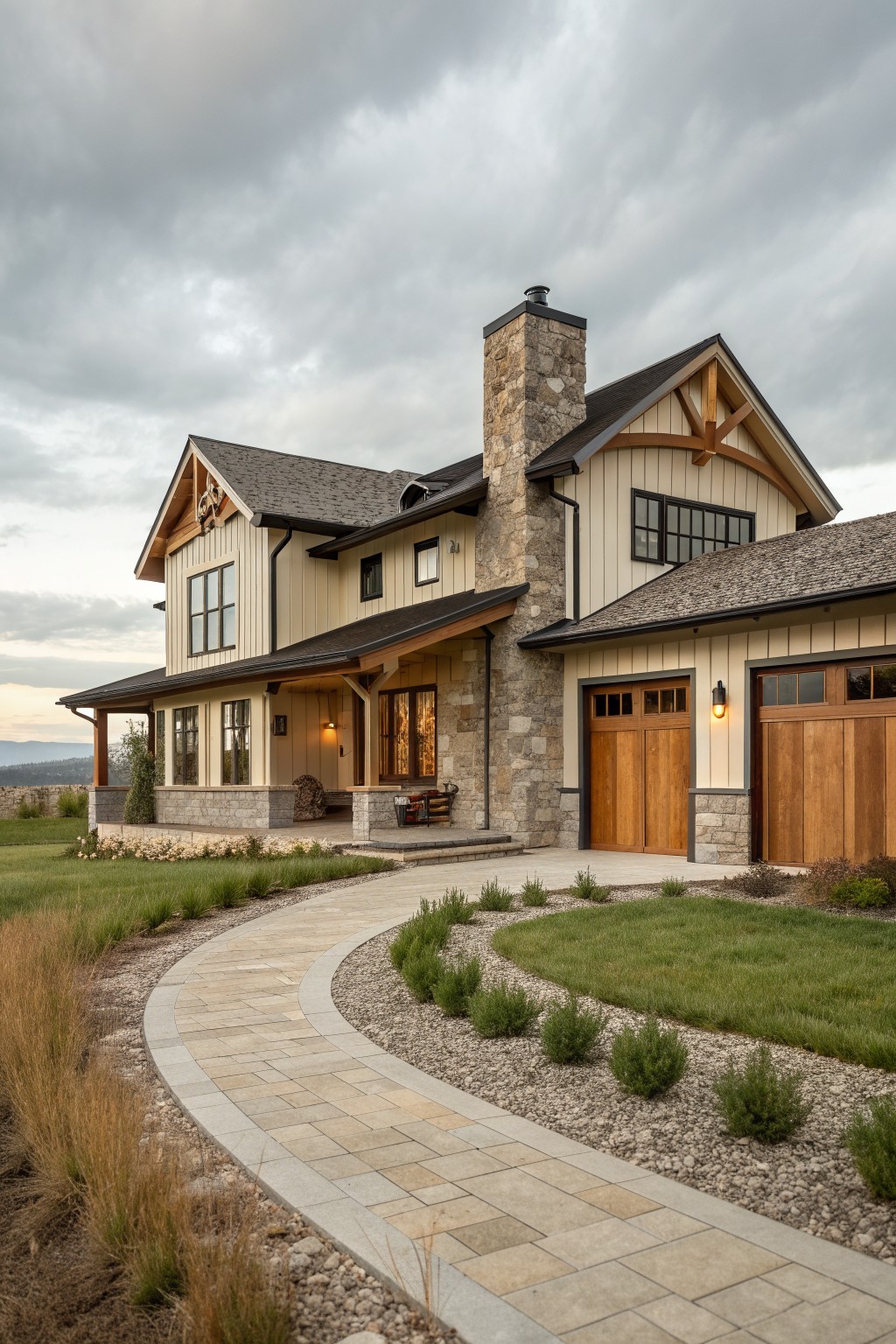
Stone and wood together give a farmhouse exterior real weight without feeling heavy. The stone chimney and lower walls balance the light siding, while the wood beams and trim keep things warm and simple.
This works best on homes that already have a strong roofline or gable details. Place the stone on vertical features like chimneys or bases, then let wood handle the accents so the whole look stays grounded rather than busy.
Add a Pergola for Outdoor Dining
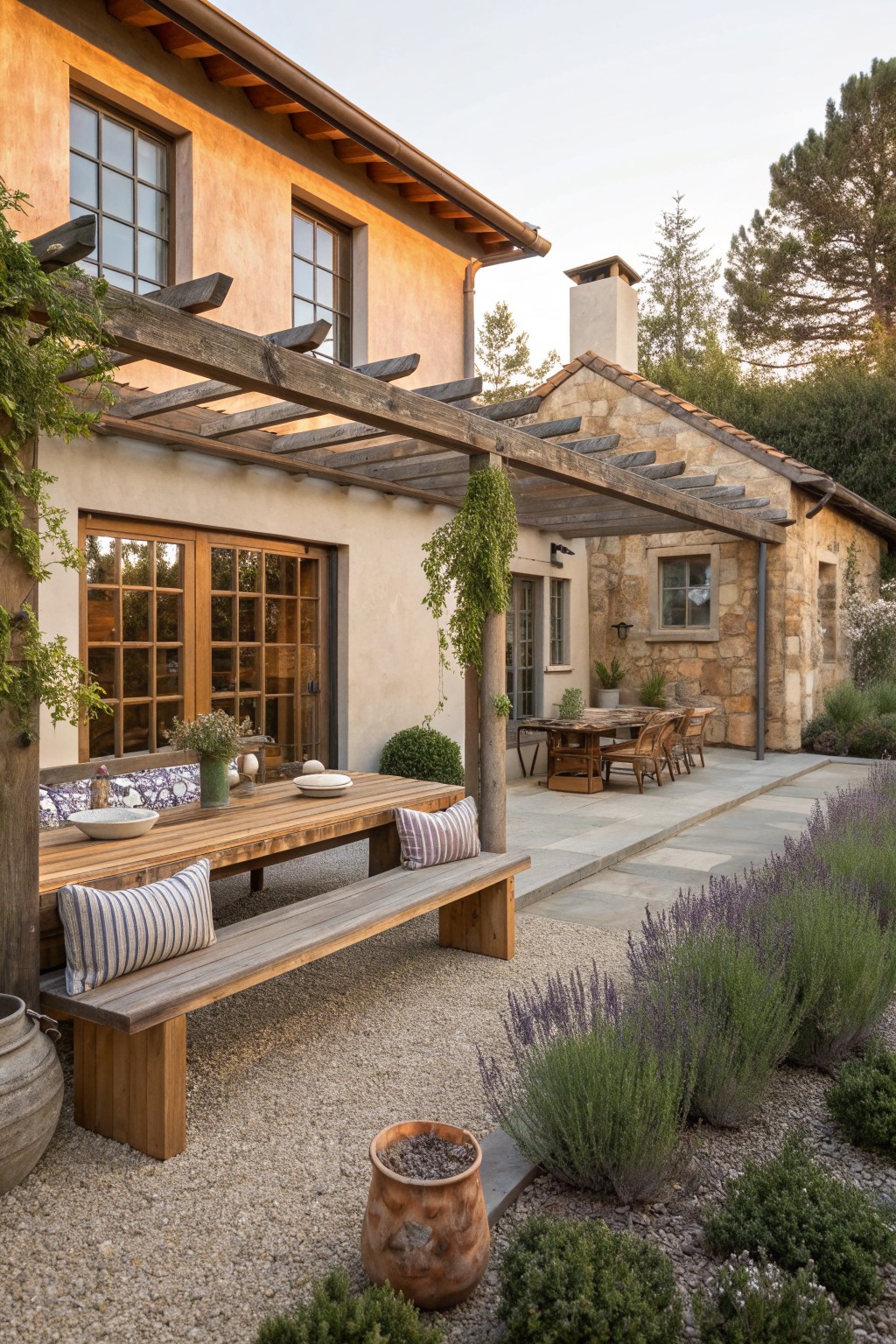
A pergola gives the patio a defined spot for meals while keeping the feel open and connected to the yard. The wood structure adds just enough cover to make the table usable through more of the day without closing the space in.
This setup works well on homes that already use natural wood and stone outside. Place the table directly under the beams so the seating area feels intentional, and keep the surrounding plants low so the pergola stays the main feature.
Use Natural Wood Beams On The Porch
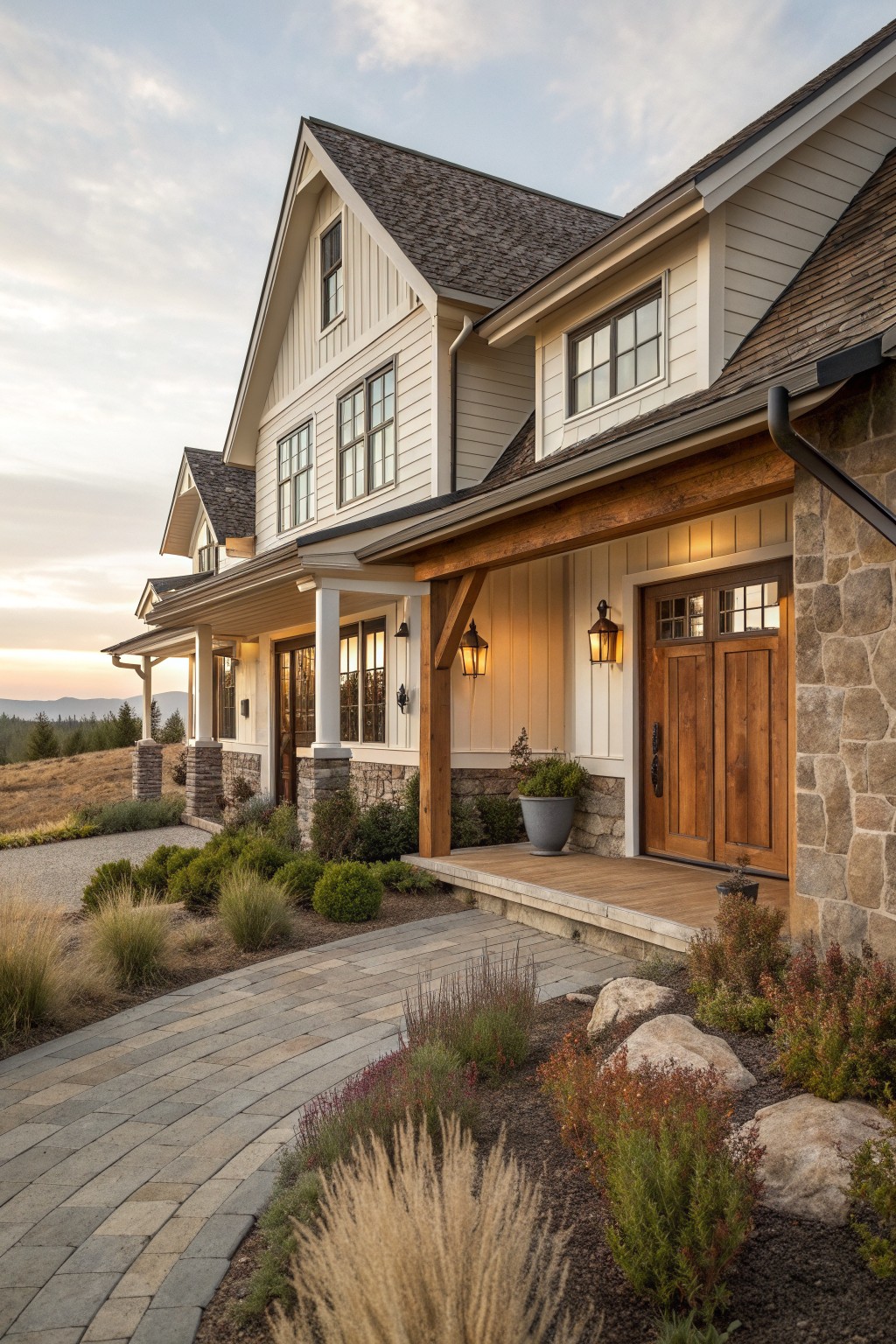
Exposed wood beams bring a simple strength to a farmhouse porch that painted posts often miss. They tie the roofline to the ground and give the whole front a settled look that feels right for this style.
Try them on homes that already use stone at the base. Keep the wood in a warm natural finish and let the beams run thick enough to match the scale of the house. Avoid thin versions that can look flimsy from the street.
Built-In Benches For Porch Seating
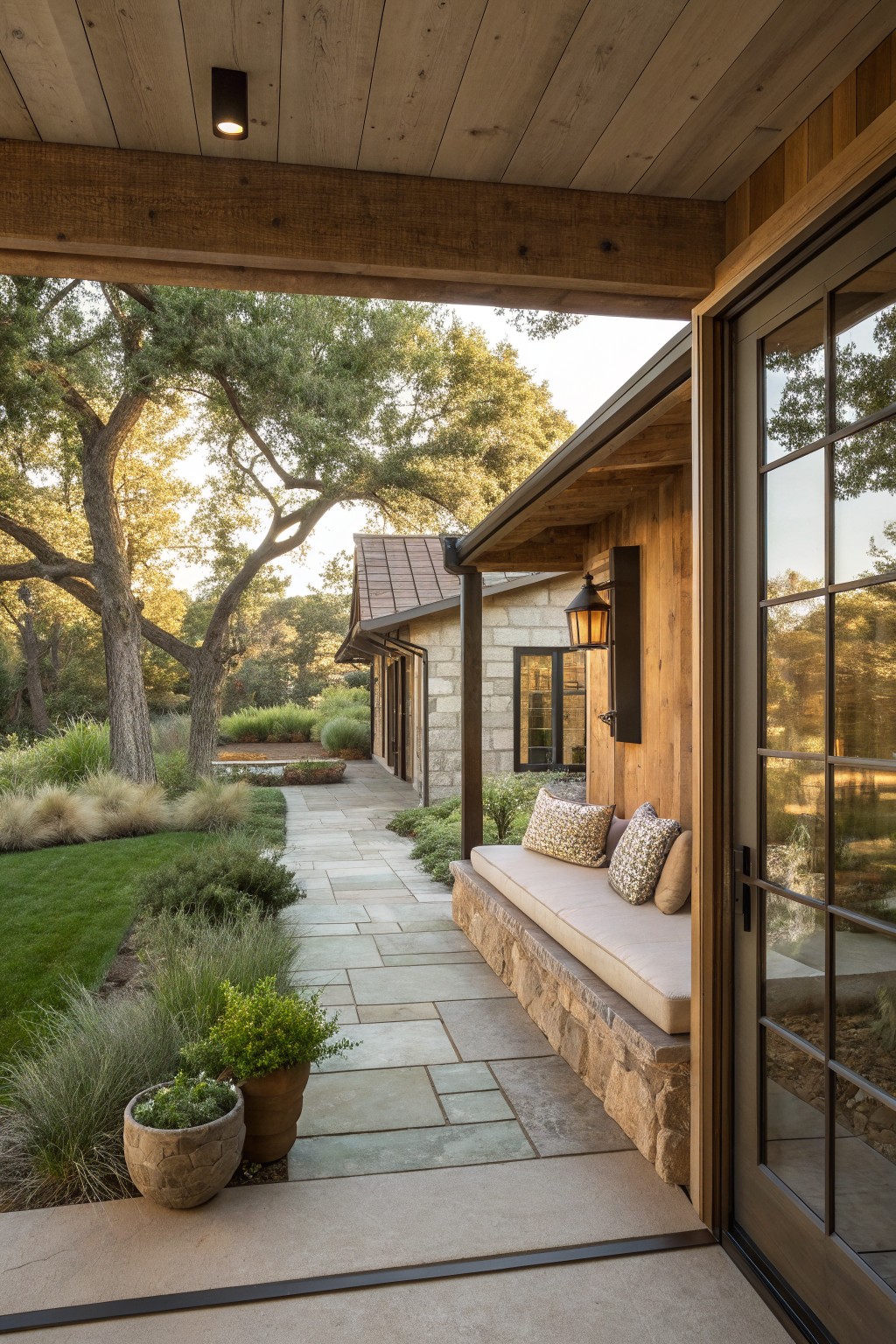
A built-in bench gives the porch a settled, useful feel without taking up extra floor space. It turns the edge of the structure into seating that stays in place and matches the materials already used on the house. The stone base and wood siding make the bench look like part of the building rather than something added later.
This approach works best on covered porches that run along the side or back of a house. It suits homes that already use stone and wood together, and it keeps the seating low and simple so the view stays open. Just make sure the cushion fabric can handle outdoor use and that the bench height lines up with normal chairs.
Wood Garage Doors On Stone Homes
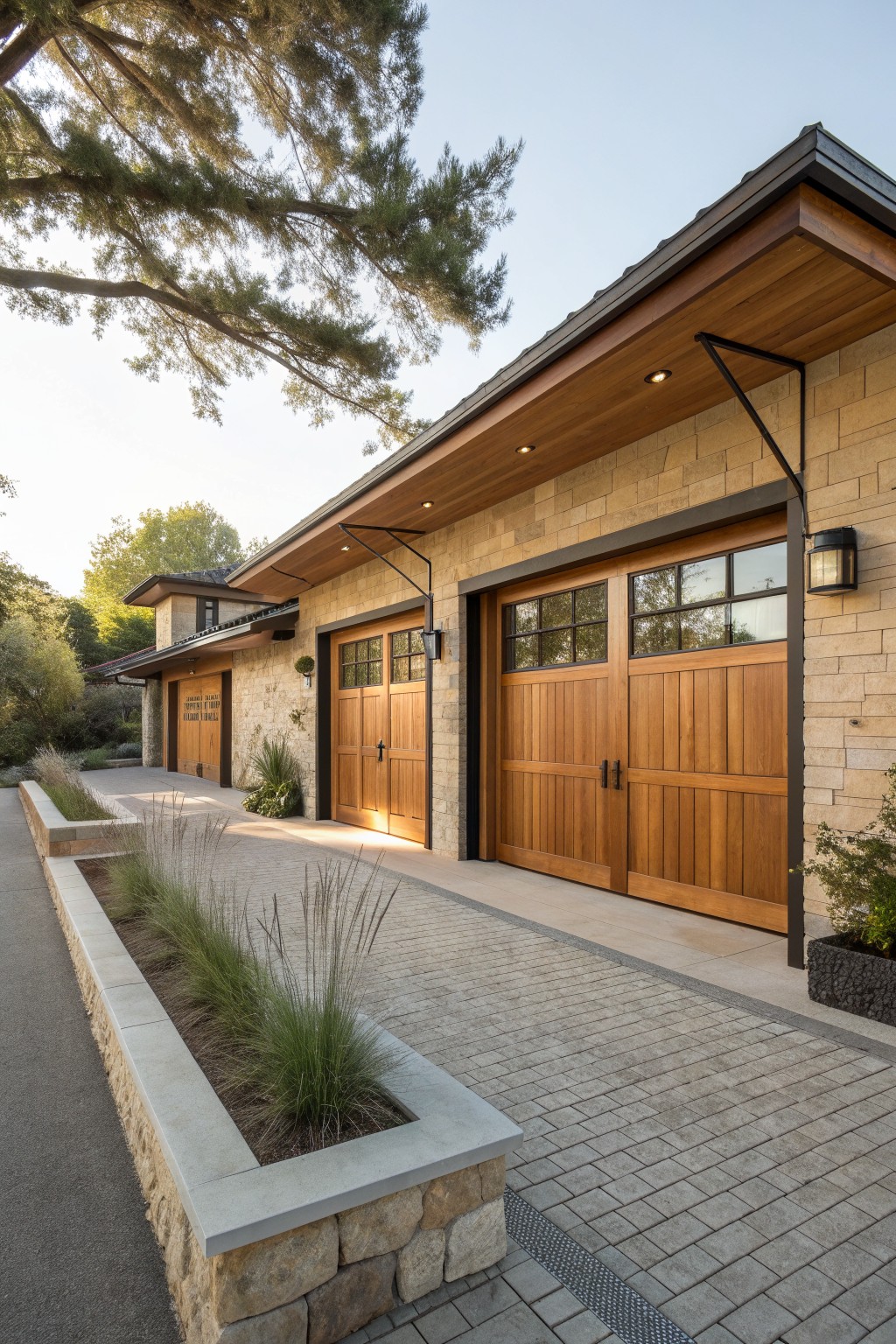
Many homes use wood garage doors on stone walls to bring in natural warmth without extra color or trim. The wood grain gives the facade a softer feel that works well with earthy materials.
This idea suits Western farmhouse exteriors that already lean on wood and stone. Match the door tone to any ceiling beams or overhangs so the whole front stays simple and tied together.
Wood and Stone at the Entry
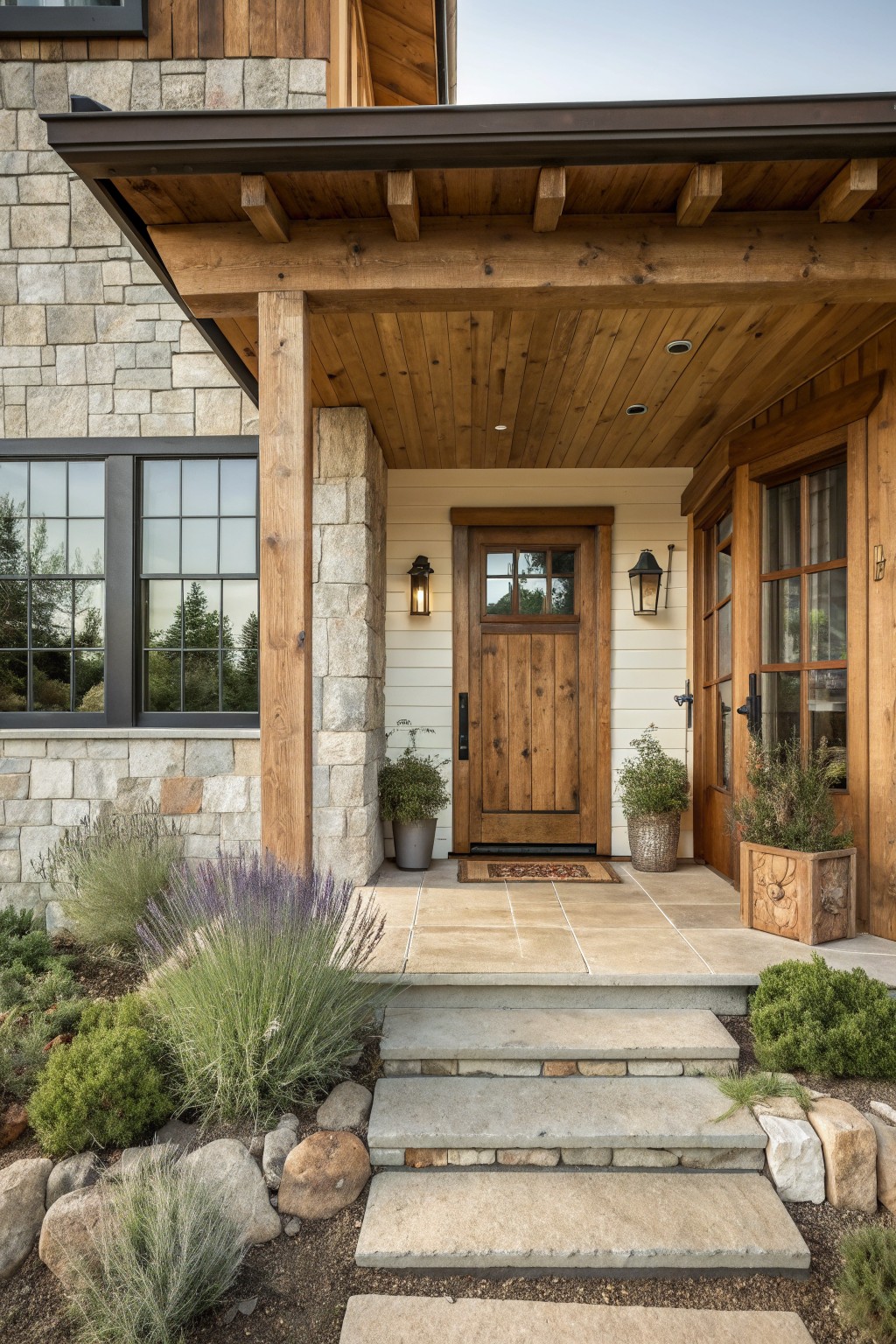
Mixing heavy timber with stone gives an entry a solid base that still feels warm. The wood softens the look while the stone keeps everything grounded, and the two materials play off each other without needing extra trim or color.
This works best on homes that already lean toward simple lines and natural finishes. Use it on the main porch posts or the area right around the door, and let the wood age on its own. Just keep the proportions balanced so the beams do not crowd the space.
Outdoor Dining Under a Covered Porch
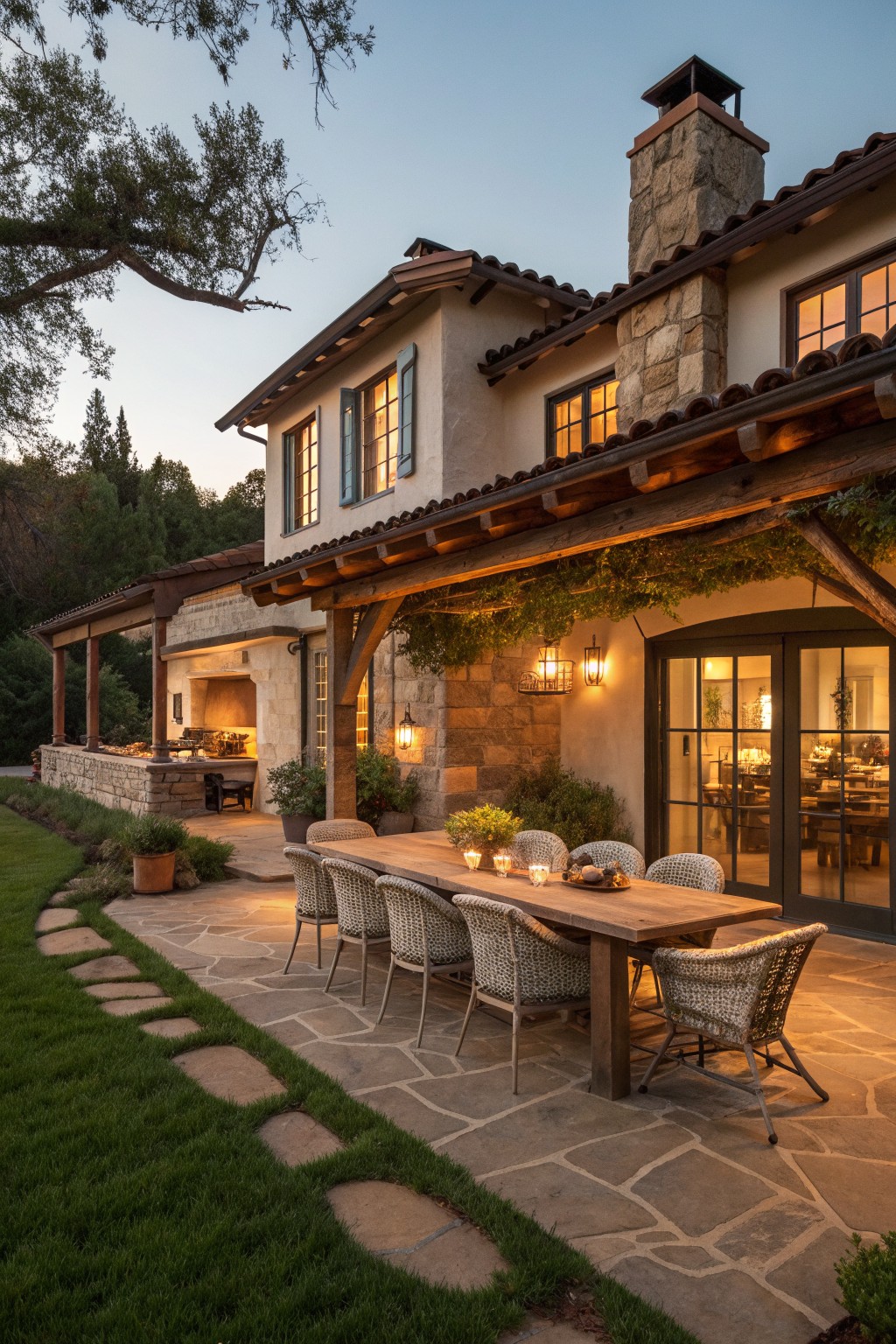
A long wooden table placed right on the stone patio under the house overhang turns the space into a practical spot for meals. The wood and woven chairs fit the natural materials already used on the house, and the shelter from the roof keeps the area usable most of the year.
This works best on homes that already have deep eaves or a covered walkway. Keep the table size in scale with the patio so there is room to walk around the chairs. Simple lanterns or wall lights are usually enough to make the area comfortable after dark.
Gravel Paths With Stone Steppers
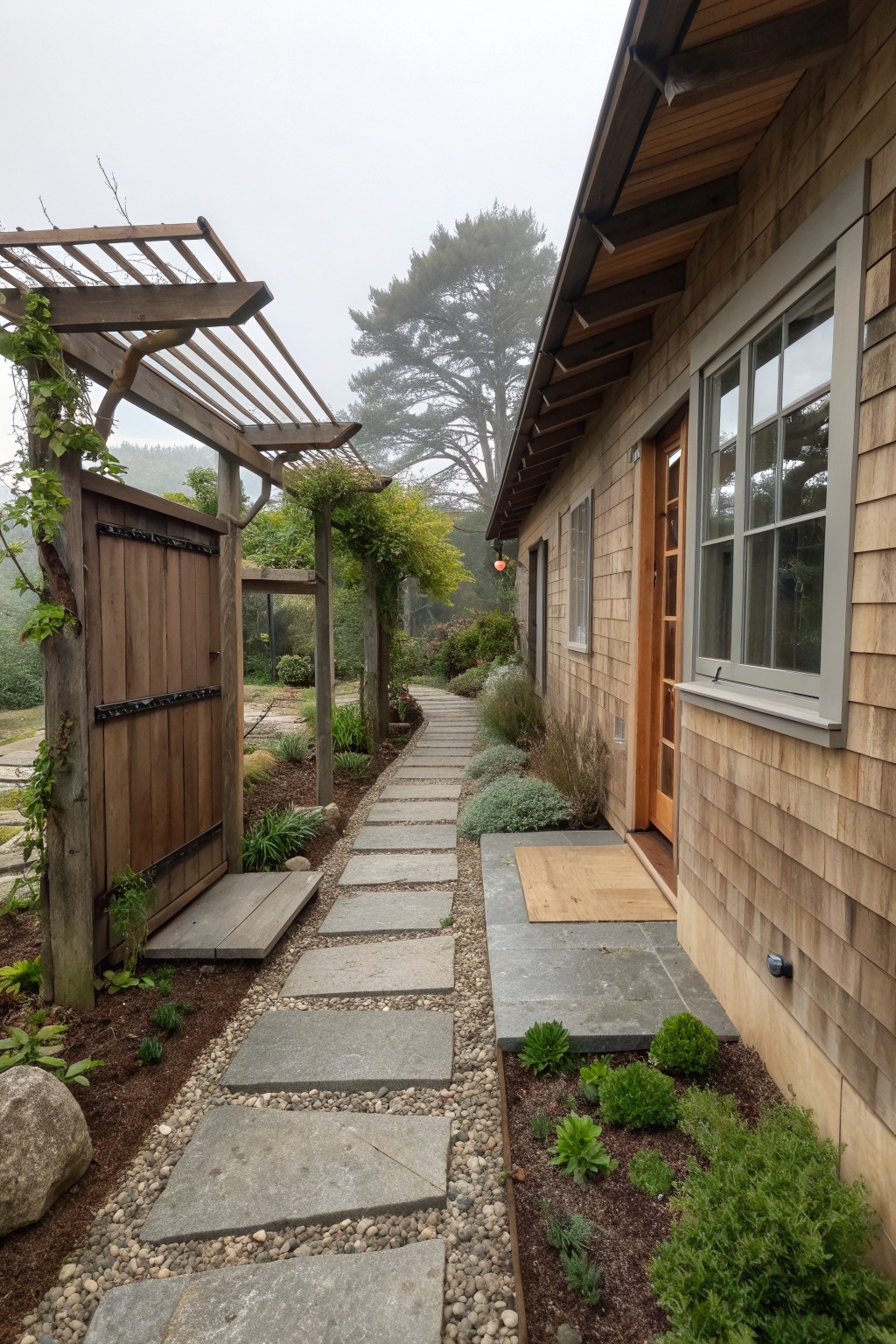
A gravel path lined with large stone pavers gives the approach to the house a relaxed, natural feel. It keeps the ground stable underfoot while letting the surrounding plants and soil show through, which works especially well with wood siding and simple garden beds.
This kind of path suits homes that already use earthy materials and need a low-key way to connect the garden to the door. Just make sure the pavers are set level and the gravel stays contained so it does not spill into planting areas over time.
Using Natural Wood Siding On The Main Facade
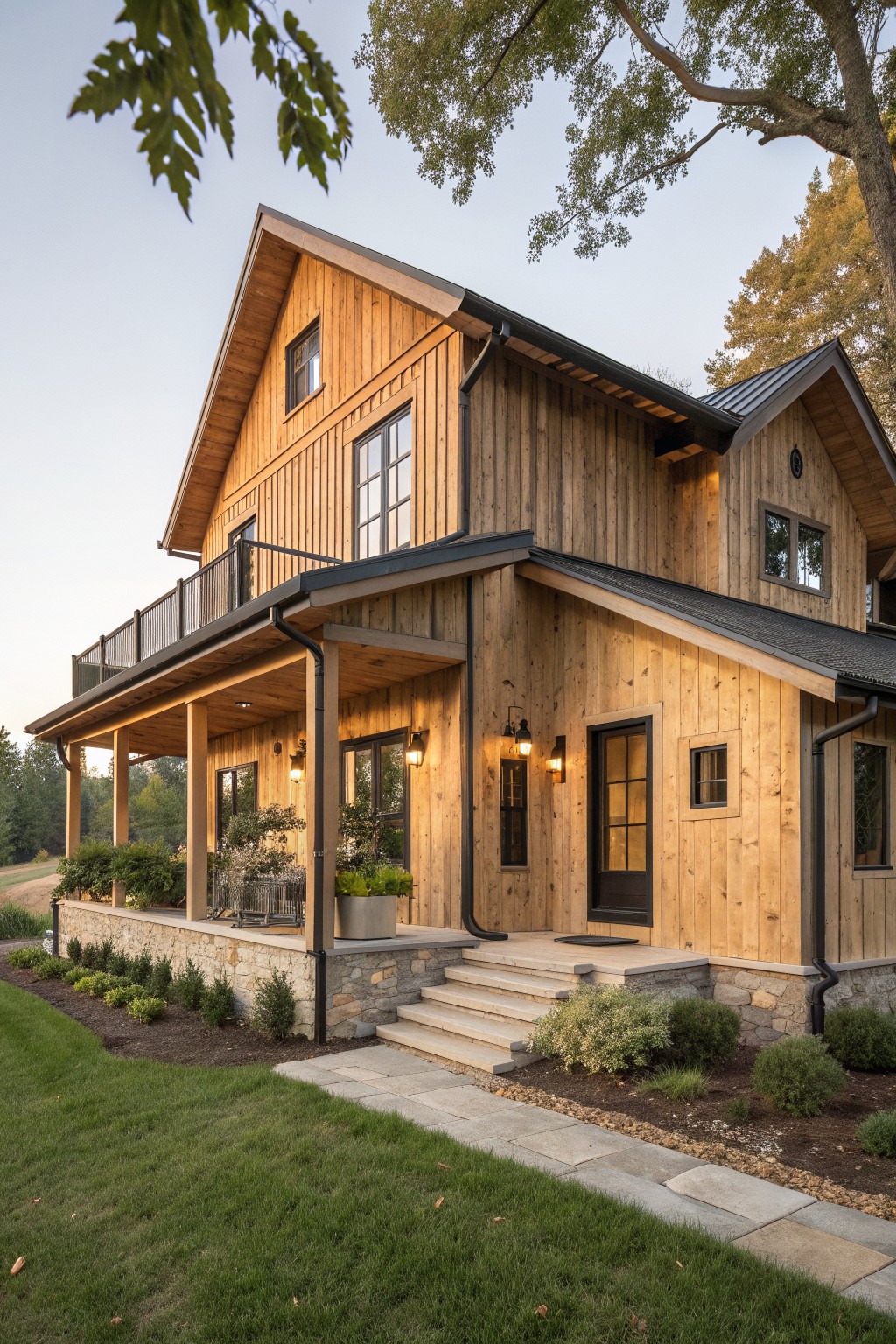
Natural wood siding works well when it covers most of the exterior instead of being broken up by too many other materials. It gives the house a simple, cohesive look that feels warm without needing extra decoration. The vertical boards here run straight across the upper levels and help the whole structure read as one clean shape.
This approach suits homes that already have a straightforward roofline and want to keep the focus on the wood itself. It works best with a stone or concrete base to handle moisture near the ground, and it pairs easily with dark trim and metal accents. Just make sure the siding has good protection from weather so it ages evenly over time.
Natural Wood Pergola Over the Entry Path
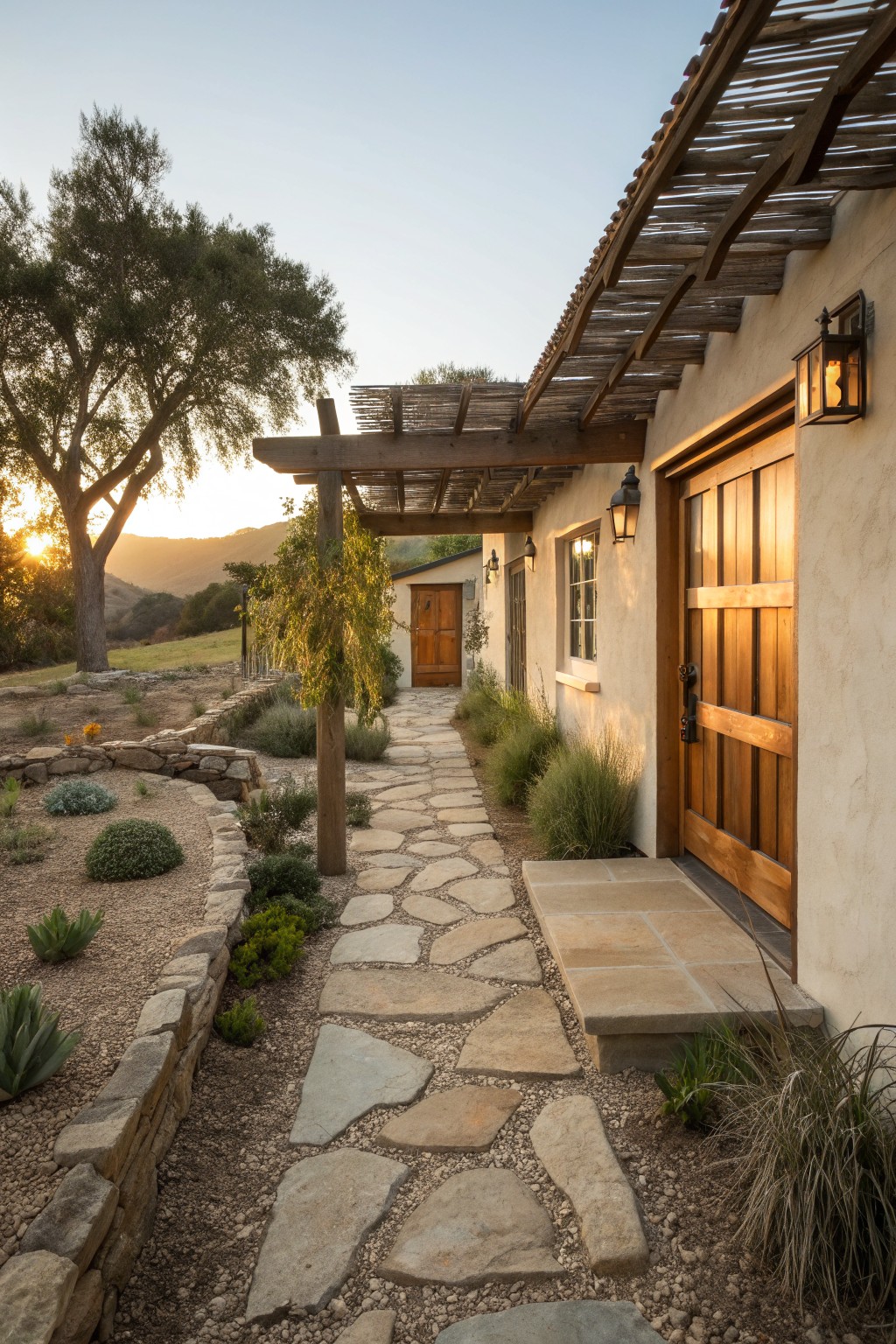
A wood pergola built right off the house gives the front entry a clear sense of arrival without adding much fuss. The rough beams create light shade along the walk and tie the building to the ground using the same material as the door.
This setup works best on simple stucco or adobe homes where you want the wood tones to stand out. Use straight, unfinished lumber for the posts and cross pieces, then run a stone or gravel path underneath so the whole approach feels pulled together.
Cover an Outdoor Fireplace with a Pergola
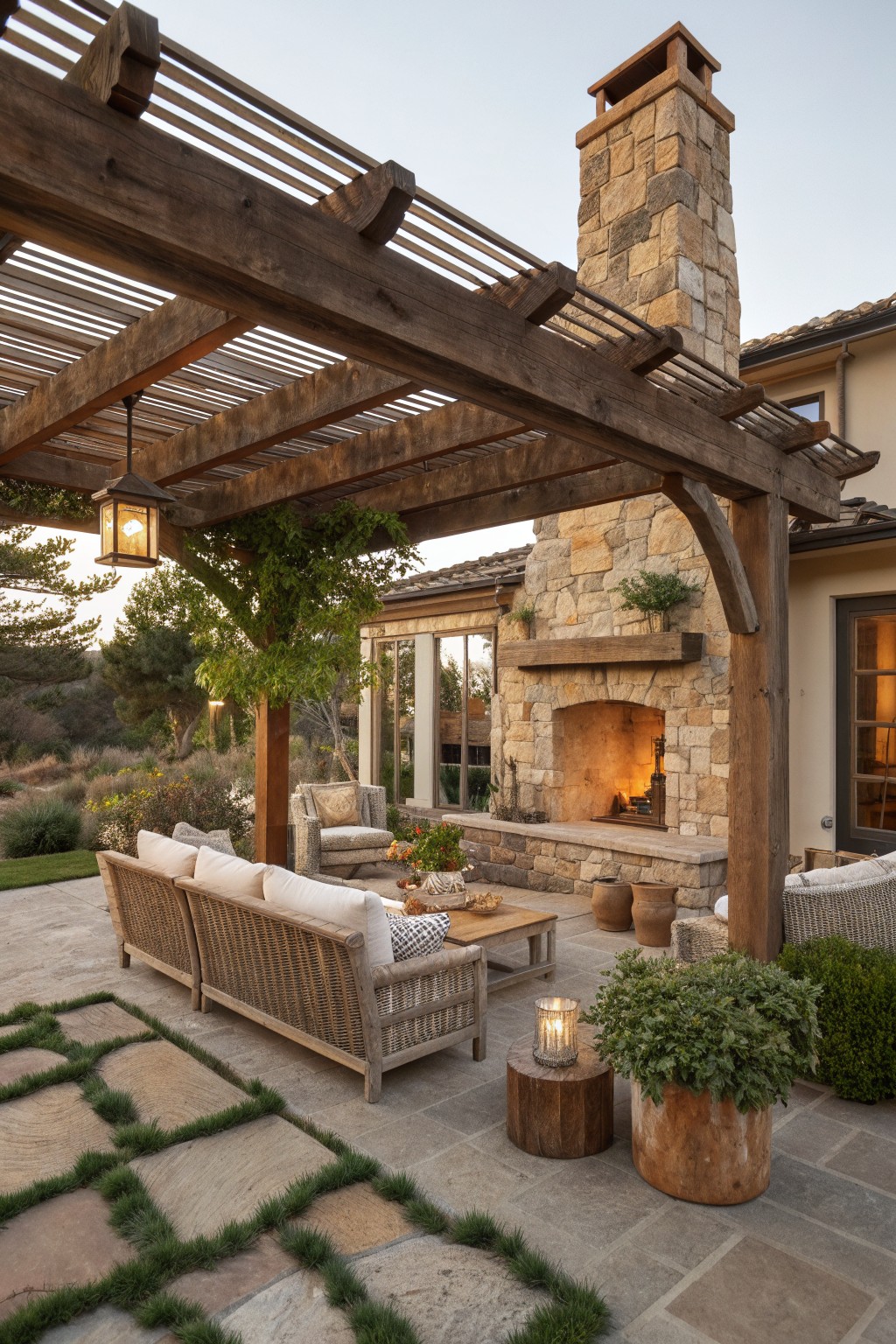
A pergola over the fireplace turns the patio into a real room you can use in most weather. The wood structure gives shade and a bit of shelter while the stone fireplace stays the main draw, so people naturally gather around it instead of drifting to the edges of the yard.
This setup works best on a side or back patio next to the house where you already have a flat stone or concrete surface. Keep the wood tone natural and let the beams run in simple straight lines. Avoid adding too many hanging lights or decorations that would compete with the fireplace itself.
Frequently Asked Questions
Q: Will the wood hold up okay in rain and snow?
A: Choose cedar or redwood since they resist moisture naturally. Give the boards a light coat of exterior oil once they are up. Check them each spring and touch up any spots that look dry.
Q: How do I make sure the new wood matches my old trim?
A: Take a sample board to the lumber yard and compare it in daylight. Go for similar grain and a finish that is close in tone. You can always age new wood a bit with a vinegar wash if it starts too bright.
Q: What finishes really bring out that warm feel?
A: Go with a matte oil or stain in honey tones. Avoid anything shiny because it can look cold.
